Tag: Red Sea

  • Houthi’s attacks in the Red Sea: What does this mean for the world?

    Houthi’s attacks in the Red Sea: What does this mean for the world?

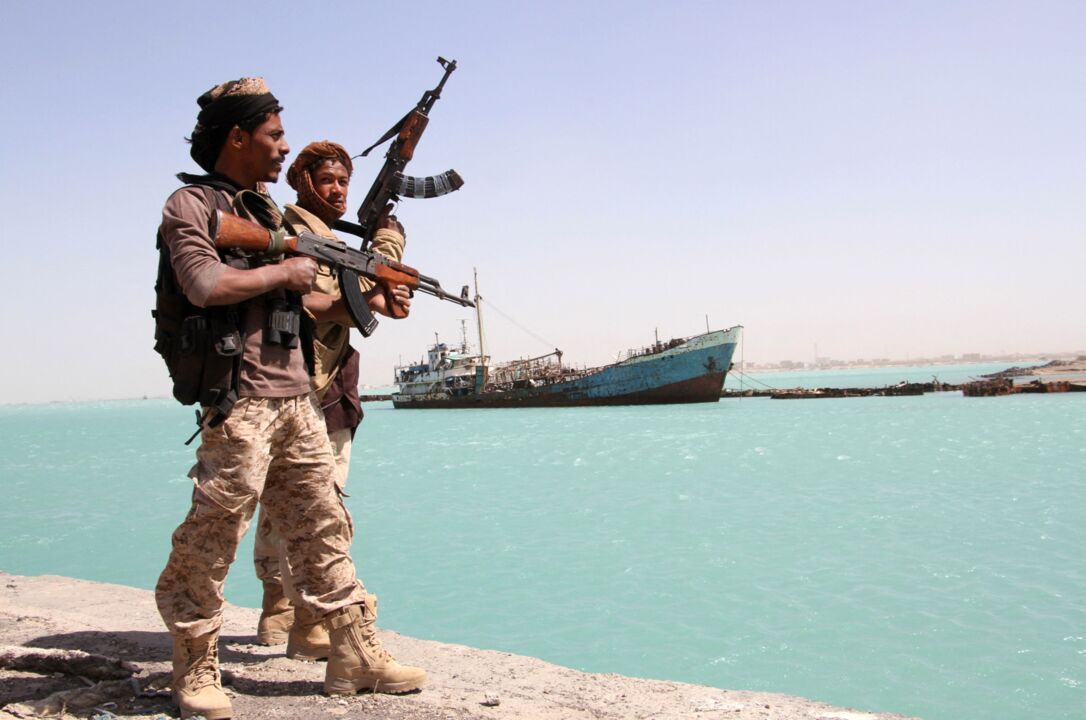
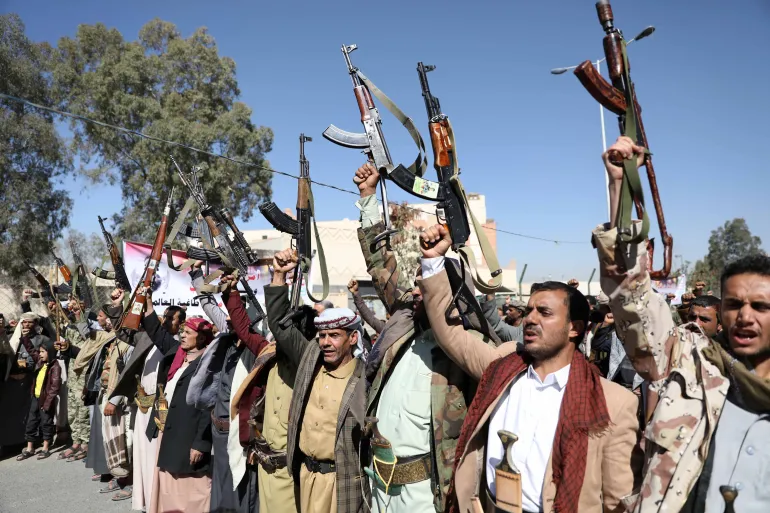
    The Houthis started in the 1990s as an armed group in Yemen, fighting against corruption. They belong to a community called Zaidis, who are a part of the Shia-Muslim minority. Along with Hamas and Hezbollah, the Houthis have declared themselves to be a part of the Iranian-led “axis of resistance” against Israel, the US, and the larger West.1 The Houthis have been attacking commercial ships passing through the lower Red Sea, and this has dramatically increased since mid-November in retaliation to Israel’s bombardment of Gaza. Due to these events, the Red Sea trade route is significantly affected, impacting the flow of global trade and having the potential to cause further damage. With ships attacked and stranded in one of the leading shipping routes of the world, countries seem to find themselves in yet another geopolitical fix. As the war continues between Israel and Gaza, the Red Sea has become a renewed hotspot for geopolitical and military tensions.
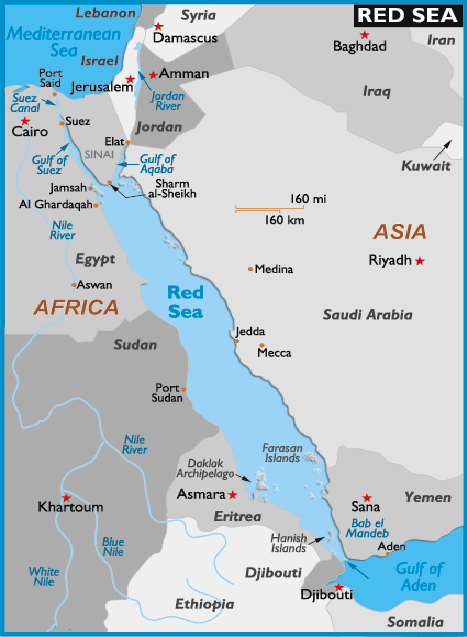
    Situated between Africa and West Asia, the Red Sea is a seawater entrance to the Indian Ocean in the south and goes through the Gulf of Aden and the Bab El Mandeb Strait, meeting the Gulf of Suez in the north. Countries like the US, France, Japan, and China have military bases in the region, including in Djibouti and many along the Horn of Africa, with considerable deployment of ships, weapons, and personnel. Establishing such bases conveys how critical it is to have control of the area as a measure of regional power and as a way of asserting their dominance internationally. Big players, including the Cold War rivals, have long struggled to gain presence and influence in West Asia. Having a military and economic presence in Africa with proximity to the Red Sea was necessary, for it provides access to almost 12% of the world’s trade, including nearly 40% of the trade between Europe and Asia.

    Until recently, the Houthis had been targeting ships heading towards Israel or ones that Israelis owned. However, recent developments showing attacks on ships bound for Israel with flags of various countries have raised grave concerns for global trade and security in the immediate future. The US, along with countries like the UK, France, and Bahrain, have tried to stop Houthi attacks on ships passing through the Red Sea under what Washington calls the “Operation Prosperity Guardian”. On the first day of the new year, The US military released a statement conveying that they killed at least 10 Houthi rebels and sabotaged three Houthi ships. Although the US was successful in deterring the Houthis from their attempt to attack, it did not do much to stop the group from being involved in disrupting peaceful navigation through the Red Sea.

    Private shipping companies such as Maersk, CMA CGM, Hapag-Lloyd, and MSC have begun to avoid using the Red Sea route due to the imminent threat from Houthis.3  The ongoing supply chain disruption caused by the COVID-19 pandemic and Russia’s invasion of Ukraine could further escalate due to the Red Sea crisis and cause severe concerns for world trade and consumer goods supply. With the suspension of trade via the Suez Canal, traffic through the Red Sea has dropped by 35%.4  The Houthis have raised the shipping cost internationally, imposing additional costs on commerce when trouble at the Panama Canal due to low water levels has already made shipping more complicated and central banks worry about a new inflationary spike. While trade hasn’t wholly stopped, most ships can choose the longer but safer route around Africa through the Cape of Good Hope to reach Europe and Asia from either side. This option imposes significant costs on shipping and, therefore, to consumers and affects local states in the region if the Houthi “blockade” persists. In the worst-case scenario, crude oil prices would rise in 2024 if oil shipments through the canal were stopped entirely, and this could cause a significant disturbance.
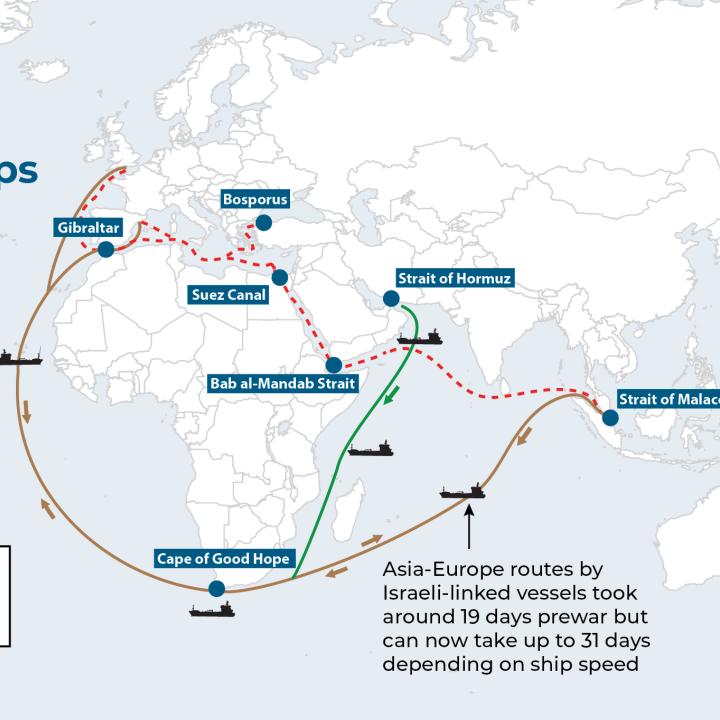
    Image Credit: washingtoninstitute.org

    Surprisingly, though, Russian ships have enjoyed free navigation through the Red Sea. Russian ships travel to Asia through the Black Sea, connecting to the Mediterranean Sea, passing through the Suez Canal and the Red Sea, and joining the Indian Ocean. With sanctions from Europe and the US amid the war in Ukraine, Russia cannot afford to lose its markets in Asia, particularly India and China, since these two countries buy almost 90% of Russia’s oil exports.5  The free navigation of Russian ships could possibly be due to its close relationship with Iran or due to the adoption of a similar stance with the Houthis on the war between Israel and Gaza. In the unlikely scenario that Russia does not have access to the Red Sea, it leaves them with the only other option of travelling through the Cape of Good Hope, adding 8,900 kilometres with an additional two weeks of travel. Such delays in oil shipments and a highly possible hike in price may prompt countries like India and China to start looking for other alternatives to their oil requirement, given the pre-existing energy crisis. Most probable alternatives include Saudi Arabia and other Gulf countries that do not need to pass the Red Sea to reach the Indian Ocean and thus Asian markets since they have ports in the Persian Gulf with access to the Arabian Sea.

    The disruption in trade has caused an impact on Indian imports and exports as well. Indian exports traverse the Indian Ocean and reach the Suez Canal through the Arabian Sea to reach European markets. Trade between India and Europe has been rising, at an all-time high in 2022, with goods traded worth $130 Billion.6   As of 2021, India engaged in trade worth $200 Billion through the Suez Canal, making the EU one of India’s main export destinations, with a Free trade agreement in the talks.7  India also procures its oil from Russia using the Suez Canal and the Red Sea. A slowdown or possible pause of oil imports may cause severe concerns amid the ongoing energy crisis. At such a juncture for the Indian economy, if the situation persists, trade will likely take a hit along with India’s domestic economy. If the condition fails to change decisively, the higher fees and the expense of prolonged travel duration will also put inflationary pressure on the global economy and India.

    The Houthis will most likely continue to put pressure on Israel to stop its onslaught in Gaza, and they are likely to keep attacking until they reach their goal. By taking control of the Red Sea and indirectly and directly hurting countries irrespective of their size and power, Houthis pressurize the international community to, in turn, put pressure on Israel. This also means that the group is unlikely to agree on any other way of settlement. Not only does this fall on Israel to stop their attacks but also on the US since the latter has always portrayed itself as a peace negotiator in the Middle East and, therefore, has the responsibility to restore order in the region. The Houthis possess a plethora of Iranian-supplied weaponry, ranging from precision drones to anti-ship cruise and ballistic missiles that can strike a moving vessel hundreds of kilometres away. What makes the Houthis more dangerous is the enormous stockpile that can help them continue their campaign indefinitely.

    The attacks have also prompted an unanticipated return of Somali piracy in international seas. As a result, increased expenses are now a worry for merchant shipping lines and seafarer safety for governments worldwide. The ship Lila Norfolk, under the Liberian flag and carrying six Filipinos and fifteen Indians, was taken over by Somali pirates on January 4th, 2024. The Indian navy had already deployed four warships patrolling the Indian Ocean, including INS Chennai, which was involved in the rescue operation during the recent highjack of ship Lila Norfolk. Even though the Indian Navy’s intervention allowed for the sailors’ rescue, it caused further concerns for India’s security and economy. The spill over of these attacks onto the Indian Ocean may threaten India’s security.

    Countries must monitor developments in the Red Sea and, for India, the Indian Ocean. Although India has not joined any Western-led operations on this matter, the country must push the international community to ensure freedom of navigation and the territorial integrity of countries over their sea is upheld under the UN Convention on the Law of the Seas.


    References

    [1] Who are the Houthi rebels and why are they attacking Red Sea ships? (2023, December 23). BBC News. https://www.bbc.com/news/world-middle-east-67614911

    [2] Yerushalmy, J. (2023, December 19). Red Sea crisis explained: what is happening and what does it mean for global trade? The Guardian.

    [3] A new Suez crisis threatens the world economy. (2023, December 16). The Economist. https://www.economist.com/international/2023/12/16/a-new-suez-crisis-threatens-the-world-economy

    [4] Graham, R., Murray, B., & Longley, A. (2023, December 19). Houthi Red Sea Attacks Start Shutting Down Merchant Shipping. Bloomberg.com. https://www.bloomberg.com/news/articles/2023-12-18/houthi-attacks-start-shutting-down-red-sea-merchant-shipping

    [5] Russia: crude oil shipments by destination 2023 | Statista. (2023, September 14). Statista. https://www.statista.com/statistics/1350506/russia-crude-oil-shipments-by-destination/

    [6] I. (n.d.). First India-EU Trade and Technology Council: Significant Milestone in India-EU Relations – Indian Council of World Affairs (Government of India). https://www.icwa.in/show_content.php?lang=1&level=3&ls_id=9416&lid=6112#:~:text=The%20EU%20is%20India’s%202nd,EU%20total%20trade%20in%20goods.

    [7] Ibid.


    Feature Image Credit: dailynewsegypt.com
  • Trade during the Sangam Age: Exploring the Sangam literature and Keezhadi excavations

    Trade during the Sangam Age: Exploring the Sangam literature and Keezhadi excavations

    The sculpted marvels which bejewel the ancient temples all across Tamil Nadu stand testimony to the magnificence of Sangam age (3rd century BC to 3rd century AD) and the prolific artistic innovations which are characteristic of that period. But that’s not all there is to it. Matching the artistic and cultural fervour, trade activities were also at an all-time high during the Sangam age. Evidentiating this claim, the Sangam literature chronicles details of all the fine merchandise which were produced in Ancient Tamilakam. Building up on their strengths, the Tamils ventured into lands far and wide, establishing trading associations in foreign countries, some of which till date retain imprints of their existence. Coupled with manifest cultural similarities, archaeological and inscriptional evidence add on to the credibility of Sangam literature by making a strong case for the existence of an extensive trade between Tamilakam and the rest of the Old World.

    Sangam Literature: Valuable source of Information on Trade

    Pattinappalai, one of the poems (301 lines in ‘Vanji’ meter and Asiriyapa/Akaval meter) in Pattuppāṭṭu which is a corpus of ten poems, talks in great detail about Kaveripoompattinam, the capital city of the Early Cholas.

    Even though only half of what is claimed to have been created remains, the Sangam literature is too big a chunk to be thoroughly studied in a short time. There might still be parts of it that are waiting to be looked into. But of what has been discovered, the details pertinent to trade can predominantly be found in three major literary works, namely Pattuppāṭṭu, Silappatikaram and its sequel Manimekalai. Pattinappalai, one of the poems (301 lines in ‘Vanji’ meter and Asiriyapa/Akaval meter) in Pattuppāṭṭu which is a corpus of ten poems, talks in great detail about Kaveripoompattinam, the capital city of the Early Cholas. The port of Puhar / Kaveripoompattinam had ” an abundance of horses brought over the seas, sacks of black pepper brought overland in carts, gemstones and gold from the northern mountains, and sandalwood and eaglewood from the Western hills, pearls from the southern seas and coral from the eastern seas, grains from the regions of Ganga and Kaveri, food grains from Eelam (Sri Lanka) and products from Burma and other rare and great commodities.”

    A description of the port warehouses of Kaveripoompattinam in Pattuppattu is revealing of the flourishing trade – “Like the monsoon season when clouds absorb ocean waters and come down as rains on mountains, limitless goods for export come from inland and imported goods arrive in ships. Fierce, powerful tax collectors are at the warehouses collecting taxes and stamping the Chola tiger symbols on goods that are to be exported.”

    Silappatikaram and Manimekalai, on the other hand, talk about the cities of Madurai, Puhar and Kanchipuram, which served as major centres for cloth weaving, from whence fine quality fabrics were manufactured and exported through the Coromandel Coast. Silk, cotton and wool are some of the fabrics which are mentioned to have been exported from the coast. The epics also present a vivid description of the urban market scenes. The details paint the picture of a buzzing market where trade was carried out in a variety of supreme quality products, starting from agricultural products like black pepper, food grains, areca nuts, white sugar, eaglewood to luxury commodities like gold, pearls, gems, jewels, coral and silk, among other things. In fact, the urban markets are said to have had a separate street dedicated to food grains alone. So high was the demand for food grains that despite having close to eighteen indigenous varieties, grains also had to be imported from other countries in exchange for white salt. Likewise, the demand for aromatic products were too high to be met by home-gown eagle woods and sandalwoods, resulting in the import of the same from South East Asian countries, particularly from China and Indonesia.

    Tamilakam: Maritime Trade hub-centre between the East and the West

    Both literary and archaeological evidence have time and again reaffirmed one another; the merchants of Tamilakam had traded with the East and the West with equal flair. While there is a substantial amount foreign and native literature, and archaeological findings to assert the latter, there is relatively less evidence to support the former. And not only did Tamilakam engage in direct trade with the West, but because all products from Southeast Asia had to be sent through ports along the coast of South India, Tamilakam also acted as the hub-centre for the trade between the East and the West.

    Commodities from Tamilakam had a great demand in Rome. Black pepper, cardamom, pearls and gemstones, especially Beryl which was mined from sites in Kodumanal, Padiyur and Vaniyampadi, were highly sought after in Rome.

    With regard to the West, Tamil merchants have had a long-standing trade relationship with the Egyptians and the Romans. Beginning from the period when Alexandria was the centre of Mediterranean commerce, trade with the West extended well into the time when Rome assumed dominance and became the centre-stage of Mediterranean economy. Trade with Tamilakam was in fact a deciding factor in the question of dominance in sea trade. The Arabs held ground against the competing Romans by monopolizing the knowledge regarding direct sea route to India and information about the source markets in India. Nevertheless, eventually the Romans established direct trade links with India and Rome became the largest market ground for Indian products. Commodities from Tamilakam had a great demand in Rome. Black pepper, cardamom, pearls and gemstones, especially Beryl which was mined from sites in Kodumanal, Padiyur and Vaniyampadi, were highly sought after in Rome.


    Picture: Interpretation map from ‘The Periplus of the Erythraean Sea”.

    In the interpretations of a historical document called ‘The Periplus of the Erythraean Sea, originally authored by a Greek Navigator in the 1st century, there is said to have been  mentions of a marketplace called Poduk’e in the historical text . G.W.B. Hunting Ford, a historian, has postulated that this place might have been Arikamedu, a location two miles away from modern day Pondicherry.  Hunting Ford also notes that Roman pottery have been excavated in Arikamedu and that these evidence point at the possibility that this region might have been a trading centre for Roman goods in the 1st century AD. Arikamedu, known as Poduk’e in the Greco-Roman world was a manufacturing hub of textiles particularly of Muslin clothes, fine terracotta objects, jewelleries from beads of precious and semi-precious stones, glass and gold. The city had an extensive glass bead manufacturing facilities and is considered as “mother of all bead centres” in the world. Most of their production were aimed for export.

    Picture: Arikamedu – credit: Wikipedia

    Arikamedu, known as Poduk’e in the Greco-Roman world was a manufacturing hub of textiles particularly of Muslin clothes, fine terracotta objects, jewelleries from beads of precious and semi-precious stones, glass and gold. The city had an extensive glass bead manufacturing facilities and is considered as “mother of all bead centres” in the world.

    Descriptions of Puhar, Korkai, Muziris and Arikamedu in Sangam literature indicate extensive presence of Yavanas’ (foreigners) settlements in port cities on account of trade. Pattinapalai describes the port activities and the Chola customs revenue system in detail.

    Keezhadi: Evidences of  Industrial and Trade Centre

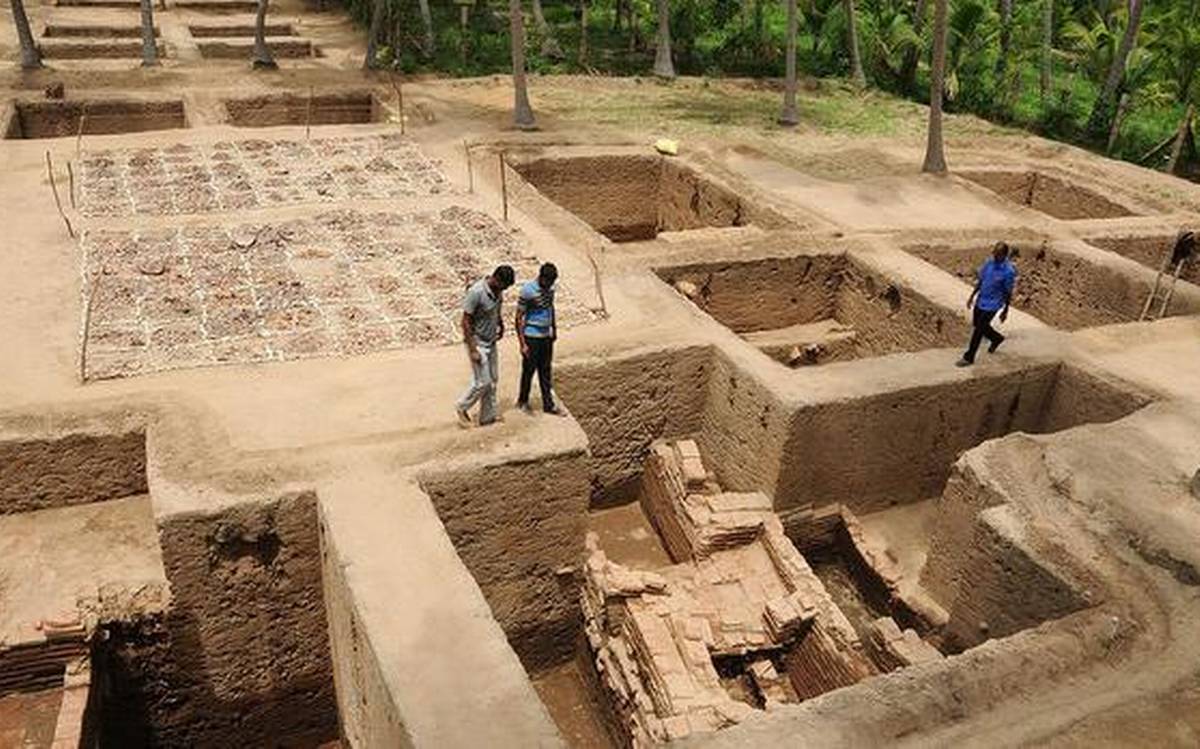
     In addition to these, the Keezhadi excavation, conducted by the Archaeological Survey of India in 2016, has unearthed around 13000 antiquities like shells, glass beads, rusted old coins, weapons, pottery of various kinds and iron tools, belonging to the Sangam age. Among the fine quality red and black ware bowls excavated in the region, are the Roman roulette wares which evidentiate the existence of trade links between the Tamils and Romans. Moreover, seven furnaces were discovered at the site and these, according to the archaeologists, are an indication of the possibility that the site might have been a textile unit and settlers in the region might have been involved in industrial activities.

    Keezhadi findings places the Sangam age to an even earlier period starting from 6th century BC. As per Amarnath Ramakrishna, who led the first two phases of excavations, Keezhadi site was one among the 100 sites of possible human habitation shortlisted for excavation. Discovery of Tamil Brahmi inscriptions and graffiti that date back to earliest times as compared to any other findings in India. Quite obviously, Keezhadi points to the potential of a huge trading and manufacturing habitation and a distinct civilization – the Tamil Vaigai River Valley Civilisation. The Sangam literature is rich and a huge treasure trove of information that needs to be researched extensively.


    Picture: Australian seaboard, Statue of Garuda and Tamil Inscriptions, symbolising maritime culture – Credit: ancient-origins.net

    Maritime Trade in Tamilakam: A Core Activity

    Several artefacts with Tamil Brahmi inscriptions have been excavated in foreign countries as well. In Thailand, potsherd with Brahmi inscriptions were unearthed. Likewise, Cheena Kazhakam ( Chinese gold coins) were discovered in Srivijaya (modern day Sumatra in Indonesia) and Kadaram (modern day Kedah in Malaysia), places which were under the occupation of the Cholas.

    The aforementioned evidence when correlated with the inscriptional evidence, found in foreign lands about Tamil trading settlements, will help in the historical reconstruction of the maritime trade links of Ancient Tamilakam and will attest to the extensive nature of trade carried out by the Tamils during the Sangam age.


    References

     Mukund, Kanakalatha. The Trading World of the Tamil Merchant: Evolution of Merchant Capitalism in the Coromandel. Orient Blackswan, 1999. https://books.google.co.in/books?id=tjXdDYChdGsC&lpg=PP1&pg=PP1#v=onepage&q&f=false.

    Mukund, Kanakalatha. The World of the Tamil Merchants. Portfolio Books Limited, 2015. https://books.google.co.in/books?id=Bha2eLqMPWcC&lpg=PT6&ots=tw2qDuzDlf&dq=trade during sangam age kanakalatha mukund&pg=PT5#v=onepage&q=trade during sangam age kanakalatha mukund&f=false.

    “Roman Trade with India.” Roman Trade with India – New World Encyclopedia. Accessed June 24, 2020. https://www.newworldencyclopedia.org/entry/Roman_trade_with_India#cite_ref-31.

    Kannan, Gokul. “Keezhadi Excavation Points to Vaigai River Civilisation in Sangam Period.” Deccan Chronicle. October 1, 2016. Accessed June 24, 2020. https://www.google.com/amp/s/www.deccanchronicle.com/amp/nation/in-other-news/011016/keezhadi-excavation-points-to-vaigai-river-civilisation-in-sangam-period.html.

    Annamalai, S. “Uncovered: Pandyas-Romans Trade Link.” The Hindu. May 16, 2017. Accessed June 24, 2020. https://www.google.com/amp/s/www.thehindu.com/news/national/tamil-nadu/archaeological-excavation-in-sivaganga-uncovers-pandya-roman-trade-links/article10879282.ece/amp

    Saju, M.T. “Tamil Trade Ships That Sailed to Foreign Shores.” Times of India. March 29, 2018. Accessed June 24, 2020. https://www.google.com/amp/s/timesofindia.indiatimes.com/blogs/tracking-indian-communities/tamil-trade-ships-that-sailed-to-foreign-shore

    Main Image: Keezhadi Excavation Site – Credit – ASI