Tag: Putin

  • The End of War in Ukraine: A Tough Road Ahead

    The End of War in Ukraine: A Tough Road Ahead

    The war, which began when NATO leaders dismissed Russia’s demand for security guarantees from the West, was intended as a way for Russia to reclaim its power and prestige on the global stage while strengthening its security in the region. Neither of these objectives has been achieved, nor will they be with Ukraine’s defeat. The war quickly escalated into a proxy conflict between Moscow and the collective West, with significant losses on both sides.

    Given that President Putin has recently signed an order to draft 160,000 additional soldiers with the goal of “finishing off” the Ukrainian resistance, the Russia-Ukraine war is far from a definitive resolution. Nonetheless, it is never too early to begin considering the options for a successful post-war settlement and the potential to transform the US-advocated ceasefire (if it ever materializes) into a lasting peace.


    Unfortunately, neither side of the conflict has presented anything even remotely resembling a plan for a sustainable, acceptable post-war settlement. The war, which began when NATO leaders dismissed Russia’s demand for security guarantees from the West, was intended as a way for Russia to reclaim its power and prestige on the global stage while strengthening its security in the region. Neither of these objectives has been achieved, nor will they be with Ukraine’s defeat. The war quickly escalated into a proxy conflict between Moscow and the collective West, with significant losses on both sides. Russia’s international security situation is now worse than it was before the war began, and this will remain the case for some time, regardless of what happens in Ukraine.

    Ukraine, in fact, is fighting a losing battle. Its leaders are sacrificing the country in the midst of a geopolitical rivalry involving Russia, Europe, and the USA. If Ukraine accepts a Trump-mediated deal with Russia, it will lose four regions occupied by Russian forces since 2022, agree to the annexation of Crimea, and abandon any hopes of NATO membership in the future. If Ukraine is defeated on the battlefield, it will lose its independence and be forced to submit to what Russian leaders refer to as demilitarization and denazification—essentially, a regime change and the reconstitution of Ukrainian governance.

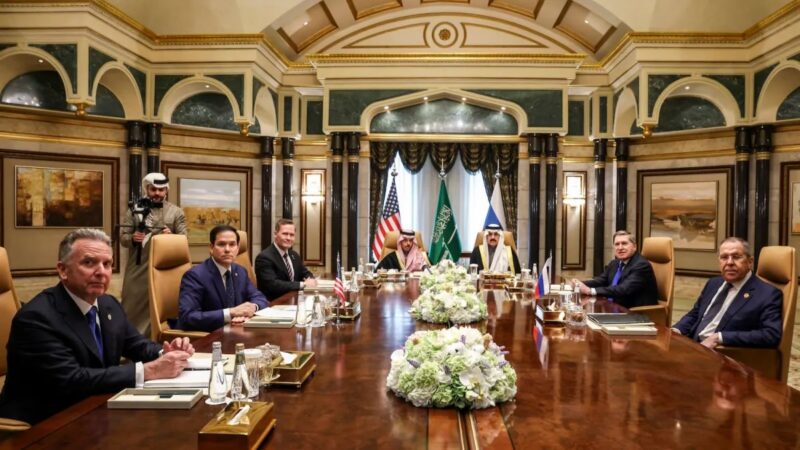
    With no realistic prospect of pushing Russian forces out of the country and with the increasing likelihood of an exploitative “resources plus infrastructure” deal imposed by Washington, Ukraine risks losing not only its state sovereignty but any semblance of international agency. If Ukraine’s role in a post-war settlement, as envisioned in the Saudi negotiations, is reduced to either a Russian-occupied territory or a de facto resource colony of the United States, such a “settlement” would merely serve as an interlude between two wars, offering no lasting resolution to the conflict.

    As the Kremlin proposes placing Ukraine under external governance and the White House demands control over all of Ukraine’s natural resource income for several years—along with a perpetual share of that revenue—the process of transforming Ukraine into a non-self-governing territory accelerates. However, Russia also faces setbacks. Despite Putin’s efforts to halt NATO’s expansion and push the alliance back to its 1997 military posture, NATO has grown closer to Russia’s borders, with formerly neutral Sweden and Finland joining the alliance in direct response to Russia’s invasion of Ukraine. Trump’s previous alignment with Putin prompted EU leaders to agree to a substantial €800 billion increase in defence spending, while French President Macron proposed extending France’s nuclear deterrent to protect all of Europe from potential Russian threats. This may lead to France positioning its nuclear-capable jets in Poland or Estonia, and its ballistic-missile submarines in the Baltic Sea. The British nuclear deterrent is already committed to NATO policy, and it is not unimaginable that some or all of the UK’s nuclear submarines could be deployed closer to Russia’s borders. A UK contribution to a European nuclear umbrella, along with the creation of a low-yield variant of existing nuclear capabilities, would further erode Russia’s already fragile security.

    Putin’s proposal for the external governance of Ukraine reveals Russia’s deep vulnerabilities, which the full occupation of Ukraine would soon expose. A collapse of Ukrainian statehood and the need to occupy the entire country would require Russia to maintain an occupation force of several hundred thousand troops, while also assuming responsibility for law enforcement, security, state administration, essential services, and more. Rebuilding Ukraine’s devastated southeast would cost billions of dollars, and efforts to restore the entire former Ukrainian nation are simply beyond Russia’s capacity. Meanwhile, the guerrilla warfare that the Ukrainians will inevitably intensify in response to Russia’s territorial expansion will further drain the occupiers’ resources.

    The end of the war would mark a slowdown in the military-industrial complex that has driven Russia’s economic growth in recent years. Additionally, the ongoing militarization of society, the rise of nationalist totalitarianism, and the enormous costs of occupying the “new territories” highlight the Pyrrhic nature of Russia’s supposed “victory.”

    Despite the Kremlin’s bravado, Russia’s economy and society have been significantly weakened by the war. With the key interest rate at 21 percent, annual inflation at 10 percent, dwindling welfare fund reserves, and an estimated 0.5 to 0.8 million casualties (killed and wounded) on the battlefield, it’s unclear how much longer Putin can stave off economic decline and maintain reluctant public support for his administration. The end of the war would mark a slowdown in the military-industrial complex that has driven Russia’s economic growth in recent years. Additionally, the ongoing militarization of society, the rise of nationalist totalitarianism, and the enormous costs of occupying the “new territories” highlight the Pyrrhic nature of Russia’s supposed “victory.” The best possible settlement from Russia’s perspective—leaving a rump Ukraine that is independent, self-sufficient, and friendly—is simply out of reach. The remaining options will only delay the inevitable second round of hostilities.

    Finally, the Western proposals for post-war settlements are either unsustainable or outright counterproductive. This is perplexing, given that the war has cost Europe dearly, and it should be in the EU’s interest to see it end as soon as possible. While predictions of seeing the Russian economy in tatters have not materialized, Europe now faces an imminent financial crisis. With the EU economy growing by less than 1 percent in 2024, while Russia’s economy grows 4.5 times faster, it’s time for those like President Macron of France—who advocate continuing the war with extensive European military and financial support—to reconsider their stance.

    However, this is not happening. Instead, EU leaders are urging Russia to agree to an “immediate and unconditional ceasefire on equal terms, with full implementation,” under the threat of new sanctions and the redoubling of Europe’s support for Ukraine.

    This approach is counterproductive and likely to strengthen Russia’s resolve. Beyond the fact that continued support for Ukraine’s war effort will further strain the already fragile budgets of the supporting states, insisting that Ukraine fight to the bitter end is both practically and morally indefensible. At the same time, abandoning Ukraine to face Russia alone could lead to the collapse of Ukrainian statehood. In either case, the collective West loses.

    A negotiated settlement, as proposed by President Trump, is a lesser evil under the current circumstances. Yes, it’s a suboptimal solution that could embolden Putin, harm Ukraine, deepen the divide between Russia and Europe, and create new challenges for international security.

    Yet, the preservation of Ukrainian statehood would be ensured. Death and destruction would cease. Europe’s economy would recover, and the global economy would see a boost. The risk of nuclear war in Europe would fade away. The need for European citizens to stockpile 72 hours’ worth of supplies, as per the European Commission’s recent guidance, might become less of a priority for the already-intimidated European citizens.

    European leaders should consider working alongside Trump, Putin, and Zelensky to craft a balanced, negotiated solution that accounts for the interests of all sides. Even if everyone must make sacrifices, it is better than losing everything. 

    While any path out of this war will be difficult, the strategy of threatening Russia with harsher sanctions, forming “coalitions of the willing,” and creating EU nuclear-armed forces will not make it any easier. Instead, European leaders should consider working alongside Trump, Putin, and Zelensky to craft a balanced, negotiated solution that accounts for the interests of all sides. Even if everyone must make sacrifices, it is better than losing everything.

    Feature Image Credit: www.pbs.org

  • Putin’s Folly: The Long Road to Self-Destruction

    Putin’s Folly: The Long Road to Self-Destruction

    Ever since President Putin ordered the occupation of Ukraine in a ‘Special Military Operation’ this February, he has been at the receiving end of a stream of bad news. Neither were the Russian Armed Forces welcomed with open arms, as they had expected, nor were they able to capture Kiev and force a regime change, as Putin had wanted. In the process, both their leadership and rank and file displayed spectacular incompetence and irretrievably destroyed the reputation of what was till then seen as one of the strongest militaries in the world.

    However, nothing could have truly prepared him for the nightmarish turn of events this September. In a brilliant display of operational art, the Ukrainian defence forces launched a counter offensive in the Kharkiv region, catching the Russian military leadership completely by surprise. Having earlier deceived them into reinforcing the Kherson sector by denuding forces deployed in the Kharkiv sector.

    The ensuing rout, it clearly was no organised retreat, resulted in prisoners being taken in their thousands, along with all manner of serviceable weapons, ammunition and equipment. This includes hundreds of tanks and armoured personnel carriers which the Ukrainians can use. Ironically, this may well make Russia the largest donor of military equipment to the Ukrainians! In addition, the Ukrainian military have been able to grab back approximately 9000sq kms of occupied territory in the Kharkiv

    [powerkit_button size=”lg” style=”success” block=”true” url=”http://www.indiandefencereview.com/news/putins-folly-the-long-road-to-self-destruction/” target=”_blank” nofollow=”false”]
    Read More
    [/powerkit_button]

  • TPF Analysis Series on Russia – Ukraine Conflict #2

    TPF Analysis Series on Russia – Ukraine Conflict #2

    [powerkit_button size="lg" style="info" block="true" url="https://admin.thepeninsula.org.in/2022/03/29/tpf-analysis-series-on-russia-ukraine-conflict/" target="_blank" nofollow="false"]
    The First Paper of the Series – TPF Analysis Series on Russia – Ukraine Conflict #1
    [/powerkit_button]

    What’s in Ukraine for Russia? 

    In a press conference marking his first year in office, President Biden, on the question of Russia invading Ukraine, remarked that such an event would, “be the most consequential thing that’s happened in the world, in terms of war and peace, since World War Two”. [1] It has now been two months since Russia officially launched its “special military operation” in Ukraine, which the US and its allies consider an unjustified invasion of a sovereign state. The conflict in the Eurasian continent has drawn global attention to Europe and US-Russia tensions have ratcheted to levels that were prevalent during the Cold War. The conflict has also raised pertinent questions on understanding what exactly are Russian stakes in Ukraine and the latter’s role in the evolving security architecture of Europe. The second paper in this series will delve into these questions.

    The current Russian position stems from the experience that Russia, and Putin, gained while dealing with the West on a host of issues, not least of which was NATO expansion.

    The Ties that Bind

    An examination of post-Soviet history reveals that Russian preoccupation with security threats from NATO is not embedded in Russian geopolitics; instead, it has been reported that, early on, Russia was even agreeable to joining the military alliance. The current Russian position stems from the experience that Russia, and Putin, gained while dealing with the West on a host of issues, not least of which was NATO expansion. A line of argument sympathetic to Russia is President Putin’s contention that terms dictated to Russia during the post-Cold War settlements were unfair. The claim is a reference to Secretary of State James Baker’s statement on the expansion of NATO, “not an inch of NATO’s present military jurisdiction will spread in an eastern direction”, in 1990 in a candid conversation with Mikhael Gorbachev on the matter of reunification of Germany. [2] It could be argued that it is this commitment and subsequent violation through expansions of NATO is one of the main causes of the current conflict. 

    At the root of the problem was Russia’s security concerns – regarding both traditional and hybrid security – that ultimately led to the centralisation of power after a democratic stint under Yeltsin. Accordingly, Putin had put it in late 1999, “A strong state for Russia is not an anomaly, or something that should be combated, but, on the contrary, the source and guarantor of order, the initiator and the main driving force of any changes”. [3]

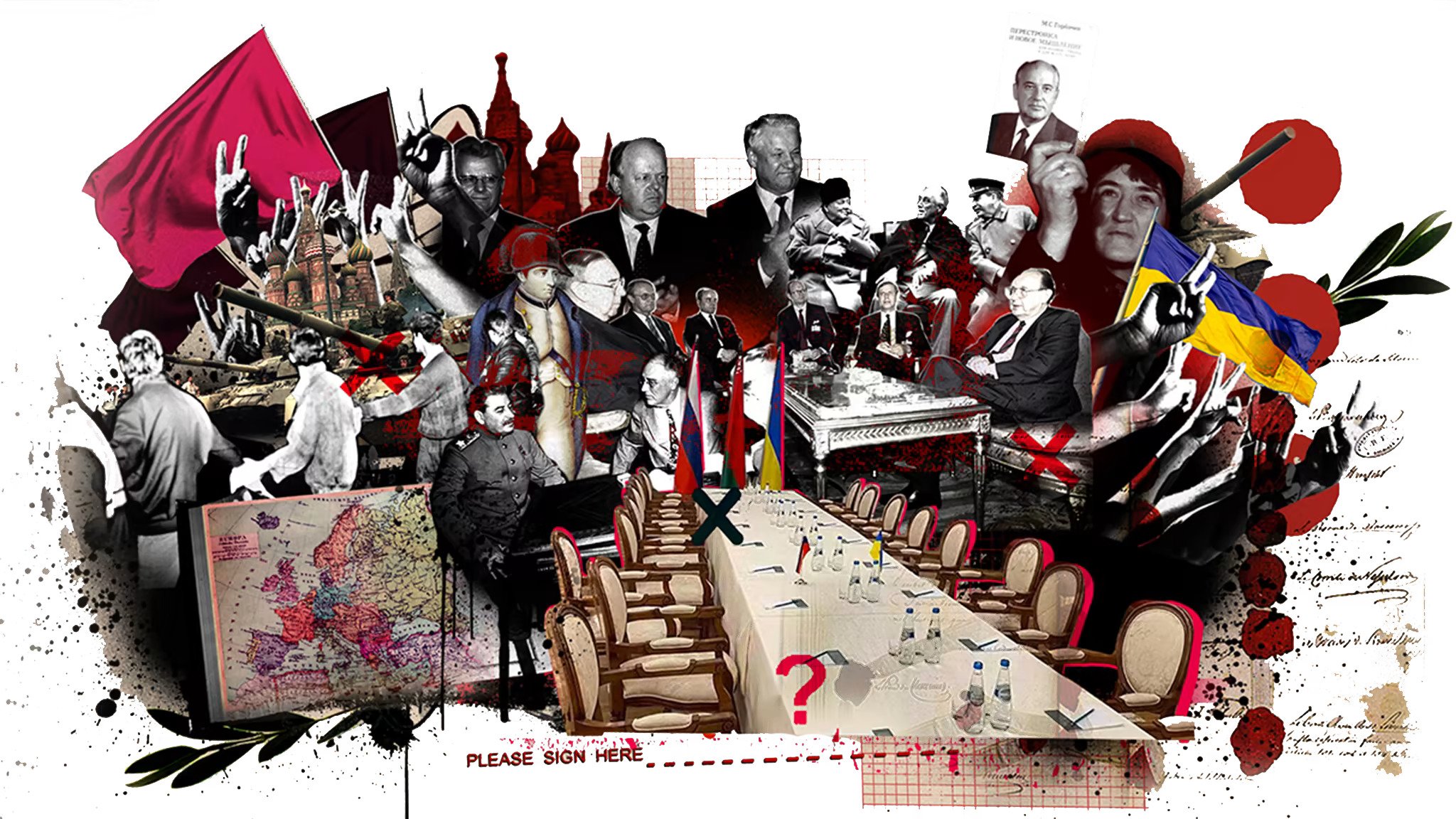
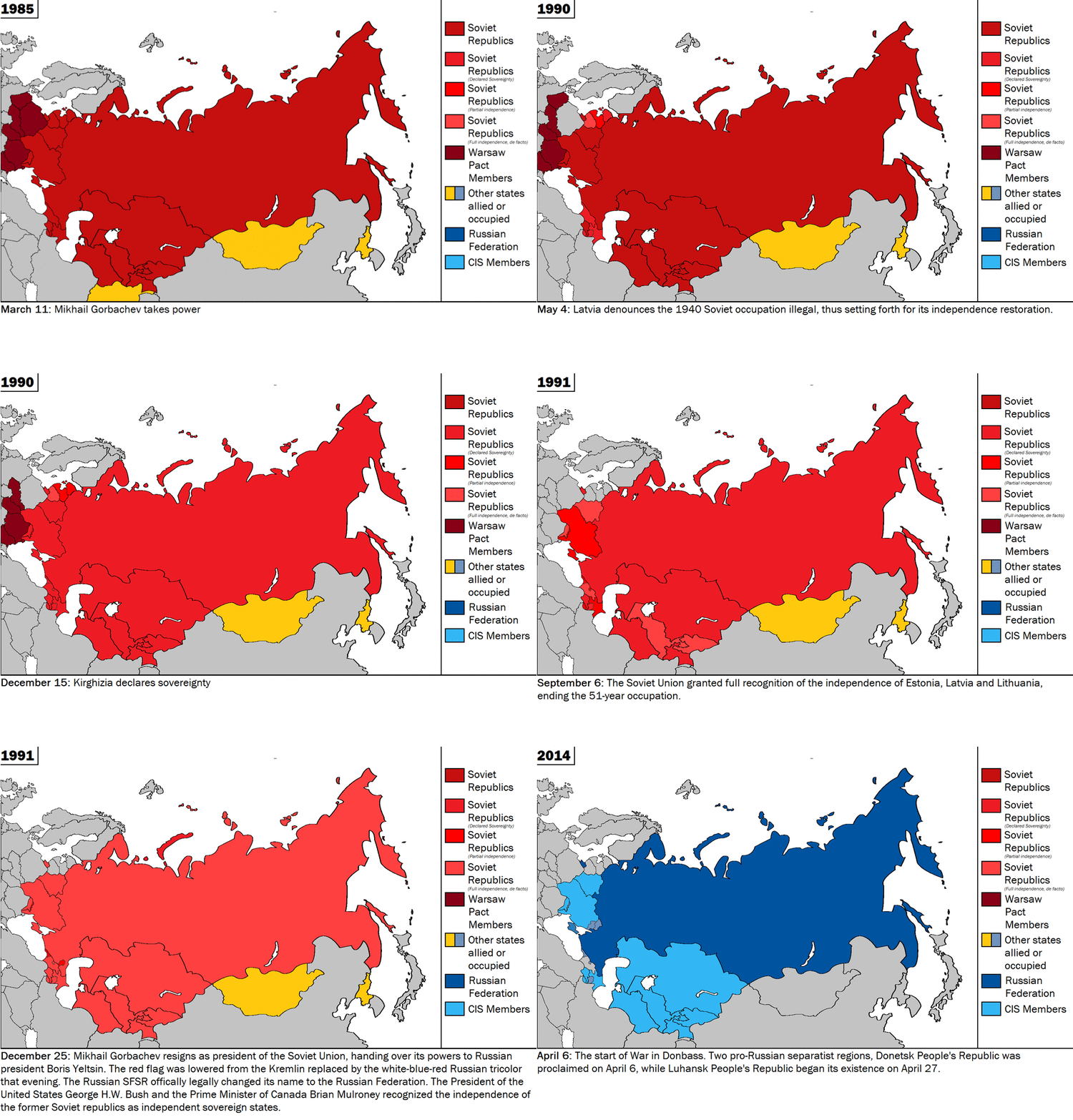
    Historically being a land power, Russia has viewed Ukraine as a strategically critical region in its security matrix. However, as the central control of Moscow weakened in the former USSR, the nationalist aspirations of the Ukrainian people began to materialise and Ukraine played a crucial role, along with the Russian Federation and Belarus, in dissolving the former Soviet Union. The two countries found themselves on opposite sides on extremely fundamental issues, such as security, economic partnership, post-Soviet order, and, not least, sovereignty. In Belovezh, in early December of 1991, when Russian President Boris Yeltsin, Ukrainian President Leonid Kravchuk and Belarusian leader Stanislav Shushkevich met to dissolve the USSR, major disagreements regarding the transitional phase and future of the republics erupted. Yeltsin expressed his desire for some sort of central control of the republics, whereas Kravchuk was vehemently opposed to any arrangement that might compromise his country’s sovereignty. Later, at the foundational ceremony of the Commonwealth of Independent States (CIS), he stressed a common military, the most potent rejection of which came from Kravchuk. [4]

    Source: Wikimedia Commons

    The elephant in the room, however, was the status of Sevastopol, which housed the headquarters of the Black Sea Fleet. Yeltsin was quoted saying that “The Black Sea Fleet was, is and will be Russia’s. No one, not even Kravchuk will take it away from Russia”. [5] Though the issue was soon temporarily resolved –with the two countries dividing the fleet equally amongst themselves, it continued to dominate and sour their relationship. Russia, as the successor state of the USSR, wanted the base and the entire fleet in its navy. Yeltsin even offered gas at concessional rates to Ukraine if it handed over the city and nuclear weapons to Russia. The issue remained unresolved until the 1997 Friendship Treaty under which Ukraine granted Moscow the entire fleet and leased Sevastopol to Russia until 2017 (later extended).

    Ukraine, under Kravchuk and, later, Leonid Kuchma, struggled to tread a tightrope between Russia and the European Union. On one hand, it was economically knit with former Soviet Republics, and on the other, it was actively looking to get economic benefits from the EU. However, soon a slide towards the west was conspicuous. In 1994, it preferred a Partnership and Cooperation Agreement with the EU over CIS Customs Union, which was a Russian initiative. Later, in 1996, it declined to join a new group consisting of former Soviet Republics ‘On Deepening Integration’, scuttling the initiative, since its purpose was to bring Ukraine back into the Russian fold. [6] By 1998, the Kuchma government had formulated a ‘Strategy of Integration into the European Union’. [7]

    Nuclear weapons were another point of contention between the two. Ukraine was extremely reluctant to give up its arsenal, citing security threats from Russia. Kravchuk received a verbal ‘security guarantee’ from the US which forced Russia to “respect the independence, sovereignty, and territorial integrity of each nation” [8] in exchange for surrendering Ukraine’s nuclear weapons. 

    Notwithstanding the disputes, there was a great deal of cooperation between the two, especially after Kuchma’s re-election in 1999. Kuchma’s hook-up with authoritarianism distanced Kyiv from Brussels and brought it closer to Moscow. Ukraine agreed to join Russian initiatives of the Eurasian Economic Community as an observer and Common Economic Space as a full member. At home as well, his support in the eastern parts of the country, where ethnic Russians dwelled, increased dramatically, as evident in the 2002 Parliamentary Elections. [9] However, the bonhomie was soon disrupted by a single event.

    The Orange Revolution was Russia’s 9/11. [10] It dramatically altered Russian thinking on democracy and its ties with the West. It raised the prospect in Russia that Ukraine might be lost completely. It further made them believe the colour revolutions in former Soviet republics were CIA toolkits for regime change. More importantly, it made the Russians apprehensive of a similar revolution within their borders. As a result, the distrust between Russia and the West, and Russia and Ukraine grew considerably. As a nationalist, Victor Yushchenko formulated policies that directly hurt Russian interests. The two countries fought ‘Gas Wars’ in 2006 and 2009, which made both the EU and Russia uncomfortable with Ukraine as a gas transit country. Furthermore, Yushchenko bestowed the title of ‘Hero of Ukraine’ upon Stepan Bandera, a Nazi collaborator and perpetrator of the Holocaust, a decision that surely did not go well with Moscow.

    Geoeconomics: Ukraine as a Gas Transit Country

    The current war is the worst in Europe since the Second World War. Still, Ukraine continues to transit Russian gas through its land, Russia continues to pay for it, and Western Europe continues to receive the crucial resource. The war has shattered all the big bets on Russian dependence on Ukraine for delivering gas to Western Europe and has renewed the discourse on reducing European energy dependence on Russia. Since the EU imports 40% of its gas from Russia, almost a quarter of which flows through Ukraine, Kyiv has had leverage in dealing with Russians in the past. It has been able to extract favourable terms by either stopping or diverting gas for its own domestic use at a time of heightened tensions between Ukraine and Russia. As a result, the EU was directly drawn into the conflict between them, infructuating Moscow’s pressure tactics for a long.

    Moscow has made numerous attempts in the past to bypass Ukraine by constructing alternate pipelines. Nord Stream, the most popular of them, was conceived in 1997, as an attempt to decrease the leverage of the transit states. The pipeline was described as the “Molotov-Ribbentrop Pipeline” by Polish Defence Minister Radoslaw Sirkosi for the geoeconomic influence it gave to Russia. [11] Another project – the South Stream – was aimed at providing gas to the Balkans, and through it to Austria and Italy. The pipeline was conceived in the aftermath of the Orange Revolution and its construction was motivated by geoeconomics, rather than economic viability. It would have led to Russia bypassing Ukraine in delivering gas to the Balkans and Central Europe, thus seizing its significant leverage, and relegating it to vulnerable positions in which Moscow could have eliminated the gas subsidies Ukraine was being provided. [12]As a result of economic unviability, the project was abandoned in 2014.

    To a certain extent, the European Union has been complicit in making matters worse for Russia. For instance, during the 2009 ‘Gas War’ – that began due to Ukraine’s non-payment of gas debt to Russia – instead of holding Ukraine accountable, the EU countries blamed Russia for the gas crisis in Europe and asked Russia to resume gas supply to Ukraine. Later, realising the importance of Ukraine as a transit country, it reached an agreement with Kyiv that “recognized the importance of the further expansion and modernization of Ukraine’s gas transit system as an indispensable pillar of the common European energy infrastructure, and the fact that Ukraine is a strategic partner for the EU gas sector”. The agreement excluded Russia as a party, which saw it as undermining the collaboration between itself and Ukraine, and injuring its influence on the country. [13] The Russian grievance becomes even more palpable when we view the significant gas subsidies it has provided to Ukraine for more than two decades. 

    Similarly, the EU countries viewed Nord Stream 2 from a geostrategic and geo-economic perspective. In December last year, German Economic Affairs Minister Robert Habeck warned Russia of halting Nord Stream 2 if it attacks Ukraine. German Chancellor Olaf Scholz was quoted saying that he would do ‘anything’ to ensure that Ukraine remains a transit country for Russian gas. [14] In fact, the pipeline – that is set to double the capacity of gas delivered to the EU – has faced opposition from almost all Western European countries, the US, the EU as well as Ukraine, which has described it as ‘A dangerous Geopolitical Weapon’. [15] The pipeline had raised concerns amongst Ukrainians of losing a restraining factor on Moscow’s behaviour. [16] However, with the pipeline still inoperable, the Kremlin has already made the restraining factor ineffective.

    The Security Objective

    The Russian Federation is a country which spreads from the European Continent to Asia. In this giant nation, the hospitable region where people live is mainly on the European side, which also comprises main cities like St. Petersburg, Volgograd and the Capital City Moscow. Throughout history, Russia has seen invasions by Napoleon as well as Hitler, and the main area through which these invasions and wars happened was through Ukrainian land which gave them direct access to Russia – due to the lack of any geographical barriers. It was certainly a contributing factor towards the initial success of these invasions. Today, we might understand these events as Russia’s sense of vulnerability and insecurity if history is any indicator. 

    The Russian Federation also follows a similar approach to ensuring its security, survival and territorial integrity. Russia’s interest in Ukraine is as much geopolitical as cultural. Since Russians and Ukrainians were intrinsically linked through their culture and language, Ukraine quickly came to be seen as Russian land, with Ukrainians being recognized as ‘Little Russians’ (Kubicek, 2008), as compared to the “Great Russians”. They were consequently denied the formation of a distinct Ukrainian identity. Putin gave substance to this sentiment as, according to a US diplomatic cable leak, he had “implicitly challenged the territorial integrity of Ukraine, suggesting that Ukraine was an artificial creation sewn together from the territory of Poland, the Czech Republic, Romania, and especially Russia in the aftermath of the Second World War” during a Russia-NATO Council meeting. [17]

    Crimea and much of eastern Ukraine are ethnically Russian and desire closer ties with Russia. But moving further west, the people become increasingly cosmopolitan and it is mostly this population that seeks greater linkage with the Western European countries and membership into the EU and NATO. This in addition to the Euro Maidan protests is what Putin has used to justify the annexation of Crimea in 2014. The other security consideration was the threat it faced from the likelihood of NATO establishing a base in Crimea given its own presence in Sevastopol in the Black Sea. 

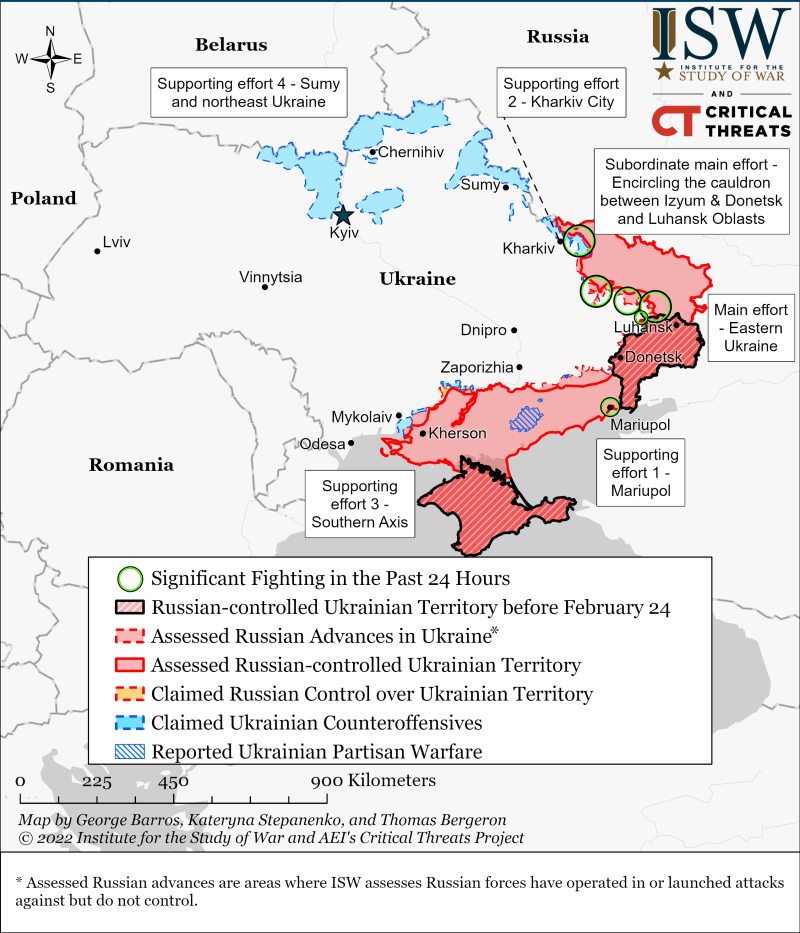
    In the current scenario, the second phase of Russian Military operation in the East and South has shown us the larger vulnerabilities Moscow has which are being countered through control of certain points in the region. By liberating the Donbass region in the east, Russia plans to create a buffer zone between itself and the west to stop future aggression and keep enemies at bay. But the extension of this buffer zone all the way to Odessa is indicative of other strategic considerations. Mariupol in the south of Ukraine is one of the many extended strategic points Russia now controls leading us to ask just why Mariupol is a game-changer in this conflict?

    The port city of Mariupol is a small area geographically, but it provides the land bridge for the Russian forces in the Crimean Peninsula to join the Military operation in the Donbas region. Moreover, it gives Russia a land bridge to Crimea from the Russian Mainland. According to General Sir Richard Barrons, former Commander of UK Joint Forces Command, Mariupol is crucial to Russia’s offensive movement, – “When the Russians feel they have successfully concluded that battle, they will have completed a land bridge from Russia to Crimea and they will see this a major strategic success.” [18]

    Source: ISW (Assessment on 09 May, 2022)

    If the port city of Mariupol is important for the creation of a land corridor, then the Sea of Azov which is adjacent to it is even more important due to its strategic position. [19] The three geopolitical reasons why this sea is important are as follows:

    1. The Sea of Azov is a major point for the economic and military well-being of Ukraine. Proximity to the frontlines of the Donbass region where the fighting between Ukrainian forces and Pro-Russian separatists is taking place makes the control of this sea vital to the Russian military as it helps weaken Ukrainian defence in the region via control of the Kerch Strait.
    2. Controlling the Sea of Azov is strategically important for Russia, to maintain its control in the Crimean Peninsula, which allows Moscow to resupply its forces through the Strait of Kerch.
    3. Finally, it also involves Eurasian politics into why Russia needs to control this region and here the discussion of the Volga-Don canal which links the Caspian Sea with the Sea of Azov comes to the fore. Russia has always used this canal to move warships between the Caspian Sea to the Black Sea and project its power in both regions. Moreover, Russia sees this connection as a significant strategic advantage in any future crisis.

    If Mariupol and the Sea of Azov are considered the most important strategically valuable features by Russia, there also exists the crucial points of Kherson and Odessa which will give Russia complete dominance of the Ukrainian coast line, thus giving larger access and control in the Black Sea region that has the potential to be militarised in the future in conflicts with the West. Moreover, it gives Russia a land corridor to Transnistria which is a Pro-Russian separatist area in Moldova and an opening into the Romanian border through Odessa, thus balancing the build-up of NATO forces in the region. 

    Conclusion

    The Ukrainian crisis is as much the West’s doing as Russia’s and an ear sympathetic to the Russian narrative might even say that the West took advantage of Russia when it was vulnerable immediately following the collapse of the Soviet Union in negotiations regarding the German state reunification and NATO enlargement.

    The bottom line is that, presently, Putin views NATO as an existential security threat to the Russian state and sees the US and its allies’ support of Ukraine as a challenge. Ukraine’s membership in the EU and NATO is a non-starter for Russia and pitting a Ukraine, that has a symbiotic relationship with Russia at all levels, against a slightly diminished but still formidable great power will have consequences for the security architecture and geopolitics of the region.  The Ukrainian crisis is as much the West’s doing as Russia’s and an ear sympathetic to the Russian narrative might even say that the West took advantage of Russia when it was vulnerable immediately following the collapse of the Soviet Union in negotiations regarding the German state reunification and NATO enlargement. On some level, NATO countries recognize the fact that Ukraine and Georgia can never be allowed membership into the North Atlantic alliance because the alternative of wilfully ignoring Russia’s security and national interests is just a recipe for disaster and might just launch the region into the single biggest armed conflict since World War 2. 

    References:

    [1] The White House. (2022, January 20). Remarks by president Biden in the press conference. https://www.whitehouse.gov/briefing-room/speeches-remarks/2022/01/19/remarks-by-president-biden-in-press-conference-6/

    [2] Savranskaya, S., Blanton, T. S., & Zubok, V. (2010). Masterpieces of history: The peaceful end of the Cold War in Europe, 1989. Central European University Press.

    [3] Putin, Vladimir. “Rossiya na Rubezhe Tysyacheletii,” Nesavisimaya Gazeta, December 30, 1999, quoted in D’Anieri, Paul (2019). Ukraine and Russia: From Civilized Divorce to Uncivil War. Cambridge University Press.

    [4] Ibid

    [5] Rettie, J. and James Meek, “Battle for Soviet Navy,” The Guardian, January 10, 1992

    [6] Ibid, no. iii

    [7] Solchanyk, R., Ukraine and Russia: The Post-Soviet Transition. Rowman and Littlefield Publishers. 2000.

    [8] Goldgeier, J. and Michael McFaul. “Power and Purpose: U.S. Policy Toward Russia after the Cold War”, Brookings Institution Press, 2003

    [9] Ibid, no. iii

    [10]  The comment was made by Gleb Pavlovskii, a Russian Political Scientist. quoted in Ben Judah (2013), Fragile Empire: How Russia Fell In and Out of Love with Vladimir Putin. New Haven, CT: Yale University Press, p. 85.

    [11] Ibid, no. iii

    [12] Wigell, M. and  A. Vihma, Geopolitics versus geoeconomics: the case of Russia’s geostrategy and its effects on the EU. International Affairs, 92: 605-627. May 6, 2016

    [13] Ibid, no. iii

    [14] Harper, J. (2021, December 23). Nord stream 2: Who wins, who loses? Deutsche Welle. https://www.dw.com/en/nord-stream-2-who-wins-who-loses/a-60223801

    [15] Ukraine: Nord stream 2 a ‘dangerous geopolitical weapon’. (2021, August 22). DW.COM. https://www.dw.com/en/ukraine-nord-stream-2-a-dangerous-geopolitical-weapon/a-58950076

    [16] Pifer, S. “Nord Stream 2: Background, Objectives and Possible Outcomes”, Brookings, April 2021 https://www.brookings.edu/research/nord-stream-2-background-objections-and-possible-outcomes/

    [17] WikiLeaks. (2008, August 14). UKRAINE, MAP, AND THE GEORGIA-RUSSIA CONFLICT, Canonical ID:08USNATO290_ahttps://wikileaks.org/plusd/cables/08USNATO290_a.html

    [18] Gardner, F. (2022, March 21). Mariupol: Why Mariupol is so important to Russia’s plan. BBC News. https://www.bbc.com/news/world-europe-60825226

    [19] Blank, S. (2018, November 6). Why is the Sea of Azov so important? Atlantic Council. https://www.atlanticcouncil.org/blogs/ukrainealert/why-is-the-sea-of-azov-so-important/

    Featured Image Credits: Financial Times

    [powerkit_button size="lg" style="info" block="true" url="https://admin.thepeninsula.org.in/2022/03/29/tpf-analysis-series-on-russia-ukraine-conflict/" target="_blank" nofollow="false"]
    TPF Analysis Series on Russia – Ukraine Conflict #1
    [/powerkit_button]

  • TPF Analysis Series on Russia – Ukraine Conflict #1

    TPF Analysis Series on Russia – Ukraine Conflict #1

    The Peninsula Foundation is releasing a series of analysis papers on the Ukraine-Russia conflict to help the public have a better understanding of the geo-political and security dimensions underlying the conflict. The first paper of the series will introduce you to an overview of the historical, political and humanitarian aspects of the ongoing conflict which is snowballing to be a major conflict and a turning point in Europe’s history since World War II.

    Russia – Ukraine History

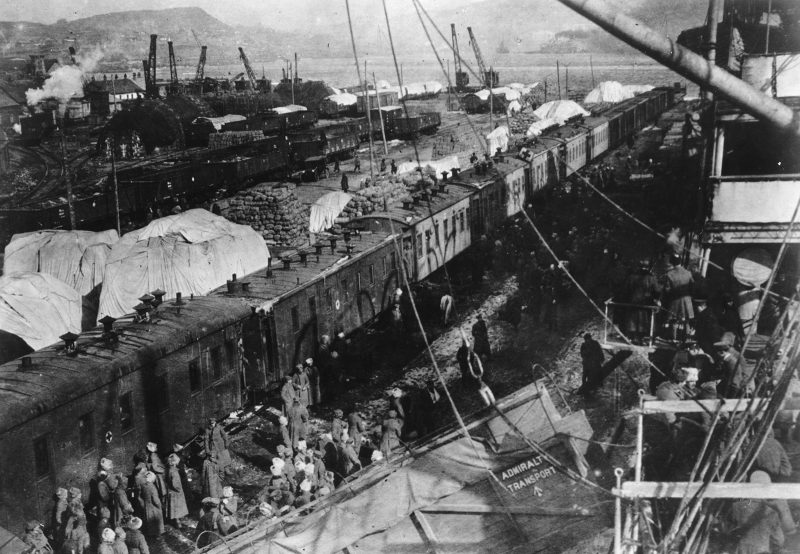
    Russia and Ukraine have had a long interwoven history, since as early as the 18th century. One of the most contested territories, Crimea, was first annexed by the Russian empire in 1783 back when it was controlled by the Crimean Khanate. The territory then became a part of the erstwhile Soviet Union in 1921, to be later controlled by Nazi Germany for a brief period in 1942. Following the end of World War II, the autonomous status of Crimea was dissolved as it now became a province of the USSR, but was later handed over to Ukraine as a goodwill gesture by Nikita Khrushchev in 1954 to mark the 300th anniversary of Ukraine’s reunification with the USSR.

    Crimea: White Russian refugees gathering at a Crimean port during the Russian Civil War.

    Image: Library of Congress, Washington, D.C.

    With the dissolution of the Soviet Union in 1991, many had expected Boris Yelsten to take up the issue and bring back Crimea to Russia, but instead, the Crimean parliament proclaimed the independence of its territory in May 1992, a proclamation only to be annulled by Ukraine. Over twenty years later, a similar referendum, with most of the Crimean population voting to join Russia – a referendum declared illegal by Ukrainian and European governments alike. What followed next was a dramatic escalation with the deployment of the Russian Black Sea Fleet.

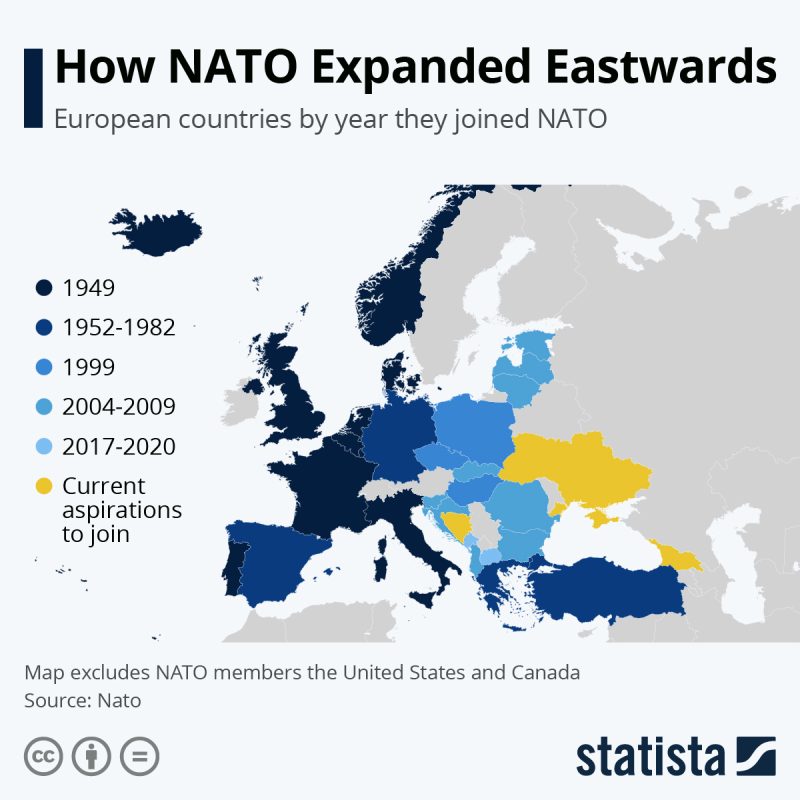
    Some have argued that NATO’s expansion towards the East is the primary cause of the war, since the organisation was formed primarily to counter the Soviet Union during the Cold War. While it must be acknowledged that such expansion was to be viewed by Russian officials as a provocation even back in the 1990s, the arguments, however, also take away the agency of states in Eastern Europe with most of them ‘demanding’ to join NATO, eager to reap the benefits of the West’s economic system. Over the years, several small states, including Georgia, Ukraine, Uzbekistan, Azerbaijan and Moldova, have seen their relationship with the West as a tool to bring regional stability, and increase their bargaining power against Russia.

    Events leading up to the war

    2021 was a year of security challenges that shook the world amid an ever-mutating Covid-19 pandemic. In October 2021, Russia started moving its troops and military equipment closer to the Ukraine border rekindling concerns of a potential invasion. By mid-December 2021, Russia’s Foreign Minister, Sergey Lavrov released a set of security guarantees and assurances to be met by the U.S. and NATO in exchange for non-intervention in Ukraine. Putin also threatened unspecified ‘military technical’ measures if the West fails to accede to his demands. Putin’s major demands were; (i) Ban on Ukraine entering NATO, (ii) No further expansion of NATO in the Eastern European region, (iii) Withdrawal of any troops or weapons deployed in countries which entered NATO after 1997 (Poland, Estonia, Lithuania, Latvia, and the Balkan countries), (iv) No NATO drills to be conducted in Ukraine, Georgia and Central Asia without prior agreement with Russia. Although NATO was formed to counter the USSR during the Cold War,  it continued its expansion into Eastern Europe territories even long after the dissolution of the USSR. Putin was threatened by the continuous NATO expansionism, the security implications and the loss of the Russian sphere of influence in Eastern Europe.

    The U.S. and NATO immediately rejected these main demands warning if Russia invades Ukraine, there will be serious retaliation and Russia will be met with a ‘massive forceful package’ of economic sanctions. Ukraine’s Foreign Minister Kuleba had said that although they were expecting and already experiencing aggressive Russian cyber-attacks and destabilisation of the Ukrainian economy, the number of Russian troops on the border was ‘insufficient’ and the build-up was missing some key military indicators to execute an imminent ‘full-scale invasion’ of Ukraine. Many experts and theorists also opined that despite Putin’s bold demands and his game of brinkmanship, the reality of war was in question.

    On 21st February, in a televised address Putin said that ‘Ukraine is an integral part of Russia’s history’ and declared the regions of Donetsk and Luhansk as independent Republic States and sent Russian troops into those regions for ‘peacekeeping’.

    The beginning of February showed some positive signs of diplomacy or at the least maintenance of the status quo between Ukraine and Russia despite the West’s declining Putin’s demands. However, it was only calm before the storm. On 21st February, in a televised address Putin said that ‘Ukraine is an integral part of Russia’s history’ and declared the regions of Donetsk and Luhansk as independent Republic States and sent Russian troops into those regions for ‘peacekeeping’. As a response to this, the US and other NATO members imposed economic sanctions on Russian parliament members, banks and other assets and Germany decisively halted the Nord Stream 2 gas pipeline project.

    ‘Special Military Operation’

    On 24th February, Putin announced a ’special military operation’ and Russian forces launched missile and artillery attacks on major Ukrainian cities including Kyiv. Ukrainian Foreign Minister affirmed that Russia has launched a ‘full-scale invasion of Ukraine’, following which Ukraine shut down its entire airspace as a response to the Russian operation in Donbas. The West imposed further sanctions on Russia including but not limited to, removing select Russian banks from the SWIFT system, freezing the assets of the Russian Central Bank and curbing products exported to Russia.

    Zaporizhzhia is a vital asset in fulfilling Ukraine’s energy requirements with six nuclear reactors with a capacity of generating 950MW per reactor. Capturing Zaporizhzhia nuclear power plant would have been a major plan of the invading forces given its strategic nature.

    Nearly four weeks since the Russian Federation launched a ‘special military operation’, the situation on the ground in Ukraine continues to remain dire. The United Nations Human Rights Monitoring Mission in Ukraine (HRMMU) has been responsible for documenting civilian casualties in Ukraine since 2014. In the span of three weeks, Ukraine’s infrastructure and cultural heritage have suffered irreparable damage or been completely destroyed. The ceaseless shelling by Russian forces of cities and hospitals have exacerbated the human toll.

    According to a press briefing released by the Office of the High Commissioner for Human Rights (OHCHR), civilian casualties as of 26 March 2022 stand at 2,909 – 1,119 people killed and 1,790 injured.

    The OHCHR assesses that actual figures might be higher than what is currently being reported as they wait for figures to be corroborated. Most of the civilian casualties are reportedly caused by explosive weapons with a wide impact area. This includes shelling from heavy artillery and multiple-launch rocket systems and missile and air strikes.

    In a rather unexpected move, on 4th March, 2022 the Russian forces attacked and captured the Zaporizhzhia nuclear power plant, located in Energodar, Ukraine. Zaporizhzhia is a vital asset in fulfilling Ukraine’s energy requirements with six nuclear reactors with a capacity of generating 950MW per reactor. Capturing Zaporizhzhia nuclear power plant would have been a major plan of the invading forces given its strategic nature.

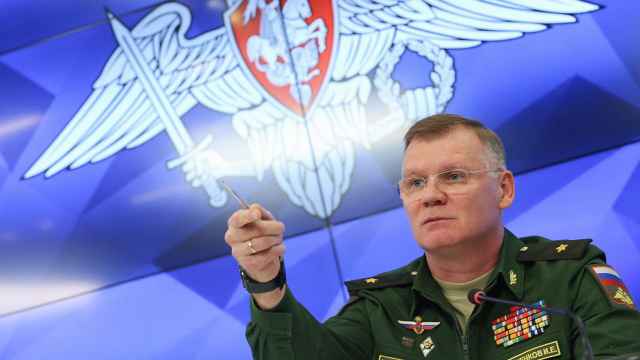
    The Russian attack on the nuclear plant raised alarm bells among nations and nuclear watchdogs. Intense shelling on the complex caused a fire in one of the training buildings. Reports have noted the damage to multiple locations within the complex. The Ukrainian government was quick to act and called it an “act of terror”. Contrary to Ukrainian claims, the Russian Ministry of Defence spokesperson Maj. Gen. Igor Konashenkov claimed that the entire event was a sabotage act by the Ukrainian forces. With Chernobyl captured very early in the invasion, the attack on Zaporizhzhia nuclear power plant raises questions about the safety and security of nuclear infrastructures during times of crisis.

    On March 9, 2022, a hospital in Mariupol that also housed a maternity ward came under attack. It was reported that at least 4 people were killed in the bombing, including a pregnant woman. Presently, Mariupol is seeing some of the fiercest attacks, since the port city is a strategic target for Russia. It is estimated that some 300,000 people are trapped with supplies running low. The Russian Federation’s offer of safe passage out of Mariupol for the Ukrainian people has been summarily rejected by Ukraine’s Deputy Prime Minister Iryna Vereshchuk who was quoted saying, “There can be no question of any surrender, laying down of arms”.

    Other areas to have been hit include Kyiv, Kharkiv, Borodyanka, Ochakiv, Sumy, Mykolaiv, Odessa etc. On March 1, the Central Freedom Square in Kharkiv was bombed that leaving both the administrative building and surrounding structures destroyed. On 14 March the Ukrainian health minister Viktor Liashko reported that nearly 100 hospitals had been damaged. As of 17 March, the World Health Organisation (WHO) has verified 44 instances of attacks on healthcare facilities in Ukraine. 

    West’s Sanctions

    The global media coverage of the invasion can be best described as a cacophony of partisanship. The western media has been charged with accusations of brushing off Russian security concerns and, of course, brazen racism. It has followed its own orientalist approach to present the crisis as a result of Russian imperialism.

    The West has swiftly responded by imposing sanctions; a course of action meant to deter and halt Russia’s actions in Ukraine. Germany’s Chancellor Olaf Scholz announced halting final approval for the Nord Stream 2 gas pipeline following Russia’s recognition of two breakaway regions of Eastern Ukraine – Luhansk and Donetsk.

    On 8 March, President Biden, with bipartisan support, announced that the US would be banning imports of Russian oil, gas and energy. The UK also announced that it would phase out Russian oil imports by the end of 2022 on the same day. Both the US and the UK are working with their European counterparts to reduce dependency on Russian hydrocarbon imports. The European Commission responded to Russia’s aggression in Ukraine by stating that the EU countries would work to become independent of Russian energy imports “well before 2030”. Other economic deterrents imposed have been the ban on exports of luxury goods like vehicles, fashion and art to Russia by the UK and EU. The UK has also imposed a 35% tax on imports from Russia, including vodka. Russian oligarchs’ assets in the US, UK and the EU have been targeted. Sanctions have also been imposed on former Russian leaders, ministers and current members of the Russian Parliament.

    Russian flights and private jets have been banned from the US, UK, EU and Canadian airspaces. The G7 countries have also stripped Russia of its “most favoured nation” status; a move that will impact Russia’s trade. Assets of most Russian banks have been frozen and some of them have been removed from the international financial system SWIFT. Other countries to have imposed sanctions on Russia include Japan, Taiwan, New Zealand, Australia and Switzerland. Australia moved to ban exports of alumina and aluminium ore, including bauxite to Russia. Russia relies on Australia for 20% of its alumina requirements – aluminium being a major export for Russia. Several energy, automobile, tech, financial, food and fashion companies have also halted operations in Russia – Exxon, Shell, Apple, Alphabet, Goldman Sachs, JP Morgan, Ferrari, Harley-Davidson, Nike, McDonald’s etc.

    Globally, the impact of the Russia-Ukraine war has been felt in oil markets as prices continue to surge to well over $100 per barrel. Russia’s response to being hit with global sanctions has been to ban the exports of over 200 products, including telecoms, electrical equipment, agricultural, medical goods etc. However, this list does not include energy and raw material resources. It has also banned and blocked interest payments to foreign investors and dividends to overseas shareholders and also banned the sale of Russian stocks and bonds held by foreign investors. It has also passed a decree suspending the IP rights of ‘unfriendly countries’.

    On 15 March, President Zelensky said that it must be accepted that Ukraine will not become a member of NATO, possibly appeasing one of Putin’s major security concerns. Additionally, on 15 March, Moscow announced its decision to withdraw from the Council of Europe after 26 years of membership, hours ahead of a formal decision taken by the Council to expel Russia over its aggression in Ukraine. The move also means that Russia will no longer be a signatory to the European Convention on Human Rights, depriving its citizens of the right to appeal to the European Court of Human Rights. A statement from the Russian foreign ministry cited that the EU and NATO had “destroyed” the Council of Europe and turned the organisation into an “anti-Russia policy tool”.

    Russia also made the decision to sanction President Biden, Prime Minister Trudeau and several top US officials. The list includes Secretary of State Anthony Blinken, Defence Secretary Lloyd Austin, National Security Advisor Jake Sullivan, CIA Director William Burns, WH Press Secretary Jen Psaki and former Secretary of State and Democratic Presidential candidate Hilary Clinton.

    The global media coverage of the invasion can be best described as a cacophony of partisanship. The western media has been charged with accusations of brushing off Russian security concerns and, of course, brazen racism. It has followed its own orientalist approach to present the crisis as a result of Russian imperialism. Popular Russian media channels such as RT and Sputnik have been banned by YouTube across Europe, essentially leading to the West dominating the information warfare, controlling the narrative and presenting a one-sided perspective to the world.  The Russian Federal Service for Supervision of Communications, Information Technology and Mass Media, commonly known as the Roskomnadzor, released a statement informing media and other information sources that any publication regarding the ‘special military operation’ must only use the information received from Russian officials. Several independent Russian media outlets like Ekho Moskvy, InoSMI, Mediazona, New Times, Dozhd, Svobodnaya Pressa, Krym, Realii, Novaya Gazeta, Journalist, Lenizdat etc. were sent notifications by the Roskomnadzor on allegations of reporting false information regarding the actions of the Russian Army, shelling in Ukrainian cities and referring to the military operation as ‘war’, ‘invasion’ and ‘attack’. Nonetheless, some media houses have stood up to the pressure to report more appropriately.

    The war in Ukraine could also leave lasting environmental damage, being a highly industrialised state. The threat of radiation resulting from an attack on any one of Ukraine’s nuclear plants could have devastating consequences. Carcinogenic dust from bombed buildings, groundwater contaminations from spilled chemicals and attacks on industrial facilities will have a lasting impact on the health of the people in the country.

    UN Response

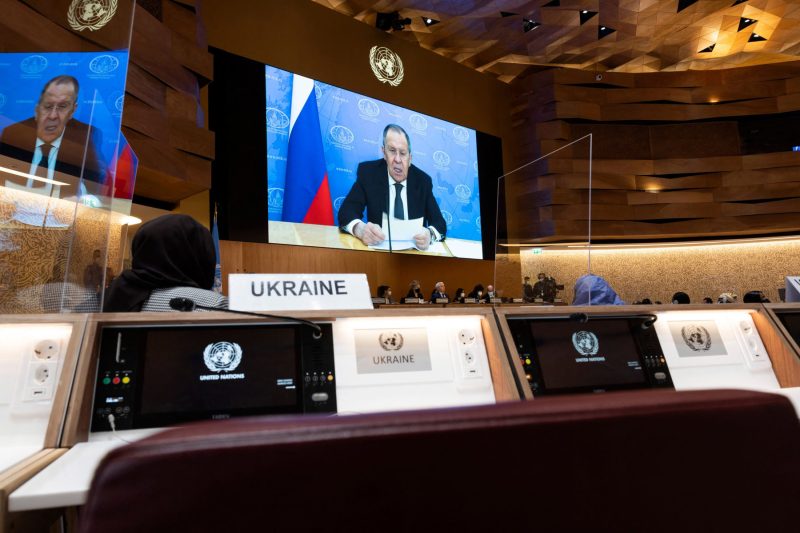
    As Russian troops continue to shell Ukrainian cities, the various United Nations bodies have called for emergency meetings, albeit with no successful outcome to halt the war. In February 2022, a Security Council meeting calling for a resolution to condemn the Russian military operations and demanding an end to Russian attacks had similarly failed with the resolution having been vetoed by Russia.

    Although Putin’s end may not justify his means, one needs to look at this crisis holistically and historically. Putin may have been the one to declare war, but the triggering and contributing events and actions by NATO and the US should also be taken into consideration while analysing this conflict.

    However, the United Nations has been swift with its humanitarian response, an effort visible with its coordinated appeals calling for the allocation of an estimated USD 1.7 billion to help the Ukrainians. Dividing the allocation of funds into two categories – one for people within Ukraine, and the other for its comprehensive response towards refugees coming from Ukraine, the United Nations’ relief efforts have seen one of the most generous responses to its funding appeal. Further, as fighting continues amidst multiple rounds of talks between Russia and Ukraine, UN Agencies, including UNICEF, continue to supply humanitarian aid, including medical supplies to the country. As part of its cash-response strategy, the UN agencies have additionally planned to implement its program of cash-for-rent assistance, where they seek to provide the affected population with the resources to find themselves an accommodation, in order to avoid large-scale displacement.

    Although Putin’s end may not justify his means, one needs to look at this crisis holistically and historically. Putin may have been the one to declare war, but the triggering and contributing events and actions by NATO and the US should also be taken into consideration while analysing this conflict. It seems to be that Putin has not entered into an all-out war yet, as his objectives and weaponry employed are limited. In the forthcoming series of analyses, The Peninsula Foundation delves into each of the facets of the conflict mentioned in this paper.

    Featured Image Credits: The Times

    NATO Expansion Image Credits: Statista

    Russian General Image Credits: Moscow Times

    UNSC Image Credits: Harvard Law Today

  • From Cold War to Hot Peace

    From Cold War to Hot Peace

    In a world shaped by the iron logic of markets and national interests, Vladimir Putin’s atavistic war of conquest has mystified the “deep” strategists of realpolitik. Their mistake was to forget that under global capitalism, cultural, ethnic, and religious conflicts are the only forms of political struggle left.

    With the Russian invasion of Ukraine, we are entering a new phase of warfare and global politics. Aside from a heightened risk of nuclear catastrophe, we are already in a perfect storm of mutually reinforcing global crises – the pandemic, climate change, biodiversity loss, and food and water shortages. The situation exhibits a basic madness: at a time when humanity’s very survival is jeopardized by ecological (and other) factors, and when addressing those threats should be prioritized over everything else, our primary concern has suddenly shifted – again – to a new political crisis. Just when global cooperation is needed more than ever, the “clash of civilizations” returns with a vengeance.

    Why does this happen? As is often the case, a little Hegel can go a long way toward answering such questions. In the Phenomenology of Spirit, Hegel famously describes the dialectic of master and servant, two “self-consciousnesses” locked in a life-or-death struggle. If each is ready to risk his own life to win, and if both persist in this, there is no winner: one dies, and the survivor no longer has anyone to recognize his own existence. The implication is that all of history and culture rest on a foundational compromise: in the eye-to-eye confrontation, one side (the future servant) “averts its eyes,” unwilling to go to the end.

    But Hegel would hasten to note that there can be no final or lasting compromise between states. Relationships between sovereign nation-states are permanently under the shadow of potential war, with each epoch of peace being nothing more than a temporary armistice. Each state disciplines and educates its own members and guarantees civic peace among them, and this process produces an ethic that ultimately demands acts of heroism – a readiness to sacrifice one’s life for one’s country. The wild, barbarian relations between states thus serve as the foundation of the ethical life within states.

    North Korea represents the clearest example of this logic, but there are also signs that China is moving in the same direction. According to friends in China (who must remain unnamed), many authors in Chinese military journals now complain that the Chinese army hasn’t had a real war to test its fighting ability. While the United States is permanently testing its army in places like Iraq, China hasn’t done so since its failed intervention in Vietnam in 1979.

    At the same time, Chinese official media have begun to hint more openly that since the prospect of Taiwan’s peaceful integration into China is dwindling, a military “liberation” of the island will be needed. As ideological preparation for this, the Chinese propaganda machine has increasingly urged nationalist patriotism and suspicion toward everything foreign, with frequent accusations that the US is eager to go to war for Taiwan. Last fall, Chinese authorities advised the public to stock up on enough supplies to survive for two months “just in case.” It was a strange warning that many perceived as an announcement of imminent war.

    This tendency runs directly against the urgent need to civilize our civilizations and establish a new mode of relating to our environs. We need universal solidarity and cooperation among all human communities, but this objective is made far more difficult by the rise of sectarian religious and ethnic “heroic” violence and a readiness to sacrifice oneself (and the world) for one’s specific cause. In 2017, the French philosopher Alain Badiou noted that the contours of a future war are already discernible. He foresaw:

    “…the United States and their Western-Japanese group on the one side, China and Russia on the other side, atomic arms everywhere. We cannot but recall Lenin’s statement: ‘Either revolution will prevent the war or the war will trigger revolution.’ This is how we can define the maximal ambition of the political work to come: for the first time in history, the first hypothesis – revolution will prevent the war – should realize itself, and not the second one – a war will trigger revolution. It is effectively the second hypothesis which materialized itself in Russia in the context of the First World War, and in China in the context of the second. But at what price! And with what long-term consequences!”

    The Limits of Realpolitik

    Civilizing our civilizations will require radical social change – a revolution, in fact. But we cannot afford to hope that a new war will trigger it. The far more likely outcome is the end of civilization as we know it, with the survivors (if there are any) organized in small authoritarian groups. We should harbor no illusions: in some basic sense, World War III has already begun, though for now it is still being fought mostly through proxies.

    Abstract calls for peace are not enough. “Peace” is not a term that allows us to draw the key political distinction that we need. Occupiers always sincerely want peace in the territory they hold. Nazi Germany wanted peace in occupied France, Israel wants peace in the occupied West Bank, and Russian President Vladimir Putin wants peace in Ukraine. That is why, as the philosopher Étienne Balibar once put it, “pacifism is not an option.” The only way to prevent another Great War is by avoiding the kind of “peace” that requires constant local wars for its maintenance.

    Whom can we rely on under these conditions? Should we place our confidence in artists and thinkers, or in pragmatic practitioners of realpolitik? The problem with artists and thinkers is that they, too, can lay the foundation for war. Recall William Butler Yeats’s apt verse: “I have spread my dreams under your feet, / Tread softly because you tread on my dreams.” We should apply these lines to poets themselves. When they spread their dreams under our feet, they should spread them carefully because actual people will read them and act upon them. Recall that the same Yeats continuously flirted with Fascism, going so far as to voice his approval of Germany’s anti-Semitic Nuremberg Laws in August 1938.

    Plato’s reputation suffers because of his claim that poets should be thrown out of the city. Yet this is rather sensible advice, judging from the experience of recent decades, when the pretext for ethnic cleansing has been prepared by poets and “thinkers” like Putin’s house ideologue, Aleksandr Dugin. There is no longer ethnic cleansing without poetry, because we live in an era that is supposedly post-ideological. Since great secular causes no longer have the force to mobilize people for mass violence, a larger sacred motive is needed. Religion or ethnic belonging serve this role perfectly (pathological atheists who commit mass murder for pleasure are rare exceptions).

    Realpolitik is no better guide. It has become a mere alibi for ideology, which often evokes some hidden dimension behind the veil of appearances in order to obscure the crime that is being committed openly. This double mystification is often announced by describing a situation as “complex.” An obvious fact – say, an instance of brutal military aggression – is relativized by evoking a “much more complex background.” The act of aggression is really an act of defense.

    This is exactly what is happening today. Russia obviously attacked Ukraine, and is obviously targeting civilians and displacing millions. And yet commentators and pundits are eagerly searching for “complexity” behind it.

    There is complexity, of course. But that does not change the basic fact that Russia did it. Our mistake was that we did not interpret Putin’s threats literally enough; we thought he was just playing a game of strategic manipulation and brinkmanship. One is reminded of the famous joke that Sigmund Freud quotes:

    “Two Jews met in a railway carriage at a station in Galicia. ‘Where are you going?’ asked one. ‘To Cracow,’ was the answer. ‘What a liar you are!’ broke out the other. ‘If you say you’re going to Cracow, you want me to believe you’re going to Lemberg. But I know that in fact you’re going to Cracow. So why are you lying to me?’”

    When Putin announced a military intervention, we didn’t take him literally when he said he wanted to pacify and “denazify” Ukraine. Instead, the reproach from disappointed “deep” strategists amounts to: “Why did you tell me you are going to occupy Lviv when you really want to occupy Lviv?”

    This double mystification exposes the end of realpolitik. As a rule, realpolitik is opposed to the naivety of binding diplomacy and foreign policy to (one’s version of) moral or political principles. Yet in the current situation, it is realpolitik that is naive. It is naive to suppose that the other side, the enemy, is also aiming at a limited pragmatic deal.

    Force and Freedom

    During the Cold War, the rules of superpower behavior were clearly delineated by the doctrine of mutual assured destruction (MAD). Each superpower could be sure that if it decided to launch a nuclear attack, the other side would respond with full destructive force. As a result, neither side started a war with the other.

    By contrast, when North Korea’s Kim Jong-un talks about dealing a devastating blow to the US, one cannot but wonder where he sees his own position. He talks as if he is unaware that his country, himself included, would be destroyed. It is as if he is playing an altogether different game called NUTS (Nuclear Utilization Target Selection), whereby the enemy’s nuclear capabilities can be surgically destroyed before it can counterstrike.

    Over the past few decades, even the US has oscillated between MAD and NUTS. Though it acts as if it continues to trust the MAD logic in its relations with Russia and China, it has occasionally been tempted to pursue a NUTS strategy vis-à-vis Iran and North Korea. With his hints about possibly launching a tactical nuclear strike, Putin follows the same reasoning. The very fact that two directly contradictory strategies are mobilized simultaneously by the same superpower attests to the fantasy character of it all.

    Unfortunately for the rest of us, MADness is passé. Superpowers are increasingly testing each other, experimenting with the use of proxies as they try to impose their own version of global rules. On March 5, Putin called the sanctions imposed on Russia the “equivalent of a declaration of war.” But he has repeatedly stated since then that economic exchange with the West should continue, emphasizing that Russia is keeping its financial commitments and continuing to deliver hydrocarbons to Western Europe.

    In other words, Putin is trying to impose a new model of international relations. Rather than cold war, there should be hot peace: a state of permanent hybrid war in which military interventions are declared under the guise of peacekeeping and humanitarian missions.

    Hence, on February 15, the Russian Duma (parliament) issued a declaration expressing “its unequivocal and consolidated support for the adequate humanitarian measures aimed at providing support to residents of certain areas of the Donetsk and Lugansk regions of Ukraine who have expressed a desire to speak and write in Russian language, who want freedom of religion to be respected, and who do not support the actions of the Ukrainian authorities violating their rights and freedoms.”

    How often in the past have we heard similar arguments for US-led interventions in Latin America or the Middle East and North Africa? While Russia shells cities and bombs maternity wards in Ukraine, international commerce should continue. Outside of Ukraine, normal life should go on. That is what it means to have a permanent global peace sustained by never-ending peacekeeping interventions in isolated parts of the world.

    Can anyone be free in such a predicament? Following Hegel, we should make a distinction between abstract and concrete freedom, which correspond to our notions of freedom and liberty. Abstract freedom is the ability to do what one wants independently of social rules and customs; concrete freedom is the freedom that is conferred and sustained by rules and customs. I can walk freely along a busy street only when I can be reasonably sure that others on the street will behave in a civilized way toward me – that drivers will obey traffic rules, and that other pedestrians will not rob me.

    But there are moments of crisis when abstract freedom must intervene. In December 1944, Jean-Paul Sartre wrote: “Never were we freer than under the German occupation. We had lost all our rights, and first of all our right to speak. They insulted us to our faces. … And that is why the Resistance was a true democracy; for the soldier, as for his superior, the same danger, the same loneliness, the same responsibility, the same absolute freedom within the discipline.”

    Sartre was describing freedom, not liberty. Liberty is what was established when post-war normality returned. In Ukraine today, those who are battling the Russian invasion are free and they are fighting for liberty. But this raises the question of how long the distinction can last. What happens if millions more people decide that they must freely violate the rules in order to protect their liberty? Is this not what drove a Trumpian mob to invade the US Capitol on January 6, 2021?

    The Not-so-Great Game

    We still lack a proper word for today’s world. For her part, the philosopher Catherine Malabou believes we are witnessing the beginning of capitalism’s “anarchist turn”: “How else are we to describe such phenomena as decentralized currencies, the end of the state’s monopoly, the obsolescence of the mediating role played by banks, and the decentralization of exchanges and transactions?”

    Those phenomena may sound appealing, but with the gradual disappearance of the state’s monopoly, state-imposed limits to ruthless exploitation and domination will also disappear. While anarcho-capitalism aims at transparency, it also “simultaneously authorizes the large-scale but opaque use of data, the dark web, and the fabrication of information.”

    To prevent this descent into chaos, Malabou observes, policies increasingly follow a path of “Fascist evolution…with the excessive security and military build-up that goes along with it. Such phenomena do not contradict a drive towards anarchism. Rather, they indicate precisely the disappearance of the state, which, once its social function has been removed, expresses the obsolescence of its force through the use of violence. Ultra-nationalism thus signals the death agony of national authority.”

    Viewed in these terms, the situation in Ukraine is not one nation-state attacking another nation-state. Rather, Ukraine is being attacked as an entity whose very ethnic identity is denied by the aggressor. The invasion is justified in the terms of geopolitical spheres of influence (which often extend well beyond ethnic spheres, as in the case of Syria). Russia refuses to use the word “war” for its “special military operation” not just to downplay the brutality of its intervention but above all to make clear that war in the old sense of an armed conflict between nation-states does not apply.

    The Kremlin wants us to believe that it is merely securing “peace” in what it considers its geopolitical sphere of influence. Indeed, it is also already intervening through its proxies in Bosnia and Kosovo. On March 17, the Russian ambassador to Bosnia, Igor Kalabukhov, explained that, “If [Bosnia] decides to be a member of any alliance [such as NATO], that is an internal matter. Our response is a different matter. Ukraine’s example shows what we expect. Should there be any threat, we will respond.”

    Moreover, Russian Foreign Minister Sergei Lavrov has gone so far as to suggest that the only comprehensive solution would be to demilitarize all of Europe, with Russia with its army maintaining peace through occasional humanitarian interventions. Similar ideas abound in the Russian press. As the political commentator Dmitry Evstafiev explains in a recent interview with a Croatian publication: “A new Russia is born which lets you know clearly that it doesn’t perceive you, Europe, as a partner. Russia has three partners: USA, China, and India. You are for us a trophy which shall be divided between us and Americans. You didn’t yet get this, although we are coming close to this.”

    Dugin, Putin’s court philosopher, grounds the Kremlin’s stance in a weird version of historicist relativism. In 2016, he said:

    “Post-modernity shows that every so-called truth is a matter of believing. So we believe in what we do, we believe in what we say. And that is the only way to define the truth. So we have our special Russian truth that you need to accept…. If the United States does not want to start a war, you should recognize that United States is not any more a unique master. And [with] the situation in Syria and Ukraine, Russia says, ‘No you are not any more the boss.’ That is the question of who rules the world. Only war could decide really.”

    This raises an obvious question: What about the people of Syria and Ukraine? Can they not also choose their truth and belief, or are they just a playground – or battlefield – of the big “bosses”? The Kremlin would say they don’t count in the big division of power. Within the four spheres of influence, there are only peacekeeping interventions. War proper happens only when the four big bosses cannot agree on the borders of their spheres – as in the case of China’s claims to Taiwan and the South China Sea.

    A New Non-Alignment

    But if we can be mobilized only by the threat of war, not by the threat to our environment, the liberty we will get if our side wins may not be worth having. We are faced with an impossible choice: if we make compromises to maintain peace, we are feeding Russian expansionism, which only a “demilitarization” of all of Europe will satisfy. But if we endorse full confrontation, we run the high risk of precipitating a new world war. The only real solution is to change the lens through which we perceive the situation.

    While the global liberal-capitalist order is obviously approaching a crisis at many levels, the war in Ukraine is being falsely and dangerously simplified. Global problems like climate change play no role in the hackneyed narrative of a clash between barbaric-totalitarian countries and the civilized, free West. And yet the new wars and great-power conflicts are also reactions to such problems. If the issue is survival on a planet in trouble, one should secure a stronger position than others. Far from being the moment of clarifying truth, and when the basic antagonism is laid bare, the current crisis is a moment of deep deception.

    While we should stand firmly behind Ukraine, we must avoid the fascination with war that has clearly seized the imaginations of those who are pushing for an open confrontation with Russia. Something like a new non-aligned movement is needed, not in the sense that countries should be neutral in the ongoing war, but in the sense that we should question the entire notion of the “clash of civilizations.”

    According to Samuel Huntington, who coined the term, the stage for a clash of civilizations was set at the Cold War’s end, when the “iron curtain of ideology” was replaced by the “velvet curtain of culture.” At first blush, this dark vision may appear to be the very opposite of the end-of-history thesis advanced by Francis Fukuyama in response to the collapse of communism in Europe. What could be more different from Fukuyama’s pseudo-Hegelian idea that the best possible social order humanity could devise had at last been revealed to be capitalist liberal democracy?

    We can now see that the two visions are fully compatible: the “clash of civilizations” is the politics that comes at the “end of history.” Ethnic and religious conflicts are the form of struggle that fits with global capitalism. In an age of “post-politics” – when politics proper is gradually replaced by expert social administration – the only remaining legitimate sources of conflict are cultural (ethnic, religious). The rise of “irrational” violence follows from the depoliticization of our societies.

    Within this limited horizon, it is true that the only alternative to war is a peaceful coexistence of civilizations (of different “truths,” as Dugin put it, or, to use a more popular term today, of different “ways of life”). The implication is that forced marriages, homophobia, or the rape of women who dare to go out in public alone are tolerable if they happen in another country, so long as that country is fully integrated into the global market.

    The new non-alignment must broaden the horizon by recognizing that our struggle should be global – and by counseling against Russophobia at all costs. We should offer our support to those within Russia who are protesting the invasion. They are not some abstract coterie of internationalists; they are the true Russian patriots – the people who truly love their country and have become deeply ashamed of it since February 24. There is no more morally repulsive and politically dangerous saying than, “My country, right or wrong.” Unfortunately, the first casualty of the Ukraine war has been universality.

    This essay was published earlier in Project Syndicate.
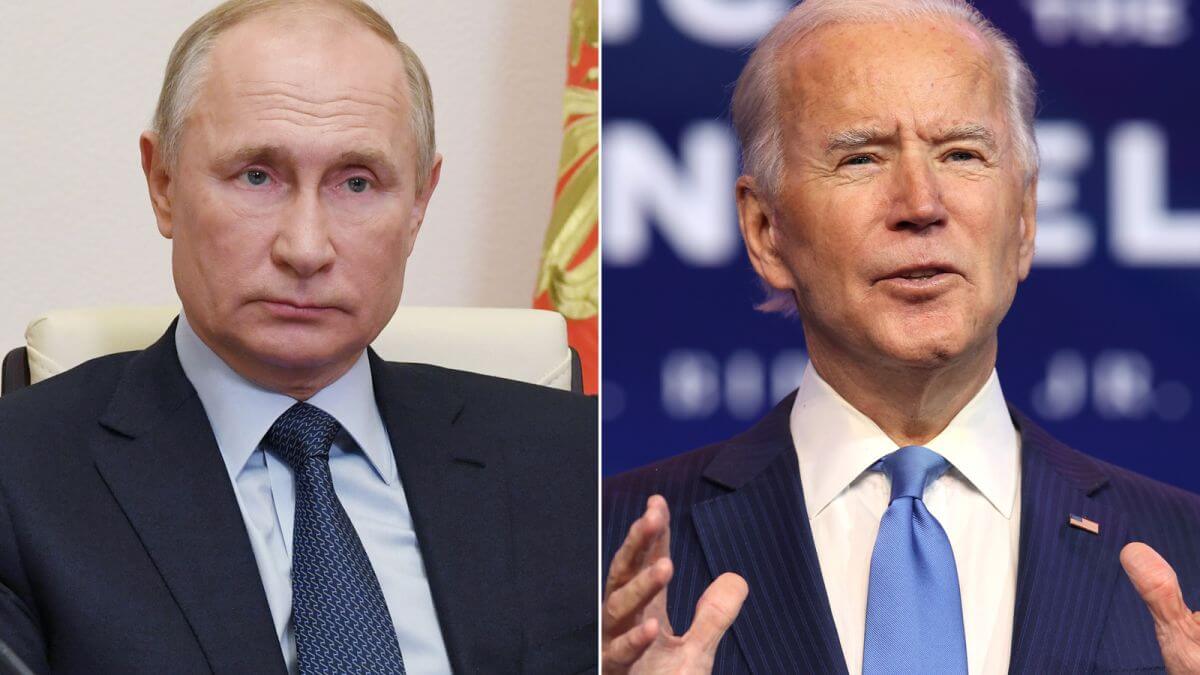
  • Calling Putin a ‘killer’ with ‘no soul’ is not exactly diplomatic finesse

    Calling Putin a ‘killer’ with ‘no soul’ is not exactly diplomatic finesse

    Category: External Article – ‘Responsible Statecraft’

    Title: Calling Putin “a killer” is not exactly diplomatic finesse

    Author: Anatol Lieven

    The Biden administration has created an completely unnecessary confrontation with Russia at a time when reasonable working relations with Moscow are extremely important for achieving two immediate and key administration goals: rejoining the nuclear agreement with Iran, and a peace settlement in Afghanistan facilitating U.S. military withdrawal from that country and an end to America’s longest war.


    Read More