Tag: Politics

  • An Identity Crisis: Book Review of “The Battle of Belonging”

    An Identity Crisis: Book Review of “The Battle of Belonging”

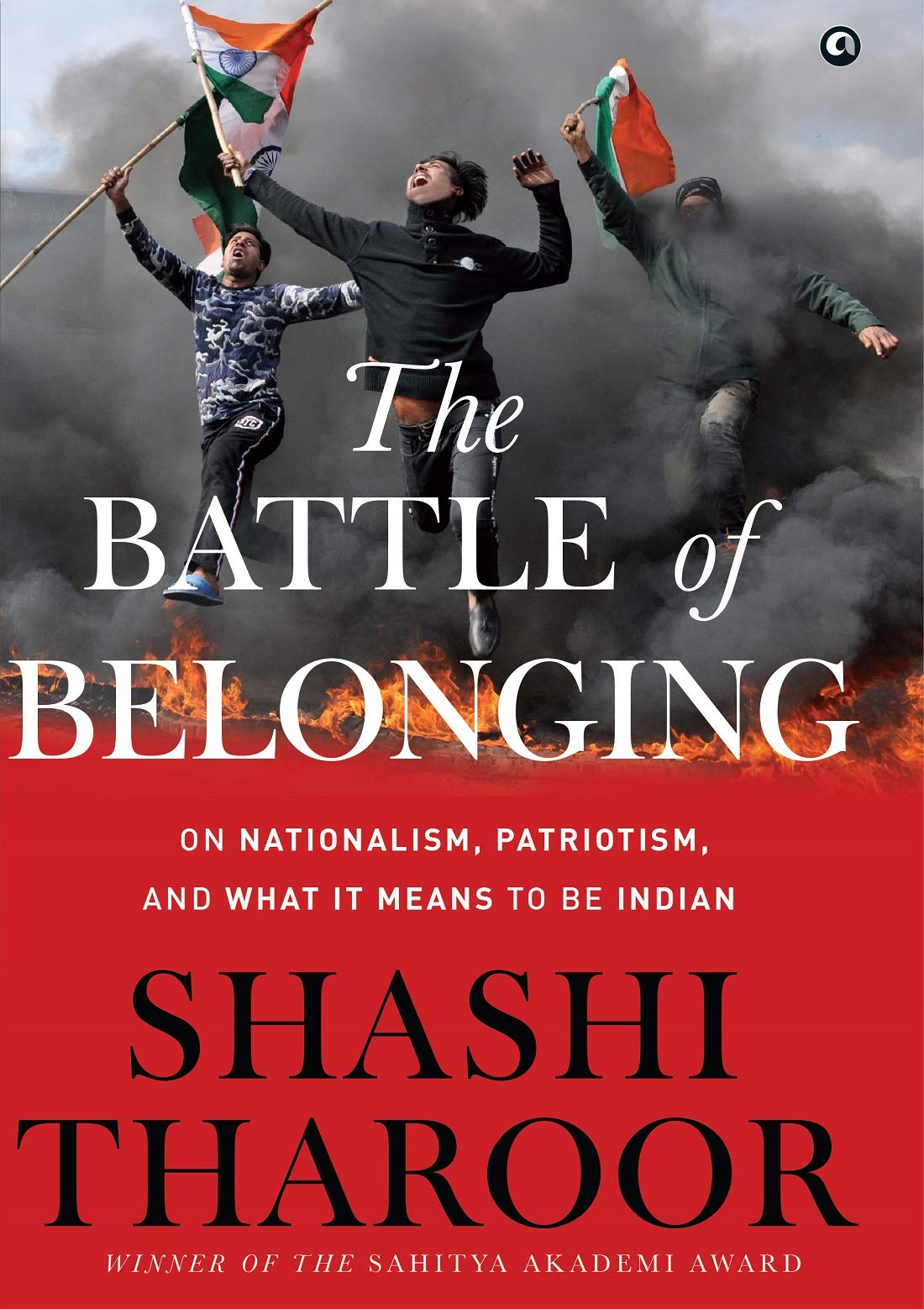
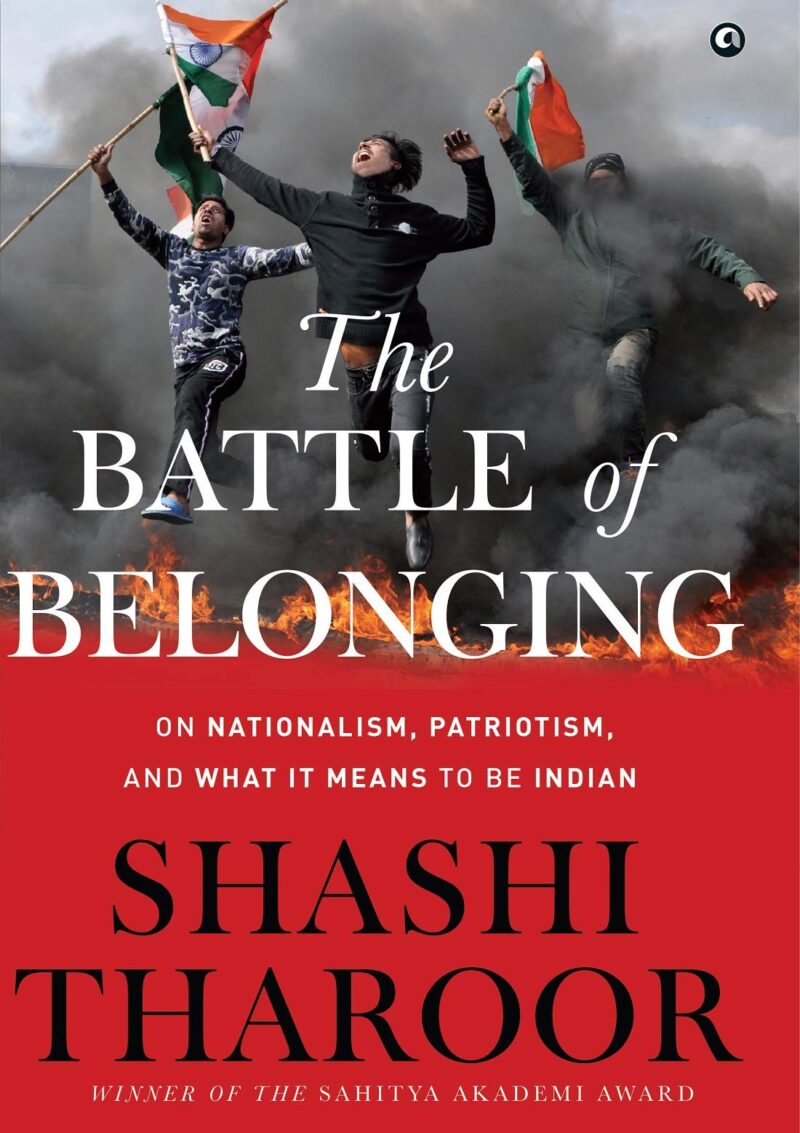
    Book Name: The Battle Of Belonging: On Nationalism, Patriotism, And What It Means To Be Indian

    Author: Shashi Tharoor

    Publisher: Aleph Book Company

    Year of Publication: October 2020

    Pages: 462


    The cataclysm of Right-wing extremism has seized global politics. From the United States to Britain and New Zealand, the agenda appears dominant. Among them, in the present context, India is no exception. From cow vigilantism to scathing attacks on minority groups, the question of what it means to be an Indian is contested and debated as never before. Dr Shashi Tharoor, Member of Parliament for the Tiruvananthapuram constituency, in his latest book, ‘The Battle of Belonging’ attempts to redefine what exactly it meant to be an Indian and addresses the present identity crisis in India. Dr Tharoor writes about the subtle mechanism which provides more space for civic nationalism in India in the present times.

    From multiple angles, The Battle of Belonging comes out as a sequel to his previous books, ‘Why I am a Hindu’ and ‘The Paradoxical Prime Minister’. In this book, Tharoor addresses the concept of nationalism and patriotism. According to him, the concept of nationalism in India is flawed unlike the concept of nationalism enshrined in the Indian constitution. Through this book, the author asks the readers to dive into the Indian constitution and understand its rationale. He raises key questions such as, ‘has India’s nationalism really been reshaped?’ and stresses the pitfalls that India would face in the future as the plague of extremism spreads. He also envisions a space for civic nationalism, as envisioned by Mahatma Gandhi, Jawaharlal Nehru, B R Ambedkar, and Rabindranath Tagore. The book is divided into six volumes and each section narrates the evolution of nationalism till the current phase.

    According to Tharoor, civic nationalism is cemented on the principles of liberal democracy and equality for all. However, ethnic nationalism or ethnocentric nations erode these principles and peddles a path for Majoritarianism.

    In the first phase, Tharoor unravels the evolution of the concept of ‘Nationalism’ and distinguishes it from the concept of ‘Patriotism’. To furnish a literary overview of the concept, the author espouses the visions of Kautilya, Thomas Hobbes, Ernest Hemmingway, Jawaharlal Nehru, Mahatma Gandhi, and Rabindranath Tagore. He also takes insights from his former diplomatic career. In this very section, Tharoor offers different typologies of nationalism. Among them ‘ethnic nationalism’ and ‘civic nationalism’ dominates the discourse. According to him, civic nationalism is cemented on the principles of liberal democracy and equality for all. However, ethnic nationalism or ethnocentric nations erode these principles and peddles a path for Majoritarianism. Throughout the book, he lashes out at the ruling Bhartiya Janata Party (BJP) for breaking the fabric of civic nationalism.

    The second section of the book is vast and extensively researched. In this section, the author gleans several facts on the concepts of unity in diversity. The book also extensively discusses the difference between Hinduism and Hindutva, where the Rashtriya Swayamsevak Sangh (RSS) is fabricating a new ethos of Hindu Dominance. The book also advances in a way all Indians are a minority in one way or other from a vantage point of view. The author raises the question of an individual’s right to choose his identity regardless of his caste, gender, or whatsoever criteria. 

    The third section explores the Hindutva version of India, investigating how right-wing fringe groups attempt to fabricate a dawn of Hindutva society, where minorities are pushed aside. Here in part, the author delves into the philosophies of Savarkar, Golwankar, and Deen Dayal Upadhaya and how they opposed the Indian constitution. B R Ambedkar envisioned a society that opened space for all. On the other hand, the aforesaid champions envisioned a ‘Hindu Rashtra’, that was contrary to the ideas of Gandhi, Nehru, Ambedkar, and Tagore. In this section, Tharoor speaks on one of his controversial comments, ‘Hindu Pakistan’. He expresses his prolonged anxiety about the possibility of India turning into an autocratic nation like Pakistan. Even though the concept is far-fetched, the ruling party’s majority in the lower house provides no guarantee in this matter.

    India has a prolonged history of accommodating persecuted minorities, whether it be Jews, Parsis and Bangladeshis, and offering them a platform to instil their roots in India and be a part of the nation.

    The fourth section of the book talks about recent events such as the abrogation of Article 370 in Jammu and Kashmir, the Citizenship Amendment Act (CAA), the issue of the National Register of Citizens (NRC), the act of imposing Hindi on the non-Hindi speaking states and the case of the Ayodhya Ram temple. Tharoor condemns the act of imposing Hindi onto the shoulders of non-Hindi speaking states. He also questions the flag bearers of Hindi on whether they will dare to take up the challenge of learning another language other than Hindi.

    The CAA and the NRC shook the nation, creating a wave of panic among citizens. The author claims that the freedom struggle of India was to secure a nation that accommodated all, regardless of their identity. India has a prolonged history of accommodating persecuted minorities, whether it be Jews, Parsis and Bangladeshis, and offering them a platform to instil their roots in India and be a part of the nation. It is also an evident reality that the documentation system is a flawed mechanism and that the poor and uneducated who are not aware of this mechanism are the ones who will suffer in the process of NRC. Tharoor claims that these acts of the ruling party are against the concept of liberal constitutionalism.

    He later discusses the much-debated Kashmir issue. This piece clearly indicates just how well-versed Tharoor is in the Constitution of India. Tharoor strongly condemns the act of abrogating Article 370 without consulting the cabinet members and the manner it was passed in the parliament. The author sees it as a clear violation of democracy. Subsequently, the author discusses the Ayodhya dispute. He sees the verdict as dubious, where the demolition of the mosque is condemned as ‘criminal vandalism’ and on the other side, the land is awarded to the ones who perpetuated the act. He also sees this act as remoulding India against the backdrop of Hindutva ideology.

    India is a nation that accommodates all sorts of diversity, and it is a sheer act of intolerance, where a majoritarian idea is imposed over a minority group.

    In the sixth section, the author addresses the ‘Anxiety of Nationhood’, where Indian nationalism is undergoing fundamental changes. Shashi Tharoor, in the first part of this section, narrates the stark contrast between the idea of Hinduism by Mahatma Gandhi and the current Hindutva ideology. Gandhi was a champion of inclusive nationalism.  He even went to the extent of declaring himself as an amalgamation of all religions. His views are very relevant in today’s climate of intolerance. Tharoor, then takes up the contest between the concepts of Bharat and India. The author strongly condemns fringe groups asserting their ideology. India is a nation that accommodates all sorts of diversity, and it is a sheer act of intolerance, where a majoritarian idea is imposed over a minority group. He also claims that the crux of Indian thought is liberal and tolerant in nature which accepts all faiths as its own.

    The author raises a key question on whether the constitution will be able to tame the Hindutva monologue in the present circumstances. Going further, Tharoor narrates how the right-wing groups condemned the constitution for being anglophone in context and their belief that the constitution does not resonate with the Hindu culture of India. Tharoor also raises his apprehension regarding a Hindutva infused constitution on the pile of a majoritarian ideologue. In the Conclusion, the author also explores how the internet has wrapped India into its network. It is indeed true that social media aids Indians to socialise and raise various issues with the public. However, on the flip side, the author also points out and condemns the social media groups that play an active role in spreading fake news and in inciting violence.

    In the final part, Tharoor speaks on how the soul of India can be reclaimed. Here, the author dwells on the ethos of Indian Nationalism that is built on the foundation of diversity and pluralism, and how it is now being tampered with, and how it can be retrieved. Tharoor raises the clarion call against ethno-religious nationalism, which would distort the future of India’s democracy. He also asserts that it is the responsibility of Indians to reclaim India’s diversity and plurality. He foresees an India that respects all regions with patriotism stemming from unity.

    Shashi Tharoor’s ‘Battle of Belonging’ would definitely interest those who love to analyse facts and information thoroughly. It is indeed a thoroughly researched book, and his arguments are supported by a vast amount of facts. The most interesting aspect of this book is the way Tharoor has sewed his thoughts with impeccable and strong language. To summarise, the book takes the reader through the soul and heart of India.
  • Fight Against Corruption Vs Saving Democracy: Which Is Critical?

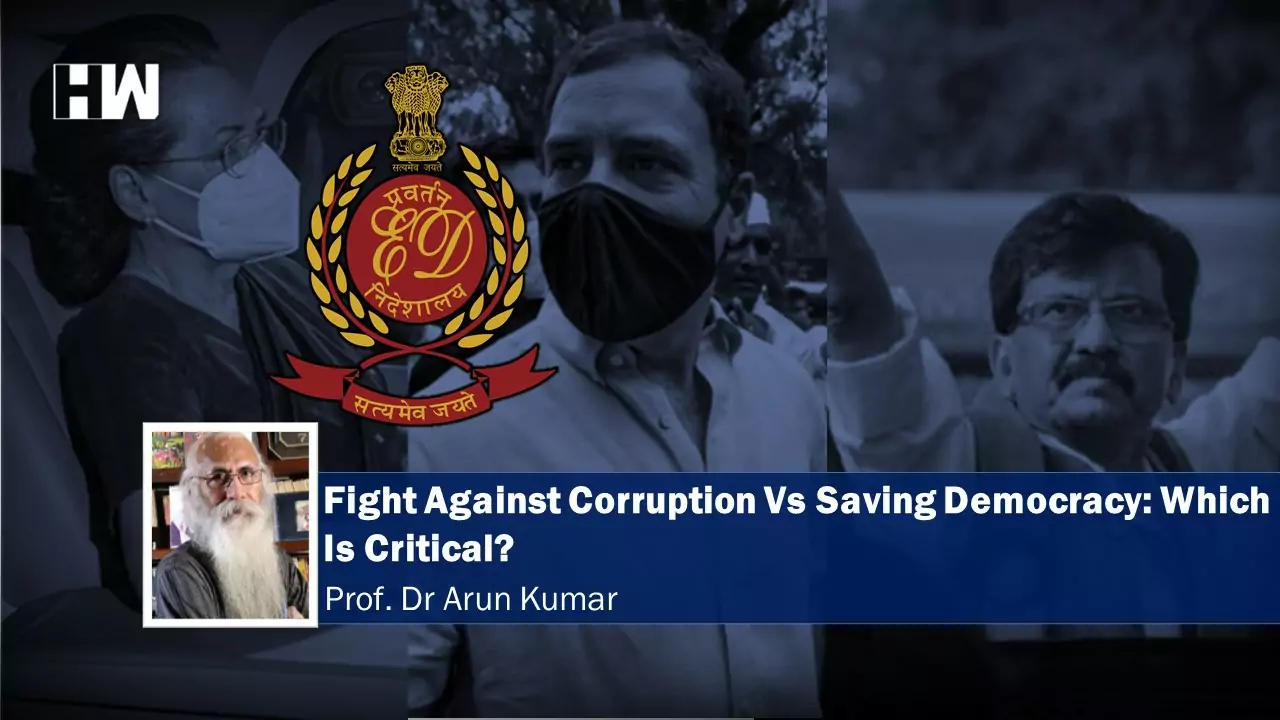
    Fight Against Corruption Vs Saving Democracy: Which Is Critical?

    The ruling party justifies the actions of ED, CBI and Income Tax department by arguing that these are independent agencies. They dismiss the harassment of the opposition leaders and others by calling it a fight against corruption.

    The Supreme Court verdict on the Prevention of Money Laundering Act (PMLA) has sanctified its draconian provisions. The opposition which is facing the brunt of these provisions has criticized the judgment while the ruling dispensation is highly pleased. A seal of approval has been put on the recent actions of the Enforcement Directorate (ED). The provisions of PMLA are such that there is little escape. So, opponents have been arrested/harassed or silenced or have switched sides to join the ruling party which then has toppled governments in the opposition-ruled states. Considering the misuse already visible, the judges could have weighed in on the laws and protected the fundamental rights of the citizens guaranteed by the Constitution.

    The ruling party justifies the actions of ED, CBI and Income Tax department by arguing that these are independent agencies. They dismiss the harassment of the opposition leaders and others by calling it a fight against corruption. No one can deny that wrongdoing has to be punished and corruption impacts the common person adversely. So, reducing corruption is arguably a pro-people policy.

    [powerkit_button size=”lg” style=”info” block=”true” url=”https://hwnews.in/news/opinion/fight-against-corruption-vs-saving-democracy-which-is-critical-ed/” target=”_blank” nofollow=”false”]
    Read More!
    [/powerkit_button]

  • Gendered Politics at the Local Level: An Analysis of Tamil Nadu

    Gendered Politics at the Local Level: An Analysis of Tamil Nadu

    The institution of panchayat raj, a milestone in the journey of administrative institutions at the grass-root level, is not an exception to proxy candidature, caste-based violation of rights or gendered politics

    The political domain continues to be considered a male bastion, with women in politics often seen as a paradox. The domain is conspicuous by the very low presence of women, with very few of them making it to positions of power. Elizabeth I, Margaret Thatcher, Indira Gandhi, and Golda Meir have often been regarded as minorities in politics despite being some of the most powerful women in domestic and international politics. In the minuscule group of women politicians, ‘self-made’ women are often considered an exception rather than a rule. The political transitions are short-term solutions to break the pattern of exclusion. From the suffragette of the 20th century up till now, feminists have fought a lengthy battle for women’s right to vote and hold office. With the development that is slow and choppy, women continue to be underrepresented in politics, and parliament. While we talk about women’s political participation, it is easy for us to imagine empty seats in the parliament. However, women in India have been involved in politics since pre-independent times even when they had no voting rights. The aspect of politics that has always held an uncertain position in our minds is the relationship between women and politics.

    Constitutional Provision

    The world of urban local politics associated with political decentralisation in India was constitutionalised in 1992 through the 74th Constitutional Amendment. It ensured a reservation of at least one-third of the total number of seats for women. Additionally, for the office of chairperson one-third of the seats are reserved for women in the Urban Local Body (ULB). However, the bill for the reservation of seats for women in parliament has remained pending for years. The Constitution allows 50% of seats to be reserved for women in the local body elections. In Tamil Nadu, the High Court has directed the State Election Commission to ensure that the reservation stays at 50% in ULB as mandated by law.

    Proxy Politics and Tamil Nadu

    Despite the reservation mandated by law, the participation of women in state and national politics has barely improved. Gender inequality, hierarchy, and stigma against women in politics along with structural, social, economic and cultural barriers continue to obstruct women’s effective participation in politics. Within the urban local body, it is witnessed that husbands or male relatives wield actual power and control even though women relatives or wives are the ones elected for the position and appointed officially. Men continue to control the wards while most elected women work as proxies. This is evident in the case of the Tambaram corporation where Nagarajan, husband of DMK councillor Geetha, took the chair on her behalf in official meetings, a clear violation of legislative procedures and law. In such cases, women are shadowed and they are not free to make their own decisions. Proxy politics is rampant at the grassroots level of panchayat and local body elections where women get posts filled with responsibilities but without effective power or control.

    The term ‘proxy women’ needs further elaboration. In the 2022 urban local body elections in Tamil Nadu, while women councillors were elected in accordance with the 50% reservation policy, the actual power and control were exercised by their husbands. Though the Greater Chennai Corporation has a majority of women in elected seats, it is effectively run by men. In a few wards, for instance, in wards number 24 and 34, it was the husbands who were attending to complaints, and deciding over issues, while operating the office. In some wards, husbands address themselves as councillors.  And while people in the ward complain of not having seen their councillor since her election to the post, it is to be noted here that this problem does not end with councillors. Even the top-most positions held by women in the municipal body continue to be dictated by her veteran politician family members or, they are in the hands of the political party itself. 

    Participation in PRI

    The institution of panchayat raj, a milestone in the journey of administrative institutions at the grass-root level, is not an exception to proxy candidature, caste-based violation of rights or gendered politics. Retired IAS officer Ashok Varadhan Shetty stated a case in Dindigul in 2008 where the husband of a woman member of block panchayat was caught participating in council meetings while she stayed at home. Even when the obstacles for women in politics and panchayats in specific are diverse, male dominance automatically tops the list of obstructing women’s participation in politics.

    Theories of Representation

    The gendered pattern of politics in most parts of India is deeply patriarchal with low sex ratio, patrilocal marriage, and patrilineal inheritance, with women being denied access to the public sphere. In Omvedt’s words, “Girls are socialised to be mothers, wives and domestic workers under other’s authority”. As literature explains, women in political bodies argue that mere representation is not sufficient. A formal seat is not the same as active participation. In India, most women are less educated, less exposed, and more dependent, and proxy women are more likely to be seen as token representatives in political organisations.

    Philip’s study of the political representation of women has set up a foundation to shift from ‘politics of ideas’ to ‘politics of presence’. The twin democratic principles of equality in politics and popular control, help in ensuring equal representation of men and women. He has presented four arguments for politics of presence: the importance of symbolic representation; the need to tackle exclusion inherent in ideas of the political party; the need for vigorous support to the disadvantaged groups; and the importance of politics of presence in arriving at policy options.

    Does the concept of proxy politics leave a mark on female politicians alone? Certainly not. Various male politicians act as mere mouthpieces of the political party. Hence, it is not just women who become prey to proxy politics, the practice is widespread at the lower level. But the difference that lies here is men are instructed while women are dominated. Gender equality is, thus, an essential element for the sustainable progress of any nation. The goal of all-round development can be achieved only through equal representation of all genders in various fields. In the Global Gender Gap Report, released by the World Economic Forum, based on the key dimensions of Economic Participation and Opportunity, Educational Attainment, Health, Survival and Political Empowerment, India has ranked 140 out of 156 countries slipping 28 ranks from the 2020 report. It is evident how deep and strong the roots of discrimination in the country are.

    References

    The Constitution 112th Amendment. (n.d.). Amendment to Article 243T of the Constitution to provide for 50 percent reservation for women in Urban Local Bodies. Retrieved August 9, 2022, from https://mohua.gov.in/upload/uploadfiles/files/243T_Constitution_15.pdf

    Mahanta, K. (n.d.). Home | Government of India. Retrieved August 9, 2022, from https://censusindia.gov.in/census.website/

    Menon, J. (2021, October 8). Tamil Nadu: Many women in panchayat race, but will they take the podium? | Chennai News. Times of India. Retrieved August 9, 2022, from https://timesofindia.indiatimes.com/city/chennai/tamil-nadu-many-women-in-panchayat-race-but-will-they-take-the-podium/articleshow/86858818.cms

    Omvedt, G. (n.d.). Women in governance in South Asia. Economic and Political Weekly.

    Phillips, A. (1998). The Politics of Presence. Clarendon Press.

    Sarpanch Pati Culture: DMK’S Women Councillors, Their Proxy Husbands, Relatives Abuse Power in TN. (2022, April 9). Times Now. Retrieved August 9, 2022, from https://www.timesnownews.com/videos/times-now/specials/sarpanch-pati-culture-dmks-women-councillors-their-proxy-husbands-relatives-abuse-power-in-tn-video-90747544

    Tamil Nadu Municipal Laws (Amendment) Act, 2016. (2016, February 27). TAMIL NADU GOVERNMENT GAZETTE. Retrieved August 9, 2022, from http://www.stationeryprinting.tn.gov.in/extraordinary/2016/56-Ex-IV-2.pdf

    Feature Image Credits: The Federal

  • PM Modi May Decry ‘Revdi Culture’ – But it Still Runs Our Political Economy

    PM Modi May Decry ‘Revdi Culture’ – But it Still Runs Our Political Economy

    There is little doubt that the practice of handing out freebies undermines both democracy and development. But the problem doesn’t lie just with the opposition

    Constitutional authorities in India have recently spoken about key challenges the country is facing.

    The Chief Justice of India (CJI) has said that there is “diminishing” space for the opposition, that there was no longer any mutual respect between the Union government and the opposition, and that these developments pose a threat to Indian democracy.

    The chief minister of Rajasthan recently spoke about lack of “tolerance” in the country and urged the prime minister to speak out against violence.

    The Union law minister flagged the issue of pendency of cases in courts – almost 5 crore.

    Finally, the CJI blamed the government for the inadequacy of judicial infrastructure and lamented that 80% of the 6.1 lakh prisoners are undertrials and the “process has become the punishment”. He labelled prisons as ‘black boxes’ and prisoners the most vulnerable.

    The CJI’s comments a few days later in Ranchi point to the anguish in the upper echelons of the judiciary when he said that media is “running kangaroo courts”, expresses “biased views” and runs “agenda driven debates”. He stated that many issues are difficult for the judges to decide but the media jumps into the fray all too quickly. He highlighted the threat to the judges after retirement. He also responded to the argument that judges – being unelected – should not get into legislative and executive areas by pointing to the constitutional responsibilities placed on the judiciary.

    [powerkit_button size=”lg” style=”info” block=”true” url=”https://thewire.in/political-economy/narendra-modi-revdi-culture-political-economy” target=”_blank” nofollow=”false”]
    Read More
    [/powerkit_button]

  • How Do We Make the Wheels of the Police and Criminal Justice System Run Faster?

    How Do We Make the Wheels of the Police and Criminal Justice System Run Faster?

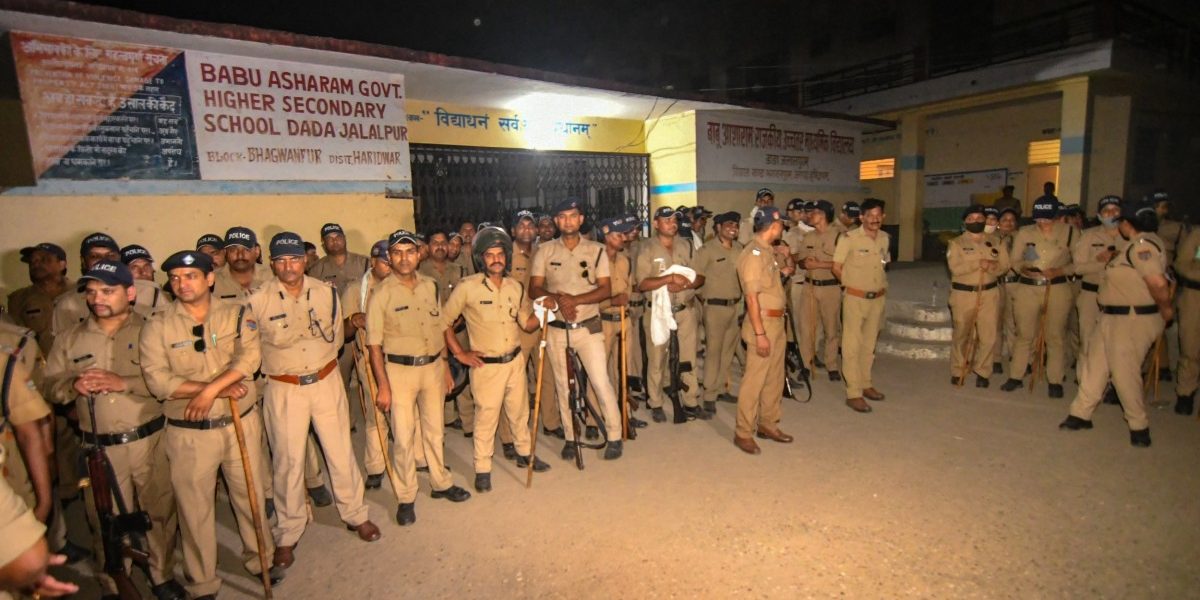
    The system of law enforcement in India encourages illegality and checks it only when it is in the interest of the rulers.

    The end of April 2022 saw three significant news items about justice delivery in the nation.

    Attorney General K.K. Venugopal said that 4.8 crore cases are in the courts and it had become a hopeless situation since “… litigants’ fundamental right to speedy justice lay in tatters …”.

    The Chief Justice of India, at the conference of chief ministers and Chief Justices, said that courts are burdened since the executive and the legislature are not doing their job.

    Finally, Barpeta District Court Judge while granting bail to Gujarat MLA Jignesh Mevani castigated police functioning. He appealed to the high court to “prevent registration of false FIRs like the present one… Otherwise, our state will become a police state.” He suggested that policemen be required to wear body cameras and CCTV cameras installed in police vehicles to prevent fake encounters and registration of false cases.

    These three news items are interlinked. A large number of cases in the courts are a result of the lack of proper functioning of the executive, poorly drafted laws, and worse, their misuse. The Mevani case points to the registration of a false case. Anticipating that he may get bail, a false case was lodged in advance to arrest him as soon as he got bail.

    Clearly, politics was at play which ended up wasting the time of the judiciary and the executive. The case was perhaps meant to send a signal to other opponents of the ruling dispensation, and as the judge noted, it weakens the “hard earned democracy”.

    [powerkit_button size=”lg” style=”info” block=”true” url=”https://thewire.in/government/how-do-we-make-the-wheels-of-the-police-and-criminal-justice-system-run-faster” target=”_blank” nofollow=”false”]
    Read More
    [/powerkit_button]

  • Technology, Politics and China’s Quest for Energy Dominance

    Technology, Politics and China’s Quest for Energy Dominance

    [powerkit_button size=”lg” style=”info” block=”false” url=”https://admin.thepeninsula.org.in/wp-content/uploads/2022/05/Technology-Politics-and-Chinas-Quest-for-Renewable-Energy-Dominance-3.pdf” target=”_blank” nofollow=”false”]
    Download
    [/powerkit_button]

    Abstract:

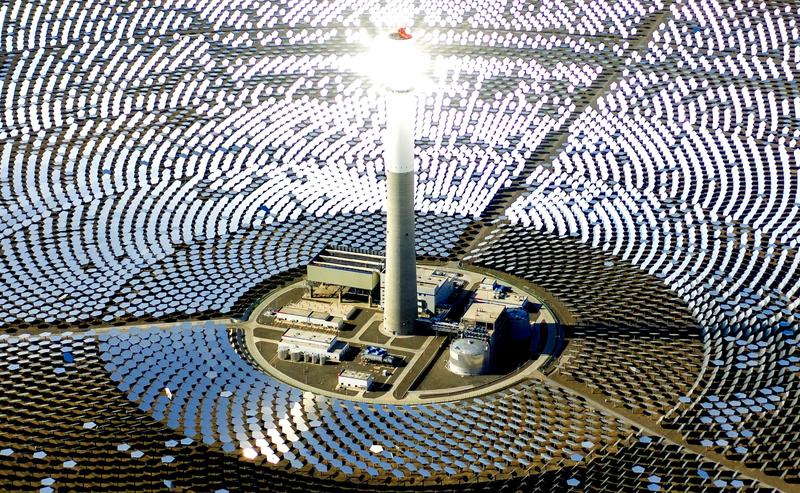
    This paper will empirically investigate the role of technology in international politics through a case study of China’s development of renewable energy infrastructure (solar PV and wind energy) and its impact on international politics. This paper looks at how technology helps shape a state’s identity using renewable energy technology as an explanatory variable. The paper employs Grygiel’s Model of Geopolitics to analyse the case study; geopolitics because much of China’s development in the renewable sector has been a function of its geography and abundance of natural resources.

    Introduction:

    China has experienced decades of near double-digit economic growth and since the 2000s, has witnessed a growing population and rapid industrialization that has correspondingly driven demand for energy. Its expeditious implementation of economic reforms has elevated it to the status of a global power capable of challenging the US-established status quo. Stability is increasingly being viewed as a function of China’s behaviour vis-à-vis its strategic rivals, primarily the US, and to a lesser extent Japan, India, Russia and the littoral states of Southeast Asia. But more importantly, it has been China’s near fanatic fervour to rise as a technologically superior state, as the US emerged post the World Wars, that has generated interest. The modernization of its military, near the meteoric rise of installed capacities for renewable sources of energy and technological revolution, underscores the importance and role technological advancement plays in a state’s development. Technology and international politics have a near symbiotic relationship and the former has the potential to fundamentally alter the way states exercise their sovereignty in pursuit of their national interests.

    [powerkit_button size=”lg” style=”info” block=”true” url=”https://admin.thepeninsula.org.in/wp-content/uploads/2022/05/Technology-Politics-and-Chinas-Quest-for-Renewable-Energy-Dominance-3.pdf” target=”_blank” nofollow=”false”]
    Read the Full Paper
    [/powerkit_button]

  • It’s Natural for Humans to be Meat-Eaters, Not Vegetarians

    It’s Natural for Humans to be Meat-Eaters, Not Vegetarians

    Pushing vegetarianism as the norm in India has more to do with identity politics than historical fact

    Historically, there was no way Homo sapiens could have survived without meat. Not that they were aware of the need for proteins or the presence of these in meat, but apart from meat there was hardly anything available for sustenance. If at all they depended on any vegetation and/or fruits and berries that was available, then it was only as a supplement to the meat which dominated their diet.

    [powerkit_button size=”lg” style=”info” block=”true” url=”https://indianexpress.com/article/opinion/columns/its-natural-for-humans-to-be-meat-eaters-not-vegetarians-7864983/” target=”_blank” nofollow=”false”]
    Read More
    [/powerkit_button]

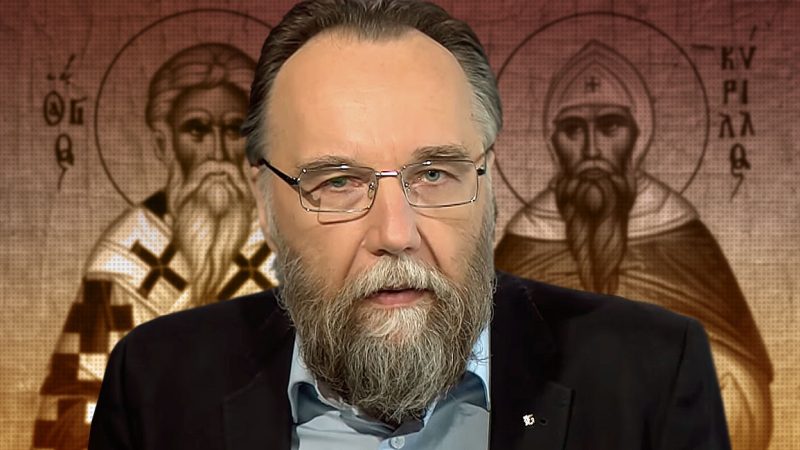
  • Towards a New Movement of Non-Alignment: Politics of John Mearsheimer and Alexander Dugin

    Towards a New Movement of Non-Alignment: Politics of John Mearsheimer and Alexander Dugin

    Only last August, the U.S. had to leave Afghanistan in disgrace, leaving behind a destroyed country – and now they suddenly appear as the guardians of freedom, human rights and as the leading power of the West?

    Without equating Russia and the USA, they are very similar in their foreign policy behaviour. Despite all the problems under Trump, the U.S. is and remains a democracy in which human rights can be litigated. Russia is only formally an (electoral) democracy, as Putin himself once put it, a managed democracy in which human rights can hardly be claimed. Despite this fundamental difference, it is quite astonishing how the past 20 years have been forgotten in the West. Were the wars in Afghanistan, Iraq and Libya always and in every respect legitimate? Weren’t hundreds of thousands of people killed in them and by no means always only the soldiers? Only last August, the U.S. had to leave Afghanistan in disgrace, leaving behind a destroyed country – and now they suddenly appear as the guardians of freedom, human rights and as the leading power of the West? Conversely, we need to realize that while the U.S. would advocate regime change in Russia as well, does this legitimize all the actions of the Russian leadership and the Russian army?

    It is not only questionable whether Mearsheimer had the ear of the U.S. government – much more decisive is that he not only presents an analysis but in a sense naturalizes the struggle for spheres of influence and large areas. 

    And in essence, Mearsheimer can hardly hide the fact that neo-realism has models in the large-area policy of the Nazis and at least that of Carl Schmitt.

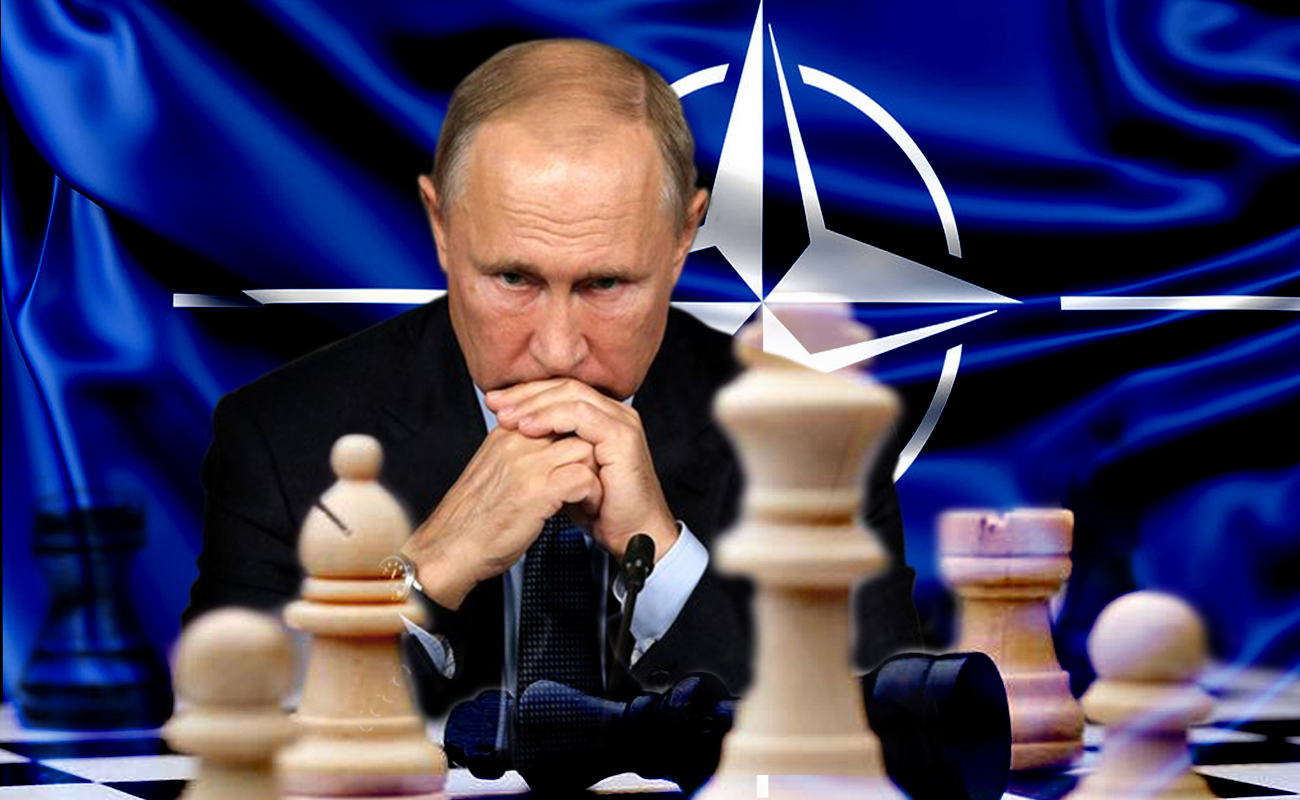
    To find an explanation for the conflict over Ukraine, two theorists are very often referred to, John Mearsheimer from the U.S. and Alexander Dugin from Russia. The defenders of Russia resort to the line of thought of the neo-realists, which was significantly influenced by Mearsheimer. And Mearsheimer argues that Ukraine is not the issue at all, but rather a global political showdown between the United States and Russia over spheres of influence. He attests that the Russian side under Putin is only reacting to a covert war of the USA – with the means at their disposal. And with countries like Sweden, Finland and even Switzerland soon to join NATO, the U.S. strategy – if the government in Washington had stuck to Mearsheimer’s indirect script – would have been extremely successful. The unity of the West under U.S. leadership has also been restored overnight. Mearsheimer is always used in this context as evidence of the true intentions of the U.S. and the real culprit in this war. However, it is not only questionable whether Mearsheimer had the ear of the U.S. government – much more decisive is that he not only presents an analysis but in a sense naturalizes the struggle for spheres of influence and large areas. For the next step, if one were to share his views, one would have to concede such a policy to the US as well? And in essence, Mearsheimer can hardly hide the fact that neo-realism has models in the large-area policy of the Nazis and at least that of Carl Schmitt.

    Dugin’s vision of Eurasia, on the other hand, is ideologically determined. But from his writings can be read the will to reconquer the Baltic states and large parts of the former Soviet Union and the Warsaw Treaty after Ukraine and to achieve at least Russian hegemony in Europe.

    The same applies to the dreams of Alexander Dugin, a neo-fascist ideologue who has at times been said to be particularly close to Vladimir Putin. Just as with Mearsheimer, the government action of Russia cannot be traced to his ideologue, but there are similarities here as well. Dugin, too, starts from large spaces and, like Putin, includes in his considerations the great Eurasian project, the political-ideological linking of Asia and Europe under Russian leadership. And indeed, this perspective already exists in the Chinese New Silk Road and is being built up economically by President Xi and the Chinese leadership with billions of Yuan. Dugin’s vision of Eurasia, on the other hand, is ideologically determined. But from his writings can be read the will to reconquer the Baltic states and large parts of the former Soviet Union and the Warsaw Treaty after Ukraine and to achieve at least Russian hegemony in Europe.

    What seems progressive here at first glance is the rejection of human equality – at its core, Dugin is concerned with a strictly hierarchical, estates-based society in which “white, male Europeans” are at the top.

    In this way, Dugin positioned himself as an outstanding representative of geopolitical thought as well as a mastermind of a “Eurasian” – as opposed to “Atlantic” – cultural space. This corresponds to the “fourth political theory” he postulates, which, after liberalism, fascism and communism, is most likely to ensure the survival of mankind in the age of globalization in his view. Dugin’s theoretical advisers, besides Heidegger, is the French founder of the “Nouvelle Droite,” Alain de Benoist.  All political systems of modernity are accordingly the results of three ideologies: The first and oldest, he says, is liberal democracy, the second is Marxism, and the third is fascism. The latter has long since failed, banished from history; the first no longer functions as an ideology, but as something taken for granted. The world today is on the brink of a post-political reality in which the values of liberalism are so deeply ingrained that the average person is not even aware of the effect of an ideology in his environment. Thus, liberalism threatens to monopolize political discourse, to flood the world with a universalistic sameness, and to destroy everything that makes different cultures and peoples unique. What seems progressive here at first glance is the rejection of human equality – at its core, Dugin is concerned with a strictly hierarchical, estates-based society in which “white, male Europeans” are at the top.

    a new policy of the Non-Aligned Movement is necessary, because as understandable as partisanship may be due to the suffering in Ukraine, we should not allow ourselves to be instrumentalized by either side.

    At their core, Mearsheimer and equally Dugin are representatives of a neo-colonial policy, in that they want to divide the whole world into their spheres of influence. This is what the U.S. has been trying to do since 2001 and now Russia as well. Still unclear is the role of China, which has not yet made a final decision and sees itself equally threatened by both visions. Instead of taking sides for one of the two positions, a new policy of the Non-Aligned Movement is necessary, because as understandable as partisanship may be due to the suffering in Ukraine, we should not allow ourselves to be instrumentalized by either side. Foreign Minister Lavrov had spoken of the need for a balanced world order during his visit to New Delhi. It would be of fundamental importance if Russia were to adhere to this itself. The real actors in such a balanced world order, however, would be the middle powers in a new movement of non-aligned states.

    Feature Image Credit: ipis.ir

  • Authoritarian Persistence in West Asia and North Africa

    Authoritarian Persistence in West Asia and North Africa

    [powerkit_button size=”lg” style=”info” block=”false” url=”https://admin.thepeninsula.org.in/wp-content/uploads/2022/04/Rupal-Anand_Authoritarian-Persistence-in-West-Asia-and-North-Africa_compressed-1.pdf” target=”_blank” nofollow=”false”]
    Download
    [/powerkit_button]

    Abstract:

    The robustness of coercive apparatus in West Asia and North Africa has been a result of a culmination of factors over the years. The paper looks at three such arguments – those based on cultural and religious exceptionalism which look at Islam’s inhospitality towards democratization. Here, the author contends that such arguments overlook the fact that Islam is not monolithic, and varies too widely by context and time to remain a static, uniformed religious obstacle to democratic transition. Second, the paper looks at the framework of the rentier theory where the argument has been supported by looking at three primary features of the framework – first, the lack of taxation and the subsequent absence of democratic obligation; second, the presence of heavy security apparatus; and lastly, the lack of any credible political opposition. Finally, the paper looks at the institutional and political systems in the region where the presence of strong patron-client networks and the loyalty of the elite groups towards the regime present a considerable obstacle to the realization of democratic reforms.

    Introduction:

    The robustness of coercive apparatus in West Asia and North Africa has been a result of restrictive political participation and the lack of representative institutions. Two primary features that have come to characterize the authoritarian regimes of the region are the nature of states’ rent economy and the rampant patrimonialism and the associated patron-client networks.

    Over the years, single-party regimes in the region have been seen as more capable of containing elite fragmentation and surviving challenges caused by the economic crisis and political difficulties. Patronage-based economic liberalization in various countries, including Egypt, Syria, and Tunisia have further provided the resources necessary for authoritarian incumbents to create new bases for support. The states have witnessed the emergence of electoral and political party laws, particularly designed to undermine democracy, accompanied by limited press freedom and widespread electoral fraud. In Egypt and Iraq, democratic instincts were thwarted in the post-colonial period by the refusal of the states’ elite class to address the societies’ social needs, leading to declining standards of living and the subsequent violent protests.

    [powerkit_button size=”lg” style=”info” block=”true” url=”https://admin.thepeninsula.org.in/wp-content/uploads/2022/04/Rupal-Anand_Authoritarian-Persistence-in-West-Asia-and-North-Africa_compressed-1.pdf” target=”_blank” nofollow=”false”]
    Read the Full Paper
    [/powerkit_button]

  • Giveaways & Elections: Short-termism to the Fore

    Giveaways & Elections: Short-termism to the Fore

    BJP and AAP are the two winners in the just concluded crucial Assembly elections. The scale of victory of these two parties surprised most analysts. In UP after three decades, a ruling party won, overcoming severe anti-incumbency. There are accusations of the rigging of the EVMs but this can’t be proved when VVPAT slips are not being fully counted. Even if they were to be counted, fraud could have been committed in other ways and this could become an endless exercise. AAP, a new kid on the block, won on the promise of change from the terribly corrupt politics of the moribund established parties.

    Delivery is Important

    So, the ruling BJP won because it said that it had brought about a change in the lives of the common people while AAP won on the promise of bringing about change in their lives. What is this change that was so attractive to the people?

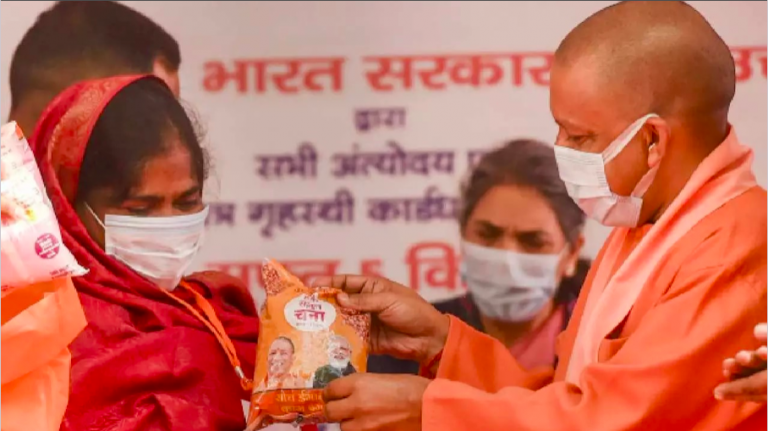
    BJP faced anti-incumbency due to high inflation, youth unemployment, farmers’ discontent, COVID mismanagement, etc. But its cadres went door to door to point to the Rs. 6000 is given to farmers, free grains, etc. to households, money for toilets and houses, etc. The beneficiaries from these schemes are called `Labhartis’ by the pundits. The opposition also promised various things if they came to power but obviously, a bird in hand is better than two in the bush. Also, the credibility of the opposition parties in UP is low since they delivered little when they were in power earlier. Finally, public memory is short. Many of the schemes that are listed as achievements by the present government were initiated by the earlier regimes.

    [powerkit_button size=”lg” style=”info” block=”true” url=”https://thepublicindia.com/2022/03/14/giveaways-elections-short-termism-to-the-fore/” target=”_blank” nofollow=”false”]
    Read More
    [/powerkit_button]