Tag: Politics

  • The Philippines’ History Curriculum: Origins and Repercussions

    The Philippines’ History Curriculum: Origins and Repercussions

    Background

    The Philippines, a twice-colonized archipelago that achieved its complete independence in 1946, is a member of the ASEAN and an essential player in the geopolitics of the Southeast Asia region. Its status is owed mainly to its rapidly growing economy, of which the services industry is the most significant contributor, comprising 61% of its Gross Domestic Product (GDP) (Bajpai, 2022). Services refer to various products – for example, business outsourcing, tourism, and the export of skilled workers, healthcare workers, and labourers in other industries. In recent years, a growing demand for qualified professionals has grown as the economy has grown, thus necessitating more robust educational systems (Bajpai, 2022). Although the Philippines has a high literacy rate, hovering at around 97%, the efficacy of its educational system is often called into question (“Literacy Rate and Educational Attainment”, 2020). Administration oversight, infrastructural deficiencies, and pervasive corruption in the government that seeps into the entities responsible for educational reform are significant issues that legitimize these doubts (Palatino, 2023). However, reforming the current flaws in the system requires an understanding of the basic underlying structure of the country’s educational system as it is today. This fundamental understanding can help clarify specific political trends in the status quo and highlight the importance of proper historical education in developing a nation. Despite its ubiquity in nearly every curriculum, the study of history as a crucial part of the education system is often not prioritized, leading to an underdeveloped understanding of the society’s culture and previous struggles with colonial exploitation. Though it is present in the Philippines’ education today, it continues to change because of its historically dynamic demographic and political atmosphere.

    Origins of the Education System 
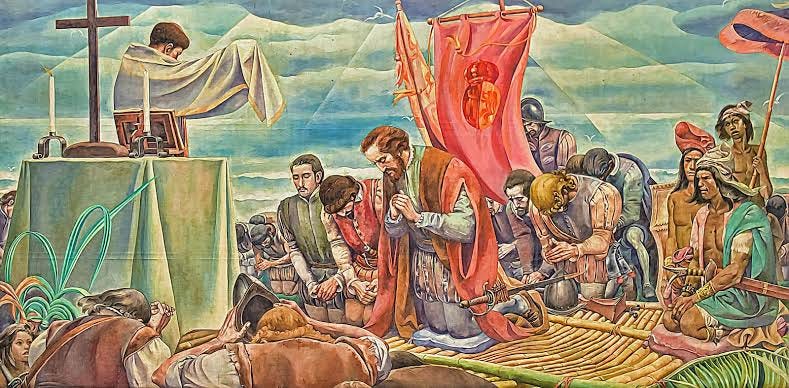
    To begin with, the educational system, and especially the modes of linguistic and history education in the country, have been heavily influenced by the major powers that occupied it – namely, the Spanish Empire and the United States. The impact of these periods of colonization can be seen most significantly in the historical education and consciousness of the general population, as well as the propagation of the English language. The Philippines possesses a great deal of linguistic diversity, especially among indigenous groups – an estimated 170 distinct languages in the country today (Postan, 2020). However, even in pre-colonial times – typically considered by historians to be the years before 1521 – the most common language in the country was Old Tagalog, and other indigenous languages are still spoken today (Stevens, 1999). Records suggest that the Spanish did not forcefully erase indigenous languages spoken in the country. However, they did conduct business and educational institutions in Spanish, leading to the language being used almost exclusively amongst the upper classes – the colonizers, business people in the country, and other influential figures in the empire. Though there were attempts to conduct education in Castilian Spanish, priests and friars responsible for teaching the locals preferred to do so in local languages as it was a more effective form of proselytization. This cemented the reputation of Spanish as a language for the elite, as the language was almost exclusively limited to those chosen to attend prestigious institutions or government missions that operated entirely in Spanish (Gonzales, 2017). In terms of popularising education to expose a broader audience to Christianity, the Spanish also established a compulsory elementary education system. However, restrictions existed based on social class and gender (Musa & Ziatdinov, 2012). Because of this, although the influence of Spanish on local languages can be seen through the borrowing of certain words, indigenous and regional languages were not supplanted to a large extent, though their scripts were Latinised in some instances to make matters more convenient for the Spanish (Gonzales, 2017). However, the introduction of Catholicism to a large segment of the population and a more organized educational system are aspects of Spanish rule that remain in Philippine society today, as do the negative ramifications of the social stratification that was a significant element of its occupation (Herrera, 2015).
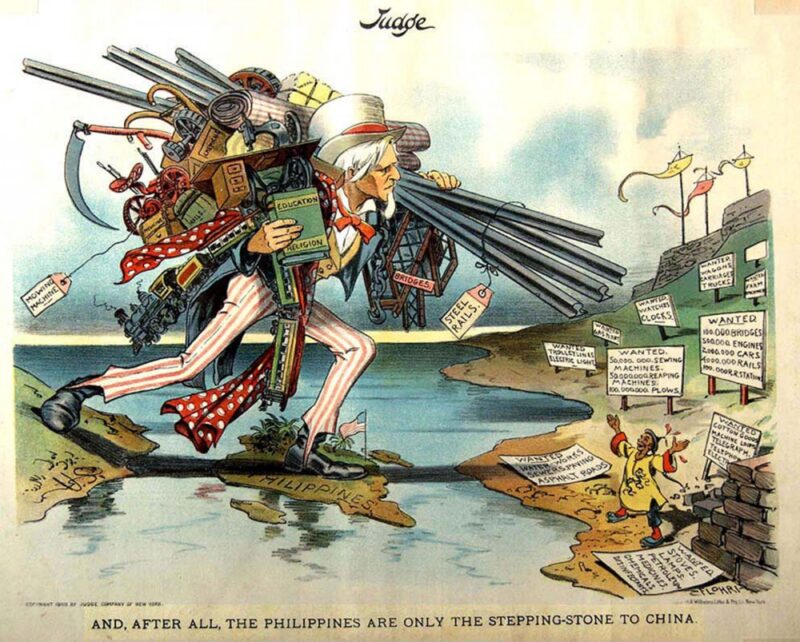
    Uncle Sam, loaded with implements of modern civilization, uses the Philippines as a stepping-stone to get across the Pacific to China (represented by a small man with open arms), who excitedly awaits Sam’s arrival. With the expansionist policy gaining greater traction, the possibility for more imperialistic missions (including to conflict-ridden China) seemed strong. The cartoon might be arguing that such endeavours are worthwhile, bringing education, technological, and other civilizing tools to a desperate people. On the other hand, it could be read as sarcastically commenting on America’s new propensity to “step” on others. “AND, AFTER ALL, THE PHILIPPINES ARE ONLY THE STEPPING-STONE TO CHINA,” in Judge Magazine, 1900 or 1902. Wikimedia.

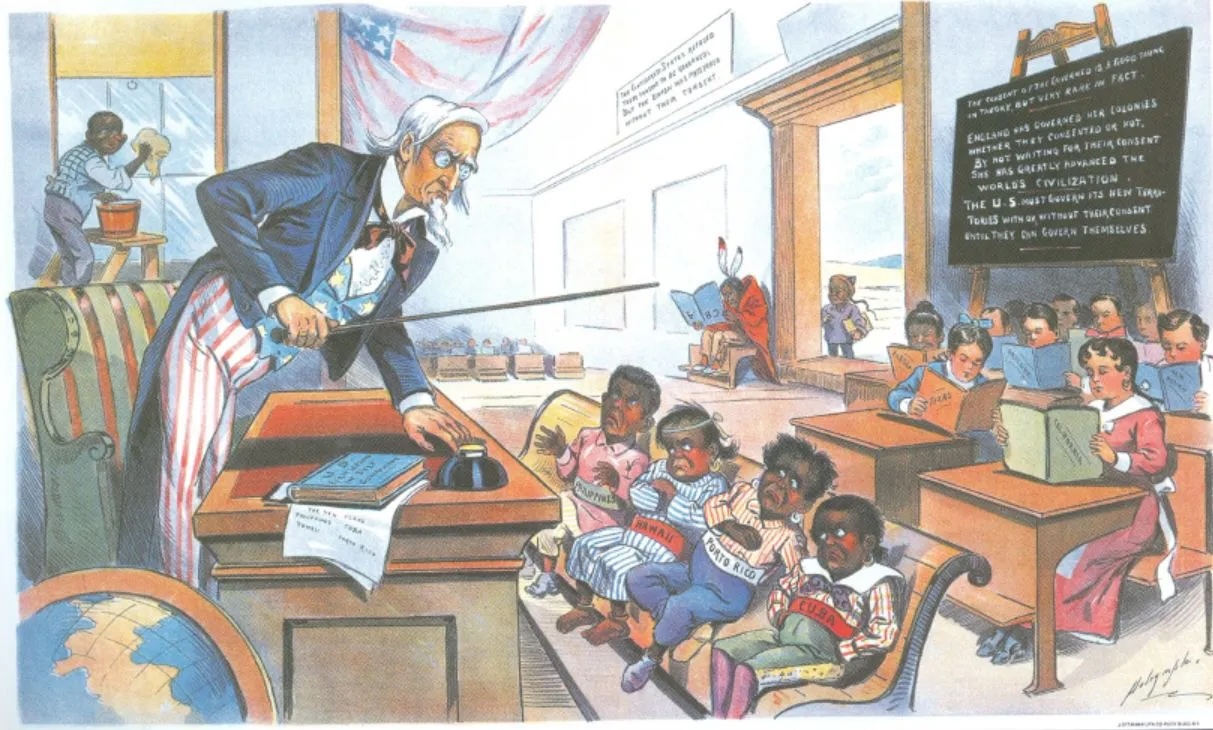
    In contrast, the American occupation following Spain’s defeat in the Spanish-American War in 1898 significantly changed the country’s linguistic patterns and revolutionized the education system. Upon arriving in the country, the Americans decided to create a public school system in the country, where every student could study for free. However, the medium of instruction was in English, given that they brought teachers from the United States (Casambre, 1982). This differed from the Spanish system in that social class and gender did not influence students’ access to education to the same extent. Furthermore, the Americans brought their own material to the country due to a lack of school textbooks. As the number of schools in the country and the pedagogical influence of American teachers increased, the perception of the Americans’ role as colonizers ultimately changed. Education became a tool to exert cultural influence, leading to the propagation of American ideals like capitalism, in addition to subverting separatist tendencies that were cropping up in the country as one colonizer was replaced by another. It also led to the suppression of knowledge concerning the US’ exploitation of the nation.  Ultimately, the colonizers’ influence on the linguistic and educational landscape of the nation manifests itself in the general population’s understanding of their country’s history.

    The Current History Curriculum
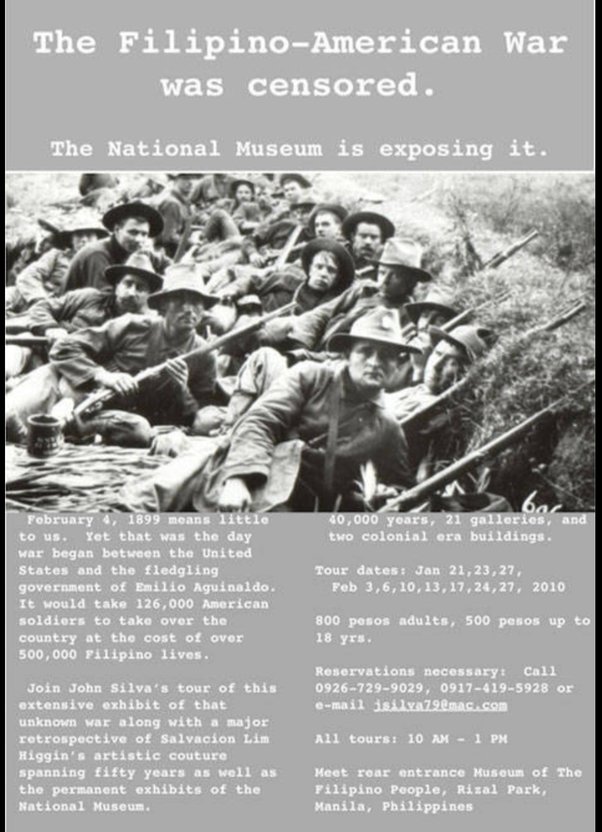
    The social studies curriculum in the Philippines, called Araling Panlipunan (AP), is an interdisciplinary course that combines topics of economics and governance with history, primarily post-colonial history (“K to 12 Gabay Pangkurikulum”, 2016). The topic of World War II takes up nearly 50% of the course, while other aspects of indigenous and pre-colonial history are included to a limited extent (Candelaria, 2021). This act of prioritization is a colonial holdover. Although the Philippines indubitably played a crucial role in the Pacific Theatre during WW II, its massive presence in the AP course signals the nation’s continued alliance with the US and reinforces a mentality amongst the general public that favours it. This bias occurs as a singular American perspective is promoted by the course, wherein the actions of other countries against the Philippines are highlighted. At the same time, the exploitation of the Philippines by the Spanish and Americans is not as widely discussed. For example, although the atrocities committed by the Japanese during World War II are taught extensively as part of the curriculum, the American actions during the Philippine-American War (1899-1902), during which the Americans burned and pillaged entire villages, are not emphasized (Clem, 2016). Furthermore, it leads to the sidelining of historical events that have created the political situation in the country today, such as the issue of the current president being related to the former dictator, Ferdinand Marcos.

    As the course is conducted chronologically, discussions of topics such as the Marcos Regime are left up to teachers’ discretion due to the subject’s controversial nature, given that the dictator’s son is the current president (Santos, 2022). This means that as much or as little time can be spent on it is as decided. Because of the American influence, even citizens who are taught about the atrocities that occurred during the dictatorship are not informed of the support provided to the Marcos dictatorship by the US government. During his presidency, which lasted from 1965 to 1986, the Philippines received significant economic aid from the US government in exchange for the continuation of its military presence in the country, which proved helpful to the US during the Vietnam War as it was able to utilize its bases in Subic Bay and Clark air base(Hawes, 1986). As a result of the necessity of these bases, a 1979 amendment to the 1947 Military Bases Agreement was signed, which increased the US’ fiscal contributions to security assistance. To further support this military objective, the Carter and Reagan administrations showed their diplomatic support to Marcos by visiting the Philippines and inviting him to Washington.

    Additionally, when Marcos was ousted from power in 1986 by the People Power Revolution, he spent his exile in ‘Hawaii’, in the US (Southerl, 1986). Therefore, while the US is credited for introducing democratic principles to the country through its program for expanding education while occupying the archipelago, it also played a significant role in supporting a despotic government that is not as widely acknowledged. Because of this, the Filipino perception of and relationship with the US has been heavily influenced by a lack of awareness amongst the general public about its involvement in a massively corrupt administration.

    Significant Developments 

    Despite the importance of a robust historical education in improving the public’s awareness of their own culture and geopolitical relationships, history as a subject has been transformed into a political tool in the Philippines, twisted when it can be useful and neglected when it does not support an agenda. Various bills passed in the House of Representatives (the lower house of parliament in the Philippines, below the Senate), as well as decisions taken by the Department of Education, have diminished the significance of history in the overall school curriculum and reinforced an American perspective in the historical content that continues to be taught. Department of Education Order 20, signed in 2014, removed Philippines History as a separate subject in high school (Ignacio, 2019). The argument for this decision was that Philippines History would be integrated within the broader AP social studies curriculum under different units, such as the Southeast Asian political landscape. However, educators opposing the abolition of Philippine History as a separate subject state that due to fewer contact hours being allocated for AP in total compared to English, maths, and science, it is unlikely that Philippine history can be discussed in adequate depth, considering the other social science topics mandated by the AP curriculum. In addition, House Bill 9850, which was passed in 2021, requires that no less than 50% of the subject of Philippine history centres around World War II (Candelaria, 2021). The bill’s primary concerns mention that it prioritizes the war over other formative conflicts in the nation’s history, such as the Philippine Revolution against Spain or the Philippine-American War. Furthermore, it requires modifying or reducing discussions surrounding other vital events in the Philippines, such as agrarian reforms and more recent developments like the conflict in Mindanao.

    Both of these policies face significant opposition. For example, a Change.org petition demanding the return of the subject of Philippine history in high schools has garnered tens of thousands of signatures. At the same time, numerous historical experts and teachers have spoken against HB 9850 (Ignacio, 2018). Despite this resistance from academics and teaching professionals, it is unlikely that history will be prioritized unless the general public also learns to inform itself. Around 73% of the total population (approximately 85.16 million people) have access to the internet, of which over 90% are on social media (Kemp, 2023). Because of the large working population in the country, social media companies like Facebook have set up offices there. Programs that offered data-free usage in 2013 have made the Philippines a huge market for Facebook, and many Filipinos trust the news they find on the website more than some mainstream media sources (Quitzon, 2021). Even though internet access is relatively widespread, signifying that information is readily available to the average Filipino, social media, especially Facebook, often functions as a fertile breeding ground for misinformation.

    Repercussions of the History Curriculum
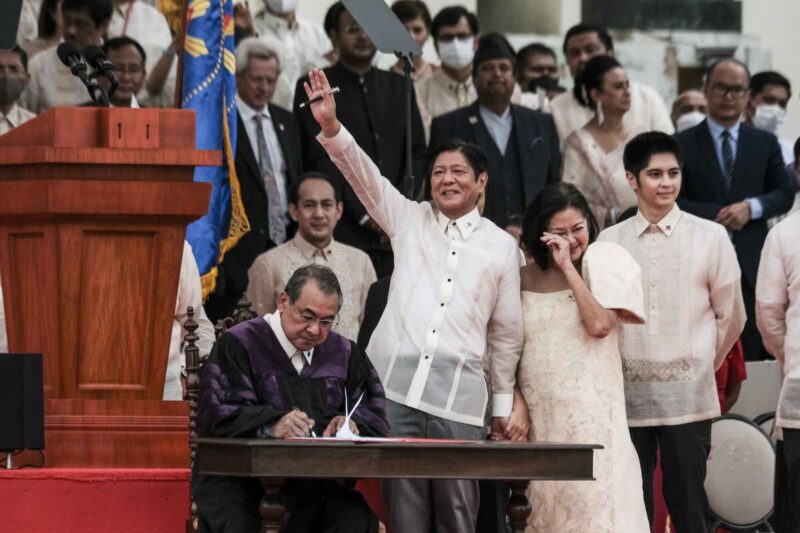
    In recent years, misinformation has become an important political tool to propagate ignorance and manipulate historical and current events to promote specific agendas. The most relevant example was the mass historical revisionism campaign leading to the 2022 general elections (Quitzon, 2021). Given that Bongbong Marcos, Ferdinand Marcos’ son, was running for president alongside vice presidential candidate Sara Duterte (former president Rodrigo Duterte’s daughter), the campaign focused on changing the public perception of both families and their period of rule. Preceding the elections, social media trolls and supporters of the campaign spread videos, doctored images, and fake news that minimized the atrocities and scale of theft that occurred throughout the Marcos regime and the Duterte administration, instead highlighting and exaggerating the perceived benefits they brought to the country. The prioritization of these political agendas is reflected in the history curriculum, as it does not sufficiently cover critical areas of Philippine history that have directly led to the political situation of today and the pre-colonial era that is an inseparable part of Filipino culture.

    Recommended Policy Measures 

    However, another by-product of this absence of consciousness is that the general public is desensitized to poor governance and neocolonialism as their education systems and news sources constantly feed them biased and inaccurate information about the history of their own country and its relationship to others. When dictators are portrayed as good rulers and previous colonizers are portrayed as historical allies, it results in a population that unknowingly votes against its interests as they are unaware of the past events that have shaped the current political atmosphere and the various deficiencies in the system. Considering that these political campaigns rely on the general public not having a solid understanding of historical events, especially those about the martial law era, it is unlikely that politicians will take meaningful steps to improve historical education in the country since they benefit from citizens lacking awareness. As such, the onus must, unfortunately, be placed on the general public to educate themselves on good citizenship and exercise their right to vote at the grassroots level responsibly so that future local politicians and members of parliament may at least be able to encourage the study of history in the government. Additionally, teaching students how to use the internet to conduct reliable research is imperative to reduce misinformation so they can counter the misinformation they find online.

    Conclusion

    In conclusion, the Philippine education system has been shaped by the periods of colonization the country has experienced. This has led to a history curriculum favouring the American perspective and thus disadvantages crucial elements of local history. The consequences of the lack of awareness this has caused in the general public are manifold: it has made them more susceptible to misinformation and historical revisionism. It has worked to the advantage of politicians who take advantage of it. Nevertheless, the Philippines can still reverse this trend by utilizing its high literacy rates and social media presence to promote reliable historical education. They can also push for better historical education policies through petitions and appeals to local government agencies and Senate committees related to education – such as the National Commission for Culture and the Arts (NCCA), the Committee on Basic Education and Culture, and the Committee on Education, Arts and Culture – amongst others (Ignacio, 2018). Overall, there are many deficiencies in the current history education system in the Philippines, but they still coexist with the potential for change. Citizens have the power to advocate and must continue using it to usher forth a more well-informed society and nation.


    References

    Bajpai, Prableen. “Emerging Markets: Analyzing the Philippines’s GDP.” Investopedia, 12 July 2023, www.investopedia.com/articles/investing/091815/emerging-markets-analyzing-philippines-gdp.asp#:~:text=The%20country.

    Casambre, Napoleon. The Impact of American Education in the Philippines. Educational Perspectives, scholarspace.manoa.hawaii.edu/server/api/core/bitstreams/f3bbc11f-f582-4b73-8b84-76cfd27a6f77/content#:~:text=Under%20the%20Americans%2C%20English%20was.

    Clem, Andrew. “The Filipino Genocide.” Series II, vol. 21, 2016, p. 6, scholarcommons.scu.edu/cgi/viewcontent.cgi?article=1138&context=historical-perspectives.

    Constantino, Renato. “The Miseducation of the Filipino.” Journal of Contemporary Asia, vol. 1, no. 1, 1970, eaop.ucsd.edu/198/group-identity/THE%20MISEDUCATION%20OF%20THE%20FILIPINO.pdf.

    Department of Education. K To12 Gabay Pangkurikulum. 2016, www.deped.gov.ph/wp-content/uploads/2019/01/AP-CG.pdf.

    “Education Mass Media | Philippine Statistics Authority | Republic of the Philippines.” Psa.gov.ph, 28 Dec. 2019, psa.gov.ph/statistics/education-mass-media.

    Gonzales, Wilkinson Daniel Wong. “Language Contact in the Philippines.” Language Ecology, vol. 1, no. 2, Dec. 2017, pp. 185–212, https://doi.org/10.1075/le.1.2.04gon.

    Hawes, Gary. “United States Support for the Marcos Administration and the Pressures That Made for Change.” Contemporary Southeast Asia, vol. 8, no. 1, 1986, pp. 18–36, www.jstor.org/stable/25797880.

    Herrera, Dana. “The Philippines: An Overview of the Colonial Era.” Association for Asian Studies, vol. 20, no. 1, 2015, www.asianstudies.org/publications/eaa/archives/the-philippines-an-overview-of-the-colonial-era/.

    Ignacio, Jamaico D. “[OPINION] The Slow Death of Philippine History in High School.” RAPPLER, 26 Oct. 2019, www.rappler.com/voices/ispeak/243058-opinion-slow-death-philippine-history-high-school/.

    —. “We Seek the Return of ‘Philippine History’ in Junior High School and Senior High School.” Change.org, 19 July 2018, www.change.org/p/we-seek-the-return-of-philippine-history-in-junior-high-school-and-senior-high-school.

    John Lee Candelaria. “[OPINION] The Dangers of a World War II-Centered Philippine History Subject.” RAPPLER, 20 Sept. 2021, www.rappler.com/voices/imho/opinion-dangers-world-war-2-centered-philippine-history-subject/.

    Kemp, Simon. “Digital 2023: The Philippines.” DataReportal – Global Digital Insights, 9 Feb. 2023, datareportal.com/reports/digital-2023-philippines#:~:text=Internet%20use%20in%20the%20Philippines.

    Musa, Sajid, and Rushan Ziatdinov. “Features and Historical Aspects of the Philippines Educational System.” European Journal of Contemporary Education, vol. 2, no. 2, Dec. 2012, pp. 155–76, https://doi.org/10.13187/ejced.2012.2.155.

    Quitzon, Japhet. “Social Media Misinformation and the 2022 Philippine Elections.” Center for Strategic & International Studies, 22 Nov. 2021, www.csis.org/blogs/new-perspectives-asia/social-media-misinformation-and-2022-philippine-elections.

    Santos, Franz Jan. “How Philippine Education Contributed to the Return of the Marcoses.” Thediplomat.com, 23 May 2022, thediplomat.com/2022/05/how-philippine-education-contributed-to-the-return-of-the-marcoses/.

    Southerl, Daniel. “A Fatigued Marcos Arrives in Hawaii.” Washington Post, 27 Feb. 1986, www.washingtonpost.com/archive/politics/1986/02/27/a-fatigued-marcos-arrives-in-hawaii/af0d6170-6f42-41cc-aee8-782d4c9626b9/.

    Stevens, J. Nicole. “The History of the Filipino Languages.” Linguistics.byu.edu, 30 June 1999, linguistics.byu.edu/classes/Ling450ch/reports/filipino.html.

    Stout, Aaron P. The Purpose and Practice of History Education: Can a Humanist Approach to Teaching History Facilitate Citizenship Education? 2019, core.ac.uk/download/pdf/275887751.pdf.

    Feature Image Credit: actforum-online.medium.com Filipino Education and the Legacies of American Colonial Rule – Picture from ‘Puck’ Magazine
  • Indian Ruler’s Predicament Limits their Understanding of Education’s Wider Role

    Indian Ruler’s Predicament Limits their Understanding of Education’s Wider Role

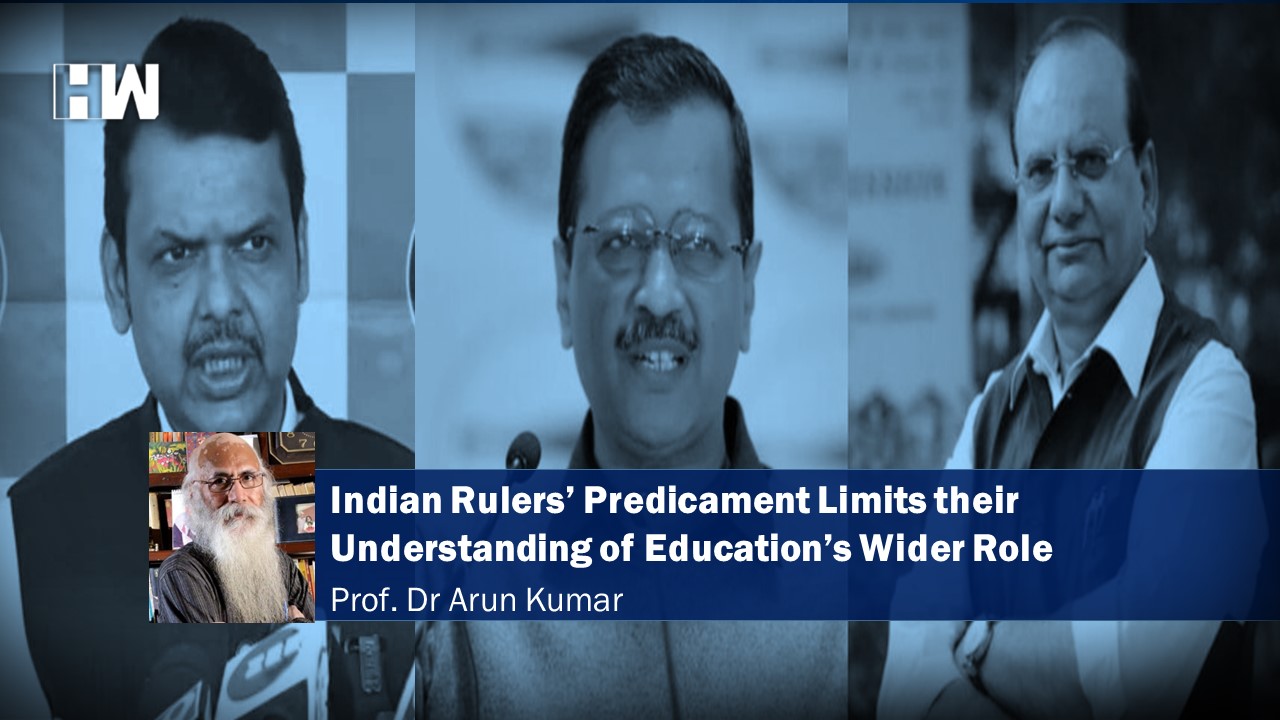
    Mr. Fadnavis, Dy. CM of Maharashtra has exhorted the youth to come forward in foiling the attempts of urban naxals from getting into universities. Since anyone differing from the establishment is being called urban naxal these days, this is a call to curb dissent in the
    universities.

    Earlier, Delhi’s Lt. Governor V K Saxena is reported to have said, “… degreeyan toh padahi ke kharch ki raseedein hoti hain. …” (… degrees are mere receipts of money spent on studies …). This was in response to the Delhi CM, Kejriwal’s reported barb that India needs an “… educated PM for the nation’s well-being”.  So, the educational qualifications of leaders have become an issue.

    These statements reflect the current Indian rulers’ skewed vision of education. For one dissent is not acceptable and for the other education is only about money spent and not the larger role it plays in society.

    [powerkit_button size=”lg” style=”info” block=”true” url=”https://hwnews.in/news/opinion/indian-rulers-predicament-limits-their-understanding-of-educations-wider-role/” target=”_blank” nofollow=”false”]
    Read More
    [/powerkit_button]

  • Clausewitz and Sun Tzu – Paradigms of Warfare in the 21st Century

    Clausewitz and Sun Tzu – Paradigms of Warfare in the 21st Century

    [powerkit_button size=”lg” style=”info” block=”true” url=”https://admin.thepeninsula.org.in/wp-content/uploads/2023/04/Clausewitz-and-Sun-Tzu-1.pdf” target=”_blank” nofollow=”false”]
    Download
    [/powerkit_button]

    “No principle in the world is always right, and no thing is always wrong. What was used yesterday may be rejected today, what is rejected now may be used later on. This use or disuse has no fixed right or wrong. To avail yourself of opportunities at just the right time, responding to events without being set in your ways is in the domain of wisdom. If your wisdom is insufficient (…) you’lle come to an impasse wherever you go.”

    –  Taostic Text

    Every war has its own strategy and also its own theorist. In fact, there are only two great theorists of war and warfare, the Prussian “philosopher of war” Carl von Clausewitz, and the ancient Chinese theorist of the “art of war”, Sun Tzu. Nevertheless, there is no single strategy that applies equally to all cases, i.e., not even Clausewitz’s or Sun Tzu’s. Often an explanation for success or failure is sought in the strategies used only in retrospect. For example, Harry G. Summers (Summers 1982) attributed the defeat of the United States in the Vietnam War to the failure to take into account the unity of people, army, and government, Clausewitz’s “wondrous trinity.” In contrast, after the successful campaign against Iraq in 1991, the then Chief of Staff of the U.S. Army, Colin Powell, appeared before the press with Clausewitz’s Book of War and signaled, see, we learned from the mistakes of the Vietnam War and won the Iraq War with Clausewitz (Herberg-Rothe 2007). Similarly, after World War I, there was a discourse that amounted to if the German generals had read Clausewitz correctly, the war would not have been lost. This position referred to the victory of the German forces in the Franco-Prussian War of 1870-71 and the assessment of the then Chief of General Staff, Helmut von Moltke, that he was able to fight this war successfully by studying Clausewitz’s “On War.” Since then, Clausewitz’s book has been searched for reasons for victory or defeat (Herberg-Rothe 2007).

    If Clausewitz’s status seemed unchallenged after the Iraq war in 1991, it was gradually questioned and often replaced by Sun Tzu. Two reasons played a role here – on the one hand, the new forms of non-state violence and, on the other, the new technological possibilities, the revolution in military affais (RMA), which is far from being completed. In particular, robotic and hybrid warfare, as well as the incorporation of artificial intelligence, that of space, and the development of quantum computers. The trigger of the change from Clausewitz to Sun Tzu was a seemingly new form of war, the so-called “New Wars”, which in the strict sense were not new at all, but are civil wars or those of non-state groups. In the view of the epoch-making theorist of the “New Wars”, Mary Kaldor (Kaldor 2000, much more differentiated Münkler 2002), interstate war was replaced by non-state wars, which were characterized by special cruelty of the belligerents. These weapon bearers, seemingly a return to the past, were symbolized by child soldiers, warlords, drug barons, archaic fighters, terrorists, and common criminals who were stylized as freedom fighters (Herberg-Rothe 2017).

    Since Sun Tzu lived in a time of perpetual civil wars in China, his “art of war” seemed more applicable to intrastate war, (McNeilley 2001) while Clausewitz’s conception was attributed to interstate war. In combating these new weapons carriers and the “markets of violence,” civil war economies, or “spaces open to violence” associated with them, Napoleon’s guiding principle was applied: “Only partisans help against partisans” (Herberg-Rothe 2017). Accordingly, conceptions of warfare were developed by John Keegan and Martin van Creveld, for example, that amounted to an archaic warrior with state-of-the-art technologies (Keegan 1995, van Creveld 1991). On the military level, the transformation of parts of the Western armed forces as well as the Bundeswehr from a defensive army to an intervention army took place. In contrast to the United States, the Bundeswehr placed greater emphasis on pacifying civil society in these civil war economies, and ideally the soldier became a social worker in uniform (Bredow 2006).

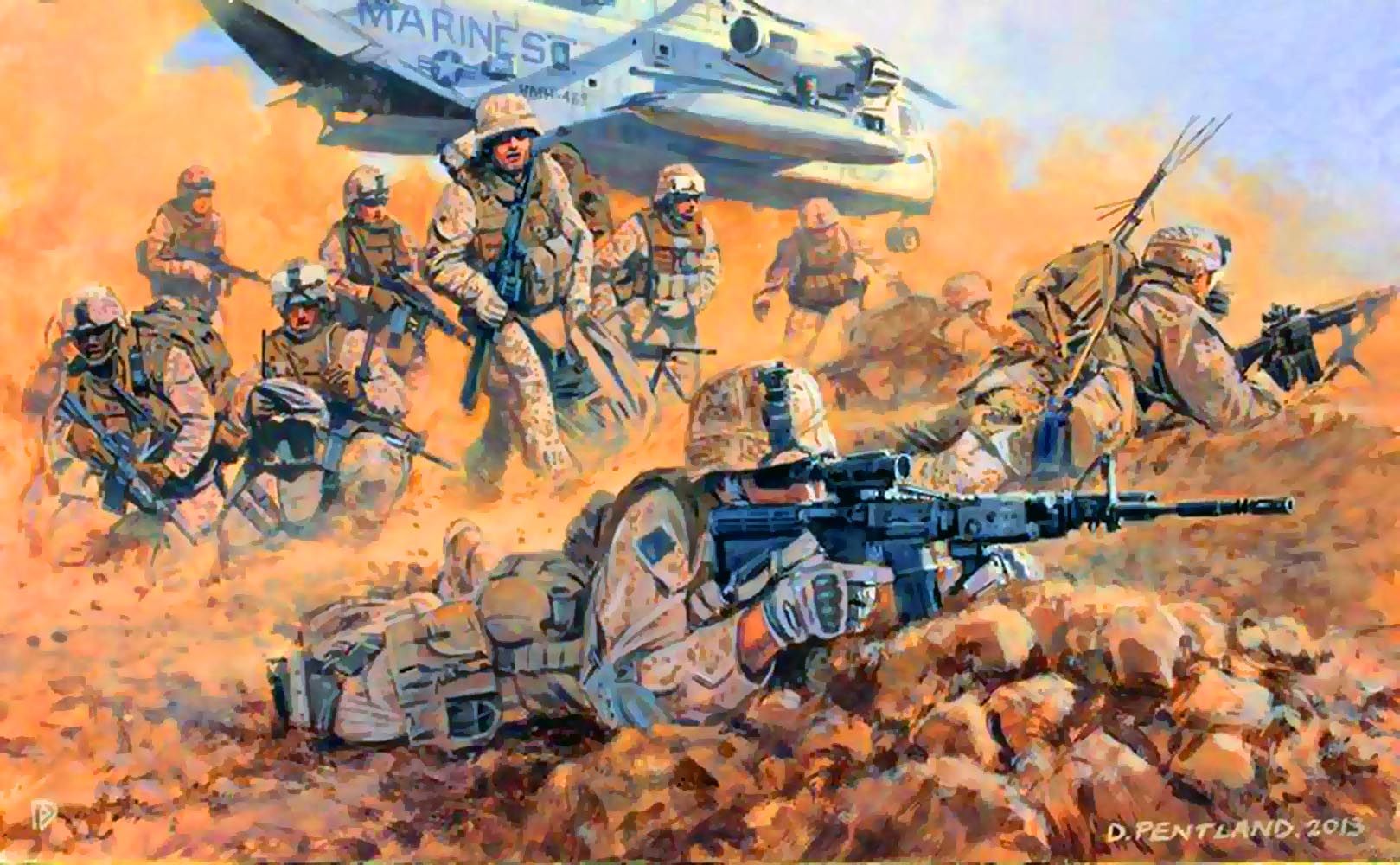
    The battle was fought by highly professional special forces in complex conflict areas. The initial success of the U.S. Army in Afghanistan can be attributed to the use of such special forces, which, as a result of modern communications capabilities, were able to engage superior U.S. airpower at any time. Because interstate warfare has returned to the forefront with the Ukraine war, Clausewitz may regain relevance in the coming years – unless the controversial concepts of hybrid warfare, John Boyd’s OODA loop, or NATO’s comprehensive approach gain further influence. At their core, these are based on non-state warfare by states, thus enabling a renaissance of Sun Tzu.

    However, the paradigm shift from Clausewitz to Sun Tzu became even clearer during the Second Iraq war in 2003. From the perspective of one commentator, this campaign was won in just a few weeks because the U.S. army was guided by Sun Tzu’s principles, while Saddam Hussein’s Russian advisors adhered to Clausewitz and Moscow’s defense against Napoleon (Macan 2003/Peters 2003). Before the fall of Afghanistan, former U.S. Secretary of Defense James Mattis brought up the Clausewitz/Sun Tzu distinction anew. “The Army was always big on Clausewitz, the Prussian; the Navy on Alfred Thayer Mahan, the American; and the Air Force on Giulio Douhet, the Italian. But the Marine Corps has always been more Eastern-oriented. I am much more comfortable with Sun-Tzu and his approach to warfare.” (Mattis 2008).

    Without fully following this distinction, it gives us hints that we cannot find absolutely valid approaches in Clausewitz’s and Sun Tzu’s conceptions, but differentiations in warfare. If we simplify the difference between the two, Clausewitz’s approach is more comparable to wrestling (Clausewitz 1991, 191), while Sun Tzu’s is comparable to jiu-jitsu. The difference between the two becomes even clearer when comparing Clausewitz’s conception to a boxing match. The goal is to render the opponent incapable of fighting (Clausewitz 1991, 191) by striking his body, as Clausewitz himself points out, thereby forcing him to make any peace. In contrast, Sun Tzu’s goal is to unbalance his opponent so that even a light blow will force him to the ground because he will be brought down by his own efforts. Of course, all two aspects play a major role in both Clausewitz and Sun Tzu, but Clausewitz’s strategy relates more to the body, the material means available to the war opponents, Sun Tzu’s strategy more to the mind, the will to fight. Both strategies have also often been conceptualized as the antithesis of direct and indirect strategy – in direct strategy, two more or less similar opponents fight on a delineated battlefield with roughly equal weapons and “measure their strength” – in indirect strategy, on the other hand, attempts are made, for example, to disrupt the enemy’s supply of food and weapons or to break the will of the opposing population to continue supporting the war. Examples of this in World War II would be the tank battles for symmetric and the bombing of German cities and the atomic bombing of Hiroshima and Nagasaki as an example of asymmetric warfare. Non-state warfare is also asymmetrically structured in nearly all cases, as it is primarily directed against the enemy civilian population (Wassermann 2015). Perhaps asymmetric warfare was most evident in the Yom Kippur War between Israel and the Egyptian army. The latter had indeed surprised Israel and managed to overrun Israeli positions along the Suez Canal. However, instead of giving the Egyptian army a tank battle in the Sinai, a relatively small group of tanks set back across the Suez Canal and in the back of the Egyptian army, cutting it off from the water supply, forcing the Egyptian army to surrender within a few days (Herberg-Rothe 2017).

    This distinction between Clausewitz and Sun Tzu can be contradicted insofar as Clausewitz begins with a “definition” of war in which the will plays a major role and which states that war is an act of violence to force the opponent to fulfill our will (Clausewitz 1991, 191). But how is the opponent forced to do this in Clausewitz’s conception? A few pages further on it says by destroying the opponent’s forces. By this concept of annihilation, however, he does not understand physical destruction in the narrower sense, but to put the armed forces of the opponent in such a state that they can no longer continue the fight (Clausewitz 1991 215).

    Sun Tzu

    Sun Tzu’s approach relates more directly to the enemy’s thinking. “The greatest achievement is to break the enemy’s resistance without a fight” (Sunzi 1988, 35). Accordingly, Basil Liddell Hart later formulated, “Paralyzing the enemy’s nervous system is a more economical form of operation than blows to the enemy’s body.” (Liddel Hart, 281). Sun Tzu’s methodical thinking aims at a dispassionate assessment of the strategic situation and thus at achieving inner distance from events as a form of objectivity. This approach is rooted in Taoism, and in it the presentation of paradoxes is elevated to a method. Although the “Art of War” contains a number of seemingly unambiguous doctrines and rules of thumb, they cannot be combined into a consistent body of thought.

    In this way, Sun Tsu confronts his readers (who are also his students) with thinking tasks that must be solved. Often these tasks take the form of the paradoxical. This becomes quite obvious in the following central paradox: “To fight and win in all your battles is not the greatest achievement. The greatest achievement is to break the enemy’s resistance without a fight.”(Sun Tzu). In clear contradiction to the rest of the book, which deals with warfare, Sun Tsu here formulates the ideal of victory without a battle and thus comes very close to the ideal of hybrid warfare, in which possible battle is only one of several options.

    Obviously, he wants to urge his readers to carefully consider whether a war should be waged and, if so, under what conditions. It is consistent with this that Sun Tsu repeatedly reflects on the economy of war, on its economic and social costs, and at the same time refers to the less expensive means of warfare: cunning, deception, forgery, and spies. Victory without combat is thus the paradox with which Sun Tsu seeks to minimize the costs of an unavoidable conflict, limit senseless violence and destruction, and point to the unintended effects.

    The form of the paradox is used several times in the book, for example when Sun Tsu recommends performing deceptive maneuvers whenever possible; this contradicts his statement that information about the opponent can be obtained accurately and used effectively – at least when the opponent is also skilled in deceptive maneuvers or is also able to see through the deceptions of his opponent. This contradiction stands out particularly glaringly when one considers that Sun Tsu repeatedly emphasizes the importance of knowledge, for example when he says: “If you know the enemy and yourself, there is no doubt about your victory; if you know heaven and earth, then your victory will be complete” (Sunzi 1988, 211). In a situation in which one must assume that the other person also strives to know as much as possible, this sentence can only be understood as a normative demand, as an ideal: Knowledge becomes power when it represents a knowledge advantage, as Michel Foucault has emphasized in more recent times: For him, knowledge is power. Cunning, deception, and the flow of information, even when they are not absolutely necessary, are, however, in danger of becoming ends in themselves, because they alone guarantee an advantage in knowledge. Information, then, is the gold and oil of the 21st century.

    The presentation of paradoxes is not an inadequacy for Sun Tsu, but the procedure by which he instructs his readers/students. In contrast to the theoretical designs of many Western schools, Sun Tsu relies here on non-directive learning: the paradox demands active participation from the reader, mirrors to him his structure of thinking, and makes him question the suitability of his own point of view in thinking through the position of the opponent. Sun Tsu thereby forces his recipients to constantly examine the current situation and to frequently reflect. By repetitively thinking through paradoxical contradictions, the actor gains the inner distance and detachment from the conflict that are necessary for an impersonal, objectifying view of events. By being confronted with paradoxes, the reader learns to simultaneously adopt very different points of view, to play through the given variants, to form an understanding for the contradictions of real situations, and at the same time to make decisions as rationally as possible. In this way, the text encourages people not to rely on the doctrines it formulates as positive knowledge about conflict strategies, but to practice repeated and ever new thinking through as a method. Sun Tzu’s approach is thus characterized by highlighting paradoxes of warfare by designing strategies of action through reflection aimed at influencing the thinking of the opponent.

    Elective Affinities with Mao Tse-tung

    The conception of the “people’s war” by the Chinese revolutionary Mao Tse-Tung is a further development of that of Sun Tzu and the dialectical thinking of Marx and Engels. At the same time, in these paradoxes, he tries to provide an assessment and analysis of the situation that is as objective-scientific as possible, linking it to subjective experience: “Therefore, the objects of study and cognition include both the enemy’s situation and our own situation, these two sides must be considered as objects of investigation, while only our brain (thought) is the investigating object” (Mao 1970, 26).

    The comprehensive analyses that Mao prefaces each of his treatises have two purposes: On the one hand, they serve as sober, objective investigations before and during the clashes, which are intended to ensure rational predictions of what will happen and are based on reliable information and the most precise planning. On the other hand, Mao uses them to achieve the highest level of persuasion and to mobilize his followers through politicization. Not for nothing are terms like “explain,” “persuade,” “discuss,” and “convince” constantly repeated in his writings, since the people’s war he propagates requires unconditional loyalty and high morale.

    Mao repeatedly demonstrates thinking in interdependent opposites, which can be understood as a military adaptation of the Chinese concept of Yin and Yang. His precise analyses demonstrate dialectical reversals; thus he can show that in strength is hidden weakness and in weakness is hidden strength. According to this thinking, in every disadvantage an advantage can be found, and in every disadvantage an advantage. An example of this is his explanation of the dispersion of forces: while conventional strategies proclaim the concentration of forces (as does Clausewitz, Clausewitz 1991, 468), Mao relies on dispersion. This approach confuses the opponent and creates the illusion of the omnipresence of his opponent.

    Mao understands confrontations as reciprocal interactions and, from this perspective, is able to weigh the relationship between concentration and dispersion differently: “Performing a mock maneuver in the East, but undertaking the attack in the West” (Mao 1970, 372) means to bind the attention of the opponent, but at the same time to become active where the opponent least expects it. Mao’s method of dialectically seeking out weakness in strength and strength in weakness leads him to the flexibility that is indispensable for confronting a stronger opponent.

    Finally, it is the ruthless analysis of one’s own mistakes that bring Mao to his guiding principles; from a series of sensitive defeats, he concluded, “The aim of war consists in nothing other than ‘self-preservation and the destruction of the enemy’ (to destroy the enemy means to disarm him or ‘deprive him of his power of resistance,’ but not to physically destroy him to the last man)” (Mao 1970, 349). On this point, Mao Tse Tung is in complete agreement with Clausewitz. Mao also clarifies this core proposition by defining the concept of self-preservation dialectically – namely, as an amalgamation of opposites: “Sacrifice and self-preservation are opposites that condition each other. For such sacrifices are not only necessary in order to preserve one’s own forces-a partial and temporary failure to preserve oneself (the sacrifice or payment of the price) is indispensable if the whole is to be preserved for the long run” (Mao 1970, 175).

    Sun Tzu problems

    Sun Tzu’s “The Art of War” as well as the theorists of network-centric warfare and 4th and 5th generation warfare focus on military success but miss the political dimension with regard to the post-war situation. They underestimate the process of transforming military success into real victory (Macan 2003, Peters 2003, Echevarria 2005). The three core elements of Sun Tzu’s strategy could not be easily applied in our time: Deceiving the opponent in general risks deceiving one’s own population as well, which would be problematic for any democracy. An indirect strategy in general would weaken deterrence against an adversary who can act quickly and decisively. Focusing on influencing the will and mind of the adversary may enable him to avoid a fight and merely resume it at a later time under more favorable conditions.

    Sun Tzu is probably more likely to win battles and even campaigns than Clausewitz, but it is difficult to win a war by following his principles. The reason is that Sun Tzu was never interested in shaping the political conditions after the war, because he lived in a time of seemingly never-ending civil wars. The only imperative for him was to survive while paying the lowest possible price and avoiding fighting, because even a successful battle against one enemy could leave you weaker when the moment came to fight the next. As always in history, when people want to emphasize the differences with Clausewitz, the similarities between the two approaches are neglected. For example, the approach in Sun Tzu’s chapter on “Swift Action to Overcome Resistance” would be quite similar to the approach advocated by Clausewitz and practiced by Napoleon. The main problem, however, is that Sun Tzu neglects the strategic perspective of shaping postwar political-social relations and their impact “by calculation” (Clausewitz 1991, 196) on the conduct of the war. As mentioned earlier, this was not a serious issue for Sun Tzu and his contemporaries, but it is one of the most important aspects of warfare in our time (Echevarria 2005¸ Lonsdale 2004).

    Finally, one must take into account that Sun Tzu’s strategy is likely to be successful against opponents with a very weak order of forces or associated community, such as warlord systems and dictatorships, which were common opponents in his time. His book is full of cases where relatively simple actions against the order of the opposing army or its community lead to disorder on the part of the opponent until they are disbanded or lose their will to fight altogether. Such an approach can obviously be successful with opponents who have weak armed forces and a weak social base but is likely to prove problematic with more entrenched opponents.

    Here, the Ukraine war could be a cautionary example. Apparently, the Russian military leadership and the political circle around Putin were convinced that this war, like the intervention in Crimea, would end quickly, because neither the resistance of the Ukrainian population nor its army was expected, nor the will of the Western states to support Ukraine militarily. To put it pointedly, one could say that in the second Iraq war, Sun Tzu triumphed over Clausewitz, but in the Ukraine war Clausewitz triumphed over Sun Tzu. This also shows that while wars in an era of hybrid globalization (Herberg-Rothe 2020) necessarily also take on a hybrid character, it is much more difficult to successfully practice hybrid warfare-such a conflation of opposites is strategically at odds with those writings of Clausewitz in which he generalizes the principles of Napoleonic warfare, though not with his determination of defense. The Ukraine war can even be seen as evidence of the greater strength of defense as postulated by Clausewitz (Herberg-Rothe 2007).

    And Clausewitz?

    At first glance, Clausewitz’s position is not compatible with that of Sun Tzu. In his world-famous formula of the continuation of war by other means (Clausewitz 1991, 210), Clausewitz takes a hierarchical position, with politics determining the superior end. Immediately before this formula, however, he writes that politics will pervade the entire warlike act, but only insofar as the nature of the forces exploding within it permits (Clausewitz 1991, ibid.). By this statement, he relativizes the heading of the 24th chapter, which contains the world-famous formula. In addition, all headings of the first chapter, with the exception of the result for the theory, the final conclusion of the first chapter, were written in the handwriting of Marie von Clausewitz, while only the actual text was written by Clausewitz (Herberg-Rothe 2023, on the discovery of the manuscript by Paul Donker).

    The tension only implicit in the formula becomes even clearer in the “wondrous trinity,” Clausewitz’s “result for the theory” of war. Here he writes that war is not only a true chameleon, because it changes its nature somewhat in each concrete case, but a wondrous trinity. This is composed of the original violence of war, hatred, and enmity, which can be seen as a blind natural instinct, the game of probabilities and chance, and war as an instrument of politics, whereby war falls prey to mere reason. Violence, hatred, and enmity like a blind natural instinct on the one side, and mere understanding on the other, this is the decisive contrast in Clausewitz’s wondrous trinity. For Clausewitz, all three tendencies of the wondrous trinity are inherent in every war; their different composition is what makes wars different (Clausewitz 1991, 213, Herberg-Rothe 2009).

    While Clausewitz formulates a clear hierarchy between the end, aim, and means of war in the initial definition and the world-famous formula, the wondrous trinity is characterized by a principled equivalence of the three tendencies of war’s violence, the inherent struggle and its instrumentality. At its core, Clausewitz’s wondrous trinity is a hybrid determination of war, which is why the term “paradoxical trinity” is more often used in English versions. In his determination of the three interactions to the extreme, made at the beginning of the book, Clausewitz emphasizes the problematic nature of the escalation of violence in the war due to its becoming independent, because the use of force develops its own dynamics (Clausewitz 1991, 192-193, Herberg-Rothe 2007 and 2017). The three interactions have often been misunderstood as mere guides to action, but they are more likely to be considered as escalation dynamics in any war. This is particularly evident in escalation sovereignty in war – the side gains an advantage that can outbid the use of force. However, this outbidding of the adversary (Herberg-Rothe 2001) brings with it the problem of violence taking on a life of its own. This creates a dilemma, which Clausewitz expresses in the wondrous trinity.

    This dilemma between the danger of violence becoming independent and its rational application gives rise to the problem formulated at the outset, namely that there cannot be a single strategy applicable to all cases, but that a balance of opposites is required (Herberg-Rothe 2014). In it, the primacy of politics is emphasized, but at the same time, this primacy is constructed as only one of three opposites of equal rank. Thus, Clausewitz’s conception of the wondrous trinity is also to be understood as a paradox, a dilemma, and a hybrid.

    As already observed in ethics, there are different ways to deal with such dilemmas (Herberg-Rothe 2011). One is to make a hierarchy between opposites. Here, particular mention should be made of the conception of trinitarian war, which was wrongly attributed to Clausewitz by Harry Summers and Martin van Creveld and was one of the causes of Clausewitz being considered obsolete by Mary Kaldor regarding the “New Wars.” For in the conception of trinitarian war, the balance of three equal tendencies emphasized by Clausewitz is explicitly transformed into a hierarchy of government, army, and people/population. Even if it should be noted that this interpretation was favored by a faulty translation in which Clausewitz’s notion of “mere reason” was transformed into the phrase “belongs to reason alone” (Clausewitz 1984), the problem is systematically conditioned. For one possible way of dealing with action dilemmas is such a hierarchization or what Niklas Luhmann called “functional differentiation”. We find a corresponding functional differentiation in all modern armies – Clausewitz himself had developed such a differentiation in his conception of the “Small War”, which was not understood as an opposition to the “Great War”, but as its supporting element. In contrast, Clausewitz developed the contrast to the “Great War” between states in the “People’s War” (Herberg-Rothe 2007).

    A second way of dealing with dilemmas of action is to draw a line up to which one principle applies and above which the other applies – that is, different principles would apply to state warfare than to “people’s war,” guerrilla warfare, the war against terrorists, warlords, wars of intervention in general. This was, for example, the proposal of Martin van Creveld and Robert Kaplan, who argued that in war against non-state groups, the laws of the jungle must apply, not those of “civilized” state war (van Creveld 1998, Kaplan 2002). In contrast, there are also approaches that derive the uniformity of war from the ends, aims, means relation, arguing that every war, whether state war or people’s war, has these three elements and that wars differ only in which ends are to be realized by which opponents with which means (I assume that this is the position of the Clausewitz-orthodoxy). It must be conceded that Clausewitz is probably inferior to Sun Tzu in practical terms with regard to the “art of warfare” – because in parts of his work, he gave the word to a one-sided absolutization of Napoleon’s warfare – while only in the book on defense did he develop a more differentiated strategy (Herberg-Rothe 2007, Herberg-Rothe 2014). Perhaps one could say that Sun Tzu is more relevant to tactics, whereas Clausewitz has the upper hand in strategy (Herberg-Rothe 2014).

    Summary

    If we return to the beginning, Clausewitz is the (practical) philosopher of war (Herberg-Rothe 2022), while Sun Tzu focuses on the “art of warfare”. As is evident in the hybrid war of the present, due to technological developments and the process I have labeled hybrid globalization (Herberg-Rothe 2020), every war can be characterized as a hybrid. However, as is currently evident in the Ukraine War, the designation of war as a hybrid is different from successful hybrid warfare. This is because hybrid warfare necessarily combines irreconcilable opposites. This mediation of opposites (Herberg-Rothe 2005) requires political prudence as well as the skill of the art of war. The ideal-typical opposition of both is correct in itself, if we provide these opposites with a “more” in each case, not an exclusive “or”.

    Clausewitz’s conception is “more” related to

    “politics, one’s own material possibilities and those of the opponent, a direct strategy, and that of the late Clausewitz on a relative symmetry of the combatants and the determination of war as an instrument. This can be illustrated with a boxing match in which certain blows are allowed or forbidden (conventions of war), the battlefield and the time of fighting remain delimited (declaration of war, conclusion of peace)”.

    Sun Tzu’s conception, on the other hand, refers to more

    “directly on the military opponent, his thinking and “nervous system” (Liddel-Heart), an indirect strategy (because a direct strategy in his time would have resulted in a weakening of one’s own position even if successful), and a relative asymmetry of forms of combat”.

    Despite this ideal-typical construction, every war is characterized by a combination of these opposites. Consequently, the question is neither about an “either-or” nor a pure “both-and,” but involves the question of which strategy is the appropriate one in a concrete situation. To some extent, we must also distinguish in Clausewitz’s conception of politics between a purely hierarchical understanding and a holistic construction. Put simply, the former conception is addressed in the relationship between political and military leadership; in the latter, any violent action by communities is per se a political one (Echevarria 2005, Herberg-Rothe 2009). From a purely hierarchical perspective, it poses no problem to emphasize the primacy of politics in a de-bounded, globalized world with Clausewitz. If, on the other hand, in a holistic perspective all warlike actions are direct expressions of politics, the insoluble problem arises of how limited warfare could be possible in a de-bounded world.

    This raises the question of which of the two, Clausewitz or Sun Tzu, will be referred to more in the strategic debates of the future. In my view, this depends on the role that information technologies, quantum computers, artificial intelligence, drones, and the development of autonomous robotic systems will play in the future – in simple terms, the role that thought and the “soul” will play in comparison to material realities in a globalized world. The Ukraine war arguably shows an overestimation of the influence of thought and soul (identity) on a community like Ukraine, but with respect to autocratic states like Russia and China, possibly an underestimation, at least temporarily, of the possibilities of manipulating the population through the new technologies. Regardless of the outcome of the war, the argument about Clausewitz and/or Sun Tzu will continue as an endless story – but this should not proceed as a mere repetition of dogmatic arguments, but rather answer the question of which of the two is the better approach can be taken in which concrete situation.

    Bibliography

    Bredow, Wilfried von (2006), Kämpfer und Sozialarbeiter – Soldatische Selbstbilder im Spannungsfeld herkömmlicher und neuer Einsatzmissionen. In: Gareis, S.B., Klein, P. (eds) Handbuch Militär und Sozialwissenschaft. VS Verlag für Sozialwissenschaften: Wiesbaden.

    Clausewitz, Carl von (199119), Vom Kriege. Dümmler: Bonn.

    Clausewitz, Carl von (1984), On War. OUP: Oxford.

    Creveld, Martin van (1991), The transformation of war. The Free Press: New York.

    Echevarria, Antulio II (2005), Fourth-generation warfare and other myths. Carlisle.

    Herberg-Rothe, Andreas (2001), Das Rätsel Clausewitz. Fink: München

    Herberg-Rothe, Andreas (2007), Clausewitz’s puzzle. OUP: Oxford

    Herberg-Rothe, Andreas (2009), Clausewitz’s “Wondrous Trinity” as a Coordinate System of War and Violent Conflict. In: International

    Journal of Violence and Conflict (IJVC) 3 (2), 2009, pp.62-77.

    Herberg-Rothe, Andreas (2011), Ausnahmen bestätigen die Moral. In: Frankfurter Rundschau vom 16. Juni 2011, 31.

    Herberg-Rothe, Andreas (2014), Clausewitz’s concept of strategy – Balancing purpose, aims and means. In: Journal of Strategic Studies. 2014; volume 37, 6-7, 2014, pp. 903-925. Also published online (17.4.2014): http://www.tandfonline.com/doi/full/10.1080/01402390.2013.853175

    Herberg-Rothe, Andreas (2015), Theory and Practice: The inevitable dialectics. Thinking with and beyond Clausewitz’s concept of theory. In: Militaire Spectator. Jaargang 184, Den Haag, Nr. 4, 2015, pp. 160-172.

    Herberg-Rothe, Andreas (2020), The dissolution of identities in liquid globalization and the emergence of violent uprisings. In: African Journal of Terrorism and Insurgency Research – Volume 1 Number 1, April 2020, pp. 11-32.

    Herberg-Rothe, Andreas (2022), Clausewitz as a practical philosopher. Special issue of the Philosophical Journal of Conflict and Violence. Guest editor: Andreas Herberg-Rothe. Trivent: Budapest, 2022. Also published online: https://trivent-publishing.eu/home/140-philosophical-journal-of-conflict-and-violence-pjcv-clausewitz-as-a-practical-philosopher.html

    Kaldor, Mary (2000), Neue und alte Kriege. Organisierte Gewalt im Zeitalter der Globalisierung. Suhrkamp: Frankfurt.

    Kaplan, Robert D. (2002), Warrior Politics. Vintage books: New York 2002

    Keegan, John (1995), Die Kultur des Krieges. Rowohlt: Berlin

    Liddell Hart, Basil Henry (1955), Strategie. Aus dem Englischen übertragen von Horst Jordan, Wiesbaden: Rheinische Verlags-Anstalt.

    Lonsdale, David (2004), The nature of war in the information age. Frank Cass: London

    Macan Marker, Marwaan (2003), Sun Tzu: The real father of shock and Awe, Asia Times, 2, April 2003

    Mao Tsetung (1970), Sechs Militärische Schriften, Peking: Verlag für fremdsprachige Literatur

    Mattis, James (2008), quoted in https://foreignpolicy.com/2015/06/08/quote-of-the-day-gen-mattis-reading-list-and-why-he-looks-more-to-the-east/); last access: 15.1.2023.

    McNeilly, Mark (2001), Sun Tzu and the Art of Modern Warfare. Oxford: Oxford University Press

    Münkler, Herfried (2002), Die neuen Kriege. Rowohlt: Reinbek bei Hamburg.

    Peters, Ralph, A New Age of War, New York Post, 10. April 2003.

    Summers, Harry G. Jr. (1982), On Strategy: A critical analysis of the Vietnam War. Novato.

    Sun Tzu (2008), The Art of War. Spirituality for Conflict. Woodstock.

    Sunzi (1988), Die Kunst des Kriegs, hrsg. und mit einem Vorwort von James Clavell, München 1988.

    Wassermann, Felix (2015), Asymmetrische Kriege. Eine politiktheoretische Untersuchung zur Kriegführung im 21. Jahrhundert: Campus: Frankfurt.

    Featured Image Credits: U.S Army

    [powerkit_button size=”lg” style=”info” block=”true” url=”https://admin.thepeninsula.org.in/wp-content/uploads/2023/04/Clausewitz-and-Sun-Tzu-1.pdf” target=”_blank” nofollow=”false”]
    Download
    [/powerkit_button]

  • Citizenship Renouncers are the New Colonials. Call them ‘Desi’ Colonials

    Citizenship Renouncers are the New Colonials. Call them ‘Desi’ Colonials

    These are the ones who have enjoyed the best of everything in the country – highly subsidised education all through their schooling and college years, high-grade training in the top institutions, and might have gone abroad with State support and scholarships

    Irrespective of what all colonialism does, or does not, the most devastating thing that happens to a colonised country is that its resources are depleted to the extent that it borders on plunder. India, indisputably, happens to be one of the classic cases of having bled to a high degree due to the avarice of the British. The kind of exploitation that occurred in India has been multi-dimensional and multi-hued, wherein the colonisers filled their coffers to please and enrich their royalty, king, queen and the crown.

    During colonialism, and even after the independence of the former colonies, a different kind of exploitative process was in place whereby chunks of humans from the colonies were ‘recruited’ at low wages for underclass jobs in the ammunition factories, textile mills, railways and road transport, in the mother country of the colonials, not to talk of the other forms of ‘recruitment’ as slaves and indenture labour for other colonies.

    [powerkit_button size=”lg” style=”info” block=”true” url=”https://www.moneycontrol.com/news/opinion/citizenship-renouncers-are-the-new-colonials-call-them-desi-colonials-10353731.html” target=”_blank” nofollow=”false”]
    Read More
    [/powerkit_button]

  • Analyzing the Union Budget 2023-24 to Unravel its Underlying Strategy

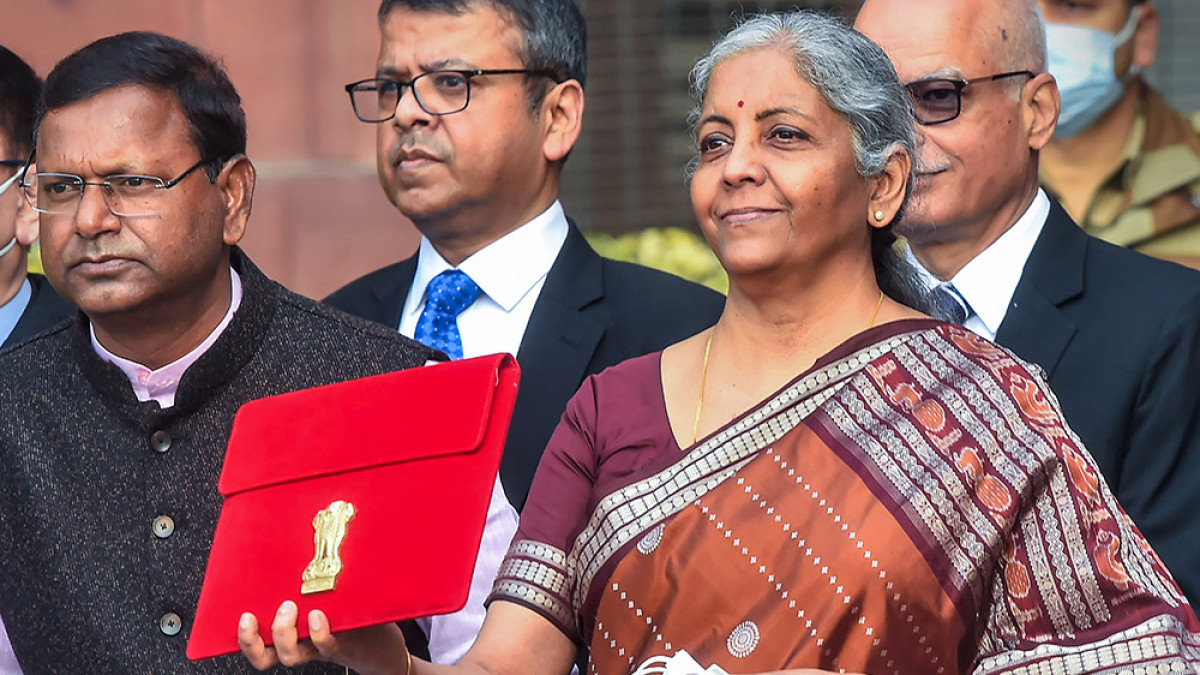
    Analyzing the Union Budget 2023-24 to Unravel its Underlying Strategy

    Introduction

    Any budget is complex consisting of many things of varying importance. Often, people focus on things of their direct interest but miss the wider implications that affect them indirectly and may undo any benefit they may get directly. Thus, it is not only important to look at the trees but also the forest. So, it is important to analyse the Macroeconomic strategy of the budget.

    Further, the budget is based on three things. First, analysis of the current economic situation, second, the scenario likely to prevail in the coming year and finally, what direction policy makers may want to give to the economy. It also needs to be kept in mind that there are lags. Announcements do not mean that what is being said will immediately happen. Even after implementation begins, it takes time for the results to follow. But it is always possible that the expected results may not follow due to a variety of reasons.

    Thus, a budget needs to be analysed both for its short term and long term impact. Any contradictions between the short and the long term policies leads to their failure. For the country, the long term is critical but politically the ruling party may find the short terms gains more compelling. This article attempted to present an analysis of the Union Budget 2023-24 with these features in mind.

    Current Economic Challenges

    There are internal and external challenges facing the economy. Externally, the ongoing war in Ukraine and the `New Cold War’ are adding to India’s problems. Nothing much can be done with regard to these except making the economy more resilient. A stronger economy will be able to better deal with the external challenges.

    [powerkit_button size=”lg” style=”info” block=”true” url=”http://mainstreamweekly.net/article13125.html” target=”_blank” nofollow=”false”]
    Read More
    [/powerkit_button]

  • Bihar’s Prohibition is Not Working. Historically it Seldom Does

    Bihar’s Prohibition is Not Working. Historically it Seldom Does

    Many states in India have introduced and then rescinded prohibition after struggling with the aftermath of such an action, including the ravages of death and various instantaneous ailments due to the consumption of illicit liquor.

    The recent illicit liquor tragedy in Bihar has proved, if proof is needed yet again, that banning alcohol has seldom had the desired results. Besides, historically, delusional zeal and overwhelming optimism embedded in false notions of success, by themselves, have never yielded any positive returns as regards the banning of alcoholic drinks.

    The catastrophe in the present case linked to the consumption of hooch (derived from hoochinoo, a word used by the Tlingit, a native ethnic group from Alaska) is not an isolated incident nor is it uncommon in India. Many hooch-related deaths have occurred in quite a widespread way through the length and breadth of India, particularly so in states where sale and, by extension, drinking alcohol, is forbidden by law.

    [powerkit_button size=”lg” style=”info” block=”true” url=”https://www.moneycontrol.com/news/opinion/bihars-prohibition-is-not-working-historically-it-seldom-does-9746851.html” target=”_self” nofollow=”false”]
    Read More
    [/powerkit_button]

  • For Democracy to be real and vibrant it needs  people with impeccable Integrity at the Helm

    For Democracy to be real and vibrant it needs people with impeccable Integrity at the Helm

    Democracy at its core is the power of the people. But all over the world, it is becoming anything but that. Truly the fear is that democracy is dying, as most nations that call themselves democracies are in effect controlled by capitalist oligarchs and majoritarian fascists. The power of money and vested interests have vitiated democratic processes worldwide. Michael Hudson calls the USA, once the beacon of democracy, a deep state controlled by three main oligarchic groups: Military Industrial Complex (MIC); Oil, Gas, and Mining (OGAM); and Finance, Insurance, and Real Estate (FIRE).  Add the new emerging giant group – Big Tech – as the fourth. The UK, the world’s oldest parliamentary system, is in shambles as a democracy. India, seen as the world’s largest democracy, is heading the majoritarian way. Majoritarianism is not democracy but tyranny. This is what the Father of the Nation had to say about democracy at the height of the freedom struggle:

    My notion of democracy is that under it the weakest should have the same opportunity as the strongest….No country in the world today shows any but patronising regard for the weak….Western democracy, as it functions today, is diluted fascism….True democracy cannot be worked by twenty men sitting at the centre. It has to be worked from below by the people of every village.”    – Mahatma Gandhi

    His words could not have been more apt for the times we live in. This quote is placed in the Sabarmati Ashram. One wonders how many take a moment to stop by to read it carefully and take in the import of his words. The Mahatma is the shining example of personal integrity, character, and moral courage. Since democracy is primarily driven by people and politics, it is vital that those at the helm of governance display impeccable integrity to ensure real democracy.

    Professor Arun Kumar PhD, an eminent economist and our adjunct Distinguished Fellow, writes eloquently on the subject and says ‘absence of persons with impeccable integrity is the bane of India’s democracy’. TPF is happy to republish this article.

    A version of this article was published earlier in theleaflet.in

    TPF Editorial Team


    Gandhiji said that institutions reflect what the people are, and that they cannot function as they are intended to unless those manning them are people of integrity.


    A Supreme Court Constitution bench recently said that the Chief Election Commissioner should be one “with character” and who would not get “bulldozed” – a self-evident truth. Further, it suggested that the selection committee for the post should consist of an independent person like the Chief Justice of India (‘CJI’). It added that people and bureaucrats like the former Chief Election Commissioner late T.N. Seshan, who could act independently, “happen once in a while”.

    Perhaps without meaning to, these comments indict the election commissioners appointed since Seshan’s time. Therefore, they have given voice to recent public concerns about the independence of the institution.

    Integrity of Constitutional authorities

    Will the CJI’s presence in the committee to appoint the Election Commissioners make a difference? The CJI is a member of the committee to appoint the Director of the Central Bureau of Investigation (‘CBI’). But the Supreme Court itself has called the CBI a “caged parrot”. The problem arises since the party in power would prefer a sympathetic person as an Election Commissioner, not an independent person.

    The appointment of Supreme Court judges has become contentious, with the judges and the Union Law Minister currently at loggerheads. Judges themselves have talked of pressures and counter pressures from within and from the government. Appointments of some who are seen to be inconvenient have been withheld. Earlier this week, a division bench of the Supreme Court mentioned that by delaying appointments, good people are dissuaded from becoming judges. It is suspected that the appointment of certain judges is delayed so that they do not become CJI in due course of time. It appears that pliability is a desirable attribute to becoming a judge.

    The Supreme Court, by raising the issue of the appointment of the Election Commissioner, has also brought into question the integrity of the Prime Minister (‘PM’), who is key to the appointment. Thus, doubt has been raised about the country’s constitutional authorities, including the judiciary. The executive, in any case, does the bidding of the political masters. So, where are the people of integrity in the corridors of power in India?

    Defining integrity

    Institutions can run as they ought to only if they are manned by people with integrity. Its absence from the top down is a societal challenge. Mahatma Gandhi in ‘Hind Swaraj’ (Indian Home Rule), more than a century back, said, “As are the people, so is their Parliament.” Since the Parliament is key to the functioning of a democracy, this flaw afflicts institutions down the line.

    PMs heading the government are political persons. Since politics is about power, they try everything to keep themselves and their party in power. Their election depends on the support of vested interests who fund both them and their party and therefore, dominate the working of the party. So, staying in power is a high stake business which requires manipulation of the systems in their favour.

    The Supreme Court, by raising the issue of appointment of the Election Commissioner, has brought into question the integrity of the Prime Minister, who is key to the appointment. Thus, doubt has been raised about the country’s constitutional authorities, including the judiciary. 

    There is then a separation of the interest of the nation, and of the party and its head, the PM. Consequently, for the party, integrity means that which serves its interest, which is not necessarily what the nation needs. This separation is what Gandhi implies in Hind Swaraj. No wonder, it is only a rare PM who has the moral integrity to select independent people for important Constitutional positions like the Election Commission and the judiciary.

    Politicians go through years of such conditioning before becoming PMs and it becomes their second nature. It cannot be expected to change upon becoming the PM. The opposition in a democracy is supposed to check the misuse of power. But the leaders of the opposition also go through the same conditioning as leaders of the ruling party and therefore, act no differently. Politicians often pride themselves on managing conflicts by making compromises and accepting the manipulation of power. So, politicians take a pliable stand, based on the chair they occupy – in power or out of it.

    Gandhi on parliamentary democracy

    Gandhi, commenting on the British Parliamentary democracy in Hind Swaraj, wrote, “The Prime Minister is more concerned about his power than about the welfare of Parliament … [and] upon securing the success of his party.” He added that they may be considered to be honest “because they do not take what is generally known as bribes… [but] …they certainly bribe the people with honours.” Therefore, “… they neither have real honesty nor a living conscience”.

    Regarding the Members of Parliament who could keep the PM in check, he wrote, “… Members are hypocritical and selfish. Each thinks of his own little interest. … Members vote for their party without a thought.” Regarding the media, another institution that could help check misuse of public authority by creating public awareness, he wrote that they “are often dishonest. The same fact is differently interpreted … according to the party in whose interest they are edited.” Gandhi was also scathing about the legal profession when he wrote, “… the profession teaches immorality …”.

    Gandhi was pointing to the fundamental flaws in the functioning of democracies. It also applies in the current Indian context. He was pointing to weak public accountability of those in power since public awareness was low. The public has little choice but to accept the existing imperfect political system. The British Parliamentary democracy may be the best available system, but it is highly flawed and its defects appear more starkly in weak democracies like that in India.

    We may be called the largest democracy in the world and we have succeeded in preserving it in the last 75 years, but it is frayed, as made clear by the current political problems facing us.

    Feudal attitudes and democracy

    Indian democracy’s weakness is a result of the persistence of feudal consciousness among a majority who easily accept authority. This is true even in institutions of higher education, where people are expected to be the most conscious. Most of these institutions are headed by academics with a bureaucratised mindset, who expect compliance and treat dissent as a malaise to be eradicated. In turn, they yield to politicians and bureaucrats.

    A feudal system has its own concept of integrity. The ruler’s interest is broadly the nation’s interest. This congruity breaks in a parliamentary democracy where the consciousness is feudal. In such a case, integrity as defined by national interest is likely to be subverted, as is visible in India.

    In 1947, India with its feudal consciousness ingrained and copied parliamentary democracy, not because people were ready for it, but because the leadership desired it since they wanted to copy Western modernity. People blindly accepted it since it came from their leaders, not because they understood it. Liberality at the top frayed post mid-1960s, as retaining power became more difficult and leaders turned increasingly authoritarian. So, while retaining the façade of democracy, it increasingly got hollowed out.

    In 1947, India with its feudal consciousness ingrained and copied parliamentary democracy, not because people were ready for it, but because the leadership desired it since they wanted to copy Western modernity. People blindly accepted it since it came from their leaders, not because they understood it.

    The political economy also pushed policies that marginalised the majority in the interest of the few. The black economy grew rapidly, making elections formalistic and draining them of their representational character. Most importantly, the rulers realized that neither the people ask for liberality nor do they demand accountability from leadership.

    Need for accountability at the top

    Accountability has to come from the top, whether in politics or in the government or the courts. It is not going to automatically come about without public pressure. A few freebies are enough to divert public attention. So, is accountability a luxury when basic issues are many?

    The lack of integrity in public life is costly. The nation’s energy is diverted. Reforms favouring the marginalised are circumvented. Laws are framed ostensibly to improve matters, but when the spirit is not willing they fail to deliver. Perfect laws are not possible, since human ingenuity can circumvent any law. The result is more complex laws and growing cynicism.

    What Gandhi pointed out is playing itself out in India. He said institutions reflect what the people are, and that they cannot function as they are intended to unless those manning them are people of integrity. But, can people with integrity emerge when it is missing all around, feudal consciousness pervades and people bend to authority?

    Reform requires us to resolve the contradiction between parliamentary democracy and the prevailing feudal consciousness. This cannot happen from above. It requires the transformation of the people’s consciousness – Gandhi’s unfinished agenda.


    Opinions expressed are those of the author.

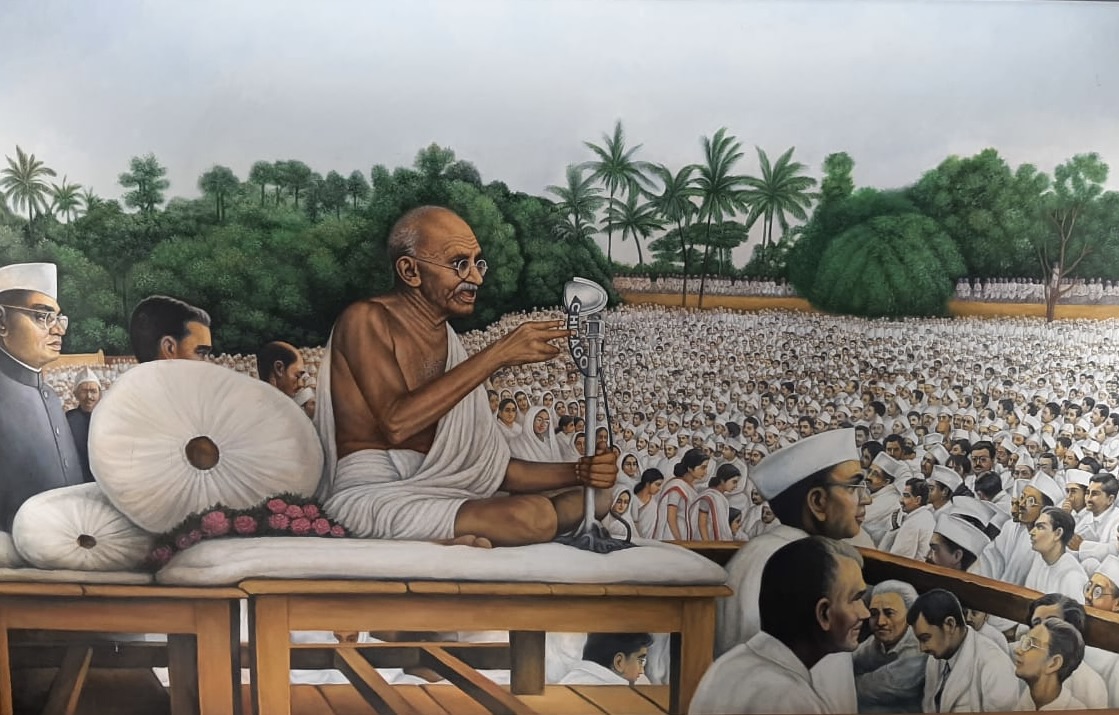
    Feature Image Credit: Gandhi in a public address – Painting at Sabarmati Ashram.
  • Absence of Persons with Impeccable Integrity at the Helm is the Bane of India’s Democracy

    Absence of Persons with Impeccable Integrity at the Helm is the Bane of India’s Democracy

    Gandhiji said that institutions reflect what the people are, and that they cannot function as they are intended to unless those manning them are people of integrity. 

    A Supreme Court Constitution bench recently said that the Chief Election Commissioner should be one “with character” and who would not get “bulldozed” – a self-evident truth. Further, it suggested that the selection committee for the post should consist of an independent person like the Chief Justice of India (‘CJI’). It added that people like bureaucrat and former Chief Election Commissioner late T.N. Seshan, who could act independently, “happen once in a while”.

    Perhaps without meaning to, these comments indict the election commissioners appointed since Seshan’s time. Therefore, they have given voice to recent public concerns about the independence of the institution.

    Integrity of Constitutional Authorities

    Will the CJI’s presence in the committee to appoint the Election Commissioners make a difference? The CJI is a member of the committee to appoint the Director of the Central Bureau of Investigation (CBI). But the Supreme Court itself has called the CBI a “caged parrot”. The problem arises since the party in power would prefer a sympathetic person as an Election Commissioner, not an independent person.

    [powerkit_button size=”lg” style=”info” block=”true” url=”https://theleaflet.in/absence-of-people-with-impeccable-integrity-at-the-helm-is-the-bane-of-indias-democracy/” target=”_blank” nofollow=”false”]
    Read More
    [/powerkit_button]

  • Women in Afghanistan: The Fight Back

    Women in Afghanistan: The Fight Back

    [powerkit_button size=”lg” style=”info” block=”true” url=”https://admin.thepeninsula.org.in/wp-content/uploads/2022/12/Womens-Right-In-Afghanistan_Hemantika-1.pdf” target=”_blank” nofollow=”false”]
    Download
    [/powerkit_button]

    Introduction:

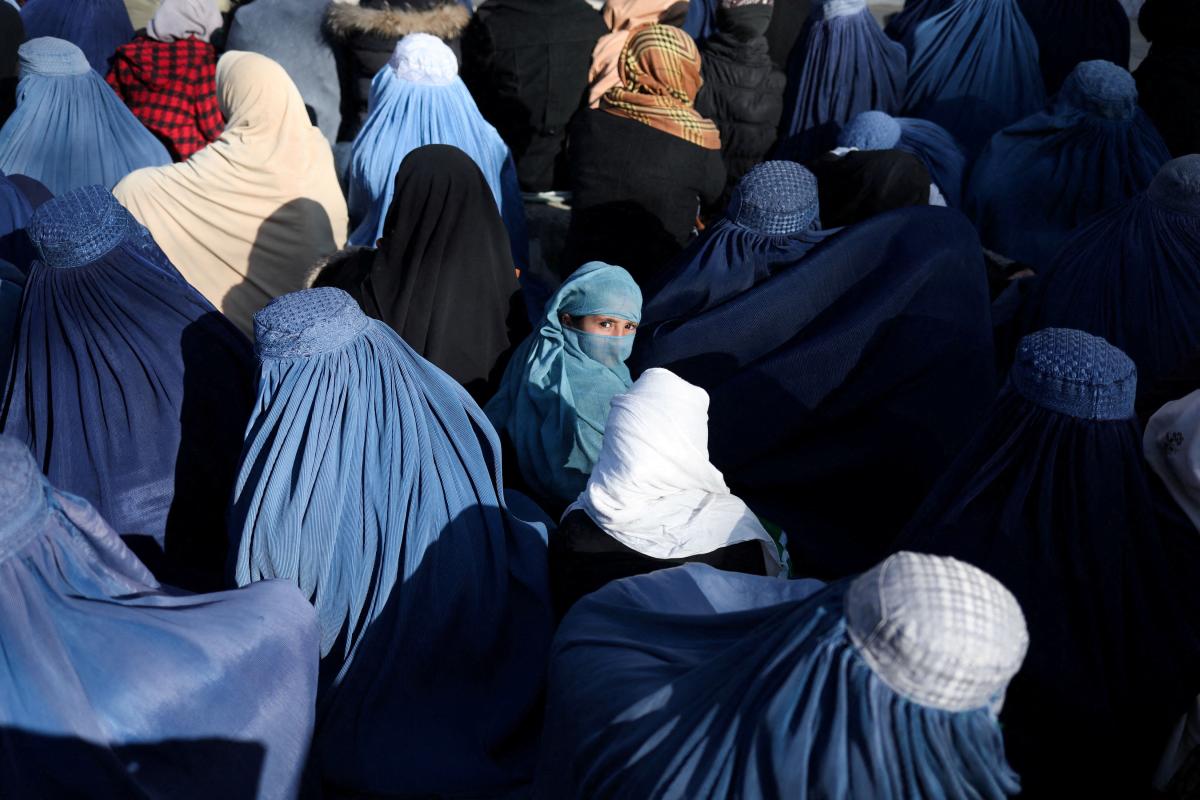
    Women and men undergo varied experiences in the event of an absolute collapse of the socio-political order. When combined with a catastrophic political transformation, their exposure to systemic abuse and violence dramatically increases. The vulnerability of women and their exposure to such violence is much more pronounced compared to what men face. This paper attempts to map the violence and abuse of rights women in Afghanistan are facing under the new Taliban rule after the American withdrawal. It also focusses on their response to the same. 

    Women under Taliban 1.0

    Afghanistan is a multi-ethnic country with a diverse population. Women’s issues have always had a central role in the governance system. From the beginning of the birth of modern-day Afghanistan, different monarchs have played a key role in determining the status of women in society, in line with their Islamic worldview. However, though women were considered inferior to men, they had their share of rights that were in no way meant to keep them confined to their houses. Instead, their free movement was hardly restricted. Covering their heads or wearing a burqa was not mandatory. There were organizations like the Anjuman-I-Himayat-I-Niswan(Organization for Women Protection), which worked to encourage women into reporting any kind of injustice meted to them. 

    After the Soviet invasion of Afghanistan in 1979, women’s rights were further amplified with universities in most cities, especially Kabul admitting them. After the departure of the Soviets in May 1988, the Mujahedeen overturned all that the Soviet Union had stood for, which included women’s rights regarding employment and education. Women were pushed away from public life and forced to wear a burqa. Fewer women were visible on television.

    [powerkit_button size=”lg” style=”info” block=”true” url=”https://admin.thepeninsula.org.in/wp-content/uploads/2022/12/Womens-Right-In-Afghanistan_Hemantika-1.pdf” target=”_blank” nofollow=”false”]
    Download
    [/powerkit_button]

  • Right to Work: Feasible and Indispensable for India to be a Truly Civilized and Democratic Nation

    Right to Work: Feasible and Indispensable for India to be a Truly Civilized and Democratic Nation

    Executive Summary of
    Report of People’s Commission on Employment and Unemployment
    Set up by Desh Bachao Abhiyan

    Introduction

    When society faces a problem and is unable to resolve it, it implies that something basic is wrong. One needs to look for its basic causes to solve the problem. The causes may lie in the system that has evolved over time and which conditions the dominant social and political thinking in society. The onus of finding the solution and rectifying the problem is on the rulers. Their failure to do so over time implies a lack of motivation/commitment to solve the problem.

    All this applies to the issue of employment generation and unemployment in India which has been growing over time and affects the vast majority of the citizens.

    The Basic Issue

    Gandhi said that India is the only country capable of giving a civilizational alternative. The time has come to take this seriously since unemployment has become a critical issue that needs to be urgently tackled. The issue is multi-dimensional since it is a result of multiple causes and has widespread implications. It impacts the growth of the economy, inequality, poverty, etc. It has a gender dimension and impacts the marginalized sections adversely reflecting a lack of social justice. It is entrenched among the youth. The more educated they are greater the unemployment they face. Consequently, it has political and social implications, like, social relations.

    The rapidly growing incomes of the top 1% in the income ladder indicate that the economy has the resources but they are mal-distributed. The rich at the top has created a system that enables them to capture most of the gains from development with little trickling down to the rest.

    This Report presents a framework that spells out the causes, consequences, and possible remedies. Further, it looks at the historical process underlying the evolution of policies so as to understand how they can be changed.

    If any form of distortion persists over a long period, as unemployment in India, its origins lie in society’s perceptions and priorities. In India, these can be traced to the adoption of state capitalism and persisting feudal tendencies of the elite policy makers who in their own self-interest adopted a trickle-down model of development.

    Further, Capitalism has globally taken the form of marketization which promotes `profit maximisation’. But is it then legitimate to keep workers unemployed? It implies loss of output and therefore reduces the size of the economy which leads to a lower level of profits. So, by the logic of individual rationality, the system should create productive employment for all.

    The market’s notion of `efficiency’ is status quoist since it seeks to perpetuate the historical injustice in society. `Consumer sovereignty’ implies that individuals should be left free to do whatever they wish. The collectivity should not intervene in their choices no matter how socially detrimental they may be. It promotes the notion that if I have the money I can do what I like. The ratio of incomes is 10,000 times and more between the big businessmen and the poor workers. The market sees nothing wrong in this; in fact, society has come to celebrate it.

    Marketization is determining society’s choices through its principles penetrating all aspects of society. One of these principles is the `dollar vote’. The policy makers accept it and prioritize the choices of the well-off over those of the marginalized. The well-off dictate the social judgments of policy makers. Consequently, not only equality is not on the agenda even equity is not.

    With marketization stripping off the social aspect of life, individuals become automatons. Their individual distress and situation in life are no one’s or society’s concern. Unemployment becomes just a switching off of a machine. No social concern need to be attached to it. In fact, capitalists welcome unemployment as an efficient’ device to discipline labour and neo-classical economics considers it as natural. Inflation further weakens large numbers of workers as they lose purchasing power.

    In essence, whether or not society should aim to give productive employment to all reflects its view of individuals. Society needs to choose what is more important – profits or the welfare of the marginalized majority. The Gandhian view, largely rejected by the Indian elite, was `last person first’ which defined what the priority should be.

    [powerkit_button size=”lg” style=”info” block=”true” url=”https://admin.thepeninsula.org.in/wp-content/uploads/2022/10/PCAU-Executive-Summary-of-Report-1.pdf” target=”_blank” nofollow=”false”]
    Read the Full Executive Summary
    [/powerkit_button]

    Disclaimer:

    The views represented herein are those of the author and do not necessarily reflect the views of The Peninsula Foundation, its staff, or its trustees.

    The report’s executive summary is republished with the permission of the author.

    Feature Image:

    Economic and Political Weekly