Pakistan’s presence at China’s Victory Day parade exposed a more profound truth: its value lies not in strategic brilliance but in being a pawn for both Washington and Beijing. Far from balancing, Islamabad survives as a tool in the great power game against India.
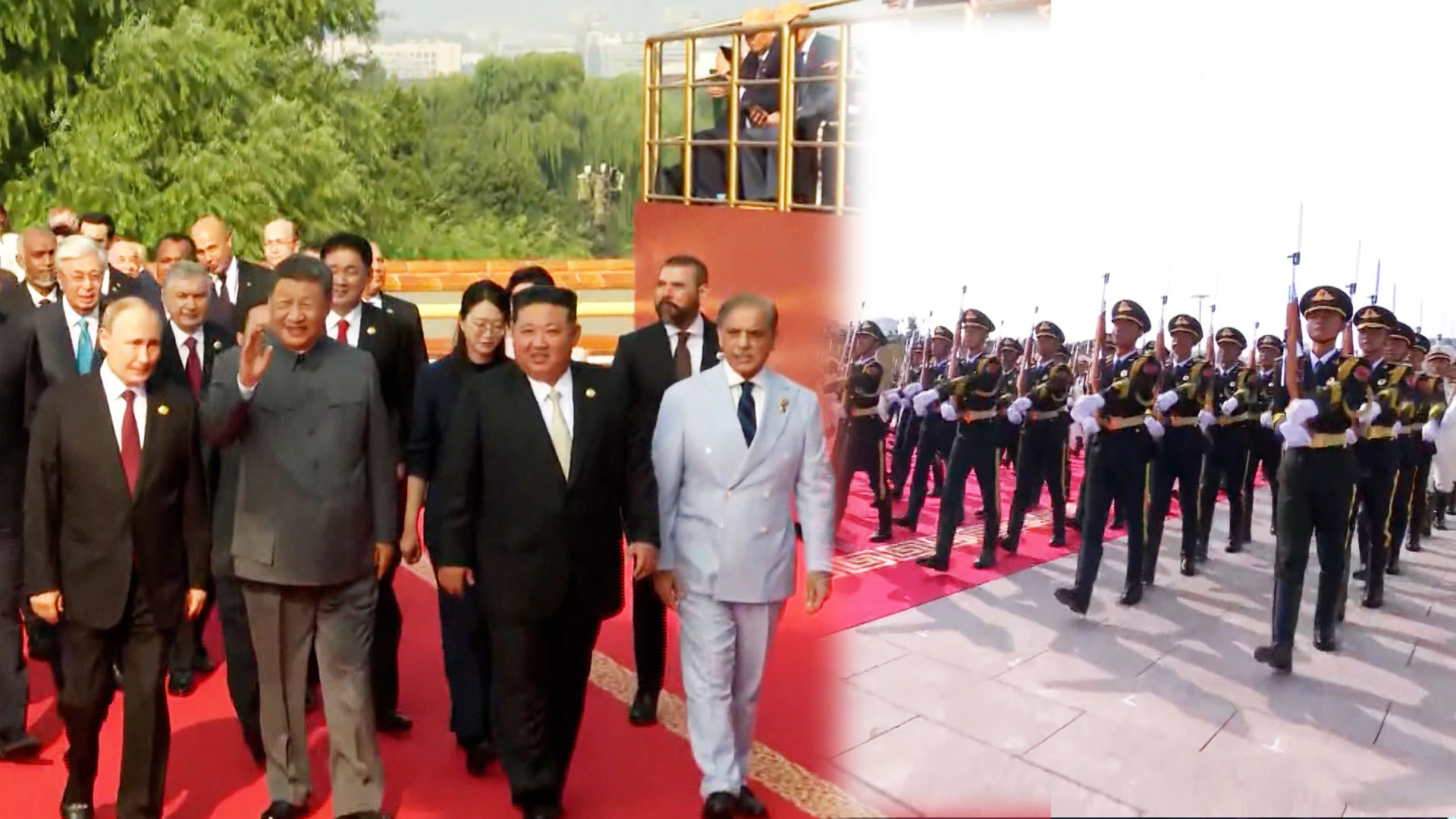
China’s recent Victory Day parade on September 3, 2025, was more than a ceremonial display; it was a calculated act of strategic signalling to the West. By showcasing its formidable military hardware and hosting close allies such as Russia’s Vladimir Putin and North Korea’s Kim Jong-un, Beijing sought to project its emergence as a great power, much as it did during the 2008 Olympics. By bringing these leaders together, China signalled not only unity but also the contours of an emerging alternative world order that challenges Western dominance.
The parade sent “chill waves” across Western capitals, with even Donald Trump admitting that he closely followed the event. On social media, he sardonically addressed China: “Please give my warmest regards to Vladimir Putin and Kim Jong Un, as you conspire against the United States of America.” On September 5, 2025, he further voiced his frustration, declaring that the U.S. had “lost India and Russia to deepest, darkest China,” a remark that reflected Washington’s growing unease over Beijing’s expanding influence.
India, notably absent from China’s Victory Day parade on September 3, 2025, made its own strategic moves. Prime Minister Narendra Modi visited Japan on August 29–30, ahead of the Shanghai Cooperation Organisation (SCO) summit in Tianjin on August 31–September 1. By going to Tokyo first and then to Tianjin, Modi signalled to the West that India continues to prioritise its commitments in the Indo-Pacific, while also reminding Beijing that New Delhi remains open to engagement. During the SCO summit, Modi’s remark that India’s engagement with China “should not be seen through third-country lenses” was intended to reassure the West of India’s balancing strategy.
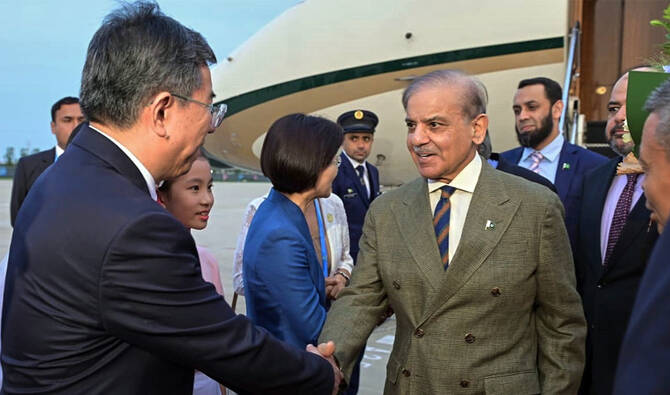
Yet, amid this choreography of great powers, one country’s presence at the Victory Day parade raised eyebrows: Pakistan. Prime Minister Shehbaz Sharif stood alongside leaders who openly challenge the Western-led order—figures the West often labels as part of an “axis of evil”—despite Pakistan being nominally allied with the United States. What was even more surprising was the silence of Washington and its partners. Had it been India’s leader at the parade, the Western outcry would have been deafening. But when Pakistan did it, no questions were asked. Why this extraordinary tolerance?
The explanation lies not in Pakistan’s own strategic brilliance. Unlike India, Pakistan lacks genuine strategic agency or independent decision-making capacity. It has long been dependent on external patrons and remains heavily constrained by domestic crises. The narrative advanced by some strategic experts that Islamabad is engaged in a masterful balancing act between Washington and Beijing is misleading. Instead, both the U.S. and China tolerate Pakistan’s duplicity because of its enduring strategic utility against India.
Washington knows Pakistan’s record all too well. During the War on Terror, Islamabad received over $33 billion in U.S. aid while simultaneously providing sanctuary to Taliban leaders. U.S. officials, including President Trump, repeatedly acknowledged this duplicity. In a tweet on January 1, 2018, Trump stated: ‘The United States has foolishly given Pakistan more than 33 billion dollars in aid over the last 15 years, and they have given us nothing but lies & deceit, thinking of our leaders as fools. They give safe haven to the terrorists we hunt in Afghanistan, with little help. No more!”
Similarly, Congressman Ted Poe, Chairman of the House Subcommittee on Terrorism, introduced a bill in 2016 calling for Pakistan to be declared a “state sponsor of terrorism,” stating that Pakistan was “not only an untrustworthy ally but has also aided and abetted the enemies of the United States”. Counterterrorism cooperation is, therefore, not the real reason Washington continues to indulge Pakistan. Nor are West Asia’s dynamics or connectivity goals the central factor, though they play a role.
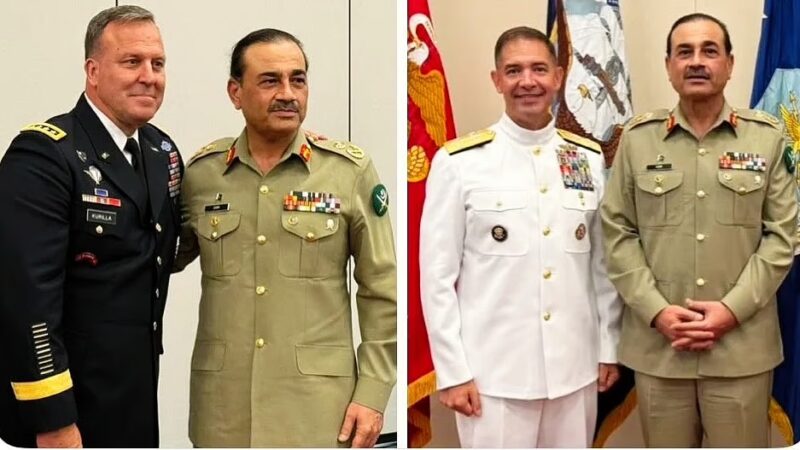
The real reason is India. Pakistan serves as a pressure valve for Washington to use whenever New Delhi strays from American strategic priorities. Similarly, for Beijing, Pakistan is an indispensable grey-zone tool against India — a reliable proxy that complicates India’s security calculus without requiring direct Chinese involvement. This explains why China continues to describe its relationship with Pakistan as ‘higher than the Himalayas, deeper than the oceans, sweeter than honey, and stronger than steel,’ even though Beijing is fully aware that the “honey” and other lofty adjectives in this partnership are largely rhetorical, given Pakistan’s military establishment has historically maintained close ties with the Pentagon and U.S. defense agencies.
Recent developments illustrate this pattern. Despite Islamabad striking a minerals deal in Balochistan with the U.S.—an area where China has invested heavily through the China-Pakistan Economic Corridor (CPEC) and even frequently loses its workers to terrorist attacks—Beijing has not retaliated.
China has invested nearly $60 billion in CPEC projects, including Gwadar Port and associated infrastructure, yet continues to tolerate Pakistan’s parallel engagement with the U.S. Even though just days ago, China exited funding for certain sections of CPEC, such as the Karachi–Rohri stretch of the Main Line-1 railway, the broader corridor remains intact and firmly under Beijing’s control.
Similarly, Washington has been remarkably quiet about the expansion of CPEC and its recent announcement to extend it into Afghanistan, despite this development directly strengthening Chinese influence in South and Central Asia, which contradicts U.S. national security strategies, including the Indo-Pacific strategy designed to counterbalance China. Imagine if India were to engage China in a similar manner; the Western backlash would be immediate and fierce.
The silence over Pakistan reveals the underlying logic: both Washington and Beijing find it useful to maintain Islamabad as a strategic lever against India. For China, Pakistan provides military intelligence, operational support, and a constant security distraction for New Delhi, keeping India tied down on its western front. For the U.S., Pakistan is less a partner in counterterrorism than a tool to remind India of the costs of drifting too far from American preferences.
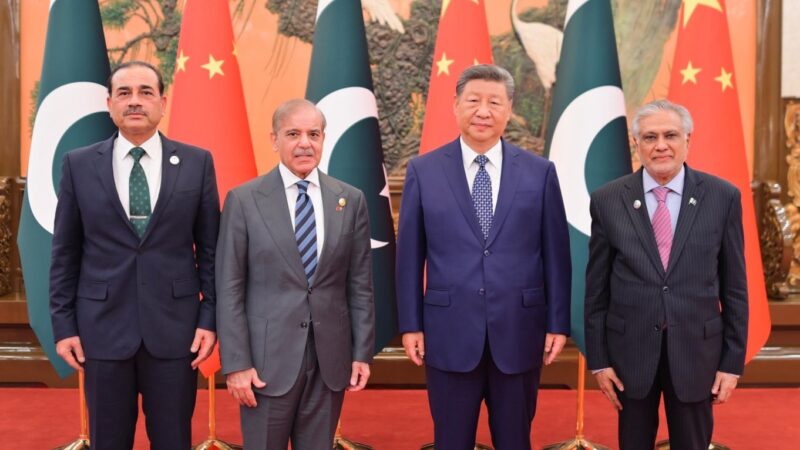
Thus, Pakistan’s position is not the result of deft balancing or sophisticated statecraft. It is tolerated, even courted, by two rival great powers because of its instrumental value in their respective strategies against India. Far from being an Independent balancer, Pakistan remains a dependent actor whose importance derives almost entirely from the leverage it provides to others.
For India, the lesson is clear. The tolerance extended to Pakistan by both Washington and Beijing is not about Islamabad’s capabilities or credibility — both powers know well its history of duplicity. Instead, it reflects the centrality of India in global strategy and the willingness of other powers to use Pakistan as a pawn in their broader geopolitical contest. Recognising this reality is essential for shaping New Delhi’s responses, ensuring that India continues to strengthen its autonomy and strategic weight in the Indo-Pacific and beyond.
Feature Image Credit: India Today
Pictures in Text: www.arabnews.com, www.nationalheraldindia.com, www.deccanherald.com