Tag: Nuclear War

  • The NATO Declaration and the Deadly Strategy of Neoconservatism

    The NATO Declaration and the Deadly Strategy of Neoconservatism

    For the sake of America’s security and world peace, the U.S. should immediately abandon the neocon quest for hegemony in favour of diplomacy and peaceful co-existence.

    In 1992, U.S. foreign policy exceptionalism went into overdrive. The U.S. has always viewed itself as an exceptional nation destined for leadership, and the demise of the Soviet Union in December 1991 convinced a group of committed ideologues—who came to be known as neoconservatives—that the U.S. should now rule the world as the unchallenged sole superpower.

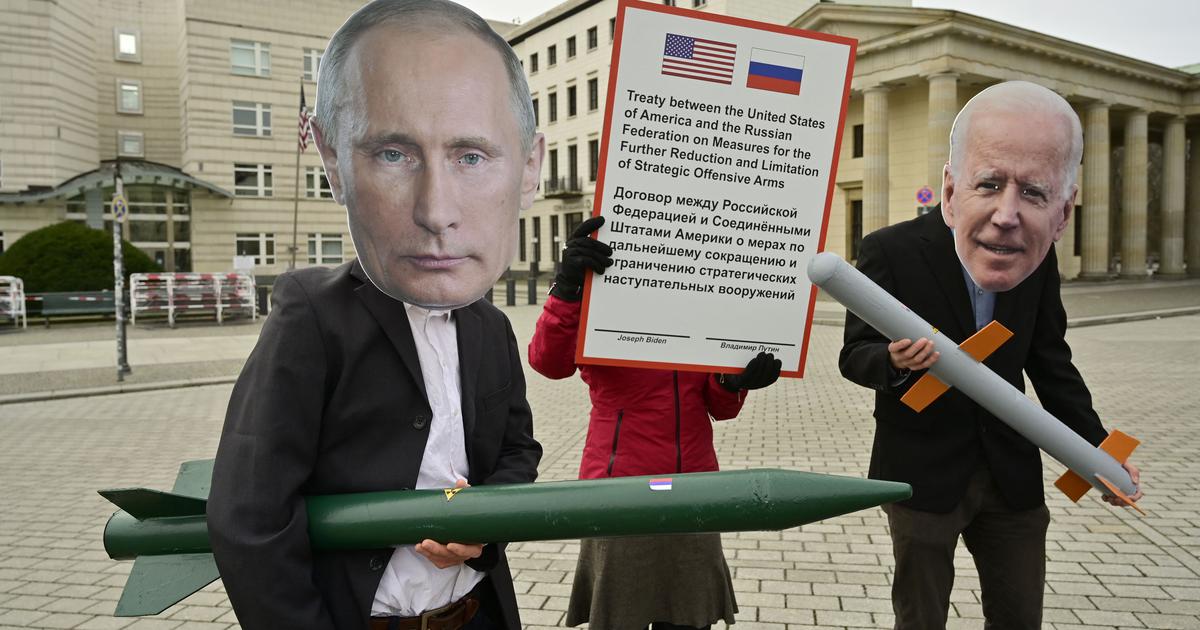
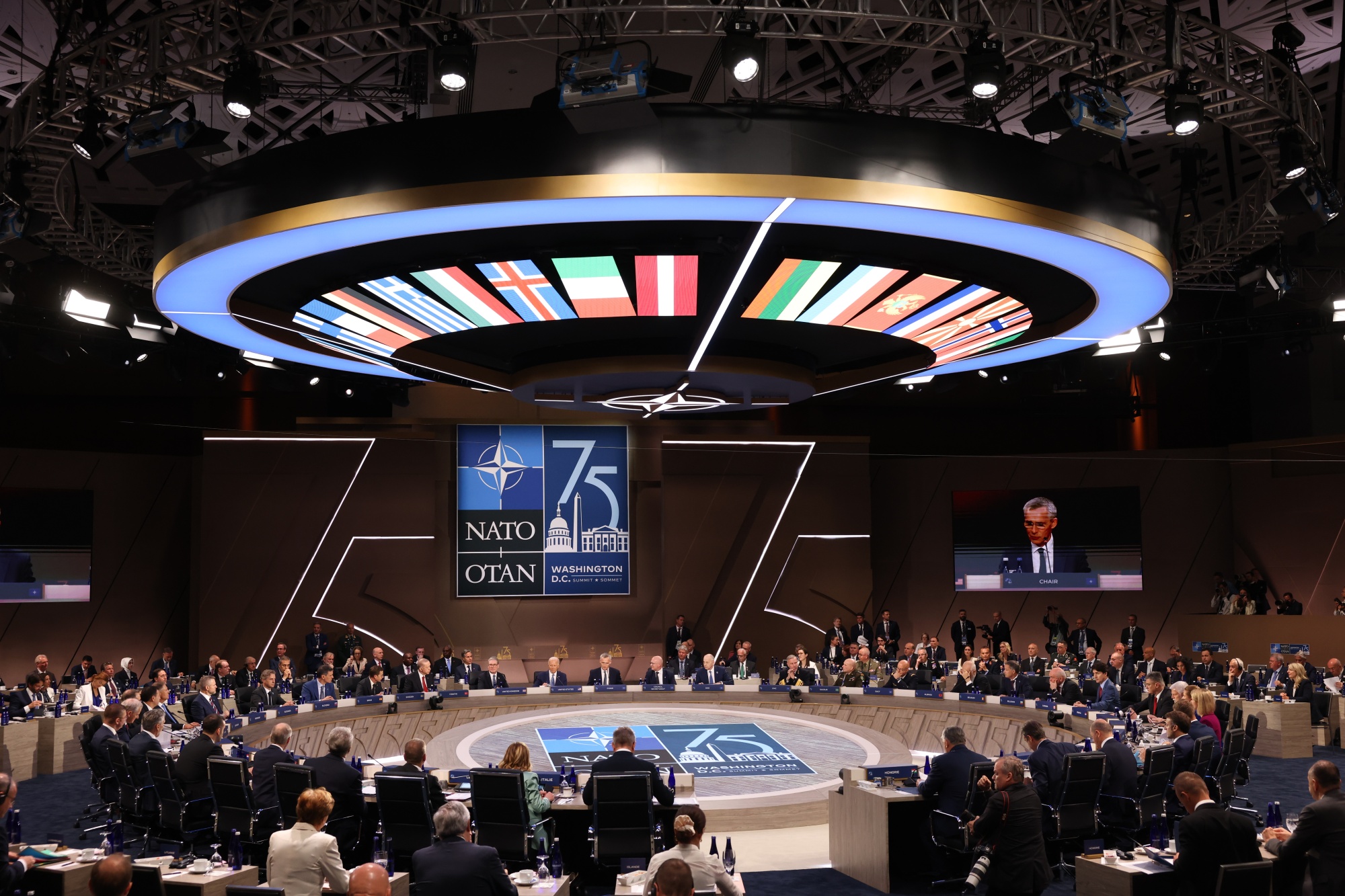
    Despite countless foreign policy disasters at neocon hands, the 2024 NATO Declaration continues to push the neocon agenda, driving the world closer to nuclear war.
    The neoconservatives were originally led by Richard Cheney, the Defense Secretary in 1992. Every President since then—Clinton, Bush, Obama, Trump, and Biden—has pursued the neocon agenda of U.S. hegemony, leading theU.S. into perpetual wars of choice, including Serbia, Afghanistan, Iraq, Syria, Libya, and Ukraine, as well as relentless eastward expansion of NATO, despite a clear U.S. and German promise in 1990 to Soviet President Mikhail Gorbachev that NATO would not move one inch eastward.
    The core neocon idea is that the U.S. should have military, financial, economic, and political dominance over any potential rival in any part of the world. It is targeted especially at rival powers such as China and Russia and, therefore, brings the U.S. into direct confrontation with them. The American hubris is stunning: most of the world does not want to be led by the U.S., much less led by a U.S. state clearly driven by militarism, elitism and greed.
    The neocon plan for U.S. military dominance was spelt out in the Project for a New American Century. The plan includes relentless NATO expansion eastward and the transformation of NATO from a defensive alliance against a now-defunct Soviet Union to an offensive alliance used to promote U.S. hegemony. The U.S. arms industry is the major financial and political backer of the neocons. The arms industry spearheaded the lobbying for NATO’s eastward enlargement starting in the 1990s. Joe Biden has been a staunch neocon from the start, first as Senator, then as Vice President, and now as President.
    To achieve hegemony, the neocon plans rely on CIA regime-change operations; U.S.-led wars of choice; U.S. overseas military bases (now numbering around 750 overseas bases in at least 80 countries); the militarization of advanced technologies (biowarfare, artificial intelligence, quantum computing, etc.); and relentless use of information warfare.
    The quest for U.S. hegemony has pushed the world to open warfare in Ukraine between the world’s two leading nuclear powers, Russia and the United States. The war in Ukraine was provoked by the relentless determination of the U.S. to expand NATO to Ukraine despite Russia’s fervent opposition, as well as the U.S. participation in the violent Maidan coup (February 2014) that overthrew a neutral government and the U.S. undermining of the Minsk II agreement that called for autonomy for the ethnically Russian regions of eastern Ukraine.
    The NATO Declaration calls NATO a defensive alliance, but the facts say otherwise. NATO repeatedly engages in offensive operations, including regime-change operations. NATO led the bombing of Serbia in order to break that nation into two parts, with NATO placing a major military base in the breakaway region of Kosovo. NATO has played a major role in many U.S. wars of choice. NATO bombing of Libya was used to overthrow the government of Moammar Qaddafi.
    The U.S. quest for hegemony, which was arrogant and unwise in 1992, is absolutely delusional today since the U.S. clearly faces formidable rivals that can compete with the U.S. on the battlefield, in nuclear arms deployments and in the production and deployment of advanced technologies. China’s GDP is now around 30% larger than the U.S. when measured at international prices, and China is the world’s low-cost producer and supplier of many critical green technologies, including EVs, 5G, photovoltaics, wind power, modular nuclear power, and others. China’s productivity is now so great that the U.S. complains of China’s “over-capacity.”

    Sadly and alarmingly, the NATO declaration repeats the neoconservative delusions.
    The Declaration falsely declares that “Russia bears sole responsibility for its war of aggression against Ukraine,” despite the U.S. provocations that led to the outbreak of the war in 2014.
    The NATO Declaration reaffirms Article 10 of the NATO Washington Treaty, according to which NATO’s eastward expansion is none of Russia’s business. Yet the U.S. would never accept Russia or China establishing a military base on the US border (say in Mexico), as the U.S. first declared in the Monroe Doctrine in 1823 and has reaffirmed ever since.
    The NATO Declaration reaffirms NATO’s commitment to biodefense technologies, despite growing evidence that U.S. biodefense spending by NIH financed the laboratory creation of the virus that may have caused the Covid-19 pandemic.
    The NATO Declaration proclaims NATO’s intention to continue to deploy anti-ballistic Aegis missiles (as it has already done in Poland, Romania, and Turkey) despite the fact that the U.S. withdrawal from the ABM Treaty and placement of Aegis missiles in Poland and Romania has profoundly destabilized the nuclear arms control architecture.
    The NATO Declaration expresses no interest whatsoever in a negotiated peace for Ukraine.
    The NATO Declaration doubles down on Ukraine’s “irreversible path to full Euro-Atlantic integration, including NATO membership.” Yet Russia will never accept Ukraine’s NATO membership, so the “irreversible” commitment is an irreversible commitment to war.
    The Washington Post reports that in the lead-up to the NATO summit, Biden had serious qualms about pledging an “irreversible path” to Ukraine’s NATO membership, yet Biden’s advisors brushed aside these concerns.

    The neoconservatives have created countless disasters for the U.S. and the world, including several failed wars, a massive buildup of U.S. public debt driven by trillions of dollars of wasteful war-driven military outlays, and the increasingly dangerous confrontation of the U.S. with China, Russia, Iran, and others. The neocons have brought the Doomsday Clock to just 90 seconds to midnight (nuclear war), compared with 17 minutes in 1992.

    For the sake of America’s security and world peace, the U.S. should immediately abandon the neocon quest for hegemony in favour of diplomacy and peaceful co-existence.
    Alas, NATO has just done the opposite.


    Feature Image Credit: Bloomberg

  • Killing in War – Between Striving for Power and Self-Preservation

    Killing in War – Between Striving for Power and Self-Preservation

    [powerkit_button size=”lg” style=”info” block=”false” url=”https://admin.thepeninsula.org.in/wp-content/uploads/2022/10/TPF-Research-Paper-Killing-in-War-1.pdf” target=”_blank” nofollow=”false”]
    Download
    [/powerkit_button]
    Introduction:

    How does it come about that humans kill each other en masse in wars? Within the animal kingdom, they seem to have a special position in this respect. Many animal species have a killing taboo within the species, but at the same time, there is a displacement competition, which is often decided by fights. This displacement of conspecifics corresponds to the formation of communities as well as processes of belonging to or exclusion from them. If the displaced conspecifics do not succeed in forming or joining their own communities, they usually perish, for example, because they are denied access to food sources. The displacement of conspecifics serves their own survival and the formation of a group that enables this survival directly or in the transmission of the biological heritage.

    Living and surviving in the community, exclusion and displacement of conspecifics not belonging to the community – this can be considered as a basic pattern of conflicts within a species. In the animal kingdom, such conflicts are usually ritualized rank fights in which the killing of the opponent is usually avoided. However, this cannot hide the fact that killing also takes place here – for example, when the inferior is forced into a territory where he has no chance of survival (Eibl-Eibesfeldt, 1984). While in the animal kingdom the right of the physically stronger is almost unrestricted, there is a special feature in humans. Because of their intelligence, they are able to recognize that displacement from the community means immediate death and makes biological reproduction impossible (Orywal et al., 1995).

    Recognition of the connection between displacement from the community (or displacement of one’s own by competing communities) and personal death or restriction of reproductive opportunity is the decisive reason for the skipping of the killing taboo within the human species.

    Recognition of the connection between displacement from the community (or displacement of one’s own by competing communities) and personal death or restriction of reproductive opportunity is – according to my central hypothesis – the decisive reason for the skipping of the killing taboo within the human species. In addition, there is in the human being the ability, also developed by his mind, that the weakest or a group of weaker can kill the strongest. This happens with the help of tools, above all weapons, but also by “cunning and trickery”, i.e. by the use of intelligence. At the same time, this basic constellation also gives rise to the possible realization that a fight to the death can lead to the downfall of one’s own community. At a certain point in the conflict, it may therefore be more advisable to abandon the struggle and secure one’s own survival through other efforts – e.g., through improved food production, development of new technical processes, etc. (this is the core idea of Hegel’s struggle for recognition; Herberg-Rothe, 2007).

    Defensive also appears in cases where the militant preservation of one’s identity is not a reaction to an attack from outside but means an attempt to prevent the internal disintegration of one’s community. When a community is threatened by internal tensions, war may serve to stabilize it by fighting an external enemy. Paradigmatic for this is the well-known dictum of Kaiser Wilhelm II at the beginning of World War I that he no longer knew any parties, he only knew Germans.

    Likewise, wars are waged in order to establish a community with its own identity in the first place. Here, the war is supposed to constitute the political greatness through whose anticipated existence it legitimizes itself. This motif emerges most clearly in the national-revolutionary liberation movements, whose strategy is to establish in the struggle the nation for which the war is waged. The talk of the purifying power of war (Ernst Jünger) or the purifying function of violence (Frantz Fanon) acquires its political content here. In the struggle, the community is to be “forged together” (Münkler calls this the existential dimension of war; Münkler, 1992).

    This keeps people in its clutches by no means exclusively because war is essentially determined by feelings (van Creveld, 1998 and Ehrenreich, 1997), but because it subjectively or objectively serves the material as well as ideal self-preservation of communities internally and externally. It is true that feelings play an essential, if not often even decisive role within wars – but the respective decision to go to war is in the rarest cases dominated by feelings alone.  With this determination, however, only one side is mentioned. Defence and self-preservation appear as the real core of war only insofar as it is determined by the aspect of fighting. If, on the other hand, we take more account of its “original violence”, the first moment of Clausewitz’s “whimsical trinity”, and the membership of the combatants in a comprehensive community, war remains equally determined by the aspect of the violent “wanting to have more” (Plato) of material or ideal goods as by the preservation (or creation) of one’s own identity in the struggle, in the displacement competition of communities.

    Let us recapitulate why this cut-throat competition is violent. In a non-violent competition between communities, one of them can be defeated. In order to preserve its physical or symbolic existence, the side that subjectively or objectively sees itself as the loser resorts to violent means. This is the fear of the physical or symbolic death of one’s own community, which can be maintained solely by struggle and, in the last resort, by war. Contrary to the assumption of Thomas Hobbes, the founder of modern political theory, according to my hypothesis, the fear of one’s own death does not lead to the abandonment of the struggle for life and death, but rather to its unleashing.

    While Hobbes’s assumption may be largely plausible with respect to single individuals, although it underestimates the momentum of self-definition through violence (Sofsky, 1996), it is fundamentally wrong with respect to communities. Here, many individuals put their lives on the line precisely because they thereby enable the “survival of the community” and thus their own symbolic or biological survival. The same mechanism of displacement competition, however, can also lead to the insight that the preservation and strengthening of one’s own community can be promoted much better by cooperative behaviour than by a violent conflict.

    If we apply this hypothesis to the interstate sphere, all those approaches fail that derive causes of war only from a single essence, for example from violent struggle (Hondrich, 2002), from the apparently aggressive nature of man or from the struggle for survival (sociobiological theories). The same is true, conversely, for attempts at explanation that see human beings as basically peaceable and seek the causes of wars solely in structures that have taken on an independent existence, such as the state, “capitalism,” the arms industry, dictatorships, or the lack of democratic participation.

    Rather, violence and war are a possibility of self-preservation inherent in human action and, at the same time, of self-delimitation (“wanting more” of material as well as ideal things) of communities. Since this possibility can never be completely excluded, the decisive task of political action is the limitation of violence and war in world society.

    Abolishing proximity and creating distance

    In his study on killing, former Colonel Dave Grossman describes his experiences with U.S. Army training programs that teach soldiers how to kill. He sees the decisive approach in switching off the soldiers’ thinking and automating their actions. Using historical examples, Grossman tries to prove that in a battle only 15-25% of soldiers actually have the willingness to kill others. Grossman concludes that there is an anthropological inhibition to kill others “eye to eye” (Grossman, 1995).  But 15-25 of those involved in war who kill, rape, maim are, in this perspective, either mentally ill to an even lesser degree or subject to a process of violence taking on a life of its own.  Violence is perhaps the drug that is most quickly addictive and considered “normal” by its practitioners.

    According to Grossman, there is an inhibition to killing due to the perceived anthropological sameness and the resulting proximity to the respective opponent, it is precisely this proximity that leads to explosive excesses of violence in mixed settlement areas.

    While, according to Grossman, there is an inhibition to killing due to the perceived anthropological sameness and the resulting proximity to the respective opponent, it is precisely this proximity that leads to explosive excesses of violence in mixed settlement areas. The conclusions drawn from this are extremely contradictory. While in cases of great (spatial or interpersonal) distance the killing inhibition is eliminated by the fact that the opponent is no longer perceived in his sameness as a human being, the use of force in complex and confusing civil war situations can contribute to the creation of distance between people. Last, however, distance can also lead to the limitation of violence. Proximity and distance thus structure the occurrence of violence in very different ways.

    Eliminating proximity between opponents to reduce the inhibition to kill can be done in very different ways. Systematically, three methods can be distinguished that have also played a major role historically: first, the creation of spatial distance, second, social distance, and third, the integration of the combatants into tightly knit communities in which it is no longer the individual who acts, but the group. Belonging to a group and its courses of action are then stronger than the individual’s inhibition to kill.

    One instrument for creating social distance is the degradation of the opponent by denying him his humanity. The demonization of the opponent is the prerequisite for his destruction.

    The creation of spatial distance between combatants is above all a characteristic of modern warfare and the development of distance weapons. The extent of interpersonal distance appears to be directly proportional to the range of the weapons. In the case of bows and arrows, the distance is still relatively small, as it was in the early development of rifles. Only in connection with another distancing principle, the integration into firmly established formations, did these weapons attain their historical significance. The situation is already different with weapons that have an effect at a greater distance, such as artillery in the Napoleonic Wars and World War I or the modern use of aircraft and rocket-propelled grenades. Bomber pilots can no longer see their opponent and perceive him as a human being. They drop their bombs on illuminated squares or leave target acquisition to the sensors of their weapons systems. In the most modern form of spatial distance, the enemy no longer appears as a human being at all, but only as a number and a diagram on computer screens.

    One instrument for creating social distance is the degradation of the opponent by denying him his humanity. The demonization of the opponent is the prerequisite for his destruction. Thus, in the metaphoric of the Nazi regime, political opponents mutated into vermin and rats. In the political propaganda between the world wars, the ideological opponent was also assigned animal characteristics (“Russian bear”). The stigmatization of the opponent as a “machine being” also belongs to this category. In all these cases, the humanity of the opponent is negated, on the one hand, in order to strengthen the sense of belonging to one’s own community by spreading fear and terror, and on the other hand, in order to lift anthropological inhibitions against killing.

    The Nazi concentration camps played a special role in the creation of social distance. In them, two mechanisms of action were applied: on the one hand, the organized and purposeful dehumanization of people, who were degraded to mere numbers by systematic terror. Their individuality was erased by pain and hunger to such an extent that in the end, they were only walking skeletons, “Muselmanen” (Sofsky, 1993, 229 ff.). On the other hand, a sophisticated form of “division of labour” was developed, especially in the pure extermination camps.

    Inhibition to kill was also lowered in groups whose coherence and inner structure had a stronger effect than individuality. The importance of group cohesion was particularly evident in World War I. For many men, the war was the only place “where men could love passionately” (Stephan, 1998, 34 f.) What is meant, however, is not primarily homosexual love (although it always played a major role in men’s alliances), but the intoxicating, emotional bond with the community (ibid.). These men did not fight out of fear of their superiors or of punishment, but primarily out of comradely feelings: Just as they could rely on their comrades, the comrades should be able to rely on them. Possibly, this bond to the group through stress and practiced movements is more important and obvious than abstract ideals or interests for which the individual goes into battle. The decisive factor then is the community on a small scale, which must be defended.

    The fear of one’s own death, the fear of being killed by another person, can only be countered in hopeless situations by killing the other person. The fear of one’s own death or the death of a member of the group leads directly to wanting to kill the cause of this fear of oneself. Fear of death and killing are directly related. The subjective impression arises, as if only the opponent brings one to kill oneself. In this case, the opponent seems to be responsible for the painful overcoming of one’s own inhibition to kill. This creates a boundless rage against him, because it is he through whose behaviour one’s own killing inhibition has been lifted. In the direct fight (“eye to eye”) for life and death, the fear of one’s own death becomes the furore of immoderate violence.

    This “automatic killing” out of fear of one’s own death is described most vividly in Erich Maria Remarque’s novel Nothing New in the West. It says: “I think nothing, I make no decision – I thrust furiously and feel only how the body twitches and then softens and slumps.” And further: “If we were not automata at this moment, we would remain lying, exhausted, will-less. But we have pulled forward again, will-less and yet madly furious, wanting to kill, for that there are our mortal enemies now, their guns and shells aimed at us. We are numb dead men who can still run and kill by a dangerous spell” (Remarque, 1998).

    If one assumes an anthropologically conditioned inhibition of killing in humans, one can furthermore interpret the mutilation of the opponent as a reaction to the fact that precisely despite the prohibition of killing “the other” was killed. The mutilation mitigates the guilt of killing a conspecific by the fact that this conspecific is no longer identifiable as a human being. In the act of killing a conspecific, its mutilation restores the distance between the opponents.

    Whether the “lust” for killing described by Remarque is the result of a drive remains to be seen. It is more likely that the feelings felt in the existential situation of struggle are an expression of triumph over death because one’s own fear of death had to be held down in order to be able to act (Sofsky, 2002). If one assumes an anthropologically conditioned inhibition of killing in humans, one can furthermore interpret the mutilation of the opponent as a reaction to the fact that precisely despite the prohibition of killing “the other” was killed. The mutilation mitigates the guilt of killing a conspecific by the fact that this conspecific is no longer identifiable as a human being. In the act of killing a conspecific, its mutilation restores the distance between the opponents. Especially in the desecration of the dead, as often occurs in massacres, the motive of one’s own “apology” is revealed in the attempt to rob the opponent of even the last vestige of humanity.

    Killing and proximity

    In the case of groups and communities that are closely connected spatially and through neighbourhood relations, emerging socio-economic, religious-cultural, ethnic or political conflicts that are no longer negotiable can turn into extreme mutual anger.

    So far, the creation of spatial and social distance has been discussed as a prerequisite for the individual as well as mass killing. In contrast, in situations characterized by great proximity, killing is often a means of re-establishing distance. It is a well-known fact that most murders committed by private individuals occur in the immediate social environment of the perpetrators. It is also no coincidence that the cruellest ethnic persecutions and exterminations take place between neighbouring or closely related population groups, as the example of Serbs, Croats and Bosniaks teach us. Sigmund Freud, the founder of psychoanalysis, spoke of the “narcissism of small differences” (Freud, 2001): The closer individuals and groups of people are to each other, the more disappointed expectations of love and happiness, unfulfilled claims, and hurt feelings of self-esteem play a decisive role in the mutual relationship. One cannot be as disappointed and hurt by “strangers,” by those who are not the same as by those who are closest to one (Mentzos, 2002).

    Particularly in the case of groups and communities that are closely connected spatially and through neighbourhood relations, emerging socio-economic, religious-cultural, ethnic or political conflicts that are no longer negotiable can turn into extreme mutual anger. Because of manifold mutual dependencies, it may be necessary for such conflict situations to reassure oneself of one’s own identity by distancing oneself from the other group. One’s own self or that of the group finally experiences its own power and independence in a violent struggle, in which, precisely because of the dangerous proximity to other people or to the other group, not least one’s own elementary recognition is at stake (Altmeyer, 2002).

    Victims

    For Martin van Creveld, war does not begin when groups of people kill and murder others. Rather, a war begins at the point when the former risk being killed themselves. For van Creveld, those who kill for “base motives” are not belligerents, but butchers, murderers, and assassins (van Creveld 1998, 234-238). Despite all commonalities, the opinions of the theorists of the “New Wars” diverge widely at this point. While some emphasize the independence of violence, the excesses and irregularity of warfare, and pursue a culturally pessimistic approach (especially Sofsky), others primarily stress the aspect of the victim. War is understood here as an almost “sacred act” in defense of the existence of communities (van Creveld, 1998) and civilization (Keegan), characterized essentially by the soldierly willingness to sacrifice for the community (Ehrenreich, 1997 and Stephan, 1998). By considering only one side of the pair of opposites of victims and perpetrators, these theories transfigure war into a pure act of sacrifice, ultimately the most selfless of human activities (van Creveld, 1998).

    The blurring of the contrast between victims and perpetrators in war is summarized by Thomas Kühne in the concept of the victim myth. In modern military life, this myth takes on the task of making an active killing in war socially acceptable, and of dissolving the contradiction between killing and being killed in a sacred aura.

    The question, however, is who is a victim and who is a perpetrator in combat in wars. And when and where do the lines between the two blur? There is a long tradition of the myth of sacrifice, in which even the most barbaric destruction of the other was passed off as self-sacrifice for a higher cause. Heinrich Himmler, for example, spent some effort convincing his subordinates that the extermination of Jews in the gas chambers was in fact a heroic act. A distinguishing criterion obviously lies in whether one’s violent act is directed against the defenseless or against persons who have an opportunity for self-defense or escape. The blurring of the contrast between victims and perpetrators in war is summarized by Thomas Kühne in the concept of the victim myth. In modern military life, this myth takes on the task of making an active killing in war socially acceptable, and of dissolving the contradiction between killing and being killed in a sacred aura. The myth of sacrifice created a symbolic order in the moral and emotional conflict between the experience of death and killing, between feelings of omnipotence and powerlessness (Kühne, 1999 and 2001).

    We will not abolish war in the 21st century, but we must limit it for reasons of self-preservation.

    If we summarize, violence in war is possible because the other is no longer seen as equal, but a spatial or social distance makes it possible in the first place. Through our intelligence, even the physically weakest can defeat a stronger one and does not have to succumb to cut-throat competition. In part, violence also creates social distance in the first place, an aspect we find especially in civil wars. I am unsure whether violence has tended to increase or decrease in wars. Steven Pincker argued that, regardless of media portrayals, violence has decreased to a significant degree worldwide (Pinker, 2013) – to what extent the Ukraine war heralds a contrary trend is impossible to predict. What is likely, however, is that the wars of the future will revolve around ideas of order, around the resurgence of empires and civilizations that have been submerged in colonization and European-American hegemony and that are pushing onto the world stage (Herberg-Rothe & Son, 2018). Whether the possibility of overcoming violence or intensifying it follows from this will remain contested. A positive example could be the end of the Cold War, in which the countless overkill capabilities themselves overcame the antagonistic opposition between capitalism and communism, because the threat of the planet’s self-destruction made people realize not to fight a war with nuclear weapons. The other possibility remains that a new thirty-year war for recognition and order is looming. To be sure, war is not the “father of all things,” as Heraclitus opined. But its horrible destructiveness is nevertheless integrated with the dialectic of self-preservation – on the one hand through the increase of power and material, on the other hand, the preservation of an own physical or symbolic identity.  This dialectical development can also contribute to the self-preservation of humankind, as it succeeded in the nuclear arms race of the Cold War, albeit with great luck in some cases. War as a means of self-preservation is abolished in the nuclear age. Even at the micro level, unleashing violence would endanger humanity’s self-preservation. We will not abolish war in the 21st century, but we must limit it for reasons of self-preservation.

    References

    Altmeyer, Martin (2000), Narzissmus und Objekt, Göttingen.

    Ehrenreich, Barbara (1997), Blutrituale. Ursprung und Geschichte der Lust am Krieg, München.

    Creveld, Martin van (1998), Die Zukunft des Krieges, München.

    Eibl-Eibesfeldt, Irenäus (1984), Krieg und Frieden aus der Sicht der Verhaltensforschung, München.

    Gray, Chris Habbles (1997), Postmodern War, London.

    Grossman, Dave (1995), On Killing. The Psychological Costs of Learning to Kill in War and Society, Boston.

    Herberg-Rothe, Andreas (2007), Clausewitz’s puzzle. Oxford.

    Herberg-Rothe, Andreas (2017), Der Krieg. 2. Aufl. Frankfurt.

    Herberg-Rothe, Andreas and Son, Key-young (2018), Order wars and floating balance. How the rising powers are reshaping our worldview in the twenty-first century. New York.

    Hondrich, Klaus (2002), Wieder Krieg, Frankfurt.

    Kühne, Thomas (1999), Der Soldat. In: Frevert, Ute/Haupt, Heinz-Gerhard (Hrsg.), Der

    Mensch des 20. Jahrhunderts, Frankfurt New York, 344-372.

    Kühne, Thomas (2001), Lust und Leiden an der kriegerischen Gewalt.

    Traditionen und Aneignungen des Opfermythos, ungedruckter Vortragstext zur Jahrestagung des Arbeitskreises Historische Friedensforschung “Vom massenhaften gegenseitigen Töten – oder: Wie die Erforschung des Krieges zum Kern kommt”, Ev. Akademie Loccum, 2.-4. Nov. 2001.

    Mentzos, Stavros (2002), Der Krieg und seine psychosozialen Kosten, Göttingen.

    Münkler, Herfried (1992), Gewalt und Ordnung, Frankfurt.

    Orywal, Erwin u.a. (Hrsg.), (1995),, Krieg und Kampf. Die Gewalt in unseren Köpfen, Berlin.

    Pinker, Steven (2013), Gewalt. Eine neue Geschichte der Menschheit. Frankfurt

    Remarque, Erich Maria (1998), Im Westen nichts Neues, Köln.

    Sofsky, Wolfgang (2002), Zeiten des Schreckens, Frankfurt.

    Sofsky, Wolfgang (1993), Die Ordnung des Terrors, Frankfurt.

    Sofsky, Wolfgang (1996), Traktat über die Gewalt, 2. Aufl., Frankfurt.

    Stephan, Cora (1998), Das Handwerk des Krieges, Berlin.

    [powerkit_button size=”lg” style=”info” block=”true” url=”https://admin.thepeninsula.org.in/wp-content/uploads/2022/10/TPF-Research-Paper-Killing-in-War-1.pdf” target=”_blank” nofollow=”false”]
    Download
    [/powerkit_button]
  • The Great Game in Ukraine is Spinning out of Control

    The Great Game in Ukraine is Spinning out of Control

    Former US National Security Advisor Zbigniew Brzezinski famously described Ukraine as a “geopolitical pivot” of Eurasia, central to both US and Russian power.  Since Russia views its vital security interests to be at stake in the current conflict, the war in Ukraine is rapidly escalating to a nuclear showdown.  It’s urgent for both the US and Russia to exercise restraint before disaster hits.

    The current conflict is, in essence, the Second Crimean War.  This time, a US-led military alliance seeks to expand NATO to Ukraine and Georgia, so that five NATO members would encircle the Black Sea.

    Since the middle of the 19th Century, the West has competed with Russia over Crimea and more specifically, naval power in the Black Sea.  In the Crimean War (1853-6), Britain and France captured Sevastopol and temporarily banished Russia’s navy from the Black Sea.  The current conflict is, in essence, the Second Crimean War.  This time, a US-led military alliance seeks to expand NATO to Ukraine and Georgia, so that five NATO members would encircle the Black Sea.

    The US has long regarded any encroachment by great powers in the Western Hemisphere as a direct threat to US security, dating back to the Monroe Doctrine of 1823, which states: “We owe it, therefore, to candour and to the amicable relations existing between the United States and those [European] powers to declare that we should consider any attempt on their part to extend their system to any portion of this hemisphere as dangerous to our peace and safety.”

    In 1961, the US invaded Cuba when Cuba’s revolutionary leader Fidel Castro looked to the Soviet Union for support.  The US was not much interested in Cuba’s “right” to align with whichever country it wanted – the claim the US asserts regarding Ukraine’s supposed right to join NATO.  The failed US invasion in 1961 led to the Soviet Union’s decision to place offensive nuclear weapons in Cuba in 1962, which in turn led to the Cuban Missile Crisis exactly 60 years ago this month.  That crisis brought the world to the brink of nuclear war.

    Yet America’s regard for its own security interests in the Americas has not stopped it from encroaching on Russia’s core security interests in Russia’s neighbourhood.  As the Soviet Union weakened, US policy leaders came to believe that the US military could operate as it pleases.  In 1991, Undersecretary of Defense Paul Wolfowitz explained to General Wesley Clark that the US can deploy its military force in the Middle East “and the Soviet Union won’t stop us.” America’s national security officials decided to overthrow Middle East regimes allied to the Soviet Union and encroach on Russia’s security interests.

    In 1990, Germany and the US gave assurances to Soviet President Mikhail Gorbachev that the Soviet Union could disband its own military alliance, the Warsaw Pact, without fear that NATO would enlarge eastward to replace the Soviet Union. It won Gorbachev’s assent to German reunification in 1990 on this basis.  Yet with the Soviet Union’s demise, President Bill Clinton reneged by supporting the eastward expansion of NATO.

    America’s dean of statecraft with Russia, George Kennan, declared that NATO expansion “is the beginning of a new cold war.”   

    Russian President Boris Yeltsin protested vociferously but could do nothing to stop it.  America’s dean of statecraft with Russia, George Kennan, declared that NATO expansion “is the beginning of a new cold war.”

    Under Clinton’s watch, NATO expanded to Poland, Hungary, and the Czech Republic in 1999.  Five years later, under President George W. Bush, Jr. NATO expanded to seven more countries: the Baltic states (Estonia, Latvia, and Lithuania), the Black Sea (Bulgaria and Romania), the Balkans (Slovenia), and Slovakia.  Under President Barack Obama, NATO expanded to Albania and Croatia in 2009, and under President Donald Trump, to Montenegro in 2019.

    Russia’s opposition to NATO enlargement intensified sharply in 1999 when NATO countries disregarded the UN, attacked Russia’s ally Serbia, and stiffened further in the 2000s with the US wars of choice in Iraq, Syria, and Libya. At the Munich Security Conference in 2007, President Putin declared that NATO enlargement represents a “serious provocation that reduces the level of mutual trust.”

    “And we have the right to ask: against whom is this expansion intended?  And what happened to the assurances [of no NATO enlargement] our western partners made after the dissolution of the Warsaw Pact?”  – Putin at the Munich Security Conference in 2007.

    Putin continued: “And we have the right to ask: against whom is this expansion intended?  And what happened to the assurances [of no NATO enlargement] our western partners made after the dissolution of the Warsaw Pact?” Where are those declarations today? No one even remembers them. But I will allow myself to remind this audience of what was said. I would like to quote the speech of NATO General Secretary Mr Woerner in Brussels on 17 May 1990. He said at the time that: “the fact that we are ready not to place a NATO army outside of German territory gives the Soviet Union a firm security guarantee. Where are these guarantees?”

    In 2007, with the NATO admission of two Black Sea countries, Bulgaria and Romania, the US established the Black Sea Area Task Group (originally the Task Force East).  Then in 2008, the US raised the US-Russia tensions still further by declaring that NATO would expand to the very heart of the Black Sea, by incorporating Ukraine and Georgia, threatening Russia’s naval access to the Black Sea, Mediterranean, and the Middle East.

    Also in 2007, with the NATO admission of two Black Sea countries, Bulgaria and Romania, the US established the Black Sea Area Task Group (originally the Task Force East).  Then in 2008, the US raised the US-Russia tensions still further by declaring that NATO would expand to the very heart of the Black Sea, by incorporating Ukraine and Georgia, threatening Russia’s naval access to the Black Sea, Mediterranean, and the Middle East.  With Ukraine’s and Georgia’s entry, Russia would be surrounded by five NATO countries in the Black Sea: Bulgaria, Georgia, Romania, Turkey, and Ukraine.

    Russia was initially protected from NATO enlargement to Ukraine by Ukraine’s pro-Russian president Viktor Yanukovych, who led the Ukrainian parliament to declare Ukraine’s neutrality in 2010.  Yet in 2014, the US helped to overthrow Yanukovych and bring to power a staunchly anti-Russian government.  The Ukraine War broke out at that point, with Russia quickly reclaiming Crimea and supporting pro-Russian separatists in the Donbas, the region of Eastern Ukraine with a relatively high proportion of Russian population.  Ukraine’s parliament formally abandoned neutrality later in 2014.

    Ukraine and Russian-backed separatists in the Donbas have been fighting a brutal war for 8 years.  Attempts to end the war in the Donbas through the Minsk Agreements failed when Ukraine’s leaders decided not to honour the agreements, which called for autonomy for the Donbas.  After 2014, the US poured in massive armaments to Ukraine and helped to restructure Ukraine’s military to be interoperable with NATO, as evidenced in this year’s fighting.

    The Russian invasion in 2022 would likely have been averted had Biden agreed with Putin’s demand at the end of 2021 to end NATO’s eastward enlargement.  The war would likely have been ended in March 2022, when the governments of Ukraine and Russia exchanged a draft peace agreement based on Ukrainian neutrality.  Behind the scenes, the US and UK pushed Zelensky to reject any agreement with Putin and to fight on.  At that point, Ukraine walked away from the negotiations.

    The nuclear threat is not empty, but a measure of the Russian leadership’s perception of its security interests at stake. 

    Russia will escalate as necessary, possibly to nuclear weapons, to avoid military defeat and NATO’s further eastward enlargement.  The nuclear threat is not empty, but a measure of the Russian leadership’s perception of its security interests at stake.   Terrifyingly, the US was also prepared to use nuclear weapons in the Cuban Missile Crisis, and a senior Ukrainian official recently urged the US to launch nuclear strikes “as soon as Russia even thinks of carrying out nuclear strikes,” surely a recipe for World War III.  We are again on the brink of nuclear catastrophe.

    President John F. Kennedy learned about nuclear confrontation during the Cuban missile crisis.  He defused that crisis not by force of will or US military might, but by diplomacy and compromise, removing US nuclear missiles in Turkey in exchange for the Soviet Union removing its nuclear missiles in Cuba.  The following year, he pursued peace with the Soviet Union, signing the Partial Nuclear Test Ban Treaty.

    In June 1963, Kennedy uttered the essential truth that can keep us alive today: “Above all, while defending our own vital interests, nuclear powers must avert those confrontations which bring an adversary to a choice of either a humiliating retreat or a nuclear war. To adopt that kind of course in the nuclear age would be evidence only of the bankruptcy of our policy–or of a collective death-wish for the world.”  

    It is urgent to return to the draft peace agreement between Russia and Ukraine of late March, based on the non-enlargement of NATO.  Today’s fraught situation can easily spin out of control, as the world has done on so many past occasions – yet this time with the possibility of nuclear catastrophe.  The world’s very survival depends on prudence, diplomacy, and compromise by all sides.


    This article is republished with the permission of the author. It was published earlier in www.other-news.info

    Image Credit: Scroll.in

  • From Cold War to Hot Peace

    From Cold War to Hot Peace

    In a world shaped by the iron logic of markets and national interests, Vladimir Putin’s atavistic war of conquest has mystified the “deep” strategists of realpolitik. Their mistake was to forget that under global capitalism, cultural, ethnic, and religious conflicts are the only forms of political struggle left.

    With the Russian invasion of Ukraine, we are entering a new phase of warfare and global politics. Aside from a heightened risk of nuclear catastrophe, we are already in a perfect storm of mutually reinforcing global crises – the pandemic, climate change, biodiversity loss, and food and water shortages. The situation exhibits a basic madness: at a time when humanity’s very survival is jeopardized by ecological (and other) factors, and when addressing those threats should be prioritized over everything else, our primary concern has suddenly shifted – again – to a new political crisis. Just when global cooperation is needed more than ever, the “clash of civilizations” returns with a vengeance.

    Why does this happen? As is often the case, a little Hegel can go a long way toward answering such questions. In the Phenomenology of Spirit, Hegel famously describes the dialectic of master and servant, two “self-consciousnesses” locked in a life-or-death struggle. If each is ready to risk his own life to win, and if both persist in this, there is no winner: one dies, and the survivor no longer has anyone to recognize his own existence. The implication is that all of history and culture rest on a foundational compromise: in the eye-to-eye confrontation, one side (the future servant) “averts its eyes,” unwilling to go to the end.

    But Hegel would hasten to note that there can be no final or lasting compromise between states. Relationships between sovereign nation-states are permanently under the shadow of potential war, with each epoch of peace being nothing more than a temporary armistice. Each state disciplines and educates its own members and guarantees civic peace among them, and this process produces an ethic that ultimately demands acts of heroism – a readiness to sacrifice one’s life for one’s country. The wild, barbarian relations between states thus serve as the foundation of the ethical life within states.

    North Korea represents the clearest example of this logic, but there are also signs that China is moving in the same direction. According to friends in China (who must remain unnamed), many authors in Chinese military journals now complain that the Chinese army hasn’t had a real war to test its fighting ability. While the United States is permanently testing its army in places like Iraq, China hasn’t done so since its failed intervention in Vietnam in 1979.

    At the same time, Chinese official media have begun to hint more openly that since the prospect of Taiwan’s peaceful integration into China is dwindling, a military “liberation” of the island will be needed. As ideological preparation for this, the Chinese propaganda machine has increasingly urged nationalist patriotism and suspicion toward everything foreign, with frequent accusations that the US is eager to go to war for Taiwan. Last fall, Chinese authorities advised the public to stock up on enough supplies to survive for two months “just in case.” It was a strange warning that many perceived as an announcement of imminent war.

    This tendency runs directly against the urgent need to civilize our civilizations and establish a new mode of relating to our environs. We need universal solidarity and cooperation among all human communities, but this objective is made far more difficult by the rise of sectarian religious and ethnic “heroic” violence and a readiness to sacrifice oneself (and the world) for one’s specific cause. In 2017, the French philosopher Alain Badiou noted that the contours of a future war are already discernible. He foresaw:

    “…the United States and their Western-Japanese group on the one side, China and Russia on the other side, atomic arms everywhere. We cannot but recall Lenin’s statement: ‘Either revolution will prevent the war or the war will trigger revolution.’ This is how we can define the maximal ambition of the political work to come: for the first time in history, the first hypothesis – revolution will prevent the war – should realize itself, and not the second one – a war will trigger revolution. It is effectively the second hypothesis which materialized itself in Russia in the context of the First World War, and in China in the context of the second. But at what price! And with what long-term consequences!”

    The Limits of Realpolitik

    Civilizing our civilizations will require radical social change – a revolution, in fact. But we cannot afford to hope that a new war will trigger it. The far more likely outcome is the end of civilization as we know it, with the survivors (if there are any) organized in small authoritarian groups. We should harbor no illusions: in some basic sense, World War III has already begun, though for now it is still being fought mostly through proxies.

    Abstract calls for peace are not enough. “Peace” is not a term that allows us to draw the key political distinction that we need. Occupiers always sincerely want peace in the territory they hold. Nazi Germany wanted peace in occupied France, Israel wants peace in the occupied West Bank, and Russian President Vladimir Putin wants peace in Ukraine. That is why, as the philosopher Étienne Balibar once put it, “pacifism is not an option.” The only way to prevent another Great War is by avoiding the kind of “peace” that requires constant local wars for its maintenance.

    Whom can we rely on under these conditions? Should we place our confidence in artists and thinkers, or in pragmatic practitioners of realpolitik? The problem with artists and thinkers is that they, too, can lay the foundation for war. Recall William Butler Yeats’s apt verse: “I have spread my dreams under your feet, / Tread softly because you tread on my dreams.” We should apply these lines to poets themselves. When they spread their dreams under our feet, they should spread them carefully because actual people will read them and act upon them. Recall that the same Yeats continuously flirted with Fascism, going so far as to voice his approval of Germany’s anti-Semitic Nuremberg Laws in August 1938.

    Plato’s reputation suffers because of his claim that poets should be thrown out of the city. Yet this is rather sensible advice, judging from the experience of recent decades, when the pretext for ethnic cleansing has been prepared by poets and “thinkers” like Putin’s house ideologue, Aleksandr Dugin. There is no longer ethnic cleansing without poetry, because we live in an era that is supposedly post-ideological. Since great secular causes no longer have the force to mobilize people for mass violence, a larger sacred motive is needed. Religion or ethnic belonging serve this role perfectly (pathological atheists who commit mass murder for pleasure are rare exceptions).

    Realpolitik is no better guide. It has become a mere alibi for ideology, which often evokes some hidden dimension behind the veil of appearances in order to obscure the crime that is being committed openly. This double mystification is often announced by describing a situation as “complex.” An obvious fact – say, an instance of brutal military aggression – is relativized by evoking a “much more complex background.” The act of aggression is really an act of defense.

    This is exactly what is happening today. Russia obviously attacked Ukraine, and is obviously targeting civilians and displacing millions. And yet commentators and pundits are eagerly searching for “complexity” behind it.

    There is complexity, of course. But that does not change the basic fact that Russia did it. Our mistake was that we did not interpret Putin’s threats literally enough; we thought he was just playing a game of strategic manipulation and brinkmanship. One is reminded of the famous joke that Sigmund Freud quotes:

    “Two Jews met in a railway carriage at a station in Galicia. ‘Where are you going?’ asked one. ‘To Cracow,’ was the answer. ‘What a liar you are!’ broke out the other. ‘If you say you’re going to Cracow, you want me to believe you’re going to Lemberg. But I know that in fact you’re going to Cracow. So why are you lying to me?’”

    When Putin announced a military intervention, we didn’t take him literally when he said he wanted to pacify and “denazify” Ukraine. Instead, the reproach from disappointed “deep” strategists amounts to: “Why did you tell me you are going to occupy Lviv when you really want to occupy Lviv?”

    This double mystification exposes the end of realpolitik. As a rule, realpolitik is opposed to the naivety of binding diplomacy and foreign policy to (one’s version of) moral or political principles. Yet in the current situation, it is realpolitik that is naive. It is naive to suppose that the other side, the enemy, is also aiming at a limited pragmatic deal.

    Force and Freedom

    During the Cold War, the rules of superpower behavior were clearly delineated by the doctrine of mutual assured destruction (MAD). Each superpower could be sure that if it decided to launch a nuclear attack, the other side would respond with full destructive force. As a result, neither side started a war with the other.

    By contrast, when North Korea’s Kim Jong-un talks about dealing a devastating blow to the US, one cannot but wonder where he sees his own position. He talks as if he is unaware that his country, himself included, would be destroyed. It is as if he is playing an altogether different game called NUTS (Nuclear Utilization Target Selection), whereby the enemy’s nuclear capabilities can be surgically destroyed before it can counterstrike.

    Over the past few decades, even the US has oscillated between MAD and NUTS. Though it acts as if it continues to trust the MAD logic in its relations with Russia and China, it has occasionally been tempted to pursue a NUTS strategy vis-à-vis Iran and North Korea. With his hints about possibly launching a tactical nuclear strike, Putin follows the same reasoning. The very fact that two directly contradictory strategies are mobilized simultaneously by the same superpower attests to the fantasy character of it all.

    Unfortunately for the rest of us, MADness is passé. Superpowers are increasingly testing each other, experimenting with the use of proxies as they try to impose their own version of global rules. On March 5, Putin called the sanctions imposed on Russia the “equivalent of a declaration of war.” But he has repeatedly stated since then that economic exchange with the West should continue, emphasizing that Russia is keeping its financial commitments and continuing to deliver hydrocarbons to Western Europe.

    In other words, Putin is trying to impose a new model of international relations. Rather than cold war, there should be hot peace: a state of permanent hybrid war in which military interventions are declared under the guise of peacekeeping and humanitarian missions.

    Hence, on February 15, the Russian Duma (parliament) issued a declaration expressing “its unequivocal and consolidated support for the adequate humanitarian measures aimed at providing support to residents of certain areas of the Donetsk and Lugansk regions of Ukraine who have expressed a desire to speak and write in Russian language, who want freedom of religion to be respected, and who do not support the actions of the Ukrainian authorities violating their rights and freedoms.”

    How often in the past have we heard similar arguments for US-led interventions in Latin America or the Middle East and North Africa? While Russia shells cities and bombs maternity wards in Ukraine, international commerce should continue. Outside of Ukraine, normal life should go on. That is what it means to have a permanent global peace sustained by never-ending peacekeeping interventions in isolated parts of the world.

    Can anyone be free in such a predicament? Following Hegel, we should make a distinction between abstract and concrete freedom, which correspond to our notions of freedom and liberty. Abstract freedom is the ability to do what one wants independently of social rules and customs; concrete freedom is the freedom that is conferred and sustained by rules and customs. I can walk freely along a busy street only when I can be reasonably sure that others on the street will behave in a civilized way toward me – that drivers will obey traffic rules, and that other pedestrians will not rob me.

    But there are moments of crisis when abstract freedom must intervene. In December 1944, Jean-Paul Sartre wrote: “Never were we freer than under the German occupation. We had lost all our rights, and first of all our right to speak. They insulted us to our faces. … And that is why the Resistance was a true democracy; for the soldier, as for his superior, the same danger, the same loneliness, the same responsibility, the same absolute freedom within the discipline.”

    Sartre was describing freedom, not liberty. Liberty is what was established when post-war normality returned. In Ukraine today, those who are battling the Russian invasion are free and they are fighting for liberty. But this raises the question of how long the distinction can last. What happens if millions more people decide that they must freely violate the rules in order to protect their liberty? Is this not what drove a Trumpian mob to invade the US Capitol on January 6, 2021?

    The Not-so-Great Game

    We still lack a proper word for today’s world. For her part, the philosopher Catherine Malabou believes we are witnessing the beginning of capitalism’s “anarchist turn”: “How else are we to describe such phenomena as decentralized currencies, the end of the state’s monopoly, the obsolescence of the mediating role played by banks, and the decentralization of exchanges and transactions?”

    Those phenomena may sound appealing, but with the gradual disappearance of the state’s monopoly, state-imposed limits to ruthless exploitation and domination will also disappear. While anarcho-capitalism aims at transparency, it also “simultaneously authorizes the large-scale but opaque use of data, the dark web, and the fabrication of information.”

    To prevent this descent into chaos, Malabou observes, policies increasingly follow a path of “Fascist evolution…with the excessive security and military build-up that goes along with it. Such phenomena do not contradict a drive towards anarchism. Rather, they indicate precisely the disappearance of the state, which, once its social function has been removed, expresses the obsolescence of its force through the use of violence. Ultra-nationalism thus signals the death agony of national authority.”

    Viewed in these terms, the situation in Ukraine is not one nation-state attacking another nation-state. Rather, Ukraine is being attacked as an entity whose very ethnic identity is denied by the aggressor. The invasion is justified in the terms of geopolitical spheres of influence (which often extend well beyond ethnic spheres, as in the case of Syria). Russia refuses to use the word “war” for its “special military operation” not just to downplay the brutality of its intervention but above all to make clear that war in the old sense of an armed conflict between nation-states does not apply.

    The Kremlin wants us to believe that it is merely securing “peace” in what it considers its geopolitical sphere of influence. Indeed, it is also already intervening through its proxies in Bosnia and Kosovo. On March 17, the Russian ambassador to Bosnia, Igor Kalabukhov, explained that, “If [Bosnia] decides to be a member of any alliance [such as NATO], that is an internal matter. Our response is a different matter. Ukraine’s example shows what we expect. Should there be any threat, we will respond.”

    Moreover, Russian Foreign Minister Sergei Lavrov has gone so far as to suggest that the only comprehensive solution would be to demilitarize all of Europe, with Russia with its army maintaining peace through occasional humanitarian interventions. Similar ideas abound in the Russian press. As the political commentator Dmitry Evstafiev explains in a recent interview with a Croatian publication: “A new Russia is born which lets you know clearly that it doesn’t perceive you, Europe, as a partner. Russia has three partners: USA, China, and India. You are for us a trophy which shall be divided between us and Americans. You didn’t yet get this, although we are coming close to this.”

    Dugin, Putin’s court philosopher, grounds the Kremlin’s stance in a weird version of historicist relativism. In 2016, he said:

    “Post-modernity shows that every so-called truth is a matter of believing. So we believe in what we do, we believe in what we say. And that is the only way to define the truth. So we have our special Russian truth that you need to accept…. If the United States does not want to start a war, you should recognize that United States is not any more a unique master. And [with] the situation in Syria and Ukraine, Russia says, ‘No you are not any more the boss.’ That is the question of who rules the world. Only war could decide really.”

    This raises an obvious question: What about the people of Syria and Ukraine? Can they not also choose their truth and belief, or are they just a playground – or battlefield – of the big “bosses”? The Kremlin would say they don’t count in the big division of power. Within the four spheres of influence, there are only peacekeeping interventions. War proper happens only when the four big bosses cannot agree on the borders of their spheres – as in the case of China’s claims to Taiwan and the South China Sea.

    A New Non-Alignment

    But if we can be mobilized only by the threat of war, not by the threat to our environment, the liberty we will get if our side wins may not be worth having. We are faced with an impossible choice: if we make compromises to maintain peace, we are feeding Russian expansionism, which only a “demilitarization” of all of Europe will satisfy. But if we endorse full confrontation, we run the high risk of precipitating a new world war. The only real solution is to change the lens through which we perceive the situation.

    While the global liberal-capitalist order is obviously approaching a crisis at many levels, the war in Ukraine is being falsely and dangerously simplified. Global problems like climate change play no role in the hackneyed narrative of a clash between barbaric-totalitarian countries and the civilized, free West. And yet the new wars and great-power conflicts are also reactions to such problems. If the issue is survival on a planet in trouble, one should secure a stronger position than others. Far from being the moment of clarifying truth, and when the basic antagonism is laid bare, the current crisis is a moment of deep deception.

    While we should stand firmly behind Ukraine, we must avoid the fascination with war that has clearly seized the imaginations of those who are pushing for an open confrontation with Russia. Something like a new non-aligned movement is needed, not in the sense that countries should be neutral in the ongoing war, but in the sense that we should question the entire notion of the “clash of civilizations.”

    According to Samuel Huntington, who coined the term, the stage for a clash of civilizations was set at the Cold War’s end, when the “iron curtain of ideology” was replaced by the “velvet curtain of culture.” At first blush, this dark vision may appear to be the very opposite of the end-of-history thesis advanced by Francis Fukuyama in response to the collapse of communism in Europe. What could be more different from Fukuyama’s pseudo-Hegelian idea that the best possible social order humanity could devise had at last been revealed to be capitalist liberal democracy?

    We can now see that the two visions are fully compatible: the “clash of civilizations” is the politics that comes at the “end of history.” Ethnic and religious conflicts are the form of struggle that fits with global capitalism. In an age of “post-politics” – when politics proper is gradually replaced by expert social administration – the only remaining legitimate sources of conflict are cultural (ethnic, religious). The rise of “irrational” violence follows from the depoliticization of our societies.

    Within this limited horizon, it is true that the only alternative to war is a peaceful coexistence of civilizations (of different “truths,” as Dugin put it, or, to use a more popular term today, of different “ways of life”). The implication is that forced marriages, homophobia, or the rape of women who dare to go out in public alone are tolerable if they happen in another country, so long as that country is fully integrated into the global market.

    The new non-alignment must broaden the horizon by recognizing that our struggle should be global – and by counseling against Russophobia at all costs. We should offer our support to those within Russia who are protesting the invasion. They are not some abstract coterie of internationalists; they are the true Russian patriots – the people who truly love their country and have become deeply ashamed of it since February 24. There is no more morally repulsive and politically dangerous saying than, “My country, right or wrong.” Unfortunately, the first casualty of the Ukraine war has been universality.

    This essay was published earlier in Project Syndicate.