Tag: NFU

  • The South Asia Nuclear Zero

    The South Asia Nuclear Zero

    The nuclear tests, of May 1998, by India and Pakistan, marked an epochal juncture for South Asia. The Doomsday Clock maintained by the Bulletin of the Atomic Scientists, jumped from 11:43 to 11:51, or just “9 minutes to midnight.”

    While, in India, the “Shakti” tests, do find celebratory mention, Pakistan observes the Chagai series of nuclear tests, as a national day, termed “Yom-e-Taqbir.” On the 25th anniversary of this event, Lt Gen Khalid Kidwai (Retd), currently, advisor, to Pakistan’s National Command Authority (NCA), delivered an address at the Arms Control and Disarmament Centre of the Institute of Strategic Studies, Islamabad.
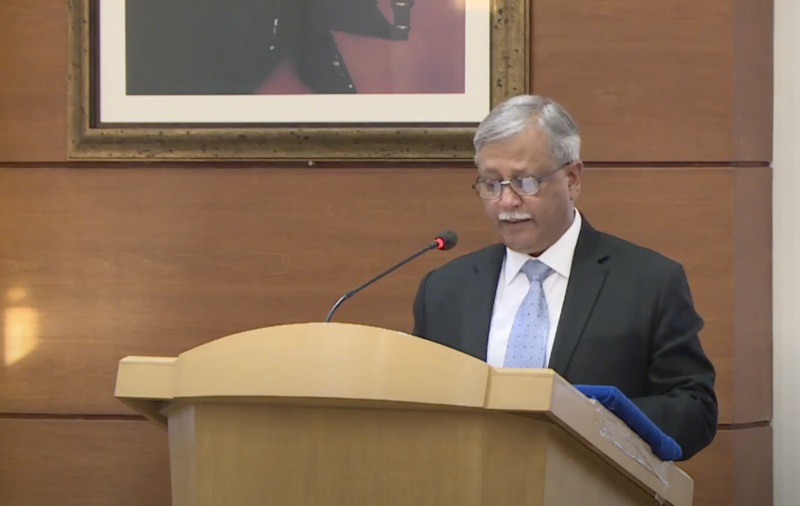
    Kidwai, who served, for 14 years, as the Director-General of Pakistan’s Strategic Plans Division (SPD), was at the heart of Pakistan’s NCA, and oversaw the operationalisation of its nuclear deterrent. Although his talk was for public consumption, given the historic absence of an Indo-Pak nuclear dialogue, some of Kidwai’s statements – if taken at face value – contain worrisome undertones, which need analysis.

    After mentioning the rationale for Pakistan embarking on nuclear weaponization (“humiliation of the 1971 War followed by India’s nuclear test of May 1974”) Kidwai proceeded to enlighten the audience about the implications of Pakistan’s new policy of Full Spectrum Deterrence (FSD) and how it kept, “India’s aggressive designs, including the Indian military’s Cold Start Doctrine, in check.”

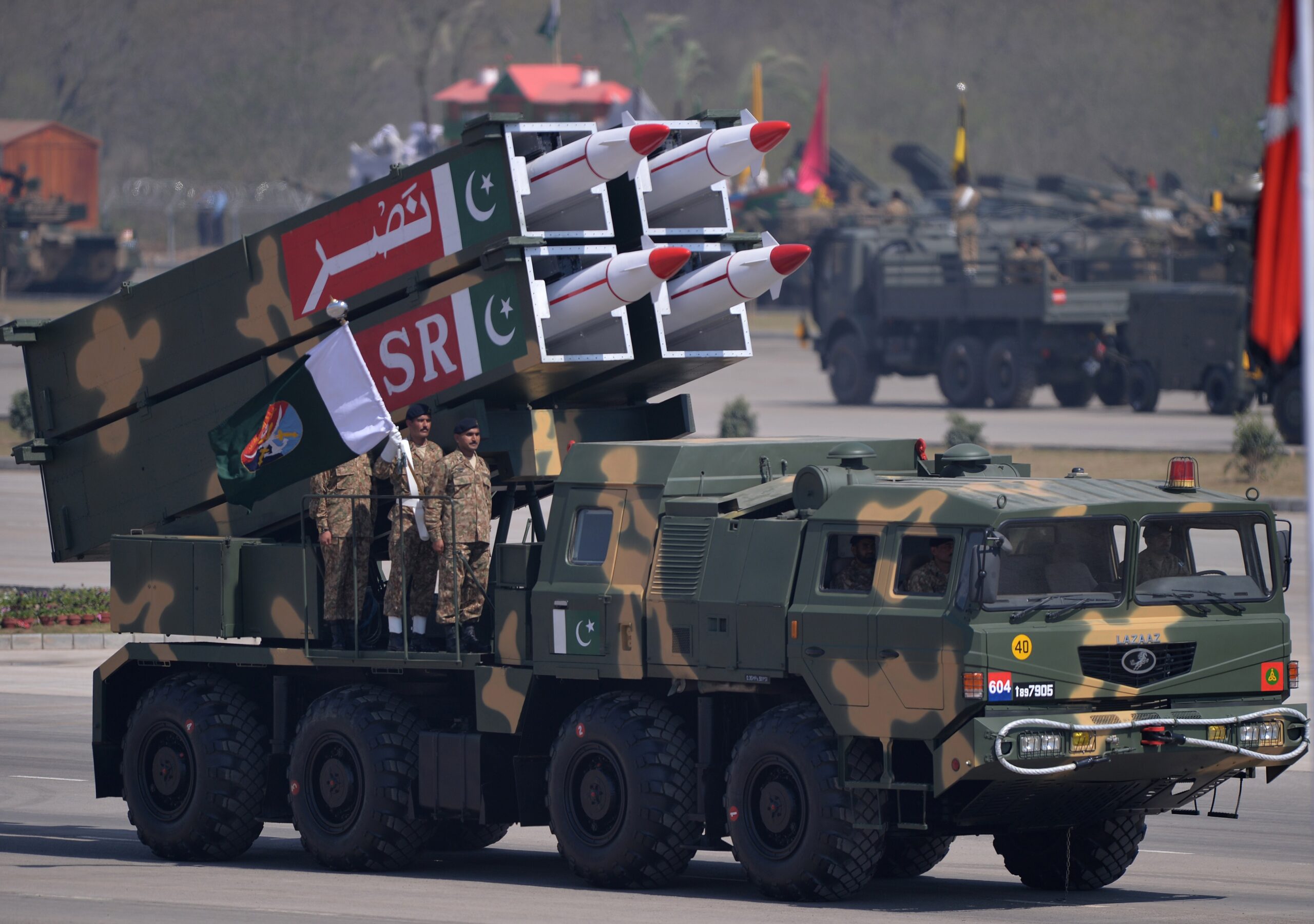
    While retaining the fig leaf of Credible Minimum Deterrence (CMD), Kidwai went on to mention the “horizontal dimension” of Pakistan’s nuclear inventory, held by the individual Strategic Force Commands of the Army, Navy and Air Force. The “vertical dimension,” of the Pak deterrent, he said, encapsulated “adequate range coverage from zero meters to 2750 km, as well as nuclear weapons of destructive yields at three tiers: strategic, operational and tactical.”

    While the missile range of 2750 km, corresponds, roughly, to the distance from a launch-point in south-east Sindh, to the Andaman Islands, and indicates the “India-specificity” of the Shaheen III missile, it is the mention of “zero metres” that is intriguing. Pakistan already has the 60 km range, “Nasr” missile, projected as a response to India’s Cold Start doctrine. Therefore, unless used as a colloquialism, Kidwai’s mention of “zero metres” range could only imply a pursuit of ultra short-range, tactical nuclear weapons (TNW), like artillery shells, land mines, and short-range missiles, armed with small warheads, of yields between 0.1 to 1 kiloton (equivalent of 100 to 1000 tons of TNT).

    By shifting from CMD to FSD, with the threat of nuclear first use, to defend against an Indian conventional military thrust, Pakistan is aping the, discredited, US-NATO Cold War concept of Flexible Response. Fearing their inability to withstand a massive Warsaw Pact armoured offensive, this 1967 doctrine saw the US and NATO allies deploy a large number of TNW to units in the field.

    However, the dangers of escalation arising from the use of TNW were soon highlighted, by US Secretary Defence, Robert McNamara’s, public confession: “It is not clear how theater nuclear war could actually be exe­cuted without incurring a very serious risk of escalating to general nuclear war.” This marked a turning point in US-NATO nuclear strategy.

    Kidwai’s speech contains three statements of note. Firstly, he attempts to dilute India’s declared policy of “massive retaliation” (MR), in response to a nuclear strike, by claiming that Pakistan possesses an entire range of survivable nuclear warheads of desired yield, in adequate numbers, to respond to India’s MR. He adds, “Pakistan’s counter-massive retaliation can therefore be as severe (as India’s) if not more.”

    Far more significant is Kidwai’s declaration that, since Pakistan’s missiles can threaten the full extent of the Indian landmass and island territories, “…there is no place for India’s strategic weapons to hide” (emphasis added).

    Secondly, in an attempt to downplay India’s (inchoate) ballistic missile defence (BMD), he declares that in a “target-rich India”, Pakistan is at liberty to expand the envelope and choose from counter-value, counterforce and battlefield targets, “notwithstanding the indigenous Indian BMD or the Russian S-400” (air-defence systems).

    Far more significant is Kidwai’s declaration that, since Pakistan’s missiles can threaten the full extent of the Indian landmass and island territories, “…there is no place for India’s strategic weapons to hide” (emphasis added). The assumption, so far, was that, given its limitations in terms of missile accuracy, real-time surveillance and targeting information, Pakistan would follow a “counter-value” or “counter-city” targeting strategy. The specific targeting of India’s nuclear arsenal, especially, if undertaken by conventional (non-nuclear) missiles, would add a new dimension to the India-Pakistan nuclear conundrum.

    Delivered in the midst of Pakistan’s acute financial crisis, as well as the ongoing political turmoil and civil-military tensions, one may be tempted to dismiss Lt Gen Kidwai’s recent discourse. However, as the longest-serving, former head of the SPD and architect of Pakistan’s nuclear deterrent, his views are widely heard and deserve our attention.

    Having voluntarily pledged “no first use” (NFU), India’s 2003 Nuclear Doctrine, espoused a “credible minimum deterrent” and promised “massive retaliation,” in response to a nuclear first strike. Since then, our two adversaries, China and Pakistan, have expanded and upgraded their nuclear arsenals, presumably, with corresponding updating of doctrines. India’s strategic enclave has, however, not only maintained a stoic silence and doctrinal status quo but also defended the latter.

    BJP’s 2014 Election Manifesto, had undertaken to “revise and update” India’s nuclear doctrine and to “make it relevant to current times,” but this promise has not been kept. Thus, India, currently, faces a moral dilemma as well as a question of “proportionality”: will the loss of a few tanks or soldiers to a Pakistani nuclear artillery salvo, on its own soil, prompt India to destroy a Pakistani city of a few million souls? Since India, too, has developed a family of tactical missiles, capable of counterforce strikes, does it indicate a shift away from CMD and NFU, calling for a response from our adversaries?

    These are just some of the manifold reasons why there is a most urgent need for the initiation of a sustained nuclear dialogue between India and Pakistan, insulated from the vagaries of politics. Such an interaction, by reducing mutual suspicion and enhancing transparency, might slow down the nuclear arms race and mindless build-up of arsenals.

    This article was published earlier in Indian Express.
  • Douse the anger within

    Douse the anger within

    Deepak Sinha                                                                              Apr 18, 2019/Opinion

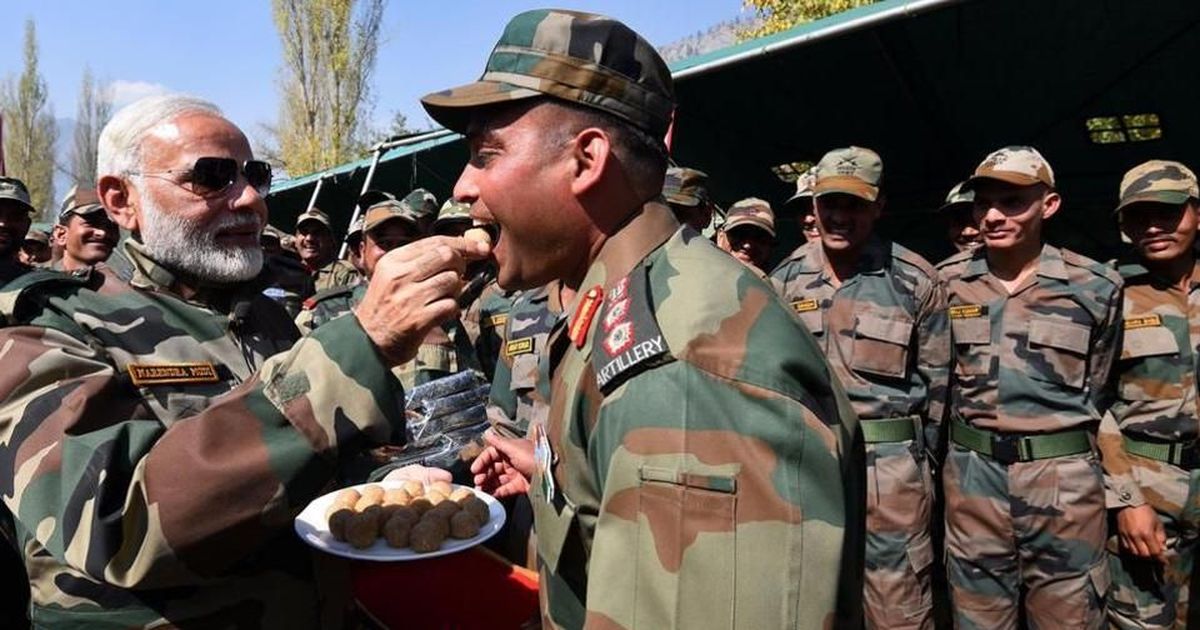
    While the Government continues to celebrate the armed forces’ performance for electoral gains, it will do well to remember that the basic tenet of warfare is that the man behind the gun matters more than the gun. Its failure to grant non-functional upgrade is all the more hurtful.

    For those innocent souls still blissfully ignorant of what Non-Functional Financial Upgrade (NFU) implies, in brief, it simply ensures that when an IAS officer from a particular batch (one that includes everyone who joins service the same year) is promoted to a certain rank, all batchmates from Group A Central services automatically start drawing the same pay-scale two years after that individual’s promotion. Even as those officials continue to discharge earlier functions, they are upgraded to a higher pay grade. Thus, nearly all civil services officers, regardless of what rank they may retire with, get pension at the highest level of HAG+ or what those few appointed as Cabinet Secretaries are granted. If that isn’t hitting the jackpot, then what is?

    One doesn’t need to be a guru to figure out that such a system is contrary to all principles of management and without precedent anywhere in the world, either in the Government or corporate sector. As a matter of fact, Vivek Rae, the IAS member in the seventh Pay Commission, recommended that NFU be done away with on grounds that “to strive for uniform career progression across such a diverse set of services and cadres, with widely varying functions, violates fundamental management principles relating to organisational structures. Such a dispensation, with automatic career progression till the HAG level, completely buries the concept of merit-based career progression and undermines considerations of efficiency and accountability.”

    Singh’s motivation for approving this, despite pretensions to intellectual and moral honesty, is not difficult to guess. Pragmatism required a veil to cover the scandalous actions of his coalition partners, which the bureaucracy willingly provided, obviously in exchange for a quid pro quo. That Prime Minister Narendra Modi refused to do away with NFU, as the majority members of the seventh Pay Commission recommended, obviously suggests that he and his colleagues are as much a hostage to bureaucracy as was the previous Government, despite all his blather about good governance.

    It is in the nature of the beast that when hogs are given unlimited access to the feeding trough, other hogs will follow, even those, who may not see themselves as hogs as well. It was just a matter of time before the Central Armed Police Forces (CAPF) and the armed forces approached the Government for their inclusion and on  refusal, approached the courts. While the apex court has already directed the Government to commence NFU for CAPF — something the Government recently approved for implementation — the case of the armed forces still lingers with that august body.

    The irony in all this is difficult to miss. NFU was granted in order to address the wide disparity in career progression across different Organised Group ‘A’ services (Central services) and to bring parity between them and the IAS. It was accepted despite its “wide-ranging financial, organisational and governance implications” as the seventh Pay Commission put it especially with regard to inter-se status between various services and their military counterparts, which had been sacrosanct till then since independence.

    To quote Rathin Roy, the other member of the seventh Pay Commission, the “broad parity was disturbed by granting NFU to IPS, IFoS and organised group ‘A’ services after the sixth Central Pay Commission report, without a similar dispensation being extended to the Defence Forces.  Consequently, the Defence Forces officers, who are in no way lower in status or responsibility than Group ‘A’ Central services, though not classified as such, have fallen steeply behind IPS/IFoS and 49 organised group ‘A’ services.”

    Again, as it was bound to happen, all of this has had a particularly disastrous impact on the “armed forces’ morale, status, cohesion and national security”, to quote the seventh Central Pay Commission. In the present circumstances, especially given that it is an election season, it is more than likely that the issues raised will be disregarded, more so in light of the extraordinary performance of the armed forces over the past couple of years, despite acute deficits in weapons, equipment and ammunition.  After all, it is not just coincidence that every party attempts to include “surgical strikes” in its outreach — be it the fight against poverty or the measure of the leaders’ strength of character, as Modi has so effectively done till now.

    Unfortunately, this bombast by politicians, especially of the ruling party, is difficult to balance against the Government’s extensive efforts to deny NFU to the armed forces. The Press Information Bureau (PIB) on March 25 stated, “In the instant case, the recourse to judicial review was taken as per the existing policies and at the decision of the Government of India. Certain facts have been twisted and misrepresented in the media with the purpose of misleading the uniformed community and the general public. One, the Central Pay Commission has been incorrectly quoted to have recommended NFU/ NFU for the armed forces.

    “Two, there has been no attempt to malign the uniformed community or quote them as staying in ‘palatial houses’ as the hardships faced by military fraternity are well-known and deeply respected by everyone, including those in the Government. The counsel of the Government of India has only read out the recommendations of the seventh Central Pay Commission as the argument of the case in the apex court….”

    Clearly, the PIB’s statement is disingenuous. For one, it denies the existence of Para 17.55 of the seventh Central Pay Commission report that categorically states, “The Chairman is of the considered opinion that …the same will be available not only to all organised Central group ‘A’ services but also members of CAPFs, ICG and Defence forces.” Second, the PIB’s defence of the Government counsel’s arguments is at complete variance to the tweet by advocate for the litigants, Col Mukul Dev: “March 12, 2019, the Black Day in the history of Indian armed forces,  which I must observe it as, when I had to hear the most demoralising and damaging arguments of the Ministry of Defence (MoD)… the MoD babus have got objection to the CSD facilities, the Army public schools, the officers institutes, the free travel passes (in their terminology), the concessional air travel scheme, the grant of Military Service Pay, the free rations and the so-called palatial houses in which we are made to stay….In essence, the same very babus, who are entrusted to look after the interests of soldiers, are now trying to usurp everything. Times have definitely changed…..”

    While the Prime Minister can hold forth on how much better we would have fared if the Rafale had been in our inventory during the recent spat with Pakistan, he would do well to remember that the basic tenet of warfare is that the man behind the gun matters more than the gun.

    The writer is a military veteran, a consultant with the Observer Research Foundation and Visiting Senior Fellow with The Peninsula Foundation. The views expressed are the author’s own.

    This article was published earlier in The Pioneer.

  • The Politics of Balakot

    The Politics of Balakot

    Deepak Sinha                                                                                                        March 29, 2019/Op-Ed

    There is something about old proverbs. Take, for example, an old adage by Abraham Lincoln: “You can fool all the people some of the time, and some of the people all the time, but you cannot fool all the people all the time”. Certainly, this maxim is spot-on with regards to the Pulwama tragedy and its repercussions. Despite Pakistan’s best efforts to steer the narrative to its advantage, the truth that is emerging — though in dribs and drabs — paints a very different picture from what it would have wanted us to believe.

    For example, take a look at perceptions in Pakistan about the suicide attack itself. Not only most of us, but also much of the world, especially analysts focussing on this region, had little hesitation in accepting the involvement of Pakistan-based terrorist group, Jaish-e-Mohammed (JeM), in the suicide bombing attack, especially since the JeM itself publicly claimed responsibility. Yet, let alone the Pakistani establishment, not even one respected journalist or analyst over there uttered a word of condemnation against the JeM for this heinous act. Instead, they insisted that the attack was motivated by the brutal treatment meted out to Kashmiri locals by the Indian security forces.

    This is contrary to what has widely been reported about Pakistani Senator Mushahid Hussain Sayed, a senior politician and former Cabinet minister, who quite categorically stated that “what happened in Pulwama in February, in my view, was Pakistan’s finest hour after the nuclear tests of 1998.” Moreover, while Pakistan’s Foreign Minister acknowledged JeM chief Masood Azhar’s presence in Pakistan, the Director-General of Inter-Services Public Relations (ISPR) blandly contradicted him a day later, unequivocally stating that the JeM does not exist in Pakistan as it is a “proscribed terrorist organisation”.

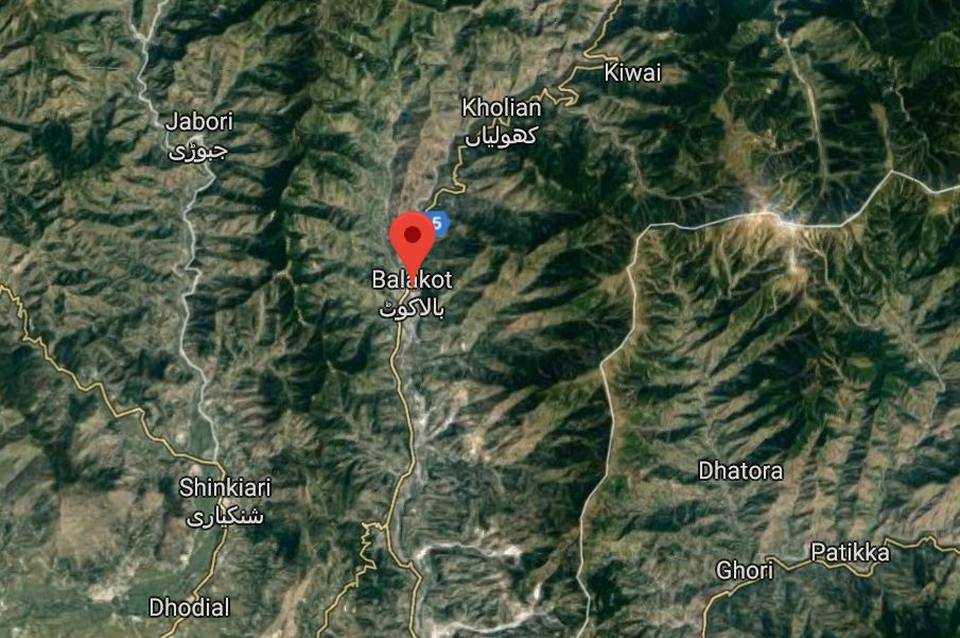
    Similarly, with regard to the Indian response, the ISPR spokesperson was the first one to admit that the Indian Air Force (IAF) had crossed the Line of Control (LoC) and carried out a strike in the vicinity of Balakot. He, however, attempted to mislead and obfuscate the issue by hinting that this attack was in the vicinity of the village, in close proximity to the LoC in Pakistan-occupied Kashmir (PoK), and not the town by that name in Khyber Pakhtunkhwa, deep inside Pakistan, where it actually struck. While the IAF claimed to have hit the terrorist training camp, the spokesman insisted that no damage or casualty was inflicted to the “seminary” located over there. However, the cordoning of the area by the Pakistani Army and its refusal till date to allow any access raises questions and suggests an attempt to cover up.

    Finally, there was the confusion about two Indian fighter aircraft having been shot down with both pilots taken prisoners. It, however, turned out that the IAF’s claim at that time of having lost one MIG-21, piloted by Wing Commander Abhinandan after he had downed a Pakistani F-16, was correct. Bizarrely, not only has Pakistan continued to deny the loss of its own aircraft, it even insists that the F-16s in its possession were not involved in operations in this sector. This despite the IAF having produced evidence.

    Clearly, obfuscation and deceit are embedded in the DNA of Pakistan, especially in the manner it deals with India and the international community. We have been experiencing this since decades. Remember, Pakistan denied any connection to the so-called “raiders”, who nearly captured Srinagar in 1948 or to the “militants”, who occupied the Kargil heights in 1999, only to recant and accept its involvement subsequently. It isn’t as if it reserved such treatment for India alone as Iran and Afghanistan have also found to their cost. Therefore, in the present instance, to have expected Pakistan to behave any differently was sheer fantasy, especially given that the military uses proxy war to retain its pre-eminent role within the country and the region.

    The sad truth is that its very foundation was built on the British construct — that it was religious antagonism and not its requirement for a pliable state that would help protect its interests in the region — which resulted in the horrors of partition. The formation of Bangladesh put paid to the two-nation theory and secret Cabinet documents in the UK, subsequently declassified, showed up the deceitful lengths the British had gone to in furthering their own interests.

    Leaving aside Pakistan’s desperate attempts to change perceptions what should be of immense concern to all right-thinking people, here is the horrendous manner in which this issue is being used by politicians and the media to gain attention for their selfish agenda even if it is at the cost of the nation’s interest. Neither free speech nor the looming elections justify such crass behaviour, especially since it is impacting the credibility and apolitical nature of our armed forces.

    While Prime Minister Narendra Modi deserves credit for his bold decision to aggressively respond in the manner that he did, it is no excuse for the Bharatiya Janata Party (BJP) to use the strike to tom-tom its nationalistic credentials, going so far as to shamefully depict Wing Commander Abhinandan in posters used for election rallies. Prime Minister Modi may well scream ‘Jai Jawan, Jai Kisan’ from the rooftops but it has not in any way stopped his Government from refusing to grant One Rank One Pension (OROP) to military veterans or opposing the grant of Non Functional Upgrade (NFU) in the Supreme Court using all manner of lies. That the NFU is already authorised to the Civil Services and the Central Armed Police Forces, thereby changing long-standing civil-military parity, has been deliberately ignored. Their efforts to humiliate and lower the prestige and standing of the armed forces continues unhindered.

    It isn’t as if other political parties, including the Congress, have behaved any less hypocritically. On the one hand, they have “officially” supported and praised the action of the IAF, while at the same time senior leaders of these very parties have questioned the efficacy of the attack, despite the Air Chief having clearly stated that the targets selected were destroyed as they had planned. It appears that they believe that the only manner in which the steadfastness and strength of character ‘Modi’ displayed on this occasion can be negated is by deliberately destroying the credibility of our military’s achievements. While we may be uncertain of who will succeed at the hustings, there is absolutely no doubt that our armed forces have lost out yet again.

    Brigadier Deepak Sinha (retd), an Army veteran, is a Visiting Senior Fellow at the TPF and is also a Consultant at ORF, New Delhi.

    This article was published earlier on March 19th, 2019, on The Pioneer.

    Image Credit: Google Maps