The Sino-Indian War of 1962, which is seen as a humiliating defeat for India, continues to rankle all Indians. Clearly, it is seen as a result of poor leadership both at the political and military levels. In hindsight, many believe that the PLA could have been routed had India regrouped its Army and used the IAF in a massive counterattack. It was November, and with the onset of winter and the closing of the Himalayan passes, the PLA could have been demolished completely. That we didn’t even think of it shows the serious vacuum in strategic thinking. More than half a century later, and with the Indian military much stronger and battle-hardened, it is inexplicable why India’s leadership is shy of following an aggressive strategy, including the use of force proactively against China. Brigadier Deepak Sinha, a vetran and TPF’s Senior Fellow, raises this question while correlating the current situation with that of 1962.
There is an urgent need for us all to shed our divisive politics, long-held dogmas and skewed perceptions, forget fanciful visions and face reality, especially when it comes to the question of national security. The last thing we need is for petty politics and fragile egos to control our nation’s destiny. Nothing can be more consequential, traumatic or shameful than being bested by a rival on the battlefield. The consequences of our “defeat” in the Sino-Indian Conflict of 1962 continue to rankle and haunt us to this day.
Quite clearly, the fear psychosis that permeates our higher military and political leadership is palpable.
Indeed, our reluctance, for fear of escalation, to launch a quid-pro-quo riposte and grab disputed territory elsewhere as a bargaining chip following the PLA’s blatant land grab of disputed territory in Eastern Ladakh is a clear indication of this. This was reinforced by an earlier interview with ANI by our Foreign Minister, who stated, “Look, they (China) are the bigger economy. What am I going to do? As a smaller economy, I am going to pick up a fight with the bigger economy? It is not a question of being reactionary, it’s a question of common sense….” Quite clearly, the fear psychosis that permeates our higher military and political leadership is palpable.
On the other hand, the Chinese leadership has a very different perception of our capabilities as was reflected back in 1959 following the Longju incident. A declassified United States document of that time points out that “the late August clashes point to a mode of thought which has remained an ingredient in the Chinese leaders’ calculations on the border dispute: ‘When the Indians show a temperament to advance on the ground, we must alter their frame of mind by letting military action take over political caution. Besides, military risk itself is negligible because we are the stronger side.” Obviously, over the years, they have been given no reason to believe otherwise. In order to understand what ails us, it is worth briefly examining the course of the 1962 conflict to get a clearer idea of the extent of our loss at the hands of the Chinese. That should help us understand why, over fifty years later, we continue to remain so traumatised and fearful.
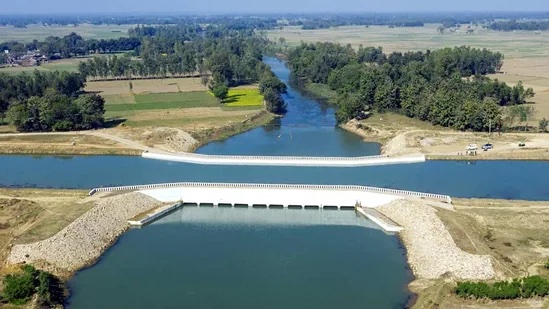
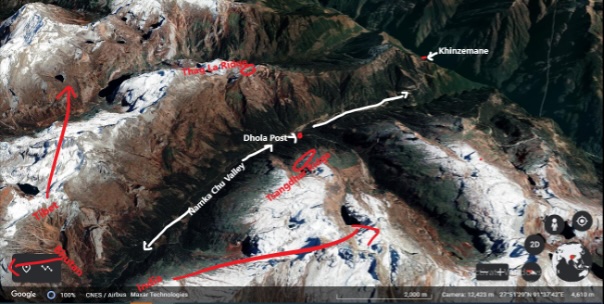 The opening skirmish of that conflict occurred in the North East with the capture, on 8th Sept, of the isolated Assam Rifles post at Dhola, on the southern slopes of the Thag La ridgeline. This post was surrounded and completely dominated by PLA positions on higher ground, and its loss was a foregone conclusion. The actual conflict commenced at approximately 0500 hours on 20th October, when the PLA launched a massive infantry attack, supported by artillery, on the 7 Infantry Brigade positions. The Brigade was deployed in a tactically unsound manner on direct orders of GOC 4 Corps, Lt Gen B M Kaul, along the Southern banks of the Namka Chu River over a 20 Km frontage instead of on the heights overlooking the river.
The battalions were deployed in platoon penny pockets, lacking mutual support, in temporary positions with no overhead cover. Artillery support was restricted to just one battery of Heavy Mortars and a troop of two field guns with limited ammunition. No intelligence was available to the Brigade Headquarters or any of the other higher headquarters as to PLA force levels or their intentions. The assault came as a surprise and just four hours later, by 0900 Hours, the Brigade ceased to exist as a fighting force. Within just another 96 Hours, the strategic border town of Tawang, approximately 100 Km in-depth, held by an understrength battalion, was attacked and captured without a fight.
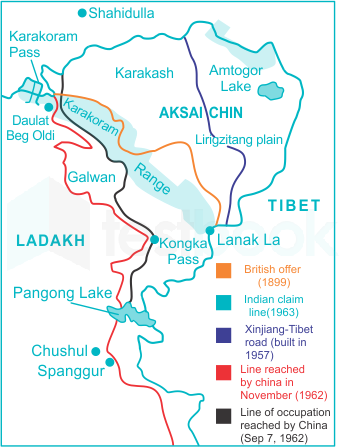
Almost simultaneously in the Northern Theatre, isolated forward positions at Aksai Chin and the Pangong Tso area were also cleared after a brief skirmish. After an administrative pause of approximately a month, the PLA launched the next phase of its offensive with its assault on the Walong positions on 16th Nov and on the main defences of the 4 Infantry Division at Bomdi La, Se La and on the Division Headquarters at Dirang Dzong. Simultaneously, on 20th Nov, Chushul came under attack by an Infantry Divison. On 21st Nov the Chinese announced a unilateral ceasefire and subsequently withdrew to positions occupied by them prior to the commencement of the conflict.
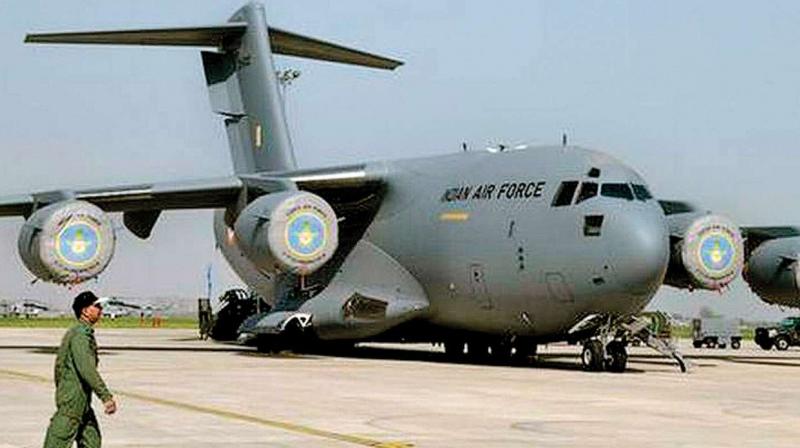
There are three main deductions that can be drawn from an examination of the facts. Firstly, that the conflict was, in essence, extremely limited in terms of time, space and force levels involved. From an army of 550,000 personnel, approximately 20,000 personnel were committed into this conflict, primarily due to our limited logistical capabilities. The conflict was primarily restricted to the tactical level only, at battalion level and below. While the conflict itself was spread over one month, the tactical engagements themselves lasted a few hours at best, and on one or two occasions where stiffer resistance was put up, extending to 48-72 Hours. Unfortunately, given the terrain, lack of field fortifications, etc, casualties suffered were relatively high, with approximately fifteen hundred killed, similar numbers wounded, two thousand missing and another 4000 taken prisoner. The Air Force, which could have played a critical role in blunting the PLA attacks and destroying their lines of communications, was deliberately confined to the logistics role for reasons that are still not clear, while the Navy remained a bystander.
Sadly, our military and political leadership exhibited an utter lack of moral courage, determination and willpower by quietly acquiescing to the unilateral ceasefire, thereby kicking the main irritant of the demarcation of borders further up the road, where it has once again come to bite us on our posteriors.
Secondly, far from being a major defeat, as has been commonly made out, it was at best a temporary reverse that could, and should, have been countered with the use of fresh troops under a more determined and professional leadership. More importantly, the PLA understood this fact and, therefore, undertook a unilateral withdrawal to its earlier pre-war line of defences. It must have been fully cognisant that if hostilities were to continue, it would find itself in an increasingly untenable position with its supply lines already badly stretched and being further impacted with the onset of winter. It would only have been a matter of time before the Indian Army got over its shock, regrouped and reorganised itself and launched a counter-offensive to recapture lost territory. Sadly, our military and political leadership exhibited an utter lack of moral courage, determination and willpower by quietly acquiescing to the unilateral ceasefire, thereby kicking the main irritant of the demarcation of borders further up the road, where it has once again come to bite us on our posteriors.
Thirdly, what continues to remain totally inexplicable is the reasons why our military and political leadership continue to remain so traumatised and scared to this day. The truth is that the narrative that emanated following the reverses was set by officers and men belonging to units that, for the most part, had withdrawn before coming in contact with the PLA. They were low on morale and had come to believe the Chinese were supermen who could not be stopped by mere mortals. It was from amongst the experience and perception of these personnel that pamphlets on the tactics and capabilities of the PLA were subsequently formulated that continue to be relied on to this day, thereby giving further credence to that distorted narrative.
The fact of the matter is that in any future conflict, the PLA will be fighting over 2000 Kms away from its home bases, supported along communication lines that run over some of the most difficult and inhospitable terrain in the world. They are also easily susceptible to interdiction, given the nature of the terrain. In addition, they would have to contend with a hostile and badly oppressed population not just within Tibet but in Xingjian as well, which could revolt if a suitable opportunity arose. This would require the PLA to deploy additional forces for rear area security to prevent disruption of the lines of communication.
Moreover, while there are sizeable disparities in aspects such as force levels and capabilities, infrastructure development and economic strength, one needs to be cognizant of the fact that we have also made tremendous strides with regard to infrastructure development, logistics and offensive capabilities. Our forces still hold the edge vis-à-vis combat experience and operating in mountains, while the Air Force continues to hold the upper hand in the TAR purely on account of terrain profile and radius of action. Most importantly, the availability of two Mountain Strike Corps gives us immense flexibility, if properly utilized, to grab the initiative and force a decision dilemma on the PLA. In the circumstances, the reason for our extreme reluctance to stand up against the Chinese bully must lie elsewhere. One distinct possibility is that our political leadership lacks faith in the military leadership and its ability to fight and win.
This will seem at odds with the fact that the military has a splendid history of having always successfully completing any task given to it. If anything, it has been grossly misused by the Central and State Governments to carry out tasks that are not in their ambit, whether these be organizing the Commonwealth Games or construction of railway over-bridges, because the concerned departments and agencies have been unable to produce the requisite results. Clearly, this mistrust, primarily in the sphere of civil-military relations, has more pernicious roots and is very deeply embedded in the politico-bureaucratic psyche.
Interestingly, in the Official History of the 1962 Conflict with China, available in the public domain but yet to be published, the Chief Editor, Dr S N Prasad, concludes that the chief reason for our defeat was that the political establishment was unable to avoid war while it was in the process of transforming the military establishment. Given Prime Minister Nehru’s apprehensions about the military taking control, he wanted to change it from being, as Mr Prasad puts it, a “close-knit professional body, deliberately isolated from the citizen. Its predominant motive force remained esprit de corps and not identification with the people… Perhaps he wanted to model it after the People’s Liberation Army of China, more egalitarian, flexible, closer to the people………Such basic changes required a committed, or at least a pliant, band of army officers in key positions. So mediocre Thapar was selected instead of the doughty Thorat as Army Chief, and Bijji Kaul was made CGS……. “
He further goes on to add that “To carry out this transformation of the national defence set up, a decade of peace was absolutely essential. For establishing indigenous weapons manufacture, money had to be found by cutting arms imports. The armed forces would be short of equipment and stores for several years till the new arms factories started producing. The officer cadre was a house divided within itself till the new breed fully took over. A period of transition was inevitable, during which the fighting machine would not be fully efficient and would be vulnerable………Therein seems to lie the basic cause of the debacle of 1962. India failed to avoid a war during the transition period. Lulled by faulty political assessment and wrong intelligence forecasts, the country got caught in a war when it was least prepared.”
With Mr Modi’s ascension to power, we came a full circle as he took it upon himself to steer it away from its apolitical and secular character towards a more ideologically compatible institution that would be in sync with his Party’s long-held vision of making India into a Hindu Rashtra.
Fortuitously for the country, Nehru’s vision for a transformed military was stymied by the 1962 Conflict and the most important lesson that his successors assimilated quickly was to stay away from interfering in the internal affairs of the military as that could gravely damage internal cohesion and morale. With Mr Modi’s ascension to power, we came a full circle as he took it upon himself to steer it away from its apolitical and secular character towards a more ideologically compatible institution that would be in sync with his Party’s long-held vision of making India into a Hindu Rashtra.
Towards this end Mr Modi has smartly used the concept of “deep selection” to ensure key senior appointments were filled by officers displaying an affinity for his government’s ideology, regardless of existing rules, seniority or merit. This, in turn, made them personally beholden to him, and he was thus able to use them to take ownership and deflect criticism from initiatives that were pushed through by his government regardless of their adverse impact on long-standing and cherished customs and traditions or on the operational capabilities of the Services. This has led to schisms within the institution, damaged the integrity and cohesion of the chain of command and cast a big question mark on the apolitical and secular character of the Services.
In this context, a politically compromised Chief of Defence Staff and other senior officers shamefully endorsed the PMO, thrusting down the ill-conceived Agnipath Scheme on the military with not a single objection being raised. This scheme has all but destroyed the basic ethos of our fighting arms, ensuring that the deeply entrenched and effective Regimental System has been severed at the roots. Given their ignorance of matters military, they would have been ignorant of Winston Churchill’s wise advice that “Regiments are not like houses. They cannot be pulled down and altered structurally to suit the convenience of the occupier or the caprice of the owner. They are more like plants; they grow slowly if they are to grow strong…and if they are blighted or transplanted, they are apt to wither.”
And wither they have, the resulting adverse impact on morale is not difficult to gauge. This is undoubtedly being further exacerbated by the considerable voids in manpower, with combat units reportedly functioning at less than 75% of their authorised strength, and truncated peace tenures to fill up operational voids in Eastern Ladakh, Manipur and Jammu & Kashmir. In addition, the government’s emphasis on the ‘Atman Nirbhar Abhiyan’ and ‘Make in India Scheme’ has resulted in deficiencies, even if temporary, in the holdings of weapons systems, ammunition and other warlike stores. Given all these factors, the military obviously finds itself in an extremely precarious situation, committed to its fullest capacity with limited options available. Ironically, a government that lays such a great emphasis on our Hindu origins, culture and history has managed to display a profound ignorance of statecraft and warfare, as brought out in Kautilya’s Arthashastra. In this classic, Chanakya points to the necessity for a strong army because, for all nation-states, there are only two states of being: either conquer or be conquered.
…at the present time, we are once again confronted with an extremely turbulent geopolitical situation, with the world’s attention on the ongoing crises in Europe and the Middle East. The situation today, in many ways, is clearly reminiscent of the period on the eve of the 1962 Conflict. For reasons not very different from then, the Indian Military finds itself in a very similar situation as well.In these circumstances, the real question that we should be asking ourselves is not whether we can overcome our past traumas and face down the PLA, but more importantly, whether China will seize this opportunity to recalibrate the Sino-Indian relationship through the use of force.
Interestingly, in 1962, China launched major operations against us at the end of the campaigning season, which could have been jeopardised by unseasonal snow. Obviously, this was because, at that time, the world’s attention was riveted to the Cuban Missile Crisis. Similarly, at the present time, we are once again confronted with an extremely turbulent geopolitical situation, with the world’s attention on the ongoing crises in Europe and the Middle East. In addition, the United States is deeply immersed in its own internal problems with presidential elections just around the corner and with little time for other matters.
The situation today, in many ways, is clearly reminiscent of the period on the eve of the 1962 Conflict. Moreover, at that time, Chairman Mao was under intense pressure as his Great Leap Forward experiment had failed, and he had been removed from his appointment as State President. Today, President Xi also finds himself under similar pressure following his disastrous Zero Covid and hard-line economic policies that have tanked the economy. For reasons not very different from then, the Indian Military finds itself in a very similar situation as well.
Undoubtedly, the political leadership and the military top brass must be fully cognizant of this state of affairs. Clearly, they are in no position to stare down the PLA. What makes matters worse is that following the General Elections, Mr. Modi’s authority and standing have been greatly diminished. Where does this leave those senior officers who have progressed by hanging on to his ideological coat-tails? Has the authority and credibility of the CDS, an out-and-out political appointee and loyalist, been affected within the Chiefs of Staff Committee of which he is the Chairman? What will be its impact on the move towards the establishment of theatre commands? In these circumstances, the real question that we should be asking ourselves is not whether we can overcome our past traumas and face down the PLA, but more importantly, whether China will seize this opportunity to recalibrate the Sino-Indian relationship through the use of force.
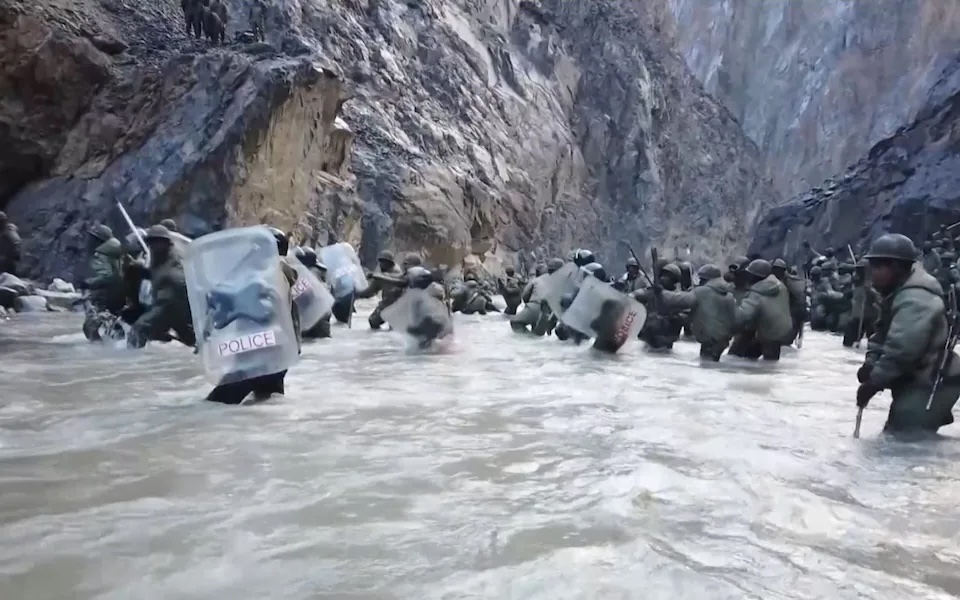
Feature Image Credit: Border Clashes between India and China ‘regularly covered up’ The Telegraph
Namka Chu and Dhola Post Picture credit: www.indiasentinels.com