Tag: Myanmar

  • MYANMAR:  READING THE TEA LEAVES

    MYANMAR: READING THE TEA LEAVES

    On 21 November 2023, India’s Ministry of External Affairs advised Indian citizens to avoid nonessential travel to Myanmar, given the evolving security situation in that country. It further advised that those already living in Myanmar should take precautions and avoid travel to regions affected by violence[i]. Earlier in the same month, UN Secretary-General António Guterres had expressed deep concern at the expansion of conflict in Myanmar[ii] . Both messages highlight the increasingly fragile situation in Myanmar, where two million people are displaced and over 286,000 similarly affected after the current upsurge in fighting[iii].
     

    Operation 1027 and its Implications

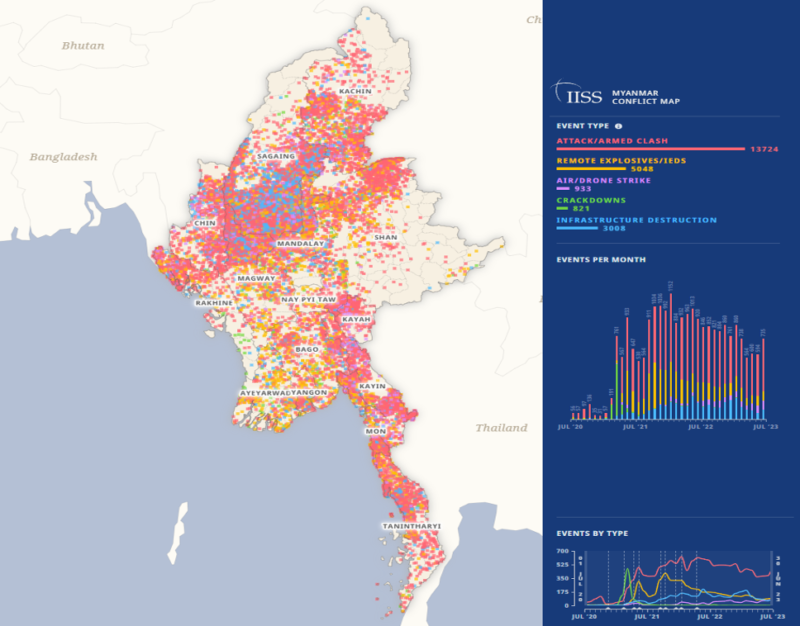
    The map published by the International Institute for Strategic Studies lists the number and type of violent events countrywide until July 2023. Since then, there has been a spike in the level of violence. Most prominent has been the coordinated attack on 27 October on Tatmadaw (Myanmar Army) posts in the Northern portion of Myanmar’s Shan state (see map), near the Chinese border by three Ethnic Armed Organisations (EAOs), assisted by other Peoples’ Defence Militias (PDFs). As per Richard Horsey of the International Crisis Group[i], the attacks, dubbed ‘Operation 1027’ (after the date they commenced), involved several thousand experienced, well-armed fighters attacking multiple army posts simultaneously. These troops owed allegiance to three major EAOs – the Myanmar National Democratic Alliance Army (MNDAA), the Ta’ang National Liberation Army (TNLA) and the Arakan Army ( AA), comprising different ethnicities ( Kokang, Ta’ang and Arakanese, respectively). Of the three, the first two are based in Shan state in the East, while the AA, as the name denotes, is based in Rakhine on Myanmar’s West coast, bordering some portion of the Chittagong Division of Bangladesh. Within two weeks, these three armies dubbed the Three Brotherhood Alliance, had seized several towns along the Chinese border, overrun military bases and captured large stocks of munitions. Specifically, to quote the Asia Times…the key border posts of Chin Swe Haw and Mong Ko were seized along with 80 military and police bases. More than 120 military bases have since been overrun, and sizeable amounts of arms and ammunition seized, including reportedly several 14.5 heavy machine guns (HMGs)…[ii]. ISP Myanmar, a Myanmarese think tank based in Thailand, notes that resupply columns are being ambushed on the main artery from Mandalay, around the area of Kyaukme, as shown on the map below[iii].

    Operation 1027 has created significant disruptions in the Myanmar-China border trade. The current offensive aims to eradicate online gambling and scam call operations from various casinos in the northern portion of  Shan and Kayin states bordering China and Thailand, an objective shared by the Myanmar Government, which is under pressure from China on this matter. Nationals from these countries, along with Chinese criminals, have been identified for their involvement in such illegal activity in concert with local pro-government militias. The rebels’ aim could likely be to gain China’s favour and wrest territory from Tatmadaw’s control[i]. To avoid the bloodshed, many Myanmar nationals are attempting to cross into China. China, whose proposed projects under the China-Myanmar Economic Corridor (CMEC) run through these regions in Northern Shan state, has since called for a ceasefire on this border[ii]. Noteworthy for military analysts, however, is the well-coordinated planning and execution displayed in these successful attacks, demonstrating the growing strength and assertiveness of the EAOs and PDFs operating over large swathes of territory.

     In concert with Operation 1027, EAOs have been equally active in other parts of Myanmar. The Sagaing region North of Mandalay bordering Manipur and Nagaland is witnessing fresh fighting[iii]. A Myanmar Army spokesman is quoted as having admitted that troops were under “heavy assaults from a significant number of armed rebel soldiers” in Shan state in the North, Kayah state in the East and Rakhine state in the West[iv]. In Rakhine, a year-long ceasefire between the Arakan Army and Tatmadaw collapsed, and fighting recommenced. In Kayah state bordering Thailand, a video clip (verified by Reuters) shows wounded Tatmadaw soldiers surrendering to the rebels who offer medical treatment to them. Fighting rages around the state capital, Loikaw, from which the UN has evacuated its personnel[v]. Heavy fighting has taken place in Chin state. The Junta has declared martial law in certain towns in Shan, Chin and Kayah states and Sagaing region.
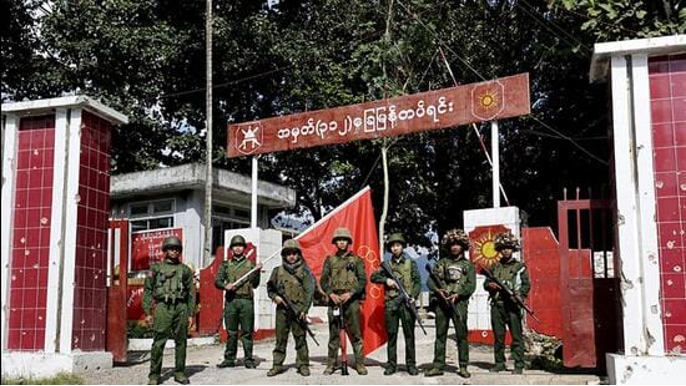
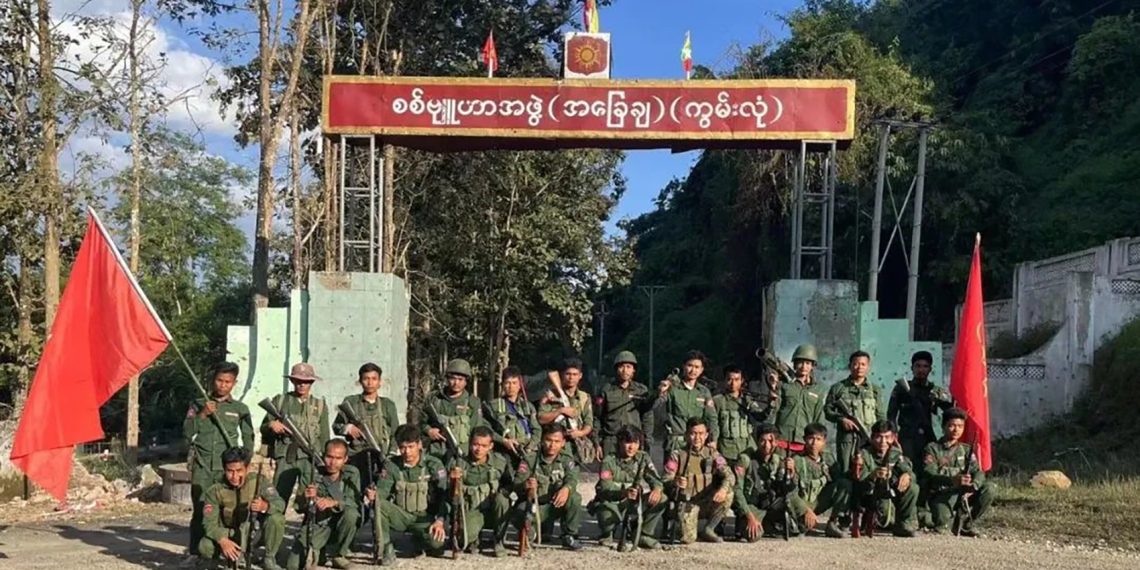
    Members of the Myanmar National Democratic Alliance Army pose for a photograph in front of the seized army’s infantry battalion in Kunlong township in Shan state, Myanmar, on 12 November. (AP). Courtesy: Rezaul H Laskar, Hindustan Times 15 November 2023.

    India’s Concerns

    With the Sagaing region bordering Nagaland and Manipur and Chin state bordering Manipur and Mizoram, the upsurge in violence has become a pressing concern for India, which is already grappling with the crisis in Manipur that has a linkage with Myanmar. In the current crisis in mid-November, Chin rebels overran two Tatmadaw posts on the India-Myanmar border in villages close to the Myanmar border township of Rikhawdar. This is adjacent to India’s Land Customs Station (LCS) at Zokhawthar. The Tiau River forms the boundary crossed by a Bailey bridge (picture below).
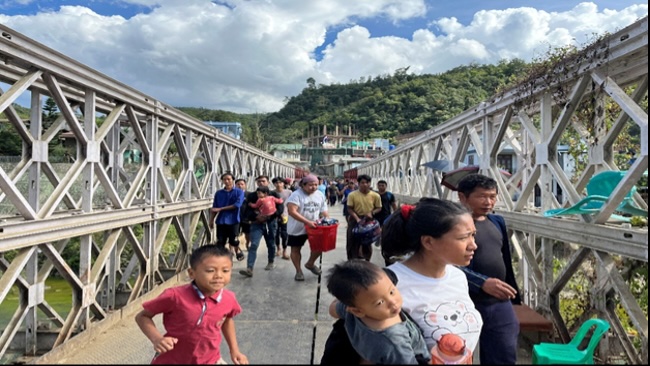
    Picture:  Courtesy Reuters

    A fresh flow of refugees (estimates from four to five thousand) has now crossed over to the Indian side to escape the fighting as the Tatmadaw attempts to retake these posts. This influx is in addition to those who crossed over earlier during the coup in February 2021. The capitulation of the Tatmadaw in these bases has also resulted in a unique situation; 74 Myanmar soldiers fled to India with their weapons and surrendered to the Indian authorities, who, at the request of the Myanmar Government, facilitated their return[i].

    All the above issues highlight the highly volatile climate in Myanmar, necessitating the Indian government’s advisory. Sufficient reportage exists to show that the rebel forces under the National Unity Government (NUG) are steadily gaining ground; Gen Min Aung Hlaing, Chairman of the State Administrative Council (SAC) and  de facto head of state conceded early this year that only 198 of the 330 townships are “100 per cent stable,” while the remainder required “security attention.”[ii] This is close to fifty per cent of the country. Clearly, the civil war is entering a more intense phase.

    State of the NUG

     The dynamism of the NUG can be gauged by its creative methods to raise revenues to support its war aims. Some of these mechanisms, based essentially on the buyers’ ( including the diaspora’s) good faith, are zero-interest bonds, real estate auctions of land (including government land taken from civilians – a lakeside villa appropriated by Gen Hlaing was auctioned some time ago), proposed condominiums for later construction, auctioning of mining rights and leases, lotteries, donations and tax collection. It provides primary education, health, justice and law and order in areas under its control. It has launched a digital currency that is run through the open-source blockchain Stellar network73, used through its digital wallet app, NUGPay. It uses commercial quadcopter drones for logistics, has commenced weapons production to include 60mm and 90mm mortars, and is experimenting with 3D printing[iii].

    The NUG’s success in creating such an infrastructure despite the SAC’s depredations and the victories of its forces on the ground over the last two years is testimony to the support it enjoys among the ordinary people, bolstered by sophisticated information operations. The latter includes a Policy Paper of 2021[iv], which enunciates NUG’s efforts to become more inclusive. A beginning has been made by appointing a Rohingya, Aung Kyaw Moe, to a ministerial post. His appointment as the NUG’s Deputy Human Rights Minister is a signal to others, including the UN whose Special Rapporteur for human rights in Myanmar, Tom Andrews, stated this year that ..’ Min Aung Hlaing, who led the genocidal campaign, is now at the head of an illegal and illegitimate military junta that is attacking civilian populations throughout Myanmar. He must be brought to justice and made to answer his crimes…[v]. The NUG Policy Paper promises to bring perpetrators of crimes against Rohingyas to justice and grant citizenship rights to all based on parentage or birth in Myanmar. It also speaks of developing a comprehensive repatriation plan for Rohingyas who have fled Myanmar. Resolving this issue will remove a significant obstacle in ties with Bangladesh, which shelters over one million Rohingyas while looking to curb activities of militant organisations like the Arakan Rohingya Salvation Army (ARSA). The ARSA operates from both sides of the border, using tunnels to move cadres to and fro and has frequently resorted to terrorism.

    Crystal Gazing

    What, then does the future hold for the SAC? The regime is facing multiple sanctions from the West. Citing ongoing violence, it had earlier announced the postponement of elections planned for August 2023 and continues with the state of emergency. It, however, seeks to exploit its geography as an Indian Ocean littoral and land bridge between South and South East Asia to gain strategic advantage. Trade with Russia has increased, and MOUs on cooperation in various infrastructure projects, including nuclear and natural energy, have been signed. Though the CMEC is now moving at a snail’s pace with many impediments and under constant security threats, none of its projects have been cancelled[vi] as has happened elsewhere. Russia and China are also the leading suppliers of advanced weapon systems to Myanmar. Military cooperation has been extended to naval exercises; this month, Myanmar held a three-day maritime security exercise’ with the Russian Navy from 06 November in the Andaman Sea for the first time. Again, on 28 November, two Chinese warships and a resupply vessel have docked in Yangon on a ‘goodwill visit’ to be followed up with exercises. Despite such signalling, there is no guarantee how much support these two countries would provide in an increasingly uncertain climate.

    India’s policy has been one of non-interference in Myanmar’s affairs. It has been feeling its way through the deepening crisis in that country that originated with the coup over two years ago. Government-to-government cooperation continues, with visits by senior Indian dignitaries on essential occasions. Though India does not support the NUG, looking beyond and planning for multiple outcomes is prudent.

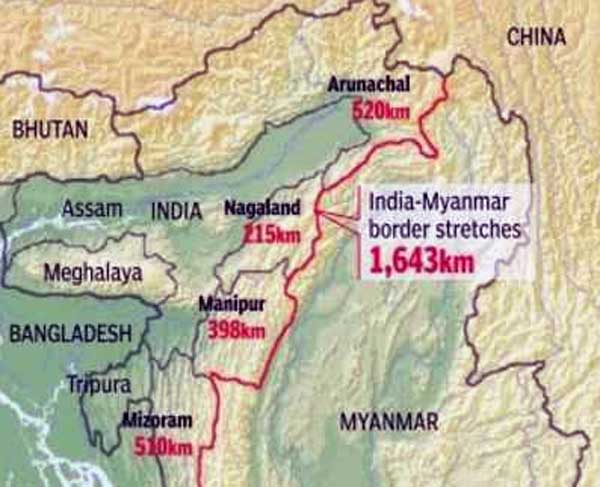
    India’s priority is to have peace on the border with Myanmar. Instability here has directly impacted the internal security and societal dynamics of at least two border states. For securing the border, an advanced intelligent fencing system of 100 km along the border ‘is in the pipeline’ while a little over 6 Km has been physically fenced around the border township of Moreh in Manipur[vii]. Fencing the entire 1643 km long border is unlikely to find favour for multiple reasons – costs, physical difficulty, and social and political implications, especially when ethnic kin live on both sides with a Free Movement Regime (FMR) in place that permits movement up to 16 Km inside.

    The other way of securing the border will be through cooperation between the three affected parties – India, the SAC and insurgent groups operating in the vicinity. It is here that India’s leverages can come into play – the goodwill built up with local communities by sheltering and providing succour to those who have come across, and non-interference with activities of the Tatmadaw, including assisting as in the case of the fleeing soldiers. Considering that peace on the border will benefit all three parties, communication at the local level with the insurgents through intermediaries and parallel government-to-government interaction can ensure that guarantees for the same are obtained. This can be combined with rehabilitation projects for those displaced, with Indian assistance.

    Looking beyond the immediate, the difficulty in providing any prognosis for Myanmar should not obscure the fact that it remains among India’s most important neighbours and a vital cog of our Act East policy. With peace prevailing, its role in the development of our North East will only increase, as an overall assessment of the Kaladan Multi-Modal Transit Transport Project’s potential shows. A stable, peaceful and multi-ethnic Myanmar will always remain a  priority for India. In the interim, the need is to contemplate multiple outcomes and plan for eventualities, favourable or otherwise.


    Notes

    [i] ‘29 Myanmarese soldiers repatriated from Mizoram amid border tension’ Statesman News Service Aizawl 20 November 2023.

    [ii] ‘Sustaining Funding for Myanmar’s Spring Revolution’    Stimson Policy Paper  Zachary Abuza   May 17, 2023

    [iii] Ibid.

    [iv] ‘ Policy Position on the Rohingya in Rakhine State’ Republic of the Union of Myanmar National Unity Government June 03 2021.

    [v] ‘UN expert demands accountability for the Rohingya and an end to ‘paralysis of indifference’’ United Nations Human Rights Office of the High Commissioner,  press release 24  August 2023.

    [vi] ‘The Dwindling Prospects For Russian and Chinese-Backed Infrastructure Projects in Myanmar’ Syah Vaghji

    The Diplomat November 09, 2023

    [vii] Government of India Ministry of Home Affairs Annual Report 2022-23  Chapter 3  Border Management para 3.21


    Feature Image: Brotherhood Alliance fighters are seen at the entrance of a regime Army base in Kunlong on Nov 12, 2023/MNDAA – www.irrawaddy.com
     

  • Manipur Violence: Understanding North East India is essential for viable Solutions

    Manipur Violence: Understanding North East India is essential for viable Solutions

    Whenever an ethnic clash or terrorist attack occurs in India’s Northeast, there is a beeline of “national media” reporters to the region for a quick report. Many energetic journalists move to the site of the incident to get “firsthand” information while many others air all kinds of” Breaking News” from cities like Guwahati or even from the national capital. In such a situation one can even see the emergence of “experts” who give their views from the comfort of their homes. These experts who had gained experience by serving in the region at some time in their careers do have adequate background knowledge, but they are at times out of sync with the ground realities. Ministers and political leaders also descend on the violence-hit region but many have political agenda and very often end up making unsolicited, unrealistic, and even provocative remarks. This trend is not new and is an increasing tendency for the past several decades.

    Unfortunately, such flying visits do not help. Sometimes such reporting that makes headlines in electronic and print media and is generally accepted as authentic may not convey the ground reality as some inputs may be biased or doctored depending upon the source of the information.


    Unlike other states of the country, the Northeast of India is unique with its cultural and geopolitical characteristics. The region shares 96% of its border internationally with four countries including China, and is an extremely complex region with more than 200 ethnic groups with distinct cultures, food habits, languages, or dialects. Amongst all the northeastern states, Manipur is the most complex state with more than thirty-five ethnic groups. The state shares a large part of its boundary with Myanmar (398 Kilometers) presently ruled by the Military junta.  Manipur also shares a boundary of 96 Km with Mizoram,205 km with Assam and 204km with Nagaland. The state has a diverse demography.  Nagas (24%) and Kukis (16%) are mostly Christians whereas Hindu Meities and Muslims constitute 53% and 6% of the population respectively.

     While India’s border with Pakistan and Bangladesh is fenced, the border with Myanmar is not. There is also a policy of Free Move Regime (FMR) which allows Citizens of both countries to come up to 16 Kilometers within each other’s territory without a visa or passport documentation. Though the aim of FMR is noble as it allows better interaction amongst people who are mostly from the same ethnic tribe,  it is prone to exploitation by militants, as well as smugglers.

    Myanmar military’s operations against rebel groups have forced many tribals particularly Chin-Kuki to enter Indian states particularly Mizoram and Manipur for safety. However, Meities allege that infiltration of Chin-Kuki, as well as rebels to Manipur from Myanmar, is part of a grand design to occupy land and carry out nefarious activities like land grabbing, arms smuggling, drug trafficking etc.  As per an unconfirmed report, approximately 35000 Chin/Kuki refugees from Myanmar have taken shelter in Mizoram and another about 5000 have taken refuge in Manipur.

    The smuggling of drugs, timber, areca nut, cheap Chinese clothes, and electronic items from Myanmar into Manipur and further to other parts of the country is a lucrative business. There is fierce competition to control the lucrative drug trade. While Kuki tribes are primarily involved in poppy cultivation, almost all other ethnic groups are involved in the drug trade in some form or other. It is learnt that fertilizer (urea) provided for distribution to farmers is diverted for poppy cultivation by vested interests with the connivance of Government officials.

     There are a large number of small or big militant groups active in Manipur, each vying for influence and claiming to be the “protectors” of the interest of the respective ethnic groups. Many of these groups, particularly Kuki militant groups, are under Suspension of Operation (SoO) with the Central Government.  Approximately 2000 Kuki militants representing about 26 different Kuki Militant groups are lodged in Designated Camps set up in various Hill districts of the state. The allegations by Meities that the Kuki militants are abetting and instigating Kukis to carry out violence against them cannot be ruled out. Similarly, Kukis allege the involvement of Meitei militants in the ongoing ethnic violence. The ethnic violence which has been continuing since 3rd May 2023 has not seen a substantial reduction despite Union Home Minister Amit Shah and others’ appeal. The Nagas are closely observing the emerging situations. In such a delicate environment all that is needed is just a spark to aggravate an already volatile situation.

    Despite many differences, the various ethnic groups have learnt to live together in Manipur. However, a number of actions in the recent past by the present ruling dispensation in the state has led to resentment amongst tribals mainly Kukis. These include eviction of Kuki encroachers from forest land, action against Kukis involved in poppy cultivation etc.    While these appear to be genuine actions of an elected Government, Kukis feel that they have been deliberately targeted. A section of Meities has now demanded that NRC (National Register of Citizens) should be made for Manipur state as they feel that immigration of Chin/Kukis from Myanmar has substantially increased. Thus, the trust deficit between Kuki and Meities had already reached a peak. It will take substantial effort from everyone from the Government machinery to the common citizen to restore confidence and goodwill amongst the ethnic tribes.

     The direction of the Imphal High Court on 27 March 2023  given out publicly on 19th April directing the Manipur Government to consider  ST status for Meities triggered a  large-scale violence on 3rd May. Incidentally, Muralidaran who was appointed Acting Chief Judge of Manipur High Court on 6th February 2023 had given the very important judgment within two months of his assuming office. The Supreme Court however on 17th May 2023, criticizing the Manipur High Court judgement as ‘factually wrong’, expressed the need to nullify the order of the Manipur High Court. It is worth noting that the President of the country is the constitutional authority vested with the power of declaring a Caste or Tribe as SC or ST. The case to declare Meities as ST was first filed in 2013 (MutumChuramaniMetitei versus the State of Manipur).

    According to the census records of 1891, 1901 and 1931, the Meitei was listed as a Scheduled Tribe, however, since 1951 were removed from the ST list of the Indian Union without any information or communication to the people of Manipur. In 1949, the Ministry of Tribal Affairs, Government of India constituted a minority commission to verify the social status of Meities. There are reasons to believe that many Meities were not keen on the ST tag as they probably felt that they were of a higher class and being accepted as tribal will lower their social status. However, a faction of low caste Meities enjoys OBC and SC status.

    Meities are probably now realizing the folly committed by their elders for not advocating for ST status.  Incidentally, like Nagas and Kukis, Meities are also from Mongoloid genetic backgrounds. However, in the 19th century, under the influence of Bengali Hindus, Meities adopted Hindu culture, accepted Vaishnavism, and hence, are influenced by caste and social stratification patterns.

    The pressure on land in the Manipur valley where other tribes (being ST) could own land as well as enjoy other benefits in terms of education and employment made the present generation of Meities feel insecure.  They realized that only if they were granted ST status could they buy land in the hills or compete in jobs with other tribes. In a civil writ petition filed by a section of Meites in Manipur High Court in April 2022, the High Court on 27th March 2023 had directed the state government to submit the recommendation to the Ministry of Tribal Affairs to include the Meities in the ST list.

    While both the tribes, namely Kukis and Nagas protested on 3rd May against the High Court’s directions, the protest by Kukis turned violent. It is also a singular failure of Biren Singh’s Government for not anticipating the law-and-order breakdown and accordingly taking effective measures to prevent the chaos.

    In Manipur, the tribals enjoy some benefits under Article 371C of the constitution as well as the Manipur Hill Area District Autonomous Council Act of 1972. However, Kukis have been demanding a separate Autonomous Council on similar lines of the Bodoland Territorial Council operative in Bodo-dominated areas of Assam.  Some Kukis have gone to the extent of demanding “Kuki land”, a separate state to be carved out of Manipur.  On the other hand, the demand of the Nagas is for the integration of Naga Areas of Manipur with Nagaland (Greater Nagaland). Therefore, the issues in Manipur are very complex.   Many other tribes in the Northeast have been raising demand either for ST status or Autonomous council or even for separate states.  Hence, the Centre needs to be very cautious in resolving the current Manipur imbroglio as the decisions can have ramifications in the other Northeast states.

    The Central Government, though sincere in its efforts at solving the problems of the Northeast, has made many mistakes in the past simply because of the politicians’ lack of patience to understand the intricacies of the region. One glaring example was the extension of the Ceasefire with NSCN (IM) to the state of Manipur in 2001. The Government had signed a Ceasefire agreement with dominant NSCN (IM) groups in 1997 which was confined to the state of Nagaland. However, under pressure from the NSCN (IM), the Govt in 2001 extended the Ceasefire to Manipur by incorporating the words “Without Territorial Limits”.  The Central Government’s decision, taken without understanding the psyche of Meities and without consulting the Manipur government, led to large-scale violence leading to the killing of thirteen protestors in police firing on 18 June 2001. The Government had no option but to withdraw the Ceasefire from Manipur. However, it took decades to normalize the relations between the Nagas and the Meities.

    Similarly, the “Assam Accord” signed by the Central Government with the All-Assam Student Union (AASU) in 1985 has been a non-starter even after almost forty years of signing the accord. The Assam Accord talks of “Detection, Deletion (from Voters List) and Deportation of illegal Bangladeshis who have entered Assam post-1971.  These illegal Bangladeshis cannot be deported to Bangladesh as there is no deportation agreement with Bangladesh. Moreover, Bangladesh denies that her citizens have infiltrated Assam or any other state. The government has signed an accord which it finds difficult to implement.

    The Manipur situation is becoming tricky with neighbouring state Mizoram getting involved in the Manipur issue. Mizos belonging to Chin tribes just as Kukis are providing all help to their brethren who have taken refuge in that state. Now a section of the people particularly from Mizoram are trying to bring a religious angle to the issue saying that Christians have been deliberately targeted in Manipur.   A section of Mizo politicians is now supporting the Kukis’ demand for Autonomous Council/ separate state that will further complicate the issue. Incidentally, a few newspapers published in Israel have also talked about the safety and security of the Jews in Manipur. Similarly, the role of RSS in the present violence has become conspicuous.

     Both Kukis and Meiteis are attempting to internationalise the issue which is essentially an internal issue of the country. On 30th June 2023, World Kuki-Zo Intellectual Council (WKZIC) submitted a memorandum to the Prime Minister of Israel seeking urgent intervention for the protection of the Kuki people. On 6th July 2023, the US Ambassador to India, Eric Garcetti, stated that the United States is ready to assist India in resolving the current ongoing issue.

     It is creditable that other ethnic tribes, particularly Nagas of Manipur have shown great restraint however, they are concerned about the possible political fallout of the ethnic clashes.  Their concern is that any solution between Kukis and Meities should not in any way put the Nagas in any disadvantageous position.

     The allegation by a section of Meitie leaders that Assam Rifles has been partial to Kukis appears to be politically motivated to malign India’s oldest Para Military Force.  The security forces, particularly the Assam Rifles, have been working round the clock to maintain peace in the state.  Assam Rifles has rescued Meities from Kuki-dominated hill districts and similarly had rescued Kukis from Meitei-dominated valleys. It is hoped that the Central Government does not give in to the demand of some BJP leaders of Manipur to withdraw Assam Rifles from the state. On the contrary, there are allegations that at times Manipur Administration, in particular, the state police have been biased. It is pertinent to note that sizeable arms were looted from many police stations by miscreants which indicates the nexus of police with the miscreants, especially at the lower level.

      Despite Home Minister’s appeal to surrender arms looted from many police stations, only a few have been deposited. COCOMI (Coordinating Committee of Manipur Integrity), in a statement on 07th June 2023, rejected Home Minister Amit Shah’s appeal to surrender looted arms and resolved not to allow Security Forces to launch operations to recover looted weapons. Such actions at this critical time are bound to aggravate the situation. The organization COCOMI has recently declared “Manipuri’s National War against Chin Kuki Narco terrorism”. Terming the entire Chin- Kukis as a narco-terrorist group will further widen the gap.  It is to be noted that the spoils of the drug trade are enjoyed by most of the tribes including smugglers based in places outside the Northeast region,

    The immediate aim, particularly of the Governments at the Centre as well as at the State, should be to win back the trust and confidence of people of all communities.  The civil society, the media and common Meitei as well as the Kuki people must play a responsible role keeping in mind the sensitivities of all communities. Panel discussions are good but putting one tribal group against another in the TV debate will further antagonize the common people. Similarly, people on social media must exercise utmost restraint.   A long-term solution will need great deliberation.  Patience and restraint are the key words at his juncture.


    The views expressed are the author’s own.

  • Consequences of the Manipur Conflagration

    Consequences of the Manipur Conflagration

    By any measure, the situation is bleak and what makes it even worse is the fact that thousands of weapons have been looted from police armouries…

    In the summer of 64 AD, nearly 2000 years ago, Rome, more or less, was completely razed to the ground in a fire that lasted six days. The hapless citizens, in utter frustration, turned on their much-despised Emperor, Nero. He was a patron of the arts, fond of music, with a talent for playing the Cithara or Kithára, an ancient Greek string instrument, not unlike our very own Sitar. Clearly that old and well-known adage “Nero played the fiddle while Rome burned”, was grossly unfair to him, not least, because the fiddle was only invented 1500 years later.

    In a manner of speaking, one cannot avoid but feel that our political establishment has, in many ways, ended up playing the proverbial fiddle as Manipur burns, as the only matters they seemingly have time for, are elections and inaugurations. And burning it is, though one would get a distinctly different impression, if our wonderful mainstream media is to be taken at face value. Fortunately, it seems that after nearly a month of unmitigated violence, they have finally been shamed into at least mentioning violence and Manipur together, though their coverage remains scanty and cursory, to say the least.

    [powerkit_button size=”lg” style=”info” block=”true” url=”http://www.indiandefencereview.com/news/consequences-of-the-manipur-conflagration/” target=”_blank” nofollow=”false”]
    Read More
    [/powerkit_button]

  • India and Myanmar: Two Years after the Coup

    India and Myanmar: Two Years after the Coup

    [powerkit_button size=”lg” style=”info” block=”true” url=”https://admin.thepeninsula.org.in/wp-content/uploads/2023/05/India-and-Myanmar-Two-years-after-the-Coup-1.pdf” target=”_blank” nofollow=”false”]
    Download
    [/powerkit_button]

    Relegated to the sidelines with the ongoing Ukraine war and other crises like Taiwan, Myanmar has resurfaced in world headlines. In a recent dispatch, Associated Press (AP) reported that on 11 April 2023 ‘a fighter jet dropped bombs directly onto a crowd of people who were gathering at 8 am for the opening of a local office of the country’s opposition movement outside Pazigyi village in Sagaing region’s Kanbalu township….’ 1 . Subsequent information indicates that the number of dead including women and children is over 170. If so, this is the deadliest aerial attack carried out by the Myanmar military on its own people in the bloody aftermath of the military coup two years ago.

    With various Ethnic Armed Organisations (EAOs) and Peoples’ Defence Forces (PDFs) battling the Tatmadaw, martial law has been declared in 47 townships in Myanmar, cutting across states and regions. 2 More than 154,000 people have been displaced in the first two months of 2023, with total numbers of Internally Displaced People (IDPs) since the military takeover now at 1.3 million. Heavy fighting rages in Kachin State, the South East and North West of the country, 3 and overall 3000 civilian deaths since February 2021 are estimated 4 . Targeted assassination of military appointed government officials continues, the latest victim being the deputy director-general of the Union Election Commission who was shot dead on 22 April this year 5 . In 2022, up to 30,000 civilian infrastructures, including schools are reported to have been destroyed during military operations 6 . This situation has compelled the Tatmadaw to again postpone elections earlier scheduled for August 2023. The state of emergency has been extended.

    Important Developments Post February 2021

    The above statistics provide a telling perspective of the current violence in Myanmar. Yet there are other noteworthy developments in the country post the February 2021 coup. First of these is the increasing relevance of the opposition National Unity Government (NUG) around which civilian support appears to have coalesced.

    [powerkit_button size=”lg” style=”info” block=”true” url=”https://admin.thepeninsula.org.in/wp-content/uploads/2023/05/India-and-Myanmar-Two-years-after-the-Coup-1.pdf” target=”_blank” nofollow=”false”]
    Read More
    [/powerkit_button]

    Featured Image Credits: CNBC Indonesia

  • Cambodia Assumes Chairmanship of the ASEAN

    Cambodia Assumes Chairmanship of the ASEAN

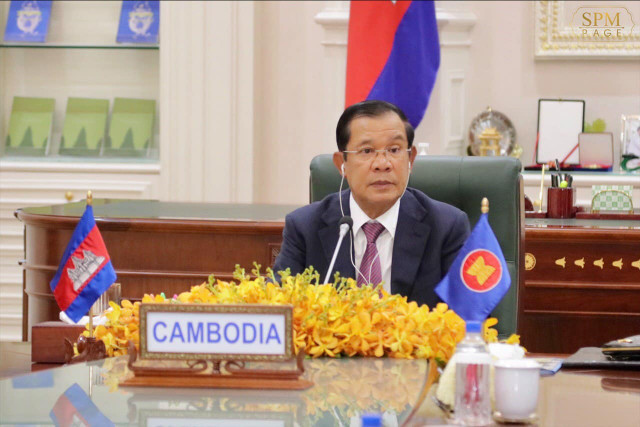
    While there is euphoria in Phnom Penh over the new responsibility, Prime Minister Hun Sen inherits at least five challenges from the previous ASEAN Chairmanship under Brunei.

    The gavel representing the ASEAN has arrived in Phnom Penh and it is a proud moment for the country to hold the position of Chairmanship of the Association of Southeast Asian Nations (ASEAN) for the third time after joining the grouping in 1999. In his customary remarks, Prime Minister Hun Sen announced that his country is “committed to leading ASEAN by championing the 2022 theme of “ASEAN Act” – Addressing Challenges Together – to increase harmony, peace and prosperity across the whole region”. He also assured to “uphold the core spirit of ASEAN’s basic principles of “One Vision, One Identity and One Community,”

    While there is euphoria in Phnom Penh over the new responsibility, Prime Minister Hun Sen inherits at least five challenges from the previous ASEAN Chairmanship under Brunei. First is the South China Sea.  Prime Minister HunSen did not hesitate to refer to it as “an unwelcome guest which now turns up on ASEAN’s doorstep annually and without fail”. He even labelled it a “very hot rock” amid fears that his country could be  “tossed” requiring sophisticated diplomacy wherein it is necessary to “catching it to avoid getting burned”

    In this context, it is useful to recall the 26 October 2021 Chairman’s Statement of the 24th ASEAN-China Summit which emphasised the “importance of non-militarisation and self-restraint in the conduct of all activities by claimants and all other states, including those mentioned in the DOC that could further complicate the situation and escalate tensions in the South China Sea”. China continues to engage in exploration activities in the region much to the discomfort of the Philippines. Malaysia, Vietnam and Indonesia. Also, the Chinese coast guard vessels have engaged in coercion and their operations potentially undermine the ongoing negotiations on the Code of Conduct in the South China Sea (COC).

    The second is about ASEAN’s post-pandemic economic recovery. So far ASEAN Member States’ economic indicators are quite promising and marked by positive growth rates. Cambodia has an opportunity to prepare the region and the human resources for the impending disruption that will be marked by Industry 4.0 technologies. It requires regional digitalisation and impetus to fintech through innovation pivoting on resilience across sectors. This issue is also highlighted in the Chairman’s Statement of the 38th and 39th ASEAN Summits. The ASEAN Leaders’ Statement on Advancing Digital Transformation in ASEAN has also called for strengthening “regional digital integration and transformation to enhance the region’s competitiveness, and turn the current pandemic crisis into an opportunity through digital transformation.”

    The third issue is about Myanmar. It may be recalled that Myanmar did not participate in the 38th and 39thASEAN Summits after the ASEAN decided to bar Myanmar’s military chief Min Aung Hlaing to join the meeting. This decision, by all accounts, was a “rare bold step by a regional grouping known for its non-interference and engagement”. Prime Minister Hun Sen is concerned about the possibility of a humanitarian crisis in the country and was quite candid to note that the “situation in Myanmar could escalate – and maybe even turn into a full-scale civil war – and so Cambodia must be well-prepared and ready to deal with any potential crisis there.”

    The fourth priority for Cambodia as the Chairmanship of the ASEAN would be to take forward the objectives and principles of the ASEAN Outlook for Indo Pacific (AIOP) initiative. ASEAN’s engagement in the wider Asia-Pacific and Indian Ocean regions would be in four key areas i.e.  Maritime cooperation, connectivity, UN SDGs 2030, economic and other possible areas of cooperation. However, the grouping believes that the existing ASEAN-led mechanisms should drive the AIOP for which Cambodia would have to marshal all diplomatic skills at its disposal to convince the major players in the Indo-Pacific of the importance of the AOIP as also about ASEAN’s centrality.

    Although AUKUS did not feature in Prime Minister Hun Sen’s remarks or the Chairman’s statement on the 38th and 39th ASEAN Summits, it looms large in the minds of the Member States

    Fifth, Cambodia would have to develop a sophisticated response to the AUKUS which has added a new dimension to the existing security challenges emerging from the QUAD which is allegedly targeted against China. Although AUKUS did not feature in Prime Minister Hun Sen’s remarks or the Chairman’s statement on the 38th and 39th ASEAN Summits, it looms large in the minds of the Member States. Indonesian and Malaysian are concerned fearing that the development can result in an arms race and encourage the buildup of power projection capabilities; however, the Philippines has welcomed the AUKUS.  The current situation is akin to the division among the ASEAN Member States over the presence of the Western military in the region. AUKUS has provoked China too and it can potentially intensify US-China military contestation in the western Pacific that further adds to insecurities among the Southeast Asian countries.

    Finally, Cambodia’s Chairmanship of the ASEAN attracts numerous challenges but it remains to be seen how Phnom Penh steers the ASEAN in the coming months particularly when the US too has come down heavily with sanctions on Cambodia after it permitted a Chinese company to build military-naval infrastructure at the Ream Naval Base arguing that it threatens regional security.

    Image Credit: cambodianess.com

  • Lest We Forget: The Forgotten Army

    Lest We Forget: The Forgotten Army

    Military history records the fighting at Nyaung U, Irrawaddy as in the words of Slim himself, “the longest opposed river crossing of World War 2”. Dhillon and his men, despite being hugely outnumbered, with no air cover or artillery, held their ground from February 4th to February 11th, 1945.


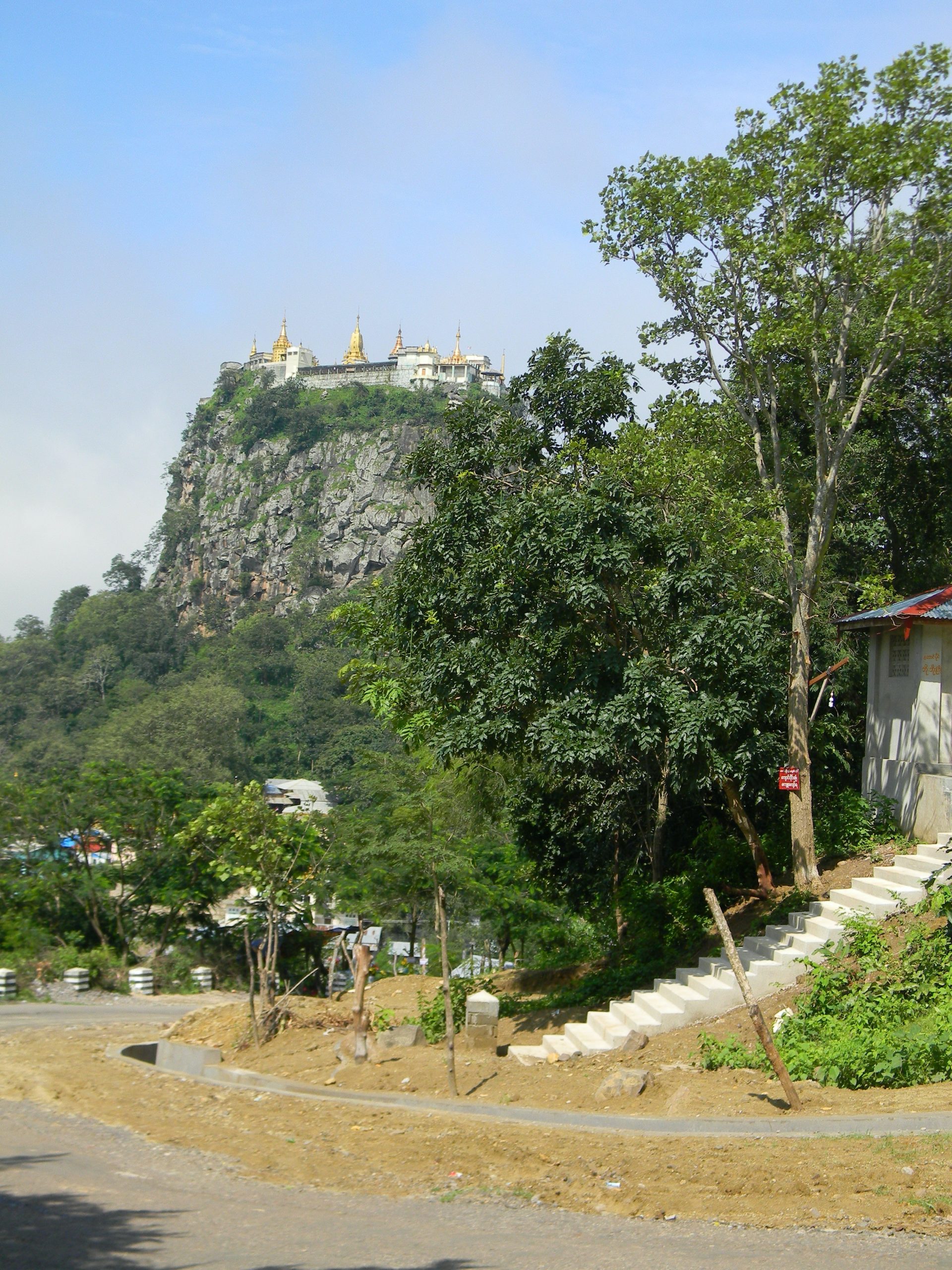
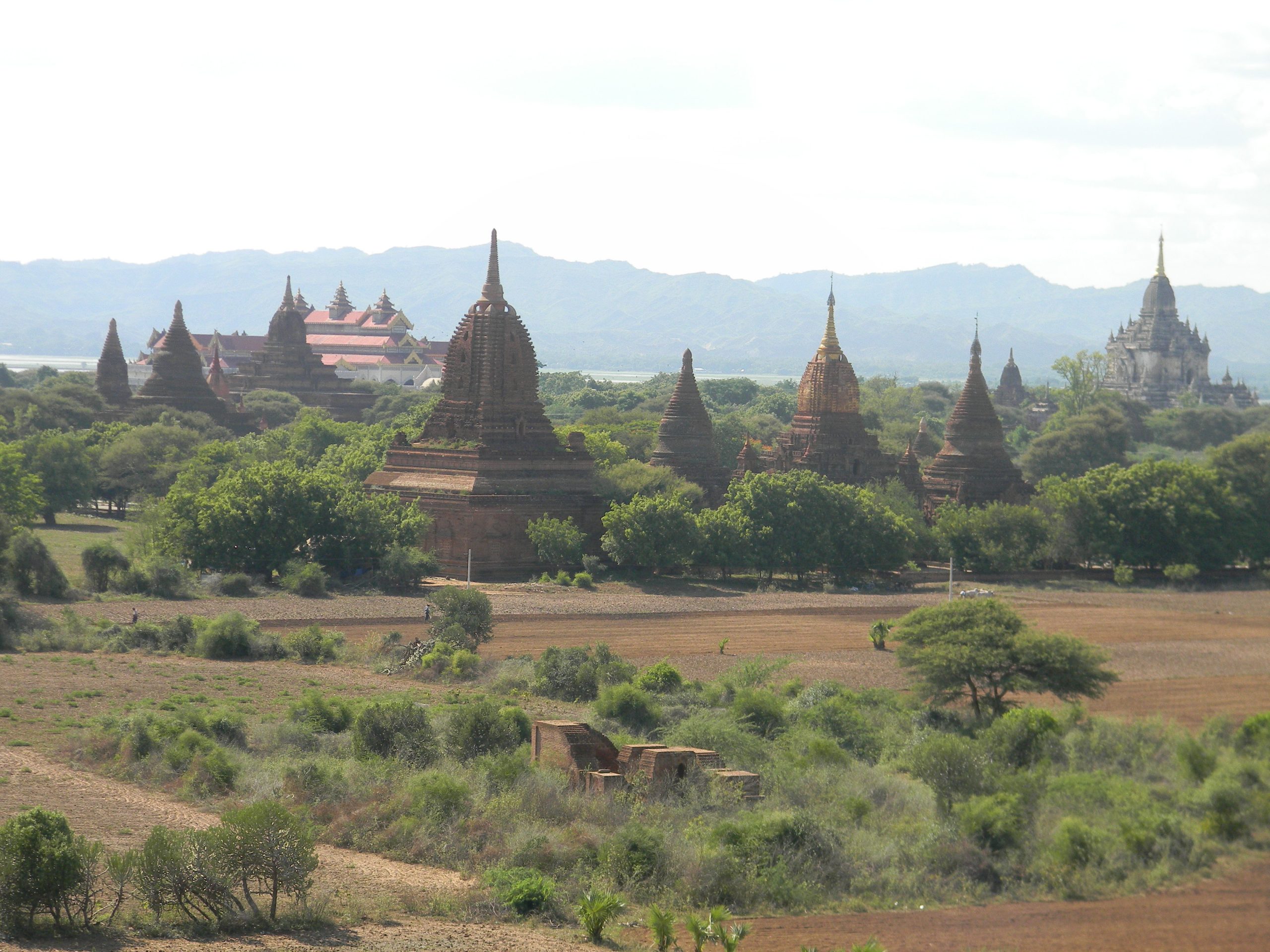
    Mt. Popa (Photo on left) is in the heart of Myanmar (old Burma). It is like a largish pimple on an otherwise smooth cheek. It is the only hill, steep from all sides in an otherwise flat terrain. It is now an extinct volcano.

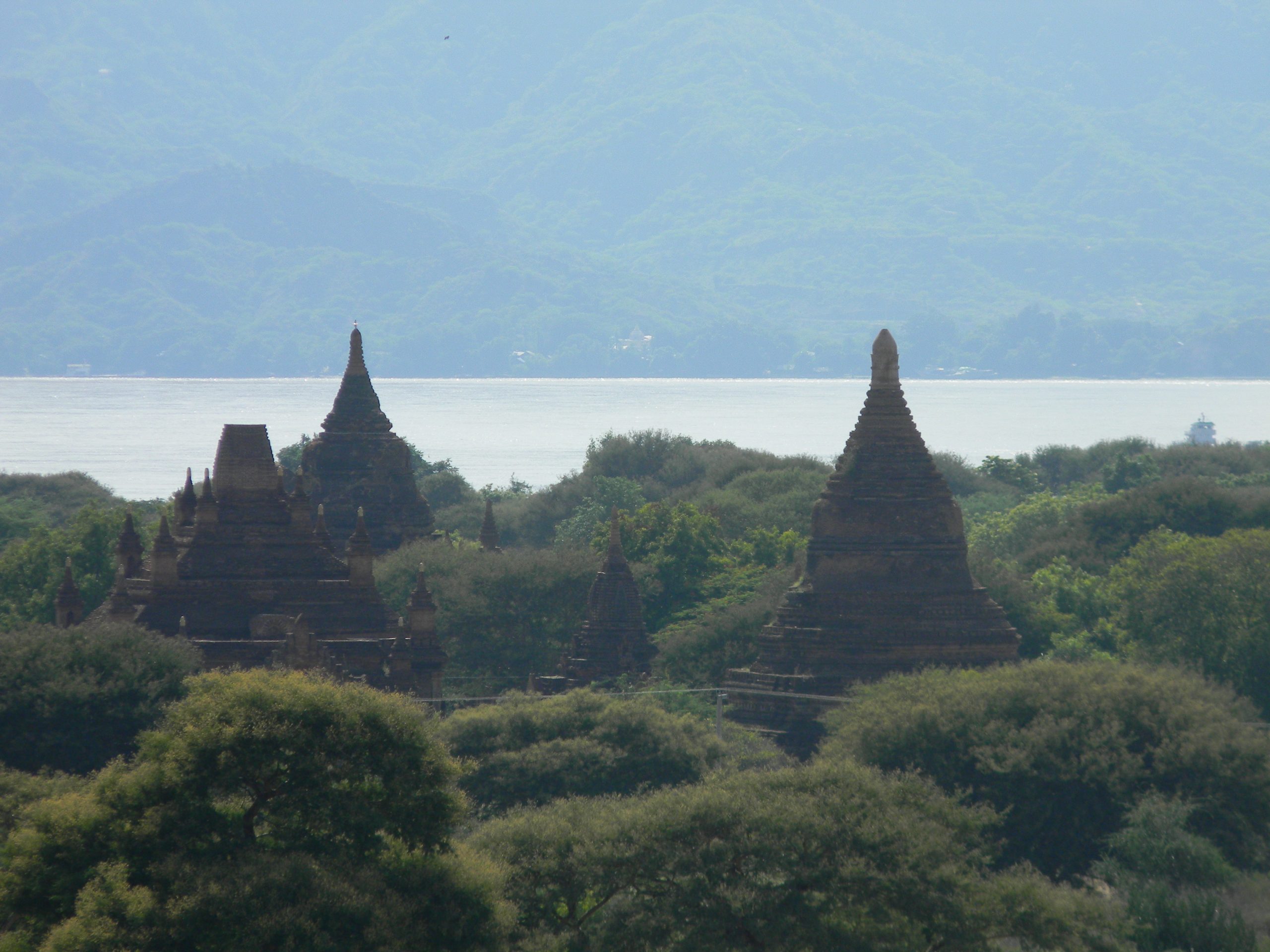
    My wife and I arrive at Mt. Popa from Yangon (Rangoon) after an interesting plane ride on a rickety old aircraft to Nyaung U, the airport of the ancient capital city of Bagan (two Photos as below) the city of the four thousand Pagodas).  We then take a taxi (non A/C) ride over a terribly bumpy road partially running alongside a massive pipeline being laid by the Chinese to transport oil from the Myanmar coast to South China.

    Bagan

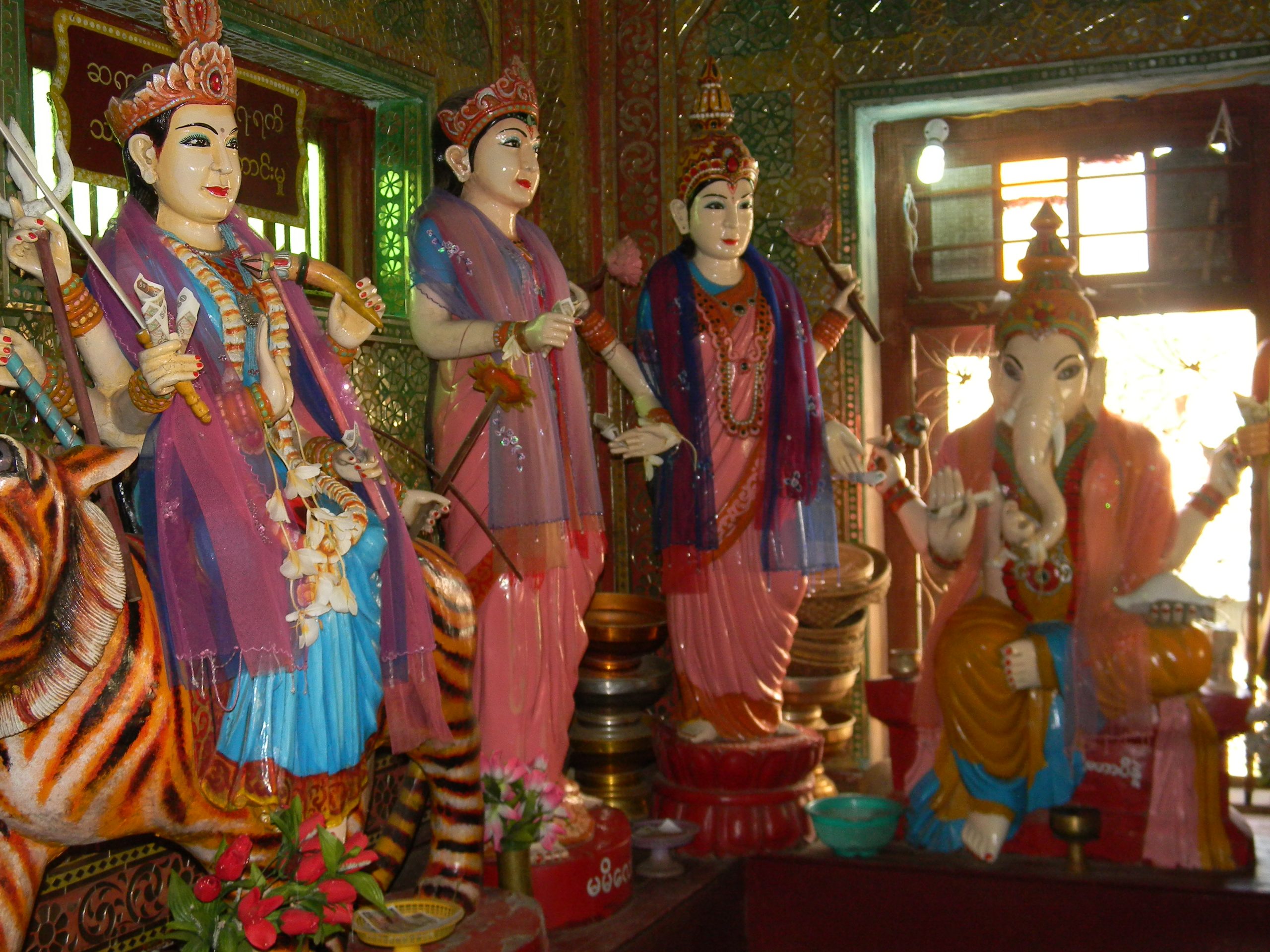
    We are not at Mt. Popa as the regular tourist or as pilgrims to the holy sites around. We do however go and seek blessings from the deity (Photo as below) at the base of the mountain. The deity is much like some in India – it seeks offerings only in the form of liquor.

    Deity at Mt Popa

    The blessings we seek, hopefully will enable us to find an elusive little place called LEGYI. It is in the region nearby but sadly is not marked on a map. The tourist office in Yangon do not know about it. I, fortunately, had some idea about its whereabouts gleaned from the records of my late Uncle (Col. Prem Sahgal) and late Aunt (Capt. Lakshmi Sahgal) of the INA –  Indian National Army (Azad Hind Fauj). Their home in Kanpur was called ‘Legyi House’.

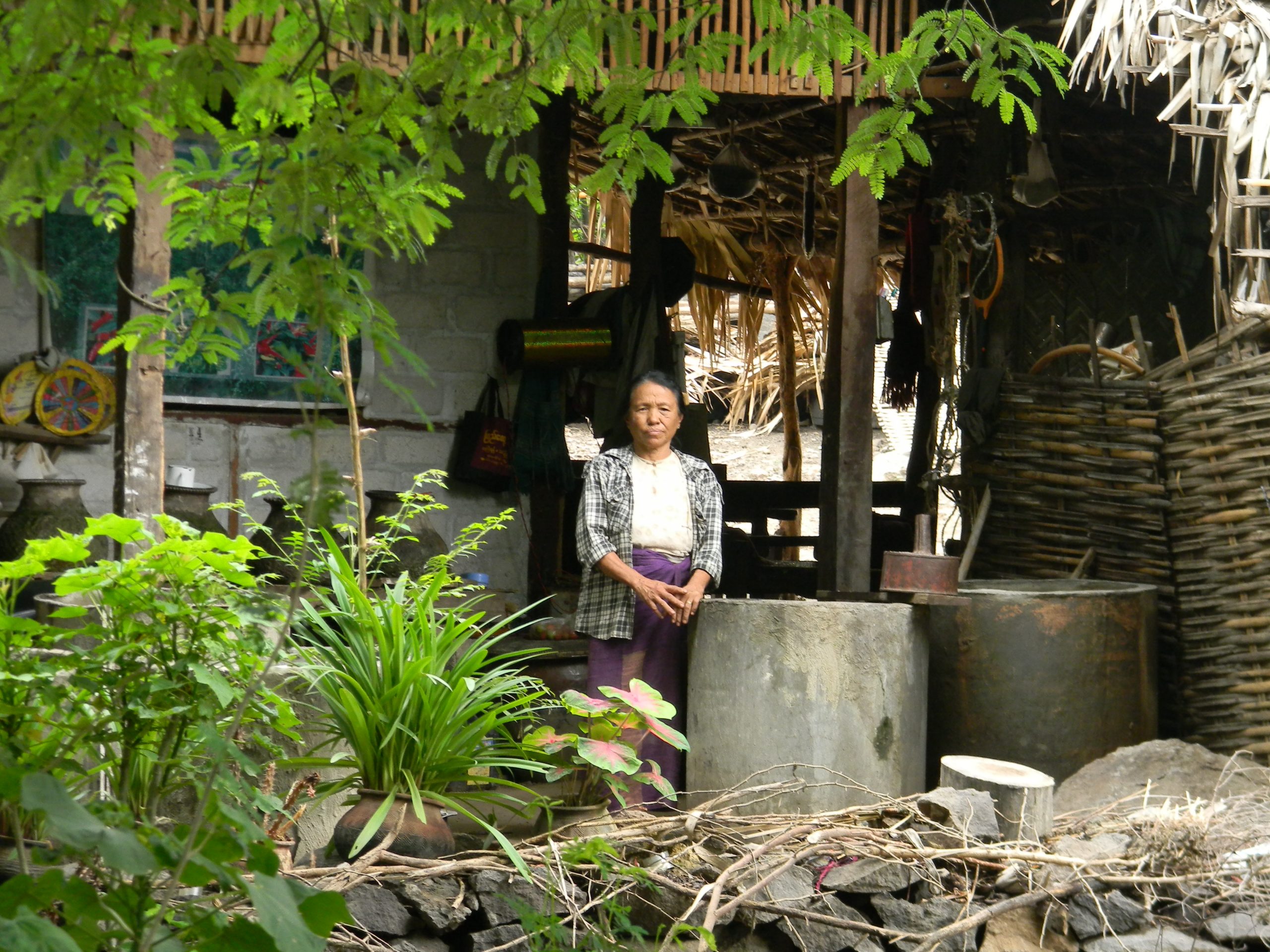
    We drive on from Mt. Popa on a small road in the general direction of the Irrawaddy River and Mandalay. Our guide makes the driver stop every few kilometres to ask about Legyi but in vain. Finally at the crossroads of a small village the guide talks to a little old lady. Amazingly the old lady (Photo on the left) knows where the place is. It is right next to her ancestral home. It is the place, as the old lady said, ‘where this great battle took place many years ago’. She asks where we are from. On being told that we are from India she castigates us. The Japanese come regularly bearing the favourite foods and music of their soldier ancestors but no Indians. Apparently we are the first Indians there after the ‘big battle’ in February 1945!

    Legyi (Photos as below) is the small knoll of a battleground where one of the battalions of  INA’s  2nd Infantry Regiment (under the command of Col. Prem Sahgal) troops valiantly held their ground for days against repeated attacks by formations of the overwhelming might of (then) General Slim’s massive 14th Army. With no Air Force cover or artillery, and with an almost non – existent supply line, they should have been easily wiped out in a matter of hours. Yet they held ground for over a week. They fought valiantly and inflicted huge casualties, largely with the use of guerrilla tactics making Legyi arguably the INA’s most successful battle action.

    Author at Legyi

    Just before the ferocious fighting took place at Legyi, some 50 kilometers north east, just beyond modern day Nyaung U airport, another notable encounter took place.  Two battalions of the INA were tasked to delay and frustrate the imminent attempt by Gen. Messervy’s 7th Indian Division, part of Slim’s 14th Army, to make the crossing of the Irrawaddy River. With 1200 men these battalions, under the Command of Col. Gurbaksh Singh Dhillon, had the daunting task of stalling to the absolute limit the crossing of the river by some 30,000 troops amassed on the river’s western bank. Military history records the fighting at Nyaung U, Irrawaddy as in the words of Slim himself, “the longest opposed river crossing of World War 2”. Dhillon and his men, despite being hugely outnumbered, with no air cover or artillery, held their ground from February 4th to February 11th, 1945.

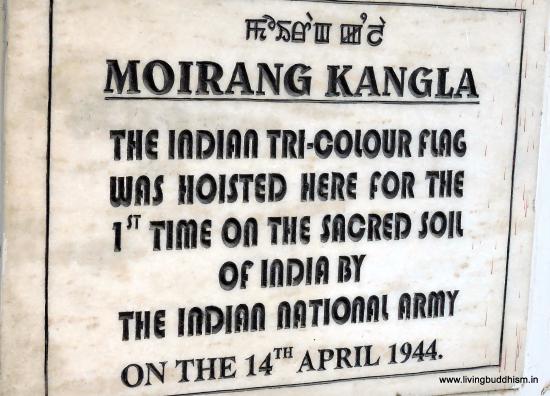
    Lest it be forgotten the INA, starting from Farrer Park Race Course in Singapore went all the way up and crossed the Indian border fighting to plant the National Flag at Imphal, much as the British tried to deride this valiant army.

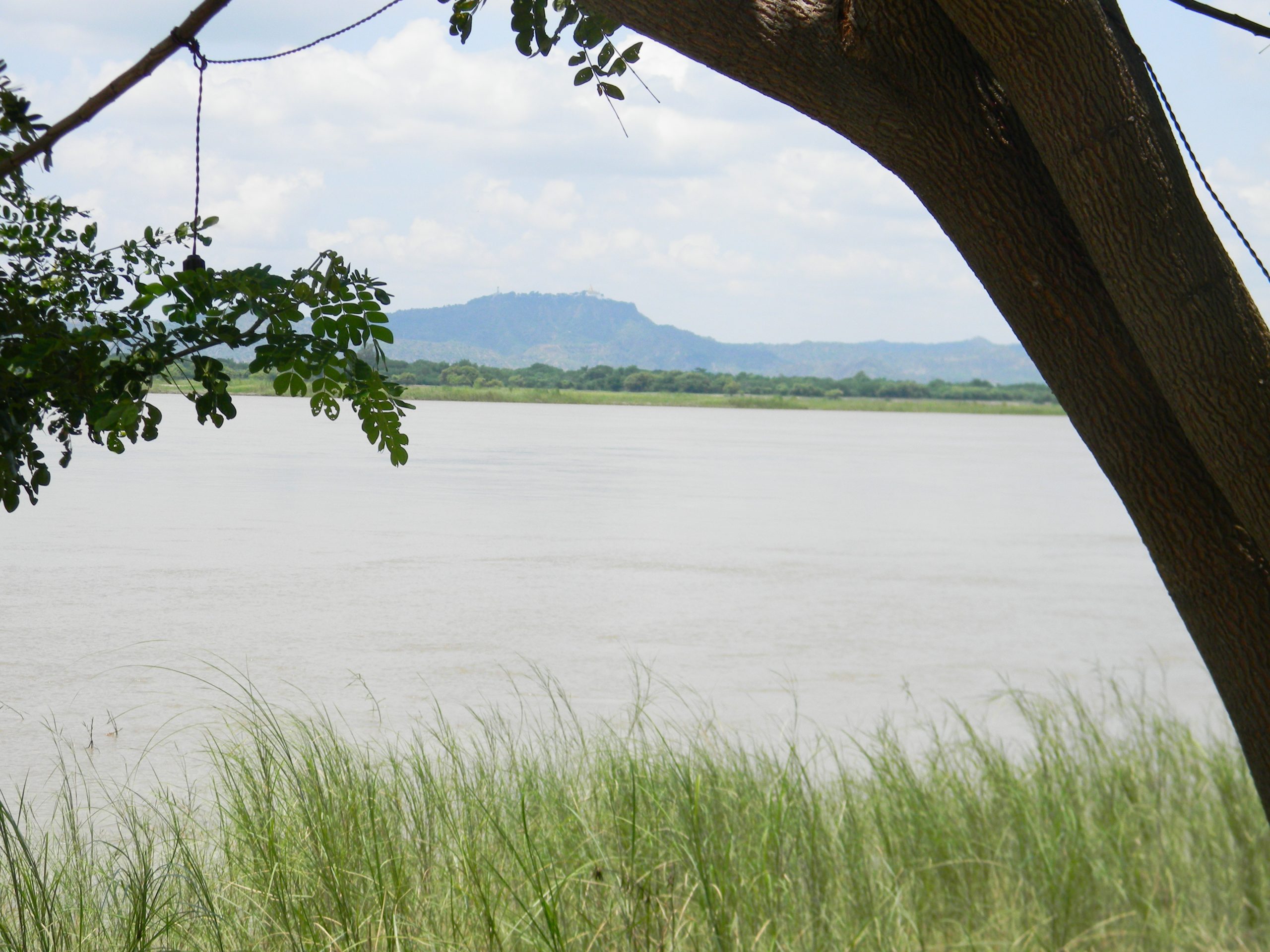
    When we, on our visit, reached the eastern bank of the Irrawaddy at Nyaung U (Photo on left) from Legyi we could visualise what a herculean task Dhillon and his men had performed. The river there is enormous in width. It is rapid flowing, almost torrential. The massive Brahmaputra at Guwahati is not even half that. How did the small force manage to fight back all the frontal and outflanking assaults?

    The INA actions at Legyi and Nyaung U are perhaps the best examples of what a truly secular force comprising Hindu, Muslim, Sikhs, Christians, the lot under the command of Indian officers can achieve when they fight for the cause of the country – in this case, Independence. Lest it be forgotten the INA, starting from Farrer Park Race Course in Singapore went all the way up and crossed the Indian border fighting to plant the National Flag at Imphal, much as the British tried to deride this valiant army.

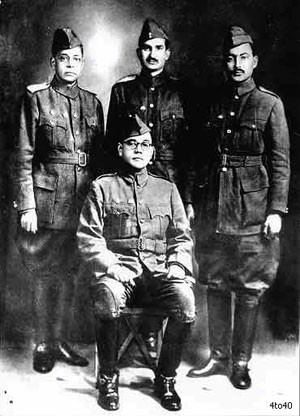
    Let us recall, it was on February 17, 1942, that the Indian officers and men of Lt General Arthur Percival’s army in the then Malaya marched into Farrer Park Stadium under the command of the senior most Indian officer, Col Zaman Kiani. There were no British officers and men with them. Gen Percival and his army had ceded Singapore to the conquering Japanese two days earlier. The British officers decided that they would surrender separately at Changi. The Indians troops were ordered to surrender by themselves at Farrer Park, pretty much abandoned to their own fate by their British colleagues. After their surrender, they were separately incarcerated at Neesoon Camp in Seletar. Peter Ward Fay writes in The Forgotten Army: India’s Armed Struggle for Independence: “Much later, in the chorus of anger and embarrassment that rose among Englishmen on the subject of the INA, no one was heard to suggest that Percival should have refused to let himself and his colleagues be separated from their brothers in arms, the Indian officers.” This was to be a crucial factor in what ensued.

    For their valiant stand against Slim’s 14th Army, Sahgal and Dhillon along with their superior officer, Gen. Shah Nawaz Khan were placed under arrest. They were to be made examples of for their audacity! After the termination of hostilities at the end of the war the three were brought to Delhi and incarcerated in a remote part of the Red Fort awaiting a Court Martial to be held within the premises of the Fort.

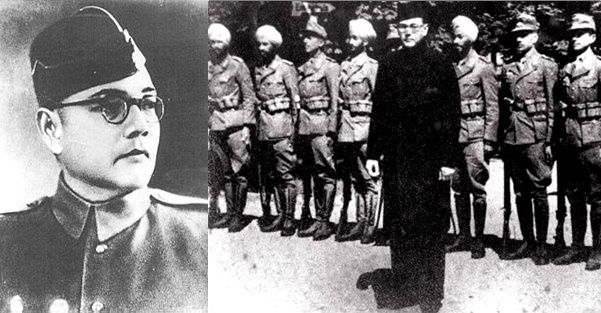
    This, for the usually astute British, was quite a blunder. First to select for trial a Hindu, a Sikh and a Muslim (exemplifying INA’s secular make up and credentials) and then to hold the trial in Delhi’s Red Fort, the very icon that Netaji Subhash Chandra Bose, the Supreme Commander, had projected as the goal to be attained. Worse, the trial would be held in the same premises where India’s last Emperor Bahadur Shah Zafar was tried, sentenced and deported to Rangoon where he died. The symbolism perhaps had somehow escaped the colonial rulers.

    Also that independent undivided India’s first Government, with Netaji Subhash Chandra Bose having taken his oath as its first Prime Minister had been formed in Singapore. News now came in that the National flag had already been hoisted at Imphal and at Port Blair in the Andamans. Free India’s first currency notes and stamps had been issued. The nation was in uproar!

    When the curtain of secrecy was finally lifted and the ‘INA Red Fort Trial’ began, the populace finally got to know about the INA, the extraordinary fight by its men as well as women. Also that independent undivided India’s first Government, with Netaji Subhash Chandra Bose having taken his oath as its first Prime Minister had been formed in Singapore. News now came in that the National flag had already been hoisted at Imphal and at Port Blair in the Andamans. Free India’s first currency notes and stamps had been issued. The nation was in uproar!

    Many of the then leading politicians with legal backgrounds volunteered to lead the legal defence team – Nehru, Katju, Patel et al. My grandfather, a sitting Judge of the Punjab High Court, applied and received leave of absence to supervise the legal defence arrangements for the ‘Lal Qila 3’. He rejected the offers by the politico lawyers. Instead he opted for the one he thought was quite simply the best legal mind of the country – Bhulabhai Desai. He would be the lead attorney.

    The then Advocate General, Sir Nowshirman Engineer for the prosecution argued that the three accused had committed treason by violating the oath they had taken on being inducted as officers into the British Indian Army. Bhulabhai Desai in defence argued for some ten hours over a period of two days. Firstly, he claimed, the so called oath of office became invalid when Gen. Percival and the British Officers decided to surrender separately at Changi in Singapore and ordered all Indians to go to the surrender ceremony at the Farrer Park Race Course.

    Equally importantly Bhulabhai Desai argued (1) that an enslaved nation had the legal right to engage in military action to free itself from a foreign coloniser (2) That the INA fought on the behalf of a properly constituted Government of free India recognised by other international governments, and (3) That the INA was a properly constituted disciplined army, managed entirely be competent Indian Officers with this army having its own uniforms, ranks, ethos, and ‘regalia’.

    To put it succinctly what Bhulabhai Desai told the Court Martial was that it was as a sovereign nation with a recognised Government in place, that India had declared war on Britain and sent its Army i.e. the INA, to fight.

    To put it succinctly what Bhulabhai Desai told the Court Martial was that it was as a sovereign nation with a recognised Government in place, that India had declared war on Britain and sent its Army i.e. the INA, to fight. Hence under International Law the Indian National Army had the status of a legitimate ‘belligerent’. Accordingly the defendants could in no case be tried for treason or other offences under a Penal Code based on British ‘Municipal Law’, as Desai put it.

    To quote from Bhulabhai’s arguments, he stated “….The position now is that international law has reached this stage that if liberty and democracy are to have any meaning all over the world, and not merely just for a part of it, and this is not politics, it is law – any war made for the purpose of liberating oneself from foreign yoke is completely justified by modern international law. And it will be a travesty of justice if we were to be told as a result of any decision arrived at here or otherwise, that the Indian may go as a soldier to fight for freedom of England against Germany, for England against Italy, for England against Japan, and yet a stage may not be reached when a free Indian State may not wish to free itself from any country including England itself.”[1]

    Whether these lucid arguments had any real effect on the senior British Officers sitting on the Court Martial Bench and influenced their decision, we do not quite know. The final sentence against the three defendants whilst finding them guilty of treason did not go as far as delivering death sentences. The three brave officers were dismissed from service and forfeited any pay and allowances due.

    At the news of the release of Shah Nawaz Khan, Prem Saghal and Gurbaksh Singh Dhillon from their detention cells in the Red Fort there were massive and jubilant countrywide celebrations. The colonial administration, we now know, took due notice – not only of the exploits of the INA, the nationwide consternation during the Red Fort trial and jubilations at its end, but also of the Naval Mutiny at (then) Bombay and the Air Force Mutiny at Karachi around the same time.

    “…..Gandhi is not a problem. We can deal with him and handle him. The Congress is also not a problem. We can easily deal with them. But now that India and Indians know about the INA as also about the mutinies in the Royal Indian Navy and the Royal Indian Air Force, the Indians know that we have lost the love of the Indian Armed Forces. It is time to leave India!” …. note to the Viceroy, Field Marshal Wavell from the then Commander-in-Chief in India, Field Marshal Sir Claude Achinleck 

    Deep down in the 4th basement level in a temperature and humidity controlled hall of the British Library near Euston Station, London are stored the ‘India Office Records’. These records are pretty nearly everything that the British colonial rulers had with them in India and transported them back ‘in toto’ before Aug. 15th, 1947. Amongst these records is a document penned by the Commander in Chief in India – Field Marshall Sir Claude Auchinleck. It is a Memo to the then Viceroy – Field Marshall Wavell. The purport of this extraordinary memorandum is that “…..Gandhi is not a problem. We can deal with him and handle him. The Congress is also not a problem. We can easily deal with them. But now that India and Indians know about the INA as also about the mutinies in the Royal Indian Navy and the Royal Indian Air Force, the Indians know that we have lost the love of the Indian Armed Forces. It is time to leave India!” As Alex von Tunzelmann writes in his excellent book[2] “… neither Gandhi nor Congress party agitations forced British hands. It was…. the possibility of full scale military revolt due to the influence of Subhas Bose (and the INA) which led to the British exit from India.

    And yet generations of young Indian students in schools and colleges are still being taught that it was Gandhi and the Congress that got India’s independence!! They are still being taught that Nehru was India’s first Prime Minister. Yes he was but that of ‘DIVIDED INDIA’. The record shows that it was Subhash Chandra Bose – Netaji, who was the first Prime Minister – OF AN UNDIVIDED INDIA.

    JAI HIND!


     References

    [1] “Two Historic Trials in Red Fort” – Moti Ram; Roxy Print Press, 1946.

    [2] “Indian Summer: The Secret History of the End of an Empire”; Alex von Tunzelmann;


    All colour photos by the author. 

  • What Putin nemesis Alexei Navalny is, and what he is not

    What Putin nemesis Alexei Navalny is, and what he is not

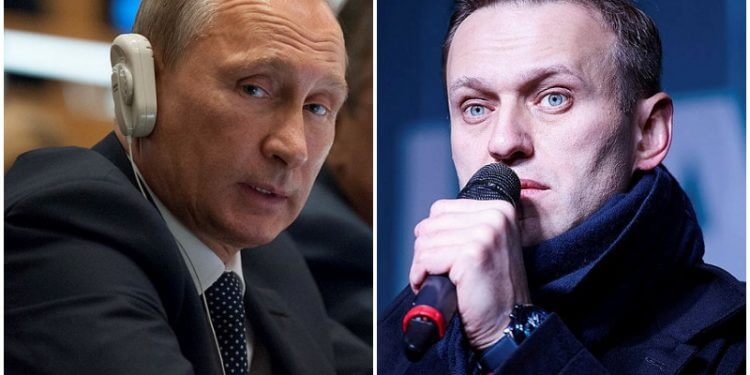
    Anatol Lieven highlights America’s blundering tendency to view world personalities in typically American lens, ignoring the realities of them being citizens of their countries and focusing on their national interests . He uses the examples of Russia’s Navalny and Myanmar’s Aung San Suu Kyi to make his point emphatically. His analysis is relevant to other countries as well. 

    This article was published earlier in Responsible Statecraft

    It is very human and natural to admire courage and resolution — these are qualities that Russian opposition leader Alexei Navalny possesses to a quite remarkable degree. It is also natural to sympathize with suffering — and Navalny has suffered and very nearly died for his beliefs and goals. And of course it is natural to feel disgust with the increasingly criminal behavior of the Putin administration in Russia.

    However, admiration, sympathy and disgust are emotions, not arguments or analysis, and should be employed with great caution in the formulation of state policy.

    In his confirmation hearings, now-Secretary of State Anthony Blinken pledged Biden administration support for Navalny and called him “a voice for millions and millions of Russians.” Statements by the U.S. embassy in Moscow on the Navalny movement have come very close to calling for the end of the present Russian government.

    Recent weeks have seen a tremendous outpouring of American sympathy for Navalny and his movement against the Putin administration. In his confirmation hearings, now-Secretary of State Anthony Blinken pledged Biden administration support for Navalny and called him “a voice for millions and millions of Russians.” Statements by the U.S. embassy in Moscow on the Navalny movement have come very close to calling for the end of the present Russian government. The semi-official American Radio Free Europe/Radio Liberty is openly and passionately supportive of Navalny’s movement. Richard Haas, President of the Council on Foreign Relations, proposed that Navalny be awarded the Nobel Peace Prize.

    Such overt U.S. support is not wise. In the first place, it may actually hurt the cause of progressive reform in Russia. The Russian government, like those of Iran and China, has relentlessly propagated the idea that the opposition is being backed if not bankrolled by Washington in order to weaken their countries; and indeed, Russian liberals have done themselves terrible damage by allowing themselves to be cast as representatives of the West, not of the Russian people.

    The second, very familiar problem is the hypocrisy involved. In the latest volume of President Obama’s memoirs, “A Promised Land,” he describes how Hillary Clinton — who relentlessly presented herself in public as an advocate of spreading democracy — argued that Washington should support Egyptian President Hosni Mubarak’s brutal 2011 crackdown on Arab Spring opposition protests on the grounds that he was a U.S. ally and his fall would lead to chaos and Islamist revolution. In her early public statements, as well, she warned against hastening Mubarak’s exit.

    In proposing Navalny for the Nobel Peace Prize, Haas seems to have forgotten the last time the honor was given to an opposition politician.

    An even greater problem presents itself when one looks at the actual politics of some of the opposition figures who draw such waves of American and Western enthusiasm. In proposing Navalny for the Nobel Peace Prize, Haas seems to have forgotten the last time the honor was given to an opposition politician. The award to Aung San Suu Kyi in 1991 was supposed to be for “her non-violent struggle for democracy and human rights… one of the most extraordinary examples of civil courage in Asia in recent decades.”

    After Suu Kyi joined the government in Myanmar she’s been damned in the West for her failure to prevent or condemn the savage state persecution of Myanmar’s Rohingya minority, and most of her human rights awards (though not the Nobel prize itself) have been revoked.

    After Suu Kyi joined the government in Myanmar she’s been damned in the West for her failure to prevent or condemn the savage state persecution of Myanmar’s Rohingya minority, and most of her human rights awards (though not the Nobel prize itself) have been revoked. What her previous Western admirers are not doing — what they almost never do — is to ask themselves why they so completely misunderstood her before.

    But she is a Burmese politician, not a Western democratic leader, and in building her up as a liberal heroine, the Western media and activists willfully ignored not just the political realities of Myanmar, but her own Burmese nationalist antecedents.  

    (Just in the last 48 hours, Suu Kyi has been detained in an apparent military takeover of her democratically elected government and Biden is predictably mulling over his options for reviewing sanctions and taking “appropriate action.”)

    Like Navalny, Suu Kyi is indeed an exceptionally brave and determined human being and in her way a fine leader; just as Navalny might make a fine Russian president. But she is a Burmese politician, not a Western democratic leader, and in building her up as a liberal heroine, the Western media and activists willfully ignored not just the political realities of Myanmar, but her own Burmese nationalist antecedents.

    There are two factors at work here. The first is a basic human one. Courage, like hard work and self-sacrifice, is a quality that it is humanly impossible not to admire, but the possession of it says absolutely nothing at all about the goals to which they are put. All the leaders of the ghastly totalitarian revolutions of the 20th century were exceptionally brave and determined men.

    The second factor relates to some enduring and seemingly incorrigible flaws in most Western reporting and analysis. One of them is the tendency to personalize issues, whereby “Putin” is used as a synonym for the whole Russian state, and “Navalny” is now being presented as a synonym for the entire, enormously disparate Russian opposition. The merest glance at the groups represented at the pro-Navalny demonstrations reveals that together with genuine liberal democrats, there are also numerous Communists and extreme nationalists whose anti-Western positions are much more extreme and reckless than those of Putin himself. As Aleksandr Baunov of the Carnegie Moscow Centre has written:

    Saturday’s protests were undeniably anti-regime, anti-elite and anti-corruption but not necessarily liberal, pro-Western and pro-democracy. It’s not surprising that such protests frighten not only the authorities, but also successful members of society: even those who don’t consider themselves supporters of the regime.

    In their blind demonization of Putin, and consequent sanctification of Navalny, Western commentators seem to be implicitly assuming that should Navalny win power (which he almost certainly will not), Russia’s foreign policy would change radically in a pro-Western direction. This is nonsense. Navalny’s supporters are backing him out of (entirely justified) fury at Russian state corruption, lawlessness, and economic failure, not to change foreign policy. Every independent opinion poll has suggested that Putin’s foreign and security policies have enjoyed overwhelming public support; and above all, there is very little in Navalny’s own record to suggest that he would change them.

    As a 2013 essay by Robert Coalson in The Atlantic documented, Navalny supported the Russian war with Georgia in 2008. He has expressed strongly ethno-nationalist attitudes towards the Caucasian minorities in Russia, and previously made opposition to illegal immigration a key part of his platform. In October 2014 he suggested to a reporter that if he became president he would not return Crimea, which was annexed by Russia earlier that year, to Ukraine (though he also said in that same interview that, “It’s not in the interests of Russians to seize neighboring republics, it’s in their interests to fight corruption, alcoholism and so on — to solve internal problems.”

    Rather like Donald Trump concerning American interventionism, Navalny has strongly condemned Russian military intervention in the Middle East on the grounds of cost and irrelevance to real Russian interests; but (as with Trump), that does not necessarily say much about what he would actually do if in power. Apart from anything else, Russia, like the U.S., has a foreign and security establishment “Blob” with firmly established and deeply held collective views on Russia’s vital interests.

    It is to remind Americans that he is a Russian politician, not an American one; that he will respond to Russian realities, not Washington fantasies; and that in the end, U.S. administrations will have to deal with whatever government is in power in Moscow.

    To recall this is not to condemn Navalny. It is to remind Americans that he is a Russian politician, not an American one; that he will respond to Russian realities, not Washington fantasies; and that in the end, U.S. administrations will have to deal with whatever government is in power in Moscow. Russian governments will defend Russian interests, along lines that are mostly quite predictable if one knows Russian history and culture. The sooner we realize this, and stop setting up plaster saints in the hope that they will perform miracles, the better for U.S. foreign policy overall.


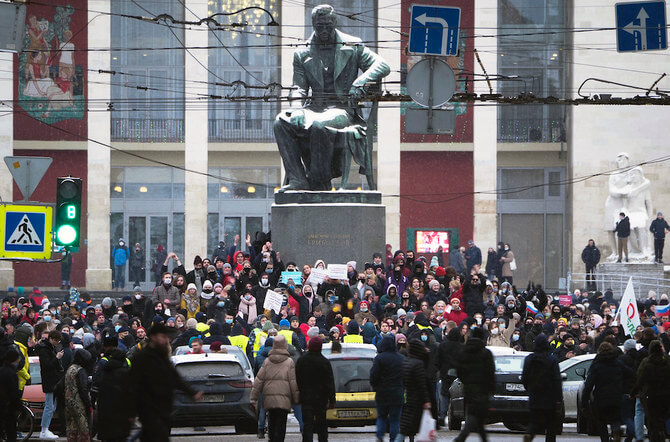
    Feature Image – Protesters gather near a monument of Russian playwright Alexander Griboyedov during a protest against the jailing of opposition leader Alexei Navalny in St. Petersburg, Russia, Sunday, Jan. 31, 2021. www.arabnews.com
    Image – 
    Navalny and Putin: www.hilltimes.com
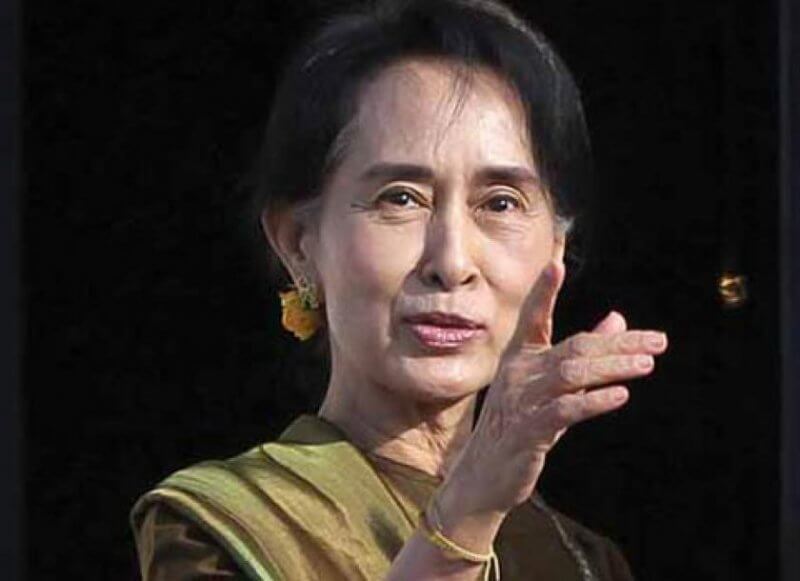
    Image – Aung San Suu Kyi: www.mmtimes.com

  • US-China Tensions Could Spill Into Lancang-Mekong River Basin

    US-China Tensions Could Spill Into Lancang-Mekong River Basin

     The Lancang-Mekong River is the 12th longest river and runs through six countries i.e. China (upper riparian), Myanmar, Thailand, Laos, Cambodia and Vietnam (the lower riparian)and finally discharges into South China.

    A recent US government-funded study has noted that in 2019 China held back large amounts of water upstream in dams on the Mekong River which caused a  severe drought in the downstream countries,[1] prompting a US ambassador in the region accusing China of “hoarding” water and “harming the livelihoods of millions of people in downstream countries”.[2] Likewise, another report by Stimson Centre, a Washington-based think tank, has corroborated the above and pointed that in 2019 “upstream dams at Nuozhadu and Xiaowan had restricted around 20 billion cubic meters of water between July and November” and that current “satellite images show those dams are once again poised to restrict a similar amount of water from July 2020 through the end of this year … Portions of the Mekong mainstream are once again dropping to historically low levels,”[3]

    China has dismissed the reports and the Global Times in an article cited a report by the Tsinghua University and clarified that the “river dams in China [instead] helped alleviate drought along Lancang-Mekong”; furthermore, in November 2019, the Mekong River Commission (MRC) had concluded that “the drought was caused by insufficient rainfall during the wet season with a delayed arrival and earlier departure of the monsoon rain and an El Niño event that led to abnormally high temperatures and high evapotranspiration”.[4]

    At the heart of this problem is that China has built as many as 11 dams on the 4,800 kilometres long Lancang-Mekong River that originates in the Tibetan Plateau.

    At the heart of this problem is that China has built as many as 11 dams on the 4,800 kilometres long Lancang-Mekong River that originates in the Tibetan Plateau.  The Lancang-Mekong River is the 12th longest river and runs through six countries i.e. China (upper riparian), Myanmar, Thailand, Laos, Cambodia and Vietnam (the lower riparian)and finally discharges into South China.

    China has been reluctant to share hydrological data particularly during the dry seasons and releases water during rainy seasons causing flooding in lower riparian countries. This is despite the 2002 MoU under which China had agreed to provide daily river flow and rainfall data from two monitoring stations in Yunnan Province during the wet season, and the periodic MRC Heads of Government meeting over a Summit which is held every four years.

    Earlier this year, the Chinese State Councilor and Foreign Minister Wang Yi had assured that his country would “give positive consideration to share the full-year hydrological information with Mekong countries and enhance cooperation under the Lancang-Mekong Cooperation (LMC) framework to ensure reasonable and sustainable use of water resources”.[5]

    Perhaps a recent statement by the MRC may temporarily obviate suspicions over China not sharing hydrological information on the Lancang-Mekong River which notes that it welcomes China’s sharing of data “ throughout the year” as also for the “ establishment of an information-sharing platform for water resources cooperation led by China and Myanmar”.[6] Also, during the 3rd Mekong-Lancang Cooperation (MLC) Leaders’ Meeting, the Global Center for Mekong Studies (GCMS) has been tasked to study the potential benefits from “aligning and synergizing the MLC and the New International Land-Sea Trade Corridor with a vast market”.[7]

    It has been observed that although the 1995 Agreement on the Cooperation for the Sustainable Development of the Mekong River Basin is legally binding, it “does not have a compliance mechanism such as punitive measures on the party that violates the spirit and principles of the Agreement.

    In 1995, the upper and lower riparian countries had adopted Agreement on the Cooperation for the Sustainable Development of the Mekong River Basin which lays out “principles and norms of regional cooperation in managing the river basin”. A formal dialogue process under the MRC was instituted to address issues relating to Mekong River and the Member States agreed to “promote common procedures and practices throughout the region for data collection, storage and analysis to support data sharing and integration of existing data management systems based on the voluntary participation of countries and institutions.”[8] In 2001, they adopted the “Procedures for Data and Information Exchange and Sharing,” or PDIES to enable the Member States to share data ‘to provide real-time water level information and more accurate flood forecasting.

    It has been observed that although the 1995 Agreement on the Cooperation for the Sustainable Development of the Mekong River Basin is legally binding, it “does not have a compliance mechanism such as punitive measures on the party that violates the spirit and principles of the Agreement. The conflict resolution mechanism is also not clearly stipulated”.[9] This is one of the many reasons for discord among the Parties which needs to be addressed by the MRC whose mandate includes dispute resolution.

    Be that as it may, the lower Mekong countries have set up the Mekong Water Data Initiative, and at the 10th Ministerial Meeting of the Lower Mekong Initiative (LMI) in 2017 to ‘create a robust, integrated, and transparent platform for collecting, sharing, and managing data on the Mekong River system.’[10]

    there are fears that the Lancang-Mekong River issue is slowly shaping into a major ASEAN-China bilateral issue similar to the contestation in the South China Sea.

    At another level, there are fears that the Lancang-Mekong River issue is slowly shaping into a major ASEAN-China bilateral issue similar to the contestation in the South China Sea; and the current situation is being described as “becoming a geopolitical issue, much like the South China Sea, between the United States and China,”[11] Perhaps the biggest worry is that the Lancang-Mekong River should not attract contestation between the US and China which surely is going to make the region more turbulent. It would thus be prudent that ASEAN and China work on a Code of Conduct to manage the river affairs or add more robustness in the existing dialogue mechanism over the Lancang-Mekong River.

     
    End Notes
    [1] “China could have choked off the Mekong and aggravated a drought, threatening the lifeline of millions in Asia”, https://www.cnbc.com/2020/04/28/china-choked-off-the-mekong-which-worsened-southeast-asia-drought-study.html  (accessed 12 September 2020).
    [2] “Water wars: Mekong River another front in U.S.-China rivalry”, https://www.japantimes.co.jp/news/2020/07/25/asia-pacific/mekong-river-us-china/  (accessed 12 September 2020).
    [3] “The next US-China battleground: Chinese dams on the Mekong River?”,https://www.scmp.com/week-asia/politics/article/3095581/next-us-china-battleground-chinese-dams-mekong-river  (accessed 12 September 2020).
    [4] “River dams in China helped alleviate drought along Lancang-Mekong, research finds”, https://www.globaltimes.cn/content/1194654.shtml  (accessed 10 September 2020).
    [5] “River dams in China helped alleviate drought along Lancang-Mekong, research finds”, https://www.globaltimes.cn/content/1194654.shtml  (accessed 10 September 2020).
    [6] “Lancang-Mekong cooperation provide stronger impetus for regional development and prosperity”, http://www.lmcchina.org/eng/hzdt_1/t1812281.htm  (accessed 12 September 2020)
    [7] “Full text of Co-chairs’ Statement on Cooperation of Synergizing the MLC and the New International Land-Sea Trade Corridor of the Third MLC Leaders’ Meeting”, http://www.lmcchina.org/eng/zyxw_5/t1808947.htm  (accessed 12 September 2020).
    [8] “Joint Statement To Strengthen Water Data Management and Information Sharing in The Lower Mekong”,
    https://www.lowermekong.org/news/joint-statement-strengthen-water-data-management-and-information-sharing-lower-mekong (accessed 14 April 219)
    [9] “Code of Conduct for the Mekong”,https://vannarithchheang.com/2018/04/04/code-of-conduct-for-the-mekong/  (accessed 12 September 2020).
    [10] “Mekong River Commission keen to improve data sharing and management in the Lower Mekong Basin”, https://mrcmekong.org/news-and-events/news/mrc-keen-data-management-in-mekong-basin/  (accessed 12 September 2020.
    [11] “Water wars: Mekong River another front in U.S.-China rivalry”, https://www.japantimes.co.jp/news/2020/07/25/asia-pacific/mekong-river-us-china/  (accessed 12 September 2020).
     
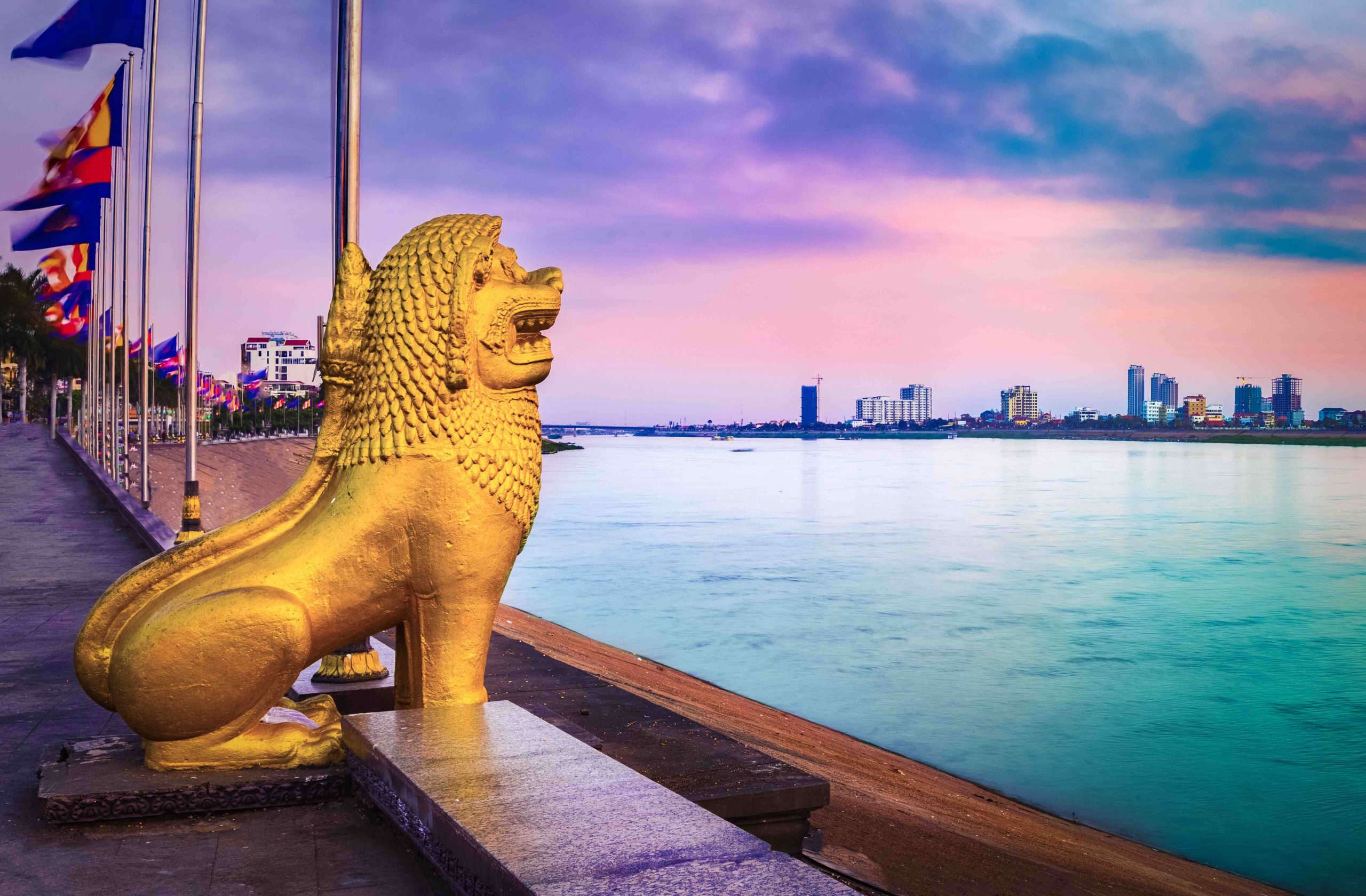
    Image: Mekong Riverside, Phnom Penh-Cambodia

  • India-China Trade In Ancient Times: Southern Silk Route

    India-China Trade In Ancient Times: Southern Silk Route

    To follow the Silk Road is to follow a ghost. It flows through the heart of Asia, but it has officially vanished leaving behind the pattern of its restlessness: counterfeit borders, unmapped peoples. The road forks and wanders wherever you are. It is not a single way, but many: a web of choices.

    Colin Thubron, Shadow of the Silk Road.

    Introduction

    India and China, two Asian giants, share a lot of similarities in terms of history and culture. Both countries represent age old civilizations and unique history. Cultural and economic ties between the two countries date back to about 2000 years ago. The Silk Route, which is an ancient network of trade routes, formally established by the Han Dynasty, served as a connection between the two countries. It was also through this route that Buddhism spread to China and East Asia from India. The routes were more than just trade routes; it was the carrier of ideas, innovations, inventions, discoveries, myths and many more.
    The earliest mention of China can be found in the Indian text “Arthashastra” which was written by Kautilya in the fourth century BC. Kautilya made a remark about Cinapattasca Cinabhumjia (Cinapatta is a product of China)[1]. Whereas, the earliest mention of India in Chinese records dates between 130 and 125 BC. Zhang Qian, a Chinese envoy to Central Asia, referred to India as Shendu, in his report about India to Emperor Wu of the Han dynasty.
    This article will look into the ancient trade route that existed between South Western China and India’s North East region via Myanmar and the future of the trade route.

    Ancient trade links between India and China

    Shiji, which is the first Chinese dynastic history, compiled between 104 and 87 BCE talks about the existence of a trading route between India and South West China. According to Chinese records, Emperor Wu of the Han dynasty, tried to establish a trade route from Changan, the Chinese capital to North East India through Yunnan and adjoining areas. However, the rulers of Yunnan were against the idea of establishing a direct trade between India and China and Emperor Wu failed to establish the trade route. Even though the trade route failed to take off, the trade in Cinapatta and Chinese square bamboo continued without any hindrance.

    Political Geography of the Southern Silk Route

    The Southern Silk route (SSR), one of the least studied overland route, is a trade route which is about 2000 km long and linked East and North East India with Yunnan Province of China via Myanmar. This is a relatively unknown, ancient trade route that is considered a part of the larger web of Silk Roads. This route existed before the Central Asian Silk route became popular. This trade route between Eastern India and China came to be known during the early 3rd century BCE, and it became popular by the 2nd century BCE. By 7th century AD various other branches of the SSR emerged to create web of trading routes.
    Traders carried silk from Yunnan through Myanmar, across India and joined the main silk route in Afghanistan. In addition, silk was also transported from South West China through the Shan states and North Myanmar into East India and then down to the Coromandel Coast.
    The Qing dynasty which ruled China from 1644-1912, recorded the cross cultural exchanges that took place across SSR. This route contributed to cultural exchanges between China and the West. It also promoted interactions among different nationalities.
    Indian sources have failed to provide abundant evidence about the SSR and the interaction that took place across this route but there is enough evidence that indicates that trade and migration did take place in the Eastern India-Upper Myanmar-Yunnan region. For example, modern scholars believed that the Tai Ahoms were originally from Yunnan but they migrated to North East India and founded a small kingdom around 13th century, which grew to become the powerful Ahom Kingdom of Assam.
    The areas through which the SSR passed were inhabited by various ethnic groups whose political, social and economic organizations were primitive and backward. As a result, the safety of the route was often questioned. Archeological evidences have been found along the Southern banks of Brahmaputra up to Myanmar border, which shows that trade did exist along this route.
    The main items that were exported from China via this route included Silk, Sichuan cloth, Bamboo walking sticks, ironware and other handicrafts items. Sichuan, a South Western province was the main source of silk. Glass beads, jewels, emeralds etc were some of the items that were imported to China.
    Another important trade route is the South West Silk route or the Sikkim Silk route, which connected Yunnan, and India through Tibet. A section of the route from Lhasa crossing Chumbi Valley, Nathu La Pass connected to the Tamralipta Port (present day Tamluk in West Bengal). From the Tamralipta port, this trade route took to the sea to traverse to Sri Lanka, Bali, Java and other parts of the Far East. Another section of the route crossed Myanmar and entered India through Kamrup (Assam) and connected the ports of Bengal and present day Bangladesh.
    Over time, the Southern Silk Route lost its prominence and it was in 1885 that it re- emerged as a strategic link as the British tried to control some parts of the route in order to access and gain control over Southern China.
    The strategic importance of the route increased during World War II. In 1945, Ledo Road or Stilwell Road was constructed from Ledo, Assam to Kunming, Yunnan to supply aid and troops to China for the war with Japan. Ledo Road is the shortest land route between North East India and South West China. However, after the war the road was left unused and in 2010, BBC reported that much of the Ledo road has been swallowed up by jungle.
    The Assam-Myanmar-Yunnan road is very difficult to traverse not only in the present times but also during the ancient times. However, despite the hard conditions, it is through this route that a golden triangle of drug trafficking, movement of terrorist and smuggling functions today.

    Future Potential: Reviving the Southern Silk Route Economy

    North-East India and the Yunnan province share many similarities. Both are landlocked as well as under developed regions. Both are home to a large number of ethnic groups and have witnessed secessionist movement from time to time. Apart from this, Yunnan and North East India are geographically isolated from their political capitals.
    Yunnan and North East India, home to rich varieties of subtropical fruits with high nutritional values and medicinal plants, can cooperate and transform the hills of North East India and South West China into plantations, factories, laboratories to produce processed food products and lifesaving drugs that can find a huge market in developing and developed countries.
    In a bid to revive the Southern Silk route, Bangladesh, China, India and Myanmar, signed the Kunming Initiative, a sub-regional organization, in 1999. This initiative was replaced by the Bangladesh-China-India-Myanmar Economic Corridor (BCIM-EC) in 2015. The BCIM-EC was announced by China as a part of its Belt-Road Initiative, which has been boycotted by India since the beginning. In 2019, the BCIM-EC was dropped from the list of 35 projects that are to be undertaken under BRI, indicating that China has disreagrded the project. However, in the same year India has sought to keep the BCIM-EC project alive.
    If the BCIM-EC project does take place, it will reduce the travel time, cut transportation cost, open up markets, provide way for joint exploration and development of natural resources and create production bases along the way. Before the BCIM-EC takes off, it is important to develop the roadways infrastructure of India’s North East region.
    Even though the BCIM-EC promises to elevate the economic conditions of the backward North-East region of India, it has not gained sufficient steam as both China and India have different apprehensions. China sees India’s reluctance to support BRI as the barrier for any progress in the project. Given the current stand-off in Ladakh, India’s apprehensions about China seeking to exploit the insurgent groups operating in the region gains significance. Either way realizing the Southern Silk Road as a viable project in the form of BCIM-Economic Corridor looks distant now.
    [1]Haraprasad Ray, “Southern Silk Route: A Perspective,” in The Southern Silk Route : Historical Links and Contemporary Convergences (Routledge, 2019).

    References

    Ray, Haraprasad. “Southern Silk Route: A Perspective.” Essay. In The Southern Silk Route: Historical Links and Contemporary Convergences. Routledge, 2019.
    “Continental and Maritime Silk Routes: Prospects of India- China Co-operations.” In Proceedings of the 1st ORF-ROII Symposium. Kunming, 2015.
    Mukherjee, Rila. “Routes into the Present.” Essay. In Narratives, Routes and Intersections in Pre-Modern Asia, 37–40. Routledge, 2017.
    UNESCO. Accessed June 20, 2020. https://en.unesco.org/silkroad/content/did-you-know-great-silk-roads.
    “The Silk Route.” Accessed June 21, 2020. http://www.sikkimsilkroute.com/about-silk-route/.
    Ray, Haraprasad. Introduction. In North East India’s Place in India-China Relations and Its Future Role in India’s Economy, n.d.
    Chowdhury, Debasish Roy. “’Southern Silk Road’ Linking China and India Seen as Key to Boosting Ties.” South China Morning Post, October 23, 2013.
    “China Wants to Revive ‘Southern Silk Road’ with India.” The Times of India, June 9, 2013.

    Image: Stilwel Road from Ledo in Northeast India to Kunming in Yunnan province, China

  • ASEAN Unity Critical for South China Sea:  But Time to Address Newer Issues

    ASEAN Unity Critical for South China Sea: But Time to Address Newer Issues

    Perhaps the most defining character of the ASEAN in the last six decades of its existence has been ‘Unity’ among its Member States who have scrupulously adhered to the fundamental principles contained in the various treaties signed by the Member States. The ‘ASEAN Way’ is unique and helps them to remain ‘united’ despite diversity in their political systems, national economic indicators, development levels, and military capabilities. ASEAN has also done well to be labelled as the ‘driver of regional integration’ and promoted a variety of regional political, security and economic initiatives to ensure peace and stability. It has managed with sophistication and alacrity relations with its partner countries bilaterally as also through multilateral structure.

    The ‘ASEAN Way’ is unique and helps them to remain ‘united’ despite diversity in their political systems, national economic indicators, development levels, and military capabilities.

    ASEAN’s engagements with China are through various political and diplomatic exchanges such as Summits and several ASEAN led mechanisms also provide opportunities to its Member States to engage China. The free trade agreement (FTA) is particularly important and catalytic for trade and both sides have taken upon themselves to accelerate negotiations of the Regional Comprehensive Economic Partnership (RCEP).

    At the strategic level, ASEAN Member States have been quite disillusioned with China over its intention to resolve disputes in South China Sea; but the ASEAN leadership has assiduously pursued the Code of Conduct in the South China Sea and succeeded in completing the first reading of the Single Draft COC Negotiating Text. It is now putting pressure on China to quickly conclude the CoC in the stipulated timeframe to ensure region remains peaceful and stable to enable member countries to invest in national and regional development.

    Ironically some ASEAN Member States have not been keen to openly making reference to Chinese reclamation in South China Sea and near continuous buildup of military infrastructure on islands and features in the Parcels and the Spratly group of islands.

    The report card of ASEAN Unity vis a vis China, so far, has been just about quite decent with at least two exceptions when China was suspected of interfering in ASEAN matters; first in 2012, Cambodia resisted reference to South China Sea in the Chairman’s statement, and again in 2016 soon after the South China Sea Arbitration award.[i]

    Ironically some ASEAN Member States have not been keen to openly making reference to Chinese reclamation in South China Sea and near continuous buildup of military infrastructure on islands and features in the Parcels and the Spratly group of islands. While Vietnam and the Philippines have openly confronted China over their claims in South China Sea, Malaysia chose to pursue “quiet diplomacy” but has stubbornly displayed “lawfare in the South China Sea”;[ii] Brunei has remained quiet because its policy makers “see little choice but to remain quiescent about its dispute with China,” Notwithstanding that, the Chairman’s Statement of the 36th ASEAN Summit 26 June 2020 is a clear display of their ‘unity’ and they have collectively expressed concerns on the Chinese activities and recognised the seriousness of a series of incident at sea which have eroded trust and confidence.

    To some extent ASEAN has succeeded in internationalising the Chinese non-compliance of international treaties such as the 1982 UNCLOS to which Beijing is a signatory.

    Today, South China Sea issue has made global headlines. The US has unabashedly rejected Chinese claims over South China Sea and China is accused of not adhering to internal law. To some extent ASEAN has succeeded in internationalizing the Chinese non-compliance of international treaties such as the 1982 UNCLOS to which Beijing is a signatory as also retained a “minimal formal consensus on the South China Sea, rejecting the pernicious idea that the waterway is only the concern of littoral states, and resisting Chinese pressures to avoid discussion of the issue in ASEAN -led forums, certainly contributed to this outcome.”[iii]

    Perhaps it is time for the ASEAN to bring to the forefront the Lachang-Mekong river issue. Several trans-boundary river management issues and concerns between China (the upper riparian and Thailand, Laos, Cambodia and Vietnam (the lower riparian) have emerged over the years. China has been building dams on the river and its tributaries; has avoided sharing full hydrological data particularly during dry seasons; and released river water untimely. The lower riparian states have called for a ‘code of conduct’ and a ‘rule based trans-boundary resource management’ mechanism for the Mekong River between the upper and the lower riparian states.[iv]

    It is tempting to believe that China has successfully stifled lower riparian member states concerns through sops and infrastructure development projects under the Belt and Road Initiative. Interestingly, Lancang-Mekong Cooperation (LMC), the most active forum is dominated by China.

    Non-riparian ASEAN members are accused of “minimal interest” in the Lancang-Mekong issues and they “generally do not participate”. Even attempts to interest the rest of ASEAN on Mekong issues “are met with only the pretense of polite interest”. [v]

      If ASEAN is to preserve ‘unity’ it must see maritime and continental Southeast Asia as one strategic space and take into account challenges faced by ASEAN Member States who border China on land particularly Myanmar who has accused China of interfering in its internal politics and arming the ethnic armed groups operating near the Chinese border,[vi]  and Laos[vii] that is economically and militarily weak to fend off Chinese pressures unlike Vietnam which has withstood Chinese pressures on land and at sea. Otherwise, China will open yet another contentious front for the ASEAN.  Finally, under the circumstances, prudence necessitates that ASEAN should prepare to incorporate newer issues other than the South China Sea in its agenda!

    Notes:
    [i] “ASEAN deadlocked on South China Sea, Cambodia blocks statement, https://www.reuters.com/article/us-southchinasea-ruling-asean/asean-deadlocked-on-south-china-sea-cambodia-blocks-statement-idUSKCN1050F6 (accessed 18 July 2020).
    [ii] “US-China tensions: why is Malaysia so quiet about the South China Sea?”, https://www.scmp.com/week-asia/politics/article/3093715/us-china-tensions-why-malaysia-so-quiet-about-south-china-sea (accessed 18 July 2020).
    [iii] “Why Asean should treat the Mekong like the South China Sea”, https://www.scmp.com/week-asia/opinion/article/3093546/why-asean-should-treat-mekong-south-china-sea (accessed 18 July 2020).
    [iv] Chheang Vannarith, “Code of conduct for the Mekong”, https://www.khmertimeskh.com/298648/code-of-conduct-for-the-mekong/ (accessed 19 July 2020).
    [v]“Why Asean should treat the Mekong like the South China Sea”, https://www.scmp.com/week-asia/opinion/article/3093546/why-asean-should-treat-mekong-south-china-sea (accessed 18 July 2020).
    [vi] “After ASEAN & India, Now Myanmar Accuses China of Creating trouble on the Border”, https://eurasiantimes.com/now-myanmar-accuses-china-for-creating-trouble-in-the-country/ (accessed 19 July 2020).
    [vii] China also claims its right over a large part of Laos on historical precedents (China’s Yuan Dynasty, 1271-1368). “China faces territorial issues with 18 nations; check details”, https://zeenews.india.com/world/china-faces-territorial-issues-with-18-nations-check-details-2292826.html (accessed 19 July 2020).

    Image: Adobe Stock