Tag: Movements

  • Why Nations succeed or fail: a Nobel cause

    Why Nations succeed or fail: a Nobel cause

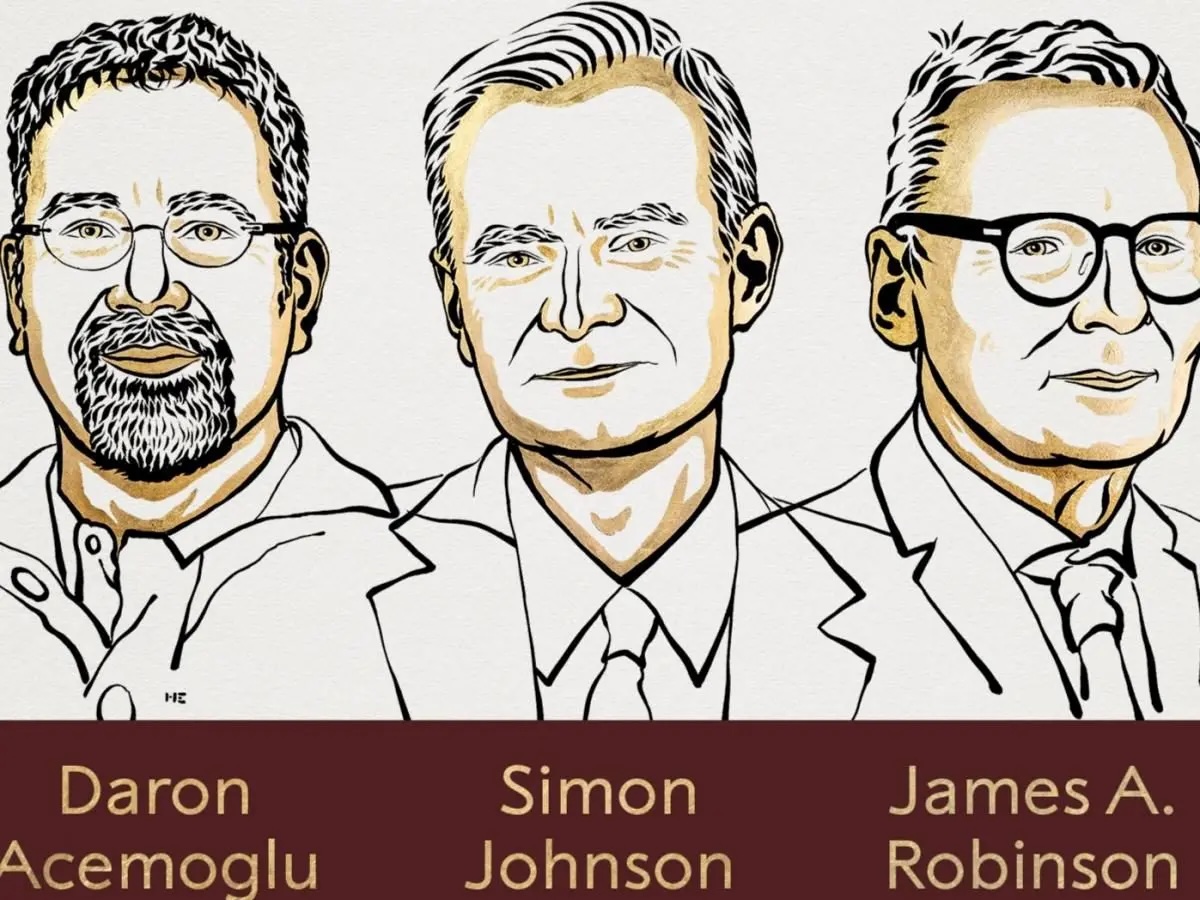
    Daron Acemoglu, Simon Johnson and James A Robinson have been awarded the Nobel (really the Riksbank prize) in economics “for studies of how institutions are formed and affect prosperity.” Daron Acemoglu is a professor at the Massachusetts Institute of Technology. Simon Johnson is a professor at the same university. And James Robinson is a professor at the University of Chicago.

    Here is what the Nobel judges say was the reason for winning:

    Today, the richest 20 percent of countries are around 30 times wealthier than the poorest 20 percent of countries. The income gaps across countries have been highly persistent over the past 75 years.39 The available data also show that between-country disparities in income have grown over the past 200 years. Why are the income differences across countries so large and so persistent?

    This year’s Laureates have pioneered a new approach to providing credible, quantitative answers to this crucial question for humanity. By empirically examining the impact and persistence of colonial strategies on subsequent economic development, they have identified historical roots for the extractive institutional environments that characterize many low-income countries. Their emphasis on using natural experiments and historical data has initiated a new research tradition that continues to help uncover the historical drivers of prosperity, or lack thereof.

    Their research centers on the idea that political institutions fundamentally shape the wealth of nations. But what shapes these institutions? By integrating existing political science theories on democratic reform into a game-theoretic framework, Acemoglu and Robinson developed a dynamic model in which the ruling elite make strategic decisions about political institutions—particularly whether to extend the electoral franchise—in response to periodic threats. This framework is now standard for analyzing political institutional reform and has significantly impacted the research literature. And evidence is mounting in support of one of the model’s core implications: more inclusive governments promote economic development.

    Over the years (or is it decades?) I have posted on the work of various Nobel winners in economics.

    What I have found is that, whatever the quality of the winner’s work, he or she (occasionally) usually got the prize for their worst piece of research, namely work that confirmed the mainstream view of the economic world, while not actually taking us further into understanding its contradictions.

    This conclusion I think applies to the latest winners. The work for which they received the $1m prize is for research that purports to show that those countries that achieve prosperity and end poverty are those that adopt ‘democracy’ (and by that is meant Western-style liberal democracy where people can speak out (mostly), can vote for officials every so often and expect the law to protect their lives and property (hopefully). Societies that are controlled by elites without any democratic accountability are ‘extractive’ of resources, do not respect property and value and so over time do not prosper. In a series of papers applying some empirical analysis (ie correlating democracy (as defined) with levels of prosperity), the Nobel winners claim to show this.

    Indeed, the Nobel winners argue that colonisation of the Global South in the 18th and 19thcenturies could be ‘inclusive’ and so turn the likes of North America into prosperous nations (forgetting the indigenous population) or ‘extractive’ and so keep countries in dire poverty (Africa). It all depends. Such is the theory.

    This sort of economics is what is called institutional, namely that it is not so much the blind forces of the market and capital accumulation that drives growth (and inequalities), but the decisions and structures set up by humans. Supporting this model, the winners assert that revolutions precede economic changes and not that economic changes (or the lack thereof before a new economic environment) precede revolutions.

    Two points follow from this. First, if growth and prosperity go hand in hand with ‘democracy’ and the likes of the Soviet Union, China, and Vietnam are considered to have elites that are ‘extractive’ or undemocratic, how do our Nobellists explain their undoubted economic performance? Apparently, it is explained by the fact they started out poor and had a lot of ‘catching up’ to do, but soon their extractive character will catch up with them and China’s hyper-growth will run out of steam. Perhaps now?

    Second, is it correct to say that revolutions or political reforms are necessary to set things on the path to prosperity? Well, there may be some truth in that: would Russia in the early 20thcentury be where it is today without the 1917 revolution or China be where it is in 2024 without the revolution of 1949? But our Nobellists do not present us with those examples: theirs are getting the vote in Britain in the 19th century or independence for the American colonies in the 1770s.

    But surely, the state of the economy, the way it functions, the investment and productivity of the workforce also have an effect? The emergence of capitalism and the industrial revolution in Britain preceded the move to universal suffrage. The English Civil War of the 1640s laid the political basis for the hegemony of the capitalist class in Britain, but it was the expansion of trade (including in slaves) and colonisation in the following century that took the economy forward.

    The irony of this award is that the best work of Acemoglu and Johnson has come much more recently than in the past works that the Nobel judges have focused on. Only last year, the authors published Power and Progress , where they pose the contradiction in modern economies between technology driving up the productivity of labour but also with the likelihood of increased inequality and poverty. Of course, their policy solutions do not touch on the question of a change in property relations, except to call for a greater balance between capital and labour.

    What you can say in favour of this year’s winners is that at least their research is about trying to understand the world and its development, instead of some arcane theorem of equilibrium in markets that many past winners have been honoured for. It’s just that their theory of ‘catching up’ is vague (or ‘contingent’ as they put it) and unconvincing.

    I think we have a much better and more convincing explanation of the processes of catching up (or not) from the recent book by Brazilian Marxist economists Adalmir Antonio Marquetti, Alessandro Miebach and Henrique Morrone who have produced an important and insightful book on global capitalist development, with an innovative new way of measuring the progress for the majority of humanity in the so-called Global South in ‘catching up’ on living standards with the ‘Global North’. This book deals with all the things that the Nobel winners ignore: productivity, capital accumulation, unequal exchange, exploitation—as well as the key institutional factor of who controls the surplus.
     

  • Divided World: The UN Condemnation of Russia is endorsed by Countries run by the richest, oldest, Whitest people on Earth but only 41% of the World’s population

    Divided World: The UN Condemnation of Russia is endorsed by Countries run by the richest, oldest, Whitest people on Earth but only 41% of the World’s population

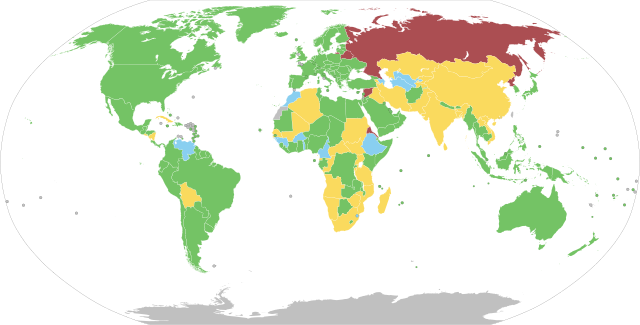
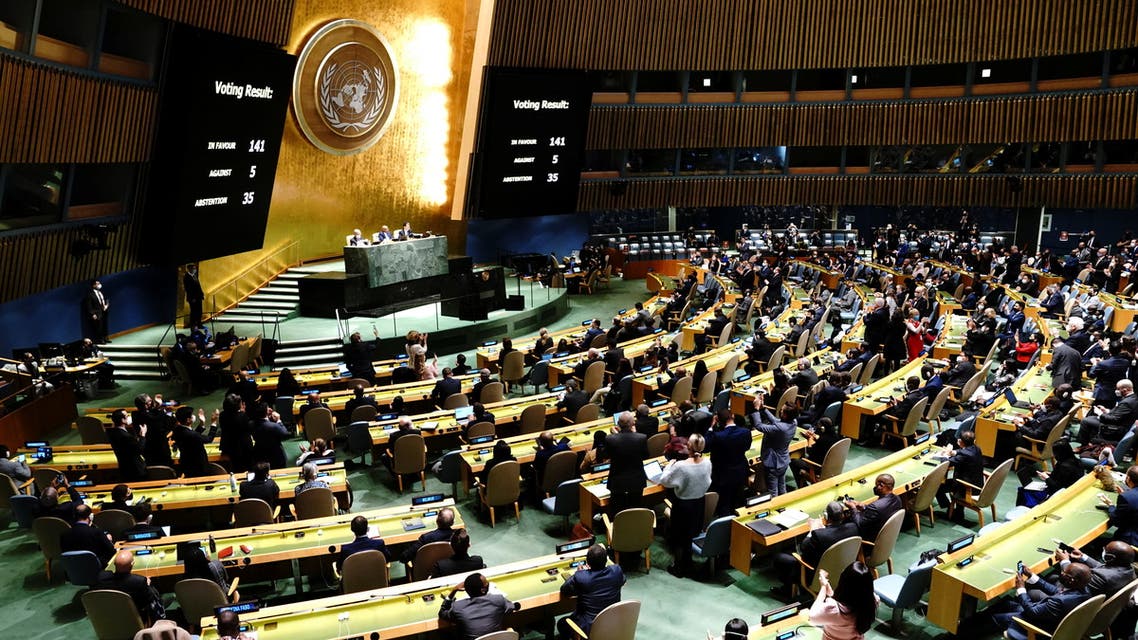
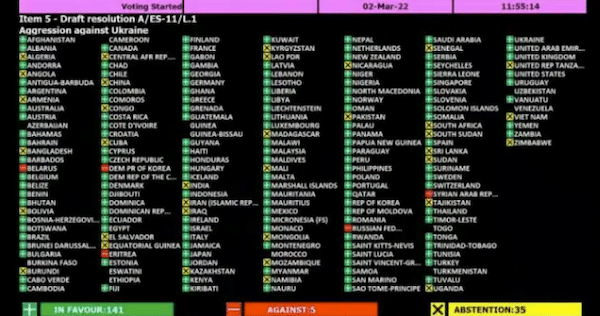
    On March 2 of this year the UN General Assembly met in an Emergency Session to pass a non-binding resolution condemning Russia’s February 24 intervention in Ukraine.1 141 countries voted for the resolution, 5 voted against, 35 abstained, and 12 did not vote. (Reported: Guardian, Al Jazeera, iNews)

    although the war is nominally a conflict between two developed and ethnically white nations, Russia and Ukraine, this UN vote suggests the war may be viewed by much of the world as a fight over the global political and economic system that institutionalizes the imperial hierarchy, the distribution of nations between rich and poor, and global white supremacy


    In the absence of any reliable opinion poll of the world’s 7.9 billion people, this vote may indicate that the majority of humanity sympathizes with Russia in Ukraine. The statistics presented below show that only 41% of the world’s people live in countries that joined the U.S. in voting for the UN resolution.

    This lopsided vote is even more striking if you consider the demographics. Populations represented by governments that did not vote for the resolution are much more likely to include the world’s poorest nations, nations with younger populations, “nations of color,” nations of the Global South, and nations in the periphery of the world economic system.

    To put it another way, although the war is nominally a conflict between two developed and ethnically white nations, Russia and Ukraine, this UN vote suggests the war may be viewed by much of the world as a fight over the global political and economic system that institutionalizes the imperial hierarchy, the distribution of nations between rich and poor, and global white supremacy.


    The UN vote by population

    41% or 34% amounts to a resounding, humiliating defeat for the U.S. on this non-binding UN resolution. Instead it is reported in the west as a U.S. victory and an “overwhelming” worldwide condemnation of Russia.

    Of the world’s 7,934,000,000 people, 59% live in countries that did not support the resolution and only 41% live in countries that did.2 But that last figure drops to 34% outside of the immediate belligerents and their allies: Ukraine, U.S., and NATO countries, and on the other side, Russia, Armenia, Belarus, Kazakhstan, Kyrgystan, and Tajikistan (all the countries of the Collective Security Treaty Organization).

    41% or 34% amounts to a resounding, humiliating defeat for the U.S. on this non-binding UN resolution. Instead it is reported in the west as a U.S. victory and an “overwhelming” worldwide condemnation of Russia.

    The UN vote and GDP per capita

    All the countries in the top third of the GDP per capita (nominal) rankings, including Japan and all the countries of Western Europe and North America, voted for the resolution, Venezuela being the only country in the top third that did not.

    Of the countries that did not vote for the resolution, most are ranked the poorest in the world, and almost none came above the approximate midpoint rank of 98. The exceptions were: Venezuela (58), Russia (68), Equatorial Guinea (73), Kazakhstan (75), China (76) Cuba (82), Turkmenistan (92), South Africa (95), Belarus (97).3

    The UN vote and the core/periphery divide

    Another way to show the wealth divide in the UN vote is by distinguishing core and peripheralcountries. In world-systems theory the surplus value of labor flows disproportionately to the core countries: “The countries of the world can be divided into two major world regions: the ‘core’ and the ‘periphery.’ The core includes major world powers and the countries that contain much of the wealth of the planet. The periphery has those countries that are not reaping the benefits of global wealth and globalization.” (Colin Stief, ThoughtCo.com, 1/21/20)

    The countries usually considered in the core are: Australia, Austria, Belgium, Canada, Denmark, Finland, France, Germany, Greece, Iceland, Ireland, Italy, Japan, Luxembourg, Netherlands, New Zealand, Norway, Portugal, Singapore, Spain, Sweden, Switzerland, United Kingdom, United States.

    The difference here is stark. Every single core country voted for the resolution and every country that did not is either in the periphery or in some cases, like Russia or China, in the semi-periphery.


    The UN vote and median age

    All the countries ranked in the top third of median age rankings, from Monaco (51.1 years) to Iceland (36.5 years), voted for the resolution, with the following exceptions: China (37.4), Russia (39.6), Belarus (40), Cuba (41.5).

    Of the twenty entries with the lowest median ages (15.4 to 18.9), only half voted for the resolution.

    The UN vote and “countries of color”

    Of the 7,934,000,000 people in the world, 1,136,160,000 live in what are usually recognized as “white countries” (consistently or not) with about 14% of the world’s population. Yet “white countries,” by population, represent about 30% of the total vote in favor of the resolution. This “white vote” accounts for every one of the core countries (except Singapore and Japan). Compare: 97% of the population in the countries that did not vote for the resolution live in “countries of color.” Only Russia, Belarus and Armenia (which did not vote for the resolution) have dominant populations classed as “white.”

    Therefore “white countries” are overrepresented in the group that voted for the resolution (30% vs. 14%), and underrepresented in the group that did not (3% vs. 14%).

    Before the intervention

    What follows is a brief sketch of events leading to the February 24 Russian intervention that prompted the UN resolution. It is a history seldom mentioned in the mainstream media, though it is easily found in selected alternative and now-suppressed media. It is presented here as a possible, partial explanation of why the UN resolution had so little support measured by population.

    U.S./NATO has directed aggression toward Russia for decades, advancing NATO forces ever closer to Russia’s western border, ringing Russia with military bases, placing nuclear weapons at ever closer range, and breaching and discarding treaties meant to lessen the likelihood of nuclear war. The U.S. even let it be known, through its planning documents and policy statements, that it considered Ukraine a battlefield on which Ukrainian and Russian lives might be sacrificed in order to destabilize, decapitate and eventually dismember Russia just as it did Yugoslavia. Russia has long pointed out the existential security threat it sees in Ukrainian territory, and it has made persistent, peaceful, yet fruitless efforts over decades to resolve the problem (See Monthly Review’s excellent editors’ note).

    Recent history includes the 2014 U.S.-orchestrated coup in Ukraine, followed by a war of the central government against those in the eastern regions of Donetsk and Lugansk resisting the coup government and its policies. Those policies include a ban on the Russian language, the native tongue of the region and a significant part of the country (ironically, including President Zelensky).

    By the end of 2021 the war had taken 14,000 lives, four-fifths of them members of the resistance or civilian Russian speakers targeted by the government. Through years of negotiations Russia tried and failed to keep the Donetsk and Lugansk regions inside a united Ukraine. After signing the Minsk agreements that would do just that, Ukraine, under tight U.S. control, refused to comply even with step one: to talk with the rebellion’s representatives.

    As to why the intervention happend now, Vyacheslav Tetekin, Central Committee member of Russia’s largest opposition party, the Communist Party of the Russian Federation, explains:

    Starting from December, 2021 Russia had been receiving information about NATO’s plans to deploy troops and missile bases in Ukraine. Simultaneously an onslaught on the Donetsk (DPR) and Lugansk People’s Republics (LPR) was being prepared. About a week before the start of Russia’s operation the plan was uncovered of an offensive that envisaged strikes by long-range artillery, multiple rocket launchers, combat aircraft, to be followed by an invasion of Ukrainian troops and Nazi battalions. It was planned to cut off Donbas from the border with Russia, encircle and besiege Donetsk, Lugansk and other cities and then carry out a sweeping “security cleanup” with imprisonment and killing of thousands of defenders of Donbas and their supporters. The plan was developed in cooperation with NATO. The invasion was scheduled to begin in early March. Russia’s action pre-empted Kiev and NATO, which enabled it to seize strategic initiative and effectively save thousands of lives in the two republics.

    All this may have informed the world’s overwhelming rejection of the U.S.-backed UN resolution condemning Russia, which western media perversely considers a U.S. victory simply because the resolution passed. Never mind that it passed in a voting system where Liechtenstein’s vote carries the same weight as China’s.

    The Global South also knows from bitter experience that unlike the West, neither Russia nor its close partner China habitually engage in bombings, invasions, destabilization campaigns, color revolutions, coups and assassinations against the countries and governments of the Global South. On the contrary, both countries have assisted the development and military defense of such countries, as in Syria, Venezuela, Nicaragua, Cuba, Iran and elsewhere.

    Conclusion

    Just as the imperial core of North America, Europe and Japan does not represent the world in their population numbers, demographics, wealth, or power, neither does the imperial core speak for the world on crucial issues of war, peace, justice, and international law. Indeed the Global South has already spoken to the Global North so many times, in so many ways, with patience, persistence and eloquence, to little avail. Since we in the North have not been able to hear the words, perhaps we can listen to the cry of the numbers.


    Notes:

    1. The resolution “Deplores in the strongest terms the aggression by the Russian Federation against Ukraine in violation of Article 2 (4) of the Charter.” (Article 2 (4) reads: “All Members shall refrain in their international relations from the threat or use of force against the territorial integrity or political independence of any state, or in any other manner inconsistent with the Purposes of the United Nations.”) The resolution also “[d]eplores the 21 February 2022 decision by the Russian Federation related to the status of certain areas of the Donetsk and Luhansk regions of Ukraine as a violation of the territorial integrity and sovereignty of Ukraine and inconsistent with the principles of the Charter.” Beyond Russia, the resolution “[d]eplores the involvement of Belarus in this unlawful use of force against Ukraine, and calls upon it to abide by its international obligations.”
    2. The population of countries voting for the UN resolution is 3,289,310,000. The population of countries voting against the resolution, abstaining, or not voting is 4,644,694,000 (Against: 202,209,000; abstaining: 4,140,546,000; not voting: 301,939,000).
    3. Here are the countries that did not vote for the resolution, with their GDP per capita rankings (the higher the GDP the higher the rank). 5 countries voted against the resolution: Russia 68, Belarus 97, North Korea 154, Eritrea 178, Syria 147. 35 countries abstained: Algeria 119, Angola 128, Armenia 115, Bangladesh 155, Bolivia 126, Burundi 197, Central African Republic 193, China 76, Congo 143, Cuba 82, El Salvador 121, Equatorial Guinea 73, India 150, Iran 105, Iraq 103, Kazakhstan 75, Kyrgyzstan 166, Laos 140, Madagascar 190, Mali 174, Mongolia 118, Mozambique 192, Namibia 102, Nicaragua 148, Pakistan 162, Senegal 160, South Africa 95, South Sudan 168, Sri Lanka 120, Sudan 171, Tajikistan 177, Tanzania 169, Uganda 187, Vietnam 138, Zimbabwe 144. 12 countries did not vote: Azerbaijan 110, Burkina Faso 184, Cameroon 158, Eswatini 117, Ethiopia 170, Guinea 175, Guinea-Bissau 179, Morocco 130, Togo 185, Turkmenistan 92, Uzbekistan 159, Venezuela 58.


    This article was published earlier in MRonline and is republished under the Creative Commons License 4.0.

    Feature Image Credit: Alarabianews.

    Map and Table: Wikipedia