Tag: MGNREGA

  • Right to Work: Feasible and Indispensable for India to be a Truly Civilized and Democratic Nation

    Right to Work: Feasible and Indispensable for India to be a Truly Civilized and Democratic Nation

    Executive Summary of
    Report of People’s Commission on Employment and Unemployment
    Set up by Desh Bachao Abhiyan

    Introduction

    When society faces a problem and is unable to resolve it, it implies that something basic is wrong. One needs to look for its basic causes to solve the problem. The causes may lie in the system that has evolved over time and which conditions the dominant social and political thinking in society. The onus of finding the solution and rectifying the problem is on the rulers. Their failure to do so over time implies a lack of motivation/commitment to solve the problem.

    All this applies to the issue of employment generation and unemployment in India which has been growing over time and affects the vast majority of the citizens.

    The Basic Issue

    Gandhi said that India is the only country capable of giving a civilizational alternative. The time has come to take this seriously since unemployment has become a critical issue that needs to be urgently tackled. The issue is multi-dimensional since it is a result of multiple causes and has widespread implications. It impacts the growth of the economy, inequality, poverty, etc. It has a gender dimension and impacts the marginalized sections adversely reflecting a lack of social justice. It is entrenched among the youth. The more educated they are greater the unemployment they face. Consequently, it has political and social implications, like, social relations.

    The rapidly growing incomes of the top 1% in the income ladder indicate that the economy has the resources but they are mal-distributed. The rich at the top has created a system that enables them to capture most of the gains from development with little trickling down to the rest.

    This Report presents a framework that spells out the causes, consequences, and possible remedies. Further, it looks at the historical process underlying the evolution of policies so as to understand how they can be changed.

    If any form of distortion persists over a long period, as unemployment in India, its origins lie in society’s perceptions and priorities. In India, these can be traced to the adoption of state capitalism and persisting feudal tendencies of the elite policy makers who in their own self-interest adopted a trickle-down model of development.

    Further, Capitalism has globally taken the form of marketization which promotes `profit maximisation’. But is it then legitimate to keep workers unemployed? It implies loss of output and therefore reduces the size of the economy which leads to a lower level of profits. So, by the logic of individual rationality, the system should create productive employment for all.

    The market’s notion of `efficiency’ is status quoist since it seeks to perpetuate the historical injustice in society. `Consumer sovereignty’ implies that individuals should be left free to do whatever they wish. The collectivity should not intervene in their choices no matter how socially detrimental they may be. It promotes the notion that if I have the money I can do what I like. The ratio of incomes is 10,000 times and more between the big businessmen and the poor workers. The market sees nothing wrong in this; in fact, society has come to celebrate it.

    Marketization is determining society’s choices through its principles penetrating all aspects of society. One of these principles is the `dollar vote’. The policy makers accept it and prioritize the choices of the well-off over those of the marginalized. The well-off dictate the social judgments of policy makers. Consequently, not only equality is not on the agenda even equity is not.

    With marketization stripping off the social aspect of life, individuals become automatons. Their individual distress and situation in life are no one’s or society’s concern. Unemployment becomes just a switching off of a machine. No social concern need to be attached to it. In fact, capitalists welcome unemployment as an efficient’ device to discipline labour and neo-classical economics considers it as natural. Inflation further weakens large numbers of workers as they lose purchasing power.

    In essence, whether or not society should aim to give productive employment to all reflects its view of individuals. Society needs to choose what is more important – profits or the welfare of the marginalized majority. The Gandhian view, largely rejected by the Indian elite, was `last person first’ which defined what the priority should be.

    [powerkit_button size=”lg” style=”info” block=”true” url=”https://admin.thepeninsula.org.in/wp-content/uploads/2022/10/PCAU-Executive-Summary-of-Report-1.pdf” target=”_blank” nofollow=”false”]
    Read the Full Executive Summary
    [/powerkit_button]

    Disclaimer:

    The views represented herein are those of the author and do not necessarily reflect the views of The Peninsula Foundation, its staff, or its trustees.

    The report’s executive summary is republished with the permission of the author.

    Feature Image:

    Economic and Political Weekly

  • Rural Agriculture and the new wave of Migrant Workers to Rural Space

    Rural Agriculture and the new wave of Migrant Workers to Rural Space

    Abstract

    Home, belongingness, and identity bring comfort to human existence, but local communities are challenged and become highly volatile by the sudden influx of people from different regions in search of livelihood and survival. Some migrate in their quest to find new opportunities in education, employment, and better living conditions from their home state, but some are displaced due to loss of livelihood, low employment, and lack of safety. This article analyses internal migration toward Tamil Nadu. The migrant population in Tamil Nadu accounts for 18.85 lakh according to the 2011 census, whereas other state migrants account for only 6.2% (Radhakrishnan & Vasanth, 2019). Most migration in the past has been towards the cities for chances of better livelihood and stable jobs. However, migrant workers travelling towards rural areas have been increasingly found working as agricultural labourers. S. Irudaya Rajan, a professor at the Centre for Developmental studies in his work, points out the importance of migrants to this economy as there is a constant outflow of the young population, with reservation wages in this region being high (Radhakrishnan & Vasanth, 2019). A report by the Federation of Tamil Nadu Agricultural Association suggests that over 8,67,582 farmers have stopped agricultural practices, and the market has been taken over by private players who require agricultural labourers (Sreemathi, 2019). This demand can attract migrant workers to rural areas. This article examines the migration pattern in Tamil Nadu to understand the inflow and outflow population, the reasons behind the outflow of farmers from the system and the new wave of migrant workers to rural Tamil Nadu.    

    Introduction

    Millions of people move every year hoping for a better livelihood and future, but the reality may be bitter for some. Nine million people have been migrating annually between states as per the Railway’s data from 2011 to 2016. Around 30% of the Indian population represents the varied level of the migrant population (Migration, 2022). Various factors have contributed to migration. The pull factors which attract people towards the destination include better living conditions, better employment, quality education, absence of violence and high wage rates. The push factors, on the other hand, include the lack of welfare activity, discrimination towards a community, lack of employment and lower wage rates. In both instances, economic ambition occupies the centre space. Thus, it is crucial to form a developmental economy for the residing population and the migrating one. The pull factors usually replace the push factors when the socio-economic condition in the country facilitates good life. People have been moving towards cities, hoping to find better employment and livelihood in the globalised world, making cities the hub for development. In Tamil Nadu, the movement toward the city area was triggered by early industrialisation in the 1980s, when manufacturing capacity accounted for around 26% of its GDP, higher than the national average of 15% (Mahambare & Dhanaraj, 2021). The 1990s liberalisation policy created mobility and development by expanding the economic horizons to telecom, software and banking (Migration to Chennai, 2010). This socio-economic mobility has greatly impacted the state’s rural economy and continues to be one of the few contributors to migration from agriculture. In recent times, farmers are selling out their lands and changing their occupations or working as agricultural labourers. The agricultural sector requires a considerable labour population. This demand for labour forces along with the lockdown during the Covid pandemic has fuelled a new wave of migrant workers in rural areas in south India. However, it is essential to study the causes of the movement of the traditional population from the industry, which helps understand the patterns that need to be avoided.

    Migration out of Agriculture

    Agriculture has long been a community practice in Tamil societies, but the migration of farmers continues to challenge the status quo. A report by the Federation of Tamil Nadu Agricultural Association mentions that over 8,67,582 farmers have stopped agricultural practices (Sreemathi, 2019). Lower wage rates, discrimination, heavy workload, lack of welfare and crop failure are the main reasons for displacement. Since the agricultural sector is seasonal, the wages are decided by workdays, seasons, and piece/ quantity rate, which leads to an unsteady wage rate based on the season, with fewer or no jobs in some seasons. People, thus, prefer to work non-farm jobs for a steady income throughout the year. Some have been living as labourers for generations on the farm since only a handful of the population possess larger farmlands. A study by Sato Keiko (2011) traces this class difference, farmland size, and the employment status of migrants from a rural village in Madurai. He points out that the village’s upper-class children with larger farms migrated to the city and acquired white-collar jobs. The middle class and the marginal groups, on the other hand, usually landed in blue-collar jobs.  Interestingly, he notes that the aspiration to educate and climb the socio-economic ladder has recently been high among the latter (Keiko, 2011). This aspiration leads them to migrate to cities and take up factory jobs, which are comparatively better than being engaged as farm labourers. Educational aspiration attempts to shake the traditional class structure and disparity that exists with it. 

    Additionally, only 27.1% adolescent population and 24.18% of the youth population were involved as agricultural labourers in 2014 (Sivakumar, 2014). Another reason for the migration is crop failure induced by unpredictable heavy rainfall and drought. Farmers who cannot profit or make ends meet when the crop collapses, end up falling into debt.  

    More than 85% of people working in the state under MGNREGA are women, higher than the national average of 56% and 28% of the Dalit population (Ramakrishnan, 2017)

    The Mahatma Gandhi Rural Employment Guarantee Act (MGNREGA) Scheme has been argued to be one of the major reasons behind the declining numbers of farm labourers When the scheme started, it provided the rural population with a higher income of Rs. 100 compared to farm jobs which offered Rs. 40 a day (In Tamil Nadu labourers, 2010). MGNREGA acts as a precursor for the high wage rate in agriculture as it competes with the scheme to attract more people for work. In 2020, the wage rate for agriculture labourers had increased to Rs. 392, and the notified MGNREGA stood at Rs. 273, which was lower than the farm wage (Aditi, 2021). However, along with steady wages and less workload, MGNREGA has continued to be a source of economic empowerment for women. It enables pathways to formal financial institutions and personal saving habits – “I would be working like a bonded labourer again under any big landowning agriculturist, if there was no Mahatma Gandhi National Rural Employment Guarantee Scheme (MGNREGS)” (Ramakrishnan, 2017). These interviews collected by Ramakrishnan, senior journalist for The Hindu, shed light on the women’s attitude and discontent toward farm jobs. More than 85% of people working in the state under MGNREGA are women, higher than the national average of 56% and 28% of the Dalit population (Ramakrishnan, 2017). These marginal groups are frequently abused and sexually harassed by employers and landowners. In this regard, MGNREGA has provided them with a space to work with dignity. However, some experts like Vijayanand, former Secretary of the Union Minister of Panchayat Raj, opposed the arguments favouring MGNREGA arguing that the scheme did not provide jobs throughout the year and phased out the jobs in accordance with the lean season (Radhakrishnan, 2017). 

    Involvement of Migrants in Agriculture

    Tamil Nadu is a growing economy which renders a stay to 18.85 lakhs migrants, of which 6.2 % are from other states. The origin states of these migrant workers are Bihar, West Bengal, Odisha, Jharkhand, Chattishgarh and states of Northeast India. Some tribal communities migrated from areas with rich mineral resources like the Santal areas of West Bengal, MP and a few other areas in Jharkhand and Chattisgarh because of the prevalent mining practice and dam building. Also, tribal people were displaced because of the settlement of non-tribals in the region and deforestation. In some areas, low human development indicators have led to their displacement. Apart from these push factors, Tamil Nadu has a lot to offer in terms of its higher wage rates, better living conditions and political, religious and social freedom (Sami, Crossin, Jayapathy, Martin, et al., 2016). Once they migrate to Tamil Nadu through contractors, migrants are channelled to Chennai, Coimbatore, Tiruvallur, Tiruppur, Kancheepuram and Chengalpattu to work in manufacturing factories and construction sites. These migrants fill the state’s requirement for 3D jobs, as Dr Irudaya Rajan from the Tiruvananthapuram Centre for Developmental Studies mentioned (Radhakrishnan & Vasanth, 2019). These jobs are mostly dirty, demeaning and dangerous. Since the wage expectation of the state youth is high, the desperation to take up these jobs is low and job positions are thus occupied by migrant workers (Vasanth & Radhakrishnan, 2019).

    The Periodic Labour Force Survey (PLFS) data from 2018 to 2020 shows a sharp increase in employment in agriculture from 42.5 % in 2018 -19 to 45.6% in 2019-20 (CMIE, 2021)

    In the pre-Covid job market, population movement was constantly moving from rural villages to urban spaces in search of white and blue-collar jobs. However, Covid has shifted the employment market. The Periodic Labour Force Survey (PLFS) data from 2018 to 2020 shows a sharp increase in employment in agriculture from 42.5 % in 2018 -19 to 45.6% in 2019-20 (CMIE, 2021). Most people who changed jobs were formerly employed in construction and manufacturing. While the existing population migrates to cities in search of skilled labour, migrant workers find the farm jobs more appealing. Tamil Nadu provides an average salary of Rs. 392 per day for farm workers, which is higher than the national average of Rs. 348. Most states from which the migrants are displaced have far fewer wage rates; for instance, Jharkhand offered Rs. 258 in 2020 while the wage rate was Rs. 234 in Chhattisgarh (Directorate of Economics and Statistics, 2021). While their movement is unexpected, these migrant populations can contribute to the agricultural sector and rural development, but that cannot be done without good government policies. The GDP contribution of agriculture reduced from 55.3% in the 1950s to 21.8% in the 2000s (Gothoskar, 2021). Most government budgets have little concern for the agricultural economy. Thus, it is essential to implement policies for the existing agrarian population and the migrants. Also, there has been increasing distress caused by the growing movement of the migrants to farmland which continues to be heavily unorganised. Dr Irudaya Rajan, in his interviews, warns that this unexpected surplus labour availability in rural areas cannot accommodate everyone in the existing jobs, which may result in increased poverty and starvation (Nirupama, 2020).

    Furthermore, it backfires on the urban economy once industries open up completely and face a shortage of labour (Viswanathan, 2020). To know the current situation of migrant workers, state-level data collection is needed. Tamil Nadu collected the migrant database only once in 2015, following the fall of the Moulivakkam multistorey building. While Thangam Thennarasu, the Tamil Nadu Minister of Industries, mentioned collecting data on migrant workers in a press release, the agriculture sector was not mentioned (Kumar, 2021). Data collection is vital in formulating policies to accommodate the migrant workers in rural economies and avoid unexpected problems. 

    Measures to be taken

    Since the Agricultural sector offers seasonal employment, other sources of organised employment or schemes to assure livelihood during times of distress should be in place. While farming requires work like ploughing and harvesting, which is to be done all year-round, the revenue can be earned only in a particular season. If affected by climate calamities and crop failure, people are most likely to end up in debt. Hence, it is essential to employ migrants during the off-season and distress times in sustainable jobs. Most agricultural products are exported as raw materials or semi-processed to other countries, and therefore, the MSMEs in the rural areas can be focused on enhancing the exporting sector of agriculture.

    MOUS between states: The Tamil Nadu government has fewer memorandums of understanding (MOUs) on migrants, with focus mainly placed on Sri Lankan refugees. Thus, signing MOUs with the source state can improve the conditions of migrants and help governments to maintain a database of migrants (Sreelakshmi,2021). The databases can help in formulating policies.

    Welfare policies – Rashtriya Swasthya Bima Yojana (RSBY), a central-run health insurance scheme for people working in the unorganised sector and for those below the poverty line, has to be implemented appropriately, and the records should be maintained. Quality schooling for children of migrants working in rural spaces should be provided. Some states have offered regional language subject notebooks and learning kits through MOUs. Tamil Nadu should recruit staff in the favoured language. Further, skill enhancement training for the migrants should be provided.

    Conclusion

    Agriculture and rural development go hand in hand since 70% of rural households depend upon agriculture for their livelihood. Still, there is an increased pattern of traditional farmers moving out of the business and choosing other industries or being employed as agricultural labourers. This shift, accompanied by the Covid lockdown, has triggered an increased flow of migrant population back to farms as agricultural labourers. Unlike industries, the agricultural sector is unorganised and seasonal, making it highly vulnerable. Thus, it becomes essential to build a safety net for the traditional population and the migrants. These migrants, without proper policies and data entries, can be stranded; lacking identity, rights and political representation. Further, this sudden labour surplus cannot be accommodated immediately, creating a labour shortage in urban areas.  It is, thus, important to record migrant workers who return, the sector they are involved in, their security nets and most importantly, their availability in rural agriculture.

    Reference

    Aditi R. (2021, May 16). MGNREGA workers in Tamil Nadu allege underpayment and wage disparity. The times of India. Retrieved from https://timesofindia.indiatimes.com/city/chennai/mgnrega-workers-in-tamil-nadu-allege-underpayment-and-wage-disparity/articleshow/82673961.cms

    Dhanaraj Sowmya & Mahambare Vidya (2021, March 31). Tamil Nadu left Punjab, Bengal far behind. Here’s what it needs to do now. The Print. Retrieved from https://theprint.in/opinion/tamil-nadu-left-punjab-bengal-far-behind-heres-what-it-needs-to-do-now/631213/

    Directorate of Economics and Statistics. (2021). Agricultural wages India: 2019 – 20. Ministry of Agriculture & Farmers welfare. 

    Gothaskar Sujata. (2021, May 12). To Fully Understand the Migrant Worker Crisis, We Need a Larger Perspective. The Wire. Retrieved from https://thewire.in/rights/migrant-worker-crisis-larger-perspective-farm-land-industry

    In Tamil Nadu labourers choosing NREGA over farms. (2010, Nov 29). NDTV. Retrieved from https://www.ndtv.com/india-news/in-tamil-nadu-labourers-choosing-nrega-over-farms-440546

    Keiko Sato. (2011). Employment structure and Rural-Urban Migration in a Tamil Nadu Village: Focusing on difference by economic class. Southeast Asia Studies. Vol.49. Pg.22-51.

    Kumar Vijay. (2021, July 26). Tamil Nadu to create a databank of migrant workers. The Hindu. Retrieved from https://www.thehindu.com/news/national/tamil-nadu/databank-of-migrant-workers-soon-says-tamil-nadu-industries-minister/article35530808.ece

    Migration to Chennai follows industrial growth, but quality. (2010, April 13). The Times of India. Retrieved from https://timesofindia.indiatimes.com/city/chennai/migration-to-chennai-follows-industrial-growth-but-quality-of-life/articleshow/5798687.cms

    Radhakrishnan V & Vasanth B. A. (2019, September 08). Migrants in Tamil Nadu: case of much ado about nothing? The Hindu. Retrieved from https://www.thehindu.com/news/national/tamil-nadu/migrants-in-tamil-nadu-case-of-much-ado-about-nothing/article29364682.ece

    Ramakrishnan T. (2017, February 05). Job scheme, a mixed bag for rural labourers. The Hindu. Retrieved from https://www.thehindu.com/news/national/tamil-nadu/Job-scheme-a-mixed-bag-for-rural-labourers/article17197043.ece

    Sami Bernard. Crossin Sebastian, Jayapathy, Martin. P. O. (2016). A survey on Interstate migrants in Tamil Nadu. LISSTAR & Indian Social Institute. 

    Sivakumar B. (2014, November 02). Most of Tamil Nadu’s adolescents, youth live in rural areas, shows census. The times of India. Retrieved from https://timesofindia.indiatimes.com/city/chennai/most-of-tamil-nadus-adolescents-youth-live-in-rural-areas-shows-census/articleshow/45008956.cms

    Sreelakshmi Anjana. (2021, November 07). Distress Migration: A case study KBK districts in Odisha. The Peninsula Foundation. Retrieved from https://admin.thepeninsula.org.in/2021/11/07/distress-migration-a-case-study-of-kbk-districts-in-odisha/

    Sreemathi M. (2021, November 23). Migrants now enter agri fields in Nellai. The New Indian Express. Retrieved from https://www.newindianexpress.com/states/tamil-nadu/2021/nov/23/migrants-now-enter-agri-fields-in-nellai-2386930.html

    Viswanathan Nirupama. (2020, May 20). We have not factored in Tamil Nadu’s migrant workers in our realm of things: Expert. The new Indian Express. Retrieved from https://www.newindianexpress.com/states/tamil-nadu/2020/may/20/we-have-not-factored-in-tamil-nadus-migrant-workers-in-our-realm-of-things-expert-2145578.html

    Vyas Mahesh. (2021, August 09). Migration from factories to farms. Centre for Monitoring Indian Economy. Retrieved from https://www.cmie.com/kommon/bin/sr.php?kall=warticle&dt=20210809122441&msec=850

    Feature Image Credits: The News Minute
  • Is MGNREGA a Sustainable Employment Option for Migrants?

    Is MGNREGA a Sustainable Employment Option for Migrants?

    Covid-19 certainly has kindled a renewed focus on healthcare systems, sanitation, and most importantly, employment in the rural areas of the country. The pandemic has thrown light on the huge inadequacies and challenges of our healthcare structure that the government and the citizens had not foreseen. Millions of skilled and unskilled migrants moved across the country in droves to their hometowns in the absence of income and work and means to sustain their life. Around 30 Million (3 Crore) or 15-20% of the total urban workforce left for their hometowns, accounting for the largest ever reverse migration trend in the country, exclusive of intra-state migration. The World Bank in its report mentioned that a whopping number of 40 million internal migrants were harshly affected by the lockdown. Now that the country is just a few steps from opening up in full, concerns about workers moving back in search of work remain in the air. The Mahatma Gandhi National Rural Employment Guarantee Act (MGNREGA), which has a mixed track record in sustaining the livelihood of people in distress by providing guaranteed employment and considerate wages might be the only way out for the worst of the worst-affected. But, will the scheme be a viable and sustainable employment option for the days and years to come? This article aims to answer the question of efficiency, significance, and sustainability of MGNREGA in rural employment in the country.

    What is MGNREGA?

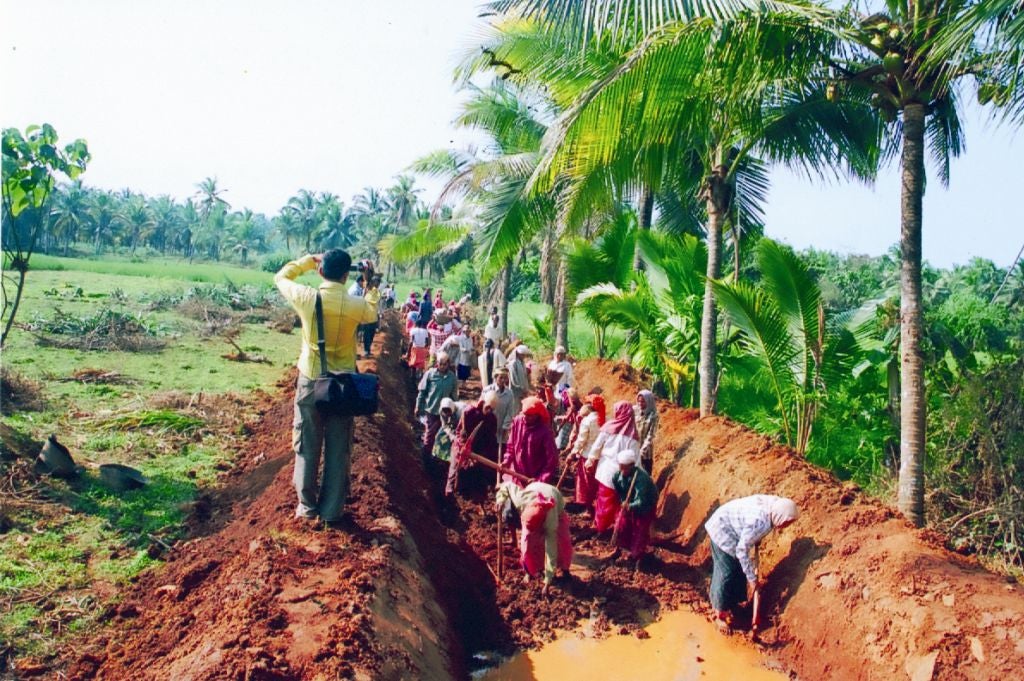
    MGNREGA, the world’s largest guarantee work programme, is the legitimised pioneer of the fundamental ‘Right to Work’. The scheme does that by providing a time-bound guarantee of work for 100 days a year, with considerate fixed wages. Workers under the scheme are assigned to agriculture and related capacity building projects thus ensuring sustainable development for all, as advocated by Gandhi. The scheme has reasonable success stories to its credit, all across the country. A study by Parida (2016) at Odisha proves that MGNREGA has played an important role in the agricultural off-season by providing work to the needy, the poor, and the socially marginalised communities. In various villages in Sikkim, families under MGNREGA were more self-reliant and less dependent on government programmes for a livelihood, according to the results of an evaluation conducted by the Tata Institute of Social Sciences (2017).

    The Ministry of Finance announced Rs. 40,000 crore fund allocation to MGNREGA on the onset of the fourth phase of lockdown in May, while under the Atmanirbhar Bharat Abhiyan, the government plans in creating jobs for 300 Crore persons, and the national average wages of workers also saw an increase from Rs. 182 per day per person to Rs. 202, with effect from April 1st, 2020. All of these might come off as a huge sigh of relief to the worst affected, but in many states, the scheme wage rates are lower than the minimum wages in the respective states. So, this increase in wages does not hold huge significance in reality.

    Unemployment and Work Allocation Concerns

    Reverse Migration Trends and Unemployment:      Unemployment has always been a perennial problem for a developing country like India, especially in times of crisis. The unemployment rate of the country reached an all-time high of close to 24% in April, while the rate of unemployment is expected to reach 8-8.5% in 2020-21, which may increase owing to the reverse migration trends. According to the Former Chief Statistician of India, rural unemployment is now a double-edged sword, given the impact of different migration trends. The reverse migration trends have altered the demand-supply dynamics in rural India significantly. Areas that previously had negative net migration rates are now expected to experience labour surplus, while the locations that may need workers might lack supply. The trends in reverse migration and its impact on local employment in states are visible, with Uttarakhand topping the charts in both the number of reverse migrants and the unemployment rate at around 22.3% as of September. The state is followed by Tripura at 17.4% and Bihar at 11.9%. Thus a strong correlation can be inferred between the amount of reverse migration and the unemployment rate in a given state.

    Putting together numbers of short-term and long-term vulnerable workers gives us a total of about 13 Crore (130 million) workers, who are deeply affected by the Covid-19 crisis.

    Another trend that is recognisable from literature is that migration is no longer a one-way street. Seasonal and circular migration continues to grow and take various forms (Conell et.al., 1976). Amongst these, vulnerable circular migrants are termed as the most distressed section of migrants, which include both Short-term seasonal and long-term occupationally vulnerable workers. Srivastava (2020) has estimated the number of 5.9 crore short-duration circular migrant workers in the year 2017-18. In the same study, vulnerable long-term circular migrants have been identified at 6.9 crores in the same period. Putting together numbers of short-term and long-term vulnerable workers gives us a total of about 13 Crore (130 million) workers, who are deeply affected by the Covid-19 crisis.

    Work Allocation Concerns:     Besides, The Taskforce for Eliminating Poverty constituted by Niti Aayog in the year 2015 (Occasional Paper,2016) has noted that most beneficiaries under the MGNREGS have been on an average get only 50 days of work. This shows that the scheme requires a better mechanism that recommends better targeting of the poorest of the poor and gets them guaranteed work for 100 days. Additionally, if 50-60% of the migrant workers in urban India (2018 above) return to their home destinations, then the scheme has to accommodate between 5.5 – 6.6 crore new workers, which will add 50 – 60% weight on people to be accommodated under the scheme. This exerts additional pressure on the already drying up state funds, which means catering to the huge number of migrants might not be economically sustainable for a long period.

    Wages and Work Efficiency under MGNREGA

    The wage rate in MGNREGA has been a huge concern for policymakers across India. While the recent increase in wages seemed quite positive at the onset, the wage hike is lesser than the minimum wage rate in certain states. Wage rates in the year 2019 seemed to be on the same trajectory, with the MGNREGA wage hike being lesser than the minimum wages in 33 states. Long payment delays also with meager wages add to the burden on workers under the scheme. Another important loophole in the scheme is the availability of work for such a huge number of workers seeking work under the scheme. In most cases, work is inadequate for such a huge number of workers. The standing committee report on rural development for the year 2012-13 also mentioned a significant decline in annual work completion rates (%). According to the report, work completion rates have taken a deep plunge consecutively in the years after 2011, with work completion rates of 20.25% for the year 2012, and 15.02% for the year ending 2013. Such dismal performances also throw light on the lack of productive allocation of work under the scheme. All of these certainly are results of the weakening of the act.

     CONCLUSION

     While MGNREGA fails in addressing a lot of important issues, COVID-19 certainly allows it to fit the dynamic changes in employment and work conditions. Making amendments to the act can be the only way out if the act needs to be sustainable in the long term. MGNREGA gives a rights-based framework to migrants seeking skilled and unskilled labour opportunities but lacks in giving enough benefits to the workers. Work under the scheme should be allocated efficiently, as per the project needs. While COVID-19 put a halt to a lot of existing projects, a lot of new projects are on the anvil. Catering to the needs arising on account of the pandemic including sanitation infrastructure building projects and infrastructure and rehabilitation projects can help the scheme diversify its project base, thus increasing employment opportunities to the migrants. Agriculture, the only positive contributor to the GDP of the country should be taken advantage of in the situation. A strong work evaluation setup should be made sure of, that would efficiently track work completion records thus giving opportunities for workers to complete the incomplete projects. This will yield benefits in both completion of a project and increased workdays and consequently increased wages for a worker.

    Cash-based transactions can be a game-changer in this scenario. Instead of reliance on Aadhar, the unbanked should be remunerated regularly by the means of cash.

    Need for Cash-Based Wage Transfer:      While cash crunch and plunging aggregate demand are looming over the country’s economy, MGNREGA can be used as a tool to put money in the hands of the needy. The propensity to consume of a rural worker is way higher than that of an urban employee. Cash-based transactions can be a game-changer in this scenario. Instead of reliance on Aadhar, the unbanked should be remunerated regularly by the means of cash. Bank and Post office ways of remunerating workers surely did have an impact on corruption, but irregular payments and lack of access to formal banking systems are a common testimony among the migrants. Reverse migration is also the beginning of people bringing themselves into the formal cycle of work, with their enrolment under MGNREGA. Tapping the untapped potential and better engagement and benefits to workers under the scheme will largely increase its base and efficiency. If states learn from their past mistakes and amend the working system of the act, then surely it may do wonders in rural employment in the country.

    Image Credit; The Quint

  • Need to Redefine MGNREGS: Response for a  post pandemic Economy

    Need to Redefine MGNREGS: Response for a post pandemic Economy

    The Union budget 2020 was heavily criticized for allocating only INR 60,000 crore on the UPA flagship program, Mahatma Gandhi National Rural Employment Guarantee Scheme (MGNREGA). Discontent continues even after the relief package mentioned INR 200 per person will be paid for the next three months. With 7.6 crore workers registered under MGNREGA program around one trillion (INR) would be required to fulfill the promise. The pandemic has disrupted almost every physical activity, thereby disrupting the physical labour economy. The unfolding crisis across the country and  the poor health infrastructure especially in rural areas poses a major challenge to combat the spread of the virus .  According to the National Health Report, India’s government hospitals average a low figure of one bed per 1844 patients.  The magnitude of the health crisis becomes apparent with the inadequacy in health infrastructure in rural India. The ongoing COVID-19 crisis is reshaping the entire global economy and is expected to be a stress test for government institutions. Even after the crisis, policy making and social programs will remain the key areas in which continuous revision must happen – to build a resilient economy in the long run. As the pandemic influenced financial crisis looms large, it is opportune to discuss public employment programs in bridging infrastructure gaps and financial losses. 

     Demand driven workfare programs intend to provide 100 days of employment for rural households. This scheme was launched with an objective to alleviate poverty and create public assets.   Recognising the vagaries of the agriculture sector to provide stable employment, the program sought to guarantee minimum income for subsistence level labourers and also internalized short term shocks in the rural economy. In principle, the ‘right to work’ element offered a legitimate progress in public-policy discourse by empowering women and marginalized communities to work. The laudable results of the employment program have more or less achieved its social objectives by increasing individual asset creation and enhancing savings rate. Almost 50 percent of the population dependent on agriculture fall back to government employment schemes in times of labour market failure. Low productivity, inadequate modern technology, high dependence on rainfall and bottlenecks to reach the market are primary sources of such failures. Execution of public employment in India is  plagued by rampant corruption and efforts to effectively implement the scheme faces hurdles and results in marginal progress. In the wake of economic slump with falling consumption in rural India and high unemployment rates, infusing cash in the hands of people is always the priority. However, marginal increase in budget allocation for public work programs has invited criticism from the economists – expecting the rural economy to struggle with slow recovery. With acute shortage of skilled labourers and an education system failing to impart quality skill education, a public employment program can be more dynamic in resolving the socio-economic and food security problems. The primary objective is to offset short term economic disturbance and smoothen consumption expenditure, but the development of the program in responding to the needs of the community is also important.  Successful implementation of an employment program must factor-in convergence with other departments, quality of assets created and skill levels imparted under the program. .The three-week lockdown due to covid-19, further extended by two weeks, has exposed the inadequacy of public health infrastructure, more so in rural areas and for informal labour groups, to address their health and the resulting financial hardship. Converging the needs of villages to enhance better response during a crisis with the employment program would result in bringing accountability and creating assets.

    India has experimented with a plethora of universal public programs such as Public Distribution System and Integrated Child Development Scheme (ICDS). In a similar vein, MGNREGS has been an important public work programme with the aim of reducing poverty and enhancing income levels. At this juncture, revising and reviewing MGNREGA scheme with the objective to reduce leakage in the system is a priority. A clear balance between the twin objective of providing employment and creating infrastructure has been missing in the literature. The gap between theoretical policy and reality has raised  concern and the need to review the current approach . The obvious gap in infrastructure requirements identified during the time of crisis must converge with public programs. Such carefully designed schemes with tangible objectives will provide economic security in the short run and improve rural infrastructure in the long run. 

    Work completion rate can be used as a proxy for productivity because individual labour productivity is hard to ascertain with heterogeneous work projects. Although the official MGNREGA website suggests an average of 90 percent of work completion, open government data shows a decline in work completion rate from 43.8 percent in 2008-09 to 28.4  percent in 2015-16. Financial support through employment should account for both quality of assets created and the process of such creation. This would internally check and balance the operation of the scheme and intuitively bring in accountability. At present, the scheme contains the above mentioned elements but has not been used to evaluate the execution of the program. Convergence between departments to create assets and the work completion rate might explain the effectiveness of a program in physical terms. 

    An efficient model should enhance the skill levels of rural youth and is more than necessary to counter the loss of jobs already happening due to coronavirus lockdown. Unskilled and semi-skilled labourers will face lay-offs as industries with the recent norm on social distancing adjust to capital intensive businesses. The percentage of rural population in the age group of 15-59 receiving vocational training has reduced from 1.6 percent in 2011 to 1.5 percent in 2015-16. Unemployment rate among rural youth (15 to 29) has increased from 5 percent in 2011 to 17.4 percent in 2017-18. Although the highest unemployment rate is observed among rural females, the employability of rural youth reduces as education increases. The paradox of educated unemployment is not complex to decode, but a significant skill gap is the fundamental problem from the labour supply side. The Expanded Public Works Program (EPWP) introduced in South Africa to address the skill gap among the youth has succeeded in reducing poverty and unemployment rates. The program has been designed to create labour intensive projects not limited to infrastructure but extends to social, cultural and economic activities. The percentage of young workers under this scheme witnessed a rise from 7.73 % in 2017-18 to 10.06 % in 2019-20 in reference to the low levels of employment. This would mean the nature of the guarantee program has shifted from giving opportunities for seasonal unemployed to educated unemployed. The change is indicative of the deeper crisis faced in the rural economy and calls for a sustainable plan to use public programs as a tool to also impart skill training for the rural youth. State’s increasing dependence on work programmes to create employment needs to be revised based on community requirements. While enhancing rural employment is the immediate concern, the process of achieving it suffers from various executive problems such as corruption among government staff and individual’s lack of willingness to work. Amidst the lockdown situation due to COVID-19, unemployment will increase sharply. A well-devised strategy to address economic losses on priority and emphasis on health infrastructure through public employment must resonate in policy-making after the impact of the coronavirus crisis subsides.