Tag: Marginal Farmer

  • Problems of Indian Agriculture: Low Incomes, Marginal Farmers , and lack of Modernisation

    Problems of Indian Agriculture: Low Incomes, Marginal Farmers , and lack of Modernisation

    Manjari Balu                                                                                                   August 23, 2019/Analysis

    Substantial fall in the number of farmers in the past decade with stagnant agriculture growth of 2.88 per cent corroborates the bleak condition of the Indian agriculture sector. The dire status of the agriculture assigns the state to either invest for agriculture (asset creation) or invest in agriculture (includes subsidized input). The ostensible manifestation for agriculture is visible during the union budget 2019 with falling public investment for agriculture even as budget expenditure rises. The number of cultivator has decreased by 7.5 per centfrom 2001 to 2011 but the number of labourers engaged in agriculture increased by 3.5 per cent for the same years. Contextualizing the movement of labourers with the ambitious plan of doubling the farmers’ income urges the need to investigate the income and wages which currently stands at INR 8931 per month. This figure includes both large landowners and marginal farmers   In the year 2018, waves of protests sparked off across the country, with disgruntled farmers demanding better support prices and waivers of loans. Fear mounted that frustrated farmers would jeopardise the electoral victory of the ruling party. In response, an annual cash transfer of INR 6000 to all marginal farmers was announced in the interim budget of 2019. The strategy paid off. Post-poll survey shows that around 68 per cent of Indian farmers were satisfied with the record of the BJP led government despite strong protests demonstrated earlier in the same year.

    Investments and Subsidies : Misplaced Priorities

    Marginal farmers account for 86 per cent of India’s total farmers. The government has proposed an allocation of INR 85,000 crore in the interim budget to directly support the small farmers and boost their income levels. The re-election of BJP to power is an approval from the agrarian society for idealistic pledges with an ultra-nationalistic manifesto.  But the party in power is resorting to increasing the quantum of spending on agriculture without addressing fundamental issues of the sector. Almost half of the population is engaged in agriculture and the sector accounts for nearly 17 per cent of total Gross Domestic Product (GDP). The 2019 budget has allotted INR 1,51,000 crores for agriculture and allied sectors; this constitutes a 75 per cent hike from the previous budget. Subsidies on fertilizers occupy a highly prominent position in the budget expenditure; INR 73,435 crores is budgeted for fertilizer subsidies for the year 2018-19. Fertilizer subsidy is increasing at an annual rate of 11.4 percent while the share of public investment in agriculture is a mere 0.4 percent of the total investment. The rationale behind large fertilizer subsidies is to reduce input cost and thereby increasing income margin of the farmers. However, a study conducted to assess the impact of different investment components on return on agriculture ranked subsidies below investment in Research & Development (R&D). The output elasticity of the States for expenditure varies from high-income states to low-income states. A state-wise subsidies plan has to be strategized to have a remunerative effect on the productivity and hence the income of the farmers.

                A disproportionate investment in subsidies might lead to short term rise in income but at the cost of long term productivity. The rising burden of liabilities to fertilizers companies is straining the government’s fiscal position. Comptroller Audit General India has criticized the recent budget for resorting to off-budget financing (to cover subsidies through bank loans) to reach the 3.3 per cent target of fiscal deficit. Such offset financing severely strains the government balance sheet and mounting liabilities would dent the future economy.

    Public investment in agriculture is much lower than private investment. In 2016-17, government spending on capital formation stood at only INR 45,981 crore while private spending was INR 2,19,371 crores. While overall public spending has been growing, the share of capital formation in the budget is relatively low.

    Agriculture Strategies in Indian and China: Difference is Technology and Modernisation

     An elementary comparison of India’s growth in agriculture with China highlights the divergent growth due to the different strategies adopted during their post-reformperiod. China focused on irrigation and invested in technology to attain efficiency in water management. The Total Factor Productivity (TFP) which measures the economic efficiency of inputs estimates China’s agriculture TFP to be growing at an average rate of 3.40 percent post the reforms. In contrast, India’s post reforms agriculture TFP stood at around 0.54 percent illustrating the deficiency in technology investment and excessive subsidies on credit, power and fertilizers. China’s indisputable focus was on rural spatial restructuringand land consolidation. Optimizing land-usepatterns and investing in rural regions to enhance productivity can be a transformative solution to address the problems created by industrialization. The remarkable success of China can also be attested to the stabilization of agricultural subsidies in the year 2009. Though input subsidies in 2004 were exponentially growing, the Chinese government conceded the inefficiency of resources allocated to the farmers.

    The principal justification behind institutionalising subsidies on credit, irrigation and fertilizers is to bolster marginal farmers in minimizing the difference between input costs and output prices. The input cost is primarily financed by short term agriculture credit; the short term crop loan has increased by 18 per cent from 2014 to 2018. Theoretically, a positive trend in the short term credit to farmers duplicates the function of subsidies to reduce the input cost. The dispensable expenditure on subsidies can be reduced if state prioritizes to streamline the credit flow to avoid leakages in the system. A fundamental task of the government is to channelize the gain from productivity and translate it to income and wages. Input cost reduction approach, in the long run, suffers from a potential threat of income being concentrated in the large land cultivators while labourers are discouraged to take up farm jobs.

    Income Wage paradox

    The average operational landholding reduced from 2.28 hectares in 1970-71 to 1.08 hectares in 2015-16 as a result of excessive land fragmentation with a swelling rural population. Farmers from India’s rural areas generate income majorly from cultivation and wages. Mahatma Gandhi National Rural Employment Guarantee Act is one such gambit to accelerate employment and incomes of the rural populace. Though the state intervention in the rural labour market has been acclaimed to the extent that it engages India’s unskilled labour force, the flaws of national workfare program are only too apparent with poor monitoring and supervision. A visible trend of farm labourers moving togovernment employment programs has contributed to the recent labour scarcity in agriculture. A shortfall of the labour force in labour-intensivecrops invariably inflates the wage even in the absence of skill augmentation and mechanization of agriculture. Rural workers are more attracted to employment programs as it offers fixed wages as opposed to volatile wage rates in agriculture.

    The union budget has provided an abstract roadmap to increase the income by hiking the Minimum Support Price (MSP) and reducing the input cost. Overall, the average daily wage rates of agriculture labourers in real terms are observed to be falling rapidly from 11.08 percent (derived from government data) in 2007-08 to 4.3 percent in 2018-19. The implication of government strategies to increase the farmers’ income and not that of the labour is based on the assumption that the profit is effectively channelized as wages. However, the discernible movement of the workforce from a labour-intensive agriculture sector to the service sector on account of surety implies the failure of State to stabilise income through agriculture. Indian agriculture has achieved only 40 percent of mechanization while the United States of America has 95 percent of farm mechanization. A transition to capital intensive production would justify a movement of labourers from the agriculture sector to the non-farmsector, but the majority of the farms being labour intensive faces low productivity due to the labour shift.  The disturbed labour market offers higher wages in agriculture but labourers choose to settle for the employment program due to less skill requirement and guarantee of a minimum wage. The farmers in need of labourers, work at a below optimal level with less productivity as it is hard to afford labourers at a higher wage. To untie the complex knot- dynamics of labourers and farmers, it needs to be thoroughly examined to achieve enhanced productivity through income. A mere cash transfer or subsidizing input cost would not guarantee higher income or efficient productivity in the long run.

    A quantitative study conducted to analyse income inequality in the agriculture sector concluded that there has been little change in the structural and distributional factors in the agricultural economy. The findings of the study stated that inequality in income is driven by the share of land ownership. The importance of examining income affected by land size is more relevant as the continuous land fragmentation gains logical attention with an income determined framework proposed by the government. Thus an important fact to be recognizedis that the marginal farmer households earn 9 percent of the total agriculture income while medium and large farmers earn 91 percent of the income. Evidence for growing income inequality based on the land size and land ownership implies the state expenditure has to be designed to redistribute the investment with a view to minimizing the disparity.

    Need for Effective Policy Alternatives

    There is a pressing need to consolidate land holdings and address the deteriorating quality of soil and incentivize farmers to specialize in production by cooperative farming. Self Help Groups is a success story for community-drivenentrepreneurship, a similar model can be experimented in agriculture, factoring the viability and feasibility. A revision of land reform policies to restructure the arable lands for achieving higher productivity needs to be factored in the entire spending formula. There should be a balance in capital and revenue expenditure for agriculture to avoid concentration of funds only on overheads. The state should facilitate a platform for a smooth transition from labour intensive to capital intensive agriculture from both sides. Incentivize farmers to own lands that can be mechanized and equip the residual labourers with skills to acquire jobs in the service and manufacturing sector. A prime target of improving productivity and maintaining the ecological balance has to be influenced to enhance the living standards of farmers.

    Three critical paradoxes that are driving Indian agriculture need to be studied in detail for  better fiscal and policy decisions. These are (i) problem of low productivity despite availability of abundant arable land with a tremendous history of agrarian community, (ii) Bulging population with increasing unemployment yet labour shortage in agriculture sector, and (iii) huge share of agriculture expenditure yet no substantial asset creation or returns on investment. Central government must assess the quality of natural resources and make initiatives for precision farming a priority component in respective states. A revision of labour wages based on productivity and employment programs have to be framed to engage workers in building agriculture infrastructure. The choice of viewing income as a means to achieve productivity or income as an end to beguile the voters during the election season lies with the government.

    Manjari Balu is a Research Analyst with The Peninsula Foundation.

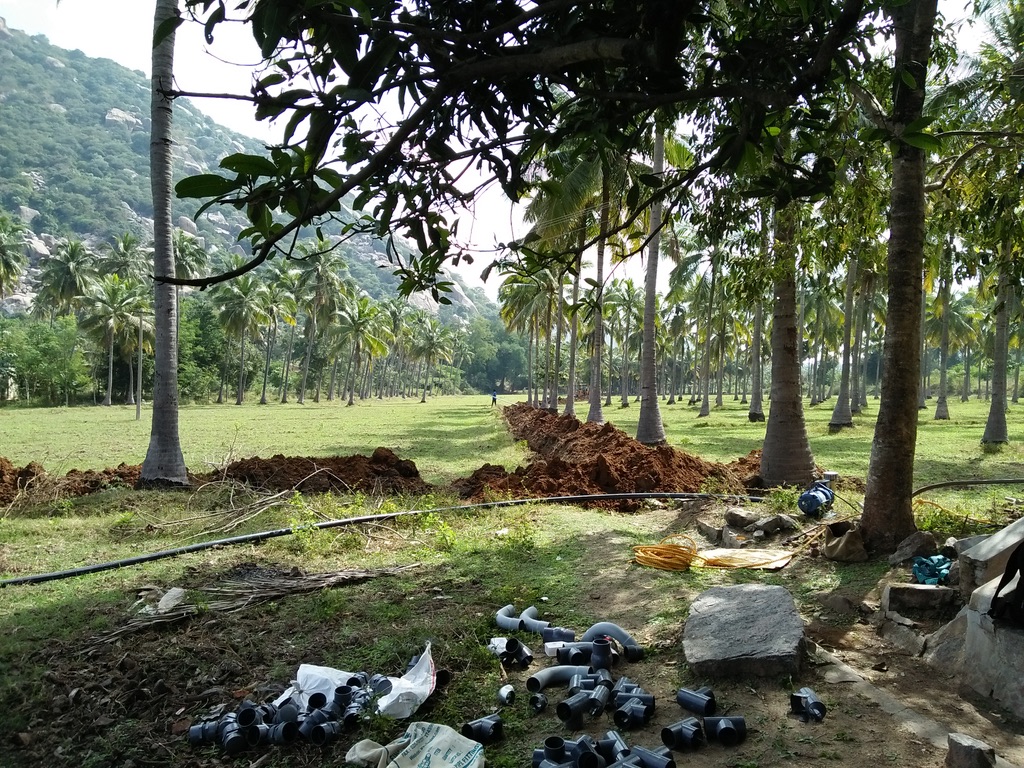
    Photo : Small Farm in Vellore Dt, Tamilnadu, India.  Credit: M Matheswaran
  • India’s Farm Distress: Priority and a Challenge for the New Government

    India’s Farm Distress: Priority and a Challenge for the New Government

    Manjari Balu                                                                                                         May 30, 2019/Analysis

    A deliberate campaigning strategy of the National Democratic Alliance (NDA) led by Prime Minister Narendra Modi has yielded an expected victory in the 2019 Lok Sabha election. The election season had sparked off many appealing promises; one of them pertains to, agriculture, the most critical sector of the Indian economy. The agriculture sector contributes to 12.2 % of the GDP (it has fallen from 17.6% in 2004-05 to 12.2% in 2016-17) for the year 2017-2018 and roughly employs 50 % of the total workforce. The agrarian structure continues to suffer while political parties competed on the delusory promises during the campaigns. NDA government with a special focus on agrarian society has branded its promise to double each marginal farmer’s income by 2022. A pedestrian cash transferscheme has been propelled during the interim budget to provide INR 6000 (per year) to all the marginal farmers who hold less than 2 hectares of land. A valid scepticism about the promise stems out of the fact that there exist an unavailability of data about the farmers’ income and all the political parties refuse to talk about the farmers’ current income. Cash transfer scheme being an attempt to mollify the accumulated antipathy among the public especially farming community has to be scrutinized and put under the radar for substantial discussion.

    Agriculture Distress and the Marginal Farmer

    According to last published NSSO figures for the years 2012-13, farmers’ income averaged out to INR 6,424. Extrapolating the past data to arrive at the 2018-19 income using Compound Annual Growth Rate (CAGR) to the nominal gross value added components of agriculture, cash transfer of 6000 would account for merely 6 % of the total farmers’ income. The Chief Economic Advisor claimed that the annual transfer to marginal farmers would be 17 %, an assertion backed with no clarification. The nebulous methodology to estimate income seems to question the effectiveness of such a policy instrument to address the perennial agricultural distress.

     The agrarian economy has been volatile over the past few years and the well-being of the farmers have always been the litmus test to review the performance of the sector. Around 87 % of the farmers are small and marginal farmers with less than 2 hectares of land holding, this figure seems to be swelling- indicating an objective failure of the land consolidation reforms in the past few years.

     There is a steady decline in the population engaged in agriculture to the total percentage of employment since the beginning of the independence. Displacement of agriculture labours to other sectors is inevitable if there is a gradual policy shift to mechanization of agriculture and capital formation, the eventual effect of the investment is ought to be reflected in the productivity. But between the years 2011 and 2015, agriculture workforce declined by 12.6 million, and the labour force increased by 14 million but total employmentin the economy increased only by 12 million. The incongruity in the figures proves the inability of the nonfarm sector to absorb residual workers out of work. Further, it is erroneous to premise the out of work farm labourers as an ultimate result of only innovation in agriculture. Status of unemployment has to be confessed and measures to provide employment has to be prioritized. It is apparent that the incumbent administration is resorting to the same banal and anodyne prescriptions that preceded it in its attempt to curry favour with the agricultural voter base, which had been promised employment during the 2014 election.

    The incessant crisis is evident from the past records of famers’ suicide data published by National Crime Records Bureau; however, the report faces severe criticisms for underreporting deaths. Though there are various socio psychological reasons for suicides, indebtedness has been considered the primary cause of death. A mere addition of cash transfer might marginally ameliorate farmers’ debts but heavy dependence on informal credit system requires the government to resolve the gaps in current credit system.

    Policy Challenge – Dealing with the Debt Problem

     The Debt Asset Ratio (DAR) indicates the quantum of indebtedness among farmers, since 1990 the ratio has increased at an astounding rate of 630 % in 2013. One commonly posited explanation for the skyrocketing DAR is the excessive informal borrowings by the farmers while the asset value remains stagnant. The perpetual ignorance by the government to address the structural issues over decades pushed the farmers to demonstrate a protest and subsequently resulted in the electoral setbacks of BJP post the protest.

    The apprehension is beyond agricultural and institutional policies, food inflation rates have fallen from 12.9 percent from 2013-14 to 0.13 percent in 2018. Even though the low inflation rates benefit the consumers in general- it would also imply the low food prices would be way below the input costs and return on private investment would be less if not non-existent. Government’s efforts have had little effect on keeping the inflation at a steady rate; the extreme movements of the inflation rates exacerbated the condition of the agrarian economy. The Government has announced to fix Minimum Support Price (MSP) at 50 % above the cost of production as per the recommendation of agricultural scientist Dr.Swaminathan. However, the recent protest placed a demand to change the method of arriving at the MSP figure. Pseudo free market behaviour from the government side has altered the market structure and mostly worked against the welfare of the marginal farmers. While the APMC (Agricultural Produce Marketing Committee) controls the MSP, the small farmers are expected to reach out to the market with a higher transaction cost and end up with much lower revenue. The state has failed to acknowledge the governance failure and continues to place MSP in an equivocal position in every budget. Cash transfers schemes have been placed in the budget with a similar ambiguity in terms of its impact on agricultural productivity and growth. There is a paucity of literature that provides a lucid explanation for execution of cash transfer. A recent study conducted in the rural parts of poor Indian states with 3,800 samples concluded that only 13% of the respondents preferred cash transfer over public health care facilities. Though it is not as same as providing cash transfer to farmers, similar schemes in the past have failed to create a sanguine impression and has made the beneficiaries dubious about such ambitious policies. The sample is also not a true representation of the agrarian community, sector which has been victimized for decades and would vote for short term benefits that risks stagnant productivity and falling workforce.

    The Paradox of Indian Agriculture

    Indian agriculture faces many challenges and is a paradox. India has the second largest area of 159 million hectares in the world as arable land, next only to the United States.  India is the second largest producer of Rice, Wheat, fruits and vegetables. India is the largest producer of bananas and mangoes. Export of agricultural products have ben growing at over 4% year on year. Despite all this there has been great volatility in agricultural economy over the last decade. Growth has been uneven, marginal farmers find farming becoming very uneconomical, and there has been significant decline in marginal farm holdings from 2.27 hectares in 2002 to 1.07 hectares in 2015. While big farmers have sustained themselves well, it is the marginal farmers who have continued to face increasing stress. While many encouraging policies and financial support schemes have been announced, in reality the implementation has been ineffective if not shoddy. Most planned investments and financial assistance have not reached the desired target populace.

     Investment in agriculture GDP has declined from 3.3 % in 1980-81 to 2.9 % in 2013-2014 while the subsidies on fertilizers has increased by 15 times in the same time frame after adjusting to inflation. Fertilizers subsidy accounts to 47 % of the total subsidy in the budget for the year 2017-2018 and amounts to almost Rs.70,000 crore.  Shenggen Fan and Ashok Gulati in their landmark studyto compare relative benefits of investments versus subsidies used a well-established statistical method ‘multi-equation system’. For every 10 lakh invested in agriculture pulled 328 people out of poverty and every one rupee spent on Research & Development increased the agriculture GDP by Rs11.20. The study also suggests that the inefficient input subsidies have actually been more counterproductive by hindering new investments and choking agriculture growth. Member of NITI Aayog and a renowned agronomist, Ramesh Chand had commented that research and development spend in India is not far behind China, a statement that calls for a reality check. For two decades India’s R&D spending as a percentage of GDP has been around 0.6 % while China spends around 2.1 % and Israel with the highest percentage if 4.2%. In absolute terms India invests 5 times lower than China and Israel. An effort on research & development is rather ostensible given less attention in the budget allocation.

    Conclusion : Need for Effective Policy Actions

     There is a conspicuous need for the government to assess the impact of cash transfer to farmers as a policy with various dimensions. The extent to which it can reconcile the distress in farming sector has to be scientifically proved to justify the quantum of investment for execution.  Heavily subsidized agriculture and loan waiver always helped with political victory but the fundamental crisis has been unceasing. Even an elementary study on trends in agriculture seems to highlight that it requires prompt moves and strong long term goals. Policies’ pertaining to agriculture has to be a parcel of broader strategies. Tactics of transferring cash with minimal sanction from experts reserves its place only as a political expediency.

    Marginal farmers and fragmented landholdings are the bottlenecks that prevent effective modernisation of Indian agriculture. The government will need to play a major role in evolving policies that create inclusive solutions to overcome the problems of marginal farmers. Agriculture in India continues to be in the grips of manual and subsistence farming without farm mechanisation or technological inputs. Average landholdings have shrunk from 2.28 hectares in 1970 to 1.08 hectare in 2015 (NABARD). Promoting cooperative farming will allow small and marginal farmers to take advantage of their family labour. Corporate farming, meanwhile, could allow economies of scale to kick in at lower thresholds.

    Yet again, hollow electioneering masquerades as policy with the advent of the great festival of democracy.  Now that the new government is in power, it is time that agriculture is given the due attention it deserves with a long-term strategy to resolve the problems of marginal farmers, fragmented land holdings, and the urgent need for rapid modernisation of agriculture and a national policy on water resources management.

    Manjari Balu is a Research Analyst at ‘The Peninsula Foundation”. She holds a degree in economics. Opinions expressed are the author’s own.

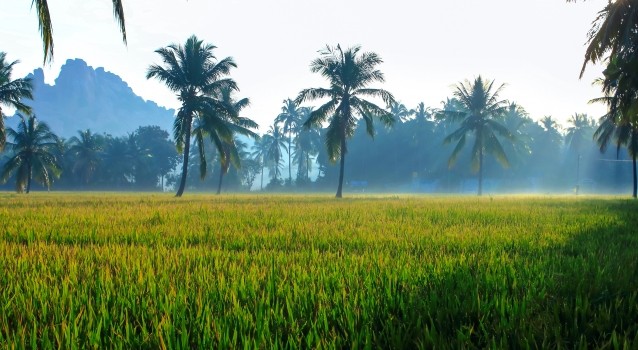
    Photo by Nandhu Kumar on Unsplash