Tag: Mao Zedong

  • Can a Muscular Response deter Chinese Aggression?

    Can a Muscular Response deter Chinese Aggression?

    The Sino-Indian War of 1962, which is seen as a humiliating defeat for India, continues to rankle all Indians. Clearly, it is seen as a result of poor leadership both at the political and military levels. In hindsight, many believe that the PLA could have been routed had India regrouped its Army and used the IAF in a massive counterattack. It was November, and with the onset of winter and the closing of the Himalayan passes, the PLA could have been demolished completely. That we didn’t even think of it shows the serious vacuum in strategic thinking. More than half a century later, and with the Indian military much stronger and battle-hardened, it is inexplicable why India’s leadership is shy of following an aggressive strategy, including the use of force proactively against China. Brigadier Deepak Sinha, a vetran and TPF’s Senior Fellow, raises this question while correlating the current situation with that of 1962.

    There is an urgent need for us all to shed our divisive politics, long-held dogmas and skewed perceptions, forget fanciful visions and face reality, especially when it comes to the question of national security. The last thing we need is for petty politics and fragile egos to control our nation’s destiny. Nothing can be more consequential, traumatic or shameful than being bested by a rival on the battlefield. The consequences of our “defeat” in the Sino-Indian Conflict of 1962 continue to rankle and haunt us to this day.

    Quite clearly, the fear psychosis that permeates our higher military and political leadership is palpable.

    Indeed, our reluctance, for fear of escalation, to launch a quid-pro-quo riposte and grab disputed territory elsewhere as a bargaining chip following the PLA’s blatant land grab of disputed territory in Eastern Ladakh is a clear indication of this. This was reinforced by an earlier interview with ANI by our Foreign Minister, who stated, “Look, they (China) are the bigger economy. What am I going to do? As a smaller economy, I am going to pick up a fight with the bigger economy? It is not a question of being reactionary, it’s a question of common sense….” Quite clearly, the fear psychosis that permeates our higher military and political leadership is palpable.

    On the other hand, the Chinese leadership has a very different perception of our capabilities as was reflected back in 1959 following the Longju incident. A declassified United States document of that time points out that “the late August clashes point to a mode of thought which has remained an ingredient in the Chinese leaders’ calculations on the border dispute: ‘When the Indians show a temperament to advance on the ground, we must alter their frame of mind by letting military action take over political caution. Besides, military risk itself is negligible because we are the stronger side.” Obviously, over the years, they have been given no reason to believe otherwise. In order to understand what ails us, it is worth briefly examining the course of the 1962 conflict to get a clearer idea of the extent of our loss at the hands of the Chinese. That should help us understand why, over fifty years later, we continue to remain so traumatised and fearful.
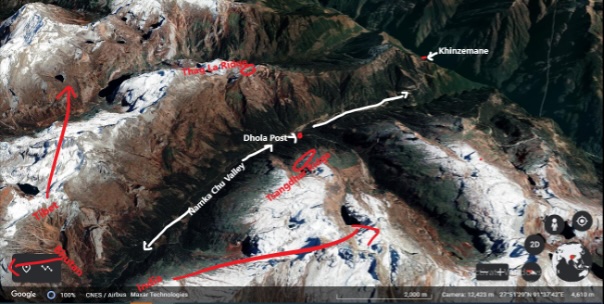
    The opening skirmish of that conflict occurred in the North East with the capture, on 8th Sept, of the isolated Assam Rifles post at Dhola, on the southern slopes of the Thag La ridgeline. This post was surrounded and completely dominated by PLA positions on higher ground, and its loss was a foregone conclusion. The actual conflict commenced at approximately 0500 hours on 20th October, when the PLA launched a massive infantry attack, supported by artillery, on the 7 Infantry Brigade positions. The Brigade was deployed in a tactically unsound manner on direct orders of GOC 4 Corps, Lt Gen B M Kaul, along the Southern banks of the Namka Chu River over a 20 Km frontage instead of on the heights overlooking the river.

    The battalions were deployed in platoon penny pockets, lacking mutual support, in temporary positions with no overhead cover. Artillery support was restricted to just one battery of Heavy Mortars and a troop of two field guns with limited ammunition. No intelligence was available to the Brigade Headquarters or any of the other higher headquarters as to PLA force levels or their intentions. The assault came as a surprise and just four hours later, by 0900 Hours, the Brigade ceased to exist as a fighting force. Within just another 96 Hours, the strategic border town of Tawang, approximately 100 Km in-depth, held by an understrength battalion, was attacked and captured without a fight.
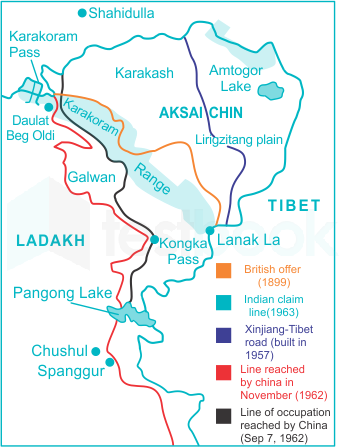
    Almost simultaneously in the Northern Theatre, isolated forward positions at Aksai Chin and the Pangong Tso area were also cleared after a brief skirmish. After an administrative pause of approximately a month, the PLA launched the next phase of its offensive with its assault on the Walong positions on 16th Nov and on the main defences of the 4 Infantry Division at Bomdi La, Se La and on the Division Headquarters at Dirang Dzong. Simultaneously, on 20th Nov, Chushul came under attack by an Infantry Divison. On 21st Nov the Chinese announced a unilateral ceasefire and subsequently withdrew to positions occupied by them prior to the commencement of the conflict.

    There are three main deductions that can be drawn from an examination of the facts. Firstly, that the conflict was, in essence, extremely limited in terms of time, space and force levels involved. From an army of 550,000 personnel, approximately 20,000 personnel were committed into this conflict, primarily due to our limited logistical capabilities. The conflict was primarily restricted to the tactical level only, at battalion level and below. While the conflict itself was spread over one month, the tactical engagements themselves lasted a few hours at best, and on one or two occasions where stiffer resistance was put up, extending to 48-72 Hours. Unfortunately, given the terrain, lack of field fortifications, etc, casualties suffered were relatively high, with approximately fifteen hundred killed, similar numbers wounded, two thousand missing and another 4000 taken prisoner. The Air Force, which could have played a critical role in blunting the PLA attacks and destroying their lines of communications, was deliberately confined to the logistics role for reasons that are still not clear, while the Navy remained a bystander.

    Sadly, our military and political leadership exhibited an utter lack of moral courage, determination and willpower by quietly acquiescing to the unilateral ceasefire, thereby kicking the main irritant of the demarcation of borders further up the road, where it has once again come to bite us on our posteriors.

    Secondly, far from being a major defeat, as has been commonly made out, it was at best a temporary reverse that could, and should, have been countered with the use of fresh troops under a more determined and professional leadership. More importantly, the PLA understood this fact and, therefore, undertook a unilateral withdrawal to its earlier pre-war line of defences. It must have been fully cognisant that if hostilities were to continue, it would find itself in an increasingly untenable position with its supply lines already badly stretched and being further impacted with the onset of winter. It would only have been a matter of time before the Indian Army got over its shock, regrouped and reorganised itself and launched a counter-offensive to recapture lost territory. Sadly, our military and political leadership exhibited an utter lack of moral courage, determination and willpower by quietly acquiescing to the unilateral ceasefire, thereby kicking the main irritant of the demarcation of borders further up the road, where it has once again come to bite us on our posteriors.

    Thirdly, what continues to remain totally inexplicable is the reasons why our military and political leadership continue to remain so traumatised and scared to this day. The truth is that the narrative that emanated following the reverses was set by officers and men belonging to units that, for the most part, had withdrawn before coming in contact with the PLA. They were low on morale and had come to believe the Chinese were supermen who could not be stopped by mere mortals. It was from amongst the experience and perception of these personnel that pamphlets on the tactics and capabilities of the PLA were subsequently formulated that continue to be relied on to this day, thereby giving further credence to that distorted narrative.

    The fact of the matter is that in any future conflict, the PLA will be fighting over 2000 Kms away from its home bases, supported along communication lines that run over some of the most difficult and inhospitable terrain in the world. They are also easily susceptible to interdiction, given the nature of the terrain. In addition, they would have to contend with a hostile and badly oppressed population not just within Tibet but in Xingjian as well, which could revolt if a suitable opportunity arose. This would require the PLA to deploy additional forces for rear area security to prevent disruption of the lines of communication.

    Moreover, while there are sizeable disparities in aspects such as force levels and capabilities, infrastructure development and economic strength, one needs to be cognizant of the fact that we have also made tremendous strides with regard to infrastructure development, logistics and offensive capabilities. Our forces still hold the edge vis-à-vis combat experience and operating in mountains, while the Air Force continues to hold the upper hand in the TAR purely on account of terrain profile and radius of action. Most importantly, the availability of two Mountain Strike Corps gives us immense flexibility, if properly utilized, to grab the initiative and force a decision dilemma on the PLA. In the circumstances, the reason for our extreme reluctance to stand up against the Chinese bully must lie elsewhere. One distinct possibility is that our political leadership lacks faith in the military leadership and its ability to fight and win.

    This will seem at odds with the fact that the military has a splendid history of having always successfully completing any task given to it. If anything, it has been grossly misused by the Central and State Governments to carry out tasks that are not in their ambit, whether these be organizing the Commonwealth Games or construction of railway over-bridges, because the concerned departments and agencies have been unable to produce the requisite results. Clearly, this mistrust, primarily in the sphere of civil-military relations, has more pernicious roots and is very deeply embedded in the politico-bureaucratic psyche.

     Interestingly, in the Official History of the 1962 Conflict with China, available in the public domain but yet to be published, the Chief Editor, Dr S N Prasad, concludes that the chief reason for our defeat was that the political establishment was unable to avoid war while it was in the process of transforming the military establishment. Given Prime Minister Nehru’s apprehensions about the military taking control, he wanted to change it from being, as Mr Prasad puts it, a “close-knit professional body, deliberately isolated from the citizen. Its predominant motive force remained esprit de corps and not identification with the people… Perhaps he wanted to model it after the People’s Liberation Army of China, more egalitarian, flexible, closer to the people………Such basic changes required a committed, or at least a pliant, band of army officers in key positions. So mediocre Thapar was selected instead of the doughty Thorat as Army Chief, and Bijji Kaul was made CGS……. “

      He further goes on to add that “To carry out this transformation of the national defence set up, a decade of peace was absolutely essential. For establishing indigenous weapons manufacture, money had to be found by cutting arms imports. The armed forces would be short of equipment and stores for several years till the new arms factories started producing. The officer cadre was a house divided within itself till the new breed fully took over. A period of transition was inevitable, during which the fighting machine would not be fully efficient and would be vulnerable………Therein seems to lie the basic cause of the debacle of 1962. India failed to avoid a war during the transition period. Lulled by faulty political assessment and wrong intelligence forecasts, the country got caught in a war when it was least prepared.

    With Mr Modi’s ascension to power, we came a full circle as he took it upon himself to steer it away from its apolitical and secular character towards a more ideologically compatible institution that would be in sync with his Party’s long-held vision of making India into a Hindu Rashtra.

    Fortuitously for the country, Nehru’s vision for a transformed military was stymied by the 1962 Conflict and the most important lesson that his successors assimilated quickly was to stay away from interfering in the internal affairs of the military as that could gravely damage internal cohesion and morale. With Mr Modi’s ascension to power, we came a full circle as he took it upon himself to steer it away from its apolitical and secular character towards a more ideologically compatible institution that would be in sync with his Party’s long-held vision of making India into a Hindu Rashtra.

    Towards this end Mr Modi has smartly used the concept of “deep selection” to ensure key senior appointments were filled by officers displaying an affinity for his government’s ideology, regardless of existing rules, seniority or merit. This, in turn, made them personally beholden to him, and he was thus able to use them to take ownership and deflect criticism from initiatives that were pushed through by his government regardless of their adverse impact on long-standing and cherished customs and traditions or on the operational capabilities of the Services. This has led to schisms within the institution, damaged the integrity and cohesion of the chain of command and cast a big question mark on the apolitical and secular character of the Services.

    In this context, a politically compromised Chief of Defence Staff and other senior officers shamefully endorsed the PMO, thrusting down the ill-conceived Agnipath Scheme on the military with not a single objection being raised. This scheme has all but destroyed the basic ethos of our fighting arms, ensuring that the deeply entrenched and effective Regimental System has been severed at the roots. Given their ignorance of matters military, they would have been ignorant of Winston Churchill’s wise advice that “Regiments are not like houses. They cannot be pulled down and altered structurally to suit the convenience of the occupier or the caprice of the owner. They are more like plants; they grow slowly if they are to grow strong…and if they are blighted or transplanted, they are apt to wither.”

    And wither they have, the resulting adverse impact on morale is not difficult to gauge. This is undoubtedly being further exacerbated by the considerable voids in manpower, with combat units reportedly functioning at less than 75% of their authorised strength, and truncated peace tenures to fill up operational voids in Eastern Ladakh, Manipur and Jammu & Kashmir. In addition, the government’s emphasis on the ‘Atman Nirbhar Abhiyan’ and ‘Make in India Scheme’ has resulted in deficiencies, even if temporary, in the holdings of weapons systems, ammunition and other warlike stores. Given all these factors, the military obviously finds itself in an extremely precarious situation, committed to its fullest capacity with limited options available. Ironically, a government that lays such a great emphasis on our Hindu origins, culture and history has managed to display a profound ignorance of statecraft and warfare, as brought out in Kautilya’s Arthashastra. In this classic, Chanakya points to the necessity for a strong army because, for all nation-states, there are only two states of being: either conquer or be conquered.

    …at the present time, we are once again confronted with an extremely turbulent geopolitical situation, with the world’s attention on the ongoing crises in Europe and the Middle East. The situation today, in many ways, is clearly reminiscent of the period on the eve of the 1962 Conflict. For reasons not very different from then, the Indian Military finds itself in a very similar situation as well.In these circumstances, the real question that we should be asking ourselves is not whether we can overcome our past traumas and face down the PLA, but more importantly, whether China will seize this opportunity to recalibrate the Sino-Indian relationship through the use of force.

    Interestingly, in 1962, China launched major operations against us at the end of the campaigning season, which could have been jeopardised by unseasonal snow. Obviously, this was because, at that time, the world’s attention was riveted to the Cuban Missile Crisis. Similarly, at the present time, we are once again confronted with an extremely turbulent geopolitical situation, with the world’s attention on the ongoing crises in Europe and the Middle East. In addition, the United States is deeply immersed in its own internal problems with presidential elections just around the corner and with little time for other matters.

    The situation today, in many ways, is clearly reminiscent of the period on the eve of the 1962 Conflict. Moreover, at that time, Chairman Mao was under intense pressure as his Great Leap Forward experiment had failed, and he had been removed from his appointment as State President. Today, President Xi also finds himself under similar pressure following his disastrous Zero Covid and hard-line economic policies that have tanked the economy. For reasons not very different from then, the Indian Military finds itself in a very similar situation as well.

    Undoubtedly, the political leadership and the military top brass must be fully cognizant of this state of affairs. Clearly, they are in no position to stare down the PLA. What makes matters worse is that following the General Elections, Mr. Modi’s authority and standing have been greatly diminished. Where does this leave those senior officers who have progressed by hanging on to his ideological coat-tails? Has the authority and credibility of the CDS, an out-and-out political appointee and loyalist, been affected within the Chiefs of Staff Committee of which he is the Chairman? What will be its impact on the move towards the establishment of theatre commands? In these circumstances, the real question that we should be asking ourselves is not whether we can overcome our past traumas and face down the PLA, but more importantly, whether China will seize this opportunity to recalibrate the Sino-Indian relationship through the use of force.


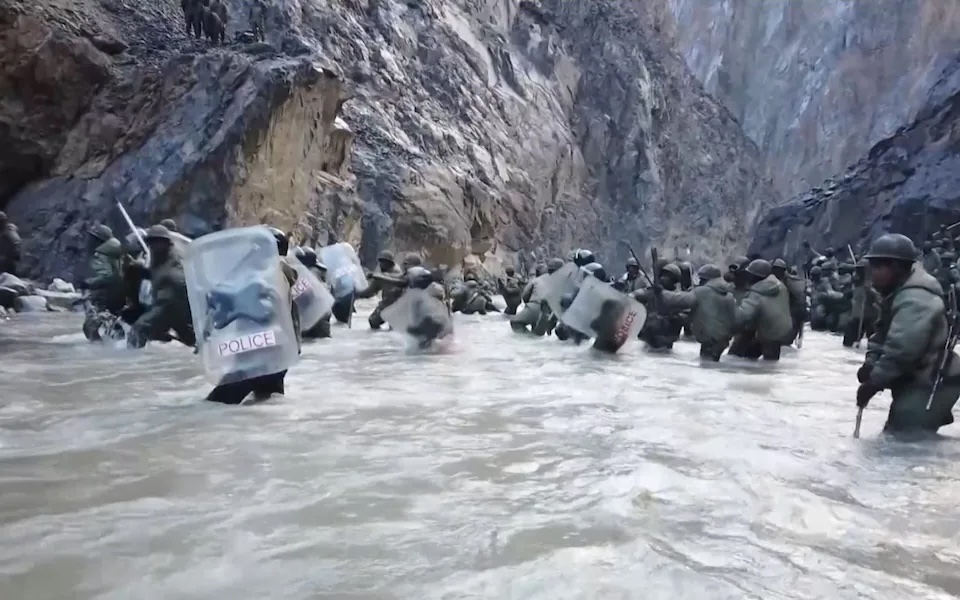
    Feature Image Credit: Border Clashes between India and China ‘regularly covered up’  The Telegraph

    Namka Chu and Dhola Post Picture credit: www.indiasentinels.com
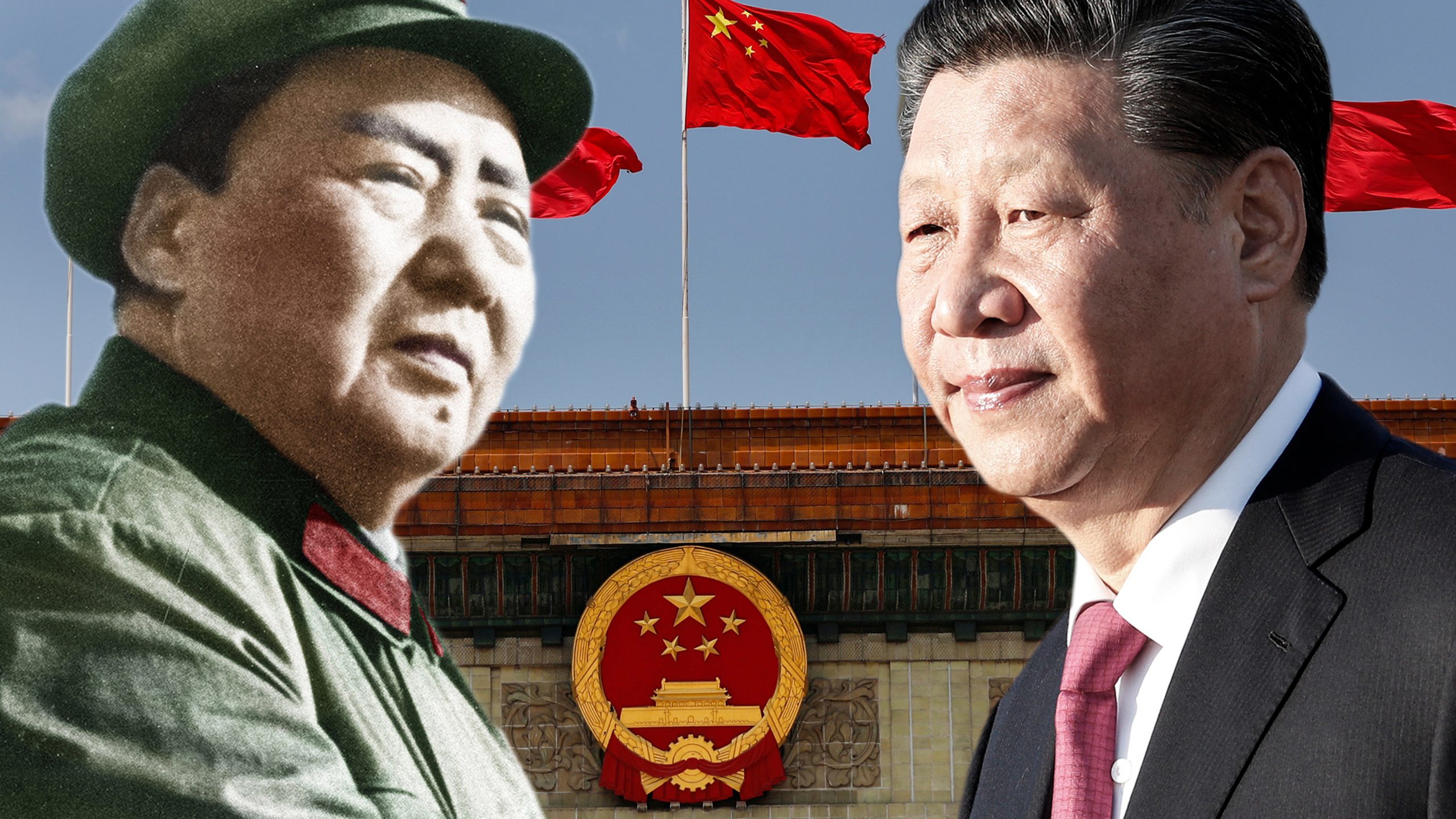
  • Xi is Not Mao

    Xi is Not Mao

    The ongoing conflicts and crises across the world, be it in Ukraine or in the South China Sea, reflect a serious flaw in the current international order and in the politics of relations amongst nations. The singular focus on the demonisation of leaders, aided by perception management through devious media control, reflects a significant danger to global safety and stability. The current hyper noise in US-China relations is driven by hyperbole about Xi and other leaders. It is time to take a step back and review the information holocaust.

    Rebecca E Karl’s perceptive article highlights the vagaries of flawed picture portrayals of China and Xi that can be very far from the truth. This article was published earlier in Dissent Magazine.

    – Editorial Team

    Mao and Xi’s historical projects couldn’t be more different, and it is high time to move beyond the bad history that conflates them.

    Commentary on China these days often presents lazy thinking that leads to some ridiculous historical statements. That President Xi Jinping is a would-be Mao Zedong or that China is facing a “new Cultural Revolution” are examples of this laziness. In a charitable light, such assertions stem from a broad misunderstanding of the logics of contemporary China and its role in the world today. In a less charitable light, they are driven by ideological fealty to some of the most outdated and frankly racist aspects of Cold War Western anti-communism. My premise in the following comments: China today is not Maoist, and Xi is not Mao redux. China today is also not communist in any genuine sense of that term, even though the Communist Party presides over the country with an increasingly iron grip.

    The difference between Mao and now could not be starker. Mao’s twentieth-century anti-capitalist and anti-feudal revolution in politics and culture sought to transform China’s domestic social relations by mobilizing masses of people against the systems of domination that constrained their everyday lives. He sought to demonstrate to the non-capitalist world the superiority of socialism as a mode of material and cultural production. Those experiments must be judged a failure on both counts. Xi’s twenty-first-century goal, by contrast, is to release economic forces from the burden of sustaining socialist relations in order to build China’s global wealth and power. To that end, he has pursued domestic stability and has repressed potentially insurgent political, social, and cultural impulses along with challenges from internal peripheries—all while enhancing the power and privileges of the Communist Party itself. To date, his efforts to redefine and defend capitalist logics in China seem to have found success.

    China today is not Maoist, and Xi is not Mao redux. China today is also not communist in any genuine sense of that term, even though the Communist Party presides over the country with an increasingly iron grip.

    Mao and Xi’s historical projects couldn’t be more different, and it is high time to move beyond the bad history that conflates them. We need to grapple with how the past several decades of social and political realignment, not just in China but around the world, are leading to a global future not yet foretold.

    The “new Cold War” rhetoric that permeates public discourse these days is dangerous, to be sure, yet it appeals to a version of the world that is long gone. Socialism has disappeared, and capitalism has prevailed. The fundamental antagonism between these two irreconcilable social and ideological systems—the antagonism that informed a struggle between two different cultural imaginings of the future—has not existed since at least the mid-1990s, when the post-1989 Chinese capitalist order came into full view and took material and ideological root in China and the world. (And, as anyone in Asia or Africa knows, the concept of the “cold” war was always of questionable utility in places that hosted a continuous series of hot wars.)

    Indeed, the huge dissension within the “West,” the United States included, about how to even specify these problems—or whether to specify them at all—gives the lie to the fiction of unified nation-states facing off across elemental ideological divides.

    We live in a capitalist world, but that doesn’t reduce the stakes of current conflicts. Will we blow each other up in militarized one-upmanship? Will we so pollute our environments that we destroy the natural world’s capacity to sustain life? Will we tear each other and ourselves apart in the attempt to come to human solutions to human-made problems? Will the speed of disease and pathology outstrip our ability to lock down and vaccinate, or will we look the other way as the necropolitical selection of those who live and die proceeds apace? These are apocalyptic stakes, but they do not break down analytically on fundamental lines of systemic antagonism. The definition of and solutions to these problems do not depend on such outmoded analytics as the “West” and the “rest,” or the United States and China. Indeed, the huge dissension within the “West,” the United States included, about how to even specify these problems—or whether to specify them at all—gives the lie to the fiction of unified nation-states facing off across elemental ideological divides.

    We need to confront the possibility that our leaders—whoever they may be, whether so-called democrats or so-called authoritarians, so-called liberals, leftists, or rightists—all are leading us into disaster.

    What we need to confront today is that our accustomed systems of analysis based in the imaginary unities of nation-states are exhausted. We need to confront the possibility that our leaders—whoever they may be, whether so-called democrats or so-called authoritarians, so-called liberals, leftists, or rightists—all are leading us into disaster. Those of us outside China must oppose attempts by our governments and ventriloquist media to create ever more unequal and violent capitalist relations that ratchet up tensions between peoples and nations. At the same time, we must try to support those within China who are opposing their own government’s and ventriloquist media’s commitments to suppressing the critical voices and anti-capitalist practices in their midst. The stakes are high, and now is the time to rise to the occasion of critical engagement rather than sink into facile historical analogies. What we face today are not conflicts between civilizations but conflicts over what kind of civilization we wish to inhabit moving forward. Neither the Chinese state nor Western ones have the kinds of answers that we need these days, but there are activist elements in all of our societies striving to find solutions. It is to such activists that we must look for hope.

    Feature Image Credit: Nikkei Asia

  • The Modernisaton of the PLA during a Time of Crises and Plague

    The Modernisaton of the PLA during a Time of Crises and Plague

    Since the days of Sun-Tzu, China’s military leaders have always been aware that to defeat an enemy at the nation’s gates, you have to maintain a communal armed force: that is, a military force that is an integral part of ordinary peoples’ lives.   However, since the time of the Han dynasty, the military power of the Chinese people has always been intimately associated with the idea of living harmoniously within the realm of Heaven (t’iem). The people have also needed to be willing to accept the authority of the “Son of Heaven” (t’iem-tzu), which means ultimately a supreme personality that will guide the Chinese masses in times of peace and war. In the early twenty-first century, the concept of “Heaven” in the People’s Republic of China is the embodied in the Communist Party of China (CPC) and its current economic power and military influence is well beyond the shores of mainland China and even of east Asia; it can be felt, for example, in South America and in Africa.  Its polar star, Xi Jinping, has emerged as an undisputed, authoritative leader, just as Mao Zedong was – who pioneered China’s modern military theory.  What Xi has done is to take Mao’s theory of warfare and transformed it into a modern conception of a military machine that is both Chinese in concept and Westernized in its pragmatism, military readiness and its deployment.

    From my perspective as a military historian, I would state that the Communist Party of China with its Central Military Commission is a sophisticated parallel to the command and control of the People’s Liberation Army (PLA), which is under the operational control of the Central Military Commission of the CCP Central Committee—the Party’s CMC. The overall Chinese leadership have been aware since the Persian Gulf War of the prowess of the American armed forces against the Iraqi army. It understood then, during that momentous time in history, the urgent need to modernize the Chinese armed forces – much as the Stalin-era Soviet military and political leadership were both impressed with and fearful of the modernization of the emergent Nazi armed forces, which included the army, air force and navy echelons. It can be said unequivocally that Stalin saw the need to prepare for a major regional war with fascist Germany, just as the Chinese leadership is aware that eventually, it will have to wage war against the United States. Unless their American adversary implodes from within, leaving disparate fiefdoms across its landscape, or a new military leadership develops within the United States due to a sophisticated insurrection or military coup and a Second American Civil War ensues, there remains a danger of war between the two nation-states. An America with a fascist government and military hierarchy whose ultimate political desire is to destroy socialist China, despite the possibility of a thermo-nuclear war, is still a possibility.

    The Chinese leadership were undoubtedly grim in their early analysis of what awaited them: if they were not prepared to solidify their armed forces with the capability to withstand violent dissent within their borders as well as to fight a war beyond the Great Wall of China, then their demise or ruin was inevitable. The Chinese leadership, I am sure, has looked closely at the decisions made prior to World War II by Stalin and the Soviet political leadership.  Although eager to strike first against the armies of Hitler, Stalin found himself unable to undertake a “first strike” as Lenin had advocated, and tragedy ensued with the loss of 29 to 30 million Soviet military and civilian lives during the Great Patriotic War. The Chinese leadership is more than aware of what almost mortally wounded the USSR: namely the failure of the Soviet military leadership to prepare quickly enough by modernizing the armed forces in time and by creating a defensive border force that could have blunted more quickly the Nazi tanks and the thousands of German fascist troops that crossed the Minsk or Pripet Marshes through Poland and which tore through the heart of Soviet Russia. The Communist leadership of China know that if it is not ready to confront the United States, let alone its secondary adversary, India, then it is gambling with its very existence. Xi and his military council members are not gamblers when it comes to war; they are strategists who know that to keep Heaven you have to fight for it.

    In my analysis of the contemporary military prowess of the People’s Republic of China, I will address the issues not through a dogmatic application of military theory but instead by looking at recent essays or articles that have arrived at certain conclusions or made particular observations regarding the Chinese military infrastructure, while nevertheless understanding that even the observations in these journals or periodicals that I cite are not facts set in stone. I remember in my youth that Mao Zedong would quote authors, philosophers and poets in his military theory and allude to them in his poetry when writing about military periods in his own life, without losing the inner core of his final analysis of the art of war as it he perceived it during and after the Chinese Revolution.

    In terms of the substance of the Chinese army, it is undergoing a creative build-up, meaning that its military commanders are more focused on quality troops than on simple numbers of servicemen and servicewomen on the battlefield. An essay, written for the Council on Foreign Relations, titled “China’s Modernizing Military”, states:

    “The army is the largest service and was long considered the most important, but its prominence has waned as Beijing seeks to develop an integrated fighting force with first-rate naval and air capabilities. As the other services expanded, the army shrunk to around 975,000 troops, according to the International Institute for Strategic Studies (IISS). Reforms have focused on streamlining its top-heavy command structure; creating smaller, more agile units; and empowering lower-level commanders. The army is also upgrading its weapons. Its lightweight Type 15 tank, for example, came into service in 2018 and allows for engagement in high-altitude areas, such as Tibet.” [1]

    The author of the essay implies that the Chinese military command is more concerned with smaller infantry units and creating lighter tanks (bringing to mind the light French tanks that could outrun the heavier German tanks during the invasion of 1940, but which lacked their firepower). But such light tanks will not necessarily be a powerful weapon against the more powerful American, technologically advanced tanks.  These light tanks are not on par with the modern Russian T-14 Armata, which is “based on a modular combat platform, which can also serve as a basis for other armoured variants such as heavy infantry fighting vehicle (IFV) and armoured personnel carrier (APC)”.[2]  However, the PLA has a powerful heavy tank that is equal in fighting power to the T-72 or the American M1A2 SEP Abrams tank, in that “In comparison to older Chinese-made tanks, the MBT has improved capabilities in terms of protection, power and mobility. It has a crew of three. ZTZ 99 was made to compete with western tanks, while its technology is used to improvise the more economical ZTZ 96. Regiments in China’s Shenyang and Beijing military areas currently deploy the MBT Z”.[3]What is factual in terms of actual combat experience is that the T-72 has seen major combat just as the American Abrams tank has, while the Russian T-14 Armata and the Chinese ZTZ 96 have not been properly put to the test yet on the world’s battlefields. I, therefore, observe that the decisive factor will be the readiness of the PLA, with its modernized air force and navy giving support both in retreat and offensive attacks, depending on what the context requires at a given moment.

    Just over a year ago, the American Department of Defense was quoted by the Brookings Institute recalling its report of twenty years earlier:

    “DoD’s 2000 report assessed that the PLA was slowly and unevenly adapting to the trends in modern warfare. The PLA’s force structure and capabilities focused largely on waging large-scale land warfare along China’s borders. The PLA’s ground, air, and naval forces were sizable but mostly obsolete. Its conventional missiles were generally of short-range and modest accuracy. The PLA’s emergent cyber capabilities were rudimentary; its use of information technology was well behind the curve; and its nominal space capabilities were based on outdated technologies for the day.”[4]

    In this description of the capabilities of the PLA, there was almost a complete dismissal of the fighting ability of the Chinese infantrymen, which should have included an evaluation of its Marine Special Forces. The report had implied that the PLA was basically a mainland Chinese army whose mission was to defend or wage war along its borders and went on to belittle the PLA further by stating with a certain arrogance that:

    “Even if the PRC could produce or acquire modern weapons, the PLA lacked the joint organizations and training needed to field them effectively. The report assessed that the PLA’s organizational obstacles were severe enough that if left unaddressed they would “inhibit the PLA’s maturation into a world-class military force[5].”

    However, Brookings notes, the latest DoD report acknowledges that:

    “The PRC has marshalled the resources, technology, and political will over the past two decades to strengthen and modernize the PLA in nearly every respect[6].”

    Benjamin Brimelow likewise acknowledges the reforms and writes, with less bellicose language and more precision:

    “China’s 11 military regions were restructured into five, the ballistic-missile force became its own branch of the armed forces, and the PLA marine corps, which had been disbanded in 1957, was reestablished.

    “Xi also created the PLA’s Strategic Support Force to support the PLA’s cyber warfare, space warfare, and electronic warfare operations, and the Joint Staff Department, which acts as a commanding organ between all branches of the PLA and the Central Military Commission.

    “Xi has increased the PLA’s budget in an effort to create a world-class military by the year 2050. China is now the second-biggest spender on defence in the world, behind the US, and the largest in Asia.”[7]

    What the author implies in the above quote is that China’s Communist Party leadership and its military leadership is not standing by idly waiting to be destroyed by outside or indeed enemies from within. It is instead advancing – slowly but steadily – in creating an army, air force and navy that will equal and eventually exceed the present United States armed forces in their sophistication and in their deadliness.  While the American army, air force and navy comprise volunteers, the armed forces of the People’s Republic of China are conscripted and are doctrinally trained so that they have a serious commitment to the health and sovereignty of the Chinese motherland. The history of the Chinese Armed Forces is still imbued with the aspirations of the military virtues of the era of Mao although the principles have been changed in accordance with the context of the present period of world history. It would be naïve to think that Chinese troops have the same divisions, disunity and deep racism that exist in the modern United States Army, even though there are thousands of American military servicemen men and women who are sincerely dedicated to the preservation of the United States, despite dissent within the ranks as revealed by the attempted insurrection on January 6th. There were active and former military men and women involved in the violent acts at the Capitol, a clear signal of disunity within the American army as well, although the National Guard seemed committed to preventing the Trump regime from gaining the initiative in creating a populist fascist government.

    It is with caution that I make an observation about China’s navy, which although it has now assumed ascendancy as the world’s largest navy is not necessarily totally capable of defending mainland China or defeating its adversaries on the high seas. However, the American newspaper, The New York Times, has been calm in its assessment of Chinese naval power, explaining it in a balanced way:

    “A modernization program focused on naval and missile forces has shifted the balance of power in the Pacific in ways the United States and its allies are only beginning to digest. While China lags in projecting firepower on a global scale, it can now challenge American military supremacy in the places that matter most to it: the waters around Taiwan and in the disputed South China Sea. That means a growing section of the Pacific Ocean — where the United States has operated unchallenged since the naval battles of World War II — is once again contested territory, with Chinese warships and aircraft regularly bumping up against those of the United States and its allies.”[8]

    I would say that although the Chinese navy has carried out great improvements in the bolstering of its anti-missile ships and nuclear submarines, it still lags seriously behind the United States Navy in terms of quality naval ships, partly because it has yet to achieve strike capabilities comparable to the Seawolf and Virginia class submarines that the United States has not only in the Pacific region but in other far-off oceans and seas as well.  I would suggest that perhaps the strategic goal of the Chinese navy high command is to create large quantities of submarines so as to defeat a potential adversary with more advanced submarine technology. I am reminded in this instance of how Soviet tank designers were able to create and mass-produce T-34 tanks which moved faster on the battlefield and were able to withstand enemy shell hits because of their unique cup-turret design. Although the T-34 was not as sophisticated as the Panzerkampfwagen V or Panther and Tiger tanks created by the German military engineers during World War II, Soviet engineers – like modern China’s military engineers – were pragmatic in their weapon designs.  In any case, the two nations, the United States and the People’s Republic of China, may engage as naval powers in a battle of wills over the disputed islands in the Paracels, and a major naval battle there in the future will decide who not only controls the South China Sea but all the Pacific Ocean territories as well.

    I have attempted in this essay to cover the probabilities or capabilities of the People’s Republic of China’s emerging military strength, which I would more modestly call military maturity rather than “world-class”. It is her modern missile capabilities that I think will be the major deciding factor should a Third World War break out. The American journalist that I mentioned earlier in this essay, Brimelow, said this about Chinese missile capabilities:

    “The PLA Rocket Force (PLARF) has become one of the most intimidating missile forces in the world. China never signed the Intermediate-range Nuclear Forces Treaty (INF) and was never subject to its limits, so it has been free to invest heavily in ballistic missiles.”[9]

    It is the powerful and continual growth of high-velocity and long-range ballistic missiles within the Chinese arsenal, including the in-depth deployment of intercontinental missiles across mainland China, that the United States, as well as her allies, should actually fear because it is missile firepower with nuclear warheads that will be the deciding factor should a Third World War emerge on the world’s stage.

    The contest for military ascendancy or military parity is not simply a competition between the United States and China, as there are multiple other rivalries across the world’s continents. As China, Russia and other nation-states in the Middle East and South America continue to resist the United States’ hegemonic project for economic and military superiority, political and military tensions will increase between these two multi-polar major competing forces.  Also, because of various other international social factors, including the breakdown of cultural and economic structures that the pandemic in 2020 destroyed on a worldwide basis, there will be a desire to assert the hitherto hidden agenda for emerging nation-states’ independence rather than submitting to the status quo of the self-destructive imperialist powers.  A boldness will emerge in which these nation-states will no longer want to be second-best to Western Europe or to North America.

    Since the Long March, in which the nucleus of the People’s Liberation Army emerged under the guidance of Chairman, Mao Zedong and Zhou Enlai, the first Premier of the People’s Republic of China, there have been at times both steps forward and reversals in terms of the qualitative and quantitative achievements that China’s military strength represents. China showed its resilience and determination in fighting American military forces during the Korean War, revealing that its troops were not intimidated by American troops; during the Vietnam War, Chinese military advisers played a major role in strategy and tactics in helping General Giap and his field commanders to fight a sophisticated war of independence against the United States military armies, particularly at the Battle of Dien Bien Phu.  In 2014, a retired Vietnamese professor, Dao Nguyen Cat, was interviewed by the Xinhua news agency, and “on the occasion of the 60th anniversary of Vietnam’s victory in the Battle of Dien Bien Phu, Cat said that with the rare support of Chinese forces, the Vietnamese troops were able to successfully drive away the French colonial forces from the province of Dien Bien Phu, 300 km northwest of the capital Hanoi”.[10]  Professor Cat, who served as an official of Vietnam’s Central Propaganda Committee at Dien Bien Phu Campaign, Cat was quoted as saying: “Definitely without China’s support, we would have failed to defeat the French colonial masters… They not only gave training courses from the command posts but also went directly to the battlefield to talk with our soldiers. They supplied Vietnam not only weapons but also with food…”[11]  The military advisers and military supplies given by the leadership of the PLA at that time in history, regarding the Vietnam War, known by the Vietnamese people as The American War, reveal that Chinese leadership were moving forward in honing their military skills beyond their borders.

    The reversal of military progress came during the nineteen sixties and late seventies in the form of territorial disputes. First, in March 1969, there was a military clash between the Soviet Union and China: a seven-month undeclared military conflict that occurred near Zhenbao (Damansky) Island on the Ussuri (Wusuli) River, near Manchuria. The conflict between the two Communist nation-states would eventually result in a ceasefire, which led to a return to the status quo; however, a balanced history is yet to be written on how the two parties view each other as ideological threats, all this taking place during the period of the Culture Revolution.  Secondly, the Sino-Vietnamese War was a border war fought between China and Vietnam in early 1979. Rightly or wrongly, China created an offensive attack in response to Vietnam’s actions against the Khmer Rouge in 1978, ending the dominance of the Chinese-backed Khmer Rouge. What is regrettable but not surprising is that two socialist nation-states were unable through diplomacy to decide how to end their dispute regarding the Khmer Rouge’s various mistakes in its destruction of thousands of lives that could have contributed to the Communist cause in Southeast Asia.  However, China then began to gain influence, sending economic aid and military advisors to Africa, including Cuba and Venezuela – which reveals the wise and ancient observation by Sun Tzu who said “To win one hundred victories in one hundred battles is not the acme of skill. To subdue the enemy without fighting is the acme of skill.”  The Chinese Communist Party know how to achieve a military strategy without going to war.

    In May 2020 there was an actual hand-to-hand struggle between Chinese and Indian troops at locations along the Sino-Indian border, including near the disputed Pangong Lake in Ladakh and the Tibet Autonomous Region, and near the border between Sikkim and the Tibet Autonomous Region. During the last days of May 2020, Chinese forces objected to Indian road construction in the Galwan river valley, and there then ensued violent verbal exchanges between the two military camps, resulting in deaths and taking of prisoners on both sides. Although I will not attempt to describe in any detail how each side viewed the territorial dispute, I will say that the complexities between China and India, only reinforce why China is so protective of its borders and why India has chosen the United States as its major ally.  We have read similar accounts in ancient historical texts: Thucydides wrote about it in The War of The Peloponnesians And The Athenians, therefore we should not be surprised that in our own day, these small conflicts can lead to greater military build-up and to territorial jealousies which ensnare two parties or various parties into an eventual war that cannot be quelled, but which rather leads to disaster.

    In closing, I would like to quote the eminent Marxist historian, Domenico Losurdo, who wrote about the People’s Republic of China that “The foundations of the People’s Republic of China, following an epic national liberation struggle, certainly did not result in an immediate end to the situation of danger. To the end… the Korean War… challenged US hegemony in Asia, a memorable lesson…”[12].  This makes clear to me that the epic struggle of the modern Chinese people and the People’s Liberation Army has not yet reached its zenith in world history.


    References:


    [1]  https://www.cfr.org/backgrounder/chinas-modernizing-military

    [2] https://www.army-technology.com/projects/t-14-armata-main-battle-tank/

    [3] https://www.army-technology.com/projects/type99chinese-main/

    [4] https://www.brookings.edu/blog/order-from-chaos/2020/09/04/what-the-pentagons-new-report-on-china-means-for-u-s-strategy-including-on-taiwan/

    [5] Ibid.

    [6] Ibid.

    [7] https://www.businessinsider.com/chinese-military-is-improving-but-us-has-more-combat-experience-2020-7

    [8] https://www.nytimes.com/2018/08/29/world/asia/china-navy-aircraft-carrier-pacific.html

    [9]  https://www.businessinsider.com/chinese-military-is-improving-but-us-has-more-combat-experience-2020-7

    [10] http://www.china.org.cn/world/2014-05/07/content_32317279.htm

    [11]  Ibid.

    [12] Domenico Losurdo, War and Revolution, trans. By Gregory Elliott. New York & London: Verso Books,2015, 257.


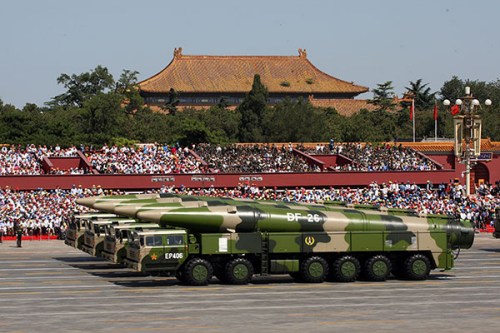
    Image Credit: ecns.cn