It is rather surprising that in today’s Kerala the well-educated religious lot, the clergy, who are expected to have had a smattering of science, and who are expected to be the ones who see reason, are the ones who are raising the bogeys of ‘love jihad’ and ‘narcotic jihad’, notwithstanding the fact that probes by different agencies, including the National Investigation Agency, have debunked such allegations.
The clergy concerned, particularly the bishop of Pala and other priest(s) who have indulged in such rhetoric, may not necessarily have played on into the hands of the Sangh Parivar, but have certainly touched the hearts and endeared themselves to the latter to the extent that the latter are ecstatic. Also, they have, along with other Right-wing groups, extolled the bishop of Pala, and have extended their support to him.
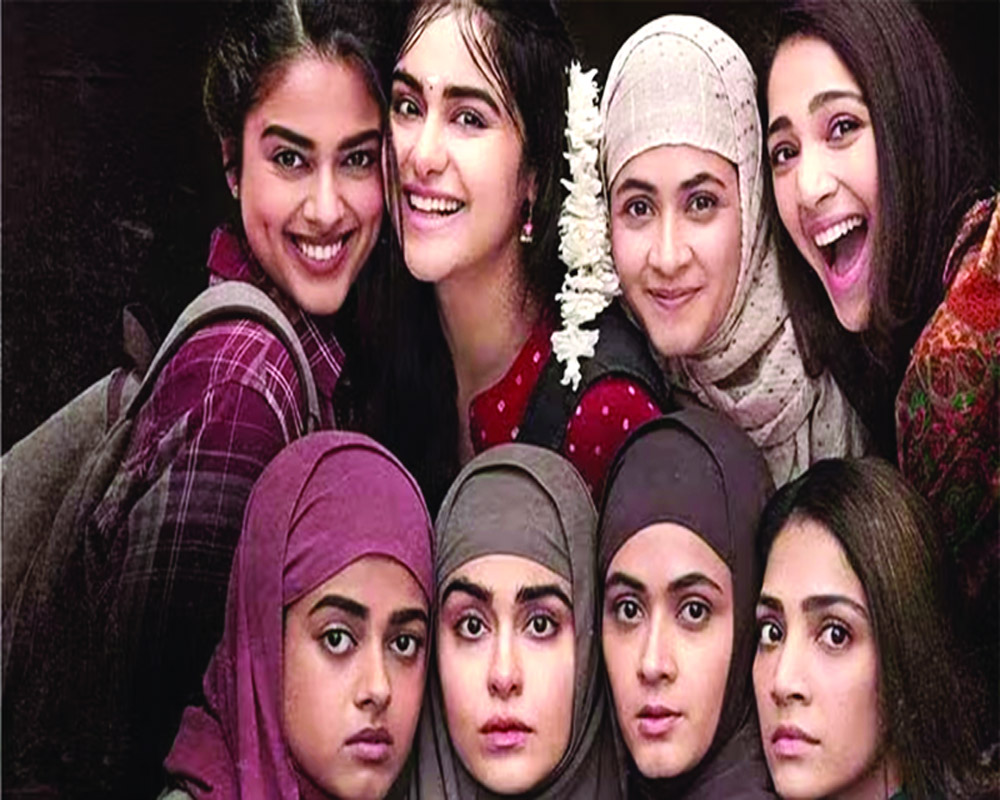
However, something that has been very heartening and positive in this dark and murky scenario has been the bold and defiant stand of a group of nuns who not only spoke out against the bishop but also walked out of the mass of the priest who preached hate by going to the extent of beseeching his flock to boycott Muslims traders as also Muslim autorickshaw drivers.
One would not have been surprised if insinuations and allegations of ‘love jihad’ and ‘narcotic jihad’ were made by Right-wing extremist groups because it is, inevitably, their wont to do so. But coming from the clergy in a state which has historically seen relatively amicable and amiable relations between Muslims and Christians wherein they have prospered together, belies logic.
Pre-Islamic Arab contact with Kerala and the rest of the west coast of India dates back to the ‘Before Christ’ era, which gradually transformed into the Islamic one from the seventh century AD onwards.
The oldest mosque to be built in the Indian subcontinent was the Cheramaan Juma Mosque in Methala, Thrissur district, in 629 CE. It is significant to point out that the north-centric way of looking at and referring to Islam in India by certain historians is quite misplaced. By the time Islam made any impact in the northwest and north of India, full-fledged Islamic societies had been formed in Kerala that extended beyond and along the Coromandel Coast in Tamil Nadu and spread towards South East Asia.
Similarly, the Christian connection and the advent of Christianity in Kerala go back to 52 CE. For centuries, these religious groups, namely, Christians and Muslims, have coexisted and inhabited common spaces all over Kerala, along with the pre-existing indigenous communities. Also, there has been a high degree of acculturation between the various religious groups in terms of language, food, clothing, and other cultural practices including in the religious realm.
There were, no doubt, skirmishes between the Christians and Muslims with the arrival of the Portuguese during the late fifteenth and early sixteenth century, but these have to be treated more as aberrations for economic gains than something that disturbed the overall ambiance of peace and communal harmony. The erstwhile situation as regards peaceful coexistence between the different religious communities prevailed in Kerala in spite of quite a few communal riots in other parts of India, both before and after the Independence.
It is felt in some circles in Kerala that due to the COVID-19 pandemic and the restrictions as regards congregations, the footfalls have declined to result in drastically reduced revenues in the churches, and that has made some clergy feel insecure; and one way of getting back the faithful could be to polarise the communities in the expectation that would help in consolidating their own followers.
Of late, the anti-Muslim rant that has emanated in Kerala is not confined to the borders of the state. The overt and manifest support in social media and through videos, for Israel’s bombing of Gaza during the recent conflict vis-à-vis the Palestinians, too, is, at one level quite disturbing, and at another level, points to the mindset that such perpetrators are embedded in.
The proclivity to reduce the Palestinian identity to just a Muslim/Islamic one is one of the most irrational ways of looking at a people and explicating their ethnicity. Christian Palestinians too are at the forefront in their resistance to Israeli imperialism, and the occupation of Palestine. The well-known academic and crusader for peace, late Professor Edward Said, was one such.