Tag: Libya

  • Mercenaries in Libyan Conflict: Need for a Strong International Law Against Mercenary Activities

    Mercenaries in Libyan Conflict: Need for a Strong International Law Against Mercenary Activities

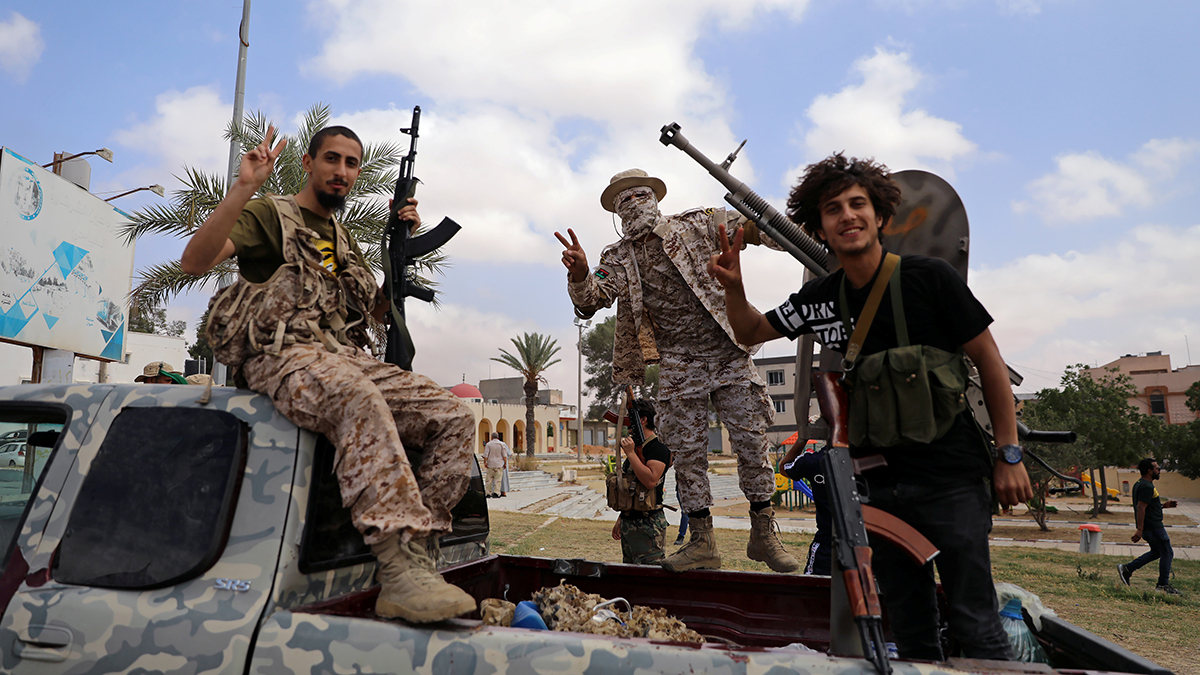
    The presence of mercenary groups and foreign fighters in Libya potentially had an impact in intensifying and prolonging the Libyan conflict, further complicating the search for a peaceful solution to the crisis. Foreign fighters and mercenaries have grossly violated domestic and international human rights and contributed to enormous human suffering. Mohamad Aujjar, Chair of the independent international fact-finding mission on Libya, told the UN Human Rights Council that the “mission’s investigations had found that all parties to the conflict in Libya since 2016, including third states, foreign fighters, and mercenaries, have violated international humanitarian law, particularly the principles of proportionality and distinction, and that some had committed war crimes”. Twelve years after violent conflicts and political crises, Libya is turning to a crucial election this year, one that was originally scheduled in December 2021 but could not be held due to disagreement between various political groups. It is considered that the presence of mercenaries and foreign fighters in the conflicting territories will be an obstacle to peaceful elections. African Union chairman stated that “the departure of foreign mercenaries could help Libya to achieve greater stability which was in a constant tussle since 2011”. As mentioned previously, mercenary involvement is one of the primary causes for the prolongation of the Libyan conflict, caused by the absence of firm international law concerning mercenary activities.

    The growing presence of mercenaries in armed conflicts across the world, and the threat that mercenaries are posing towards international peace and human security is a signal of the need for a strong legal framework for regulating mercenary activities.

    The conflict in Libya started when NATO-backed Western powers toppled the former authoritarian leader Muammar Gaddafi in 2011 and failed in placing a stable central authority in the country. In 2014 this political vacuum and crisis turned into a civil war between two rival groups, the Government of National Accord (GNA) in the western parts of the country that is recognised by the United Nations, and the Libyan National Army (LNA) in the eastern parts of the country, headed by Khalifa Haftar. Foreign powers had strategically aligned with the conflicting parties to protect their own parochial geopolitical and economic interests in the region. GNA had the support of Turkey and Western countries like Italy. In December 2020, the Turkish parliament authorised the deployment of troops to Libya in support of the GNA. It is estimated that Turkey sent between 2000 and 4000 mercenaries from Syria to Libya, all of whom were under the direct control of the Turkish military. The Sadat, a Turkish private military firm, was also directly involved in the Libyan conflict. On the other hand, the LNA enjoyed the support of Russia, Egypt, and the United Arab Emirates (UAE). Since 2014, UAE has supported the LNA by supplying arms while Russia sent mercenaries to boost LNA. In February 2021, the UN-led Libyan Political Dialogue Forum (LPDF) formed a new government called the Government of National Unity (GNU) with Abdulhamid AlDabaiba as Prime Minister with the approval of the Libyan House of Representatives. GNU failed to hold the national election which was the main purpose for the formation of the GNU. Thus, the country was again divided into two camps. On the one side, Egypt, Russia, France, and Qatar supported Bashaga and his eastern supporters. On the other side were Italy, Turkey (with some exceptions), the United Nations, and the United States. The UAE, surprisingly, supported Dbeibah. Once again, the situation on the ground demonstrates that a plethora of foreign actors are interfering in Libyan domestic affairs, each pursuing its interests rather than those of Libya and the entire region. Libya has become another battleground for proxy wars between Russia and Western powers. For Russian oil companies, Libya is attractive due to its vast oil reserves and vital from a military standpoint due to its strategic location. By constructing naval facilities in the Mediterranean, Russia would be able to expand its military presence further west. Regional and global powers are struggling to reshape the region according to their interests in the Sahel region. Russia and Turkey are leaders in this trend by using several mercenary groups. Thus, the complete elimination of mercenaries from Libya is one of the preconditions for peace and stability in Libya.

    The growing presence of mercenaries in armed conflicts across the world, and the threat that mercenaries are posing towards international peace and human security is a signal of the need for a strong legal framework for regulating mercenary activities. There are a few reasons why mercenaries need to be legally regulated. First, mercenaries are beyond state control and may pose a practical threat to state sovereignty and security, as well as challenge the traditional realist idea of the state monopoly to use coercion or force, though realists agree that the nation-states no longer hold a monopoly over coercive instruments*. Second, mercenaries are profit-oriented firms, where financial gain is the goal. This raises both a political and moral dilemma that an individual who does not have any political or ideological affiliation towards the conflict is direct participant in the conflict. Above all, mercenary involvements in conflicts across the world are significantly changing the nature of conflicts by intensifying and complicating the pre-existing dynamics, especially considering they openly defy human rights and avoid related responsibilities.

    The major treatise and conventions that regulate mercenary activities include Additional Protocol I and II to Article 47 of the Geneva Convention (1949), the Organisation of African Unity (OAU) Convention for the Elimination of Mercenaries in Africa (1972), and the International Convention against the Recruitment, Use, Financing and Training of Mercenaries (1989). However, these treatises are far from perfect as Sarah Percy says, “International law dealing with mercenaries is notoriously flawed”. According to her, the primary reason why international is weak is that states, back in the 1970s and 1980s, did not care enough to create effective regulations as they were not considered enough of a “practical difficulty” or warranted enough “moral attention” to necessitate legal attention. Another reason is that notably, weaker African states are vulnerable to mercenary activities as even Western states were willing to use mercenaries in the African continent for their strategic gains, and as well these African states have intentionally created loopholes within the law to use mercenaries themselves for their advantage. Immediately following World War II, Western states suppressed the African people’s struggle for self-determination and sovereignty by using mercenaries. Dusoulier says that “the private security industry has a long history on the African continent whether in the Sahel, Mali, or the Central African Republics”. He further points out that this state of affairs is a consequence of two factors: the weakness of government institutions in some countries and the continent’s wealth of mineral resources. Hence, it is evident that the laws concerning mercenaries are not strong enough to contain the spread of mercenary activities across the globe.

    Recent conflicts in Libya, Yemen, Ukraine, and Syria are showing the paucity of international law concerning mercenary activities. Without an effective international framework to regulate mercenary activities, conflicts in this world will be turning more violent and intensified. Bilateral cooperation, information sharing, and the efforts of international organisations are important in this regard. The withdrawal of mercenaries from Libya will contribute to peaceful elections in the country and further lead to peace and stability in the country. Peace and stability in Libya will create a larger scope for peace in the entire Sahel region. 

    REFERENCES

    1. OHCHR. (n.d.). All Parties to the Conflict in Libya, including Third States, Foreign Fighters and Mercenaries, Have Violated International Humanitarian Law, and Some Have Also Committed War Crimes, Chair of Fact-finding Mission on Libya Tells Human Rights Council. https://www.ohchr.org/en/press-releases/2021/10/all-parties-conflict-libya-including-third-states-foreign-fighters-and
    2. Cascais, A., & Koubakin, R. (2023b, January 17). Mercenary armies in Africa. Retrieved from https://www.dw.com/en/the-rise-of-mercenary-armies-in-africa/a-61485270
    3. Beaumont, P. (2020, January 3). Turkish MPs pass bill to send troops to support Libyan government. Retrieved from https://www.theguardian.com/world/2020/jan/02/turkish-parliament-to-vote-on-sending-troops-to-libya
    4. Libya: Help make 2023 the year of ‘free and fair elections’, Security Council urged. (2022b, December 16). Retrieved from https://news.un.org/en/story/2022/12/1131817
    5. El-Assasy, A. (2023, February 20). AU Voices Commitment to Reconciliation in Libya. Retrieved from https://libyareview.com/32092/african-union-voices-commitment-to-reconciliation-initiative-in-libya/
    6. Powers, M. (2021, October 8). Making Sense of SADAT, Turkey’s Private Military Company – War on the Rocks. Retrieved from https://warontherocks.com/2021/10/making-sense-of-sadat-turkeys-private-military-company/
    7. Percy, S. V. (2007). Mercenaries: Strong Norm, Weak Law. International Organization, 61(02). https://doi.org/10.1017/s0020818307070130
    8. On the Approval of the Government of Libyan National Unity. (n.d.). Retrieved from https://www.embassyoflibyadc.org/news/on-the-approval-of-the-government-of-libyan-national-unity

    Featured Image Credits: Council on Foreign Relations
  • What Ukraine needs to learn from Afghanistan about proxy wars

    What Ukraine needs to learn from Afghanistan about proxy wars

    The greatest enemy of economic development is war. If the world slips further into global conflict, our economic hopes and our very survival could go up in flames. The Bulletin of the Atomic Scientists has moved the hands of the Doomsday Clock to a mere 90 seconds to midnight. The world’s biggest economic loser in 2022 was Ukraine, where the economy collapsed by 35% according to the International Monetary Fund. The war in Ukraine could end soon, and economic recovery could begin, but this depends on Ukraine understanding its predicament as a victim of a US-Russia proxy war that broke out in 2014.

    The US has been heavily arming and funding Ukraine since 2014 with the goal of expanding Nato and weakening Russia. America’s proxy wars typically rage for years and even decades, leaving battleground countries like Ukraine in rubble.

    Unless the proxy war ends soon, Ukraine faces a dire future. Ukraine needs to learn from the horrible experience of Afghanistan to avoid becoming a long-term disaster. It could also look to the US proxy wars in Vietnam, Cambodia, Lao PDR, Iraq, Syria, and Libya.

    Starting in 1979, the US armed the mujahideen (Islamist fighters) to harass the Soviet-backed government in Afghanistan. As president Jimmy Carter’s national security advisor Zbigniew Brzezinski later explained, the US objective was to provoke the Soviet Union to intervene, in order to trap the Soviet Union in a costly war. The fact that Afghanistan would be collateral damage was of no concern to US leaders.

    The Soviet military entered Afghanistan in 1979 as the US hoped, and fought through the 1980s. Meanwhile, the US-backed fighters established al-Qaeda in the 1980s, and the Taliban in the early 1990s. The US “trick” on the Soviet Union had boomeranged.

    In 2001, the US invaded Afghanistan to fight al-Qaeda and the Taliban. The US war continued for another 20 years until the US finally left in 2021. Sporadic US military operations in Afghanistan continue.

    Afghanistan lies in ruins. While the US wasted more than $ 2 trillion of US military outlays, Afghanistan is impoverished, with a 2021 GDP below $400 per person! As a parting “gift” to Afghanistan in 2021, the US government seized Afghanistan’s tiny foreign exchange holdings, paralysing the banking system.

    The proxy war in Ukraine began nine years ago when the US government backed the overthrow of Ukraine’s president Viktor Yanukovych. Yanukovych’s sin from the US viewpoint was his attempt to maintain Ukraine’s neutrality despite the US desire to expand Nato to include Ukraine (and Georgia). America’s objective was for Nato countries to encircle Russia in the Black Sea region. To achieve this goal, the US has been massively arming and funding Ukraine since 2014.

    The American protagonists then and now are the same. The US government’s point person on Ukraine in 2014 was Assistant Secretary of State Victoria Nuland, who today is Undersecretary of State. Back in 2014, Nuland worked closely with Jake Sullivan, president Joe Biden’s national security adviser, who played the same role for vice president Biden in 2014.

    The US overlooked two harsh political realities in Ukraine. The first is that Ukraine is deeply divided ethnically and politically between Russia-hating nationalists in western Ukraine and ethnic Russians in eastern Ukraine and Crimea.

    The second is that Nato enlargement to Ukraine crosses a Russian redline. Russia will fight to the end, and escalate as necessary, to prevent the US from incorporating Ukraine into Nato.

    The US repeatedly asserts that Nato is a defensive alliance. Yet Nato bombed Russia’s ally Serbia for 78 days in 1999 in order to break Kosovo away from Serbia, after which the US established a giant military base in Kosovo. Nato forces similarly toppled Russian ally Moammar Qaddafi in 2011, setting off a decade of chaos in Libya. Russia certainly will never accept Nato in Ukraine.

    At the end of 2021, Russian president Vladimir Putin put forward three demands to the US: Ukraine should remain neutral and out of Nato; Crimea should remain part of Russia; and the Donbas should become autonomous in accord with the Minsk II Agreement.

    The Biden-Sullivan-Nuland team rejected negotiations over Nato enlargement, eight years after the same group backed Yanukovych’s overthrow. With Putin’s negotiating demands flatly rejected by the US, Russia invaded Ukraine in February 2022.

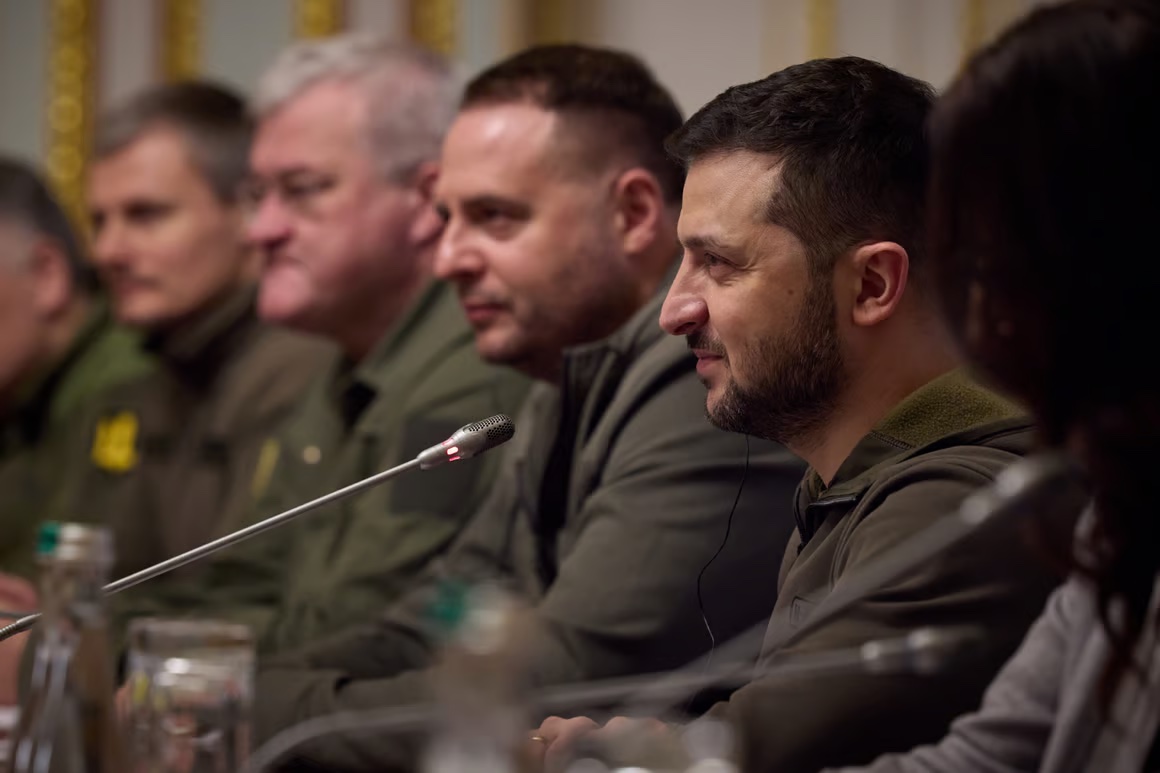
    In March 2022, Ukraine’s president Volodymyr Zelensky seemed to understand Ukraine’s dire predicament as a victim of a US-Russia proxy war. He declared publicly that Ukraine would become a neutral country, and asked for security guarantees. He also publicly recognised that Crimea and Donbas would need some kind of special treatment.

    Israel’s prime minister at that time, Naftali Bennett, became involved as a mediator, along with Turkey. Russia and Ukraine came close to reaching an agreement. Yet, as Bennett has recently explained, the US “blocked” the peace process.

    Since then, the war has escalated. According to US investigative reporter Seymour Hersh, US agents blew up the Nord Stream pipelines in September, a claim denied by the White House. More recently, the US and its allies have committed to sending tanks, longer-range missiles, and possibly fighter jets to Ukraine.

    The basis for peace is clear. Ukraine would be a neutral non-Nato country. Crimea would remain home to Russia’s Black Sea naval fleet, as it has been since 1783. A practical solution would be found for the Donbas, such as a territorial division, autonomy, or an armistice line.

    Most importantly, the fighting would stop, Russian troops would leave Ukraine, and Ukraine’s sovereignty would be guaranteed by the UN Security Council and other nations. Such an agreement could have been reached in December 2021 or in March 2022.

    Above all, the government and people of Ukraine would tell Russia and the US that Ukraine refuses any longer to be the battleground of a proxy war. In the face of deep internal divisions, Ukrainians on both sides of the ethnic divide would strive for peace, rather than believing that an outside power will spare them the need to compromise.
    Feature Image Credit: politico.eu

    This article was published earlier in dailymaverick.co.za and is republished with the permission of the author.

  • Washington Accuses Russia of Committing War Crimes in Ukraine: Terrible and True, But What About US War Crimes?

    Washington Accuses Russia of Committing War Crimes in Ukraine: Terrible and True, But What About US War Crimes?

    This article is republished from Antiwar.com with permission.

    Nothing can justify this terrible toll and Moscow’s attack. However, those who judge the moral conduct of others should be measured by the same standard. Which raises the question of war crimes committed by the US in its many conflicts.

    Washington appears intent on making Russia’s war on Ukraine into a moral crusade. Pentagon spokesman John Kirby last week declared that “we’re certainly seeing clear evidence that the Russian military is conducting war crimes.”

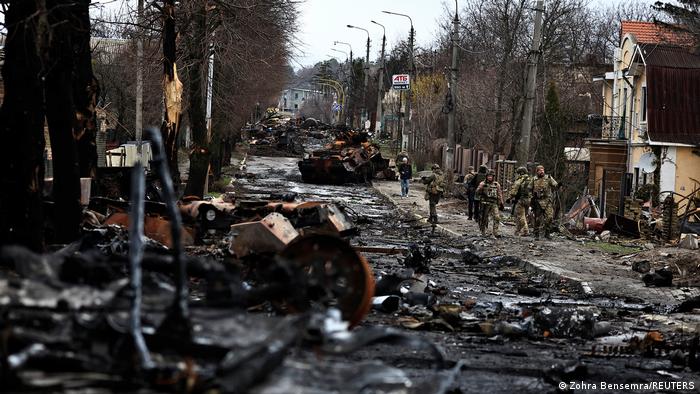
    Any large-scale conflict is going to kill civilians, some directly in combat, others from the impact of war’s destructive impact on a modern society. Thus, Russian attacks on Ukrainian cities such as Mariupol cannot help but kill civilians. Last week the UN Office of the High Commissioner for Human Rights estimated 953 dead and 1557 injured Ukrainian civilians. But that is merely the number of victims whose death can be confirmed.

    OHCHR reported that it “believes that the actual figures are considerably higher, especially in Government-controlled territory and especially in recent days, as the receipt of information from some locations where intense hostilities have been going on has been delayed and many reports are still pending corroboration. This concerns, for example, Mariupol and Volnovakha (Donetsk region), Izium (Kharkiv region), Sievierodonetsk and Rubizhne (Luhansk region), and Trostianets (Sumy region), where there are allegations of numerous civilian casualties. These figures are being further corroborated and are not included in the above statistics.”

    And if war criminals were routinely prosecuted, Americans would be in the dock as well as Russians.

    Nothing can justify this terrible toll and Moscow’s attack. However, those who judge the moral conduct of others should be measured by the same standard. Which raises the question of war crimes committed by the US in its many conflicts. American forces may attempt to fight “cleaner” wars than does Russia, but even so no one should have any illusion about the high civilian cost of Washington’s interventions. Innocent people die, some directly, many indirectly. And if war criminals were routinely prosecuted, Americans would be in the dock as well as Russians.

    Consider Washington’s widespread drone war. One terrible strike made last August when Americans were withdrawing from Afghanistan wiped out a family, including seven kids. It was a terrible mistake, but the US was culpable. Reported the New York Times: “Military officials said they did not know the identity of the car’s driver when the drone fired, but deemed him suspicious because of how they interpreted his activities that day, saying that he possibly visited an ISIS safe house and, at one point, loaded what they thought could be explosives into the car.” [Italics added] Upon this litany of unproved suppositions, which turned out to be wild speculation, Washington acted like a terrorist and wiped him out along with all those around him.

    Such mistakes are common because America relies on such “signature” strikes, based on interpretating the actions of people typically hundreds or thousands of miles away. Noted the New York Times: “Every independent investigation of the strikes has found far more civilian casualties than administration officials admit. Gradually, it has become clear that when operators in Nevada fire missiles into remote tribal territories on the other side of the world, they often do not know who they are killing, but are making an imperfect best guess.”

    Afghanistan has been a major focus of America’s drone war. A detailed investigation in 2015 by two media organizations and a foundation concluded that drone strikes had killed 3852 people, 476 of whom were civilians. That’s a civilian kill rate of 12.4 percent, better than untargeted air or artillery strikes, but still much higher than claimed by Washington.

    According to journalist Emran Feroz: “Afghanistan is the most drone-bombed country in the world. The United States dropped more bombs on Afghanistan in 2019 than in any other years since the Defense Department began keeping track in 2006. According to new figures released by the U.S. military, at least 7,423 bombs and other munitions were dropped on the country in 2019, a nearly eight-fold increase from 2015 and an average of 20 bombs a day.”

    He described another drone attack that apparently went awry: “Ordinary Afghans say it has happened to them many times and never – not once – has it made news anywhere outside Afghanistan. Last November, an American Reaper drone targeted a group of villagers in the mountainous area of Afghanistan’s southeastern province of Paktia and killed seven of them. Paktia has long been home to Taliban militants, but local residents say all the victims were civilians, including three women and one child. They had gone to the remote area to graze their cattle and collect wood. Suddenly, they were dead.”

    Another cost of the drone war: creating new terrorists who target Americans. Waging war on Muslims around the world makes a lot of enemies, some of whom strike back.

    For instance, Pakistani-American Faisal Shahzad attempted to set off a bomb in Times Square in response to Washington’s drone campaign. He explainedto the court in 2010: “I want to plead guilty 100 times because unless the United States pulls out of Afghanistan and Iraq, until they stop drone strikes in Somalia, Pakistan and Yemen and stop attacking Muslim lands, we will attack the United States and be out to get them.” The judge asked him why he was willing to kill kids. He explained: “When the drones hit, they don’t see children.” Hence, Shahzad concluded that “I am part of the answer to the US killing the Muslim people.”

    America’s anti-ISIS bombing campaign also killed civilians in prodigious numbers. NPR reported on the work of New York Times correspondent David Philipps, who said “the United States’ air war against ISIS seems to have been particularly brutal on innocent civilians in Syria. In recent stories, Philipps reports that a top-secret unit of the US military was allowed to pick targets for drone attacks and bombing runs with little oversight, and that as the conflict wore on, it increasingly sidestepped rules to protect noncombatants, ordering airstrikes that killed farmers in their fields, children in the street and families fleeing combat.”

    According to Philipps, the military counted 1400 dead civilians “during the four years of the war. And they were very confident that those numbers were real and that outside organizations like Human Rights Watch that were reporting numbers that were many times higher were being unreasonable. But once we looked under the hood at how it worked, we found that, you know, time and time again, their accounts were just seriously flawed.”

    The Times explained that it “worked with journalist Azmat Khan, who went to dozens and dozens of these sites on the ground and talked to people who were there and compared what they said to what the military’s own records said and found repeatedly that there was a gulf between them.” For instance, Human Rights Watch estimated some 7000 dead civilians. A toll that dwarfs the number of civilian dead in Ukraine, where the US is blaming Russia for committing war crimes.

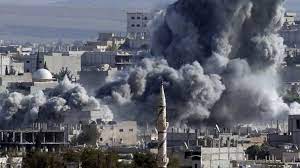
    The US also has armed Saudi Arabia and United Arab Emirates, helping them wreak death and destruction against Yemen, the poorest nation in the Mideast. No participant in this civil war, which was internationalized by the Saudis and Emiratis, looks good. However, most casualties and damage are a result of the royal regimes’ air attacks and effective blockade, which has resulted in mass malnutrition, immiseration, and disease.

    President Joe Biden once criticized the Kingdom of Saudi Arabia and its pernicious role in the Yemen war. Like so many of his predecessors, however, he has since effectively turned US policy over to Riyadh and Abu Dhabi, continuing to sell them weapons and deploying US forces to help protect them from retaliation for their continuing attacks on Yemeni civilians. A year after the president took office the war is heating back up in Yemen.

    Reported the Yemen Data Project: “January 2022 was the most violent month in the Saudi-led air war in Yemen in more than five years. Yemen Data Project recorded 139 civilian deaths and 287 civilians injured in Saudi coalition airstrikes in January, taking the casualty toll to over 19,000 civilians killed and injured since Saudi Arabia launched its bombing campaign in Yemen in March 2015. Not since October 2016 have more civilian casualties been recorded in a single month in the air war. Saudi-led coalition airstrikes caused more civilian harm in the first month of 2022 than in the two previous years combined.”

    The UN Group of Eminent International and Regional Experts on Yemenrevealed that civilians were routinely targeted by the Saudi and Emirati royals. Victims included “civilians shopping at markets, receiving care in hospitals, or attending weddings and funerals; children on buses; fishers in boats; migrants seeking a better life; individuals strolling through their neighborhoods; and people who were at home.”

    Widespread air attacks also wrecked basic infrastructure, with catastrophic consequences for health, nutrition, commerce, and safety. The United Nations Development Program reported:

    “By comparing the current reality in Yemen to a scenario where no conflict ever occurred, we can provide an estimate of the total death count – the number of deaths caused both directly and indirectly from the conflict. By doing so, we found that by the end of 2021, Yemen’s conflict will lead to 377,000 deaths – nearly 60 per cent of which are indirect and caused by issues associated with conflict like lack of access to food, water, and healthcare. These deaths are overwhelmingly made up of young children who are especially vulnerable to under and malnutrition. In 2021, a Yemeni child under the age of five dies every nine minutes because of the conflict. This is a significant increase since our 2019 report, Assessing the Impact of War on Development in Yemen, that – through the same assessment – found this to be approximately every 12 minutes.”

    In 2021, a Yemeni child under the age of five dies every nine minutes because of the conflict.

    The experts’ group also found devastating impact: “Protracted conflict, disease outbreaks, the COVID-19 pandemic, flooding, import restrictions, an economic and fuel crisis, and limited humanitarian aid have made everyday life in Yemen unbearable for many. According to the Office for the Coordination of Humanitarian Affairs, around 20.7 million people in Yemen currently require some form of humanitarian and protection assistance. More than 16.2 million of them will face significant food insecurity this year. Additionally, international funding has fallen far short of the required levels to address the humanitarian crisis.”

    Harm from this kind of warfare goes even further. Last fall the experts’ group observed that “Living in a country subjected to an average of 10 airstrikes per day has left millions feeling far from safe. Although the frequency and intensity of airstrikes have fluctuated over the last four years, the Group of Eminent Experts has continued to observe their devastating impact on civilians.”

    “The civilian death toll from Saudi Arabia’s disastrous air war over Yemen was steadily rising in 2016 when the State Department’s legal office in the Obama administration reached a startling conclusion: Top American officials could be charged with war crimes for approving bomb sales to the Saudis and their partners. Four years later, more than a dozen current and former US officials say the legal risks have only grown as President Trump has made selling weapons to Saudi Arabia, the United Arab Emirates and other Middle East nations a cornerstone of his foreign policy.”

    Assessing Washington’s moral blame in aiding the royal aggressors is easy. The legal case is more difficult, but the State Department already made the connection. It warned previous administrations that US officials were committing war crimes. The New York Times reported: “The civilian death toll from Saudi Arabia’s disastrous air war over Yemen was steadily rising in 2016 when the State Department’s legal office in the Obama administration reached a startling conclusion: Top American officials could be charged with war crimes for approving bomb sales to the Saudis and their partners. Four years later, more than a dozen current and former US officials say the legal risks have only grown as President Trump has made selling weapons to Saudi Arabia, the United Arab Emirates and other Middle East nations a cornerstone of his foreign policy.”

    Washington intervened in Libya’s civil war more than a decade ago to promote regime change under cover of helping to protect civilians from the Khadafy government. The country that was the most developed and wealthiest in Africa was bombed to stone age by the US and NATO.

    There is much more to criticize in US policy. Rural Afghanistan suffered desperately for years as a battleground between the US and Taliban, causing many residents to turn toward the insurgents. Washington intervened in Libya’s civil war more than a decade ago to promote regime change under cover of helping to protect civilians from the Khadafy government. Hopes for a better future remained unfulfilled as contending factions subsequently fought for control and now squabble over plans to hold elections.

    Russia deserves to be criticized and held accountable for its increasingly brutal military campaign in Ukraine. However, Washington would have more credibility to judge if its message wasn’t do as I say, not as a I do. US officials should come clean internationally and admit when they have failed in their obligation to protect human rights, including in wartime. Next time they shouldn’t just promise to do better. They should do so.