Tag: Liberty

  • The myth of Magna Carta: The struggle still goes on

    The myth of Magna Carta: The struggle still goes on

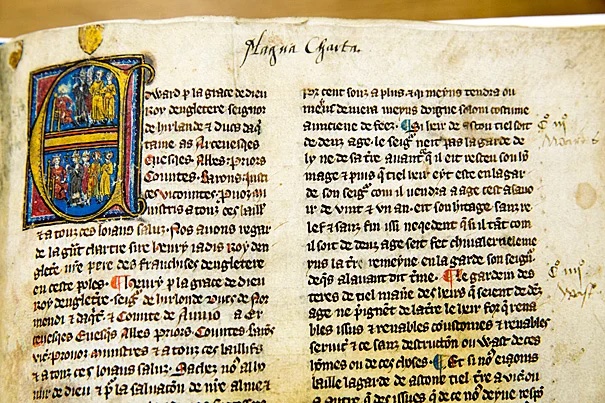
    The rise of democratic, elected Parliaments in England and Scotland just 50 years after the Magna Carta is not a coincidence but a consequence of that demand to share power. It is from the Magna Carta that the English writ of habeas corpus evolved, safeguarding individuals and their freedoms against unjust and unlawful imprisonment with the right to appeal.
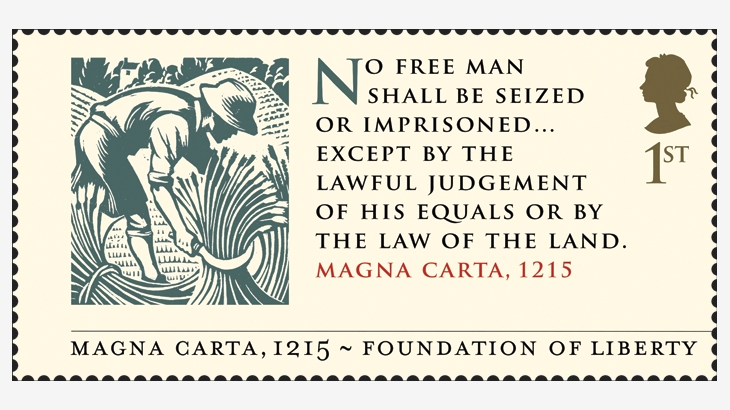
    We now take our liberties and rights for granted, and the way of life it guarantees us is inherent. But what we now have has come after a long evolution process, and often they flowed out of something else quite unintended. The Magna Carta is a case in point. The English-speaking world recently celebrated over 800 years of the Magna Carta or Great Charter, which is synonymous with fundamental rights and the rule of law that are the cornerstones of modern democracy. Much of the world believes the Magna Carta came out of an eruption of a long-suppressed yearning among ordinary people for protection against the monarch and nobility. But it is not so.

    The Magna Carta was thus not a grand demand for equality, basic freedoms or the rule of law, but just a narrow demand for restricting the ruler’s powers, to ring-fence the interests of the elite.
     

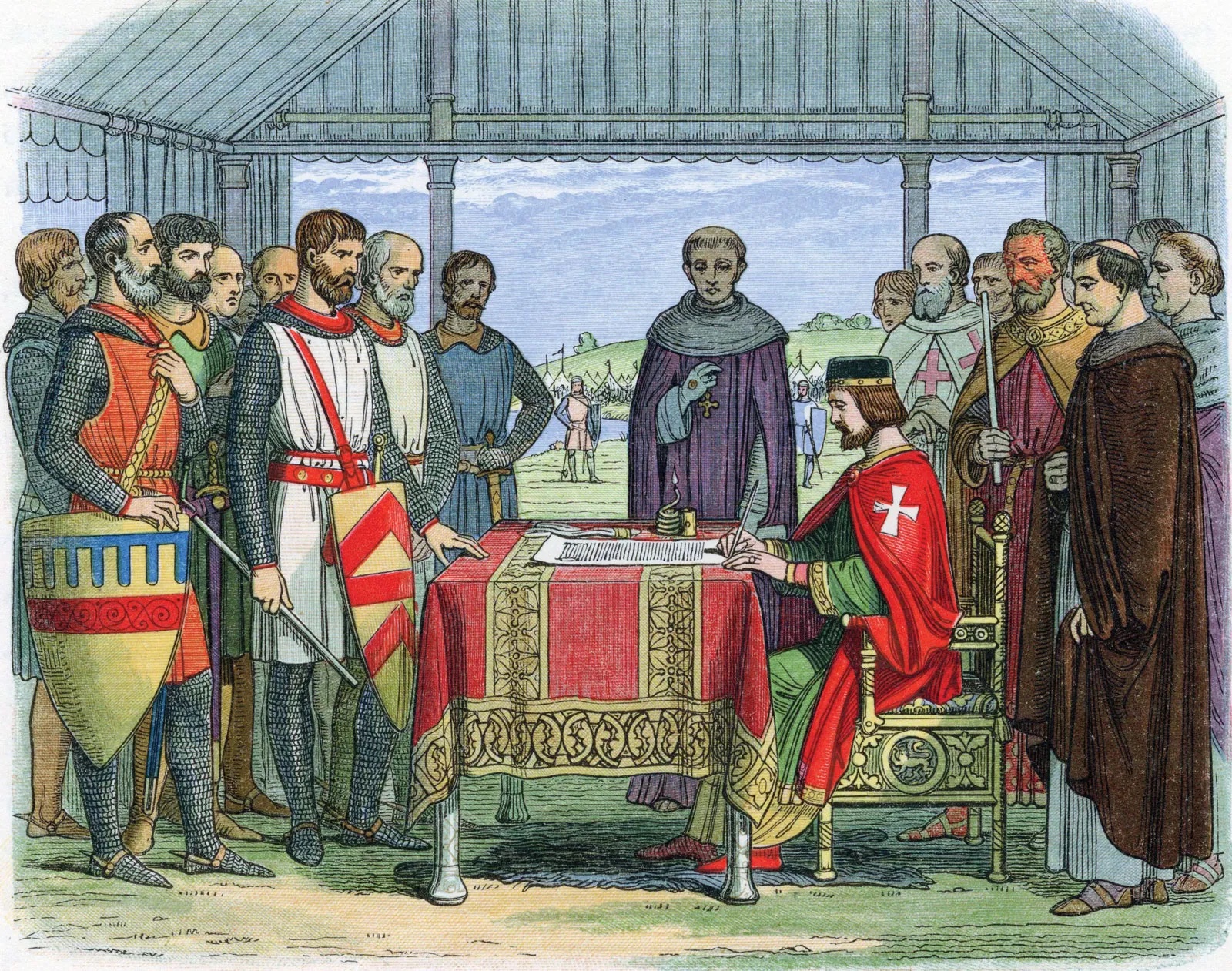
    It came out of an intra-elite struggle between 40 barons and their ruler. England’s King John had emptied the royal treasuries in a fruitless war with France, and the barons were unwilling to meet his demands for higher taxes. The consequence was the Magna Carta — to protect the barons from the King’s demands. The demand to be judged by their peers was another protection. It was not meant for ordinary people, but only for barons. The Magna Carta was thus not a grand demand for equality, basic freedoms or the rule of law, but just a narrow demand for restricting the ruler’s powers, to ring-fence the interests of the elite.

    But the Magna Carta’s myth endured and was invoked whenever and wherever people struggled against injustice and freedom. Mahatma Gandhi invoked it in South Africa when he fought for racial equality, and emancipators and freedom fighters like Nelson Mandela, Jawaharlal Nehru, Ho Chi Minh, Fidel Castro and Martin Luther King Jr invoked it when they were being tried for sedition by oppressive regimes. Like the English barons, they too were arguing for limiting the oppressive and unjust powers of rulers, but not just for themselves and their peers, but for all their peoples. The story of modern democracy is about the long journey from the rights of a few to the rights of all.

    Another myth that endures is that the twin notions of democracy and the rule of law somehow originated with the Magna Carta. The fact is that the King rejected the Magna Carta soon after it was presented to him. But John avoided the consequences of the barons’ indignation by dying and thereby perpetuating the myth.

    The first democracies long preceded the 1215 Magna Carta. As early as the sixth century BC several “independent republics” existed in India as sanghas and ganas. Their main characteristics were a raja, elected or hereditary, and a deliberative assembly. These assemblies met regularly and passed laws pertaining to finances, administration and justice. The raja and other officials obeyed the decisions of these assemblies. While these assemblies mostly comprised the nobility and landowners, in some cases they included all free men. But the Brahminical system prevailed, in that the monarch always had to be a Kshatriya. While Licchavis, who held sway over the Kathmandu Valley in today’s Nepal and a major part of northern Bihar, were governed by an assembly of about 7,000 rajas, who in turn were the heads of all major families, others like the Shakyas, the clan to which Gautama Buddha belonged, had assemblies open to all people, rich or poor, and noble or common.

    Socrates and his pupil, Plato, deliberated and expounded on the role of a citizen within a community and laid down the foundations of the political philosophy that flourished in Athens and spread to most of the world in the next two and a half millennia.

    The greatest contribution to the evolution of democracy as a philosophy was in Athens, where great philosophers like Socrates, Plato, and Aristotle lit up public discourse with their brilliance and original thinking. Socrates and his pupil, Plato, deliberated and expounded on the role of a citizen within a community and laid down the foundations of the political philosophy that flourished in Athens and spread to most of the world in the next two and a half millennia. Aristotle, who counted among his students Alexander the Great, dwelt more on systems of government and who first qualified liberty as the fundamental principle of democracy.

    Aristotle wrote in Politics: “Now a fundamental principle of the democratic form of constitution is liberty — that is what is usually asserted, implying that only under this constitution do men participate in liberty, for they assert this as the aim of every democracy. But one factor of liberty is to govern and be governed in turn; for the popular principle of justice is to have equality according to number, not worth, and if this is the principle of justice prevailing, the multitude must of necessity be sovereign and the decision of the majority must be final and must constitute justice, for they say that each citizen must have an equal share; so it results that in democracies the poor are more powerful than the rich, because there are more of them, and whatever is decided by the majority is sovereign.”

    This principle that “whatever is decided by the majority is sovereign” has always had to contend with the rights of individuals. In the US, created after a great debate among the founding fathers as a democracy, it was by majority will that slavery flourished till the Civil War. It took another century before equal rights for black people became the majority will. This constant struggle for individual rights against the will of the collective has been the central story of the evolution of the modern democratic state.  Free India, by contrast, provided for all these rights and liberties from the beginning in its Constitution. The Magna Carta, because it sought to limit the powers of the ruler, perhaps still has a place in our hearts and minds. To most citizens in democratic states, our life is also a constant struggle against the assertion of collective will to trample individual liberties or the rights of smaller groups.

    This principle that “whatever is decided by the majority is sovereign” has always had to contend with the rights of individuals.

    The rise of democratic, elected Parliaments in England and Scotland just 50 years after the Magna Carta is not a coincidence but a consequence of that demand to share power. It is from the Magna Carta that the English writ of habeas corpus evolved, safeguarding individuals and their freedoms against unjust and unlawful imprisonment with the right to appeal. It is from this emergence of petitioning for the production of the body that Parliaments in due course became to be increasingly used as a forum to address all the concerns and grievances of ordinary people.

    Thus, whatever be Magna Carta’s first intent, its consequences greatly expanded over centuries into a charter, which guarantees individual liberties, equality and justice to all, irrespective of race, religion and class. But that struggle is far from over. It goes on, and only its forms change as human values and means change.

    This article was published earlier in the Asian Age.

    Feature Image Credit: Britannica
     

  • The end of the liberal world order is not the end of the world – we just need to fight for freedom AND equality

    The end of the liberal world order is not the end of the world – we just need to fight for freedom AND equality

    The turmoil concerning Brexit, the Rise of the „Rest” (the fast developing countries), dramatic social inequality, the exclusion of ever larger parts of the populace (the decline of the „Rest“, which is excluded from globalization), the rise of radical Salafism, all these developments have contributed to worldwide emotions, that the promises of globalization have been disappointed and been revealed as illusions. When Juergen Habermas, the noted German philosopher judged in 1991 concerning the democratic revolutions in the former states of the Warsaw treaty, that Western modernity would now transcend into the Orient not only with its technical achievements, but also with its emancipatory and democratic principles he was hardly more than the prisoner of the idealism concerning Western modernity. Although being fully aware of the negative impact of two world wars, colonization and its exorbitant violence, Auschwitz and the Cold War, and fighting for his whole life against a repetition of these developments he still believed to be able to rely on a cleaned, purified Western modernity, an approach which his companions, Anthony Giddens and Ulrich Beck, labeled second modernity. Again, in the years starting with the Arab Rebellion or the Arab Spring it seemed as if the conceptions of democracy, human rights and freedom were transcending from the Western world to the Orient, and its final victory seemed to be plausible – a purified Western modernity would triumph in the end – and Francis Fukuyama wrote his second masterpiece by arguing that at the end of history still stands democracy. But now we are already discussing post-democracy and Paraq Khanna is labeling the current phase as devolution – struggles for a local or at least regional identity.

    The liberal world order after 1991 was based on capitalism (centered on property as natural and human right), the assumption that worldwide free trade will finally lead to peace (economic globalization) and is accompanied by the orientation towards consumerism as a cultural norm. But consume does neither generate values nor identity. International organizations served the purpose of regulating conflicts between sovereign states and the military, political and economic hegemony of the United States secured this kind of liberal world order, or rather the United States payed the costs (this is the point Trump hangs up), both, out of their own interest or as being the trustee of the whole. This liberal world order now is tattered in fragments, not least because the US under Trump abandoned it willfully, whereas the Europeans are desperately trying to preserve it but don’t stand a chance, because they are relying on an idealized past which never existed in the developing and poor countries.

    Contrary to the assumptions of the pundits of glo-calization (Robertson and Bauman), the local showed to be not only an amendment of neoliberal globalization, but a counter-movement to the process of globalization (IS, Trump, „Buy American“, Brexit, Marine Le Pen, Duterte, Bolsonaro, Salafism, the European radical right, populistic movements). In his notes on Nationalism, George Orwell already wrote, that emotion does not always attach itself to a nation. It can attach itself to a church or a class, or it may work in a merely negative sense, against something or other – we can add against anybody, who does not belong to “us”. In short: We against the Rest. But the “Rest” is not far away anymore, as in neoliberal globalization the regions in Sub-Saharan and Saharan Africa, in southern India, in the MENA-states, but they are within the West (either as excluded sub-proletarians, the precariat, or as refugees). Although being a counter-reaction, the current waves of struggles for local identities and advantages are as a negation bound to neo-liberal globalization, the globalization of liberalism without equality, which we label tribal globalization.

    The advent of tribal globalization does not signify the end of globalization, but the end into the illusions into globalization, which nevertheless has its undisputed successes. But there is no way back to an idealized globalization before Trump, Salafism, or an idealized neo-liberal world-order, because these developments were exactly the result of which they are purporting to fight. The exclusion of the „superfluous“, the „Rest“, produced by neo-liberal globalization, the advent of precarious kinds of life and the liquidity of identity throughout the world must be understood as a double one: The “Rest” is excluded from the positive aspects of globalization and people who are belonging to the  Rest are the arbitrarily used enemy-image to construct a fixed „We“-identity („We against the Rest”). And this “Rest” comprises roughly two third of the world’s populace. As the neo-liberal globalization has led to such a social acceleration of the transformation of the whole world,  people, communities and polities of all kinds are trying to cope with this process by re-inventing age-old static identities, which are so old, that it is supposed that these will outdo even this transformation. Such seemingly fixed identities are: Race, ethnicity, religion, patriarchy, and – perhaps the oldest one, sex and gender (this can explain the terrible rise of violence against women); and of course, identity through the exercise of violence itself, which is reverting the feeling of being totally powerless into being almighty. Especially biological differences are re-actualized, because they seem to be not subject to change.

    These seemingly fixed identities are those of the pluperfect, the far distant past, which can be viewed as being free from the failures of the simple past, and mainly free from the failure of the immediate fathers – as already was typically for the German Nazis. Tribal identity is a perfect construction, because it is transporting the ideal of being absolutely united against everybody who is not belonging – and the question: Do I belong is the most important question in tribal globalization. Whereas tribes throughout the world are vanishing, tribal thinking in terms of „We against the Rest“ is flourishing. Such a modern tribe could be based on ethnicity, religion, sex, nation or whatsoever, it is not the content, which characterizes a modern tribe, but having a tribal identity (typically is Trump’s crony capitalism and with relation to the IS, not their ideology is so much counting, but belonging to a previously powerful tribe). With the emergence of tribal globalization, the very understanding of local order and world order is at stake; order wars are arising, when our order or that of others is dissolving (either only in our perception or in reality); our own order is challenged by another concept or and another order is transgressing into our own (the refugee crisis in Europe). The fast developing countries are not immune concerning the accelerated transformation of societies and identities and the task to cope with this development.  As the main problem of neo-liberal globalization is the dissolution of identities and the exclusion of ever growing parts of the populace, that of the emerging tribal globalization the re-invention of age-old fixed identities, which is leading to order wars, what might be a solution?

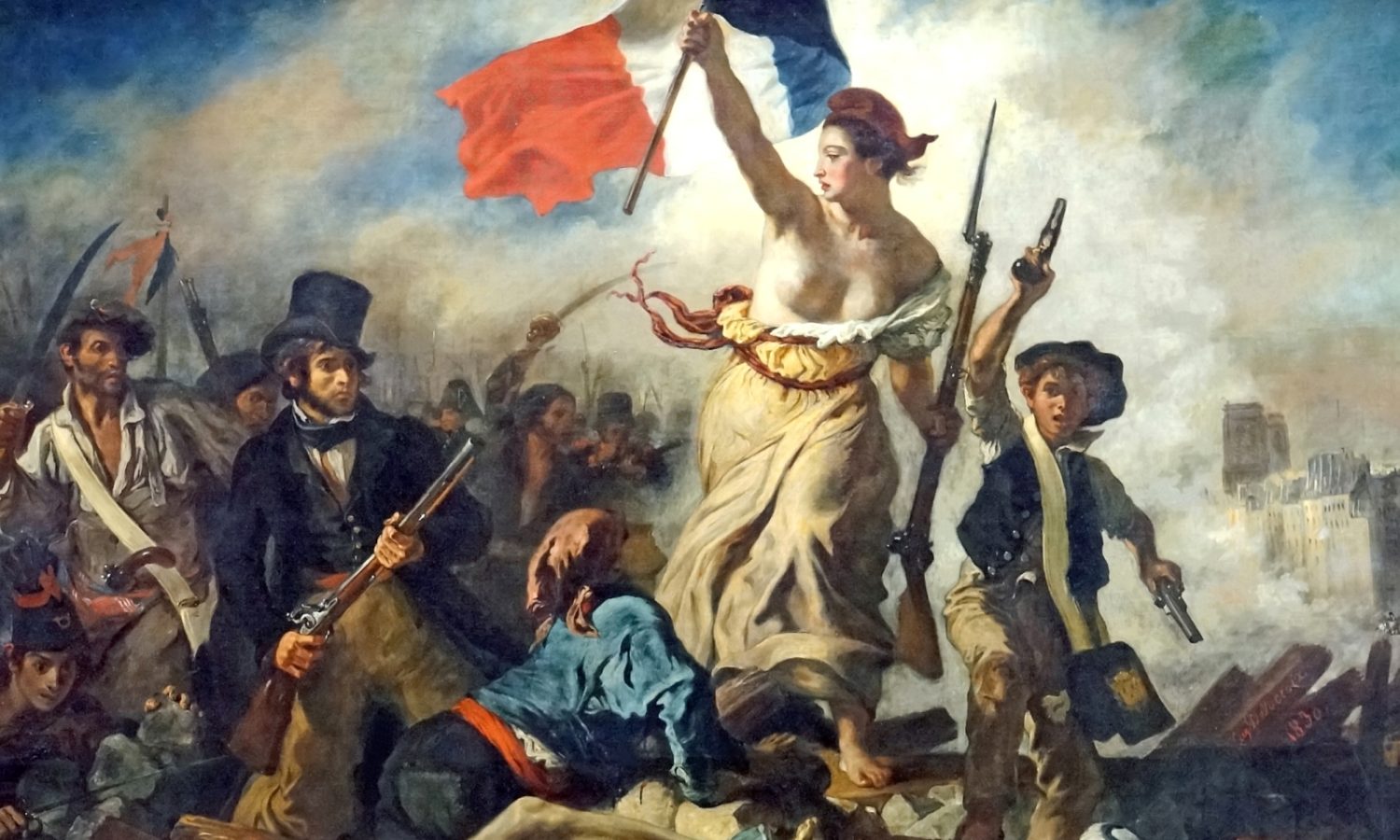
    Based on the concept of the floating (Clausewitz) and developing (Hegel) balance and harmony (Confucius), we strongly advocate the position, that the West as well as the East is only able to hold on their order and values, if these are discursively balanced and harmonized by the contribution of all great civilizations of the earth. Although the liberal world had its undisputed advantages like the rise of the newly industrialized nations, the current developments are already indicating its end. To put it to the core: freedom as the basis of the liberal world order is turning into oppression or civil wars without equality– just in the name of freedom. Whereas in the 20th century the colonized civilizations had to learn to live with the victorious West, in the twenty-first century the civilizations of the earth finally have to learn to live with one another. This task requires a floating balance (Clausewitz) between freedom and equality, a kind of harmony (Confucius: difference with unity and unity with difference) within societies and between states.

    Image Credit: WikiImages from Pixabay