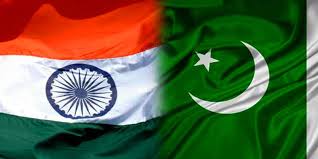
Tag: LeT

  • Assess Pakistan’s Sincerity to end cross-border Terror

    Assess Pakistan’s Sincerity to end cross-border Terror

    Published earlier in ‘The New Indian Express’.

    It is unfortunate that the solemnity of events marking the 10th anniversary of the barbarous terrorist attack on Mumbai, by the Lashkar-e-Taiba (LeT) was negated, by the hype and drama surrounding Indian participation in the opening of the Sikh holy shrine in Kartarpur. The Israelis sought out and arrested, or eliminated those German Nazis responsible for the holocaust of Jews during World War II. Even those Nazi War Criminals living in countries as far off as Argentina were sought out, eliminated, or brought to justice. Those responsible for, or involved in, the Mumbai massacres of March 12, 1993 and November 26, 2008, ranging from Dawood Ibrahim to Lashkar military commander Zakiur Rehman Lakhvi, live comfortably in Pakistan.

    Imran Khan, like other Pakistani leaders, has resorted to the usual Pakistani excuses, citing absence of evidence and “lack of cooperation” by India as being responsible for their inability to prosecute the perpetrators of the Mumbai attacks. But former chief of Pakistan’s Federal Investigative Agency Tariq Khosa exposed such ploys in an article in the Dawn newspaper in 2015. He was, however, later compelled to retract. Khosa acknowledged that the Commander and Deputy Commander of the 26/11 terrorists were traced and arrested. He averred that the investigations led to the FIA obtaining detailed evidence about the import and transportation from Japan to Lahore, of the fishing trawler used by the terrorists.

    The money trails were followed and linked to an accused in Pakistan, who was arrested. A couple of foreign-based financiers were also brought to trial. The room in Karachi from which the operation was commanded and controlled was located and the communications equipment used retrieved.

    The sheer brazenness of Pakistani denials of involvement was also evident from evidence available in the trial in Chicago of two persons of Pakistani origin, David Coleman Headley (born Daood Sayed Gilani) and Tahawwur Hussain Rana. They received long prison terms and the trial proceedings reveal the extent of Pakistani involvement in the planning and execution of the 26/11 strike. The so-called ‘trial’ of Lakhvi was a farce. The then ISI chief Lt Gen Shuja Pasha periodically visited Lakhvi in jail. His wife was allowed freely to meet him and their new baby was born while Lakhvi was in jail. Lakhvi is now a free man and continues his role in the LeT.

    Every time a new ruler emerges in Pakistan, his “friends” in India issue loud calls about why we should immediately enter into a serious dialogue with the new messiah, because of the goodwill towards India that he claims he has. Imran Khan is no exception. People seem to forget that Imran, popularly known as ‘Taliban Khan’, has been elected to office, thanks to the support of the powerful army. Under international economic pressure, the army is now trying to persuade the world that it oozes goodwill for India. We should interact with the military and civilian establishment in Pakistan to first assess how sincere they are in eliminating cross-border terrorism. Imran has realistically recognised that any formal dialogue can commence only after General Elections in India in 2019.


    Ambassador G Parthasarathy is a former diplomat and a prolific commentator on Geopolitics. He is a Trustee of TPF. The views expressed are the author’s own,
     

  • Pakistan continues to support terrorism

    Pakistan continues to support terrorism

    Kamal Davar                                                                                                     November 30, 2018/Op-Ed

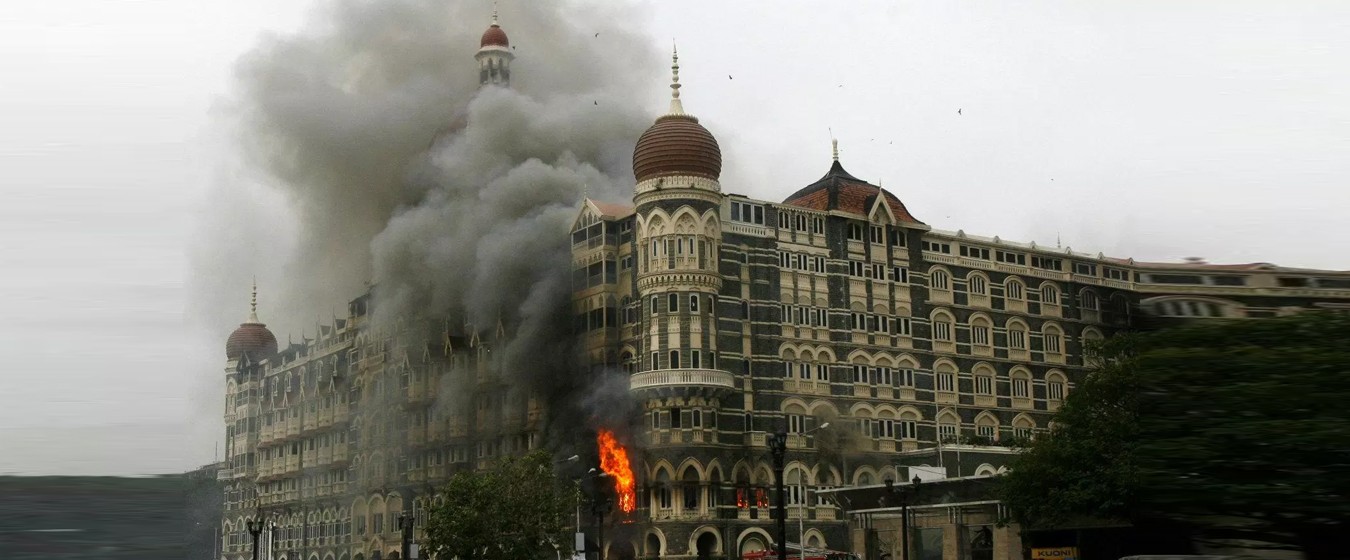
    As India observes the 10th anniversary of the ghastly Mumbai terror attack on 26 November 2008, which resulted in 166 fatalities including of foreign tourists and over 600 injuries, certain misgivings continue to agitate the minds of its concerned citizens and the security establishment alike.

    For decades, India has been the target of deliberate, well-planned Pakistani sponsored terrorism. Though India’s financial capital, Mumbai, has been a chosen destination for terror acts earlier too in 1993 and the Mumbai train massacres in 2006, those four horrific days of 26-29 November 2008 shook the nation and many civilized countries around the world. In matters of counter-terrorism endeavours, India woke up from its traditional languorous slumber, to a large extent, as it laboured to counter its own version of the infamous 9/11 terror strike on the American homeland. Was it a failure of intelligence, inadequate response mechanisms or, importantly, a systemic failure of the Indian security establishment? The candid answer lies in a combination of all these factors which resulted in this attack.

    In today’s increasingly troubled world, terrorism remains an ever burgeoning scourge outwitting advanced nations and their security forces time and again. Terrorism has explicitly developed into a rabidly dangerous reality with an expanding footprint, both regional and globally. The South Asian region, thanks to the original perpetrator of global terror, Pakistan, remains a hotbed of this plague, with no end in sight owing to continuing Pakistani machinations in India and Afghanistan. To Pakistan, the employment of terror as an extension of state policy appears to be more than a productive stratagem. Regrettably, Pakistan persists with its myopic and self-destructive terror policies in the region, continuing to foment terror in J&K, parts of the Indian hinterland through Nepal and, to some extent, in the north-east via Bangladesh.

    To successfully ward off cataclysmic events, a hard-nosed study and detailed addressal of the many professional and preparedness shortcomings which contribute to the likelihood of such occurrences is an imperative which security agencies can only disregard at the nation’s peril. It is the considered view of many security analysts that Indian commercial, public, military and other iconic, high-value institutions and infrastructure—perennial and lucrative targets for Pakistan-sponsored terror—have to have their security preparedness of the desired order to be vastly buttressed.

    Global problems beckon global solutions. With terrorism now a common threat confronting like-minded nations, intelligence sharing between friendly nations is sine qua non. To a large extent, especially after 26/11, the US intelligence community has established professional links with their Indian counterparts. Though some level of intelligence sharing does exist with certain friendly nations, India must forge far more deliberate intelligence cooperation with intelligence agencies of terror-afflicted nations like the UK, France, Russia, Afghanistan, Iran, Bangladesh and the Central Asian Republics. Though it is not a simple affair to develop seamless coordination resulting in speedy sharing of hard, actionable intelligence with foreign agencies, the criticality of effective counter-terrorism interoperability requires the same. Thus, India must take the lead with like-minded security outfits to get them on the same page. UN protocols on counter-terrorism and agencies like Interpol and the Paris-based Financial Action Task Force must endeavour towards greater cooperation to combat the common enemies of humanity.

    Looking inwards, it is endemic with some intelligence agencies in India to try and be ‘one up’ on each other by not fully sharing their inputs with sister institutions. This malaise, where existing, must be rooted out by the NSA. In addition, it is common knowledge that terrorists today are not merely in rag-tag outfits but with advanced technology and continually improving modern weaponry and tools to support their nefarious designs. Thus, security agencies have to keep abreast of all technological innovations taking place. As the nation endeavours to improve its technical intelligence capabilities in its myriad applications, human intelligence capabilities need also to be sharpened.

    A large number of terror outfits are labelled as ‘non-state’ actors which is a stark misnomer as some of the nations they are located in are supporting these terror conglomerates. In the case of Pakistan, its notorious spy agency, the ISI, funds, trains and equips a large number of these terror ‘tanzeems’ such as the Hafiz Saeed-led Lashkar-e-Taiba which carried out the Mumbai attacks under its watchful eye, the Jaish-e-Mohd, Harkat-ul-Mujahideen, and Sipaha-e-Sahaba, among others. US President Donald Trump’s recent imposition of financial sanctions on Pakistan for its duplicity in the war on terror was a long overdue measure. Similarly, Indian financial intelligence set-ups must keep a hawk’s eye on suspicious financial transactions from abroad to accounts in India.

    As Pakistan displays no signs of mending its ways, the Indian security establishment must factor in its preparedness the ever-looming and innovative terror threats from Pakistan and its proxies. Thus, for India, eternal vigilance and security upgrades remain the price to pay to fire-wall itself from terrorism.

    Lt Gen Kamal Davar is an Indian Army veteran and is former chief of India’s Defence Intelligence Agency. He is a visiting distinguished fellow at the TPF.

    This article was published earlier on November 25th, 2018 on Livemint.