Tag: Ledgers

  • How blockchain can help dismantle corruption in government services

    How blockchain can help dismantle corruption in government services

    As India celebrated its 76th independence day with great fanfare and jubilation, it is time to introspect on the most serious threat to India’s growth and emergence as a world. This threat is corruption, which is internal and societal. Over the 75 years of modern India’s journey, corruption has become endemic in Indian society. Infused by the political culture, corruption has seeped into every aspect of governance, be it the executive, legislature, or judiciary. This is so because an average citizen has come to accept bribing as a routine and inevitable part of daily life. Hence, if India has to eliminate the scourge of corruption it needs a massive transformation of its society. This can come only through the sustained practice of transparency, ruthless accountability, efficiency, and deterrent punishment. Corruption is commonly perceived as related to monetary benefits but it is much more in terms of misuse of power, coercion, disinformation, lack of transparency, non-performance, inefficiency and delay tactics, and the lack of accountability/responsibility. There is a misconception that digitisation will overcome corruption. Unless timelines, tamper-proof records, and transparency are ensured the corrupt will find ways to get around. These are clearly seen in the revenue tax systems, licensing systems, land registration systems etc. Even though these departments have digitised the processes well, there is a proliferation of middlemen linking the client and the department. This can only be eliminated by the right policies that enforce strict timelines, respond to citizens’ complaints, enforce accountability and transparency on the officials and create clarity for the public in the usage of such systems. The adoption of blockchain technologies could go a long way toward eliminating corruption in India. Widespread corruption has been India’s greatest threat and it is never more urgent than now to address this problem through innovative technologies like blockchain.

    TPF republishes this article on ‘Blockchain and Governance’  from the World Economic Forum under the creative commons license 4.0

    TPF Editorial Team

    Key Points

    • Blockchain could increase the fairness and efficiency of government systems while reducing opportunities for corruption;
    • Blockchain could improve the transparency and disclosure of procurement processes, investment in which can be lost to corruption;
    • The emerging technology can also enhance the property and land registry systems, streamlining lengthy processes and protecting people’s rights.

    Governments regularly have to make trade-offs between efficiency and fairness in their services. Unfortunately, choosing one over the other often increases the likelihood of corruption. In efficient systems, the public is largely content to operate within the bounds of that system; inefficient systems cause large numbers of individuals to seek less-than-legal workarounds. Similarly, fair systems engender trust, pride and a sense of community; while unfair systems encourage individuals to seek out illegal alternatives without remorse.

    Occasionally, new technologies come along that offer the opportunity to increase both efficiency and fairness. Blockchain is one such opportunity and it has a variety of use-cases for government applications. Here are two in more detail:

    Blockchain and procurement

    Public procurement is the process of governments acquiring goods, services and works. It represents a significant portion of governmental budgets, accounting for 29% of general government expenditure totalling €4.2 trillion in OECD countries in 2013. With so much money at stake, it is unsurprising that OECD estimates that 10-30% of the investment in publicly funded construction projects may be lost to corruption.

    Public procurement is vulnerable to corruption for a number of reasons. Parties in the procurement process, both on the public and private sides, are induced into corrupt acts by the size of potential financial gains, the close interaction between public officials and businesses, and how easy it is to hide corrupt actions. Blockchain has the potential to protect against these weaknesses at almost every stage of the procurement process.
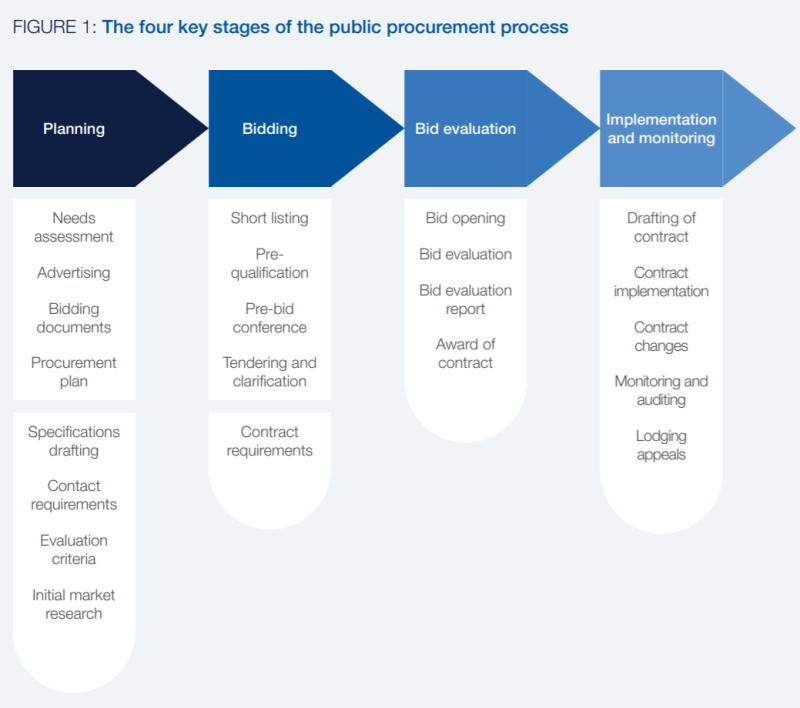
    In the planning stage, public officials create evaluation criteria by which bidding companies will be judged. In the bidding evaluation stage, public officials assign scores to companies using the evaluation criteria as their rubric. Without transparency, there are many opportunities for compromised public officials to rig the outcome of the evaluation process. Evaluation criteria could be retroactively changed or company bids altered, for example. Blockchain can guarantee any change is public, the original information is retained and there is a record of who made the change.

    Blockchain can also encourage a wider coalition of stakeholders to participate in and monitor procurement cycles. Too often, the most active stakeholders in any given procurement process are the public officials and the businesses directly involved – a potential problem when more than half of all foreign bribery cases likely occur to obtain public procurement contracts. Watchdog organizations, end-users, the media and citizens are discouraged from participating because procurement information is not readily available, untrustworthy, modified and/or delayed. Blockchain can provide an easily accessible, tamper-proof and real-time window into ongoing procurement processes

    Projects integrating blockchain into procurement, such as this pilot programme in Colombia, conclude that “blockchain-based e-procurement systems provide unique benefits related to procedural transparency, permanent record-keeping and honest disclosure.” The Colombia project noted several drawbacks, such as scalability and vendor anonymity, but newer proposals like this one to overhaul India’s public procurement system are taking steps to overcome those and other shortcomings.

    Blockchain and registries

    Land title registries track the ownership of land and property for a given region. Registration titling systems have had important consequences for the economy, leading to “better access to formal credit, higher land values, higher investment in land, and higher income.” Yet they are far from perfect. They are inefficient, for example, closing a property sale can take months and typically consumes 2-5% of the purchase price of a home. Registration systems can act as bottlenecks for land transactions. There are complaints going back to 2015 of England’s Land Registry having six-month transaction delays and similar complaints persisted in 2020.

    The inefficiencies in land titling systems are a major source of corruption. The Organized Crime and Corruption Reporting Project’s 2019 report on land registry corruption in Bangladesh found that obtaining a licence as a deed writer incurs a bribe to the highest-level administrators. Land registry corruption is not restricted to developing regions: in regions with longer histories of legal stability, it simply becomes more complex. Anti-corruption NGO, Global Witness, estimated in 2019 that £100 billion worth of property in England and Wales was secretly owned by anonymous companies registered in tax havens.

    A good first step to fighting corruption is by cutting down on inefficiencies. Blockchain can streamline much of the process. Take, for example, the number of steps required in the UK for one person to sell the property to another person and compare this with a blockchain-based registry system.
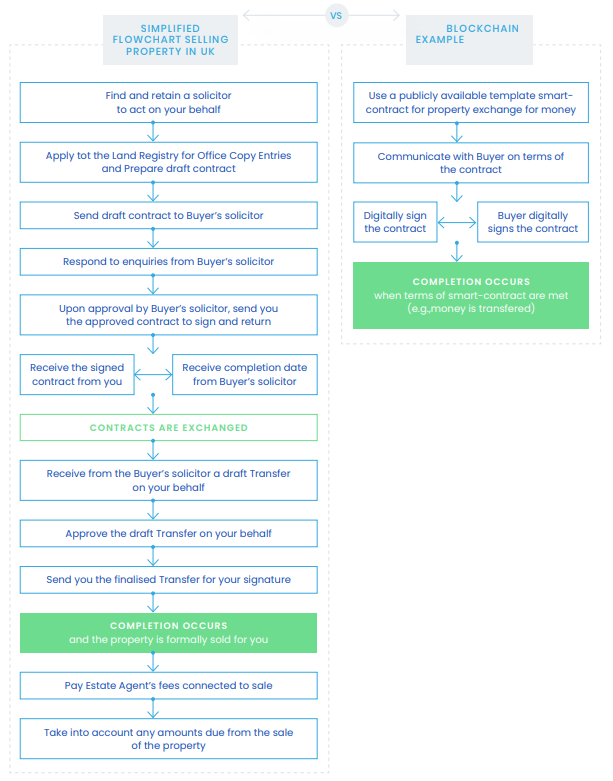
    Some countries are already experiencing positive results. In 2018, Georgia registered more than 1.5 million land titles through their blockchain-based system.

    An urban land registry project underway in Africa uses blockchain to address the problems of digitizing urban land registries. In many densely populated impoverished urban areas, no pre-existing land registry or paper trail exists. Relying on the meagre data available often causes legal disputes. Courts quickly become overwhelmed and digitization efforts stall.

    Blockchain is now being added to the project. To confirm property rights, the new system seeks out and consults community elders. Through a blockchain-based application, those elders receive the authority to confirm the validity of land registry claims. The elders can check directly with residents if they consent to the land assessment. By delegating cryptographically guaranteed authority to respected community members, the quality of the data is improved and the number of land dispute cases handled by the judiciary should decrease. Finally, the remaining cases should resolve faster since the elders’ cryptographic confirmations are admissible as evidence for land dispute resolution.

    The final challenge: Adoption
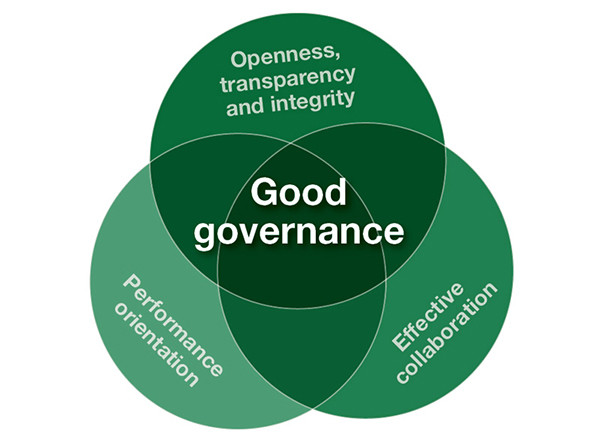
    The government blockchain-based projects referenced in this article represent just a few of a growing number of pilot or in-production applications of blockchain. This shows that governments are serious about fixing inefficient and unfair services. The potential gains from blockchain are substantial, yet as a new technology, there are many challenges in designing and implementing blockchain-based applications. For large institutions such as governments to deploy blockchain-based applications in a timely fashion and reap the benefits, education and tools are imperative.

  • Blockchain Technology for Indian Defence Sector : Acquisition Process

    Blockchain Technology for Indian Defence Sector : Acquisition Process

                                                         KEY POINTS

    1. Block chain technology brings in transparency, immutability and accountability which can transform the acquisition process into a very scientific, transparent and efficient system.
    2. The benefits derived from implementing blockchain technology would include elimination of subjectivity, bring in accountability, completely eliminate the role of undue influence and middlemen, and will create a level playing field for all players .
    3. Smart contracts using blockchain technology can ensure efficient compliance and enabling greater auditability and real-time identification of responsibility.

    Introduction

    Blockchain technology has become a popular term today invariably because of the benefits it provides in a P2P (peer-to-peer) network like data immutability, irreversibility, accountability and transparency. It was first used by Satoshi Nakamoto, (a pseudonym of a person or a group of people), founder of bitcoins to prevent backdating and data tampering. Blockchain is an incorruptible, decentralized, digital ledger of transactions that can be programmed to record not only exchange of information. Critically, for information to be exchanged between any two nodes within in a blockchain system, all nodes (or most nodes, depending on the structure) must agree that the exchange of information is legitimate. They do this through a variety of methods; either acting as a recognized trusted party or by solving complex cryptographic problems. Once the exchange is accepted, that exchange is written into a shared copy of a digital ledger that contacts all records of transactions that is effectively unchangeable. The benefits blockchain provides has caught the eyes of a lot of people in the world and are looking forward to implementing this technology in almost all fields like healthcare, automobile, defence, banking, agriculture and so on. Countries like China, Russia, America and South Korea are highly interested in implementing this technology in defence and other sectors. One of the key reasons being this technology optimises business processes effectively wherever it is implemented. This paper focuses on the application of blockchain technology in the Indian defence acquisition process focusing on its advantages in its implementation.

    Analysis

    Blockchain technology is a trust-less architecture. ‘Through crypto-economics, users don’t need to trust in any individual or organisation but rather in the theory that humans will behave rationally when correctly incentivised’. Blockchain in defence acquisition process would be a phenomenal game changer as it would lead to faster and quality decision-making because all the parties in the acquisition process are thoroughly informed and committed. Blockchain offers a more secure record of supply chain management and enables greater auditability and real-time identification of responsibility.  Since blockchain acts as an important tool to take major decisions, it pushes all the nodes (participants like Service Headquarters, DRDO-Defence Research and Development Organisation, HQ IDS, Acquisition Wing of MOD, Defence Finance, and so on) in the network to feed high quality and accurate information in the network. It establishes clarity in the process ensuring clarification of responsibilities to all the nodes in the network.

    The inherent security that stems from the nature of immutability and peer-to-peer characteristics of the blockchain lends itself to some critical applications within defence. Successful exploitation of blockchain is dependent on stringent data governance and quality assurance. Once the data is stored on a blockchain it is immutable, and hence, it forces participants to become quality assured with their data/information prior to storage. Quite naturally, it will bring in a culture of professional diligence, accuracy, and integrity. Blockchain works as an immutable record of transactions that do not require to rely on an external authority to validate the authenticity and integrity of the data/information.

    Smart Contracts:      If blockchain technology is taken up in defence acquisition process, smart contracts become an essential part of it. Smart contracts are a set of computer programs on the blockchain that can automatically execute activities when certain conditions are met. They can be viewed as a normal contract with terms and conditions that is converted to a digital script and stored on the blockchain. Since blockchain works on a distributed decision making model and not a central party that is powered to make all the decisions, the process might get complicated at times. To ease this, smart contracts can automate parts of the process that can overcome this complexity. For example, smart contracts can track the transfer of equipment from the vendor to buyer. Once the buyer receives the equipment as per the conditions given in the smart contract, it will automatically expedite the funds to seal the transaction. Besides, smart contracts can eliminate the problems of delayed compliance or non-compliance to contractual issues and vendors’ propensity to contest penalties, a frequent problem in Indian defence contracts. Blockchain based smart contracts are legally fool-proof and hence, compliance is the only way out.,

    Since defence acquisition process and its inner workings function on a parallel basis to save time, the process could be more optimised if blockchain is effected fully.  The whole process can come under blockchain right from generating an RFI, (where it deals with acquiring information about vendor capabilities and their product features for making better buying decisions) till post-contract management. It is also important to recognise the need to invest in creating significant data-bases that store and process volumes of confidential, operational, and industrial information.

    This information can enable creation of verified and immutable data-base on the nation’s production capacity, indigenous technological status to ultimately enabling the decision on imports vs indigenous development, governed by operational requirements of time and relevance. It will also enable the users (military) to have a better mapping of Indian technological capabilities, resulting in more sound formulation of SQRs. Essentially the RFI process should collate:

    1. Production capabilities inside the country.
    2. Technological expertise available within the country for design and development within the required time frame.
    3. Identifying the solution of acquiring technologies through JV route.
    4. Establishing products and technologies available outside the country in the context of our operational requirements.
    5. Production capabilities outside the country.
    6. Armed forces modernisation requirements for enhancing the war fighting capability.

    All of this can be made a holistic process and come under the purview of blockchain technology, which will optimise the whole procedure bringing in accountability, transparency and data immutability that has been the dire need for a long time.

    The whole acquisition process involves multiple departments and stakeholders that interact through multiple meetings, discussions, brainstorming, and final decisions arrived at. Currently all these are controlled through bureaucratic procedures and centralised control . This classical procedure has given room for any number of accusations, scams, and delayed decisions. Blockchain technology overcomes all of these problems as it is based on innovative automation using AI, complete decentralisation, and the very fact that its structure is based on trust-less architecture. Hence, any decision that is committed to is recorded for posterity, and is immutable, transparent, and irrevocable. More importantly, there will no cases of missing files, no cases of mistaken attributability, and the question of illegal modification is simply impossible. While implementation will have technical challenges, blockchain technology will make the system unquestionably transparent, accountable, and of high integrity.

    Transparency is the biggest strength of the blockchain technology, and any attempt at post event modification or tampering with records, is impossible. This tamper-proof benefit offered by blockchain ensures integrity in the acquisition process resulting in trust amongst the nodes in the network.

    Important details in the selection process can be scrutinised even more effectively, for example:

    1. Company’s financial status
    2. Product features and specifications
    3. Annual report
    4. Past contract dealings and so on

    All of this can be witnessed by all the nodes in the network and a sound and swift decision can be made.

    Private Blockchain Network: While the general or public systems can use the public blockchain, the defence sector will necessarily be using the private blockchain network. A private blockchain is a permissioned blockchain. Permissioned networks place restrictions on who is allowed to participate in the network and in what transactions. It works with revealing the identity, role and organisation of the node before adding them to the concerned network, so one can determine whether the information has to be sent to them or not. This makes the nodes accountable to their actions in the process and any signs of actions by them, which can be detrimental, are easily exposed and corrective actions can be initiated. Where parties are culpable, penal actions can be made swift and effective. This type of blockchain is present in private enterprises for swift and sound decision making and meeting compliance requirements. Private and closed blockchain can be implemented within the procurement committee, who are in charge of making decisions regarding supply chain management and acquisition of products and spares across all ranges.

    Conclusion

                   Blockchain will be a total game changer if implemented in our defence acquisition system. By using blockchain technology teams building decentralised projects can take advantage of its most valuable strength – the ability to reach a shared truth that everyone agrees on without intermediaries or a centralised authority. The chain works as an immutable digital ledger. It is not possible to modify any block without changing the entire chain, this makes it highly valuable in what is often, a highly contested and complex defence domain.

    It is also highly beneficial for defence industries for their own functioning, transparency and efficiency. Recognizing the benefits offered by it, countries like the US, China and South Korea have already initiated the process of implementing blockchain in their respective defence industries. Issues like financial mismanagement, mysterious and anonymous order approvals, inability to track orders in supply chain and so on can easily be eliminated.

    Blockchain technology is seriously being looked at or being implemented by many countries in areas of defence and security, blockchain technology in defence, blockchain for military defence, blockchain for aerospace and defence etc.

    The immutability of blockchains allows all participants involved in the network to be confident in the fact that the data written to them hasn’t been tampered with or changed in anyway and that it will be available and accessible far into the future. India’s entrenched bureaucratic structure and its political culture tends to favour archaic and over-centralised systems for vested interests. Given the nature of India’s challenges in areas of defence modernisation, failure of its control over critical technologies, inefficiencies in its defence industries (both private and public), and a high import-dependency for defence equipment, it is imperative to start with innovative technologies like the blockchain to reform its defence architectures, acquisition system in particular. Political will is necessary to initiate this transformation. With the current Government mandate, modernisation in Indian defence being one of the main objectives, initiating it from the acquisition process would be the way to go about it.

    S Swaminathan is a research analyst with TPF. He holds a masters in Defence and Strategic Studies.

    Image Credit:Photo by André François McKenzie on Unsplash