Tag: Leadership

  • The Indian Military: Five Issues for the immediate Future

    The Indian Military: Five Issues for the immediate Future

    While much has happened in 2023, new developments in the security dynamic warrant a relook at the transformation process. India now has to be prepared to prosecute both short and prolonged wars. Clearly defined political aims must be translated into achievable military objectives on the borders.

    2023 was an eventful year. In addition to ongoing conflicts in Africa, Afghanistan, Syria and Ukraine, it witnessed the start of yet another war in the Gaza Strip, which by early 2024 had expanded across West Asia. The Red Sea region is witnessing duels between the Houthis and the West. Israel and Hezbollah are skirmishing in Lebanon. Iran has carried out strikes in Iraq and Syria. The US has blamed Iranian proxies for causing the deaths of its service personnel in Jordan and retaliated accordingly across Iraq and Syria. Iran and Pakistan have carried out tit-for-tat missile strikes. While conflicts such as Nagorno Karabakh have ended for now, other potential trouble spots in the Balkans and South and East China Seas continue to make headlines.

    This uncertain security environment has put trade, supply chains and, in some cases, national sovereignty at risk. At home, long-festering structural issues in the India-China relationship have come to a head. China’s belligerence is on full display along our Northern borders even as it makes further inroads in Bhutan, Bangladesh, Nepal and Sri Lanka. In 2024, Maldives has displayed a pronounced anti-India tilt. Pakistan’s intractability and support for terrorism, despite its precarious internal situation and volatile borders on its West, remains a cause for concern. In Myanmar, the civil war rages on, while the outcome of ethno-religious conflict, which has spilled across international borders in Manipur and Mizoram, poses a different challenge.

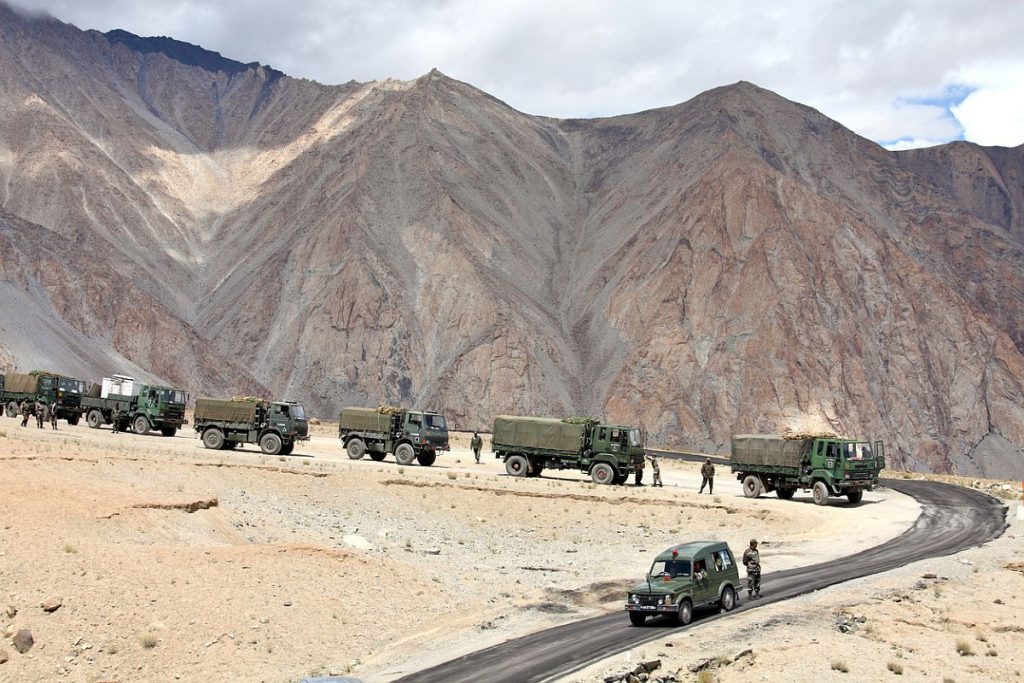
    Despite 20 rounds of Corps Commanders talks, the Army is completing its fourth winter of ‘mirror deployment’ along the Line of Actual Control (LAC). Small-scale operations at the LAC have continued at least till 2022, as citations for gallantry in respect of individual soldiers on Republic Day indicate. The Chief of Army Staff (COAS) announced in his annual press conference in January that there will be no reduction in troop levels until the return to the ‘status quo ante as of mid-2020. Concurrently, the Army continues to battle terrorists on both sides of the Pir Panjal ranges in Jammu and Kashmir. The Air Force remains highly alert even as the Navy is committed full time in the Western Arabian Sea and East coast of Africa, successfully protecting Indian shipping ( and ships of other nations) from piracy and other threats. In sum, the Indian military is committed to ensuring the nation’s security full-time.

    The Indian Army had labelled 2023 as its ‘Year of Transformation’, based on the five pillars of Force Structuring & Optimisation, Modernisation & Technology Infusion, Systems, Processes & Functions, Human Resource Management and Jointness & Integration. The Ministry of Defence (MoD), in its 2023 Year End Review, has listed various proposals totalling over Rs 3.50 lakh crores that were approved to enhance operational preparedness. These cover a wide range of equipment and upgrades – from procurement of light combat helicopters to indigenous upgradation of Su-30 MKI aircraft, purchase of medium-range anti-ship missiles for the Navy and acquisition of towed gun systems for the Army. Other notable items are procurement of Sea/ Sky Guardian drones (31 of these since approved for sale by the US State Department in February 2024), utility helicopters, light armoured multi-purpose vehicles, anti-tank guided missiles (ATGMs), Very Short Range Air Defence Systems (VSHORAD) and cadet training ships. Improvements in other spheres – progress towards Atmanirbharta, indigenisation, border infrastructure, roads, induction and career management of women, and welfare of veterans- have also been covered. The individual services have also listed their achievements in enhancing operational capabilities and overall efficiency.

    While much has happened in 2023, new developments in the security dynamic warrant a relook at the transformation process. India now has to be prepared to prosecute both short and prolonged wars. Clearly defined political aims must be translated into achievable military objectives on the borders. The nature of these conflicts will be difficult to determine. With elements of both the conventional and non-conventional employment of weapon systems across all five domains with simultaneous conduct of information operations, they will be genuinely hybrid and constantly mutating, based on whichever element achieves more significant success.

    As a first step, it becomes necessary to incorporate fresh thought and prepare a fully fleshed-out tri-service Indian military doctrine. The integrated doctrine issued by the Integrated Defence Staff (IDS) in 2017 requires review to incorporate analysis and lessons learnt from Nagorno Karabakh, Ukraine, Gaza and our current experiences on the Northern borders, with the ‘collusive threat’ now a reality. Given that doctrine is essentially a set of principles that tells us ‘how to do’, i.e. how to achieve desired effects and not specifically ‘what to do’, capability development logically flows from doctrine analysis. Here, there has to be a consensus between the services on capabilities necessary to fulfil the military’s mandate – new platforms or technology, organisational issues, enhancement of joint or single service logistic capability, training and human resource aspects or upgrades.

    For the short to medium term, increasing focus on new technology must be balanced with the capacity to absorb technology and the context in which such weapons are envisaged to be employed. While incorporation of  AI, quantum computing, electronic warfare, stealth technology, space warfare and the like will be very much on the cards, all these can truly be incorporated once there is greater clarity and broader consensus upon two issues – what is the right weapon mix for a country like India to have, in terms of the proportion of latest generation weapons vis a vis what remains in the inventory and can be employed effectively now and in the immediate future, to thwart the enemy’s perceived designs? This is especially important when we look at the options available to incorporate new technology in terms of the time required for indigenous self-development and the secretive mindset of foreign suppliers with respect to sharing the intricacies of technologies that power such costly weapon systems. Secondly, a holistic consideration of the number of technologies that need to be developed in this time frame as part of capability development becomes necessary when we analyse the weapon/capability mix required to defend against an attacker – including one whose political and military objectives at the start of a conflict remain opaque, and whose capabilities and pattern of operations are possibly more overhyped than actual.

    The above issues become even more relevant when we look at the allocations for defence in the interim budget presented in Parliament on 01 February this year. Detailed analyses on the defence aspect will likely be published in days to come. In the context of this article, just two examples are highlighted. First, the 30 per cent higher allocation for Border Roads is hugely appropriate as it fits into future planning and enhances capability and capacities. Second, the deployment of the budget of Rs 23,855 crores to the DRDO and planned funding of a Rs 1 Lakh crore corpus for R&D projects, including ‘deep defence’ technology, while a positive step, must be carefully thought out, based on the aspects highlighted in the preceding paragraphs.Industry start-ups are doing a valuable job introducing the latest generation of weapons and technology to the military in concert with organisations like the Army Design Bureau. The incorporation of new technology and subsequent production of new weapons will be predicated on answers to these issues.

    Organisational aspects are another area for the military’s focus in 2024. Work on integrated theatre commands continues and will surely see the light of day. Notwithstanding the non-availability of a National Security Strategy, the Integrated Defence Staff (IDS) has to list out with absolute clarity what the mission of each theatre command is, in synchronicity with national aims. How to ensure optimal efficiency of these integrated resources for mission accomplishment has to be carefully thought out through multiple iterations with all stakeholders. This will have to be subject to rigorous validation in several tabletop and ground variety exercises to arrive at a common and operationally validated solution.

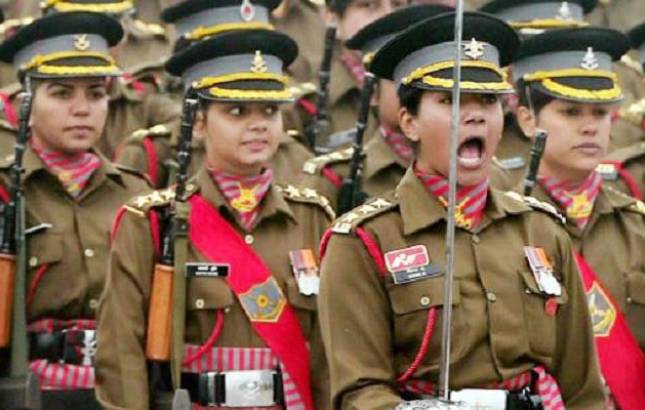
    Human resource issues will compete equally for the military’s attention. The Agniveer experiment has completed a little over one year. The performance of these soldiers in operations has been on par with their counterparts of yesteryears (of the same seniority). However, it is their performance in garrison soldiering that is yet to be fully gauged. As mentioned by the COAS, their assessment at multiple levels has to be continuously finetuned to remove any traces of subjectivity. Close monitoring of this scheme is necessary before pronouncing judgement on its success or otherwise, specifically its impact on regimental ethos and overall effect on unit efficiency. Employment of increasing numbers of woman Agniveers and woman officer intakes is another area which will occupy the minds of Commanding Officers (COs) of the three services. The recent decision of the Karnataka High Court in January 2024 striking down the provision of the Indian Military Nursing Services Ordinance 1943, which gives 100% reservation for women in nursing officer posts, is another spinoff in the battle for gender equality. This lends further urgency to the need to evolve an Indian model for the successful integration of women into the armed forces. Gender sensitisation of both sexes in uniform is of utmost priority.

    Managing high quality men and women drawn from all corners of India mandates a high degree of personal and professional integrity, sense of balance, and strength of character in military leaders at every level, specially so in an era where misinformed (or deliberate) inputs on social media can wreak havoc in society.

    Finally, as always, the military has to continue focusing on reinforcing institutional values. All militaries are dynamic. They must be nurtured and motivated by caring, professional and impartial leadership. A quote attributed to Sir Winston Churchill in his address to the House of Commons in 1923 says ‘…the armed forces.. are living things, if they are bullied, they sulk, if they are unhappy, they pine, if they are harried, sufficiently they get feverish, if they are sufficiently disturbed, they will wither and dwindle and almost die…’.Preserving the health of their respective services along with enhanced operational preparedness is the foremost task of the service chiefs. This comes about by careful selection of higher leadership, strict adherence to the culture, ethics and norms of the Indian military while forswearing all else at the altar of professionalism. Managing high quality men and women drawn from all corners of India mandates a high degree of personal and professional integrity, sense of balance, and strength of character in military leaders at every level, specially so in an era where misinformed (or deliberate) inputs on social media can wreak havoc in society. The responsibility of the Chiefs in this regard is onerous indeed and cannot be overemphasised. All else follows from this.

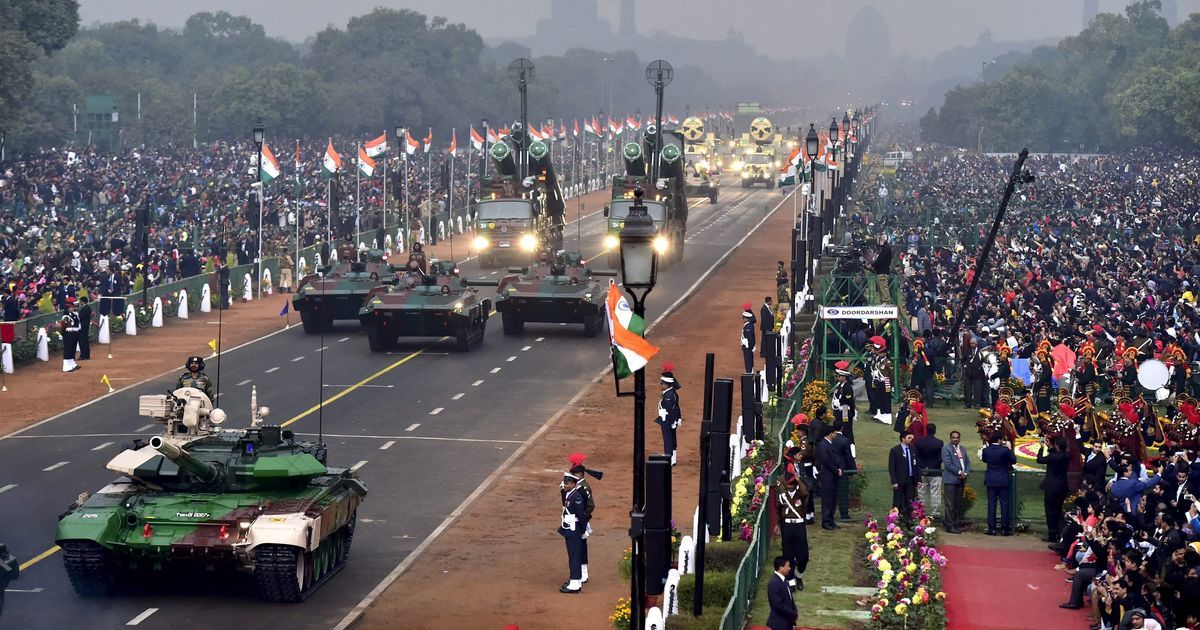
    Feature Image Credit: scroll.in
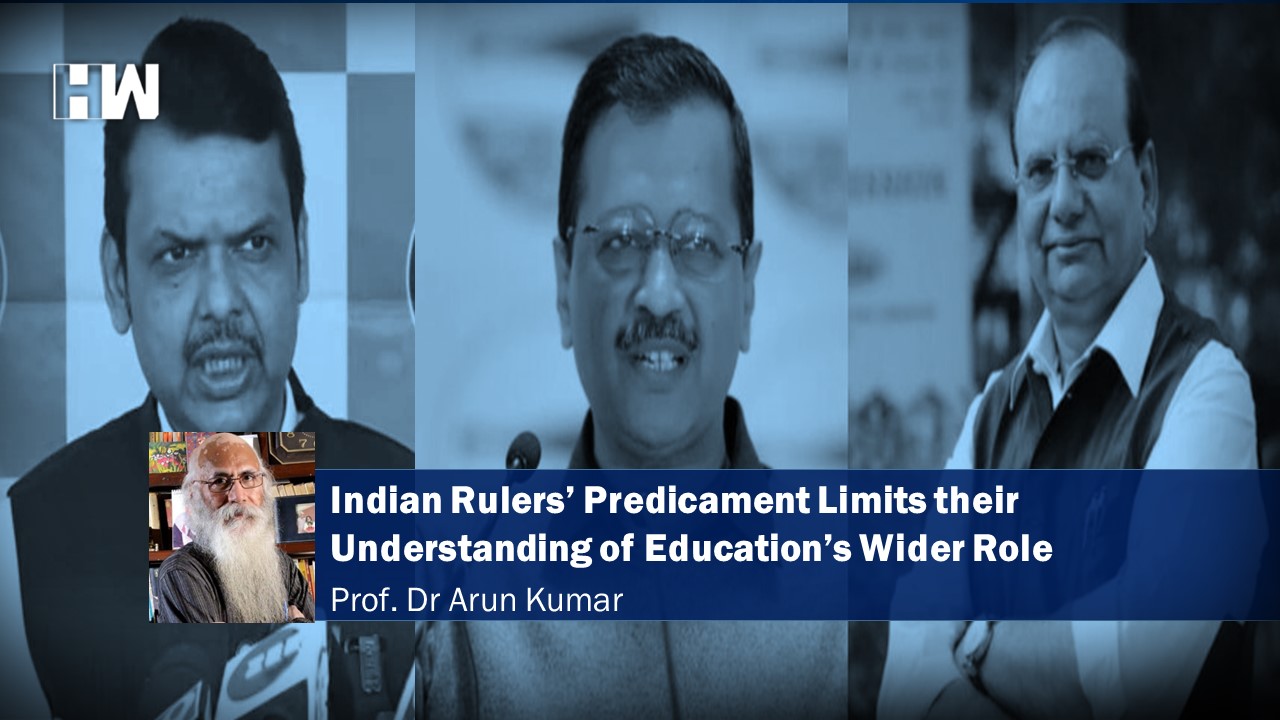
  • Indian Ruler’s Predicament Limits their Understanding of Education’s Wider Role

    Indian Ruler’s Predicament Limits their Understanding of Education’s Wider Role

    Mr. Fadnavis, Dy. CM of Maharashtra has exhorted the youth to come forward in foiling the attempts of urban naxals from getting into universities. Since anyone differing from the establishment is being called urban naxal these days, this is a call to curb dissent in the
    universities.

    Earlier, Delhi’s Lt. Governor V K Saxena is reported to have said, “… degreeyan toh padahi ke kharch ki raseedein hoti hain. …” (… degrees are mere receipts of money spent on studies …). This was in response to the Delhi CM, Kejriwal’s reported barb that India needs an “… educated PM for the nation’s well-being”.  So, the educational qualifications of leaders have become an issue.

    These statements reflect the current Indian rulers’ skewed vision of education. For one dissent is not acceptable and for the other education is only about money spent and not the larger role it plays in society.

    [powerkit_button size=”lg” style=”info” block=”true” url=”https://hwnews.in/news/opinion/indian-rulers-predicament-limits-their-understanding-of-educations-wider-role/” target=”_blank” nofollow=”false”]
    Read More
    [/powerkit_button]

  • Squaring the Circle

    Squaring the Circle

    John Paul Rathbone, writing in the Financial Times, on the United Kingdom’s efforts to transform its military amid public spending constraints and growing strategic challenges, puts it extremely well when he wonders as to how its military will “square the circle of being everything, everywhere, all at once.” 

    This, however, is not just a problem that afflicts the UK or its European and NATO Allies, but the rest of the international community as well. The impact of the Russo-Ukrainian Conflict, in what increasingly appears to be an unwinnable war, is restricted not only to the geo-political or and national security spheres but also calls for a clear understanding of how future conflicts will play out and what kind of a military capability is essential if that country is to remain relevant in the changing global order.

    In our context, the challenges are far more complex and greater as we face two hostile neighbours, both nuclear armed, and unwilling to give any quarter. Indeed, it is quite ironic that while China poses the greater threat to our aspirations, ambitions and future prosperity, it is the dysfunctional and dystopian Pakistan, that threatens us with Armageddon, looking to take us down with it, as it seems intent on committing hara-kiri

    [powerkit_button size=”lg” style=”info” block=”true” url=”https://timesofindia.indiatimes.com/blogs/para-phrase/squaring-the-circle/” target=”_blank” nofollow=”false”]
    Read More
    [/powerkit_button]

  • On China and Economy, Dialogue Is the Need of the Hour

    On China and Economy, Dialogue Is the Need of the Hour

    The strength of democracy is that debate and dialogue provide society with a self-corrective mechanism.

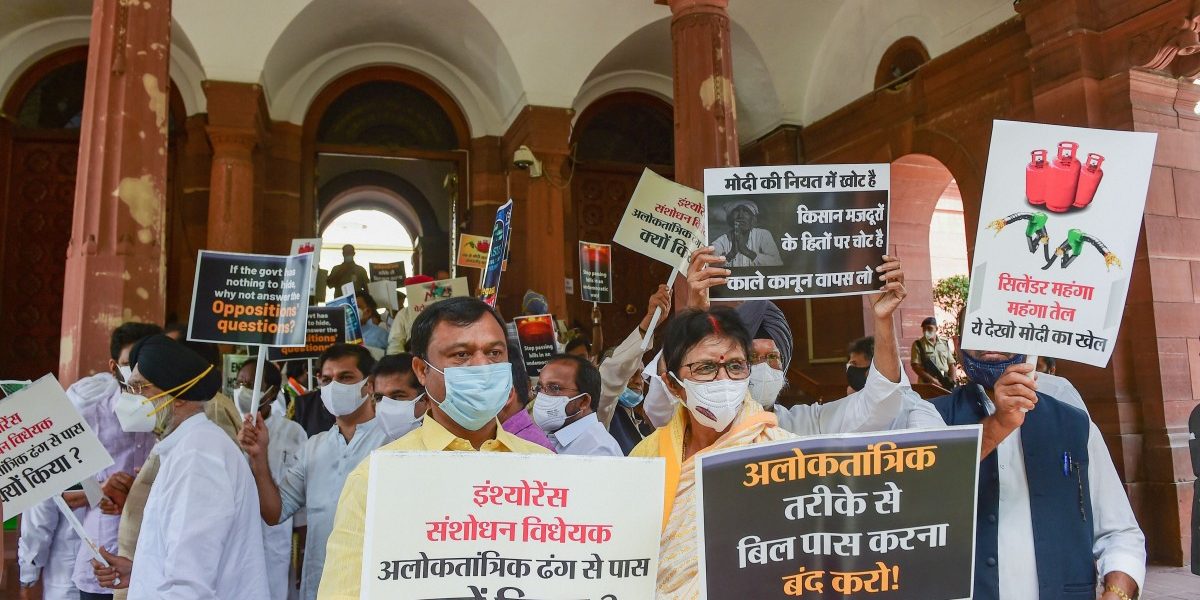
    The news of Chinese transgression in Tawang on December 9 is disturbing. The opposition has repeatedly demanded a discussion in the parliament but the government has not agreed. The government’s stock reply is that the matter should not be politicised and that we should have full faith in our army and our brave soldiers.

    This is diversionary since no one is saying that our soldiers are at fault or are not fighting valiantly. The issue is about policy and India’s political stance vis-à-vis China because of which the brave soldiers are suffering. A full discussion in parliament will help clear the air in this regard.

    [powerkit_button size=”lg” style=”info” block=”true” url=”https://thewire.in/rights/china-economy-dialogue-debate-democracy” target=”_blank” nofollow=”false”]
    Read More
    [/powerkit_button]

  • Don’t Put Troops in Harm’s Way

    Don’t Put Troops in Harm’s Way

    Every military campaign is fraught with dangers. The Russian army finds it in a mess it cannot jiggle out of. We should think twice before any adventurism in POK.

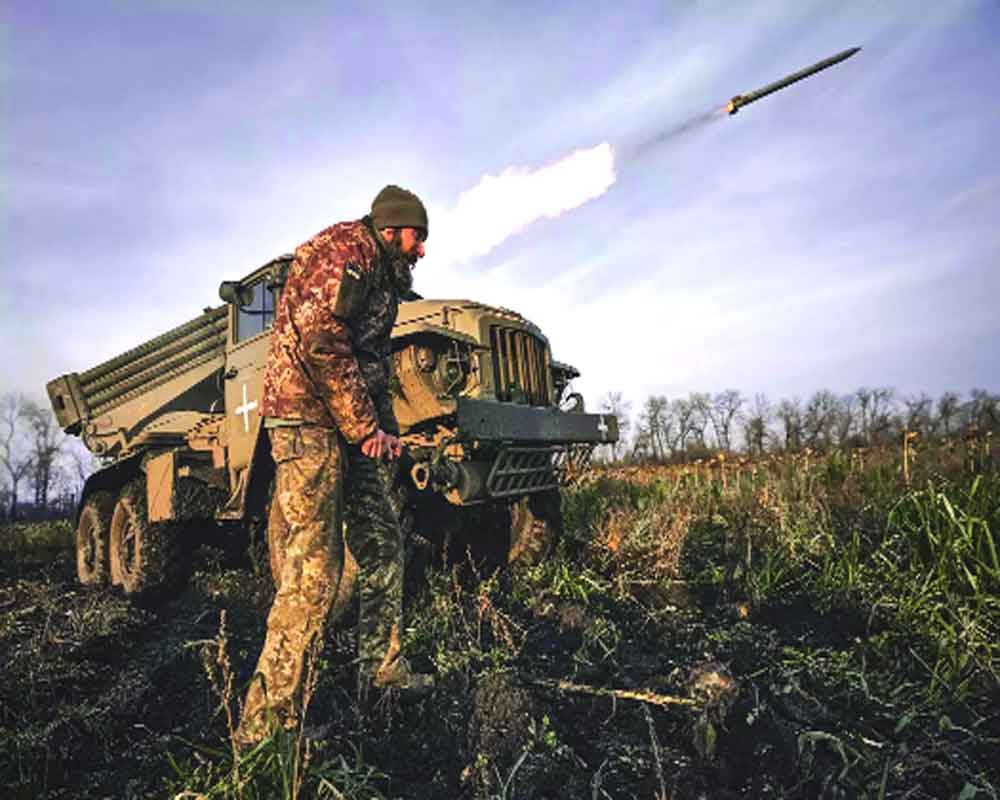
    Nine months on into the conflict in Ukraine, with its reputation and capabilities in tatters, the Russian Armed Forces are just hanging on by the skin of their teeth, hoping that the winter will allow them a badly needed reprieve to reorganise. One cannot help but wonder as to how they found themselves in such dire circumstances, despite a decade of reforms and modernisation.

    Clearly, much of the responsibility for the utter disaster that has ensued and the difficult predicament Russia finds itself in, must rest with Putin. However, it is utterly inconceivable that he acted without the advice, support and acquiescence of the military hierarchy. Though many of the missteps may be attributable to faulty intelligence assessments, the responsibility for the military’s non-performance rests squarely on the senior hierarchy of the Russian Armed Forces. Their obvious incompetence, lack of leadership skills and professional acumen, and the corruption that has been laid bare are without parallel. Yet, they are the lucky ones, given that Stalin executed Generals for much less.

    It is standard practice in all countries that selection of the military’s top leadership is overseen and approved at the highest political level, as it should be. Where autocracies and totalitarian regimes differ from democracies is in the necessity for them to give primacy to ideology or loyalty to the Supreme Leader even at the cost of professionalism. This lack is bound to percolate to lower levels over time and while it ensures the leadership remains unchallenged in the normal course of events, its consequences in a conflict can be devastating as has been the case with the Russians.

    [powerkit_button size=”lg” style=”info” block=”true” url=”https://www.dailypioneer.com/2022/columnists/don—t-put-troops-in-harm—s-way.html” target=”_blank” nofollow=”false”]
    Read More
    [/powerkit_button]

  • Politics and the Military don’t gel

    Politics and the Military don’t gel

    It would be in the interest of the political establishment to desist from politicising the military. Creating an uncontrollable monster, that will go on to bite the hand that feeds it, is nothing but sheer stupidity.

    The former President of the United States, Donald Trump, has always had the reputation of being a man of questionable moral and ethical integrity with close connections to the radical right. Yet, there were those who voted for him in 2016 because they genuinely believed that he was the lesser of the two evils, and strongly felt that only an “outsider” like him was capable of draining the “Washington Swamp”, a phrase alluding to the seemingly all-pervasive corruption surrounding the Washington power elite. They would certainly have been disappointed by his insipid performance as President, especially the extent of his chicanery and selfishness. These have been laid bare in a recent book by two Pulitzer Prize-winning Washington Post journalists, investigative staff writer Carol Leonnig and former White House Bureau Chief Philip Rucker, on Trump’s final year in power, titled “I Alone Can Fix It”. A fitting sequel, and as perceptive and illuminating, is “A Very Stable Genius”.

    One of the most fascinating aspects of their latest book pertains to the manner in which the Chairman of the Joint Chiefs of Staff, General Mark Milley, responded to President Trump’s brazen attempts to overturn the election results by peddling his “Big Lie” that the elections had been “stolen” by the Democrats resorting to widespread fraud. Despite his legal challenges being summarily dismissed, he continues to peddle these allegations to this day. There can be little doubt that his incitement of his supporters culminated in a violent but abortive attempt on January 6 to disrupt proceedings at Capitol Hill to formalise the election results.

    Prior to this, one may recall, General Milley had been excoriated by military veterans, politicians and the media for having unwittingly dragged the military into politics by being present, in uniform, at Trump’s infamous “Bible photo op” at the St John’s Church, immediately after peaceful protestors had been forcefully evicted while demonstrating for racial equality. Indeed, that he then went on to tender a public apology for his error of judgement speaks volumes of his forthrightness, integrity and strength of character.

    On Trump’s attempts to cling to power through force, General Milley reportedly told his colleagues in the Joint Chiefs: “They may try, but they’re not going to f@@###g succeed…You can’t do this without the military. You can’t do this without the CIA and the FBI. We’re the ones with the guns.” His actions have lessons that our military leadership would do well to imbibe. 

    He then initiated action to ensure that the military was not dragged into the political sphere, despite Trump having appointed his own lackeys to key positions within the Pentagon. If the authors are to be believed, he went so far as to compare Trump to Hitler and refer to the January 6 insurrection as the “Reichstag Moment” for the US. On Trump’s attempts to cling to power through force, he reportedly told his colleagues in the Joint Chiefs: “They may try, but they’re not going to f@@###g succeed…You can’t do this without the military. You can’t do this without the CIA and the FBI. We’re the ones with the guns.”

    His actions have lessons that our military leadership would do well to imbibe. It is inconceivable that our senior military hierarchy can, or ever will, adopt such a confrontational attitude towards the leadership of a democratically elected Government, whatever be the provocation, or however unconstitutional be their actions. The aloofness displayed by the military during the 1977 Emergency is a case in point. True, there have been the likes of General Thimmayya, Field Marshal Manekshaw and a few more of that vintage who have displayed spine and opposed Government directions, but these have been few and far between, and restricted only to professional matters within their purview. Moreover, till recently, the military’s senior leadership has been quite circumspect in ensuring that its actions were completely unbiased, apolitical, secular and within constitutional parameters. In fact, it was their adherence to such behaviour that made the military the most popular and respected institution within the country.

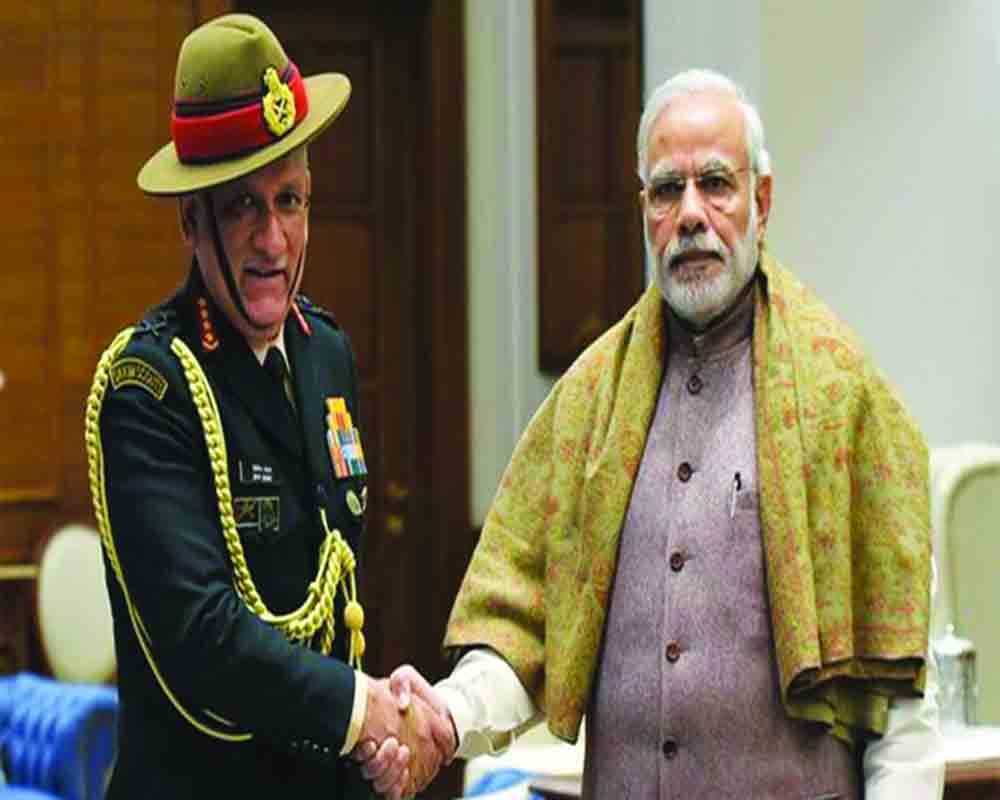
    Unfortunately, while the bulk of our military remains apolitical and secular, the actions and public statements of the Chief of Defence Staff, General Bipin Rawat, have created perceptions that the military’s senior leadership has become excessively politicised. Then there is the fact that some very senior officers have taken the plunge into active politics immediately on shedding their uniform.

    While some within the ruling elite may see this turn of events as advantageous to their ideological cause, and in fact encourage this shift within the military hierarchy through the process of “deep selection”, as some allege, they may well be biting off more than they can chew. If there is anything to learn from history, it is that once the military gets sucked into politics, it will not be satisfied acting as a mere handmaiden of those in power. As General Milley so eloquently put it, they are the ones with the guns! We just need to look closely at our own neighbourhood for examples.

    The Government and the legislative would do well to put rules in place that prevent members of the military and even the Civil Services from joining politics without an appropriate cooling- off period.

    It would be in the interest of the political establishment to desist from politicising the military. Creating an uncontrollable monster, that will go on to bite the hand that feeds it, is nothing but sheer stupidity. The Government and the legislative would do well to put rules in place that prevent members of the military and even the Civil Services from joining politics without an appropriate cooling- off period. That would go a long way in insulating them, especially the military, from politics.

    This article was published earlier in the pioneer.

    The views expressed are those of the author.

    Feature Image: www.dailypioneer.com