Tag: Laos

  • Infrastructure development is high priority for Vietnam-Lao PDR relations

    Infrastructure development is high priority for Vietnam-Lao PDR relations

    The year 2022 is singularly important for Vietnam-Lao PDR relations. It marks the 60th anniversary of the bilateral diplomatic relations, and 45 years of the Vietnam-Laos Treaty of Amity and Cooperation. Both sides have accorded high priority to the current year, and Prime Minister Pham Minh Chinh extended the invitation to Lao Prime Minister Phankham Viphavanh to visit to commemorate the above events.  Accordingly, Prime Minister Viphavanh is in Vietnam and is leading a high-level delegation.

    Prime Minister Pham Minh Chinh, according to reports, will also co-chair the 44th meeting of the Vietnam-Laos Inter-Governmental Committee and launch the Vietnam-Laos Solidarity and Friendship Year 2022. This would help to “get a better understanding of each other’s socio-economic situation, development orientations and external policies” particularly during the ongoing COVID-19 pandemic.

    The visit is also intended to boost Vietnam-Laos cooperation strategy for the 2021-2030 period and the five-year cooperation plan for the 2021-2025 period that are now into the second year and involve bilateral engagements in multiple domains such as politics, diplomacy, security-defence, economy, science-technology, culture, and education-training.

    COVID-19 would be high on the agenda of both leaders given that the pandemic is impacting their countries. They are in the midst of the fourth wave with 8,236 and 354,075 active cases (as of 05 Jan 2022) respectively.

    In December 2021, the Lao government announced opening up of the country for trade and tourism in three phases: First phase – January 1, 2022; Second phase – April 1, 2022; and the Third phase July 1, 2022. In the first phase, 17 countries, including Vietnam and many neighbouring ASEAN countries, besides some European countries, China, the US, Australia and Canada would be welcomed. The Lao economy is impacted by COVID-19 and was projected to grow at 3 per cent, a figure lower than 4 per cent as approved by the Laotian National Assembly. This attributed to the pandemic and prolonged lockdowns that disrupted economic activities and companies, retail and wholesale shops had to shut down.

    Leaders in Vientiane recognize the importance of regional development particularly in the Cambodia-Laos-Vietnam Development Triangle Area (CLV-DTA)

    Vietnam and Lao PDR are also engaged in major connectivity projects. Lao is a landlocked country and ports in Vietnam provide the country access to the sea to engage in international seaborne commerce.

    Last year, during President Nguyen Xuan Phuc visit to Laos, 14 agreements spanning a wide range of issues were signed. The leaders agreed to fast-track joint projects including Vung Ang No.1, 2, 3 port projects, the Hanoi-Vientiane Expressway, Vientiane-Vung Ang Railway, Lao-Vietnam Friendship Park in Vientiane, Nongkhang Airport and hospitals in Lao Houaphan and Xiangkhouang Provinces.

    One of their flagship joint projects is the 1,450 kilometres long East-West Economic Corridor (EWEC). It is a road-building project and is supported by the Asia Development Bank (ADB). Its western leg includes Thailand, and in the east, it terminates at the Vietnamese port of Da Nang which is a major gateway to the Pacific.

    Similarly, the 555 kilometres railway link (452 kilometres in Laos and 103 kilometres in Ha Tinh central province in Vietnam) between Vientiane and the Vietnamese deep-water port of Vung Ang is important. It gives Laos yet another access to the sea. Importantly, it is being jointly developed and Laos would hold a 60% stake in the project, and Vietnam with 40%.

    China is also engaged in connectivity projects in Laos. In December 2021, after six years of construction, the Laos-China Railway project was finally operationalized. It is a complex project and includes 61 kilometres of bridges and 198 kilometres of tunnels and reduce travel time between Vientiane to the Chinese border from 15 hours by road to four hours. It will be operated by the Laos-China Railway Co., a joint venture between China Railway group and two other Chinese government-owned companies with a 70% stake and a Laotian state company with 30%.

    Vietnam offers Laos an alternative to Chinese infrastructure investments and it ranks third among investors in Lao with total investments of US$ 5.16 billion in 209 projects. There are fears that the Chinese funded projects do not generate economic benefits for Laos, instead these only benefit China.

    There are geopolitical dynamics at play in the CLV-DTA that are targeted against China, and Cambodia and Laos acknowledge Vietnam’s leadership

    Vietnam cannot match up with the Chinese investments in Laos, but leaders in Vientiane recognize the importance of regional development particularly in the Cambodia-Laos-Vietnam Development Triangle Area (CLV-DTA). Vietnam for example has invested nearly US$ 4 billion in Cambodia and as noted above over US$ 5 billion in Laos. It is fair to assume that there are geopolitical dynamics at play in the CLV-DTA that are targeted against China, and Cambodia and Laos acknowledge Vietnam’s leadership.

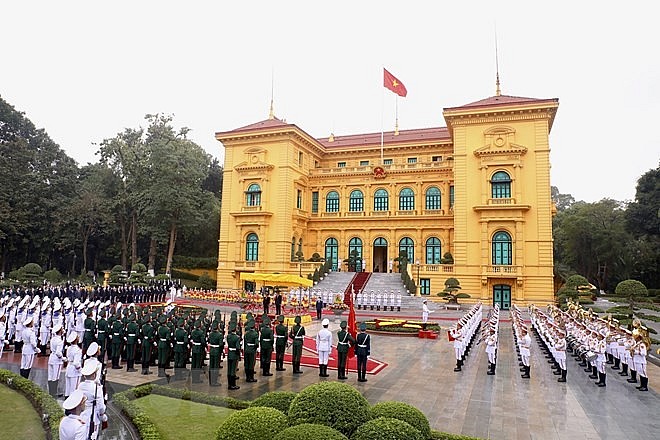
    Images Credit: Vietnam times
  • US-China Tensions Could Spill Into Lancang-Mekong River Basin

    US-China Tensions Could Spill Into Lancang-Mekong River Basin

     The Lancang-Mekong River is the 12th longest river and runs through six countries i.e. China (upper riparian), Myanmar, Thailand, Laos, Cambodia and Vietnam (the lower riparian)and finally discharges into South China.

    A recent US government-funded study has noted that in 2019 China held back large amounts of water upstream in dams on the Mekong River which caused a  severe drought in the downstream countries,[1] prompting a US ambassador in the region accusing China of “hoarding” water and “harming the livelihoods of millions of people in downstream countries”.[2] Likewise, another report by Stimson Centre, a Washington-based think tank, has corroborated the above and pointed that in 2019 “upstream dams at Nuozhadu and Xiaowan had restricted around 20 billion cubic meters of water between July and November” and that current “satellite images show those dams are once again poised to restrict a similar amount of water from July 2020 through the end of this year … Portions of the Mekong mainstream are once again dropping to historically low levels,”[3]

    China has dismissed the reports and the Global Times in an article cited a report by the Tsinghua University and clarified that the “river dams in China [instead] helped alleviate drought along Lancang-Mekong”; furthermore, in November 2019, the Mekong River Commission (MRC) had concluded that “the drought was caused by insufficient rainfall during the wet season with a delayed arrival and earlier departure of the monsoon rain and an El Niño event that led to abnormally high temperatures and high evapotranspiration”.[4]

    At the heart of this problem is that China has built as many as 11 dams on the 4,800 kilometres long Lancang-Mekong River that originates in the Tibetan Plateau.

    At the heart of this problem is that China has built as many as 11 dams on the 4,800 kilometres long Lancang-Mekong River that originates in the Tibetan Plateau.  The Lancang-Mekong River is the 12th longest river and runs through six countries i.e. China (upper riparian), Myanmar, Thailand, Laos, Cambodia and Vietnam (the lower riparian)and finally discharges into South China.

    China has been reluctant to share hydrological data particularly during the dry seasons and releases water during rainy seasons causing flooding in lower riparian countries. This is despite the 2002 MoU under which China had agreed to provide daily river flow and rainfall data from two monitoring stations in Yunnan Province during the wet season, and the periodic MRC Heads of Government meeting over a Summit which is held every four years.

    Earlier this year, the Chinese State Councilor and Foreign Minister Wang Yi had assured that his country would “give positive consideration to share the full-year hydrological information with Mekong countries and enhance cooperation under the Lancang-Mekong Cooperation (LMC) framework to ensure reasonable and sustainable use of water resources”.[5]

    Perhaps a recent statement by the MRC may temporarily obviate suspicions over China not sharing hydrological information on the Lancang-Mekong River which notes that it welcomes China’s sharing of data “ throughout the year” as also for the “ establishment of an information-sharing platform for water resources cooperation led by China and Myanmar”.[6] Also, during the 3rd Mekong-Lancang Cooperation (MLC) Leaders’ Meeting, the Global Center for Mekong Studies (GCMS) has been tasked to study the potential benefits from “aligning and synergizing the MLC and the New International Land-Sea Trade Corridor with a vast market”.[7]

    It has been observed that although the 1995 Agreement on the Cooperation for the Sustainable Development of the Mekong River Basin is legally binding, it “does not have a compliance mechanism such as punitive measures on the party that violates the spirit and principles of the Agreement.

    In 1995, the upper and lower riparian countries had adopted Agreement on the Cooperation for the Sustainable Development of the Mekong River Basin which lays out “principles and norms of regional cooperation in managing the river basin”. A formal dialogue process under the MRC was instituted to address issues relating to Mekong River and the Member States agreed to “promote common procedures and practices throughout the region for data collection, storage and analysis to support data sharing and integration of existing data management systems based on the voluntary participation of countries and institutions.”[8] In 2001, they adopted the “Procedures for Data and Information Exchange and Sharing,” or PDIES to enable the Member States to share data ‘to provide real-time water level information and more accurate flood forecasting.

    It has been observed that although the 1995 Agreement on the Cooperation for the Sustainable Development of the Mekong River Basin is legally binding, it “does not have a compliance mechanism such as punitive measures on the party that violates the spirit and principles of the Agreement. The conflict resolution mechanism is also not clearly stipulated”.[9] This is one of the many reasons for discord among the Parties which needs to be addressed by the MRC whose mandate includes dispute resolution.

    Be that as it may, the lower Mekong countries have set up the Mekong Water Data Initiative, and at the 10th Ministerial Meeting of the Lower Mekong Initiative (LMI) in 2017 to ‘create a robust, integrated, and transparent platform for collecting, sharing, and managing data on the Mekong River system.’[10]

    there are fears that the Lancang-Mekong River issue is slowly shaping into a major ASEAN-China bilateral issue similar to the contestation in the South China Sea.

    At another level, there are fears that the Lancang-Mekong River issue is slowly shaping into a major ASEAN-China bilateral issue similar to the contestation in the South China Sea; and the current situation is being described as “becoming a geopolitical issue, much like the South China Sea, between the United States and China,”[11] Perhaps the biggest worry is that the Lancang-Mekong River should not attract contestation between the US and China which surely is going to make the region more turbulent. It would thus be prudent that ASEAN and China work on a Code of Conduct to manage the river affairs or add more robustness in the existing dialogue mechanism over the Lancang-Mekong River.

     
    End Notes
    [1] “China could have choked off the Mekong and aggravated a drought, threatening the lifeline of millions in Asia”, https://www.cnbc.com/2020/04/28/china-choked-off-the-mekong-which-worsened-southeast-asia-drought-study.html  (accessed 12 September 2020).
    [2] “Water wars: Mekong River another front in U.S.-China rivalry”, https://www.japantimes.co.jp/news/2020/07/25/asia-pacific/mekong-river-us-china/  (accessed 12 September 2020).
    [3] “The next US-China battleground: Chinese dams on the Mekong River?”,https://www.scmp.com/week-asia/politics/article/3095581/next-us-china-battleground-chinese-dams-mekong-river  (accessed 12 September 2020).
    [4] “River dams in China helped alleviate drought along Lancang-Mekong, research finds”, https://www.globaltimes.cn/content/1194654.shtml  (accessed 10 September 2020).
    [5] “River dams in China helped alleviate drought along Lancang-Mekong, research finds”, https://www.globaltimes.cn/content/1194654.shtml  (accessed 10 September 2020).
    [6] “Lancang-Mekong cooperation provide stronger impetus for regional development and prosperity”, http://www.lmcchina.org/eng/hzdt_1/t1812281.htm  (accessed 12 September 2020)
    [7] “Full text of Co-chairs’ Statement on Cooperation of Synergizing the MLC and the New International Land-Sea Trade Corridor of the Third MLC Leaders’ Meeting”, http://www.lmcchina.org/eng/zyxw_5/t1808947.htm  (accessed 12 September 2020).
    [8] “Joint Statement To Strengthen Water Data Management and Information Sharing in The Lower Mekong”,
    https://www.lowermekong.org/news/joint-statement-strengthen-water-data-management-and-information-sharing-lower-mekong (accessed 14 April 219)
    [9] “Code of Conduct for the Mekong”,https://vannarithchheang.com/2018/04/04/code-of-conduct-for-the-mekong/  (accessed 12 September 2020).
    [10] “Mekong River Commission keen to improve data sharing and management in the Lower Mekong Basin”, https://mrcmekong.org/news-and-events/news/mrc-keen-data-management-in-mekong-basin/  (accessed 12 September 2020.
    [11] “Water wars: Mekong River another front in U.S.-China rivalry”, https://www.japantimes.co.jp/news/2020/07/25/asia-pacific/mekong-river-us-china/  (accessed 12 September 2020).
     
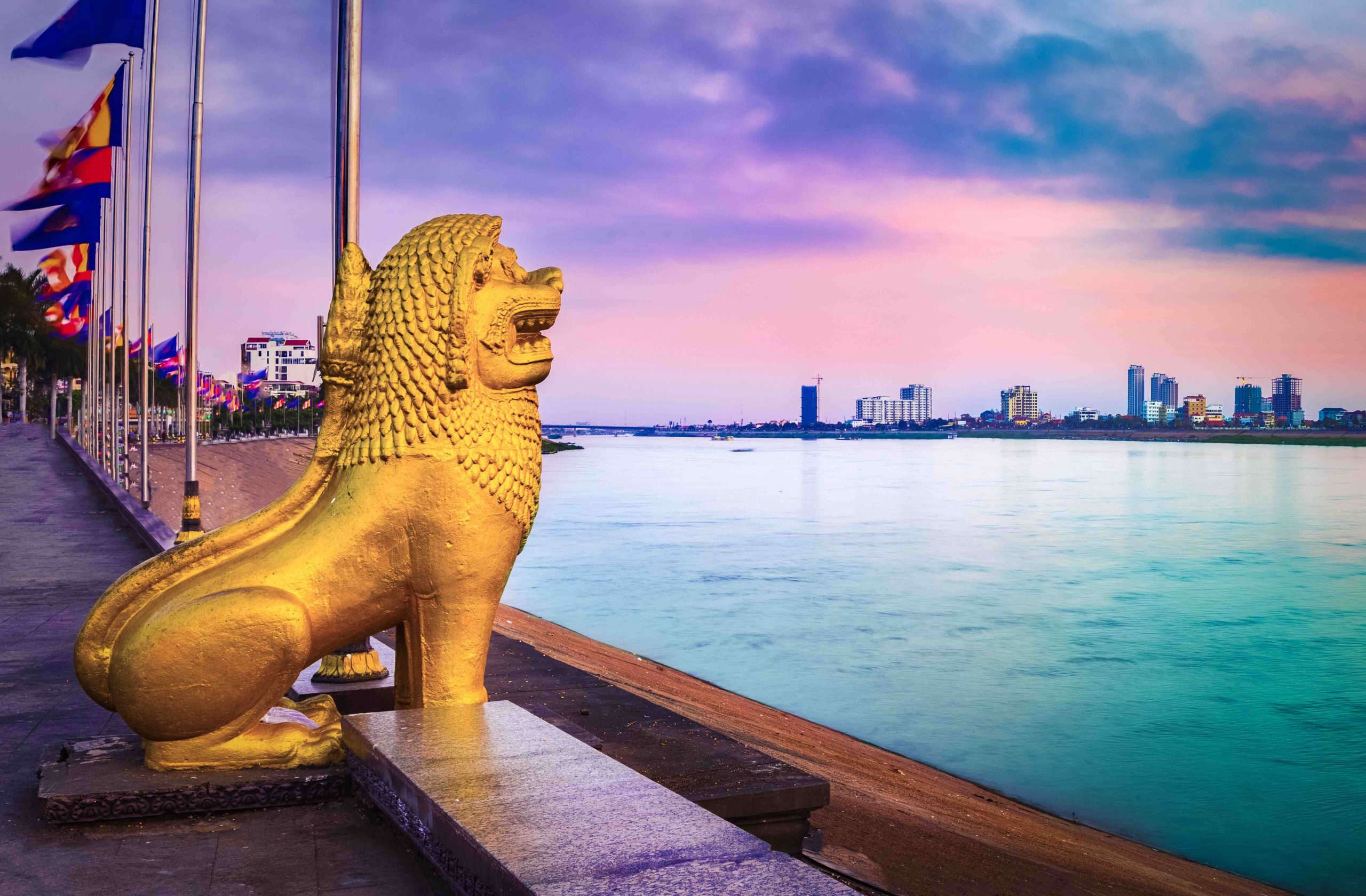
    Image: Mekong Riverside, Phnom Penh-Cambodia

  • ASEAN Unity Critical for South China Sea:  But Time to Address Newer Issues

    ASEAN Unity Critical for South China Sea: But Time to Address Newer Issues

    Perhaps the most defining character of the ASEAN in the last six decades of its existence has been ‘Unity’ among its Member States who have scrupulously adhered to the fundamental principles contained in the various treaties signed by the Member States. The ‘ASEAN Way’ is unique and helps them to remain ‘united’ despite diversity in their political systems, national economic indicators, development levels, and military capabilities. ASEAN has also done well to be labelled as the ‘driver of regional integration’ and promoted a variety of regional political, security and economic initiatives to ensure peace and stability. It has managed with sophistication and alacrity relations with its partner countries bilaterally as also through multilateral structure.

    The ‘ASEAN Way’ is unique and helps them to remain ‘united’ despite diversity in their political systems, national economic indicators, development levels, and military capabilities.

    ASEAN’s engagements with China are through various political and diplomatic exchanges such as Summits and several ASEAN led mechanisms also provide opportunities to its Member States to engage China. The free trade agreement (FTA) is particularly important and catalytic for trade and both sides have taken upon themselves to accelerate negotiations of the Regional Comprehensive Economic Partnership (RCEP).

    At the strategic level, ASEAN Member States have been quite disillusioned with China over its intention to resolve disputes in South China Sea; but the ASEAN leadership has assiduously pursued the Code of Conduct in the South China Sea and succeeded in completing the first reading of the Single Draft COC Negotiating Text. It is now putting pressure on China to quickly conclude the CoC in the stipulated timeframe to ensure region remains peaceful and stable to enable member countries to invest in national and regional development.

    Ironically some ASEAN Member States have not been keen to openly making reference to Chinese reclamation in South China Sea and near continuous buildup of military infrastructure on islands and features in the Parcels and the Spratly group of islands.

    The report card of ASEAN Unity vis a vis China, so far, has been just about quite decent with at least two exceptions when China was suspected of interfering in ASEAN matters; first in 2012, Cambodia resisted reference to South China Sea in the Chairman’s statement, and again in 2016 soon after the South China Sea Arbitration award.[i]

    Ironically some ASEAN Member States have not been keen to openly making reference to Chinese reclamation in South China Sea and near continuous buildup of military infrastructure on islands and features in the Parcels and the Spratly group of islands. While Vietnam and the Philippines have openly confronted China over their claims in South China Sea, Malaysia chose to pursue “quiet diplomacy” but has stubbornly displayed “lawfare in the South China Sea”;[ii] Brunei has remained quiet because its policy makers “see little choice but to remain quiescent about its dispute with China,” Notwithstanding that, the Chairman’s Statement of the 36th ASEAN Summit 26 June 2020 is a clear display of their ‘unity’ and they have collectively expressed concerns on the Chinese activities and recognised the seriousness of a series of incident at sea which have eroded trust and confidence.

    To some extent ASEAN has succeeded in internationalising the Chinese non-compliance of international treaties such as the 1982 UNCLOS to which Beijing is a signatory.

    Today, South China Sea issue has made global headlines. The US has unabashedly rejected Chinese claims over South China Sea and China is accused of not adhering to internal law. To some extent ASEAN has succeeded in internationalizing the Chinese non-compliance of international treaties such as the 1982 UNCLOS to which Beijing is a signatory as also retained a “minimal formal consensus on the South China Sea, rejecting the pernicious idea that the waterway is only the concern of littoral states, and resisting Chinese pressures to avoid discussion of the issue in ASEAN -led forums, certainly contributed to this outcome.”[iii]

    Perhaps it is time for the ASEAN to bring to the forefront the Lachang-Mekong river issue. Several trans-boundary river management issues and concerns between China (the upper riparian and Thailand, Laos, Cambodia and Vietnam (the lower riparian) have emerged over the years. China has been building dams on the river and its tributaries; has avoided sharing full hydrological data particularly during dry seasons; and released river water untimely. The lower riparian states have called for a ‘code of conduct’ and a ‘rule based trans-boundary resource management’ mechanism for the Mekong River between the upper and the lower riparian states.[iv]

    It is tempting to believe that China has successfully stifled lower riparian member states concerns through sops and infrastructure development projects under the Belt and Road Initiative. Interestingly, Lancang-Mekong Cooperation (LMC), the most active forum is dominated by China.

    Non-riparian ASEAN members are accused of “minimal interest” in the Lancang-Mekong issues and they “generally do not participate”. Even attempts to interest the rest of ASEAN on Mekong issues “are met with only the pretense of polite interest”. [v]

      If ASEAN is to preserve ‘unity’ it must see maritime and continental Southeast Asia as one strategic space and take into account challenges faced by ASEAN Member States who border China on land particularly Myanmar who has accused China of interfering in its internal politics and arming the ethnic armed groups operating near the Chinese border,[vi]  and Laos[vii] that is economically and militarily weak to fend off Chinese pressures unlike Vietnam which has withstood Chinese pressures on land and at sea. Otherwise, China will open yet another contentious front for the ASEAN.  Finally, under the circumstances, prudence necessitates that ASEAN should prepare to incorporate newer issues other than the South China Sea in its agenda!

    Notes:
    [i] “ASEAN deadlocked on South China Sea, Cambodia blocks statement, https://www.reuters.com/article/us-southchinasea-ruling-asean/asean-deadlocked-on-south-china-sea-cambodia-blocks-statement-idUSKCN1050F6 (accessed 18 July 2020).
    [ii] “US-China tensions: why is Malaysia so quiet about the South China Sea?”, https://www.scmp.com/week-asia/politics/article/3093715/us-china-tensions-why-malaysia-so-quiet-about-south-china-sea (accessed 18 July 2020).
    [iii] “Why Asean should treat the Mekong like the South China Sea”, https://www.scmp.com/week-asia/opinion/article/3093546/why-asean-should-treat-mekong-south-china-sea (accessed 18 July 2020).
    [iv] Chheang Vannarith, “Code of conduct for the Mekong”, https://www.khmertimeskh.com/298648/code-of-conduct-for-the-mekong/ (accessed 19 July 2020).
    [v]“Why Asean should treat the Mekong like the South China Sea”, https://www.scmp.com/week-asia/opinion/article/3093546/why-asean-should-treat-mekong-south-china-sea (accessed 18 July 2020).
    [vi] “After ASEAN & India, Now Myanmar Accuses China of Creating trouble on the Border”, https://eurasiantimes.com/now-myanmar-accuses-china-for-creating-trouble-in-the-country/ (accessed 19 July 2020).
    [vii] China also claims its right over a large part of Laos on historical precedents (China’s Yuan Dynasty, 1271-1368). “China faces territorial issues with 18 nations; check details”, https://zeenews.india.com/world/china-faces-territorial-issues-with-18-nations-check-details-2292826.html (accessed 19 July 2020).

    Image: Adobe Stock