Tag: Ladakh

  • Five Years without an Elected Administration: Human Rights in Jammu and Kashmir

    Five Years without an Elected Administration: Human Rights in Jammu and Kashmir

    [powerkit_button size=”lg” style=”info” block=”true” url=”https://admin.thepeninsula.org.in/wp-content/uploads/2023/08/FHRJK-2023-Report-August-2-2023-Final-Edit-1.pdf” target=”_blank” nofollow=”false”]
    Download
    [/powerkit_button]

    The Forum for Human Rights in Jammu and Kashmir comprises an informal group of concerned citizens who believe that, in the prevailing situation in the former state, an independent initiative is required so that continuing human rights violations do not go unnoticed.

    This is the fourth annual report issued by the Forum, which has also issued two midterm and/or thematic reports). It has largely been compiled from government sources, media accounts (carried in well-established and reputed newspapers or television), NGO fact-finding reports, interviews, and information garnered through legal petitions. The various sources listed have been fact-checked against each other to ensure the information is as accurate as possible, and only that information has been carried that appears to be well-founded. Where there is any doubt regarding a piece of information, queries have been footnoted.

    Executive Summary

    In an additional counter-affidavit filed before the Supreme Court in July 2023 against petitions challenging the constitutionality of the Presidential Orders of August 5, 2019 (reading down Article 370 of the Indian Constitution), as well as the Jammu and Kashmir Reorganisation Act of August 9, 2019, the union Ministry of Home Affairs claimed that that the changes wrought by the two actions had ‘brought unprecedented development, progress, security and stability to the region.’

    The facts, however, suggest otherwise. In its three annual and two thematic reports, the Forum has documented over three dozen economic, political and social rights that have been violated between August 2019 and July 2022, including economic losses of over Rs. 50,000 crores at a conservative estimate, vitiation of land and domicile rights, marginalisation and even purges of local personnel in the civil and police services, questionable arrests under draconian legislation, communication bans, media intimidation, and routinised curbs on the freedom of expression and movement. Equally glaring, the right to representation has been denied for five years, as of June 2023.

    This report on the state of human rights in Jammu and Kashmir between August 2022- July 2023 finds that while there has been improvement on some parameters, human rights violations continue on most. Its findings are as follows:

    1. Civilian insecurity persists. Targeted attacks on Pandits and migrant workers – both Hindu and Muslim – continue. While the number of lives lost due to armed attacks and counter-insurgency operations was lower than in the previous year, the number of police personnel who died, including Central Reserve Police Forces (CRPF), continues to be unacceptably high. 71 CRPF troops were killed in the four years between 2019-2022, twice as many as in the previous four years, 2014-2018, when 35 died. By comparison, in the four years between 2012-2015, which can be categorised as an uneasy interregnum between the post-peace process years and the rise of conflict in the BJP-PDP coalition, 27 CRPF troops were killed.

    2. A high volume of small arms. In 2023, it was found that Jammu and Kashmir had the largest number of licensed gun holders amongst union territories and the highest per capita amongst states as well as union territories, at 500,105 in June 2023, or four per hundred people.

    3. Resurgence of militancy in Jammu. After decades of peace, the bordering areas of Poonch and Rajouri districts in Jammu division are re-emerging as a locus for militancy with cross-border support from Pakistani-held territories of the former state. The 2022 delimitation of fresh legislative constituencies, adding Poonch and Rajouri to Kashmir’s Anantnag, may have added to the alienation that these Muslim-majority areas face with the sharpening of communal divides in Jammu. Increasing weaponisation through Jammu’s village defence guards, a problematic policy that the Forum highlighted in its 2022 report, has added further insecurity in the region. As has the 2023 Jammu and Kashmir Scheduled Tribes (Amendment) bill, which has pitted Paharis against Gujjars and other listed scheduled tribes of the region.

    4. Continuing civil rights abuses. There has been no improvement in gross violations of the freedom of expression and movement, especially the rights of the media to a safe working environment. Arrests under draconian legislation such as the Unlawful Activities (Prevention) Act (UAPA) and the Public Safety Act (PSA) continue, despite judicial attempts to limit their application. Along with Delhi, Jammu and Kashmir has the highest rate of undertrials as a proportion of its prisons population, at 91 percent, considerably higher than the national average of 76 percent.

    5. Custodial deaths and overcrowded prisons. The Jammu and Kashmir courts have flagged overcrowding and negligence as causes of custodial deaths. The region’s prisons can house a total of 3,629 inmates, but they lodged 5,300 as of June 2023.

    6. Denial of political rights. Two issues of political rights dominate this year’s report. The demand for an assembly election in Jammu and Kashmir; and the demand for a legislative assembly in Ladakh, along with rights under the sixth schedule of the constitution of India.

    Elections. It has been nine years since the last legislative election in Jammu and Kashmir. The union administration accepted the delimitation commission’s report a year ago and it is eight months since fresh electoral rolls were prepared. All the preparations for an election have thus been completed, but the election commission has yet to announce dates for it. Despite their valid criticisms of the delimitation commission’s report, Jammu and Kashmir’s political parties have demanded that the election be held this year (2023). Fresh reservations to woo new constituencies through four bills scheduled to be introduced in the monsoon session of parliament will, if enacted, entrench caste-based voter mobilisation. One of them was debated on July 26.

    Ladakh Kargil and Leh, the two districts of Ladakh, have united around the demand for an elected administration with substantive powers over economic and social development such as those provided under the Sixth Schedule of the Indian constitution, or, alternatively and it seems preferably, the grant of statehood. The union administration has repeatedly promised to discuss the inclusion of Ladakhis in the sixth schedule, but little has resulted. Given Ladakh’s geo-strategic location, bordering both Pakistan and China, the union administration might prefer to govern the union territory directly. However, direct administration has resulted in alienating Ladakh’s elected councillors as well as its people, both of which impact negatively on Indian democracy as well as national security.

    7. A record year of tourism in 2022 boosted the economy, but it still lagged behind the national average on per capita income and rates of growth. The multidimensional poverty index for 2023 showed an impressive reduction in the proportion of its population living in poverty from an estimated figure of 12.56 percent in 2015-2016 to 4.8 percent between 2019-2021, but it ranked sixth out of eight union territories on the sustainable development goals (SDG), with Ladakh at seventh. Its forest cover decreased from 39.66 percent to 39.15 between 2020- 2021.

    8. Unemployment and drug abuse. At 23.1 percent in March 2023, unemployment was almost three times the national average of 7.8 percent. According to the union ministry of health, Jammu and Kashmir are among the top two states and union territories for drug abuse, with an estimated 900,000 habitual drug users, roughly 1 in 130.

    9. Data scarcity. There is a paucity of readily available figures for the former state. Though the 2023 budget presentation for parliament forecast a NSDP growth rate of 14.9 percent for Jammu and Kashmir in 2022-2023, the economic survey of 2023 said that figures for its per capita NSDP were not available from 2019 to date, as did the 2022 Reserve Bank of India statistics on states.

    Air Vice Marshal Kapil Kak (Retd) is a Distinguished Fellow and a member of the Governing Council of The Peninsula Foundation (TPF). He is a member of the Forum for Human Rights in Jammu and Kashmir.

    Disclaimer: The views represented herein are those of the Forum and do not necessarily reflect the views of The Peninsula Foundation, its staff, or its trustees.

    [powerkit_button size=”lg” style=”info” block=”true” url=”https://admin.thepeninsula.org.in/wp-content/uploads/2023/08/FHRJK-2023-Report-August-2-2023-Final-Edit-1.pdf” target=”_blank” nofollow=”false”]
    Download
    [/powerkit_button]

  • Time to be firm tackling Dragon on LAC Standoff & Human Rights

    Time to be firm tackling Dragon on LAC Standoff & Human Rights

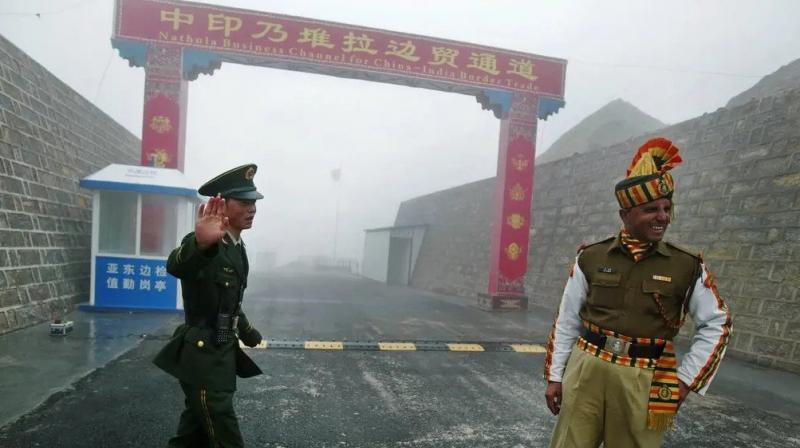
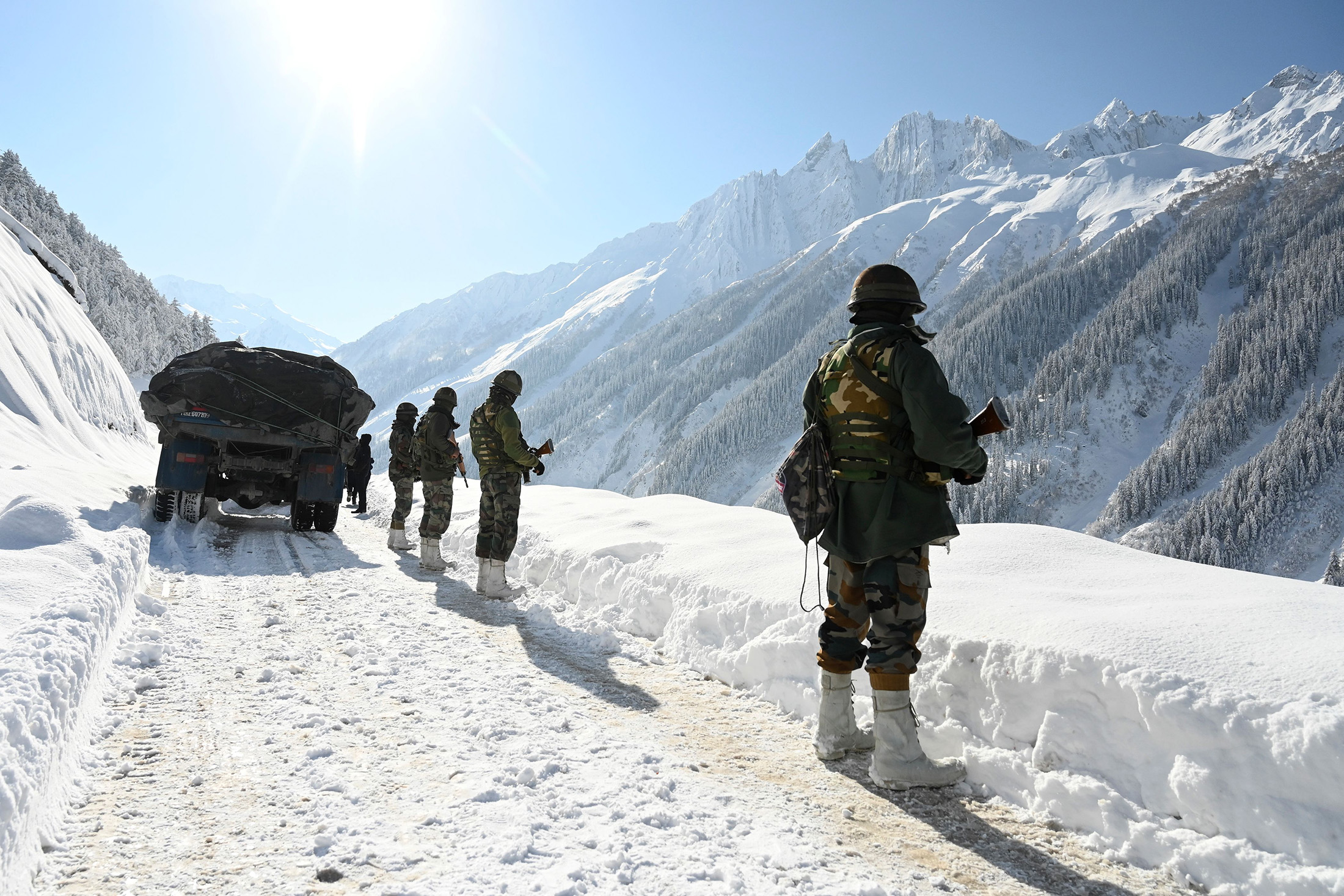
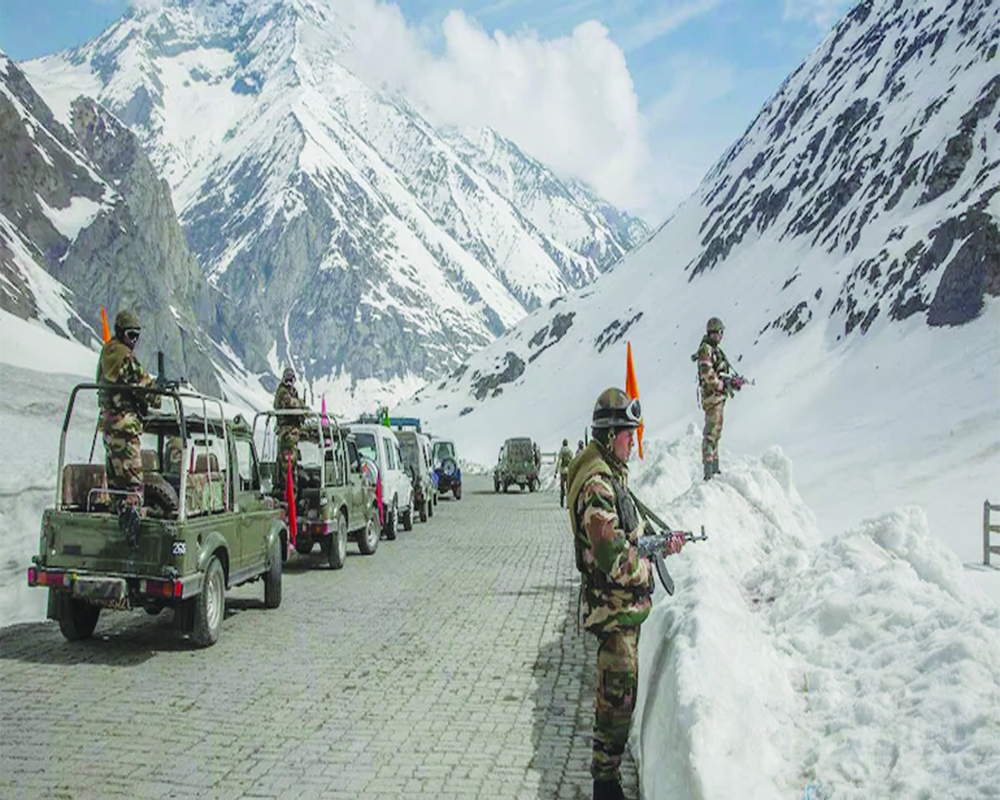
    Both nations, according to reports, now have between 50,000 to 60,000 troops deployed along the LAC in Ladakh.

    The last couple of years, in particular, have seen the world torn apart by both the Covid-19 catastrophe and the emergence of a new Cold War. Nations have been pursuing their own selfish agendas on the global stage unmindful of the uncalled-for destruction of weaker societies with misery and turmoil being inflicted on the hapless. After Russia’s invasion of Ukraine eight months ago, a conflict which threatens to escalate into a nuclear dimension, the world is yet to see any signs of a resolution. India, which is located in easily one of the world’s most geopolitically stressed regions, has its own share of diverse challenges, threatening its security and well-being, largely attributable to the hegemonistic and an overly assertive China.

    [powerkit_button size=”lg” style=”info” block=”true” url=”https://www.asianage.com/opinion/columnists/111022/kamal-davar-time-to-be-firm-tackling-dragon-on-lac-standoff-human-rights.html” target=”_blank” nofollow=”false”]
    Read more
    [/powerkit_button]

  • Putin’s Folly: The Long Road to Self-Destruction

    Putin’s Folly: The Long Road to Self-Destruction

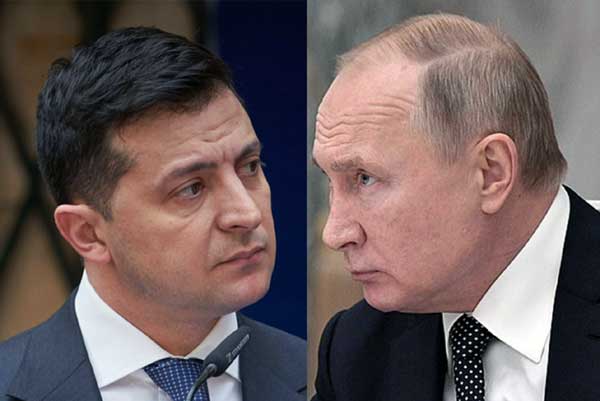
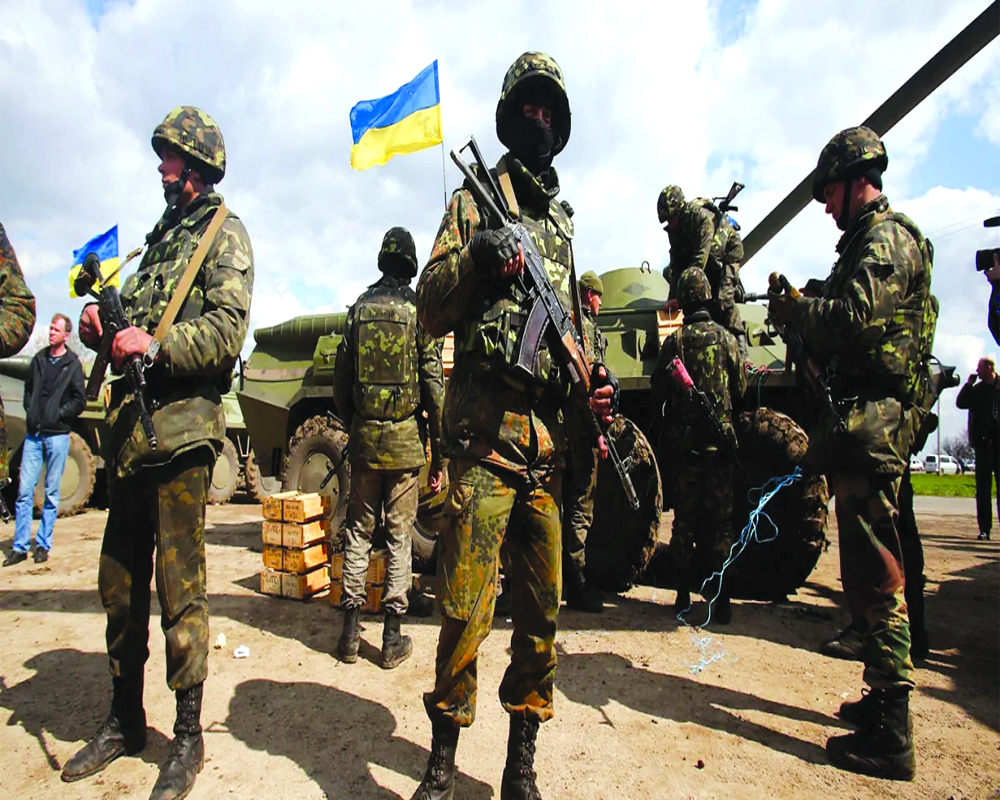
    Ever since President Putin ordered the occupation of Ukraine in a ‘Special Military Operation’ this February, he has been at the receiving end of a stream of bad news. Neither were the Russian Armed Forces welcomed with open arms, as they had expected, nor were they able to capture Kiev and force a regime change, as Putin had wanted. In the process, both their leadership and rank and file displayed spectacular incompetence and irretrievably destroyed the reputation of what was till then seen as one of the strongest militaries in the world.

    However, nothing could have truly prepared him for the nightmarish turn of events this September. In a brilliant display of operational art, the Ukrainian defence forces launched a counter offensive in the Kharkiv region, catching the Russian military leadership completely by surprise. Having earlier deceived them into reinforcing the Kherson sector by denuding forces deployed in the Kharkiv sector.

    The ensuing rout, it clearly was no organised retreat, resulted in prisoners being taken in their thousands, along with all manner of serviceable weapons, ammunition and equipment. This includes hundreds of tanks and armoured personnel carriers which the Ukrainians can use. Ironically, this may well make Russia the largest donor of military equipment to the Ukrainians! In addition, the Ukrainian military have been able to grab back approximately 9000sq kms of occupied territory in the Kharkiv

    [powerkit_button size=”lg” style=”success” block=”true” url=”http://www.indiandefencereview.com/news/putins-folly-the-long-road-to-self-destruction/” target=”_blank” nofollow=”false”]
    Read More
    [/powerkit_button]

  • We are All Style, No Substance!

    We are All Style, No Substance!

    India has become a jejune society which is happy cheering optics rather than being concerned with issues concerning the larger good of all.

    It seems that to the vast majority of us in this country, from every stratum of society, what matters most, is keeping up appearances rather than concentrating on the substantive aspect of the issue. A characteristic that we are willing to defend at any cost, in the courts, indulging in verbal jousting and even letting loose bulldozers.

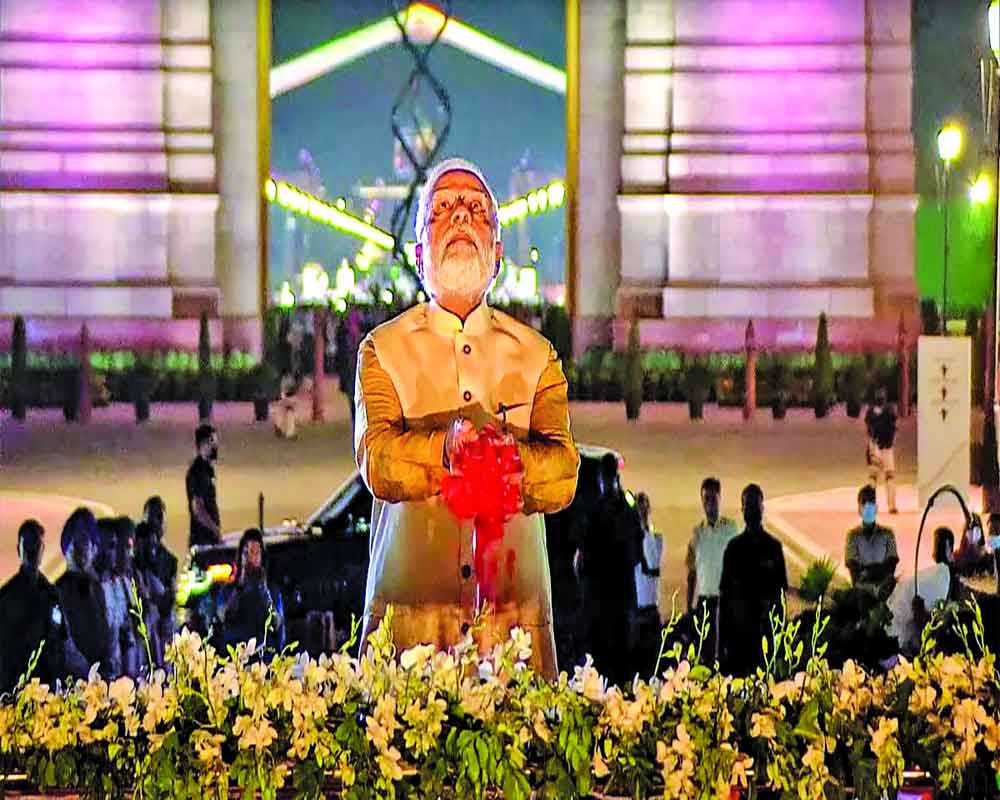
    Take for instance the issue of developing patriotism within our citizenry. Undoubtedly a noble endeavour, but hardly likely to be fulfilled by launching a one-week concerted drive to convince citizens to fly the national flag on their balconies or in their cars, that is if it is to be anything more than just a marketing gimmick. Yet the Central Government did just that with the “Har Ghar Tiranga” initiative, launched by the Prime Minister, just prior to our Nation’s 75th Independence Day.

    [powerkit_button size=”lg” style=”info” block=”true” url=”https://www.dailypioneer.com/2022/columnists/we-are-all-style–no-substance-.html” target=”_blank” nofollow=”false”]
    Read More
    [/powerkit_button]

  • Three Years as a Union Territory: Human Rights in J&K

    Three Years as a Union Territory: Human Rights in J&K

    [powerkit_button size=”lg” style=”info” block=”true” url=”https://admin.thepeninsula.org.in/wp-content/uploads/2022/08/Our-Annual-Report-Human-Rights-JK-2022_compressed-1.pdf” target=”_blank” nofollow=”false”]
    Download
    [/powerkit_button]

    The Forum for Human Rights in Jammu and Kashmir comprises an informal group of concerned citizens who believe that, in the prevailing situation in the former state of Jammu and Kashmir, an independent initiative is required so that continuing human rights violation do not go unnoticed.

    The aim of the Forum is to highlight, report and seek action. It will primarily focus on human rights protected by the constitutions of India and Jammu and Kashmir, as well as those identified in international treaties/instruments which India has ratified. It will research evident violations, and may take suo moto notice of any violation, irrespective of whether or not a formal complaint is received.

    The Forum for Human Rights in Jammu and Kashmir will receive information/materials on human rights violation to its email hrforumjk@gmail.com and through other means, and it may report/forward complaints to relevant authorities with recommendations for action. Please note that this is not an anticipatory body.

    This is the fourth report issued by the Forum. It has largely been compiled local first-hand accounts, governments sources, media accounts (carried in well-established and reputed newspaper or television), and NGO fact-finding reports. The various sources listed above have been fact-checked against each other to ensure the information is as accurate as possible, and only that information has been carried that appears to be well-founded.

    The members of the Forum for Human Rights in Jammu and Kashmir take allegations of inaccuracy, bias, or any other criticism founded in fact, very seriously. Criticism of this nature will be considered and responded in real-time.

    Air Vice Marshal Kapil Kak (Retd) is a Distinguished Fellow and a member of the Governing Council of The Peninsula Foundation (TPF). He is a member of the Forum for Human Rights in Jammu and Kashmir.

    Disclaimer: The views represented herein are those of the Forum and not necessarily reflect the views of The Peninsula Foundation, its staff, or its trustees.

    [powerkit_button size=”lg” style=”info” block=”true” url=”https://admin.thepeninsula.org.in/wp-content/uploads/2022/08/Our-Annual-Report-Human-Rights-JK-2022_compressed-1.pdf” target=”_blank” nofollow=”false”]
    Download
    [/powerkit_button]

  • The Ukraine crisis: Its impact on India

    The Ukraine crisis: Its impact on India

    India has to tread a fine line in this imbroglio: Taking care of the welfare and evacuation of Indian students and the possibility of an oil price hike.

    The face-off over Ukraine between Russia and the United States and its Nato allies has been dominating the headlines for a while now with tensions ratcheting up as we receive dire public warnings every day of a Russian invasion any day now. Clearly, the possibility of Russian intervention there, and the consequent escalation of sanctions against them, is very real and concerning.

    While Ukraine may be a developing country and the poorest in Europe, by no means is it a pushover. It is the second-largest country there, behind Russia, by area, and in terms of population the eighth largest with its 42 million inhabitants. It has been independent since 1991, following the collapse of the Soviet Union, though it had been a part of the Russian Empire and the Soviet Union since the 18th century. If there is one lesson that Putin and the Russian military should have learnt from America’s disastrous interventions in Iraq and Afghanistan is that invasions are relatively easy to accomplish, but keeping restive and hostile populations under control is a wholly different proposition.

    [powerkit_button size=”lg” style=”info” block=”true” url=”https://www.dailypioneer.com/2022/columnists/the-ukraine-crisis–its-impact-on-india.html” target=”_self” nofollow=”false”]
    Read More
    [/powerkit_button]

  • The Strategic Imperative of Developing Ladakh

    The Strategic Imperative of Developing Ladakh

    Abstract
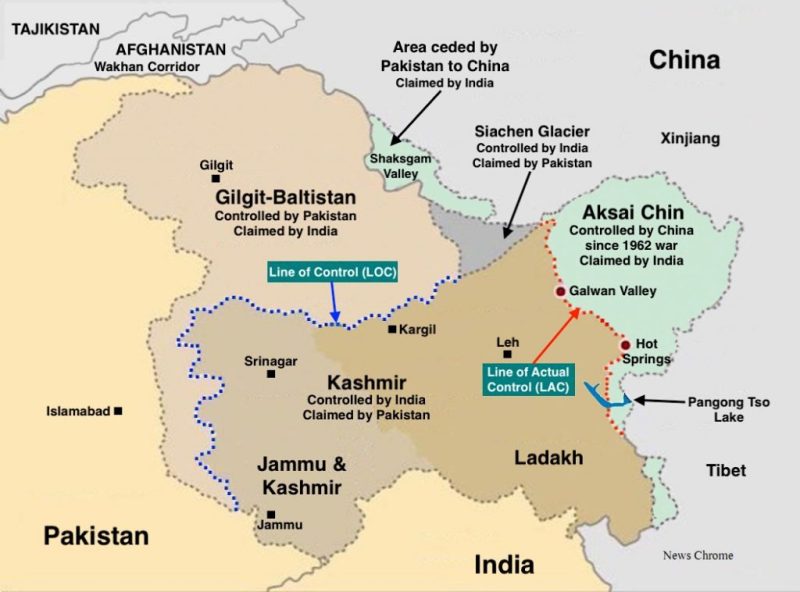
    Following the Galwan valley clash in 2020, Ladakh has become the most important place of strategic and operational importance since it adjoins two adversarial neighbours who are strategically aligned with each other. China’s belligerence is taking many forms such as information warfare, land transgression, allegations of hacking, etc. The recent claim of unfurling of the Chinese flag supposedly in Galwan, which was later clarified to have been done in another location is a spoke of its information warfare against India. China’s construction activities enabling quick buildup of its troops and armaments are also a major cause of concern for India. While there are some initiatives launched by the Indian army and the Central government to strengthen the infrastructure in the Northern borders, special attention needs to be paid towards the holistic development of human resources and infrastructure in Ladakh.


    2022 began with a fresh show of Chinese belligerence in Ladakh, with a well-known Chinese media outlet putting out a tweet saying, “China’s national flag rises over Galwan Valley on the New Year Day of 2022“, following up with a short video of the event. The tweet further claimed that the flag was special, having flown earlier over Tiananmen Square in Beijing[i]. As Indian government sources confirmed that the ceremony did not occur in any disputed area, the Indian Army released photographs of soldiers hoisting the flag in the Galwan Valley on the occasion of the New Year[ii]. In other incidents across the rest of the Line of Actual Control (LAC), China suddenly ‘renamed’ 15 locations in Arunachal Pradesh, continuing efforts to undermine Indian sovereignty in that state. The Chinese embassy in Delhi wrote to counsel Indian MPs who had attended a reception hosted by the Tibetan government in exile in late December 2021[iii]. The frigid relationship between the two nations was underscored once again by the inconclusive outcome of the 14th round of Corps Commander’s talks held on the LAC on 12 Jan 2022[iv]

    Chinese activities have not been restricted to the information domain alone. Construction of a bridge across the Pangong Tso, starting 20 km east of Finger 8 to connect its North and South banks, has come to light, providing an additional approach for a quick build-up of troops and logistics. While the above actions by China, both in the realm of information warfare and otherwise, have been effectively countered by the Indian government[v], the overall situation across the entire LAC continues to be of significant concern. This is despite the much-publicized sharing of sweets between Indian and Chinese troops at ten border crossings across the LAC[vi] in January.

    Strategic Importance of Ladakh

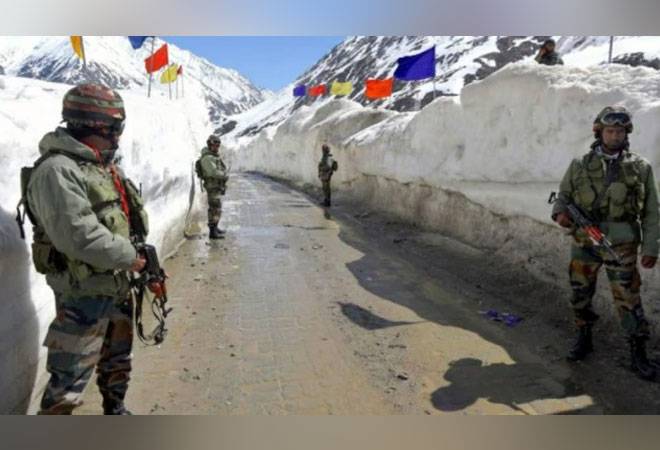
    As compared to the rest of the LAC, the situation in Ladakh is serious. The killing of 20 Indian soldiers, including a Commanding Officer, in June 2020 has thrust the region into the nation’s collective consciousness. Galwan, Gogra, Daulet Beg Oldi, Pangong Tso, and Chushul are household names across the country and the public today is better educated about the sheer complexity of the border issue and our history of dealing with China on the matter. The importance of safeguarding national sovereignty has taken centre stage with issues such as the institution of ‘no patrolling zones’ and perceptions about the LAC being subjected to frequent debate in the media and elsewhere.

    In the aftermath of the Galwan events, the strategic importance of Ladakh, seen more through the lens of tourism in tranquil times, has acquired renewed relevance. It is the only borderland of India adjoining two hostile states, both of which have gone to war with India at different times for their own reasons. Ladakh abuts Gilgit Baltistan, which is under illegal occupation of Pakistan, and Tibet, which is under China’s forced occupation. As the likelihood of collusive action between these countries increasingly grows, Ladakh will remain primus inter pares amongst all the regions on our Northern borders for strategic and operational reasons. Accordingly, plans to bring about a qualitative change in capacity and capability in all aspects of the region’s development to meet security challenges and human aspirations acquire greater importance vis-a-vis other locations.

    The above aspect is well appreciated by the Central Government, which has taken many initiatives towards strengthening infrastructure development along the Northern borders in recent years. With regards to Ladakh, development has accelerated dramatically post creation of the Union Territory (UT) of Ladakh in 2019. A review of the UT Administrations’ activities after two years of its creation by the Lt Governor during a media interaction reveals the scale and scope of its achievements[vii]. Future plans are contained in a comprehensive ‘Vision Document,’ prepared on its behalf by a reputed consultancy, available on the internet[viii]. The Document is a comprehensive data-backed effort, listing the status of various developmental markers today and the desired end state. Achieving the vision would require effort, time, and planning for its translation into practical and prioritized implementables, after further considering risks, costs, benefits, and overall viability while adhering to timelines. Despite the progress made on many fronts and considering the constraints remaining, continued and focused long-term efforts by the administration are required here: equally important, the current and future security perspective has to be a key pillar of such plans.

    Development Issues and Imperatives

    A key priority that requires greater impetus is to accelerate the movement of locals for populating areas that, for reasons of geography and proven Chinese intent, have acquired strategic or operational significance. Page 9 of the Vision Document[ix] mentions that 65% of the total population is in and around Leh and Kargil cities. Though the paper has recommended setting up other population centres, enhanced hostile activity by China in and around places like Demchok on the LAC warrants that such areas also be included for consideration. In recent years, the Border Roads Organisation (BRO) has dramatically enhanced connectivity. Greater resources and manpower have constructed important roads and opened up East Ladakh and other parts of the UT[x]. The next step is to actualize a long-term plan with short and intermediate goals, which could see the setting up of small townships – after creating suitable infrastructure in housing, health, education, connectivity, and other civic amenities to support small-sized populations. Here the focus has to be on providing livelihood options other than the purely pastoral, with options explored for setting up Small Manufacturing Enterprises (SMEs), which might take time to prove financially viable. In this respect, China has succeeded with the construction of border villages and resettlement of Tibetans in areas opposite the LAC in Arunachal Pradesh and its disputed border with Bhutan[xi]. Though the Indian experiment in that region, which commenced post-1962, has not been as successful, it has to be pushed through in Ladakh. Here, reconciling developmental cum security needs with genuine environmental concerns would be necessary, considering that the Army’s premier firing range in Ladakh in the Tangtse Chushul area was closed some years ago for such reasons.

    There is scope too for the military, as an essential stakeholder to assist in development in other spheres, such as preparation of dual-use facilities; helipads and Advanced Landing Grounds wherever feasible, are one example. Another option is to create infrastructure for specialized training in the Ladakh region – archives of the Press Trust of India mention an international training event, ‘Exercise Himalayan Warrior’ held in 2007 where Indian and British troops trained together in mountain warfare techniques in an area North of Leh[xii]. Training facilities of this nature would naturally benefit the local economy, though the fallout of such strategic signalling would have to be carefully weighed.

    A fourth option to enhance the military’s participation, albeit indirectly, is to increase local recruitment. While recruit balancing would be carried out at Army Headquarters, there is a need to examine the feasibility of expanding the number of Ladakh Scout battalions (either regular units or on the Territorial Army model), which are eminently suited for fighting in such terrain. Being a permanent measure, this would offset, to an extent, the expense on induction of at least a few units from outside Ladakh. Benefits accruing from deploying local sons of the soil can be easily appreciated.

    Harnessing through Civil-Military Engagement

    At the turn of the century, it was in Ladakh that the Indian Army launched Operation SADHBHAVNA. Displaying strategic foresight, then GOC 14 Corps, Lt Gen Arjun Ray, set a one-point aim – ‘To Forestall Militancy in Ladakh.’ The program, a runaway success, was adopted subsequently by other field formations of the Indian Army. A process of continued oversight, course correction, innovation, and streamlining at various levels has made it an effective tool for helping assimilate our border populations into the national fold by winning hearts and minds. Here, it must be emphasized that SADBHAVNA has not been conceptualized as a developmental program per se. Neither is such an approach being followed on the ground – the projects being small, community-based, and including aspects of human resource development. It has had very positive spinoffs, with Ladakh being a significant beneficiary. With major development programs like the Ministry of Home Affairs’ flagship Border Areas Development Program (BADP) and others at the state level already in place, it is worth examining if an interaction between the local administration (at the panchayat level, say) and local military garrisons, both working from the ground upwards can help further synergize efforts to achieve optimum results.

    Strategic contestation between India and China is a reality. The border issue will continue to influence many aspects of bilateral relations. Continued information warfare, a huge trade deficit, allegations of hacking, and now evidence of massive tax evasion by smartphone companies[xiii] are indicators of the need for a realistic appraisal of that country’s intentions and strengthening own capabilities. The development of Ladakh is an important factor in this regard.

    Notes

    [i] Free Press Journal, January 03, 2022.

    [ii] ‘LAC Standoff: India exposes China’s lies in Ladakh as Indian Army hoists tricolour in Galwan Valley’. Ajeyo Basu, News24, January 04, 2022.

    [iii] ‘China protests Indian MPs’ attending Tibetan reception, Tibet govt-in-exile fires back’. Geeta Mohan, India Today, January 01, 2022.

    [iv] ‘Joint Press Release of the 14th round of India-China Corps Commander Level Meeting’. Ministry of External Affairs, Government of India, January 13, 2022.

    [v] ‘Government breaks silence, hits back at China on letter to MPs, Pangong bridge’. Shubhajit Roy, Indian Express, January 07, 2022.

    [vi] ‘New Year: Indian, Chinese troops exchange sweets at Demchok and other border points’. Press Trust of India, January 01, 2022.

    [vii] ‘Major transformation in developmental profile of Ladakh UT in nearly 2 years: Lt Governor’. Mohinder Verma, Daily Excelsior, September 18, 2021.

    [viii] ‘Vision 2050 for UT of Ladakh’. Government of India.

    [ix] ibid

    [x] ‘Five Mega Road Infrastructure Projects Launched in Ladakh Amid Border Row With China’. PTI, October 01, 2021.

    [xi] ‘More evidence of China building villages in disputed areas along borders with India, Bhutan’. Hindustan Times, November 18, 2021.

    [xii] Press Information Bureau, Government of India. Ministry of Defence note, Exercise “Himalayan Warrior”. September 16, 2007.

    [xiii] ‘Xiaomi India under lens: DRI says evasion of customs duty of Rs 653 cr by Chinese smartphone maker’. Economic Times, January 05, 2021.

    Feature Image Credit: Bloomberquint

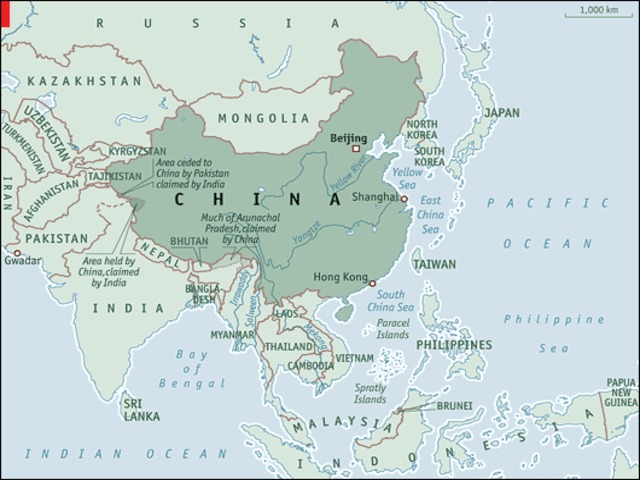
    Map Credit: Newschrome

    Images: www.deccanherald.com  and www.business-standard.com

  • China’s New Land Border Law

    China’s New Land Border Law

    On October 23, 2021, the Standing Committee of the National People’s Congress, the highest legislative body of the People’s Republic of China passed the Land Boundary Law along adding to its new Maritime Law as well as China Coast Guard Law passed earlier in 2021, which shows China’s intention in pursuing an aggressive policy on its territorial claims. The land boundary law came into effect on January 1, 2022. The law is likely motivated partially by the possible implications over developments in Afghanistan that could potentially have a destabilising effect in Xinjiang, growing violence in Myanmar-China border but more by the India-China geopolitical tussle.  The timing of the law is clearly related to the escalating border tensions with India and in the South China Sea. India and China have been engaged in border stand-off since May 2020.[i] Closer scrutiny of this law, consisting of 62 articles in seven chapters, indicates that China is stepping up its aggressive tone when it comes to border disputes, demonstrated by its rhetoric that China will “resolutely defend territorial sovereignty and land border security.”[ii] It states that the main aim of the law is to “standardise and strengthen the security and stability of land borders” and “safeguard national sovereignty, security and territorial integrity.”[iii] In other words, Beijing will take all measures to safeguard its interests within its specified borders by any means be it military or economic. The law effectively uses a civil-military fusion strategy emphasising improvement of public services and infrastructure along the borders as also incorporating the local population in territorial defence. The law prohibits any party from engaging in any border activities which would “endanger national security or affect China’s friendly relations with neighbouring countries”.[iv]

    Zhang Yesui, a spokesperson for the National People’s Congress stated that the law became necessary to safeguard China’s interests at the border and to regulate national borders, border defence management, and international cooperation in border affairs.[v] This law has serious implications for all 14 countries sharing borders with China. By incorporating the sovereignty claim over disputed territories China has effectively legitimised the use of force along its 22,4577 kilometres of borders as of January 01, 2022. Even though China has guaranteed that these laws aren’t meant to dislodge any international laws and treaties, it is evident that China is adopting aggressive policies to attain its goals.

    The new law has serious implications for India. Firstly, since the 1962 war, the Line of Actual Control (LAC) is the de facto border between India and China, and both countries have different interpretations of the LAC over at least 13 different locations.[vi] Article 4 of the law states China’s sovereignty and territorial integrity as sacred and inviolable and applies this dictum to the disputed territories.[vii] Thus this law makes the earlier agreement of Peace and Tranquillity along the disputed Sino-India border almost irrelevant.  Secondly, the law forbids any form of construction of facilities “near” China’s border. This is elucidated in Article 10 deals with border defence construction including its river waters management under the term flood control. These issues are deliberately kept vague, and they could interfere with any form of construction on the border. This could again become contentious as both the countries are engaged in an “infrastructure arms race” on their sides of the border. Thirdly, the new law has made a special mention of the role of civilians concerning the development of villages and towns in the borderlands. The law reflects China’s intention to increase civilian settlements bordering India, Nepal, and Bhutan.[viii] This move goes in tandem with China’s agenda of “developing the border regions, enriching the local people” introduced in 1999 and is seen as a strategy to legitimise its territorial claims.[ix]

    The law has a problematic stance with international law, as Beijing is circumventing these by enacting domestic laws to give it legal backing for its unlawful actions. It shows that international law is ineffective against powerful states. The new law goes against the ethos of the Vienna Convention on Law of Treaties of 1969 (VCLT), which is an instrument that regulates the treaties between states. It establishes internationally recognised norms of behaviour by states in crisis or conflict situations. It is important to note that under the general principles of international law, unilateral declarations do tend to have a legal character of their own as explained under the Law of Treaties. It is imperative that such unilateral declarations must not affect the rights of other states and must go through two different stages to be considered legally acceptable. Firstly, there should be a unilateral statement by an actor and secondly, the said statement must either be accepted by the party/parties concerned or must go unchallenged. In this case, several parties have issues with China’s new land border law.[x]

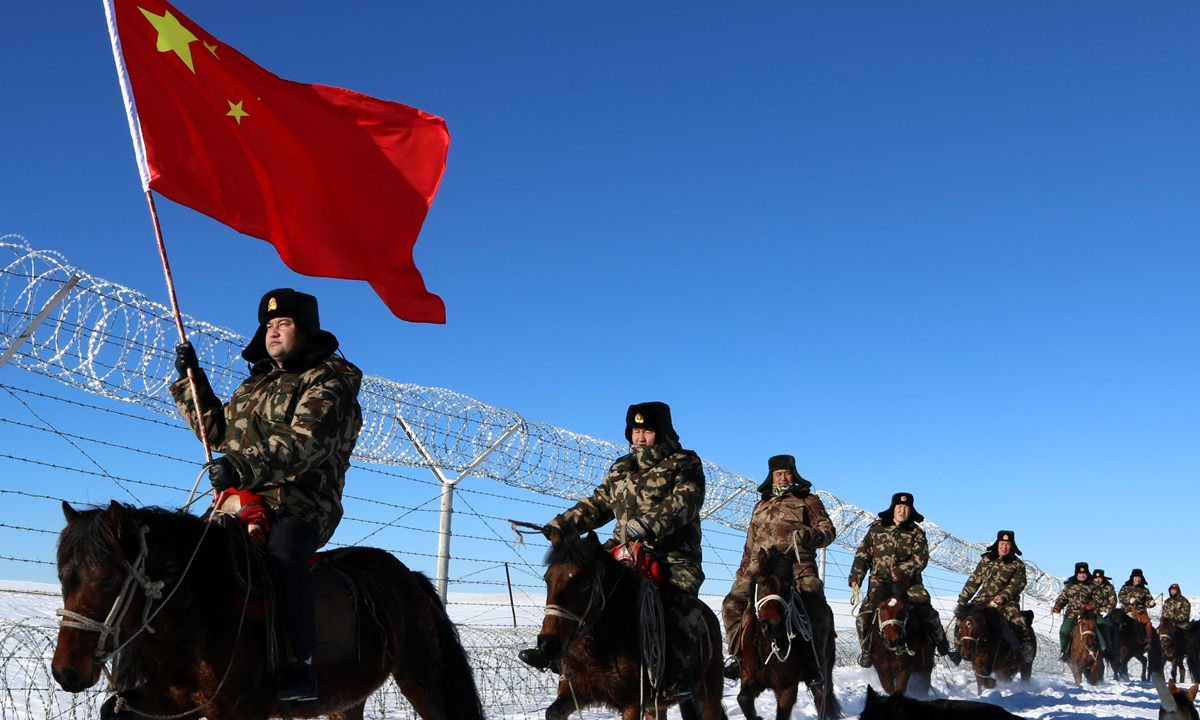
     As Beijing’s ‘Land border law’ came into effect on January 1st, the PLA released a propaganda video showing the Chinese flag and soldiers in the Galwan valley, with a banner reading ‘never yield an inch of land’. Earlier China released a statement renaming 15 places in India’s border state of Arunachal Pradesh. Chinese maps have consistently shown the entire state of Arunachal Pradesh, Barahoti plains in Uttarakhand, and areas up to the 1959 claim line in Ladakh as its territory.[xi] China will use the new law to claim these areas as its sovereign territory thus deeming it non-negotiable. It is playing realpolitik to increase pressure on India by escalating the friction points.[xii] The current situation at the India-China border has the potential to spiral out of control, as both sides are deploying heavy armaments and forces on the border, and in essence, the new law makes the border dispute a ticking time-bomb with far-reaching consequences for the world.

    Reference

    [i] Philip, Snehesh Alex. “Chinese Troops Challenge India at Multiple Locations in Eastern Ladakh, Standoff Continues.” ThePrint, 24 May 2020, https://theprint.in/defence/chinese-troops-challenge-india-at-multiple-locations-in-eastern-ladakh-standoff-continues/428304/.

    [ii] Wei, Changhao. “NPCSC Adopts New Laws on Family Education and Land Borders, Amends Audit Law & Authorizes New Regulatory and Military Reforms.” NPC Observer, 18 Nov. 2021,https://npcobserver.com/2021/10/26/npcsc-adopts-new-laws-on-family-education-and-land-borders-amends-audit-law-authorizes-new-regulatory-and-military-reforms/.

    [iii]  Panag , Lt Gen H S. “China’s Land Border Law Is More Sinister than It Lets on. India Needs a Course Correction.” ThePrint, 11 Nov. 2021, https://theprint.in/opinion/chinas-land-border-law-is-more-sinister-than-it-lets-on-india-needs-a-course-correction/764463/.

    [iv] 13th National People’s Congress. “Land Border Law of the People’s Republic of China.” The National People’s Congress of the People’s Republic of China, 23 Oct. 2021, http://www.npc.gov.cn/npc/c30834/202110/5a3d27747cc542f8bcde9030a83218e2.shtml.

    [v] Huang, Kristin. “What ‘New Challenges’ Does China’s New Border Defence Law Aim to Tackle?” South China Morning Post, 31 Oct. 2021, https://www.scmp.com/news/china/diplomacy/article/3154139/what-new-challenges-does-chinas-new-border-defence-law-aim.

    [vi] Fravel, Taylor M. “Analysis | Why Are China and India Skirmishing at Their Border? Here’s 4 Things to Know.” The Washington Post, WP Company, 2 June 2020, https://www.washingtonpost.com/politics/2020/06/02/why-are-china-india-skirmishing-their-border-heres-4-things-know/.

    [vii] Kalita, Jayanta. “China’s New Border Law Could Further Complicate Boundary Disputes”, The Irrawaddy, November 22, 2021.  https://www.irrawaddy.com/opinion/guest-column/chinas-new-border-law-could-further-complicate-boundary-disputes.html

    [viii] Pasricha, Anjana. “Chinese Border Villages in Disputed Territory Put India on Alert.” VOA, 2 Apr. 2021, https://www.voanews.com/a/east-asia-pacific_voa-news-china_chinese-border-villages-disputed-territory-put-india-alert/6204062.html.

    [ix] Jianqiang, Yang. “Deputy Director of the National Ethnic Affairs Commission, Answered Questions from the Chinese Government Website on the ‘Eleventh Five-Year Plan’ for the Action to Promote Frontiers and Enrich the People.” Central Government Portal, 18 June 2007, http://www.gov.cn/zwhd/2007-06/18/content_652065.htm.

    [x] Pandey, Utkarsh. “The India-China Border Question: An Analysis of International Law and State Practices.” ORF, 23 Dec. 2020, https://www.orfonline.org/research/the-india-china-border-question/.

    [xi] “China’s new border laws implemented under Galwan video: All you need to know about the legislation and why is it a concern for India.” Firstpost, January 03, 2022.  https://www.firstpost.com/india/chinas-new-border-laws-implemented-amid-galwan-video-all-you-need-to-know-about-the-legislation-and-why-is-it-a-concern-for-india-10253481.html

    [xii] Siddiqui, Huma. “China continues its belligerence, renamed 15 places in Arunachal: India should expect more such actions, say experts”, Financial Express, December 31, 2021. https://www.financialexpress.com/defence/china-continues-its-belligerence-renamed-15-places-in-arunachal-india-should-expect-more-such-actions-say-experts/2395218/


    Feature Image Credi: Global Times

    Map Credit: jagranjosh.com

  • Military leadership: In the eye of storm

    Military leadership: In the eye of storm

    Politicians are trying hard to keep behind curtains the true state of affairs along the Line of Actual Control but it’s only adding to credibility deficit

    The acrimonious exchanges between both sides on the heels of the 13th Corps Commander-level talks in Ladakh, an exercise in futility and procrastination, have drawn adverse attention to the manner in which the Union Government has kept its own citizens in the dark as to the true state of affairs along the Line of Actual Control in Ladakh and elsewhere. Equivocation has its costs, and the recently released videos and photographs of our personnel taken prisoners at Galwan have left us embarrassed and angered, mainly at the folly and shortsightedness of our leadership for not coming clean on the issue in the first place. All that its rather inept attempts to keep the genie in the bottle have achieved is to play into the hands of the excellent Information Warfare capabilities the Chinese possess, allowing them to shape the narrative to their advantage.


    Read More

  • Dealing with China in 2021 and Beyond

    Dealing with China in 2021 and Beyond

                                                                                                                         TPF Occasional Paper
                                                                                                                                                                            February 2021

    The Current Situation

    As Eastern Ladakh grapples with a severe winter in the aftermath of a violent and tension-filled 2020, much analysis concerning happenings on the India-Tibet border during the previous year has become available internationally and within India. Despite variance in individual perspectives and prognoses, the one issue starkly highlighted is that 2020 marks a turning point in the India-China relationship, which, shorn of diplomatese, has taken a clear adversarial turn.

    Enough debate has taken place over the rationale and timing behind the Chinese action. It suffices to say that given the expansionist mindset of the Xi regime and its aspiration for primacy in Asia and across the world, it was a matter of time before China again employed leverages against India. In 2020 it was calibrated military pressure in an area largely uncontested after 1962, combined with other elements of hard power – heightened activity amongst India’s neighbours and in the Indian Ocean plus visibly enhanced collusivity with Pakistan This, despite platitudes to the contrary aired by certain China watchers inside India, who continued to articulate that existing confidence-building mechanisms (CBMs) would ensure peace on the border and good relations overall. Multiple incidents on the border over the last few years culminating in the loss of 20 Indian lives at Galwan have dispelled such notions.

    Currently, in terms of militarization, the LAC in Eastern Ladakh can vie with the Line of Control (LOC) on the Western border.

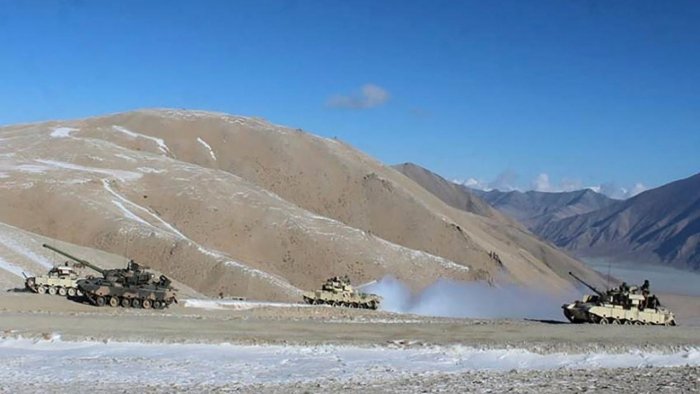
    As an immediate consequence, the Line of Actual Control (LAC) in the arena of conflict in East Ladakh is seeing the heaviest concentration of troops in history, supplemented by fighter jets, utility and attack helicopters, the latest artillery acquisitions, armoured formations, road building teams and an inventory of drones, backed by matching logistics. Currently, in terms of militarization, the LAC in Eastern Ladakh can vie with the Line of Control (LOC) on the Western border.

    Within the country, the perception of China as the principal foe has crystallised. At no other time since 1962 has China come in for such intense scrutiny. Indian public discourse is focused on China, towards interpreting its policies and implications for India and the world – all against the backdrop of international geopolitics churned further by the Covid pandemic.

    China and the World in 2021

    In 2017, President Xi Jinping had given a foretaste of things to come when spelling out his vision during the 19th Party Congress – that China has entered a “new era” where it should take the “centre stage in the world’[1]. In an insightful essay, Jake Sullivan (now National Security Adviser in the Biden administration) and Hal Brands have observed that ‘China has two distinct paths towards achieving this aim’ [2]. The first focuses on building regional primacy as a springboard to global power’ while the second ‘focuses less on building a position of unassailable strength in the Western Pacific than on outflanking the U.S. alliance system and force presence in that region by developing China’s economic, diplomatic, and political influence on a global scale’. In the same piece, the authors sombrely conclude that the US ‘could still lose the competition with China even if it manages to preserve a strong military position in the Western Pacific….softer tools of competition—from providing alternative sources of 5G technology and infrastructure investment to showing competent leadership in tackling global problems—will be just as important as harder tools in dealing with the Chinese challenge…’ [3] These observations are prescient.

    China and the Pandemic. A look at China’s conduct in this context and those of other nations over the last 12 months is instructive. The first aspect is its reaction to worldwide opprobrium for initially mishandling the Corona crisis – reprehensible wolf warrior diplomacy, crude attempts to divert the narrative about the origin of the Virus, unsuccessful mask diplomacy[4] and successfully delaying a WHO sponsored independent investigation into the matter for a full year without any guarantee of transparency. Secondly, it has exploited the covid crisis to strengthen its hold on the South China Sea commencing from March 2020 itself. Some examples are the renaming of 80 islands and geographical features in the Paracel and Spratly islands, commissioning research stations on Fiery Cross Reef and continued encroachment on fishing rights of Indonesia and Vietnam[5], in addition to a host of aggressive actions too numerous to mention, including ramming of vessels. Retaliatory actions from the US have continued, with the Trump administration in its final days sanctioning Chinese firms, officials, and even families for violation of international standards regarding freedom of navigation in January 2021[6]. The outgoing administration delivered the last blow on 19 January, by announcing that the US has determined that China has committed “genocide and crimes against humanity” in its repression of Uighur Muslims in its Xinjiang region[7]. As regards Taiwan, the Australian Strategic Policy Institute had recently forecast that China Taiwan relations will be heading for a crisis in a few weeks’ time,[8] (as borne out by serious muscle-flexing currently underway). If so, it would put the American system of alliances in the region since 1945 squarely to the test.

    Pushback in the Indo Pacific. With China constantly pushing the envelope in its adjoining seas, the Quadrilateral Dialogue, whose existence over the last decade was marked only by a meeting of mid-level officials in Manila in November 2017, has acquired impetus. Initially dismissed as ‘sea foam’ by China, the individual interpretations of roles by each constituent have moved towards congruence, with Australia openly voicing disenchantment with China. Though an alliance is not on the cards, it can be concluded that increased interoperability between militaries of India, Australia, Japan and the US is both as an outcome and driver of this Dialogue, deriving from respective Indo Pacific strategies of member nations. Further expansion of its membership and tie-ups with other regional groupings is the practical route towards an egalitarian, long-lasting and open partnership for providing stability in this contested region. Japan’s expression of interest in joining the Five Eyes intelligence-sharing network of the US, UK, Canada, Australia and New Zealand[9], is a step in this direction. European nations like Germany, the Netherlands and France have recently declared their Indo Pacific strategies. France has provided the clearest articulation, with the French Ambassador in Delhi spelling out the prevailing sentiment in Europe about China, as ‘ a partner, a competitor and a systemic rival’[10], while further stating that  “when China breaks rules, we have to be very robust and very clear”[11] . A blunt message befitting an Indo Pacific power, reflecting the sentiments of many who are yet to take a position.

    BRI will see major reprioritisation – though its flagship program, the China Pakistan Economic Corridor (CPEC) is unlikely to suffer despite disagreements on certain issues between the two countries.

    Slowing of a Behemoth. China’s other driver the Belt and Road Initiative (BRI), has considerably slowed in 2020. Lee YingHui, a researcher with Nanyang Technological Institute Singapore wrote last September  ‘..in June this year, the Chinese Foreign Ministry announced that about 20 per cent of the projects under its ambitious Belt and Road Initiative (BRI) had been affected by the COVID-19 pandemic. At the same press briefing, Wang Xiaolong, director-general at the Foreign Ministry’s International Economic Affairs Department, also revealed that a survey by the ministry estimated that some 30 to 40 per cent of projects had been somewhat affected, while approximately 40 per cent of projects were deemed to have seen little adverse impact[12]. Given the parlous condition of economies of client states post Covid-19 with many including Pakistan requesting a renegotiation of loans[13], BRI will see major reprioritisation – though its flagship program, the China Pakistan Economic Corridor (CPEC) is unlikely to suffer despite disagreements on certain issues between the two countries.

    Resilient Economy. China’s economy has rebounded fastest in the world, growing at 6.5 % in the final three months of 2020[14]. Despite the rate of annual growth being lowest in 40 years[15], its prominence in global supply chains has ensured some successes, such as the Comprehensive Agreement on Investment with the EU in December 2020. The deal, which awaits ratification by the European Parliament is more a diplomatic than an economic win for China, being perceived as detrimental to President Biden’s efforts to rejuvenate the Trans-Atlantic Alliance. China has notched up another win with the signing of the Regional Comprehensive Economic Partnership (RCEP), where it along with 14 Asian countries from ASEAN and others (including Quad members like Australia and Japan)  have agreed on an ‘ integrated market’. Given India’s position on the RCEP, how this agreement pans out and implications for its members will be watched with interest.

    America in the New Year. The Biden Administration’s initial actions reaffirm the bipartisan consensus achieved last year on dealing with China. Comments of  Secretary of State Anthony Blinken that  ‘China presents the “most significant challenge” to the US while India has been a “bipartisan success story” and the new US government may further deepen ties with New Delhi,’[16] were indicative, as were those of Gen Lloyd Austin the Secretary of Defence during his confirmatory hearing[17].  President Biden’s first foreign policy speech on 04 February that ‘America is Back’ have provided further clarity. Earlier, Blinken and Austin had dialled Indian counterparts NSA Doval and Defence minister Rajnath Singh to discuss terrorism, maritime security, cybersecurity and peace and stability in the Indo Pacific.[18]Economically, American interest in joining or providing alternatives to the Comprehensive and Progressive Agreement for Trans-Pacific Partnership (CPTPP, with an 11 nation membership, born out of President Trump’s withdrawal from its previous format, the TPP), will be another determinant in matters of trade with China. Harsh national security challenges will test the new administration’s resolve, as has already happened in the South China Sea over Taiwan where at the time of writing, the USS Theodore Roosevelt is conducting Freedom of Navigation operations[19]. Similar tests will occur over North Korea and Tibet, where the Senate’s passage of the Tibet Policy and Support Act 2020 mandates that decisions regarding the Dalai Lama’s succession be taken exclusively by the Tibetan people and the incumbent. Overall, a sense of how the world including the US will deal with China in 2021 is well captured by Commodore Lalit Kapur of the Delhi Policy Group when he states that ‘ …China has become too unreliable to trust, too powerful and aggressive to ignore and too prosperous, influential and connected to easily decouple from………[20] Going back to the views essayed by Sullivan and Brands, it appears that China is following both paths to achieve its objective, ie Great Power status.

    India and China

    The Early Years  India’s attempt, soon after independence to develop a relationship with China, its ‘civilisational neighbour’ was overshadowed by the new threat to its security as the PLA invaded Tibet in 1950 – effectively removing the buffer between the two large neighbours. Dalai Lama’s flight to India in March 1959, the border clash at Hot Springs in Ladakh six months later and the subsequent 1962 war shattered our illusions of fraternity.  Documents published recently pertaining to the period from 1947 to the War and beyond[21], reveal differences in perception within the Indian government in the run-up to 1962 despite the availability of sufficient facts. This combined with Chinese duplicity and disinformation, Indian domestic and international compulsions resulted in disjointed decision making, leading to the disastrous decision to implement the ‘Forward Policy’ with an unprepared military. A brief period of security cooperation with the US ensued including the signing of a Mutual Defence Agreement.[22] However, the US-China rapprochement of the early 70s and India’s professed non-alignment ensured its diminished status in the great power calculus.

    Reaching Out to China. India’s outreach to China commenced with Prime Minister Rajiv Gandhi’s visit to Beijing in 1988 in the aftermath of the Chinese intrusion at Somdorung Chu in 1986 in Arunachal Pradesh, resulting in a full-fledged standoff which lasted till mid-1987. The consequent push towards normalisation of relations resulted in the September 1993 Agreement on the Maintenance of Peace and Tranquillity along the Line of Actual Control in the India-China Border Areas,  the November 1996 Agreement on Confidence Building Measures in the Military Field along the Line of Actual Control in the India-China Border Areas, followed thereafter by the Declaration on Principles for Relations and Comprehensive Cooperation between India and China, of June 2003 and finally the Agreement between the Government of the Republic of India and the Government of the People’s Republic of China on the Political Parameters and Guiding Principles for the Settlement of the India-China Boundary Question of April 2005, signed during the visit of Chinese premier Wen Jiabao, which also saw the India China relationship elevated to a ‘Strategic and Cooperative Partnership for Peace and Prosperity’.

    Despite partially successful attempts to broad base the engagement, territorial sovereignty continued to dominate the India China agenda, as can be observed by the number of agreements signed on border management – with minimal outcomes. It appears now that what can only be construed as diffidence in dealing with China on the border (and other issues) arose not because of misplaced optimism over such agreements, but for several other reasons. Some were structural weaknesses, such as lack of development of the border areas and poor logistics. Others arose because of want of a full-throated consensus on how strong a line to take with a  visibly stronger neighbour  – aggravated by growing economic disparity and the limitations imposed by self-professed non-alignment, especially so in the absence of a powerful ally like the Soviet Union, which had disintegrated by 1991. Also, American support could not be taken for granted, as was the case in the 60s.  Overall, the approach was one of caution. This, coupled with lack of long term border management specialists induced wishful myopia on the matter, which was dispelled periodically by border skirmishes or other impasses, before returning to ‘business as usual’.  

    The extent of Engagement Today. To objectively analyse the relationship, it is important to comprehend the extent of the India China engagement on matters other than security. In the context of trade and industry, a perusal of the website of the Indian embassy in Beijing provides some answers. There is a list of 24 agreements/ MoUs /protocols between the two countries on Science and Technology alone, covering fields as diverse as aeronautics, space technology, health and medicine, meteorology, agricultural sciences, renewable energy, ocean development, water resources, genomics, geology, and others. The Embassy brings out India’s concerns regarding trade including impediments to market access, noting that trade imbalances have been steadily rising, to reach $58.4 billion in 2018, reducing marginally to $56.95 in 2019, a first since 2005. The poor penetration of Indian banks in China, India’s second-largest shareholding (8%) in the Asian Infrastructure Investment Bank (AIIB), and being the largest borrower from the New Investment Bank or NIB, a BRICS bank of which all members have equal shareholding provide an understanding of linkages between the countries in the banking sector[23]. Other areas of cooperation are in petroleum and railways.
    Economic Fallout Post April 2020. After the Galwan incident, India has taken strong measures on the economic front against China, from banning over 250 software applications to a partial ban on various categories of white goods,and the imposition of anti-dumping duties on many others. The Consolidated FDI Policy of the Department for Promotion of Industry and Internal Trade dated 15 October 2020, mandates Government scrutiny of every Chinese investment proposal before approval. However, the paradox in the India China relationship is well illustrated by trade figures for the first half of the Financial Year 20-21, where China surpassed the USA to become India’s largest trading partner. India reduced imports from China but exports to China grew by a robust 26.2 per cent at $10.16 billion[24]. Also, conditionalities for borrowing from the AIIB and NIB have resulted in India having to permit Chinese firms to bid for works connected with projects funded by these institutions. Consequently in January this year, the contract for construction of a 5.6 km long underground stretch of the Rapid Rail Transit System in the National Capital Region has been awarded to a Chinese company, Shanghai Tunnel Engineering Company Limited.[25] As noted earlier, decoupling is not easy. Incentives for companies to relocate to India have been announced, with some investment flowing in from Google and Facebook, and plans for Samsung to relocate a factory to NOIDA[26]. Finally, India’s exclusion from the RCEP will also have to be factored in when negotiating a long term trade policy with China.

    However, the paradox in the India China relationship is well illustrated by trade figures for the first half of the Financial Year 20-21, where China surpassed the USA to become India’s largest trading partner.

    Soft Power and Academia. Indian soft power in China remains subservient to harsh security concerns despite oft-quoted historical antecedents. Some elements like Indian cinema continue to be extremely popular. Student exchange programs have taken shape, especially under the aegis of Confucius Institutes which have secured a toehold in some Indian campuses. Following the trend worldwide, their programs are also under scrutiny[27].  The few Indian students in China (less than 25000)[28] have been hit hard by the coronavirus. Overall, given the current state of engagement, employing soft power as an effective tool has limited potential. Exchange of scholars from policy and security think tanks has been a good way of imbibing a sense of the other, resulting in greater awareness. While the trust deficit and reasons for the same have always been highlighted by the Indian side, it has been the general experience that China has been less forthcoming in its responses.

    Building Blocks for a China Policy

    In the middle term, unless there is a concerted and verifiable effort by China, trade with that country will be overshadowed by security issues  (the huge trade imbalance also becoming one of these !). The Indian economy has commenced its post-Covid recovery in the new year. The budget for FY 21-22, trade policies of others like the EU and the US, will impact economic policy, as will national security concerns.

    Immediate security priorities vis a vis China are a mix of the geopolitical and purely military. These can broadly be outlined – safeguarding Indian interests in the Indian Ocean region and the littorals, holding the line in the high Himalayas and ensuring sanctity over Indian skies. The first being both a geopolitical and security matter would leverage all elements of statecraft including the military. The balance two are a direct outcome of India’s military power. These, intertwined with India’s multilateral approach towards cooperation in world fora would form the basis of dealing with China.

    Countries in the neighbourhood other than Pakistan when in distress, look first towards India for relief – natural calamities, food shortages[29], and now the corona vaccine, where Indian generosity remains unsurpassed worldwide. India does not indulge in cheque book diplomacy, nor entice weaker neighbours into debt traps.

    Managing the Neighbourhood. In South Asia, India is primus inter pares due to size, geographical location, resources, capability and potential. Its soft power, economic reach ( while not comparable to China’s) and associated linkages with other countries are huge, at times even considered overwhelming. Countries in the neighbourhood other than Pakistan when in distress, look first towards India for relief – natural calamities, food shortages[29], and now the corona vaccine, where Indian generosity remains unsurpassed worldwide. India does not indulge in cheque book diplomacy, nor entice weaker neighbours into debt traps. Despite ethnic linkages and security concerns resulting sometimes in what is perceived by others as ‘interventionist politics’, India’s respect for its neighbours’ sovereignty is absolute. This is in contrast to China, whose recent interventions in Nepal have led to rallies in front of the Chinese embassy[30]. Its pressure on the NLD government in Myanmar over BRI projects had again not been viewed favourably in that country,[31] though the trajectory that the China-Myanmar relationship now follows remains to be seen, with China attempting to support Myanmar’s military in international fora after the coup[32]. Within South Asia, strengthening delivery mechanisms, sticking to timelines in infrastructure projects, improving connectivity and resolving the myriad issues between neighbours without attempting a zero-sum game with China is the way forward for India, which should play by its considerable strengths. Simultaneously, it must look at growing challenges such as management of Brahmaputra waters and climate change, and leverage these concerns with affected neighbours.

    Strengthening Military Capability. A more direct challenge lies more in the military field,  and in measures necessary to overcome these.  The justifiable rise in military expenditure during the current year would continue or even accelerate. The armed forces are inching towards a mutually agreed road map before implementing large scale organisational reforms. Conceptual clarity on integrated warfighting across the spectrum in multiple domains (including the informational ) is a sine qua non, more so when cyberspace and space domains are concerned. This mandates breaking up silos between the military and other specialist government agencies for optimisation and seamless cooperation. Also, while classical notions of victory have mutated, swift savage border wars as witnessed in Nagorno Karabakh remain live possibilities for India, with open collusion now established between China and Pakistan. As always, the study of the inventory, military capability of the adversary and his likely pattern of operations will yield valuable lessons. The armed forces have to prepare multiple options, to deal with a range of threats from full scale two front wars down to the hybrid, including responses to terrorist acts while ensuring sovereignty across the seas. Network-centric warfare will take centre stage, with information operations being vital for overall success, possibly even defining what constitutes victory.

    Progress has been achieved in these directions. As an example, the first Indian weaponised drone swarm made its debut on Army Day 2021, and visuals of a ‘wingman drone’ underdevelopment have been shown during the Aero India 2021 at Bangalore. The military would be planning for operationalisation, induction, deployment, staffing and human resource aspects of this weapon platform with the nominated service. An estimate of the time required to resolve these issues as also for full-scale production of such systems and larger variants will dictate procurement decisions with respect to other land and air platforms providing similar standoff kinetic effects, and surveillance capability. A concurrent requirement to develop sufficient capability to counter such systems would doubtless be under scrutiny. In this regard, the outcome of the PLA merging its cyber and electronic warfare functions for multiple reasons merits attention.[33] While the Navy’s requirements to dominate the Indian Ocean are well appreciated, a consensus on its future role and the need (or otherwise) for a third aircraft carrier would decide the nature, type and numbers of future naval platforms – unmanned underwater vehicles, submarines, shore/ carrier-based aircraft and others.  With decisions over the Tejas LCA induction finalised, induction of a state of the art platforms from the USA and France over the last few years and hope for the acquisition of new generation indigenous air defence systems[34] on the anvil, the IAF is set to gradually regain its edge. Overall, India’s military has to leverage the latest technology and develop the capability to fight in multiple domains, which its hard-earned experience in third-generation warfighting would complement. With restructuring planned concurrently, each decision will have to be fully informed and thought through – more so when mini faceoffs as has happened at Naku La in Sikkim this month continue to occur.

    A Way Forward

    Traditional Chinese thinking has simultaneously been dismissive and wary of India. In his seminal publication at the turn of the century, Stephen Cohen noted that ‘…from Beijing’s perspective India is a second rank but sometimes threatening state. It poses little threat to China by itself and it can be easily countered but Beijing must be wary of any dramatic increase in Indian power or an alliance between New Delhi and some hostile major state..’[35]  As brought out in this paper, outlines of a grounded long term China policy based on previous experiences and new realities are visible. Rooted primarily in the security dimension followed thereafter by the economic, its success will be predicated on peace and tranquillity on the border, without entering into the trap of competition in either of the two domains. As pointed out by the Minister for External Affairs in his talk to the 13th All India Conference for China Studies this month [36] the India-China relationship has to be based on ‘mutuality…  mutual respect, mutual sensitivity and mutual interests ..’. The EAM further noted that ‘expectations…. that life can carry on undisturbed despite the situation at the border, that is simply not realistic. There are discussions underway through various mechanisms on disengagement at the border areas. But if ties are to steady and progress, policies must take into account the learnings of the last three decades’[37].

    Rooted primarily in the security dimension followed thereafter by the economic, its success will be predicated on peace and tranquillity on the border, without entering into the trap of competition in either of the two domains.

    In the same talk, the EAM has laid down eight broad and eminently practical propositions as guidelines for future India-China relations. Most prominent of these is that peace and tranquillity on the border are a must if relations in other spheres are to develop. Also, the need to accept that a multipolar world can have a multipolar Asia as its subset. He stressed that reciprocity is the bedrock of a relationship, and sensitivities to each other’s aspirations, interests and priorities must be respected. Concurrently, management of divergences and differences between two civilizational states should be considered over the long term.

    A China policy crafted on these principles would ensure that India’s concerns vis a vis its neighbour is addressed, within the larger National goal of all-round growth and development of India and its citizens in the 21st Century.


    Notes:

    [1] ‘Xi JinPing Heralds New Era of Chinese Power’ Dipanjan Ray Chaudhury, Economic Times 18 October 2017

    [2] ‘China Has Two Paths To Global Domination’ Jake Sullivan,  Hal Brands, Foreign Policy, 22 May 2020

    [3] ibid

    [4] ‘China’s Mask Diplomacy is Faltering.But the US isn’t Doing any better’ Charlie Campbell Time Magazine 03 April 2020

    [5] ‘China’s Renewed Aggression in the South China Sea’ Gateway House Infographic 22 April 2020

    [6] ‘US imposes new sanction on Beijing over South China Sea’  Mint 15 January 2021

    [7] In parting shot, Trump administration declares China’s repression of Uighurs ‘genocide’ Humeyra Pamuk, Reuters 19 January 2021

    [8] ‘Pacific Panic: China-Taiwan relations to reach breaking point in ‘next few weeks’ skynews.com.au 18 January 2021

    [9] ‘Japan wants de facto ‘Six Eyes’ intelligence status: defence chief’ Daishi Abe and Rieko Miki Nikkei Asia 14 August 2020

    [10] ‘Emmanuel Bonne’s interview to the Times of India’ 10 January 2021  Website of the French Embassy in New Delhi

    [11] ‘When China breaks rules, we have to be very robust and clear: French diplomat’ Dinakar Peri, The Hindu 08 January 2021

    [12] ‘COVID-19: The Nail in the Coffin of China’s Belt and Road Initiative?’ Lee YingHui, The Diplomat 28 September 2020

    [13] ibid

    [14] ‘Covid-19: China’s economy picks up, bucking global trend’ BBC.com  18 January 2021

    [15] ibid

    [16] ‘New US govt may look to further deepen ties with India: Blinken’ Elizabeth Roche, The Mint 21 Jan 2021

    [17] ‘What Biden’s Defence Secretary Said About Future Relations With India, Pakistan’ Lalit K Jha, The Wire 20 January 2021

    [18] ‘US NSA speaks to Doval, Def Secretary dials Rajnath’ Krishn Kaushik and Shubhajit Roy Indian Express 27 January 2021

    [19] ‘As China Taiwan tension rises, US warships sail into region’ The Indian Express 25 January 2021

    [20] ‘India and Australia: Partners for Indo Pacific Security and Stability’  Lalit Kapur, Delhi Policy Group Policy Brief Vol. V, Issue 42 December 15, 2020

    [21] ‘India China Relations 1947-2000 A Documentary Study’ (Vol 1 to 5)  Avtar Singh Bhasin   Geetika Publishers New Delhi 2018

    [22] ‘The Tibet Factor in India China Relations’  Rajiv Sikri  Journal of International Affairs , SPRING/SUMMER 2011, Vol. 64, No. 2, pp 60

    [23] Website of the Embassy of India at Beijing   www.eoibeijing.gov.in

    [24] ‘What an irony! Mainland China beats US to be India’s biggest trade partner in H1FY21’  Sumanth Banerji        Business Today 04 December 2020

    [25] ‘Chinese company bags vital contract for first rapid rail project’  Sandeep Dikshit   The Tribune   03 January 2021

    [26] ‘Samsung to invest Rs 4,825 cr to shift China mobile display factory to India’ Danish Khan  Economic Times 11 December 2020

    [27]  ‘The Hindu Explains | What are Confucius Institutes, and why are they under the scanner in India?’

    Ananth Krishnan The Hindu August 09 2020

    [28] ‘23,000 Indian students stare at long wait to return to Chinese campuses’  Sutirtho Patranobis  Hindustan Times  08  September 2020

    [29] ‘Offering non-commercial, humanitarian food assistance to its neighbours: India at WTO’ Press Trust of India 19 December 2020

    [30] ‘Torch rally held in Kathmandu to protest against Chinese interference’ ANI News  30 December 2020

    [31] ‘Chinese Foreign Minister Wang Yi visits Myanmar with aim to speed up BRI projects’  Dipanjan Roy Chaudhury  Economic Times  09 January 2021

    [32] ‘China blocks UNSC condemnation of Myanmar coup’ India Today Web Desk 03 February 2021

    [33] ‘Electronic and Cyber Warfare: A Comparative Analysis of the PLA and the Indian Army’ Kartik Bommankanti ORF Occasional Paper July 2019

    [34] ‘India successfully test fires new generation Akash NG missile’ Ch Sushil Rao  Times of India  25 January 2021

    [35] ‘ India  Emerging Power’  Stephen Philip Cohen   Brookings Institution Press 2001   pp 259

    [36] Keynote Address by External Affairs Minister at the 13th All India Conference of China Studies January 28, 2021

    [37] ibid


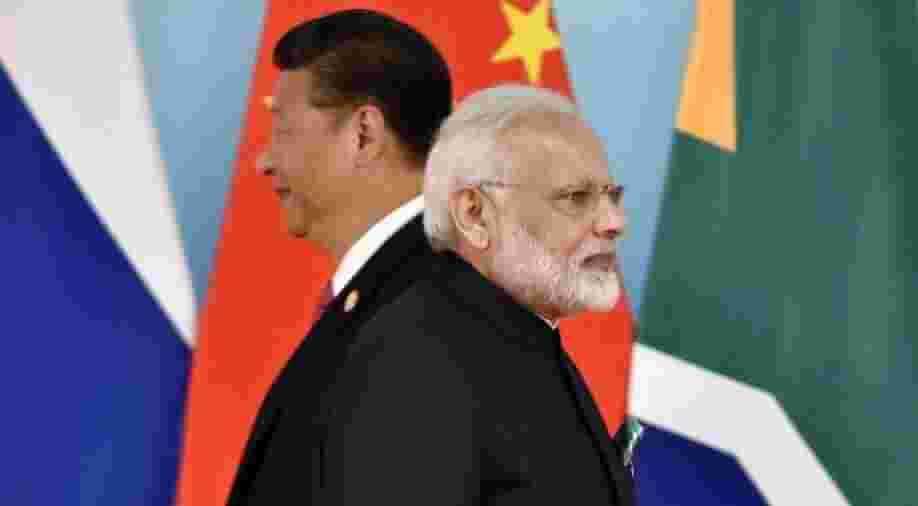
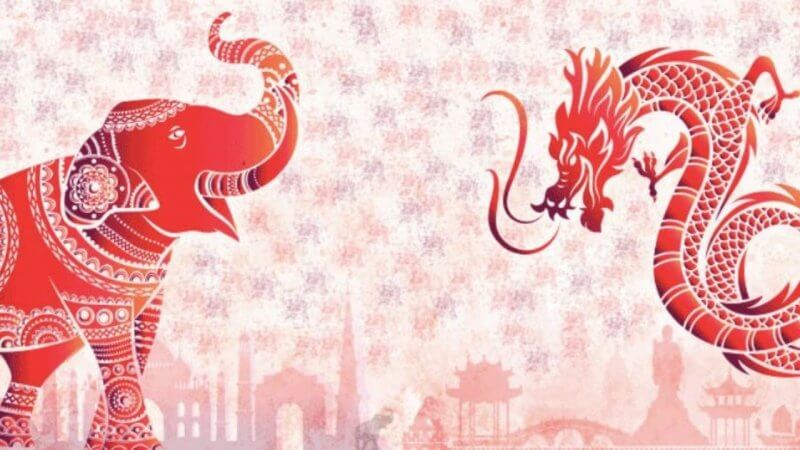
    Image Credit: Wion  and Trak.in