Tag: Kerala

  • Governor vs Chief Minister | Political meddling with educational institutions must stop

    Governor vs Chief Minister | Political meddling with educational institutions must stop

    The rather ugly spat between Governor of Kerala Arif Mohammed Khan and Chief Minister Pinarayi Vijayan as regards the latter’s alleged interference in the appointment of vice-chancellors in state universities should not surprise anyone familiar with the Indian academic scene. That the incident has come out in the open, too, should not alarm those with even a semblance of awareness of what goes on in the realm of education in India.

    In almost all states allegations of political intrusion in various appointments in educational institutions have been made, more or less consistently. The only difference this time is that the Governor/Chancellor has expressed his anguish and discomfort, in writing, to the Chief Minister. In many other cases it is the Chief Minsters or their Cabinet colleagues who have alleged that the office of the Governor/Chancellor has intervened in academic appointments.


    Read More

  • Narcotic Jihad | Can science and reason defeat religious polarisation in Kerala?

    Narcotic Jihad | Can science and reason defeat religious polarisation in Kerala?

    It is surprising that in today’s Kerala the well-educated religious lot, who are expected to have had a smattering of science, and who are expected to be the ones who see reason, are the ones who are raising the bogeys of ‘love jihad’ and ‘narcotic jihad’.

    Bertrand Russell, the great mathematician-philosopher and polymath had famously held that “Religion is something left over from the infancy of our intelligence; it will fade away as we adopt reason and science as our guidelines”. When we reflect on Russell’s quotation and introspect the religious realm in India per se, not to talk about contemporary events in Kerala, it is quite disconcerting and distressing; and a few crucial issues ensue from there.

    First and foremost, either Russell was wrong in his assertion as regards the fading away of religion in the wake of the adoption of reason and science by humans, or his understanding and definition of ‘religion’, ‘intelligence’, ‘reason’, and ‘science’ were at variance with the general, and usually acceptable, notions/definitions that are prevalent in civic society at large.

    It is rather surprising that in today’s Kerala the well-educated religious lot, the clergy, who are expected to have had a smattering of science, and who are expected to be the ones who see reason, are the ones who are raising the bogeys of ‘love jihad’ and ‘narcotic jihad’, notwithstanding the fact that probes by different agencies, including the National Investigation Agency, have debunked such allegations.

    The clergy concerned, particularly the bishop of Pala and other priest(s) who have indulged in such rhetoric, may not necessarily have played on into the hands of the Sangh Parivar, but have certainly touched the hearts and endeared themselves to the latter to the extent that the latter are ecstatic. Also, they have, along with other Right-wing groups, extolled the bishop of Pala, and have extended their support to him.

    However, something that has been very heartening and positive in this dark and murky scenario has been the bold and defiant stand of a group of nuns who not only spoke out against the bishop but also walked out of the mass of the priest who preached hate by going to the extent of beseeching his flock to boycott Muslims traders as also Muslim autorickshaw drivers.

    One would not have been surprised if insinuations and allegations of ‘love jihad’ and ‘narcotic jihad’ were made by Right-wing extremist groups because it is, inevitably, their wont to do so. But coming from the clergy in a state which has historically seen relatively amicable and amiable relations between Muslims and Christians wherein they have prospered together, belies logic.

    Pre-Islamic Arab contact with Kerala and the rest of the west coast of India dates back to the ‘Before Christ’ era, which gradually transformed into the Islamic one from the seventh century AD onwards.

    The oldest mosque to be built in the Indian subcontinent was the Cheramaan Juma Mosque in Methala, Thrissur district, in 629 CE. It is significant to point out that the north-centric way of looking at and referring to Islam in India by certain historians is quite misplaced. By the time Islam made any impact in the northwest and north of India, full-fledged Islamic societies had been formed in Kerala that extended beyond and along the Coromandel Coast in Tamil Nadu and spread towards South East Asia.

    Similarly, the Christian connection and the advent of Christianity in Kerala go back to 52 CE. For centuries, these religious groups, namely, Christians and Muslims, have coexisted and inhabited common spaces all over Kerala, along with the pre-existing indigenous communities. Also, there has been a high degree of acculturation between the various religious groups in terms of language, food, clothing, and other cultural practices including in the religious realm.

    There were, no doubt, skirmishes between the Christians and Muslims with the arrival of the Portuguese during the late fifteenth and early sixteenth century, but these have to be treated more as aberrations for economic gains than something that disturbed the overall ambiance of peace and communal harmony. The erstwhile situation as regards peaceful coexistence between the different religious communities prevailed in Kerala in spite of quite a few communal riots in other parts of India, both before and after the Independence.

    It is felt in some circles in Kerala that due to the COVID-19 pandemic and the restrictions as regards congregations, the footfalls have declined to result in drastically reduced revenues in the churches, and that has made some clergy feel insecure; and one way of getting back the faithful could be to polarise the communities in the expectation that would help in consolidating their own followers.

    Of late, the anti-Muslim rant that has emanated in Kerala is not confined to the borders of the state. The overt and manifest support in social media and through videos, for Israel’s bombing of Gaza during the recent conflict vis-à-vis the Palestinians, too, is, at one level quite disturbing, and at another level, points to the mindset that such perpetrators are embedded in.

    The proclivity to reduce the Palestinian identity to just a Muslim/Islamic one is one of the most irrational ways of looking at a people and explicating their ethnicity. Christian Palestinians too are at the forefront in their resistance to Israeli imperialism, and the occupation of Palestine. The well-known academic and crusader for peace, late Professor Edward Said, was one such.

    This article was published earlier in moneycontrol.com

    Featured Image: keralakaumudi.com

  • Bengal’s thinking is clear: will rest of India follow?

    Bengal’s thinking is clear: will rest of India follow?

    The second wave of Covid-19 began on February 10 when India reported 11,000 new cases. In the next 50 days, the daily average was 22,000 cases. In the following 10 days the daily average touched 89,800. We are now adding over 400,000 a day. India has never been engulfed by a crisis of this order.

    We are woefully short of hospital beds, oxygen, Remdesivir and Tocli-zumab, vaccines, ambulances and sadly even space in our crematoria. The growth and spread are expected to scale to almost a million a day. In two months, India has become the world’s basket case. Yet, on January 28 this year, speaking to the World Economic Forum in Davos, Prime Minister Narendra Modi showed a blissful and disturbing ignorance of the perfect storm looming. The committee of scientists monitoring the virus warned the PMO of the gathering storm. He was not interested. He was crowing about his perceived “achievement” of beating back the much-mutated “Chinese virus”. He was so wrong, and the country is paying a huge price. There is no Modi image of competence left.

     Prime Minister Modi’s inability to defend India against the second Covid-19 wave, and his inability to cajole the Chinese from withdrawing from areas they occupied in Ladakh now make him an easy target.

    The elections to the four states and Puducherry, which he was so focused on, have been his undoing. He began campaigning on February 5 and 7 in Assam and West Bengal. After that he addressed 20 more rallies in West Bengal and six more in Assam. He also addressed 10 rallies in Tamil Nadu, three in Kerala and one in Puducherry, in all around 40 giant rallies criss-crossing across in IAF Boeings. I wouldn’t even hazard the true cost to the exchequer, but I have heard it said the PM himself is liable to a charge of Rs 6 per air km. Other costs are borne by the PMO.  But the cost is not important. The time spent on huckstering is important. He lost almost a month campaigning, instead of managing the engulfing crisis. I always had a low opinion of his intellect, but even he could have surmised the risks posed to the nation by the renewed pandemic. Clearly, he factored winning West Bengal was more important and worth the cost. Mr Modi himself cheerfully paraphrased what Gopal Krishna Gokhale said almost 100 years ago: “What Bengal thinks today, India thinks tomorrow”!

    West Bengal has unambiguously expressed what it is thinking. It has rejected Mr Modi and his message and campaign-style, lock, stock and barrel. A subservient Election Commission helpfully broke up West Bengal’s polls into eight phases starting March 27 and closing April 29. During this period the daily Covid-19 cases rose in West Bengal from 812 to 17,403. Breaking it into eight phases didn’t help the BJP either. It lost in every phase and got double digits only in four. West Bengal has a sizable Muslim electorate and Mr Modi didn’t mince words in targeting them by making it appear they were Mamata Banerjee’s personal votebank. He didn’t bother to even conceal what he thought of them. His electoral style touched a new low, even by his standards and most certainly by the standards expected of a PM, when he jibed her by catcalling “Didi-O-Didi”. Urban Bengal responded to this by defeating the BJP soundly in all urban constituencies. There is a message here. All over the country the BJP and RSS have strong urban bases, but urban and urbane Bengal administered a resounding slap to gutter politics. With no record to show, Mr Modi’s politics are nothing but that now.

    There was no surprise in Assam. The BJP was returned by almost the same margin as in 2016, getting a majority with the AGP’s nine seats. The Congress lacked a visible local leadership who could match wits with the BJP’s Hemanta Biswa Sarma. Tamil Nadu was as expected. The two so-called national parties were clinging to crumbs thrown by the two so-called Dravidian parties. In Kerala, Pinrayi Vijayan showed why he’s India’s topmost and only surviving commissar. The DMK’s Stalin made no bones about what he thinks of Mr Modi’s Hindu and Hindi-centric politics. The Modi government used every means, including ED raids, to slow down Stalin. The ED even raided Stalin’s daughter.

    So where does our politics go from here? One clear conclusion is that both the BJP and Congress were dealt severe blows. It’s interesting the BJP’s campaigns were entirely shouldered by Narendra Modi and Amit Shah. None of the other top BJP leaders even bothered to show up anywhere. What shouldn’t be missed is that the Raksha Mantri, a former BJP president, was the first from the party to congratulate Mamata Banerjee. In Assam, Mr Sarma’s supporters have gone public crediting the victory to their leader. Mr Sarma has already fired a shot across Sarbananda Sonowal’s bow, saying he was no longer interested in being just a minister in someone’s Cabinet. The numbers might work for him, as he needs just a dozen MLAs to cross over and give Assam a new government. Mr Sarma was a Congress satrap till Rahul Gandhi insulted him by playing with his dog rather than listening to him. Rahul will be all ears now.

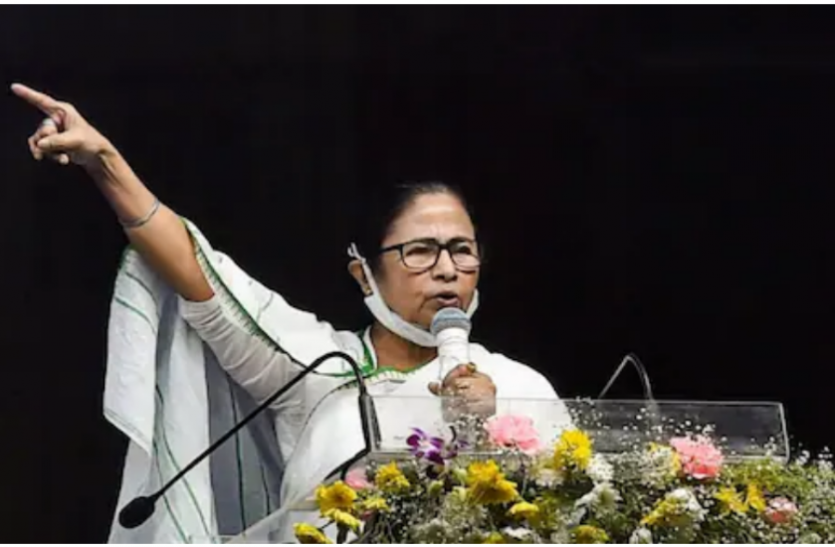
    Mamata Banerjee’s stunning victory puts her squarely on the centre stage of Opposition politics. Joining her there will be Lalu Prasad Yadav, released on bail by the Supreme Court despite the government’s strenuous objections. Tejashwi Yadav has shown he’s capable of leading a party when the RJD came so close to upstaging the BJP-JDU alliance in Bihar. Rajasthan’s Ashok Gehlot and Punjab’s Amarinder Singh have emerged as fairly independent Congress satraps. Uddhav Thackeray has shrugged off the Shiv Sena’s pariah status by providing Maharashtra with good leadership and a penchant for making politics the art of the possible. In Telangana, KCR has put the BJP in its place by a resounding win in Nagarjunasagar after its surprise showing in the Dubbaka and GHMC polls. YSRC scored a resounding win in Tirupati with the BJP candidate, a retired chief secretary, losing her deposit. The anti-BJP lineup now has seven chief ministers, excluding Naveen Patnaik. Seven CMs will mean the election and propaganda machines can be kept well-greased and the powder kegs dry and replenished. Prime Minister Modi’s inability to defend India against the second Covid-19 wave, and his inability to cajole the Chinese from withdrawing from areas they occupied in Ladakh now make him an easy target. The Gujarat model has been long exposed as bogus. There is light seen at the end of the tunnel.
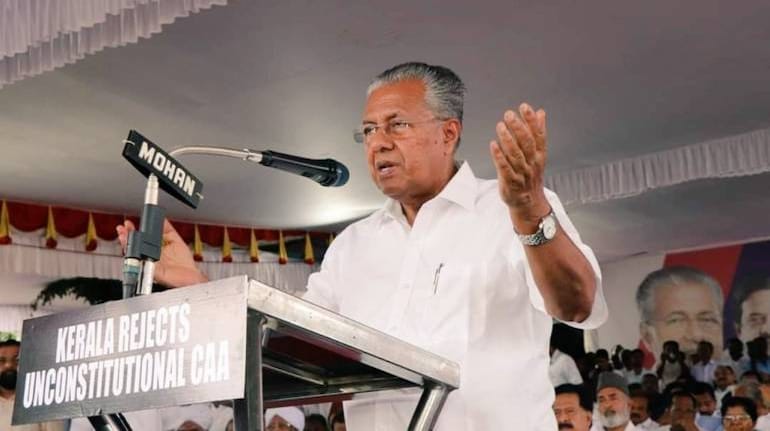
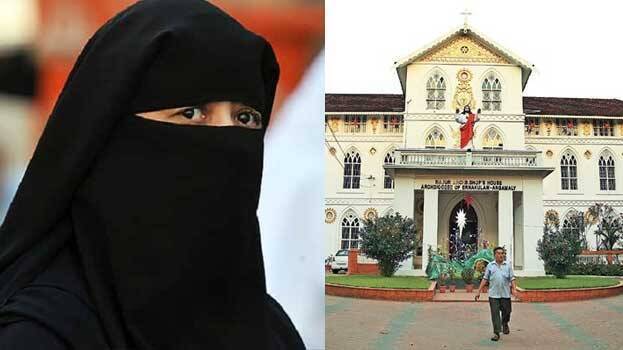
    Image Credit: Patrika.com