Tag: Kashmir

  • Kashmir at a Crossroads: Pahalgam Terror Attack Amid Democratic Gains

    Kashmir at a Crossroads: Pahalgam Terror Attack Amid Democratic Gains

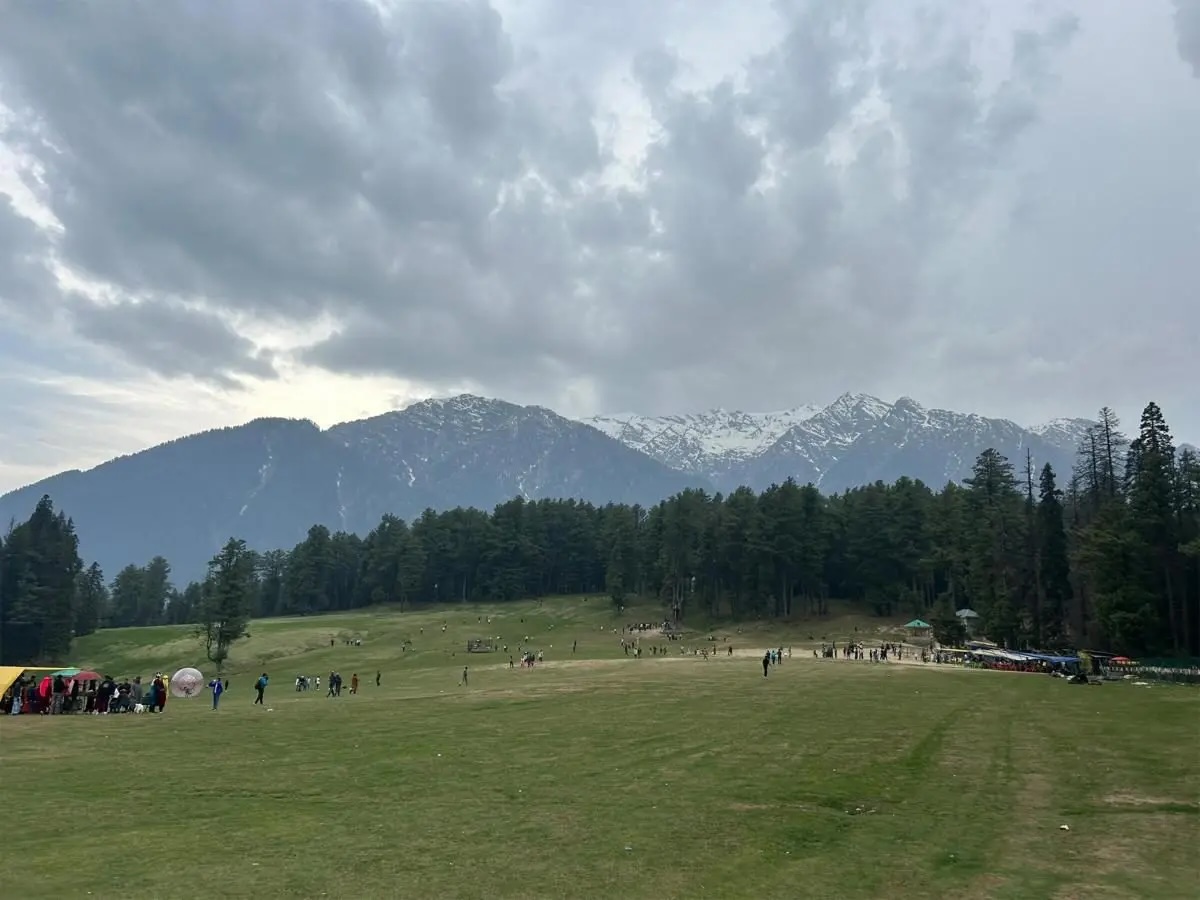
    The recent deadly terror attack on April 22 in Phalgham, near the Baisaran Valley, in which 26 innocent people were killed and more than a dozen others injured, has served as a stark reminder that external threats—particularly Pakistan-backed terrorism—remain a grave challenge to the region’s hard-won stability.

    Jammu and Kashmir is witnessing a remarkable and unprecedented political shift. In a development that would have seemed unimaginable a few years ago, many separatist groups, historically associated with anti-India activities, have abandoned their secessionist stance and re-entered the democratic mainstream. This transformation is not sudden—it reflects years of sustained government outreach, targeted policy reforms, and a persistent invitation to dialogue. Together, these efforts have fostered an environment of relative peace, reshaping public sentiment and political engagement across the valley. However, the recent deadly terror attack on April 22 in Phalgham, near the Baisaran Valley, in which 26 innocent people were killed and more than a dozen others injured, has served as a stark reminder that external threats—particularly Pakistan-backed terrorism—remain a grave challenge to the region’s hard-won stability.

    In a significant turn of events in April 2024, key factions of the Hurriyat Conference, such as the J&K Tahreeqi Isteqlal and J&K Tahreek-l-Istiqamat, publicly renounced separatism and embraced the democratic process. Their decision marks a critical shift in the political discourse of the region, challenging long-standing narratives of alienation and conflict. Union Home Minister Amit Shah hailed this move, declaring, “Under the Modi government, separatism is breathing its last, and the triumph of unity is echoing across Kashmir.” The reintegration of these groups into the democratic fold indicates the success of New Delhi’s long-term outreach and governance initiatives, as well as the strengthening of its position on the global stage regarding Jammu & Kashmir.

    the candidacy of individuals such as Sayar Ahmad Reshi (Kulgam), Aijaz Ahmad Mir (Zainapora), Talat Majeed (Pulwama), Mohammad Sikandar Malik (Bandipora), and Farooq Ahmad Genie (Beerwah) sent a powerful message—both domestically and internationally—of a growing trust in democratic processes and a shift away from violence.

    The 2024 Assembly elections further illustrated this transformation. Over 25 former militants, separatists, and members of the banned Jamaat-e-Islami contested as independent candidates. Although none of them secured a win, the candidacy of individuals such as Sayar Ahmad Reshi (Kulgam), Aijaz Ahmad Mir (Zainapora), Talat Majeed (Pulwama), Mohammad Sikandar Malik (Bandipora), and Farooq Ahmad Genie (Beerwah) sent a powerful message—both domestically and internationally—of a growing trust in democratic processes and a shift away from violence.

    Central to this transformation is the 2019 abrogation of Article 370. While Article 370 did not cause terrorism, it fostered a psychological and political sense of separateness. Its existence reinforced a feeling of isolation, suggesting that Jammu and Kashmir was distinct from the rest of India and that its political destiny remained unsettled, thereby encouraging subnational identity and sentiments of exclusion. Local political elites often exploited this narrative of exclusivity and exceptionalism for their political objectives, constantly telling people that Jammu and Kashmir had a “special relationship” with the Union of India, having its own constitution, flag, and national anthem. This exacerbated the sense of alienation and fueled anti-India sentiment.

    Article 370 served as a protective shield for corrupt politicians and bureaucrats from central investigation agencies, as it limited the powers of these agencies, allowing corruption to flourish unabatedly. On the global stage, Article 370 was utilised as a geostrategic tool against India.

    Moreover, domestically, the real benefits of Article 370 never reached the common people. Instead, it supported the interests of a few influential political families, such as the likes of the Muftis and the Abdullahs, etc., while the ordinary citizen continued to face hardship and underdevelopment. Additionally, Article 370 served as a protective shield for corrupt politicians and bureaucrats from central investigation agencies, as it limited the powers of these agencies, allowing corruption to flourish unabatedly. On the global stage, Article 370 was utilised as a geostrategic tool against India. References to Jammu & Kashmir’s semi-autonomous status and its separate flag and constitution created a misleading impression internationally—that it was some foreign territory under Indian occupation. Many significant powers often utilised this narrative to exert pressure on India and further their geopolitical objectives.

    Since its removal, the region has witnessed measurable progress. Terrorist incidents have plummeted by 81%—from 228 in 2018 to just 43 in 2023. Civilian and security force casualties have similarly declined. Stone pelting, once a near-daily occurrence, has disappeared entirely, with 2,654 such incidents in 2010 dropping to zero by 2023. Hartals and forced shutdowns have become a thing of the past. Educational outcomes have also improved. The number of colleges has risen from 94 to 147. Prestigious institutions such as IIT, IIM, and AIIMS have been established. Medical colleges increased from four to eleven, and the region now boasts 15 nursing colleges. Medical seat availability has grown from 500 to over 1,300.

    The region’s Gross State Domestic Product (GSDP) has more than doubled—from ₹1 lakh crore in 2014–15 to ₹2.27 lakh crore in 2022–23. In tourism, a record 2.36 crore visitors arrived in 2024, including over 65,000 foreign tourists.

    Economically, Jammu and Kashmir is undergoing a boom. Investments surged from ₹297 crore in 2019–20 to ₹2,153 crore in 2022–23, with another ₹6,000 crore in the pipeline. The region’s Gross State Domestic Product (GSDP) has more than doubled—from ₹1 lakh crore in 2014–15 to ₹2.27 lakh crore in 2022–23. In tourism, a record 2.36 crore visitors arrived in 2024, including over 65,000 foreign tourists. Global events like the G20 Tourism Working Group meeting and the Legends League Cricket (LLC) have put Jammu and Kashmir on the international map. Infrastructure development is progressing rapidly. Mega projects such as the USBRL Tunnel 50, Z-Morh Tunnel, and the iconic Chenab Rail Bridge—the highest in the world—are transforming connectivity. The Vande Bharat train now connects Katra with Srinagar. Symbolising civic normalcy, the Muharram procession returned to Srinagar in 2024 after a 34-year ban.
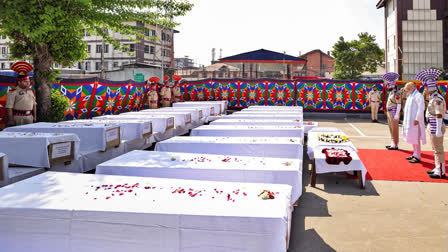
    However, the recent Pahalgam terror attack is a stark reminder that Pakistan continues to act as the primary external disruptor of peace and progress in Jammu & Kashmir. Despite the undeniable local yearning for peace and development, Pakistan’s strategic objective to “bleed India with a thousand cuts” remains unchanged. Its support for terrorism and infiltration undermines the region’s stability.

    Pakistan’s proxy war not only attempts to destabilise India but also hampers the development trajectory of Jammu & Kashmir, which had been flourishing in education, infrastructure, and economic growth.

    The attack, which targeted civilians and spread fear among tourists, has had immediate consequences: many tourists have cancelled bookings, impacting the Valley’s booming tourism sector. It reflects how Pakistan’s proxy war not only attempts to destabilise India but also hampers the development trajectory of Jammu & Kashmir, which had been flourishing in education, infrastructure, and economic growth.

    While local recruitment into militancy has declined and radicalisation has significantly reduced, Pakistan’s designs persist. Security agencies have reported the presence of 35–40 foreign terrorists operating in small groups in the Jammu division, with recent attacks in Reasi, Kathua, and Kishtwar proving that infiltration is now affecting eight out of ten districts. New Delhi must now recalibrate its approach. While the ecosystem-based strategy addressing governance, development, and security has yielded positive outcomes, the Pakistan problem requires a distinct strategic lens. Counterterrorism efforts must be intensified, international diplomacy must expose Pakistan’s continued support for terror, and internal resilience must be strengthened to protect gains made post-Article 370.

    In conclusion, nearly six years after the abrogation of Article 370, Jammu & Kashmir has indeed embarked on a transformative journey. But the road ahead must account for persistent external threats. The people of the region overwhelmingly desire peace, progress, and integration—but Pakistan’s continued interference demands a more robust, strategic, and multidimensional response.
  • The Ukraine crisis: Its impact on India

    The Ukraine crisis: Its impact on India

    India has to tread a fine line in this imbroglio: Taking care of the welfare and evacuation of Indian students and the possibility of an oil price hike.

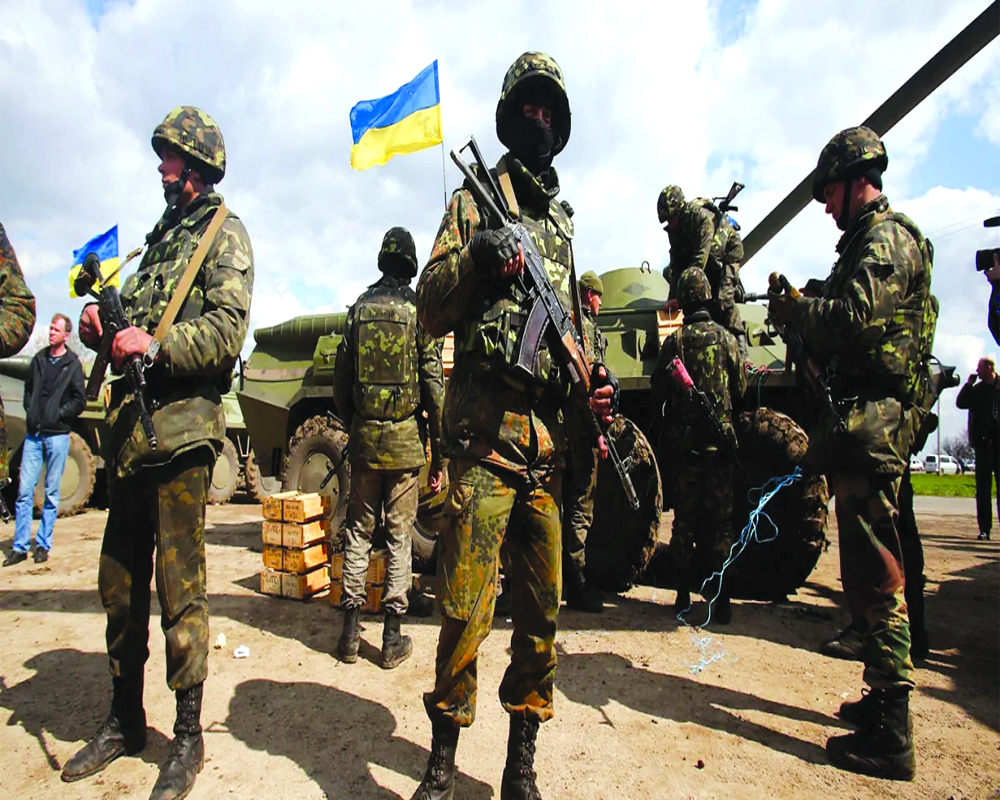
    The face-off over Ukraine between Russia and the United States and its Nato allies has been dominating the headlines for a while now with tensions ratcheting up as we receive dire public warnings every day of a Russian invasion any day now. Clearly, the possibility of Russian intervention there, and the consequent escalation of sanctions against them, is very real and concerning.

    While Ukraine may be a developing country and the poorest in Europe, by no means is it a pushover. It is the second-largest country there, behind Russia, by area, and in terms of population the eighth largest with its 42 million inhabitants. It has been independent since 1991, following the collapse of the Soviet Union, though it had been a part of the Russian Empire and the Soviet Union since the 18th century. If there is one lesson that Putin and the Russian military should have learnt from America’s disastrous interventions in Iraq and Afghanistan is that invasions are relatively easy to accomplish, but keeping restive and hostile populations under control is a wholly different proposition.

    [powerkit_button size=”lg” style=”info” block=”true” url=”https://www.dailypioneer.com/2022/columnists/the-ukraine-crisis–its-impact-on-india.html” target=”_self” nofollow=”false”]
    Read More
    [/powerkit_button]

  • Life In Post-370 Kashmir: Battling The Pandemic Amid Communications Blockade

    Life In Post-370 Kashmir: Battling The Pandemic Amid Communications Blockade

    When British sovereignty over India lapsed in 1947, Kashmir, the Muslim majority state under the rule of Hindu ruler Maharaja Hari Singh chose to remain independent. However, that independence was short lived as Pakistani raiders invaded Kashmir and Hari Singh turned to India for assistance. India promised to help on the condition that Hari Singh signed the Instrument of Accession, according to which defence, communication and external affairs of the state will be handed over to the Indian administration. Since then Kashmir had enjoyed special status under Article 370 of the Indian Constitution. Under article 370, Kashmir had its own state flag, constitution and autonomy over the internal administration of the state. With Article 370 along with Article 35A, the residents of Jammu and Kashmir lived under a separate set of laws, including those related to citizenship, ownership of property and fundamental rights, as compared to residents of other Indian states.Kashmir has been in the midst of unrest and turmoil for decades, as Pakistan inspired religious fundamentalism led to the growth of terrorism and insurgency. Constant communication and internet ban, and curfew have been part of everyday life for the people of Kashmir. Kashmir accounts for about 60% of the communication and internet ban that happens in India. Internet in the valley was cut off for four months in 2016 following the uprising after the killing of Burhan Wani.
    On 5th August 2019, the BJP-led Indian government, headed by Prime Minister Narendra Modi stripped Kashmir of its special status by revoking Article 370. Home Minister Amit Shah introduced the Jammu and Kashmir Re- organization Bill in the Parliament and was passed with a majority. The ‘Jammu and Kashmir Re-organisation Bill‘ divided the erstwhile Jammu and Kashmir into two Union Territories – Jammu & Kashmir and Ladakh.

    Over the last five decades and more, Article 370 has been hollowed out by various governments that were in power in the erstwhile state.

    Analysis and contention that Article 370, in its present form has been diluted over the years and that it existed just in name is indeed true. Over the last five decades and more, Article 370 has been hollowed out by various governments that were in power in the erstwhile state. Despite this, Article 370 guaranteed the people of Kashmir certain benefits such as exclusive land rights and job reservation among others. With the scrapping of Article 370, people of the valley fear that it will usher in a change in the demographics of the erstwhile state. As J&K loses it special status, people will lose their exclusive land rights, various reservations and other benefits that they enjoyed. There is also a fear among the people that with the scrapping, settler colonization will take place in the valley like it happened in Palestine.Following the announcement, the valley was placed under a lockdown including communication and internet ban. Several political leaders including former chief minister Omar Abdullah and Mehbooba Mufti were placed under house arrest. Opinions of the leaders of the valley were not taken into consideration before the Indian government decided to scrap article 370. Kashmir politics, over the years, has been dominated by narrow selfish interests of political parties and political families, which has led to significant loss of confidence of the people. Continued terrorism and religious fundamentalism has vitiated the atmosphere over decades. In such an environment it is difficult to ascertain peoples’ perception of the government’s action, as self-proclaimed leaders may not reflect the ground situation. The central government, armed with extensive intelligence inputs and analysis, feels that the region’s 1.25 crore people long for economic development, better quality of life, and better opportunities in education and employment. However, imposition of a complete lockdown of the valley for nearly six months may have been counterproductive. The situation became more complicated as the Covid-19 pandemic hit the valley.

    Statistics, however, tell a different story – Jammu and Kashmir did better than several other Indian states including Gujarat, the “model state”, in terms of human development index, infant mortality rate, life expectancy etc.

    Home Minister Amit Shah claimed that Article 370 led to isolation of J&K from the rest of India and was the root cause of armed militancy, poor economic growth, and poverty in the valley. Statistics, however, tell a different story – Jammu and Kashmir did better than several other Indian states including Gujarat, the “model state”, in terms of human development index, infant mortality rate, life expectancy etc. Regarding the statement that Article 370 facilitated militancy in the valley, there has been no evidence to prove the same. However, militants care little about Article 370. There has been no decline in militant activities even after the abrogation of Article 370. Militant attacks and counter-insurgency operations continue at high intensity.The aftermath of the decision saw communication and internet being suspended or curtailed effectively for 9 months. The justification given by the government was to stop the spread of false information and prevent terrorist activities in the valley. This communication blockade was the longest in the history of a democratic country and it cut off Kashmir from the rest of the world. Adverse impact on education has been huge due to the lockdown. As educational institutions remain closed for nearly 8 months, education in the valley has taken a back seat. Even when situation in the valley seemed to return to normalcy, parents were unwilling to send their children to school. As the world was hit with the Covid-19 pandemic, schools and universities across the country and the world have resorted to online classes but that is not the case in Kashmir. It is a challenge for students to use online classes on the 2G network that is currently allowed in the valley. It is practically impossible to load and download the study materials in a 2G network. Even this network, primitive by today’s standards, is often unstable and unreliable.
    In March 2020,exactly after 213 days, internet service i.e. only 2G service, was restored in the valley but it was snapped again on May 6 after security forces closed in on Hizbul Mujahedeen Commander Riyaz Naikoo. The frequent communication blockade is of serious concern at a time when the world is fighting the Covid pandemic. Militant activities continue to disrupt peace and security, as is seen by the latest snapping of internet amid CASO (cordon and search operations) launched by J&K police in Srinagar district. India shuts down internet more than any other democracy in the world.

    It is of utmost importance that the Centre restore high speed internet service in the valley so that people can receive information on Covid-19 in local language and help prevent the spread of the virus.

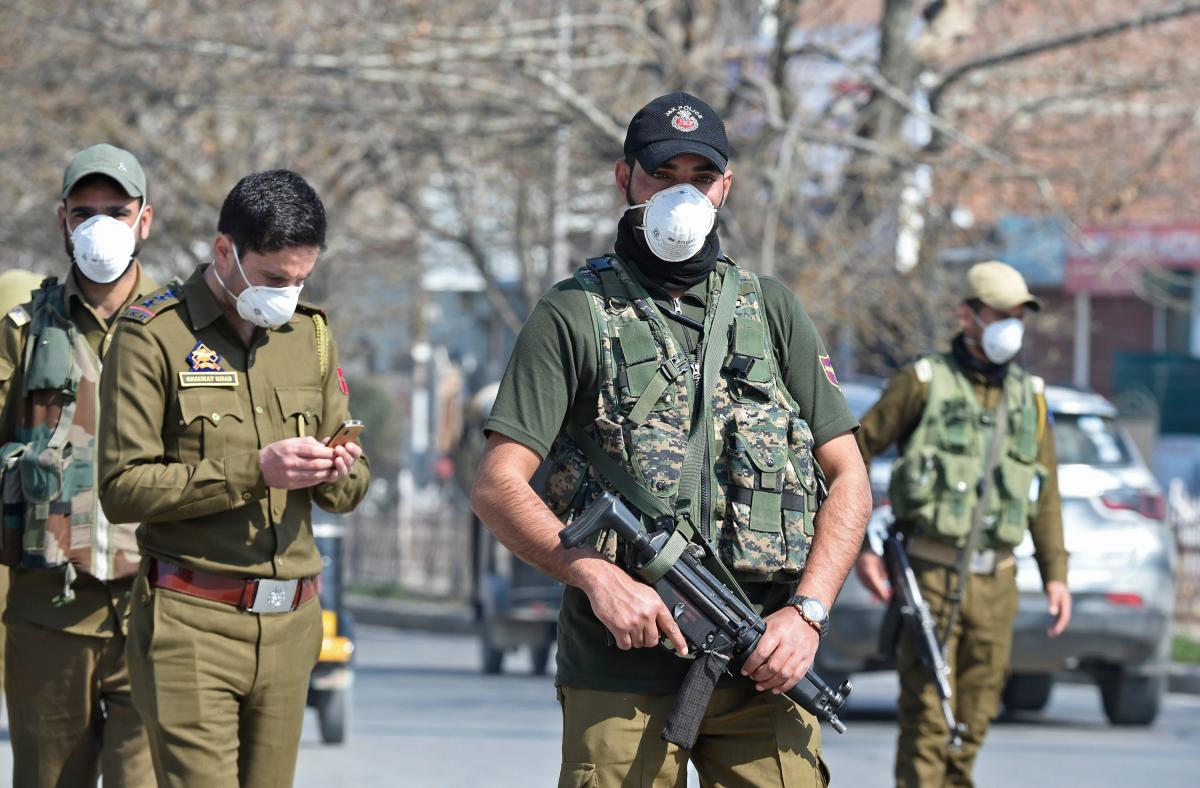
    The valley was declared a red zone as the number of covid cases in the union territory crossed 6424 and recorded 90 deaths. Disruption of communications has made the battle against Covid-19 difficult as it causes delays in taking the necessary steps to fight the pandemic. Even before the internet was snapped on May 6, doctors across the valley faced difficulty in downloading the guidelines issued by WHO. With limited access to internet, healthcare workers across the valley find it difficult to access regular updates, research and announcements regarding the pandemic and accurate tracking of transmission within the region. People support groups are helping each other in this time of crisis. Apart from Covid related restrictions issued via newspapers, radio and SMS, there is no access to campaigns designed for social media. With the lack of reliable information, there is a high possibility for misinformation. It is of utmost importance that the Centre restore high speed internet service in the valley so that people can receive information on Covid-19 in local language and help prevent the spread of the virus.Terrorist and insurgent outfits are revamping their tactics to exploit the pandemic situation and widen the pre-existing schisms. Infiltrations have increased as recent spurt in terrorist encounters indicate. The Covid-19 pandemic has added to the difficult situation in which the people of Kashmir are stuck in. The future of Kashmir looms in darkness due to the pandemic and several other challenges that most states have never and most likely will never experience. Kashmir was shut down through a state imposed lockdown in August 2020. As it was emerging from the lockdown towards normalcy, the pandemic brought about a lockdown that now has the peoples’ consent for the first time. This has turned out to be the world’s longest lockdown. However, the pandemic has provided the government an opportunity to get closer to the people by providing rehabilitation assistance, food supplies, and facilitating educational improvisations amid communications breakdown. Amid the pandemic crisis, the state becomes an test case for democracies across the world for the battle between control for ‘development’ and control of ‘liberty’.Image Credit: Deccan Herald