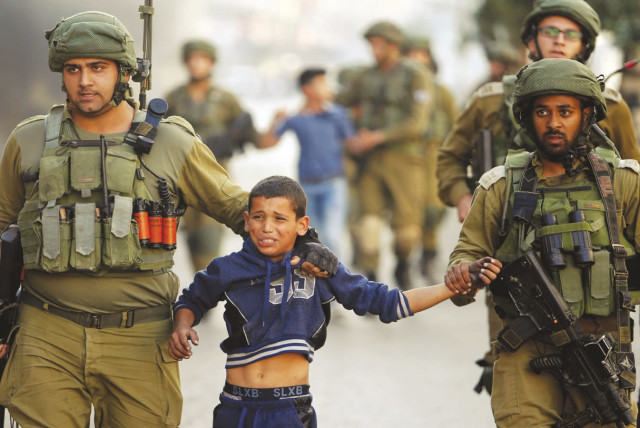
Tag: Israel-Palestine Conflict

  • The beginning of the end of Israel

    The beginning of the end of Israel

    One year later, the flames of genocide still burn, but after decades of persecution and bloodshed, we may well be seeing the beginning of the end of the settler-colonial project in Palestine.

    We have reached a grim milestone. A full year of gruesome Israeli mass murder. A year of epic Palestinian suffering.

    A year of direct Western complicity. A year of continuous media incitement. A year of shameful inaction by international institutions.

    For twelve months, we have seen relentless persecution of human rights defenders across the West, solely for peacefully opposing genocide and apartheid.

    And fifty-two weeks of a horrified global public helplessly witnessing on their screens the first live-streamed genocide in history.

    The carnage of this past year is unprecedented. The destruction is almost unimaginable.

    Still, this genocide will end. The Palestinian people and their besieged nation will undoubtedly emerge from the ashes of genocide, recover, and reassert their inalienable rights in their ancient homeland.

    But international institutions and the global human rights system will be left bruised and battered.

    The political capital expended by the US empire and the broader West in defence of the slaughter, as well as their global standing and reputation, will never be recouped.

    And, almost certainly, this year of cruelty and lawlessness will mark the beginning of the end for the Zionist project in Palestine and, therefore, of the state of Israel as we know it.

    A formula for disaster

    Of course, neither the genocide nor the current wave of slaughter of Palestinians started in October of 2023. The systematic massacre, purging, and erasure of the indigenous Palestinian people began in earnest with the Nakba of 1947-48, and it has not ceased since that bloody beginning.

    And the genocidal threat was always obvious. Any thinking person could see, even prior to the establishment of the state of Israel, that the Zionist project of the West was a formula for disaster.

    First, at the very historic moment when colonialism was being dismantled around the world, and global human rights rules were being adopted at the United Nations, the West carved out an exception for Palestine.

    It was at this moment that Zionist forces chose to attack Palestine, murder and terrorize its population, chase many survivors away in terror, and begin the erasure of the indigenous people, and their replacement with a European settler colony founded by foreign invaders and radicalized by a deeply racist and fundamentally violent political ideology.

    The colony was to be sustained at the barrel of a gun by waging constant war both against the Indigenous people and against the neighbouring states.

    A colonial education system and a media ecosystem were built to dehumanize the Indigenous and neighbouring peoples and to instil a supremacist ideology into the settler population.

    The settler state, its economy, and its society were thoroughly militarized, enlisting all adults in the project of state violence, arming it to the teeth, including with nuclear, chemical, and biological weapons, and even integrating the field-testing of new weapons on captive civilian populations as part of the business model of the colony’s arms industry.

    They ring-fenced the entire project with western-guaranteed impunity, carving out an exception to the application of all rules of international law.

    And they built an all-encompassing machinery of repression, including laws, policies, practices, and technologies to ensure the constant subjugation, dehumanization, and persecution of the indigenous Palestinian people.

    The toxic cocktail was complete.

    Maintaining Western support

    Of course, an artificially imposed European colony in the heart of the Middle East, which is necessarily maintained by force, could never become self-sufficient. Rather, it has always, and will always, rely on massive support from Western states, especially the US. Maintaining that vital support was to become a key goal of the Israeli state and its transnational network of proxy groups.

    As such, in the intervening years, the Israeli regime adopted a strategy of incremental genocide, with simmering persecution and dispossession, punctuated by periodic full-blown massacres and marked by a continuous march of expansion.

    It was a pace, tried and true over 75 years, with which the regime’s Western sponsors were comfortable, allowing them to continue unbroken the flow of military, economic, and diplomatic support without significant domestic pressure at home.

    And it allowed like-minded media corporations, decade after decade, to continuously disseminate pro-Israel propaganda as a smokescreen to obscure the horrific realities being perpetrated against the indigenous people on the ground.

    Expedited genocide

    But when Israel’s current ultra-Zionist government took power last year, it immediately abandoned the strategy of incremental genocide.

    In its place, it moved to expedited genocide (beginning with waves of ethnic cleansing in occupied Jerusalem and the West Bank), betting that its Western sponsors (and their captured politicians and complicit media) would not dare (or care) to take the steps necessary to stop it, even when it launched wholesale civilian slaughter in Gaza.

    They were right.

    So much so that Western countries like the U.S., UK, Germany, and others quickly moved beyond mere acquiescence for the genocide and into direct complicity and participation in it.

    As a result, one year later, we are witnessing unprecedented bloodshed in the region, and the broader world is in deep trouble.

    Axis of Genocide

    Thus, Israel is not alone in its march of terror. It is accompanied, in lockstep, by what has been called the Axis of Genocide.

    Four members of that Axis, Israel, the U.S., the UK, and France, are nuclear-armed states. A fifth, Germany, is a serial genocide perpetrator and a major European economic power. Three (the U.S., UK, and France) have veto power in the UN Security Council.

    Adding to the danger, all of its members share a common ideological grounding in militarism, colonialism, white supremacy, and political Zionism. Most have the stain of genocide on their historical records.

    All have political systems that are deeply compromised and corrupted by the influence of the weapons industry, the billionaire class, and the Israeli lobby. And all are marked by profound societal levels of Islamophobia, anti-Arab racism, and anti-Palestinian bigotry.

    And, in defence of a single, small, oppressive, and violent settler colony in the Middle East, all have quickly abandoned the entire edifice of international law and international institutions built up since the end of the Second World War, and which they once claimed as part of their brand.

    As recent history has shown, these biases, linkages, and incentives have become a formula not only for genocide in Palestine but for catastrophe on a global scale.

    Breaking bones and records

    And, indeed, the cost of Western-secured Israeli impunity has been shockingly high.
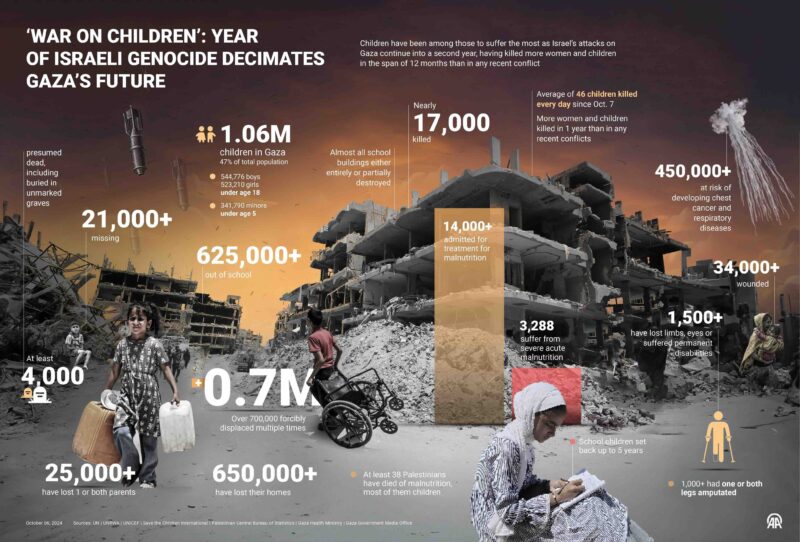
    Image Credit: @anadoluagency

    In one year, Israel has set new records for the pace of civilian killing, the rate of destruction of civilian infrastructure, the killing of children, the killing of medical personnel, the killing of journalists, the killing of humanitarian workers, and the killing of UN staff.

    The depravity of Israel’s actions has shocked the world. Collective punishment, a chain of massacres, summary executions, torture camps, systematic sexual violence, starvation tactics, imposed disease, the direct targeting of small children with sniper rifles, and the blocking of humanitarian aid to facilitate starvation.

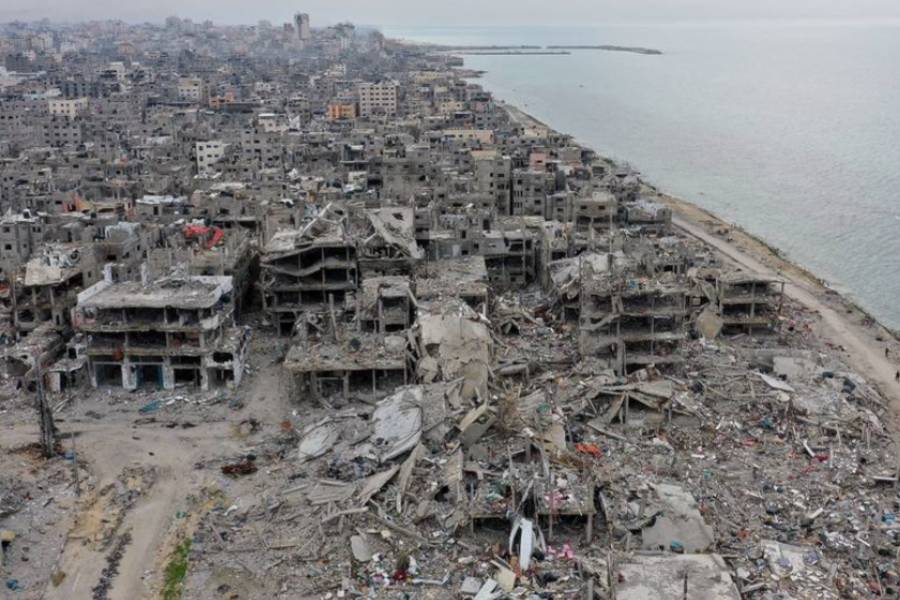
    We have all seen the images. The methodic eradication of whole neighbourhoods, schools, hospitals, universities, food stores, shelters, refugee camps, agricultural fields, and even cemeteries.

    The mangled bodies of Palestinians, the fear-filled eyes of the children, the terror as bombs fall on bread lines. The cold-blooded murder of innocents, of defenceless children like Hind Rajab, trapped in the family car, terrified for hours and then slaughtered by Israeli soldiers, and of thousands of others like her.

    And we have seen the cold, cruel laughter of the Israeli soldiers, the deranged chants of violent Israeli settlers, the genocidal pledges of Israeli political and military leaders.

    The promise of the Prime Minister to wipe out the Palestinians “like Amalek”, a biblical verse that calls for Israel to “utterly destroy all that they have and spare them not; but slay both man and woman, infant and suckling, ox and sheep, camel and ass.”

    The calls of Israeli leaders to perpetrate another Nakba, to raze Gaza to the ground, to make no distinction between civilians and fighters. To “bury them.”

    And, by now, we have all memorized the familiar barbarous pattern of Israel’s crimes: target civilians and civilian infrastructure, then target the rescue workers who come to help, then celebrate in Hebrew but switch to English to claim that they were all terrorists, human shields, or collateral damage, then reload and do it again.

    The accumulated criminal guilt of the Israeli perpetrators and their complicit Western partners is staggering. But so too is the historic moral lapse of the wider world, both those who have defended the genocide and those who have remained silent as it has been carried out with their tax dollars, with their government’s political support, or in their name.

    Today, everyone knows. No one can say they were not warned before the catastrophe. And no one can say they did not know of the horrors that followed, broadcast in real-time to all of us.

    Seventy-six blood-soaked years into this colonial enterprise, it is clear to all who will see that what the West has constructed in the heart of the Middle East is not an enlightened project, but rather a rampaging Frankenstein monster that threatens to drag the indigenous Palestinian people, the region, and the world into a conflagration from which it may not recover for generations.

    The darkness spreads

    How long the rampage can be sustained is an open question. But there will undoubtedly be much more darkness before the dawn.

    Israel, drunk with Western-backed impunity, even as it continues its genocide in Palestine, is now spreading its attacks across the region and leaving mountains of bodies and rivers of blood in its wake.

    In a matter of weeks, it has waged terror attacks with booby-trapped communication devices in Lebanon, assassinated leaders across the region, launched military attacks on Gaza, the West Bank, Lebanon, Syria, Iraq, Iran, and Yemen, has invaded Lebanese territory, and is now seeking to draw its U.S. sponsor into an all-out regional war of conquest and domination.

    For their part, collaborationist governments in the West show little appetite for reining in the rampaging monster that they themselves created in the Middle East, and to which they continue to provide endless flows of arms, money, intelligence, diplomatic cover, legal exceptionalism, and a heretofore impenetrable cocoon of impunity.

    When the reckoning comes, as it must, the accountability of both Israel and its Western accomplices must be secured, lest these horrors be repeated in an endless cycle of atrocity, impunity, and recidivism.

    Israeli impunity is coming to an end

    But there are flickering lights in the darkness, and they are growing.

    The just cause of Palestine and the steadfastness of her people have inspired millions around the world to stand up and fight back. The civilized world is now more mobilized than it has been in generations to oppose the horrific evil unleashed on the world by Israel and its Western sponsors.

    More and more people are escaping from the distorting matrix of Western corporate media and turning to independent media and first-hand sources on social media, delivering a powerful blow to the controlled, pro-Israel narrative of official Western institutions.
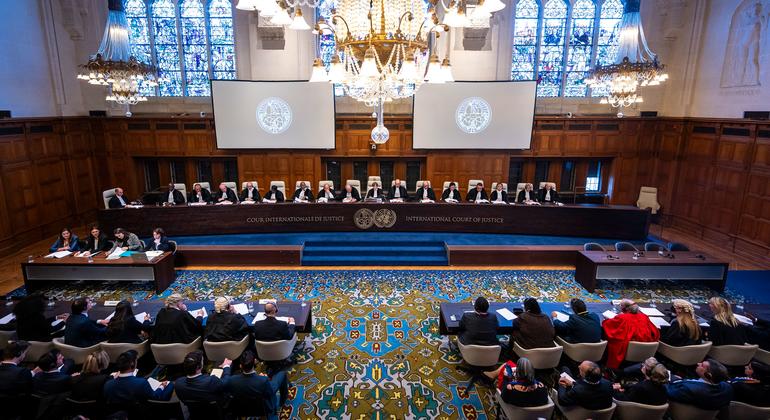
    Today, Israel is on trial for genocide at the World Court, and its leaders are the subject of arrest warrant requests at the International Criminal Court for crimes against humanity, including extermination.

    The ICJ has already issued a series of provisional anti-genocide measures against Israel, and a growing list of countries is lining up behind Palestine and South Africa in the genocide case against Israel.

    A dedicated international tribunal is under discussion at the UN. Cases have already been brought in national courts around the world, and more are certain to follow. Plans are also underway to mandate an international anti-apartheid body to focus on Israel.

    In the meantime, the United Nations, its independent human rights mechanisms, and the leading international, Palestinian, and Israeli human rights organizations have all collected massive quantities of evidence, have strongly condemned Israel for its shocking criminality, and are working to ensure accountability.
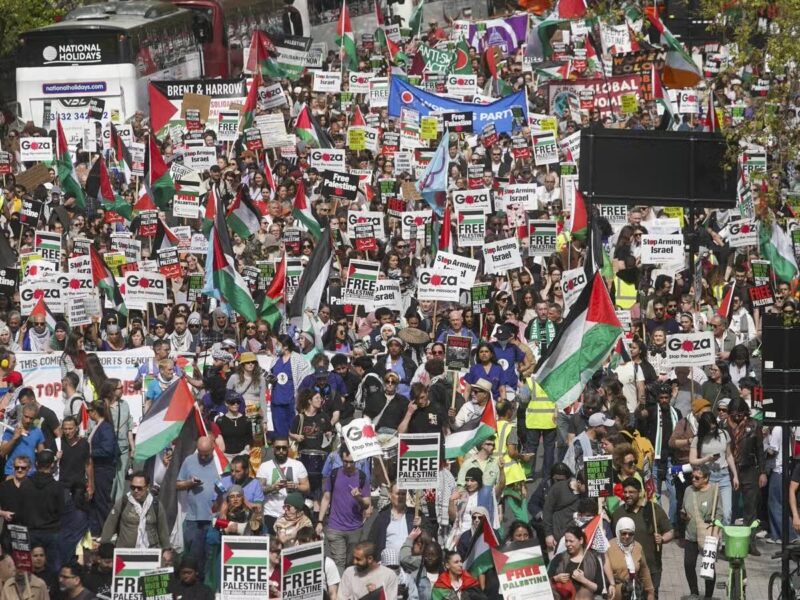
    Mass demonstrations against Israel are not only daily occurrences in capitals around the globe, but they are actually growing, undeterred by the often-brutal efforts (especially of Western governments) to suppress them.

    The ICJ has declared the obligation of all states to cut off all recognition, aid, investment, trade, weapons, and support of any kind with Israel’s colonial project in the occupied Palestinian territory.

    Israel is increasingly isolated on the global stage. And the global movement for boycott, divestment and sanctions is growing with every passing day.

    In other words, the age of Israeli impunity is coming to an end, despite the best efforts of the U.S., the UK, Germany, and other complicit Western states.

    And we may well be seeing, after decades of endless persecution and bloodshed, the beginning of the end of the European settler-colonial project in Palestine.

    One year later, the flames of genocide still burn. At this tragic moment, it is hard to see through the smoke that obscures the path forward. But white supremacist settler colonialism was defeated in South Africa, Rhodesia, Namibia, and Algeria. It will be defeated in Israel too. Through struggle and solidarity, with law and politics, in resistance and resilience, this will end.


    Feature Image Credit: Palestinian Return Center

    This article was published earlier in mondoweiss.net
  • Perpetrators and Victims: Ways Out of Violence?

    Perpetrators and Victims: Ways Out of Violence?

    Franz Fanon had sharpened the problem in such a way that the colonised would only really liberate themselves through violence and the killing of the colonialists because only in this way could they free themselves from the humiliation they had suffered.

    the real evil is humiliation – and many civilisations and peoples of the world have not only been exploited in colonisation but, perhaps more importantly, humiliated.

    violent action changes one’s own soul.


    I would like to emphasise from the outset that many readers of these lines will, of course, think that this is the writing of a Western-influenced intellectual, especially a German, who is marked by the guilt of the Germans for Auschwitz. Indeed, I am. Nevertheless, I want to address several issues beyond the current conflicts.

    An explanation of the causes of violence can very quickly turn into an understanding, and this into a legitimation of violent action. Although the boundary between these three concepts is fluid, it does not follow that identifying the causes of violent experiences legitimises all forms of one’s violent actions. Thus, while one can legitimise the violent resistance of the Palestinians and the establishment of their Palestinian state, one cannot legitimise all forms of one’s use of violence. The Queen of Jordan is indeed absolutely right when she accuses the West of double standards in the application of morality – but the need for moral recognition of the opponent as a human person is in no way invalidated by the Western double standard. In my view, there is no difference in principle whether Palestinian or Israeli children suffer. But the suffering of children on one side does not justify the suffering of children on the other side. At the moment, we are also in an information war in which precisely this is being conveyed – my own experience of violence as a victim legitimises the use of violence by myself. In his anticolonialism impulse, Franz Fanon had sharpened the problem in such a way that the colonised would only really liberate themselves through violence and the killing of the colonialists because only in this way could they free themselves from the humiliation they had suffered. This assumption, however, turned out to be highly counterproductive because violent action changes one’s own soul. While I fully agree with Jacques Vergés that the real evil is humiliation – and many civilisations and peoples of the world have not only been exploited in colonisation but, perhaps more importantly, humiliated. Here the distinction between a biological human being and a legal-moral person took on its nation-destroying dynamic and became a double standard – moral-legal qualities were granted only to Europeans, all others were degraded to half-monkeys, uneducated primitive peoples, or sub-humans (the Jews to the Nazis). This degradation did not kill the body, but like all rape, it killed the soul.

    Perhaps we need to get away from reducing every form of violence to its purpose – violent actions can also become independent. You can’t use violence the way you use cutlery and plates at dinner – after you wash up, everything looks the same, but people have gotten used to violence taking on a life of its own. The surviving fighters from the civil wars in the former Yugoslavia, Chechnya, Syria, and Iraq form a group of some 40,000 mercenaries who fight each other in ever-changing constellations. The 2012 “Tuareg” rebellion in Mali was also supported by such independent fighters, who returned from Palestine and helped themselves to the weapons stockpiles of the collapsed Ghaddafi regime. Chechen fighters, in turn, were a central part of the IS leadership; today, they are fighting on both sides in Ukraine. A tragic consequence of these developments is the inversion of the perpetrator-victim relationship. Many victims of violence have such fragmented souls that they use violence themselves to prevent themselves from ever being victims again, even at the cost of becoming perpetrators. Ideologies and political goals then become an indiscriminate source of legitimation for one’s violent actions, which ultimately only serve the purpose of no longer being a victim.

    Discourses of history: Throughout the Islamic sphere of influence, as in all colonised countries, there is a pronounced discourse of victimhood – the problem is that while the people concerned were indeed victims to the extent that the Western world still finds difficult or impossible to admit, a discourse of victimhood leads to legitimising even one’s own most horrific forms of violence by saying that one was a victim. Stalinism and Nazism, as well as the ideologies of al-Qaeda, Daesh/IS, the Taliban, and Hamas in Gaza, derive their legitimacy from this discourse of victimhood. At a training course in Yad Vashem, the Israeli Holocaust memorial, this victim discourse, the reversal of the victim-perpetrator relationship, was very vividly presented – not by me, but by the Israeli leaders of the training course. The symbol for this is the desert fortress Massada, where the last Jewish defenders committed suicide in order not to be humiliated as slaves by the Romans.

    But the consequence was the motto: Never again, Massada!

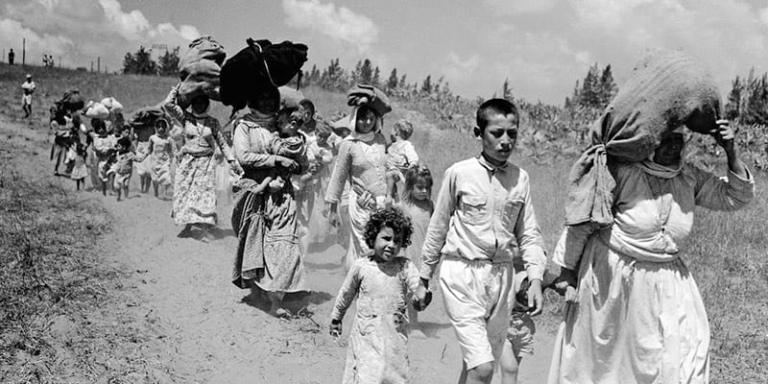
    And the Holocaust, anti-Semitism and Islamic Jew-hatred are not a distant past for Israelis but part of the present discourse – just as for many Palestinians, the Nakba is an ongoing part of the present. In Arabic, the Nakba refers to the flight and expulsion of some 700,000 Arab Palestinians from the former British Mandate of Palestine. It took place between the 1947 UN partition plan for Palestine and the 1949 armistice following the Palestine War, waged by six Arab states against the state of Israel, which was founded on May 14, 1948. In the historical narrative of Palestinians, other Arabs, and anti-Zionists, the Nakba is usually described as a pre-planned ethnic cleansing by the Israeli military; in the historical narrative of Israel, it is generally described as a voluntary flight in response to Arab calls. In my lecture at the World Peace Museum in Kyoto, Japan, I also wanted to talk about the crimes of the Japanese Empire in the 20th century. The colleague who invited me responded, at first incomprehensibly to me, that this could not be made a topic: He meant that you Germans were lucky, you had your Hitler. To my incomprehension, he explained that the Germans could blame the Holocaust entirely on Hitler and his few comrades, which, according to recent research, is not valid. But if he had to talk about the crimes of the Japanese army, he would speak of his father, but really about himself. He found himself unable to distance himself even minimally from his father. Although the greater sense of family in many non-Western societies can be a useful corrective to Western over-individualisation, the danger lies in the repetition of age-old conflicts. To my surprise, even the famous peace researcher Johann Galtung had postulated at a conference in Basel that 3 million deaths in the “Killing Fields” of the Red Khmer were compared to 3000 years of oppression. The undisputed experience of oppression led him to relativise a crime against humanity.

    The problem, however, is that for every terrorist killed, General Abi Zaid, the former commander of U.S. forces in Iraq, estimates that five new ones grow. After the violent excesses of Hamas members, it is “understandable” that the relatives of the victims want to kill them, but this will most likely only multiply the number of violent and militant supporters.

      Even with regard to the Holocaust, Hannah Arendt had distinguished between the unforgivable act and the perpetrator, whom one must be able to forgive. But “forgiveness” depends on the admission of guilt. And this admission is made virtually impossible by the victim discourse. In addition, it is difficult to come to terms with one’s own violent actions. Many of these people will never be able to return to civilian society – this could be observed, for example, in the case of US soldiers who, decades after the Vietnam War, still had to “play” the war over and over again in the Nevada desert, because the violence they had committed had filled their identity entirely. There is a drug that is more quickly and deeply addictive than even heroin – and that is violence. Violence eats the soul. And even if Arendt distinguishes between the perpetrator and the act, what to do with perpetrators who cannot distance themselves from the act is problematic. In a study of the recruitment of IS supporters in Iraq, it was found that the main recruitment base for IS was the prisons there. Even in Western prisons, petty criminals often turn out to be serious criminals. Sometimes, you have to admit that the only way to deal with people who are entirely violent is to kill them – like the IS supporters who abused Yazidi women as sex slaves. To this day, it is difficult to understand why the neighbouring states did not put an end to the violent excesses of IS earlier since it would have had no chance against a functioning modern army. The problem, however, is that for every terrorist killed, General Abi Zaid, the former commander of U.S. forces in Iraq, estimates that five new ones grow. After the violent excesses of Hamas members, it is “understandable” that the relatives of the victims want to kill them, but this will most likely only multiply the number of violent and militant supporters.

     Both Hamas and the religious extremists in Israel and the settlers in the West Bank are obviously trying to turn a political dispute into a religiously underpinned clash of civilisations, or, as Samuel P. Huntington better calls it, a clash of civilisations. Hamas is not only a liberation movement, as it is often ascribed in defence of its actions, but at least a religious movement oriented toward an eschatological struggle – just like the religious extremists in Israel. Both rely on the construction of identity that Huntington also advocates: we know who we are when we know who we are against. Although there is a renaissance of religion around the world, and it is often very violent, this does not mean that religions per se are violent. But religious belief necessarily excludes other beliefs. It is different from the civilisations associated with them. While religions exclude others, civilisations are much more likely to include others. This difference also explains why the followers of the great monotheistic religions, while claiming to be peace-loving, have been responsible for unparalleled excesses of violence throughout their history. The Islamic wars of conquest, the Crusades, the Ottoman conquests, the Thirty Years’ War, Islamic and Atlantic slavery, and, finally, worldwide colonisation leave a single trail of blood. And this, of all things, from two world religions that considered themselves peace-loving. The traditional explanation is no longer valid: these excesses of violence had nothing to do with religion but only with socio-historical conditions, which themselves were oriented towards eternal peace. This is certainly true for these civilisations (even if the concept of civilisation has been distorted by European colonisation), but not for the religions (which is why the Global Ethic project has failed so spectacularly, contrary to its own claims because it has not gone beyond a minimal consensus).

    Huntington’s liberal critics had argued not only that there should not be a clash of civilisations but also that there could not be one – because, in their eyes, there was only one civilisation, the Western one. The others are religions or cultures, but not civilisations. It is time to abandon this liberal and Western conceit, and the replacement of Eurocentrism with ethnocentrism or religious centrism is not an adequate response to the problems of exploding violence.

     At first glance, a dialogue of the world’s civilisations seems unrealistic in the face of worldwide explosions of violence. On the contrary, it is necessary to prevent political disputes from becoming a clash of civilisations. Huntington’s liberal critics had argued not only that there should not be a clash of civilisations but also that there could not be one – because, in their eyes, there was only one civilisation, the Western one. The others are religions or cultures, but not civilisations. It is time to abandon this liberal and Western conceit, and the replacement of Eurocentrism with ethnocentrism or religious centrism is not an adequate response to the problems of exploding violence. Instead, the appropriate response to the increasing number of wars and excesses of violence worldwide must be to separate the hardliners discursively, politically, and militarily from the population, not to drive the population into the hands of the hardliners. In the latter case, we would only be threatened with a new “bloody century” like the first half of the 20th century. A dialogue among the world’s civilisations is necessary, if perhaps only modest, step to avoid this. For in the mutual recognition of the world’s civilisations, both sides will be bound by their own civilisational principles.

    Feature Image: Nakba of 1948 – Palestinians being forced out by Israelis – arabcenterdc.org

  • Hamas Attack – What really happened on 7th October? – Sifting truth from propaganda

    Hamas Attack – What really happened on 7th October? – Sifting truth from propaganda

    As Gaza is under a catostrophic military assault by Israeli forces it is important to analyse the trigger for the Israeli assault – the Hamas attack of October 7th. Evidence is now emerging that up to half the Israelis killed were combatants; that Israeli forces were responsible for some of their own civilian deaths; and that Tel Aviv disseminated false ‘Hamas atrocities’ stories to justify its devastating air assault on Palestinian civilians in Gaza. This article, a persuasive analysis, was published earlier in The Cradle.

    Two weeks after the Hamas breakout assault on Israel on 7 October, a clearer picture of what happened – who died, and who killed – is now beginning to emerge.

    Instead of the wholescale massacre of civilians claimed by Israel, incomplete figures published by the Hebrew newspaper Haaretz show that almost half the Israelis killed that day were in fact combatants – soldiers or police.

    In the interim, two weeks of blanket western media reporting that Hamas allegedly killed around 1,400 Israeli civilians during its 7 October military attack has served to inflame emotions and create the climate for Israel’s unconstrained destruction of the Gaza Strip and its civilian population.

    Accounts of the Israeli death toll have been filtered and shaped to suggest that a wholesale civilian massacre occurred that day, with babies, children, and women the main targets of a terror attack.

    Now, detailed statistics on the casualties released by the Israeli daily Haaretz paint a starkly different picture. As of 23 October, the news outlet has released information on 683 Israelis killed during the Hamas-led offensive, including their names and locations of their deaths on 7 October.

    Of these, 331 casualties – or 48.4 percent – have been confirmed to be soldiers and police officers, many of them female. Another 13 are described as rescue service members, and the remaining 339 are ostensibly considered to be civilians.

    While this list is not comprehensive and only accounts for roughly half of Israel’s stated death toll, almost half of those killed in the melee are clearly identified as Israeli combatants.

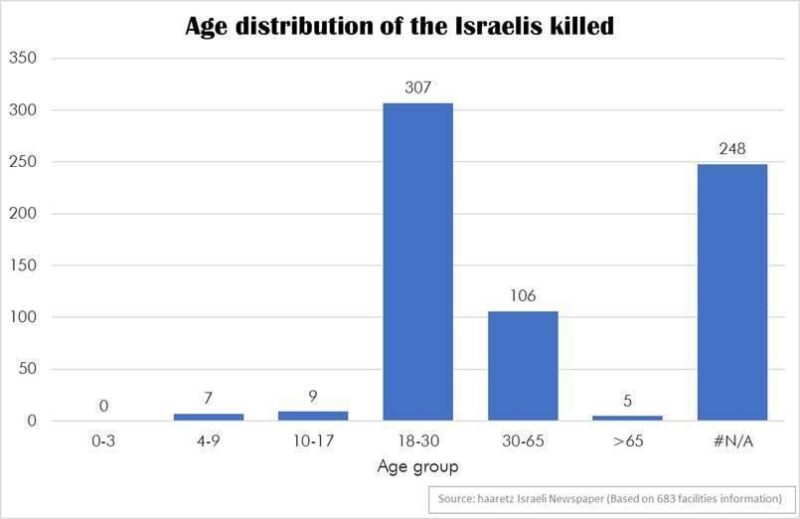
    There are also so far no recorded deaths of children under the age of three, which throws into question the Israeli narrative that babies were targeted by Palestinian resistance fighters. Of the 683 total casualties reported thus far, seven were between the ages of 4 and 7, and nine between the ages of 10 and 17. The remaining 667 casualties appear to be adults.


    Age Distribution of the Israelis killed during Hamas’ October 7 operation (as of 23 October)
    The numbers and proportion of Palestinian civilians and children among those killed by Israeli bombardment over the past two weeks – over 5,791 killed, including 2,360 children and 1,292 women, and more than 18,000 injured – are far higher than any of these Israeli figures from the events of 7 October.

    Revisiting the scene

    The daring Hamas-led military operation, codenamed Al-Aqsa Flood, unfolded with a dramatic dawn raid at approximately 6:30 AM (Palestine time) on 7 October. This was accompanied by a cacophony of sirens breaking the silence of occupied Jerusalem, signaling the start of what became an extraordinary event in the occupation state’s 75-year history.

    As per the spokesperson of Hamas’ armed wing, the Al-Qassam Brigades, around 1,500 Palestinian fighters crossed the formidable Gaza-Israel separation barrier.

    However, this breakout was not limited to Hamas forces alone; numerous armed fighters belonging to other factions such as Palestinian Islamic Jihad (PIJ) later breached the armistice line, along with some Palestinians unaffiliated with any organized militia.

    As it became apparent this was no ordinary resistance operation, hundreds of videos quickly flooded social media, most of which have been viewed by The Cradle, depicting dead Israeli troops and settlers, fierce gunfire battles between various parties, and Israelis being taken captive into Gaza.

    These videos were either taken on the phones of Israelis, or were released by Palestinian fighters filming their own operation. It wasn’t until hours later that more gruesome and downright dubious allegations began to surface.

    Unsubstantiated allegations of ‘Hamas atrocities’

    Aviva Klompas, a former speechwriter for the Israeli mission to the UN, was the first Israeli of note to spread the claim that there were reports of “Israeli girls being raped and their bodies dragged through the street.

    She posted this on X at 9:18 PM (Palestine time), on 7 October, although an op-ed Klompa published with Newsweek at 12:28 AM (Palestine time), on 8 October, made no mention of any sexual violence.

    Klompas is also the co-founder of Boundless Israel, a “think-action tank” that works “to revitalize Israel education and take bold collective action to combat Jew-hatred.” An “unapologetically Zionist” charitable group that works to promote Israeli narratives on social media.

    The one case touted as proof of rape was that of a young German-Israeli woman named Shani Louk, who was filmed face down in the back of a pickup truck and was widely assumed dead.

    It was unclear whether the fighters filmed with Louk in the Gaza-bound vehicle were members of Hamas, as they do not sport the uniforms or insignia of the Al-Qassam troops identifiable in other Hamas videos – some even wore casual civilian clothing and sandals.

    Later, her mother claimed to have evidence that her daughter was still alive, but had suffered a severe head wound. This rings true with information released by Hamas that indicated Louk was being treated for her injuries at an unspecified Gaza hospital.

    Complicating matters further, on the day these rape allegations arose, Israelis would not have had access to this information. Their armed forces had not yet entered many, if not most, of the areas liberated by the resistance and were still engaged in armed clashes with them on multiple fronts.

    Nevertheless, these rape claims took on a life of their own, with even US President Joe Biden alleging, during a speech days later, that Israeli women were “raped, assaulted, paraded as trophies” by Hamas fighters. It is important to note that The Forward’s article on 11 October reported that the Israeli military acknowledged they had no evidence of such allegations at that point.

    When the army later made its own allegations of decapitations, foot amputations, and rape, Reuters pointed out that “the military personnel overseeing the identification process didn’t present any forensic evidence in the form of pictures or medical records.” To date, there is no credible evidence of these atrocities that has been presented.

    Other outrageous allegations, such as the story of Hamas “beheading 40 babies‘ made headlines and the front pages of countless western news outlets. Even Biden claimed to have seen “confirmed photos of terrorists beheading babies.” The claims trace back to Israeli reserve settler and soldier David Ben Zion, who has previously incited violent riots against Palestinians and called for the West Bank town of Huwara to be wiped out. No evidence was ever produced to support these claims and the White House itself confirmed later that Joe Biden had never seen such photos.

    The Hamas plan

    There is little to no credible evidence that Palestinian fighters had a plan to – or deliberately sought to – kill or harm unarmed Israeli civilians on 7 October. From the available footage, we witness them engaging primarily with armed Israeli forces, accounting for the deaths of hundreds of occupation soldiers. As Qassam Brigades’ Spokesman Abu Obeida made clear on 12 October:

    Al-Aqsa Flood operation aimed to destroy the Gaza Division (an Israeli army unit on Gaza’s borders) which was attacked at 15 points, followed by attacking 10 further military intervention points. We attacked the Zikim site and several other settlements outside the Gaza Division headquarters.

    Abu Obeida and other resistance officials claims that the other key objective of their operation was to take Israeli prisoners that they could exchange for the approximately 5,300 Palestinian prisoners held in Israeli detention centers, many of whom are women and children.

    Hamas Deputy Head of the Political Bureau of Saleh Al-Arouri, in an interview after the operation, stressed: “We have a large and qualitative number and senior officers. All we can say now is that the freedom of our prisoners is at the doorstep.”

    Both sides play this game: Since the start of its military assault on Gaza, Israel has rounded up and imprisoned more than 1,200 Palestinians in the occupied West Bank. To date there have been 38 prisoner exchange deals between the resistance factions and Tel Aviv – deals that Israelis often resist to the very last minute.

    While these kinds of testimonies trickle out, reports are emerging that Israeli authorities have dialed up the mistreatment, torture, and even killing of Palestinian prisoners in their custody – a violation of the Geneva Conventions, which ironically, a non-state actor like Hamas appears to have followed to the letter.

    In relation to the events of 7 October, there are certainly some videos depicting possibly unarmed Israelis, killed in their vehicles or at entrances to facilities, so that Palestinian troops could gain access.

    There are also videos which show the fighters engaging in shootouts with armed Israeli forces, where there were unarmed Israelis taking cover in between, in addition to videos of fighters shooting toward houses and throwing grenades into fortified areas. Eyewitness testimony also suggests grenades were thrown into bomb shelters, though by whom is unclear.

    Even at the Israeli “peace rave”, which has been cited as the single deadliest attack committed by Palestinian fighters during their operation, videos emerged that appeared to show Israeli forces opening fire through a crowd of unarmed civilians, toward targets they believed to be Hamas members. ABC News also reported that an Israeli tank had headed to the site of the festival.

    An Israeli massacre in Kibbutz Be’eri?

    In its report on the events at Be’eri Kibbutz, ABC News photographed artillery pieces resembling Israeli munitions outside a bombed-out home. The reporter, David Muir, mentioned that Hamas fighters, covered in plastic bags, were found in the aftermath.

    Additionally, videos of the scene show homes that appear to have been struck by munitions that Hamas fighters did not possess. Muir reported that about 14 people were held hostage in a building by Palestinian fighters.

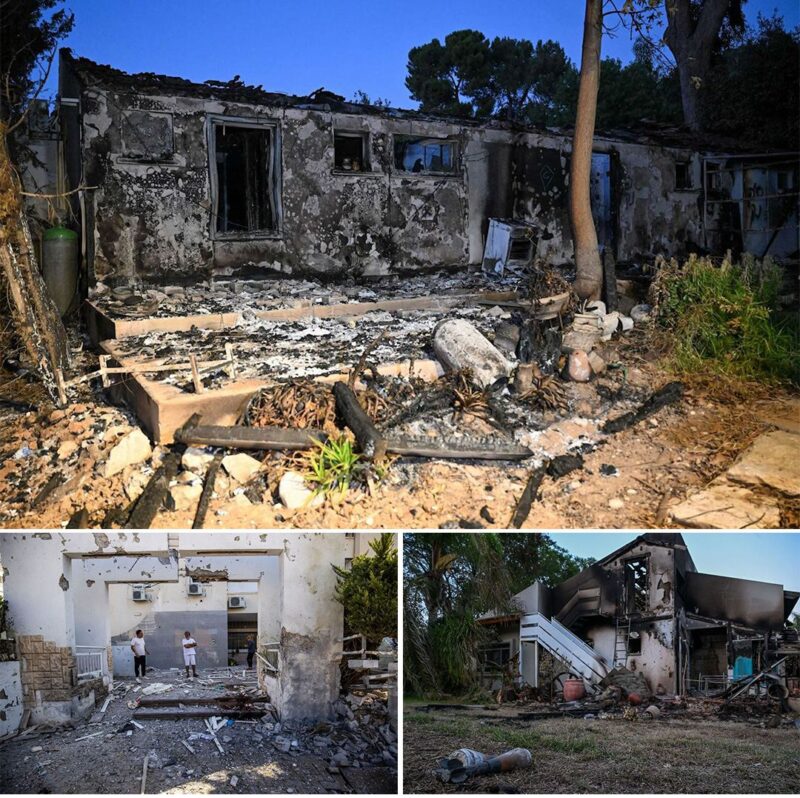
    A Hebrew-language Haaretz article published on 20 October, which only appears in English in a must-read Mondoweiss article, paints a very different story of what went down in Be’eri that day. A Kibbutz resident who had been away from his home – whose partner was killed in the melee – reveals stunning new details:

    His voice trembles when his partner, who was besieged in her home shelter at the time, comes to mind. According to him, only on Monday night (9 October) and only after the commanders in the field made difficult decisions — including shelling houses with all their occupants inside in order to eliminate the terrorists along with the hostages — did the IDF complete the takeover of the kibbutz. The price was terrible: at least 112 Be’eri people were killed. Others were kidnapped. Yesterday, 11 days after the massacre, the bodies of a mother and her son were discovered in one of the destroyed houses. It is believed that more bodies are still lying in the rubble.”

    Photo evidence of the destruction in Be’eri corroborates his account. Only the heavy munitions of the Israeli army could have destroyed residential homes in this manner.
    Aftermath or Be’eri Kibbutz after the fire power of the two sides cease

    Hamas behaviors: Evidence vs allegations

    Yasmin Porat, a survivor from Kibbutz Be’eri, said in an interview for an Israeli radio-show, hosted by state-broadcaster Kan, that Israeli forces “eliminated everyone, including the hostages,” going on to state that “there was very, very heavy crossfire” and even noted tank shelling.

    Porat had attended the Nova rave and testified to the humane treatment throughout different interviews she conducted with Israeli media. She explained that when she was held prisoner, the Hamas fighters “guarded us”, telling her in Hebrew to “Look at me well, we’re not going to kill you. We want to take you to Gaza. We are not going to kill you. So be calm, you’re not going to die.” She also added the following:

    They give us something to drink here and there. When they see we are nervous they calm us down. It was very frightening but no one treated us violently. Luckily nothing happened to me like what I heard in the media.

    Increasingly, and to the horror of some Israeli officials and news outlets, Israeli eyewitnesses and survivors of the bloodshed are testifying that they were treated well by Palestinian fighters. On 24 October, Israeli state broadcaster Kan bemoaned the fact that prisoner Yocheved Lifshitz, released by Hamas the day before, was allowed to make statements live on air.

    As she was handed over to Red Cross intermediaries, the elderly Israeli female captive was caught on camera turning back to squeeze the hand of her Hamas captor in her last goodbyes. Lifshitz’s live broadcast, in which she spoke about her two-week ordeal, “humanized” her Hamas captors even further as she recounted her daily life with the fighters:

    “They were very friendly toward us. They took care of us. We were given medicine and were treated. One of the men with us was badly injured in a motorbike accident. Their (Hamas) paramedics looked after his wounds, he was given medicine and antibiotics. The people were friendly. They kept the place very clean. They were very concerned about us.

    More questions than answers

    It is essential to recognize that in many reports by western journalists on the ground, the majority of information regarding the actions of Hamas fighters comes from the Israeli army – an active participant in the conflict.

    Emerging evidence now indicates that there is a high probability, especially due to the scale of the infrastructural damage, that Israeli military forces could have deliberately killed captives, fired on incorrect targets, or mistaken Israelis for Palestinians in their firefights. If the only source of information for a serious claim made is the Israeli army, then it has to be taken into account that they have reason to conceal cases of friendly fire.

    Israeli friendly fire was rampant, even in the days that followed, from an army with very little actual combat experience. In the city of Ashkelon (Askalan) on 8 October, Israeli soldiers shot dead and shouted insults at the body of a man they believed to have been a Hamas fighter, yet later realized they had executed a fellow Israeli. This is just one of three such examples of friendly fire in one day, resulting in the killing of Israelis by their own troops.

    Amid the fog of war, parties to the conflict have different perspectives on what occurred during the initial raid and its aftermath. It’s not disputed that Palestinian armed groups inflicted significant losses on the Israeli military, but there will be plenty of ongoing debate regarding everything else in the weeks and months to come.

    An independent, impartial, international investigation is urgently needed, one that has access to information from all sides involved in the conflict. Neither the Israelis nor the Americans will agree to this, which itself suggests that Tel Aviv has much to conceal.

    In the meantime, Palestinian civilians in Gaza endure ongoing, indiscriminate attacks with the most sophisticated heavy weapons in existence, living under the persistent threat of forced and potentially irreversible displacement. This Israeli air blitz was made possible only by the flood of unsubstantiated ‘Hamas atrocities’ stories that media began to circulate on and after 7 October.


    The views expressed in this article do not necessarily reflect those of TPF.

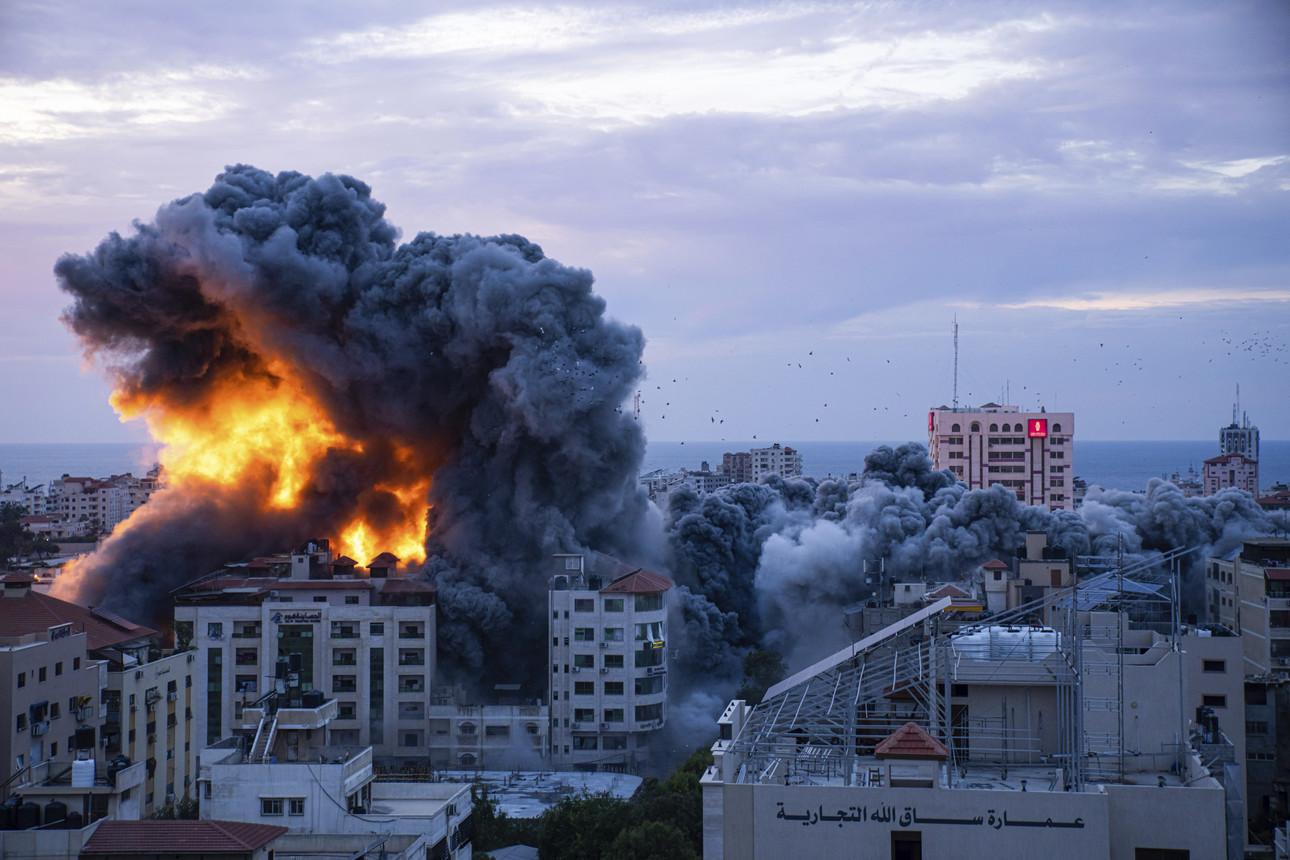
    Feature Image: Gaza under attack – Politico