Tag: ISI

  • Punjab: On The Boil Again

    Punjab: On The Boil Again

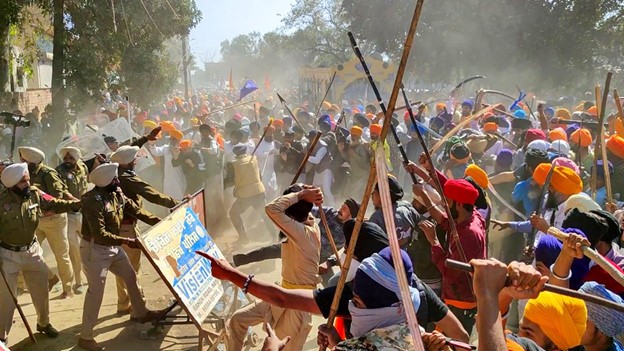
    Punjab—the land of saints and seers, the granary of India, nursery of the nation’s exceptionally gallant soldiers and outstanding sportspersons— appears to be once again, sliding to the brink of militancy largely attributed to religion-based secessionist motivations of a few extremists. That it is also fuelled by Pakistan’s sinister Inter Services Intelligence (ISI) and its well-funded stooges abroad brooks no elaboration.

    It will be prudent to recall that in the late 70s, Pakistan’s military dictator President Gen Zia-ul-Haq had conceived his infamous K-2 strategy (Kashmir and Khalistan) to foment trouble in two of India’s strategic border states of Kashmir and Punjab. Since then, till date, Pakistan has relentlessly strived to plant the seeds of terrorism, religious strife and lawlessness in these border regions. That turmoil and militancy did affect Punjab also in the 80s cannot be denied. Ultimately, the patriotism of the sturdy Sikhs coupled with firm handling by the Centre and state governments and embellished by strong and effective state police leadership under officers like Julio Ribeiro and KPS Gill had curbed the insurgency in Punjab. Those dark days did throw up vital lessons for all stakeholders to imbibe and implement to prevent such recurrences. But as usually happens with most establishments, a sense of déjà vu takes over till the next crisis occurs! The current state in Punjab is no exception.

    [powerkit_button size=”lg” style=”info” block=”true” url=”https://chanakyaforum.com/punjab-on-the-boil-again/” target=”_blank” nofollow=”false”]
    Read More
    [/powerkit_button]

  • Beware Pak’s intentions over Kartarpur

    Beware Pak’s intentions over Kartarpur

    Kamal Davar                                                                            Apr 18, 2019/Commentary

    During his celebrated cricketing career, Pakistan’s skipper Imran Khan was renowned primarily for his yorkers and inswingers. That in his new avatar as Pakistan’s Prime Minister, on prodding, in all likelihood from the supreme power centre in his nation — the Pakistan Army — Mr Khan recently bowled a “googly” successfully at the unsuspecting Indian establishment is a distinct possibility!

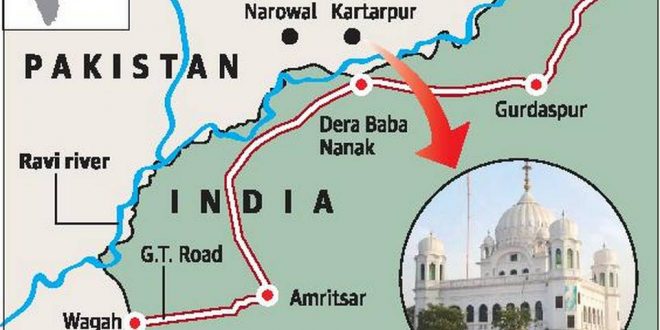
    Pakistan’s offer to accede to a long-standing Indian request to link up Gurudwara Kartarpur Sahib in its Narowal district across the Ravi river with the Dera Baba Nanak shrine in India’s Gurdaspur district clearly has overtones — far beyond what appears on the surface as a non-political, supposedly friendly gesture from Pakistan.

    Gurudwara Kartarpur Sahib has a unique place in the consciousness of Sikhs all over the world as it was here that the founder of the Sikh faith, Guru Nanak, spent the last years of his life till merging into eternity in September 1539. The revered Guru’s 550th birth anniversary falls in November 2019 and the proposed corridor is expected to be built and connected by both nations before this date to enable the proper conduct of celebrations as planned.

    Both India and Pakistan had the foundation stones for the proposed corridor laid in their respective areas in November 2018. This was followed up by a detailed meeting of their technical experts at the Attari-Wagah border on March 14, 2019. However, Pakistan did muddy the waters by mischievously including in their delegation for the next level of talks a few known “Khalistani” supporters based in Pakistan. India strongly objected and called off the proposed April 2, 2019 talks. However, India soon, somewhat surprisingly, agreed to Pakistan’s proposal for a technical meeting on 16 April, 2019, to iron out aspects on the exact alignment, coordinates, crossing points, etc in the proposed corridor. That all technical problems must be sorted out, requisite infrastructure and construction work should commence speedily and completed well in time brooks no emphasis. Equally, the rationale and, consequently, the long-term security ramifications of Pakistan’s acquiescence of India’s request to operationalise the Kartarpur corridor has to be borne in mind.

    Pakistan’s sinister Inter-Services Intelligence (ISI) has, over the years, been assiduously pursuing its nation’s cunningly crafted strategy of “bleeding India by a thousand cuts” in tandem with its infamous K2 strategy (Kashmir and Khalistan). In some parts of Jammu & Kashmir, the ISI has succeeded, to an extent, in keeping the pot boiling and sustaining insurgency-like conditions, especially in the last few years. However, its devious stratagem for whipping up discontent in Punjab over the years had failed miserably except briefly during the early Eighties. Nevertheless, the ISI has over the decades endeavoured to keep the Khalistani issue alive, setting up offices in the US, Canada, the UK and Germany to brainwash sections of the Sikh diaspora settled in these nations.

    The ISI’s latest malevolence has been to re-energise a Florida-based marginal Sikh separatist group called the Sikhs For Justice (SFJ) and made them establish their office in Lahore. The SFJ, flushed with liberal ISI resources, have had the temerity to publicly announce that that the Kartarpur Corridor would be a “bridge to Khalistan”. The SFJ is concurrently leading the “Khalistan Referendum Campaign — 2020” and will be recruiting, from all over the world, members of the Sikh community to participate in this nefarious separatist exercise. Their earlier effort in London, last year, proved to be a damp squib. Nevertheless, the ISI’s determined machinations to influence the Sikh community, both in India and abroad, must not be taken lightly by India’s security agencies.

    The ISI’s impious activities to destabilise Punjab in the future behind the veil of the Kartarpur Corridor must be seriously factored in by the Indian government. Notwithstanding the fact that India is currently in election mode, India’s security establishment in concert with the Punjab government, currently under an able soldier-politician Capt. Amarinder Singh, our foreign missions abroad and leaders of the Indian Sikh community must nip in the bud any future intrigues of Pakistan’s deep state to re-ignite trouble in Punjab.

    Our own innocent pilgrims to the Kartarpur shrine will have to be sensitised prior to embarking on their pilgrimage and feedback will have to be taken from them on their return. It will be in order for the Indian government to caution beforehand the Pakistan government to rein in its intelligence agencies and the Pakistan Shiromani Gurudwara Prabandhak Committee to desist from any anti-India activities.

    As all out efforts are made to ensure that the Kartarpur Corridor comes up well in time to celebrate the great Guru’s birthday, India and Pakistan must strive towards the proposed Kartarpur Corridor becoming a bridge for peace between the two nations.

    The writer, Lt Gen Kamal Davar (Retd), was founder of the Defence Intelligence Agency and deputy chief of the Integrated Defence Staff. He is a Distinguished Fellow and Trustee of TPF.

    This article was published earlier in Asian Age.

  • Pakistan continues to support terrorism

    Pakistan continues to support terrorism

    Kamal Davar                                                                                                     November 30, 2018/Op-Ed

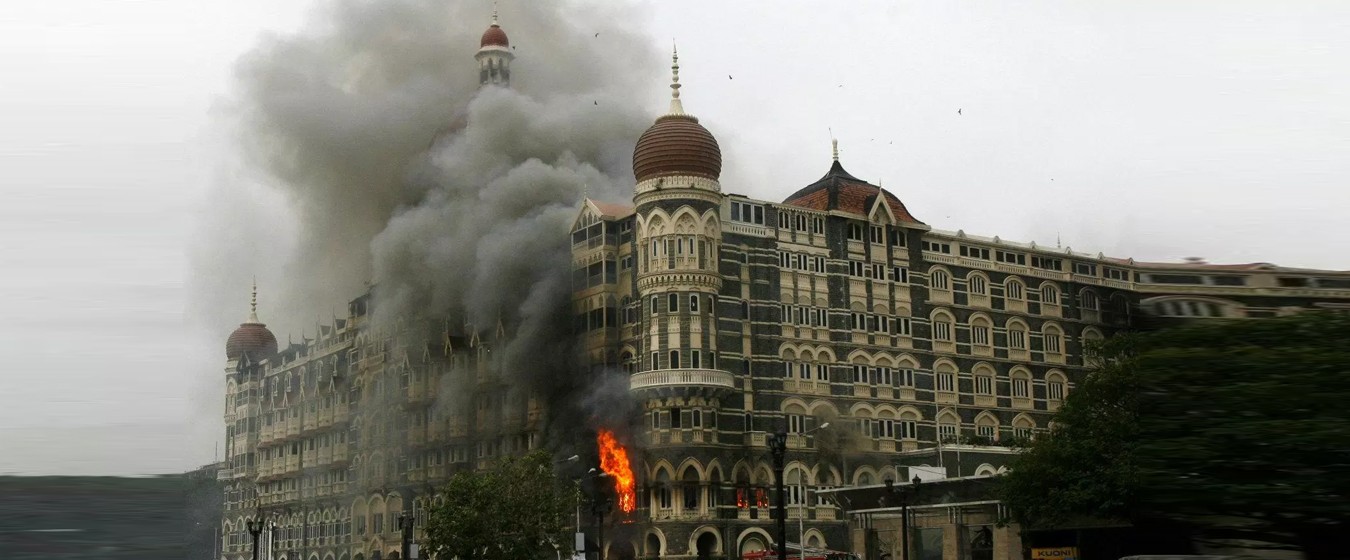
    As India observes the 10th anniversary of the ghastly Mumbai terror attack on 26 November 2008, which resulted in 166 fatalities including of foreign tourists and over 600 injuries, certain misgivings continue to agitate the minds of its concerned citizens and the security establishment alike.

    For decades, India has been the target of deliberate, well-planned Pakistani sponsored terrorism. Though India’s financial capital, Mumbai, has been a chosen destination for terror acts earlier too in 1993 and the Mumbai train massacres in 2006, those four horrific days of 26-29 November 2008 shook the nation and many civilized countries around the world. In matters of counter-terrorism endeavours, India woke up from its traditional languorous slumber, to a large extent, as it laboured to counter its own version of the infamous 9/11 terror strike on the American homeland. Was it a failure of intelligence, inadequate response mechanisms or, importantly, a systemic failure of the Indian security establishment? The candid answer lies in a combination of all these factors which resulted in this attack.

    In today’s increasingly troubled world, terrorism remains an ever burgeoning scourge outwitting advanced nations and their security forces time and again. Terrorism has explicitly developed into a rabidly dangerous reality with an expanding footprint, both regional and globally. The South Asian region, thanks to the original perpetrator of global terror, Pakistan, remains a hotbed of this plague, with no end in sight owing to continuing Pakistani machinations in India and Afghanistan. To Pakistan, the employment of terror as an extension of state policy appears to be more than a productive stratagem. Regrettably, Pakistan persists with its myopic and self-destructive terror policies in the region, continuing to foment terror in J&K, parts of the Indian hinterland through Nepal and, to some extent, in the north-east via Bangladesh.

    To successfully ward off cataclysmic events, a hard-nosed study and detailed addressal of the many professional and preparedness shortcomings which contribute to the likelihood of such occurrences is an imperative which security agencies can only disregard at the nation’s peril. It is the considered view of many security analysts that Indian commercial, public, military and other iconic, high-value institutions and infrastructure—perennial and lucrative targets for Pakistan-sponsored terror—have to have their security preparedness of the desired order to be vastly buttressed.

    Global problems beckon global solutions. With terrorism now a common threat confronting like-minded nations, intelligence sharing between friendly nations is sine qua non. To a large extent, especially after 26/11, the US intelligence community has established professional links with their Indian counterparts. Though some level of intelligence sharing does exist with certain friendly nations, India must forge far more deliberate intelligence cooperation with intelligence agencies of terror-afflicted nations like the UK, France, Russia, Afghanistan, Iran, Bangladesh and the Central Asian Republics. Though it is not a simple affair to develop seamless coordination resulting in speedy sharing of hard, actionable intelligence with foreign agencies, the criticality of effective counter-terrorism interoperability requires the same. Thus, India must take the lead with like-minded security outfits to get them on the same page. UN protocols on counter-terrorism and agencies like Interpol and the Paris-based Financial Action Task Force must endeavour towards greater cooperation to combat the common enemies of humanity.

    Looking inwards, it is endemic with some intelligence agencies in India to try and be ‘one up’ on each other by not fully sharing their inputs with sister institutions. This malaise, where existing, must be rooted out by the NSA. In addition, it is common knowledge that terrorists today are not merely in rag-tag outfits but with advanced technology and continually improving modern weaponry and tools to support their nefarious designs. Thus, security agencies have to keep abreast of all technological innovations taking place. As the nation endeavours to improve its technical intelligence capabilities in its myriad applications, human intelligence capabilities need also to be sharpened.

    A large number of terror outfits are labelled as ‘non-state’ actors which is a stark misnomer as some of the nations they are located in are supporting these terror conglomerates. In the case of Pakistan, its notorious spy agency, the ISI, funds, trains and equips a large number of these terror ‘tanzeems’ such as the Hafiz Saeed-led Lashkar-e-Taiba which carried out the Mumbai attacks under its watchful eye, the Jaish-e-Mohd, Harkat-ul-Mujahideen, and Sipaha-e-Sahaba, among others. US President Donald Trump’s recent imposition of financial sanctions on Pakistan for its duplicity in the war on terror was a long overdue measure. Similarly, Indian financial intelligence set-ups must keep a hawk’s eye on suspicious financial transactions from abroad to accounts in India.

    As Pakistan displays no signs of mending its ways, the Indian security establishment must factor in its preparedness the ever-looming and innovative terror threats from Pakistan and its proxies. Thus, for India, eternal vigilance and security upgrades remain the price to pay to fire-wall itself from terrorism.

    Lt Gen Kamal Davar is an Indian Army veteran and is former chief of India’s Defence Intelligence Agency. He is a visiting distinguished fellow at the TPF.

    This article was published earlier on November 25th, 2018 on Livemint.