Tag: Internal Security

  • India’s Shadow Wars: Challenges of Chronic Disputes and Insurgencies

    India’s Shadow Wars: Challenges of Chronic Disputes and Insurgencies

    Abstract

    This article contends that insurgencies in India tend to be protracted and are often hard to resolve definitively. They are characterised as “shadow wars” involving asymmetrical tactics, blurred distinctions between combatants and civilians, and an ongoing struggle for legitimacy and control. In this article, the adaptability of insurgent organisations, deep-rooted socio-political and economic disputes, and the limitations of traditional counterinsurgency methods in the Indian context are identified as key factors contributing to the persistence of these conflicts. To effectively address these issues and foster sustainable conflict resolution, it is essential to tackle their root causes and long-term impacts on India’s internal security, governance, and development.

    It is crucial to analyse the nature of India’s ongoing and persistent insurgencies, paying attention to the interplay between asymmetric warfare, socioeconomic grievances, and the effectiveness of counterinsurgency strategies.

    Key words:

    Shadow war, chronic, strategic, insurgency,

    India’s Shadow Wars: The Chronic Challenge of Internal Disputes

    Many highlight a fundamental and complex issue. India’s internal security landscape is marked by ongoing “shadow wars,” driven by several interconnected factors. In these asymmetric conflicts, the distinction between civilians and combatants blurs, creating a challenge that non-state actors often exploit by blending into local populations. At the same time, long-standing economic inequality, social injustice, and political marginalisation serve as breeding grounds for unrest, providing a continuous influx of recruits and supporters for insurgent groups. Developing effective counterinsurgency tactics demands a deep understanding of the complex interactions among these factors.

     The Connection between the Blurring of Civilian-Combatant Lines and Asymmetric Warfare

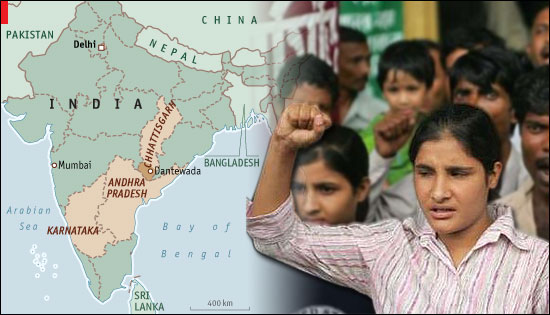
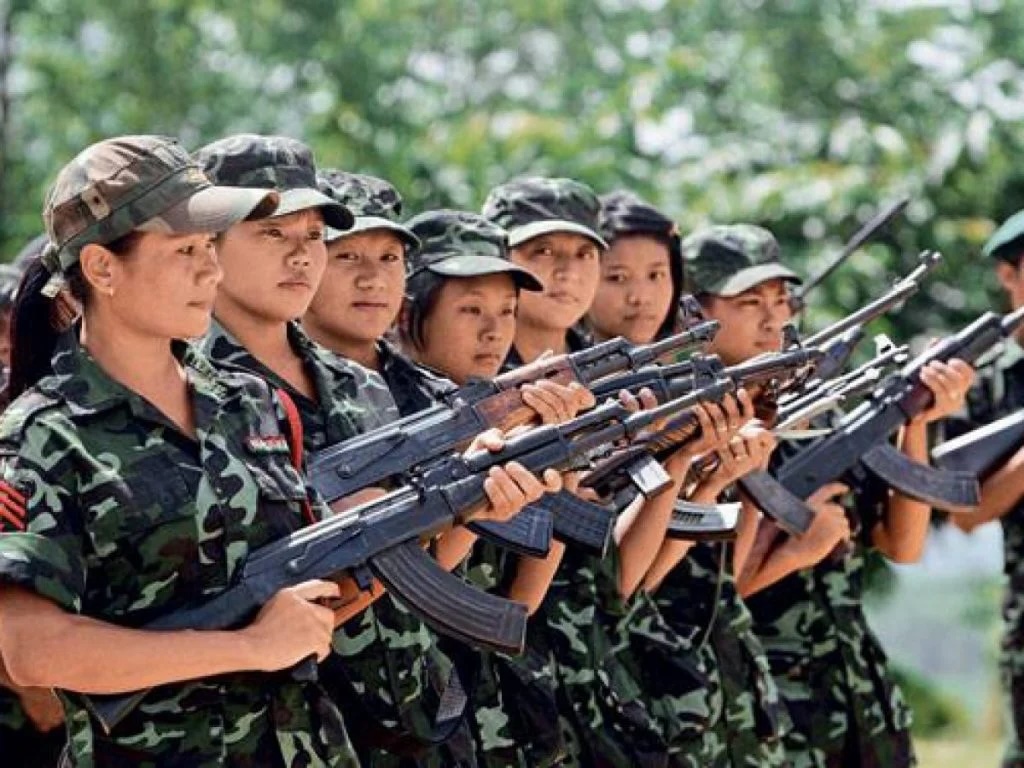
    Ongoing domestic insurgencies are characterised by the interaction of asymmetric warfare and the blurring of civilian-combatant boundaries. When confronted with the Indian state’s overwhelming conventional military strength, insurgent organisations deliberately adopt asymmetric tactics. These include targeted killings to instil terror and undermine the state’s authority, the deployment of improvised explosive devices (IEDs) to attack security personnel, and guerrilla ambushes in challenging terrain, such as the mountains of Kashmir and the Northeast or the forests of Chhattisgarh. These strategies aim to minimise direct engagement where they would be at a disadvantage while maximising their impact. An important aspect of this asymmetric approach is the extensive infiltration of rebels into civilian communities, which is often driven by various factors. It arises from genuine local support rooted in a sense of marginalisation and historical grievances. Strong tribal ties, for example, sometimes provide rebels with local sympathy and logistical assistance in the Northeast. In other cases, where villages are compelled to provide food, shelter, or intelligence, coercion and intimidation become essential.
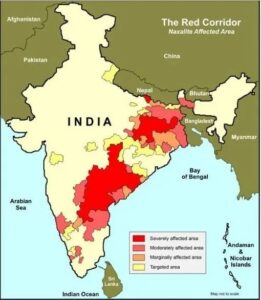
     

    Furthermore, security forces find it challenging to conduct successful operations without risking civilian casualties, as operating within residential areas provides strategic cover. By operating in plain clothes and reintegrating into society following operations, insurgents often intentionally blur boundaries. This ambiguity hampers counterinsurgency efforts (Winter, 2011). The main challenge lies in accurately distinguishing between fighters and non-combatants. Indirect damage poses a significant threat to security operations, making intelligence gathering extremely difficult. Even unforeseen civilian casualties can deepen local discontent and alienation, potentially prompting more people to support the rebels. This leads to an endless cycle where harsh security measures aimed at ending the insurgency unintentionally exacerbate the problem by eroding trust and increasing local grievances. Traditional military tactics, emphasising direct conflict and large-scale operations, may fall short against foes that are deeply rooted and adaptable. A more sophisticated approach is needed—one that goes beyond military strength—requiring accurate intelligence, efforts to secure local cooperation, and tactics designed to minimise civilian harm. The persistent nature of India’s internal insurgencies mainly stems from the inability to effectively manage this complex interaction, which hampers long-term peace and stability by perpetuating cycles of violence and mistrust.

    Enduring economic, social, and political grievances as catalysts

    Long-standing sociopolitical and economic grievances significantly fuel internal insurgencies. A sense of isolation and alienation has been brought about by historical marginalisation, primarily affecting ethnic and tribal groups. Mining for resources and development projects have forced many tribal communities to flee their homelands, sometimes without appropriate compensation. This has led to hostility and the loss of traditional livelihoods. Insurgent groups exploit the narrative of the oppressed, driven by this historical injustice, to recruit new members. The inadequate political representation of certain communities further deepens these grievances. When groups believe their voices are not heard within the democratic system and that the state ignores their specific demands and concerns, feelings of helplessness may grow, and they may resort to more extreme methods for redress. For instance, a perceived lack of political agency and responsiveness by the central government often sparks calls for increased autonomy or even independence in various regions. Inequalities in development and economic status across India’s many regions are also significant. Areas affected by insurgency tend to have poor development outcomes and lag in employment, healthcare, education, and infrastructure. This uneven development fosters a sense of injustice, giving people a tangible reason to complain about ineffective or poor governance. Disadvantaged young people seeking purpose or financial stability may find insurgent groups appealing due to limited viable economic options. Security measures alone cannot resolve these complex, longstanding issues. Despite continuous counterinsurgency efforts, insurgencies may endure for decades because of the deeply rooted nature of these grievances. Addressing these underlying causes requires equitable development policies targeting underserved regions, inclusive governance that guarantees representation and participation for all communities, and a commitment to social justice that redresses historical wrongs and counters ongoing bias. Since the core causes of conflict persist, enduring peace cannot be achieved without these comprehensive, multifaceted strategies (Staniland, 2013).

    The Efficacy and Obstacles of Counterinsurgency Strategies:

    India has effectively contained violence in certain areas through its counterinsurgency methods, which often depend heavily on military and paramilitary forces. However, a solely kinetic approach has struggled to achieve lasting peace. Traditional military superiority is often insufficient due to the challenges of operating in complex terrains and among civilian populations, as well as the rebels’ asymmetric tactics. The “hearts and minds’ strategy, aimed at gaining local support through good governance and development initiatives, has yielded mixed results. These programmes are often impeded by corruption, flawed implementation, and a disconnect between policy and reality on the ground.

    Furthermore, any benefits of development efforts may be undermined by strict security measures that alienate the population. Given its importance, political discourse is often irregular and uneven. Meaningful discussions are impeded by internal divisions within insurgent organisations and by a lack of trust between the state and rebel factions. The Armed Forces (Special Powers) Act (AFSPA), a legal and administrative framework designed to grant security forces operational freedom, has also faced criticism for suspected human rights abuses, further alienating local people and possibly escalating hostility. India’s ongoing insurgencies highlight the drawbacks of relying solely on fragmented or military-focused counterinsurgency tactics. A comprehensive strategy that combines security measures with genuine political participation, equitable and long-term development, and a commitment to addressing the underlying socio-political and economic grievances that sustain these conflicts is essential to achieve lasting peace (Rajagopalan, 2007).

    Conclusion:

    Addressing India’s ongoing internal conflicts requires an integrated approach that goes beyond mere security interventions. While managing existing conflicts involves effective counterinsurgency strategies, long-term stability relies on proactively addressing the root causes of unrest. This includes ensuring fair political participation, promoting social justice, and fostering inclusive economic growth. To truly heal divisions and achieve lasting peace, ending these “shadow wars” ultimately demands a comprehensive strategy that combines security efforts with broad socioeconomic and political reforms.

    References:

    Rajagopalan, R. (2007). Force and Compromise: India’s Counterinsurgency Grand Strategy. South Asia: Journal of South Asian Studies, 75-91. doi:https://doi.org/10.1080/00856400701264035

    Staniland, P. (2013). Insurgencies In India. In Routledge Handbook of Indian Politics (p. 11). Routledge.

    Winter, Y. (2011, September). The asymmetric war discourse and its moral economies: a critique. International Theory, 3(3). doi:https://doi.org/10.1017/S1752971911000145


    Feature Image Credit: thekootneeti.in
  • Between the Devil & the Deep Blue Sea: Tackling India’s Internal Security Challenges

    Between the Devil & the Deep Blue Sea: Tackling India’s Internal Security Challenges

    Our ability to develop and prosper, both as a society and a nation, are wholly dependent on the smooth functioning of our democratic institutions and their ability to faithfully uphold the tenets laid down in our Constitution.

    Our progress since Independence has not been without bumps along the road. Not only has the detritus of Partition haunted us, but we have also had to confront antagonistic neighbours intent on grabbing territory, creating divisions and curtailing our economic development and influence around the world. They have tried to do this by resorting to conventional operations, grey zone warfare, including using terrorist groups. In addition, we’ve had to overcome our internal troubles as well, what V.S. Naipaul referred to as a “million mutinies”, rebellions and insurgencies, for the most part, along our border regions. Undertaken by our disaffected citizens, in most cases with external support, aspiring to establish their own independent homelands because of ideological or religious motivations or out of a sense of frustration at being treated as second-class citizens within their own country.

    The response of the State and Central Governments to these internal challenges has invariably been to initially attempt some sort of half-hearted political accommodation or initiative aimed at preserving the status quo and giving themselves political advantage. Once this fails, as it is bound to, the Central Armed Police Forces or the Army are brought in, depending on the levels of violence, to neutralise the insurgency and regain political and administrative control. This can take anywhere from a decade to three or more. The Mizoram Insurgency, for example, commenced in 1966 and was successfully terminated with the agreement being signed between opposing sides in 1986, while the Punjab Insurgency lasted from the mid-80s to the mid-90s, though there are efforts to restart it.

    Unfettered exploitation of natural resources and minerals from those resource-rich regions by large corporations and their political acolytes has led to the displacement of tribals from their homelands and added to their economic woes. Given that the political, security and administrative establishments are wholly compromised and corrupt, the tribals have alleged that they have had little choice but to take up arms in an effort to break the nexus and get their rightful dues.

    We’ve had similar problems in our North-eastern States of Assam, Nagaland, Manipur and Tripura, which continue to persist in fits and starts, aided, and abetted by China. We have also faced a long-running Maoist rebellion in our hinterland, organised and conducted by tribals from those regions. Unfettered exploitation of natural resources and minerals from those resource-rich regions by large corporations and their political acolytes has led to the displacement of tribals from their homelands and added to their economic woes. Given that the political, security and administrative establishments are wholly compromised and corrupt, the tribals have alleged that they have had little choice but to take up arms in an effort to break the nexus and get their rightful dues.

    The issue we seem to have failed to comprehend is the transformation that has taken place in understanding what constitutes the basic elements of national security.

    Fortunately, good sense prevailed within the political and security establishment, and the military, other than limited support in casualty evacuation and surveillance by the Air Force was completely kept out of ant-Maoist operations. The military’s job is not to protect marauding corporates but our sovereignty from the depredations of inimical elements, both internal and external. The dynamics of the Military’s involvement in countering the Maoist insurgency would have undoubtedly had serious repercussions within the military’s functioning, and over a period of time, would have adversely impacted our existing governance structures, much in the manner that some of our neighbours have been so affected. The issue we seem to have failed to comprehend is the transformation that has taken place in understanding what constitutes the basic elements of national security. Until the end of the Cold War and before the advent of globalisation, national security had purely military and economic connotations with the stress on territorial control. This was achieved by controlling the flow of information, goods and services and the movement of people through various means, including physical barriers. The advent of the Info-Tech revolution and the consequent move towards globalisation made it increasingly difficult for governments to control access to and the free flow of information, ideas, digital services, and finances.

    As Professors, Wilson and Donan, note in their book, ‘Border Identities: Nation and State at the International Frontiers’ (UK, Cambridge: University Press, 1998), “International borders are becoming so porous that they no longer fulfil their historical role as barriers to the movement of goods, ideas and people and as markers of the extent of the power of the state.”

    Perforce, governments the world over have been forced into the realisation, for many at great cost, that it has become impossible to lock up people or ideas and isolate them from the global discourse. Thus, in the context of the security of the state, more than just ensuring territorial integrity, it is the security of the people through sustainable human development that is non-negotiable. We are today at a stage where, while traditional physical threats continue to pose serious challenges, especially from China and Pakistan, it is the non-military threats that are more dominant. These arise, on one side, from the host of cross-border insurgencies that afflict us because of ethnic, ideological, economic or religious conflicts, and on the other side, because of policies that emanate from politics of exclusion and economic exploitation. In both cases endemic corruption due to the nexus between the political-bureaucracy-security establishment and criminal elements involved in the smuggling of drugs and weapons and human trafficking remains the common thread. As a result, we not only face the threat of violence but also have to confront the increasing spread of religious radicalization.

    For example, in the Northeast, as my colleagues, Lt Gen J S Bajwa (Retd), Maj Gen N G George (Retd) and I, have pointed out in our paper, ‘Makeover of Rainbow Country: Border Security and connecting the Northeast’ (Manekshaw Paper No 62, Centre for Land Warfare Studies, 2016), “we are faced with a trans-border insurgency affecting our states that has metamorphosed into a serious law and order issue due to trans-national criminal syndicates having established linkages with armed gangs that are opposed to the existing political status-quo. This has also been accentuated with these groups being used by China and Pakistan for meeting their own nefarious designs…. Criminal syndicates have extended their reach to include complete control and dominance over all smuggling activities, be it of small arms, psychotropic drugs, livestock, or human trafficking. This economic clout has enabled them to subvert elements within the political parties, the bureaucracy, and the security establishment….”. Thus, it appears that the defining characteristic of on-going insurgencies is that they are nothing more than “businesses”, using all means at their disposal to make a profit. Thus, we see that has been that they have never crossed the threshold of violence or mass mobilisation that would lead to the next logical phase; from insurgency to civil war, where insurgent forces take on the military in conventional operations. These regions are further adversely impacted by poor governance, ineffective policing, agonisingly slow judicial processes, and unchecked criminal activity. The ability of the local populace to oppose the injustices heaped on them has been very subtly neutralised using the Security Forces and Police with wide ranging powers, including in some regions the use of AFSPA, to maintain the status quo. Our ability to develop and prosper, both as a society and a nation, are wholly dependent on the smooth functioning of our democratic institutions and their ability to faithfully uphold the tenets laid down in our Constitution. This is not feasible without sustained focus on providing high quality of universal education, emphasis on social justice and inclusion and an unvarying commitment to ensuring accountability and the rule of law. Focus on infrastructure development in border areas as well as ensuring free and fair elections, greater accountability and breaking the existing nexus between criminal groups and the local political and administrative establishment and unethical corporate houses. Clearly, all stakeholders have to accept that resorting to the use of force in order to ensure a stable security environment is an unviable option with very limited positives.

    The ability of the local populace to oppose the injustices heaped on them has been very subtly neutralised using the Security Forces and Police with wide ranging powers, including in some regions the use of AFSPA, to maintain the status quo.

    Finally, a word with regard to countering terrorist actions such as the one that targeted Mumbai on 26 November 2008. Much has changed since then with our major cites becoming far less vulnerable thanks to a quantum enhancement of the coastal surveillance infrastructure as well as better coordination, integration and demarcation of responsibilities amongst the stakeholders such as the Indian Navy, Coast Guard, local police and the intelligence agencies. In addition, the establishment of integrated National Security Guards (NSG) hubs in Mumbai and other metropolises ensures much speedier response as well as better coordination with local police and their Special Weapons and Tactics (SWAT) Teams. Efforts have also been directed to enhancing training of personnel and upgrading technical capabilities.

    Unfortunately, politics has played a major spoilsport and two important initiatives planned in the aftermath of the Mumbai attack, the establishment of the National Counter Terrorism Centre (NCTC) and its intelligence data exchange architecture (NATGRID) have not fully fructified. There can be little doubt that these initiatives, if pushed through as visualised, would have been of immense utility in ensuring our ability to prevent and respond to terror threats in a timely and effective manner. To conclude, it would be fair to suggest that we face an extremely difficult and challenging internal security environment that is deeply entwined in, and impacted by, our external threat perceptions. Of necessity, we must adopt robust policies, with the requisite capabilities, to be able to respond appropriately so as to be perceived as a ‘hard state’ by our neighbours. This would give us the necessary space andenvironment to push through policies focussing on sustainable human development, which is the only feasible option to ameliorate our internal security challenges.


    Feature Image Credit: the diplomat

  • AFSPA in the N-E: Is status quo the answer?

    AFSPA in the N-E: Is status quo the answer?

    The recent Nagaland incident involving the Army Special Forces again underlines that such cases are unavoidable in the existing milieu

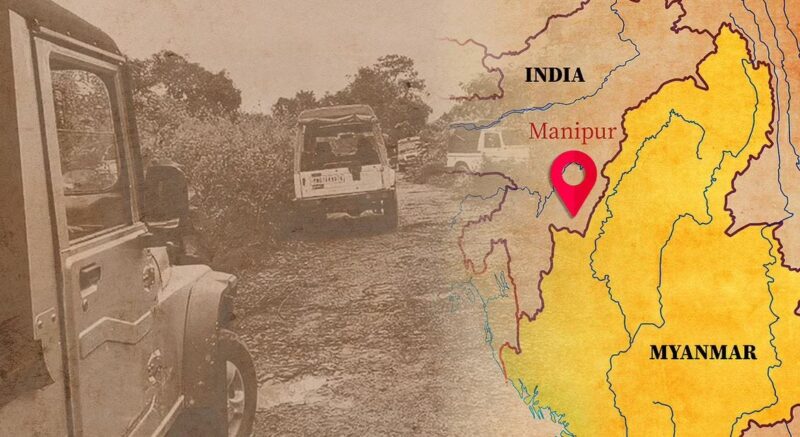
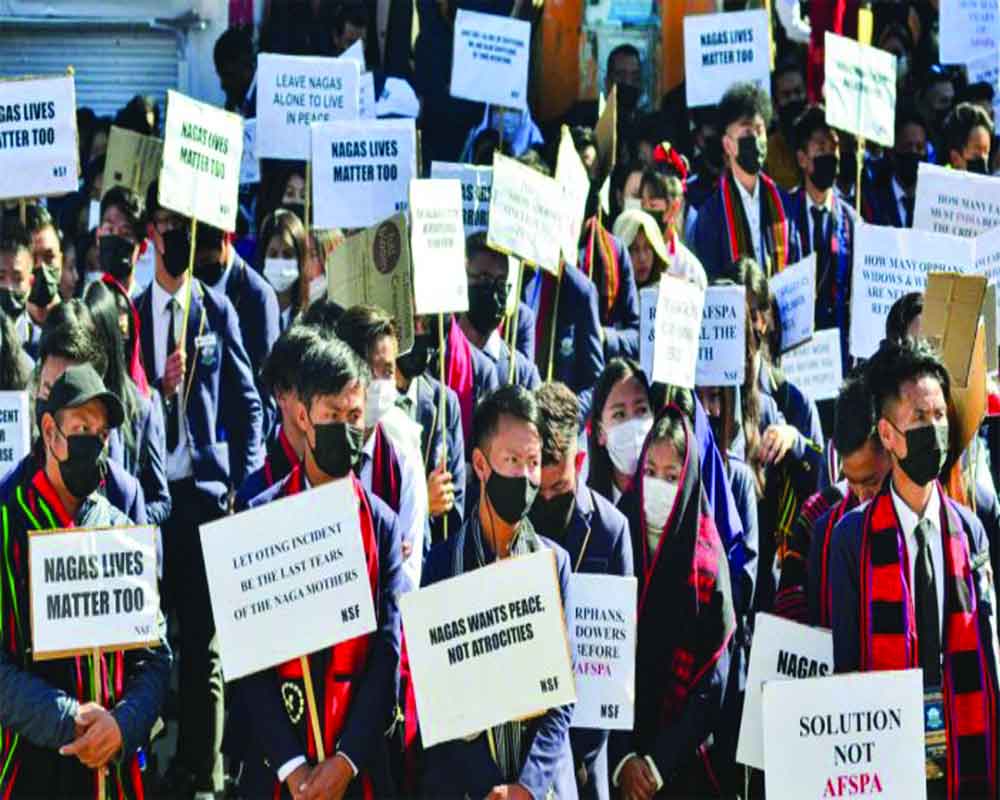
    Much has already been written on the tragic incident that occurred recently in the Tiru-Oting area of Mon district, Nagaland. In a case of mistaken identity, six coal miners were killed by a troop of the Army Special Forces. Subsequent escalation led to more deaths, including that of a Special Forces soldier, murdered in retaliation by villagers. The Army was quick to express regret, though it does not take away from the fact that in the existing milieu, such incidents are unavoidable.

    The truth is that the Special Forces personnel did their job with brutal efficiency. They were operating on supposedly credible intelligence and allegedly acted decisively once the vehicle transporting the miners did not stop, with tragic consequences. That they rushed two wounded miners to a civil hospital does suggest they acted in good faith.


    Read More