Tag: Insurgency

  • The Impact of Domestic Politics on Foreign Policy: The Colombian Case Study

    The Impact of Domestic Politics on Foreign Policy: The Colombian Case Study

    Introduction

    Colombia is amongst the world’s highly polarised states and has endured conflict for decades. The country witnessed around 50 years of armed struggle between militant groups, the government, and the drug cartels and has seen various forms of human rights violations in these years. The country saw more than 220,000 people killed in the conflict, roughly 25000 kidnapped or disappeared and more than 5 million displaced citizens (García-Perdomo, Harlow & Brown, 2022). However, after much pressure from the people and the government, the guerrilla factions and the ruling party convened to sign a peace agreement that essentially brought the active warring factions to a pause. On November 24, 2016, the Revolutionary Armed Forces of Colombia – People’s Army, or FARC, signed a landmark peace agreement, which also saw the militants present a public apology to the people of Colombia for their violent actions (Georgi, 2022).

    Since the end of the Second World War, Colombia has seen various governments adopt different stances and approaches to their foreign policies. Multiple domestic actors – state and non-state- have strongly influenced the country’s diplomacy. For example, between 1998 – 2002, Colombia moved from the narrative of remaining a failed state and developed ties with the US (Monroy & Sanchez, 2017). The Republic of Colombia has had 17 presidents since 1946, most of whom belong to Right-Wing conservative parties. The current President, Gustavo Francisco Petro Urrego, is the first President from a liberal and leftist political party (Tickner, 2022, 8:10) in decades. The country has never had a progressive-left leader in its political history, and his government has been making waves on all fronts concerning ties with neighbouring countries, attempting to resolve the internal conflict, and dealing with economic disparities within the population.

    A state’s foreign policy primarily focuses on interactions with other states and international actors and is essential to its political agenda. Given the interdependence of these two domains, domestic politics play a vital role in determining a state’s foreign policy. Foreign policy refers to a state’s approach and actions internationally. In contrast, domestic politics refers to the political processes, institutions, and actors within a state that affect the country’s policies. This essay uses Colombia as a case study to investigate how the country’s domestic politics and conflicts have affected its foreign policy. The timeline under revision is from the end of the Second World War to the present.

    This paper will look at the following factors as critical points of discussion. Determining the success of a policy is done by evaluating its efficiency and the evident improvement of situations. The paper will examine 1. How has the evolution of state leadership impacted Colombia’s foreign policy? 2. What role did the insurgents and drug lords play in this scenario? The state leadership (Hey, 1997), the insurgents, and the drug lords are critical players in Colombia’s political landscape and the evolution of its foreign policy. King, Keohane and Verba (1994, p.76) define causality as “a theoretical concept independent of the data used to learn about it”. It is difficult to draw causal inferences in a limited paper. Still, by examining the players mentioned earlier, this paper hopes to attract inferences between domestic politics and the direction of the country’s foreign policy.

    State Leadership and Foreign Policy

    There is a crisp scent of dependency theory when exploring literature about the foreign policies of Latin American countries (Hey, 1997). Similarly, Colombia – a state that witnessed long years of violent conflicts, deaths, kidnappings and illegal drug production continued on the same path as the rest of the countries in the continent. Significant economic disparities and multiple right-wing presidencies saw the inequality between people grow larger and larger (Hey, 1997). These were all critical factors in shaping how the country’s foreign policy presented itself to the world. After the end of the Second World War, Colombia maintained a low profile with respect to its foreign policy (Drekonja-Kornat, 1983). However, Colombia did have a traditional foreign policy – as in a Ministry to oversee relations and maintain ties with neighbouring countries, especially since border disagreements were high. Colombia had closer ties with the US than its immediate neighbouring states. At the same time, there appeared to be a consensus on the state leadership directing policies to suit principles of capitalistic democracy, free trade and markets; Colombia’s external affairs seemed to feed off of international support, especially from the United States of America. The US, in its quest to spread its capitalist democracy, assisted the various presidencies with aid and other means to combat guerrilla movements and insurgent activities. In turn, Colombia helped the US in the Korean War and stood by the US during the Cold War years, too. Drekonja-Kornat (1983) says Colombia was the only Latin American Country involved in the Korean conflict. During Turbay’s presidency, the US-Colombia ties grew closer, and US assistance helped establish his regime further (Hey, 1997). He held office from 1978 – 1982.

    The state’s leadership, in return, adopted and often tailored policies to suit strategic and international partners, particularly the US. Examples of presidencies adopting such policies include supporting the US stance on drugs (Hey, 1997), committing to recognise threats and terrorist activities as adjudged by the US and the EU, etc. (United States Department of State, 2021). Colombia’s constant internal security dilemma accentuates the existence of a dependency theory of Foreign Policy.

    Impact of the Internal Conflict on Colombia’s Foreign Policy

    The insurgents, guerrilla groups, and drug cartels played a role in shaping the foreign policy of Colombia. The entry of drugs into neighbouring countries, particularly the US, brought an international player into Colombia’s domestic issues (Gomez-Suarez & Newman, 2013). The United States desperately tried to solve the drug menace, which led to fighting the drug cartels and networks. America aided and supported the governments in curbing the cartel’s activities and eliminating insurgents who pushed for a more communist ideology, primarily in the Cold War period. Colombia’s alignment with the US on account of the Cold War influenced its domestic politics, which had a more significant say in shaping the country’s foreign policy. The United States of America is Colombia’s largest aid donor; listed below are some of the aid packages received by Colombia:

    1. The US has provided more than $1 billion in direct and indirect support for implementing peace in Colombia since 2016. (United States Department of State, 2021).
    2. The US provided roughly $700 million to assist Colombia with the Venezuelan migrant crisis and host approximately 1.8 million refugees in Colombia. (United States Department of State, 2021).

    Viewing the case from a realist perspective, much of Colombia’s foreign affairs has been dictated by the ebbs and flow of the insurgency. With Colombia’s development and domestic affairs requiring external support, it lacked the necessary flexibility to implement social development schemes as dependency on external aid was high (Monroy & Sanchez, 2017). Colombia became an instrument of the American War on Drugs, almost a pawn to the American foreign policy in Latin America (Tickner, 2011).

    While examining the history of how the state’s leadership handled its foreign policy directives and its domestic issues, there is space for some leniency. Many attempts to broker a peace agreement between the insurgents and the state were met with strong reluctance from the general public and a lack of participation from insurgent groups. Furthermore, corruption in various levels of government offices withheld any progress that could have been made. One could interpret the constant repetition of right-wing presidencies as people’s reluctance to move away from conservative rules, much to the dismay of insurgents, ultimately rendered the public most affected in the struggle for domestic power in the country.

    The Way Forward

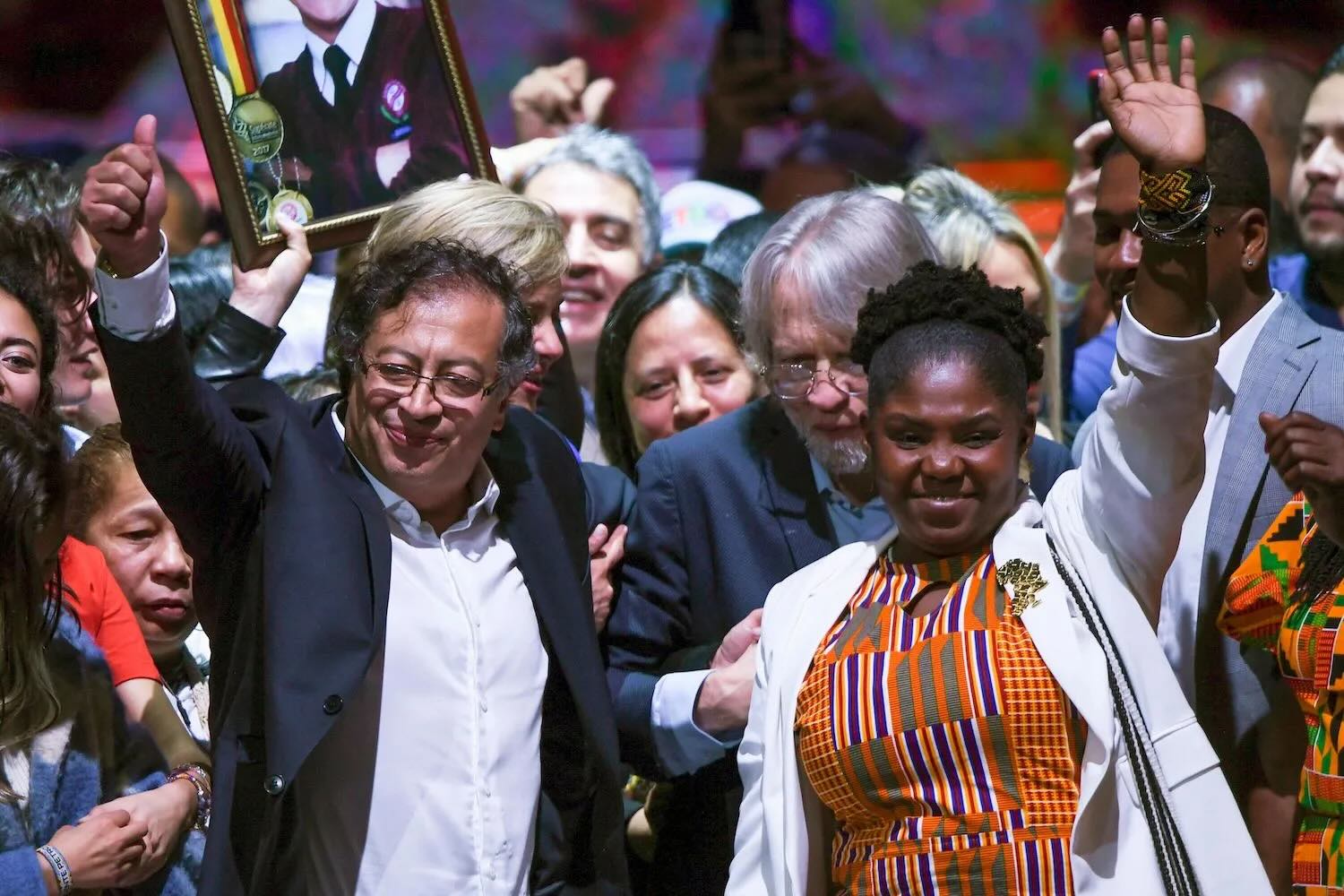
    Gustavo Petro became the first leftist President of Colombia on June 19, 2022, in decades (Freeman, 2023). His Presidential victory also marked the first-ever Afro-Colombian, Francia Marquez, to take office as Vice President. Unlike his liberal predecessors, the change in power was smooth from his rightist counterparts. As a leftist, there were questions about his merit and reputation as the country’s leftists were primarily likened to insurgents and militants. While the 2016 Peace Accords dismantled and disarmed most militants from the Fuerzas Armadas Revolucionarias de Colombia or FARC, the associations took longer to change.

    President Petro, however, is having quite the start to office. He is leading a policy of ‘Total Peace’, an effort to include all factions and players in the internal conflict and arrive at an end to the insurgency; his presidency plans to shift Colombia’s economic dependency on trade from the US, fossil fuels and the illicit drug trade to a more sustainable approach (Freeman, 2023), that would be similar to the Green Theory. One can interpret his actions as playing on both sides of the solid and historical US-Colombia ties (Santa Eulalia, 2022). Owing to the associations with his left-leaning tendencies, his moves are somewhat open to more scrutiny by the public. After all, no incumbent President has been re-elected to office in the last 15 elections (Freeman, 2023).

    A significant part behind his election to office has been the general public’s displeasure at rising economic inequalities between people, the inability of the previous government to provide and implement social welfare schemes and the financial toll caused by inactivity during the Covid-19 pandemic. While Drekonja-Konrat (1986) argues that most Latin-American countries can shape their foreign policies to the extent that it doesn’t hurt US interests, Petro is challenging the very notion of keeping his voters happy (Santa Eulalia, 2022). The truth in the details is that they are pretty co-dependent; Colombia needs the support of the US in tackling drug issues and the matter of the guerrilla militant groups, while the US views Colombia as a key strategic partner in the region. Accordingly, Petro has to carefully cater to his vote-bank’s anti-Americanism and yet maintain cordial ties with the US. It is a fragile line to tread, but the room to navigate and keep the US and the public happy is also quite small. Political revisionism is prevalent, given Petro is trying to appease both sides of support, constantly showing evident links as to how a country’s domestic politics can affect its foreign policy.

    References

    Drekonja-Kornat., G. (1983). Colombia: Learning the Foreign Policy Process, Journal of Inter-American Studies and World Affairs, 25(2). Pp- 229-250.

    Drekonja-Kornat., G. (1986). The rise of Latin America’s foreign policy: Between hegemony and autonomy. Latin American Research Review, 21(1), 239-259.

    Freeman, W. (February 2023). Colombia tries a transformative Left Turn, Council on Foreign Relations. Retrieved from: https://www.cfr.org/article/colombia-tries-transformative-left-turn

    García-Perdomo, V.,  Harlow, S. & Brown, D. K., (2022). Framing the Colombian Peace Process: Between Peace and War Journalism, Journalism Practice.

    Georgie, R. (2022). Peace that antagonises: Reading Colombia’s peace process as a hegemonic crisis, Security Dialogue, pp – 1-19.

    Gomez-Suarez, A. & Newman, J., (2013). Safeguarding Political Guarantees in the Colombian Peace Process: have Santos and FARC learnt the lessons from the past?, Third World Quarterly, 34(5), pp – 819-837.

    Hey, J. A. K. (1997). Three Building Blocks of a Theory of Latin American Foreign Policy, Third World Quarterly, 18(4), pp -631-658.

    King, G., Keohane, R.O, & Verba, S. (1994). Designing Social Inquiry: Scientific Inference in Qualitative Research.Princeton, NJ, Princeton University Press.

    Monroy, M. C. & Sánchez, F. (2017) Foreign Policy Analysis and the Making of Plan Colombia, Global Society, 31(2), pp – 245-271.

    Santaeulilah, I. (October 2022). Petro Playing Both Sides in Colombia-US Relations, El Pais. Retrieved from: https://english.elpais.com/international/2022-10-26/petro-playing-both-sides-in-colombia-us-relations.html

    Feature Image Credit: Foreign Policy


  • From Civil Wars to Gang Wars

    From Civil Wars to Gang Wars

    Depending on the context, these uprooted and redundant young people can become terrorists, child soldiers, members of youth gangs that dominate the suburbs from Paris to Rio, drug cartels, mafia gangs, or human traffickers.

    With the end of the Cold War in 1991, interstate war seemed to have said goodbye. But even then, there was no end of history, as Francis Fukuyama had assumed. Instead, interstate war was largely replaced by wars of intervention in weak states and civil wars. At the latest since the war in Ukraine, however, interstate war is back on the agenda and a new arms race has begun – the wars of the present have been nationalized. What is often overlooked, however, is that civil wars have not completely ceased to exist but have been replaced by gang wars. This will be analyzed here using the example of South American gangs, but it applies equally to large parts of Africa, Iraq, or Southeast Asia.

    A Brief Review

    In order to analyze this, a brief review is necessary. After the fall of the USSR, a return to the Middle Ages was diagnosed in security policy, and a return to pre-modern weapon carriers such as child soldiers, warlords, and private security companies. After the attacks of September 11, the fight against a new totalitarianism, this time Islamist, seemed imminent, and the “war on terror” was proclaimed. Meanwhile, China and Russia have re-emerged as serious rivals to the U.S., at least militarily, and a new arms race is on the horizon. The U.S. has been weakened by its lost wars in Afghanistan and Iraq, which even the much-vaunted and overestimated military-technological revolution could not stop.

    While in the 19th century the Western states conquered the whole world, in the 20th century the defeated empires and civilizations had to learn to live with the victorious West, and now the resurgent empires and the West have to learn to live with each other.

    Are there long-term trends in this rapid succession of different experiences and analyses of violent events? Two immediately come to mind: the “rise of the others,” as the influential US columnist Fareed Zakaria has called it, that is, the resurgence of the great empires and civilizations submerged by European colonization and US hegemony. These are primarily China and India, but also Russia and the littoral states of the North Pacific. In short, world affairs are shifting from the North Atlantic to the North Pacific. Whereas the entire 20th century was dominated by the North Atlantic littoral states (with the exception of Japan), in the 21st century there are at least two such centers: the North Atlantic littoral states and the North Pacific littoral states.  Here, the United States has the unbeatable geostrategic advantage of being located on both oceans. These former great empires and civilizations have almost one goal: to no longer be considered underdeveloped or backward by the states of the West, but as equals. While in the 19th century the Western states conquered the whole world, in the 20th century the defeated empires and civilizations had to learn to live with the victorious West, and now the resurgent empires and the West have to learn to live with each other.

    more and more people are becoming aware that Western modernity has a Janus face.   What is the hallmark of Western modernity: human rights, democracy and the emancipation of women, or colonialism, racism, two world wars?

    While until well into the 20th century many assumptions were that the values of Western modernity would spread throughout the world, more and more people are becoming aware that Western modernity has a Janus face.   What is the hallmark of Western modernity: human rights, democracy and the emancipation of women, or colonialism, racism, two world wars? And even Auschwitz was not carried out by “barbarians” but by the Germans, of all people, who are often associated abroad with Goethe, Schiller, Bach, Beethoven, and Mozart.  The opposing interpretations either argue that this is regrettable but has nothing to do with the nature of the West. And conversely, critics of the West argue just as one-sidedly that Western values are just empty words, and that the reality of Western politics is characterized by colonialism and racism. And Donald Trump’s current polemic against female Democratic Party politicians with immigrant backgrounds is racist, colonialist, and hostile to women. And the fact that there has been no outcry from the liberal West against this polemic may even indicate a concealed complicity because we Europeans also come to terms with racist and colonialist stereotypes. Donald Trump’s racism can be summed up in the simple formula: Make America white again. People of a different skin color or origin are only tolerated as long as they fit into the new hierarchy.

    Racist polemics like those of the new right in Europe, of White Power in the U.S., or even of Bolsonaro’s movement in Brazil can really only be understood against a backdrop of fundamental insecurity and grievance. The West feels deeply offended that the “others” who were always seen as less developed no longer want to copy it, and full of fear that they could even overtake the West. Fear rules the politics of the West, fear of the end of its feeling of superiority and of the fact that nothing could then be left if one no longer feels superior to the others.  Freely according to the motto: I am nothing, I can do nothing, but I am German – and this shows its ugly grimace in hate speech and violent outbursts. But we are not alone in this respect. For alongside the resurgence of the Others, which is significant in terms of world politics, civil wars around the world are turning into gang wars – the political community is disintegrating into ever new gangs. This has not been adequately perceived in the West until today because we have not been able to describe this process adequately with our conceptual system. In Western thought, the paradigm of Thomas Hobbes from the 17th century is still valid. It states that in a theoretically constructed state of nature, which always occurs when there is no longer a functioning state, the “state of nature” of the “war of all against all” occurs. In this conception, everyone is absolutely free and has a right to everything he can take, provided he has the power to do so. This life, however, according to Hobbes, is full of violence and fear eats the soul. To overcome this self-destructive “state of nature,” all individuals transfer all violence to a single sovereign, who in return provides them with protection and security. In this simple construction the modern state was born, secured by the state monopoly of violence. Here, only the state has a right to legitimately exercise violence, and non-state violence is criminalized.

    Gang Wars

    What is not included in this construction are gangs – groups of mostly young men left over from the civil wars since the end of the Cold War, uprooted in the refugee movements, or who have lost their identity in the dramatic transformation process we trivialize as globalization. Depending on the context, these uprooted and redundant young people can become terrorists, child soldiers, members of youth gangs that dominate the suburbs from Paris to Rio, drug cartels, mafia gangs, or human traffickers. The context varies, but the cause is the same everywhere: these young people feel marginalized, superfluous, and uprooted. Approaches that have analyzed related global violence have almost always emphasized individual violence or violent enrichment. Of course, there are civil war economies, markets of violence, and state collapse, including “new wars” (Kaldor and Münkler) characterized by the privatization and economization of violence and asymmetric warfare against the weakest in societies. In such markets of violence, people are traded first and foremost, and about 79% of them are women and children, but also weapons, drugs, rare earths, and the well-known blood diamonds as a synonym for precious stones. In many countries, however, violent gangs play at least as large a role.

    A characteristic feature of these gangs is that they are not exclusively concerned with private enrichment through violence, but paradoxically give their members a sense of identity and even home through their violence. This paradox is not provided for in our conceptual system for understanding violence.  Islamist terrorism can in no way be attributed to the pursuit of material interests. It is true that the Islamic State also used oil and that the Taliban dominate the opium trade in the Golden Crescent between Iran, Afghanistan and Pakistan. This only proves that there is a link between political and economic struggles, not that the struggles for recognition and identity in these organizations are economically determined. This means that there is still a link between violence and the market, perhaps it has just become more “invisible”, more visible at the micro level. Macro-violence, on the other hand, is increasingly characterized by struggles for identity and recognition.

    If we say there is a transition to a global war of all against all, I think there is a global transition to gang wars. These may or may not be youth gangs. Drug cartels and mafia organizations can also be based on gang structures. Of course, economic interests play an important role here, but I doubt that cohesion is guaranteed by economic interests alone. One example is the Japanese Yakuza. What are gangs?  A gang is a group that originally formed spontaneously and socializes and integrates its members through fighting and conflict. Typical behaviors include meeting in person, hanging out and occupying public space, traveling in a group, and having a high propensity for conflict – such as rocker groups.

    Many children, adolescents, and young adults in Central and South America are active members of youth gangs called “maras” or “pandillas”.

    The result of this behavior is the development of a distinct tradition, an unreflective internal structure, an esprit de corps, paradoxically solidarity and morality within the group, and a sense of belonging to a unified territory.  The leader must constantly maintain a threatening gesture against his own and also constantly rekindle the waning enthusiasm of his followers; in other words, respect for him must be constantly maintained. Many children, adolescents, and young adults in Central and South America are active members of youth gangs called “maras” or “pandillas”.

    After the end of the civil wars in Nicaragua in 1990, El Salvador in 1992, and Guatemala in 1996, there was a forced migration of illegal immigrants from the U.S. to their home countries, including the deportation of Central American-born members of street gangs formed in the U.S. to their parents’ home countries.  These young people had fled poverty and civil war, formed criminal gangs (maras) primarily on the West Coast of the U.S., and were now forced to return to their home countries, which they may never have seen. Back in Latin America, the mareros regrouped and received a large influx of both young people looking for direction and demobilized security forces and guerrillas (there were about 40,000 of them at the time).

    The most important aspects of a Latin American gang member’s life are honor, drugs, and violence. This is what a pandillero’s entire daily life revolves around, and in most cases, it also determines the when, how, and why of his death. In the gangs, there is a certain code of honor that states that gang solidarity and reputation are more important than anything else.  In a sense, the honor of the gang becomes the transcendence of the members, as the collective as such is religiously exalted and the individual counts for less and less. The individual is obligated to kill unconditionally for the honor of the group or die himself. There is also a paradoxical construction in another point: on the one hand, there is an absolute hierarchy, on the other hand, there is a feeling of being a gang: “We rule the barrio so that no one tells us what to do. If someone does, we silence them. You submit because we are many. We young people rule.  The response of the pandillero in a world where he is nothing is to attack, to dominate the barrio, to submit because he is submitted, to define a territory because he lives in uprootedness, to join an institution that gives identity because he lacks it. The pandillero strives to dominate in an environment that excludes him.

    Whoever belongs to a pandilla must not only master the exercise of violence, but must also be able to accept the suffering of violence. The initiation rituals for men and women are different: men must allow themselves to be beaten by existing members of the gang for a certain period of time, which varies from gang to gang, while women must allow themselves to be raped by any member of the gang. The unimaginable extent of violence in Central American youth gangs is an indication that gangs cannot be attributed to interests alone, for although these interests may be predominant in the exercise of violence, they are unlikely to play a role in voluntary submission to the group, self-sacrifice for it, and endurance of violence. Rather, the recognition by group members of having endured violence is the central aspect of one’s identity and loyalty to the gang. This is the too often overlooked connection between the wars of states and parastatal organizations (IS, Hamas, Hezbollah, Iran’s Revolutionary Guards) and the violence that takes place on a mass but individual level (Hobbes, war of all against all). They cannot be attributed to either level, but are the intermediate realm, the hybrid between the two.

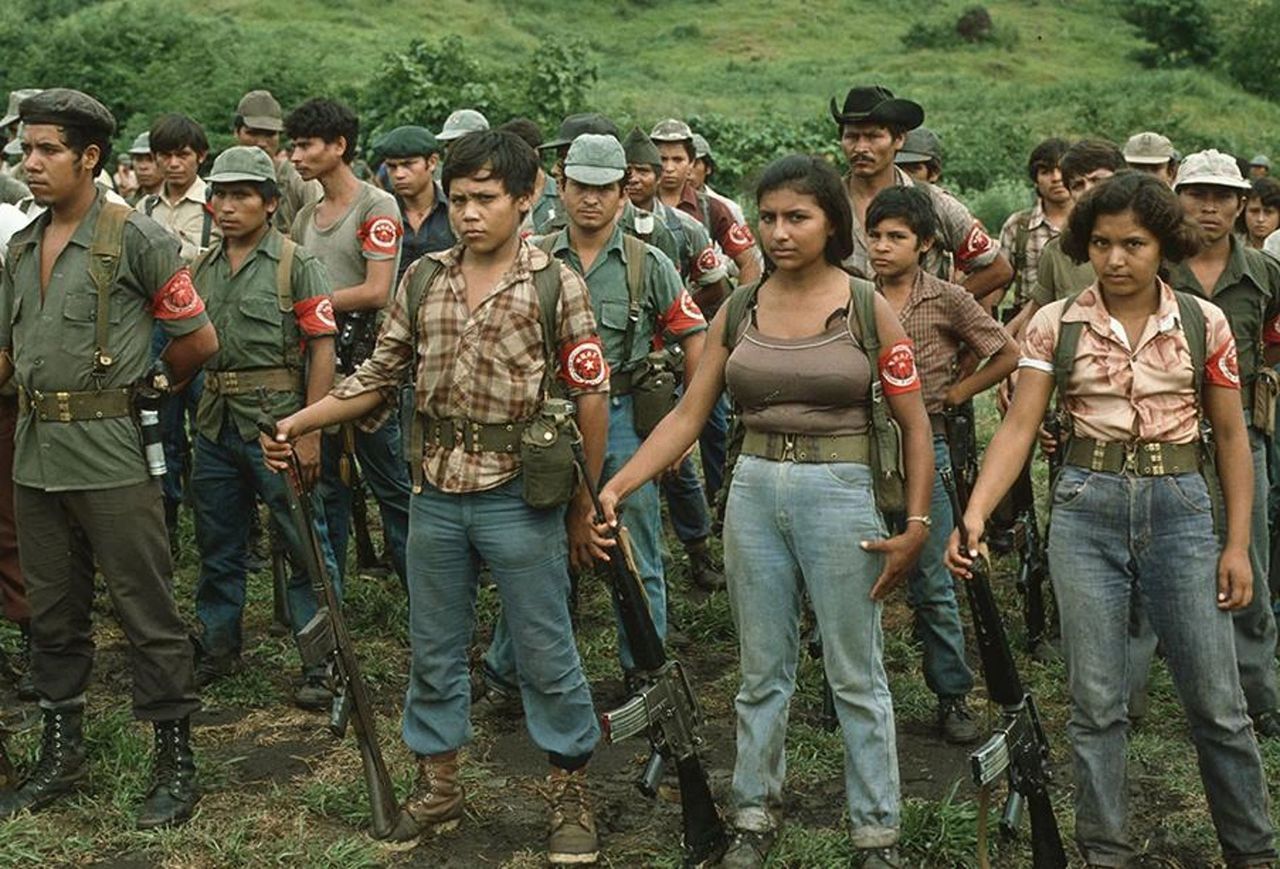
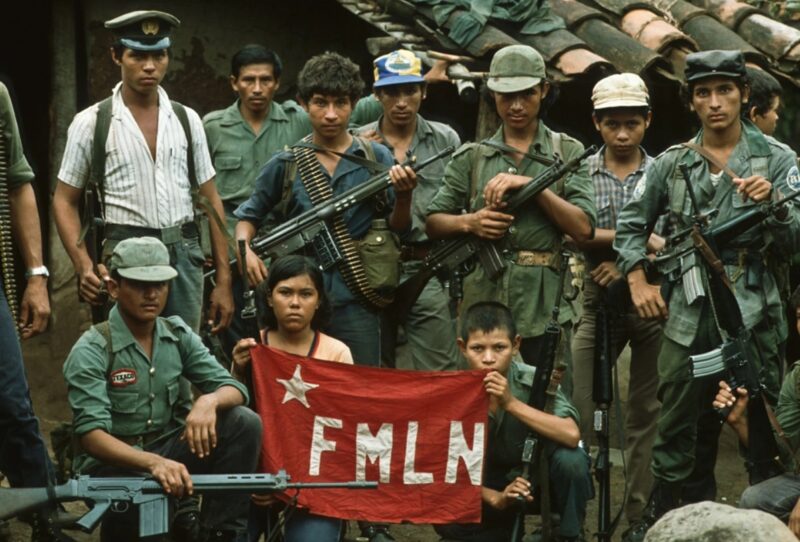
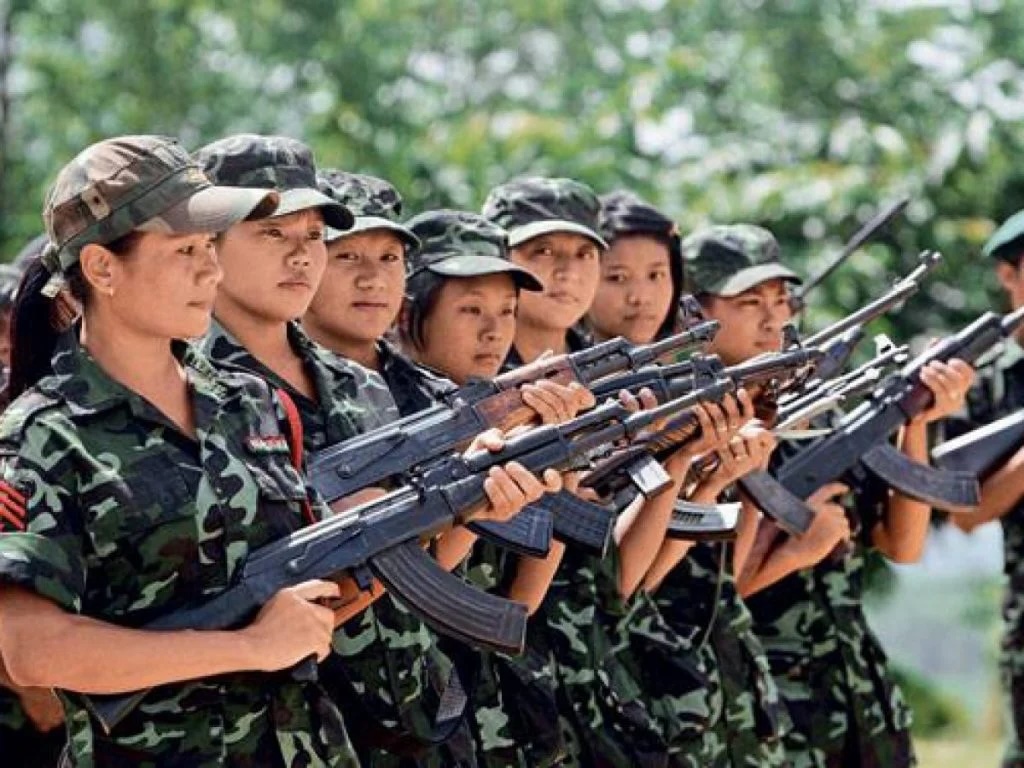
    Feature Image: Salvadoran left wing revolutionary group Farabundo Marti National Liberation Front

  • AFSPA in the N-E: Is status quo the answer?

    AFSPA in the N-E: Is status quo the answer?

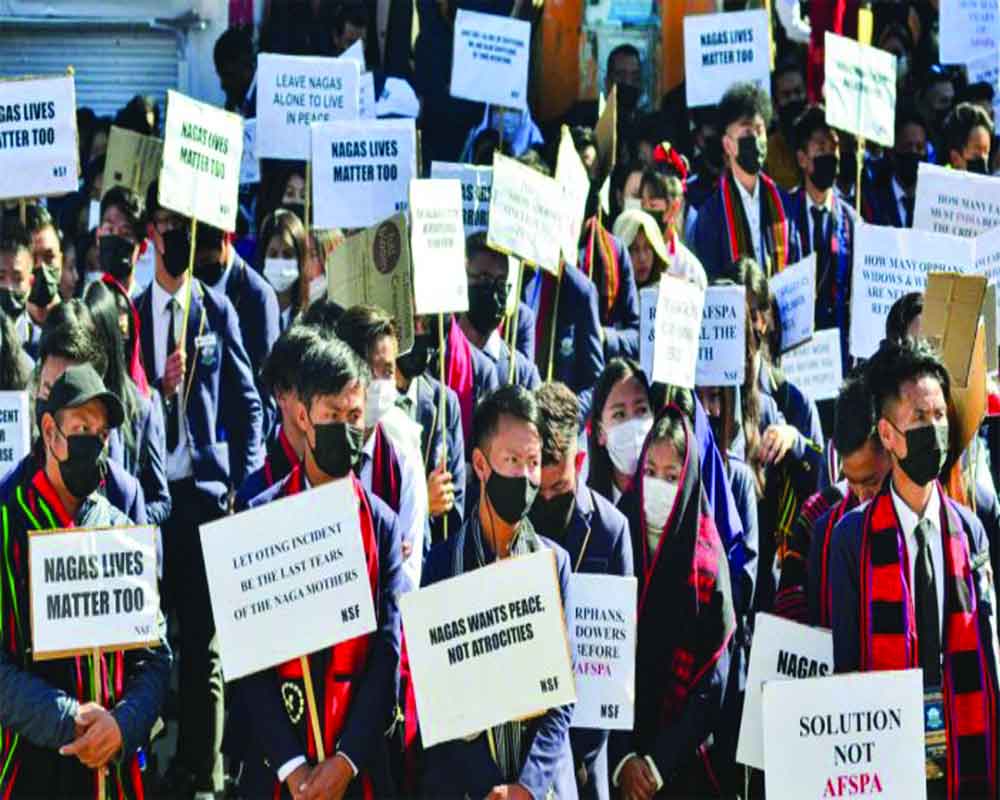
    The recent Nagaland incident involving the Army Special Forces again underlines that such cases are unavoidable in the existing milieu

    Much has already been written on the tragic incident that occurred recently in the Tiru-Oting area of Mon district, Nagaland. In a case of mistaken identity, six coal miners were killed by a troop of the Army Special Forces. Subsequent escalation led to more deaths, including that of a Special Forces soldier, murdered in retaliation by villagers. The Army was quick to express regret, though it does not take away from the fact that in the existing milieu, such incidents are unavoidable.

    The truth is that the Special Forces personnel did their job with brutal efficiency. They were operating on supposedly credible intelligence and allegedly acted decisively once the vehicle transporting the miners did not stop, with tragic consequences. That they rushed two wounded miners to a civil hospital does suggest they acted in good faith.


    Read More

  • The US retreat from Afghanistan: Looking back on an ill-conceived peace deal and a hasty withdrawal

    The US retreat from Afghanistan: Looking back on an ill-conceived peace deal and a hasty withdrawal

    Under an agreement signed on February 29, 2020, between Qatar, The US and the Taliban, the US agreed to withdraw all its troops within 14 months of signing the accord. In return, the Taliban pledged to prevent any terrorist group from operating in Afghanistan against the US and its allies. The pact also envisaged a prisoner swap, the start of intra-Afghan dialogue and sanction removals against the Taliban. But, as we have seen, the peace deal accelerated the collapse of the Afghan state on which the US spent trillions of dollars.

    Trump also permitted the US chief negotiator Zalmay Khalilzad to place the withdrawal of US forces on the negotiating table with the Taliban, throwing away their biggest bargaining chip. The Taliban themselves seemed surprised that the US put the withdrawal of US troops on the negotiating table.

    The US started the peace talks with four specific goals. An end to violence by declaring a ceasefire, an Intra-Afghan political settlement, Taliban renunciation of Al-Qaeda and long-term presence of intelligence assets and special operation forces in Afghanistan for counterterrorism operations, and a timeline for US troops withdrawal[1]. However, with the presidential elections approaching in 2020, Trump was being increasingly restless and wanted a quicker exit. So, to accelerate talks, the long-standing demand for the presence of special operation forces in a counterterrorism mission along with inter-Afghan led peace talks were jettisoned. Trump also permitted the US chief negotiator Zalmay Khalilzad to place the withdrawal of US forces on the negotiating table with the Taliban, throwing away their biggest bargaining chip. The Taliban themselves seemed surprised that the US put the withdrawal of US troops on the negotiating table.

    The US committed itself to a set of measurable commitments, while the Taliban did not. The idea was to create an environment of good faith. However, the Taliban never reciprocated the ‘good faith’ shown by the US, except to ensure safe passage for the retreating US troops. Once the deal was struck, violence increased in the country.

    The Taliban never agreed to a ceasefire or a political settlement. While the intra-afghan dialogue was a part of the deal struck between the Taliban and the US, there was a lack of progress, with the Afghan government and the Taliban blaming each other for the impasse. Violence escalated by almost 50% after the start of the intra-afghan dialogue.

    The peace deal also included a prisoner swap agreement where the Taliban would release up to 1000 prisoners and the Afghan government release up to 5000 prisoners. The Afghan government asked the Taliban prisoners for a written guarantee that they would not return to the battlefield. However, thousands immediately rejoined the insurgency. The Taliban commander, Maulawi Talib, who led a Taliban assault on the capital of Helmand, Lashkargah, was one among the 5000 prisoners released. There was an uptick in violence after the prisoner swap was completed. Afghan officials said the agreement went through only because of pressure from Washington.

    The Taliban proved reluctant to break ties with Al-Qaeda, too, according to a UNSC report. Under the peace deal, the Taliban agreed not to allow al-Qaeda or any other extremist group to operate in areas under their control. However, the Taliban needs allies and Al-Qaeda is one reliable ally. Further, the Haqqani network, an integral part of the Taliban, is known to harbour close links with Al-Qaeda. While stopping a future terrorist attack emanating from Afghanistan will be in the Taliban’s interests, it is unlikely they will break relations with Al-Qaeda after years of close collaboration.

    It was clear from the beginning that the viability of the agreement depended on the US willingness to call off the withdrawal in the future if the Taliban renegade on their promises. But that decision fell to president Biden, who has always made it clear that Afghanistan is a lost cause.

    When Biden came to power, the situation in Afghanistan was deteriorating. The choice he had, according to Biden himself, was to either expand US presence or follow through with the agreement. The dilemma was a result of poor policies pursued during the trump era. The US has been bogged down in Afghanistan for 20 years, and the resolve of president Biden to not escalate meant that the US followed through with the agreement. The peace talks became a cover for complete US disengagement.

    The US withdrawal accelerated the collapse of the Afghan state. The uncertainty of the Doha talks demoralized the Afghan military, who saw it as a deal between the Taliban and the US that guaranteed Taliban victory.

    With the collapse of morale, everything that was rotting started collapsing as well.  Around 30000 troops existed on paper, but the numbers were inflated due to a phenomenon called ‘ghost’ soldiers – soldiers on the official payroll but who never showed up for fighting. There were reports that the soldier was not paid and there were not enough supplies.

    Jack Watling, a research fellow for land warfare and military sciences at the Royal United Services Institute in London, said that the Afghan military collapse was not a reflection of military capability, but a reflection of a collapse in the will to fight.

    In truth, ever since the surge in troops authorized by the Obama administration right after coming to power, what every successive US President wanted was an orderly withdrawal from Afghanistan. The most baffling thing is that the US resorted to negotiation when its leverage was the weakest. Perhaps, in hindsight, greater efforts could have been made during the time of President Obama to find a peaceful solution to the conflict.

    In the end, it was more of a retreat than a withdrawal. The US made concrete measurable commitments while the Taliban made promises, which they can now afford to renegade on.

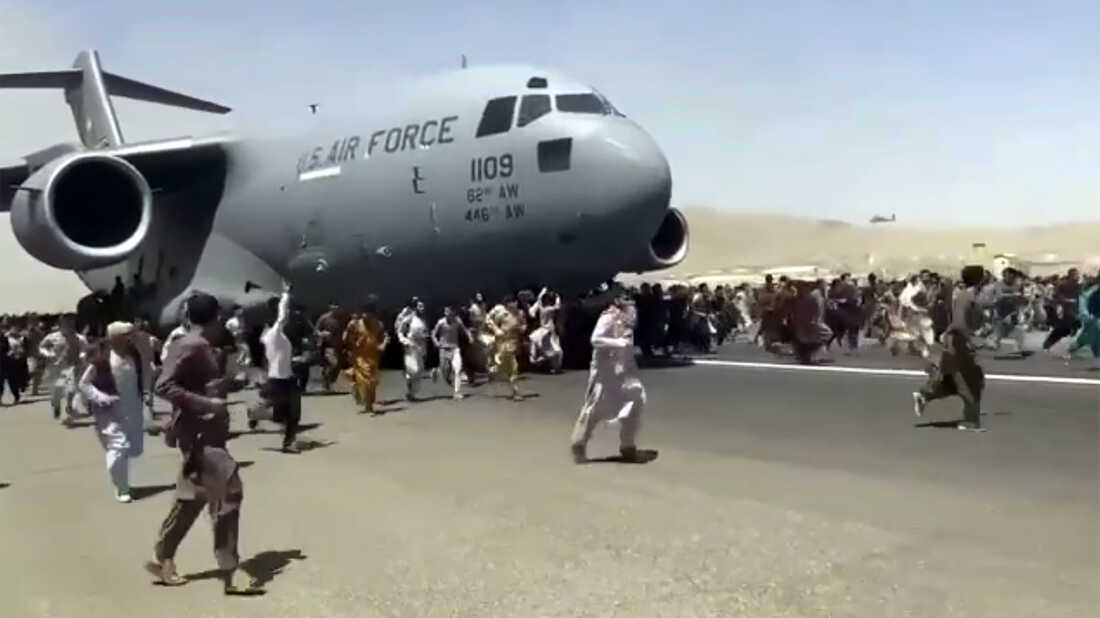
    The scenes in Kabul airport was anything but orderly. More than 2000 marines had to be brought in to secure the Kabul airport as the Taliban rolled into Kabul for the first time since 2001. “The past 17 days have seen our troops execute the largest airlift in U.S. history, evacuating over 120,000 U.S. citizens, citizens of our allies, and Afghan allies of the United States,” the US president said in the statement. An attack by the Islamic State in Khorasan Province (ISKP) on Kabul airport killed 13 U.S. service members and 170 Afghans.

    In the end, it was more of a retreat than a withdrawal. The US made concrete measurable commitments while the Taliban made promises, which they can now afford to renegade on.


    [1] Pg. 667, carter


    Feature Image Credit: www.npr.org

  • Life In Post-370 Kashmir: Battling The Pandemic Amid Communications Blockade

    Life In Post-370 Kashmir: Battling The Pandemic Amid Communications Blockade

    When British sovereignty over India lapsed in 1947, Kashmir, the Muslim majority state under the rule of Hindu ruler Maharaja Hari Singh chose to remain independent. However, that independence was short lived as Pakistani raiders invaded Kashmir and Hari Singh turned to India for assistance. India promised to help on the condition that Hari Singh signed the Instrument of Accession, according to which defence, communication and external affairs of the state will be handed over to the Indian administration. Since then Kashmir had enjoyed special status under Article 370 of the Indian Constitution. Under article 370, Kashmir had its own state flag, constitution and autonomy over the internal administration of the state. With Article 370 along with Article 35A, the residents of Jammu and Kashmir lived under a separate set of laws, including those related to citizenship, ownership of property and fundamental rights, as compared to residents of other Indian states.Kashmir has been in the midst of unrest and turmoil for decades, as Pakistan inspired religious fundamentalism led to the growth of terrorism and insurgency. Constant communication and internet ban, and curfew have been part of everyday life for the people of Kashmir. Kashmir accounts for about 60% of the communication and internet ban that happens in India. Internet in the valley was cut off for four months in 2016 following the uprising after the killing of Burhan Wani.
    On 5th August 2019, the BJP-led Indian government, headed by Prime Minister Narendra Modi stripped Kashmir of its special status by revoking Article 370. Home Minister Amit Shah introduced the Jammu and Kashmir Re- organization Bill in the Parliament and was passed with a majority. The ‘Jammu and Kashmir Re-organisation Bill‘ divided the erstwhile Jammu and Kashmir into two Union Territories – Jammu & Kashmir and Ladakh.

    Over the last five decades and more, Article 370 has been hollowed out by various governments that were in power in the erstwhile state.

    Analysis and contention that Article 370, in its present form has been diluted over the years and that it existed just in name is indeed true. Over the last five decades and more, Article 370 has been hollowed out by various governments that were in power in the erstwhile state. Despite this, Article 370 guaranteed the people of Kashmir certain benefits such as exclusive land rights and job reservation among others. With the scrapping of Article 370, people of the valley fear that it will usher in a change in the demographics of the erstwhile state. As J&K loses it special status, people will lose their exclusive land rights, various reservations and other benefits that they enjoyed. There is also a fear among the people that with the scrapping, settler colonization will take place in the valley like it happened in Palestine.Following the announcement, the valley was placed under a lockdown including communication and internet ban. Several political leaders including former chief minister Omar Abdullah and Mehbooba Mufti were placed under house arrest. Opinions of the leaders of the valley were not taken into consideration before the Indian government decided to scrap article 370. Kashmir politics, over the years, has been dominated by narrow selfish interests of political parties and political families, which has led to significant loss of confidence of the people. Continued terrorism and religious fundamentalism has vitiated the atmosphere over decades. In such an environment it is difficult to ascertain peoples’ perception of the government’s action, as self-proclaimed leaders may not reflect the ground situation. The central government, armed with extensive intelligence inputs and analysis, feels that the region’s 1.25 crore people long for economic development, better quality of life, and better opportunities in education and employment. However, imposition of a complete lockdown of the valley for nearly six months may have been counterproductive. The situation became more complicated as the Covid-19 pandemic hit the valley.

    Statistics, however, tell a different story – Jammu and Kashmir did better than several other Indian states including Gujarat, the “model state”, in terms of human development index, infant mortality rate, life expectancy etc.

    Home Minister Amit Shah claimed that Article 370 led to isolation of J&K from the rest of India and was the root cause of armed militancy, poor economic growth, and poverty in the valley. Statistics, however, tell a different story – Jammu and Kashmir did better than several other Indian states including Gujarat, the “model state”, in terms of human development index, infant mortality rate, life expectancy etc. Regarding the statement that Article 370 facilitated militancy in the valley, there has been no evidence to prove the same. However, militants care little about Article 370. There has been no decline in militant activities even after the abrogation of Article 370. Militant attacks and counter-insurgency operations continue at high intensity.The aftermath of the decision saw communication and internet being suspended or curtailed effectively for 9 months. The justification given by the government was to stop the spread of false information and prevent terrorist activities in the valley. This communication blockade was the longest in the history of a democratic country and it cut off Kashmir from the rest of the world. Adverse impact on education has been huge due to the lockdown. As educational institutions remain closed for nearly 8 months, education in the valley has taken a back seat. Even when situation in the valley seemed to return to normalcy, parents were unwilling to send their children to school. As the world was hit with the Covid-19 pandemic, schools and universities across the country and the world have resorted to online classes but that is not the case in Kashmir. It is a challenge for students to use online classes on the 2G network that is currently allowed in the valley. It is practically impossible to load and download the study materials in a 2G network. Even this network, primitive by today’s standards, is often unstable and unreliable.
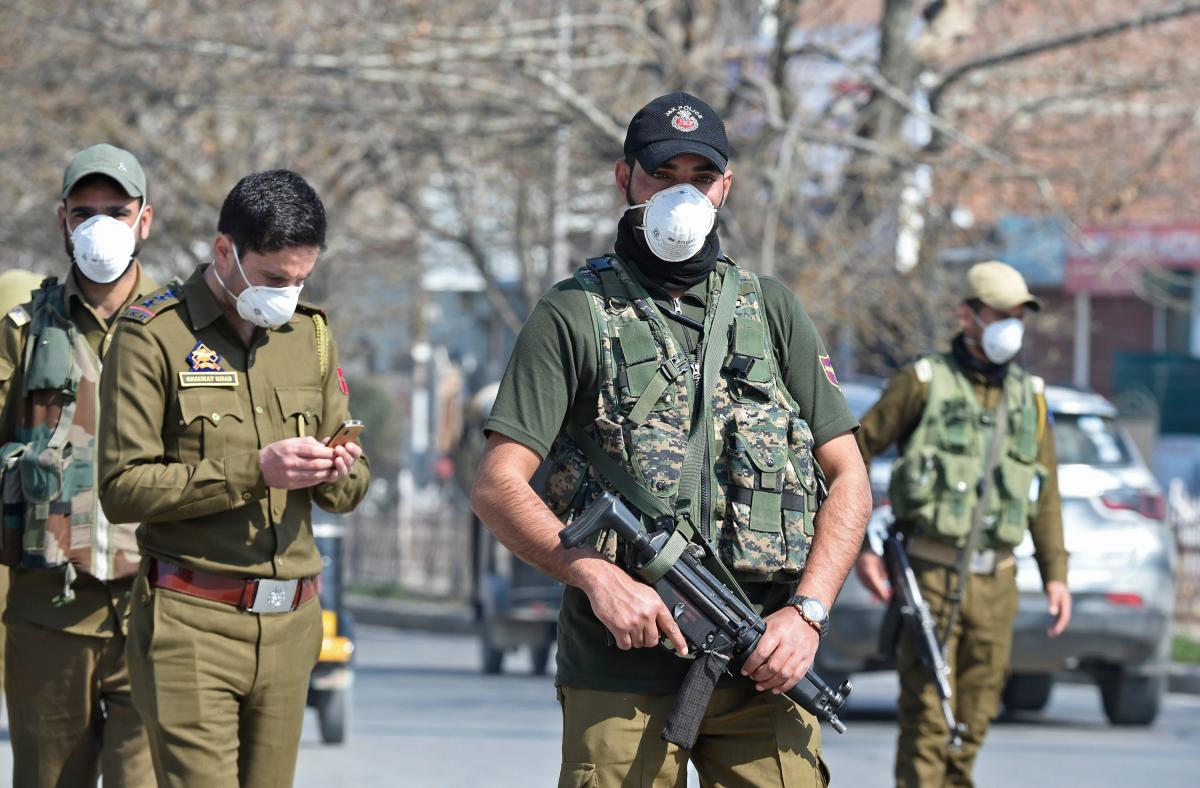
    In March 2020,exactly after 213 days, internet service i.e. only 2G service, was restored in the valley but it was snapped again on May 6 after security forces closed in on Hizbul Mujahedeen Commander Riyaz Naikoo. The frequent communication blockade is of serious concern at a time when the world is fighting the Covid pandemic. Militant activities continue to disrupt peace and security, as is seen by the latest snapping of internet amid CASO (cordon and search operations) launched by J&K police in Srinagar district. India shuts down internet more than any other democracy in the world.

    It is of utmost importance that the Centre restore high speed internet service in the valley so that people can receive information on Covid-19 in local language and help prevent the spread of the virus.

    The valley was declared a red zone as the number of covid cases in the union territory crossed 6424 and recorded 90 deaths. Disruption of communications has made the battle against Covid-19 difficult as it causes delays in taking the necessary steps to fight the pandemic. Even before the internet was snapped on May 6, doctors across the valley faced difficulty in downloading the guidelines issued by WHO. With limited access to internet, healthcare workers across the valley find it difficult to access regular updates, research and announcements regarding the pandemic and accurate tracking of transmission within the region. People support groups are helping each other in this time of crisis. Apart from Covid related restrictions issued via newspapers, radio and SMS, there is no access to campaigns designed for social media. With the lack of reliable information, there is a high possibility for misinformation. It is of utmost importance that the Centre restore high speed internet service in the valley so that people can receive information on Covid-19 in local language and help prevent the spread of the virus.Terrorist and insurgent outfits are revamping their tactics to exploit the pandemic situation and widen the pre-existing schisms. Infiltrations have increased as recent spurt in terrorist encounters indicate. The Covid-19 pandemic has added to the difficult situation in which the people of Kashmir are stuck in. The future of Kashmir looms in darkness due to the pandemic and several other challenges that most states have never and most likely will never experience. Kashmir was shut down through a state imposed lockdown in August 2020. As it was emerging from the lockdown towards normalcy, the pandemic brought about a lockdown that now has the peoples’ consent for the first time. This has turned out to be the world’s longest lockdown. However, the pandemic has provided the government an opportunity to get closer to the people by providing rehabilitation assistance, food supplies, and facilitating educational improvisations amid communications breakdown. Amid the pandemic crisis, the state becomes an test case for democracies across the world for the battle between control for ‘development’ and control of ‘liberty’.Image Credit: Deccan Herald