Tag: Industry 4.0

  • India and Vietnam Need to set up an Industry 4.0 Technology Task Force

    India and Vietnam Need to set up an Industry 4.0 Technology Task Force

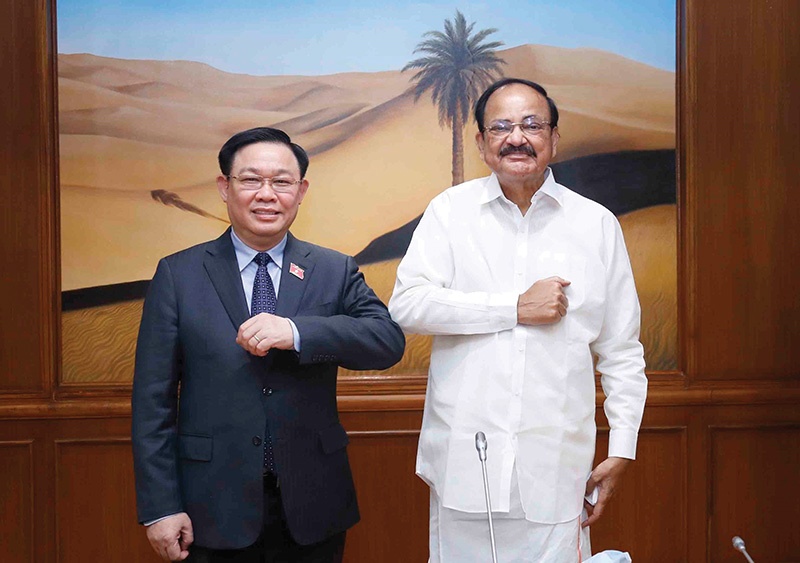
    Amid the ongoing difficult times marked by the COVID-19 pandemic and the fear of its highly virulent Omicron variant spreading across the globe, India and Vietnam pledged to further deepen the Comprehensive Strategic Partnership.  In this context, the recent visit to India by National Assembly Chairman Vuong Dinh Hue to New Delhi this month has strengthened the relationship between the two countries.  Also, next year, India and Vietnam would be celebrating the 50thanniversary of the establishment of their diplomatic relations and their legislative bodies plan to organise commemorative joint events both in New Delhi and Hanoi.

    Chairman Vuong Dinh Hue held wide-ranging discussions in New Delhi with India’s Vice President of India and Chairman of Rajya Sabha, Shri M Venkaiah Naidu and these focused on international matters of common concern and other global challenges. Both sides aim to contribute to global peace, security, stability and development in the region. At the bilateral level, issues concerning COVID-9, socio-economic development in respective countries, economy, trade & investment, energy, security-defence, science-technology, air connectivity, culture, education and training were also the agenda. As many as 12 MoUs were exchanged between Vietnamese and Indian enterprises in the fields of public health, provision of pharmaceutical materials, drug and vaccine production, oil and gas, information technology and technology transfer, education, and tourism.

    India acknowledged and extended gratitude for the timely supply by Vietnam of oxygen and related equipment and the gifting of 40,000 facemasks to the Indian Red Cross Society. As a reciprocal and goodwill gesture, India has announced a donation of 2,00,000 doses of indigenously developed Bharat Biotech COVAXIN to Vietnam through Duc Minh, Bharat Biotech’s local partner in Vietnam. It is useful to mention that Bharat Biotech has been working with Duc Minh Medical JSC, towards the commercialisation of INDIRAB (Inactivated Rabies Vaccine).

    The bilateral cooperation and mutually beneficial partnership between India and Vietnam in the field of energy are noteworthy. For the last three decades, India’s ONGC Videsh Limited (OVL) has been engaged in Vietnam’s offshore energy projects in the South China Sea. New Delhi is now seeking a 15-year extension of the existing arrangement beyond May 2023 when the current MOU between OVL and PetroVietnam (PVN) expires. India hopes that Vietnam and other claimants including China can establish a binding ‘Conduct of Conduct’ and develop concrete mechanisms to institutionalize a regional dialogue among the claimants and other stakeholders to serve for de-escalation of tensions.

    During his interactions, Chairman Vuong Dinh Hue was also assured of India’s support for the ASEAN Outlook for Indo Pacific (AOIP). External Affairs Minister S Jaishankar has noted that “From the Indian perspective, Vietnam is a key partner both in the ASEAN and the Indo-Pacific context,” It was also reiterated that there is strong convergence between India’s Indo-Pacific Oceans Initiative (IPOI) and the AOIP and India is looking forward to continuing working closely with Vietnam.

    In an interview with a major Indian media house, Chairman Vuong Dinh Hue emphasised investments in the digital sphere to usher in Fourth Industrial Revolution in Vietnam. This fits into Vietnam’s call for greater investment from Indian corporations in fields such as information technology, innovation and renewable energy. Industry 4.0 technologies are high on Vietnam’s agenda and the Party and the State have introduced several policies, guidelines and programs to harness these technologies.  In particular, the country hopes that the digital component of the economy could account for about 20% of the GDP. According to a consulting company, Vietnam’s “GDP may rise by US$28.5-62.1 billion by 2030 depending on the level of technology put into use by businesses, or equivalent to an increase of between 7-16% of the GDP”.

    Earlier this year, Vietnam issued the National Strategy on the Fourth Industrial Revolution by 2030 under which Vietnam hopes to be named among the 40 top performers in the Global Innovation Index (GII), the top 30 in the International Telecommunication Union (ITU)’s Global Cybersecurity Index (GCI) and the top 50 in the United Nations (UN)’s e-Government Development Index (EGDI) by 2030.

    Vietnam is committed to expanding international cooperation and integration in science and technology, particularly the Fourth Industrial Revolution technologies. India too has similar ambitions and PM Modi highlighted the issue at the WEF’s Davos Digital Agenda, how India is harnessing AI and other technologies of the fourth industrial revolution for achieving its developmental objectives and for promoting social good. Given the political will of both sides, India and Vietnam could explore setting up a task force to ascertain areas of convergences.


    Image Credit: vir.com.vn
  • Vietnam: Economic Prospects in Post Second Wave Covid-19

    Vietnam: Economic Prospects in Post Second Wave Covid-19

    The global community is into the ninth month of the COVID-19 pandemic and international efforts to develop a vaccine are at advanced stages.  Meanwhile in Russia over 250 Moscow residents received a dose of Sputnik V[i] and the Chinese Center for Disease Control and Prevention (CDC) has announced that the vaccine will be ready by November this year.[ii]Similarly, many American, British, European, and Indian companies are developing the vaccine which is at different levels of trials.  While the above progress is very encouraging, the global COVID-19 infections continue to rise and as on 13 October, according to the World Health Organisation (WHO), the total confirmed cases of COVID-19 were 37,601,848 people including 1,077,799 deaths.[iii] The top four countries with the highest infections were the US, India, Brazil and Russia.

    Vietnam’s COVID response since 23 January 2020, when the first case was detected, has been noteworthy. It successfully contained the spread of the virus by instituting local quarantine measures in early stages, declaring a state of emergency in February, and banning flights to and from China. For the next two months, Vietnam maintained strict COVID related measures including national lockdown and it was only in late April that some restrictions were removed in localities if they had contained the virus; but non-essential public services remained suspended. The opening up continued slowly with the resumption of flights to select destinations and cross-border travel restrictions were lifted. Meanwhile, Vietnam registered to buy a Russian Covid-19 vaccine as also developing vaccine on its own.

    In August, the second largest COVID-19 outbreak (after Danang) was reported in Quang Nam Province. The ‘second wave’ has now been successfully controlled.

    However, in July, Danang, a tourist hotspot, reported several new cases and a massive evacuation of nearly 80,000 tourists was undertaken. In August, the second largest COVID-19 outbreak (after Danang) was reported in Quang Nam Province. The ‘second wave’ has now been successfully controlled. As of 15 September, in Vietnam (total population 95,540,000) there were 1063 cases; 35 deaths; 261,004 tests had been conducted, and 11cases per million was recorded.[iv]

    Vietnam’s economic outlook in the ‘post-COVID Second Wave’ is a mixed bag of opportunities and challenges. There are at least four issues which merit attention. First, the Vietnamese economy, like any other global economies, suffered due to the pandemic. The 2020 first-half growth was about 1.8% compared with 7% in 2019 (year-on-year), but the Vietnamese economy has shown enormous resilience when compared with major global economies who have recorded negative growth. This is due to the proficient handling of the pandemic and the country is now on a quick and steady recovery path. The HSBC has revised Vietnam’s 2020 growth forecast from 1.6% to 3.0%.[v]

    It is also important to mention that the Vietnamese government has offered attractive incentives to multinational investors to help them “move up the value chain” and build supply chains in the country.

    Second, there are clear signs that Vietnam continues to be an attractive destination for foreign investments. This trend is not only due to global conglomerates moving out of China and seeking new destinations with attractive options for setting up of their businesses, but Vietnamese handing of the pandemic has provided them enormous business confidence in the country. According to the Ministry of Planning and Investment, total foreign investment in the first half was worth US$18.47 billion.[vi] Japanese (Panasonic), South Korean (LG Electronics), US (Foxconn; Apple) and the European (Heineken) companies moved to Vietnam. It is also important to mention that the Vietnamese government has offered attractive incentives to multinational investors to help them “move up the value chain” and build supply chains in the country.

    Third, is about renewable energy. Vietnam’s current energy generation mix is skewed towards coal (18,516 MW) and hydrocarbons (8,978 MW). Notwithstanding the COVID-19, the country’s average electricity consumption per day during the first few months of 2020 was 615 million KWh, an increase of 7.5 per cent compared with 2019.[vii] It is estimated that “Vietnam’s energy demand will increase by over 10 per cent by the end of 2020, followed by an eight per cent growth per year in 2021 to 2030.” The “government wants to reduce its greenhouse gas emissions by eight per cent by 2030” for which investments in renewable sources of energy such as solar and wind would have to be made,

    Fourth, is about immersion in Industry 4.0 technologies. There are now clear trends of widespread digital transformation across the globe and is impacting every aspect of the industry from commercial operations, technology management, use in fintech to support banking and financial services, new business models through analytics, and human resource management.  These technologies can potentially boost productivity and improve Vietnam’s GDP. For that innovative national policies for growth are needed. Also, the human resource would require ‘up-skilling, reskilling and retooling’ to embrace these technologies.  The industry leaders too have to recognize the importance of educating themselves and using new technologies as also adopting innovative models for their operations.

    Vietnam should build upon its successes of handling the COVID-19 pandemic and ‘build back better’ by offering long-term stimulus for investments and accord high priority to zero-carbon technologies to spur inclusive and resilient growth.

    Finally, Vietnam should build upon its successes of handling the COVID-19 pandemic and ‘build back better’ by offering long-term stimulus for investments and accord high priority to zero-carbon technologies to spur inclusive and resilient growth. It must adopt strategies for investments in technologies, products and services as also create new jobs tailored for Industry 4.0.


    Notes

    [i] “Russia Covid-19 vaccine: Over 250 people in Moscow get inoculated, says report”, https://www.livemint.com/news/world/russia-covid-19-vaccine-over-250-people-in-moscow-get-inoculated-says-report-11600085464168.html  (accessed 16 September 2020).
    [ii] “China coronavirus vaccine may be ready for public in November: Official”, https://www.hindustantimes.com/world-news/china-coronavirus-vaccine-may-be-ready-for-public-in-november-official/story-1DzVCBrdOwleJXxuw0wvyI.html  (accessed 16 September 2020).
    [iii] “WHO Coronavirus Disease (COVID-19) Dashboard”, https://covid19.who.int/?gclid=CjwKCAjwzIH7BRAbEiwAoDxxTlG5T6XZYiHVHBesW5cmAa9DKUytaVgH01haDH10TpmFA3OP-2s_phoCk9sQAvD_BwE  (accessed 16 September 2020).
    [iv] “Southeast Asia Covid-19 Tracker”, https://www.csis.org/programs/southeast-asia-program/southeast-asia-covid-19-tracker-0#National%20Responses  (accessed 16 September 2020).
    [v] “Vietnam’s positive growth in Q2 defies market expectations: HSBC”, http://hanoitimes.vn/vietnam-positive-growth-in-q2-defies-market-expectations-hsbc-313035.html  (accessed 16 September 2020).
    [vi] “Vietnam expects imminent new wave of foreign investment”, https://www.nationthailand.com/news/30392781?utm_source=homepage&utm_medium=internal_referral  (accessed 15 September 2020).
    [vii] “Assessing Vietnam’s Economic Prospects for Foreign Investors After COVID-19”, https://www.vietnam-briefing.com/news/assessing-vietnams-economic-prospects-foreign-investors-after-covid-19.html/  (accessed 15 September 2020).

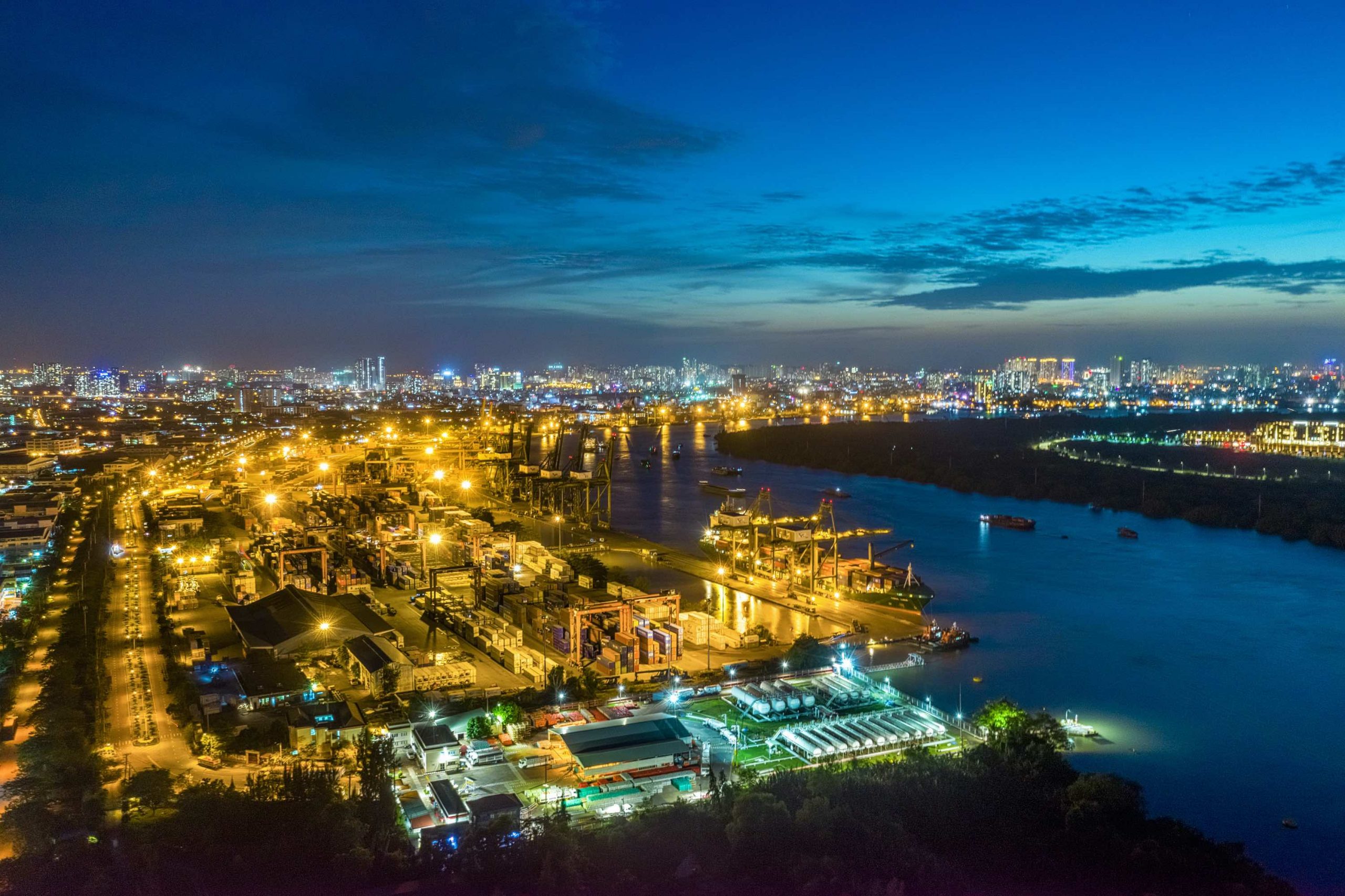
    Image: Ho chi-min City