Tag: India

  • Squaring the Circle

    Squaring the Circle

    John Paul Rathbone, writing in the Financial Times, on the United Kingdom’s efforts to transform its military amid public spending constraints and growing strategic challenges, puts it extremely well when he wonders as to how its military will “square the circle of being everything, everywhere, all at once.” 

    This, however, is not just a problem that afflicts the UK or its European and NATO Allies, but the rest of the international community as well. The impact of the Russo-Ukrainian Conflict, in what increasingly appears to be an unwinnable war, is restricted not only to the geo-political or and national security spheres but also calls for a clear understanding of how future conflicts will play out and what kind of a military capability is essential if that country is to remain relevant in the changing global order.

    In our context, the challenges are far more complex and greater as we face two hostile neighbours, both nuclear armed, and unwilling to give any quarter. Indeed, it is quite ironic that while China poses the greater threat to our aspirations, ambitions and future prosperity, it is the dysfunctional and dystopian Pakistan, that threatens us with Armageddon, looking to take us down with it, as it seems intent on committing hara-kiri

    [powerkit_button size=”lg” style=”info” block=”true” url=”https://timesofindia.indiatimes.com/blogs/para-phrase/squaring-the-circle/” target=”_blank” nofollow=”false”]
    Read More
    [/powerkit_button]

  • Caste Census: India’s Affirmative Action Policy is Based on 90+ Years Old Data

    Caste Census: India’s Affirmative Action Policy is Based on 90+ Years Old Data

    “The data that we have for all castes as well as the Other Backward Classes is from the 1931 census. The population of the OBCs at that time was about 52 percent of the total population of India”.

    Congress president Mallikarjun Kharge is the latest to join the band of politicians and activists advocating caste census. However, the Bharatiya Janata Party-led central government has so far stonewalled all pleas and comes across as definitely averse to the idea. Before we delve into the ostensible reasons for the reluctance, a quick look at the genesis and history of the census in India.

    The census exercise was launched by the colonial government for various stated (and unstated) reasons in the realm of social engineering for their strategy of governance during the second half of the nineteenth century.

    Sociologist Michael Mann in his book South Asia’s Modern History avowed that the census exercise was more telling of the administrative needs of the British than of the social reality for the people of British India.

    [powerkit_button size=”lg” style=”info” block=”true” url=”]https://www.moneycontrol.com/news/opinion/caste-census-indias-affirmative-action-policy-is-based-on-90-years-old-data-10463611.html” target=”_blank” nofollow=”false”]
    Read More
    [/powerkit_button]

  • Towards a Conversation Across Civilisations

    Towards a Conversation Across Civilisations

    Alongside the BRICS, the construction of regional trade and development projects in Africa, Asia, and Latin America that are not controlled by the Western states or Western-dominated institutions – including the Shanghai Cooperation Organisation (2001) the Belt and Road Initiative (2013), the Community of Latin American and Caribbean States (2011), and the Regional Comprehensive Economic Partnership (2022) – heralds the emergence of a new international economic order.


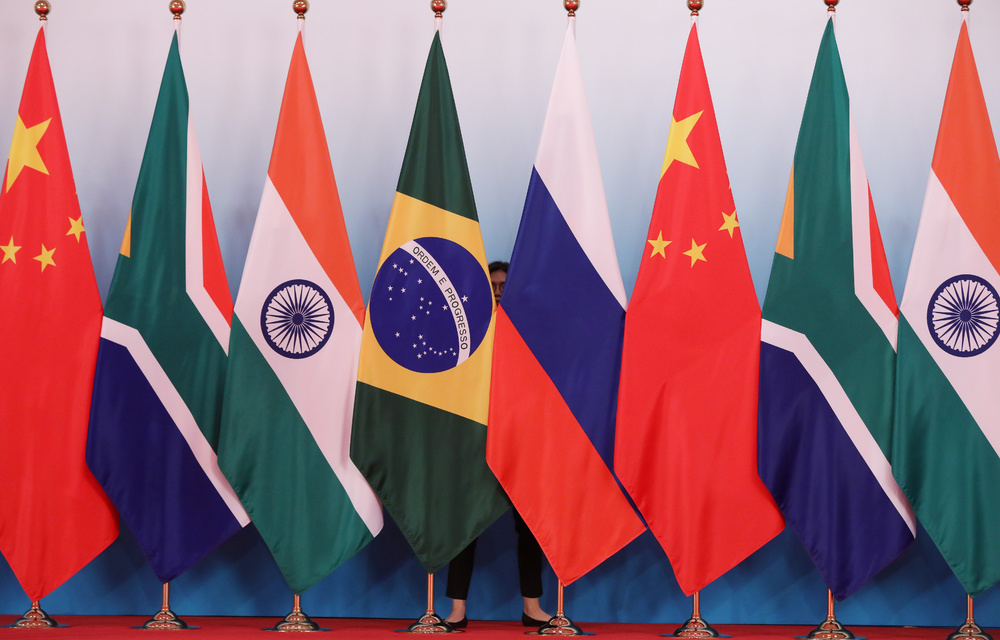
    It has become increasingly difficult to engage in reasonable discussions about the state of the world amid rising international tensions. The present environment of global instability and conflict has emerged over the course of the past fifteen years driven by, on the one hand, the growing weakness of the principal North Atlantic states, led by the United States – which we call the West – and, on the other, the increasing assertion of large developing countries, exemplified by the BRICS (Brazil, Russia, India, China, and South Africa). This group of states, along with several others, have built the material conditions for their own development agendas, including for the next generation of technology, a sector that had previously been the monopoly of Western states and firms through the World Trade Organisation’s intellectual property rights regime. Alongside the BRICS, the construction of regional trade and development projects in Africa, Asia, and Latin America that are not controlled by the Western states or Western-dominated institutions – including the Shanghai Cooperation Organisation (2001) the Belt and Road Initiative (2013), the Community of Latin American and Caribbean States (2011), and the Regional Comprehensive Economic Partnership (2022) – heralds the emergence of a new international economic order.

    Since the world financial crisis of 2007–08, the United States and its North Atlantic allies have become acutely aware that their hegemonic status in the world has deteriorated. This decline is the consequence of three key forms of overreach: first, military overreach through both enormous military expenditure and warfare; second, financial overreach caused by the rampant waste of social wealth into the unproductive financial sector along with the widespread imposition of sanctions, dollar hegemony, and control of international financial mechanisms (such as SWIFT); and, third, economic overreach, due to the investment and tax strike of a minuscule section of the world’s population, who are solely fixated on filling their already immense private coffers. This overreach has led to the fragility of the Western states, which are less able to exercise their authority around the world. In reaction to their own weakness and the new developments in the Global South, the United States has led its allies in launching a comprehensive pressure campaign against what it considers to be its ‘near peer rivals’, namely China and Russia. This hostile foreign policy, which includes a trade war, unilateral sanctions, aggressive diplomacy, and military operations, is now commonly known as the New Cold War.

    In Western societies today, any effort to promote a balanced and reasonable conversation about China and Russia, or indeed about the leading states in the developing world, is relentlessly attacked by state, corporate, and media institutions as disinformation, propaganda, and foreign interference.

    In addition to these tangible measures, information warfare is a key element of the New Cold War. In Western societies today, any effort to promote a balanced and reasonable conversation about China and Russia, or indeed about the leading states in the developing world, is relentlessly attacked by state, corporate, and media institutions as disinformation, propaganda, and foreign interference. Even established facts, let alone alternative perspectives, are treated as matters of dispute. Consequently, it has become virtually impossible to engage in constructive discussions about the changing world order, the new trade and development regimes, or the urgent matters which require global cooperation such as climate change, poverty, and inequality, without being dismissed. In this context, dialogue between intellectuals in countries such as China with their counterparts in the West has broken down. Similarly, dialogue between intellectuals in countries of the Global South and China has also been hampered by the New Cold War, which has strained the already weak communication channels within the developing world. As a result, the conceptual landscape, terms of reference, and key debates that are taking place within China are almost entirely unknown outside of the country, which makes the holding of rational cross-country discussions very difficult.

    The New Cold War has led to an enormous spike in Sinophobia and anti-Asian racism in the Western states, frequently egged on by political leaders. The rise in Sinophobia has deepened the lack of genuine engagement by Western intellectuals with contemporary Chinese perspectives, discussions, and debates; and due to the immense power of Western information flows around the world, these dismissive attitudes have also grown in many developing countries. Although there are increasing numbers of international students in China, these students tend to study technical subjects and generally do not focus on or participate in the broader political discussions within and about China.

    This diversity of thought is not reflected in external understandings or representations of China – even in the scholarly literature – which instead largely reproduces the postures of the New Cold War.

    In the current global climate of conflict and division, it is essential to develop lines of communication and encourage exchange between China, the West, and the developing world. The range of political thinking and discourse within China is immense, stretching from a variety of Marxist approaches to the ardent advocacy of neoliberalism, from deep historical examinations of Chinese civilisation to the deep wells of patriotic thought that have grown in the recent period. Far from static, these intellectual trends have evolved over time and interact with each other. A rich variety of Marxist thinking, from Maoism to creative Marxism, has emerged in China; although these trends all focus on socialist theories, history, and experiments, each trend has developed a distinct school of thought with its own internal discourse as well as debates with other traditions. Meanwhile, the landscape of patriotic thinking is far more eclectic, with some tendencies overlapping with Marxist trends, which is understandable given the connections between Marxism and national liberation; whereas others are closer to offering culturalist explanations for China’s developmental advances. This diversity of thought is not reflected in external understandings or representations of China – even in the scholarly literature – which instead largely reproduces the postures of the New Cold War.


    This article was published earlier in thetricontinental.org

  • India and Myanmar: Two Years after the Coup

    India and Myanmar: Two Years after the Coup

    [powerkit_button size=”lg” style=”info” block=”true” url=”https://admin.thepeninsula.org.in/wp-content/uploads/2023/05/India-and-Myanmar-Two-years-after-the-Coup-1.pdf” target=”_blank” nofollow=”false”]
    Download
    [/powerkit_button]

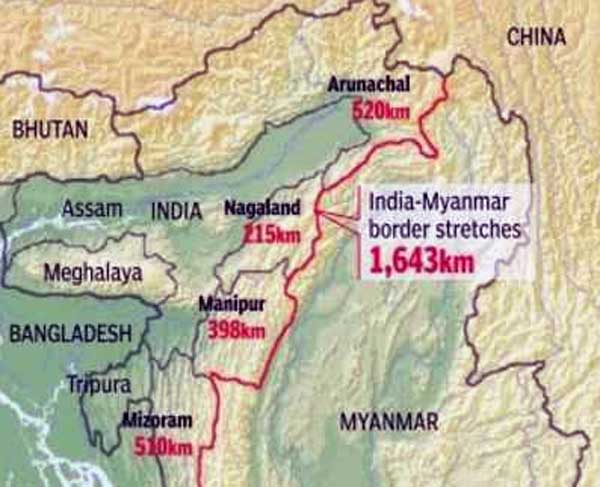
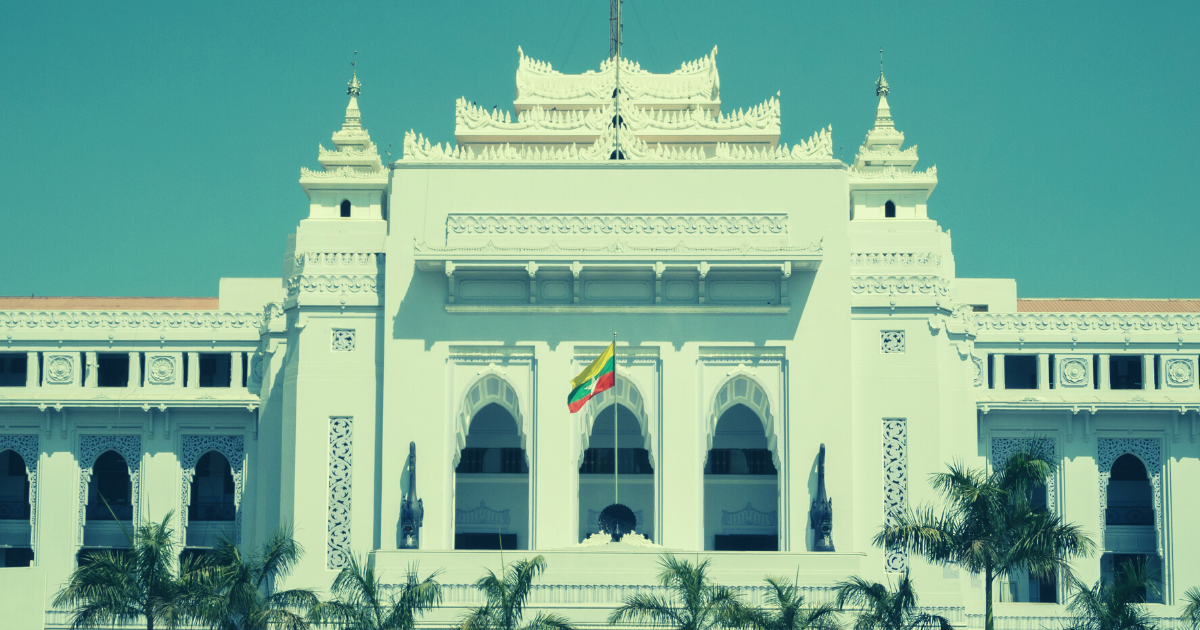
    Relegated to the sidelines with the ongoing Ukraine war and other crises like Taiwan, Myanmar has resurfaced in world headlines. In a recent dispatch, Associated Press (AP) reported that on 11 April 2023 ‘a fighter jet dropped bombs directly onto a crowd of people who were gathering at 8 am for the opening of a local office of the country’s opposition movement outside Pazigyi village in Sagaing region’s Kanbalu township….’ 1 . Subsequent information indicates that the number of dead including women and children is over 170. If so, this is the deadliest aerial attack carried out by the Myanmar military on its own people in the bloody aftermath of the military coup two years ago.

    With various Ethnic Armed Organisations (EAOs) and Peoples’ Defence Forces (PDFs) battling the Tatmadaw, martial law has been declared in 47 townships in Myanmar, cutting across states and regions. 2 More than 154,000 people have been displaced in the first two months of 2023, with total numbers of Internally Displaced People (IDPs) since the military takeover now at 1.3 million. Heavy fighting rages in Kachin State, the South East and North West of the country, 3 and overall 3000 civilian deaths since February 2021 are estimated 4 . Targeted assassination of military appointed government officials continues, the latest victim being the deputy director-general of the Union Election Commission who was shot dead on 22 April this year 5 . In 2022, up to 30,000 civilian infrastructures, including schools are reported to have been destroyed during military operations 6 . This situation has compelled the Tatmadaw to again postpone elections earlier scheduled for August 2023. The state of emergency has been extended.

    Important Developments Post February 2021

    The above statistics provide a telling perspective of the current violence in Myanmar. Yet there are other noteworthy developments in the country post the February 2021 coup. First of these is the increasing relevance of the opposition National Unity Government (NUG) around which civilian support appears to have coalesced.

    [powerkit_button size=”lg” style=”info” block=”true” url=”https://admin.thepeninsula.org.in/wp-content/uploads/2023/05/India-and-Myanmar-Two-years-after-the-Coup-1.pdf” target=”_blank” nofollow=”false”]
    Read More
    [/powerkit_button]

    Featured Image Credits: CNBC Indonesia

  • India and the New Geopolitical Churnings

    India and the New Geopolitical Churnings

    In an interdependent world, India must manage both its internal pressures and external challenges with vision, a sense of balance and determination. The coming years project immense promise for India in diverse fields of human endeavour. Let’s capitalize on our innate strengths and an inclusive vision for all in our great nation and be a beacon for humanity.

    “Ukraine today may be East Asia tomorrow.”

    — Japanese PM Fumio Kishida at the 2022 Shangri La Dialogue

    Historically speaking, there usually remains an uneasy consistency in the geopolitical world order as the strategic interests of nations are not given easy alterability. Nevertheless, the traumatic geopolitical churning witnessed by the world in the last three years has no parallels since the end of World War II in 1945. Even by conservative standards, the overall impact on the world—political, economic, social and diplomatic— has been unmistakably tectonic.

    As all nations, including the major powers, endeavour to absorb the cataclysmic effects of the events of the last three years, the early months of 2023 also display a susceptibility for this adverse impact continuing in relations between nations and severe economic and health challenges remaining to the fore threatening the overall worsening of the established global order. It brooks no elaboration to state that the current and likely continuing geopolitical differences in the world community will drive geo-economic warfare and vastly augment the risk of multi-domain conflicts. By any standards, the future in geopolitical churns across the globe remains steeped in uncertainty!

    Recent Traumatic Events And Geopolitical Churnings

    The end of 2019 witnessed a global catastrophe with the outbreak of Covid19 pandemic also known as the coronavirus pandemic. Originating from the Chinese city of Wuhan, it could not be contained there and quickly spread to other Asian nations and in a few months from early 2020, virtually engulfed the entire globe. Reportedly, till date, this virus has affected 676 million cases causing over 6.88 million deaths. According to the WHO, this virus still exists in many parts of the globe in some form or the other. This Black Swan event affected the global economy, politics, health, ecology and environment besides adversely affecting many other aspects of life as never before. The globe is still reeling under the adverse impact of this virus.

    [powerkit_button size=”lg” style=”info” block=”true” url=”https://www.dsalert.org/DSA-Editions/2023/May/DSA_May-2023_Lt_Gen_Kamal_Davar_(Retd).pdf” target=”_blank” nofollow=”false”]
    Read More
    [/powerkit_button]

  • Citizenship Renouncers are the New Colonials. Call them ‘Desi’ Colonials

    Citizenship Renouncers are the New Colonials. Call them ‘Desi’ Colonials

    These are the ones who have enjoyed the best of everything in the country – highly subsidised education all through their schooling and college years, high-grade training in the top institutions, and might have gone abroad with State support and scholarships

    Irrespective of what all colonialism does, or does not, the most devastating thing that happens to a colonised country is that its resources are depleted to the extent that it borders on plunder. India, indisputably, happens to be one of the classic cases of having bled to a high degree due to the avarice of the British. The kind of exploitation that occurred in India has been multi-dimensional and multi-hued, wherein the colonisers filled their coffers to please and enrich their royalty, king, queen and the crown.

    During colonialism, and even after the independence of the former colonies, a different kind of exploitative process was in place whereby chunks of humans from the colonies were ‘recruited’ at low wages for underclass jobs in the ammunition factories, textile mills, railways and road transport, in the mother country of the colonials, not to talk of the other forms of ‘recruitment’ as slaves and indenture labour for other colonies.

    [powerkit_button size=”lg” style=”info” block=”true” url=”https://www.moneycontrol.com/news/opinion/citizenship-renouncers-are-the-new-colonials-call-them-desi-colonials-10353731.html” target=”_blank” nofollow=”false”]
    Read More
    [/powerkit_button]

  • Punjab: On The Boil Again

    Punjab: On The Boil Again

    Punjab—the land of saints and seers, the granary of India, nursery of the nation’s exceptionally gallant soldiers and outstanding sportspersons— appears to be once again, sliding to the brink of militancy largely attributed to religion-based secessionist motivations of a few extremists. That it is also fuelled by Pakistan’s sinister Inter Services Intelligence (ISI) and its well-funded stooges abroad brooks no elaboration.

    It will be prudent to recall that in the late 70s, Pakistan’s military dictator President Gen Zia-ul-Haq had conceived his infamous K-2 strategy (Kashmir and Khalistan) to foment trouble in two of India’s strategic border states of Kashmir and Punjab. Since then, till date, Pakistan has relentlessly strived to plant the seeds of terrorism, religious strife and lawlessness in these border regions. That turmoil and militancy did affect Punjab also in the 80s cannot be denied. Ultimately, the patriotism of the sturdy Sikhs coupled with firm handling by the Centre and state governments and embellished by strong and effective state police leadership under officers like Julio Ribeiro and KPS Gill had curbed the insurgency in Punjab. Those dark days did throw up vital lessons for all stakeholders to imbibe and implement to prevent such recurrences. But as usually happens with most establishments, a sense of déjà vu takes over till the next crisis occurs! The current state in Punjab is no exception.

    [powerkit_button size=”lg” style=”info” block=”true” url=”https://chanakyaforum.com/punjab-on-the-boil-again/” target=”_blank” nofollow=”false”]
    Read More
    [/powerkit_button]

  • Between Two Rocks and a Very Hard Place

    Between Two Rocks and a Very Hard Place

    Leave aside political affiliations and the flag-waving, slogan shouting, adrenaline pumped personas we adopt while watching cricket and ask ourselves a simple question. To what extent are we invested in our country, and what are we willing to sacrifice for its well-being and progress?

    Ukraine, for example, has a population of about 43 million. More than a fourth of this, mainly women, children and the aged, have been either internally or externally displaced by the ongoing war. By most estimates, over a hundred and fifty thousand are dead or wounded, which includes over 30,000 civilians, and counting. The country’s infrastructure is in ruins and despite this, their leadership, wholly supported by the people, fights on resolutely, with no quarter given or asked for. Determined to fight till they succeed in driving the Russians out of their territory, regardless of the time or toll it takes.

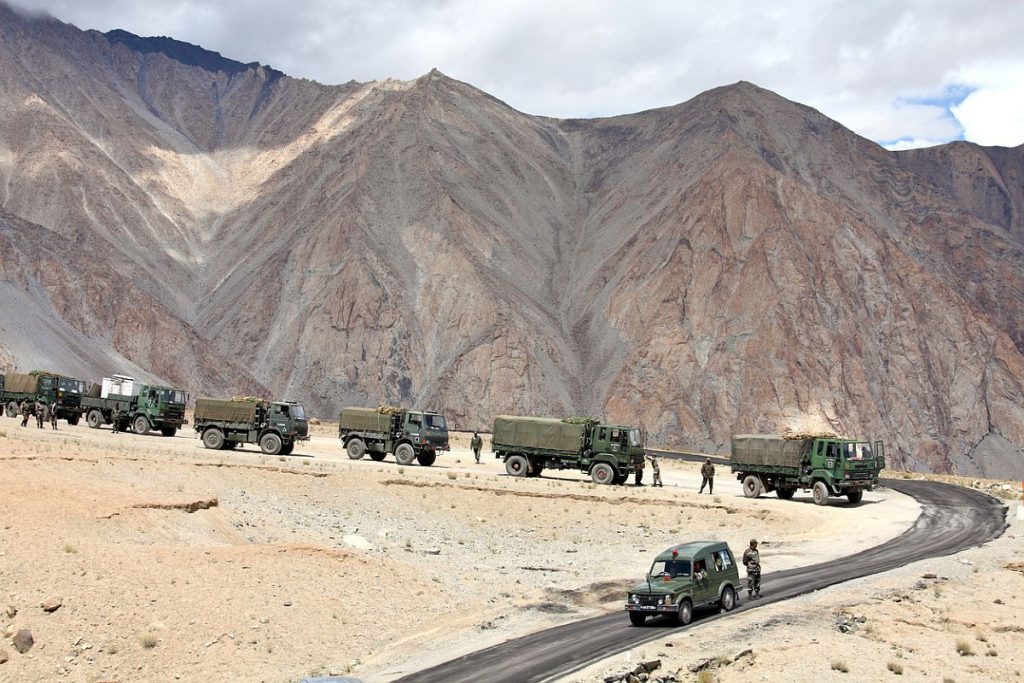
    In sharp contrast, we have lost over a 1000 square kilometres, of what we claim as our sovereign territory in Ladakh, without even putting up a semblance of a fight. What is even more shocking is that our government, for whatever reasons, has yet to publicly acknowledge this loss. Instead, we have had to face the ignominy of the External Affairs Minister, publicly stating that China is far too powerful for us to confront. What does that say about us?

    [powerkit_button size=”lg” style=”info” block=”true” url=”https://timesofindia.indiatimes.com/blogs/para-phrase/between-two-rocks-and-a-very-hard-place/” target=”_blank” nofollow=”false”]
    Read More
    [/powerkit_button]

    Featured Image: Council of Foreign Relations

  • Does Same-Sex Marriage ‘Rock Societal Values’?

    Does Same-Sex Marriage ‘Rock Societal Values’?

    More than 30 countries have legalised same-sex marriages. Democracies around the world have gone to lengths to accommodate practices of their various constituents and sub-nationalities that make up their countries, even if they earlier had unitary or uniform practices

    Irrespective of whether one is a votary (and staunch believer) of either of the theories – evolution or creation – human society, undoubtedly, evolved and subscribed to unitary customs and practices in its initial and early development. From the primordial lack of any form of marital ties, the institution of marriage took form in myriad ways in different societies in diverse settings, and depending on the local ecological, socio-cultural and economic conditions and backdrops, distinctive marital practices emerged. The societies concerned did accept such practices and over time these got legitimised.

    What is to be emphasised here is that as societies grew, the levels of social and cultural practices started taking different shapes, often in the wake of economic changes and developments. It was inevitable for the smooth functioning of the societies to adapt to these various emerging marital practices and adjust to them. The debate, and consternation in certain quarters, both “official” and social, that is being “encountered” today as regards same-sex marriage is bordering on resistance and stone-walling.

    [powerkit_button size=”lg” style=”info” block=”true” url=”https://www.moneycontrol.com/news/opinion/does-same-sex-marriage-rock-societal-values-10258071.html” target=”_blank” nofollow=”false”]
    Read More
    [/powerkit_button]

  • The Fallacy of Handling China with Kid Gloves

    The Fallacy of Handling China with Kid Gloves

    It is apparent that the Modi Government has shown great reluctance to enhance defence expenditure, and instead has been looking for ways and means to curtail spending, as any government should. This is reflected in the manner it has gone about slashing manpower and rehashing recruitment and manpower policies.

    By introducing, what the vast majority consider, a flawed Agnipath Scheme, whose efficacy or otherwise only time will tell. In addition, it has also undertaken a concerted drive towards indigenization of defence procurement. The Russo-Ukrainian conflict has clearly demonstrated rightsizing, reorganisation and reorientation of our military is unavoidable.

    The proposed reduction in strength of the Rashtriya Rifles is indeed a welcome step that requires to be hastened. In fact, following abrogation of Article 370 and reorganisation of Jammu and Kashmir, while many may disagree, the logical follow-up should have been de-notification of AFSPA and withdrawal of the Army from the hinterland.

    [powerkit_button size=”lg” style=”info” block=”true” url=”http://www.indiandefencereview.com/news/the-fallacy-of-handling-china-with-kid-gloves/” target=”_blank” nofollow=”false”]
    Read More
    [/powerkit_button]