Tag: India

  • Dagshai And Kasauli – The Afghanistan Connection

    Dagshai And Kasauli – The Afghanistan Connection

    With Afghanistan, the Taliban, and the for-ever conflict grabbing the headlines across the world over the last few months, it is well to recognise that the histories of India and Afghanistan are intertwined from time immemorial. Anand Sethi digs into the 19th and 20th-century history to bring out some fascinating connections between Dagshai in Himachal Pradesh and Afghanistan – Team TPF

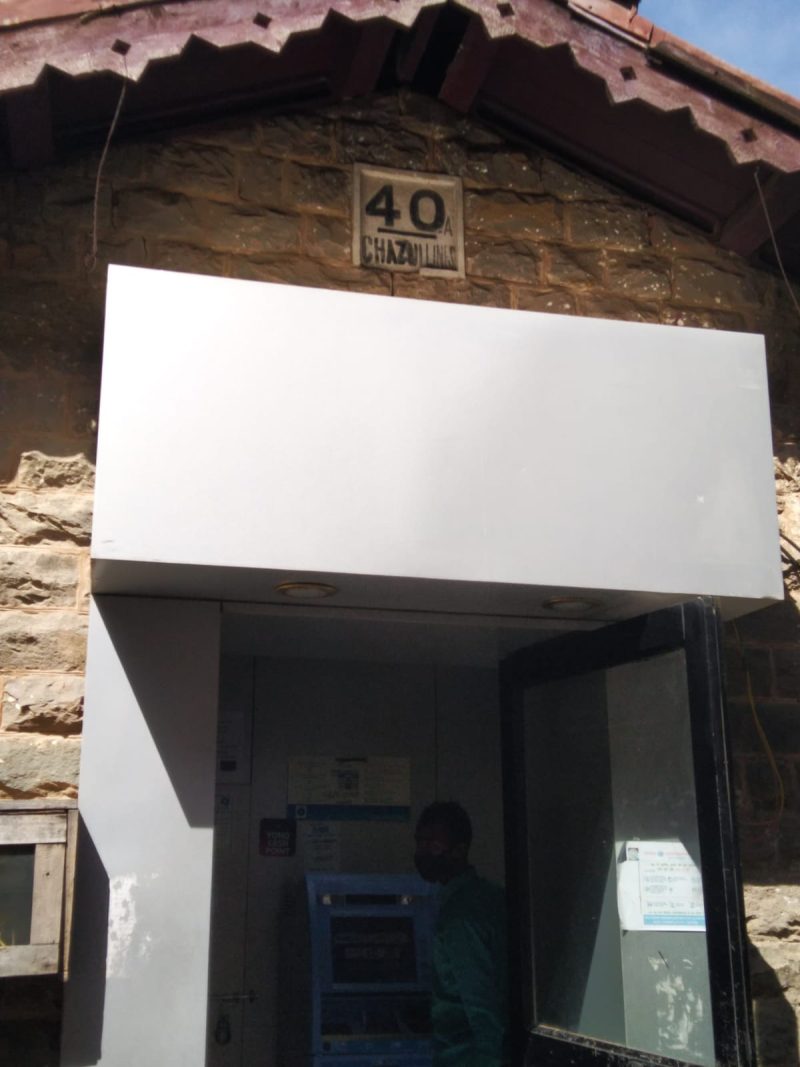
    The Automatic Teller Machine (ATM) in Dagshai Cantonment is quite unique. Set up some 14 years ago at the instance of a dynamic Commanding Officer of the then Gorkha Rifles Battalion stationed in Dagshai, the ATM is housed in a smallish, stand-alone, colonial-era stone-built sloped roof hutment which most likely served as an extension of the kitchen facilities for a cluster of similarly constructed nearby barracks. It is quite unique. It communicates with the infrastructure by means of a huge, floor-mounted, satellite dish antenna. Given the nearly non – existent banking facilities, this ATM has served as our ‘go-to’ facility to withdraw cash for our personal expenses during the exasperating COVID times!

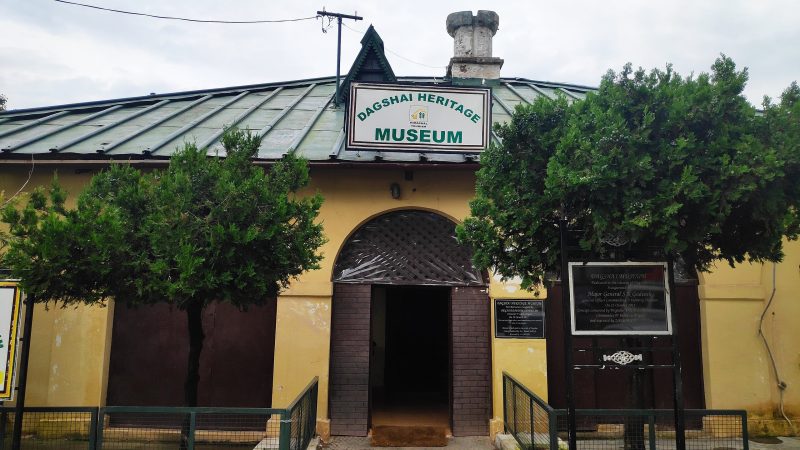
    On normal working times and days, with the troops busy with their official duties, there is usually only a rare person ahead of one at the ATM. Social distancing is the least of the problems here. However, on this particular day a few months back there were two persons ahead of me to use the ATM. This prompted a little ‘walkabout’ to while away the time and to maintain social distancing. While returning I noticed that there was some inscription or lettering on a whitish background near the top of the hutment but quite obscured due to the collection of grime, mud, rainwater stains that had accumulated over many years. Upon completing the ATM transaction I managed to clamber up and did a vigorous cleaning of the inscription.  What emerged was the signage: ’40 A GHAZNI LINES’. This was quite incredible! There has never been any mention of Dagshai having had a ‘Ghazni Lines’. Certainly not in any maps or documents painstakingly collected over the years by me for our ‘Dagshai Jail Museum’. Evidently, some Regiment(s) had gone from Dagshai to fight in the battles at Ghazni during the Afghan wars (or stationed in Dagshai afterward), received their ‘Battle Honours’ there.

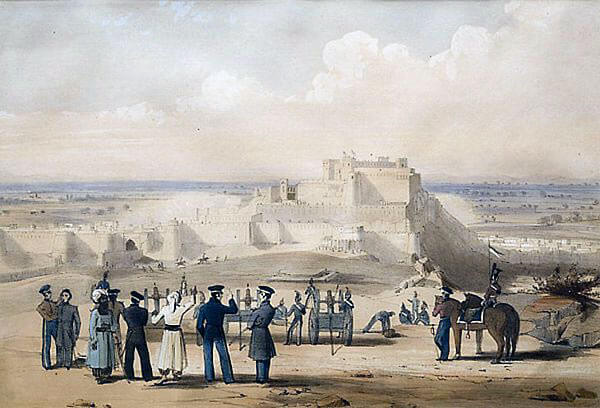
    Research conducted indicates that no formations linked with Dagshai were involved in the Battle of Ghazni (‘Ghuznee’) in September 1842. However, two Regiments with clear Dagshai connections were very much in the ‘Battle Order’ during the First Battle of Ghazni in July 1839 (Gen. Sir John Keane versus Hyder Khan). Both received the Ghazni Battle Honours. One was the 1st Bengal Fusiliers who had been stationed in Dagshai during the tumultuous period of 1856 – 57. They of course had the dubious distinction of having as one of their Officers the ‘infamous’ (Brevet) Major William Hodson (whose portrait hangs amongst the ‘infamous Dagshaiites’ in our Jail Museum), the one who in 1857 apprehended Bahadur Shah Zafar and killed the royal princes. However, it is somewhat doubtful that the 1st Bengal Fusiliers had the Ghazni Lines in Dagshai named after their Battle Honours. The unit was away from Dagshai for a large part of their stay doing duties in and around Delhi during the 1857 ‘troubles’.

    The most likely formation to have the Ghazni Lines in Dagshai named after them would thus be the 2ndRegiment of Foot (Queen’s Royal West Surrey – the Queen, in this case, being Queen Catherine of Braganza, wife of King Charles II), presently operating as the Princess of Wales Royal Regiment.  This was the second senior-most line Regiment (after the Royal Scots) in the regular British Army. (The 1stBengal Fusiliers, on the other hand, was a formation of the East India Company’s Army, during their Dagshai stay). They were first garrisoned in Dagshai in 1870 -71. They not only took part in the 1839 battle at Ghazni but also got Battle Honours at the Battle of Khelat later that year. The Regimental History of the 2nd Regiment of Foot carries this interesting piece – “The formidable Ghazni fortress protected by thick 60 feet high walls prevented a major problem especially due to the lack of heavy artillery. The capture of Ghazni fortress was made possible only because Mohan Lal, a Kashmiri interpreter, spy, and assistant to the Political Officer Captain Sir Alexander Burnes, managed to discover that one of the gates to the fortress was somehow left poorly defended”. An interesting trivia about the 2nd Regiment of Foot – they were the only British Regiment where the Officers were allowed to remain seated while drinking the Loyal Toast to the Monarch. Apparently, this was so because the Regiment had been attached to the Royal Navy for a period of time and adopted the Navy’s tradition of sitting!

    The case for the 2nd Regiment of Foot for having set up Dagshai’s Ghazni Lines gets strengthened by the fact that they returned to Dagshai for the period 1895 – 96.  The Regiment went back to fight in Afghanistan in 1897, this time in Tirah (now in Khyber Pakhtunkhwa, Pakistan) before being garrisoned in Peshawar in 1902. They returned to Dagshai in 1916 for a short third spell in the garrison.

    Arguably, the Regiment with Dagshai as well as old Afghanistan links would be the Gordon Highlanders (earlier the 92nd Regiment of Foot). First stationed in Dagshai in 1860, the Regiment acquired as their Regimental Tune (still is the Regimental Tune and my mobile phone caller tune), the now-classic Pipes and Drums composition “Dagshai Hills” in 9/8 format march by the famous John Wallace. The Gordons fought in the Second Afghan War (1878 – 80) and saw action at Charasaib, Sherpur, and Kandahar where they took part in a winning battle after marching 320 miles from Kabul in just 23 days.

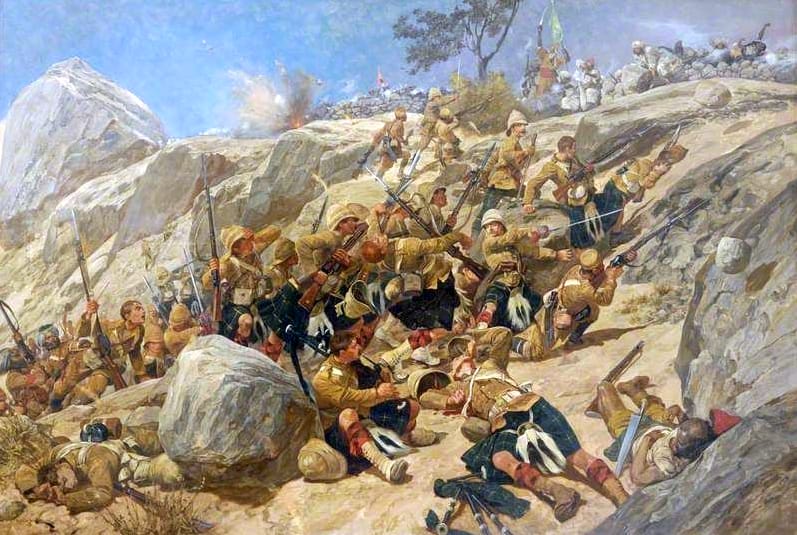
    The greatest battle achievement of the Gordons, however, was at Dargai (near Tirah and now part of Pakistan’s Kabul Pakhtunkhwa). In 1897 the heights at Dargai were held by a strong contingent of Afridi tribesmen. As part of the Tirah campaign, at the time the 21 valiant soldiers of the 36th Battalion (Now 4th Sikhs) of the Sikh Regiment were putting up their heroic stand at Saragarhi, the Gordons were tasked to capture the Dargai height at all costs. On October 20th, 1897 the Gordon Highlanders, with their flanks protected by the Gurkhas and Sikhs, attacked the Afridi-held hilltop redoubt. Despite numerous attempts, the Gordon’s were unable to take the height and had suffered numerous casualties. The Commanding Officer called out to his Pipers, led by Sergeant Piper George Findlater to keep playing ‘Dagshai Hills’ until the hill was taken. Findlater, despite being shot all over his body and bleeding profusely kept on playing the Regimental Tune until Dargai Hill was captured.

    For his extraordinary valour, Piper Findlater was awarded the Victoria Cross which he received in person from Queen Victoria. A huge painting to commemorate this famous battle hangs in the Officers Mess room of the Gordon Highlanders in Aberdeen, Scotland.  A large replica is available to view in our Dagshai Jail Museum along with other exhibits related to the Gordon Highlanders. The Pipe Bands of every formation that gets posted to Dagshai learns to play ‘Dagshai Hills’ and is played at the beginning of the Army Band display at the annual ‘Dagshai Concert’.

    Several of the formations garrisoned in Kasauli (then ‘Kussowlie’) also took part in the various Afghan Wars. Most notable amongst these were the Somerset Light Infantry (action at Jalalabad), 9th Regiment of Foot – Norfolks (action at Kabul), 66th Regiment – King’s Royal Rifles (action at Maiwand), and the 8thKing’s Regiment of Foot (action in the Kurram Valley). However, Kasauli’s Afghanistan connection is predominantly that of the famous Warburton family.

    During the First Afghan War in 1839 when the Bengal and Bombay Divisions of the East India Company (‘John Company’) Army along with some formations of regular British Army troops in India, in support of the ousted Shah Shuja, attacked Afghanistan in an attempt to retake Afghanistan from the ‘usurper’ Amir Dost Mohammed Khan’s forces and their allied tribal warriors.

    Amongst the ‘John Company’ troops was a 27-year-old Lt. Robert Warburton of the 6th Battalion, Bengal Foot Artillery. During the war, Lt. Robert Warburton found himself imprisoned in an Afghan lockup near the famous Buddhist site of Bamyan. A young lady named Shah Jahan Begum Durrani, a niece of Shah Shujah as well as that of Amir Dost Mohammed Khan was married (apparently against her wishes) to Sardar Faiz Talab Khan, a senior advisor to Dost Mohammed, and had a son (named Jahandad Khan) born from him in August 1840. Dost Mohammed and Faiz Talab Khan fled Kabul late in 1839 as the British troops advanced. Dost Muhammad was later to be exiled to Mussoorie.

    What ensued seems like scenes from a potboiler Hindi movie. Apparently, Shah Jahan Begum had met Lt. Robert Warburton in Kabul before she was married off. Clearly, as it turned out, Shah Jahan Begum had already become fond of Robert and this may have been the reason that she was hastily married off against her wishes. With her husband, Sardar Faiz Talib Khan having left along with Amir Dost Mohammed, Shah Jahan Begum managed to get hold of a few of her Durrani tribesmen and went hastily to Bamyan.

    At Bamyan, she and her Durrani followers somehow managed to free Robert Warburton from custody and hastily fled, escorted by the Durrani tribesmen. Somewhere during this daring escape, in November of 1840, Lt. Robert Warburton and Shah Jahan Begum got officially married. A son (also named Robert Warburton) was born to them in July 1842 whilst they were still holed up in Ghilzai (aka ‘Khilji’) fort. By early 1843 the four of them, Lt. Warburton, Shah Jahan Begum, Jahandad Khan, and little Robert Warburton) somehow managed to sneak into Peshawar. On arrival in Peshawar Lt. Robert Warburton officially adopted young Jahandad Khan and had him renamed John Paul Warburton.

    In 1864 John Paul Warburton joined the Punjab Police. Over the next few years, he had a spectacular career as a highly efficient Police Officer busting many criminal gangs and putting into jail scores of offenders. For his efforts, John Paul Warburton (aka Jahandad Khan) became popularly known all across Punjab as ‘Button Saheb – Controller of Devils”. From 1864 through 1900 when he retired, ‘Button Saheb’ had successful postings at Karnal, Delhi, Ludhiana, etc. In a rare eulogy, the famous Rudyard Kipling wrote – “He is supposed to have the gift of invisibility and executive control over many devils.” Needless to say, Kipling’s character Strickling (“Plain Tales From The Hills”) is based on Button Saheb. The then government in appreciation of his services gifted John Paul Warburton a large piece of land in Gujranwala District. This town with its own mainline railway station still exists in Pakistan as ‘Warburton’.

    From 1900 through 1909 Button Saheb served as the Special Advisor to the Patiala State Police with the rank of Inspector General. On his finally quitting service in 1909 John Paul Warburton along with his family came to live in Kasauli after having acquired ‘Gilbert House’ (presently the residence of the Brigade Commander and the former home of the historic figure  Maj. General Walter Raleigh Gilbert. In 1919 Button Saheb tragically died in the driveway of ‘Gilbert House’ after he fell off his favourite horse which had been ‘disturbed’ by his grandchildren and friends playing nearby.

    John Paul Warburton and his wife Mary Meakins had seven children. His youngest son’s (Robert Paul) granddaughter, Pamela Warburton (aka Durrani Warburton) was the last of the family to occupy ‘Gilbert House’. Old-time residents of Kasauli still talk about the regal style that Durrani Warburton lived in and especially about her going around Kasauli in an ornate Rickshaw pulled by fully liveried bearers.

    Durrani or Dani Warburton occupied ‘Gilbert House’ in Kasauli until 1943. She never married but was reputed to be a spectacular tennis player having been Punjab Singles Champion five times. Durrani Warburton did yeoman community service through the years of World War II and for her efforts was awarded the title of ‘Kaiser –i- Hind’.

    The senior Robert Warburton died in Peshawar on Nov. 10th, 1863. Button Saheb’s half-brother, Col. Sir Robert Warburton Jr, KCIE, also joined the Royal Artillery. Later he went on to found the ‘Khyber Rifles’ and died in April 1899 in Kensington, London.

    Needless to say, there have been other individuals and families that have Dagshai / Kasauli – Afghanistan connections. Most notably of course being Rudyard Kipling and the three redoubtable Lawrence brothers. But let this wait for another piece someday.

  • Are we on the path to World War III? The rise of Asia and lessons from World War I

    Are we on the path to World War III? The rise of Asia and lessons from World War I

    Robert McNamara, the US Secretary of State during the Cuban Missile Crisis, famously noted that it was sheer luck, not rationality, that prevented the escalation of this crisis into a world war.

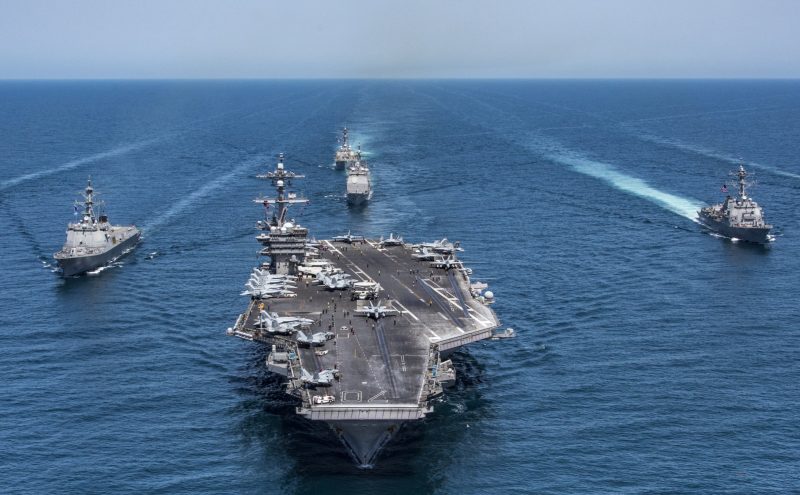
    The rise of East Asia and South-East Asia is inevitable – unless there would be World War III in this region. Whereas World War I was fought by the powers located at the shore of the North-Atlantic, World War II by those of the North-Atlantic and North-Pacific, World War III would be fought by those powers solely at the North-Pacific and the Indian Ocean. Are there lessons to be learned from the devastating conduct and outcome of World War I for our times? Is there only one lesson to be learned – that you can learn nothing from history? Or are we doomed to repeat history if we don’t learn anything from it? History will not repeat itself precisely, but wars repeatedly occur throughout history, even great wars. We are living in an age in which a war between the great powers is viewed as unlikely because it seems to be in no one’s interest, as the outcome of such a war would be so devastating that each party would do the utmost to avoid it. Rationality seems to dominate the assumptions and way of thinking in our times. But no war would have been waged if the losing side, or even both sides, would have known the outcome in advance.
     

    But what if conflicts in Asia would not be fought to pursue national interests so much as recognition? What would this mean: to be accepted as equal again after the humiliation in the course of European colonization and subsequent American hegemony? Indeed, acknowledgement of past suffering seems to be a trauma in the conscience of many Asian nations. Are those desires only irrational or a different kind of rationality, which we have to take into account?


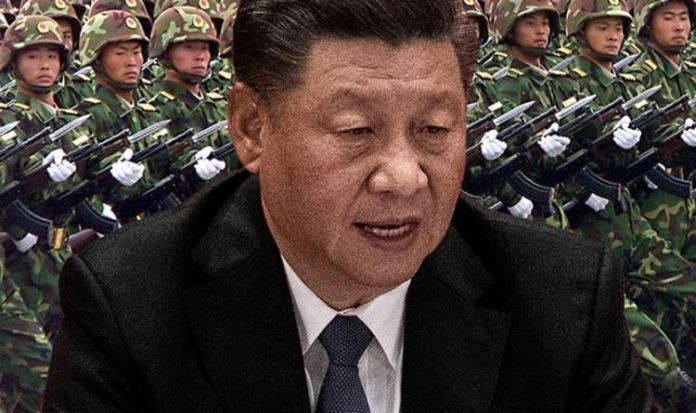
    There are striking similarities between the Pre-World War I era and the current developments in Asia: World War I signifies the danger, not the inevitability, of a new world war in the decades to come. World War I is a symbolic representation of the risk that war amongst the great powers could erupt although nobody would benefit from it. It is a writing on the wall, that rationality is not a guarantee for avoiding self-destruction. All reckonings regarding the repetition of World War I in Asia are based on the assumption that it would be in no one’s interest to fight a large-scale war, even with WMD, which could lead to the destruction of great parts of Asia. But what if conflicts in Asia would not be fought to pursue national interests so much as recognition? What would this mean: to be accepted as equal again after the humiliation in the course of European colonization and subsequent American hegemony? Indeed, acknowledgement of past suffering seems to be a trauma in the conscience of many Asian nations. Are those desires only irrational or a different kind of rationality, which we have to take into account? At present, we have apparently a conflict between democracies in the Pacific and the Indian Ocean on one side and authoritarian China on the other. But during my few visits I got the impression that the trauma of colonization and the non-recognition of the Asian civilizations is more counting in the cultural memory of the Asian nations. And especially India should be wary to be instrumentalised by the US in their conflict with China.


    During her last visit to Beijing in September 2012, then US secretary of state Hillary Clinton held a press conference in which she stated that the world would soon see, but for the first time in history, that a rising power and an established power would not engage in a war. Of course, her statement was related to China and the US. Additionally, she even compared the competition between China and the US with that of the Peloponnesian War between Sparta and Athens – authoritarian Sparta against democratic Athens. Athens, the strongest city-state in Greece before the war, was reduced to a state of near-complete subjection, while Sparta became established as the leading power. Thucydides, the chronicler of the Peloponnesian War and one of the ancient world’s most important historians, saw the initial cause of this war in the growth of Athenian power: “What made war inevitable was the growth of Athenian power and the fear which this caused in Sparta.”

    Unlike Plato, though, Thucydides argues that it was not the striving for power in itself but rather fear of loss of power and, in the long term, fear of being oppressed, robbed of one’s freedom, and enslaved that caused the escalation leading to war. In Thucydides’ account, fear was the cause of war on both sides. Sparta was afraid of the growth of Athenian power, and Athens was afraid of what might happen if it gave in to an escalating series of demands and threats, the result of which could not be foreseen.

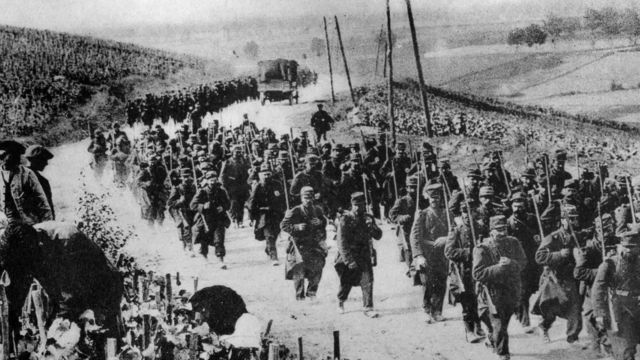
    The Europeans who went to war assumed they would be home by Christmas 1914. We know now, of course, that World War I not only happened but that it also resulted in the self-destruction of the European powers in two world wars. World War I is foremost a lesson that a limited conflict could escalate into a nightmare of millions of deaths and unspeakable suffering, for which no rational explanation could be found.


    No one wanted World War I to happen. Or, at least, no one wanted the kind of war that actually took place. The general assumption was that the conflict would be very limited. The Europeans who went to war assumed they would be home by Christmas 1914. We know now, of course, that World War I not only happened but that it also resulted in the self-destruction of the European powers in two world wars. World War I is foremost a lesson that a limited conflict could escalate into a nightmare of millions of deaths and unspeakable suffering, for which no rational explanation could be found. Military aims and strategies gained priority above meaningful political purposes. Although the generals of the German empire believed that they were relying on Clausewitz’s theory, in fact, they perverted him. Tactics replaced strategy, strategy substituted politics, politics gained momentum above policy, and policy was militarized. It was as if everybody was saying: being at war would mean a stop to thinking.


    This does not mean a simple equation of rising China with the then rising German Empire. Although the actors then and today seem to be quite different, the dynamics generated by the conflict between emerging, rising and declining powers are strikingly comparable.


    Perhaps the deepest and hidden reason for this escalation was that no war party could admit neither defeat nor failure. Striking evidence for this assumption is that the proclaimed war aims of the German Empire got momentum the more they got unrealistic and irrational. The pride, honour and identity of the German Reich prohibited the acknowledgement of defeat and failure. This was the same with Russia, France, England and the Habsburg Empire – and the Turk Empire too. Perhaps especially these Empires knew that their rule wouldn’t survive if they would have had to acknowledge military defeat or failure. Military defeat or failure would have humiliated their identity and their “face”: their social recognition within their society and community. A military defeat would signal their “symbolic death” – and so, the empires fought a war for life and death. This does not mean a simple equation of rising China with the then rising German Empire. Although the actors then and today seem to be quite different, the dynamics generated by the conflict between emerging, rising and declining powers are strikingly comparable.

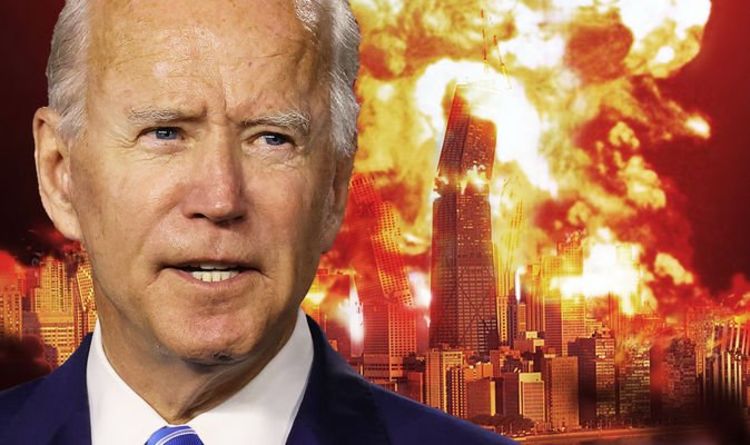
    Robert McNamara, the US Secretary of State during the Cuban Missile Crisis, famously noted that it was sheer luck, not rationality, that prevented the escalation of this crisis into a world war. In 1983 the world did even need twice more than a great fortune to avoid a nuclear disaster. In current times all great powers are using military means to pursue their political and economic interests. But we just should not allow ourselves to bet in a casino-like style that military conflicts and strategies could not lead to the escalation of limited conflicts into great power wars. The path to World War III would not be similar to that leading to World War II, but comparable to the pre-World War I era.

    This article is an amended version of the Introduction in his book “Lessons from World War I for the Rise of Asia” by Stuttgart:Ibidem Publishers.

    Feature Image Credit: www.express.co.uk 

    Article Images: www.fr21news.com , www.bloomberg.com , L’EXPRESS

  • Indian Foreign Secretary visits Colombo: Attempt to reset India-Sri Lanka ties

    Indian Foreign Secretary visits Colombo: Attempt to reset India-Sri Lanka ties

    India and Sri Lanka are immediate neighbours that share cultural, historical and religious ties spanning over thousands of years. Indian tourists to Sri Lanka are a major source of tourism revenue for the island nation. Despite all these ties, the bilateral relations continue to be impacted by considerable mistrust. Recent increase in tensions between the two South Asian neighbours is a result of the island nation allowing China to enhance its strategic footprints in Sri Lanka and increase its influence in the region. Despite certain inconsistencies in the Indo-Sri Lankan bilateral relationship, it will still be in the best interests of both countries to enhance their relationship amid the uncertain shifts in the geopolitical landscape.

    Indian Foreign Secretary’s visit to Colombo

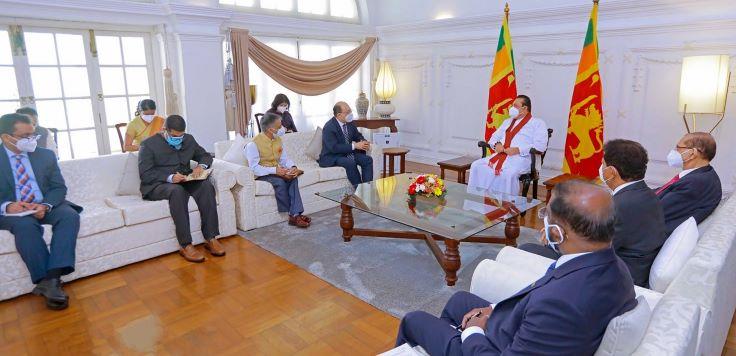
    India’s foreign secretary Harsh Vardhan Shringla concluded a four-day state visit to the Island nation on October 5. His sojourn commenced at a time when Colombo expressed her eagerness to ink a few defence pacts with New Delhi.

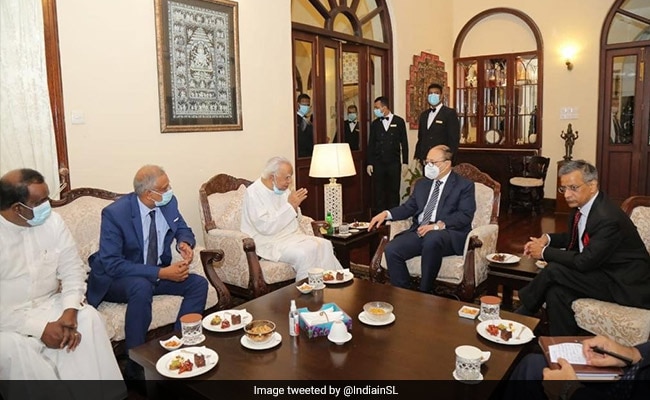
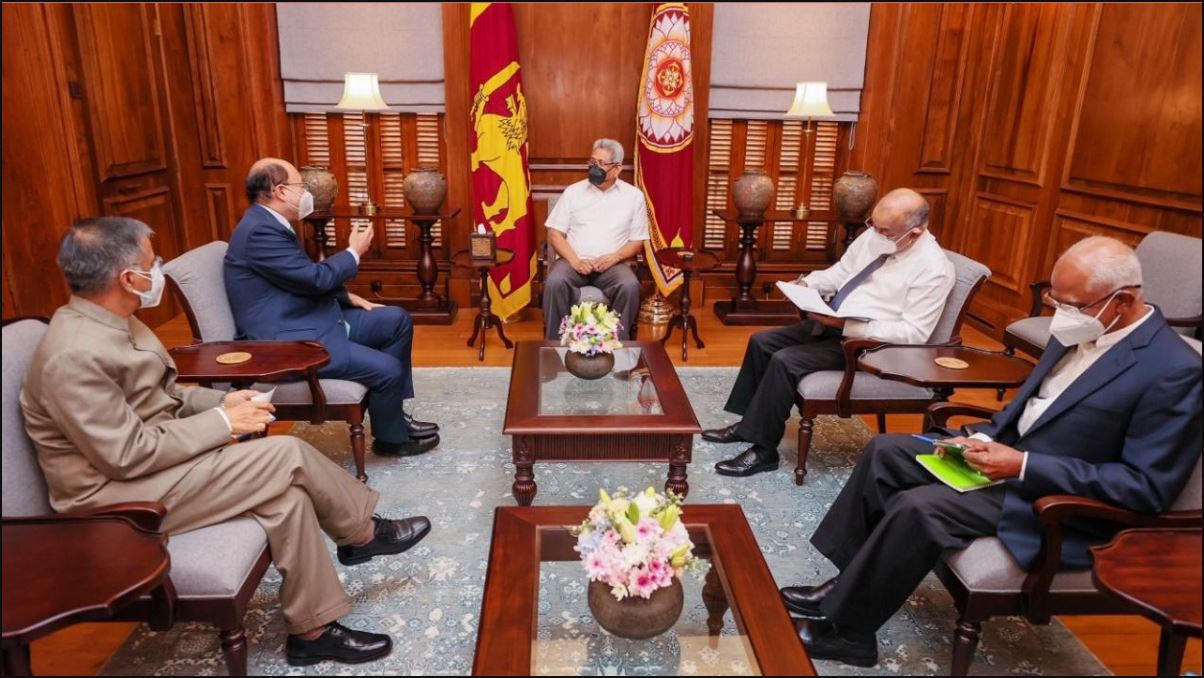
    The visit was eventful as well as broad-based. The Foreign Secretary  held a meeting with the Sri Lankan President Gotabaya Rajapaksa on tourism, power generation, and cooperation in economic recovery. To reset the strained relations with Colombo, Shringla’s schedule was kept tight and focused on closed-door discussions. He called on Sri Lankan Prime Minister Mahinda Rajapaksa, Finance Minister Basil Rajapaksa, Foreign Minister G.L. Peiris and Foreign Secretary Admiral Jayanath Colombage (Rerd). From the capital, Shringla hopped from one town to another. He visited and held meetings in Kandy, Trincomalee and Jaffna to enhance bilateral ties.


    While in Trincomalee, he explored the possibilities for materializing the India-Sri Lanka energy partnership. In separate meetings with  Tamil National Alliance (TNA), Tamil Progressive Alliance (TPA), and Ceylon Workers’ Congress (CWC), Shringla voiced India’s firm support to the implementation of the 13th Amendment, a constitutional amendment that would empower the Tamil minorities but continues to be held in abeyance by the Sri Lankan government. During his visit, Shringla launched a few Indian initiatives like Model Housing Village’ in the northern district of Vavuniya, a school building at Vadamarachchi in Jaffna, and the Saraswathy Central College building in Pussellawa in Kandy. India had earlier constructed over 46,000 houses for the war-affected families in north.

    New Delhi has supplied to Colombo 100 tons of liquid medical oxygen, 26 tons of medicines and ambulances as part of its support to the Island’s efforts to overcome the pandemic. The state has also received about half a million Covid vaccines from India. Sri Lanka’s Suwa Seriya programme was supported by India. Sri Lanka and India together have implemented a USD 400 million currency swap agreement and one more is expected to happen.

    Colombo Crisis

     India’s External Affairs minister S. Jaishankar and Sri Lankan Foreign minister GL Peiris had a tête-à-tête on the side lines of UNGA in September. Weeks after Dr S. Jaishankar’s visit to Sri Lanka in the first week of January this year, Indian fishermen were killed by the Sri Lankan Navy, which resulted in renewed tensions between the two countries.  Moreover, the cancellation of the tripartite Memorandum of Understanding (MoU) between Sri Lanka, India, and Japan for the development of the strategically located East Container Terminal (ECT) at the Colombo Port in February, added more salt to the already strained relations between the two neighbours.

    What became an even more controversial issue was when Sri Lanka cleared a Chinese energy project in three islands off the Jaffna peninsula that is barely 50 km from Tamil Nadu coast. Recently, Sri Lankan parliament passed the Colombo Port City Economic Commission Act to oversee a huge Chinese luxury oceanside development project. This gives China a significant foothold in the country and will allow it to enhance its strategic presence throughout the region. Accordingly, India emphasised that it expected Sri Lanka to be “mindful” of ties with New Delhi, particularly in the security realm.

    Interestingly, the series of events that have taken place this year came after the statement given by Sri Lankan Foreign Secretary Jayanath Colombage last year regarding Sri Lanka’s adoption of an “India first approach”, which reflects Colombo’s supposed willingness to protect New Delhi’s strategic interests in the region. However, despite these guarantees, the geopolitical shifts occurring in South Asia make it arduous for Sri Lanka to maintain consistently positive relations with its neighbour.

    Ties that continue to stand

     China has become a critical factor in the Indo-Sri Lankan bilateral equation. The East Asian giant’s deep pockets have become a more attractive economic option for Sri Lanka vis-à-vis India. While India took five months to approve a loan moratorium requested by Sri Lanka last year, China approved an additional USD 500 million loan expeditiously. Moreover, the issue involving the Tamil cause continues to sustain the long-standing trust deficit between the two South Asian neighbours.

    However, this is not to say that Sri Lanka will disregard India for its partnership with China. Colombo is aware of the risks involved in engaging deeply with China. Sri Lanka is no stranger to Beijing’s debt trap that compromises its sovereignty. Despite Rajapaksa’s cordial ties with China, Sri Lanka will have to inevitably reconsider its priorities if this continues to persist.

    While China may have the upper hand in mega-infrastructure projects, India’s role in cementing its people-to-people ties with Sri Lanka and taking the lead in the education, health, and tourism sectors, continue to give it considerable edge in the overall inter-state dynamics. Apart from being its major trading partner, India has also demonstrated its proactive partnership by being the first responder in humanitarian assistance.  Most importantly, India has no interest in compromising Sri Lanka’s territorial integrity and sovereignty. Additionally, India continues to reiterate that it gives priority to Sri Lanka under key regional frameworks such as its Neighbourhood First Policy and Security and Growth for All in the Region (SAGAR).

    Sri Lanka is also aware of this and has tried to make up for its decisions that have compromised India’s interests. Despite cancelling the ECT tri-partite MoU, Sri Lanka has taken the prerogative to permit Indian companies to develop its West Container Terminal (WCT). Moreover, the scheduled address by Pakistani Prime Imran Khan, to the Sri Lankan Parliament during his visit to Sri Lanka in February, was also cancelled. Recently, much attention has been placed on Sri Lanka’s “roadmap” to restore ties with India and address several important issues such as the fishermen’s issues, building connectivity, trade and investment, and promoting religious links.

    A way forward

     At a time when India’s Indo-Pacific concerns are on the rise, New Delhi is perturbed by Beijing’s diplomatic successes in Sri Lanka and throughout South Asia. China’s quick responses and its its large funding are attractions that has swayed the Island nation towards a pro-China policy. Given the endemic corruption and the Chinese-engineered Sinhala chauvinism with anti-India stance has forced Indian companies to become very cautious about investing in Sri Lanka. But India is ahead of China when it comes to tourism, and health care. Sri Lankan students are now eligible to compete in India’s National Eligibility cum Entrance Test (NEET) and Joint Entrance Examination for the IITs. Last year India’s allocation of $50million for counter-terrorism and $15 million for promoting the Buddhist links drew tremendous positive attention of Lankan policymakers. The first pilgrims’ flight from Sri Lanka to Kushinagar in Uttar Pradesh is expected to take off soon. From the days of Julius Jeyawardane Sri Lanka has evolve a very crafty and nuanced diplomatic strategy, a truly Chanakyan approach. India will need to be equally crafty to checkmate the Chinese inroads into Sri Lanka. [TPF].


    Feature Image Credit: Lankaxpress


  • The Fall of Kabul and dealing with the Taliban 2.0

    The Fall of Kabul and dealing with the Taliban 2.0

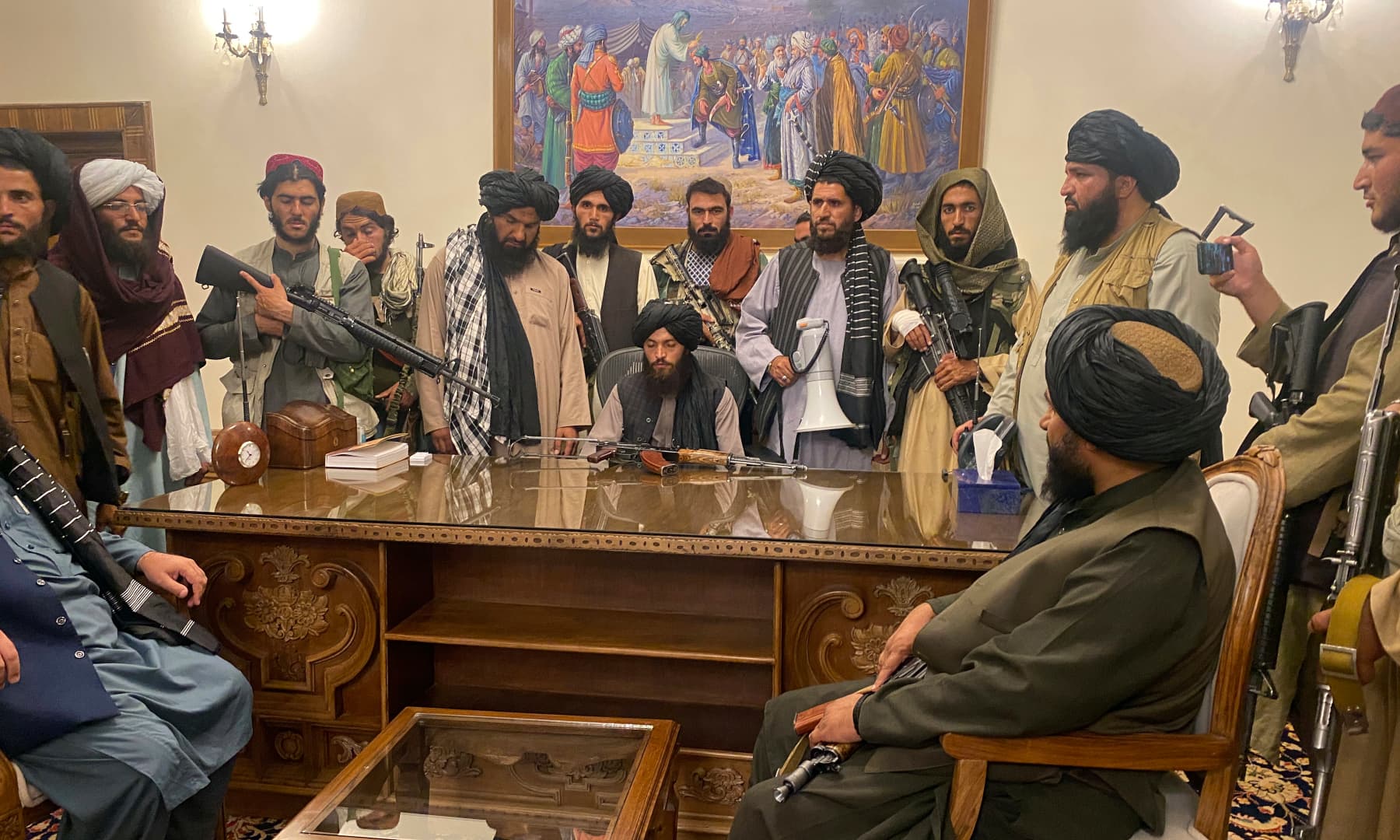
    The debacle of the democratic apparatus in Afghanistan was inevitable. After pumping billions in aid and significant bloodshed, the US government ended its longest war in defeat, the war in Afghanistan under the euphemism of ‘Global War on Terror’. Right after occupying the White House, the Biden administration has followed the path of its predecessors and commanded the complete withdrawal of troops from Afghanistan. The 2020 – Doha peace agreement between the US government and the Taliban brought a scant number of outcomes. Even during the presence of international forces in Afghanistan, the Taliban leaders disrespected the peace agreement and violated significant features of the agreement – that is a ceasefire. Following the agreement, over 5000 prisoners belonging to the separatist groups- were released by the Afghan government, under pressure from the US. Quite naturally, these prisoners were back with their militant outfits, thus strengthening the Taliban’s fighting capability.

    As of now, India has not taken any part in the peace negotiations with the Taliban. One of the major reasons is in the past the Indian government has never recognised the Taliban as a legitimate actor and vouched for a peace negotiation that should be Afghan-led, Afghan controlled and Afghan-owned. Currently, there are speculations about the likely power structure and composition of the government in Afghanistan, but it is quite clear the Taliban will govern the country by Sharia law. At this time of fast transition, the countries in South Asia are seeking to gain diplomatic leverage in the situation.

    India has a huge stake in Afghanistan’s reconstruction. In 2016 Indian Prime Minister and Afghan President Ashraf Ghani inaugurated the Salma dam project in Afghanistan. This 200 million dollar project is part of the larger developmental approach of the Indian government to Afghanistan. But recently, the equipment of the Salma dam was captured by the Taliban. In this scenario, it is unlikely that the Dam project will receive further Indian logistical support in future. Similarly, uncertainty beleaguers the Chabahar Project. India was one of the largest bilateral donors to Afghanistan during the war on terror. It ranges from infrastructure building to the promotion of democracy and small development projects. Almost $3 billion has been invested in and on Afghanistan in capacity building, education, infrastructure and security counts. This developmental commitment has made India the most dependable country and strategic partner for Afghanistan so far. However, now that the Taliban is in full control, the Indian government needs to find a diplomatic solution on how to go ahead with the various projects and commitments in Afghanistan.

    Except for Panjshir province, the entire country is under Taliban control. The president, head of the state, has left the country. Led by interim President Amrullah Saleh and Ahamad Masoud, the Resistance Force from Panjshir Valley is fiercely fighting against the Taliban. Under such circumstances, the conservative approach of the Indian government, as it has begun to talk to the Taliban, could ruin the decades’ long reputation and developmental efforts in Afghanistan. India has legitimate concerns in Afghanistan and should protect its interests carefully. The absence of the US forces and elected Afghan government makes the task very difficult for the government of India. In the past, the Indian government cooperated with the elected Afghan government based on their shared interests and values of democracy, freedom, rule of law and respect for human rights. But the past approach may not work anymore under the Taliban leadership. In the past, the Ministry of External Affairs stated that it is in touch with ‘various stakeholders’ in Afghanistan and other regional countries. Indian officials believe that a ‘double’ peace’ i.e. one within Afghanistan and around the country is necessary for the region. To ensure safety for the Indians living in Afghanistan, the government has already evacuated all Indians employed by the Indian embassy. India has also started emergency E-visa facilities for Afghan citizens. With regard to the diplomatic relationship with the Taliban, the government is following a ‘wait and watch policy with its extended neighbour. The Taliban leadership has announced that they would like to have good relations with the Indian government and access to the Indian market through Pakistan. The Taliban also wants these two countries to resolve their issues as its interests are linked to the two countries. The government of India is yet to respond. The Afghan media personnel, translators, performance artists, civilians are being hunted down by the Taliban soldiers. In this scenario, India will carefully assess the situation and the reliability of the Taliban to make its further move.

    While India is still on the horns of a dilemma over the direct dialogue with the Taliban, India’s arch-rival Pakistan is busy re-establishing its hold and is trying to isolate India diplomatically from the region. Pakistan was one of the first countries to recognise the Taliban as a legitimate actor in the 90s. Last year, the government of Pakistan welcomed an Afghan Taliban delegation led by Mullah Abdul Ghani Baradar. In the meeting, Pakistan showed their support for peace and blamed India as a spoiler of peace in the war-torn country. But reports suggest otherwise. According to the US Defense Intelligence Agency, Pakistan harbours Taliban leaders along with other insurgent groups such as the Haqqani network, Jaish-e-Mohammed and Laskar-e-Taiba. Such groups have the potential to disrupt the security and stability in South Asia. The report also says that the strategic objective of the Pakistan government is to counter the Indian influence in Afghanistan. In a recent interview, Pakistan foreign affairs minister Shah Mahmood Qureshi said that the violence in Afghanistan led to a refugee exodus to Pakistan but they cannot take more refugees. Last year, the High Council for National Reconciliation leader Abdullah Abdullah said that Pakistan holds the key role in the Afghan peace process and India should keep their profile low in the Afghan situation.

    As the Taliban emerges in its second avatar while reframing its extremist Islamic ideology, China is poised to become the critical player in the region.  Under a slew of conditions negotiated with the Taliban, China will enhance its role through rapid investments and enabling Afghanistan to integrate into its Belt and Road Initiative. An unstable, dry and war-torn Afghanistan doesn’t offer any attractive economic proposition at the moment. As the economic challenges loom on the Taliban government, it can’t simply sustain on drugs. The Taliban have to rely on China, Pakistan and some Central Asian republics to rebuild its economy. Afghanistan’s unexploited mineral wealth, worth a trillion or more, is a great opportunity for the Taliban to leverage economic gains by engaging China, Iran, Russia, and Turkey. An alliance of China, Pakistan, Iran or Turkey may lead to the marginalisation of India’s role and effectiveness in Afghanistan.

    Whether India will recognize the Taliban is not clear yet but India can’t simply meditate either. Under India’s presidency, the UN Security Council passed Resolution 2593 on Afghanistan. Chairing a session India’s Foreign Secretary Harsh V Shringla has clarified that India won’t tolerate if Afghan territory turns into a sanctuary of terrorists and threat for the neighbouring states. Apart from human rights, Shringla emphasized Women’s participation in society.

    India along with its all partners should advocate for strict observation of the Taliban led governance. Having invested over $3 billion over the last two decades in the reconstruction of Afghanistan, India’s considerable contribution cannot be ignored. The recent meeting between India’s envoy Deepak Mittal and the Taliban’s foreign minister-designate Stanekzai at the Taliban’s request signals a possibility for a changed approach and environment from that of the Taliban 1.0. India’s immediate priority should be the safe evacuation of the Indian origin people and stranded Afghans.


    Image Credit: www.dawn.com

  • India, the Sino-US Rivalry, and the post-pandemic World Order

    India, the Sino-US Rivalry, and the post-pandemic World Order

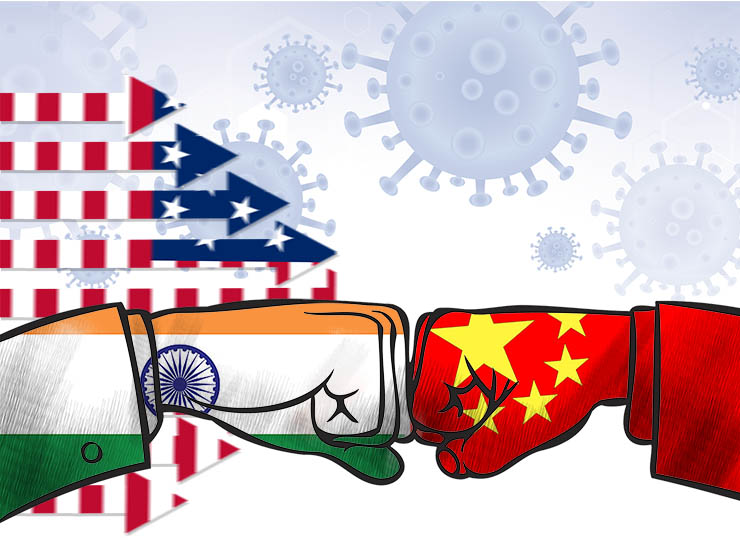
    India has a vital stake in the geopolitical contest between the US and China, particularly in the context of the rising Sino-Indian rivalry. India’s strategies, therefore, must focus on ensuring its security and its freedom of action in global affairs. It will also need to play an active role in reforming the world to more equitable and multipolar governance.

    The global disruption caused by the Covid-19 pandemic that engulfed the world at the end of 2019 and continues to this day is the biggest economic, political, and technological disruption since the Second World War. The pandemic has exposed the serious deficiencies in national healthcare systems in all countries, developed and developing. More importantly, the pandemic has raised questions on the relevance and effectiveness of the current world order, about the future of international organisations and multilateral frameworks, and poses challenges to international political and economic relations.


    Read more

  • Exploitation Across Borders Indian migrant workers fight for their right to get paid in Serbia

    Exploitation Across Borders Indian migrant workers fight for their right to get paid in Serbia

    Indian migrant workers have been targeted to work at mega construction projects in EU-candidate state Serbia. A group of workers is not willing to give up fighting for their salary, despite the legal loopholes that a company registered in America has used to contract them for work in Serbia

    When Boobalan Dhanapal, 41, arrived in Serbia in July 2019, he was eager to work and send money back home. He was joined by fellow construction workers from Chennai, a coastal city in the southern Indian state of Tamil Nadu. Boobalan, who has a degree in civil engineering, was recruited to work as a construction foreman for a monthly salary of Є 440 (approx. 38,500 Indian rupees), inclusive of food and housing. At the time, it sounded like a good deal.

    In 2019, over 150 men from various Indian states began working for GP Nikolić, a Serbian construction company, on a number of infrastructure projects across the Balkan country.


    Read More

  • Religion and Governance: An Important Lesson from India’s History

    Religion and Governance: An Important Lesson from India’s History

    The fortunes of India had irrevocably changed on May 29, 1658, when two Indian armies clashed on the dusty fields of Samugarh, near Agra. India’s history changed forever. Aurangzeb’s victory over his brother Dara Shikoh marked the beginning of Islamic bigotry in India that not only alienated the Hindus but also the much more moderate Sufis and Shias as well.

    Aurangzeb’s narrow Sunni beliefs were to make India the hotbed of Muslim fundamentalists, long before the Wahabis of Saudi Arabia sponsored the fanatics of the Taliban and the Islamic State. It was not only a battle for the Mughal throne but also a battle for the very soul of India

    Aurangzeb’s victory here and other successful campaigns resulted in the creation of the greatest and biggest imperial India till then. But the seeds of India’s collapse were sowed.

    In 1620 India had the world’s greatest national income, over a third of it, and was its greatest military power as well. It was the envy of Europe. The European traders came to seek Indian goods for their markets. But no sooner was the iron hand of Aurangzeb no more that his imperial India began to disintegrate. The iron hand that ruled by dividing rather than uniting and that sought to impose a hierarchy by theological preferences gave rise to much discordance. But for Aurangzeb, Shivaji Bhonsle might have remained a minor western Indian feudatory? There are important lessons to be learned from all this for those who rule and seek to rule India.

    The weakening central rule and profit-seeking peripheral kingdoms allowed European trading posts to be established. Weakening regimes led to the trading posts raising armed guards. Soon the overseas trading companies began warring each other and with so many minor states now free to make their destinies joining hands with one or the other it was the Europeans who got gradually got established. The Anglo-French wars of the Carnatic were fought by Indian armies beefed up by trading company levies. The East India Company of the British ultimately prevailed and the French, Dutch, Portuguese and Danish got reduced to pockets.

    A hundred years later, in 1757, the era of total foreign supremacy over India began when the East India Company’s troops drawn from South India and officered by English company executives defeated the army of Nawab Siraj-ud-Daulah at Plassey (Palashi) in Bengal, with the now usual mix of superior drilling, resolute leadership and a bit of treachery. At a crucial time, Mir Jaffar and his troops crossed over. India lay prostrate before Robert Clive.

    Within a decade, on August 12, 1765, Clive obtained a firman from the then Mughal Emperor, Shah Alam, granting the Diwani of Bengal, Bihar, and Odisha to the Company. A Muslim contemporary indignantly exclaims that so great a “transaction was done and finished in less time than would have been taken up in the sale of a jackass”. By this deed the Company became the real sovereign ruler of 30 million people, yielding a revenue of four millions sterling. The John Company grew from strength to strength, and by 1857 the Grand Mughal was reduced to his fort conducting poetry soirees. It was the golden age of Urdu poetry.

    The events of 1857 led to the formal establishment of India as a directly ruled colony of the British empire. It was yet another epochal event. India changed, for the better and for the worse. Once again India absorbed from outsiders, as it absorbed from the Dravidians, Aryans, Greeks, Persians, Kushans, Afghans, Uzbeks, and all those who came to seek their fortunes here. The British were the only ones who came to take away its vast wealth in a systematic manner. The wealth taken from India to a great extent financed the Industrial Revolution in England.

    From then to another epochal year ending with seven took ninety years. In 1947, India became independent. Its GDP is now the world’s third-biggest. In a few decades, it could conceivably become its biggest. But have we learned any lessons from history?

    Given its abject failures on the economic front, the BJP/RSS regime in New Delhi is now pushing India towards a Hindutva nationhood, by seeking to victimise a minority for the perceived wrongs and slights of the past. An intolerant religion can never be the basis of nationhood and national unity in India. The legacy of Aurangzeb tells us that. Aurangzeb had created the greatest empire that India had seen since Ashoka the Great. But it didn’t take very long for it to dissipate. In the hundred years that followed, a foreign mercantile company gained control over all of India.

    The BJP under Narendra Modi might keep gaining electoral dominion over all or most of India. But has the BJP learned any lessons from history? Does the PM  want to become the Hindu Aurangzeb? What is worrisome is that we know well that history is not Narendra Modi’s forte.


    This article was published earlier in Deccan Chronicle. The opinions expressed in the article are the author’s personal views and do not reflect TPF’s institutional position or analysis.

    Featured Image: Shah Alam conveying the grant of the Diwani to Lord Clive. en.wikipedia.org

  • Elections and Democracy: Germany’s Mixed Member Proportional System

    Elections and Democracy: Germany’s Mixed Member Proportional System

    It is now well-established that the First Past The Post system of elections followed in Indian democracy is thoroughly unsuited to Indian conditions, as it is more feudal and less of democracy. The German mixed system is better suited to India to ensure a more representative system of elections and accountability.   

    When it comes to choosing an electoral formula, the world often takes extreme positions which range between any variant of the Majoritarian System or that of the Proportional Representation. Proportional representation, to a great extent, has been an apt choice for ethnically divided societies with scholars such as Arend Lijphart asserting that it would strengthen the consociational approach in the political system. Yet, it has been criticized for the unstable governments it may produce and its inability to connect a voter with its representative. On the other hand, Majoritarian systems while praised for their simplicity and ability to produce stable governments, lack inclusivity, and induce tactical voting due to wastage of votes. However, the Parliamentary Council of Germany structured a mid-point for the two extremes to meet, which was initially considered provisional but has remained unchanged. It follows the Mixed-Member Proportional System.

    The Mixed-Member Proportional System combines First Past The Post (FPTP) system (Majoritarian System) with Closed-Party List System (Proportional Representation) and thereby, enables the formation of a Government that is inclusive, stable, and remains connected with the voters.

    Understanding how MMP works in Germany

     The Bundestag (the German Parliament), elected for a four-year term, has 598 seats, distributed among the 16 federal states in proportion to the states’ voting population. Out of the 598 seats, 299 seats are filled through the FPTP system and the other 299 through the Closed-Party List System. This means that every voter has two votes on the day of the election: a constituency vote and a party-list vote. The first vote of electors decides the 299 representatives to be elected through the FPTP system, won based on a plurality of votes, and the second vote decides the proportional number of seats each party would get in the national assembly.

    Once the FPTP seats are filled, the second votes are totalled. Those parties that obtained 5% of votes at the national level or have three representatives elected directly through the single-member constituencies are considered for the allocation of PR seats. The PR seats are allotted in proportion to each party’s vote share using the Sainte-Laguë formula.

    The Sainte-Laguë formula divides the parties’ total votes using a series of divisors (i.e., 1,3,5,7,9….) to form a table of averages. The seats are then allotted to the parties with the highest averages in the table.

    source: Washington university

    Furthermore, these allotted seats are then subtracted from the respective party’s FPTP seats, and the remaining seats are the actual number of party-list seats allocated in the Bundestag. Often, the number of seats allocated to a party through FPTP is greater than those allocated through the Party List and these surplus seats are then kept by the party leading to an increase in the number of seats in the Bundestag for that governing year.

    Implications of the electoral formula

    • Electoral participation

    Over the years, scholars have suggested that Proportional Representation tends to increase the voter turnout in a country. This is said to stem from the fact that the disproportionality between the number of votes received and seats allotted is significantly lower thereby reducing vote wastage, which encourages more voters to go and vote. Unlike FPTP’s ‘winner takes all’ formula, PR provides a chance to even smaller parties to secure their representation in the legislative council. This encourages their support base to vote and at the same time provides an incentive to the party to not limit their campaigning to specific areas (Blais & Carty, 1990). Germany’s electoral participation was 78.5% in 1949 and escalated to 86%, 87.8%, 86.8%, 91%… in successive elections. The lowest turnout was in 2009 with 70.8% and escalated slightly to 76.2% in 2017.

    • Gallagher index

    The Gallagher index created by Michael Gallagher is a statistical analysis methodology used to measure an electoral system’s relative disproportionality between votes received and seats allotted in a legislature. While countries following the PR system do generally tend to do well, Arend Lijphart points out that the German system, which is a mixed system, does exceedingly well compared to pure PR variants.

    Germany scored an average of 1.95 in the 2017 national elections and has consistently maintained a low average in terms of disproportionality in comparison to others. Their highest average was 7.83 for the year 2013. On the other hand, countries that continue to use FPTP such as Canada, Bangladesh, and India record pretty averages of 12.01 (2015), 21.38 (2001), and 16.06 (2019) respectively.

    • Representation

     PR systems generally enable conditions for a more representative legislative council because political parties no longer restrict their discourse and activities to the interests of the dominant communities, given winning a plurality of votes is no longer a deciding factor in their pursuit to secure a seat in the parliament. This provides an incentive for them to look appealing to a larger voter base.

    Germany has seen a steady increase in the percentage of women representatives in the Parliament, starting from 7% in 1949 to 31% in 2017. The need to encourage ethnic minorities to cast a vote provides an incentive to political parties to field candidates who are non-German in origin, and this has enabled the participation of candidates originating from Turkey, Poland, Austria, Romania, and so on.

    • Effects on the Far-Right

    Lisa Harrison in her paper ‘Maximizing Small Party Potential: The Effects of Electoral System Rules on the Far Right in German Sub-National Elections’ writes that far-right or extremist parties see limited success at the national level elections, but they may play a significant role at the sub-national level elections. A major hindrance that keeps these far-right parties away from the Bundestag is Germany’s minimum threshold of votes policy, which allows only those parties that have won 5% votes or 3 FPTP seats to claim representation in the parliament.

    This however changed in 2017 when Alternative for Germany became the first nationalist far-right party to secure seats in the German Parliament since World War II. They received 12.6% of votes, translating into 94 seats in the Bundestag. The rise of the party coincides with the rise of hate crimes against immigrants. In March 2021, it was reported that Germany’s domestic intelligence forces have kept the party under surveillance on the suspicion of trying to undermine the democratic constitution.

     Conclusion

    Electoral systems don’t come up in a vacuum. Rather, they are selected and implemented within the socio-political conditions of a particular nation. This implies that there is no electoral system that is universally applicable. Depending upon the suitability, countries could either side with the Majoritarian system or the Proportional Representation system or could apply both, as in the case of Germany. Germany’s Mixed-Member Proportional System catered to the needs of a constituent assembly which was divided over the question of an apt electoral system and at the same time has continued to do the two things that the constituent members hoped for, maintain stability and remain inclusive.

    As India enters the 75th year of its independence, and as the world’s largest democracy, its electoral experiences of the last seven decades point to the unsuitability of the present FPTP system. Given the large population and the diversity of India, the FPTP system has proved to be a complete failure. The FPTP system does not truly reflect the principle of “one person one vote”, according to which each ballot should have ‘equal force’ in the sense of the share of seats in the parliament. Indian elections system has resulted in a skewed system of vote-bank politics, endemic corruption, and the feared majoritarian tyranny in the name of democracy.  The German model of a mix of Proportional Representation and the FPTP system is what India needs at this to revive and strengthen its democracy.


    References:

    Gallagher, M., & Mitchell, P. (2008). The Politics of Electoral Systems (Illustrated ed.). Oxford University Press.

    Zittel, T. (2017). Electoral systems in context: Germany. Oxford Handbooks Online. Published.

    https://doi.org/10.1093/oxfordhb/9780190258658.013.37

    https://www.statista.com/statistics/753732/german-elections-voter-turnout/

    https://www.tcd.ie/Political_Science/people/michael_gallagher/ElSystems/Docts/ElectionIndices.pdf

    https://blogs.lse.ac.uk/europpblog/2017/09/21/measuring-the-diversity-of-each-partys-candidates-in-the-german-election/

    https://www.statista.com/statistics/753494/seat-distribution-bundestag-germany/

    https://www.thehindu.com/news/international/how-serious-is-germanys-far-right-problem/article30952770.ece

    https://www.reuters.com/article/us-germany-security-afd-idUSKBN2AV1M3


    Feature Image: angusreid.org

  • Marginalised among the invisible: The case of female migrant domestic workers

    Marginalised among the invisible: The case of female migrant domestic workers

    The Pandemic, lockdown, and the chain of events that followed made the country wake up to the state of the most unfortunate group of the labour force; the migrant workers. They have always remained invisible to the development agenda of the government and only the catastrophe of a pandemic could shed light on their woes. Among this invisible workforce, there remains yet another marginalised group of female migrants.

    In India, female migration was initially considered insignificant by equating their movement merely as associational or followers of men.  However, this has certainly changed in the last decade. Marriage was seen as the central motive behind female migration, though lately more women are seen to enter the labour market post-migration as their labour demand rose in sectors of so-called “female occupations” of domestic work, care-work and certain informal labour requirements in sectors such as in construction, garment work, food services and as coolies and vendors.  As family migration from rural to urban abodes saw a rise in the country, both male and female migrants were required to join the labour force to meet their mere subsistence needs. Lack of employment, low income and other economic reasons pushed females, especially from rural areas, to migrate to urban zones of the country (Singh et al., 2015). While in urban areas, the migrants especially females and children are exposed to extreme vulnerabilities with regard to their dismal conditions of work in the informal sector, urban policies are deeply flawed in omitting migrant welfare and the sheer denial of their civil rights and entitlements.

    Precarious domestic work and female migrants

    Domestic work is often regarded as an invisible and insignificant addition to the social and economic values of a country. The work is increasingly feminised with over 80% of the world’s domestic work occupied by women (International Labour Organisation [ILO], 2013a). And this mirrors the traditional notions of domestic work being a woman’s task. These tasks include traditional housework such as cleaning, cooking, washing clothes or utensils etc. or care-work such as a child or elderly care. Female migrants with low skills, low levels of education and migrating from rural abodes in search of employment form a predominant part of the labour pool. With no recognition and regulation of work, the female domestic workers are subject to unequal power dynamics at the workplace, making their lives precarious in terms of wages, security and wellbeing.

    In India, domestic work employment among females saw an upsurge, especially in urban areas. This surge is mainly accounted for by the increasing need for care work given the changing demography, lack of work opportunities in other sectors and the gender constructions moulded by the society (Chandrashekar & Ghosh, 2012). According to the National Sample Survey (NSSO-2011-2012, 68th round), 39 lakh (3.9 million) people are occupied in domestic work, among which 26 lakh (2.6 million) are females. Micro-level surveys suggest a predominant concentration of female migrants in domestic work, especially in urban areas (Mazumdar et al., 2013).  There are two forms of workers: live-in workers, who are accommodated in the household and live-out workers, who return to their respective houses after work and may be involved in work with multiple households. As there is no relevant national data on migrant workers involved in the sector, micro-level surveys or sector-based studies are the only sources in understanding the conditions of these migrants in domestic work. Studies have stated that migrants with low vocational qualifications and often seen as unregulated and undocumented cheap labour, work under low wages for long hours and in dismal working conditions affecting their health and safety. Live-in domestic workers are more prone to the dangers of sexual and physical abuse. Live-out domestic workers migrating to a new city, struggle with the inaccessibility of social security schemes and entitlements. Exploitation by private placement agencies in terms of wages and work conditions is another area among their hassles.

    The domestic work arena, already an unregulated and unorganised sector, puts female migrants with low bargaining power on a higher vulnerability scale. The task of identifying domestic work hinders the formulation of a sound regulatory mechanism to confront such vulnerabilities.

    Barriers to effective Regulation

    Regulating domestic work is impeded by cultural and structural barriers. The traditional notion and disregard of domestic work by women in households is extended to the understanding of paid domestic work as unproductive and hence, making it undervalued. The structural barriers relate to the unusual workplace in private spheres, which makes it difficult in enforcing labour laws and any form of scrutiny against the privacy norms of a household. The informality of work and its complexities aggravates the barriers in regulation. The employment relationship is uncertain as it is without any legal titles of employee and employer, making the relation very personalised and often not under any form of contract or agreement. Even if labour laws are made inclusive of domestic work, implementation and assurance of compliance of these laws in households are challenged until the household is recognised as a ‘workplace’ and the person hiring as an ‘employer’ in the legal framework (Chen, 2011).

    Even though these barriers existed, the International Labour Organisation (ILO) convention 2011 attempted in ensuring decent work to domestic workers and this is recognised as the most important landmark in identifying domestic work under a legal framework. ILO defines domestic work as “work performed in or for a household or households” and domestic worker as “any person engaged in a domestic work within an employment relationship”. The convention specified a comprehensive labour standard for domestic workers in areas of their wages, hours of work, occupational safety and health and social security. The convention addressed and standardized the various concerns in the sector regarding child labour, migrant workers, trafficking, live-in domestic labourers and private recruitment agencies (C189 – Domestic Workers Convention, 2011). Even after the completion of 10 years of the convention and 32 ILO member countries enforcing the landmark treaty, India is yet to ratify the convention.

    As domestic work remains undefined in the country, no significant statistical standard in estimating domestic workers exist. In the ILO policy brief on “Global and regional estimates of domestic workers” (ILO, 2013b), ambiguous nature of data on domestic workers were noticeable from the widely distributed figures, ranging from 2.5 million estimates from a household survey, 4.5 million workers estimated from official statistics (NSSO 2004-05) to an exaggerated figure of 90 million in news media. This difference in estimation is related to the difference in the identification of domestic work among different establishments (Mahanta & Gupta, 2015). With no clarity in identifying domestic workers inclusive of its peculiarities, these figures could be heavily underestimated too. Being a female migrant in the sector aggravates the problem of estimation as National statistics narrows down female migration patterns merely as associational. And thus failing to understand the true motives behind female migration and the subsequent scale of occupations they reside in (Indu et al, 2012).  Macro data narrows down domestic female labour into regular workers based on their duration in employment and disregarding the conditions of low wages and other insecurities, while the temporary and casual nature of work goes unrecognised (Neetha & Indrani, 2020). The informality of work is another area that India has failed to regulate. Labour laws for industrial labour often disregard informal workers. This is evident in the isolation of migrant workers, especially female migrants in domestic work (Poddar & Koshy, 2019).

     Lacunae in the legal framework

    Domestic work and most feminised occupations, in general, in unorganised sectors, are isolated from the legal framework given their unique characterisation of workplace and employment relationships and not to mention the challenges in recognising their work given the cultural and structural barriers. For female migrants in domestic work or any other informal activity, the situation is similar.

    There were certain positive steps in attempting to recognise the domestic workforce in the country. First of such attempts were their inclusion in the Unorganised Workers Social Security Act 2008 which gave hope, but failed to be implemented across different states (Agrawal & Agarwal,2018). Subsequently, the government also set up a task force to recommend a framework for policymaking and after 10 years, in 2019, we see a draft on National policy on domestic work formulated by the government covering their recognition, access to civil rights and social security schemes, skill development, regulating private placement agencies and a grievance redressal system (“National Policy for Domestic Workers”, 2019). Upon the recommendations of the task force, the domestic workers were to be included under the National Health insurance scheme – Rashtriya Bhima Yojana (RSBY). But the limited awareness of the scheme, its functioning and benefits, coupled with corruption reduced the domestic worker’s accessibility of the same (Mahanta & Gupta, 2015). The suggestion of the task force to include domestic worker rights in existing legislations, pertaining to industrial or organised labourers, was widely criticised because it does not adapt to the peculiarities of the feminised domestic work (Poddar & Koshy, 2019). Ensuring minimum wages to the domestic worker through the Minimum Wages Act 1948 with a task-based approach, while ignoring the aspect of personalised nature of employment completely, puts the live-in workers whose tasks are not quantifiable, out of the ambit of the act’s provisions. Similarly, the inclusion of domestic workers in the Sexual Harassment of Women at Workplace Act (2013), Employees’ State Insurance Act (1948) and Unorganized Workers’ Social Security Act 2008 is considered inadequate. Even though such inclusion is appreciated, these legislations fail to cater to the rights of a domestic worker if they are based on organised sector labour standards and without understanding the complexities of the domestic work (Poddar & Koshy, 2019).

    Private placement agencies, one of the main recruitment channels of domestic work, remain unregulated. This has led to the rise in exploitation in terms of payment and working conditions. The Delhi government drafted a Delhi Private Placement Agencies (Regulation) Bill in 2012 which was widely rejected by the domestic workers’ unions and groups. The proposed bill was criticised to be ineffective as it does not include the registration of the employers and lacks clarity in the process of inspection of these agencies (Chigateri et al., 2016). A study on one of the frequently travelled migrant routes, which is from Jharkhand to Delhi, reveals that migrants were subjected to conditions of exploitation and forced labour under such placement agencies. Conditions of forced labour are witnessed mainly among live-in domestic workers, who have to work under the agent for the stipulated period. The Inter-State Migrant Workmen’s (Regulation of Employment and Conditions of Service) Act 1978 fails to address this issue as placement agencies relating to domestic work do not come under the ambit of the act. The act considers only those labour contractors who are registered at the origin state. Placement agencies involved in domestic work function through several sub-agents and mostly are unregistered (ILO, 2015)

    There were some positive responses from state governments. The state of Tamil Nadu set up the Tamil Nadu domestic workers welfare board.  Similarly, Maharashtra set up a domestic worker welfare board under Maharashtra Act (Agrawal & Agarwal, 2018) in 2008 while Kerala adopted a domestic worker bill in 2009. States like Kerala, Karnataka, Andhra Pradesh, Maharashtra, Tamil Nadu, Bihar and Rajasthan have set the minimum wage rate (Madhav, 2010). Neetha and Palriwala (2011) analysed the state legal framework on domestic workers and pointed out the same inadequacies noted over and over again, that is of not recognising the intricacies of domestic work, workplace, its several sub-categories, unregulated placement agencies and its unique employment relation. With no data on domestic workers and at the same time their numbers continuing to increase, these loose legislations and provisions go unnoticed by the workers.

    In 2019, with the view to improving compliance and bringing about uniformity of laws, 29 labour laws were consolidated into 4 labour codes: a) code on wages, b) code on industrial relation c) code on social security and d) code on occupational health and working conditions (“Overview of Labour Law Reforms”, n.d.). While the notion was to make the labour laws more transparent and such consolidation was expected to increase the coverage of different workers under the law, these codes remain ambiguous when it comes to certain sectors of informal work. Neetha and Indrani (2020) analyse these codes through a gender lens focusing on domestic and migrant workers. Code on wages does not incorporate private households as an entity hiring employees and thus domestic workers who struggled to attain minimum wages under the previous Minimum wages act (1948) have no mention, leaving them ambiguous. Code on industrial relations dealing with collective bargaining and industrial disputes, do not mention freedom of association in unorganised sectors and curbs the right to strike which has serious implications of registration of domestic workers under trade unions and their right to collective bargaining. Code on social security (CSS) has consolidated the unorganised workers’ social security act 2008, which was the first attempt towards the recognition of domestic workers and the new code puts the functioning of such acts and provisions for the unorganised sector under the discretion of the government, leaving out legislative scrutiny. Hence, there is uncertainty of the efficient functioning of these acts under CSS. Under the code, maternity benefits were applied only to the registered establishment of work. And domestic workers with no recognition of the workplace become ineligible for the same. Code on occupational health and working conditions is also seen to have not recognised the need for laws based on different sectors of work. It has again failed to include private households as a workplace, leaving the conditions of domestic work unregulated. Another failure relates to ignoring the Sexual Harassment of Women at Workplace Act (Prevention, Prohibition and Redressal) 2013, which further leaves out the scrutiny of abuse or exploitation of domestic workers. The fact of being migrants among domestic workers isolates them even further from these labour codes.

    The lacunae in existing legislation in recognising domestic work and migrant labour continues to be beset in ambiguities with the new labour reforms.

    Present scenario: Covid-19 adding to the vulnerabilities

    The onset of the Covid-19 and the resultant lockdowns have led to massive disruptions of normal life resulting in the shocks of sudden unemployment, financial strain and increased burden for workers in the unorganised sector. The migrant workers bore the highest brunt. In such a scenario, female migrants in an unregulated and isolated sphere of work such as domestic workers have been subject to severe distress. The lockdown and reduced mobility left the workers unemployed and without income. Live-in migrants faced increased workload but no change in wages. Even with the slow revival of the economy, they are under threat of being infected or being carriers, given their precarious work and living conditions. Sudden dismissals and financial strain have forced many to the situation of borrowing money for subsistence and eventually ending up in debt. Workers struggle to meet the basic needs of health, food, education of the family with lower income and savings (Sumalatha et al., 2021). With dismal employment relations and working conditions, coupled with the exclusion from the legal framework and social protection, Covid-19 has expanded the existing inequalities.

    Government intervention:  The need of the hour

    Government intervention both in ensuring basic rights and providing for the welfare of the domestic workers have been negligible. The cultural and structural barriers are not the only challenges in regulating domestic work. There is a lack of political will in acknowledging domestic workers and their woes. As they remain scattered and invisible, the domestic workers are not seen as potential vote banks and hence remain without any political influence. The sector which is comprised largely of female migrants is devoid of any political voice and agency in their origin or host states since there are barriers in pursuing their voting rights given the nature of their migration. Their interactions with civic authorities and politicians in the host state are marginal and hence, their issues do not come to the fore (Bureau, 2018). There is a lack of awareness among the migrant workers on their voting rights. They are largely unaware as to who should be approached in the host state to resolve their problems. Even a migrant worker, well aware of his/her political rights and agencies, refrain from pursuing any form of interaction as they have either lost faith in the system or are disillusioned by the long time and effort spent pursuing the cases with no results to show. This highlights the need for effective political inclusion of migrant workers and the generation of political and electoral awareness among them (Bureau, 2018).

    Further, identification and protection are the two essentials in creating an inclusive environment for female migrants in domestic work. The feminized nature of domestic work in the country, concentrated predominantly among poor and marginalised migrant workers, need to be recognised as dignified “work” and households they work in as “workplace”. Only separate comprehensive legislation on domestic work can incorporate the varied complexities of the sector, rather than a mere extension of organised sector legislations. Such separate legislation would provide the domestic worker with an identity that can ensure them their rights and entitlements (Sharma & Kunduri, 2015). The legislation should address the working conditions, violations and exploitations, provisions for mobilisation, illegal channels of private placement agencies and establishing basic civil rights from a gender perspective to incorporate the differential experience of females in the sector. Efficient implementation and scrutiny of the same require statistically significant data, the absence of which is another flaw in the system.

    Domestic worker’s inaccessibility of social protection is the result of the lack of recognition. Migrant workers in the sector without any identity proof or formal registration are excluded from social protection schemes. Agrawal and Agarwal (2018) suggest setting up an independent welfare board in every district responsible for registering, ensuring availability of social security benefits, conducting dispute resolution, dissemination of information and providing skill development and training for domestic workers. The provision of financial incentives can help in coping with sudden unemployment situations during any form of crisis such as the pandemic. Allowing for the organisation of domestic workers into unions and cooperatives can also be beneficial in attaining social and legal protection. Domestic worker groups such as SEWA and National Domestic Workers Movement (NDWM) in the country have been attending to the woes of the domestic workers by providing a platform for collective bargaining and assertion of rights.

    The introduction of the draft on National Policy on Domestic workers can be seen as a positive development, however, the policy still remains in consideration. Vulnerabilities of the domestic workers, exacerbated by the pandemic, highlight the urgent necessity for the ratification of the ILO convention on domestic workers. There is an urgent requirement in increasing the government’s sensitivity towards domestic workers and their precarious existence.

    References

    1. Agrawal, U., & Agarwal, S. (2018). Social Security for Domestic Workers in India. Socio-Legal Rev.14, 30
    2. Bureau, A. (2018). Political Inclusion of Seasonal Migrant Workers in India: Perceptions, Realities and Challenges.
    3. C189 – Domestic Workers Convention, 2011 (No. 189). (n.d.). Retrieved July 15, 2021, from https://www.ilo.org/dyn/normlex/en/f?p=NORMLEXPUB:12100:0::NO::P12100_ILO_CODE:C189
    4. Chandrasekhar, C. P., & Ghosh, J. (2012, November 12). Changing patterns of domestic work. @businessline. https://www.thehindubusinessline.com/opinion/columns/c-p chandrasekhar/changing-patterns-of-domestic-work/article22985402.ece
    5. Chen, M. A. (2011). Recognizing domestic workers, regulating domestic work: Conceptual, measurement, and regulatory challenges. Canadian Journal of Women and the Law23(1), 167-184.
    6. Chigateri, S., Zaidi, M., & Ghosh, A. (2016). Work Like Any Other, Work Like No Other103. Retrieved July 18, 2021, from http://www.unrisd.org/indiareport-chapter4
    7. Chigateri, S. (2021). Labour Law Reforms and Women’s Work in India: Assessing the New Labour Codes From a Gender Lens. Institute of Social Studies Trust.
    8. Indu, A., Indrani, M., & Neetha, N. (2012). Gender and migration: Negotiating rights, a women’s movement perspective. Delhi: Centre for Women’s Development Studies.
    9. International Labour Organisation (ILO). (2013a). Who are domestic workers? Ilo.Org. https://www.ilo.org/global/docs/WCMS_209773/lang–en/index.htm
    10. International Labour Organisation (ILO). (2013b). Global and Regional Estimates on Domestic Workers.
    11. International Labour Organisation (ILO), (2015). Indispensable yet unprotected: Working conditions of Indian domestic workers at home and abroad. Retrieved July 19, 2021, from https://www.ilo.org/wcmsp5/groups/public/—ed_norm/—declaration/documents/publication/wcms_378058.pdf
    12. Klemm, B., Däubler, W., Beimin, W., Lai, A., Min, H., & Sinha, S. (2011). Protection for Domestic Workers: Challenges and Prospects. Briefing Paper Special Issue, May, Friedrich Ebert Stiftung.
    13. Madhav, R. (2010). Legal Recognition of Domestic Work. Labour File, 8, 41.
    14. Mahanta, U., & Gupta, I. (2015). Road ahead for domestic workers in India: legal and policy challenges.
    15. Mazumdar, I., Neetha, N., & Agnihotri, I. (2013). Migration and gender in India. Economic and Political Weekly, 54-64.
    16. National policy for domestic workers. (2019, February 13). Retrieved July 18, 2021, from https://pib.gov.in/Pressreleaseshare.aspx?PRID=1564261
    17. Neetha, N. (2004). Making of female breadwinners: Migration and social networking of women domestics in Delhi. Economic and Political Weekly, 1681-1688.
    18. Neetha, N., & Palriwala, R. (2011). The absence of state law: Domestic workers in India. Canadian Journal of Women and the Law23(1), 97-120.
    19. Neetha N., & Indrani, M. (2020, June 01). Crossroads and Boundaries : Labour Migration, Trafficking and Gender. Retrieved July 19, 2021, from https://www.epw.in/journal/2020/20/review-womens-studies/crossroads-and-boundaries.html
    20. Overview of Labour Law Reforms (n.d.) Retrieved from https://prsindia.org/billtrack/overview-of-labour-law-reforms#_edn2
    21. Poddar, M., & Koshy, A. (2019). Legislating for Domestic’Care’Workers in India-An Alternative Understanding. NUJS L. Rev.12, 67
    22. Shanthi, K. (2006). Female labour migration in India: Insights from NSSO data(Vol. 4, p. 2006). Chennai: Madras School of Economics.
    23. Sharma, S., & Kunduri, E. (2015). Of Law, Language, and Labour: Situating the Need for Legislation in Domestic Work. Economic and Political Weekly50(28).
    24. Singh, N., Keshri, K., & Bhagat, R. B. (2015). Gender dimensions of migration in urban India. In India Migration Report 2015(pp. 200-214). Routledge India.
    25. Srivastava, P., & Shukla, P. (2021). Crisis behind closed doors domestic workers’ struggles during the pandemic and beyond. Economic and Political Weekly, 17-21.
    26. Sumalatha, B. S., Bhat, L. D., & Chitra, K. P. (2021). Impact of Covid-19 on Informal Sector: A Study of Women Domestic Workers in India. The Indian Economic Journal, 00194662211023845.


    Image Credit: ucanews.com 

  • Wage theft plagues India’s  migrant workers

    Wage theft plagues India’s migrant workers

    Though the South Asian country has relied heavily on remittances from its international migrant workers, the government has been remiss in ensuring their protection and welfare. As labor violations spike amid the COVID-19 pandemic, these workers are left to fend for themselves.

    In August 2020, a group of around forty Indian construction workers staged a hunger strike in Kraljevo, Serbia, demanding to be paid. In addition to not receiving months’ worth of wages from their employer, they had been working 10-12 hours a day without proper food or access to healthcare and were living in cramped, unhygienic quarters during the COVID-19 pandemic.

    The migrant workers from across India first arrived in Serbia in mid-2019. According to the Building and Wood Workers’ International (BWI), a global union federation, around 150 Indians were employed across the Balkan country for the construction of the Corridor 11 project. In a Zoom interview, two of the workers recounted how their troubles with getting paid had begun soon after arrival. When their situation didn’t improve, the first group was repatriated to India in January and February 2020. The rest, including those protesting in Kraljevo, were repatriated by September 2020.

    Much of the Indian government’s efforts have been focused on Gulf countries, where, based on data from the International Labour Organization (ILO), around 9 million Indians live and work. However, the BWI warns that Europe is fast becoming a hub for the exploitation and trafficking of third-country nationals. In Serbia, other reports of exploitation of migrant groups from China and Turkey have recently come to light.

    When he heard about the stranded Indian workers, Ramachandra Khuntia, chair of the BWI Indian Affiliates Council and a former Member of Parliament (MP) contacted the Indian Ministry of External Affairs (MEA) and the Indian embassy in Belgrade multiple times.

    the BWI warns that Europe is fast becoming a hub for the exploitation and trafficking of third-country nationals.

    What followed was a cross-border initiative involving labor unions, the Indian government, and Serbian anti-trafficking organization ASTRA. “We were finally able to bring the workers back home. But ‘til today, they have yet to receive their wages from the employer,” says Khuntia.

    “The payment of arrear wages is usually dealt with by the labor department in the host country, but the matter can be pursued through the Indian embassy,” explains Khuntia, adding that despite assurances from the Indian government and the Indian embassy in Serbia, the payments seem nowhere in sight.

    Indian construction workers stage a hunger strike in Kraljevo, Serbia, in August 2020. Amid the COVID-19 pandemic, wage theft has soared across the world, and often, the victims are migrant workers from India, who receive patchy support from their own government and have to rely on unions or non-profits for help. (Photo credit: BWI/Boobalan D) 

    Job loss and other ordeals

    Wage theft — the illegal practice of denying workers the money that they are rightfully owed — has dramatically increased during the COVID-19 pandemic. In addition to the non- or incomplete payment of wages, employees have to deal with job loss, non-payment of termination benefits, poor working conditions, and hurried repatriation without the chance to register their grievances.

    Migrant workers’ troubles begin in their country of origin, not abroad. “It is a new form of slavery that begins before they even leave the country in the form of recruiting fees. Recruiting agents and others involved are selling dreams to migrant workers.”

    Ponkumar Ponnuswamy, president of TKTMS, a construction workers’ union in Tamil Nadu that was directly involved in the process of repatriating the stranded workers, says that each of the workers is owed anywhere between the equivalent of US$1,300 and US$2,600 by the aforementioned company, depending on how long they were in Serbia. For the workers who were put through this trying ordeal, their unpaid wages represent a substantial amount of money that would have otherwise gone towards debt repayments, medical treatments, and basic subsistence.

    “I think it is a huge loss not only at the individual level but also at the country level,” says S. Irudaya Rajan, an expert on Indian migration and member of the Kerala government’s COVID-19 expert committee. Migrant workers constitute an integral part of the global economy, with their remittances adding up to over three times the amount of international aid and foreign direct investment combined. India, the world’s largest source of international migrants, received US$82 billion in remittances in 2019 according to World Bank data, a sum that has helped keep millions out of poverty.

    “COVID-19 has become a great opportunity for exploitation,” says Rajan, who is currently heading a study on counter-migration from the Gulf to assess wage theft.

    But according to him, migrant workers’ troubles begin in their country of origin, not abroad. “It is a new form of slavery that begins before they even leave the country in the form of recruiting fees,” he says. “Recruiting agents and others involved are selling dreams to migrant workers.”

    The Indian government requires recruiting agents to register themselves with the Protector General of Emigrants. Despite this, many illegal agents continue operating across the country. (Photo credit: Yamuna Matheswaran)

    Is the Indian government doing enough?

    In theory, the Indian government offers various resources for those who emigrate for work: registration portals, insurance schemes, awareness programs, and helplines. They also provide a list of registered recruiting agents (RAs) across the country.

    But the reality of emigration is far more complex, even confusing. For instance, it would be safe to assume that only a fraction of the RAs operating in India is registered with the MEA. A 2018 investigation by the Migrant Forum in Asia (MFA), with the support of ILO, found that in the state of Punjab alone the number of unregistered agents ran into several thousands, despite the 2014 Punjab Travel Professionals Regulation Act requiring mandatory registration of all consultants, agents, and advisors involved in sending people abroad.

    These unscrupulous agents make emigrants more vulnerable to exploitation by charging illegal fees and pushing unfair contracts. Some workers arrive in a foreign country only to learn that the job they were recruited for doesn’t exist, says Rajan. Others end up without appropriate visas or permits and are never registered in the system.

    The MEA limits the service fees RAs can charge their clients, which caps at INR 20,000 (around US$270). But Rajeev Sharma, Regional Policy Officer at BWI’s South Asia office, says that many of the workers have paid far more depending on the state they hailed from.

    “Workers from Punjab, for instance, paid up to INR 100,000 (US$1,365) to 150,000 (US$2,048) to the agent,” he says. “We don’t know how they managed to fund their journey, they may have run into debt – so it’s not just the salary, so many other issues are involved.” When asked about this practice, one of the agencies involved – an unregistered ‘Shakti Tread Test Centre’ run by Muktinath Yadav in Deoria, Uttar Pradesh – gave no response.

    “Covid-19 has become a great opportunity for exploitation” – Dr. S Irudaya Rajan, an expert on Indian Migration

    Indian missions abroad are tasked with ensuring the welfare of overseas Indian nationals. The migrant workers and union members state, however, that the Indian embassy in Serbia failed to even register their grievances properly. The Embassy of India in Belgrade did not respond to requests for comment. In response to an inquiry about grievance redressal mechanisms for repatriated migrant workers, the MEA’s Protector General of Emigrants instead pointed to the Pravasi Bharatiya Sahayata Kendra, a general helpline.

    Amnesty International raised concerns about the state of migrant workers under Covid-19 in the Gulf.
    Image Credit: amnesty.org

    “Grievance portals address a lot of topics, including pre-departure issues. However, there needs to be a specific focus on wage theft, particularly during COVID-19,” says Rajan. He stresses the importance of collective bargaining by various governments at the South Asia level, as well as proper grievance registration by Indian embassies in order to pursue the necessary legal steps.

    Recognizing the lack of global mechanisms to address wage theft, Congress MP Shashi Tharoor stated during a panel discussion last year that an escrow fund could be set up, with employers depositing six months’ worth of wages in order to protect workers against non-payment.

    Need for awareness building

    In the case of the Indian migrant workers in Serbia, it was labor unions that initially came to their rescue, following through until they had arrived safely back to their respective homes. When asked if there is enough awareness among migrants themselves about their rights and the resources available to them, Rajan says: “Absolutely not, and I think that is where we are failing.”

    “Migration has three cycles,” he explains. “The first — pre-migration cycle — happens in our country,” and steps to protect migrant workers need to start here. Rajan believes that the government should make pre-departure orientation programs, including skills training, mandatory. “Most workers don’t even know the currency of the host country. They know, in rupees, how much they expect to make and in how much time.”

    Khuntia, of the BWI Indian Affiliates Council, highlights the utter importance of signing bilateral agreements with host countries regarding wages, healthcare, and social security so that those emigrating can feel secure. “And if anything were to happen, by virtue of this bilateral agreement, the Indian government can negotiate with the host country and provide relief to the workers,” he concludes.

    “If everybody were cheated, there would be no migration,” says Rajan. But it’s important to share not only success stories but also those of struggles, he continues, to raise awareness among prospective migrants. It’s not about “how many people we send” but about how well-informed our migrant workers are when they are deployed abroad, he says.

    This article was first published on Asia Democracy Chronicles.

    Feature Image: dw.com