Tag: India

  • The Pakistan Paradox: Courted by Rivals, Valued Only Against India

    The Pakistan Paradox: Courted by Rivals, Valued Only Against India

    Pakistan’s presence at China’s Victory Day parade exposed a more profound truth: its value lies not in strategic brilliance but in being a pawn for both Washington and Beijing. Far from balancing, Islamabad survives as a tool in the great power game against India.

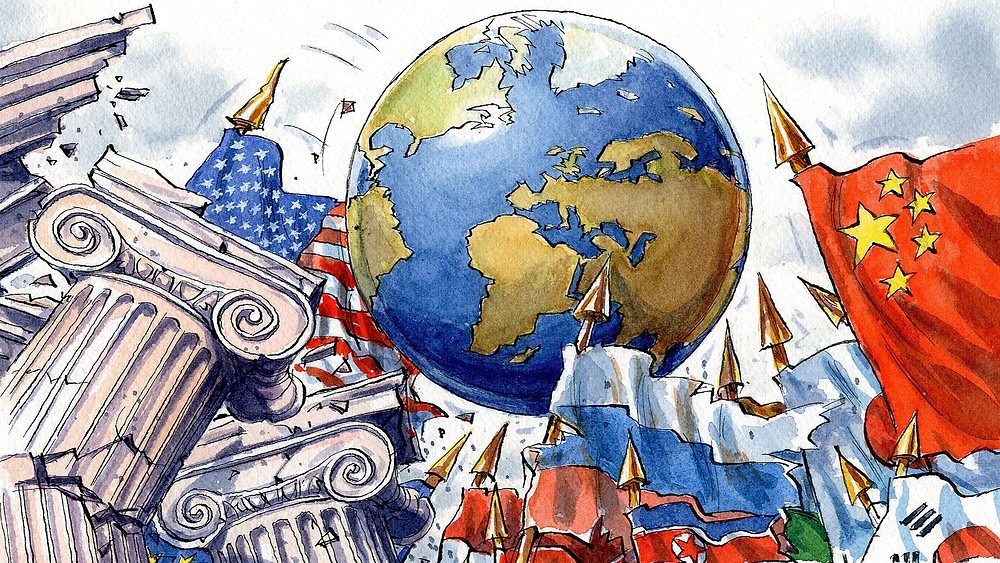
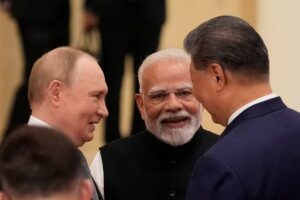
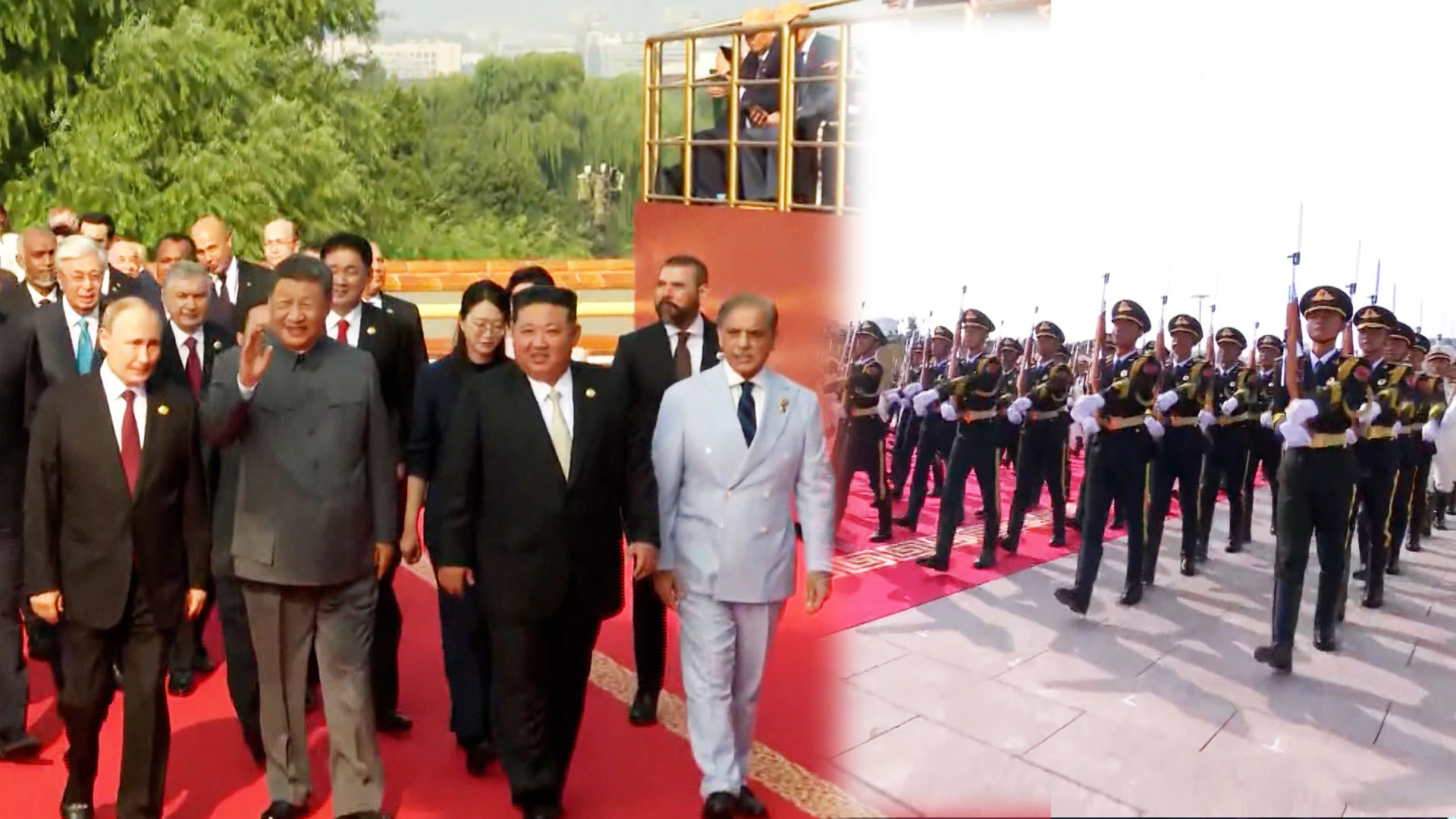
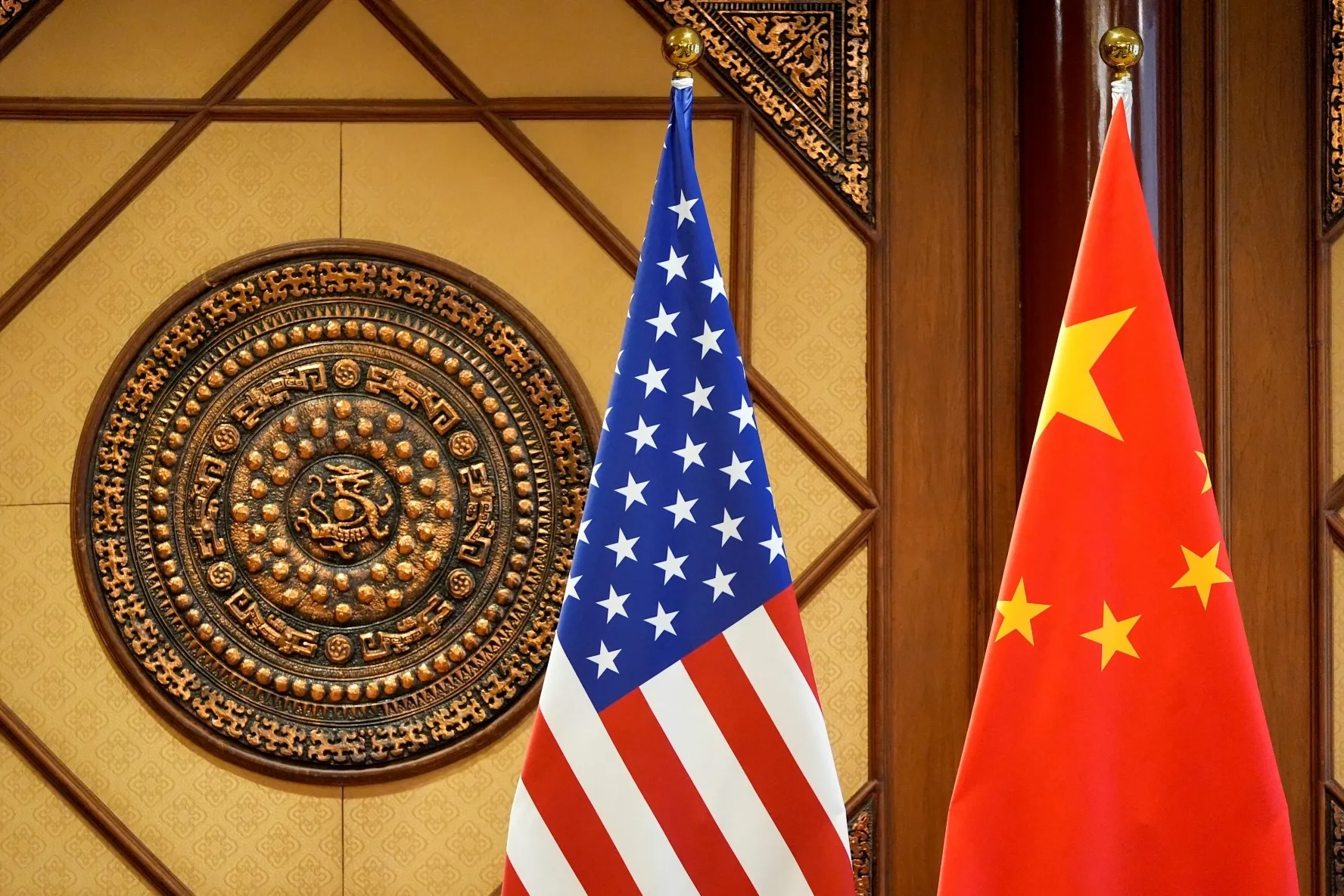
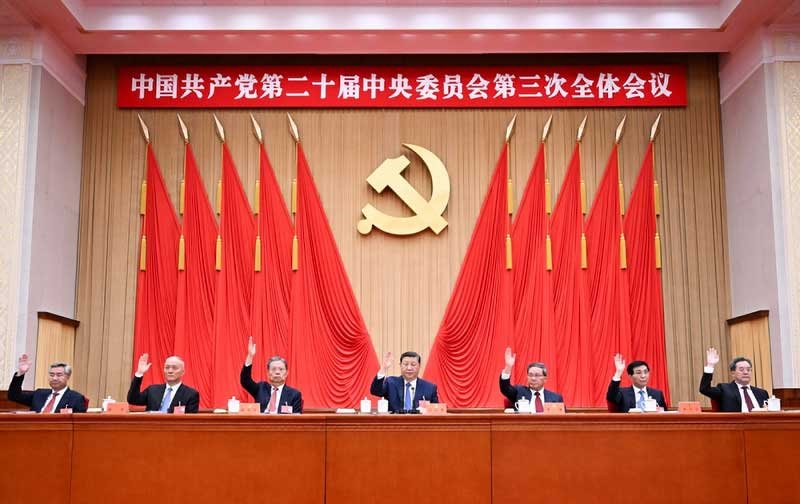
    China’s recent Victory Day parade on September 3, 2025, was more than a ceremonial display; it was a calculated act of strategic signalling to the West. By showcasing its formidable military hardware and hosting close allies such as Russia’s Vladimir Putin and North Korea’s Kim Jong-un, Beijing sought to project its emergence as a great power, much as it did during the 2008 Olympics. By bringing these leaders together, China signalled not only unity but also the contours of an emerging alternative world order that challenges Western dominance.

    The parade sent “chill waves” across Western capitals, with even Donald Trump admitting that he closely followed the event. On social media, he sardonically addressed China: “Please give my warmest regards to Vladimir Putin and Kim Jong Un, as you conspire against the United States of America.” On September 5, 2025, he further voiced his frustration, declaring that the U.S. had “lost India and Russia to deepest, darkest China,” a remark that reflected Washington’s growing unease over Beijing’s expanding influence.

    India, notably absent from China’s Victory Day parade on September 3, 2025, made its own strategic moves. Prime Minister Narendra Modi visited Japan on August 29–30, ahead of the Shanghai Cooperation Organisation (SCO) summit in Tianjin on August 31–September 1. By going to Tokyo first and then to Tianjin, Modi signalled to the West that India continues to prioritise its commitments in the Indo-Pacific, while also reminding Beijing that New Delhi remains open to engagement. During the SCO summit, Modi’s remark that India’s engagement with China “should not be seen through third-country lenses” was intended to reassure the West of India’s balancing strategy.

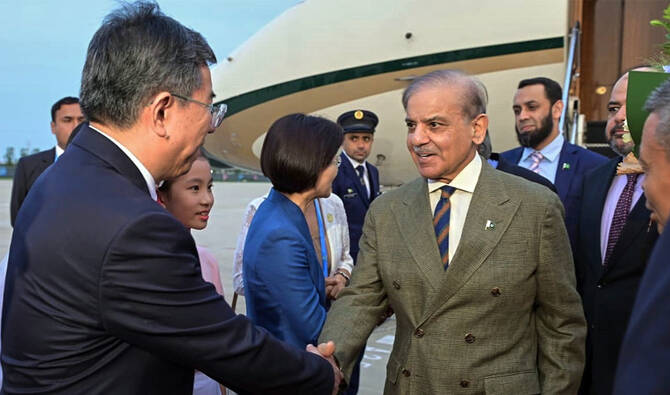
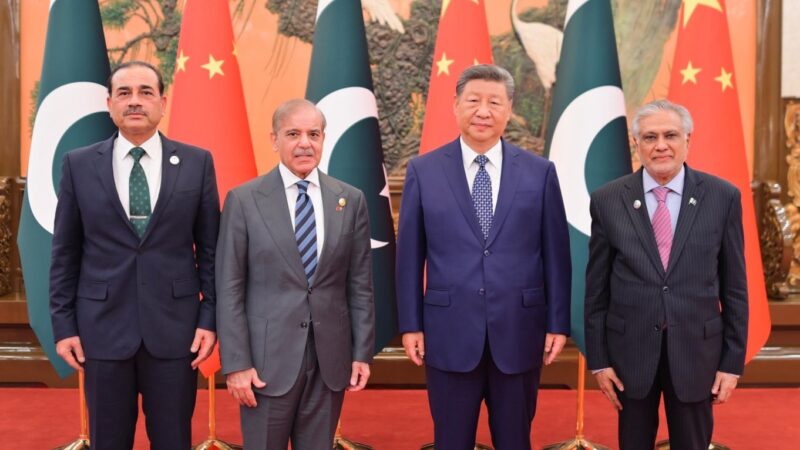
    Yet, amid this choreography of great powers, one country’s presence at the Victory Day parade raised eyebrows: Pakistan. Prime Minister Shehbaz Sharif stood alongside leaders who openly challenge the Western-led order—figures the West often labels as part of an “axis of evil”—despite Pakistan being nominally allied with the United States. What was even more surprising was the silence of Washington and its partners. Had it been India’s leader at the parade, the Western outcry would have been deafening. But when Pakistan did it, no questions were asked. Why this extraordinary tolerance?

    The explanation lies not in Pakistan’s own strategic brilliance. Unlike India, Pakistan lacks genuine strategic agency or independent decision-making capacity. It has long been dependent on external patrons and remains heavily constrained by domestic crises. The narrative advanced by some strategic experts that Islamabad is engaged in a masterful balancing act between Washington and Beijing is misleading. Instead, both the U.S. and China tolerate Pakistan’s duplicity because of its enduring strategic utility against India.

    Washington knows Pakistan’s record all too well. During the War on Terror, Islamabad received over $33 billion in U.S. aid while simultaneously providing sanctuary to Taliban leaders. U.S. officials, including President Trump, repeatedly acknowledged this duplicity. In a tweet on January 1, 2018, Trump stated: ‘The United States has foolishly given Pakistan more than 33 billion dollars in aid over the last 15 years, and they have given us nothing but lies & deceit, thinking of our leaders as fools. They give safe haven to the terrorists we hunt in Afghanistan, with little help. No more!”

    Similarly, Congressman Ted Poe, Chairman of the House Subcommittee on Terrorism, introduced a bill in 2016 calling for Pakistan to be declared a “state sponsor of terrorism,” stating that Pakistan was “not only an untrustworthy ally but has also aided and abetted the enemies of the United States”. Counterterrorism cooperation is, therefore, not the real reason Washington continues to indulge Pakistan. Nor are West Asia’s dynamics or connectivity goals the central factor, though they play a role.

    The real reason is India. Pakistan serves as a pressure valve for Washington to use whenever New Delhi strays from American strategic priorities. Similarly, for Beijing, Pakistan is an indispensable grey-zone tool against India — a reliable proxy that complicates India’s security calculus without requiring direct Chinese involvement. This explains why China continues to describe its relationship with Pakistan as ‘higher than the Himalayas, deeper than the oceans, sweeter than honey, and stronger than steel,’ even though Beijing is fully aware that the “honey” and other lofty adjectives in this partnership are largely rhetorical, given Pakistan’s military establishment has historically maintained close ties with the Pentagon and U.S. defense agencies.

    Recent developments illustrate this pattern. Despite Islamabad striking a minerals deal in Balochistan with the U.S.—an area where China has invested heavily through the China-Pakistan Economic Corridor (CPEC) and even frequently loses its workers to terrorist attacks—Beijing has not retaliated.

    China has invested nearly $60 billion in CPEC projects, including Gwadar Port and associated infrastructure, yet continues to tolerate Pakistan’s parallel engagement with the U.S. Even though just days ago, China exited funding for certain sections of CPEC, such as the Karachi–Rohri stretch of the Main Line-1 railway, the broader corridor remains intact and firmly under Beijing’s control.

    Similarly, Washington has been remarkably quiet about the expansion of CPEC and its recent announcement to extend it into Afghanistan, despite this development directly strengthening Chinese influence in South and Central Asia, which contradicts U.S. national security strategies, including the Indo-Pacific strategy designed to counterbalance China. Imagine if India were to engage China in a similar manner; the Western backlash would be immediate and fierce.

    The silence over Pakistan reveals the underlying logic: both Washington and Beijing find it useful to maintain Islamabad as a strategic lever against India. For China, Pakistan provides military intelligence, operational support, and a constant security distraction for New Delhi, keeping India tied down on its western front. For the U.S., Pakistan is less a partner in counterterrorism than a tool to remind India of the costs of drifting too far from American preferences.

    Thus, Pakistan’s position is not the result of deft balancing or sophisticated statecraft. It is tolerated, even courted, by two rival great powers because of its instrumental value in their respective strategies against India. Far from being an Independent balancer, Pakistan remains a dependent actor whose importance derives almost entirely from the leverage it provides to others.

    For India, the lesson is clear. The tolerance extended to Pakistan by both Washington and Beijing is not about Islamabad’s capabilities or credibility — both powers know well its history of duplicity. Instead, it reflects the centrality of India in global strategy and the willingness of other powers to use Pakistan as a pawn in their broader geopolitical contest. Recognising this reality is essential for shaping New Delhi’s responses, ensuring that India continues to strengthen its autonomy and strategic weight in the Indo-Pacific and beyond.

    Feature Image Credit: India Today

    Pictures in Text: www.arabnews.com, www.nationalheraldindia.com, www.deccanherald.com

  • India’s war on the Mughal Empire

    India’s war on the Mughal Empire

    The profound legacies of the Mughal Empire, forged through a remarkable fusion of Persian and Sanskrit worlds, are now under siege from a mythical vision of India’s past.

    On every 15 August since 1947, India’s Independence Day, the country’s prime minister unintentionally acknowledges the Mughals’ political legacy by delivering a nationwide address from the parapets of the mightiest symbol of Mughal power – Delhi’s massive Red Fort, built in 1648.

    ‘As is true of autocracies everywhere’, wrote David Remnick last April, ‘this Administration demands a mystical view of an imagined past.’  Although Remnick was referring to Trump’s America, something of the same sort could be said of India today. Informed by Hindutva (Hindu-centric) ideals, the country’s governing BJP party imagines a Hindu ‘golden age’ abruptly cut short when Muslim outsiders invaded and occupied an imagined sacred realm, opening a long and dreary ‘dark age’ of anti-Hindu violence and tyranny. In 2014, India’s prime minister declared that India had experienced 1,200 years of ‘slavery’ (ghulami), referring to ten centuries of Muslim rule and two of the British Raj. But whereas the British, in this view, had the good sense to go home, Muslims never left the land they had presumably violated and plundered. To say the least, India’s history has become a political minefield.

    Today’s India would be unrecognisable without the imprint the Mughals had made, and continue to make, on its society and culture. It was they who, for the first time, unified most of South Asia politically.

    Between the early 16th and the mid-18th century, towards the end of those 12 centuries of alleged ‘slavery’, most of South Asia was dominated by the Mughal Empire, a dazzling polity that, governed by a dynasty of Muslims, was for a while the world’s richest and most powerful state. Although it declined precipitously during the century before its liquidation by Queen Victoria in 1858, today’s India would be unrecognisable without the imprint the Mughals had made, and continue to make, on its society and culture. It was they who, for the first time, unified most of South Asia politically. On every 15 August since 1947, India’s Independence Day, the country’s prime minister unintentionally acknowledges the Mughals’ political legacy by delivering a nationwide address from the parapets of the mightiest symbol of Mughal power – Delhi’s massive Red Fort, built in 1648. Much of modern India’s administrative and legal infrastructure was inherited from Mughal practices and procedures. The basis of India’s currency system today, the rupee, was standardised by the Mughals. Indian dress, architecture, languages, art, and speech are all permeated by Mughal practices and sensibilities. It’s hard to imagine Indian music without the sitar, the tabla, or the sarod. Almost any Indian restaurant, whether in India or beyond, will have its tandoori chicken, kebab, biryani, or shahi paneer. One can hardly utter a sentence in a north Indian language without using words borrowed from Persian, the Mughals’ official language. India’s most popular entertainment medium – Bollywood cinema – is saturated with dialogue and songs delivered in Urdu, a language that, rooted in the vernacular tongue of the Mughal court, diffused throughout India thanks to its association with imperial patronage and the prestige of the dynasty’s principal capital, Delhi.

    Yet, despite all this, and notwithstanding the prime minister’s national address at Delhi’s Red Fort, India’s government is engaged in a determined drive to erase the Mughals from public consciousness, to the extent possible. In recent years, it has severely curtailed or even abolished the teaching of Mughal history in all schools that follow the national curriculum. Coverage of the Mughals has been entirely eliminated in Class Seven (for students about 12 years old), a little of it appears in Class Eight, none at all in Classes Nine to 11, and a shortened version survives in Class 12. In 2017, a government tourism brochure omitted any mention of the Taj Mahal, the acme of Mughal architecture and one of the world’s most glorious treasures, completed in 1653. Lawyers in Agra, the monument’s site, have even petitioned the courts to have it declared a Hindu temple.

    Although such radical measures have failed to gain traction, the national government has made more subtle efforts to dissociate the monument from the Mughals and identify it with Hindu sensibilities. For example, authorities have eliminated the initial ‘a’ from the name of one of its surrounding gardens, so that what had been Aram Bagh, the ‘Garden of Tranquility’, is now Ram Bagh, the ‘Garden of Ram’, the popular Hindu deity. This is the same deity to which India’s current government recently dedicated an extravagant temple complex on the site of the Babri Masjid, the mosque in eastern India that the Mughal Empire’s founder had built in 1528, but which a mob of Hindu activists tore down brick by brick in 1992.

    All of this prompts two related questions: how did a rich, Persian-inflected Mughal culture sink such deep roots in today’s India in the first place? And why in recent years has the memory of that culture come under siege?

    Ever since the early 13th century, a series of dynastic houses, known collectively as the Delhi sultanate, had dominated the north Indian plain. The last of these houses, the ethnically Afghan Lodis, was dislodged by one of the most vivid figures in early modern history, Zahir al-Din Babur(1483-1530). In 1526, Babur led an army of mostly free-born Turkish retainers from his base in Kabul, down through the Khyber Pass and onto the wide Indo-Gangetic plain, thereby launching what would become the Mughal Empire.

    As was true for the Delhi sultans, the new polity’s success lay in controlling access to ancient trade routes connecting Delhi and Lahore with Kabul, Balkh, and Central Asian markets, such as Samarkand and Bukhara. For centuries, cotton and other Indian goods moved northwards along this route, while horses – more than a hundred thousand annually, by Babur’s day – moved southwards to markets across South Asia. War horses had long formed the basis of power for Indian states, together with native war elephants. But the larger and stronger horses preferred by Indian rulers had to be continually imported from abroad, especially from Central Asia’s vast, long-feathered grasslands where native herds roamed freely.

    Having established a fledgling kingdom centred on Delhi, Agra and Lahore, Babur bequeathed to his descendants a durable connection to the cosmopolitan world of Timurid Central Asia, a refined aesthetic sensibility, a love of the natural world reflected in his delightful memoir, the Baburnama, and a passion for gardens. Aiming to recreate in India the refreshing paradisiac spaces that he knew from his Central Asian homeland, Babur built gardens across his realm, a practice his descendants would continue, culminating in the Taj Mahal.

    Since he died only four years after reaching India, Babur’s new kingdom merely continued many institutions of the defeated Lodis, such as giving his most trusted retainers land assignments, from which they collected taxes and maintained specified numbers of cavalry for state use. It was Babur’s son Humayun (r. 1530-40, 1555-56) who took the first steps to deepen the roots of Mughal legitimacy in Indian soil, as when he married the daughter of an Indian Muslim landholder rather than a Central Asian Turk, a practice he encouraged his nobles to follow. More importantly, while seated in a raised pavilion (jharokha) that projected from his palace’s outer walls, he would greet the morning’s rising sun and show his face to the public, just as the sun showed itself to him. This followed an ancient practice of Indian rajas that subtly conflated the image of a seated monarch with the icon of a Brahmanical deity, before whom one pays respectful devotion through mutual eye contact (darshan).

    The Mughals became further Indianised during the long reign of Humayun’s son Akbar (r. 1556-1605). Whereas for three centuries the Delhi sultans had struggled to defeat the Rajput warrior clans that dominated north India’s politics, Akbar adopted the opposite policy of absorbing them into his empire as subordinate kings. Nearly all Rajput kings accepted this arrangement, for by doing so they could retain rulership over their ancestral lands while simultaneously receiving high-ranking positions in Akbar’s newly created ruling class – the imperial mansabdars. Their new status also allowed them to operate on an all-India political stage instead of remaining provincial notables. Moreover, they were granted religious freedom, including the right to build and patronise Hindu temples. Over time, there emerged a warrior ethos common to both Mughals and Rajputs that superseded religious identities, allowing the latter to understand Muslim warriors as fellow Rajputs, and even to equate Akbar himself with the deity Rama. For their part, Akbar and his successors, as the Rajputs’ sovereign overlords, acquired regular tribute payments from subordinate dynastic houses, the service of north India’s finest cavalry, access to the sea through Rajasthani trade routes leading to Gujarat’s lucrative markets, and the incorporation of Rajput princesses in the imperial harem.

    Moreover, since Rajput women could become legal wives of the emperor, from Akbar’s time onwards, an emperor’s child by a Rajput mother was eligible for the throne. As a result, Akbar’s son Jahangir (r. 1605-23) was half Rajput, as his mother was a Rajput princess. Jahangir, in turn, married seven daughters of Rajput rulers, one of whom was the mother of his imperial successor Shah Jahan, making the latter biologically three-quarters Rajput.

    This last point proved especially consequential. As more Rajput states submitted to Mughal overlordship, the imperial court swelled into a huge, multi-ethnic and women-centred world in which the Rajput element steadily gained influence over other ethnicities. Moreover, since Rajput women could become legal wives of the emperor, from Akbar’s time onwards, an emperor’s child by a Rajput mother was eligible for the throne. As a result, Akbar’s son Jahangir (r. 1605-23) was half Rajput, as his mother was a Rajput princess. Jahangir, in turn, married seven daughters of Rajput rulers, one of whom was the mother of his imperial successor Shah Jahan, making the latter biologically three-quarters Rajput.

    Inevitably, Rajput mothers in the imperial harem imparted their culture to their offspring, who were raised in the harem world. This allowed Indian sensibilities and values to seep deeply into Mughal imperial culture, reflected in imperial art, architecture, language, and cuisine. At the same time, the absorption of Rajput cavalry in the imperial system allowed native military practices to diffuse throughout the empire’s military culture.

    The Mughals engaged with Sanskrit literary traditions and welcomed Brahmin and Jain scholars to their courts. From the 1580s on, Akbar sponsored Persian translations of the great Sanskrit epics Mahabharata and Ramayana, effectively accommodating Indian thought to Mughal notions of statecraft.

    Like all authentically Indian emperors, moreover, the Mughals engaged with Sanskrit literary traditions and welcomed Brahmin and Jain scholars to their courts. From the 1580s on, Akbar sponsored Persian translations of the great Sanskrit epics Mahabharata and Ramayana, effectively accommodating Indian thought to Mughal notions of statecraft. Whereas the Sanskrit Mahabharata stressed cosmic and social order (dharma), its Persian translation stressed the proper virtues of the king. Similarly, the Sanskrit Ramayana was subtly refashioned into a meditation on Mughal sovereignty, while the epic’s hero, Rama, was associated with Akbar himself, as though the emperor were an avatar of Vishnu.

    Beginning with Akbar, the Mughals also fostered cultural fusions in the domains of medicine and astronomy.  By the mid-17th century, the Mughals’ Greco-Arab (Yunani) medical tradition had become thoroughly Indianised, as Indo-Persian scholars engaged with Indian (Ayurvedic) works on pharmacology and the use of native Indian plants.

    Similarly, from the late 16th century on, Persian-Sanskrit dictionaries allowed Sanskrit scholars to absorb Arabo-Persian ideas that had derived from ancient Greek understandings of the uniformity of nature and laws of motion. That knowledge, together with astronomical tables patronised by Shah Jahan that enabled the prediction of planetary movements, then spread among the Mughal-Rajput ruling class at large.

    The most telling indication of the public’s acceptance of the Mughals as authentically Indian is that in both the 18th and 19th centuries, when the empire faced existential threats from outside, native forces rallied around the Mughal emperor as the country’s sole legitimate sovereign. In 1739, the Persian warlord Nadir Shah invaded India, routed a much larger Mughal army, sacked Delhi, and marched back to Iran with enormous loot, including the symbolically charged Peacock Throne. At this moment, the Marathas, who for decades had fiercely resisted the imposition of Mughal hegemony over the Indian peninsula, realised that the Mughals represented the ultimate symbol of Indian sovereignty and must be preserved at all costs. The Marathas’ chief minister Baji Rao (1700-40) even proposed that all of north India’s political stakeholders form a confederation to support and defend the weakened Mughal dynasty from foreign invaders.

    Similarly, by the mid-19th century, the English East India Company had acquired de facto control over much of the subcontinent, while the reigning Mughal ruler, Bahadur II (r. 1837-57), had been reduced to a virtual prisoner in Delhi’s Red Fort, an emperor in name only. But in 1857, a rebellion broke out when a disaffected detachment of the Company’s own Indian troops massacred their English officers in the north Indian cantonment of Meerut. Seeking support for what they hoped would become an India-wide rebellion, the mutineers then galloped down to Delhi and enthusiastically rallied around a rather bewildered Bahadur II.  Notwithstanding his own and his empire’s decrepit condition, to the rebels, this feeble remnant of the house of Babur still represented India’s legitimate sovereign.

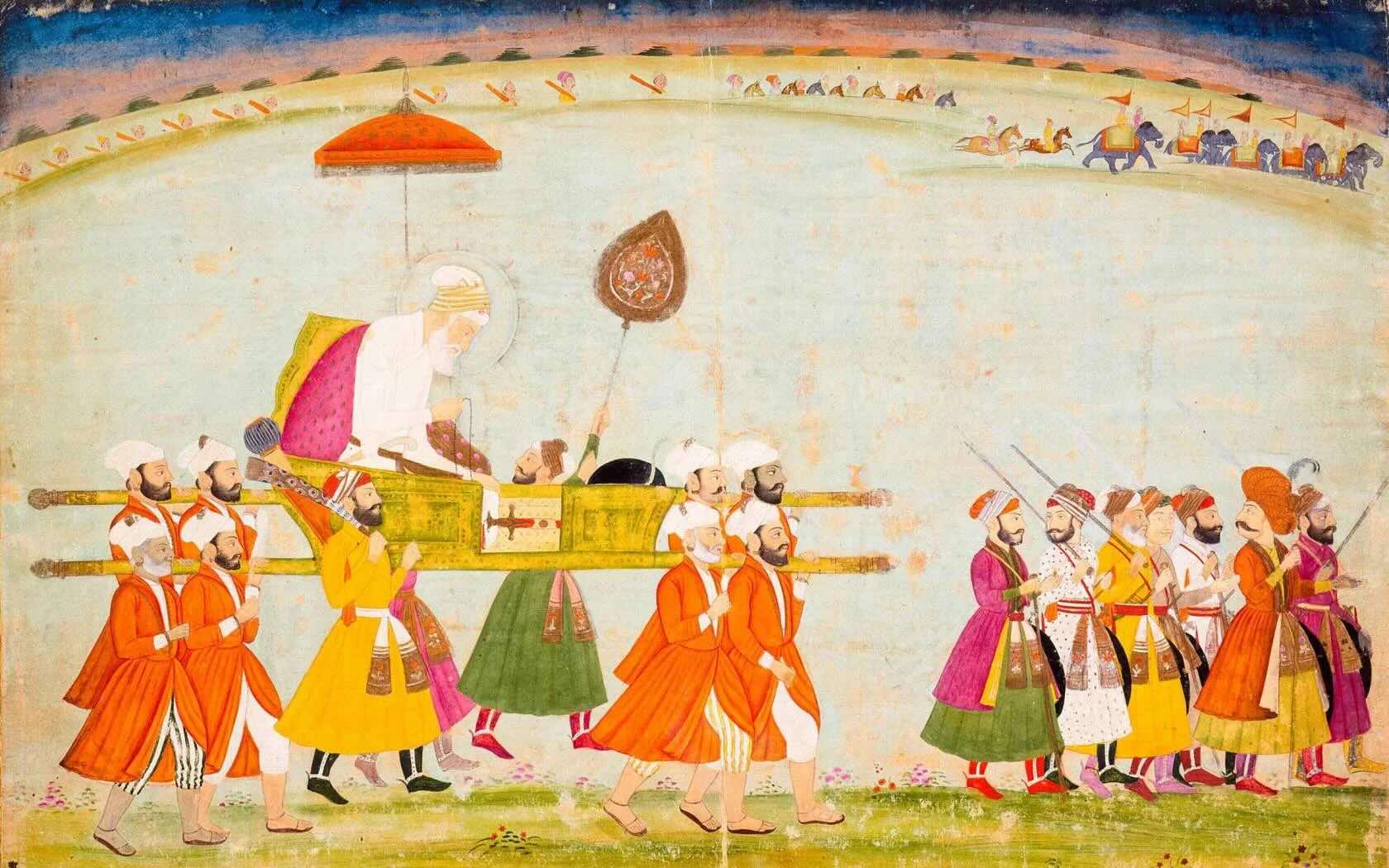
    Through the Mughals’ twilight years, spanning the two incidents mentioned above, one emperor was especially revered in public memory – ‘Alamgir (r. 1658-1707), widely known today by his princely name, Aurangzeb. Upon his death, large and reverential crowds watched his coffin move 75 miles across the Deccan plateau to Khuldabad, a saintly cemetery in present-day Maharashtra. There, the emperor’s body was placed, at his own request, in a humble gravesite open to the sky, quite unlike the imposing monuments built to glorify the memory of his dynastic predecessors (excepting Babur). That simple tomb soon became an object of intense popular devotion. For years, crowds thronged his gravesite, beseeching ‘Alamgir’s intercession with the unseen world, for his saintly charisma (baraka) was believed to cling to his gravesite, just as in life it had clung to his person. For, during his lifetime, the emperor was popularly known as ‘Alamgir zinda-pir, or ‘Alamgir, the living saint’, one whose invisible powers could work magic.

    ‘Alamgir’s status as a saintly monarch continued to grow after his death in 1707. Already in 1709, Bhimsen Saksena, a former imperial official, praised ‘Alamgir for his pious character and his ability to mobilise supernatural power in the empire’s cause. In 1730, another retired noble, Ishwar Das Nagar, credited ‘Alamgir for the exceptional peace, security, and justice that had characterised his long reign. Nagar’s account followed a spate of histories that praised the emperor as a dedicated, even heroic administrator, and his half-century reign as a ‘golden age’ of governmental efficiency.

    Further contributing to ‘Alamgir’s cult was the appearance of hundreds of images depicting the emperor engaged in administration, military activity, or religious devotion. Reflecting the extent of the ‘Alamgir cult, many of these post-1707 paintings were produced not at the imperial court but in north India’s Hindu courts, including those of the Mughals’ former enemies. No other Mughal emperor was so venerated, and for so long a period, as ‘Alamgir.

    Over time, however, Indians gradually came to see the Mughal period – and especially ‘Alamgir’s reign – in an increasingly negative light. As the East India Company attained control over South Asia in the late 18th century, British administrators, being unable as foreigners to deploy a nativist rationale to justify their rule, cited the efficiency, justice, peace and stability that they had brought to their Indian colony. And because the Mughals had immediately preceded the advent of Company rule, those rulers were necessarily construed as having been inefficient and unjust despots in a war-torn and unstable land. The colonial understanding of Muslims and Hindus as homogeneous and mutually antagonistic communities also facilitated aligning colonial policies with the old Roman strategy of divide et impera. More perniciously, the colonial view of the Mughals as alien ‘Mahomedans’ who had oppressed a mainly non-Muslim population reinforced the notion of a native Hindu ‘self’ and a non-native Muslim ‘other’ – constructions that would bear bitter fruit.

    Although originating from within the colonial regime, such ideas gradually percolated into the public domain as the 19th century progressed and Indians became increasingly absorbed in the Raj’s educational and administrative institutions. It was not until the 1880s, with the first stirrings of Indian nationalist sentiment, however, that such colonial tropes became widely politicised. As the possibility of an independent nation took root, Indian nationalists began to look to their own past for models that might inspire and mobilise mass support for their cause. The writing of history soon became a political endeavour, ultimately degenerating into a black-and-white morality play that clearly distinguished heroes from villains. In short, India’s precolonial past became a screen onto which many – though not all – Hindu nationalists projected the tropes of the Hindu self and the Muslim other.

    Between 1912 and 1924, one of India’s most esteemed historians, Jadunath Sarkar, published his five-volume History of Aurangzib, the princely name of ‘Alamgir, who would soon become the most controversial – and ultimately the most hated – ruler of the Mughal dynasty. Sarkar’s study was so detailed, so thoroughly researched, and so authoritative that, in the century following its publication, no other historian even attempted a thorough survey of ‘Alamgir’s reign.

    Importantly, Sarkar wrote against the backdrop of the Great War and a nationalist movement that was just then reaching a fever pitch. In 1905, Lord Curzon, the Viceroy for India, had partitioned Sarkar’s native province of Bengal in half, a cynical divide-and-rule measure that ‘awarded’ Bengali Muslims with their own Muslim-majority province of eastern Bengal. The very next year, there appeared the All-India Muslim League, a political party committed to protecting the interests of India’s Muslims. Meanwhile, the partition of Bengal had provoked a furious protest by Bengali Hindus, leading to India-wide boycotts against British-made goods. Ultimately, the government gave in to Hindu demands and, in 1911, annulled the partition, which only intensified fear and anxiety within India’s Muslim minority community.

    It was in this highly charged political atmosphere that Sarkar worked on his biography of ‘Alamgir. With each successive volume of his study, the emperor was portrayed in darker colours, as were Muslims generally. In the end, Sarkar blamed ‘Alamgir for destroying Hindu schools and temples, thereby depriving Hindus of the ‘light of knowledge’ and the ‘consolations of religion’, and for exposing Hindus to ‘constant public humiliation and political disabilities’. Writing amid the gathering agitation for an independent Indian nation, Sarkar maintained that ‘no fusion between the two classes [Hindus and Muslims] was possible’, adding that while a Muslim might feel that he was in India, he could not feel of India, and that ‘Alamgir ‘deliberately undid the beginnings of a national and rational policy which Akbar [had] set on foot.’

    Perhaps more than any other factor, Sarkar’s negative assessment of ‘Alamgir has shaped how millions have thought about that emperor’s place in Indian history. Since the publication of History of Aurangzib, professional historians have generally shied away from writing about the emperor, as though he were politically radioactive. This, in turn, opened up space in India’s popular culture for demagogues to demonise the Mughal emperor. For millions today, ‘Alamgir is the principal villain in a rogues’ gallery of premodern Indo-Muslim rulers, a bigoted fanatic who allegedly ruined the communal harmony established by Akbar and set India on a headlong course that, many believe, in 1947, culminated in the creation of a separate Muslim state, Pakistan. In today’s vast, anything-goes blogosphere, in social media posts, and in movie theatres, he has been reduced to a cardboard cutout, a grotesque caricature serving as a historical punching bag. A recent example is the film Chhaava, a Bollywood blockbuster that was released on February 14, 2025 and has since rocketed to superstar status. Among films in only their sixth week since release, already by late March, it had grossed the second-largest earnings in Indian cinema history.

    Loosely based on a Marathi novel of the same title, Chhaava purports to tell the story of a pivotal moment in ‘Alamgir’s 25-year campaign to conquer the undefeated states of the Deccan plateau. These included two venerable sultanates, Bijapur and Golkonda, and the newly formed Maratha kingdom, launched in 1674 by an intrepid chieftain and the Mughals’ arch-enemy, Shivaji (r. 1674-80). The film concerns the reign of Shivaji’s elder son and ruling successor, Sambhaji (r. 1680-89), his struggles with Mughal armies, and finally his capture, torture, and execution at ‘Alamgir’s order in 1689.

    The film is not subtle. With its non-stop violence, gratuitous blood and gore, overwrought plot, and black-and-white worldview, the movie turns the contest between Sambhaji and ‘Alamgir into a cartoonish spectacle, like a Marvel Comics struggle between Spiderman and Doctor Doom. Whereas Sambhaji single-handedly vanquishes an entire Mughal army, ‘Alamgir is pure, menacing evil. Mughal armies display over-the-top brutality toward civilians: innocent Indians are hanged from trees, women are sexually assaulted, a shepherdess is burned to death, and so forth.

    In reality, ‘Alamgir is not known to have plundered Indian villages or attacked civilians (unlike the Marathas themselves, whose raids in Bengal alone caused the deaths of some 400,000 civilians in the 1740s). On the other hand, contemporary sources record Sambhaji’s administrative mismanagement, his abandonment by leading Maratha officers inherited from his father reign, his weakness for alcohol and merry-making, and how, instead of resisting Mughal forces sent to capture him, he hid in a hole in his minister’s house, from which he was dragged by his long hair before being taken to ‘Alamgir.

    Historical accuracy is not Chhaava’s strength, nor its purpose. More important are its consequences. Within weeks of its release, the film whipped up public fury against ‘Alamgir and the Mughals. In one venue where the movie was showing, a viewer wearing medieval warrior attire rode into the theatre on horseback; in another, a viewer became so frenzied during the film’s protracted scene of Sambhaji’s torture that he leapt to the stage and began tearing the screen apart.

    Politicians swiftly joined the fray. In early March, a member of India’s ruling BJP party demanded that ‘Alamgir’s grave be removed from Maharashtra, the heartland of the Maratha kingdom. On 16 March, another party member went further, demanding that the emperor’s tomb be bulldozed. The next day, a riot broke out in Nagpur, headquarters for the far-right Rashtriya Swayamsevak Sangh, India’s paramilitary Hindu supremacist organisation. It began when around 100 activists who supported bulldozing ‘Alamgir’s grave burned an effigy of the emperor. In response, a group of the city’s Muslims staged a counter-protest, culminating in violence, personal injuries, the destruction of property, and many arrests. The fevered demand for bulldozing ‘Alamgir’s final resting place, however, is deeply ironic. In 1707, Sambhaji’s son and eventual successor to the Maratha throne, Shahu, travelled 75 miles on foot to pay his pious respects to ‘Alamgir’s tomb.

    In the end, the furore over ‘Alamgir’s gravesite illustrates the temptation to adjust the historical past to conform to present-day political priorities. Indicating the Indian government’s support for Chhaava’s version of history, in late March, India’s governing party scheduled a special screening of the film in New Delhi’s Parliament building for the prime minister, Cabinet ministers, and members of parliament.

    Nor is it only the historical past that is being adjusted to accord with present-day imagination. So is territory. In 2015, the Indian government officially renamed New Delhi’s Aurangzeb Road – so-named when the British had established the city – after a former Indian president. Eight years later, the city of Aurangabad, which Prince Aurangzeb named for himself while governor of the Deccan in 1653, was renamed Sambhaji Nagar, honouring the man the emperor had executed in 1689.

    Such measures align with the government’s broader agenda to scrub from Indian maps place names associated with the Mughals or Islam and replace them with names bearing Hindu associations, or simply to Sanskritise place-names containing Arabic or Persian lexical elements. Examples include: Mustafabad to Saraswati Nagar (2016), Allahabad to Prayagraj (2018), Hoshangabad to Narmadapuram (2021), Ahmednagar to Ahilyanagar (2023), and Karimgunj to Sribhumi (2024). Many more such changes have been proposed – at least 14 in the state of Uttar Pradesh alone – but not yet officially authorised.

    It is said that the past is a foreign country. Truly, one can never fully enter the mindset of earlier generations. But if history is not carefully reconstructed using contemporary evidence and logical reasoning, and if it is not responsibly presented to the public, we risk forever living with a ‘mystical view of an imagined past’ with all its attendant dangers, as Remnick warns.


    This essay was published earlier on www.engelsbergideas.com

    Feature Image Credit: www.engelsbergideas.com
     

  • India–U.S. Ties Beyond the Trump Show

    India–U.S. Ties Beyond the Trump Show

    With its deep institutional roots and strategic clarity, the India–U.S. relationship is well-positioned to advance further, driven not by transient rhetoric but by enduring common purpose

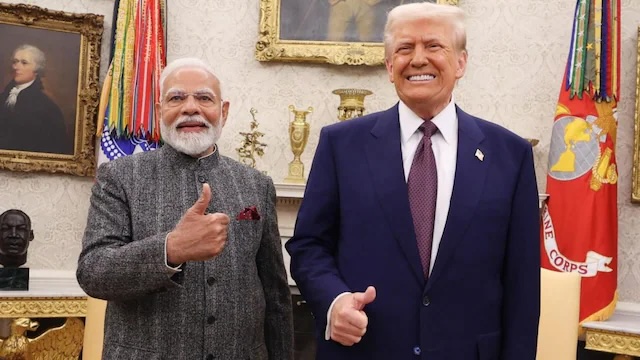
    U.S. President Donald Trump’s repeated assertions about mediating a ceasefire between India and Pakistan have reignited long-standing apprehensions surrounding external involvement in the Kashmir issue. His remarks, including those referenced during a U.S. court hearing in May 2025—where U.S. Commerce Secretary Howard Lutnick testified that the Trump administration’s trade policies helped avert a potential nuclear confrontation in South Asia—were met with widespread criticism from strategic experts and policymakers alike. New Delhi has remained steadfast in its position: the issue of Jammu and Kashmir is strictly bilateral and not subject to international mediation.

    Diaspora Influence and Institutional Depth

    Despite Trump’s controversial rhetoric, the India–U.S. relationship has matured well beyond the influence of individual leaders. It now stands as a robust, multi-dimensional partnership, underpinned by shared strategic interests, deepening economic ties, and strong people-to-people linkages. This is evident through the formalization of the relationship via key agreements and strategic initiatives. Today, it is regarded as a promising and one of the most consequential partnerships of the 21st century, given its potential to reshape the dynamics of the Indo-Pacific region and beyond. Moreover, this strength is particularly reflected in the vibrant Indian diaspora in the United States—numbering over four million—one of the most educated and affluent immigrant communities in the country, playing an increasingly influential role in shaping policy.


    The diaspora’s clout in U.S. policymaking has grown remarkably. A striking example of this influence was witnessed during the COVID-19 crisis in 2021. At a critical juncture, when the Biden administration had imposed export restrictions on essential medical supplies, Indian-Americans mounted an organized lobbying campaign. Their efforts succeeded in convincing the administration to reverse the ban and dispatch critical medical equipment and raw materials for vaccines to India. This intervention demonstrated the community’s capacity to influence key policy decisions at the highest levels. Their role is not limited to crisis management. The Indian-American community has been instrumental in advancing landmark initiatives such as the U.S.–India civil nuclear agreement, and today, many Indian-Americans serve in influential roles within the U.S. government. This diaspora acts as a cultural and strategic bridge, enhancing bilateral understanding and reinforcing long-term cooperation.

    The evolving India–U.S. partnership is bolstered by a diverse and committed set of stakeholders,including government institutions, private enterprises, think tanks, academic bodies, and civil society in both nations. Crucially, U.S. institutions such as the State Department and Congress continue to regard India as a vital strategic partner, particularly in the context of the Indo-Pacific strategy and broader efforts to counterbalance China’s growing regional influence. These institutions take a long-term, bipartisan approach to India–U.S. relations, one that is grounded in continuity and strategic alignment rather than reactive or transactional impulses, such as those reflected in Trump’s pronouncements.

    Strategic Continuity

    Trump’s leadership style has often been described as transactional, business-oriented, and self-promoting. He frequently projects himself as a master negotiator and dealmaker, but many of his actions suggest otherwise. His tendency to prematurely claim success and take credit has often weakened his own negotiating position, whether in the context of Ukraine, North Korea, Iran, or South Asia. For instance, Trump repeatedly announced breakthroughs in negotiations between Russia and Ukraine that never materialized, thereby weakening his credibility and diminishing his effectiveness as a serious diplomatic actor.

    While Trump’s erratic rhetoric may generate headlines, it is critical not to exaggerate its impact on this deeply rooted relationship. His habitual tendency to seek the spotlight and amplify his personal role in global diplomacy often lacked substantive backing or long-term vision.

    In the case of India and Pakistan, Trump’s attempt to “hyphenate” the relationship—suggesting he could broker a deal between both nations—ignored the decades-long efforts by previous U.S. administrations to de-hyphenate the ties and treat each relationship on its own strategic merits. His statement that “they’ve been fighting for 1,500 years” reveals a superficial understanding of South Asian geopolitics and history. Such remarks reflect a lack of diplomatic nuance and strategic depth.

    In contrast, previous U.S. presidents devoted sustained efforts toward cultivating strategic trust with India—especially in light of their fraught Cold War history and the lingering presence of anti-American sentiment within Indian political and intellectual circles. During this era, American foreign policy toward India embodied a form of strategic altruism, emphasizing long-term engagement grounded in mutual respect rather than immediate concessions or gains. Successive administrations—Republican and Democratic alike, including Trump’s own during his first term—recognized the importance of winning India’s trust, acknowledging its historic skepticism of U.S. intentions and its adherence to a non-aligned foreign policy stance.

    These efforts bore fruit in the form of landmark agreements and growing strategic alignment across a broad spectrum of areas, including defense cooperation, civil nuclear energy, high technology, artificial intelligence, cybersecurity, and counterterrorism. Recent developments—including the Initiative on Critical and Emerging Technologies (iCET), the U.S.–India Major Defense Partnership Framework (2025–2035), the COMPACT Initiative, and collaborations through platforms like INDUS-X and the Artemis Accords—have deepened cooperation. These engagements signify that the India–U.S. partnership is now an essential component of the 21st-century global security and economic architecture.

    the India–U.S. partnership rests on far more stable and enduring foundations: bipartisan consensus within the U.S. strategic establishment, shared democratic values, converging geopolitical interests, and institutional mechanisms that safeguard continuity and progress.

    While Trump’s erratic rhetoric may generate headlines, it is critical not to exaggerate its impact on this deeply rooted relationship. His habitual tendency to seek the spotlight and amplify his personal role in global diplomacy often lacked substantive backing or long-term vision.  Even his relationship with Elon Musk—once a vocal ally who contributed nearly $300 million to pro-Trump political efforts during the 2024 campaign—has deteriorated into public conflict, highlighting the unpredictability of Trump’s leadership style. In stark contrast, the India–U.S. partnership rests on far more stable and enduring foundations: bipartisan consensus within the U.S. strategic establishment, shared democratic values, converging geopolitical interests, and institutional mechanisms that safeguard continuity and progress.

    West Asia dynamics: No Indian shift

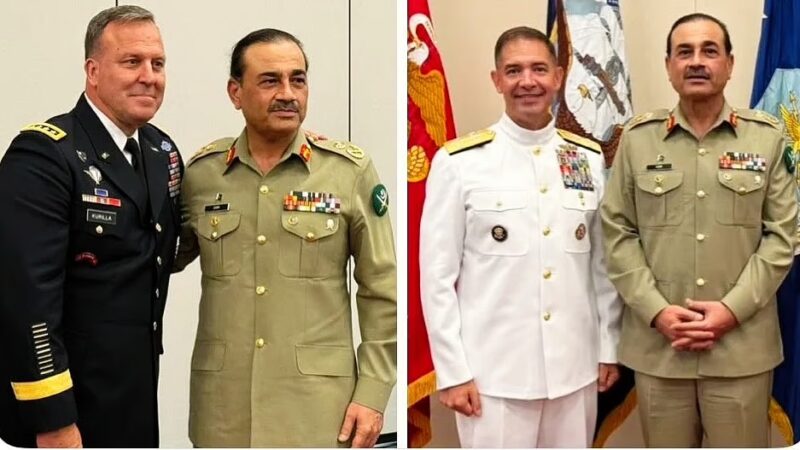
    Moreover, recent U.S. gestures toward Pakistan—including inviting Pakistan’s Army Chief to U.S. Army Day celebrations, public praise for its leadership, the release of funds for upgrading the F-16 fleet—and support in securing IMF bailout packages—should be analysed through the lens of broader strategic imperatives, particularly concerning Iran. Amid escalating tensions with Tehran and recent Israeli airstrikes on Iranian targets by its close ally Israel, Washington may be positioning itself for potential regional contingencies and wider escalation. In this context, logistical access to Pakistani military bases—notably Noor Khan Airbase, and other facilities which, according to senior analyst Imtiaz Gul, is already under partial U.S. operational control—could become critical. Pakistan has a history of facilitating U.S. military operations, such as during the War on Terror. Given its proximity to Iran, Pakistan is strategically well-placed to support U.S. initiatives in the region.

    The U.S. may also seek to ensure that Pakistan remains aligned with Western objectives should Israel act unilaterally against Iran. Therefore, recent goodwill gestures by the U.S. toward Pakistan should be interpreted not as a shift away from India, as some within the Indian strategic establishment might fear, but as part of a calculated strategy to secure regional flexibility amid evolving geopolitical uncertainties in West Asia.

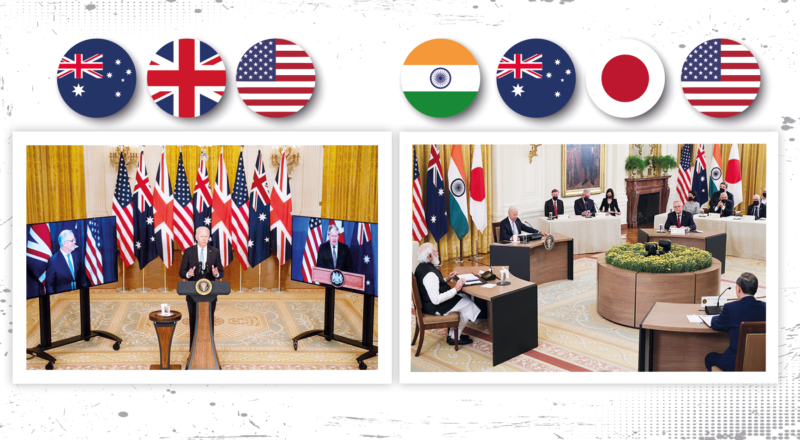
    Ultimately, the strength and resilience of the India–U.S. relationship derive from its firm institutional foundation and shared strategic vision. It is largely insulated from the whims of transient political figures. Despite periodic turbulence, the partnership has demonstrated remarkable continuity and adaptability. Key U.S. national security documents—including the Indo‑Pacific Strategy and the National Security Strategy—consistently describe India as a “major defense partner” and an indispensable actor in the effort to balance China’s regional ambitions. These structural commitments ensure that the bilateral relationship remains on a trajectory of deepening cooperation. As articulated in the 2022 U.S. Indo-Pacific Strategy, India is seen as a “like-minded partner and leader in South Asia and the Indian Ocean, active in and connected to Southeast Asia,” and a “driving force of the Quad and a net security provider in the region.”

    Conclusion

    Today, the India–U.S. relationship stands as a beacon of mutual trust, strategic alignment, and forward-looking engagement. Decades of deliberate diplomacy, institutional investment, and cultural linkage have given rise to one of the most promising partnerships of the 21st century. While figures like President Trump may generate momentary uncertainty, they lack the capacity to derail the deep-rooted and multidimensional nature of this partnership. The future of India–U.S. relations remains bright, anchored in shared democratic ideals, strategic complementarity, and a common vision for a free, open, and inclusive Indo-Pacific.

    Feature Image credit: news18.com

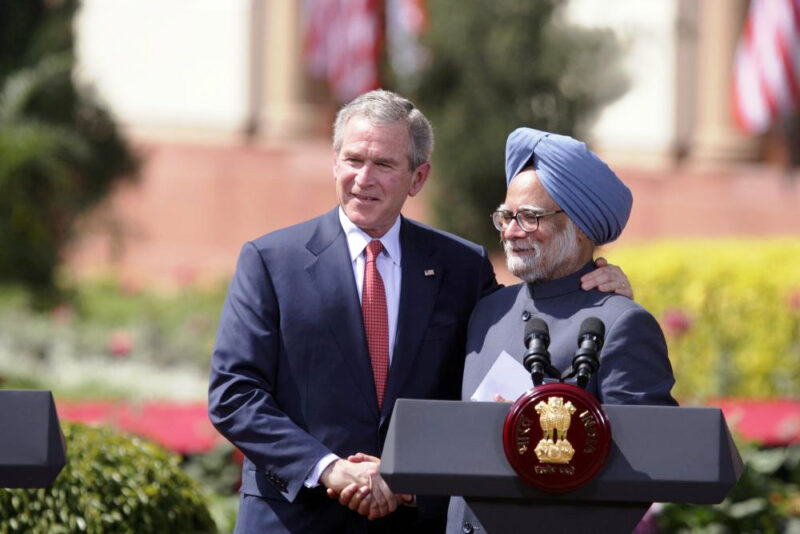
    Image of  President Bush and PM Manmohan Singh: wikipedia India-United States Civil Nuclear Deal.

  • China and the Sunset of the International Liberal Order

    China and the Sunset of the International Liberal Order


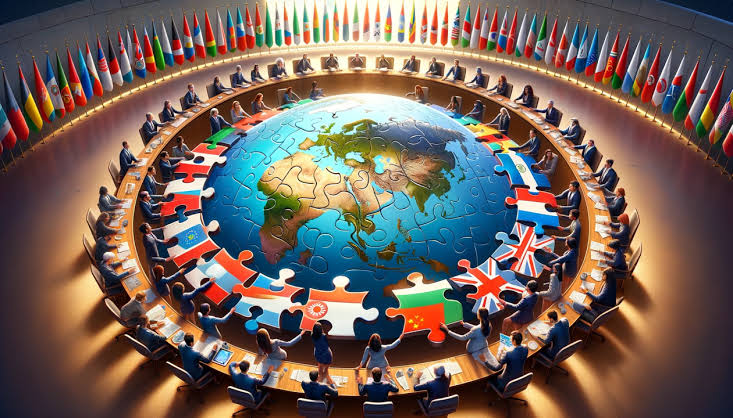
    Rise of Multipolar World Order – www.newsvoyagernet.com

           The irrational amounts that the Soviet Union allocated to its defense budget not only represented a huge burden on its economy, but imposed a tremendous sacrifice on the standard of living of its citizens. Subsidies to the rest of the members of the Soviet bloc had to be added to this bill.

             Such amounts were barely sustainable for a country that, as from the first half of the 1960s, was subjected to a continuous economic stagnation. This situation became aggravated by the strong decline of oil prices, USSR’s main export, since the mid 1980s. The reescalation of the Cold War undertaken by Jimmy Carter and Ronald Reagan, particularly the latter, put in motion an American military buildup, that could not be matched by Moscow.

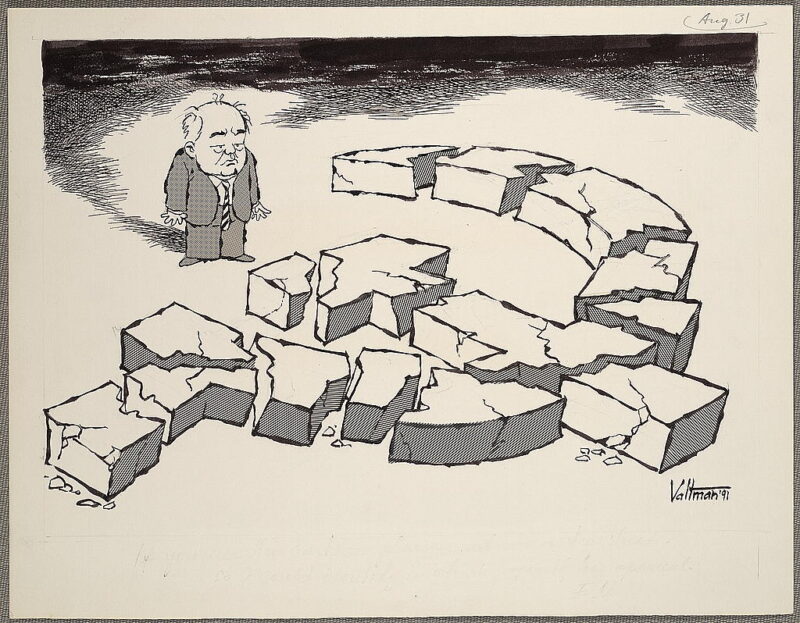
             With the intention of avoiding the implosion of its system, Moscow triggered a reform process that attained none other than accelerating such outcome. Indeed, Mikhail Gorbachev opened the pressure cooker hoping to liberate, in a controlled manner, the force contained in its interior. Once liberated, however, this force swept away with everything on its path. Initially came its European satellites, subsequently Gorbachev’s power base, and, finally, the Soviet Union itself. The Soviet system had reached the point where it could not survive without changes, but neither could assimilate them. In other words, it had exhausted its survival capacity.

              Without a shot being fired, Washington had won the Cold War. The exuberant sentiment of triumph therein derived translated into the “end of history” thesis. Having defeated its ideological rival, liberalism had become the final point in the ideological evolution of humanity. If anything, tough, the years that followed to the Soviet implosion were marred by trauma and conflict. In the essential, however, the idea that the world was homogenizing under the liberal credo was correct.

             On the one hand, indeed, the multilateral institutions, systems of alliances and rules of the game created by the United States shortly after World War II, or in subsequent years, allowed for a global governance architecture. A rules based liberal international order imposed itself over the world. On the other hand, the so-called Washington Consensus became a market economy’s recipe of universal application. This homogenization process was helped by two additional factors. First, the seven largest economies that followed the U.S., were industrialized democracies firmly supportive of its leadership. Second, globalization in its initial stage acted as a sort of planetary transmission belt that spread the symbols, uses, and values of the leading power.

             The new millennium thus arrived with an all-powerful America, whose liberal imprint was homogenizing the planet. The United States had indeed attained global hegemony, and Fukuyama’s end of history thesis seemed to reflect the emerging reality.

    But things turned out to be more complex than this, and the history of the end of history proved out to be a brief one. In a few years’ time, global “Pax Americana” began to be challenged by the presence of a powerful rival that seemed to have emerged out of the blue: China. How had this happened?

             Beginning the 1970s, Beijing and Washington had reached a simple but transformative agreement. Henceforward, the United States would recognize the Chinese Communist regime as China’s legitimate government. Meanwhile, China would no longer seek to constrain America’s leadership in Asia. By extension, this provided China with an economic opening to the West. Although it would be only after Deng Xiaoping’s arrival to power, that the real meaning of the latter became evident.

             In spite of the multiple challenges encountered along the way, both the United States and China made a deliberate effort to remain within the road opened in 1972. Their agreement showed to be not only highly resilient, but able to evolve amid changing circumstances. The year 2008, however, became an inflexion point within their relationship. From then onwards, everything began to unravel. Why was it so?

             The answer may be found in a notion familiar to the Chinese mentality, but alien to the Western one – the shi. This concept can be synthesized as an alignment of forces able to shape a new situation. More generally, it encompasses ideas such as momentum, strategic advantage, or propensity for things to happen. Which were, hence, the alignment of forces that materialized in that particular year? There were straightforward answers to that question: The U.S.’ financial excesses that produced the world’s worst financial crisis since 1929; Beijing’s sweeping efficiency in overcoming the risk of contagion from this crisis; China’s capability to maintain its economic growth, which helped preventing a major global economic downturn; and concomitantly, the highly successful Beijing Olympic games of that year, which provided the country with a tremendous self-esteem boost.

             The United States, indeed, had proven not to be the colossus that the Chinese had presumed, while China itself turned out to be much stronger than assumed. This implied that the U.S. was passing its peak as a superpower, and that the curves of the Chinese ascension and the American decline, were about to cross each other. Deng Xiaoping’s advice for future leadership generations, had emphasized the need of preserving a low profile, while waiting for the attainment of a position of strength. In Chinese eyes, 2008 seemed to show that China was muscular enough to act more boldly. Moreover, with the shi in motion, momentum had to be exploited.

             Beijing’s post-2008 assertiveness became much bolder after Xi Jinping’s arrival to power in 2012-2013. China, in his mind, was ready to contend for global leadership. More to the point within its own region, China’s centrality and the perception of the U.S. as an alien power, had to translate into pushing out America’s presence.

    Challenged by China, Washington reacted forcefully. Chinese perceptions run counter to the fact that the U.S.’ had been a major power in East Asia since 1854, which translated into countless loss of American lives in four wars. Moreover, safeguarding the freedom of navigation in the South China Sea, a key principle within the rules based liberal international order, provided a strong sense of staying power. This was reinforced by the fact that America’s global leadership was also at stake, thus requiring not to yield presence in that area for reputational reasons. The containment of Beijing’s ascendancy, became thus a priority for Washington.

             However, accommodating two behemoths that feel entitled to pre-eminence is a daunting task. Specially so, when one of them feels under threat of exclusion from the region, and the other feels that its emergence is being constrained. On top, both remain prisoners of their history and of their national myths. This makes them incapable of looking at the facts, without distorting them with the subjective lenses of their perceived sense of mission and superiority.

             War ensuing, under those circumstances, is an ongoing risk. But if war is a possibility, Cold War is already a fact. This implies a multifaceted wrestle in which geopolitics, technology, trade, finances, alliances, and warfare capabilities are all involved. And even if important convergent interest between them still remains in place, ties are being cut by the day. As a matter of fact, if in the past economic interdependence helped to shield from geopolitical dissonances, the opposite is the case today. Indeed, a whole array of zero-sum geopolitical controversies are rapidly curtailing economic links.

             The U.S., particularly during the Biden administration, chose to contain China through a regional architecture of alliances and by way of linking NATO with Indo-Pacific problems and selective regional allies. The common denominator that gathers them together is the preservation of the rules based liberal international order. An order, threatened by China’s geostrategic regional expansionism.


    However, China itself is not short of allies. A revisionist axis, that aims at ending the rules based liberal international order, has taken shape. The same tries to throw back American power and to create its own spheres of influence. This axis represents a competing center of gravity, where countries dissatisfied with the prevailing international order can turn to. Together with China two additional Asia-Pacific powers, Russia and North Korea, are part of this bloc.

    Trump’s return to the White House might change the prevailing regional configuration of factors. Although becoming more challenging to Beijing from a trade perspective, he could substantially weaken not only the rules based liberal international order, but the architecture of alliances that contains China. The former, because the illiberal populism that he represents is at odds with the liberal order. The latter, not only because he could take the U.S. out of NATO, but because his transactional approach to foreign policy, which favors trade and money over geopolitics, could turn alliances upside down.

    The rules based liberal international order, which became universal over the ashes of the Soviet Union, could now be facing its sunset. This, not only because its main challenger, China, may strengthen its geopolitical position in the face of its rival alliances’ disruption, but, more significantly, because the U.S. itself may cease to champion it.

    Feature Image Credit: www.brookings.edu


  • Indus Water Treaty: A Model for International Water Governance

    Indus Water Treaty: A Model for International Water Governance

    Introduction

    Water is the basis of biological sustenance, without which no civilisation can sustain. Access to clean and safely managed water is therefore a human right, not a privilege.

    According to the United Nations Development Programme (UNDP) —

    One in four people still lives without safely managed water services or clean drinking water. Approximately 4 billion people live with severe water scarcity for at least one month of the year, and about half a billion people face water scarcity year-round.

    The water crisis is not an isolated issue but a global challenge. It calls for effective governance not just within the local governments and authorities of a country but transnationally as well.

    International Water Governance refers to this process of decision-making, formulation, and implementation of policies pertaining to the use, management, and distribution of transboundary water resources.

    Peace and cooperation on matters of conflict over water are hard to reach and much harder to maintain. Treaties, multilateral agreements and conventions often govern transboundary waters; one such example of a successful bilateral water-distribution treaty is the Indus Water Treaty (the IWT) of 1960 between India and Pakistan over the regulation and use of the Indus River Basin and its tributaries.

    Indus Water Treaty

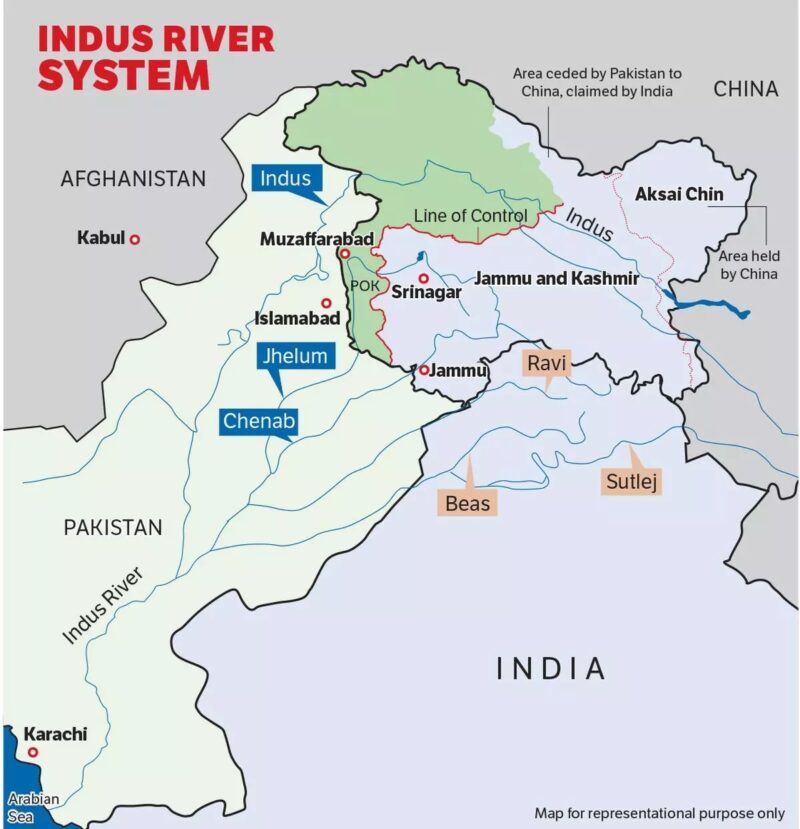
    The Indus Water Treaty was signed in 1960 in Karachi between India and Pakistan as facilitated by the World Bank (erstwhile International Bank for Reconstruction and Development or IBRD). It demarcates the sharing and usage of the Indus River and its major tributaries, categorised into “eastern” and “western” rivers for Indian and Pakistani use, respectively.

    The Indus River flows mainly from Tibet and the Himalayan regions of India’s Himachal Pradesh and Jammu and Kashmir and across Pakistan’s Punjab and Sindh before emptying into the Arabian Sea through Karachi.

    Of the six major tributaries of the Indus River— the Beas, Ravi and Sutlej are the “eastern rivers” and the Indus, Chenab and Jhelum are the “western rivers”. The former is for India’s exclusive use after Pakistan’s permitted water use, and the latter is for Pakistan’s exclusive use after the criteria of India’s permitted use are met.

    As a result, the split was made in the ratio of about 20:80 of the total water flow from the Indus system in favour of Pakistan. Pakistan has unrestricted access to the waters of the western rivers for agricultural, domestic, and industrial purposes.

    India too is permitted to use a limited amount of water from these rivers, apart from the eastern rivers, for specified purposes, such as irrigation and power generation. It also lays down detailed regulations for India in building projects over the western rivers.

    Historical context and Security concerns

    As the partition of British India took place on religious lines instead of geographic factors, the division of the historically integrated water system in a manner satisfactory to both countries was a challenging feat. Although most of the river naturally flows through the regions of Pakistan, it primarily originates from India before it enters the former. Hence, Pakistan is the downstream nation of the Indus River. This places Pakistan in a vulnerable position, exposed to the risks of India causing artificial droughts or flooding of its arable lands, which may be used as leverage to control water and food security in times of hostilities.

    According to Pakistan, it was entitled to all the waters of the Indus and its tributaries due to its historical right before or until the partition, also highlighting the threat of severe water scarcity without the continuous flow of the rivers. Whereas India insisted that the waters be equitably distributed on a new post-partition basis by proposing for the first time the separate rationing of the western and eastern rivers between the two nations. Ergo, paving the way for arguably one of the most successful, long-standing bilateral agreements struck between any two agnostic states.

    Provisions and Objectives of IWT

    In 1952, with the World Bank as the mediator, a Working Party consisting of Indian, Pakistani, and World Bank engineers was formed to draw up a cooperative plan for the use, allocation and distribution of the disputed waters. After almost eight long years of negotiations, the Indus Water Treaty was finally ratified in 1960.

    The main provisions of the IWT are as follows:

    • Water distribution:

    India and Pakistan received approximately 30% and 70% of the total waters of the Indus rivers located in India. India’s eastern rivers have a mean annual flow of 40b/m3 while the western of Pakistan have an MAF of 100b/m3.

    • Regulation of water use:

    Use of waters of the eastern and western rivers are explicitly demarcated between India and Pakistan while limited usage of the other country’s rivers is also permitted for specific purposes that are of non-consumptive nature, like hydropower generation, fishing, etc.

    • Water rights:

    According to IWT, although the liberty to use unutilized water of the other country exists, the right over the water is not forfeited over time, even in case of repeated underutilization.

    • Conflict resolution:

    A Permanent Indus Commission (PIC) comprising commissioners from both India and Pakistan is provided for by the Treaty. The PIC serves as a forum for the exchange of hydrological data, information, and views on the implementation of the treaty and the resolution of disputes.

    Aftermath

    The treaty has survived several border skirmishes, terror attacks including the 26/11, and even two full-fledged wars in 1965 and 1971. The terms of water sharing as agreed upon have been adhered to despite such hostilities.

    After the 2016 Uri Attack on an Indian Army base in Jammu and Kashmir and the 2019 Pulwama Attack, threats of revoking the Treaty have been made by India but never materialised, as the Treaty continues to remain intact. However, according to the IWT, the bombing or destroying of dams, barrages, power stations, etc. located in the Indian part of the Indus basin by Pakistan violates the Treaty which can lead to its abrogation.

    Despite Pakistan’s repeated violation of the Treaty by using groundwater of Ravi and Sutlej areas of India for various uses before they cross into its area, and by constructing river training works to reduce river flooding in Pakistan and enhance flooding in India’s Great Rann of Kutch area; no concerns have been raised by the latter hereto.

    With the Treaty in place, several projects have been undertaken on the allotted rivers, India has constructed the Bhakra-Nangal and Salal dams for hydroelectric power generation. Pakistan constructed the Tarbela and Mangla Dams for water storage, irrigation, and hydropower generation.

    Shahpur Kandi and Ratle Projects:

    The Shahpur Kandi project of India over the Ujh river has been objected to by Pakistan for diverting waters of Ujh, a tributary of Ravi, an eastern river exclusive for India’s use. The dam was officially completed in February 2024.

    India’s ongoing Ratle Hydroelectric Project on the Chenab also made headlines, for Pakistan’s objection to its construction in the Indian area after its funding was finally approved in 2021. The dam would have an 850 MW generative capacity, for which a limited reserve of water is required to be reserved. This alarmed Pakistan as it claimed it would pose a risk of possible weaponization of water supply by India in wartime situations. Disagreement over the summoning of a Neutral Expert or a Court of Arbitration as authorised by the Treaty for dispute resolution was settled in 2016 by the World Bank’s decision to let both motions proceed simultaneously. Later, India was allowed to construct the dam by the World Bank despite objections by Pakistan. The project is scheduled to commence operations in 2026.

    A Blueprint for Transboundary Water Cooperation

    The success of the IWT sets an example of how countries can overcome their political differences and contribute to an efficient system of shared resource governance. It successfully helped the Indian subcontinent evade a potential war between the two nuclear-armed states over the river basin, a model for other regions struggling with water scarcity and competition to follow.

    Climate change coupled with the construction of dams and barrages for water storage and regulation carries heavy ecological repercussions like the disruption of river ecosystems, aquatic habitats, and biodiversity of the concerned region. Consequently, endangering the livelihood of the nearby occupants, even forcing them to relocate.  Hence, such a cooperative regulatory mechanism must be in place to facilitate constructive dialogue towards incorporating environmental considerations into water management strategies to tackle and mitigate any negative repercussions.

    The Indus Water Treaty has demonstrated its efficacy as a significant diplomatic agreement between the two neighbouring states, consistently withstanding various challenges over time. The treaty primarily emphasises the importance of cooperation and diplomacy in resolving transboundary water disputes while also establishing a foundation and providing scope for potential future collaboration in numerous domains of shared governance.

    Proposals for its abrogation have been deemed impractical for both parties, as the treaty has endured for six decades. Nevertheless, there is a recognised need to re-examine, renegotiate, revise, and amend the long-standing Treaty to better address contemporary issues, including new ecological and climate change concerns, as well as evolving terms of negotiation.


    References:

    ET Online, (2024, February 26). India completely stops Ravi River water flow to Pakistan. Historical context and significance. The Economic Times. https://economictimes.indiatimes.com/news/india/india-completely-stops-ravi-river-water-flow-to-pakistan-historical-context-and-significance/articleshow/107980936.cms

    Gupta, M.S. (2024, February 25). Shahpurkandi dam complete after 3 decades, will help check unutilised Ravi water flowing to Pakistan. The Print. https://theprint.in/india/governance/shahpurkandi-dam-complete-after-3-decades-will-help-check-unutilised-ravi-water-flowing-to-pakistan/1978380/

    Gupta, S [The Print]. (2023, January 31). Understanding the Indus Waters Treaty & why India is pushing Pakistan for changes [Video]. YouTube. https://youtu.be/pVp93u2IgSg

    MEA Media Centre, (1960, September 19). Bilateral/Multilateral Documents: Indus Waters Treaty. Ministry of External Affairs, Government of India (MEA, GOI). https://www.mea.gov.in/bilateral-documents.htm?dtl/6439/Indus

    Samantha, P.D. (2023, January 31). The Indus Question: India, Pakistan and rivers of concern. The Economic Times. https://economictimes.indiatimes.com/news/india/analysis-india-pakistan-looking-to-exploit-resources-for-more-electricity/articleshow/97462196.cms

    Times Now Digital, (2018, November 7). Pak ‘diplomatic sabotage’ busted: India to go ahead with Ratle hydroelectric project, govt to send team to J&K. Times Now. https://web.archive.org/web/20190225224015/https://www.timesnownews.com/india/article/pakistan-india-ratle-hydroelectric-project-indus-water-treaty-agreement-chenab-shahpur-kandi-dam-project-ujh-multipurpose-project-jammu-and-kashmir/310636

  • Recalibrating India’s Act East Policy: New Realities in Myanmar and Bangladesh

    Recalibrating India’s Act East Policy: New Realities in Myanmar and Bangladesh

    On 23 September 2024, Reuters published a news item quoting unnamed sources that said that India had ‘ invited political and military opponents of Myanmar’s ruling junta to attend a seminar in New Delhi. Even as the lack of corroboration of such a report puts it in the realm of conjecture, it is worthwhile mulling over the motivations or otherwise for such a seminal event to be even contemplated, especially in the light of implications for India’s Act East Policy.


    TPF Occasional Paper: 10/2024

    Recalibrating India’s Act East Policy: New Realities in Myanmar and Bangladesh

    Maj Gen Alok Deb (Retd)

    On 23 September 2024, Reuters published a news item quoting unnamed sources that said that India had ‘ invited political and military opponents of Myanmar’s ruling junta to attend a seminar in New Delhi’[i]. The item went on to specify that the shadow National Unity Government (NUG) and ethnic minority rebels from the states of Chin, Rakhine and Kachin bordering India had been invited to a seminar in mid-November, to be hosted by the Delhi-based Indian Council of World Affairs (ICWA), a foreign policy think tank funded by the Government of India. The piece was also carried by some major Indian newspapers with its origin attributed to Reuters. At the time of writing, there has been no acknowledgement or rebuttal of this report by any government agency. Neither has the ICWA posted this on its website as a forthcoming event. Even as the lack of corroboration of such a report puts it in the realm of conjecture, it is worthwhile mulling over the motivations or otherwise for such a seminal event to be even contemplated, especially in the light of implications for India’s Act East Policy.

    A Summary of India’s Act East Policy

    India’s ‘Act East’ policy of 2014 is an initiative that takes off from its earlier ‘Look East’ policy. ‘Act East’ envisages initiatives at multiple levels with the nations of ASEAN and the wider Indo-Pacific region. These initiatives are to be taken forward through a process of continuous engagement at bilateral, regional and multilateral levels, thereby providing enhanced connectivity in its broadest sense, including political, economic, cultural and people-to-people relations.[ii]

    To successfully implement the ‘Act East’ policy, the Indian government is working to make the North East its strategic gateway to ASEAN. Accordingly, it has increased the allocation for the region’s development by more than four times over the last 10 years.[iii]  The North East is also poised to benefit from initiatives from countries like Japan which earlier this year had proposed developing an industrial hub in Bangladesh with supply chains to the North East, Nepal and Bhutan.[iv]

    As the North East becomes India’s gateway to ASEAN,  the centrality of Myanmar to our Act East becomes apparent. It is the key link in the road connectivity between India’s North East and other ASEAN nations whereby the free flow of inland goods, services and other initiatives to and from these nations to India can be ensured. The success or otherwise of Act East is thus directly affected by the security environment in Myanmar. Instability here will negatively impact our North Eastern states sharing borders with that country. The internal situation in Myanmar therefore becomes an area of prime concern for India, warranting close attention.

    For similar reasons, another neighbour, Bangladesh, is equally important for the success of India’s Act East Policy. India’s North East has benefitted from good ties with Bangladesh, both security-wise and economically. Militancy in the North East has reduced over the last decade and a half. With Bangladesh agreeing to provide access to its ports in the Bay of Bengal for the movement of Indian goods, the North Eastern states have a shorter route to the sea. Additionally, states bordering Bangladesh such as Assam and Meghalaya have developed trade links with that country for mutual benefit. The  BBIN (Bangladesh Bhutan India Nepal) Motor Vehicle Agreement for the Regulation of Passenger, Personal and Cargo Vehicular Traffic was signed in 2015 to ‘ promote safe, economically efficient and environmentally sound road transport in the sub-region andfurther help each country in creating an institutional mechanism for regional integration’  is another mechanism for implementing our Act East and Neighbourhood First policies[v]. The role of Bangladesh here is pivotal.

    State of the Civil War in Myanmar

    Fighting in Myanmar is now in its fourth year. The military junta continues to suffer reverses on the battlefield. Large portions of Rakhine State and certain portions of Chin State are now under the control of the Arakan Army (AA). International Crisis Group has recently averred that ‘..in just a few months, the Arakan Army has created the largest area in Myanmar under the control of a non-state armed group – in terms of both size and population – and is now on the verge of securing almost all of Rakhine[vi].

    In Shan state to the North, the Three Brotherhood Alliance (TBA) of three Ethnic Armed Organisations (EAOs) had by December 2023, captured over 20,000 square kilometres of territory, including key border crossings and trade routes between China and Myanmar in Operation 1027[vii].  On 07 March 2024, the Kachin Independence Army (KIA) launched Operation 0307 and successfully captured certain military posts across  Kachin State close to the Chinese border. This forced the Tatmadaw (Myanmar military) to redeploy, further thinning out forces[viii]. Fighting also continues in other states and regions across the country, notably Sagaing and Kayah.

    Associated Press deduces that ‘.. the announcement of the measure on state television amounts to a major, though tacit, admission that the army is struggling to contain the nationwide armed resistance against its rule..’.The Junta has since conscripted Rohingya youth and deployed them against the Rakhines. 

    Notwithstanding these losses, there is no let-up in the Tatmadaw’s efforts to combat the rebels. The Junta has resorted to conscription to stem rising attrition, activating an old law in this regard. Associated Press deduces that ‘.. the announcement of the measure on state television amounts to a major, though tacit, admission that the army is struggling to contain the nationwide armed resistance against its rule..[ix] To further contextualise, the same article stated the rebel National Unity Government’s (NUG) claim that more than 14,000 troops have defected from the military since the 2021 seizure of power. The Junta has since conscripted Rohingya youth and deployed them against the Rakhines. The Chins fear that they too will be acted upon similarly.[x]

    To overcome the asymmetry of force especially in artillery and airpower, the rebels have acquired large numbers of drones. These are being used to bomb military positions, contributing significantly towards the successes of the CNA’s operations[xi].  To summarise, Myanmar’s civil war continues to see-saw with no signs of ebbing. The Junta continues to make periodic peace overtures to the NUG with conditionalities that the latter is unwilling to accept[xii]. With the multiplicity of actors and issues involved, there are no clear indications of how and when the conflict will be resolved.

    Impact of the  Myanmar Conflict on India’s North-East

    The impact of Myanmar’s internal situation on India’s border states has progressively worsened. Initially, after the Junta takeover, it was Mizoram which bore the brunt. The state government citing common ethnicity and humanitarian concerns accepted the influx of Chins from Myanmar as a moral responsibility and initiated rehabilitation measures. These refugees along with earlier refugees from Bangladesh recently joined Kukis from Manipur, number around 44000 and continue to remain in refugee camps.[xiii] The Central government has had to reconcile its policy of preventing infiltration across borders with the societal realities of Mizoram. A positive outcome of this approach is that there has been no violence in Mizoram.

    In Manipur, by September 2024, the 18-month-long ethnic conflict had resulted in over 225 deaths and some 60,000 people displaced.[xiv] The administration has been derided by both sides, more so with recent warnings about impending threats to law and order[xv] followed by retractions[xvi]. People of either community have been uprooted from their homes and moved to safe areas separated by buffer zones guarded by security forces.  So great is the mutual suspicion that on the clamour of the Meiteis to replace the Assam Rifles, two battalions of this central force have been withdrawn and replaced by the Central Reserve Police Force (CRPF), against the wishes of the Kukis[xvii].

    Voices for an independent ‘Kukiland’ for the Kuki Zo peoples are being raised,[xviii] which are variously interpreted as a demand for greater autonomy within Manipur or for a separate union territory. The current happenings also dredge up the old ghost of ‘Zale’n-gam’ or Kuki nation, comprising the Chin Kuki Zomi peoples (including Mizos) residing across India, Bangladesh and Myanmar. Zale’n- gam has few takers and appears restricted to a YouTube channel[xix]. Today both sides fight each other with a variety of weapons including improvised rockets and drones. Hostage-taking is the latest tactic that has been adopted.[xx]

    Tension between the Nagas of Manipur and other communities is discernible with some reports of violence against the former.[xxi] As of now Nagas have kept out of the Kuki-Meitei dispute; also, other than the insurgent National Socialist Council of Nagaland ( Isak Muviah) faction (NSCN-IM) that is observing a ceasefire with the Centre, no other party has demanded integration of all Naga inhabited areas in India ( Arunachal Pradesh, Assam, Manipur) and Myanmar – the idea of  Greater Nagalim.

    At the state level, the responses of Mizoram and Manipur to the Myanmar crisis vary. This can be best seen in their reactions to the Centre’s recent notification to fence the entire 1643 Km Myanmar border and its earlier decision to end the Free Movement Regime that permits movement on both sides of the border for up to a distance of 16 km.[xxii]  While the Mizoram government and tribes living in both states oppose the decisions, the Manipur government clamours for its implementation. Currently, only around 30 Km of the border has been fenced.

    Since the Tatmadaw now has limited control over its border areas, it has become imperative for India to commence a structured dialogue with other warring parties in Myanmar’s border regions. This, with a view to restoring the situation in Manipur (and on the border) through mutually acceptable solutions at least for the short to medium term, is necessary. Only then can a modicum of security on the border be guaranteed. This involves navigating a maze of ethnic, religious, historical and societal issues with great sensitivity. The importance of such a dialogue cannot be overemphasised, more so because of recent developments in Bangladesh.

    The Impact of Bangladesh’s ‘Second Liberation’

    The events of 5 August 2024  that witnessed the overthrow of Sheikh Hasina’s government have proved to be yet another watershed in India-Bangladesh relations. India has invested more in the India-Bangladesh relationship than with any other neighbour in South Asia. A glance at the website of our Ministry of External Affairs[xxiii], where details of various agreements and summaries from the last Prime Ministerial meeting in Delhi in June 2024 are provided, will suffice to show just how strong and all-encompassing this relationship has become.

    Persons or organisations associated with the previous regime have either fled the country or been placed under arrest and assets confiscated. A few have been killed by mobs. Bank accounts of others have been frozen. Jamaat e Islami which collaborated with the Pakistan Army in 1971 has been resurrected. Extremists with proven murder charges against them have been freed from prison, as have political prisoners.

    At the time of writing, it is two months since the interim government headed by Chief Advisor Mohammed Yunus assumed charge.  The country continues to make efforts to reestablish the rule of law. All wings of the armed forces have been given magisterial powers[xxiv]. The functioning of the judiciary, higher civil services, local administration, police, security agencies, banking, economy, and higher education, is under review. Persons or organisations associated with the previous regime have either fled the country or been placed under arrest and assets confiscated. A few have been killed by mobs. Bank accounts of others have been frozen.[xxv] The Jamaat e Islami which collaborated with the Pakistan Army in 1971 has been resurrected. Extremists with proven murder charges against them have been freed from prison, as have political prisoners. Commissions have been set up to suggest reforms in the constitution, electoral system, police, judiciary, public administration and in tackling corruption.  Elections do not seem to be on the horizon yet. The advisers ( as the ministers are currently known) are new faces, not well known in India.

    While this paper does not attempt to be a study of India-Bangladesh relations, the polarised politics in that country coupled with a perception that the misdeeds of Sheikh Hasina’s government were conducted with impunity because of Indian backing, is sure to impact India’s portrayal here.

    With the removal of Sheikh Hasina, the India-Bangladesh relationship is undergoing a major reset. Statements of certain public figures and sentiments of a section of the population in that country suggest that a different perspective on the evolution of Bangladesh as a nation from 1971 onwards is emerging. While this paper does not attempt to be a study of India-Bangladesh relations, the polarised politics in that country coupled with a perception that the misdeeds of Sheikh Hasina’s government were conducted with impunity because of Indian backing, is sure to impact India’s portrayal here. This will make it an arduous task for both countries to go back to the trusted, cooperative and mutually beneficial relationship that existed. As mentioned, the list of achievements for both countries is far too numerous –  settlement of land and oceanic borders,  road, rail and riverine connectivity (including use of ports), economy and business ( both government and private), education including educational scholarships, technology, disaster management, border management, maritime security, military to military cooperation, improved people to people contacts, culture and health. As per records, of the 16 lakh visas issued by India for Bangladesh nationals in 2023, 4.5 lakhs were for medical treatment alone[xxvi]. Economies are so embedded that everyday necessities like onions are exported regularly to Bangladesh ( approximately 6 to 7 lakh tonnes annually).

    Even as the new regime provides assurances on the security of minorities and acknowledges India as an important neighbour, the enthusiasm with which it has interacted with official interlocutors from a host of nations worldwide especially China, Pakistan and the US is noteworthy and indicates where its newfound priorities might lie.

    A parallel reality, however, is that negative perceptions about India have historically found space in sections of Bangladesh’s polity. These have received a huge fillip after the change of regime with even settled agreements prone to misunderstanding. A recent example pertains to a tripartite agreement dating back to the Hasina period whereby electricity is to be imported from Nepal via India to Bangladesh. The agreement was signed in Kathmandu in the first week of  October 2024. Newspaper reports from Bangladesh indicate that there is palpable resentment over the condition that Indian transmission systems inside Indian territory be utilised for this purpose since it increases costs per unit of electricity in Bangladesh.[xxvii] Another issue currently bedevilling relations is the state of minorities in Bangladesh who have faced attacks on their homes, businesses and religious places with some loss of life, since the protests in July. India’s concerns in this regard have been conveyed at the highest level. Even as the new regime provides assurances on the security of minorities and acknowledges India as an important neighbour, the enthusiasm with which it has interacted with official interlocutors from a host of nations worldwide especially China, Pakistan and the US is noteworthy and indicates where its newfound priorities might lie.

    Larger Implications for India

    Bangladesh and Myanmar are pivotal for India’s Act East policy from the security, economic and connectivity angles. The issues pertaining to Myanmar and Manipur have been brought out earlier. A common concern affecting both nations and  India is the Rohingya crisis. Despite international pressure and requests from Bangladesh for China to intercede with Myanmar on its behalf, there has been no positive response from Myanmar. Bangladesh, which currently hosts close to one million refugees,[xxviii] has publicly expressed its inability to accommodate any more Rohingyas and asked for a speedy ‘third country settlement’ [xxix]. A detailed report of the International Crisis Group (ICG) in October 2023[xxx]provides details of activities of militant organisations like the Rohingya Solidarity Organisation (RSO) and Arakan Rohingya Salvation Army (ARSA) which are involved in drug running from Myanmar along with Bangladeshi syndicates for sale of the product in that country. Their participation in violent crime and other illegal activity has become a pressing concern within Bangladesh. Rohingyas have infiltrated into India as well, and have been identified as far North as Jammu. The security implications of such migration for both Bangladesh and India are apparent. The insensitivity of the Myanmar Junta on this account is heightening security risks for India and Bangladesh and merits diplomatic intervention.

    With the situation in Bangladesh evolving by the day, it is prudent for India to take a strategic pause as it weighs its options for pursuing its Act East policy. While giving the new regime in Bangladesh its due, India has to consider the impact of resurgent forces aided by inimical powers that aim to derail the India-Bangladesh relationship beyond repair. Even as both countries attempt to reestablish strong ties, the old adage preached by educated Bangladeshis in the context of support to Sheikh Hasina’s regime that ‘India should not put all its eggs in one basket’ resonates. While Myanmar geographically cannot provide the singular advantages that Bangladesh can, it is time for India to press for securing Myanmar’s cooperation to complete pending projects in that country, such as the Kaladan Multi-Modal Port Project (KMMPP) via Sittwe and Paletwa, that provides an alternate route to our North East, as well as the Trans Asian Highway (TAH) that provides connectivity with the rest of ASEAN, amongst others.

    To summarise, two possible reasons for inviting rebel Myanmar groups to Delhi could be: first, the relative viability of either Bangladesh or Myanmar to help implement the Act East policy in light of the emerging situation in Bangladesh and the state of the civil war in Myanmar. The second, ensuring security on the India-Myanmar border, to prevent aggravating the situation in India’s border states.


    Notes:

    [i] ‘Exclusive: India extends unprecedented invite to Myanmar’s anti-junta forces, sources say’ Wa Lone and Devjyot Ghoshal Reuters September 23, 2024

    [ii] ‘Govt aims to make Northeast gateway of ‘Act East Policy’: President Murmu’ Press Trust of India 27 June 2024.

    [iii] Ibid.

    [iv] ‘Japan to tie landlocked Northeast India with Bangladesh’  Saleem Samad  The Daily Messenger 05 March 2024.

    [v] Press Information Bureau Government of India Ministry of Shipping note dated  10 June 2015

    ‘Bangladesh, Bhutan, India and Nepal (BBIN) Motor Vehicle Agreement for the Regulation of Passenger, Personal and Cargo Vehicular Traffic amongst BBIN’

    [vi]   ‘Breaking Away: The Battle for Myanmar’s Rakhine State Asia Report N°339 | 27 August 2024’ International Crisis Group (Executive Summary).

    [vii]   ‘As Myanmar’s Junta Loses Control in the North, China’s Influence Grows’  Jason Tower, United States Institute for Peace, August 1, 2024.

    [viii] Ibid.

    [ix]   ‘Facing setbacks against resistance forces, Myanmar’s military government activates conscription law ‘ Associated Press, February 12, 2024.

    [x] ‘India’s ‘Forgotten Partition’ and the Myanmar Refugee Crisis’  Swapnarka Arnan The Diplomat  11 May 2024.

    [xi] ‘We killed many … drones are our air force’: Myanmar’s rebels take on the junta from above. Aakash Hassan and Hannah Ellis-Petersen  The Observer 20 January 2024.

    [xii] ‘Armed Groups Snub Myanmar Junta ‘Peace’ Offer’  The Irrawaddy 28 September 2024

    [xiii] ‘Centre provides 1,379 MT rice to Mizoram for Manipur, Myanmar, B’desh refugees’ Morung Express 25 September 2024.

    [xiv] ‘Ethnic violence in India’s Manipur escalates, six killed’  Tora Agarwala Reuters  September 7, 2024

    [xv] ‘900 Kuki militants infiltrated Manipur from Myanmar, says Security Advisor’ India Today NE September 20 2024.

    [xvi] ‘Input on infiltration by 900 Kuki militants could not be substantiated on the ground, says Manipur security advisor’ Vijaita Singh The Hindu 26 September 2024.

    [xvii] ‘Kukis call removal of Assam Rifles from 2 Manipur areas ‘biased, appeasement’, Meiteis call it ‘victory’  Ananya Bhardwaj  The Print 04 August 2024.

    [xviii]‘ Manipur: Kuki-Zo organizations hold rallies, demand separate ‘Kukiland’ for peace  by Northeast News

    August 31, 2024.

    [xix] YouTube channel titled ‘Zalengam Media’.

    [xx] ‘Kuki militants seek release of ‘secessionist’ in Manipur’ Prawesh Lama and Thomas Ngangom Hindustan Times Sep 30, 2024.

    [xxi] ‘Keep us out of your war, Manipur Naga body warns two warring communities’  The Hindu Bureau 06 February 2024

    [xxii] ‘Government sanctions ₹31,000 crore to fence Myanmar border’   The Hindu

    Published – September 18, 2024

    [xxiii] Ministry of External Affairs, Government of India website mea.gov.in.

    [xxiv] ‘Navy, the air force also granted magistracy powers’  The Daily Star September 30 2024

    [xxv] ‘Bank accounts of Joy Putul Bobby frozen’ Dhaka Tribune 30 Sep 2024.

    [xxvi] ‘Indian High Commission in Dhaka, facing protests & threats, returns 20,000 visa applicants’ passports ‘ Ananya Bhardwaj  The Print   29 September 2024.

    [xxvii] ‘Bangladesh delegation in Nepal to sign the contract to import 40 MW electricity’ Dhaka Tribune 30 September 2024.

    [xxviii] Operational Data Portal of the United Nations High Commissioner for Refugees, for Bangladesh.

    [xxix] ‘Bangladesh calls for faster resettlement process for Rohingya’ Ruma Paul  Reuters  September 8, 2024

    [xxx] ‘Rohingya Refugees in Bangladesh: Limiting the Damage of a Protracted Crisis’ International Crisis Group Autumn Update 04 October 20223.


    Feature Image Credit: What does Sheikh Hasina’s resignation mean for India-Bangladesh relations? – aljazeera.com 

    Map Credit: National Online Project

    Bangladesh Parliament Image: The Shattered Identity of a Nation: From Liberation to Chaos – borderlens.com

    Sheikh Mujibur Rahman’s Statue: Bangabandhu to Toppled Statue: Mujibur Rahman’s contested legacy post Bangladesh upheaval – Economic Times


  • “And Now to some serious Governance”

    “And Now to some serious Governance”

    A time comes for each leader and government to rise above pettiness, discarding ill will and hatred towards all. For the BJP, now uniquely in its third term, this is the time to show the nation that it is a party with a difference. For the opposition equally, this is the time to cooperate with the government on critical issues impacting the country.  


    Since my retirement from active service, I have avoided politics and political writings like the plague, but the avoidable happenings of the past few months have caused me, like am sanguine would have to millions of our countrymen, pain and a sense of despair.

    India has conducted over 18   general elections to its Parliament since 1952 with a lot of fury and vibrancy, but the Lok Sabha 2024 general elections were indeed an example of abysmally low-level politics transcending our better senses.

            How the world’s largest democracy indulged in its Lok Sabha 2024 elections was hardly complimenting to it considering the unquestionable fact that among the emerging nations in the world, call it from the Global South, the conduct of our elections showed some among those participating in poor light. Between competing political parties, enlightened debates and mutual civility were sadly lacking.   India has conducted over 18   general elections to its Parliament since 1952 with a lot of fury and vibrancy, but the Lok Sabha 2024 general elections were indeed an example of abysmally low-level politics transcending our better senses. India, which carries a fair amount of moral authority and is considered an example of a true and vibrant democracy, cannot let its hallowed image be sullied attributable to the selfish electoral games of some of its political leaders. The party in power at the Centre, the principal Opposition party and all those regional parties at the helm in the states have to display adequate maturity and a modicum of propriety and civility towards each other and not politicize each and every aspect of governance or national issues impacting India. The opposition, as it shows the mirror to the government on critical issues of governance, must not criticise each and every act of the government as a matter of routine.

             With the outcome of the general elections now done and dusted and the previous BJP government back in power, albeit with a clear reduction in its seats tally from 303 down to 240, it must get down to the exacting business of good governance from the Centre. That the same government, with its experience of the last ten continuous years in power, fielding more or less the same faces in the Cabinet in critical ministries and importantly serviced by the same bureaucrats should have, relatively speaking, not such an arduous task in governance. However, the thrust for fair, equitable, and sensitive handling of all critical matters across the nation has to come from the top political leadership. All our states must never feel discrimination by the Centre, especially in financial allocations urgently required for developmental works and disaster management. Additionally, the new government must take stern measures to keep rising inflation and unnecessary governmental expenditure under check before the economy takes a severe nose-dive.

             The Modi government, with the continuous experience of the last ten years, will have more than a good idea of the systemic improvements required and about areas needing additional financial resources and effort. It is unnecessary to worry too much about criticisms from the opposition but to carry on regardless in developmental works, without fear or favour, and with impartiality towards all the states in the true spirit of federalism. A time comes for each leader and government to rise above pettiness, discarding ill will and hatred towards all. For the BJP, now uniquely in its third term, this is the time to show the nation that it is a party with a difference. For the opposition equally, this is the time to cooperate with the government on critical issues impacting the country.

             New Delhi’s hands will be full of the nation’s diverse and formidable challenges, requiring attention and effectiveness. On the foreign policy front, India will have to walk the tightrope of maintaining strategic autonomy and sustaining its good relations with both the US and Russia. However, as it determinedly confronts an overly assertive China, India needs to use its economic clout and sophisticated diplomacy to get its South Asian neighbourhood closer to it and each other, avoiding the debt trap diplomacy and financial machinations of China.

    The number of terror-related incidents in J&K has gone up substantially in the last three months, and Pakistan will have to be kinetically chastened.

          India must, at the appropriate level, convey to China that their confrontationist attitude towards us will be harmful to the Chinese, too and may propel India to rethink its existing Tibet policy. Nevertheless, India must maintain the utmost vigil along the 3485 km Line of Actual Control/ IB, which it shares with  China. Meanwhile, Pakistan once again needs to be cautioned against stepping up terror activities in J&K  or elsewhere in the Indian hinterland. India is in full knowledge of Pakistan’s many fault lines. Still, it has refrained from exploiting these, and Pakistan must also cooperate in ensuring a peaceful and prosperous South Asian neighbourhood independent of China’s wily stratagems. The number of terror-related incidents in J&K has gone up substantially in the last three months, and Pakistan will have to be kinetically chastened.

    Meanwhile, India’s preparations to successfully improve its security capabilities to confront a two-front war must go ahead with realism and an unfailing determination. Measures to augment capital expenditure for major defence acquisitions must be identified. Transformative defence reforms like the introduction of integrated theatre commands will need the attention of the Centre. In addition, India must take all steps to restore peace in our restive NE states.

             The Modi government has come in for some criticism abroad on its human rights record and dealings with its Muslim population. This unjust criticism must be dealt with judiciously and with maturity. India’s overall inclusiveness and celebration of its diversity are unique examples for the entire world, especially the nations of the Global South. We must never deviate or be even seen to shift from this noble orientation.

    Reduction of the yawning gap between the countless ultra-rich and those millions in abject poverty is essential as we boast of becoming the 5th largest economy in the world. The many human indices where we are faltering also need to be addressed.

             As economic strength is the pillar that propels and sustains progress, the Modi government must take measures to improve our economic health. Reduction of the yawning gap between the countless ultra-rich and those millions in abject poverty is essential as we boast of becoming the 5th largest economy in the world. The many human indices where we are faltering also need to be addressed.

             By all yardsticks, India is deservingly on the cusp of acquiring a seat on the global high table. Let us not squander away this golden opportunity by internal squabbling but instead work together in addressing crucial issues that affect our nation; we must seize this opportunity.

    Feature Image Credit:  vskbharat.com    

    Cartoon Credit: Times of India

  • The Perils and Promise of the Emerging Multipolar World

    The Perils and Promise of the Emerging Multipolar World

    The world economy is experiencing a deep process of economic convergence, according to which regions that once lagged the West in industrialisation are now making up for lost time.

    We are therefore entering a post-hegemonic, multipolar world.

    The World Bank’s release on May 30 of its latest estimates of national output (up to the year 2022) offers an occasion to reflect on the new geopolitics. The new data underscore the shift from a U.S.-led world economy to a multipolar world economy, a reality that U.S. strategists have so far failed to recognize, accept, or admit.

    The World Bank figures make clear that the economic dominance of the West is over. In 1994, the G7 countries (Canada, France, Germany, Italy, Japan, U.K., U.S.) constituted 45.3% of world output, compared with 18.9% of world output in the BRICS countries (Brazil, China, Egypt, Ethiopia, India, Iran, Russia, South Africa, United Arab Emirates). The tables have turned. The BRICS now produce 35.2% of world output, while the G7 countries produce 29.3%.

    As of 2022, the largest five economies in descending order are China, the U.S., India, Russia, and Japan. China’s GDP is around 25% larger than the U.S.’ (roughly 30% of the U.S. GDP per person but with 4.2 times the population). Three of the top five countries are in the BRICS, while two are in the G7. In 1994, the largest five were the U.S., Japan, China, Germany, and India, with three in the G7 and two in the BRICS.

    The core U.S.-led alliance, which includes the U.S., Canada, U.K., European Union, Japan, Korea, Australia, and New Zealand, was 56% of world output in 1994, but now is only 39.5%. As a result, the U.S. global influence is waning.
    As the shares of world output change, so too does global power. The core U.S.-led alliance, which includes the U.S., Canada, U.K., European Union, Japan, Korea, Australia, and New Zealand, was 56% of world output in 1994, but now is only 39.5%. As a result, the U.S. global influence is waning. As a recent vivid example, when the U.S.-led group introduced economic sanctions on Russia in 2022, very few countries outside the core alliance joined. As a result, Russia had little trouble shifting its trade to countries outside the U.S.-led alliance.
    The world economy is experiencing a deep process of economic convergence, according to which regions that once lagged the West in industrialization in the 19th and 20th centuries are now making up for lost time. Economic convergence actually began in the 1950s as European imperial rule in Africa and Asia came to an end. It has proceeded in waves, starting first in East Asia, then roughly 20 years later India, and for the coming 20-40 years in Africa.

    These and some other regions are growing much faster than the Western economies since they have more “headroom” to boost GDP by rapidly raising education levels, boosting workers’ skills, and installing modern infrastructure, including universal access to electrification and digital platforms. The emerging economies are often able to leapfrog the richer countries with state-of-the-art infrastructure (e.g., fast intercity rail, 5G, modern airports and seaports) while the richer countries remain stuck with aging infrastructure and expensive retrofits. The IMF’s World Economic Outlook projects that the emerging and developing economies will average growth of around 4% per year in the coming five years, while the high-income countries will average less than 2% per year.

    It’s not only in skills and infrastructure that convergence is occurring. Many of the emerging economies, including China, Russia, Iran, and others, are advancing rapidly in technological innovations as well, in both civilian and military technologies.

    China’s capacity for innovation and low-cost production is underpinned by enormous R&D spending and its vast and growing labor force of scientists and engineers.

    China clearly has a large lead in the manufacturing of cutting-edge technologies needed for the global energy transition, including batteries, electric vehicles, 5G, photovoltaics, wind turbines, fourth generation nuclear power, and others. China’s rapid advances in space technology, biotechnology, nanotechnology, and other technologies is similarly impressive. In response, the U.S. has made the absurd claim that China has an “overcapacity” in these cutting-edge technologies, while the obvious truth is that the U.S. has a significant under-capacity in many sectors. China’s capacity for innovation and low-cost production is underpinned by enormous R&D spending and its vast and growing labor force of scientists and engineers.

    Despite the new global economic realities, the U.S. security state still pursues a grand strategy of “primacy,” that is, the aspiration of the U.S. to be the dominant economic, financial, technological, and military power in every region of the world. The U.S. is still trying to maintain primacy in Europe by surrounding Russia in the Black Sea region with NATO forces, yet Russia has resisted this militarily in both Georgia and Ukraine. The U.S. is still trying to maintain primacy in Asia by surrounding China in the South China Sea, a folly that can lead the U.S. into a disastrous war over Taiwan. The U.S. is also losing its standing in the Middle East by resisting the united call of the Arab world for recognition of Palestine as the 194th United Nations member state.

    Yet primacy is certainly not possible today, and was hubristic even 30 years ago when U.S. relative power was much greater. Today, the U.S. share of world output stands at 14.8%, compared with 18.5% for China, and the U.S. share of world population is a mere 4.1%, compared with 17.8% for China.
    The trend toward broad global economic convergence means that U.S. hegemony will not be replaced by Chinese hegemony. Indeed, China’s share of world output is likely to peak at around 20% during the coming decade and thereafter to decline as China’s population declines. Other parts of the world, notably including India and Africa, are likely to show a large rise in their respective shares of global output, and with that, in their geopolitical weight as well.

    We are therefore entering a post-hegemonic, multipolar world. It too is fraught with challenges. It could usher in a new “tragedy of great power politics,” in which several nuclear powers compete—in vain—for hegemony. It could lead to a breakdown of fragile global rules, such as open trade under the World Trade Organization. Or, it could lead to a world in which the great powers exercise mutual tolerance, restraint, and even cooperation, in accord with the U.N. Charter, because they recognize that only such statecraft will keep the world safe in the nuclear age.


    This article was published earlier in commondreams

    Feature Image Credit: The World Financial Review

  • Amid India-China friction, we need to set real LAC

    Amid India-China friction, we need to set real LAC

    We have two outstanding issues between India and China. The larger one is about the large tracts of territory in Ladakh and Arunachal Pradesh. These two territorial disputes are not going to be resolved even in the foreseeable long term. Hence, Deng Xiaoping sagaciously suggested to Rajiv Gandhi in their 1988 meeting in Beijing that it was best left to history. A hundred years ago, the situations in both countries and their frontiers were very different. What they will be after another hundred years can be anybody’s guess?
    The urgent and pressing dispute on hand is the issue of the two LACs. These LACs frequently overlap. The term Line of Actual Control, or LAC, was first used by then Chinese PM Zhou Enlai in November 1959 when he wrote to his India’s Prime Minister Jawaharlal Nehru defining it as “the so-called McMahon Line in the east and the line up to which each side exercises actual control in the west”. Nehru rejected this line even after the events of 1962. By this time, he was also saddled with a parliamentary resolution pledging to recover all territories occupied by China. Interestingly, this LAC did not change very much even after 1962.


    Read more…

  • Technological Challenges to Becoming a Developed Country by 2047

    Technological Challenges to Becoming a Developed Country by 2047

    For a developed India, bulkier investment and technological changes are required to keep up in the race with other developed nations. In doing so, the country should not be afraid of failure. After all, Chandrayaan 3 was made possible by the lessons from the failure of Chandrayaan 2.

    THE Prime Minister has set the goal of India becoming a developed country by 2047.

    On the way, India’s Gross Domestic Product (GDP) is soon going to surpass that of Germany and Japan, if the current official rates of growth are maintained.

    In today’s world, projecting five years or 24 years ahead is fraught with challenges. Who could have foreseen the Covid pandemic in 2020 and the war in Ukraine in 2022?

    Successful landing of Chandrayaan 3 near the South Pole of the Moon is undoubtedly a great achievement for the nation. But that does not make India a developed nation.

    Major challenges confront the nation, such as providing good education and healthcare. This can only be achieved if the number of schools and health facilities in rural and semi-rural areas is increased substantially.

    [powerkit_button size=”lg” style=”info” block=”true” url=”https://theleaflet.in/technological-challenges-to-becoming-a-developed-country-by-2047/” target=”_blank” nofollow=”false”]
    Read More
    [/powerkit_button]