Tag: Ideology

  • Why Nations succeed or fail: a Nobel cause

    Why Nations succeed or fail: a Nobel cause

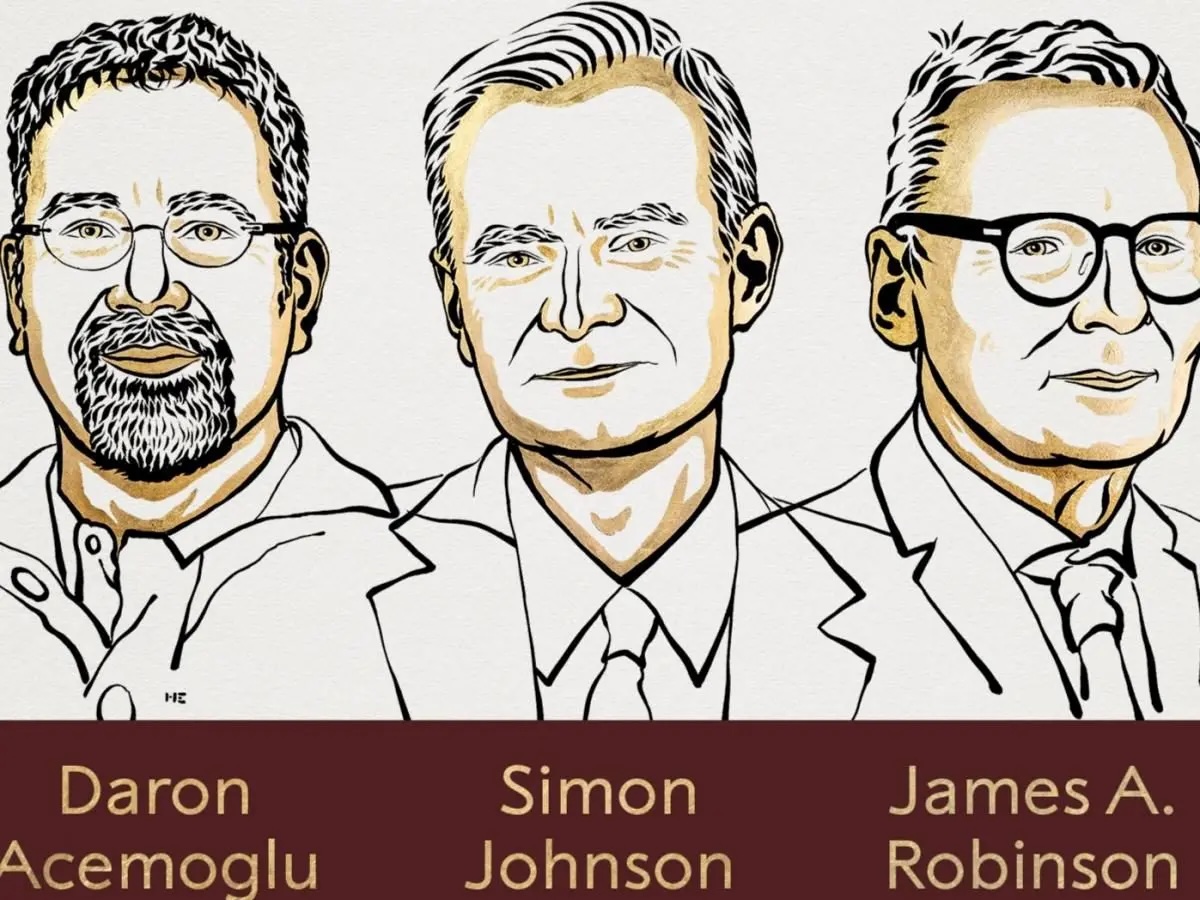
    Daron Acemoglu, Simon Johnson and James A Robinson have been awarded the Nobel (really the Riksbank prize) in economics “for studies of how institutions are formed and affect prosperity.” Daron Acemoglu is a professor at the Massachusetts Institute of Technology. Simon Johnson is a professor at the same university. And James Robinson is a professor at the University of Chicago.

    Here is what the Nobel judges say was the reason for winning:

    Today, the richest 20 percent of countries are around 30 times wealthier than the poorest 20 percent of countries. The income gaps across countries have been highly persistent over the past 75 years.39 The available data also show that between-country disparities in income have grown over the past 200 years. Why are the income differences across countries so large and so persistent?

    This year’s Laureates have pioneered a new approach to providing credible, quantitative answers to this crucial question for humanity. By empirically examining the impact and persistence of colonial strategies on subsequent economic development, they have identified historical roots for the extractive institutional environments that characterize many low-income countries. Their emphasis on using natural experiments and historical data has initiated a new research tradition that continues to help uncover the historical drivers of prosperity, or lack thereof.

    Their research centers on the idea that political institutions fundamentally shape the wealth of nations. But what shapes these institutions? By integrating existing political science theories on democratic reform into a game-theoretic framework, Acemoglu and Robinson developed a dynamic model in which the ruling elite make strategic decisions about political institutions—particularly whether to extend the electoral franchise—in response to periodic threats. This framework is now standard for analyzing political institutional reform and has significantly impacted the research literature. And evidence is mounting in support of one of the model’s core implications: more inclusive governments promote economic development.

    Over the years (or is it decades?) I have posted on the work of various Nobel winners in economics.

    What I have found is that, whatever the quality of the winner’s work, he or she (occasionally) usually got the prize for their worst piece of research, namely work that confirmed the mainstream view of the economic world, while not actually taking us further into understanding its contradictions.

    This conclusion I think applies to the latest winners. The work for which they received the $1m prize is for research that purports to show that those countries that achieve prosperity and end poverty are those that adopt ‘democracy’ (and by that is meant Western-style liberal democracy where people can speak out (mostly), can vote for officials every so often and expect the law to protect their lives and property (hopefully). Societies that are controlled by elites without any democratic accountability are ‘extractive’ of resources, do not respect property and value and so over time do not prosper. In a series of papers applying some empirical analysis (ie correlating democracy (as defined) with levels of prosperity), the Nobel winners claim to show this.

    Indeed, the Nobel winners argue that colonisation of the Global South in the 18th and 19thcenturies could be ‘inclusive’ and so turn the likes of North America into prosperous nations (forgetting the indigenous population) or ‘extractive’ and so keep countries in dire poverty (Africa). It all depends. Such is the theory.

    This sort of economics is what is called institutional, namely that it is not so much the blind forces of the market and capital accumulation that drives growth (and inequalities), but the decisions and structures set up by humans. Supporting this model, the winners assert that revolutions precede economic changes and not that economic changes (or the lack thereof before a new economic environment) precede revolutions.

    Two points follow from this. First, if growth and prosperity go hand in hand with ‘democracy’ and the likes of the Soviet Union, China, and Vietnam are considered to have elites that are ‘extractive’ or undemocratic, how do our Nobellists explain their undoubted economic performance? Apparently, it is explained by the fact they started out poor and had a lot of ‘catching up’ to do, but soon their extractive character will catch up with them and China’s hyper-growth will run out of steam. Perhaps now?

    Second, is it correct to say that revolutions or political reforms are necessary to set things on the path to prosperity? Well, there may be some truth in that: would Russia in the early 20thcentury be where it is today without the 1917 revolution or China be where it is in 2024 without the revolution of 1949? But our Nobellists do not present us with those examples: theirs are getting the vote in Britain in the 19th century or independence for the American colonies in the 1770s.

    But surely, the state of the economy, the way it functions, the investment and productivity of the workforce also have an effect? The emergence of capitalism and the industrial revolution in Britain preceded the move to universal suffrage. The English Civil War of the 1640s laid the political basis for the hegemony of the capitalist class in Britain, but it was the expansion of trade (including in slaves) and colonisation in the following century that took the economy forward.

    The irony of this award is that the best work of Acemoglu and Johnson has come much more recently than in the past works that the Nobel judges have focused on. Only last year, the authors published Power and Progress , where they pose the contradiction in modern economies between technology driving up the productivity of labour but also with the likelihood of increased inequality and poverty. Of course, their policy solutions do not touch on the question of a change in property relations, except to call for a greater balance between capital and labour.

    What you can say in favour of this year’s winners is that at least their research is about trying to understand the world and its development, instead of some arcane theorem of equilibrium in markets that many past winners have been honoured for. It’s just that their theory of ‘catching up’ is vague (or ‘contingent’ as they put it) and unconvincing.

    I think we have a much better and more convincing explanation of the processes of catching up (or not) from the recent book by Brazilian Marxist economists Adalmir Antonio Marquetti, Alessandro Miebach and Henrique Morrone who have produced an important and insightful book on global capitalist development, with an innovative new way of measuring the progress for the majority of humanity in the so-called Global South in ‘catching up’ on living standards with the ‘Global North’. This book deals with all the things that the Nobel winners ignore: productivity, capital accumulation, unequal exchange, exploitation—as well as the key institutional factor of who controls the surplus.
     

  • Cinema as a tool of National narratives and Geopolitics

    Cinema as a tool of National narratives and Geopolitics

    ABSTRACT

    This paper aims to understand how world politics, the geopolitical environment in the international arena, and economic relationships between countries are portrayed in films and entertainment media. This paper attempts to understand the portrayal of the themes through varied parameters, namely, the geopolitical timeline of when the film was released, the theme or the event that the film is trying to address, the region the movie was produced in and the audience it would cater to. As films are pretty nuanced and very interpretative, these themes might overlap. Nevertheless, it will attempt to identify and understand the themes as best possible. This paper also aims to understand the active relationship between films and the various global interactions among nation-states. It will also examine the impact of these films on the foreign policy decisions made by the State and how the narratives change with changing leadership. This paper will understand films through the lens of international politics and not just as a medium of entertainment.


    INTRODUCTION

    Beyond the fiction of reality, there is the reality of the fiction.

    – Slavoj Žižek

    Let’s ask a simple question. How much of the reality that we live in do we see in fiction? This question seems to have a complex answer. The main reason for the existence of films is their ability to transport viewers to a world of imagination or fiction where anything can happen, unlike the rigid realities we live in. However, upon closer examination, one might find that fiction interacts with present, everyday realities and fosters an ideology within itself. Films and ideology have a deep-rooted connection, and it is impossible to analyse films without encountering the ideology they inevitably promote. This is particularly evident in films that fall under the genre of politics or political commentary. Politics is often described as a struggle for power, where ideology plays a crucial role. Films have the power to influence the masses, making them a potent tool for those in power to wield. This is why ideology is embedded in films. According to Slavoj Žižek’s documentary ‘The Pervert’s Guide to Ideology’, ideology is a socio-economic and political apparatus that is created and propagated by humans. He argues that ideology is a social reality, and attempting to escape it is also an ideology.

    Ideology has a significant impact on the superstructure, shaping our perception of political reality. Unfortunately, this often results in a distorted or biased portrayal of events that goes unchallenged due to the disclaimer that it is a work of fiction. This allows ideologies to spread without being acknowledged. Films with political themes are particularly susceptible to this, as they are shaped by the prevailing ideology of the time and place in which they are created and discussed. These films serve as a means of propagating state-sponsored ideologies, which can then be used to legitimise state propaganda. They are essentially used as a trial run to measure the public’s reaction to certain ideas before implementing them. These films function as a symbolic order, swaying public opinion in line with the desired political narrative. The depictions in these movies, being fictional, are often exaggerated and used to evoke feelings of patriotism and nationalism, making it easier for political leaders to shape the status quo in their favour.

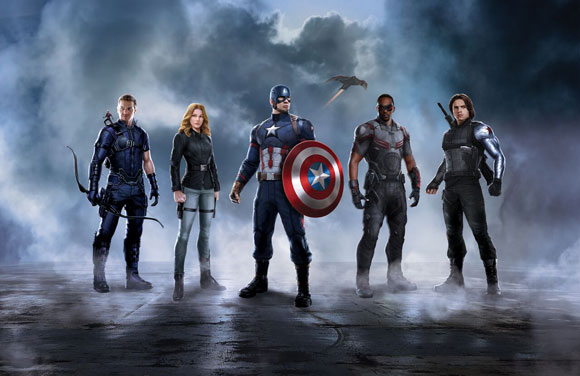
    Films are generally regarded as a source of entertainment, but they also have a profound impact on the realities of our lives. Even movies with superhero themes, which are purely fictional, have the power to shape political realities. For instance, the Marvel Cinematic Universe, a franchise that features individuals with exceptional abilities, highlights the inability of governments to address significant issues or credible threats. These governments tend to view those who can effect change as a greater threat than the aliens themselves. This commentary reflects on the governments’ and leadership’s propensity to prioritize personal insecurities and power politics over the greater good. This, in turn, questions the relevance of democratic institutions and government, which is ironic given that the films originate from a country that has historically promoted democracy. This paper aims to explore how these films portray global politics and economic relations, and the rationale behind these depictions.

    RELATIONSHIP BETWEEN POLITICS AND THE FILM INDUSTRY

    Before examining the portrayal of political institutions in films, it is important to consider the extent to which these institutions influence the film industry, as this relationship will greatly determine the narrative or nature of the films. It is crucial to understand the independence of the film industry when it comes to politics. During the Cold War era, also known as the era of ideological conflict, films played a significant role in fostering a sense of nationalism among the population. They served as an effective means of disseminating an ideology that would advantage the host country. Films became a tool of soft power, and both sides utilized them to the fullest.

    Independence Day, a motion picture released in 1996 and starring Will Smith, exemplifies the interconnection between politics and cinema. The film centres around an alien assault on Earth and the United States of America’s leadership and military’s endeavour to exact retribution and obliterate the extraterrestrial ships, thereby preventing further attacks. This reflects the ‘saviour of the world’ narrative that the United States of America champions and takes pride in. The movie’s portrayal of the United States as the epicentre of the world is strikingly evident. The Cold War period in Hollywood was greatly influenced by the United States’ aspiration for global dominance. It sought to establish US supremacy across the globe. The Cold War was a critical juncture in US political history, and it was essential to emerge victorious in ideological warfare. Consequently, the United States utilised film as a medium to rally the masses and legitimise its actions through an exalted portrayal of patriotism and nationalism. Depicting the US as the only state capable of addressing global threats was a recurring theme in these films. Although the movie is more than a decade old, it accurately portrays the nature of the international arena. It depicts the US at the centre, emphasising that the US is a superpower today and an economically advanced nation with immense financial resources and the ability to carry out military operations. However, compared to the present reality, this portrayal might not be entirely accurate, as the US is currently grappling with enormous debt and bearing significant costs for its interventions around the world.

    Nonetheless, it maintains a significant influence and directs economic ties in some manner or form. Hence, one can argue that the depiction is a fictionalized exaggeration of reality, despite the presence of some factual elements. How autonomous is the film industry -from any location or time frame- in creating or presenting narratives that challenge the established order? This study will delve into specific films as case studies and scrutinize them meticulously to glean a clearer understanding of the portrayal and to what extent it reflects the true picture of the global arena.

    Analysis

    Part 1 of the paper examined films as tools of ideological expression and explored the relationship between the film industry and the State. Moving forward, the paper will delve into regional cinema to investigate its narratives and discourses. Entertainment media has emerged as a powerful socio-political institution that wields influence over the state and individuals through the stories and ideologies it presents. Media has the capacity to depict social realities in accordance with the norms, values, and laws of society at a particular time (Zelizer and Allan, 2011). By comparing and contrasting films from different eras with the social realities of their respective times, it becomes possible to uncover the interconnections between reality and representation. During the Cold War era, films were utilized to foster domestic patriotism, thereby granting the State the legitimacy to pursue its ambitions and achieve greatness. Independence Day is an illustration of this phenomenon.

    The way in which the domestic audience receives information about foreign policy through portrayals of interstate relations is complex, and these portrayals are often influenced by state-centred bias and ideology, which can result in the transmission of biased information (Baum, 2007; Cohen, 1963; Entman, 2004; Chomsky, 1989; McChesney, 2008; McQuail, 2005). The role of the media as a discourse-producing entity and as an entity that defines the complex but symbiotic relationship between the government and the media is central. However, while the media should work independently, it is often commercially motivated and, therefore, promotes the ideas and beliefs of the status quo due to the intertwining of vested interests with the corridors of power (Bagdikian, 2004; Bettig and Hall, 2003; Norris, 1990; Vivian, 2006). This results in the media and government submitting to the interests of a small section of the community being propagated, rather than serving the socio-cultural aspect of the institution.

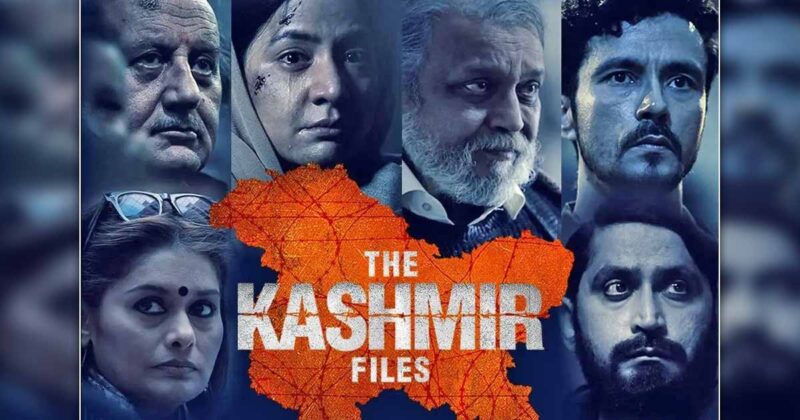
    In the 21st century, propaganda and ideology have become increasingly pervasive. This is due to the rise in content production that aligns with state agendas and the status quo. In India, the movie “The Kashmir Files” has sparked debates regarding whether it is a right-wing propaganda. The movie recounts the exodus of Kashmiri Pandits in Kashmir and the bloodshed that occurred during the 1990s. In today’s context, where right-wing ideologies are gaining momentum, it is evident that ideology and statecraft are interconnected. The portrayal of world and domestic politics is not devoid of an underlying ideological intent. For instance, Bollywood movies like “Raazi” and “LOC Kargil” play a crucial role in propagating India’s foreign policy stance within the domestic political arena. These movies depict India as a progressive global entity, while also propagating the Indian “Big Brother Syndrome” towards its neighbours.

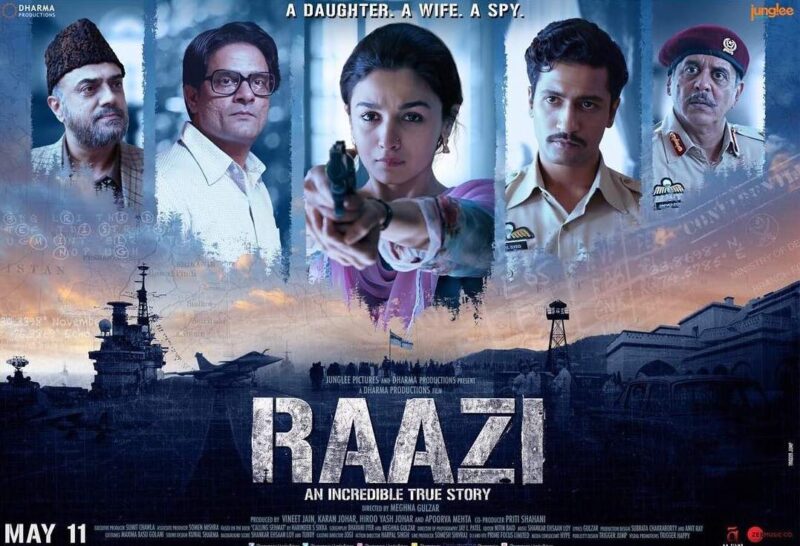
    In the movie “Raazi,” released in 2018 and starring Alia Bhatt and Vicky Kaushal, an undercover RAW agent is married to a Pakistani army official to retrieve crucial information regarding Pakistani moves in Bangladesh and India in 1971. The movie portrays India as a superior state trying to liberate Bangladesh (then East Pakistan) from the “Enemy.” This theme of Indian superiority among its neighbours is prevalent in most films that deal with world and domestic politics. Similarly, the developed West promotes capitalism through films and other visual media.

    Hollywood emerged as a centre for state-sponsored and ideology-driven content during the Cold War. Movies like Wall Street, released in 1987 during an ideological conflict between the United States and the USSR, reflected capitalist ideologies and demonized the USSR and its communist system. The film depicted the ruthless and often exploitative nature of capitalism that prevailed during the 1980s. One of the lead characters, Gordon Gekko, portrayed by Michael Douglas, advocated for the greed and highly capitalistic nature of businessmen. In the context of the Cold War, this promoted a specific type of capitalist ideology to counter the Soviet or communist threat. The glorification of the businessman and the discontentment of the businessman played a significant role in the domestic economic output. The 1980s glorified greed, and this movie accurately represented it. Wall Street explicitly conveyed the notion that morality should not be prioritized over money. The film also featured a speech by Gordon Gekko, in which he declared, “Greed is good.” Movies like this projected a sense of American exceptionalism in the political and economic sense.

    “Don’t Look Up” is a satirical film released in 2022 that critiques the global response to the impending climate crisis. Although the movie aimed to address the issue on a worldwide scale, it primarily focused on Western perspectives. A film that seeks to tackle an international issue should address it on a more comprehensive level. The film, produced in the United States and released on an Over-The-Top (OTT) platform, failed to address the problem it intended to address due to the country’s state-centred ideology and propaganda, which portrays the United States as the saviour of the world. Even though countries like Russia and India were mentioned, the film’s Western bias was evident in the portrayal of these countries as technologically inadequate in stopping the comet from colliding with Earth. This bias is also reflected in movies produced globally, where the notion that national interest takes precedence over all else is a recurring theme.

    Therefore, it can be asserted with confidence that when motion pictures address world politics and economic relationships either currently or historically, the narrative is not unconnected to the state’s agenda. It is permeated with ideology that continually resurfaces. The only solution is the establishment of an autonomous media institution. It is crucial to distinguish between art and the state, as art has proven to be revolutionary in the past. The art produced in India during its quest for independence embodies that essence of truth and authenticity which appears to be lacking in today’s profit-driven, capitalistic world. It is vital to view things objectively, removing the tint of ideology, and acknowledge reality for what it is. This is where the political economy comes into play, exposing the exploitative, biased, and dismissive workings of the industry and institution. Numerous academic studies have examined and concluded that films have significantly influenced the public’s perspective on the State and its actions, making a thorough analysis of contemporary films even more necessary. In a world where false information spreads rapidly, independent media is indispensable.


    Feature Image Credit:  Wikimedia Commons
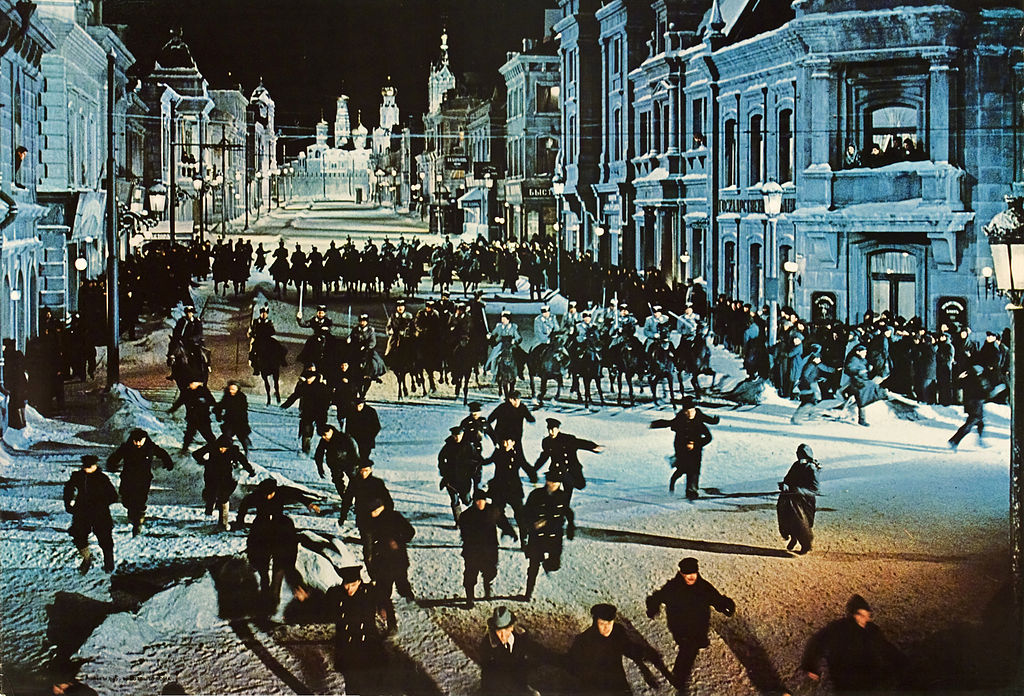
    Scene from Dr Zhivago depicting the Cossacks attacking peaceful demonstrators, a prelude to the Russian Revolution.  Dr Zhivago was a book written by Boris Pasternack, with the plot set in the last days of the Second World War and the break out of the Russian revolution. The book was banned in the USSR, was smuggle out into Europe and translated into English and other European languages. It was made into a classic movie by David Lean during the peak of the Cold War. The movie became a weapon in the cultural component of the Cold War, for its depiction of a totalitarian tendency inherent in the Russian revolution from the start. Boris Pasternack was awarded the Nobel prize (for his book ‘And Quite flows the Don’) but refused to receive it due to the pressure of the ideological  contest between the communist USSR and the capitalist West.    

    Kashmir Files poster Image: koimoi.com

    Raazi poster Image: Mumbai Mirror  

    Bibliography

    Bagdikian, Ben H. 2004. The New Media Monopoly. Boston: Beacon. https://library.uniteddiversity.coop/Media_and_Free_Culture/The_New_Media_Monopoly-Ben_H_Bagdikian.pdf.

    BAUM, MATTHEW A. 2007. “Soft News and Foreign Policy: How Expanding the Audience Changes the Policies.” Japanese Journal of Political Science 8 (1): 115–45. https://doi.org/10.1017/s1468109907002502.

    Bettig, Ronald V., and Jeanne Lynn Hall. (2003) . Big Media, Big Money : Cultural Texts and Political Economics. Lanham, Md.: Rowman & Littlefield Publishers, Inc.

    Chomsky, Noah. 1991. “Necessary Illusions: Thought Control in Democratic Societies, Noam Chomsky. 1989. Sough End Press, Boston, MA. 432 Pages. ISBN: 0-89608-366-7. $16.00.” Bulletin of Science, Technology & Society 11 (3): 183–83. https://doi.org/10.1177/027046769101100328.

    Cohen, Bernard C. 1963. The Press and Foreign Policy. The American Historical Review. https://doi.org/10.1086/ahr/69.3.805.

    Entman, Robert. 2005. “Robert M. Entman. Projections of Power: Framing News, Public Opinion, and U.S. Foreign Policy. Chicago: University of Chicago Press. 2003. .Public Opinion Quarterly 69 (2): 324–26. https://doi.org/10.1093/poq/nfi017.

    Mcchesney, Robert Waterman . 2008. The Political Economy of Media : Enduring Issues, Emerging Dilemmas. New York: Monthly Review Press.

    McQuail, Denis . 2005. McQuail’s Mass Communication Theory. Sage Publications Ltd., London. https://www.scirp.org/reference/referencespapers?referenceid=1839060.

    Norris, Pippa. 2002. “Studying the Media and Politics in Britain: A Tale of Two Literatures?” The British Journal of Politics and International Relations 4 (2): 359–73. https://doi.org/10.1111/1467-856x.t01-1-00009.

    Vivian, John. 2006. The Media of Mass Communication. Allyn & Bacon.

    Zelizer, Barbie, and Stuart Allan. 2011. Journalism after September 11. Taylor & Francis.


  • The Meaning of War in the 21st Century

    The Meaning of War in the 21st Century

    War is, as Clausewitz said, a continuation of politics…or to be precise it is part of geopolitical machinations.  The complexity of the conflict in Ukraine can be understood only if one examines the many dimensions at play in 21st-century wars.  French journalist and political scientist, Thierry Meyssan delivers some thoughts on the evolution of the human dimension of war. The end of industrial capitalism and the globalization of exchanges do not only transform our societies and our ways of thinking but the meaning of all our activities, including wars.                                          – TPF Editorial Team


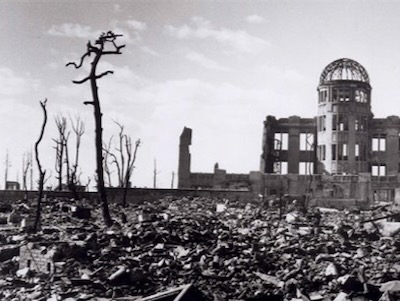
    The atomic bombings of Hiroshima and Nagasaki were not part of any military strategy. Japan had already intended to surrender. The United States just wanted them not to surrender to the Soviets who were beginning to pour into Manchuria, but to themselves.


    Since the end of World War II 77 years ago, Europeans (except for the former Yugoslavs) have known peace on their soil. They have forgotten this distant memory and discovered war with horror in Ukraine. The Africans of the Great Lakes, the ex-Yugoslavs and the Muslims from Afghanistan to Libya, passing through the Horn of Africa, look at them with disgust: for many decades, the Europeans ignored their sufferings and accused them of being responsible for the misfortunes they were suffering.

    The war in Ukraine started with Nazism according to some, eight years ago according to others, but it is only two months old in the consciousness of Westerners. They see some of the sufferings it causes, but they do not yet perceive all its dimensions. Above all, they misinterpret it according to the experience of their great-grandparents and not according to their own experience.

    Wars only a Succession of Crimes

     As soon as it starts, war forbids nuances. It forces everyone to position themselves in one of the two camps. The two jaws of the beast immediately crush those who do not comply.
    The ban on nuances forces everyone to rewrite events. There are only “good guys”, us, and “bad guys”, those on the other side. War propaganda is so powerful that after a while, no one can distinguish the facts from the way they are described. We are all in the dark and no one knows how to turn on the light.
    War causes suffering and death without distinction. It doesn’t matter to which side you belong. It doesn’t matter if you are guilty or innocent. One suffers and dies not only from the blows of those on the other side, but also collaterally from those on one’s own side. War is not only suffering and death, but also injustice, which is much more difficult to bear.
    None of the rules of civilized nations remain. Many give in to madness and no longer behave like humans. There is no longer any authority to make people face the consequences of their actions. Most people can no longer be counted on. Man has become a wolf for man.

    Something fascinating is happening. If some people turn into cruel beasts, others become luminous and their eyes enlighten us.

    I spent a decade on the battlefields and never went home. Although I now flee from suffering and death, I am still irresistibly drawn to those looks. That is why I hate war and yet I miss it. Because in this tangle of horrors there is always a sublime form of humanity.

    The Wars of the 21st Century

    I would now like to offer you some thoughts that do not commit you to this or that conflict and even less to this or that side. I will just lift a veil and invite you to look at what it hides. What I am about to say may shock you, but we can only find peace by accepting reality.

    Wars are changing. I am not talking about weapons and military strategies, but about the reasons for conflicts, about their human dimension. Just as the transition from industrial capitalism to financial globalization is transforming our societies and pulverizing the principles that organized them, so this evolution is changing wars. The problem is that we are already incapable of adapting our societies to this structural change and therefore even less capable of thinking about the evolution of war.

     War always seeks to solve the problems that politics has failed to solve. It does not happen when we are ready for it, but when we have eliminated all other solutions.

    This is exactly what is happening today. The US Straussians have inexorably cornered Russia in Ukraine, leaving it no option but to go to war. If the Allies insist on pushing her back, they will provoke a World War.

    The periods between the two eras, when human relationships must be rethought, are conducive to this kind of disaster. Some people continue to reason according to principles that have proven their effectiveness but are no longer adapted to the world. They are nevertheless advancing and can provoke wars without wanting to.


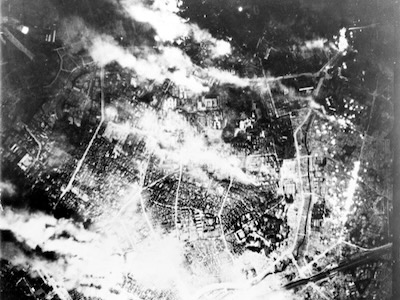
    On the night of May 9, 1945, the US air force bombed Tokyo. In one night more than 100,000 people were killed and more than 1 million were left homeless. It was the largest massacre of civilians in history.


    If in peacetime, we distinguish between civilians and soldiers, this way of reasoning no longer makes sense in modern warfare. Democracies have swept away the organization of societies into castes or orders. Everyone can become a combatant. Mass mobilizations and total wars have blurred the lines. From now on, civilians are in charge of the military. They are no longer innocent victims but have become the first responsible for the general misfortune of which the militaries are only the executors.

    In the Western Middle Ages, war was the business of the nobles and of them alone. In no case did the population participate. The Catholic Church had enacted laws of war to limit the impact of conflicts on civilians. All this does not correspond anymore to what we live and is not based on anything.

    The equality between men and women has also reversed the paradigms. Not only are soldiers now women, but they can be civilian commanders too. Fanaticism is no longer the exclusive domain of the so-called stronger sex. Some women are more dangerous and cruel than some men.

    We are not aware of these changes. In any case, we do not draw any conclusions from them. This leads to bizarre positions such as the refusal of Westerners to repatriate the families of jihadists they have let go to the battlefields and to judge them. Everyone knows that many of these women are far more fanatical than their husbands were. Everyone knows that they represent a much greater danger. But nobody says so. They prefer to pay Kurdish mercenaries to keep them and their children in camps, as far away as possible.

    Only the Russians have repatriated the children, who were already contaminated by this ideology. They entrusted them to their grandparents, hoping that the latter would be able to love and care for them.

    For the past two months, we have been receiving Ukrainian civilians fleeing the fighting. They are only women and children who suffer. So we do not take any precautions. However, a third of these children have been trained in the summer camps of the Banderites. There they learned the handling of weapons and the admiration of the criminal against humanity, Stepan Bandera.

    The Geneva Conventions are only a vestige of the time when we reasoned as humans. They do not stick to any reality. Those who apply them do so not because they believe they are obliged to, but because they hope to remain human and not sink into a sea of crimes. The notion of “war crimes” is meaningless, since the purpose of war is to commit successive crimes in order to achieve the victory that could not be obtained by civilized means, and in a democracy, each voter is responsible.

    In the past, the Catholic Church forbade strategies directed against civilians, such as the siege of cities, on pain of ex-communication. Besides the fact that today there is no moral authority to enforce rules, no one is shocked by “economic sanctions” affecting entire peoples, even to the point of causing murderous famines, as was the case against North Korea.

    Given the time we need to draw conclusions from what we are doing, we continue to consider certain weapons as prohibited while using them ourselves. For example, President Barack Obama explained that the use of chemical or biological weapons is a red line that should not be crossed, but his Vice President Joe Biden has installed a large research system in Ukraine. The only people who have forbidden themselves any weapon of mass destruction are the Iranians since Imam Ruhollah Khomeini morally condemned them. Precisely, they are the ones we accuse of wanting to build an atomic bomb, as they do nothing of the kind.

     In the past, wars were declared in order to take over territories. In the end, a peace treaty was signed to modify the land register. In the age of social networks, the issue is less territorial and more ideological. The war can only end with the discrediting of a way of thinking. Although territories have changed hands, some recent wars have resulted in armistices, but none in a peace treaty and reparations.

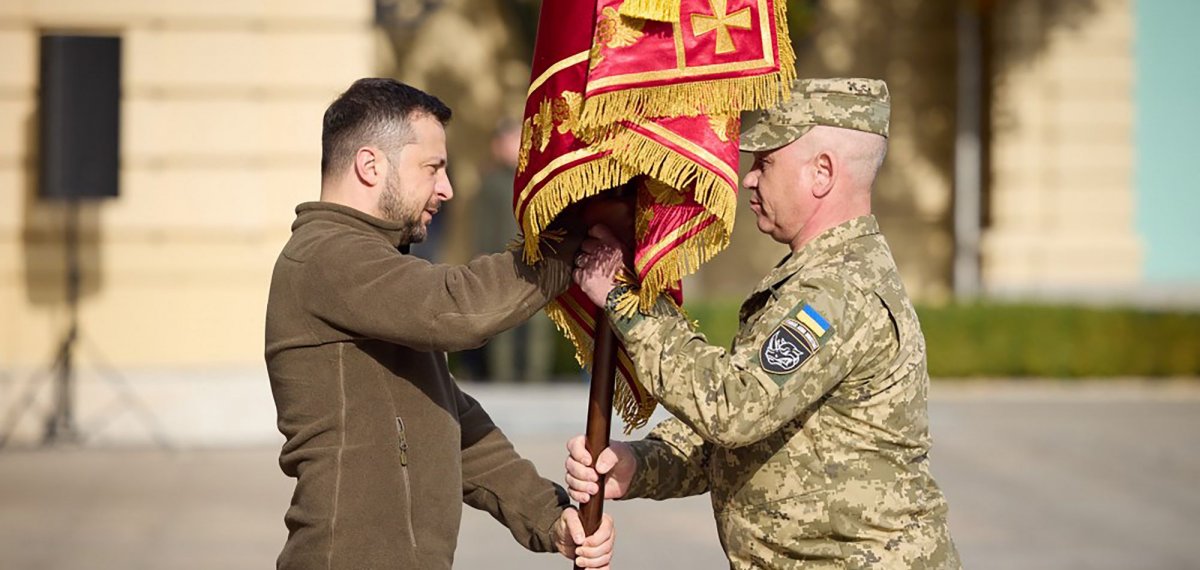
    We can see that, despite the dominant discourse in the West, the war in Ukraine is not territorial, but ideological. President Volodymyr Zelensky is the first warlord in history to speak several times a day. He spends much more time talking than commanding his army. He writes his speeches around historical references. We react to the memories he evokes and ignore what we don’t understand. To the English, he speaks like Winston Churchill, they applaud him; to the French, he reminds them of Charles De Gaulle, and they applaud him; etc… To all, he concludes “Glory to Ukraine!”, they do not understand the allusion which they find pretty.

    Those who know the history of Ukraine recognize the war cry of the Banderites. The one they shouted while massacring 1.6 million of their fellow citizens, including at least 1 million Jews. But how could a Ukrainian call for the massacre of other Ukrainians and a Jew for the massacre of Jews?

    Our innocence makes us deaf and blind.


    For the first time in a conflict, one side censored the enemy media before the war started. RT and Sputnik were shut down in the European Union because they could have challenged what was to come. After the Russian media, opposition media are beginning to be censored. The Voltaire Network’s website, Voltairenet.org, has been censored in Poland for a month by decision of the National Security Council.


    War is no longer limited to the battlefield. It becomes essential to win over the spectators. During the war in Afghanistan, US President George W. Bush and British Prime Minister Tony Blair considered destroying the satellite TV channel Al-Jazeera. It had no impact on the belligerents, but it gave pause to viewers in the Arab world.

    It is worth noting that after the 2003 war in Iraq, French researchers imagined that military warfare might turn into cognitive warfare. If the nonsense about Saddam Hussein’s weapons of mass destruction only lasted a few months, the way in which the United States and the United Kingdom managed to get everyone to believe it was perfect. In the end, Nato added a sixth domain to its usual five (air, land, sea, space and cyber): the human brain. While the Alliance is currently avoiding confrontation with Russia in the first four domains, it is already at war in the last two.

    As the areas of intervention expand, the notion of a belligerent is fading. It is no longer men who confront each other, but systems of thought. War is thus becoming globalized. During the Syrian war, more than sixty states that had nothing to do with this conflict sent weapons to the country, and today, twenty states are sending weapons to Ukraine. As we do not understand the events live, but interpret them in the light of the old world, we believed that the Western weapons were used by the Syrian democratic opposition while they were going to the jihadists and we are convinced that they are going to the Ukrainian army and not to the Banderites.

    The road to hell is paved with good intentions.


    This article was published earlier in voltairenet.org and is republished under Creative Commons License 4.0.

    Feature Image Credit: Proxy Wars and 21st Century Merchants of Death.