The Indian Air Force celebrates its 86th anniversary on this October 8th, making it one of the oldest and large air forces of the world. Despite many challenges, most of which relate to inefficiencies of political decision making and inadequate financial support to modernisation, the IAF has come out with flying colours to continue to demonstrate its operational capabilities and strategic reach. The recent ‘Gaganshakti’ high intensity exercise is an outstanding example. While the IAF continues to grapple with its huge problems of obsolescence, the last decade and a half has also been testimony to some major transformations underway in the IAF. As the 21st century dawned, the IAF began a rapid transformation from being largely a tactical air force to a strategic force, with significant expeditionary capability.
Isolation to Outward Engagement
For more than half a century, outward engagement of the three services was limited to participation in UN peace-keeping missions. As India began its transformation with economic liberalisation in 1991, it began to dismantle its inward looking licence raj, and with it a global outlook started to emerge. As Indian economy accelerated into an overdrive by the late 1990s, and as India’s strategic image strengthened with the overt declaration of its nuclear weapon status, the government encouraged military to military interactions and defence diplomacy. IAF’s international engagement expanded significantly from the 2000s. Major bilateral exercises were carried out on regular basis with major air forces – USA, UK, France, Singapore, South Africa, Oman, and Malaysia. Also, the IAF became a regular participant in USAF’s multinational exercises such as Cope Thunder and Red Flag. Recently the IAF has expanded its international exercises to involve Israel, Russia, Australia, Indonesia, and Malaysia. For over a decade, the Singapore Air Force carries out its two month long annual training from one of IAF bases on the eastern coast. Joint exercises for humanitarian assistance, involving multinational forces, is now a regular feature. These interactions and engagements have highlighted IAF’s high quality operational expertise, its global standing, and in turn, has contributed immensely to IAF’s growth in its international understanding. Today, the world sees the IAF as the sharp edge of India’s military power as well as the primary instrument of its humanitarian assistance capability worldwide.
Enhancing its Reach
Although the IAF inducted the Jaguar from 1979, its air-to-air refuelling capability was kept inactive. Induction of Mirage 2000 in 1985 met the same fate. The importance of aerial refuelling in extended range operations by the USA in its Libyan strike, Osirak nuclear reactor strike by Israel, and Falklands operations by the UK was not lost on the IAF, and it decided in favour of this force multiplier in the late 1990s. Although the IAF was one of the last major air forces to induct the aerial refueler, its pace of operationalisation was probably the fastest. In less than a decade IAF fighters were flying across Atlantic Ocean to participate in international exercises like the ‘Red Flag’ and ‘Cope Thunder’. Within the last decade the IAF has demonstrated its extended operational reach through all its major exercises. Aerial refuelers form critical component of IAF’s operational capability in terms of reach and penetration. An expansion of this fleet is now long overdue.
Technological and Operational Transformation
Airpower, by its very nature is technology intensive. The IAF embarked on major operational reorientation through induction of major technologies from the early 2000s. This began with induction of precision weapons, UAVs, electro-optical systems, and sensors. The IAF initiated its first upgrade program in the mid 1990s, for 125 MiG-21 Bis aircraft, by stitching together a complex avionics upgrade involving three nations – Russia, France, and Israel. The success of this program has established an irreversible upgrade culture as a cost-effective strategy for sustaining its force structure. This upgrade strategy has also contributed immensely to indigenisation capability of Indian industry. The Jaguar fleet went through a series of comprehensive upgrades, giving rise to significant expansion of its capabilities. The Su-30 MKI is an excellent result of IAF’s conceptualisation and implementation of avionics suites and mission optimisation. Between 2004 and now, the IAF’s upgrade strategies have given fresh lease of life to various aircraft fleet and weapon systems: AN-32, MiG-27, MiG-29, Jaguar, Mirage-2000, and air defence missile systems. More programs involving upgrades of Su-30 MKI fighters and IL-76 transport aircraft are likely to be taken up soon.
The IAF moved to transform its air defence operations through the induction of AWACS platforms. Selecting the proven IL-78 platform, the IAF again masterminded a complex three nation development program to evolve a modern, state-of-the art AWACS platform by 2009. The three AWACS platforms inducted in phase I have been utilised extensively to bring in major operational transformation of its air defence operations in a very short time-frame. The AWACS has certainly given the IAF a significant operational edge vis-à-vis the PLAAF challenge across the Himalayas. Simultaneously, the IAF has supported the indigenous program of AEW aircraft development based on Embraer-145 platform.
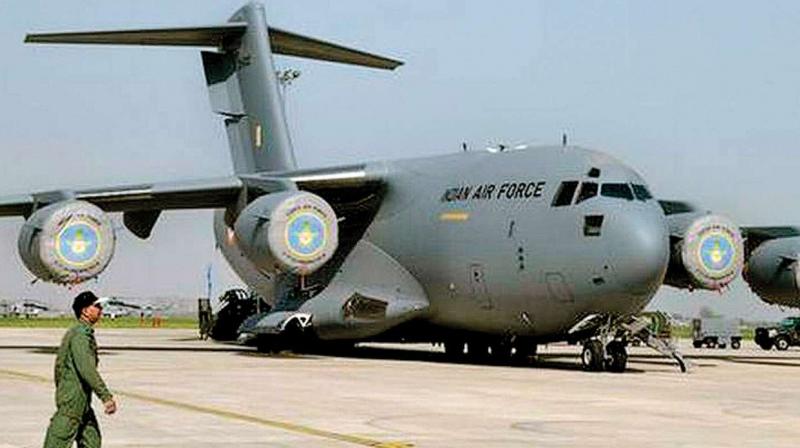
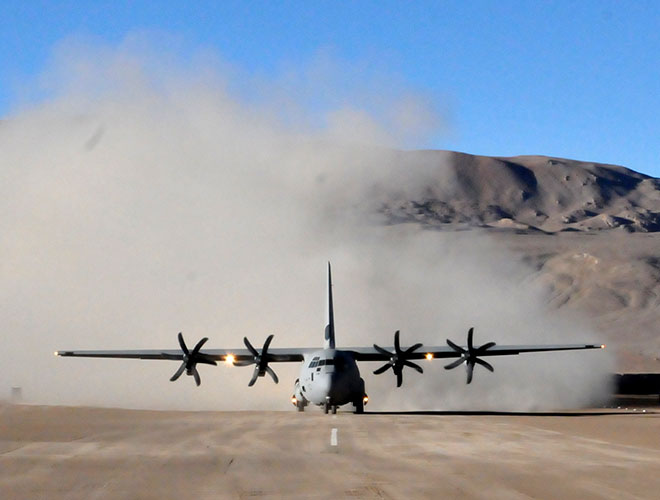
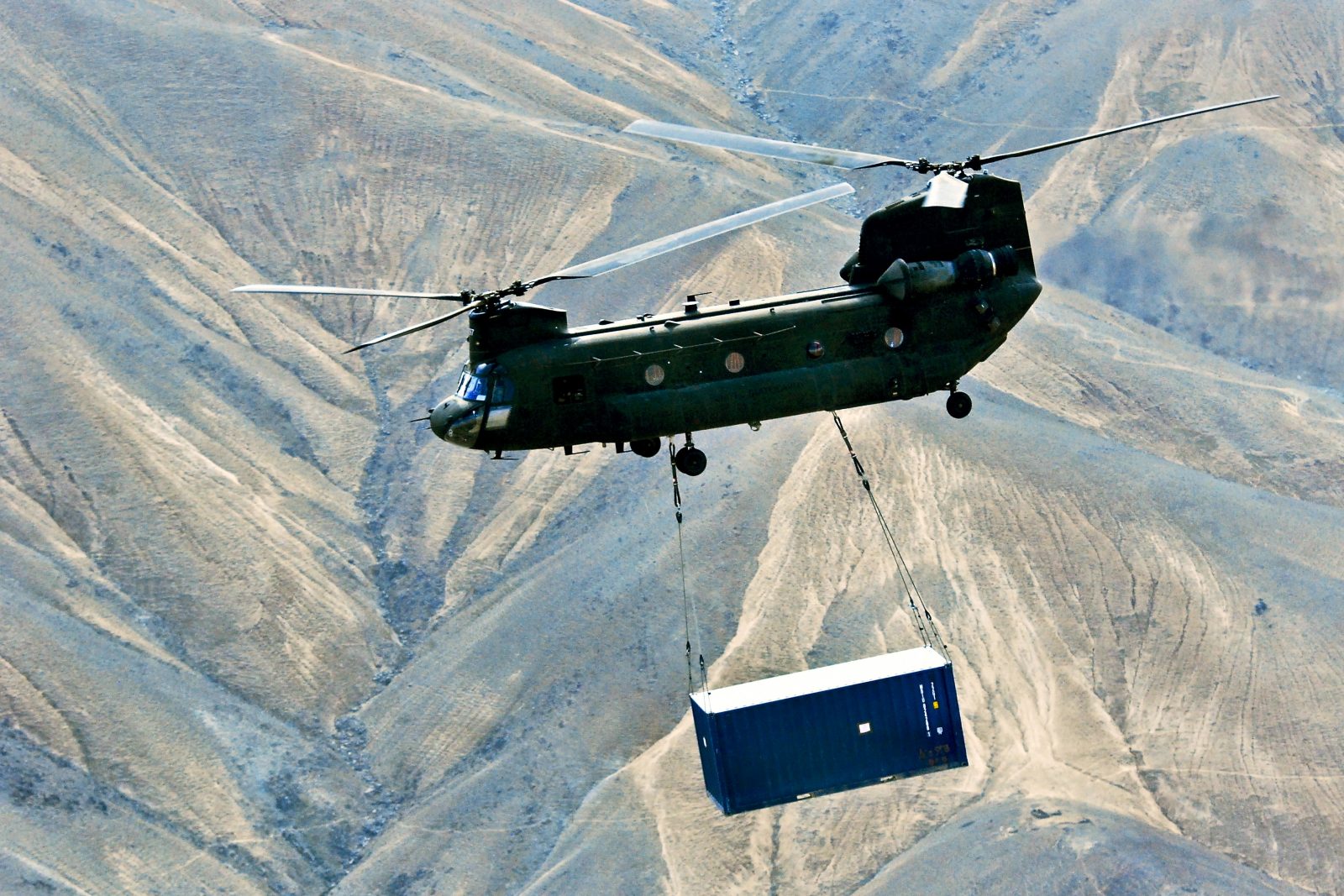
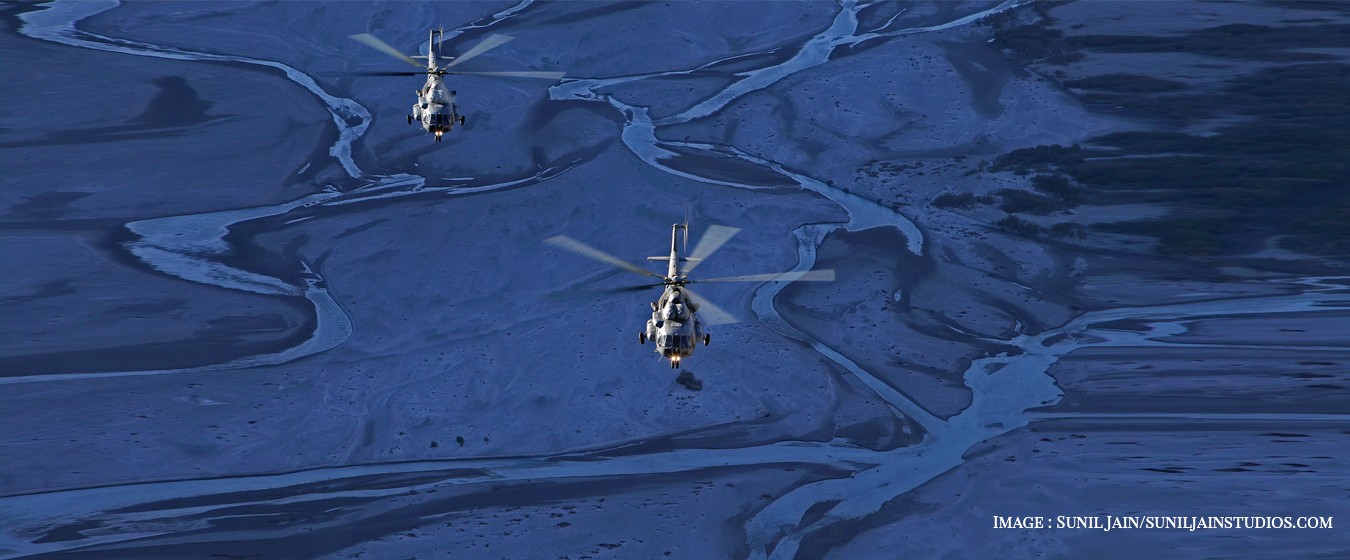
Indo-US strategic partnership manifested itself in significant transformation in IAF’s airlift capability. By 2012, the IAF inducted and operationalised C-130J Hercules aircraft for special operations, which is also the IAF’s first 20 tonne airlift aircraft; and C-17 Globemaster heavy lift aircraft. These are going to be joined by Chinook heavy lift helicopters and Apache attack helicopters. By 2012 large numbers of Russian Mi-17 1V helicopters entered service. With these inductions, the IAF’s airlift capability has truly attained transcontinental proportions.
The air defence missile segment, afflicted by long delays and overruns in terms of cost and time, has finally started showing results. The IAF, inducted its first squadrons of LLQRM (short range air defence missiles) based on Israeli systems, while simultaneously inducting indigenous Akash missile systems. This still indicated huge gaps, which is sought to be filled by the long-delayed MRSAM, jointly developed by India and Israel. With the projected signing of the contract for the Russian S-400 long-range SAMs the air defence will be on stronger operational capability.
The most significant operational and technological capability of the IAF is its net-work centric warfare capability, which is underway for more than a decade. The IAF is the most significantly networked military force amongst the three services. It first established its primary communication grid, AFNET (Air Force Network), and simultaneously established its air defence network inclusive of vital command and control network, IACCS (Integrated Air Command and Control System). The IACCS integrated all its ground based radar sensors and other inputs to create a common operational picture for real-time command and control to become effective. This was a pioneering transformation. The culminating transformation is its ‘airborne network’, which involved evolving NCW concepts based on futuristic ‘self-organising, master-less, node-less, architecture’. The concepts were validated through a three-year long pilot project in 2013. Centred on the SDR (Software Defined Radio) the IAF is focused on indigenous solution. However, interim acquisition of limited numbers of SDR to kickstart operationalisation has stalled for nearly four years due to our infamous acquisition procedural delays. NCW operationalisation is a huge challenge that involves significantly large number of legacy aircraft and systems.
The transformation of the IAF as an aerospace force began in the aftermath of Kargil war. IAF has been at the forefront of transforming the ISR domain through its operational strategies involving various ISR assets – UAVs, tactical and strategic reconnaissance systems, and satellites. It has played a stellar role in defining the roadmap for developing and deploying space assets. It is matter of time before the IAF leads the tri-service aerospace command in true measure to formalise and operationalise India’s Space security strategy.
IAF as the instrument of India’s Global Power
The rise of India and China is the major transformative process of the 21st century international system. That India aspires to be a global power is well known and well founded. India’s march to global power status in the 21st century will be a challenging and arduous task. Rise to great power status is not one of just prestige and power but comes with huge responsibilities. These responsibilities come with significant costs. A great power should be willing to share and shoulder the costs of providing public goods to the global community. This is precisely what the USA is now complaining about, as it finds the costs of sustaining itself as a hegemon is becoming prohibitively expensive. The USA is clearly signalling that aspiring great powers should share the costs of global public goods albeit without upsetting an international order crafted to its advantage. This is where India must rise to the challenge by rising as a benign power with the right balance of hard and soft power to influence the course of emerging power politics.
The IAF, on its 86th anniversary, is at the cross roads of evolving as the instrument of India’s global power. As the 21st century progresses, the centrality of aerospace power in the national power of major countries has become unquestionable. Joint or integrated warfare has been necessitated by the critical role of aerospace power in all domains, be it precision, reach, rapidity of application, and intelligence through ISR. The viability of conventional deterrence comes from aerospace power’s ability to deter through the fear of precise punishment. It becomes obvious that the IAF has to be the cutting edge instrument of India’s hard military power. This obviously calls for the right combination of force structure with cutting edge technologies and weapon systems with significantly long reach. A serious introspection would reveal that the IAF, as it enters its 87th year, faces daunting challenges of building and sustaining the requisite force structure.
IAF’s Force Structure Challenges
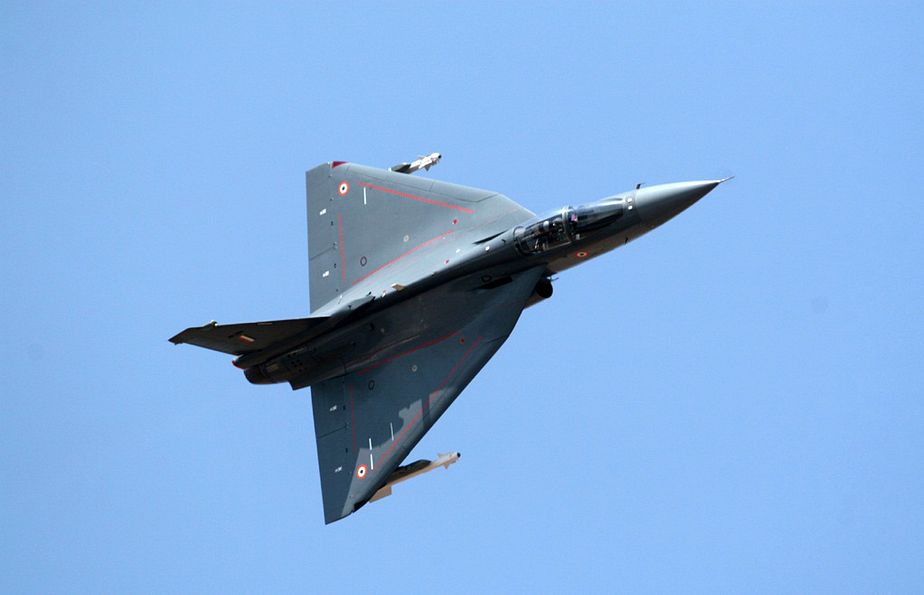
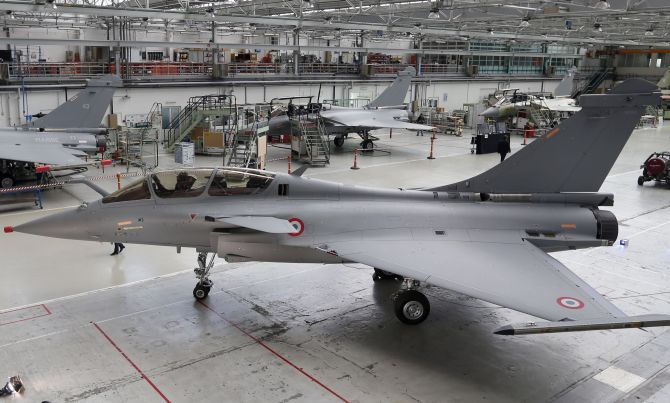
IAF has been grappling with problems of obsolescence and dwindling force structure for more than two decades. Long drawn out and unending MMRCA acquisition process is an example of leaving operational capability gaps unactioned as well as loss of opportunities to enhance industrial and technological capabilities. Time and cost overruns in the indigenous Tejas-LCA program is again an operational shortfall for the IAF. The IAF today is at an all-time low of 32 fighter squadrons. An analysis of the history of IAF’s force structure would reveal a story of crisis management to sustain minimum force levels. Much of the blame must go to the political leadership for failure to grasp the importance of sustaining credible conventional force structures, while part of the blame must certainly fall on services themselves.
JRD Tata committee, set up in the aftermath of 1962 humiliation against China, recommended an IAF force structure of 65 combat squadrons. This was accepted by the government but was pruned down to 39.5 squadrons as an interim measure on account of resource constraints. This figure has remained more or less permanent, till the government approved a figure of 42 squadrons in 2005. Even though the IAF has enhanced its combat capability with the induction of force multipliers, and networked air defence capability, its approved force structure may fall short of meeting India’s requirements of functioning effectively as a global player. In the modern, net-centric aerospace environment, the IAF will be India’s main instrument of conventional deterrence. Tata committee recommendations look more apt for India, given India’s emerging stature and global responsibilities expected of it. However, the immediate requirement is to get IAF’s force structure back to the approved 42 combat squadron strength. Given the large number of aircraft that need to be replaced, this would take at least 15 years if only done on war-footing.
Modernisation and Indigenisation Imperatives
As it celebrates its 86th anniversary the IAF would do well to do some serious introspection. Modernisation processes for all militaries in all countries face the challenges of timely resource availability, particularly for capital-intensive service like the Air Force. In India the problem is compounded by inadequate aerospace industrial and technology base. Indian military power, and IAF in particular, is heavily import dependent. Despite more than 70 years of indigenisation efforts, not much has changed in critical areas. A major cause for this state of affairs is the lack of adequate involvement of the user service in project management and technology development. The IAF will have to take a leaf out of the USAF model to make a major impact on indigenisation. This will need the following to be done on a time bound basis:
- IAF needs to create a cadre of research personal. It also needs to operate aerospace research laboratories. These will focus on research and development of aerospace technologies. Ideally the IAF needs to exercise command and control over laboratories such as ADE, DARE, CABS, etc.
- Programs like the Tejas-LCA should have been managed by the user service, the IAF, after the technology demonstration phase. Program management by the user service is an absolute must as it will be driven by operational needs balancing technology, cost, and time factors. As a corollary, it becomes obvious that the IAF must create the necessary expertise to manage its programs.
- IAF’s involvement in DRDO driven programs must clearly define them as those that are technology development oriented and those that are user driven weapon system development. The latter programs must clearly be managed by the IAF while the former must be enabled by IAF support.
- The IAF must clearly lay down a 20 year strategic roadmap for the government wherein all aircraft and major weapon systems are made completely free of foreign OEM dependence.
Conclusion
India’s security environment cannot be viewed simply as just border and territorial disputes with Pakistan and China. Its strategic challenges in a fast changing 21st century world are increasing by the day. China’s aerospace capability has leapfrogged significantly over the last two decades, and it poses a major challenge to India. The IAF will need to spearhead India’s aerospace capability to balance China’s dominance.
IAF’s long-term force structure strategy could revert to its earlier ‘auxiliary air force’ format, albeit in a new form. Indian government wound up the auxiliary air forces post 1962, while it retained the ‘Territorial Army’ model. The benefits of this scheme is well established. It provides huge opportunities to a large segment of qualified young people to do military service, provides a ready reserve, and forms an important component of second rung security structure. With slight modification this could be created as Air National Guards, much like the US system. The objective should be to achieve one squadron of Air National Guards for each state in a defined time period based on financial and technical resources. These squadrons should be equipped with Tejas aircraft. Over a period of time this could become a win-win situation for the IAF, civil society, and the country as a whole. A comprehensive approach to force structure could see the IAF as the foremost air force in Asia and a major powerful force in the world by 2032, that will be IAF’s centenary year.
=====xxx=====
The author, Air Marshal M Matheswaran AVSM VM PhD (Retd) is a former Deputy Chief of Integrated Defence Staff (Policy, Plans & Force Development).