Tag: hegemony

  • The United States as an Empire in Decline: A Talk by Jeremy Kuzmarov

    The United States as an Empire in Decline: A Talk by Jeremy Kuzmarov

    The Peninsula Foundation organised a webinar titled ” World Order Turmoil: The Reality of American Empire” on the 19th of January 2024. The main talk was given by the Chief Guest Jermey Kuzmarow and further comments was provided by the Discussant, Mohan Guruswamy. The event led to excellent discussions with critical comments from both the speakers. The discussions were moderated by Air Marshal M Matheswaran, President-TPF.

    Jeremy Kuzmarov is Managing editor of CovertAction Magazine and author of five books on U.S. foreign policy. His website can be accessed here. Mohan Guruswamy is our Governing Council member and a Distinguished Fellow and a prolific writer on economics, security, and geopolitics.


    Given below is the text of jeremy Kuzmarow’s talk, along with questions and answers.
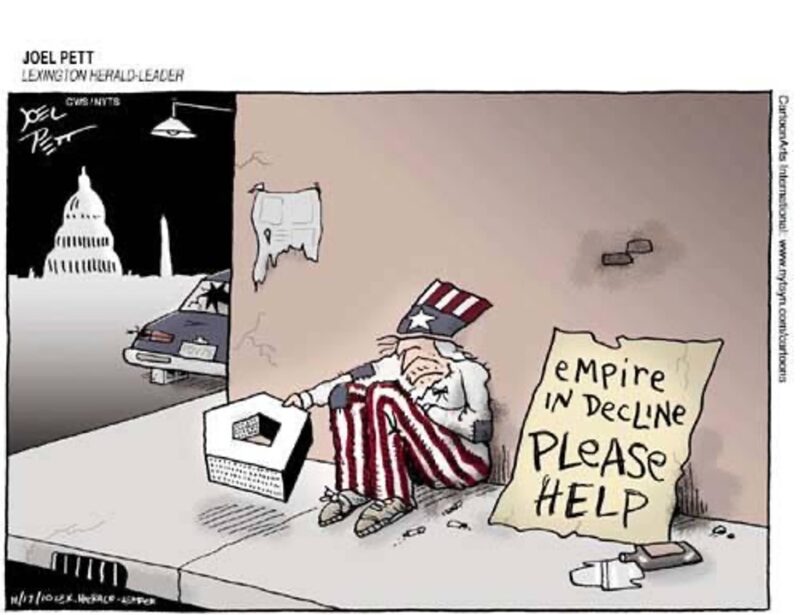
     

    (Source: tunnelwall.blogspot.com)

    In September, I attended a talk sponsored by the Tulsa Committee on Foreign Relations by an inside-the-beltway pundit named Ali Wyne, a former senior fellow at the pro-NATO Atlantic Council and David Rockefeller fellow at the elitist Trilateral Commission.

    Wyne told the audience in so many words that the sun had not yet set on the American empire; that the Biden administration was outmaneuvering the evil Putin in Ukraine; and that the U.S. was still a beacon of hope for the rest of humanity.

    Toward the end, Wyne personalized the talk, discussing how his family had migrated to the U.S. from Pakistan with nothing, and that through hard work he was able to achieve the American dream.

    But Wyne seemed oblivious to the fact that that dream is increasingly unreachable for the majority of people in an increasingly stratified society marred by a decline in civilian manufacturing and public services and skyrocketing education costs.

    Wyne also failed to point out that the American dream historically was achieved at the expense of Third World nations that were looted by U.S. corporations, and by endless wars that killed millions of people.

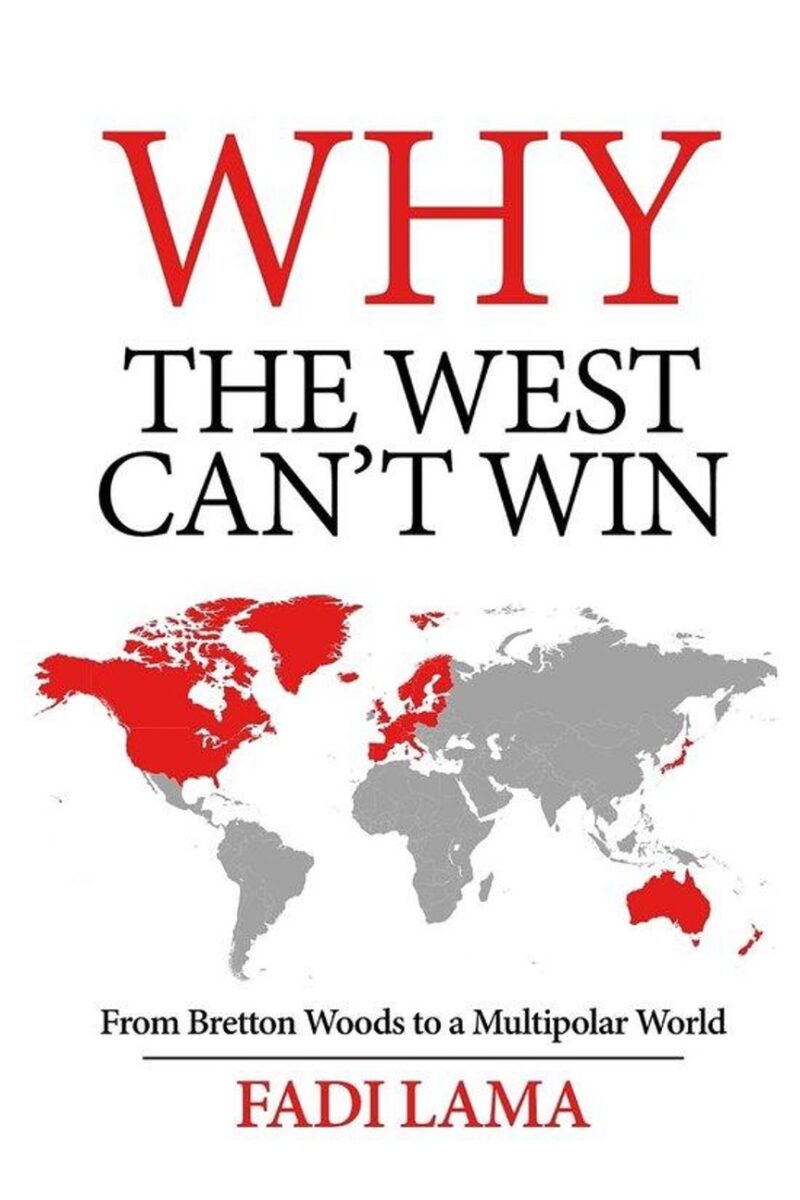
    Wyne’s delusional worldview is underscored in a new book by Fadi Lama, Why the West Can’t Win: From Bretton Woods to a Multipolar World (Atlanta: Clarity Press, 2023), which shows that the American Century has ended and that a new multipolar world order has been established in which economic dynamism lies primarily in the East.

    Lama is an international adviser for the European Bank for Reconstruction and Development (EBRD) and geopolitical consultant with a Ph.D. in mechanical engineering from the Georgia Institute of Technology (Georgia Tech).
    He points out at the beginning of his book that in 1500, prior to the era of Western colonialism, there was a relatively fair political-economic world order with a close equilibrium between population and wealth generation. But by the end of World War II, the West accounted for only 30% of global population but 60% of global Gross Domestic Product (GDP).

    When many colonized nations gained their independence, the West imposed a neo-colonial framework that enabled their resources to be exploited by Western multinational corporations.

    Some countries on the front lines of the Cold War, such as West Germany, Japan and South Korea, were allowed unhindered development as part of a geopolitical strategy designed to keep them within the Western orbit and curb the advance of Communism. However, being pseudo-independent states, when the political necessity was removed, they were cut back to size.

    The liberation of China in the 1949 Communist-led revolution (an event known in the U.S. as the “loss of China”) was a historical turning point that began to reverse the Western monopolization of wealth and power and set the stage for the re-empowerment of the Global South.

    By 2017, China—known as the “sick man of Asia” in the 19th century following its de facto colonization of Great Britain following the Opium War—was the world’s number one economy with its real goods production amounting to 24% of global real goods production.

    Under CCP leadership, China regained its sovereignty and lifted 770 million people out of poverty, with homelessness now being practically non-existent.

    According to Lama, China’s staggering economic success resulted from a centralized political system in which commercial banking was dominated by the public sector. Central bank financial and monetary policies were further put under the control of the Chinese government, which implemented policies serving the national interest rather than those of the Western financial oligarchy.

    China’s economic success contrasts markedly with the growing economic stagnation in Western countries and the U.S. resulting from the neo-liberal economic model in which the private sector is elevated above the public sector.

    By 2014, the top 0.1% in the U.S. owned as many assets as the bottom 90%, an obscene inequality ratio accompanied by a dramatic rise in poverty, which had been reduced massively in China under more socialist-oriented policies.

    China’s superior state-centric economic model is currently being followed by Russia which has withstood record U.S. sanctions under Vladimir Putin’s leadership through a renewed commitment to economic autarky (self-sufficiency) and investment in local industries and technologies.

    Following the collapse of the Soviet Union, U.S. strategic planners saw a golden opportunity to reduce Russia’s status to that of a fourth-rate power and to enable the plunder of its bountiful natural resources.

    The overzealous policies backfired, however, pushing Russia into alliance with China that signifies the birth of a new multi-polar world order that holds the potential to restore the global economic parity from 1500—before Western colonization took root.

    Lama emphasizes the fact that Russia now provides food aid in Afghanistan and Africa and fertilizer to poor countries, and has forged growing relations with both China and Iran, the latter having gained independence from Western colonial tutelage in 1979 when the Shah was overthrown.

    Lama finds significant economic synergy and growing win-win cooperation in the economic, cultural, scientific and military fields between China, Russia and Iran, which he says are “de facto allies in the struggle for a ‘Fair World.’”

    Russia and China today are leading the way in space exploration, clean energy technologies as well as cutting-edge missile technologies at a time that U.S. weapons systems are proving to be extraordinarily costly and inefficient owing to a Byzantine Pentagon contracting system and under-skilled workforce due to the skyrocketing costs of higher education.

    Today’s shifting power balance can be compared with 1997 when “‘the empire’ had control over three of the top four energy reserves: Venezuela was a U.S. vassal, Russian energy resources were under control of the Money Powers (Western financial oligarchs) via their proxy Russian oligarchs, and Saudi Arabia was a compliant U.S. tributary. Of the top four, only Iranian reserves were out of the Money Powers’ control.”

    By 2022, Lama writes, “the Empire had lost control of the top three reserves, Venezuela, Iran and Russia, while Saudi Arabia is no longer as compliant as it was in 1997.”

    What happened in the interim was a period of heightened military intervention and imperial overreach resulting in a counter-mobilization that signifies the end of the era of Western empires dating back to the 16th century.

    Bretton Woods: From Military to Financial Colonialism

    The imperial framework after World War II was established through the Bretton Woods economic system, which Lama says was designed to “lock countries into a financial structure controlled by the West.”

    Lama writes that this structure “requires central bank governors be independent of their governments, but dependent on rules established by the Bank for International Settlements (BIS), at the top of the pyramid in the Bretton Woods system.

    Established in 1930 to handle reparations payments imposed on Germany at the Versailles Conference after World War I, BIS had helped finance Hitler’s rise to power and was owned by central banks, setting policies for them that directly influenced the global economy.

    Franklin D. Roosevelt had proposed liquidating the BIS due to its cooperation with Nazi Germany, though the resolution that he sponsored to that effect at the July 1944 Bretton Woods Conference at which the post-World War II monetary and political global structure was being set, was revoked after Roosevelt’s death.
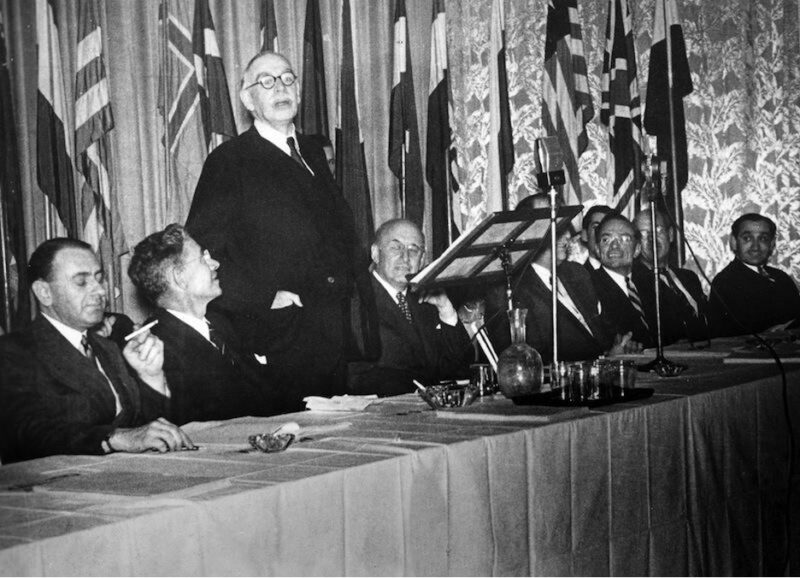
    John Maynard Keynes addressing the July 1944 Bretton Woods Conference in New Hampshire. [Source: centerforfinancialstability.org

    According to Lama, when some newly decolonized countries tried to adopt an alternative economic arrangement to Bretton Woods, their leaders (Togo’s Sylvanus Olympio, Egypt’s Nasser; Indonesia’s Sukarno; Democratic Republic of Congo’s Lumumba; Iran’s Mossadegh; Ecuador’s Jaime Roldos; Panama’s Omar Torrijos) were eliminated by wars, coups or assassinations [over a 25-year span].

    Economic hit men would descend on developing countries offering loans for infrastructure projects whose real purpose was to plunge these countries into debt so they would become dependent on foreign creditors and their economies could be restructured along neo-liberal lines and in the service of multi-national corporations.

    A pillar of the Bretton Woods system was that the U.S. dollar was established as the international trade currency, which was convertible into gold at the fixed rate of $35 per ounce of gold.

    With the decline of U.S. competitiveness in the 1960s, the Nixon administration froze the convertibility of the U.S. dollar in gold and, instead, made it convertible to oil, provided that oil was sold only in U.S. dollars.

    This led to a dramatic increase in the price of oil and petrodollar arrangement with Saudi Arabia by which the U.S. provided military protection and weapons to the Saudis in exchange for the promise of them trading their oil in U.S. dollars and using income from oil to buy U.S. Treasury bills. Interest on these sales was then spent by the U.S. Department of the Treasury on infrastructure projects in Saudi Arabia to be executed by U.S. companies.

    The fact that other countries had to hold reserves in U.S. dollars to cover their oil imports allowed the U.S. to incur high trade deficits bred by deindustrialization in the neo-liberal era without causing a depreciation of the U.S. dollar.

    However, this is no longer sustainable in the long term and Russia and China are spearheading a shift in the global economy by which oil and other commodities are no longer being traded in U.S. dollars, ushering in the end of the American Century.

    The Money Power

    Lama’s book includes discussion of the growth of the Western financial oligarchy, or what he calls the Money Power, who are the major shareholders of the leading hedge funds (BlackRock, Vanguard and State Street) and have become the absolute rulers over society.

    According to Lama, the Money Power is well placed to control elections in Western democracies and control mass media in all its forms, print, TV and social media platforms.

    They support free trade agreements designed to usurp what little is left of national sovereignty and a neo-liberal vulture economy in which all aspects of the economy are privatized in order to maximize corporate profits.

    The U.S. decline has been fueled by the Money Power’s recognition that maintaining a strong manufacturing base was no longer necessary when trade deficits could be offset by currency manipulation owing to Nixon’s convertibility of the U.S. dollar to oil and the trade in oil around the world in U.S. dollars.

    The U.S. economy is increasingly dominated by the financial sector which flourishes at the expense of other vital economic sectors, leading to the high wealth concentration and impoverishment of society made worse by austerity measures entailing cutbacks in social and other government services.

    Russophobia, Sinophobia and the End of an Era

    The intense Russophobia cultivated in the U.S. media over the last decade is the result of the Money Power’s lust for Russia’s immense wealth, which it was starting to gain access to in the 1990s before Vladimir Putin reasserted national control over Russia’s economy.

    The anti-Russia propaganda has had the greatest impact on the educated classes, as 77% of Americans with post-graduate degrees considered Russia an enemy in a March 2022 poll, compared to 66% with high school education or less.

    Russophobia has been combined with an ascendant Islamophobia and Sinophobia, whose purpose is to mobilize public support for confronting the troika of powers (Russia, Iran and China), which threaten Western hegemony.

    According to Lama, if a date were to be identified for the end of the U.S. empire, it would be January 8, 2020, when Iran avenged the assassination of General Qasem Soleimani by attacking a U.S. air base in Iraq and displaying Iran’s weapons capability.

    Afterwards, the U.S. Central Command (Centcom) significantly relocated its headquarters from Doha, Qatar, just 125 miles from Iranian shores, to safety in Tampa, Florida.

    While the current U.S. war in Gaza has created a renewed pretext for expanded U.S. military intervention in the Middle East, Lama’s book makes clear that the U.S. could not win a war against Iran for regime change.

    Contrary to Wyne’s analysis, the U.S. has also been outmaneuvered in Ukraine, whose army is in a state of disrepair after a failed counteroffensive. It is further being outmaneuvered by China, which is winning hearts and minds through the Belt and Road Initiative (BRI) that provides low-interest loans to countries for infrastructural development with no strings attached.

    In sum, the Great Game for world domination appears to be up and the Money Power has lost. That is why they are behaving so erratically in manufacturing crisis after crisis as they desperately attempt to sustain a fading world order defined by profound inequality and injustice. For the rest of my talk, I will try and further answer some of the questions that were posed prior to the seminar:

    Question 1) This dealt with consistent U.S. war making as a tool in which the US tried to sustain its hegemony, and growing pushback with the rise of BRICS, Shanghai Cooperation Organization and Rise of China? How will all this shape the future world order?

    Answer: There is the threat of a world war breaking out provoked by the U.S. as the U.S. cannot tolerate geopolitical competition or being relegation to a second rate power, and will respond violently—as it is already doing. Currently, the U.S. is provoking wars simlutaneously with Russia, China and the Middle East, with catastrophic consequences already for the people of Ukraine, Russia and Gaza. The great Australian journalist John Pilger produced a documentary in 2016 warning about the U.S. military buildup in the Asia Pacific and coming war with China, which would be catastrophic for everyone involved.

    It is instructive to look back in history to the 1930s when Japan challenged U.S. and Western empires in the Asia Pacific with the establishment of the Greater Economic Co-Prosperity Sphere. This challenge and effort by Japan to establish an alternative yen bloc in Southeast Asia and to supplant the Western colonial powers led directly to the Pacific War. Records from the time reveal how the U.S. manuevered Japan into firing the first shot (an explicit goal of U.S. policy as outlined by Secretary of State Henry Stimson) by imposing a naval buildup in the South China sea and crippling oil embargo that threatened to cut off Japan’s oil supply and undermine its empire in the Asia-Pacific.

    There is evidence that FDR knew about the impending Pearl Harbor attacks but allowed them to take place because the American public would only support military intervention if America were attacked and the attack was made to look like a sneak attack by a dastardly enemy.

    History could easily repeat itself today; the U.S. military is in fact preparing for war in the Asia Pacific; building a new military base in Micronesia in the middle of the Pacific Ocean, and training soldiers in jungle warfare in Hawaii while studying military battles in the Pacific War, like the Battle of Guadalcanal.

    Gen. Charles A. Flynn, the commander of U.S. Army Pacific, was quoted in The New York Times stating that China had been on “an incremental, insidious and irresponsible path for decades.” Now more than ever, the “total Army,” he said, needs to prioritize relevant Pacific experience.
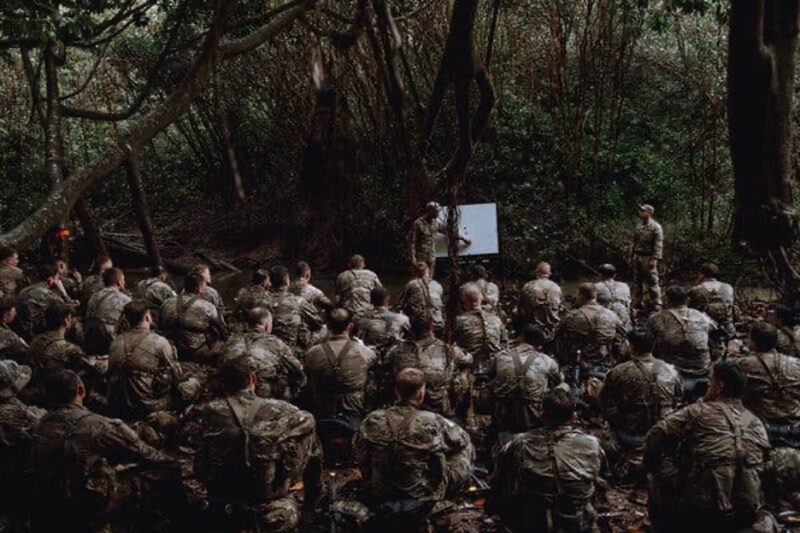
    U.S. soldiers being trained to fight a 21st Century Pacific War—this time against China. [Source: nytimes.com]

    After provoking a war with China, like with Japan in World War II, the U.S. would surely make it look like China started it and that it was somehow innocent. This has been a feature of US imperial wars going back to the era of the Indian Wars.

    Question 2: The first half of the 20th century was essentially a contest of empires. The two World Wars were fundamentally European wars or a contest of colonial empires. While the European empires were destroyed, the gain was for the U.S. as it emerged as the most powerful actor.

    Answer: Agreed. I would add that the U.S. defeated the Japanese empire in the Pacific theater of World War II, which enabled the U.S. to establish a chain of military bases in the Asia Pacific as a linchpin of U.S. imperialism. U.S. strategic planners had long considered the Asia Pacific key to world domination because of its economic vitality and rich resources and geography and this is why the U.S. cannot accept any rival powers there, including Japan, and now China.

    Question 3: Did the U.S. foresee this and plan its rise to a position as the pre-eminent power ensuring the destruction of the European powers?

    Answer: Yes, absolutely. As one example of dispacing European empires, I was just reading a book about U.S. policy in Congo in the 1960s by David Gibbs, The Political Economy of Third World Intervention. The book showed how U.S. mining tycoons (Maurice Templesman and Harold Hochschild) came to oppose Belgian colonialism so American corporations could replace Belgian ones in controlling and profiting from Congo’s lucrative mineral wealth. Templesman and Hochschild financed CIA front organizations and supported the murder of Patrice Lumumba who wanted to nationalize Congo’s mines after independence. They cultivated very close ties with Joseph Mobutu; Lumumba’s replacement and murderer, who cultivated the image of a Pan-Africanist devoted to African culture, but who sold out Congo and its economy to foreign interests. The CIA funded Mobutu’s security apparatus so he could crush a secessionist movement in the diamond rich Katanga province backed by the Belgians. The goal was for Mobutu to consolidate his control over Congo and for U.S. corporations to take over the mines from Belgians in Katanga. Here is U.S. neocolonialism at work, and muscling out of the Europeans.

    Question 4: The U.S.-led post-1945 world order rests on its control of the three pillars – political, economic, and security ( Allies/Vassals, Economic Control through Bretton Woods systems + USD as the global reserve currency, and the UN Security Council+NATO). Is Western Europe an Ally of the US or is it an unequal relationship?

    Answer: I would say its an ally of the U.S. to a point, as we see from the example of the Belgians in Congo. Many Europeans are starting to question alliance with the U.S. and whether the US has the best interests of European countries in mind. The U.S. involvement in Ukraine and destruction of the Nordstream II pipeline, for example, has been deterimental to European economies, including especially that of Germany that relied on cheap Russian natural gas imports. With the destruction of the pipeline, they were forced to purchase natural gas at a much higher cost from the Middle East and from U.S. natural gas suppliers in Texas and elsewhere who were financing politicians in the U.S. that supported the copious military aid to Ukraine along with the weapons contractors. European countries historically benefited from trade with Russia, so the war in Ukraine has generally hurt their economies and it is not clear for how much longer their populations will put up with this and just go along with the New Cold War.

    Question 5: Decolonisation was superficial as the U.S.-led West retained much of the colonial and imperial controls. Is it right to say that the U.S., in effect, has been an expanding empire since the American-Spanish War? The Cold War was a check on the American expansion.

    Answer: Decolonization was indeed superficial as the U.S. used clandestine and sometimes not so clandestine means toinfluence and control postcolonial leaders across much of the Third World and to sustain neocolonial economic relationships where Third World countries exported raw materials to the West and purchased products that were manufactured there, or had their resources owned and controlled by U.S. corporations.

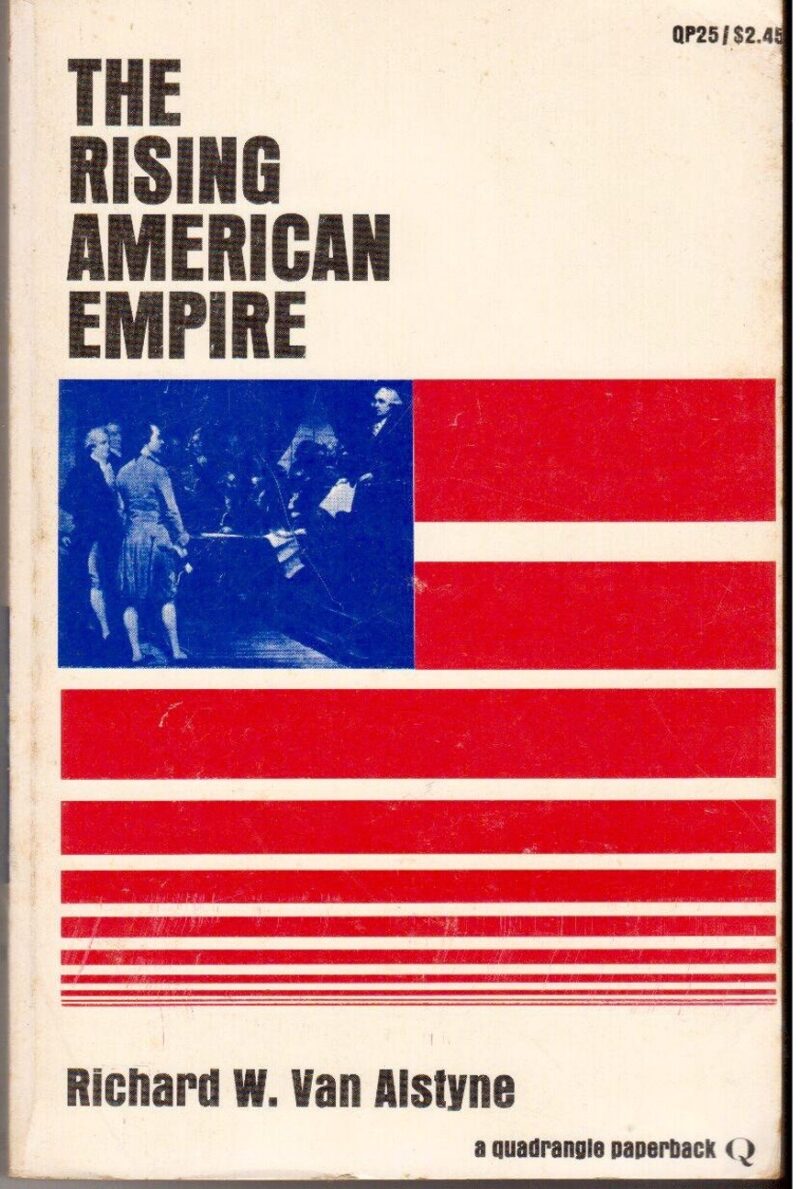
    I would suggest that the U.S. was an expanding empire from the formation of the country. Historian Richard Van Alstyne wrote an important book in 1960 entitled The Rising American Empire. The book shows how the American founding fathers all conceived of the U.S. as an empire and had ambitions of eclipsing the British and Roman empires at their height. Van Alstyne also addresses how the pacification of the Native Americans and takeover of their resources and land and massacre of those who resisted previewed what the U.S. would do to other peoples around the world.
    As far as the Cold War, my book, The Russians are Coming, Again with John Marciano shows that rather than being a check on U.S. expansion, the Cold War served to validate heightened U.S. intervention across the Third World under the pretext of fighting and combatting communism. In fact the real communist threat, as Noam Chomsky has emphasized, was a threat to U.S. business interests and ability to encourage development of an alternative state-centered model of governance that would prevent corporate pillage and the kind of neoloconial arrangements that prevailed quite widely in this period and beyond.

    Question 6: The end of the Cold War and American unipolar dominance unleashed the push for the American Empire—through GWOT and a series of wars.

    Answer: Absolutely: We have the U.S. empire on steroids with the Global War on Terror. It has given a pretext for the U.S. to invade and bomb many Middle-Eastern countries. And it has been totally ridden with contradictions, as the U.S. has supported leading terrorist states like Saudi Arabia and committed large scale terrorist acts based on standard definitions of terrorism as acts of violence targeting civilians with the purpose of affecting a political goal or political change.

                                                                                                                                                              Source: goodreads.com

    Question 7: NATO Expansion – conflict with Russia and anti-China strategy – a clear case of imperial overstretch and suicidal?

    Answer: Yes I think so. Back in 1996, George Kennan, the father of the containment strategy and original Cold War, warned about NATO expansion, stating: that NATO expansion would amount to a “strategic blunder of epic proportions” and the “most fateful error of American policy in the entire post-Cold War era,” as it would “inflame the nationalistic, anti-Western and militaristic tendencies in Russian opinion, restore the atmosphere of the cold war to East-West relations,” and “impel Russian foreign policy in a direction decidedly not to our liking.”

    Kennan’s prediction proved to be true and look where we are today: in a new Cold War, with the U.S. having torn up the arms control treaties of the 1980s; initiated a proxy war with Russia that could lead to a full-blown war between the two countries and nuclear conflict. If the latter transpires, the NATO expansion surely will have been suicidal. Already it is diverting badly needed resources towards the military and a senseless new arms race, much like in the original cold war, where it produced heavy deficits and Third World type living conditions in the U.S. with astronimical inequality levels, underfunded edcuation and health care system, and abysmally poor public services, including in areas like mental health treatment, and programs to assist the homeless. One consequence is the extremely high crime rates in the U.S. and overcrowded prisons.
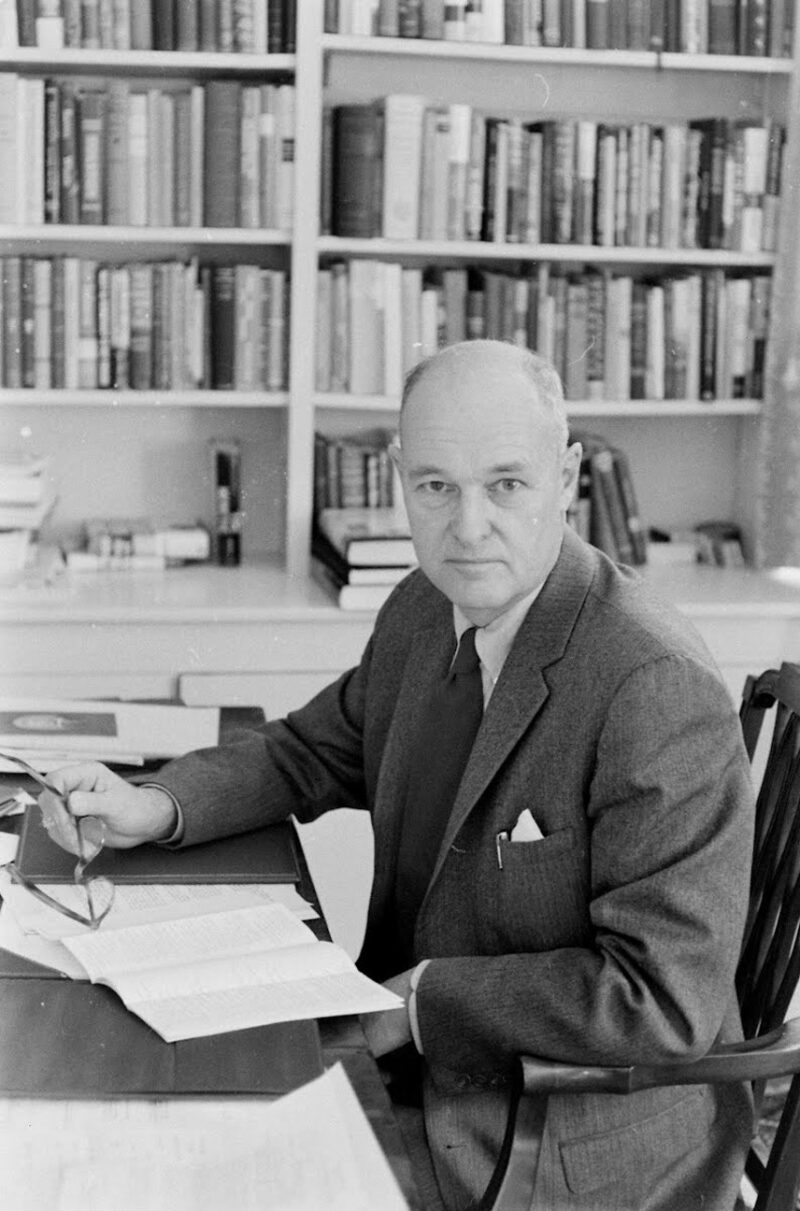
    George F. Kennan: if only U.S. leaders in the 1990s and 2000s had listened to him [Source: artsandculture.google.com

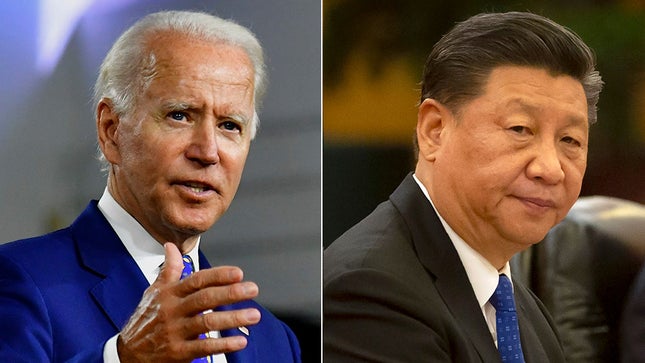
    As far as China, the provocations by the Biden administration may be even more insane than with regards to Russia, as a) the U.S. depends on Chinese purchasing of U.S. debt; b) the U.S. economy is quite dependant on China’s; and c) China has superior military technology capabilities that would give it the edge in any war with the U.S.

    Charles Freeman is a retired diplomat who served as Nixon’s translator when he famously visited China in theearly 1970s to reestablish U.S. diplomatic relations during the Cold War. Freeman told me when I interviewed him that China was in no way a military threat to the U.S., but the U.S. sees it as a threat because its economy has been growing and slowly surpassing that of the U.S. The U.S., however, should not view China as a threat of any kind, and should consider its economic growth an opportunity for the U.S. if it tried to harness China’s economic growth to its own. This would mesh well with the win-win strategy advocated for by Chinese Premer Xi Jinping in which China and the U.S. would cooperate to mutual economic benefit.
    Charles Freeman [Source: globaltimes.cn]

    Instead, the U.S. has sought to a) encircle China militarily, b) arm Taiwan to the teeth in violation of the “One China” policy and incite Taiwanese separatist elements, c) try and undermine Chinese interests throughout Southeast Asia, and d) provoke it by launching drone surveillance missions over its borders and in Chinese controlled waters off Taiwan, and e) sailing U.S. naval ships in Chinese waters.

    This is in addition to a) the propaganda directed against China in the U.S., b) the persecution of Chinese scientists; c) support for separatist elements in Xinjiang and Tibet; and d) the waging of an economic war on China and efforts to sabotage China’s economy—a policy that had been pursued by the FDR administration against Japan that directly provoked war with it.

    Question 8: Are current wars in Ukraine and Gaza—a sign of major turbulence in the World Order?

    Answer: Yes absoutely. These wars were both easily avoidable and were a direct result of U.S. foreign policy and its extremism.

    1. In the case of Ukraine, the U.S. was intent on using Ukraine as a battering ram directed against Russia. The U.S. orchestrated the 2014 Maidan coup and empowered and armed far right, Russophobic elements who triggered the war with Russia by a) attacking the ethnic Russian population in Eastern Ukraine; and b) reneging on any commitments in the Minsk peace agreements that would have given greater autonomy to the Luhansk and Donetsk provinces. The U.S. aim was similar to Afghanistan in the 1980s where they wanted to draw the Russians into a military quagmire and trap and discredit Putin and cripple his regime by ratcheting up economic sanctions against him (which it was believed would create disaffection with his rule and trigger a movement for regime change). This strategy was born of desperation because Putin was succeeding in strengthening Russia and blocking the neoconservative designs to control Eurasia and its rich oil and gas reserves, which was only possible with a weakened Russia.
    2. Gaza: The U.S. has long used Israel as an outpost of its power in the Middle East, recently establishing secret military bases in the Negev. The neocons in Washington have long sought regime change in Iran and see Israel as their vehicle to help achieve that. They also wanted regime change in Syria and to ensure Israeli control over the Golan Heights, where oil reserves have been discovered. U.S. weapons have emboldened hardliners in Israel and enabled Israeli aggression in Gaza and now Lebanon with disastrous human costs for the civilian population that people are comparing to a new Holocaust.

    Question 9:  With the rise of China, India, and the BRICS—is this a Power Transition moment?

    Answer: Yes. We are seeing major historical changes in real-time. China’s achievements through the One Belt, One Road initiative were so impressive they led to a copycat effort by the Biden and Boris Johnson admiinistrations that never really got off the ground. The SCO is enabling countries also to get around the World Bank and IMF by offering loans with no strings attached. China’s rise is epitlmized by its trading alliance with Russia and influence throughout Africa, where China is clearly winning the Great Game. While Chinese labor practices may be bad in many places, China is bringing tangible benefits to African countries through the building of impressive infrastructure, whereas all the U.S. offers is drone bases and IMF structural adjustment programs that push economic austerity measures and reinforce social inequality.

    Question 10: Is this a sign of the end of Western dominance of the last 500 years?

    Answer: I believe that yes, we are seeing major historical shifts. It may take some more time as empires often do have lasting power and can linger on even when their legitimacy has been eroded, but change is coming about.

    Question 11: In its entire history, the USA has been at war for all but 15-20 years. Is the USA a war-mongering state?

    Answer: Sadly, yes. It goes back to the founding of the country as a settler colonial state rooted in the military conquest and genocide of the Native Americans. The colonial mentality is so deep that the U.S. names a lot of its weapons systems after native tribes that were vanquished, like the Apache helicopter for example. The Operation to kill Osama bin Laden was called Operation Geronimo after the Apache chief who was vanquished in the 19th century. Noam Chomsky once asked; imagine the nazis had won World War II, and named weapons: “gypsys” and ‘Jews.”
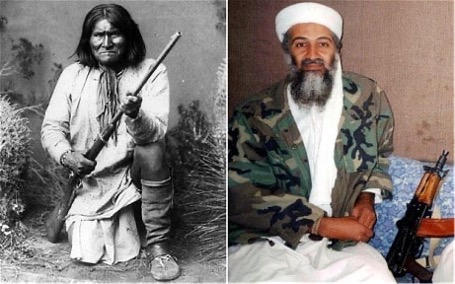
    [Source: telegraph.co.uk]

    This reflects something rotten at the core of imperialism and a deep imperial mentality that is hard to vanquish and is passed on generation after generation. This mentality and the war like culture in the U.S. is seen in a hero worship of soldiers and the military at sporting events, and in the denigration and marginalization of peace activists in popular and intellectual culture.

    That the military culture is a largely top down phenomenon though should be emphasized as since Vietnam, the U.S. government has dared not reintroduce the draft, lest it face a societal revolt remniscent of the 1960s counter-culture movement. So a lot of Americans see through the lies and are not so hawkish—that’s why the government has to distance the public from the wars; lie to them repeatedly about what they are all about; and develop new technologies and AI that could ensure a reliance on machines in fighting wars rather than the American people who often see through the lies and will protest an unjust war—particularly if there are a large number of U.S. ground troops potentially being put in harms way (like in Vietnam).

    Question 12: What is the future of 21st century world order? Barry Posan says the era of Superpower is over. Has the multipolar world emerged? what would be its shape?

    Answer: I think we are indeed seeing the birth of a new multipolar world order in which the center of economic power in the world increasingly lies in the East and in which China is a powerhouse and Southeast Asia is a key motor of economic growth in the Global economy. The U.S. is sliding more towards authoritarianism and potentially even a civil war, and may be further weakened by domestic unrest as it loses its economic supremacy and the U.S. dollar ceases to be a main currency of global trade. U.S. military interventions may focus more on South America and Mexico (which some Republicans want to bomb now to stem the immigration tide) and the U.S. army may have to be deployed more often to contain domestic unrest and right wing estremists/neofascists and to control armies of homeless people who are a product of a failed economic model.

    Related to the last question about U.S. adaptation to the new realities, a great danger is that the U.S. won’t accept reality, and will attempt to violently reimpose its hegemony, triggering a new Pacific War or world war that would result in millions of deaths.

    The recent escalation of conflict in Ukraine and the Middle East as well as U.S. saber rattling towards China and over Taiwan, makes this threat all too real and ominous.

    Feature Image Credit: iai.tv
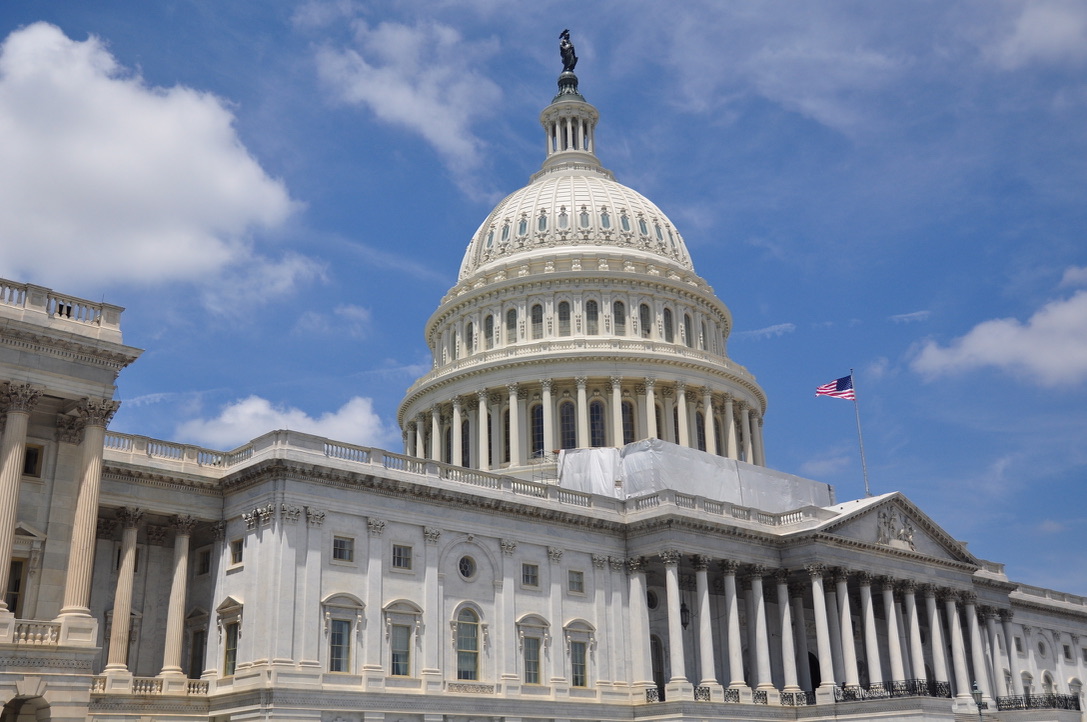
  • U.S. Hegemony and its Perils

    U.S. Hegemony and its Perils

    This analytical report on the perils of US hegemony was released by China on the 20th of February 2023. It is evident that much of the world is now alienated by the USA and the West. This is particularly so after the Ukraine-Russia conflict that erupted a year ago. The majority of the world remains non-commital but certainly does not support the US or Ukraine in this conflict nor do they condemn Russia. In effect, the non-western world has openly indicated that this unnecessary war is caused by the aggressive actions of NATO and the US to provoke Russia. The constant interventions and wars waged by the US and NATO in the name of democracy and disregarding the UN are now being questioned. China has cleverly utilised this sentiment to time its publication. The paper is very well analysed, crisply argued, and has flagged real questions to the world community. In short, the paper implies that the US and its allies pose the gravest threat to global stability and peace, and more so to the sovereignty of all countries.

    This paper was published earlier in fmprc.gov.cn


    Introduction

    Since becoming the world’s most powerful country after the two world wars and the Cold War, the United States has acted more boldly to interfere in the internal affairs of other countries, pursue, maintain and abuse hegemony, advance subversion and infiltration, and willfully wage wars, bringing harm to the international community.

    The United States has developed a hegemonic playbook to stage “colour revolutions,” instigate regional disputes and even directly launch wars under the guise of promoting democracy, freedom and human rights. Clinging to the Cold War mentality, the United States has ramped up bloc politics and stoked conflict and confrontation. It has overstretched the concept of national security, abused export controls and forced unilateral sanctions upon others. It has taken a selective approach to international law and rules, utilizing or discarding them as it sees fit, and has sought to impose rules that serve its own interests in the name of upholding a “rules-based international order.”

    This report, by presenting the relevant facts, seeks to expose the U.S. abuse of hegemony in the political, military, economic, financial, technological and cultural fields and to draw greater international attention to the perils of the U.S. practices to world peace and stability and the well-being of all peoples.

    I. Political Hegemony – Throwing Its Weight Around

    The United States has long been attempting to mould other countries and the world order with its own values and political system in the name of promoting democracy and human rights.

    ◆ Instances of U.S. interference in other countries’ internal affairs abound. In the name of “promoting democracy,” the United States practised a “Neo-Monroe Doctrine” in Latin America, instigated “colour revolutions” in Eurasia, and orchestrated the “Arab Spring” in West Asia and North Africa, bringing chaos and disaster to many countries.

    In 1823, the United States announced the Monroe Doctrine. While touting an “America for the Americans,” what it truly wanted was an “America for the United States.”

    Since then, the policies of successive U.S. governments toward Latin America and the Caribbean Region have been riddled with political interference, military intervention and regime subversion. From its 61-year hostility toward and blockade of Cuba to its overthrow of the Allende government of Chile, U.S. policy on this region has been built on one maxim-those who submit will prosper; those who resist shall perish.

    The year 2003 marked the beginning of a succession of “colour revolutions” – the “Rose Revolution” in Georgia, the “Orange Revolution” in Ukraine and the “Tulip Revolution” in Kyrgyzstan. The U.S. Department of State openly admitted playing a “central role” in these “regime changes.” The United States also interfered in the internal affairs of the Philippines, ousting President Ferdinand Marcos Sr. in 1986 and President Joseph Estrada in 2001 through the so-called “People Power Revolutions.”

    In January 2023, former U.S. Secretary of State Mike Pompeo released his new book Never Give an Inch: Fighting for the America I Love. He revealed in it that the United States had plotted to intervene in Venezuela. The plan was to force the Maduro government to reach an agreement with the opposition, deprive Venezuela of its ability to sell oil and gold for foreign exchange, exert high pressure on its economy, and influence the 2018 presidential election.

    ◆ The U.S. exercises double standards on international rules. Placing its self-interest first, the United States has walked away from international treaties and organizations and put its domestic law above international law. In April 2017, the Trump administration announced that it would cut off all U.S. funding to the United Nations Population Fund (UNFPA) with the excuse that the organization “supports, or participates in the management of a program of coercive abortion or involuntary sterilization.” The United States quit UNESCO twice in 1984 and 2017. In 2017, it announced leaving the Paris Agreement on climate change. In 2018, it announced its exit from the UN Human Rights Council, citing the organization’s “bias” against Israel and failure to protect human rights effectively. In 2019, the United States announced its withdrawal from the Intermediate-Range Nuclear Forces Treaty to seek the unfettered development of advanced weapons. In 2020, it announced pulling out of the Treaty on Open Skies.

    The United States has also been a stumbling block to biological arms control by opposing negotiations on a verification protocol for the Biological Weapons Convention (BWC) and impeding international verification of countries’ activities relating to biological weapons. As the only country in possession of a chemical weapons stockpile, the United States has repeatedly delayed the destruction of chemical weapons and remained reluctant in fulfilling its obligations. It has become the biggest obstacle to realizing “a world free of chemical weapons.”

    ◆ The United States is piecing together small blocs through its alliance system. It has been forcing an “Indo-Pacific Strategy” onto the Asia-Pacific region, assembling exclusive clubs like the Five Eyes, the Quad and AUKUS, and forcing regional countries to take sides. Such practices are essentially meant to create division in the region, stoke confrontation and undermine peace.

    ◆ The U.S. arbitrarily passes judgment on democracy in other countries and fabricates a false narrative of “democracy versus authoritarianism” to incite estrangement, division, rivalry and confrontation. In December 2021, the United States hosted the first “Summit for Democracy,” which drew criticism and opposition from many countries for making a mockery of the spirit of democracy and dividing the world. In March 2023, the United States will host another “Summit for Democracy,” which remains unwelcome and will again find no support.

    II. Military Hegemony – Wanton Use of Force

    The history of the United States is characterized by violence and expansion. Since it gained independence in 1776, the United States has constantly sought expansion by force: it slaughtered Indians, invaded Canada, waged a war against Mexico, instigated the American-Spanish War, and annexed Hawaii. After World War II, the wars either provoked or launched by the United States included the Korean War, the Vietnam War, the Gulf War, the Kosovo War, the War in Afghanistan, the Iraq War, the Libyan War and the Syrian War, abusing its military hegemony to pave the way for expansionist objectives. In recent years, the U.S. average annual military budget has exceeded $700 billion, accounting for 40 percent of the world’s total, more than the 15 countries behind it combined. The United States has about 800 overseas military bases, with 173,000 troops deployed in 159 countries.

    According to the book America Invades: How We’ve Invaded or been Militarily Involved with almost Every Country on Earth, the United States has fought or been militarily involved with almost all the 190-odd countries recognized by the United Nations with only three exceptions. The three countries were “spared” because the United States did not find them on the map.

    ◆ As former U.S. President Jimmy Carter put it, the United States is undoubtedly the most warlike nation in the history of the world. According to a Tufts University report, “Introducing the Military Intervention Project: A new Dataset on U.S. Military Interventions, 1776-2019,” the United States undertook nearly 400 military interventions globally between those years, 34 percent of which were in Latin America and the Caribbean, 23 percent in East Asia and the Pacific, 14 percent in the Middle East and North Africa, and 13 percent in Europe. Currently, its military intervention in the Middle East and North Africa and sub-Saharan Africa is on the rise.

    Alex Lo, a South China Morning Post columnist, pointed out that the United States has rarely distinguished between diplomacy and war since its founding. It overthrew democratically elected governments in many developing countries in the 20th century and immediately replaced them with pro-American puppet regimes. Today, in Ukraine, Iraq, Afghanistan, Libya, Syria, Pakistan and Yemen, the United States is repeating its old tactics of waging proxy, low-intensity, and drone wars.

    ◆ U.S. military hegemony has caused humanitarian tragedies. Since 2001, the wars and military operations launched by the United States in the name of fighting terrorism have claimed over 900,000 lives, with some 335,000 of them civilians, injured millions and displaced tens of millions. The 2003 Iraq War resulted in some 200,000 to 250,000 civilian deaths, including over 16,000 directly killed by the U.S. military, and left more than a million homeless.

    The United States has created 37 million refugees around the world. Since 2012, the number of Syrian refugees alone has increased tenfold. Between 2016 and 2019, 33,584 civilian deaths were documented in the Syrian fighting, including 3,833 killed by U.S.-led coalition bombings, half of them women and children. The Public Broadcasting Service (PBS) reported on November 9, 2018, that the air strikes launched by U.S. forces on Raqqa alone killed 1,600 Syrian civilians.

    The two-decade-long war in Afghanistan devastated the country. A total of 47,000 Afghan civilians and 66,000 to 69,000 Afghan soldiers and police officers unrelated to the September 11 attacks were killed in U.S. military operations, and more than 10 million people were displaced. The war in Afghanistan destroyed the foundation of economic development there and plunged the Afghan people into destitution. After the “Kabul debacle” in 2021, the United States announced that it would freeze some 9.5 billion dollars in assets belonging to the Afghan central bank, a move considered “pure looting.”

    In September 2022, Turkish Interior Minister Suleyman Soylu commented at a rally that the United States has waged a proxy war in Syria, turned Afghanistan into an opium field and heroin factory, thrown Pakistan into turmoil, and left Libya in incessant civil unrest. The United States does whatever it takes to rob and enslave the people of any country with underground resources.

    The United States has also adopted appalling methods in war. During the Korean War, the Vietnam War, the Gulf War, the Kosovo War, the War in Afghanistan and the Iraq War, the United States used massive quantities of chemical and biological weapons as well as cluster bombs, fuel-air bombs, graphite bombs and depleted uranium bombs, causing enormous damage on civilian facilities, countless civilian casualties and lasting environmental pollution.

    III. Economic Hegemony – Looting and Exploitation

    After World War II, the United States led efforts to set up the Bretton Woods System, the International Monetary Fund and the World Bank, which, together with the Marshall Plan, formed the international monetary system centred around the U.S. dollar. In addition, the United States has established institutional hegemony in the international economic and financial sector by manipulating the weighted voting systems, rules and arrangements of international organizations, including “approval by 85 percent majority” and its domestic trade laws and regulations. By taking advantage of the dollar’s status as the major international reserve currency, the United States is basically collecting “seigniorage” from around the world; and using its control over international organizations, it coerces other countries into serving America’s political and economic strategy.

    ◆ The United States exploits the world’s wealth with the help of “seigniorage.” It costs only about 17 cents to produce a $100 bill, but other countries had to pony up $100 worth of actual goods in order to obtain one. It was pointed out more than half a century ago that the United States enjoyed exorbitant privilege and deficit without tears created by its dollar and used the worthless paper note to plunder the resources and factories of other nations.

    ◆ The hegemony of the U.S. dollar is the main source of instability and uncertainty in the world economy. During the COVID-19 pandemic, the United States abused its global financial hegemony and injected trillions of dollars into the global market, leaving other countries, especially emerging economies, to pay the price. In 2022, the Fed ended its ultra-easy monetary policy and turned to aggressive interest rate hikes, causing turmoil in the international financial market and substantial depreciation of other currencies, such as the euro, many of which dropped to a 20-year low. As a result, a large number of developing countries were challenged by high inflation, currency depreciation and capital outflows. This was exactly what Nixon’s secretary of the treasury, John Connally, once remarked, with self-satisfaction yet sharp precision, “The dollar is our currency, but it is your problem.”

    ◆ With its control over international economic and financial organizations, the United States imposes additional conditions for assisting other countries. In order to reduce obstacles to U.S. capital inflow and speculation, the recipient countries are required to advance financial liberalization and open up financial markets so that their economic policies would fall in line with America’s strategy. According to the Review of International Political Economy, along with the 1,550 debt relief programs extended by the IMF to its 131 member countries from 1985 to 2014, as many as 55,465 additional political conditions had been attached.

    ◆ The United States willfully suppresses its opponents with economic coercion. In the 1980s, to eliminate the economic threat posed by Japan and control and use the latter in service of America’s strategic goal of confronting the Soviet Union and dominating the world, the United States leveraged its hegemonic financial power against Japan and concluded the Plaza Accord. As a result, the yen was pushed up, and Japan was pressed to open up its financial market and reform its financial system. The Plaza Accord dealt a heavy blow to the growth momentum of the Japanese economy, leaving Japan to what was later called “three lost decades.”

    ◆ America’s economic and financial hegemony has become a geopolitical weapon. Doubling down on unilateral sanctions and “long-arm jurisdiction,” the United States has enacted such domestic laws as the International Emergency Economic Powers Act, the Global Magnitsky Human Rights Accountability Act, and the Countering America’s Adversaries Through Sanctions Act, and introduced a series of executive orders to sanction specific countries, organizations or individuals. Statistics show that U.S. sanctions against foreign entities increased by 933 percent from 2000 to 2021. The Trump administration alone has imposed more than 3,900 sanctions, which means three sanctions per day. So far, the United States had or has imposed economic sanctions on nearly 40 countries across the world, including Cuba, China, Russia, the DPRK, Iran and Venezuela, affecting nearly half of the world’s population. “The United States of America” has turned itself into “the United States of Sanctions.” And “long-arm jurisdiction” has been reduced to nothing but a tool for the United States to use its means of state power to suppress economic competitors and interfere in normal international business. This is a serious departure from the principles of a liberal market economy that the United States has long boasted.

    IV. Technological Hegemony – Monopoly and Suppression

    The United States seeks to deter other countries’ scientific, technological and economic development by wielding monopoly power, suppression measures and technology restrictions in high-tech fields.

    ◆ The United States monopolizes intellectual property in the name of protection. Taking advantage of the weak position of other countries, especially developing ones, on intellectual property rights and the institutional vacancy in relevant fields, the United States reaps excessive profits through monopoly. In 1994, the United States pushed forward the Agreement on Trade-Related Aspects of Intellectual Property Rights (TRIPS), forcing the Americanized process and standards in intellectual property protection in an attempt to solidify its monopoly on technology.

    In the 1980s, to contain the development of Japan’s semiconductor industry, the United States launched the “301” investigation, built bargaining power in bilateral negotiations through multilateral agreements, threatened to label Japan as conducting unfair trade, and imposed retaliatory tariffs, forcing Japan to sign the U.S.-Japan Semiconductor Agreement. As a result, Japanese semiconductor enterprises were almost completely driven out of global competition, and their market share dropped from 50 percent to 10 percent. Meanwhile, with the support of the U.S. government, a large number of U.S. semiconductor enterprises took the opportunity and grabbed a larger market share.

    ◆ The United States politicizes and weaponizes technological issues and uses them as ideological tools. Overstretching the concept of national security, the United States mobilized state power to suppress and sanction Chinese company Huawei, restricted the entry of Huawei products into the U.S. market, cut off its supply of chips and operating systems, and coerced other countries to ban Huawei from undertaking local 5G network construction. It even talked Canada into unwarrantedly detaining Huawei’s CFO, Meng Wanzhou, for nearly three years.

    The United States has fabricated a slew of excuses to clamp down on China’s high-tech enterprises with global competitiveness and has put more than 1,000 Chinese enterprises on sanction lists. In addition, the United States has also imposed controls on biotechnology, artificial intelligence and other high-end technologies, reinforced export restrictions, tightened investment screening, suppressed Chinese social media apps such as TikTok and WeChat, and lobbied the Netherlands and Japan to restrict exports of chips and related equipment or technology to China.

    The United States has also practised double standards in its policy on China-related technological professionals. To sideline and suppress Chinese researchers, since June 2018, visa validity has been shortened for Chinese students majoring in certain high-tech-related disciplines, repeated cases have occurred where Chinese scholars and students going to the United States for exchange programs and study were unjustifiably denied and harassed, and large-scale investigation on Chinese scholars working in the United States was carried out.

    ◆ The United States solidifies its technological monopoly in the name of protecting democracy. By building small blocs of technology, such as the “chips alliance” and “clean network,” the United States has put “democracy” and “human rights” labels on high technology and turned technological issues into political and ideological issues to fabricate excuses for its technological blockade against other countries. In May 2019, the United States enlisted 32 countries to the Prague 5G Security Conference in the Czech Republic and issued the Prague Proposal in an attempt to exclude China’s 5G products. In April 2020, then U.S. Secretary of State Mike Pompeo announced the “5G clean path,” a plan designed to build a technological alliance in the 5G field with partners bonded by their shared ideology on democracy and the need to protect “cyber security.” The measures, in essence, are the U.S. attempts to maintain its technological hegemony through technological alliances.

    ◆ The United States abuses its technological hegemony by carrying out cyberattacks and eavesdropping. The United States has long been notorious as an “empire of hackers,” blamed for its rampant acts of cyber theft around the world. It has all kinds of means to enforce pervasive cyberattacks and surveillance, including using analogue base station signals to access mobile phones for data theft, manipulating mobile apps, infiltrating cloud servers, and stealing through undersea cables. The list goes on.

    U.S. surveillance is indiscriminate. All can be targets of its surveillance, be they rivals or allies, even leaders of allied countries such as former German Chancellor Angela Merkel and several French Presidents. Cyber surveillance and attacks launched by the United States, such as “Prism,” “Dirtbox,” “Irritant Horn” and “Telescreen Operation,” are all proof that the United States is closely monitoring its allies and partners. Such eavesdropping on allies and partners has already caused worldwide outrage. Julian Assange, the founder of Wikileaks, a website that has exposed U.S. surveillance programs, said, “Do not expect a global surveillance superpower to act with honour or respect. There is only one rule: There are no rules.”

    V. Cultural Hegemony – Spreading False Narratives

    The global expansion of American culture is an important part of its external strategy. The United States has often used cultural tools to strengthen and maintain its hegemony in the world.

    ◆ The United States embeds American values in its products, such as movies. American values and lifestyle are tied to its movies, TV shows, publications, media content and programs by government-funded non-profit cultural institutions. It thus shapes a cultural and public opinion space in which American culture reigns and maintains cultural hegemony. In his article “The Americanization of the World,” John Yemma, an American scholar, exposed the real weapons in U.S. cultural expansion, Hollywood, the image design factories on Madison Avenue and the production lines of Mattel Company and Coca-Cola.

    There are various vehicles the United States uses to keep its cultural hegemony. American movies are the most used; they now occupy more than 70 percent of the world’s market share. The United States skillfully exploits its cultural diversity to appeal to various ethnicities. When Hollywood movies descend on the world, they scream the American values tied to them.

    ◆ American cultural hegemony not only shows itself in “direct intervention” but also in “media infiltration” and as “a trumpet for the world.” U.S.-dominated Western media has a particularly important role in shaping global public opinion in favour of U.S. meddling in the internal affairs of other countries.

    The U.S. government strictly censors all social media companies and demands their obedience. Twitter CEO Elon Musk admitted on December 27, 2022, that all social media platforms work with the U.S. government to censor content, reported Fox Business Network. Public opinion in the United States is subject to government intervention to restrict all unfavourable remarks. Google often makes pages disappear.

    The U.S. Department of Defense manipulates social media. In December 2022, The Intercept, an independent U.S. investigative website, revealed that in July 2017, U.S. Central Command official Nathaniel Kahler instructed Twitter’s public policy team to augment the presence of 52 Arabic-language accounts on a list he sent, six of which were to be given priority. One of the six was dedicated to justifying U.S. drone attacks in Yemen, such as by claiming that the attacks were precise and killed only terrorists, not civilians. Following Kahler’s directive, Twitter put those Arabic-language accounts on a “white list” to amplify certain messages.

    ◆The United States practices double standards on the freedom of the press. It brutally suppresses and silences the media of other countries by various means. The United States and Europe bar mainstream Russian media, such as Russia Today and Sputnik, from their countries. Platforms such as Twitter, Facebook and YouTube openly restrict official accounts of Russia. Netflix, Apple and Google have removed Russian channels and applications from their services and app stores. Unprecedented draconian censorship is imposed on Russia-related content.

    ◆The United States abuses its cultural hegemony to instigate “peaceful evolution” in socialist countries. It sets up news media and cultural outfits targeting socialist countries. It pours staggering amounts of public funds into radio and TV networks to support their ideological infiltration, and these mouthpieces bombard socialist countries in dozens of languages with inflammatory propaganda day and night.

    The United States uses misinformation as a spear to attack other countries and has built an industrial chain around it; there are groups and individuals making up stories and peddling them worldwide to mislead public opinion with the support of nearly limitless financial resources.

    Conclusion

    While a just cause wins its champion-wide support, an unjust one condemns its pursuer to be an outcast. The hegemonic, domineering, and bullying practices of using strength to intimidate the weak, taking from others by force and subterfuge, and playing zero-sum games are exerting grave harm. The historical trends of peace, development, cooperation and mutual benefit are unstoppable. The United States has been overriding truth with its power and trampling justice to serve self-interest. These unilateral, egoistic and regressive hegemonic practices have drawn growing, intense criticism and opposition from the international community.

    Countries need to respect each other and treat each other as equals. Big countries should behave in a manner befitting their status and take the lead in pursuing a new model of state-to-state relations featuring dialogue and partnership, not confrontation or alliance. China opposes all forms of hegemonism and power politics and rejects interference in other countries internal affairs. The United States must conduct serious soul-searching. It must critically examine what it has done, let go of its arrogance and prejudice, and quit its hegemonic, domineering and bullying practices.

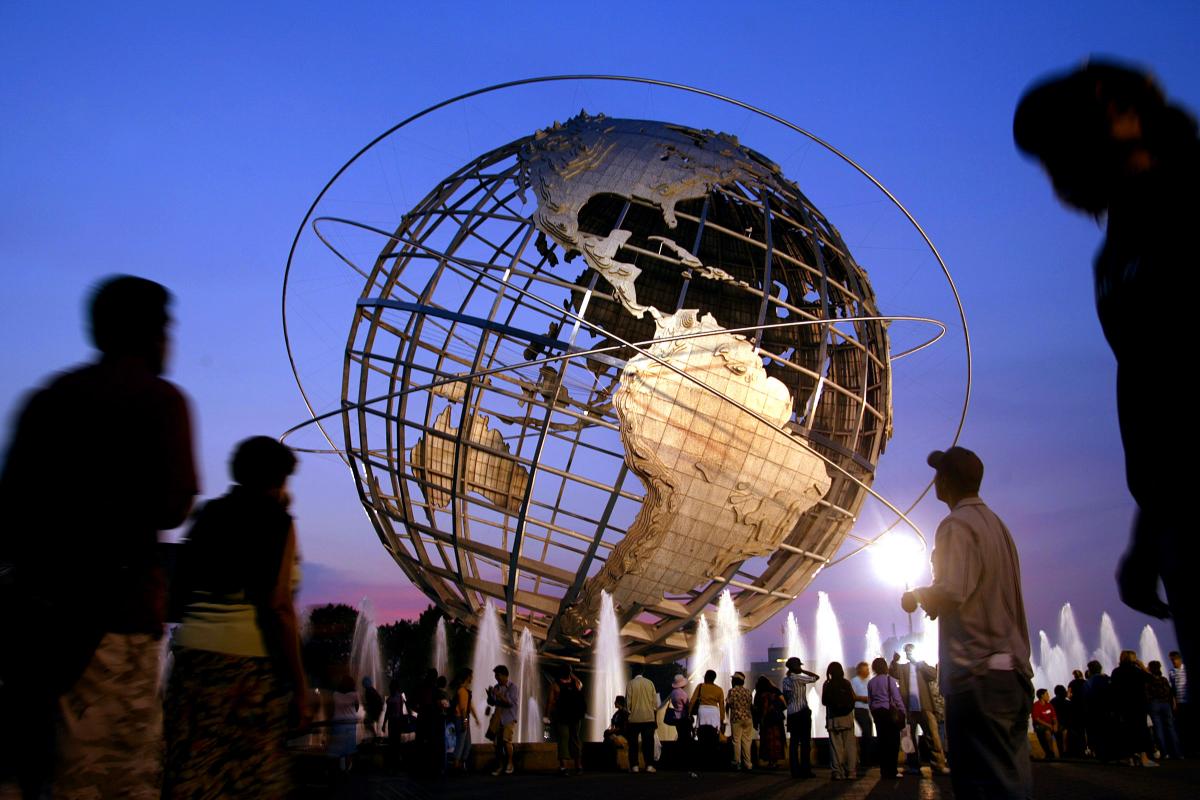
    Feature Image: Photograph by M Matheswaran

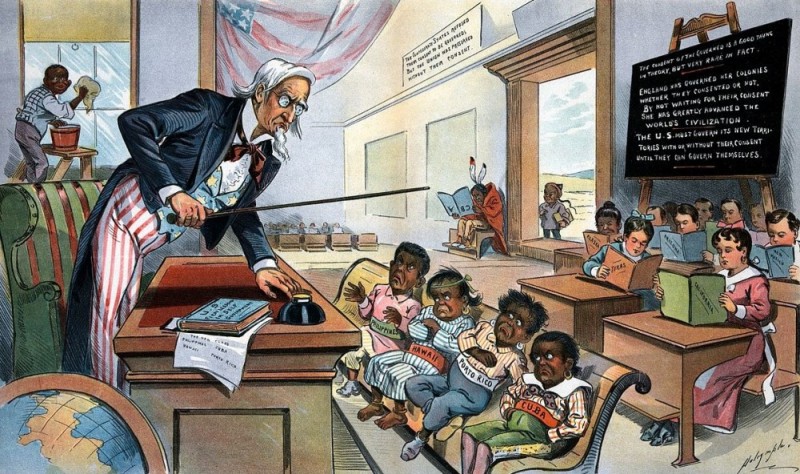
    Cartoon: canadiandimensions.com    Caricature showing Uncle Sam lecturing four children labelled Phillippines (who appears similar to Phillippine leader Emilio Aguinaldo), Hawaii, Porto (sic) Rio, and Cuba in front of children holding books labelled with various US states. In the background are an American Indian holding a book upside down, a Chinese boy at the door and a black boy cleaning the window. Originally published on p. 8-9 of the January 25, 1899 issue of Puck magazine.

  • Beyond Unipolarity and the Euro–American Horizons of IR Thought: Reflections on the Emergent World Order

    Beyond Unipolarity and the Euro–American Horizons of IR Thought: Reflections on the Emergent World Order

    Abstract

    Amidst the continuing conflict in Ukraine, Russian President Vladimir Putin made a notable pronouncement of the end of the US-led unipolar world and the rise of multipolar world order. Against this backdrop of the debate on polarity, my research paper seeks to address the following questions. To what extent have global institutions, mainstream IRT (International Relations Theory) and academia as well as policies reflected if not reinforced Euro-American norms and interests? Does this purported shift to multipolarity require a shift in institutional and theoretical practices reflecting the broad concerns of the Global South? Using global and regional case studies like India (especially in regard to the representation within academia and the glass ceiling affecting institutional practices like Young Professionals Programme), I draw from critical and post-colonial theoretical IR frameworks to argue for a comprehensive reform of the prevalent global institutional and theoretical structures. 

    Introduction

    The Euro-American hegemony runs very deep, pervading a range of institutions, norms, global practices, knowledge and even academic teaching practices.

    The month of February this year witnessed one of the most defining moments of the post-Cold war era. Marking a major escalation of the simmering conflict that began with the insurgency in Eastern Ukraine in 2014, Russia invaded Ukraine resulting in thousands of casualties and millions of refugees.[1] This conflict inevitably has given rise to a wide range of debates in the global arena, including global governance, institutions, conflict and security. In this regard, one of the most interesting debates that have seen a resurgence is the question of the future of the world order. 

    The notion of a shift to multipolar world order has emerged as a prominent theme in the wake of this crisis. This is best exemplified by Vladimir Putin in his address to the St Petersburg International Economic Forum Plenary session, “a multipolar system of international relations is now being formed. It is an irreversible process; it is happening before our eyes and is objective in nature.” It is indeed widely recognised that the brief period of unipolarity, dominated by the US, following the end of the Cold War, has given way to the era of multipolar world order, characterised by ‘new powerful and increasingly assertive centres.’ [2] However, even as this shift to multipolarity seems almost deterministic, there persist legitimate questions on the conduciveness of the current world order to the emergence of these multiple power-centres. 

    Against this backdrop, my work shall be organised as follows. I commence with a discussion on the shift towards multipolarity, providing the conceptual capital of notions like power and polarity. This shall be followed by my argument that the current global order, exemplified in its norms, institutions, and intellectual resources, fall severely short of the expectations required of the multipolar world order. To illustrate this point, I draw from the case study of India, in particular. I conclude by providing some prescriptions necessary for the transition to multipolarity to be meaningful. Towards this pursuit, I draw from critical post-colonial theoretical frameworks, employing secondary literature review as the overarching method.

    Shifts towards multipolarity

    Before proceeding to the premise of the shift towards multipolarity, a few conceptual clarifications are in order. Polarity in this context is understood as the modes of distribution of power in the international system. Typically, it is classified as unipolar (e.g. US hegemony in the post-Cold-War era), bipolar (e.g. Russia-US dominance during the Cold War era) and multipolar (e.g. Europe during the pre-World War era). [3] While there are myriad debates on what constitutes power in the global landscape, I draw from the useful typology provided most famously by Joseph Nye – hard, soft, and smart power. Hard power is often described as the typical carrot and stick approach, involving coercion and is often measured in terms of “population size, territory, geography, natural resources, military force, and economic strength.” On the other hand, soft power is described as the ability to influence state preference using intangible attributes like “attractive personality, culture, political values, institutions, and policies” resulting in the perception of legitimacy or moral authority. Smart power is often understood as the instrumental deployment of a combination of both to secure political ends.[4] 

    The end of the Cold War era, prematurely lauded as the end of history by a scholar, resulted in a brief unipolar moment of US hegemony. As Putin puts it, the US was the predominant power with a limited group of allies which resulted in “all business practices and international relations … interpreted solely in the interests of this power.”[2]  However, a range of factors in the twenty-first century led to a crisis in American leadership. The interventionist atrocities carried out in the wake of the September 11 attacks as well as the crisis of global capitalism during the financial crisis of 2008 led to a crisis in American leadership.[5] This period also saw the emergence of new powers like the BRICS nations, who posed a serious challenge to the notion of unipolarity.[3] 

    As Amitav Acharya and Burry Buzan argue, this diffusion of power has resulted in the ‘rise of the rest’ characterised by the absence of a single superpower. Instead, a number of great and regional powers have emerged with their respective institutions and models of growth. Such a world order is also shaped by a greater role accorded to non-state actors including global organisations, corporations, and social movements as well as non-state actors.[6] Thus, the current global landscape is often termed as multipolar, multi-civilizational and multiplex offering myriad opportunities and benefits for states.[7] The crisis in Ukraine has only bolstered this multipolar moment even further. Consider India as a case in point. The likes of the U.S. (and even China) have competed for India’s affection and India’s seemingly pro-Russia stance has not prevented Delhi’s deeper engagement with her counterparts in the West. These initiatives can only enhance India’s great power status, resulting in potentially a higher degree of multipolarity.[8]

    Thus, even as there is an increasing scholarly and policy-based consensus on the shift towards multipolarity, there remain important reservations on whether the current global arena is equipped to deal with the seismic shifts posed by the emergent world order. In other words, does this purported shift to multipolarity require a shift in institutional and theoretical practices reflecting the broad concerns of the Global South? In the next section, I answer in the affirmative, arguing that the dominant norms, institutions, and intellectual resources are broadly skewed towards the preservation of Euro-American hegemony. 

    The maintenance of Euro-American hegemony: norms, institutions, and academia

    The exercise of U.S. hegemonic power involved the projection of a set of norms and their embrace by elites in other nations.

    Drawing from Persaud, I argue that dominant powers forge an “academic/foreign policy/security ‘complex’ dedicated to the maintenance of a hegemonic world order.” [9] Such a complex is constituted by an intricate network of norms, institutions and theoretical/ intellectual practices which seek to uphold the status quo. In this section, I examine each of these aspects in detail.

    Consider norms, in the first instance. Norms can be defined broadly as the “collective expectations for the proper behaviour of actors.”[10] When certain norms which serve certain interests are considered as general interests, it results in hegemony. The dominant powers socialise and hegemonise other countries into an ideological worldview that best serves their interests. In other words, actors have to orient themselves according to a ‘logic of appropriateness’ framed by these intersubjective notions. In the post World War era, the Roosevelt-led US administration projected a series of norms and principles guided by liberal multilateralism, to shape the post-war international order. Such a form of ‘institutional materiality’ posited a clear separation between the political and the economic realm. The embrace of these norms outside the US occurred through various modes of socialisation including external inducement (e.g. Britain and France), direct intervention and internal reconstruction (e.g. Germany and Japan) as well as military and economic dominance.[11] 

    The exercise of U.S. hegemonic power involved the projection of a set of norms and their embrace by elites in other nations. Socialisation did occur since U.S. leaders were largely successful in inducing other nations to buy into this normative order. But the processes through which socialisation occurred varied from nation to nation. In Britain and France, shifts in norms were accomplished primarily by external inducement; in Germany and Japan, they resulted from direct intervention and internal reconstruction. In all cases, the spread of norms of liberal multilateralism was heavily tied to U.S. military and economic dominance. [11]

    Such norms are often manipulated (and flouted) to their advantage. For example, consider the liberal norm of conditional sovereignty, linked to human rights, spearheaded by the likes of the US and many countries in Western Europe. Assuming the primacy of the individual over the state, it has legitimised intervention on ‘humanitarian’ grounds. However, the execution of these norms has been far more uniform as best exemplified in their differential application in the wake of the atrocities in Kosovo and Rwanda. An intra-state conflict resulting in a humanitarian crisis in Kosovo precipitated a successful multilateral intervention. However, the same decisiveness was starkly absent with regard to a similar (if not greater) conflict in Rwanda which resulted in almost 800,000 casualties and more than two million refugees. Multiple studies have traced the rationale of intervention to the “strategic interests in Europe’s future and the NATO alliance.” Rwanda on the other hand was considered peripheral to the national interests of either Western Europe or the US.[12] This substantiates the argument that the norm of ‘humanitarian intervention’ is often tied more to brutal national interests rather than the protection of human rights.

    A range of global norms, ranging from economic norms, dealing with the management of finance, to those dealing with water governance has been shown to be skewed towards the interests of great powers rather than participative in nature.

    Consider another instance. The Liberal International Order (LIO) asserts the concept of ‘conditional sovereignty’ where sovereign nation-states are bound to look after their entire populations. A failure to that end invites interference and comments from other nation-states and external agencies. This norm has been pushed forward and spearheaded by first-world countries like the US and Western Europe, much to their advantage. Contrary to this, the neo-Westphalian order is a proponent of the ‘classical sovereignty’ model where nation-states are sovereign within their own territory to administer in any manner they want, obviously with a necessary reverence to human rights, but others are not authorized to interfere in the same. China and other authoritarian regimes have been advocating for the same. So, while the LIO talks about the equality of every individual, the neo-Westphalian order focuses more on the equality of all nation-states.[13] Similarly, a range of global norms, ranging from economic norms, dealing with the management of finance, to those dealing with water governance has been shown to be skewed towards the interests of great powers rather than participative in nature. 

    Similarly, Cox and Gill have argued how global governance through institutions play a critical role in maintaining hegemony.[14] The multilateral institutions which the US had created both in the political and economic realm have played a critical role in the sustenance of Euro-American (and especially the U.S.) dominance. In other words, even as the international world order shifts to a multipolar one, it has not exactly been accompanied by multilateralism.[15] While multilateralism puts forward the interests of multiple states, most so-called multilateral institutions reflect and reinforce prevailing power configurations. 

    Consider the United Nations, for instance. It cannot be a mere coincidence that the UN has been ineffectual against most of the contemporary global challenges like climate change, the pandemic etc. when it has not been responsive to the reality of the increasing number of power centres in the multipolar world order.[16] The most glaring evidence is the UNSC. Despite an increasing number of voices on the rise of Asia, Africa, and Latin America, the P5 includes only one representative from Asia (which is China) and no members from either Africa or Latin America. In addition, while there has been more than a threefold rise in UN membership, the number of non-permanent seats has only risen from 11 to 15. Even at the administrative levels, the lack of non-western representation is indeed a concern. Besides the absence of a UNSC permanent seat, it is also disheartening to see that it has been years since the Young Professionals Program has been held for the likes of India.

    These same institutions are often undermined by the likes of the US, under the facade of NATO. Consider the harrowing intervention in Libya. The NATO intervention on supposedly ‘humanitarian’ grounds in 2011 led to the death of Muamar Gaddafi, violating the legal structures of the UN charter in the process and resulting in a proxy war. The result has been a prolonged state of near-anarchy characterised by arbitrary detentions, executions, mass killings and kidnappings. [17]

    The WTO is plagued with similar issues. While it ostensibly reflects the ‘global’ norm of neoliberal free trade, it is “structured and ordered to promote monopolistic competition rather than genuine free trade. These institutional roadblocks include the exclusion of developing countries from several informal decision-making sessions, lack of transparency, coercive decision-making in meetings involving developing countries, astronomical costs involved in Dispute settlement Understanding and so on. The result is that the Western countries have an overwhelming advantage against their counterparts from the Global South. [18]

    Lastly, as highlighted earlier, the international policy making apparatus cannot be divorced from the intellectual resources churned by IR academia. Zvobgo, in an insightful piece, has argued how the big three of IR theory – realism, liberalism and constructivism – are built on Eurocentric, raced and racist foundations.[19] The role of imperial policymakers in shaping contemporary IR knowledge has been well acknowledged. Kwaku Danso and Kwesi Aninghave argued about the prevalence of methodological whiteness, which projects White experience as a universal experience.[20] It is no coincidence that the principles of the Westphalian treaty are not significantly different from those underlying the current UN charter. Acharya has argued that racism was integral to the emergence of the US-led world order exemplified in the scant focus on colonialism in UNDHR as well as the “privileging of sovereign equality’ over ‘racial equality.’[21] 

    These forms of methodological whiteness have had devastating impacts across the world. The projection and the forceful projection of the Weberian state as the fundamental unit of security and conflict management has resulted in disastrous policy-level consequences in Africa which have always been characterised by a range of hybrid political systems beyond the nation-state.[20] Similarly, much of the problematic policies carried out today based on the binaries of ‘developed’ v/s ‘developing’ nations have direct continuities with the legacy of empire and race reflected in dichotomies like ‘civilised v/s uncivilised’. 

    There also exists historical amnesia of racism in academia, whether in terms of representation or teaching practices. For example, in the US, only 8% of the faculty identify themselves as Black or Latino. Similarly, the configurations of colonialism and racism in building the modern world order are either glossed over or overlooked in most academia.[19] Indian academia is a case in point. As Behera argues, despite the strong tradition of Indian independent IR thought as well as the long history of colonialism, Indian IR has imbibed a definite set of givens including  “the infallibility of the Indian state modelled after the Westphalian nation-state as well as a thorough internalization of the philosophy of political realism and positivism.[22] Rohan Mukherjee, for instance, has highlighted an unpublished survey of IR faculty within India wherein the majority self-identified as either liberal or realist.[23]

    Thus, the Euro-American hegemony runs very deep, pervading a range of institutions, norms, global practices, knowledge and even academic teaching practices. In the next section, I conclude by outlining certain prescriptions for a future world order which responds to and is far more conducive to the inevitable multipolar shifts. 

    Conclusion

    India has umpteen intellectual resources from Gita and the Sangam literature to stellar modern political philosophers like Gandhi, Tagore and so on, which need to be strategically combined with contemporary IR notions and questions of security, justice and so on.

    This paper first established the backdrop of the shift towards multipolarity within the world order by outlining the myriad modes of power through which the ‘Rest’ has caught up with the ‘West.’ In the succeeding section, I demonstrated how a range of norms, institutions and intellectual practices had been historically constructed to maintain Euro-American hegemony as well as promote the interests of the West. In such a world order, certain parochial interests have masqueraded themselves as common or global interests. In the concluding section, I outline certain prescriptions which have become necessary for a more equitable, multi-civilisational world order. 

    Institutions like the UN require urgent and seismic reforms reflecting the interests of emerging power centres. The number of seats within the Permanent and non-permanent seats must be expanded to include more nation-states from Asia, Africa and Latin America. A revitalisation of the UNGA is highly overdue and requires a focussed and timely debate on the problems of the highest priority at any given time through rationalization of its agenda. [24] Similarly, the proposed WTO reforms, which seeks to move away from multilateralism to impose plurilateralism, should be opposed at all costs. [25]

    As Zvobjo puts it eloquently, how IR is taught perpetuates the inequalities which are detailed above. Besides the dominant IR triumvirate, there needs to be an increased focus on critical perspectives as well as increased engagement with the uncomfortable questions of race, empire, colour, and caste.[19] This should be complemented by more diversity in terms of representation within academia. In India specifically, there needs to be increased efforts to construct Indian or South Asian IR notions. India has umpteen intellectual resources from Gita and the Sangam literature to stellar modern political philosophers like Gandhi, Tagore and so on, which need to be strategically combined with contemporary IR notions and questions of security, justice and so on. However, as Mallavarapu reminds us, care needs to be taken to ensure they can address existing inequities in the world order without succumbing or falling prey to jingoism or nativism.[26]

    References

    [1] Alex Leeds Matthews, Matt Stiles, Tom Nagorski, and Justin Rood, ‘The Ukraine War in data’, Grid, August 4, 2022

    https://www.grid.news/story/global/2022/08/04/the-ukraine-war-in-data-12-million-people-driven-from-their-homes/

    [2] Address to participants of 10th St Petersburg International Legal Forum, President of Russia, June 30, 2022

    http://en.kremlin.ru/events/president/news/68785

    [3]Andrea Edoardo Varisco, ’Towards a Multi-Polar International System: Which Prospects for Global Peace?’, E-International Relations, June 3, 2013.

    https://www.e-ir.info/2013/06/03/towards-a-multi-polar-international-system-which-prospects-for-global-peace/

    [4]Aigerim Raimzhanova, ‘Power in IR: hard, soft and smart’, Institute for Cultural Diplomacy and the University of Bucharest, December 2015

    http://www.culturaldiplomacy.org/academy/content/pdf/participant-papers/2015-12_annual/Power-In-Ir-By-Raimzhanova,-A.pdf

    [5]Ashraf, N. (2020). Revisiting international relations legacy on hegemony: The decline of American hegemony from comparative perspectives. Review of Economics and Political Science

    [6] Kukreja, Veena. “India in the Emergent Multipolar World Order: Dynamics and Strategic Challenges.” India Quarterly 76, no. 1 (2020): 8-23.

    [7] Ashok Kumar Beheria, ‘Ask an Expert’, IDSA, April 1, 2020. 

    https://idsa.in/askanexpert/world-moving-towards-multipolarity-akbehuria

    [8]Derek Grossman, ‘Modi’s Multipolar Moment Has Arrived’, RAND blog, June 6, 2022

    https://www.rand.org/blog/2022/06/modis-multipolar-moment-has-arrived.html

    [9]Persaud, Randolph B. “Ideology, socialization and hegemony in Disciplinary International Relations.” International Affairs 98, no. 1 (2022): 105-123.

    [10]Shannon, Vaughn P. “International Norms and Foreign Policy.” Oxford Research Encyclopedia of Politics (2017).

    [11]Ikenberry, G. John, and Charles A. Kupchan. “Socialization and hegemonic power.” International organization 44, no. 3 (1990): 283-315.

    [12] Tracy Kuperus, ‘Kosovo And Rwanda: Selective Interventionism?’, Centre for Public Justice

    https://www.cpjustice.org/public/page/content/kosovo_and_rwanda

    [13] Falit Sijariya, ‘Democratizing Norms: Jaishankar’s Comments and the Challenge to US Hegemony’, April 22, 2022

    https://thegeopolitics.com/democratizing-norms-jaishankars-comments-and-the-challenge-to-us-hegemony/

    [14] Overbeek, Henk. “Global governance, class, hegemony.” Contending Perspectives on Global Governance: Coherence and Contestation 39 (2005).

    [15] Tourangbam, Monish. “The UN and the Future of Multilateralism in a Multipolar World.” Indian Foreign Affairs Journal 14, no. 4 (2019): 301-308.

    [16] The UN Turns Seventy-Five. Here’s How to Make it Relevant Again, Council on Foreign Relations, Sep 14, 2020.

    https://www.cfr.org/councilofcouncils/global-memos/un-turns-seventy-five-heres-how-make-it-relevant-again

    [17] Ademola Abbas, ‘Assessing NATO’s involvement in Libya’, United Nations University, 27 October 2011

    https://unu.edu/publications/articles/assessing-nato-s-involvement-in-libya.html

    Lansana Gberi, ‘Forgotten war: a crisis deepens in Libya but where are the cameras?’, Africa Renewal, December 2017 – March 2018

    https://www.un.org/africarenewal/magazine/december-2017-march-2018/forgotten-war-crisis-deepens-libya-where-are-cameras

    [18] Ed Yates, ‘The WTO Has Failed as a Multilateral Agency in Promoting International Trade’,E-International Relations, April 29, 2014

    https://www.e-ir.info/2014/04/29/the-wto-has-failed-as-a-multilateral-agency-in-promoting-international-trade/

    [19] Kelebogile Zvobgo, ‘Why Race Matters in International Relations’, Foreign Policy, June 19, 2020

    https://foreignpolicy.com/2020/06/19/why-race-matters-international-relations-ir/

    [20]Danso, Kwaku, and Kwesi Aning. “African experiences and alternativity in International Relations theorizing about security.” International Affairs 98, no. 1 (2022): 67-83.

    [21]Acharya, Amitav. “Can Asia lead? Power ambitions and global governance in the twenty-first century.” International affairs 87, no. 4 (2011): 851-869.

    [22]Behera, Navnita Chadha. “Re-imagining IR in India.” In Non-Western international relations theory, pp. 102-126. Routledge, 2009.

    [23]Rohan Mukherjee https://mobile.twitter.com/rohan_mukh/with_replies

    [24]United Nations Reform: Priority Issues for Japan, Ministry of Foreign Affairs Japan, January 2006

    https://www.mofa.go.jp/policy/un/reform/priority.html

    [25]Abhijit Das, ‘Reform the WTO: do not deform it’, the Hindu Business Line, December 1, 2021

    https://www.thehindubusinessline.com/opinion/reform-the-wto-do-not-deform-it/article37792701.ece

    [26]Shahi, Deepshikha, and Gennaro Ascione. “Rethinking the absence of post-Western International Relations theory in India:‘Advaitic monism’as an alternative epistemological resource.” European Journal of International Relations 22, no. 2 (2016): 313-334.

    Feature Image Credits: Foreign Affairs

  • The Cold War that Wasn’t

    The Cold War that Wasn’t

    US President Joe Biden has repeatedly cast his country’s rivalry with China as a battle between democracy and autocracy, an ideological clash reminiscent of the Cold War. This narrative is inaccurate – the United States and China are locked in a competition for strategic dominance – and all but precludes resolution. Whereas demands related to tangible assets and security concerns can be accommodated, ideological struggles typically end one way: with the unconditional defeat of one of the parties

    The US should not be attempting to “defeat” China, as it did the Soviet Union, because, first and foremost, China is not on a quest to spread “socialism with Chinese characteristics” around the world. When Chinese President Xi Jinping declared in 2017 that “war without the smoke of gunpowder in the ideological domain is ubiquitous, and the struggle without armament in the political sphere has never stopped,” he was mainly demanding that outsiders respect China’s institutions and cultural traditions.

    The US is an exhausted power, and it is now being challenged by a rising one. To ensure that this well-known geopolitical dynamic does not end in war, the US must abandon jingoistic rhetoric and replace megaphone diplomacy with wise and creative statesmanship.

    This partly reflects Chinese nationalism, fed by historical narratives, especially the memory of the “century of humiliation” (1839-1949), during which China faced interventions and subjugation by Western powers and Japan. But it is also pragmatic: The Communist Party of China recognizes that some domestic trends could destabilize the country and eventually even undermine the CPC’s rule.

    For example, China’s economic rise has produced an educated, well-connected, and fast-growing middle class. If these increasingly powerful consumers rejected restrictions on private-sector activity or limits to free expression, the CPC would have trouble on its hands. Given this, the CPC views US advocacy of political freedom and human rights in China as an effort to subvert its rule.

    Even America’s drive to export liberal democracy to Asia and Africa has been less an ideological problem for China than a strategic one. Functioning democracies are likely to be harder bargaining partners for China and might even be brought into US-led anti-Chinese alliances.

    On this front, China’s fears have probably been assuaged by recent developments. With the from Afghanistan and the Taliban’s quick reconquest of the country, America’s democratic “crusade” – to borrow the language of former US President George W. Bush – seems to have reached an ignominious conclusion.

    But even if the US is not bringing new countries into the democratic fold, its existing alliance system is formidable, and Biden is committed to strengthening it further. For example, he has worked to resuscitate NATO; created , a new defense and technology alliance with the United Kingdom and Australia; and deepened security cooperation among key democracies in the Indo-Pacific (Australia, India, Japan, and the US, known as the “Quad”).

    This focus on alliances is probably the biggest difference between Biden’s China policy and that of his predecessor, Donald Trump, who spearheaded the shift toward confrontation. (Prior to Trump, recent US presidents largely attempted to maintain good working relations with China, not least because they clung to the assumption that the country’s economic rise would gradually bring about political change.)

    For China, this difference is worrying. Though the US cannot contain China alone, it can apply strong diplomatic pressure if it has other powers on its side, and China is in no position to create an alliance system that can match that of the US. Far from stabilizing the situation, however, this imbalance could fuel China’s insecurity, making constructive engagement all the more difficult

    America’s position is hardly unassailable, either. Biden’s touted exposed the limits of ideology as a mobilizing tool for a global anti-China coalition. It does not help that America’s own democracy is plagued by polarization, paralysis, and discontent. Add to that the world’s highest numberof COVID-19 deaths, and the “shining city on a hill” has lost its luster, to say the least.

    While the US is no ancient Rome – not least because it retains extraordinary advantages in crucial areas, from defense and diplomacy to technology and finance – it is suffering from what the historian Edward Gibbon described as “the natural and inevitable effect of immoderate greatness.” It has failed to adapt its democratic institutions to meet the needs of its population and its responsibilities as a world power.

    Ultimately, the US is an exhausted power, and it is now being challenged by a rising one. This dynamic is as longstanding as it is dangerous. As the ancient historian Thucydides explained, the rise of Athens, and the fear that this instilled in Sparta, made the catastrophic Peloponnesian War inevitable. Harvard’s Graham Allison notes that there have been 16 similar cases in the last 500 years. War broke out in 12 of them.

    To avoid what Allison calls the Thucydides Trap, the US must abandon jingoistic rhetoric and Manichean thinking, replacing megaphone diplomacy with wise and creative statesmanship. The choice is not between capitulating to China and crushing it. The US must recognize China’s legitimate concerns and aspirations, and it must be prepared to negotiate accordingly. (Sooner or later, it will have to do the same with regard to the West’s current showdown vis-à-vis Russia over Ukraine and NATO’s expansion.)

    The US must accept that the days of American hegemony are over. In today’s multipolar world, different political cultures and systems will have to learn to coexist. The ideological defeat of the Soviet Union did not exactly usher in a liberal democracy. Perhaps more important, even if China somehow suddenly became a liberal democracy, its historical grievances and territorial aspirations would remain, as is the case with Russia today. In this sense, ideological competition is beside the point.

    This article was originally published by Project Syndicate.

    Feature Image Credit: The Hill

  • The Catalysing Effect of Covid-19 on the Changing World Order

    The Catalysing Effect of Covid-19 on the Changing World Order

    Contrary to the realist belief, international states co-exist in a world order of hierarchy rather than anarchy. Ikenberry presents this hierarchical world order and the cyclical rise and fall of hegemonic powers. Early 20th century witnessed the shift from Pax-Britannica to Pax-Americana that was complete by 1945, from which point the US defended its position during the Cold War with the erstwhile USSR. It exercised its hegemonic influence even more aggressively after the Cold War. However, US dominance of the world order has been diminishing owing to the Trump administration’s isolationist approach to foreign policy, and the increasing influence of China in world politics. This article examines the catalysing effect of Covid-19 and the rise of China on the current World Order.

    Trump’s policy of disregarding multilateralism and imposing its unilateralism on the world has catalysed into an involuntary retreat, protectionism, and isolationism for the USA with dire consequences for its foreign policy effectiveness.

    Trump’s policy of disregarding multilateralism and imposing its unilateralism on the world has catalysed into an involuntary retreat, protectionism, and isolationism for the USA with dire consequences for its foreign policy effectiveness. The net result is that the world is witnessing an abdication of leadership by America in a world disrupted by the Covid-19 pandemic. A clear pattern of isolationism can be seen in various actions of the Trump Administration since it’s assumption of the Office. In 2017, the US withdrew from the Paris Agreement, in 2018 it unilaterally reneged from the JCPOA, re-imposed sanctions on Iran and threatened sanctions on allies who supported Iran. In 2019, it withdrew troops from Syria, which led to subsequent Turkish incursion on Rojava Kurds, and in early 2020 it negotiated with the Taliban to enable withdrawal of US troops from Afghanistan. With the onset of Covid19 global pandemic, the Trump administration has accused the WHO of protecting China. In a unilateral action not endorsed by its allies, USA first stopped its funding for WHO and then terminated its relationship with the UN institution. This comes as a blow to multilateralism since the US was WHO’s largest donor, contributing about $440 million yearly. In addition to this, the US has failed to provide the lead in the global response to tackle the virus despite its initiatives in the past pandemics such as H1N1, Ebola and the Zika virus. The US was absent from the WHO initiative – Global Coronavirus Response Summit (before its withdrawal from the association). In addition, the US has been unable to provide external aid to combat the virus due to domestic shortages, which explains its restraint to guide an international response in the absence of a coherent domestic plan of action. Thus, the coronavirus pandemic has acted as a catalyst in increasing the pace of US isolationism from world politics.

    China has turned the tide on its previous missteps in containing the virus by publicising its governance model as the most effective way to combat the pandemic.

    Meanwhile, the pandemic has established firmly China’s rise in the international stage. Though China is facing backlash for suppressing details about the virus, it is battling to overcome this criticism by providing international aid and stepping up to lead a global response using Beijing’s success as a template to overcome the novel virus. China has contributed significantly to the global response by providing materials such as ventilators, respirators, masks, protective suits and test kits to Italy, Iran, Serbia, and the whole of Africa. Grabbing its opportunities to lead international responses, China hosted Euro-Asia conference, participated in the Global Coronavirus Summit where it pledged an emergency funding of $20 million to WHO, and pledged $ 2 billion to the WHO (equalling its annual budget) to be disbursed over the next two years, thus contrasting sharply with the US behaviour of withdrawing from the WHO. China has turned the tide on its previous missteps in containing the virus by publicising its governance model as the most effective way to combat the pandemic. It continues to highlight the inadequacies and shortfalls in healthcare systems of the western world as against the success of its governance model, Beijing Consensus, and variations of it in East Asia. It is clear that China has seized the Covid-19 pandemic as a huge opportunity to establish its global leadership.

    Taking advantage of the global disarray due to the pandemic, China has taken strong actions to deflect global criticism of its initial handling of the virus. Two prominent examples of this being, European Union watering down the report on Covid19 disinformation owing to pressure from Beijing, and the passing of the controversial Hong Kong security law. While the US has taken initiative in cracking down on China by repealing the special privileges to Hong Kong, other countries were cautious in retaliating against China significantly and limited their actions to sympathetic support for pro-democracy protestors. The exception to this was Britain, which offered UK citizenship to British National Overseas Passport holders in Hong Kong, despite seriously offending China. Despite the global backlash against Chinese diplomacy in the form of generous aids, international actors have expressed limited concerns through action against Chinese domination. This is due to the circumstantial mismatch in global balancing against China’s rise. The US uses unilateral actions and ‘expects’ its allies to follow, while its allies despite their serious concern over China’s rise, remain vary of following in the American footsteps. This is because US allies treat coronavirus as an immediate threat as opposed to China’s rise. The US being a status quo power is more threatened by China’s rise since it posits as a revisionist state. However, in view of China’s proactive efforts in leading global contributions to battle the coronavirus, US allies remain tolerant of China’s dominance.

    The passive and fractured response to China’s aggressive exploitation of the pandemic to establish its global leadership is a concern for India. The recent setting up of Chinese military camps in Indian controlled territory of Ladakh is a manifestation of China’s complex strategy. India has, true to its traditional policy, opted out of involving the United Statesin the ‘bilateral issue. However, it would be beneficial to be united in balancing against China’s rise. While it is necessary to work together to utilise Global Supply Chains (GSC) during the pandemic to battle the coronavirus pandemic, it is equally important to look at global balancing against China to ensure its compliance to rules-based world order. Since China’s power is derived from its economic strength, balancing strategy against China should focus on trade and economy. Chinese foreign policy depicts a pattern of economic coercion to reward or punish its counterparts. This can be tackled through concerted global action. India is, as one of the largest producer of pharmaceuticals, playing a crucial role in global efforts to fight the pandemic by providing Hydroxychloroquine globally. However, given that most raw materials are sourced from China, balancing against China requires a favourable movement of GSC diversification. US-China trade war has, encouraged companies to move production out of China and into Asian countries such as Vietnam and Taiwan. As a result of the coronavirus crisis and the global backlash, companies look to further diversify their resources and supply chains. India and other Asian countries could benefit from this if they adapt their policies suitably.

    Global backlash against China’s handling of the virus in Wuhan is still a challenge for China’s geopolitical strategy. Its foreign policy is seen more as displaying aggressive and coercive approach than persuasive diplomacy.

    It is difficult to estimate whether China would aspire for hegemonic leadership. Global backlash against China’s handling of the virus in Wuhan is still a challenge for China’s geopolitical strategy. Its foreign policy is seen more as displaying aggressive and coercive approach than persuasive diplomacy. Given the current volatile scenario most countries have, in the absence of US leadership, increased their dependence on China as it is now the largest provider of aid. While all this tips the scale in China’s favour, it’s hegemonic ambitions can be countered through trade strategies as its weakness stems from the fact that it is a hugely export driven economy. Global diversification of supply chains would reduce the world’s increasing dependency on Chinese manufacture and products. The world will need to be cautious as the pandemic has provided China an opportunity to tighten its grip on the global economy as the world’s workshop and technology provider. Here on, international efforts to bandwagon or balance will become a decisive factor in determining China’s rise to apex position in the world order.