Tag: Hamas

  • The beginning of the end of Israel

    The beginning of the end of Israel

    One year later, the flames of genocide still burn, but after decades of persecution and bloodshed, we may well be seeing the beginning of the end of the settler-colonial project in Palestine.

    We have reached a grim milestone. A full year of gruesome Israeli mass murder. A year of epic Palestinian suffering.

    A year of direct Western complicity. A year of continuous media incitement. A year of shameful inaction by international institutions.

    For twelve months, we have seen relentless persecution of human rights defenders across the West, solely for peacefully opposing genocide and apartheid.

    And fifty-two weeks of a horrified global public helplessly witnessing on their screens the first live-streamed genocide in history.

    The carnage of this past year is unprecedented. The destruction is almost unimaginable.

    Still, this genocide will end. The Palestinian people and their besieged nation will undoubtedly emerge from the ashes of genocide, recover, and reassert their inalienable rights in their ancient homeland.

    But international institutions and the global human rights system will be left bruised and battered.

    The political capital expended by the US empire and the broader West in defence of the slaughter, as well as their global standing and reputation, will never be recouped.

    And, almost certainly, this year of cruelty and lawlessness will mark the beginning of the end for the Zionist project in Palestine and, therefore, of the state of Israel as we know it.

    A formula for disaster

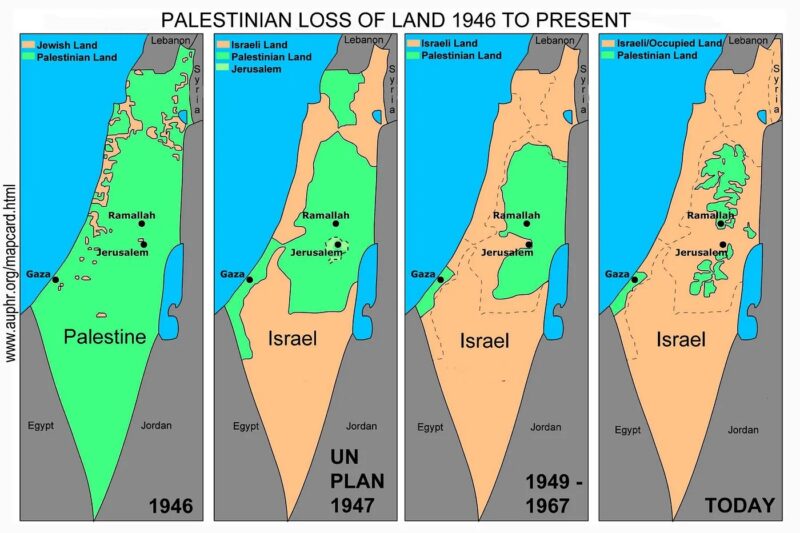
    Of course, neither the genocide nor the current wave of slaughter of Palestinians started in October of 2023. The systematic massacre, purging, and erasure of the indigenous Palestinian people began in earnest with the Nakba of 1947-48, and it has not ceased since that bloody beginning.

    And the genocidal threat was always obvious. Any thinking person could see, even prior to the establishment of the state of Israel, that the Zionist project of the West was a formula for disaster.

    First, at the very historic moment when colonialism was being dismantled around the world, and global human rights rules were being adopted at the United Nations, the West carved out an exception for Palestine.

    It was at this moment that Zionist forces chose to attack Palestine, murder and terrorize its population, chase many survivors away in terror, and begin the erasure of the indigenous people, and their replacement with a European settler colony founded by foreign invaders and radicalized by a deeply racist and fundamentally violent political ideology.

    The colony was to be sustained at the barrel of a gun by waging constant war both against the Indigenous people and against the neighbouring states.

    A colonial education system and a media ecosystem were built to dehumanize the Indigenous and neighbouring peoples and to instil a supremacist ideology into the settler population.

    The settler state, its economy, and its society were thoroughly militarized, enlisting all adults in the project of state violence, arming it to the teeth, including with nuclear, chemical, and biological weapons, and even integrating the field-testing of new weapons on captive civilian populations as part of the business model of the colony’s arms industry.

    They ring-fenced the entire project with western-guaranteed impunity, carving out an exception to the application of all rules of international law.

    And they built an all-encompassing machinery of repression, including laws, policies, practices, and technologies to ensure the constant subjugation, dehumanization, and persecution of the indigenous Palestinian people.

    The toxic cocktail was complete.

    Maintaining Western support

    Of course, an artificially imposed European colony in the heart of the Middle East, which is necessarily maintained by force, could never become self-sufficient. Rather, it has always, and will always, rely on massive support from Western states, especially the US. Maintaining that vital support was to become a key goal of the Israeli state and its transnational network of proxy groups.

    As such, in the intervening years, the Israeli regime adopted a strategy of incremental genocide, with simmering persecution and dispossession, punctuated by periodic full-blown massacres and marked by a continuous march of expansion.

    It was a pace, tried and true over 75 years, with which the regime’s Western sponsors were comfortable, allowing them to continue unbroken the flow of military, economic, and diplomatic support without significant domestic pressure at home.

    And it allowed like-minded media corporations, decade after decade, to continuously disseminate pro-Israel propaganda as a smokescreen to obscure the horrific realities being perpetrated against the indigenous people on the ground.

    Expedited genocide

    But when Israel’s current ultra-Zionist government took power last year, it immediately abandoned the strategy of incremental genocide.

    In its place, it moved to expedited genocide (beginning with waves of ethnic cleansing in occupied Jerusalem and the West Bank), betting that its Western sponsors (and their captured politicians and complicit media) would not dare (or care) to take the steps necessary to stop it, even when it launched wholesale civilian slaughter in Gaza.

    They were right.

    So much so that Western countries like the U.S., UK, Germany, and others quickly moved beyond mere acquiescence for the genocide and into direct complicity and participation in it.

    As a result, one year later, we are witnessing unprecedented bloodshed in the region, and the broader world is in deep trouble.

    Axis of Genocide

    Thus, Israel is not alone in its march of terror. It is accompanied, in lockstep, by what has been called the Axis of Genocide.

    Four members of that Axis, Israel, the U.S., the UK, and France, are nuclear-armed states. A fifth, Germany, is a serial genocide perpetrator and a major European economic power. Three (the U.S., UK, and France) have veto power in the UN Security Council.

    Adding to the danger, all of its members share a common ideological grounding in militarism, colonialism, white supremacy, and political Zionism. Most have the stain of genocide on their historical records.

    All have political systems that are deeply compromised and corrupted by the influence of the weapons industry, the billionaire class, and the Israeli lobby. And all are marked by profound societal levels of Islamophobia, anti-Arab racism, and anti-Palestinian bigotry.

    And, in defence of a single, small, oppressive, and violent settler colony in the Middle East, all have quickly abandoned the entire edifice of international law and international institutions built up since the end of the Second World War, and which they once claimed as part of their brand.

    As recent history has shown, these biases, linkages, and incentives have become a formula not only for genocide in Palestine but for catastrophe on a global scale.

    Breaking bones and records

    And, indeed, the cost of Western-secured Israeli impunity has been shockingly high.
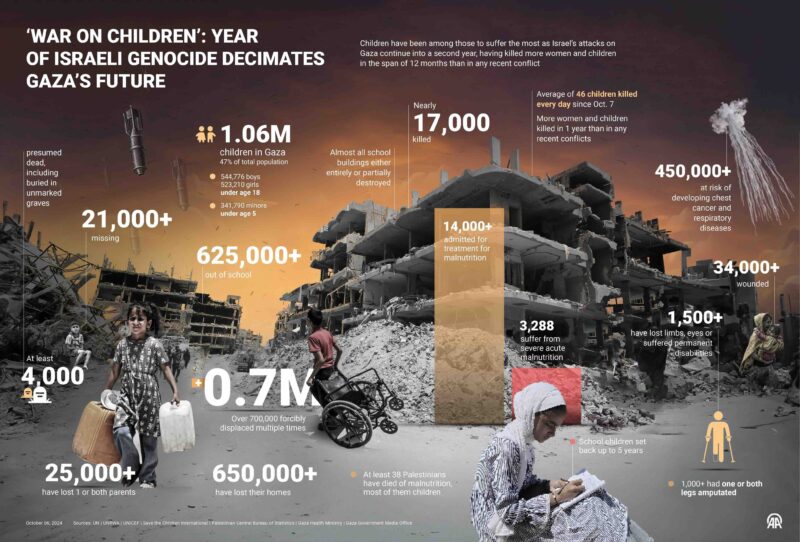
    Image Credit: @anadoluagency

    In one year, Israel has set new records for the pace of civilian killing, the rate of destruction of civilian infrastructure, the killing of children, the killing of medical personnel, the killing of journalists, the killing of humanitarian workers, and the killing of UN staff.

    The depravity of Israel’s actions has shocked the world. Collective punishment, a chain of massacres, summary executions, torture camps, systematic sexual violence, starvation tactics, imposed disease, the direct targeting of small children with sniper rifles, and the blocking of humanitarian aid to facilitate starvation.

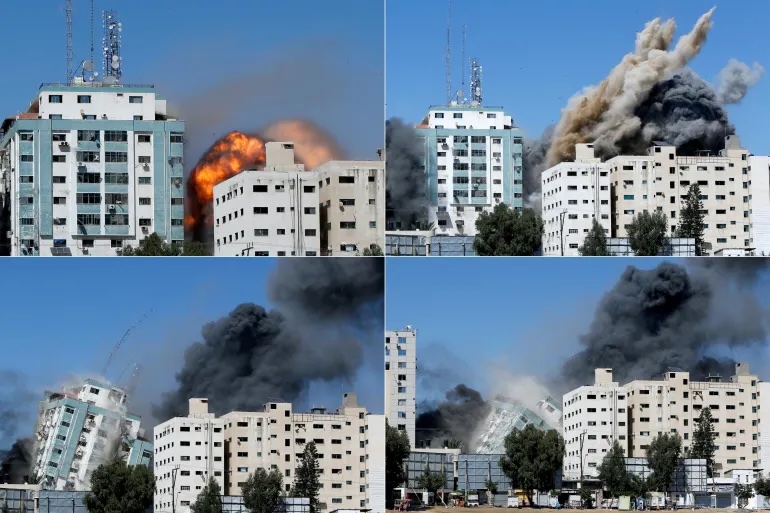
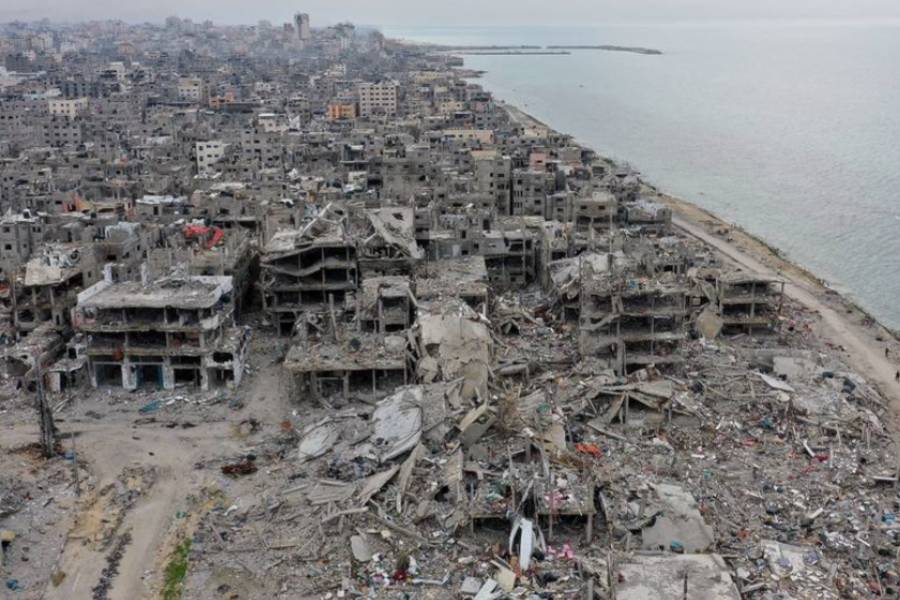
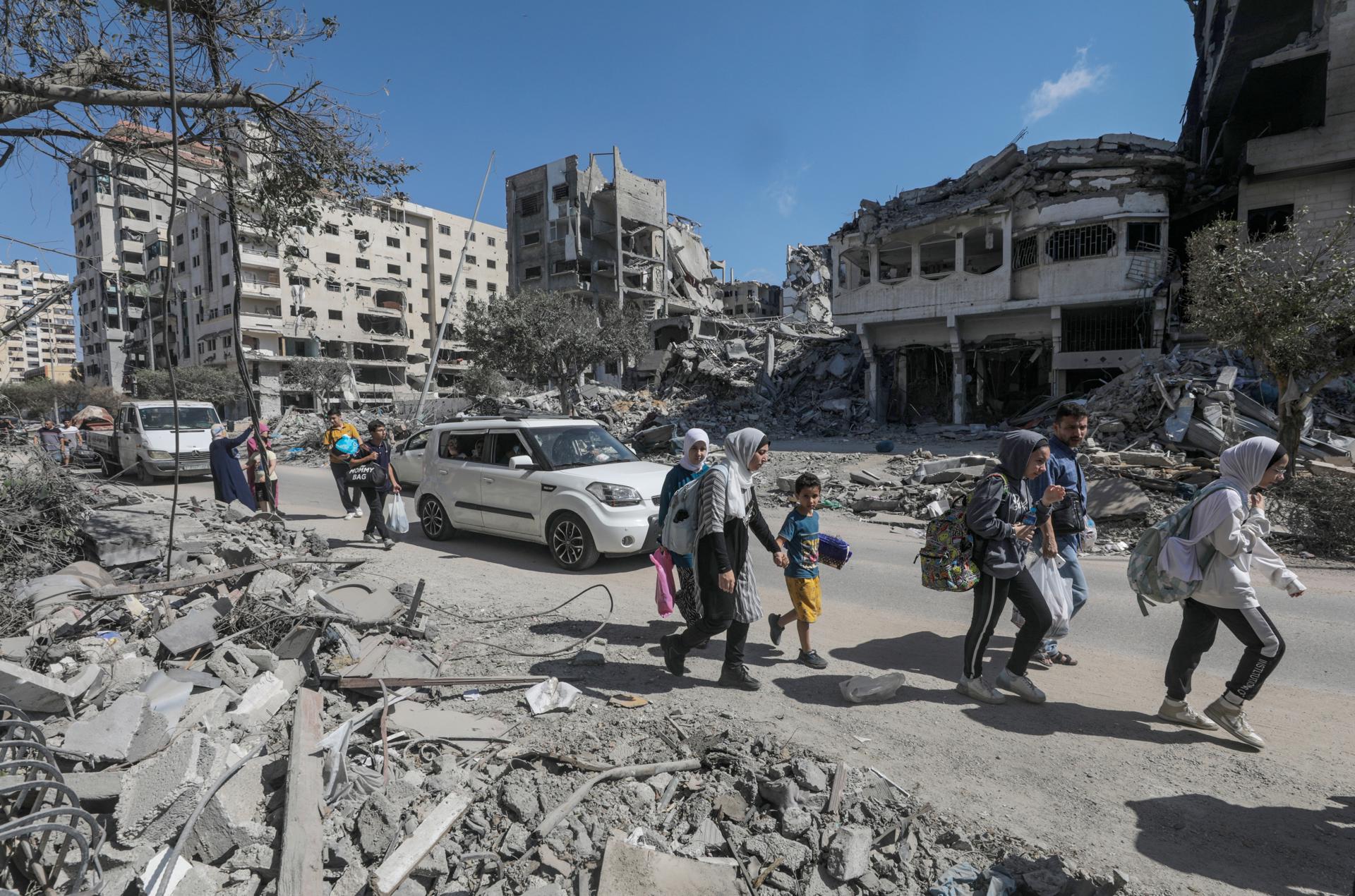
    We have all seen the images. The methodic eradication of whole neighbourhoods, schools, hospitals, universities, food stores, shelters, refugee camps, agricultural fields, and even cemeteries.

    The mangled bodies of Palestinians, the fear-filled eyes of the children, the terror as bombs fall on bread lines. The cold-blooded murder of innocents, of defenceless children like Hind Rajab, trapped in the family car, terrified for hours and then slaughtered by Israeli soldiers, and of thousands of others like her.

    And we have seen the cold, cruel laughter of the Israeli soldiers, the deranged chants of violent Israeli settlers, the genocidal pledges of Israeli political and military leaders.

    The promise of the Prime Minister to wipe out the Palestinians “like Amalek”, a biblical verse that calls for Israel to “utterly destroy all that they have and spare them not; but slay both man and woman, infant and suckling, ox and sheep, camel and ass.”

    The calls of Israeli leaders to perpetrate another Nakba, to raze Gaza to the ground, to make no distinction between civilians and fighters. To “bury them.”

    And, by now, we have all memorized the familiar barbarous pattern of Israel’s crimes: target civilians and civilian infrastructure, then target the rescue workers who come to help, then celebrate in Hebrew but switch to English to claim that they were all terrorists, human shields, or collateral damage, then reload and do it again.

    The accumulated criminal guilt of the Israeli perpetrators and their complicit Western partners is staggering. But so too is the historic moral lapse of the wider world, both those who have defended the genocide and those who have remained silent as it has been carried out with their tax dollars, with their government’s political support, or in their name.

    Today, everyone knows. No one can say they were not warned before the catastrophe. And no one can say they did not know of the horrors that followed, broadcast in real-time to all of us.

    Seventy-six blood-soaked years into this colonial enterprise, it is clear to all who will see that what the West has constructed in the heart of the Middle East is not an enlightened project, but rather a rampaging Frankenstein monster that threatens to drag the indigenous Palestinian people, the region, and the world into a conflagration from which it may not recover for generations.

    The darkness spreads

    How long the rampage can be sustained is an open question. But there will undoubtedly be much more darkness before the dawn.

    Israel, drunk with Western-backed impunity, even as it continues its genocide in Palestine, is now spreading its attacks across the region and leaving mountains of bodies and rivers of blood in its wake.

    In a matter of weeks, it has waged terror attacks with booby-trapped communication devices in Lebanon, assassinated leaders across the region, launched military attacks on Gaza, the West Bank, Lebanon, Syria, Iraq, Iran, and Yemen, has invaded Lebanese territory, and is now seeking to draw its U.S. sponsor into an all-out regional war of conquest and domination.

    For their part, collaborationist governments in the West show little appetite for reining in the rampaging monster that they themselves created in the Middle East, and to which they continue to provide endless flows of arms, money, intelligence, diplomatic cover, legal exceptionalism, and a heretofore impenetrable cocoon of impunity.

    When the reckoning comes, as it must, the accountability of both Israel and its Western accomplices must be secured, lest these horrors be repeated in an endless cycle of atrocity, impunity, and recidivism.

    Israeli impunity is coming to an end

    But there are flickering lights in the darkness, and they are growing.

    The just cause of Palestine and the steadfastness of her people have inspired millions around the world to stand up and fight back. The civilized world is now more mobilized than it has been in generations to oppose the horrific evil unleashed on the world by Israel and its Western sponsors.

    More and more people are escaping from the distorting matrix of Western corporate media and turning to independent media and first-hand sources on social media, delivering a powerful blow to the controlled, pro-Israel narrative of official Western institutions.
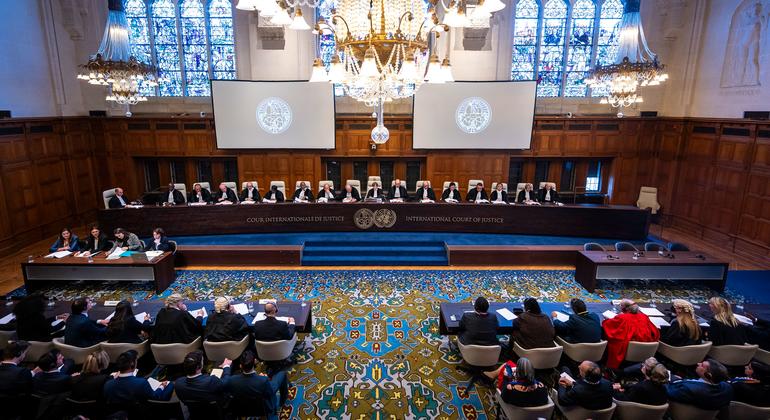
    Today, Israel is on trial for genocide at the World Court, and its leaders are the subject of arrest warrant requests at the International Criminal Court for crimes against humanity, including extermination.

    The ICJ has already issued a series of provisional anti-genocide measures against Israel, and a growing list of countries is lining up behind Palestine and South Africa in the genocide case against Israel.

    A dedicated international tribunal is under discussion at the UN. Cases have already been brought in national courts around the world, and more are certain to follow. Plans are also underway to mandate an international anti-apartheid body to focus on Israel.

    In the meantime, the United Nations, its independent human rights mechanisms, and the leading international, Palestinian, and Israeli human rights organizations have all collected massive quantities of evidence, have strongly condemned Israel for its shocking criminality, and are working to ensure accountability.
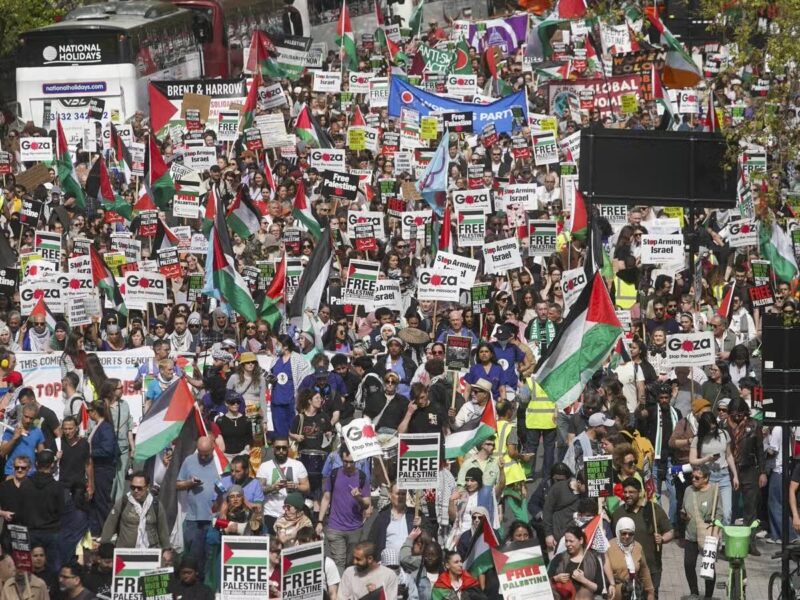
    Mass demonstrations against Israel are not only daily occurrences in capitals around the globe, but they are actually growing, undeterred by the often-brutal efforts (especially of Western governments) to suppress them.

    The ICJ has declared the obligation of all states to cut off all recognition, aid, investment, trade, weapons, and support of any kind with Israel’s colonial project in the occupied Palestinian territory.

    Israel is increasingly isolated on the global stage. And the global movement for boycott, divestment and sanctions is growing with every passing day.

    In other words, the age of Israeli impunity is coming to an end, despite the best efforts of the U.S., the UK, Germany, and other complicit Western states.

    And we may well be seeing, after decades of endless persecution and bloodshed, the beginning of the end of the European settler-colonial project in Palestine.

    One year later, the flames of genocide still burn. At this tragic moment, it is hard to see through the smoke that obscures the path forward. But white supremacist settler colonialism was defeated in South Africa, Rhodesia, Namibia, and Algeria. It will be defeated in Israel too. Through struggle and solidarity, with law and politics, in resistance and resilience, this will end.


    Feature Image Credit: Palestinian Return Center

    This article was published earlier in mondoweiss.net
  • The Morals of Hamas and Israel — A Dharmic Perspective

    The Morals of Hamas and Israel — A Dharmic Perspective

    In this analysis of the catastrophic destruction unleashed by Israel on Gaza in response to the Hamas’ attack on October 7th, Dr Seshadri Kumar poses very pertinent and valuable questions to the Indian policymakers and the audience in general.

    This article was published earlier in medium.com

    I have seen a number of Indians try to draw a moral equivalence between the attacks by Hamas on Israeli civilians that precipitated the ongoing war in Palestine and the retaliatory attacks of the Israeli Defense Forces on Gaza civilians. Both are equally wrong, these people say. Cruelty and barbarism are wrong, whatever the circumstances, they say. And they also say, therefore, that the Palestinians deserve the brutal bombardment that Israel is inflicting on them because they acted brutally by attacking first. Basically, they asked for it. The fact that the Palestinians are Muslims, a minority that is hated by the majority of Hindus (and, as I am finding out, Christians as well) in India, helps in developing this response.

    But are these two actions equivalent? Most of my friends are Indians, and Hindus at that, so I will draw upon Hindu mythology, which is revered in India, to answer this.

    First, one must understand what the Palestinians have gone through. The very creation of Israel was an injustice to the Arabs living in Palestine, as they were forcibly removed from their homes and forced to be refugees. Initially, all the other Arab countries supported them and fought many wars with Israel. But they lost every time, and the Palestinians lost more and more land each time.

    But the Bible is not history, and even if Jews used to live in that land centuries ago, brutally uprooting people living in Palestine in 1948 was a gross human rights violation. By this logic, the Chola kings of South India were once in control of Sri Lanka, Cambodia, and Thailand, so India is entitled to invade those countries and expel their populations from their lands.

    Some people say that the land that forms the state of Israel was once populated by Jews if we go by the Bible, and therefore Israel has a right to that land. But the Bible is not history, and even if Jews used to live in that land centuries ago, brutally uprooting people living in Palestine in 1948 was a gross human rights violation. By this logic, the Chola kings of South India were once in control of Sri Lanka, Cambodia, and Thailand, so India is entitled to invade those countries and expel their populations from their lands.

    After a lot of conflict over decades, the Israelis gave two parcels of land to the Palestinians to live in and self-govern, but the Jews control the lifelines to both areas — the West Bank, ruled by Fatah, and the Gaza Strip, ruled by Hamas.

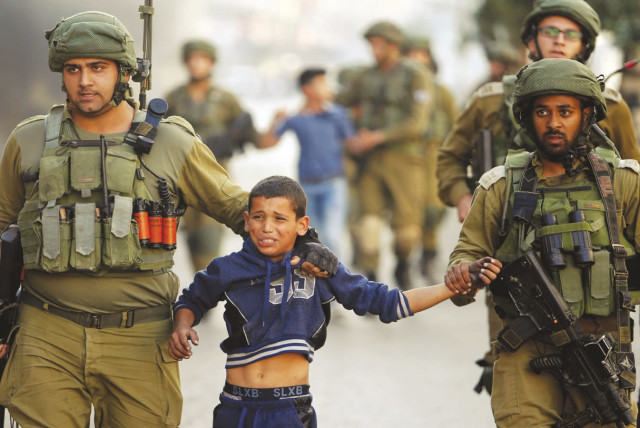
    Palestinians are routinely terrorized and humiliated by Israel. Their demand for a Palestinian homeland has come to nought despite years of negotiations. Israel is a brutal occupation force in Palestine.

    If all this were not enough, even the small area still occupied by Arabs is constantly encroached upon by Jews. Jews build settler colonies in Palestinian areas, taking away more and more of the little land the Muslims own. Muslim families living in Jerusalem are often forced at gunpoint from their own homes to make way for Jews. The number of Jewish settlers in Palestinian areas was just over half a million in 2010; today, it is just under three-quarters of a million. This increase has happened because of explicit support and encouragement of forced settlement policies by various governments in Israel, including the current Likud-led government of Benjamin Netanyahu and by the US. Another reason for this is that Jews anywhere have an automatic right to become Israeli citizens, and this has led to a huge influx of Jewish immigrants into Israel. Any protest by Palestinians is met with disproportionate retaliation. Children who throw stones are met with machine gunfire. A single rocket is replied to by a hail of bombs from aircraft. Collective punishment of Palestinians is and has been the norm. Israel has been deliberately provoking the Palestinians more and more, and the US has been openly partisan, as when President Trump recognized Jerusalem as Israel’s capital.

    If this were still not bad enough, the Palestinians seem to be losing all their Arab friends. There seems to be Palestine fatigue in the Arab world. Egypt normalized relations with Israel long ago. More recently, other countries, including the UAE, Sudan, Bahrain, and Morocco, have normalized relations. Even Saudi Arabia is on the cusp of normalizing relations with Israel. Clearly, there is nobody left to stand up for the Palestinians.

    A peaceful resolution is clearly not getting the Palestinians anywhere. Despite condemnation by the UN, Israel is continuing its settlement policy. At this rate, the Palestinians will all be begging for a living on the streets.

    How should Palestinians fight for their rights? Talks have failed. How should they “fight” Israel? By engaging in a direct military confrontation with the far superior Israeli army, using primitive weapons, and without an air force — to end up with a guaranteed defeat?

    So, if you say you are sympathetic to the plight of the Palestinians, you are giving them only three options:

    1. Have round after round of negotiations, which don’t get anywhere.
    2. Fight a direct war with a far superior army and an air force, which will lead to complete defeat.
    3. Watch Israeli civilians encroach on what Palestinians still consider their land, until nothing is left, and end up as slave labour for the Jews.

    It is worth noting that the Palestinians living in the West Bank, under Fatah rule, have not indulged in violence all these years. Yet, what has it gained them? Israel withdrew all its settlements from the Gaza Strip in 2010 but is briskly building new Jewish settlements in the West Bank. This is what Fatah got by being peaceful.

    People become terrorists when they have no other option. Asymmetric warfare is the weapon of the weak. When one has a just cause, and all acceptable and peaceful ways of securing one’s rights have come to nought, then one adopts unacceptable and violent ways. In other words, the ends justify the means.

    Hindus can understand this by reading the great Hindu epic, the Mahabharata. The Mahabharata is the story of a conflict between two sets of cousins, the Kauravas and the Pandavas, for control of a kingdom, Hastinapura. In the Mahabharata, the principle that any means are acceptable in order for a just end to prevail, referred to as the principle of Brihaspati, the preceptor of the Gods, is invoked by both sides.

    The operative portion of the story in the Mahabharata starts when King Vichitravirya dies. He has two sons: the elder, Dhritarashtra, is blind, and therefore is passed over for the kingship. His younger brother, Pandu, is crowned king. But King Pandu is cursed by a dying sage during a hunting accident, loses interest in the kingdom, and abdicates, upon which Dhritarashtra is crowned king by default. The children of Dhritarashtra are called the Kauravas, and the children of Pandu are called the Pandavas. Both the Pandavas and Kauravas therefore have a legitimate claim to the kingdom — the former are the children of the last legitimate king, who was the younger brother, whereas the latter are the children of the elder brother who is the current king, albeit by default.

    Duryodhana, the eldest of the Kauravas, believes that the entire kingdom should belong to him, and that the Pandavas do not have a legitimate claim to “even a needlepoint of land.” The Pandavas, on the other hand, are amenable to a split of the kingdom, with half going to their cousins and half ruled by them.

    Duryodhana hates the Pandavas because they are rival claimants to the kingdom. He tries to have them poisoned and then and burned to death. When all that fails, Dhritarashtra tries to achieve peace by partitioning the kingdom. Duryodhana then cheats the Pandavas for their share of the kingdom by winning a rigged game of dice. The condition of the game is that the Pandavas must go into exile for 13 years. When the Pandavas return from exile, Duryodhana refuses to return their portion of the kingdom to them. He justifies all his actions to his father by quoting Brihaspati — that one may take any steps necessary for the elimination of a powerful adversary.

    The Pandavas decide to fight for their right in the great war of Kurukshetra when Duryodhana refuses to return to their kingdom.

    In the setting of the Mahabharata, there are rules by which one is expected to fight on the battlefield. One must not attack someone who is not fighting them. One must not attack an unarmed opponent. One must not strike below the waist. No fighting at night, except by prior agreement. These rules are referred to as the “dharma” (right conduct) of battle. Violation of these rules would be called “adharma.” (Violation of dharma was viewed in the same way as we view human rights violations today.)

    Now the Pandavas can regain their kingdom only by defeating the Kauravas in battle. But the Kauravas are invincible in battle. They have great warriors who have never been defeated in war: Bhishma, the grand-uncle of the Pandavas and Kauravas, a student of the great Parashurama, the greatest warrior the world has known; Drona, the martial teacher of both the Pandavas and Kauravas, another disciple of Parashurama; Karna, the son of the Sun god, born with impregnable armor, and yet another disciple of Parashurama; and many other great warriors such as Bhurishravas. Duryodhana himself is invincible when fighting with his favourite weapon, the mace or bludgeon.

    While the Pandavas themselves have great warriors, notably Bhima, the second of the five Pandavas, the strongest man of his time; and Arjuna, the third of the Pandavas, the greatest archer of his time; even these cannot kill the undefeated warriors on the Kaurava side.

    But the Pandavas also have on their side Krishna, who is an incarnation of the God Vishnu in human form, who wants to help the Pandavas win because he is on the side of justice and fairness, and he believes that the Pandavas are on the side of dharma.

    Krishna knows that the Pandavas can never beat the Kauravas in a fair fight. So, he resorts to dishonourable tactics, or adharma, to win.

    Bhishma has taken a vow that he will never fight a woman. There is a warrior on the Pandava side, Shikhandi, who was born a woman, but who underwent a gender change and became a man. However, Bhishma still considers this warrior a woman, and his code of chivalry will not allow him to fight Shikhandi. But Shikhandi is incapable of killing Bhishma. So Krishna instructs Arjuna to position himself behind Shikhandi and shoot arrows at Bhishma. Bhishma will not shoot at Arjuna because Shikhandi stands in between, and so allows himself to be killed by Arjuna. This is clearly a violation of dharma by the Pandavas — attacking a foe who is not fighting you.

    Drona is told a lie that his son, Aswatthama, has been killed. On hearing this, Drona loses all interest in life and goes into meditation. When he is thus unarmed and defenceless, a warrior named Dhrishtadyumna chops off his head. Another violation of dharma.

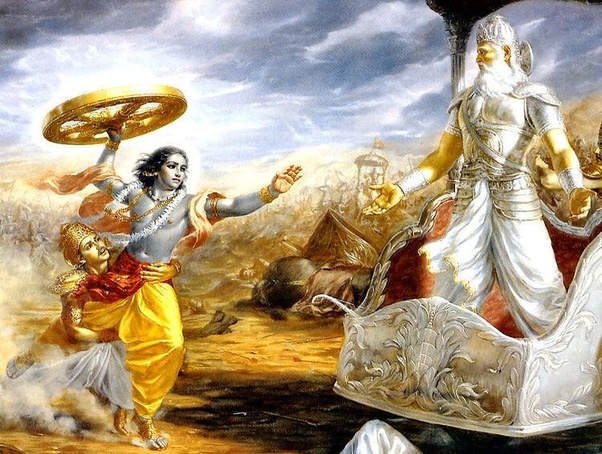
    Karna, similarly, is killed by Arjuna when his chariot is stuck in the mud, and he is unable to fight Arjuna. Dharma would have required Arjuna not to attack Karna when he was unarmed and not engaged in battle with him. But upon Krishna’s urging, Arjuna kills Karna from behind when he is engaged in removing his wheel from the mud.

    Similarly, Bhurishravas is engaged in a fight with another warrior when Arjuna cuts his hand off with an arrow from behind. A disillusioned Bhurishravas goes into meditation, at which point his opponent beheads him while he is unarmed and in meditation.

    In the final battle of the war, Duryodhana and Bhima are fighting with their maces, and Bhima is finding the going tough, because Duryodhana is unbeatable with the mace. At this point, Krishna signals to Bhima to strike Duryodhana below the navel, a violation of the rules of war. Bhima strikes Duryodhana’s thighs and mortally wounds him. More adharma.

    Krishna justifies every one of these transgressions of dharma by saying that the ends justify the means. A dying Duryodhana accuses the Pandavas of violating the rules of war to defeat him. Krishna recalls all of Duryodhana’s evil deeds, and says that without violating the rules of war, without adharma, the Pandavas could never have avenged the great wrongs done to them. Adharma was required to defeat adharma.

    And so, the Mahabharata is a deeply pessimistic story, because it says that the virtuous can never defeat the wicked by following fair play in war. They must resort to trickery, unfair and illegitimate tactics — adharma — in order for dharma to prevail. After trying to follow dharma their entire lives, even not retaliating when their wife Draupadi was disrobed in the great assembly of Hastinapura by the Kauravas during the game of dice, after patiently enduring multiple assassination attempts, after being deprived of their kingdom by fraud, after enduring 13 years in exile, the Pandavas finally come to the realization that they can get their rightful inheritance only through evil and unfair means, through adharma. Even to ensure the victory of virtue, one must embrace vice.

    Similarly, the Palestinians have not gotten justice for 75 years by appealing to dharma, and today Hamas is pursuing the path of adharma. The injustice of the Palestinians began in 1948 with the nakba, the forced expulsion of more than 700,000 Palestinians from the new state of Israel and the destruction of more than 500 villages. Some 5000 Palestinians were massacred by Israel at the time. The injustice has only grown worse in the last 75 years.

    If the present adharma of Hamas is wrong, then the actions of the Pandavas in the Mahabharata were also wrong. And if what the Pandavas did was right, then what Hamas has done is also right. In both cases, adharma was committed to securing justice and fairness. Hindus must decide which course of action they find morally right — but they must choose consistently.

    A system where dharma is never respected and followed can only result in adharma. We have no choice but to accept this reality.

    Had Dhritarashtra upheld dharma when the Pandavas pleaded for their rights with him, they would never have had to engage in adharma to get their rights. If we claim to value dharma, then we must be consistent in upholding it. Otherwise, we are engaging in adharma ourselves.

    Had the world listened to the anguished cries of the Palestinians over the last 75 years, a just solution would have been worked out for them and some of them (i.e., Hamas) would not need to engage in terrorism today. But by turning a deaf ear and a blind eye to their suffering, the West has forced Hamas to engage in the only way that the West pays attention to — terrorism.

    It is not enough to say that you condemn both the violence against civilians by Hamas and the state terrorism of Israel equally. By doing so, you are only enabling the powerful terrorist state of Israel, because your condemnation means nothing to them — they have been engaging in state terrorism for 75 years and getting away with it scot-free. The only people to face consequences for their terrorism are the weak — in this case, Hamas, and in decades past, the PLO. They are blacklisted, their assets are frozen, they are put on Interpol arrest lists, whereas the terrorists who rule the state of Israel roam the world as royalty.

    The world is not equal and fair. The powerful have more privileges. And so, if you value human rights and freedom, you must not condemn equally. If you genuinely care about justice, you must side with the weak, not be even-handed.

    Be like Krishna. Not like Dhritarashtra.

    Feature Image Credit: www.lapresalatina.com


  • Perpetrators and Victims: Ways Out of Violence?

    Perpetrators and Victims: Ways Out of Violence?

    Franz Fanon had sharpened the problem in such a way that the colonised would only really liberate themselves through violence and the killing of the colonialists because only in this way could they free themselves from the humiliation they had suffered.

    the real evil is humiliation – and many civilisations and peoples of the world have not only been exploited in colonisation but, perhaps more importantly, humiliated.

    violent action changes one’s own soul.


    I would like to emphasise from the outset that many readers of these lines will, of course, think that this is the writing of a Western-influenced intellectual, especially a German, who is marked by the guilt of the Germans for Auschwitz. Indeed, I am. Nevertheless, I want to address several issues beyond the current conflicts.

    An explanation of the causes of violence can very quickly turn into an understanding, and this into a legitimation of violent action. Although the boundary between these three concepts is fluid, it does not follow that identifying the causes of violent experiences legitimises all forms of one’s violent actions. Thus, while one can legitimise the violent resistance of the Palestinians and the establishment of their Palestinian state, one cannot legitimise all forms of one’s use of violence. The Queen of Jordan is indeed absolutely right when she accuses the West of double standards in the application of morality – but the need for moral recognition of the opponent as a human person is in no way invalidated by the Western double standard. In my view, there is no difference in principle whether Palestinian or Israeli children suffer. But the suffering of children on one side does not justify the suffering of children on the other side. At the moment, we are also in an information war in which precisely this is being conveyed – my own experience of violence as a victim legitimises the use of violence by myself. In his anticolonialism impulse, Franz Fanon had sharpened the problem in such a way that the colonised would only really liberate themselves through violence and the killing of the colonialists because only in this way could they free themselves from the humiliation they had suffered. This assumption, however, turned out to be highly counterproductive because violent action changes one’s own soul. While I fully agree with Jacques Vergés that the real evil is humiliation – and many civilisations and peoples of the world have not only been exploited in colonisation but, perhaps more importantly, humiliated. Here the distinction between a biological human being and a legal-moral person took on its nation-destroying dynamic and became a double standard – moral-legal qualities were granted only to Europeans, all others were degraded to half-monkeys, uneducated primitive peoples, or sub-humans (the Jews to the Nazis). This degradation did not kill the body, but like all rape, it killed the soul.

    Perhaps we need to get away from reducing every form of violence to its purpose – violent actions can also become independent. You can’t use violence the way you use cutlery and plates at dinner – after you wash up, everything looks the same, but people have gotten used to violence taking on a life of its own. The surviving fighters from the civil wars in the former Yugoslavia, Chechnya, Syria, and Iraq form a group of some 40,000 mercenaries who fight each other in ever-changing constellations. The 2012 “Tuareg” rebellion in Mali was also supported by such independent fighters, who returned from Palestine and helped themselves to the weapons stockpiles of the collapsed Ghaddafi regime. Chechen fighters, in turn, were a central part of the IS leadership; today, they are fighting on both sides in Ukraine. A tragic consequence of these developments is the inversion of the perpetrator-victim relationship. Many victims of violence have such fragmented souls that they use violence themselves to prevent themselves from ever being victims again, even at the cost of becoming perpetrators. Ideologies and political goals then become an indiscriminate source of legitimation for one’s violent actions, which ultimately only serve the purpose of no longer being a victim.

    Discourses of history: Throughout the Islamic sphere of influence, as in all colonised countries, there is a pronounced discourse of victimhood – the problem is that while the people concerned were indeed victims to the extent that the Western world still finds difficult or impossible to admit, a discourse of victimhood leads to legitimising even one’s own most horrific forms of violence by saying that one was a victim. Stalinism and Nazism, as well as the ideologies of al-Qaeda, Daesh/IS, the Taliban, and Hamas in Gaza, derive their legitimacy from this discourse of victimhood. At a training course in Yad Vashem, the Israeli Holocaust memorial, this victim discourse, the reversal of the victim-perpetrator relationship, was very vividly presented – not by me, but by the Israeli leaders of the training course. The symbol for this is the desert fortress Massada, where the last Jewish defenders committed suicide in order not to be humiliated as slaves by the Romans.

    But the consequence was the motto: Never again, Massada!

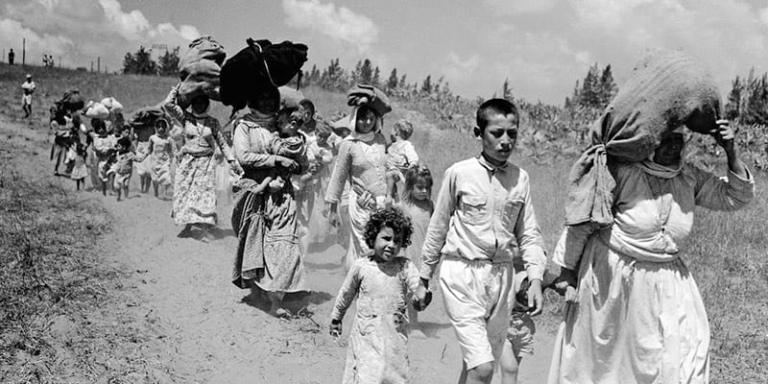
    And the Holocaust, anti-Semitism and Islamic Jew-hatred are not a distant past for Israelis but part of the present discourse – just as for many Palestinians, the Nakba is an ongoing part of the present. In Arabic, the Nakba refers to the flight and expulsion of some 700,000 Arab Palestinians from the former British Mandate of Palestine. It took place between the 1947 UN partition plan for Palestine and the 1949 armistice following the Palestine War, waged by six Arab states against the state of Israel, which was founded on May 14, 1948. In the historical narrative of Palestinians, other Arabs, and anti-Zionists, the Nakba is usually described as a pre-planned ethnic cleansing by the Israeli military; in the historical narrative of Israel, it is generally described as a voluntary flight in response to Arab calls. In my lecture at the World Peace Museum in Kyoto, Japan, I also wanted to talk about the crimes of the Japanese Empire in the 20th century. The colleague who invited me responded, at first incomprehensibly to me, that this could not be made a topic: He meant that you Germans were lucky, you had your Hitler. To my incomprehension, he explained that the Germans could blame the Holocaust entirely on Hitler and his few comrades, which, according to recent research, is not valid. But if he had to talk about the crimes of the Japanese army, he would speak of his father, but really about himself. He found himself unable to distance himself even minimally from his father. Although the greater sense of family in many non-Western societies can be a useful corrective to Western over-individualisation, the danger lies in the repetition of age-old conflicts. To my surprise, even the famous peace researcher Johann Galtung had postulated at a conference in Basel that 3 million deaths in the “Killing Fields” of the Red Khmer were compared to 3000 years of oppression. The undisputed experience of oppression led him to relativise a crime against humanity.

    The problem, however, is that for every terrorist killed, General Abi Zaid, the former commander of U.S. forces in Iraq, estimates that five new ones grow. After the violent excesses of Hamas members, it is “understandable” that the relatives of the victims want to kill them, but this will most likely only multiply the number of violent and militant supporters.

      Even with regard to the Holocaust, Hannah Arendt had distinguished between the unforgivable act and the perpetrator, whom one must be able to forgive. But “forgiveness” depends on the admission of guilt. And this admission is made virtually impossible by the victim discourse. In addition, it is difficult to come to terms with one’s own violent actions. Many of these people will never be able to return to civilian society – this could be observed, for example, in the case of US soldiers who, decades after the Vietnam War, still had to “play” the war over and over again in the Nevada desert, because the violence they had committed had filled their identity entirely. There is a drug that is more quickly and deeply addictive than even heroin – and that is violence. Violence eats the soul. And even if Arendt distinguishes between the perpetrator and the act, what to do with perpetrators who cannot distance themselves from the act is problematic. In a study of the recruitment of IS supporters in Iraq, it was found that the main recruitment base for IS was the prisons there. Even in Western prisons, petty criminals often turn out to be serious criminals. Sometimes, you have to admit that the only way to deal with people who are entirely violent is to kill them – like the IS supporters who abused Yazidi women as sex slaves. To this day, it is difficult to understand why the neighbouring states did not put an end to the violent excesses of IS earlier since it would have had no chance against a functioning modern army. The problem, however, is that for every terrorist killed, General Abi Zaid, the former commander of U.S. forces in Iraq, estimates that five new ones grow. After the violent excesses of Hamas members, it is “understandable” that the relatives of the victims want to kill them, but this will most likely only multiply the number of violent and militant supporters.

     Both Hamas and the religious extremists in Israel and the settlers in the West Bank are obviously trying to turn a political dispute into a religiously underpinned clash of civilisations, or, as Samuel P. Huntington better calls it, a clash of civilisations. Hamas is not only a liberation movement, as it is often ascribed in defence of its actions, but at least a religious movement oriented toward an eschatological struggle – just like the religious extremists in Israel. Both rely on the construction of identity that Huntington also advocates: we know who we are when we know who we are against. Although there is a renaissance of religion around the world, and it is often very violent, this does not mean that religions per se are violent. But religious belief necessarily excludes other beliefs. It is different from the civilisations associated with them. While religions exclude others, civilisations are much more likely to include others. This difference also explains why the followers of the great monotheistic religions, while claiming to be peace-loving, have been responsible for unparalleled excesses of violence throughout their history. The Islamic wars of conquest, the Crusades, the Ottoman conquests, the Thirty Years’ War, Islamic and Atlantic slavery, and, finally, worldwide colonisation leave a single trail of blood. And this, of all things, from two world religions that considered themselves peace-loving. The traditional explanation is no longer valid: these excesses of violence had nothing to do with religion but only with socio-historical conditions, which themselves were oriented towards eternal peace. This is certainly true for these civilisations (even if the concept of civilisation has been distorted by European colonisation), but not for the religions (which is why the Global Ethic project has failed so spectacularly, contrary to its own claims because it has not gone beyond a minimal consensus).

    Huntington’s liberal critics had argued not only that there should not be a clash of civilisations but also that there could not be one – because, in their eyes, there was only one civilisation, the Western one. The others are religions or cultures, but not civilisations. It is time to abandon this liberal and Western conceit, and the replacement of Eurocentrism with ethnocentrism or religious centrism is not an adequate response to the problems of exploding violence.

     At first glance, a dialogue of the world’s civilisations seems unrealistic in the face of worldwide explosions of violence. On the contrary, it is necessary to prevent political disputes from becoming a clash of civilisations. Huntington’s liberal critics had argued not only that there should not be a clash of civilisations but also that there could not be one – because, in their eyes, there was only one civilisation, the Western one. The others are religions or cultures, but not civilisations. It is time to abandon this liberal and Western conceit, and the replacement of Eurocentrism with ethnocentrism or religious centrism is not an adequate response to the problems of exploding violence. Instead, the appropriate response to the increasing number of wars and excesses of violence worldwide must be to separate the hardliners discursively, politically, and militarily from the population, not to drive the population into the hands of the hardliners. In the latter case, we would only be threatened with a new “bloody century” like the first half of the 20th century. A dialogue among the world’s civilisations is necessary, if perhaps only modest, step to avoid this. For in the mutual recognition of the world’s civilisations, both sides will be bound by their own civilisational principles.

    Feature Image: Nakba of 1948 – Palestinians being forced out by Israelis – arabcenterdc.org

  • Propaganda Blitz: How Mainstream Media is Pushing Fake Palestine Stories

    Propaganda Blitz: How Mainstream Media is Pushing Fake Palestine Stories

    Biased media reporting and propaganda with fake news is now a major strategy to create polarised perceptions worldwide. This type of reporting is now led by leading media houses of the West, whose only aim is to create a narrative that suits their foreign policy and economic objectives. Truth is a big casualty in the bargain, along with innocent lives, communities, and nations. The ongoing Israel-Hamas conflict is mired in heavy propaganda. It is important for the world to re-examine the past, extract the truth and history, and the current geopolitical machinations to understand this long-drawn Middle East conflict properly. TPF endeavours to provide, through select articles and accurate analysis, the right analysis and perspective of the Israel-Palestine issue. In the article below, Alan Macleod clearly describes how mainstream media pushes many false narratives to obfuscate the true nature, causes, and victims of the conflict.         – Team TPF


    After Hamas launched a surprise attack on Israel, IDF forces responded with airstrikes, levelling Gazan buildings. The violence so far has claimed the lives of more than 2,500 people. Western media, however, show far more interest and have much greater sympathy with Israeli dead than Palestinian ones and have played their usual role as unofficial spokespersons for the Israeli Defense Forces (IDF).

    EXTRAORDINARY CLAIMS, ZERO EVIDENCE

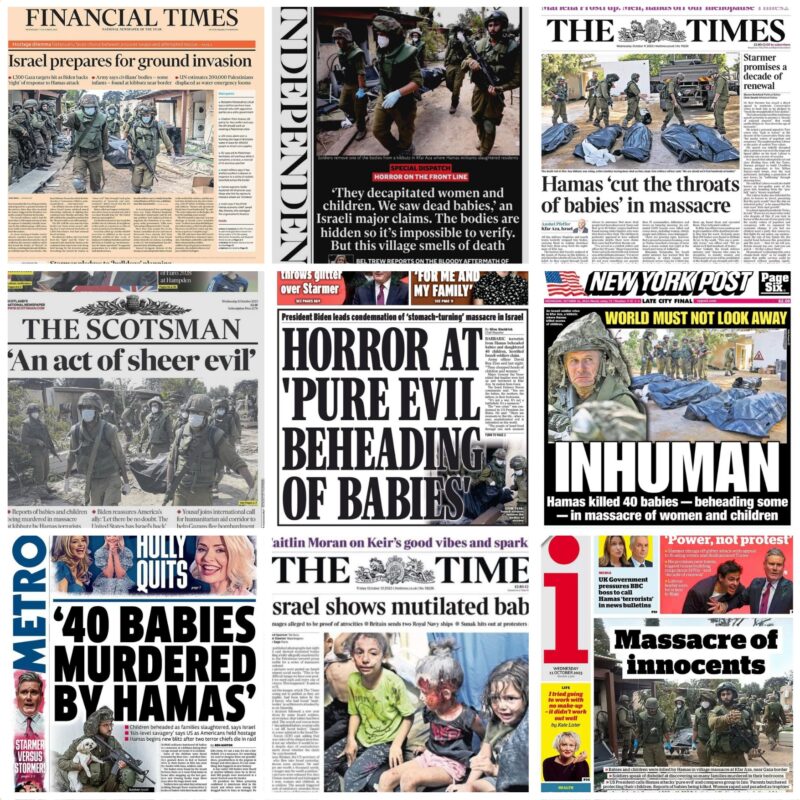
    One case in point is the claim that, during their incursion into southern Israel, Hamas fighters stopped to round up, kill and mutilate 40 Israeli babies, beheading them and leaving their bodies behind.

    The extraordinary assertion was originally reported by the Israeli channel i24 News, which based it on anonymous Israeli military sources. Despite offering no proof whatsoever, this highly inflammatory claim about an enemy made by an active participant in a conflict was picked up and repeated across the world by a host of media (e.g., in the United States by Fox NewsCNNMSNBusiness Insider, and The New York Post)

    Meanwhile, the front pages of the United Kingdom’s largest newspapers were festooned with the story, the press outraged at the atrocity and inviting their readers to feel the same way.

    Extraordinary claims should require extraordinary evidence, and a story like this should have been met with serious skepticism, given who was making the claim. The first question any reporter should have asked was, “Where is the evidence?” Given multiple opportunities to stand by it, the IDF continually distanced itself from the claims. Nevertheless, the story was simply too useful not to publish.

    The decapitated baby narrative was so popular that even President Biden referenced it, claiming to have seen “confirmed” images of Hamas killing children. This claim, however, was hastily retracted by his handlers at the White House, who noted that Biden was simply referencing the i24 News report.

    The story looked even more like a piece of cheap propaganda after it was revealed that the key source for the claim was Israeli soldier David Ben Zion, an extremist settler who had incited race riots against Palestinians earlier this year, describing them as “animals” with no heart who needs to be “wiped out.”

    Manipulating the U.S. public into supporting the war by feeding them atrocity propaganda about mutilating babies has a long history. In 1990, for instance, a girl purporting to be a local nurse was brought before Congress, where she testified that Iraqi Dictator Saddam Hussein’s men had ripped hundreds of Kuwaiti babies from their incubators and left them to die. The story helped whip the American public up into a pro-war fervor. It was later revealed that it was a complete hoax dreamed up by a public relations firm.

    THE MURDERED GIRL WHO CAME BACK TO LIFE

    Another piece of blatantly fake news is the case of Shani Louk. Louk attended the Supernova Festival, ambushed by Hamas. It was widely reported that Hamas murdered her (e.g., Daily MailMarcaYahoo! NewsTMZBusiness Insider), stripped her, and paraded her naked body trophy-like through the streets on the back of a truck. Louk’s case incited global anger and calls for an overwhelming Israeli military response.

    There was only one problem: Louk was later confirmed to be alive and in hospital, a fact that suggests the videos of her on the back of a truck were actually images of people saving her life by taking her to seek medical assistance.

    Few of the outlets irresponsibly publishing these wildly incendiary stories have printed apologies or even retractions. The Los Angeles Times was one exception: after publishing a report claiming that Palestinians had raped Israeli civilians, it later informed readers that “such reports have not been substantiated.”

    LIONIZING ISRAEL, DEHUMANIZING PALESTINIANS

    Few readers, however, see these retractions. Instead, they are left with visceral feelings of anger and disgust towards Hamas, priming them to support Western military action against Palestine or the wider region.

    In case their audiences did not get the message, op-eds and editorials in major newspapers hammered home this idea. The Wall Street Journal ran an op-ed entitled “The Moral Duty to Destroy Hamas”, which insisted to readers that “Israel is entitled to do whatever it takes to uproot this evil, depraved culture that resides next to it.” Thus, the outlet implicitly gave Israel a free pass to carry out whatever war crimes it wished on the civilian population, whether that is using banned chemical weapons, cutting off electricity and water, or targeting ambulances or United Nations officials.

    The National Review’s editorial board was of a similar mind, stating that “Israel needs a long leash to destroy Hamas.” This long leash, they explained, meant giving Israel far more time to carry out the destruction of Gaza. Western leaders would have to refrain from criticizing Israel or calling for calm and peace.

    The message was clear: international unity was paramount at this time. Mere trifles such as war crimes must be overlooked. And while Israel and its people were treated with special sympathy (e.g., Washington Post), the other side was written off as bloodthirsty radicals. While the phrase “Palestinian terrorists” could be found across the media spectrum (e.g., Fox NewsNew York PostNew York Times), its opposite, “Israeli terrorists” was completely absent from corporate media. This, despite casualties on the Palestinian side, outnumbering Israelis.

    Underlining the fact that Israeli lives are deemed more important is the way in which deaths from each side are reported. The BBC, for example, told its readers that Israelis have been “killed” while people in Gaza merely “died,” removing any agency from its perpetrators and almost suggesting their deaths were natural.

    CONTEXT-FREE VIOLENCE

    Missing from most of the reporting was the basic factual background of the attack. Few articles mentioned that Israel was built upon an existing Palestinian state and that most of the inhabitants of Gaza are descended from refugees ethnically cleansed from southern Israel in order to make way for a Jewish state. Also left unmentioned was that Israel controls almost every aspect of Gazan’s life. This includes deciding who can enter or leave the densely populated strip and limiting the import of food, medicine and other crucial goods. Aid groups have called Gaza “the world’s largest open-air prison.” The United Nations has declared the conditions in Gaza to be so bad as to be unlivable.

    One of the principal reasons that this crucial context is not given is that it could influence Western audiences into sympathizing with Palestinians or supporting Palestinian liberation. Giant media corporations are largely owned by wealthy oligarchs or by transnational corporations, both of whom have a stake in preserving the status quo and neither of whom wish to see national liberation movements succeed.

    https://twitter.com/AlanRMacLeod/status/1712797752709566763?ref_src=twsrc%5Etfw%7Ctwcamp%5Etweetembed%7Ctwterm%5E1712797752709566763%7Ctwgr%5Eb05f8d7d7e0b67196918b4e46787442438501a6b%7Ctwcon%5Es1_&ref_url=https%3A%2F%2Fscheerpost.com%2F2023%2F10%2F14%2Fpropaganda-blitz-how-mainstream-media-is-pushing-fake-palestine-stories%2F

    Some media outlets make this explicit. Axel Springer – the enormous German broadcaster that owns Politico – requires its employees to sign its mission statement endorsing “the trans-Atlantic alliance and Israel” and has told any staff members that support Palestine to leave their jobs.

    Other outlets are slightly less overt but nonetheless have Israel red lines that employees cannot cross. CNN fired anchor Marc Lamont Hill for calling for a free Palestine. Katie Halper was fired from The Hill for (accurately) calling Israel an Apartheid state. The Associated Press dismissed Emily Wilder after it became known that she had been a pro-Palestine activist during her college years. And The Guardian sacked Nathan J. Robinson after he made a joke mocking US military aid to Israel. These cases serve as examples to the rest of the journalistic world. The message is that one cannot criticize the Israeli government’s violent apartheid system or show solidarity for Palestine without risking losing their livelihoods.

    Ultimately, then, corporate media play a key role in maintaining the occupation by manipulating public opinion. If the American people were aware of the history and the reality of Israel/Palestine, the situation would be untenable. For those wishing to maintain the unequal state of affairs whereby an apartheid government expels or imprisons its indigenous population, the pen is as important as the sword.


    This article was published earlier in scheerpost.com and is republished under the Creative Commons Attribution-NonCommercial-NoDerivatives 4.0 International license

    Feature Image Credit: aljazeera.com