Tag: Greenland

  • Actions Speak Louder than Words

    Actions Speak Louder than Words

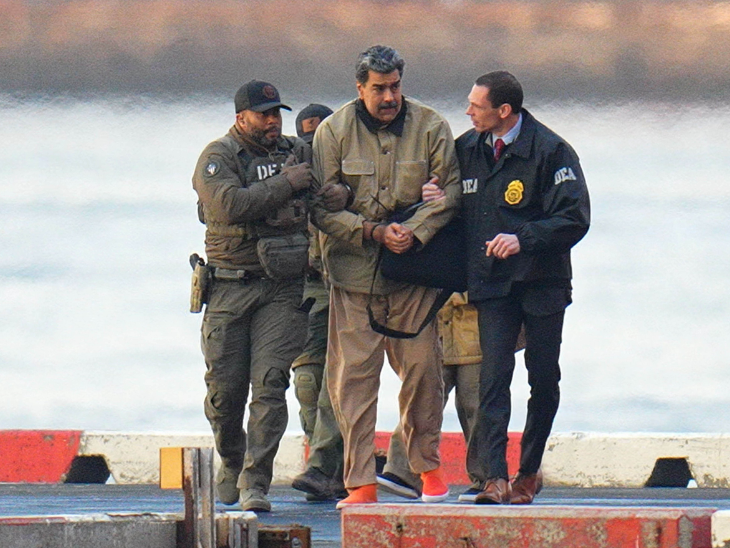
    The recent kidnapping of President Maduro and his wife, with Venezuela being held to ransom at gunpoint, has made clear that it is not high-minded principles, but an imperialistic mindset and the grubbiness of colonial greed, the hankering for resources belonging to others, that has always been their sole motive.


    For years, American academics and mainstream media successfully portrayed American foreign policy as benign and dedicated to promoting freedom, democracy and human rights worldwide. Unfortunately, those involved in dealing with them intimately in the rest of the world, especially the Global South, knew better.

    Their benevolence was nothing more than a mirage. In practice, their malevolent and vindictive security and intelligence establishment used bribery and strong-arm tactics like coups, assassinations and kidnapping as their primary modus operandi to get their way. If none of those worked, then there was always the option of military intervention.
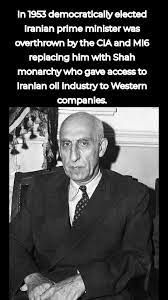
    If anything, we should be grateful to President Trump for two things. Firstly, for having swept aside the sludge of hypocrisy that the United States practised to justify its assertive foreign policy actions. For example, Operation Ajax, the overthrow of Iranian Prime Minister Mossadegh’s democratically elected government in August 1953, was justified as a containment of communism, though he was not a communist. Similarly, Operation Iraqi Freedom, which resulted in the overthrow and execution of Saddam Hussein, was justified on the grounds that Iraq had WMDs and was supportive of Al-Qaeda. That simply turned out to be lies, known only after previous damage had been done.
    The recent kidnapping of President Maduro and his wife, with Venezuela being held to ransom at gunpoint, has made clear that it is not high-minded principles, but an imperialistic mindset and the grubbiness of colonial greed, the hankering for resources belonging to others, that has always been their sole motive. American exceptionalism, it turns out, was no different from how the strong have always behaved toward the weak, throughout history. As the Greek historian, Thucydides, put it, “the strong do what they can, and the weak suffer what they must”.
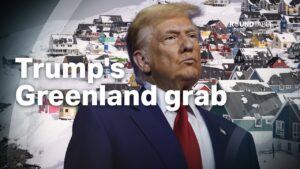
    Even Trump’s desire to occupy Greenland can be seen in this context. We seem to have forgotten that over 86% of Greenland’s 56000 population are Innuits, who were colonised by Denmark only in the 1700s. There has always been a strong movement for independence there, and polls as recently as 2023 have suggested over 85% of the population supports independence from Denmark. At the end of the day, this confrontation between the United States and Denmark is just about two imperialistic powers contesting territory that neither owns, to extract resources. Some may recall that we, too, have been victims of similar contestations between the English and other imperial powers as well.

    The second has been the treatment that he has meted out to his fellow Americans. They are at the receiving end of how America normally treats the world- with arrogance, a sense of entitlement, and the belief that it is above the law and can do as it pleases. Whether we openly admit it or not, there are many who believe that America has finally got its just desserts- “they who sow the wind, will reap the whirlwind” as Bible-thumping Americans would say. Whether they ever be able to get over Trumpism, even after he is gone, is debatable.

    Notwithstanding this singular truth, we continue to be confused by Trump’s actions. While many see them as incoherent and a symptom of American decline, others, including some here, believe his actions in America will degrade Chinese and Russian capabilities, dampening their geopolitical ambitions. Nothing could be further from the truth.

    America, for all its wealth and overwhelming military might, suffers from a human problem. An overwhelming unwillingness on the part of the average American to be treated as sacrificial lambs in support of imperialistic ambitions. After Iraq and Afghanistan, they do not see such actions as being in the national interest, but as just another initiative to fill the coffers of corporations and those who run them. If Trump, or any other American President for that matter, were to again actually put boots on the ground to implement ongoing plans, be it in Venezuela, Iran or Cuba, it would result in massive protests against the Government, especially once the body bags start rolling in, as they are bound to.

    Bullies only get their way as long as they are not challenged. The very reason for America’s hesitation, even unwillingness, to act as the World’s policeman, especially as hybrid warfare gains currency and conventional forces lose their ability to achieve total domination or success. Trump and his cronies have probably concluded that the security and prosperity of the continental United States lie in ensuring its effectiveness as a regional satrap rather than spreading itself too thin. Threats against Iran are just mere cosplay.

    This applies equally to the Chinese and the Russians, especially the latter, having been seriously debilitated by the million-plus losses that they have suffered in their seemingly unending conflict with Ukraine. The last thing President Xi would want is to find himself in Putin’s shoes, if a military assault on Taiwan were to go awry, as it very well might, given the complexities of amphibious assaults.

    For him to be able to carve out his place in history, action against India is a far more promising prospect. It would be at a much lesser cost and manageable risk, as the political establishment here, whatever be their ideologies, has little, if any, inclination or spine to confront the Chinese. This is borne out by the fact that the BJP and RSS hosted a Chinese Communist Party delegation at the very time that the Chinese Government has renewed its thrust on infrastructure development in the illegally occupied Shaksgam Valley.

    Actions always speak louder than words, and our diplomatic protests mean little when we act in the manner that we have. Incidentally, Chinese actions seriously undermine our positions in the Siachen Glacier and further complicate our already complex security environment. It is indeed time our political establishment and their oligarch friends faced reality, developed resilience and learnt to withstand some pain. Everything cannot be about profit or the chair; sometimes, national interest must take precedence.
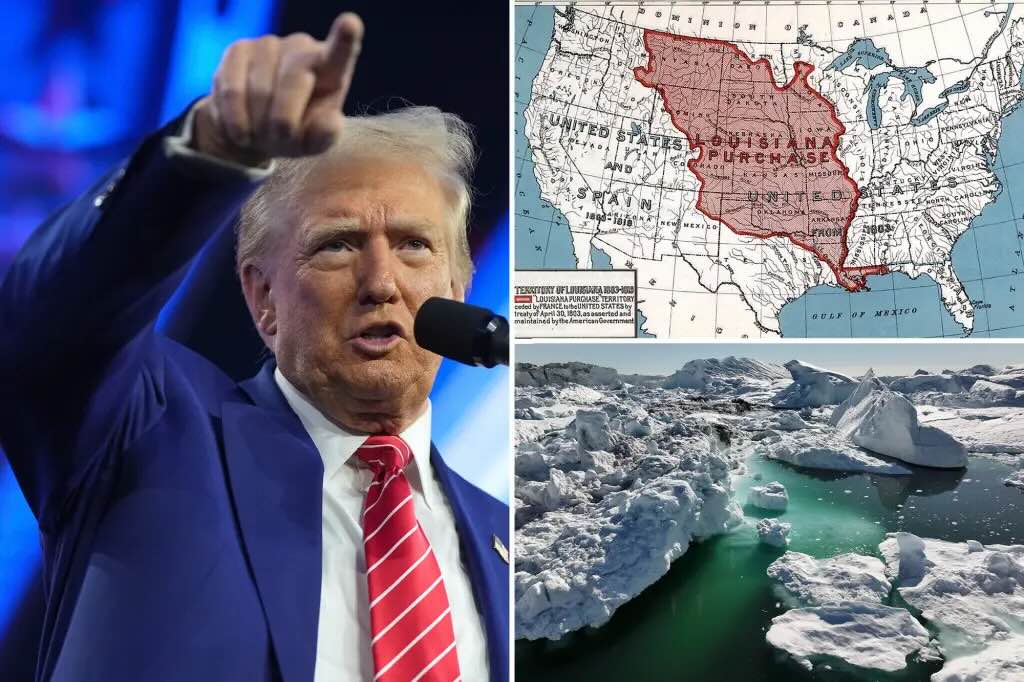
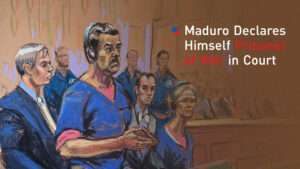
    Feature Image Credit: bhaskarenglish.in ‘I’m Venezuela’s President, a prisoner of war’:Maduro denies all charges in US court as heavy gunfire erupts in Caracas
  • Trump and Musk, Canada, Panama and Greenland, an old Story

    Trump and Musk, Canada, Panama and Greenland, an old Story

    Re-elected President Donald Trump has mentioned a possible annexation of the Panama Canal, Canada and Greenland. A crazy project that already appeared on a map, imagined in 1941 by a follower of the technocratic movement. However, it was the French branch of this movement that invented the transhumanism dear to Elon Musk, whose grandfather was responsible for the Canadian branch of the technocratic movement.

    When the technocratic movement considered annexing Greenland, it recalled that it is located on the North American continental shelf and based its decision on the importance of its natural resources. It holds precious rare earth minerals [4], as well as uranium, billions of barrels of oil and vast reserves of natural gas, previously inaccessible but increasingly less so.

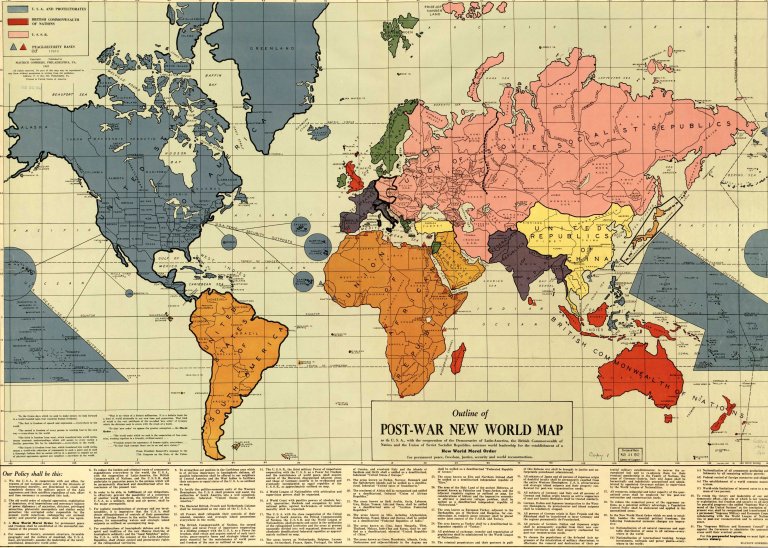
    The post-World War II world map, drawn by Maurice Gomberg in 1941. The United States extends from Canada to the Panama Canal and includes Greenland.

    The statements of the re-elected US President Donald Trump, before his inauguration, announcing that he intended to buy Greenland (which he had already compared in 2019 to a “big real estate deal”) and to annex both Canada and the Panama Canal have stunned us. No Western leader had made such statements since the Second World War. The US ruling class instead saw it as a “new frontier”, that is to say, new territories where their country could continue its advance.

    The Danish government, on which Greenland depends, has indicated that it is not for sale, that it is an “autonomous territory” owned only by the Greenlanders. German Chancellor Olaf Scholz called for “the principle of the inviolability of borders to apply to all countries… whether it is a very small one, or a very powerful one.” French Foreign Minister Jean-Noël Barrot commented: “There is no doubt that the European Union would not allow other nations of the world to attack its sovereign borders.” British Foreign Secretary David Lamy said Donald Trump “raises concerns about Russia and China in the Arctic, which concern the national economic security” of the United States. These are “legitimate issues.” Finally, for Italian Prime Minister Giorgia Meloni, these statements are “more of a message intended” to “other great powers rather than hostile claims against these countries. These are two territories where in recent years we have seen increasing activism by China. »

    Canadian Prime Minister Justin Trudeau, who was elected as Pierre Trudeau’s son and therefore as a defender of national independence, turned out to be nothing more than a follower of Washington. He therefore had nothing to say about what seems obvious: by joining the United States, his country would have nothing to lose that it has not already lost and everything else to gain. So he resigned.

    Concerning the Panama Canal, Donald Trump had insinuated that it was operated by the Chinese army. Panamanian President José Raúl Mulino responded: “The canal is not controlled, directly or indirectly, by China, the European Community, the United States or any other power. As a Panamanian, I firmly reject any expression that distorts this reality.”

    We will explain here that these ideas of annexation are not new, but date back to the 1929 crisis, and that they correspond to a coherent ideological corpus defended, until last week, by the only multi-billionaire Elon Musk whom we knew rather as an admirer of the Serbian engineer Nicolas Tesla and as a follower of transhumanism.

    During the “Great Depression”, that is to say the Wall Street crisis and the economic storm that followed, all the American and European elites considered that capitalism, in its then form, was definitively dead. Joseph Stalin proposed the Soviet model as the only answer to the crisis, while Benito Mussolini (former representative of Lenin in Italy) proposed, on the contrary, fascism. But in the United States, a third solution was proposed: technocracy.

    Criticizing the traditional reading of supply and demand, the economist Thorstein Veblen was interested in the motivations of buyers. He showed that the man who can afford leisure actually does so to reinforce his social superiority, and must therefore show it. Leisure is therefore not a form of laziness, but “expresses the unproductive consumption of time”. Consequently, in many situations, contrary to popular belief, “The more the price of a good increases, the more its consumption also increases” (Veblen’s paradox). It is therefore not prices, but group behavior and individual motivations that dictate the economy.

    Thorstein Veblen’s iconoclastic thinking gave birth, among others, to Howard Scott’s technocratic movement. He imagined that power should be given neither to capitalists nor to proletarians, but to technicians.

    This movement was exported to France around polytechnicians, notably the esoteric novelist Raymond Abellio (who founded the sect of which François Mitterrand was a member until his death) and Jean Coutrot, the inventor of transhumanism. Little by little, this movement would have engendered in the occult circles of Philippe Pétain’s regime a secret society, the Synarchy.

    Coutrot’s transhumanism foreshadows Elon Musk’s transhumanism. For Coutrot, it was about using technology to go beyond humanism. For Elon Musk, it is more about using technology to change man.

    This movement of ‘technocracy’ is based on a dominant challenge to the functioning of democracies. It professes not to engage in politics and to find technical solutions to all problems.

    Given this lineage, we understand that any reference to technocracy in France is discredited from the start. However, this movement is based on a dominant challenge to the functioning of democracies. It professes not to engage in politics and to find technical solutions to all problems. Whether we like it or not, it is present in the United States in the belief that it is technical progress that will solve everything.

    The fact remains that the technocratic movement, relying on statistical knowledge from the interwar period, was convinced that the North American continent constituted a unit in terms of mineral resources and industries.

    Joshua Haldeman

    The head of the Canadian branch of the movement, chiropractor Joshua Haldeman, was arrested during the Second World War because he defended neutrality towards Nazi Germany. He was indeed pro-Hitler and anti-Semitic [1]. After the war, he settled in South Africa, seduced by its apartheid regime. His grandson is none other than Elon Musk.

    It should be noted that the multi-billionaire’s position within the Trump administration is increasingly contested from within. Thus Steve Bannon was able to declare to Corriere della Sera: “Elon Musk will not have full access to the White House, he will be like any other person. He is really an evil guy, a very bad guy. I made it a personal thing to fire this guy. Before, because he put money in, I was ready to tolerate it, I am no longer ready to tolerate it.” [2].

    Elon Musk

    Maurice Goldberg envisaged a division of the world by civilizations. The United States would have been expanded to include all of North America, from Canada to the Panama Canal, and to many Pacific and Atlantic islands, including the Antilles, Greenland and Ireland.

    Some members of the technocratic movement gave great importance to the post-World War II world map drawn up in 1941 by an anonymous author signing under the pseudonym Maurice Gomberg. However, he envisaged a division of the world by civilizations. The United States would have been expanded to include all of North America, from Canada to the Panama Canal, and to many Pacific and Atlantic islands, including the Antilles, Greenland and Ireland. Like the French Synarchy, this map has been widely discussed in conspiracy circles. However, according to historian Thomas Morarti, quoted by the Irish press [3], this map resonated with President Franklin D. Roosevelt during his “Four Freedoms speech” (freedom of speech, freedom of religion, freedom from want, and freedom from fear) on January 6, 1941. Along the same lines, in 1946, President Harry Truman proposed that US troops not evacuate Greenland, which they had liberated from the Nazis, but buy it for $100 million.

    In 1951, Denmark authorized the establishment of two large US and NATO military bases in Greenland, at Sondreström and Thule. Elements of the US anti-ballistic system have since been installed there. The treaty authorizing these bases was co-signed by Greenland in 2004, that is, after it had acquired its autonomous status.

    In 1968, a US strategic bomber, which was taking part in a routine operation in the context of the Cold War, accidentally crashed near Thule, contaminating the region with a cloud of enriched uranium. It was learned in 1995 that the Danish government had tacitly authorized the United States, in violation of Danish law, to store nuclear weapons on its soil.

    The purchase of Greenland could, therefore, easily take place without money. All that would be required would be for the Pentagon to ensure the protection of Denmark, thus freeing it from a financial burden.

    Donald Trump Jr. and his team “on vacation” in Greenland.

    Giving reality to what seemed to be just empty talk, Donald Trump Jr., the son of the re-elected president, went on vacation to Greenland. Of course, on board a family plane and surrounded by a group of advisors. He did not meet, officially at least, with any political leader. During this trip, the NGO Patriot Polling conducted a survey. The majority of respondents (57.3%) approved of the idea of joining the United States, while 37.4% were against it. Of those surveyed, 5.3% remained undecided. Following the publication of these results, Múte B. Egede gave a press conference in Copenhagen that even if he had not spoken with the Trumps, he was open to “discussions on what unites us. We are ready to discuss. Cooperation is a question of dialogue. Cooperation means that you will work to find solutions.”

    When the technocratic movement considered annexing Greenland, it recalled that it is located on the North American continental shelf and based its decision on the importance of its natural resources. It holds precious rare earth minerals [4], as well as uranium, billions of barrels of oil and vast reserves of natural gas, previously inaccessible but increasingly less so. Rare earths are now almost exclusively available to China. However, they have become essential for high technology, particularly for Tesla cars. These natural reserves are not exploited due to the traditional opposition of the indigenous populations, the Inuit (88% of the population).

    Today, Greenland is above all a strategic issue. It would allow the United States to control the Northern Sea Route, which is now navigable. Since this is currently controlled by Russia and China, a change in the island’s ownership would transform the geopolitical equation. That is why Dmitry Peskov, the Kremlin spokesman, commented: “The Arctic is a zone of our national interests, our strategic interests. We want to preserve the climate of peace and stability in the Arctic zone. We are watching the rather spectacular development of the situation very closely, but so far, thank God, only at the level of statements.”

    References to the technocratic movement may have nothing to do with Musk and Trump, but they should be kept in mind as events unfold.


    Translated from French by Roger Lagasse’


    References:

    [1The International Conspiracy to Establish a World Dictatorship & The Menace to South Africa, Joshua Haldeman. Cité dans «The World According to Elon Musk’s Grandfather», Jill Lepore, The New Yorker, September 19, 2023.

    [3«United mates of America», Tom Prendeville, Irish Mirror.

    [4Greenland is only mentioned once in the Technocracy Study Course. Rare earths were ignored at the time.


    This article was published earlier in Voltairenet.org
    and is republished under Creative Commons (license CC-BY-NC-ND)

    Feature Image Credit: nypost.com