Tag: Governance

  • Using Artificial Intelligence to address Corruption: A proposal for Tamilnadu

    Using Artificial Intelligence to address Corruption: A proposal for Tamilnadu

    Nations must adopt Artificial Intelligence as a mechanism to build transparency, integrity, and trustworthiness, which are necessary to fight corruption. Without effective public scrutiny, the risk of money being lost to corruption and misappropriation was vast. Dr Chris Kpodar, a global Artificial Intelligence Specialist, has advocated the use of artificial intelligence as an anti-corruption tool through the redesigning of systems to address systems that were previously prone to bribery and corruption.


    Artificial Intelligence Tools

    Artificial Intelligence has become popular due to its increasing applications in many fields. Recently, IIT Madras opened a course on B.Tech Data Science in Tanzania, demonstrating the popularity of Artificial Intelligence. The history of Artificial Intelligence goes back to the 1950s when computing power was less, and hardware were huge. These days, computing power has increased exponentially along with the miniaturisation of hardware, leading to algorithms being able to compute larger datasets. The field of AI, however, has gone through ups and downs in terms of popularity.

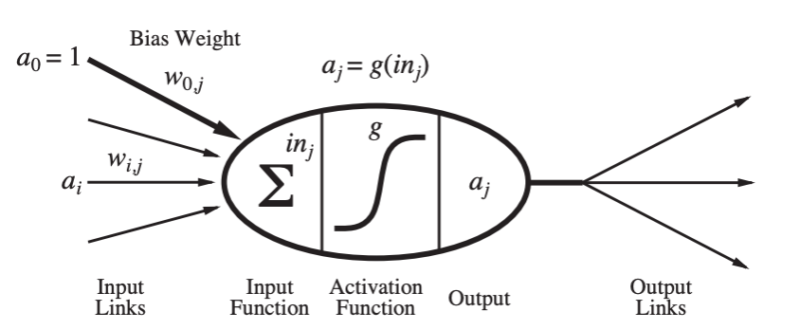
    Researchers have worked on Neural Networks (Figure below), a mathematical model modelled after neurons in the brain, a foundation unit, and one of the foundations of state-of-the-art AI.
    Artificial intelligence (AI), machine learning, deep learning, and data science are popular terms that describe computing fields that teach a machine how to learn. AI is a catch-all term that broadly means computing systems designed to understand and replicate human intelligence. Machine Learning is a subfield of AI where algorithms are trained on datasets to make predictions or decisions without explicitly being programmed. Deep Learning is a subfield of Machine Learning, which specifically refers to using multi-layers of neural networks to learn from large datasets, mimicking cognition of the neurons in the brain. Recently, the field of AI has resurged in popularity after a popular type of neural network architecture, AlexNET, achieved impressive results in the Image Recognition Challenge in 2012. Since then, neural networks have started to enter into applications in the industry, with colossal research funding mobilised.

    Breakthroughs that can aid Policy Implementation

    There are many types of neural networks, each designed for a particular application. The recent popularity of applications like ChatGPT is due to a neural network called Language Models. Language Models are probability models which ask the question, what is the next best token to generate, given the previous token?

    Two significant breakthroughs led towards ChatGPT, including translating language from one language to another using a machine learning technique called attention mechanism. Secondly, this technique was introduced in transformer-type language models, which led to increased state-of-the-art performance in many tasks in artificial intelligence.

    Transformers, a robust neural network, was introduced in 2017 by Google Researchers in “Attention is All You Need”. This translates into generating human-like text in ChatGPT. Large language models have taken a big step in the technology landscape. As Machine Learning applications are being deployed rapidly, it calls for a governance model for these models, as research in AI models is advancing quickly with innumerable breakthroughs. Earlier in 2019, GPT-2, a Machine Learning model based on transformers, could not solve fundamental mathematical problems such as elucidating numbers from 0-100. Within a year, more advancement in the GPT models led to models being able to perform higher-level scores in SAT exams, GRE, etc. Another breakthrough advancement was the ability of machine-learning programs to generate code, which has increased developer productivity automatically.

     Moreover, many researchers are working on AGI (Artificial General Intelligence), and nobody knows precisely when such capabilities might be developed or researched. Researchers have not settled on a convincing definition of AGI agreeable to everyone in the AI research community. The rate of advancement and investment in AI research is staggering, which calls for ethical concerns and governance of these large language models. India is an emerging economy where all sectors are growing rapidly. India’s economy grows nearly 10% yearly, with the services sector making up almost 50% of the entire economy. This translates to the government enjoying high tax revenues from this sector, generating high-paying jobs. Most of the Indian workforce is employed in the industrial and agricultural sectors.

    Using AI to deal with Corruption and enhance Trust

    The primary issue in India has been corruption at all levels of the government, from the panchayat, district level, and state level to central machinery. Corruption is attributed mainly to regulation, rent-seeking behaviour, lack of accountability, and requiring permits from the Government. Indian bureaucratic system and government employees are among the least efficient across sectors such as infrastructure, real estate, metal & mining, aerospace & defence, power and utility, which are also most susceptible to corruption. Due to inefficiency, the productivity of the public sector is low, impacting the local Indian economy.

    India ranks 85 out of 180 countries using the Corruption Index measured in 2022, with close to 62% of Indians encountering corruption, paying bribes to government officials to get the job done. There are many reasons for corruption in India: excessive regulation, a complicated tax system, bureaucratic hurdles, lack of ownership of work, and the public sector being the least productive organisation. Corruption is dishonest or fraudulent conduct by those in power, typically involving bribery. Bribery is defined generally as corrupt solicitation, acceptance, or transfer of value in exchange for official action. In bribery, there are two actors in the transaction, the giver and the receiver; however, corruption involves primarily one actor who abuses the position of power for personal gain. Bribery is a singular act, while corruption might be an ongoing abuse of power to benefit oneself.

    Trust is a critical glue in financial transactions; where trust between individuals is higher, the economic transactions are faster, and the economy grows, with more businesses moving, bringing capital, and increasing the production and exchange of goods. However, when trust is low, businesses hesitate, and the economy either stagnates or declines. High-trust societies like Norway have advanced financial systems, where credit and financial instruments are more developed, compared with lower-trust societies such as Kenya and India, where many financial instruments and capital markets to raise finances are unavailable. Therefore, public policymakers must seek ways to increase trust in their local economies by forming policies conducive to business transactions.

    The real-estate sector in Tamilnadu: a fit case for the use of AI

    Tamil Nadu is India’s second-largest economy and is the most industrialised and urbanised state in India. Real estate is an economic growth engine and a prime mover of monetary transactions. It is a prime financial asset for most Tamils from many social strata. However, real estate in Tamil Nadu is prone to corruption at many levels. One specific popular method is the forgery of land registration documents, which has resulted in a lack of trust among investors at all levels in Tamil Nadu.

    To address this lack of trust, we can use technology tools to increase confidence and empower the public to create an environment of accountability, resulting in greater confidence. Machine Learning can provide algorithms to detect these forgeries and prevent land grabbing. Tools such as identity analysis, document analysis, and transaction pattern analysis can help to provide more accountability. In addition to the above, machine learning offers many methods or combinations of methods that can be used. One advanced way is using transformer-based models, which are the foundation for language models such as BERT and generative Pre-Trained Models for text-based applications. The original documents could be trained using large language models as a baseline to frequently check and find forgeries. Documents can be encoded to compare semantic anomalies between different types of documents.

    Once forgery is detected, it can be automatically sent to civil magistrates or pertinent authorities. Additionally, the recent introduction of Software repository sites allows the public to be informed or notice any change in the status or activity. Customised public repositories based on GitHub might create immense value for Tamil Nadu’s Department of Revenue, create accountability, increase productivity and reduce workload. The Customised public repositories displaying land transaction activity might inform the public of such forgeries, thus creating an environment of greater accountability and trust for the people. Another popular method can be introduced by introducing Computer Vision Algorithms, such as convolutional neural networks combined with BERT, that can validate signatures, document tampering, and time-frames to flag forgeries. This can be done by training original documents with specific algorithms and checking documents with reasonable doubts about forgery.

    Another primary concern in Tamil Nadu’s Government has been people in positions of power in the government or close to financial oversight. They are more prone to corruption, which can be flagged or monitored using graph neural networks, which can map individuals, connections, and economic transactions in a network to flag which individuals are more likely or prone to corruption. Another method to reduce corruption is to remove personal discretion in the process, which Machine Learning can enable to automate the tasks and documents in land registration; digitisation might help reduce corruption. Large Language Models can also be used as classifiers and released to the public to keep accountability on the Tamil Nadu Government’s spending, so the public is aware and personal gain of Government money can be further reduced this way. Another central area of corruption is the tender, the bidding process for government contracts in Tamil Nadu, such as public development works or engineering projects. Tamil Nadu’s tender or bidding process can be made more public, and machine learning algorithms can be used to check if norms, contracts, and procedures are followed to award tender bids for government projects. To save wasteful expenditure, algorithms can check if objective conditions are met, with any deviations flagged and in the public domain. Given any suspicion, the public can file a PIL in Tamil Nadu’s court system.

    We can argue and conclude that with more deployed machine learning tools being part of Tamil Nadu’s State machinery, we can confidently say that corruption can be reduced to more significant levels by releasing all information to the public and creating an environment of greater accountability.

    References:

    1. Russell, Stuart J.; Norvig, Peter. (2021). Artificial Intelligence: A Modern Approach

    2.Bau, D., Elhussein, M., Ford, J. B., Nwanganga, H., & Sühr, T. (n.d.). Governance of AI models. Managing AI risks. https://managing-ai-risks.com/

    1. S. Department of State. (2021). 2021 Country Reports on Human Rights Practices: India. U.S. Department of State. https://www.state.gov/reports/2021-country-reports-on-human-rights-practices/india/
    1. Devlin, J., Chang, M.-W., Lee, K., & Toutanova, K. (2019). BERT: Pre-training of deep bidirectional transformers for language understanding. In Proceedings of NAACL-HLT (pp. 4171-4186). https://arxiv.org/abs/1810.04805
    1. Radford, A., Wu, J., Child, R., Luan, D., Amodei, D., & Sutskever, I. (2019). Language models are unsupervised multitask learners. OpenAI blog, 1(8). https://openai.com/blog/better-language-models/
    1. Radford, A., Narasimhan, K., Salimans, T., & Sutskever, I. (2018). Improving language understanding by generative pre-training. OpenAI blog, 12. https://openai.com/blog/language-unsupervised/
    2. Bai, Y., Kadavath, S., Kundu, S., Askell, A., Kernion, J., Jones, A., … Kaplan, J. (2022). Constitutional AI: Harmlessness from AI feedback. arXiv preprint arXiv:2212.08073. https://arxiv.org/pdf/2212.08073.pdf,

    https://www.anthropic.com/news/constitutional-ai-harmlessness-from-ai-feedback

    1. Reinforcement Learning with Human Feedback (RLHF), Ouyang, L., Wu, J., Jiang, X., Almeida, D., Wainwright, C. L., Mishkin, P., Zhang, C., Agarwal, S., Slama, K., Ray, A., Schulman, J., Hilton, J., Kelton, F., Miller, L., Simens, M., Askell, A., Welinder, P., Christiano, P., Leike, J., & Lowe, R. (2022). Training language models to follow instructions with human feedback. arXiv preprint arXiv:2203.02155. https://arxiv.org/abs/2203.02155

    Feature Image: modernghana.com

  • Technological Challenges to Becoming a Developed Country by 2047

    Technological Challenges to Becoming a Developed Country by 2047

    For a developed India, bulkier investment and technological changes are required to keep up in the race with other developed nations. In doing so, the country should not be afraid of failure. After all, Chandrayaan 3 was made possible by the lessons from the failure of Chandrayaan 2.

    THE Prime Minister has set the goal of India becoming a developed country by 2047.

    On the way, India’s Gross Domestic Product (GDP) is soon going to surpass that of Germany and Japan, if the current official rates of growth are maintained.

    In today’s world, projecting five years or 24 years ahead is fraught with challenges. Who could have foreseen the Covid pandemic in 2020 and the war in Ukraine in 2022?

    Successful landing of Chandrayaan 3 near the South Pole of the Moon is undoubtedly a great achievement for the nation. But that does not make India a developed nation.

    Major challenges confront the nation, such as providing good education and healthcare. This can only be achieved if the number of schools and health facilities in rural and semi-rural areas is increased substantially.

    [powerkit_button size=”lg” style=”info” block=”true” url=”https://theleaflet.in/technological-challenges-to-becoming-a-developed-country-by-2047/” target=”_blank” nofollow=”false”]
    Read More
    [/powerkit_button]

  • On China and Economy, Dialogue Is the Need of the Hour

    On China and Economy, Dialogue Is the Need of the Hour

    The strength of democracy is that debate and dialogue provide society with a self-corrective mechanism.

    The news of Chinese transgression in Tawang on December 9 is disturbing. The opposition has repeatedly demanded a discussion in the parliament but the government has not agreed. The government’s stock reply is that the matter should not be politicised and that we should have full faith in our army and our brave soldiers.

    This is diversionary since no one is saying that our soldiers are at fault or are not fighting valiantly. The issue is about policy and India’s political stance vis-à-vis China because of which the brave soldiers are suffering. A full discussion in parliament will help clear the air in this regard.

    [powerkit_button size=”lg” style=”info” block=”true” url=”https://thewire.in/rights/china-economy-dialogue-debate-democracy” target=”_blank” nofollow=”false”]
    Read More
    [/powerkit_button]

  • How blockchain can help dismantle corruption in government services

    How blockchain can help dismantle corruption in government services

    As India celebrated its 76th independence day with great fanfare and jubilation, it is time to introspect on the most serious threat to India’s growth and emergence as a world. This threat is corruption, which is internal and societal. Over the 75 years of modern India’s journey, corruption has become endemic in Indian society. Infused by the political culture, corruption has seeped into every aspect of governance, be it the executive, legislature, or judiciary. This is so because an average citizen has come to accept bribing as a routine and inevitable part of daily life. Hence, if India has to eliminate the scourge of corruption it needs a massive transformation of its society. This can come only through the sustained practice of transparency, ruthless accountability, efficiency, and deterrent punishment. Corruption is commonly perceived as related to monetary benefits but it is much more in terms of misuse of power, coercion, disinformation, lack of transparency, non-performance, inefficiency and delay tactics, and the lack of accountability/responsibility. There is a misconception that digitisation will overcome corruption. Unless timelines, tamper-proof records, and transparency are ensured the corrupt will find ways to get around. These are clearly seen in the revenue tax systems, licensing systems, land registration systems etc. Even though these departments have digitised the processes well, there is a proliferation of middlemen linking the client and the department. This can only be eliminated by the right policies that enforce strict timelines, respond to citizens’ complaints, enforce accountability and transparency on the officials and create clarity for the public in the usage of such systems. The adoption of blockchain technologies could go a long way toward eliminating corruption in India. Widespread corruption has been India’s greatest threat and it is never more urgent than now to address this problem through innovative technologies like blockchain.

    TPF republishes this article on ‘Blockchain and Governance’  from the World Economic Forum under the creative commons license 4.0

    TPF Editorial Team

    Key Points

    • Blockchain could increase the fairness and efficiency of government systems while reducing opportunities for corruption;
    • Blockchain could improve the transparency and disclosure of procurement processes, investment in which can be lost to corruption;
    • The emerging technology can also enhance the property and land registry systems, streamlining lengthy processes and protecting people’s rights.

    Governments regularly have to make trade-offs between efficiency and fairness in their services. Unfortunately, choosing one over the other often increases the likelihood of corruption. In efficient systems, the public is largely content to operate within the bounds of that system; inefficient systems cause large numbers of individuals to seek less-than-legal workarounds. Similarly, fair systems engender trust, pride and a sense of community; while unfair systems encourage individuals to seek out illegal alternatives without remorse.

    Occasionally, new technologies come along that offer the opportunity to increase both efficiency and fairness. Blockchain is one such opportunity and it has a variety of use-cases for government applications. Here are two in more detail:

    Blockchain and procurement

    Public procurement is the process of governments acquiring goods, services and works. It represents a significant portion of governmental budgets, accounting for 29% of general government expenditure totalling €4.2 trillion in OECD countries in 2013. With so much money at stake, it is unsurprising that OECD estimates that 10-30% of the investment in publicly funded construction projects may be lost to corruption.

    Public procurement is vulnerable to corruption for a number of reasons. Parties in the procurement process, both on the public and private sides, are induced into corrupt acts by the size of potential financial gains, the close interaction between public officials and businesses, and how easy it is to hide corrupt actions. Blockchain has the potential to protect against these weaknesses at almost every stage of the procurement process.

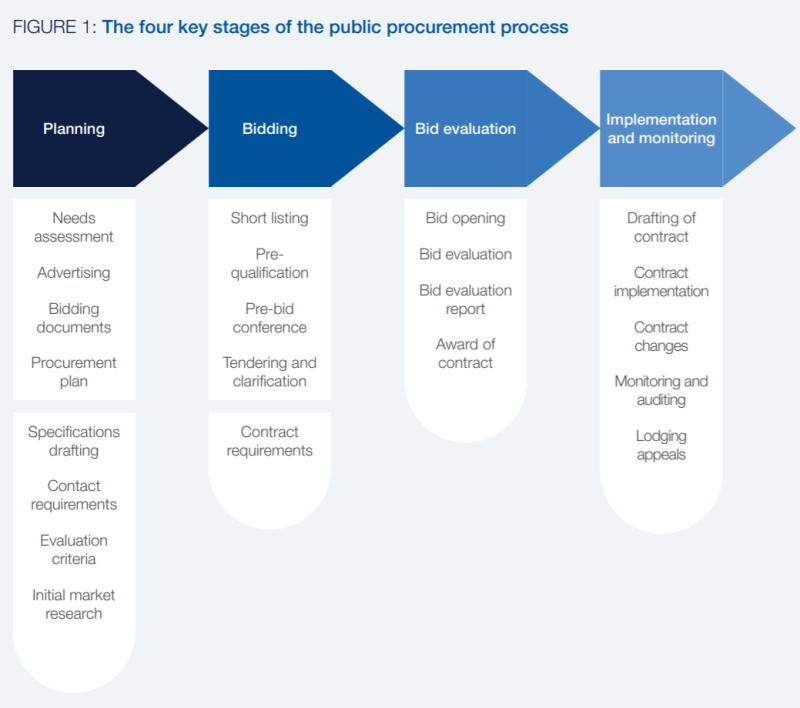
    In the planning stage, public officials create evaluation criteria by which bidding companies will be judged. In the bidding evaluation stage, public officials assign scores to companies using the evaluation criteria as their rubric. Without transparency, there are many opportunities for compromised public officials to rig the outcome of the evaluation process. Evaluation criteria could be retroactively changed or company bids altered, for example. Blockchain can guarantee any change is public, the original information is retained and there is a record of who made the change.

    Blockchain can also encourage a wider coalition of stakeholders to participate in and monitor procurement cycles. Too often, the most active stakeholders in any given procurement process are the public officials and the businesses directly involved – a potential problem when more than half of all foreign bribery cases likely occur to obtain public procurement contracts. Watchdog organizations, end-users, the media and citizens are discouraged from participating because procurement information is not readily available, untrustworthy, modified and/or delayed. Blockchain can provide an easily accessible, tamper-proof and real-time window into ongoing procurement processes

    Projects integrating blockchain into procurement, such as this pilot programme in Colombia, conclude that “blockchain-based e-procurement systems provide unique benefits related to procedural transparency, permanent record-keeping and honest disclosure.” The Colombia project noted several drawbacks, such as scalability and vendor anonymity, but newer proposals like this one to overhaul India’s public procurement system are taking steps to overcome those and other shortcomings.

    Blockchain and registries

    Land title registries track the ownership of land and property for a given region. Registration titling systems have had important consequences for the economy, leading to “better access to formal credit, higher land values, higher investment in land, and higher income.” Yet they are far from perfect. They are inefficient, for example, closing a property sale can take months and typically consumes 2-5% of the purchase price of a home. Registration systems can act as bottlenecks for land transactions. There are complaints going back to 2015 of England’s Land Registry having six-month transaction delays and similar complaints persisted in 2020.

    The inefficiencies in land titling systems are a major source of corruption. The Organized Crime and Corruption Reporting Project’s 2019 report on land registry corruption in Bangladesh found that obtaining a licence as a deed writer incurs a bribe to the highest-level administrators. Land registry corruption is not restricted to developing regions: in regions with longer histories of legal stability, it simply becomes more complex. Anti-corruption NGO, Global Witness, estimated in 2019 that £100 billion worth of property in England and Wales was secretly owned by anonymous companies registered in tax havens.

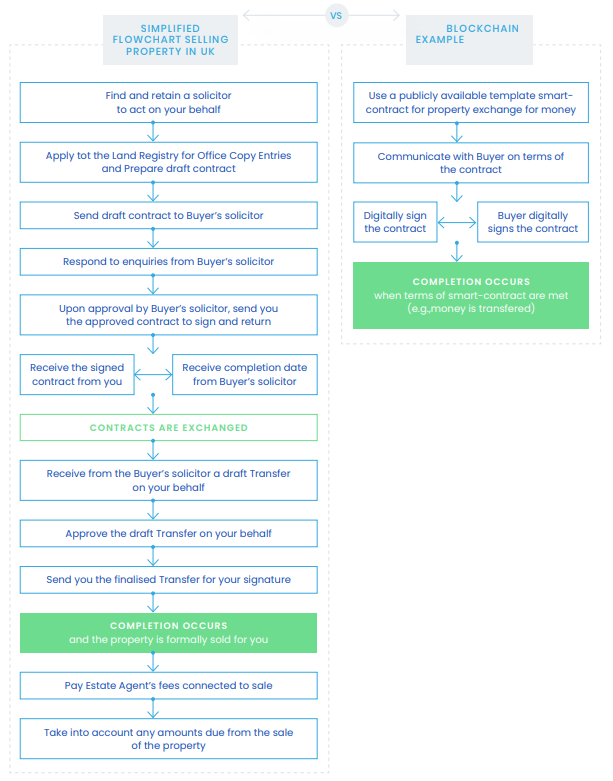
    A good first step to fighting corruption is by cutting down on inefficiencies. Blockchain can streamline much of the process. Take, for example, the number of steps required in the UK for one person to sell the property to another person and compare this with a blockchain-based registry system.

    Some countries are already experiencing positive results. In 2018, Georgia registered more than 1.5 million land titles through their blockchain-based system.

    An urban land registry project underway in Africa uses blockchain to address the problems of digitizing urban land registries. In many densely populated impoverished urban areas, no pre-existing land registry or paper trail exists. Relying on the meagre data available often causes legal disputes. Courts quickly become overwhelmed and digitization efforts stall.

    Blockchain is now being added to the project. To confirm property rights, the new system seeks out and consults community elders. Through a blockchain-based application, those elders receive the authority to confirm the validity of land registry claims. The elders can check directly with residents if they consent to the land assessment. By delegating cryptographically guaranteed authority to respected community members, the quality of the data is improved and the number of land dispute cases handled by the judiciary should decrease. Finally, the remaining cases should resolve faster since the elders’ cryptographic confirmations are admissible as evidence for land dispute resolution.

    The final challenge: Adoption

    The government blockchain-based projects referenced in this article represent just a few of a growing number of pilot or in-production applications of blockchain. This shows that governments are serious about fixing inefficient and unfair services. The potential gains from blockchain are substantial, yet as a new technology, there are many challenges in designing and implementing blockchain-based applications. For large institutions such as governments to deploy blockchain-based applications in a timely fashion and reap the benefits, education and tools are imperative.

  • PM Modi May Decry ‘Revdi Culture’ – But it Still Runs Our Political Economy

    PM Modi May Decry ‘Revdi Culture’ – But it Still Runs Our Political Economy

    There is little doubt that the practice of handing out freebies undermines both democracy and development. But the problem doesn’t lie just with the opposition

    Constitutional authorities in India have recently spoken about key challenges the country is facing.

    The Chief Justice of India (CJI) has said that there is “diminishing” space for the opposition, that there was no longer any mutual respect between the Union government and the opposition, and that these developments pose a threat to Indian democracy.

    The chief minister of Rajasthan recently spoke about lack of “tolerance” in the country and urged the prime minister to speak out against violence.

    The Union law minister flagged the issue of pendency of cases in courts – almost 5 crore.

    Finally, the CJI blamed the government for the inadequacy of judicial infrastructure and lamented that 80% of the 6.1 lakh prisoners are undertrials and the “process has become the punishment”. He labelled prisons as ‘black boxes’ and prisoners the most vulnerable.

    The CJI’s comments a few days later in Ranchi point to the anguish in the upper echelons of the judiciary when he said that media is “running kangaroo courts”, expresses “biased views” and runs “agenda driven debates”. He stated that many issues are difficult for the judges to decide but the media jumps into the fray all too quickly. He highlighted the threat to the judges after retirement. He also responded to the argument that judges – being unelected – should not get into legislative and executive areas by pointing to the constitutional responsibilities placed on the judiciary.

    [powerkit_button size=”lg” style=”info” block=”true” url=”https://thewire.in/political-economy/narendra-modi-revdi-culture-political-economy” target=”_blank” nofollow=”false”]
    Read More
    [/powerkit_button]

  • The Inefficiencies of India’s Justice System

    The Inefficiencies of India’s Justice System

    The present system of justice delivery is inefficient precisely because it is meant to be manipulated by our rulers to achieve their goals.

    Aryan Khan’s case reflects what is wrong in India’s system of justice. He was caught for allegedly being part of a nexus with international or national drug dealers. Much hype followed since he is the son of a mega movie star. Media, political parties and the general public presented, commented and followed the case.

    As suddenly as the case erupted, it has been closed with the argument that no narcotic drugs were found. It is common knowledge that drugs flow in parties like the one that was planned on the ship. But, here a particular group of youngsters were targeted and it was not a general raid. What was the plan?

    Message and Extortion

    A Minister in the Maharashtra government accused the agency of using such cases for extortion. He was later arrested for having dealings with the family of a notorious don. If the allegations against him are true, he would know about use of drugs and the ways of functioning of the agency involved. So, his allegations about extortion are likely to be correct. The question then is, who was the real target and has a deal been struck?

    The public will never get to know the truth but, what an inefficient way of doing things. It cannot be that some officer initiated the case on his own for extortion and harassment of a high profile person. Could the extortion not have been done quietly without media hype and public exposure? Mafia is known to extort without advertising their action. For the powers that be, it was also necessary to send a message to their detractors. The case is symptomatic of what the system is capable of.

    [powerkit_button size=”lg” style=”info” block=”true” url=”https://thewire.in/political-economy/the-inefficiencies-of-indias-justice-system” target=”_blank” nofollow=”false”]
    Read More
    [/powerkit_button]

  • e-SLA and the Delhi Act 2011 (Right of Citizen to Time-bound delivery of Services)- Policy Analysis

    e-SLA and the Delhi Act 2011 (Right of Citizen to Time-bound delivery of Services)- Policy Analysis

    Introduction

    As the functions of the modern welfare state expand and the dependency of citizens on it increases, its services must be delivered in timely manner. To this end, the Delhi government developed a robust policy. Through the Delhi Act of 2011 (Right of Citizen to Time Bound Delivery of Services), referred to as “the Act”, and the Delhi (Right of Citizen to Time Bound Delivery of Services) Rules, 2011 [“the Rules”], it has guaranteed timely delivery of 361 services.[1] Delhi is not the only state to confer such a right. However, in these other states, the enforcement of this right requires physical presence. Delhi has used an e-Service Level Agreement [“e-SLA”] to digitise the entire enforcement process. Digitisation has enabled greater accountability, performance review, and convenience, whilst also reducing the invested time and cost of every stakeholder. Thus, through this e-governance tool, Delhi has developed a ‘new ecology’ for the citizen-state relationship.

    In this paper, I will first provide a primer on both the Act and the e-SLA. In the second section, I will examine the constitutionality of the Act. Last, I will test the Act against the principles of good governance and citizen-centric administration.

    Understanding the Act and e-SLA

    The Act and e-SLA are deeply interrelated. While the Act defines the legal rights, procedures, and obligations, e-SLA is the mechanism for their execution. The Act comprises four major components: defined rights and corresponding liabilities, procedural prescriptions, the delegation of rulemaking, and the monitoring platform.

    Every citizen is conferred with the right to time-bound delivery of services,[2] and a liability of compliance imposed on government servants.[3] In cases of default, the government servant is liable to pay the compensatory cost of ₹10 per day for the period of delay, subject to a maximum of ₹200 per application.[4] Correspondingly, citizens are entitled to recover the compensatory costs.[5]

    The Act makes three different but interrelated procedural prescriptions. First, it provides the appointment process, eligibility criteria, and powers of the “competent officer”.[6] He/she must not be below the rank of Deputy Secretary or its equivalent rank and is empowered to impose a compensatory cost on the defaulting government servant. Second, it establishes the procedure governing fixation of liability.[7] If there is a delay, the aggrieved citizen can approach the competent officer, who immediately pays the cost that has been automatically calculated by e-SLA.[8] At a second stage, the officer issues show-cause notice to the concerned servant. If justifiable grounds exist, then the payment is debited from the government exchequer. Otherwise, it is reimbursed from the concerned servant. Third, it prescribes the appointment process, eligibility criteria, and powers of appellate authority as well as a 30-day time limit for filing an appeal. He/she must not be below the rank of Joint Secretary or its equivalent rank and has final authority on the matter.[9]

    The Act provides for delegation of legislative authority in two senses. There is a power to make rules,[10] and the power to remove difficulties.[11] However, the exercise of these powers is subject to Parliamentary scrutiny.

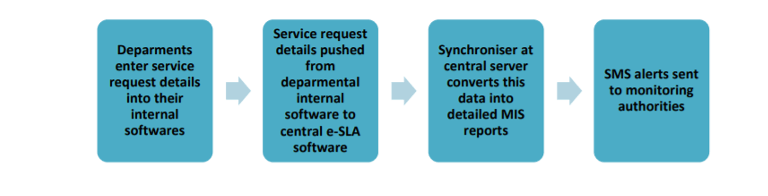
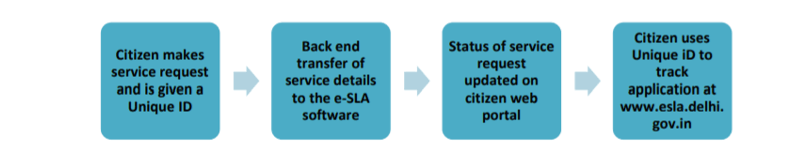
    It is the duty of departments and local bodies to process the application of every citizen and provide an application number. Furthermore, these authorities are obligated to maintain and update the status of applications online.[12] The e-SLA monitoring system has been designated as an online database.[13] To the government, it provides detailed information on the number of disposed or pending cases, which helps in performance evaluation and corrective measures. To the citizens, it provides online facility to track their applications.[14] The information flow is explained below:


    Figure 1: Information flow between government officials under e-SLA


    Figure 2: Information flow between government officials and citizens under e-SLA


    Constitutionality of the Act

    The Constitution provides certain safeguards to “civil servants”.[15] At the outset, it must be noted that these employees are only a sub-set of the “government servants” defined in the Act.[16] Thus, the applicable scope of protection, if any, is not to the entire class of employees enumerated in the Act, but only to civil servants.

    The legal issue herein is the constitutionality of imposing a compensation cost on the civil servant. This is a two-fold question:

    1. Whether there is the power to impose such a cost?

    Appropriate legislatures are empowered to regulate the service conditions of civil servants.[17] As the cost relates to a service condition (i.e., timely delivery), the Delhi Legislative Assembly was empowered in imposing it.

    1. If so, has this exercise violated any constitutional safeguard?

    However, this power is subject to constitutional safeguards guaranteed under Article 311.[18] The protection offered under Article 311(2) is exhaustive and with specific reference to the imposition of three penalties: dismissal, removal, and demotion.[19] Accordingly, the imposition of compensatory cost on the civil servant is beyond the scope of three-fold protection offered by Article 311. Thus, no constitutional safeguard has been violated herein.

    As the imposition of compensatory cost on the civil servants is both within the power and compliant with safeguards, it is constitutional.

    Testing the Act against principles of Good Governance and Citizen-Centric Administration

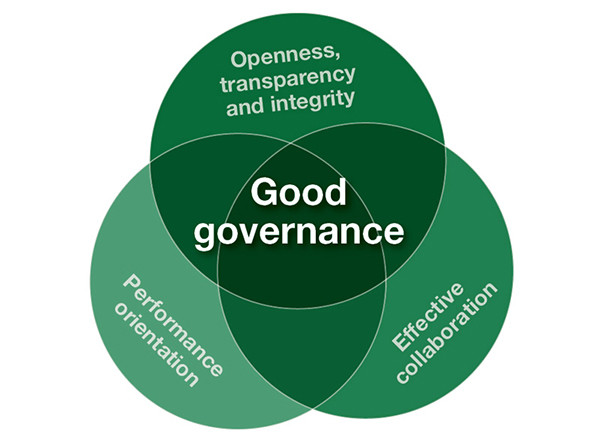
    Governance refers to the process of decision-making, and the process of implementing those decisions.[20] Good governance is when these processes are tested against a normative standard. Citizen-centric administration refers to governance that places citizens at the centre of all administrative functions.[21] In this section, I will use the characteristics of good governance and the principles of citizen-centric administration as a collective standard[22] to analyze the process of formation and implementation of the Act, its Rules, and e-SLA.

    Assessing Compliance in Formation and Implementation

    a) Participatory. In the absence of statutory provisions, the administrative authorities are not bound to comply with any procedural norms, including notice and prior consultation with the interested parties. The Delhi Act, 2011 does not provide for any such consultation or ante-natal publicity. In the process of policy-making, there was participation only from the relevant government ministries and departments. The government did not take any active steps to broaden consultation to stakeholders such as the civic society organizations, labour unions, or even the general public.

    The lack of participatory policy-making has directly impacted its awareness and enthusiasm among citizens. It was found that only 50% of the people know that their unique ID can be used to track their applications online. Further, only 15% of the people used their ID to track their application.[23]

    b) Transparency. The e-SLA allows for complete transparency to the citizen as to the status of all his applications. The information is not only easily comprehensible but also accessible. However, the transparency does not extend to releasing statistics of operations to the public domain. Currently, these statistics, such as the figures on the number of applications, pendency, disposal rate, performing/underperforming departments, are accessible only to government officials.[24]

    c) Responsiveness. The e-SLA system does not provide for any feedback mechanism. Thus, there is no avenue for the citizens availing these services to share their experiences. As feedback is the basis on which the system continually improves, this deficiency hinders the potential effectiveness of e-SLA.[25]

    1. Accountability

    The right to time-bound service delivery through the mechanism of compensatory cost has, in theory, ensured that the government and its officials are accountable to citizens. This is buttressed by the fact that the Act seeks to develop a culture of timely delivery among the government servants by additionally punishing habitual offenders and providing cash incentives for those without a single default in a year.[26] However, the liability of government servant has been capped at ₹200, compared to other state legislation that penalizes in thousands. Further, the cash incentives are only up to ₹5000. Thus, the quantum is inadequate to cause attitudinal changes in the servants.

    Moreover, there is no culture among public servants to hold their non-performing colleagues in disrepute.[27] There is no indication that this non-performance is factored into promotions. Anyhow, such public servants are typically complacent and not seeking promotions. The security of their present job and status is adequate incentive to persist with present behaviour. Thus, promotions and reputational loss among peers are not adequate incentives for performance either.

    Furthermore, by releasing all relevant statistics of operations to the public domain, the government can broaden its accountability. These statistics can be used by stakeholders, such as news and media agencies and policy think-tanks, to supplement the government in identifying issues and corrective measures. This would also pressurize the government to be more proactive.

         2.  Consensus orientation

    Through reasonable and extensively deliberated timelines, the Act sufficiently balances the interests of citizens in securing timely delivery with the government’s limited capacity.

         3.  Effectiveness and Efficiency

    The usage of e-governance to guarantee the right to public service is a revolutionary process reform. This must be gauged at two levels:

    • For the citizen, this system has reduced the number of physical visits required, thus saving time and cost. In a survey, 66.6% reported that they are not required to visit government offices more than once after submitting their applications.[28]
    • For the government, it eliminates systemic errors and inefficiencies.[29] The statistics help in assessing performance and preparing corrective action.[30] However, if the system can track internal departmental processes too, it would allow determining the exact level at which service delivery is being delayed. Furthermore, the Act ignores the quality of timely delivered services.[31] To provide a comprehensive right to public service, the legislature must develop standards to assess the quality of services rendered on time.


        4.  Equitable and Inclusive

    Under the Act, while the citizen is immediately compensated, the government servant is not immediately penalized for default. The procedure allows him/her to provide justified grounds that could excuse liability. For greater inclusivity, the government can prescribe a pro-rata calculation of the penalty. As the amount is automatically calculated by e-SLA, even complex formulas are acceptable.

       5.  Rule of Law

    The Act provides for a fair legal framework and impartial enforcement.

    Conclusion

    Executing the right to time-bound service delivery through an online portal is truly revolutionary. It has emerged as model legislation for other governments. The Act is constitutionally valid. However, when tested against standards of good governance, this policy suffers from problems of non-participation, transparency, responsiveness, accountability, and effectiveness at the government-level. But it scores par excellence on the principles of consensus orientation, effectiveness at the citizen-level, inclusiveness, and rule of law. To embrace the truly revolutionary potential of this policy, the government must make the suggestions recommended in the last section of the paper, vis-à-vis each principle.


    References:

    [1] IANS, ‘245 services brought under Delhi time-bound delivery act’ (Business Standard, 24 August 2014) <https://www.business-standard.com/article/news-ians/245-services-brought-under-delhi-time-bound-delivery-act-114082400707_1.html> accessed 17 January 2021.

    [2] The Act, s. 3.

    [3] The Act, s. 4.

    [4] The Act, s. 7.

    [5] The Act, s. 8.

    [6] The Act, s. 9.

    [7] The Act, s. 10.

    [8] The Rules, r. 4(1).

    [9] The Act, s. 11(1).

    [10] The Act, s. 15.

    [11] The Act, s. 16.

    [12] The Act, s. 5.

    [13] The Rules, r. 2(c).

    [14] Arjun Kapoor & Niranjan Sahoo, India’s Shifting Governance Structure: From Charter of Promises to Services Guarantee (ORF Occasional Paper No 35, 2012).

    [15] Constitution of India 1950, Art. 309, 310, 311.

    [16] The Act, s. 2(g).

    [17] Constitution of India 1950, Art. 309.

    [18] Union of India v. S.P. Sharma (2014) 6 SCC 351.

    [19] Yashomati Ghosh, Textbook on Administrative Law (1st edn, Lexis Nexis 2015) 416.

    [20] UN Economic and Social Commission for Asia and the Pacific, ‘What is Good Governance?’ <http://www. unescap.org/sites/default/files/good-governance.pdf>.

    [21] Ghosh (n 19) 14.

    [22] Second Administrative Reforms Commission, Citizen-Centric Administration (Report No 12, 2009) p. 8.

    [23] Audit of Functioning of Government of Delhi’s e-SLA Scheme, by Management Development Institute, Gurgaon (2012).

    [24] Ibid.

    [25] Rohit Sinha, ‘Delivering on service guarantee: A case of Delhi’s e-SLA’ (ORF, 29 December 2012) <https://www.orfonline.org/research/delivering-on-service-guarantee-a-case-of-delhis-e-sla/> accessed 17 January 2021.

    [26] The Act, s. 12.

    [27] Kapoor & Sahoo (n 14); Amit Chandea & Surbhi Bhatia, The Right of Citizens for Time Bound Delivery of Goods and Services and Redressal of their Grievances Bill, 2011 (CCS, 2015) p. 25-26.

    [28] Sinha (n 25).

    [29] Chandea & Bhatia (n 27).

    [30] Ibid.

    [31] Kapoor & Sahoo (n 14).


    Image Credit: Forbes India

  • Vocal about Local: Empowering local Governance Structures to deal with the Pandemic

    Vocal about Local: Empowering local Governance Structures to deal with the Pandemic

    Urban centres in times of the Pandemic 

    India is a rapidly urbanizing state. The 2011 census estimates that 31% of Indians live in urban areas. It counts 4041 statutory towns, 3892 census towns and 474 urban agglomerations as urban areas. These numbers however are quite outdated in 2020 and also there is considerable consensus among experts that there is an underestimation of urban spaces owing to the outdated definition of ‘urban’ in India. For example, the Joint Research Centre (JRC) of the European Commission, based on satellite data, reports that at least 54% of India’s population lived in cities or large urban areas in 2015 and the World bank using the Agglomeration Index finds out that 55.3% of India’s population lived in urban-like spaces in 2010. Regardless, the fact remains that these urban spaces should be governed democratically with the spirit of the 74th amendment. The COVID-19 situation further reasserts the importance of such governments and their role in Indian society.

    Cities and urban spaces have emerged as hotspots of the Coronavirus. It is from the cities that the coronavirus subsequently spread to other rural areas.

    Cities and urban spaces have emerged as hotspots of the Coronavirus. It is from the cities that the coronavirus subsequently spread to other rural areas. Throughout history, pandemics have originated and perpetuated from cities, therefore it is not irrational to predict another pandemic perpetuated from cities in today’s close-knit global village. This warrants a greater need to safeguard the cities which are the essential links that connect nation states to the globalized world. The first step in this direction would be to empower urban governments for efficient crisis management and prevention of communicable diseases by assuring basic public goods.

    Subsidiarity

    The principle of subsidiarity advises that the Central authority should have a subsidiary function, performing only those tasks which cannot be performed at a more local level. The principle therefore asserts the sovereignty of the citizen in a democracy and places her at the center of decision making.

    In line with the principle, everything that can be done better locally, including providing basic services like safe drinking water and ensuring public goods like clean air, should be done by the local governments. The rationale being that, one, it increases efficiency and promotes self-reliance; two, it provides legitimacy to democracy and three, it creates awareness among people and develops responsible citizens. And another obvious reason is that it is most effective in understanding the local problems and in ensuring a pragmatic feedback loop.

    All these reasons become much more clearer in times of crisis such as the Covid-19 pandemic when local assessment and rapid service delivery become difficult. Urban Local Bodies (ULBs) neither have properly delineated functions to perform nor do they have the finances to do so. The 12th schedule of the Indian Constitution lists a group of 18 subjects on which the local governments can act upon, but only if the States ‘may’ wish to assign those functions by virtue of another State legislation. Even when legislated, States usually encroach into the domain of the purview of the local governments.

    The Veerappa Moily commission’s sixth report dealing with local governance sums it up perfectly.
    “Confusion, unnecessary duplication, inefficiency, wastage of funds, poor outputs and outcomes are the result of this organisational jungle. The local organisations which should be the ones most directly and fully concerned are at best treated as a small part of the implementation, occasionally consulted but, in most cases, by-passed and ignored”.

    Furthermore, the establishment of parastatals has reduced the functions of the local governments. The Parastatals perform specific functions which are supposed to be performed by ULBs and are accountable only to the State government thereby circumventing the ULBs. In addition, the Union government also takes a share of the implementation space with centrally sponsored schemes thereby making proper delineation of powers impossible for ULBs.

    The Veerappa Moily commission’s sixth report dealing with local governance sums it up perfectly.
    “Confusion, unnecessary duplication, inefficiency, wastage of funds, poor outputs and outcomes are the result of this organisational jungle. The local organisations which should be the ones most directly and fully concerned are at best treated as a small part of the implementation, occasionally consulted but, in most cases, by-passed and ignored”.

    Now, when experts ask for decentralized governance to efficiently deal with the pandemic and to decentralize decision-making regarding lockdown measures, all they get is a dysfunctional organisation jungle where local governments do not have the wherewithal to function as self-governing institutions.

    Disaster Risk Reduction

    Strong local governments are of great importance, especially during disasters and pandemics. Experts suggest that a sound bottom-up governance approach has been more successful in the wake of disaster response. For instance, in a UNDP study on disaster risk reduction in Bangladesh, they point out the importance of local governance.

    The report suggests that local governments are crucial because they ‘play the greatest role in sustaining ongoing, participatory disaster risk reduction at local community level’. The report goes on to summarize that the key lesson learnt from the study is that decentralization of authority and decision making is essential to effectively deal with the disaster.
    “Decentralization of authority to local governments is vital to ensure local ownership of disaster risk reduction and the local implementation of the Hyogo Framework for Action. Local authorities should have the responsibility of implementing disaster risk reduction, and be accountable to the community they represent in doing so”.

    Much has been written about why governments closer to the people are more effective but what is equally important is that when decision making is decentralized, citizen satisfaction and responsibility is increased (for example, see this study done in Indonesia). This becomes important in times of the Covid-19 pandemic where individual responsibility is necessary to stop the spread of the virus. Also with lives and livelihoods pitted against each other, citizen satisfaction is important to make hard decisions which might deter personal freedom in the short term.

    Considering all this, the National Disaster Management Act, 2005, which was used by the Union government to impose lockdown measures, seems to lack the involvement of local governments in disaster risk reduction. V N Alok in his article for the Financial Express, deals with this complaint. He argues that there is only a passing reference to local government in the Act and even when referenced, functions are mostly subsidiary to the District authority headed by the Collector/Magistrate which is controlled by the State government. On the other hand, there is no ambiguity in assigning functions to the State and Union governments.

    India is often referred to as the ‘flailing state’, which is strong and sound in the centre, with no reliability at the grass-roots. Local governments can provide the missing link that could hinge the State to the people.

    This again echoes Veerappa Moily Commission’s concern that there is no proper delineation of powers for the local governments. Article 243 N and 243 ZF mandated that all laws inconsistent with parts IX and X of the Indian constitution shall be changed accordingly within a year of passing the 73rd and 74th Amendments. But most States have still not identified and changed all statutes conforming to the idea that local governments are self-governing institutions. This shows India’s hesitation to look at local governments as self-governing institutions capable of dealing with problems.

    India is often referred to as the ‘flailing state’, which is strong and sound in the centre, with no reliability at the grass-roots. Local governments can provide the missing link that could hinge the State to the people.

    Its importance is felt during the pandemic more so than ever, especially in cities where the institution is weak compared to rural India. An integrated approach, with involvement from the local government, would prove to be more effective than centralized decision making. But before relying on ULBs and locally elected leaders, they have to be empowered-politically, functionally and financially. The first step towards such empowerment could be by including local governments in conversations regarding governance and decision making; to be more vocal about local governments.

  • Lebanon’s Economic Crisis and Political Unrest

    Lebanon’s Economic Crisis and Political Unrest

    The Lebanon crisis illustrates the outcome of an inefficiently regulated market economy, shaped by long-term instant gratification of economic policies. Economy is run by corrupt institutions with ingrained crony capitalism, bureaucratic regulations and over-reliance on foriegn exchange.

    Lebanon is a free market economy in West Asia, bordered by Syria and Israel and the Mediterranean Sea, and hence, was a frequent recipient of spillovers of unrest and refugee crisis from the neighbouring countries. It is a service-sector dominated (majorly, banks and tourism) economy with a GDP of $56.9 billion─ growth rate of 0.2%, compared to 0.6% the previous year and a workforce of 2.4 million out of which 30 percent include Syrian refugees. The country relies heavily on imports (consumer goods, machinery and equipment etc) with a low dependence on exports (vegetables, non-precious metals and textiles). For years, Lebanon used foreign remittances such as transfers from non-resident Lebanese, foreign deposits and high government loans to balance the trade deficit. Lebanon exchange rate had been kept fixed at 1500 pounds per dollar which was also a fiduciary currency in Lebanon. Thus the higher demand for dollars to fixate the exchange rate, and meet the domestic demand for dollars, is levelled using foreign deposits by offering high yield rates, which had to be further funded by more deposits at even higher interest rates. These faulty policies had sustained the economy until interest payments had snowballed into heavy burden.

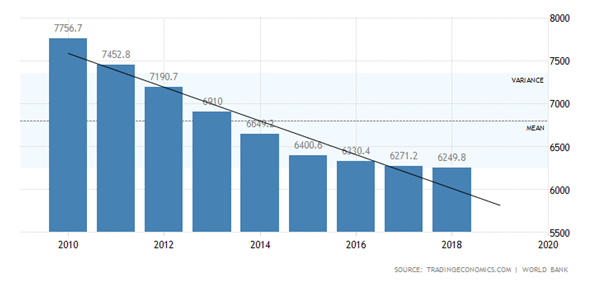
    Figure 1: trend of GDP per capita in Lebanon

    Source: Trading Economics

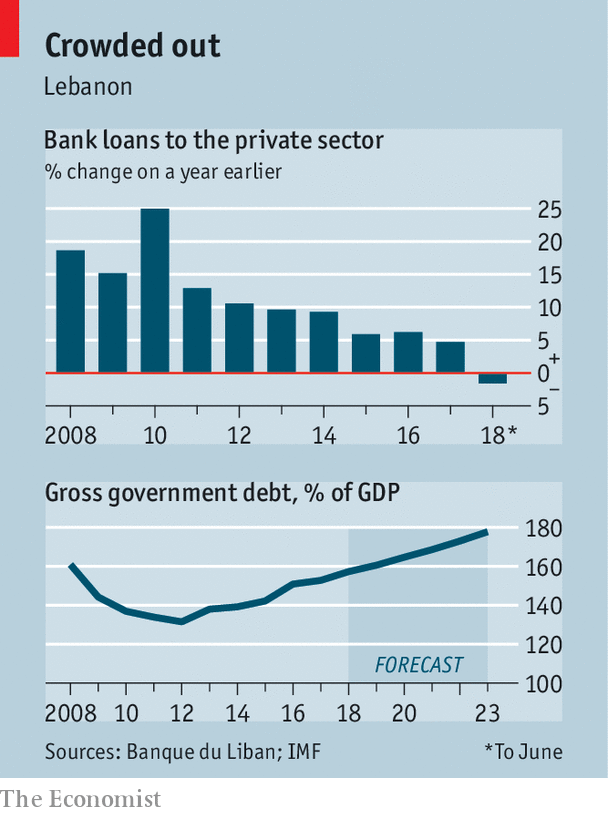
    Lebanese economy is also characterized by high government debt, substantially from domestic banks, borrowed primarily for reconstruction of the economy post civil war (1975-90). Over the years, the government relied more heavily on deficit financing to meet government spending, while the weak governance and corrupt politicians moved along with unfulfilled reforms and poor economic development. There was an underprovision of basic necessities like hassle-free electricity supply, regular water and waste management. On the other hand, crony capitalism had built up, with favours laid out to private businesses which were ultimately owned by rich, exploitative politicians. The debt-to-GDP ratio peaked to 150% by 2019, with a budget deficit of 11.5% of GDP and 50% of the revenues are consumed in debt servicing. This led to an economic crisis, followed by a political crisis, and ultimately snowballed into a financial crisis, rendered vulnerable and  in desperate need of foreign aid to see the day.

    Evidently, though Lebanon crisis started in late 2019, it is the result of long term economic policies mismanaged by corrupt political elite; when the government proposed to tax ‘free-calls in Whatsapp’ to meet the mounting budget deficit in October 2019, protests erupted across the country, catapulting into political unrest and ousting the prime minister. Investors and citizens lost confidence in the system, and led to reducing capital inflows.

    Their sovereign bonds were rated as highly risky assets (probable default),  leading to interest rates as high as 15%. The political uncertainty and the liquidity crunch, led to freezing of external deposits, while the steady domestic and foreign demand for dollars persisted, leading to a shortage of USD. The banks levied restrictions (weekly quotas) on dollar withdrawals, the dollar rate spiked, depreciating the pound, and reducing the purchasing power of the pound. This had squeezed the middle and low income strata the most, draining their last pounds of savings, since their debts substantially constituted dollar repayments. Businesses relying on dollars for most part were affected as the price of imports sky-rocketed, and the oil crunch tightened until the central government stepped in to ease the situation. The condition degraded further by the onset of Coronavirus and the lockdown, which led to widespread unemployment and inflation. The World Bank estimated that 50% of Lebanese population could be pushed below the poverty line by 2020 if immediate action is not taken.

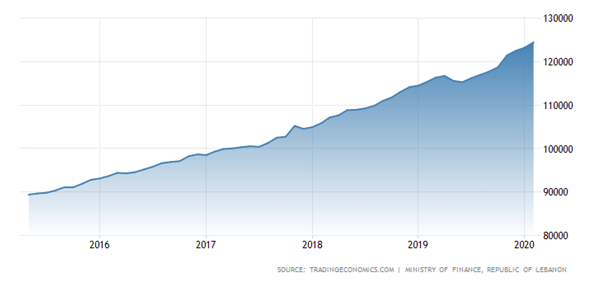
    The debt of Lebanon has built up to 124464 billion LBP, i.e nearly $82 billion and the country has become the 3rd most indebted country in the world. In March 2020, Lebanon government, as a decisive step to prioritize the domestic concerns of the country and retain sustainable foreign exchange reserves in the economy, had defaulted on the Eurobond debt of $1.2 billion for the first time. The ailing economy seeks to restructure the other outstanding debts amounting to $31 billion and has been seeking advice, especially from the IMF on debt restructuring measures. There is a need for an ‘economic rescue plan’ to protect the depositors from this worst economic crisis Lebanon has faced.

    Figure 2: trend of Lebanon government’s debt

    Source: Trading Economics

    Foreign aid from the institutions is a big responsibility, as it would demand austerity measures from the economy that had dwelled in capitalistic pleasures for so long. Though, CEDRE and foreign countries like France and UK have promised ‘soft’ loans to the Lebanese government, economists believe that external aid would be unproductive, and will become an additional debt burden on the already bleeding financial system unless government inculcates greater transparency and accountability to the public, ousting corruption and following through on long-term economic policies with commitment.  Lebanon government is also seeking aid from the IMF. But  this would certainly entail strict reform targets linked to the outflow of credit and hence, is very unlikely.

    For the immediate future, Lebanon’s economic policies should be directed towards increasing  self-reliance in the economy, with higher focus on manufacturing sectors to create employment. Financial policies to stabilize the economy are of primary concern. It is time to make up for the blunders of non-performing investments in the electricity industry. Investments on infrastructural development should be realized and substantial attention should be given to improving  socio-economic conditions of the people. Construction and manufacturing industries should be supported. Actions should be taken to handle the refugee situation, and check the drain of human capital out of the country.   It could be said that Lebanon’s government has a long way to go before it can regain the confidence of its people and the foreign investors in order to stabilize the economy.

    Current Scenario

          Covid 19 has a destructive and deleveraging impact on all the economies, and Lebanon is no exception. The economy is heavily dependent on the service sector, especially tourism, and foreign remittances. The impact of the coronavirus pandemic has been devastating on the money the expats send home, which makes up nearly 12.7% of the GDP, making Lebanon the second-most remittances dependent middle-eastern country, only behind Palestine. Amid the collapsing economy and the disruption triggered by the Covid-19 pandemic, the only certainty is the gathering pace of Lebanon’s political unrest.


    REFERENCES

    https://www.nytimes.com/2019/11/15/world/middleeast/lebanon-protests-economy.html?action=click&module=RelatedLinks&pgtype=Article

    https://www.nytimes.com/2020/05/10/world/middleeast/lebanon-economic-crisis.html

    https://www.trtworld.com/magazine/what-s-behind-lebanon-s-economic-crisis-35874

    https://www.nytimes.com/2020/03/07/world/middleeast/lebanon-debt-financial-crisis.html

    https://www.nytimes.com/2019/12/03/world/middleeast/lebanon-protests-corruption.html?action=click&module=RelatedLinks&pgtype=Article

    https://www.theguardian.com/world/2020/mar/07/lebanon-to-default-on-debt-for-first-time-amid-financial-crisis

    https://www.nytimes.com/2020/03/07/world/middleeast/lebanon-debt-financial-crisis.html

    https://www.nytimes.com/2019/10/23/world/middleeast/lebanon-protests.html

    DATA- https://data.worldbank.org/country/lebanon

    https://www.britannica.com/place/Lebanon/Trade

    https://tradingeconomics.com/lebanon/government-debt


    Image Credit: Adobe Stock