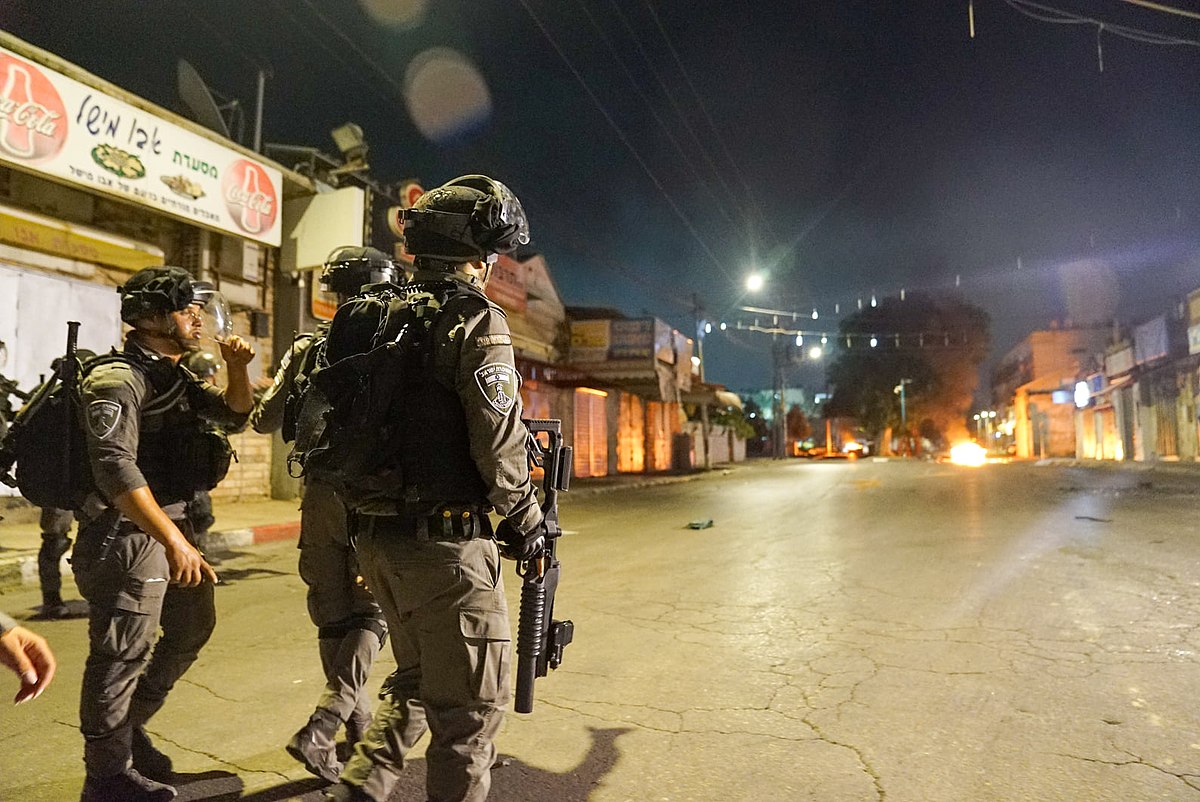
Tag: Gaza

  • Lessons from Gaza

    Lessons from Gaza

    The latest round of fighting between Israel and Palestinians within Israel and the Gaza Strip ended on Friday 21 May under an Egypt brokered ceasefire. Already categorised in the media as the Fourth Gaza War[1], the 11-day conflict left 232 Palestinians including 65 children killed and more than 1,900 wounded in aerial bombardments[2]. Israeli authorities put their death toll as 12, with hundreds injured due to rocket attacks while claiming to have killed at least 160 combatants[3]. One Indian civilian caregiver too lost her life in the line of duty.

    Patrick Kingsley’s piece in the New York Times provides a view of a series of events from early April that led to the current conflict[4]. Several avoidable actions in Jerusalem, such as cutting off loudspeakers at the Al Aqsa mosque on the first day of Ramadan to prevent Jerusalem Day celebrations at the Western Wall from being disturbed, closing off a popular plaza at the Damascus Gate where the faithful gather after prayers leading to nightly protests, and orders for the evacuation of Palestinian families from their homes as per existing law (an act seen by Palestinians as a precursor to their removal from East Jerusalem, the proposed capital of an independent Palestine) followed by clashes between Jews and Arabs –  together provided multiple triggers for the violence, aggravated further by Jewish right-wing groups marching through Jerusalem shouting provocative slogans.

    As the demonstrations gathered momentum with more Palestinians rallying in support of the families facing eviction, the order was stayed by Israel’s Supreme Court. The cancellation of elections to the Palestinian National Authority (PNA) by President Mahmoud Abbas added another element of uncertainty to the situation, fuelled by suspicion over his intent. The final straw was another police raid on the Al Aqsa Mosque on the last Friday of Ramadan and sealing off access to the mosque the next day. Sensing a cue, Hamas commenced rocket fire the following Monday from Gaza.

    International Crisis Group opines that ‘this occasion is the first since the September 2000 intifada when Palestinians have responded simultaneously and on such a massive scale throughout much of the combined territory of Israel-Palestine to the cumulative impact of military occupation, repression, dispossession and systemic discrimination[5]. It further goes on to explain how the dynamic of this conflict differs from earlier ones. Central to this is the role of Hamas – in terms of military capability through an expanded long-range rocket arsenal which has exponentially enhanced its ability to terrorize Israel’s civilian population, as also its political ambitions in trying to negotiate the future of Jerusalem as leverage for subsequent resolution of the Palestinian issue, instead of confining itself to Gaza. Tellingly, it also named its rocket offensive ‘Sword of Jerusalem’.

    The second noteworthy issue is about clashes in cities and townships across Israel and the West Bank, between Israeli Jews, Israeli Arabs and Palestinians leading to loss of life and property, something that had never happened since the Second Intifada. A state of emergency was declared in certain areas[6], and Israeli President Reuven Rivlin was constrained to warn of the danger of civil war[7]. Thirdly, as per United Nations Interim Force in Lebanon (UNIFIL) press releases of 17 and 19 May, rockets were fired on both days from South Lebanon across the Blue Line into Israel. Israeli artillery shelled the launch sites in retaliation. Also, Iranian complicity with Hamas was indicated when Israel downed an armed explosive drone, assessed to have been launched from either Syria or Iraq[8]. This raised the spectre of a wider conflict – the deepest fear of a nation-state surrounded by inimical neighbours, some of whom along with other non-state terrorist organisations refuse to recognize its right to exist.

    Strategic and military aspects of this short conflict along with outcomes warrant analysis to provide a glimpse of the way ahead. Though President Biden announced that Israel had agreed to a mutual unconditional ceasefire, it is unclear what Hamas’s final stand on the matter was. More so, since it had set two conditions for a ceasefire: that Israeli forces stop incursions into the Al-Aqsa compound, and desist from evacuating Palestinian residents from East Jerusalem. No guarantees appear to have been received on these.

    It appears, therefore, that since Hamas’s strategic aim of positioning itself as the champion of Palestinians through offensive action has been achieved, it could claim victory despite the high human, material and infrastructural cost. Israel has also claimed victory, by ensuring maintenance of the status quo along its borders and ensuring the security of its citizens at minimal cost, though with a perceptible fraying of its internal fabric. However prominent Israelis have criticized their government for lacking strategy and acting in ‘default mode’ in responding to Hamas in the same manner for the last 15 years[9].

    Essentially, this was a conflict characterized by tremendous force asymmetry between opposing sides.

    It is in the military domain that some interesting conclusions are drawn. This conflict did not witness any hand to hand fighting or launch of physical assaults, though Israel did use tanks and artillery against Hamas targets. Essentially, this was a conflict characterized by tremendous force asymmetry between opposing sides. The main weapon that Hamas used was unguided rockets of various ranges and dimensions.  While in earlier days these were received from Iran or other allies across the Egyptian border at Sinai or smuggled in through sea, Hamas has developed sufficient expertise to develop its systems, using primitive technology and materials such as steel tubing and chemicals for making explosives. Israeli estimates suggested that ‘most of Hamas’s arsenal of 5,000 to 6,000 rockets can strike somewhere between the Gaza border communities and 40-55 km. away.’[10] Other estimates posit that Hamas now has rockets with ranges of 200 km or more, some with warheads carrying hundreds of kilograms of TNT and shrapnel. Raw construction material even uses detritus from Israeli missiles, with three rocket manufacturing factories rumoured to be existing inside Gaza[11]. Overall, Hamas fired around 4,360 rockets during the 11-day campaign, including a sizeable number that fell short, inside the Gaza Strip itself[12]. The long-range versions permitted engagement of targets from just outside the Strip to as far North as Jerusalem.
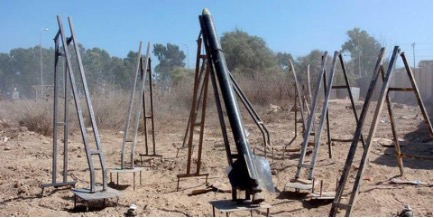
    Hamas Qassam rocket ready for launch.    Photo and description: Forbes May 12, 2021
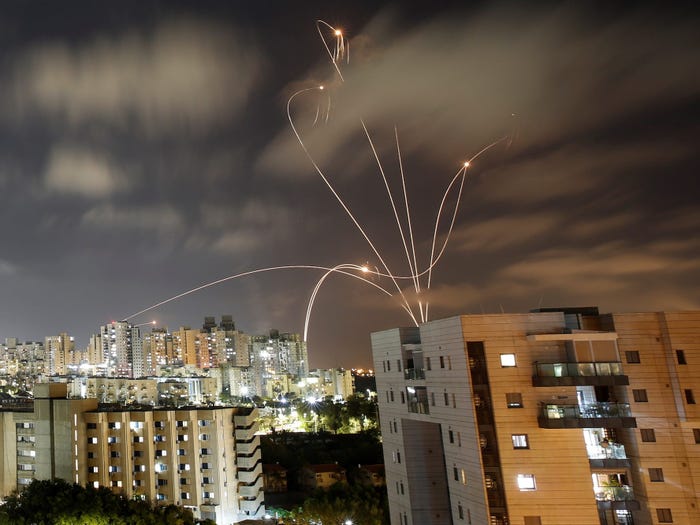
     

    Iron Dome carrying out intercepts – Image Credit: Businessinsider

    The Israeli response on the other hand was a combination of air power and ground-based air defence with the firepower of tanks and artillery – all state-of-the-art weapon systems with latest generation cutting edge technology, including Israeli variant F 16s, F 15 Air Defence aircraft and F 35 Stealth fighters. Videos of Israeli strikes are testimony to their effectiveness. Israel too gave its campaign a symbolic name ‘Guardian of the Walls’. The Iron Dome Missile Defence System proved its worth with engineers continuously upgrading its algorithms to improve interception capability against larger rocket salvos. This has enabled Iron Dome to intercept one of the largest barrages fired ever – of around 130 rockets towards Tel Aviv on 11 May. Despite attempts to saturate the system, Iron Dome was able to neutralize the majority, permitting only a handful to get through[13]. However, limitations of Iron Dome are becoming apparent- Israeli security officials estimate that opponents like Hezbollah can fire over 1,000 rockets per day from a stockpile of over 150,000[14], which could overwhelm its capabilities. Also, Israeli IFF (Identification Friend or Foe) techniques were shown to be wanting, as the downing of a Skylark reconnaissance drone by Iron Dome friendly fire indicates[15]
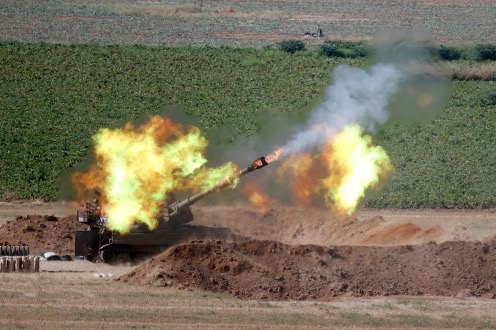
    Israeli soldiers fire a 155mm self-propelled howitzer towards the Gaza Strip from their position along the border with the Palestinian enclave on May 16, 2021. Photo: AFP/Jack Guez

    asymmetric warfare thrives on a logic of its own, where the intelligent application of limited resources by the weak ensures some degree of military success

    The above instance is a singular example of an asymmetry arising from one side’s lack of sophisticated warfighting equipment or access to technology being compensated for by sheer force of numbers, to defeat or stalemate superior enemy systems. Operations Research analysts have worked out a ratio of one Israeli dying for every 206 rockets reaching Israel in the first four days of fighting, with at least 134 rockets hitting populated areas[16]. Israeli military sources put the accuracy of these rockets at around 15 per cent. Though many fell in open areas, their deterrent effect was enough for Israelis to descend into their bomb shelters[17], thereby proving that even today, asymmetric warfare thrives on a logic of its own, where the intelligent application of limited resources by the weak ensures some degree of military success. This, despite a situation where most of the Artificial Intelligence, networked communication, quantum computing and precision standoff capability was on one side – though one could grant some level of technology available to Hamas, through its research laboratories in the Strip and inputs from Iran. Adding another dimension to such asymmetry in the larger context however is the history of injustice perpetrated on Palestinians over the years, providing strong psychological motivation in favour of any opponent of Israel.

    Coming to the issue of outcomes, it is apparent that notwithstanding the asymmetry in capability, Hamas’s strategy has paid off. Having realized that the situation during Ramadan (created by Israel mostly through application of a purely law and order cum security template) was tailor-made for exploitation, it made Jerusalem the focus of its campaign, escaping in one go from the confines of Gaza.

    With Palestinians rallying to its cause, resultant unrest in Israel and the West Bank and some support from Hezbollah in Lebanon, it was able to create a narrative in its favour. Notwithstanding its designation as a terrorist organization by the US, EU, UK and many other nations, it has garnered huge political capital, enabling it to rival the current Palestinian leadership as reports of Palestinians carrying green Hamas flags in cities on the West Bank, where the PNA traditionally holds sway, indicate[18]. The stark difference in respective casualty figures also helped, once again raising the issue of ‘proportionate vis a vis disproportionate response’, against the backdrop of repeated injustice to Palestinians over the last 70 years.

    The IDF on the other hand worked efficiently with their usual precision, taking out as many targets as possible from their prepared lists, including networks of tunnels, headquarters, senior Hamas commanders and research infrastructure in the minimum amount of time. Without a doubt, Israel is a clear winner in military terms.

    This conclusion however begs the larger question of whether military victory alone can decide winners and losers in world geopolitics. At the time of writing US Secretary of State, Blinken is on a four-day visit to the region, to interact with leaders of Israel, the PNA, Jordan and Egypt to strengthen foundations for a durable ceasefire. President Biden has signalled that West Asia is back on his agenda: in a hugely symbolic gesture, the US has announced its decision to reopen its Consulate in East Jerusalem and promised $32 million worth of aid to the UN in Gaza. White House spokesperson Jen Psaki has called this part of America’s efforts to rebuild ties with the Palestinians.

    Whether this effort will be to purely manage a crisis or look for a permanent solution is unclear. The latter venture will require creative thinking by Israel, Palestinians and their neighbours and a shift from absolute positions which have shackled the region for over 70 years.  In that eventuality, a fresh look at the Two-State Solution guaranteeing the right of both nations to exist as sovereign states might yet provide the alternative. Reverting to the status quo of April 2021 will not.


    Notes:

    [1] ‘Daily Chart. The Israel-Palestine conflict has claimed 14,000 lives since 1987’   The Economist  18 May 2021

    [2] ‘Israel-Hamas truce begins after 11 days of fighting, Palestinians celebrate’   Reuters 21 May 2021

    [3] Ibid.

    [4] ‘After Years of Quiet, Israeli-Palestinian Conflict Exploded. Why Now? ‘  Patrick Kingsley, The New York Times 15 May 2021

    [5] ‘The Israel-Palestine Crisis: Causes, Consequences, Portents’   International Crisis Group  14 May 2021

    [6] International Crisis Group 14 May 2021

    [7] ‘Israeli president warns of civil war as Jews, Arabs clash over Gaza’   Rami Ayyub  Reuters  13 May 2021

    [8] ‘Netanyahu: Drone shot down earlier this week was Iranian UAV armed with explosives’   Judah Ari Gross  The Times of Israel 20 May 2021

    [9] Maj Gen Giora Eiland Retired, former head of Israel’s National Security Council in comments to Crisis Group 14 May 2021

    [10] ‘What do Hamas and PIJ have in their rocket arsenals? – analysis’  Yonah Jeremy Bob The Jerusalem Post 11 May 2021

    [11] ‘Israel’s Gaza challenge: stopping metal tubes turning into rockets’ Arshad Mohammed, Jonathan Saul, John Irish and Parisa Hafezi, Reuters 24 May 2021.

    [12] Ibid.

    [13] ‘How Israel and Hamas returned to armed conflict’  The Economist  22 May 2021

    [14] ‘Is Iron Dome effective against Hamas rockets as originally thought?’  Yonah Jeremy Bob  The Jerusalem Post  14 May 2021.

    [15] ‘Iron Dome Shot Down an Israeli Drone During Israel-Gaza Fighting’ Yaniv Kubovich Haaretz 25 May 2021.

    [16] ‘Gaza’s rocket technology challenges Israeli defenses’  Michael J Armstrong  Asia Times 18 May 2021

    [17] ‘Israel’s Gaza challenge: stopping metal tubes turning into rockets’  Reuters 24 May 2021.

    [18] ‘Israel and Hamas Begin Cease-Fire in Gaza Conflict’  Iyad Abuheweila and Adam Rasgon  The New York Times 21 May 2021


    Image Credit: Wikipedia
     

  • Side-lining of Palestine Issue:  Threat to Palestinian Rights and Self-determination

    Side-lining of Palestine Issue: Threat to Palestinian Rights and Self-determination

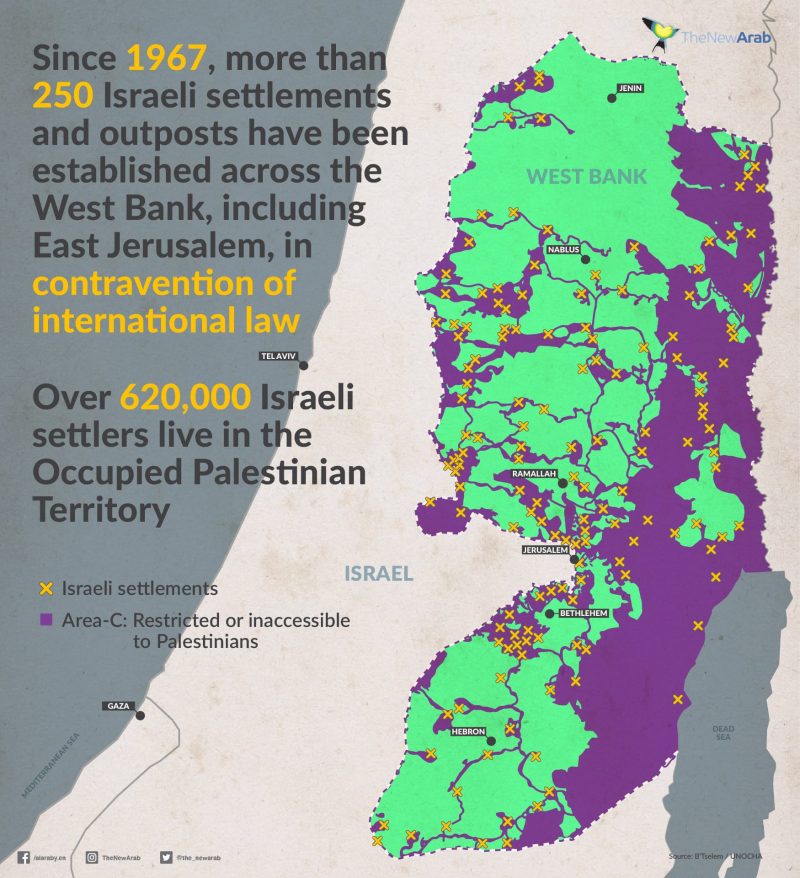
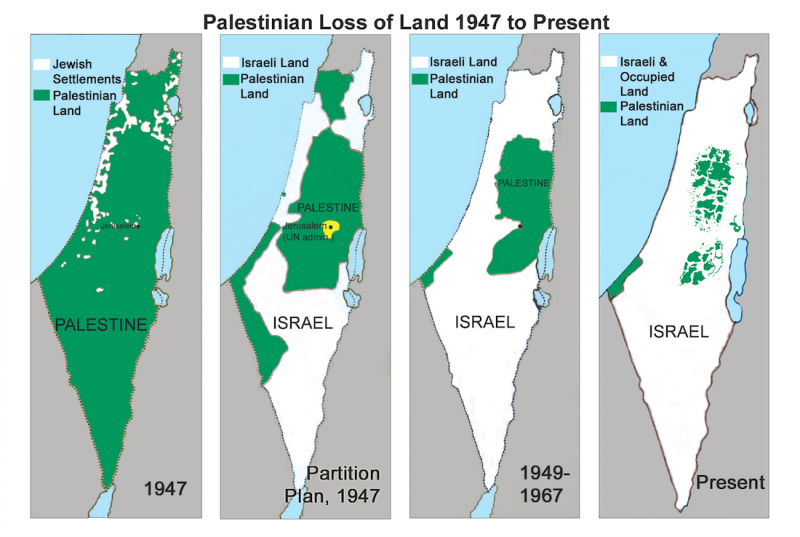
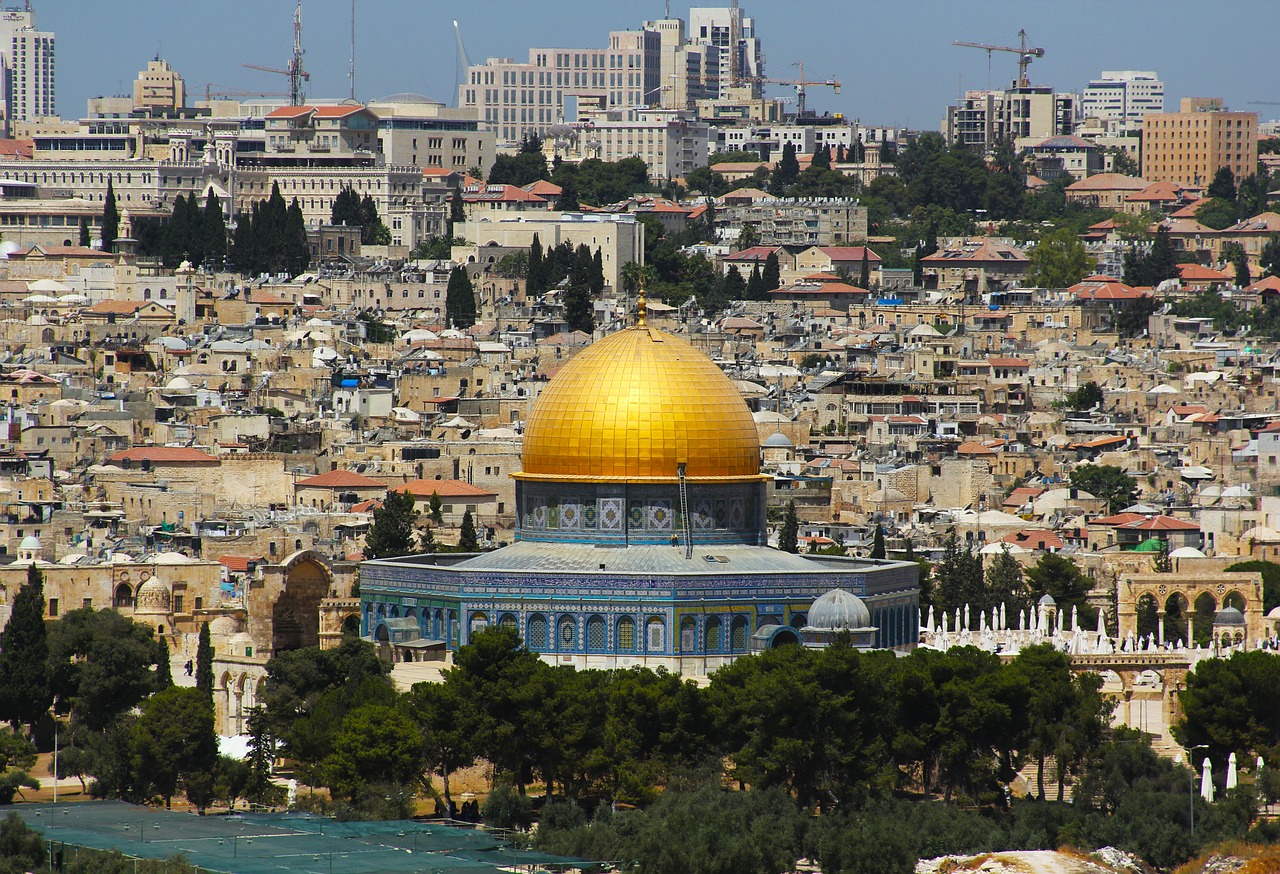
    Over the years, the international concern for the resolution of the Palestinian conflict has been diminishing. Israel has consistently dodged the core issue of returning Palestinian lands (West Bank) they occupied in 1967. Instead, it has continued to create new settlements in the occupied territories. Israel, obviously, has no intention of returning to pre-1967 boundaries; this was clear when the current Prime Minister of Israel, Benjamin Netanyahu, announced his plan to annex the West Bank in May 2020.

    Image Credit: The New Arab

    He deferred its implementation as the normalisation of relations with the United Arab Emirates (UAE) gathered momentum. However, Netanyahu indicated that Israel will “never give up our rights to our land.” (Al Jazeera 2020). The situation and the perception created now is such that not annexing the West Bank would appear to be a concession from Israel.

    As the Arab countries are taking a realistic view in placing their national interests first, Palestine is no longer a priority issue for them.

    This paper looks at how the Palestinian issue is gradually side-lined over the last few decades by the international community. There are four factors that have contributed to this development. First is the increase in conflicts in the Arab world, which has led to fragmentation and disunity in their approach to the resolution of the conflict. As the Arab countries are taking a realistic view in placing their national interests first, Palestine is no longer a priority issue for them. Second is the realisation of the fact that Oslo deal was unfair to start with and how under the guise of negotiations Israel continued to expand settlements and limit any prospect of sovereignty for the Palestinians. The Palestinian authorities hung on to the Oslo deal even though it was flawed, leading to decades of standstill in negotiations. Third, with the rise of the militant groups around the time of 9/11, the Palestinian cause has lost significant sympathies, and Israel’s violent response is seemingly more reasonable in the views of the international community. Fourth, the United States has supported Israel consistently in many issues, keeping Israel on the safe side in international and regional politics, shielding it from any proactive criticism.

    A look at the brief history of the conflict is necessary to explore the four factors mentioned above.

    Brief History of the Conflict

    Palestine was part of the Ottoman Empire until its defeat and collapse World War I. The area became a British protectorate as the result of the armistice of 1919. It coincided with the persecution of the  Jews due to the rise of anti-Semitism across Europe. The 1917 Balfour Declaration by the British government promised the Jews a national home in Palestine. This decision failed to factor the rights of the Palestinians who have lived there for millenniums. Jews began migrating to Palestine in huge numbers despite vehement protestations from the Palestinians leading to the now perennial Israel-Palestinian dispute. As Britain vacated the region post-1945, it abdicated its moral responsibility and left the resolution of the dispute to the United Nations (UN). The withdrawal of the colonial powers and the ensuing chaos in the regions vacated by them is a recurring pattern in decolonization history. The UN tried to divide Palestine into two states; Israel and Palestine, with Jerusalem as a joint capital and an international zone. Neighbouring Arab countries saw this as a residual form of colonialism and went to war in 1948. The war resulted in the catastrophic displacement of thousands of Palestinians. This catastrophe is remembered as Nakba, a day with a lot of historical sentiment across the Arab World (Chomsky and Pappé 2015). Israel won but did not control Gaza or the West Bank. Israel occupied these areas in the six-day war in June 1967. The occupation of the West Bank continues till today, whereas Gaza is now under Hamas. Coupled with all this, there are massive human rights violations against the Palestinians. This includes humiliating Palestinians at checkpoints, arresting without trial, arresting Palestinian children etc. (Chomsky, and Pappé 2015). Moreover, when Palestinians file reports about being harassed by Israeli citizens, it does not get any attention as the conviction rate is only 3% (Oxfam 2019).

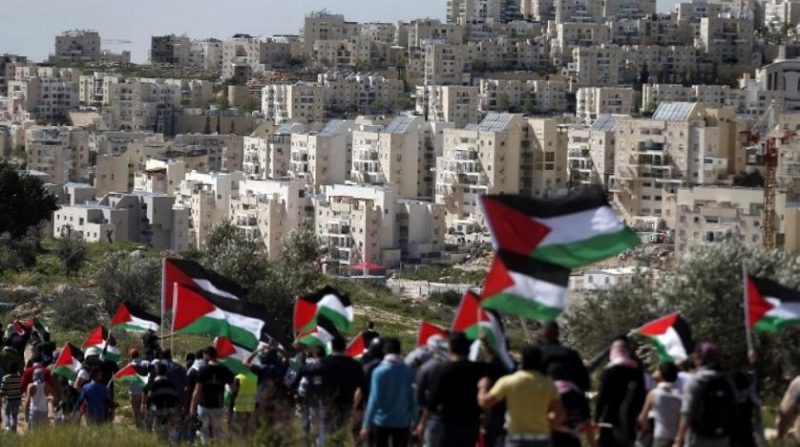
    One of the prime demands of the Palestinian struggle is a return to the borders of 1967; so that Palestine can exercise full sovereignty over Gaza and the West Bank. However, Gaza has been economically cut off because Hamas controls it, and there is a huge blockade against it making life in Gaza difficult and miserable. Hamas also attacks Israel, and this has always led the Israel Defence Forces (IDF) into retaliating. Whereas on the West Bank, there are thousands of settlements by Israel, virtually pushing Palestinians out. This settlement strategy is seen as a deliberate move to counter the demographic threat from the larger number of Palestinians inside Israel (Chomsky and Pappé 2015). The obsession with demographic re-engineering has been fundamental to Israel, and it does not intend to change its policy. It also couples this with closing Palestinian places, reducing the Palestinian economic structures present in East Jerusalem (Arafeh et al. 2017) etc. There are currently 8 million Israeli citizens of which 1.2 million are Palestinians (“Palestinian Citizens Of Israel” 2020). They are treated as second-class citizens and many of them are engaged in menial labour

    The fractures in Arab Unity  

    All the West Asian and North African countries were initially pro-Palestine during the cold-war and decolonization era. This could be associated with the Pan-Arab notion present during that period. Many Arab countries had recently secured independence, and the Palestinian injustice was still fresh in their memory. However, losing consistently in these wars was also a demotivator and blow to them; fiscally and otherwise. In the last few decades, several countries have established ties with Israel; Egypt in 1979, Jordan in 1994. This is also the time Pan-Arab spirit declined, and increased conflicts began to emerge amongst many West Asian and North African countries.

    These political conflicts include; countries taking sides in the Iran-Iraq war, funding proxy wars, taking sides on the invasion of Iraq, etc. Furthermore, security threats have been perceived to be heightened in many West Asian and North African countries due to the rise of religious radicalization and the rise of terrorist groups. Arab league relations have also been strained for various reasons, including the Syrian Civil War and over its membership (Reuters 2020).

    More importantly, Saudi Arabia and Iran have their cold war. The United States has exaggerated the Iranian threat, and both Saudi Arabia and Iran covertly fund proxy civil wars across West Asia, be it Yemen or Syria.

    Israel has emerged as a technological and military power in the region. Netanyahu says, “we believe in peace out of strength and we believe in alliances born out of Israel’s value as a technological, financial, defence, and intelligence powerhouse” (The Times of Israel 2020).  Many Arab countries may, therefore, find value in Israel’s technological capabilities. Parallelly, economic conditions in many Arab countries are worsening. Under these circumstances, with deep distrust amongst many Arab states and incentive for countries to be friendly with Israel, normalization of relations with Israel is taking place.

    Arab countries are putting their national interest first, and if the Palestinian issue is seen as an obstruction they have no qualms about relegating it to a side-issue.

    However, a majority of the Arab and Gulf countries still do not officially recognize Israel. This is where the significance of the UAE-Israel and Bahrain-Israel deal comes in. The United States uses these factions within West Asia and North Africa to pursue its agenda with Jared Kushner pushing for normalization. The United Arab Emirates and Bahrain announced decisions to normalize relations with Israel on 12th August and 12th September 2020, respectively. Many of the West Asian countries, Saudi Arabia, in particular, are close allies of the United States. As the USA nudges these countries with incentives,  Palestinian sovereignty or a fair peace treaty no longer seems to be a precondition to establishing ties with Israel. Arab countries are putting their national interest first, and if the Palestinian issue is seen as an obstruction they have no qualms about relegating it to a side-issue.

    Support for Palestine still exists, but it comes in fragments from different countries. It is important to remember that there is no coalition; no pressure; no one group that consistently fights for it.

    Long Term Effects of a Flawed Deal

    One will always remember the picture of the handshake between Yasser Arafat and Yitzhak Rabin facilitated by Bill Clinton while signing the Oslo Accords at Camp David. The Oslo Accords were an extremely publicized affair, and many proclaimed that peace to the decades-old conflict had been reached, but this was far from the truth.

    When the accord was signed in 1993, the Palestine Liberation Organization (PLO) was already weak. Additionally, there was also a general reduction of support for the PLO among Palestinians, as seen by the eruption of the first intifada, which was initially spontaneous (Hassan 2011).

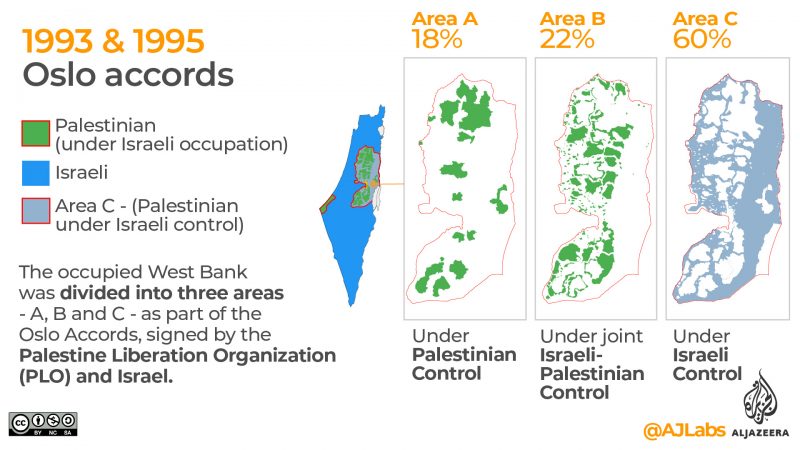
    Image Credit: Aljazeera

    The Oslo accords had several terms and clauses, but it mainly called for the recognition between Israel and the PLO. The accord also stipulated that Israel would end its occupation in Gaza and certain parts of the West Bank (Oxfam 2019). There would be an interim self-governance strategy and, eventually, a shift of power in Gaza and West Bank to the Palestinian Authority (Hassan 2011). An interim period was given so that both sides would have time to “gain trust” with one another.

    The accord showed an ambiguity regarding when Israel would withdraw from Gaza. It did not recognize Israel’s occupation, and neither did it speak of the Palestinian refugees.

    However, there were many flaws with the deal from the beginning. The accord showed an ambiguity regarding when Israel would withdraw from Gaza. It did not recognize Israel’s occupation, and neither did it speak of the Palestinian refugees (Hassan 2011). There was no stringent enforcement of the deal and having no third party accountability also rendered Palestinians vulnerable, as is evident. Furthermore, the Oslo accords did not condemn or mention the human rights violations against the Palestinians (Oxfam 2019).  The flawed nature of the deal began to show signs of rupture from the early days as accounts speak of how, as early as 1994, after the accords were signed, the IDF still had control over most of the West Bank and made no plans to move and were hovering around the edge of Ramallah (Tolan 2018). The fundamental issue here was that the Oslo Accord was signed by two unequal partners with Israel displaying dominant power.

    Therefore, while the buzz around the accords was still on, in reality, Israel continued policing Palestinians and establishing settlements in the West Bank area.

    No matter the initial motive, the Oslo accord, in 2020, can be analyzed as a distraction and cover-up by Israel while they continued their settlements. There is evidence supporting this as today there are 600,000 settlers in West Bank compared to 115,600 in 1993 (Oxfam 2019).

    Another significant issue is that Mahmoud Abbas and the Palestinian Authority (PA) have no framework other than the failed and biased Oslo accords. Owing to the proclamation that this accord would end the conflict, the PA became stuck in this framework. The way forward, as said by researcher Victor Kattan is that “The PA must produce a concrete vision of the state it wants to establish” (Arafeh et al.2017).  This lack of vision by the leaders is one of the reasons for the stagnation in the negotiations. Till today, Abbas and PA threaten to quit the accords and routinely proclaim that the Oslo deal is no longer valid. However, this should have come decades ago, during the second intifada in the year 2000, which illustrated that the Oslo accords were unfavourable towards the Palestinians. It shows the PA’s failure as a representative body, and their approval rate by the Palestinian public has reduced drastically.

    There have been talks to solve the dispute after Oslo deal, for instance, the Taba Summit. However, none have gained the clout or effort that the Oslo deal garnered.

    Militancy

    Ever since the attack of 9/11, the conversation surrounding militancy has increased. Invasion of Afghanistan and Iraq by the United States, a world power, ensured that the world knew the stance of the West on militancy.

    Militancy and violent retaliation by the Palestinians armed groups have been major issues, and the world witnessed the Munich massacre of the Israeli Olympic team in 1972. Furthermore, there have been Palestinian militant factions, which is where organizations such as Hamas come in. The first intifada led to Hamas’ formation and the second intifada helped Hamas gain clout (Uslu and Karatas 2020). Hamas has been deemed a terrorist organization by the United States, the European Union, because of its fundamentalist ideology and use of violence. This also led to the Palestinian struggle to lose sympathies of the international community due to its wariness of militant groups. Hamas takes a more “hard-line” approach towards Israel and is infamous for its rocket attacks against Israel from Gaza and suicide bombings (Uslu and Karatas 2020).  Israel and Hamas are also very wary of negotiating with each other. So far, the only talks between the two groups have been to swap prisoners.

    Many have criticized Hamas for the use of violence, however, Israel and other states cannot condemn the violence being deployed by Hamas, while Israel itself consistently shows violent behaviour towards the Palestinians. Hamas gained clout after the intifadas showed the deplorable conditions of the Palestinians in the occupied territories and Gaza. Termination of aid to Gaza on account of peoples’ support to Hamas has created more problems in terms of economy and livelihood. In the end, it is Palestinian people who suffer the most.

    Pro-Israel Policies of the United States  

    The United States is a close ally of Israel; technologically, financially, and otherwise. Israel, too, provides intelligence and acts as the “eye” of the United States from the West Asian region. The US-Israel relationship was instrumental in limiting the erstwhile Soviet Union’s influence in West Asia during the cold war (Beauchamp 2018). Much of the aid the United States gives to Israel is military aid, and as an important defence ally, Israel receives state-of-the-art weapon systems and intelligence sharing (Congressional Research Service 2019). The US has played a critical role in Israel’s emergence as a technology power and a major arms exporter.

    The United States has used its veto in the security council several times to protect Israel, including when the UN looked at taking action to prevent  Israel’s invasion of Lebanon and to stop the construction of walls inside the West Bank (Zunes 2012).

    The Israel caucus and lobby in the United States is powerful and many pro-Israeli outfits/individuals are major funding sources for Congressional elections (Cook 2018). The American Israel Public Affairs Committee (AIPAC) has financially backed people in the congress, which has influenced the decisions made by many lawmakers. For instance, billionaire, Sheldon Adelson, funded 82 million dollars to Republican’s election and is known for his pro-Israel sentiments. He even pushed for the USA embassy to be moved to Jerusalem from Tel-Aviv and has also proven to be unconcerned about giving Palestinians voting rights in Israel (McGreal 2018).

    The Donald Trump administration has taken the support for Israel one step further. Trump supports Israel in controversial issues that many shy away from addressing due to the politics in West Asia and Palestine’s historical symbolization. Trump came up with a peace deal for Israel and Palestine which was criticized severely and rejected by Palestine as the negotiations did not involve them (Holmes et al. 2020). The fact that Trump did not involve Palestinians in the negotiation shows how one-sided and utterly dismissive he is of the Palestinian authorities and people. The refusal of the right to return for Palestinian refugees, keeping Jerusalem as an undivided capital of Israel, recognizing Israeli settlements are among many reasons why the deal is flawed. The United States also brokered two peace deals in West Asia, the UAE-Israel peace deal first, followed by the Bahrain-Israel deal. It has also has been pushing other Arab countries to normalize relations with Israel (Barrington and Williams 2020).

    The Trump administration also shifted the United States embassy to a contested and occupied Jerusalem in 2018. All the more, this ultimately recognized and legitimised Israel’s occupation of the West Bank. After Trump’s announcement to shift the embassy, Israel’s housing minister declared that Israel was developing 14,000 “new settlement units” in Jerusalem (Arafeh et al. 2017). Mohamoud Abbas also asserted that the United States could not be a reliable mediator after shifting capital to Jerusalem. However, the United States has continued to meddle and create a one-sided mediated plan (Arafeh et al. 2017).

    Trump has also continued to cut out aid for Palestine, which has severe repercussions for Gaza’s already poorly funded city. In 2018, after Palestinians Authorities blamed Trump for being partial, he cut 200 million dollars in economic aid and cut funding to the United Nations Relief Work Agency (UNRWA), the primary network in helping Palestinian refugees (Holmes 2020).

    During the US presidential elections, Netanyahu appealed to evangelical supporters in the United States. In a virtual conference, he said that Trump might give him the green-light to annex certain parts of the West Bank that have religious significance in the Bible (Ravid 2020). The President-Elect Joe Biden has clearly highlighted that he would review these decisions, recognise Palestinians’ right to self-determination and adopt a more balanced approach.

    It is evident that the Trump administration has played a significant role in side-lining the Palestinian issue.

    Looking Ahead

    The Palestine problem has stretched far too long, with many “negotiations” that have failed to address the historical injustice done to the Palestinians. Amidst all this, clashes continue between protestors in Gaza and Israeli forces. While there are mass casualties and acts of aggression on both sides, there is no denial of how poorly Israel has treated Palestinians over the decades. Furthermore, most issues regarding Palestine have been put on the back-burner, however, the Arab League stepped up to condemn the unfair Trump Peace Deal, which is the bare minimum it could have done.

    There needs to be more initiative from the side of the PA to have a more concrete plan for the future of Palestinian sovereignty. The PA is also dominated by older elites, but with changing aspirations of the Palestinians, there need to be more women and younger people in the body.

    Additionally, for Palestinian sovereignty to be achieved, there has to be a major restructuring of the PA. It is clear that PA has been stripped of its power over the years and afflicted with corruption, has not improved the Palestinians’ situation. There needs to be more initiative from the side of the PA to have a more concrete plan for the future of Palestinian sovereignty. The PA is also dominated by older elites, but with changing aspirations of the Palestinians, there need to be more women and younger people in the body.

    There is some importance given to Palestine in the United Nations such as making Palestine as a presiding chair for the G77 or the United Nations Security Council Resolution 2334, which says that “altering the demographic composition, character, and status of the Palestinian Territory occupied since 1967, including East Jerusalem… (is) in violation of international humanitarian law” (SC Res 2334 2016). However, voting pro-Palestinian at some UN resolutions, having Palestinian authorities come over, and reiterating a “two-state solution” is no longer enough. Furthermore, different countries use this issue as a political tool to show their “sentiments.” Instead, there needs to be more proactive international collaboration to fight for Palestinian rights consistently. The Palestinian issue is a fundamental human rights issue and should be urgently addressed before the already minimal fragments of Palestine disappear under Israel.

    References

    “Palestinian Citizens Of Israel”. Institute For Middle East Understanding, 2020, https://imeu.org/topic/category/palestinian-citizens-of-israel. Accessed 25 Sept 2020.
    Al Jazeera. “Netanyahu Says West Bank Annexation Plans Still ‘On The Table’”. 2020,   https://www.aljazeera.com/news/2020/08/13/netanyahu-says-west-bank-annexation-plans-still-on-the-table/. Accessed 12 Sept 2020.
    Arafeh, Nur et al. “Trump, Jerusalem, And The Future Of Palestine – Al-Shabaka”. Al-Shabaka, 2017, https://al-shabaka.org/roundtables/trump-jerusalem-future-palestine/. Accessed 6 Sept 2020.
    Arroyo, Carmen. “Palestinian Children, The True Victims Of The Conflict”. The Wire, 2020, https://thewire.in/world/palestinian-children-true-victims-conflict-israel. Accessed 5 Sept 2020.
    Barrington, Lisa, and Dan Williams. “After UAE-Israel Breakthrough, Kushner Pushes Other Arabs To Go Next”. Reuters, 2020, https://www.reuters.com/article/us-israel-gulf-usa/after-uae-israel-breakthrough-kushner-pushes-other-arabs-to-go-next-idUSKBN25S5QC. Accessed 20 Sept 2020.
    Beauchamp, Zack. “Why Are The US And Israel So Friendly?”. Vox, 2018, https://www.vox.com/2018/11/20/18080080/israel-palestine-us-alliance. Accessed 16 Sept 2020.
    Chomsky, Noam, and Ilan Pappé. On Palestine. Haymarket Books, 2015.
    Congressional Research Service. U.S. Foreign Aid To Israel. Congressional Research Service, Washington D.C, 2019.
    Cook, Jonathan. “Under Trump, The Israel Lobby Is A Hydra With Many Heads”. Middle East Eye, 2018, https://www.middleeasteye.net/opinion/under-trump-israel-lobby-hydra-many-heads. Accessed 7 Sept 2020.
    Hassan, Shamir. “Oslo Accords: The Genesis and Consequences for Palestine.” Social Scientist, vol. 39, no. 7/8, 2011, pp. 65–72. JSTOR, www.jstor.org/stable/41289422. Accessed 30 Sept. 2020.
    Holmes, Oliver et al. “Trump Unveils Middle East Peace Plan With No Palestinian Support”. The Guardian, 2020, https://www.theguardian.com/world/2020/jan/28/donald-trump-middle-east-peace-plan-israel-netanyahu-palestinians. Accessed 1 Sept 2020.
    Holmes, Oliver. “US To Give Palestinians $5M In Coronavirus Aid – 1% Of What Trump Cut”. The Guardian, 2020, https://www.theguardian.com/world/2020/apr/17/us-aid-palestinians-coronavirus-trump-cut. Accessed 22 Sept 2020.
    McGreal, Chris. “Sheldon Adelson: The Casino Mogul Driving Trump’s Middle East Policy”. The Guardian, 2018, https://www.theguardian.com/us-news/2018/jun/08/sheldon-adelson-trump-middle-east-policy. Accessed 17 Sept 2020.
    Oxfam. From Failed To Fair Learning From The Oslo Accords To Foster A New Rights-Based Approach To Peace For Palestinians And Israelis. Oxfam, Oxford, 2019, pp. 3-24, https://oxfamilibrary.openrepository.com/bitstream/handle/10546/620904/bp-failed-to-fair-oslo-accords-011119-en.pdf. Accessed 6 Sept 2020.
    Ravid, Barak. “Netanyahu Presses Trump By Lobbying U.S. Evangelicals To Back Annexation”. Axios, 2020, Accessed 29 Sept 2020.
    Reuters. “No Consensus Yet For Syria Return: Arab League Chief”. 2020, https://in.reuters.com/article/us-mideast-crisis-syria-arabs/no-consensus-yet-for-syria-return-arab-league-chief-idUSKCN1Q014R. Accessed 15 Sept 2020.
    SC Res 2234, UNSC, UN Doc S/RES/2334 (23 December 2016) < https://www.un.org/webcast/pdfs/SRES2334-2016.pdf> accessed 15 September 2020
    The Times of Israel. “PM Said Seeking To Formalize Relations With Saudi Arabia Before Next Election”. 2020, https://www.timesofisrael.com/pm-said-seeking-to-formalize-relations-with-saudi-arabi-before-next-election/. Accessed 24 Sept 2020.
    Tolan, Sandy. “Was Oslo Doomed From The Start?”. The Nation, 2018, https://www.thenation.com/article/archive/was-oslo-doomed-from-the-start/. Accessed 17 Sept 2020.
    Uslu, Nasuh, and Ibrahim Karataş. “Evaluating Hamas’ Struggle in Palestine.” Insight Turkey, vol. 22, no. 1, 2020, pp. 109–124. JSTOR, www.jstor.org/stable/26921171. Accessed 30 Sept. 2020.
    Zunes, Stephen. “Putting The UN Veto In Perspective”. Huffpost, 2012, https://www.huffpost.com/entry/syria-russia-un-veto_b_1267495?guccounter=1. Accessed 21 Sept 2020.