Tag: Economics

  • Macrovariable Projections in Uncertain Times

    Macrovariable Projections in Uncertain Times

    International factors and faulty data will impact India’s projections of GDP, inflation and balance of payments

    The Fed has raised its benchmark interest rate again by a whopping 0.75%. The Reserve Bank of India has also been forced to raise interest rates further but also take other steps. These decisions in the Monetary Policy Committee (MPC) meeting are based on what the members of the MPC see as the likely course of…

    [powerkit_button size=”lg” style=”info” block=”true” url=”https://www.thehindu.com/opinion/lead/macrovariable-projections-in-uncertain-times/article65747423.ece” target=”_blank” nofollow=”false”]
    Read More
    [/powerkit_button]

  • China’s Role in the Infrastructure Development in Post-Civil War Sri Lanka: A Causal Factor for Current Crisis

    China’s Role in the Infrastructure Development in Post-Civil War Sri Lanka: A Causal Factor for Current Crisis

    It is also obvious that the way China handles Sri Lanka’s issue will have a significant impact on the future of China’s debt strategy in other developing nations across the world

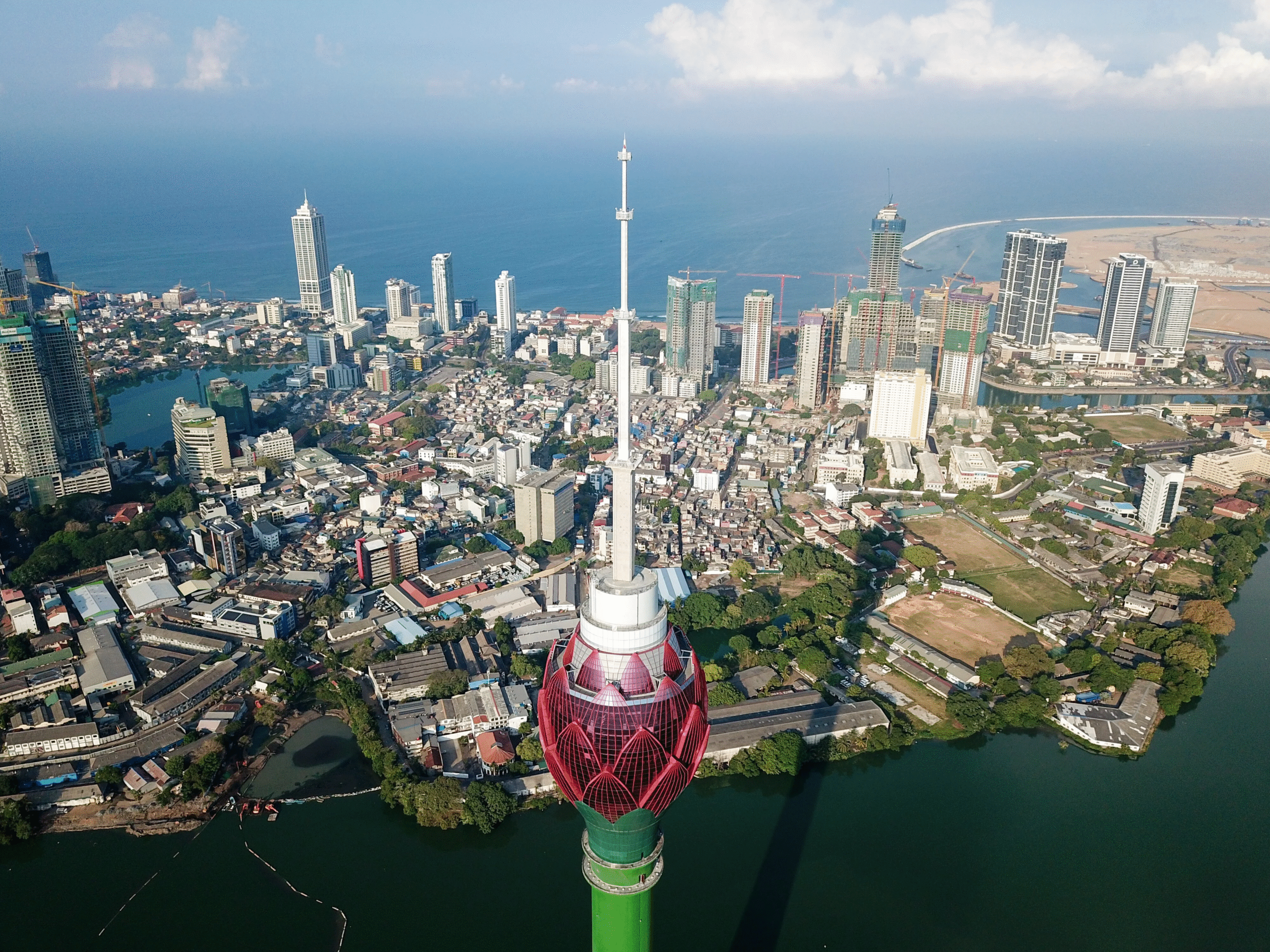
    Sri Lanka and China share an ‘all-weather friends’ relationship. Long-standing diplomatic ties between Sri Lanka and China have developed into an infrastructure-focused economic partnership. Beginning in the early 1970s, China began to offer support for the economic development of some landmark projects in the country. The financial assistance offered by China has increased significantly since 2005. Soon their relationship transformed into a model that made use of interest-bearing loans and foreign direct investments. With Chinese assistance, the Mahinda Rajapaksa administration launched significant transportation, energy, and telecommunications projects. Some of these were the coal-fired Norocholai power station in 2006, the Hambantota port in 2007, the Mattala International Airport in 2010, the Colombo International Container Terminal at the Colombo port in 2011, and the Lotus Tower in 2012. With the launch of China’s BRI (Belt and Road Initiative) strategy in 2013, projects like Colombo Port City were taken up and further investment was made in earlier projects like the Hambantota port deal (Wignaraja et al. 2020).

    During the period between 2006 and 2019, the total value of Chinese investment in Sri Lanka was around $12.1 Billion (Wignaraja et al. 2020). According to a data analysis, China’s bilateral assistance and export credit loans have tripled from US $386.1 million in 2007 to US$1.2 billion in 2009 (Nilanthi Samaranayake 2011). The major sector of Chinese investment is the road and expressway, which accounts for over 68% of the country’s total expressway length. The other significant sector which has received Chinese investment and loans is the port projects.

    Port City – Colombo

    The Port City of Colombo (PCC) is the dream project of Sri Lanka that was unveiled during Chinese President Xi Jinping’s visit in 2014. Since Colombo is one of the top 25 busiest ports in the world, the proposed project promoted Colombo as a “world-class city” not only for Sri Lanka but also for South Asia as a whole (Revi 2021), with the government expecting to turn it into a financial centre like Singapore and Dubai. The initiative is supposed to improve Sri Lanka’s economy, which is primarily dependent on the export of tea and tourism, to more prosperity through a wide range of service sectors. It is projected to cost $14 billion, with China investing $1.4 billion to assist PCC in reclaiming 269 hectares of land in the Indian Ocean. In return, China received a 99-year lease over 116 hectares of the surrounding area. The initiative is a private-public partnership project between the Sri Lankan government and CHEC Port City Colombo Pvt. Ltd. It is also the first Special Economic Zone of Sri Lanka. CHEC Port City Colombo Pvt. Ltd is a part of China Communication Construction Enterprise, which is the state-run infrastructure company that oversees the Belt and Road Initiative (Basu 2022). However, even if Port City manages to produce a sixth of Sri Lanka’s present economic production by 2041, as suggested by an independent study, it will still be a costly venture. Even though China is funding its construction, these commercial activities will provide little income for the debt-ridden country (Mukherjee 2022).

    The Hambantota Port 

    The Hambantota port is in southern Sri Lanka. Its construction began in 2008. The port was built under the state-owned enterprises – China Harbour Engineering and Sinohydro Corporation. Around $1.4 billion was financed by EXIM Bank China in the form of three fixed interest rate loans (Wignaraja et al. 2020, 9). The project’s first phase was finished in 2010 at a cost of US $361 million (Samaranayake 2011), and the port started operations in November 2011. The second phase started in 2012 and ended in 2015. The project took more time than was expected to complete, and was not very successful, leading to a substantial capital loss. By 2016, the Sri Lanka Ports Authority, which owned the Hambantota Port, had suffered losses roughly amounting to SLR 46.7 billion. By this time, it was also evident that this extravagant project was not commercially viable, as had been demonstrated in preliminary feasibility studies (Gupta 2022). To counter this financial loss, the government, in 2017, decided to grant the port to the Chinese state-owned enterprise – China Merchant Port Holdings Company Limited – for a 99-year lease. The revenue from the contract was primarily utilised to address the balance of payment problems brought on by the rising cost of debt payments in the country. 

    The leasing of the port also represents Sri Lanka’s current external sector crisis (Moramudali 2020). Despite restructuring and turning it over to a Chinese entity for 99 years, Sri Lanka is still responsible for paying the debt associated with the failed port. The presence of the established trans-shipment hub, Colombo Port, which is 200 kilometres from Hambantota also makes the port commercially unviable. Because of this proximity issue, even though the port possesses several berths for diverse purposes, just about 400 vessels visit it each year as compared to 4,000 vessels in Colombo Port (Gupta 2022). Moreover, the Mattala Rajapaksa International Airport (MRIA) constructed in the southern Hambantota district with a $200 million loan from China, is referred to as the “emptiest airport in the world” (Shepard 2016). 

    Investments in the Energy sector

    Another key sector that has received Chinese investment is the energy sector. The Norocholai power station was built by the China Machinery Engineering Corporation over a seven-year period in three phases. Three loans from the EXIM Bank of China totalling $1.4 billion and extra funding from the Sri Lankan government contributed to its co-financing. The power plant is now the largest and a vital contributor to the nation’s electricity supply (Wignaraja et al. 2020).

    Projects’ Viability and Performance

    In the Global Competitiveness Report 2019, released by the World Economic Forum, Sri Lanka ranked 84 out of 141 countries, which shows that the country’s infrastructure performance is far worse than that of other middle-income economies like Malaysia (Wignaraja et al. 2020). According to the publicly available figures, the Chinese debt is around 10% of Sri Lanka’s total foreign debt of $55 Billion and the actual figures are much higher than that. Chinese loans to Sri Lankan state-owned firms and other sorts of loans are not included in the current official estimates. According to some experts, this might amount to more than the US $6 billion, or about 20% of Sri Lanka’s external debt with higher interest rates (Gupta 2022). 

    The protracted effects of  Chinese investments must be carefully re-examined by the Sri Lankan government so as to prevent an increase in China’s coercive influence

    Hambantota Port which was built in the home district of the Rajapaksa family clearly portrays the family’s interest in their hometown. The 99-year lease of the port reflects the ever-increasing hold of China on the trade in the strategic Indian Ocean region and there are also prevailing accusations that China is likely to use the port for military purposes in future. In the case of Port City Colombo, scholars worry that it might develop into another Hambantota. Given the present situation, where Sri Lanka is unable to pay its obligations, Colombo Port City may also fall into Chinese control. Due to the political upheaval and financial issues the project construction has been interrupted multiple times. 

    The main causes behind the failures of these projects are that many of these were undertaken for political expediency and electoral considerations rather than for sound economic analysis and commercial viability. The government did not conduct proper feasibility studies to establish the commercial viability of these projects. Unbridled corruption made it worse. For the Hambantota port, more connectivity projects would provide more market and for the Port City Colombo, proper management plans should be given during its ongoing construction period.

    The protracted effects of such Chinese investments must be carefully re-examined by the Sri Lankan government so as to prevent an increase in China’s coercive influence. In light of the current economic crisis in Sri Lanka, China as the largest creditor in the country should offer reasonable restructuring on its loans. China’s response to the current crisis, particularly in the aftermath of the large-scale protests and a new government, will impact the relations between the two countries. It is also obvious that the way China handles Sri Lanka’s issue will have a significant impact on the future of China’s debt strategy in other developing nations across the world (Latiff and Wijesinha 2022).

    References

    Basu, Nayanima. 2022. “Crisis-Hit Sri Lanka Bets Big on $14 Bn China-Backed Port City, Wants Reluctant India to Invest.” ThePrint. March 24, 2022. https://theprint.in/diplomacy/crisis-hit-sri-lanka-bets-big-on-14-bn-china-backed-port-city-wants-reluctant-india-to-invest/883643/.

    Gupta, Shishir. 2022. “Was Cash Strapped Sri Lanka Duped by China in Hambantota Port?” Hindustan Times. June 26, 2022. https://www.hindustantimes.com/world-news/was-cash-strapped-sri-lanka-duped-by-china-in-hambantota-port-101656205405799.html.

    Latiff, Aquilah, and Anushka Wijesinha. 2022. “Understanding China’s Role in Sri Lanka’s Debt Restructuring Efforts.” Thediplomat.com. August 2, 2022. 

    Moramudali, Umesh. 2020. “The Hambantota Port Deal: Myths and Realities.” Thediplomat.com. January 1, 2020. https://thediplomat.com/2020/01/the-hambantota-port-deal-myths-and-realities/.

    Mukherjee, Andy. 2022. “Port City Colombo: The Great Chinese White Elephant of Sri Lanka.” Business Standard India, April 14, 2022. https://www.business-standard.com/article/international/port-city-colombo-the-great-chinese-white-elephant-of-sri-lanka-122041400365_1.html.

    Revi, Vinitha. 2021. “Colombo Port City Project: Controversial since Its Inception.” ORF. December 28, 2021. https://www.orfonline.org/expert-speak/colombo-port-city-project/.

    Samaranayake, Nilanthi. 2011. “Are Sri Lanka’s Relations with China Deepening? An Analysis of Economic, Military, and Diplomatic Data.” Asian Security 7 (2): 119–46. https://doi.org/10.1080/14799855.2011.581603.

    Shepard, Wade. 2016. “For Sale: The World’s Emptiest International Airport.” Forbes. July 18, 2016. https://www.forbes.com/sites/wadeshepard/2016/07/18/for-sale-the-worlds-emptiest-international-airport-mattala-international-hambantota-sri-lanka/?sh=74595f4c1e3b.

    Wignaraja, Ganeshan, Dinusha Panditaratne, Pabasara Kannangara, and Divya Hundlani. 2020. “Chinese Investment and the BRI in Sri Lanka.” Chatham House – International Affairs Think Tank. March 24, 2020. https://www.chathamhouse.org/2020/03/chinese-investment-and-bri-sri-lanka-0/2-economy.

    Feature Image Credits: South China Morning Post

  • PM Modi May Decry ‘Revdi Culture’ – But it Still Runs Our Political Economy

    PM Modi May Decry ‘Revdi Culture’ – But it Still Runs Our Political Economy

    There is little doubt that the practice of handing out freebies undermines both democracy and development. But the problem doesn’t lie just with the opposition

    Constitutional authorities in India have recently spoken about key challenges the country is facing.

    The Chief Justice of India (CJI) has said that there is “diminishing” space for the opposition, that there was no longer any mutual respect between the Union government and the opposition, and that these developments pose a threat to Indian democracy.

    The chief minister of Rajasthan recently spoke about lack of “tolerance” in the country and urged the prime minister to speak out against violence.

    The Union law minister flagged the issue of pendency of cases in courts – almost 5 crore.

    Finally, the CJI blamed the government for the inadequacy of judicial infrastructure and lamented that 80% of the 6.1 lakh prisoners are undertrials and the “process has become the punishment”. He labelled prisons as ‘black boxes’ and prisoners the most vulnerable.

    The CJI’s comments a few days later in Ranchi point to the anguish in the upper echelons of the judiciary when he said that media is “running kangaroo courts”, expresses “biased views” and runs “agenda driven debates”. He stated that many issues are difficult for the judges to decide but the media jumps into the fray all too quickly. He highlighted the threat to the judges after retirement. He also responded to the argument that judges – being unelected – should not get into legislative and executive areas by pointing to the constitutional responsibilities placed on the judiciary.

    [powerkit_button size=”lg” style=”info” block=”true” url=”https://thewire.in/political-economy/narendra-modi-revdi-culture-political-economy” target=”_blank” nofollow=”false”]
    Read More
    [/powerkit_button]

  • Economic Relevance of Quad as a Regional Strategic Forum

    Economic Relevance of Quad as a Regional Strategic Forum

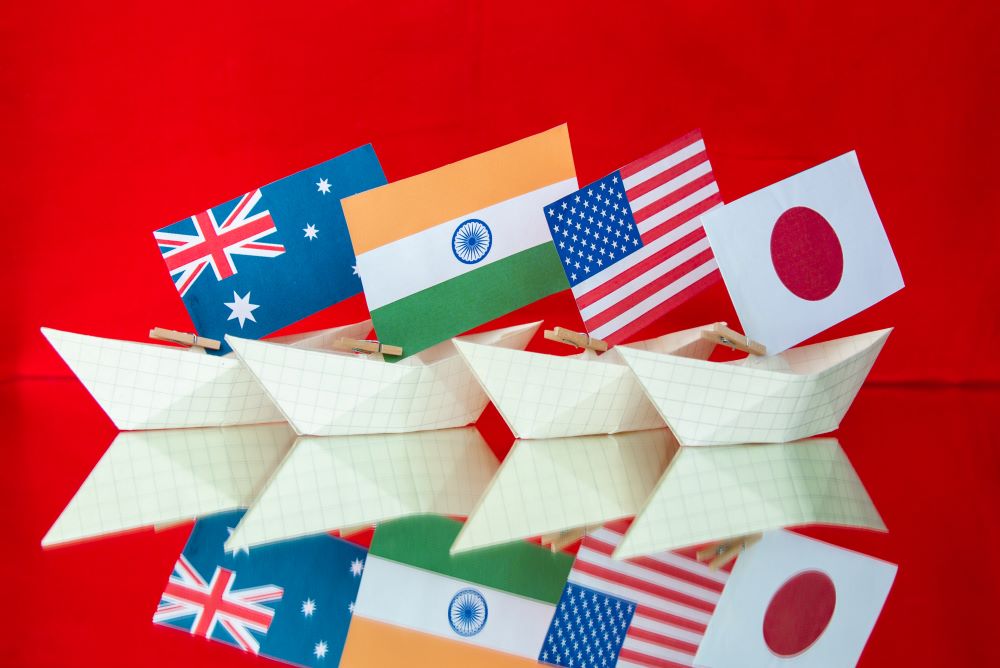
    The QUAD, a grouping of the United States, Japan, India, and Australia, began as a “Tsunami Core Group,” an impromptu group formed in response to the devastating Boxing Day tsunami of 2004. This core group brought together the four nations to swiftly mobilise and coordinate multilateral disaster relief and humanitarian assistance operations. The first meeting of the initial QUAD took place in May 2007 during the ASEAN Regional Forum (ARF) meeting in Manila. The meeting was characterised as an “informal grouping” that discussed themes of mutual interest to the dialogue participants (Buchan & Rimland, 2020). The group was established to deal with the immediate challenges posed by the tsunami and was never intended to become permanent. However, early cooperative efforts sparked a debate about QUAD’s overarching goal. When Australia withdrew from the QUAD in 2008, it ceased to exist. It was revived in 2017 against the backdrop of an increasingly assertive Chinese posture, and the emergence of the idea of the Indo-Pacific as a single maritime zone.

    The first QUAD meeting, after its revival, happened on 12 November 2017, when the four ‘like-minded’ partners discussed seven key issues: the rules-based order in Asia; freedom of navigation and overflight in the maritime commons; respect for international law; enhancing connectivity; maritime security; the North Korean threat and non-proliferation; and terrorism (Jain, 2022). The QUAD aims to bring diverse perspectives together in a shared vision for a free and open Indo-Pacific, and it strives for a region that is free, open, inclusive, healthy, and anchored in democratic values.

    Economic Potential

    There are numerous reasons to increase economic engagement within the QUAD nations—the four countries, with a combined population of over 1.8 billion people, represent a quarter of the world’s population and over $30 trillion in GDP. In 2018, trade between the four countries totalled more than $440 billion, with nearly $6 trillion in trade with the rest of the world. QUAD intends to use both public and private resources to construct high-quality infrastructure in the Indo-Pacific region. According to the MEA’s website, since 2015, QUAD partners have invested more than $48 billion in regional infrastructure development. The commitment of the QUAD to regional infrastructure development can be strengthened by integrating India into the existing ‘Australia-Japan-US Trilateral Infrastructure Partnership’ and by broadening their reach into the Indo-Pacific region (“Fact Sheet: QUAD Leaders’ Summit,” n.d.). Except for India and the United States, the remaining two countries are also Regional Comprehensive Economic Partnership (RCEP) members. This shows that, notwithstanding territorial and security differences, trade and commerce are still the primary focus (“Economic Dimension Key to QUAD Success”, 2021). Further, the Covid-19 pandemic has harmed the global economy, including the QUAD nations, in areas ranging from employment to investment. Thus, by bolstering their economic ties for greater freedom and cooperation, the group will facilitate a faster recovery from the pandemic’s effects.

    The Indian Ocean, not the Indo-Pacific, is central to India’s vision. In the short term, India’s engagement with the Indo-Pacific framework will be primarily diplomatic and economic and will be constrained by the Indian Ocean’s strategic primacy and constraints on its sea-power projection

    QUAD and the Indian Economy

    India’s strong economic ties with the QUAD economies are reflected in its bilateral trade volume with each member. During 2019-2020, these three economies accounted for 15% of India’s total trade. The United States contributes the most with 11%, followed by Japan and Australia, with 2.15 and 1.6 per cent, respectively. Further, India already has a free-trade agreement with Japan, which was implemented in 2011, and negotiations with Australia and the United States are ongoing. India can now use this critical multilateral forum to help facilitate trade negotiations and increase economic activity with member economies (“Economic Dimension Key to QUAD Success” 2021).

    According to Lunev and Shavlay (2018), the emergence of China, the expansion of India’s economic and strategic clout, and, most importantly, the growing importance of the Indian Ocean as a strategic trade route carrying nearly two-thirds of global oil shipments and a third of bulk cargo, have entailed a shift in the security architecture from the Asia-Pacific to the Indo-Pacific. These factors have contributed to the rise of regional stakeholders advocating for a free and open Indo-Pacific, resulting in the re-establishment of the QUAD. However, India’s maritime interests and strategies are at odds with those of the other QUAD members. The Indian Ocean, not the Indo-Pacific, is central to India’s vision. In the short term, India’s engagement with the Indo-Pacific framework will be primarily diplomatic and economic and will be constrained by the Indian Ocean’s strategic primacy and constraints on its sea-power projection.

    The South and East China Seas, the Western Pacific, and the Indian Ocean are of particular concern to the United States and Japan. Unless and until these disagreements are resolved, QUAD’s effectiveness as an entity will be called into question

    Tokyo Summit 

    The Tokyo Summit is the QUAD Leaders’ fourth interaction since their first virtual meeting in March 2021, in-person Summit in Washington DC in September 2021, and virtual meeting in March 2022. The Tokyo Summit took place against the backdrop of the ongoing Russia-Ukraine conflict and its repercussions. The joint statement issued following the QUAD summit in Tokyo on May 24, 2022, is more comprehensive than the first three summits. It has attempted to clarify the broad framework for cooperation by outlining eight specific areas. These include Peace and Stability; Covid-19 and Global Health Security; Infrastructure; Climate; Cybersecurity; Critical and Emerging Technologies; QUAD Fellowship; Space; and Maritime Domain Awareness and Humanitarian Assistance and Disaster Relief (HADR) (Luthra, n.d.). A comprehensive QUAD joint statement and the launch of the Indo-Pacific Economic Framework (IPEF) are key developments of the Tokyo summit. QUAD leaders also announced a maritime initiative to combat illegal fishing at the Tokyo summit, and a pledge to invest $50 billion in infrastructure in the Indo-Pacific to combat China’s growing power (“QUAD Joint Leaders’ Statement”, 2022).

    The QUAD has long been criticised for lacking a common purpose or a substantive agenda. Furthermore, none of the objectives cited as reasons for bringing the four states together are unique to the QUAD. Other actors and institutions in the region already exist for these purposes.  Thus, there is a need for QUAD partners to better articulate their distinct rationale for cooperation and collaborative efforts.

    India is a key player due to its naval power and strategic location, and should thus be an active participant. However, there are differences in areas of interest among the QUAD nations, complicating its effectiveness. The South and East China Seas, the Western Pacific, and the Indian Ocean are of particular concern to the United States and Japan. Unless and until these disagreements are resolved, QUAD’s effectiveness as an entity will be called into question. While India is frequently portrayed as the holdout — and has recently been the most vocal — objections have come from other countries as well. The potential impact on Sino-Australian relations continues to make some in Australia nervous. Beijing’s reaction has factored into American caution as well, as has the preference for a trilateral format (Madan, 2017).  

    India requires investment, attractive financing for infrastructure, technology, and access to key raw materials, particularly rare earth elements, among the QUAD nations. QUAD’s other members are looking for market access and dependable investment destinations. Broadening QUAD’s current strategic focus to strengthen economic ties under the partnership’s auspices would be a win-win situation for all countries involved in such a scenario.

    Bibliography

    Buchan, P., & Rimland, B. (2020). Defining the diamond: The past, present, and future of the quadrilateral security dialogue. Defining the Diamond: The Past, Present, and Future of the Quadrilateral Security Dialogue | Center for Strategic and International Studies. Retrieved July 22, 2022, from https://www.csis.org/analysis/defining-diamond-past-present-and-future-quadrilateral-security-dialogue 

    “Economic Dimension Key to Quad Success.” 2021. The Statesman. February 23, 2021. https://www.thestatesman.com/opinion/economic-dimension-key-quad-success-1502953752.html.

    “Fact Sheet: Quad Leaders’ Summit.” n.d. Www.mea.gov.in. https://www.mea.gov.in/bilateral-documents.htm?dtl/34319/Fact+Sheet+Quad+Leaders+Summit.

    JAIN, Purnendra. 2022. “India’s Changing Approach to the Quadrilateral Security Dialogue.” East Asian Policy 14 (01): 56–70. https://doi.org/10.1142/s1793930522000046.

    Lunev, Sergey, and Ellina Shavlay. 2018. “Russia and India in the Indo-Pacific.” Asian Politics & Policy 10 (4): 713–31. https://doi.org/10.1111/aspp.12430.

    Luthra, Girish. n.d. “Forward from the Tokyo Quad Summit and IPEF.” ORF. https://www.orfonline.org/expert-speak/forward-from-the-tokyo-quad-summit-and-ipef/.

    Madan, Tanvi. 2017. “The Rise, Fall, and Rebirth of the ‘Quad.’” War on the Rocks. November 16, 2017. https://warontherocks.com/2017/11/rise-fall-rebirth-quad/.

    “Quad Joint Leaders’ Statement.” 2022. The White House. May 24, 2022. https://www.whitehouse.gov/briefing-room/statements-releases/2022/05/24/quad-joint-leaders-statement/.

    Rahman, Mohammad Masudur, Chanwahn Kim, and Prabir De. 2020. “Indo-Pacific Cooperation: What Do Trade Simulations Indicate?” Journal of Economic Structures 9 (1). https://doi.org/10.1186/s40008-020-00222-4.

    Feature Image Credits: Resilinc
  • Will Government Steps Tame Runaway Inflation?

    Will Government Steps Tame Runaway Inflation?

    “The steps announced by the government are only a first step. Prices of essentials have to be brought down (not just rate of inflation) and wages indexed to inflation”

    WPI rising at 15.08% in April 2022 has set alarm bells ringing in the government. Not only has the WPI been rising at above 10% per annum for over 13 months, but it has also been rising faster since February 2022. In other words, it has accelerated. Of course, the war in Ukraine has impacted it but it had been rising rapidly prior to that. In November 2021 it had risen by 14.87%. It moderated a little till January 2022 and then again rose.

    In November 2021 the government had cut taxes on petro goods to bring down their prices. Now the government has again cut these taxes in the hope of moderating inflation. By restricting the exports of wheat and sugar it seeks to lower their prices. Additionally, it has acted to lower the prices of basics like steel, cement and plastics. These steps should help moderate inflation. The issue is how much and whether it will benefit the citizens, especially the marginalized ones?

    Acceleration and Generalization to all Commodities.

    When indirect taxes are levied on basic items of production, they feed into the price of all other products. For instance, if the price of energy rises, since it is used in all production, the price of all products rises – there is a generalized price rise. If the tax on diesel is raised, transport costs, cost of running pumps in the fields and electricity generated using diesel rise. Similar is the case with coal, cement, steel and plastics. So, one way of lowering the rate of inflation is to reduce taxes on these basics.

    [powerkit_button size=”lg” style=”info” block=”true” url=”https://hwnews.in/business-finance/business/will-government-steps-tame-runaway-inflation-1353302/” target=”_blank” nofollow=”false”]
    Read More
    [/powerkit_button]