Tag: Economic Policy

  • India’s Self-Inflicted Economic Catastrophe

    India’s Self-Inflicted Economic Catastrophe

    Noted economist Jayati Ghosh reviews India’s economic recovery from the impact of the pandemic. She asserts that the major economic problems of unemployment, poverty, and inadequate healthcare are due to poor strategies and policies implemented by the government. In her analysis, COVID-19’s devastating impact on India has been compounded by the BJP government’s disastrous decision to impose nationwide lockdowns without providing any support to workers. Instead, the BJP used the pandemic to consolidate its power and suppress dissent. Even with existing socio-political constraints, she says India can do much better as there is scope for different economic strategies.

    This article was published earlier in Project Syndicate. The views expressed are the author’s own.

                                                                                                                                                                          -TPF Editorial Team

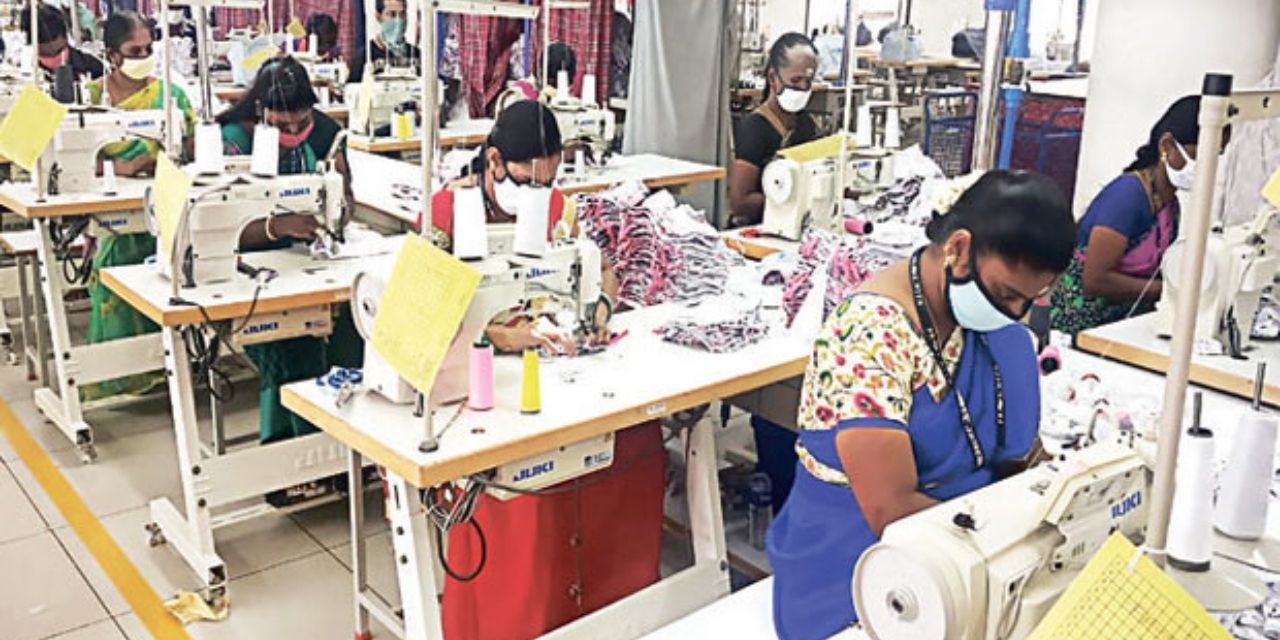
    Nearly 80% of the estimated 70 million people around the world who fell into extreme poverty at the onset of COVID-19 in 2020 were from India, a recent World Bank report has revealed. But even this shocking figure could be an underestimate, as the lack of official data makes it difficult to assess the pandemic’s human costs.

    What accounts for this alarming rise in Indian poverty? COVID-19 was undoubtedly India’s worst health calamity in at least a century. But the pandemic’s economic and social consequences go beyond the direct effects on health and mortality. As I argue in my recent book, The Making of a Catastrophe: The Disastrous Economic Fallout of the COVID-19 Pandemic in India, very significant policy failures – owing to government action and inaction – were responsible for widespread and significant damage to Indian livelihoods and for the country’s decline in terms of many basic indicators of economic well-being.

    But the devastating impact of the pandemic on India has been compounded by economic policies that reflected the country’s deeply-embedded inequalities.

    This judgment may seem excessively harsh. After all, India’s government did not cause the pandemic, and many other countries experienced economic setbacks after they failed to control the virus. But the devastating impact of the pandemic on India has been compounded by economic policies that reflected the country’s deeply-embedded inequalities.

    To be sure, the pandemic did not create India’s many economic vulnerabilities. But it did highlight India’s many societal fissures and fault lines. And while the country already suffered from glaring inequalities of income, wealth, and opportunities long before COVID-19, the government’s pandemic response has taken them to unimaginable extremes.

    Even as Indian workers faced poverty, hunger, and ever-greater material insecurity due to the pandemic, money and resources continued to flow from the poor and the middle class to the country’s largest corporations and wealthiest individuals. The intersecting inequalities of caste, gender, religion, and migration status have become increasingly marked and oppressive. The result has been a major setback to social and economic progress.

    At the beginning of the pandemic, the central government imposed a prolonged nationwide lockdown with little notice. It then adopted containment strategies that were clearly unsuited to the Indian context, with immediately devastating effects on employment and livelihoods.

    The grim state of affairs reflects the priorities of the ruling Bharatiya Janata Party (BJP) response. At the beginning of the pandemic, the central government imposed a prolonged nationwide lockdown with little notice. It then adopted containment strategies that were clearly unsuited to the Indian context, with immediately devastating effects on employment and livelihoods.

    Instead of using the breathing space provided by the lockdown to bolster local health systems, the central government left state authorities to manage as best they could with minimal and inadequate resources. And when the resulting economic disaster threatened to spiral out of control, the government eased restrictions to “unlock” the economy even as the number of cases mounted, thereby putting more people at risk.

    At a time when governments worldwide were significantly increasing public spending to fight the pandemic and mitigate its economic impact, the Indian government preferred to control expenditures (after adjusting for inflation) as its revenues declined.

    But at the heart of India’s self-inflicted economic catastrophe is the government’s decision to provide very little compensation or social protection, even as COVID-19 lockdowns deprived hundreds of millions of their livelihoods for several months. At a time when governments worldwide were significantly increasing public spending to fight the pandemic and mitigate its economic impact, the Indian government preferred to control expenditures (after adjusting for inflation) as its revenues declined.

    But in a country where median wages are too low to provide more than the most basic subsistence, losing even a week’s income could lead millions to the brink of starvation. Given that more than 90% of all workers in India are informal – without any legal or social protection – and that around half of those are self-employed, the effect was immediate and devastating.

    The government’s decision not to increase spending aggravated the shock of the lockdown, generating a humanitarian crisis that disproportionately affected women and marginalized groups, including millions of migrant workers who were forced to return home under harrowing conditions.

    But the effects of the official response to the pandemic are only one side of the story. COVID-19 safety measures have been a natural fit for the country’s still-pervasive caste system, which has long relied on forms of social distancing to enforce the socioeconomic order and protect those at the top. It also further entrenched India’s persistent patriarchy.

    Instead of taking appropriate countermeasures, like providing greater support to the population, the BJP used the pandemic to consolidate its power and suppress dissent. This, in turn, limited the central government’s ability to generate the widespread social consensus and public trust needed to contain the virus.

    Even within India’s deep-seated social and political constraints, there is scope for a different economic strategy that would enable a just, sustainable, and more equitable recovery.

    None of this was inevitable. Even within India’s deep-seated social and political constraints, there is scope for a different economic strategy that would enable a just, sustainable, and more equitable recovery. To ensure that most Indians, not just the stock market or large companies, benefit from growth, India’s voters must reject the BJP’s policies, which threaten to impoverish them further.

    Feature Image Credit: textilevaluechain.in
  • To Become Atmanirbhar, Bharat Needs Strong R&D

    To Become Atmanirbhar, Bharat Needs Strong R&D

    India has gone full circle from Gandhi’s days of Swadeshi to Nehru’s vision of self-reliant India to New Economic Policies of indiscriminate opening of the economy to Atmanirbhar Bharat. In between lip service was paid to Swadeshi in 1998 but the government continue with the indiscriminate opening up of the economy. Even agriculture was not left untouched with the opening up of 1400 commodities after the Seattle round of negotiations in 1999.

    What is Atmanirbharta?

    What do we understand by atmanirbhar – is it at the narrow level of producing most things that we need ourselves or at the wider philosophical level? If the latter, it implies independence of thought and development of socially relevant knowledge. It could lead to an alternate vision of development and prosperity for the nation.

    In an open economy people will then buy the foreign produced cheaper goods. So, the more important aspect of atmanirbharta is the philosophical aspect.

    The idea of producing most things ourselves runs into a contradiction in a globalizing world which is premised on marketization. Most things are being produced cheaper and better somewhere else, including our cultural symbols such as gulal, diyas and ganesh statue. In an open economy people will then buy the foreign produced cheaper goods. So, the more important aspect of atmanirbharta is the philosophical aspect.

    Opening up the Economy

    In 1991, with the New Economic Policies we gave up the idea of ourselves producing most things that we need. Our global trade increased dramatically with the percentage of export plus import of goods and services in GDP rising from around 17% in 1991 to about 55.8% by 2013. In 2019 it is down to about 40%.

    With the evolution of Washington Consensus in the 1980s, based on the idea of marketization, the world started to integrate in the 1990s with all countries showing a sharp rise in trade to GDP ratio. China captured a large share of the world markets and built a huge trade surplus. Its foreign exchange reserves rose to over $3.5 trillion. This gave it enormous clout globally not only with developing countries but also with the developed countries.

    The idea of atmanirbharta or self-reliance underwent a change. It became a matter of global competition to gain market share globally. One imported more to export more. Growth was supposed to depend on this. South East Asia and China were given as examples of success of such openness and rapid improvement in the living standard of the population. China post-Mao successfully adopted such a strategy. It was a large economy so it could not even be said that India cannot do what Singapore can do.

    Globalization is all about development of technology and India has lagged behind in that.

    Lessons from China

    What are the lessons India can learn from China’s achievements in the last thirty years? Apart from the fact that it is an authoritarian state with a strong sense of nationalism, its advances in research are stupendous.

    China has invested huge sums in building a strong infrastructure and research base in Universities, Institutions and Industry. It has one of the highest investment and savings rate in the world at 44 per cent in 2019. India’s comparative figure for 2019 is around 30%. It has developed the 5G technology faster than others and is willing to provide it cheaper than its competitors. This is also the case with many other lines of production such as, electronics, pharmaceuticals, automobiles and toys. It has moved rapidly in various fields such as development of artificial intelligence and applications of internet for commerce and financial sectors.

    Globalization is all about development of technology and India has lagged behind in that.

    China has had the long term vision to develop this rapidly by investing heavily in Research and Development. After getting technology from foreign companies, it has advanced the same by mastering it. Unfortunately, India has not done so and has repeatedly imported the next level of technology.

    Need for strong R&D

    India’s investment in R&D has been minimal. The private sector has been investing little in technology development. And, the public sector has been hamstrung in technology development by lack of autonomy, bureaucratization and corruption.

    Global competitiveness requires rapid development of technology. It requires massive investment in both absorption and development of technology. Instead, India’s investment in R&D has been minimal. The private sector has been investing little in technology development. And, the public sector has been hamstrung in technology development by lack of autonomy, bureaucratization and corruption.

    Research and Development require autonomy for researchers and a long term vision. Of course resources are also required but autonomy and vision are crucial and these have been weak in India. The same Indian researchers are able to do well in foreign lands but when in India they are not able to deliver. Our research establishment are rather feudal in approach and work within rigid hierarchies so that often talent gets suppressed.

    a culture of promoting independent and critical thinking is largely missing and that reacts back on research and generation of new ideas.

    Universities are the places where autonomy is greater and a long term vision can flourish away from the immediate profit motive. But unfortunately most of our universities are also bureaucratized and do not give autonomy to the academics. The authorities largely with bureaucratized and feudal mindset see independent thinking as a threat to themselves and, therefore, put up road blocks in the path of the independent thinkers thereby frustrating them and making their functioning difficult. Often the independent minded are seen as trouble makers and a challenge to the domination of the authorities. This is true not only in social sciences but also in the case of sciences in most universities. Thus, a culture of promoting independent and critical thinking is largely missing and that reacts back on research and generation of new ideas.

    Imperatives of Strengthening R&D

    Atmanirbharta in the present day world does not imply closing the economy but having the strength to face the challenge from other nations. This has to be based on a long term vision and cannot be achieved in the short run or by ad hoc measures.

    It requires high quality education right from the school stage. Thus, the education budget has to be expanded and teaching paid much higher attention than given at present. The status of teachers has to be enhanced so that talented people come in to academia.

    The world has been globalizing for thousands of years with trade and exchange of knowledge across nations and across continents. But earlier it was a slow two way process. Colonization turned into a one way process with western knowledge and thought establishing its hegemony globally and more so in India. That killed the internal dynamism of Indian society. It reinforced feudalism in India and decimated the quest for socially relevant knowledge generation.

    There has to be a continuum in knowledge generation but with an Indian perspective. India has to have the self-confidence that it can move ahead without denying the last few hundred years. Denial is only a sign of weakness.

    As Gandhi suggested, there is need for Indian modernity. Achieving that is crucial. Can it be based on denying what has happened over the last 250 years and going to what existed prior to that? Such a gap would undermine our understanding of social developments in India. That would be a recipe for repeating our mistakes. There has to be a continuum in knowledge generation but with an Indian perspective. India has to have the self-confidence that it can move ahead without denying the last few hundred years. Denial is only a sign of weakness.

    Denial would prevent us from understanding the nature of globalization we are undergoing and therefore we would not be able to work out any correctives that are needed. It would lead to much confusion in society. For instance, we would not be able to understand why consumerism is sweeping the world, including the poor in India or why our research lacks dynamism. In brief, Atmanirbharta requires India to move with self-confidence and not be in denial.