Tag: drones

  • New ‘Drone Rules’ is set to transform Drone business in India

    New ‘Drone Rules’ is set to transform Drone business in India

    Not many would know that Goldman Sachs has predicted that in the next five years the drone market will be worth over a hundred billion US dollars. India became an IT hub in the 1990s and Indian programmers were sought-after during the dot-com boom. This was not because of some great policy decisions that we took at that time but rather it was because of no policy on the subject. There were times when computers gathered dust in some ministries because the minister felt computers are sinister equipment that could take away people’s livelihood.

    ‘Drones’ are said to be the next big thing that the world has ever seen since IT and Dotcom in terms of technology disruption and touching the lives of people in all spheres. Traditional modes of transportation of goods, surveillance, survey, and foraying into newer areas like agriculture, marine et cetera are some areas where the drone is already making waves.

    The recent ‘Draft Drone Rules’, released for public comments by the civil aviation ministry, is a welcome change from the previous one which gave the impression that obtaining a license would be a herculean task. Some companies like AutomicroUAS Aerotech Pvt ltd and many others did obtain a license using provisions of the previous policy. The new draft policy is a more user and business-friendly drone policy. This is a very good and the first decision by the new civil aviation minister, Jyotiraditya Scindia, after assuming office.  Some of the highlights of the new drone policy are: –

    • Up to 500 kgs of drone Aircraft Rules, 1937 is no more applicable. This is a significant change because the Aircraft rules 1937 is specifically applicable for airplanes that carry humans and therefore, have been made with that purpose.
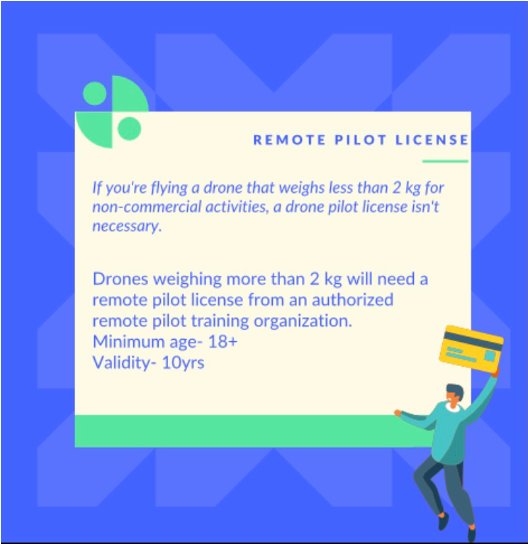
    • There are a significant number of people who fly nano and micro drones in India. Including operators of model aircraft. Ubiquitous drones include drones flying at marriage parties and increased use of drone shots in the entertainment field. These people now can fly these drones/model aircraft without having a drone pilot license. This singular step itself will bolster not only self-employment but also reduce unemployment in the country. Being a drone pilot is also looked at as one of the coolest things today.
    • Drone imports will still be controlled by DGFT (director-general foreign trade). This currently could be looked at as a bit of an impediment for those entrepreneurs who are dependent on imports of certain drone parts. However, in the long run, this provision could bolster making those parts in India and selling them abroad. Easing of import of drones/drone parts currently and bringing in stricter rules as time goes by would have been a better option. This aspect could be looked at by the government to promote innovators and children who are looking to learn, for who importing certain critical drone components is vital. It is highly recommended that drone imports controlled by DGFT be done away with for the time being.
    • The creation of a drone corridor is likely to change the face of the Indian Economy. Logistics Operation, last-mile connectivity, the short haul of goods between two towns, and the cost of connectivity between places are set to change dramatically. This change alone, in my opinion, is likely to bring a significant impact in times to come. Not many have realized the power of creating drone corridors and all that remains to be seen is how this rule is taken forward by the government in improving logistics connectivity and creation of drone highways in times to come.
    • The drone research and development Organisation as a provision in the rule is futuristic and is likely to change the face of the drone industry in India. Correctly harnessed and nurtured, this rule could enable the development of many centres of excellence of drones. The government needs to create an equivalence of ‘Silicon Valley’ for the drones so that organisations dealing with hardware, software, artificial intelligence et cetera can come together and take this endeavour forward.
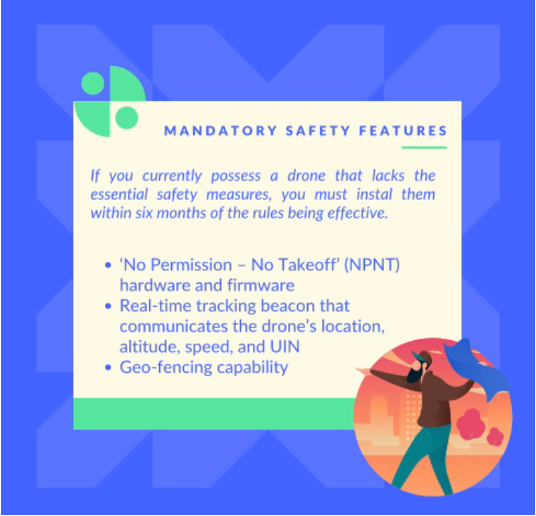
    • There are several companies across the world that are working on unmanned traffic management (UTM) including an Indian company called Avianco. These companies now could collaborate with the government of India in providing unmanned traffic information and could work as a service provider for tracking of drones as well as providing drone operators with simple NPNT permission, which is one of the provisions in the new drone policy.
    • Third-party drone insurance could be adequate as specified in the rules. However, drones are costly equipment. Readers would be surprised to know that most of these drones are costlier than small hatchback cars. Therefore, owners of these drones may want to go for comprehensive insurance. This is a huge opportunity for insurance and insurance facilitation companies like TropoGo, in the area of drone insurance. In times to come, the number of drone insurance policies may well overtake the number of vehicle insurance policies in the world. Since drones are set to replace many of the traditional workforce and industries.
    • ‘Drone promotion Council’ as specified in these rules should have come up as of yesterday, but it’s never too late. Those countries who missed this ‘Drone-Bus’ may get left behind in the overall economic progress in times to come. Therefore, setting up the ‘drone promotion council’ is the need of the hour.
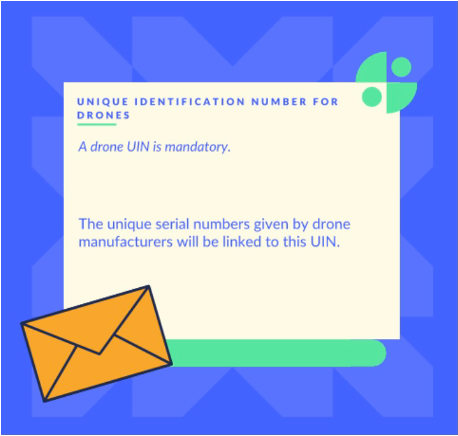
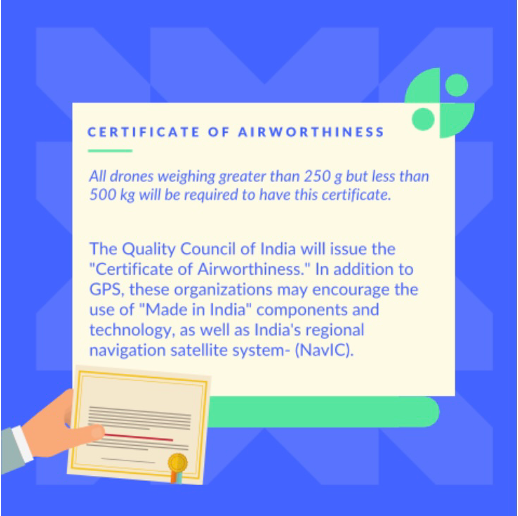
    • Highlights of the new ‘Draft Drones Rules’ are shown below:

     

    The new drone policy of India is a welcome change. It is a well-thought-out, simplified policy that India has seen in recent times. This policy aligns with Prime Minister Modi‘s vision for India in terms of reducing unemployment, improving ease of doing business, self-employment, making India go digital, and becoming a technology leader in the world. What the future holds will entirely depend on how these rules are interpreted and implemented efficiently without the usual horrors of the red-tapism of the past.


    Image Credit: www.geospatialworld.net
     

  • Drone Threats: Detecting and Countering Them

    Drone Threats: Detecting and Countering Them

    The drone attack at the Jammu airbase in the early hours of Sunday, June 27, was a first-of-its-kind in India. It has rattled the security forces, but more than that, it has shown how acts of terror can be perpetrated in the future. To get battle-ready, we need to understand the different kinds of drones, how they work and how lethal they can be.

    Size Matters

    Drones come in different sizes and shapes. Their major classification is fixed-wing and rotary-wing. They can be classified as per:

    1. Weight
    2. Function
    3. Area of application

    In India, the Ministry of Civil Aviation (MoCA) classifies them as per their weight. Drones weighing below 250 gms are called nano drones, above 250 gms but below 2 kgs are called micro drones, above 2 kgs but below 25 kgs are small drones. Anything above 25 kgs is a large drone, as per MoCA in India.

    Small toy drones can be classified as nano drones. Although these nano drones can be quite lethal in intelligence gathering, like armed drones without artificial intelligence and machine learning (AI/ML) (which would give it pinpoint accuracy), they aren’t lethal. Most countries have exempted these drones from the legal gamut because they largely fall in the toy category. However, swarms of these drones designed to explode and controlled by a mother ship can be quite lethal. And currently, no countermeasures to such drones exist. Recently, F/A-18 Hornet launched such a swarm to demonstrate the capability of such nano drones.

    Equation quickly changes in the micro drone category. As the weight of the drone increases, so does its lethality, and being a manageable size, these drones have found favour with many enthusiasts. These are the class of drones that were researched by the open source communities in the early 2000s. They indeed ushered in the age of drones. Designed well, they have an endurance limit of over 40 minutes and can travel in an autonomous mode for over 30 km one way. Mostly made of plastics, polymers, these drones can be difficult to detect and prosecute.

    Small drones are the ones that are increasingly being used by anti-national elements. Be it to drop contraband, weapons, or to carry out a Kamikaze-style attack. Even the low-end of small drones (up to 6 kgs) can carry an adequate amount of explosives to cause serious damage. These are also the drones that are used in helping humanity. These drones can be fixed-wing, rotary-wing, or hybrid.

    To own and fly a drone weighing more than 250 gms and less than or equal to 25 kgs, whether, for commercial or recreational purposes, one would need Operator Permit-I. To get this permit one needs to go through the due diligence process of the DGCA (Directorate General of Civil Aviation), MoCA.

    The same procedure applies if you want to become a drone pilot in India. The due diligence, examination, and certification process is similar to that of a manned aircraft pilot. The only difference, you just need to clear the 10th standard exams to become a drone pilot. The due diligence process includes paperwork like police verification, checking Aadhaar, and passport details, among other things. Therefore, only a bonafide citizen of India with no criminal record can become a drone pilot in India.

    How to Counter Drones

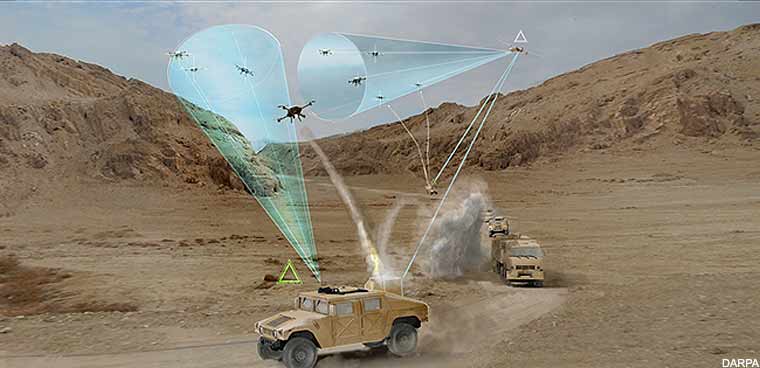
     Drones can be countered through three methods, namely:

    1. By jamming the drone controller frequency (2.4 GHz, 5.8 GHz, occasionally 433 MHz and 900 MHz).
    2. By jamming the GNSS or Global Navigation Satellite Systems, like GPS, GLONASS, GAGAN, the Indian Regional Navigation Satellite System, also known as NAVIC, etc.
    3. The hard kill option of shooting the drone down using guns, lasers, and electromagnetic guns always exists.

    To counter drones, you need to detect them first. It can be done in three ways, namely:

    1. Use drone radar: It works like a conventional radar, which sends out energy and looks for reflected energy to pick up these drones. Challenge however is that the reflected energy from the small drones is so low that it becomes impossible to pick nano and micro drones with drone radars.
    2. Pick up drone control signal: Picking up drone control signals is fairly easy because they operate in the ISM (industrial, scientific, and medical) band of frequencies. However, most WiFi and other equipment work on this frequency, and separating drone frequency signatures from these becomes a challenge.
    3. Pick up noise generated by the propeller tips: This is another method to pick up drones. In ideal conditions, it has proven effective in picking up drones at a very large range. However, the challenge is if the ambient noise is higher and ambient conditions are not suitable, drones don’t get picked up at all.

    Drones for Good

     Drones today are being used for a variety of services, beyond the military.

    1. Disaster relief and humanitarian assistance: Drones are proving to be indispensable in this area. Be it floods, forest fire, COVID assistance or locust control, drones are everywhere, doing what they do, silently.
    2. In scientific quest: Drones are doing a wonderful job in this area, be it marine applications, studying agriculture, soil/ water pollution, carrying out weather surveys, name an area and drones can be put to task.
    3. In the entertainment industry: Drones have replaced expensive helicopters, and today even the producer of a low-budget show can get a drone shot at minimum cost. As a result, drone shots are now seen in shows and movies more than ever.

    Tip of the Iceberg

    Drones for good far outweigh the application of drones for anti-national and terror activities. The drone industry needs to be nurtured if any country aspires to become an economic giant in the future. No wonder Goldman Sachs has said that the $100-billion drone industry is just the tip of the iceberg in terms of its business potential over the next five years.