Tag: democracy

  • The Cultural Revolution from the Right: From the Democratic Concept of the People to its Ethnic-religious Understanding

    The Cultural Revolution from the Right: From the Democratic Concept of the People to its Ethnic-religious Understanding

    Despite all the real political problems we face, it is essential for the twenty-first century to defend the equality of all people, regardless of biological differences such as gender or ethnicity. It is not our biology that defines us as human beings, but our morality.
    According to Dominique Moisi, the Western states are consumed with fear of decline, the Islamic-Arab world is full of despair at unfulfilled promises, and East and Southeast Asia are full of hope for a better life. These global political sentiments are largely responsible for the escalation of conflicts, the disintegration of social cohesion and the spread of violence. 
    More than 50 years ago, a cultural revolution from the left shook the whole world. In the USA, there were demonstrations against the Vietnam War, and the hippie movement gathered hundreds of thousands in search of a new lifestyle and attitude to life. Flower, power, love was the motto of the legendary Woodstock. In Germany, young people turned against old traditions and the concealment of their parents’ and grandparents’ guilt under fascism. But here, too, the double face of the youth movement became apparent: when they celebrated the North Vietnamese leader Ho Chi Minh in their demonstrations, they were in no way aware of the political practice in North Vietnam. This process was even more dramatic during the Chinese Cultural Revolution when the youth were mobilised to ultimately legitimise the claim to power of the “Great Leader” Mao-TseTong. The lesson of that period was that a cultural revolution must precede political change. For some time now, a cultural revolution from the right has been following this pattern. It is characterised on the one hand by social developments in polarised societies, and on the other by a targeted and strategic discourse on the part of the new right. Without underestimating the importance of personalities such as former and newly elected President Trump, as well as Erdogan in Turkey and Putin in Russia (and many others) for this development, they have only been able to achieve such success because they have tapped into the “zeitgeist”. According to Dominique Moisi, the Western states are consumed with fear of decline, the Islamic-Arab world is full of despair at unfulfilled promises, and East and Southeast Asia are full of hope for a better life. These global political sentiments are largely responsible for the escalation of conflicts, the disintegration of social cohesion and the spread of violence.
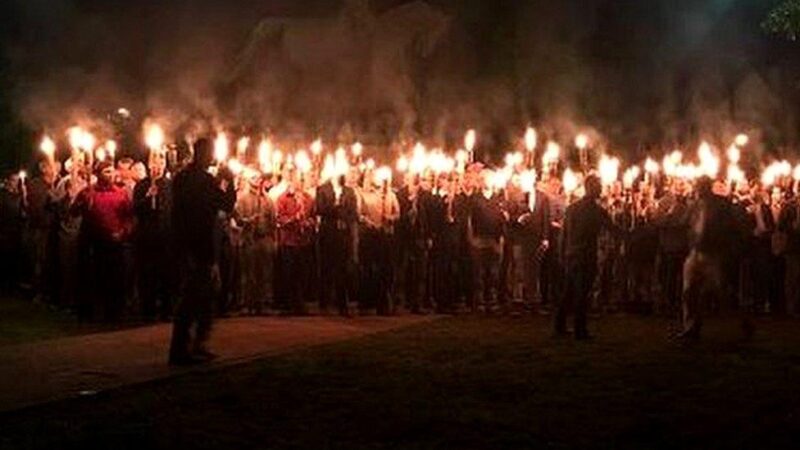
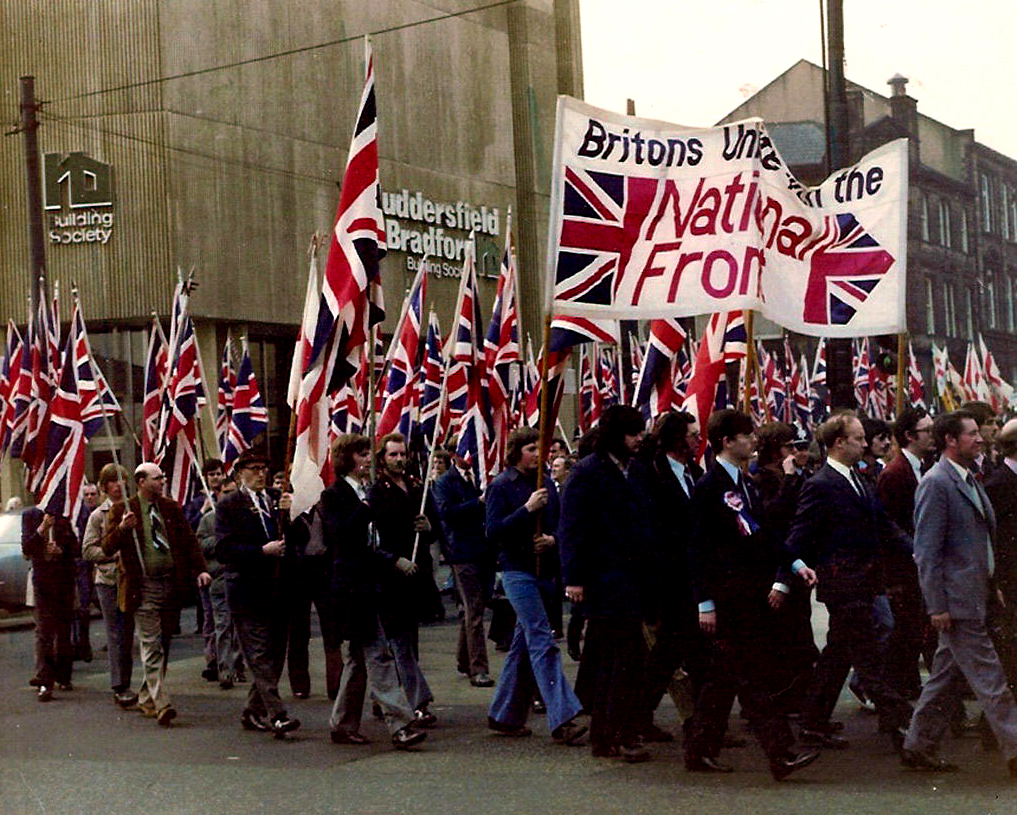
    In the Western world, instead of recognising the equality of other civilisations, nations and states, the “others” were blamed for the loss of the “white man’s” superiority. The ideology of the white man’s burden to educate the uneducated and indigenous peoples of the world, developed at the beginning of the last century, was revived after the fall of the Soviet Union, but could no longer be sustained with the rise of the others and the newly industrialised nations. However, a dilemma arose – if the success of the others was attributed to them, they would be strengthened and the whites would be even less able to maintain their own sense of superiority. So people looked for internal others to blame for their own decline. This is at the heart of the cultural revolution from the right. It is explained by the fear of no longer being able to maintain the supposed superiority of the “white man” if, for example, a country like Indonesia (i.e. no longer just Japan and China) overtakes Germany’s gross domestic product around 2030. Meanwhile, the US, Germany and many other European countries are not only no longer relatively superior, but parts of the US, for example, are at levels that used to be ascribed only to developing countries. And scapegoats are easy to find and, above all, interchangeable – sometimes it can be emancipated women, migrants, the “elites”, the Chinese, Africans, African-Americans, or anyone who is different. Trump’s statement that migrants are taking “black jobs” from US Americans reveals the core of this ideology: the MAGA movement is the best illustration of this development. Despite Trump’s irrationality and narrow-mindedness, “Make America Great Again” can only take hold if many people fear decline or have already experienced it. Like the masterminds of the cultural revolution on the right, they are trying to conquer the more rural regions first.
    The reference to ethnic pluralism is also one of the defining characteristics of the New Right. The right of all cultures and ethnic groups to exist is unconditionally recognised, but only as long as people remain among themselves or on the territory intended for them. Trump’s idea of expelling millions of Latinos after winning the election corresponds perfectly with the German right’s idea of enforcing re-migration. In Germany, Carl Schmitt and Martin Heidegger, Ernst Jünger and Oswald Spengler, and even Nietzsche, are relativised in order to legitimise the cultural revolution of the right. Antonio Gramsci, actually a progressive Marxist, whose concept of achieving cultural hegemony in the “pre-political space” is pursued by the Right as “metapolitics”, gains central importance.
    At its core, however, the new right is about undermining human equality – in its view, we are only equal to our own nation or religion and gender. This exclusionary equality only with one’s own kind is at the heart of the right’s cultural revolution, whose ideal model is itself based on hierarchical notions, a graded dignity. Such attempts to undo the gains of the struggle for equality in a counter-revolution can be found all over the world – whether in nationalism, ethnocentrism, misogyny, cultural relativism (“they just have a different culture”) or thinly veiled racism.
    The only thing “new” about this right-wing movement is that it uses different terms. The New Right concentrates on the “battle for the heads”, leaving the battles for the streets and, in some cases, the parliaments to other groups of the extreme right. The storming of the Capitol and the German Bundestag were such actions of the extreme right. It must be admitted that the whole world is in turmoil. At its core, however, the new right is about undermining human equality – in its view, we are only equal to our own nation or religion and gender. This exclusionary equality only with one’s own kind is at the heart of the right’s cultural revolution, whose ideal model is itself based on hierarchical notions, a graded dignity. Such attempts to undo the gains of the struggle for equality in a counter-revolution can be found all over the world – whether in nationalism, ethnocentrism, misogyny, cultural relativism (“they just have a different culture”) or thinly veiled racism. It is also marked by the revival of toxic masculinity (Raewen Connel) through the MAGA movement and in particular Trump’s enthusiasm for the wrestling mentality and martial arts. Opinions can be divided on these as sports, but they have no place in politics and point to an absolutely exaggerated and violent masculinity that Trump embodies. These political discourses are used to win elections in the West. In one sentence, the New Right shifts the concept of the democratic people to the ethno-religious people.
    When the few people of Pegida (Patriotic Europeans to defend the Abendland) in Germany shout into the camera: “We are the people”, they are turning the slogan of the democratic revolution of 1989 into an ethno-nationalist revolution. From the mid-nineteenth century to the mid-twentieth century, we have witnessed this transformation from the democratic to the ethnic concept of the people. Despite all the real political problems we face, it is essential for the twenty-first century to defend the equality of all people, regardless of biological differences such as gender or ethnicity. It is not our biology that defines us as human beings, but our morality.
    Feature Image Credit: Equality Trust
    from ‘The Link Between Inequality and the Far-Right’ – https://equalitytrust.org.uk
    The far-right has always been part of politics. The current global wave of far-right populist political movements began in the late 1970s, grew in the 1990s, and accelerated dramatically in the late 2000s. It has mirrored a sharp increase in inequality across developed economies, the globalisation of neoliberal economics, and the creation of an international super-rich. 
  • The catastrophe of modern capitalism: Inequality as an aim in Neo-Liberal-Ideology

    The catastrophe of modern capitalism: Inequality as an aim in Neo-Liberal-Ideology

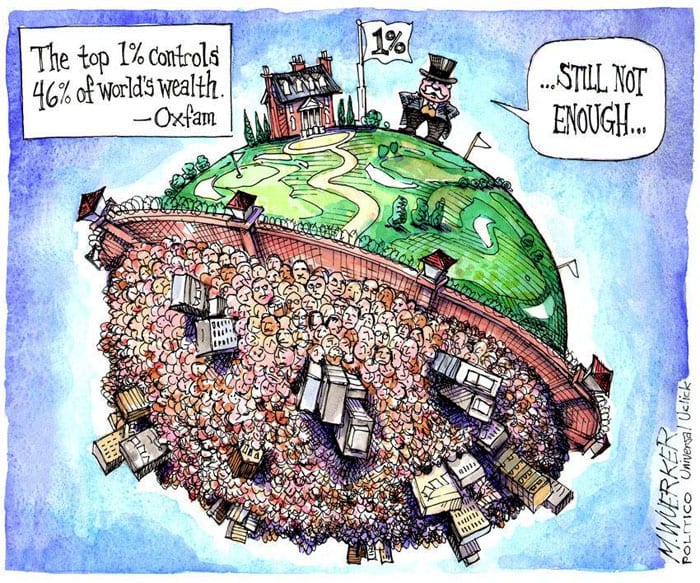
    Neoliberalism is the dominant form of capitalism that began in the 1980s as a way to promote global trade and grow all economies. That was a false promise, whereas in essence it supported individuals amassing massive wealth in the name of market forces, at the expense of common man by ensuring states minimise their role and eliminate welfare economics. It ensured least-developed and developing economies remained resource providers to developed economies, exemplifying extraction and exploitation. Neoliberalism is a top down economic policy that does not benefit those who are impoverished. The inequality we see on a global scale is mind-numbing. In 2006, the world’s richest 497 people were worth 3.5 trillion US dollars representing 7% of the world’s GDP. That same year, the world’s lowest income countries that housed 2.4 billion people were worth just 1.4 trillion US dollars, which only represents 3.3% of the world’s GDP. The situation today is far worse as Andreas Herberg-Rothe explains in his critical analysis below. The world is in urgent need of freeing itself from the clutches of neoliberal capitalism. 


    ..neoliberalism contains a general tendency towards an extensive economisation of society. Thus, inequality transcends the economy and becomes the dominant trend in society, as in racism, radical extremism, and hate ideologies in general: Us against the rest, whoever the rest may be.


    Following on from the initial question about Hannah Arendt’s thesis that equality must be confined to the political sphere, we must ask how democracy and human rights can be preserved in the face of social inequality on an extraordinary scale. By the end of this century, 1% of the world’s population will own as much as the “rest” of the other 99%. And already today, only 6 people own more property than 3.6 billion. Let us take a closer look at some of the ideas of the currently dominant neo-liberalism, which sheds some light on the acceptance of these current obscene inequalities. For this ideology, social inequality is a means to greater wealth. However, since it sets no limits on social inequality, it can be used to legitimize even obscene inequalities. We argue that neoliberalism as an ideology is the result of the spread of a specific approach to economic thought that has its roots in the first half of the twentieth century, when Walter Lippmann’s seminal book “An Inquiry into the Principles of the Good Society” (1937), followed by Friedrich August von Hayek’s “The Road to Serfdom” (1944), gave rise to neoliberalism. During the Cold War period, neoliberals gained more and more ground in establishing a global system. With the support of Milton Friedman and his “Chicago Boys,” the first attempt to establish a pure neoliberal economic system took place in Chile under the military dictatorship of General Pinochet in the 1970s. In the last decade of the Cold War, neoliberal architects such as Margaret Thatcher and Ronald Reagan began to impose the new economic model. Since the end of the Cold War, the final development was that neoliberalism became THE hegemonic economic system, as capitalism was de jure allowed to spread unhindered worldwide, and neoliberalism continued on its way to becoming the dominant belief system.

    The critical message in this sense is the following: This process is not limited to an economic dimension – neoliberalism contains a general tendency towards an extensive economisation of society. Thus, inequality transcends the economy and becomes the dominant trend in society, as in racism, radical extremism, and hate ideologies in general: Us against the rest, whoever the rest may be.

    When we talk about global inequality in the era of neoliberalism, we are referring to two other major developments: To this day, inequality between the global North and South persists. While the total amount of poverty has decreased, as seen in the World Bank’s report (2016), there is still a considerable gap between those countries that benefit from the global economy and those that serve as cheap production or commodity areas. The second development takes place in countries that are more exposed to the neoliberal project. In this sense, societies are turning into fragmented communities where the “losers of neoliberalism” are threatened by long-term unemployment, a life of poverty, social and economic degeneration.

    After three decades of intense global neo-liberalism, the result has been a significant increase in social inequalities, polarization and fragmentation of societies (if not the entire world society), not to mention a global financial crisis in 2008 caused by escalating casino capitalism and the policies of a powerful global financial elite.

    We are witnessing a global and drastic discontent of peoples, fears and anger, feelings of marginalization, helplessness, insecurity and injustice. After three decades of intense global neo-liberalism, the result has been a significant increase in social inequalities, polarization and fragmentation of societies (if not the entire world society), not to mention a global financial crisis in 2008 caused by escalating casino capitalism and the policies of a powerful global financial elite. We witness a global and drastic dissatisfaction of the peoples, fears, and anger, the feelings of marginalization, helplessness, insecurity, and injustice. After three decades of intense worldwide Neo-Liberalism, the result significantly intensified social inequalities, polarization, and fragmentation of societies (if not the entire world society), not to mention a global financial crisis in 2008 caused by escalating casino capitalism and the policy of a powerful global finance elite.

    The central critique is that neoliberalism includes social inequality as part of its basic theory. Such capitalism emphasizes the strongest/fittest (parts of society) and uses inequality as a means to achieve more wealth.

    Remarkably and frighteningly, the situation outlined does not provoke the oppressed, marginalised, and disadvantaged populations to turn against their oppressors and their exploitation. These people tend to sympathize with ideological alternatives, either with more triumphant (right-wing) populist movements and parties or are attracted by radical/fundamentalist religious groups such as the Islamic State. The result is an increase in polarization and violence, and even more protracted wars and religious-ideological disputes. Europe is not exempt from the trend toward obscene social inequality. We also find a polarization between rich and poor, between those who have good starting conditions and those who have little chance of prosperity, between those who are included and those who feel excluded. The fact that Europe has so far largely avoided populist parties gaining administrative power (although we have already witnessed this process in France, Hungary and Poland) may be due to the remnants of the welfare state. In this respect, at least a minimum of financial security remains and limits the neoliberal trend. In the United States, on the other hand, a flawless populist could reach the highest office. The people, stuck in their misery, fear and insecurity, voted for a supposed alternative to the neoliberal establishment, but above all against other social outcasts whom they blamed for their misery. This brings us to the central critique of neoliberalism, a system that has caused fundamental social oddities, the impact of which as an ideology has been highlighted above. The central critique is that neo-liberalism includes social inequality as part of its basic theory. Such capitalism emphasizes the strongest/fittest (parts of society) and uses inequality as a means to achieve more wealth.

    In an interview with the German magazine Wirtschaftswoche, Hayek spoke bluntly about the neoliberal value system: He emphasizes that social inequality, in his view, is not at all unfortunate, but rather pleasant. He describes inequality as something simply necessary (Hayek, 1981). In addition, he defines the foundations of neo-liberalism as the “dethronement of politics” (1981). First, he points out the importance of protecting freedom at all costs (against state control and the political pressure that comes with it). The neoliberals see even a serious increase in inequality as a fundamental prerequisite for more economic growth and the progress of their project. One of the most renowned critics of neoliberalism in Germany, Christoph Butterwegge (2007), sees in this logic a perfidious reversal of the original intentions of Smith’s (reproduced in 2013) inquiry into the wealth of nations in the current precarious global situation. The real capitalism of our time – neoliberalism – sees inequality as a necessity for the functioning of the system. It emphasizes this statement: The more inequality, the better the system works. The hardworking, successful, and productive parts of society (or rather the economy) deserve their wealth, status, and visible advantage over the rest (the part of society that is seen as less strong or less ambitious). The deliberate production of inequality sets in motion a fatal cycle that leads to the current tense global situation and contributes to several intra-societal conflicts.

    The market alone is the regulating mechanism of development and decision-making processes within a society dominated by neo-liberalism, and as such is not politics at all. This brings us closer to the relationship between neoliberalism and democracy. The understanding of democracy in neoliberal theory is, so to speak, different. Principles such as equality or self-determination, which are prominent in the classical understanding of democracy, are rejected. Neo-liberalism strives for a capitalist system without any limits set by the welfare state and even the state as such, in order to shape, enforce and legitimize a society dominated only by the market economy. Meanwhile there are precarious tendencies recognizable, where others than the politically legitimized decision-makers dictate the actual political and social direction (e.g. the extraordinarily strong automobile lobby with VW, BMW and Mercedes in Germany or big global players in the financial sector like the investment company BlackRock). Neoliberalism only seemingly embraces democracy. The elementary democratic goals (protection of fundamental and civil rights and respect for human rights) can no longer be fully realized. Democracy cannot defend itself against neo-liberalism if political decision-makers do not resolutely oppose the neo-liberal zeal for expansion into all areas of society. The dramatic increase in inequality coincides with the failure of the state as an authority of social compensation and adjustment, as neoliberalism eliminates the state as an institution that mediates conflicts in society. To put it in a nutshell: Whereas in classical economic liberalism the state’s role is to protect and guarantee the functioning of the market economy, in neoliberalism the state must submit to the market system.

    Our discussion of neoliberalism here is not about this conceptualization and its history, which would require a separate article. Nevertheless, we want to emphasize that in neo-liberalism, social inequality is a means to achieve more wealth for the few. Therefore, we argue that there must be a flexible but specific limit to social inequality in order to achieve this goal, while excessive inequality is counterproductive.

    As noted above, moderate levels of inequality are not necessarily wrong per se. In a modern understanding, it also contributes to a just society in which merit, better qualifications, greater responsibility, etc. are rewarded. The principle of allowing differences, as used in the theory of the social market economy, is a remarkably positive one when such differentiation leads to the well-being of the majority of people in need. However, neo-liberalism adopts a differentiation that intensifies inequality to a very critical dimension. The current level of social inequality attacks our system of values, endangers essential democracy, and destroys the social fabric of societies. Even if we consider a “healthy” level of inequality to be a valuable instrument for a functioning market society, what has become the neoliberal reality has nothing to do with such an ideal. Neoliberalism implies an antisocial state of a system in which inequality is embedded in society as its driving mechanism. Consequently, we witness a division between rich and poor in times of feudalism. A certain degree of social equalization through the welfare state and a minimum of social security is no longer guaranteed. The typical prerequisites today are flexibility, performance, competitiveness, etc. – In general, we see the total domination of individualism within neo-liberalism, leading to the disintegration of society. In one part of the world, mainly in the Global South, we observe the decline of entire population groups. In contrast, in other parts of the world we see fragmented societies in hybrid globalization and increasing tendencies towards radical (religious) ideologies, violence and war.

    It must be acknowledged that neoliberalism was one of the causes of the rise of the newly industrialized nations, but the overemphasis on individual property also contributes to obscene inequality and thus to the decline of civilized norms.

    The Polish-British sociologist Zygmunt Bauman summed up this problem by comparing it to the slogan of the French Revolution: “Liberté, Egalité, Fraternité”. According to the proponents of the time, each element could only be realized if all three remained firmly together and became like a body with different organs. The logic was as follows: “Liberté could produce Fraternité only in company with Egalité; cut off this medium/mediating postulate from the triad – and Liberté will most likely lead to inequality, and in fact to division and mutual enmity and strife, instead of unity and solidarity. Only the triad in its entirety is capable of ensuring a peaceful and prosperous society, well integrated and imbued with the spirit of cooperation. Equality is therefore necessary as a mediating element of this triad in Bauman’s approach. What he embraces is nothing less than a floating balance between freedom and equality. It must be acknowledged that neoliberalism was one of the causes of the rise of the newly industrialized nations, but the overemphasis on individual property also contributes to obscene inequality and thus to the decline of civilized norms. When real socialism passed into history in 1989 (and rightly so), the obscene global level of social inequality could be the beginning of the end (Bee Gees) of neo-liberalism, centered on the primacy of individual property, which is destroying the social fabric of societies as well as the prospects for democratic development. Individual property is a human right, but it must be balanced with the needs of communities, otherwise it would destroy them in the end.


    Feature Image Credit: cultursmag.com

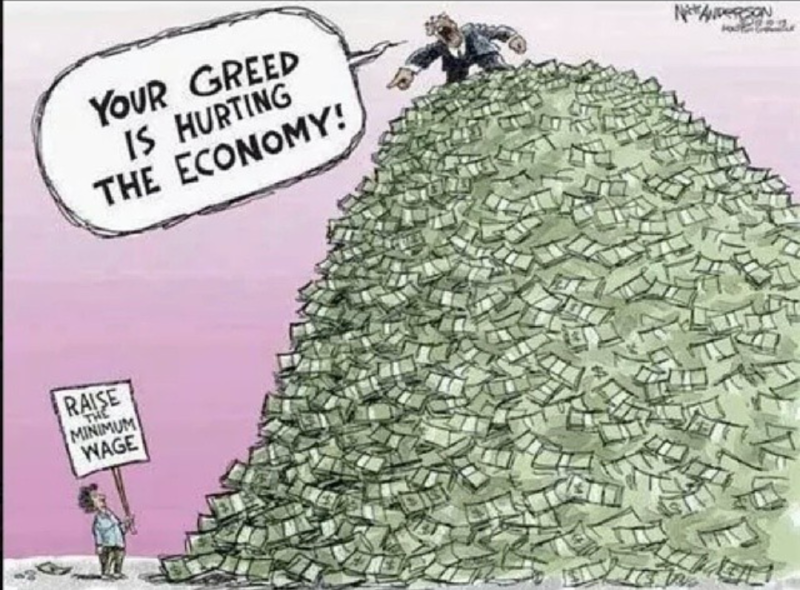
    Cartoon Image Credit: ‘Your greed is hurting the economy’ economicsocialogy.org

  • From Global Democratisation to the Battle of World Powers? Contradictory Developments in the Present

    From Global Democratisation to the Battle of World Powers? Contradictory Developments in the Present

    Shortly after the democratic revolutions of 1989-1991, Francis Fukuyama wrote his highly influential essay on the end of history- that is, the end of violent history through global democratization.

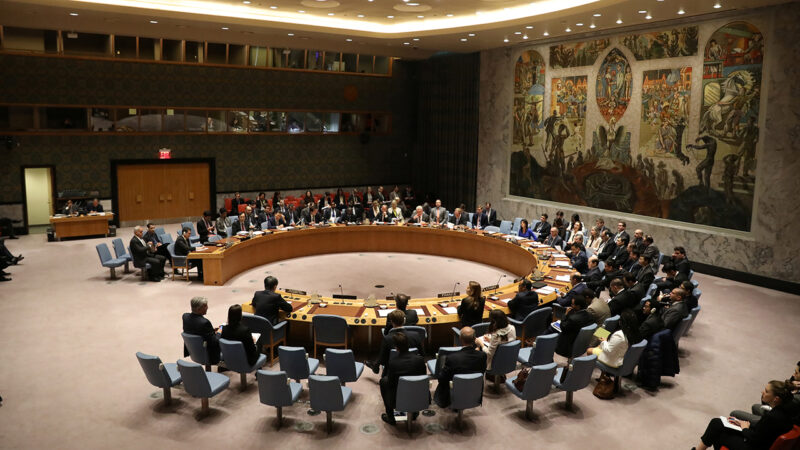
    Members of the United Nations Security Council sit during a meeting on Syria at the United Nations Headquarters in New York City, NY, U.S. April 5, 2017. REUTERS/Shannon Stapleton – RC141DE9DE00. Image credit: world101.cfr.org

    The world has changed so dramatically since the end of the Cold War that it is necessary to look back in order to understand today’s global political situation. In total, there are five different discourses that will be discussed here as representative of historical developments. They range from Fukuyama’s thesis of global democratization to various versions of coming anarchy and global (“new”) civil wars (Kaplan, Kagan, Kaldor, Münkler), Huntington’s clash of civilizations, the concept of global governance and the “rise of the others” (Zakaria, Zhang), a multipolar world of nation-states, and the re-nationalization of world politics. My central thesis is that all five discourses are present in contemporary political conflicts and that we cannot neglect any of them.

    But if you look at the history of democracy, you can almost discover a law of motion of democratic revolutions based on Hannah Arendt’s analysis of the French Revolution. It starts with a democratic revolt against a dictator or colonial rule. Then the revolutionaries become radicalized, civil war breaks out, a new, this time totalitarian ruler takes power, and only after his overthrow does democracy prevail.

    Shortly after the democratic revolutions of 1989-1991, Francis Fukuyama wrote his highly influential essay on the end of history- that is, the end of violent history through global democratization. And his thoughts were very timely. What better confirmation could there be when, in just a few years, the old dictatorships from Berlin to Vladivostok, which only called themselves communist but were not, but rather geriocracies, were swept away in a wave of democratisation. The Arab Spring seemed to confirm his thoughts, as here, too, long-standing dictatorships were overrun by democratic movements virtually overnight, as in Egypt and Tunisia. But even then, there were counter-movements that contradicted the assumed linear process of global democratization. Fukuyama, therefore, had to defend his original thesis and argue that, despite all the setbacks, democracy was still at the end of history. In a way, he was echoing Hannah Arendt’s theory of revolution. The reverses of democratization in Russia, many Arab countries, and the global civil wars have often been cited as cultural – Russia, China, and Middle Eastern Islam were still too culturally authoritarian to allow for genuine democratization. But if you look at the history of democracy, you can almost discover a law of motion of democratic revolutions based on Hannah Arendt’s analysis of the French Revolution. It starts with a democratic revolt against a dictator or colonial rule. Then the revolutionaries become radicalized, civil war breaks out, a new, this time totalitarian ruler takes power, and only after his overthrow does democracy prevail. The French overthrew their king and got the emperor, Napoleon; the Russians revolted against the czar and got Stalin; the Chinese fought against their emperor and got Mao Tse-tung; the Germans overthrew their emperor after their military defeat and got the leader Adolf Hitler. Resistance to colonial rule also often followed this law of democratic movement: the colonial rulers were driven out and replaced by new rulers.

    In the same year that the Soviet Union collapsed, the terrible civil wars in the former Yugoslavia began, the first Chechen war, followed by countless “markets of violence” and so-called new wars, which in a narrower sense were new civil wars and wars of state collapse. Mass rape became a weapon of war to demoralize the enemy, and an almost complete dissolution of the boundaries of violence took on a life of its own, seeming to make any rational resolution of conflicts impossible. Warlords, drug lords, terrorists, child soldiers, and “archaic” warriors who seemed to belong to the past dominated warfare worldwide. Against this backdrop, Western armies were transformed into intervention armies that were supposed to maintain a minimum of order on the borders of the U.S. “liberal empire” in order to prevent global anarchy (Robert Kaplan) or a “world civil war” (Enzensberger) – at least according to Western discourse. From the perspective of the countries affected by these wars of intervention, however, they were wars to maintain their immediate exploitation (especially in Africa), to keep corrupt regimes that collaborated with Western states alive (Arabian Peninsula), or to eliminate those that opposed the West (Iraq, Iran, Afghanistan). In the open spaces of violence and violent markets, high-value illegal goods were traded: Drugs, blood diamonds, human beings (women and child slaves), weapons and rare earths.

    Linked to these wars of intervention was the apparent cultural triumph of the West, which is associated with the term globalisation, but was, in fact, initially an Americanization, the so-called McDonaldization or Mac World. However, this cultural globalization of the American way of life, combined with U.S. wars of intervention, led to a backlash as many societies saw their cultural identity threatened. Taken together, these two factors triggered Samuel Huntington’s concept of the clash of civilizations.

    In their liberal hubris, his Western critics argued that there could be no clash of civilizations because only the West had produced a civilization – the others were religions or cultures, but not civilizations.

     His book has often been misunderstood as a guide to action for the coming war – but in fact, he had written the book to prevent that clash, and he argued for the U.S. to withdraw from small wars around the world because he saw the liberal identity of the U.S. at risk. Perhaps more importantly, he saw non-Western religions not just as cultures but as civilizations that had grown out of their respective religions. In their liberal hubris, his Western critics argued that there could be no clash of civilizations because only the West had produced a civilization – the others were religions or cultures, but not civilizations.

    While globalization initially had the effect of Americanization, in the medium term, it facilitated the “rise of the others” (Zakaria), the great empires and civilizations that had perished under European colonization and Euro-American hegemony. As a result of their initial economic success (Malaysia, Singapore, the Asian Tigers, China, India, the Pacific Rim countries), they no longer sought to imitate Western culture in order to be recognized as equals, but to develop their own identity, which they considered superior to the West. From the point of view of Western discourse, the “others” were, at best, immature children or barbarians – now the West suddenly sees itself in the role of other civilizations, seeing themselves as superior to the West. One expression of this changed self-image was Zahng Weiwei’s book China – The Civilizational State. We are now experiencing a paradoxical situation in which the West is consumed by fear of decline and the dissolution of its own sense of superiority, leading to the rise of right-wing populist and radical right-wing movements; large parts of the Asian world population are filled with hope for a better life, and the Islamic-Arab world is desperate in the face of unfulfilled promises, leading to the radicalization of young people in Islamist movements.

    The concept of global governance was invented at the beginning of the 21st century as a reaction to advancing globalization. The assumption, correct in itself, was that the absence of a democratic world state did not necessarily mean that there was no possibility of at least regulating global problems, subjecting them to rules, if not solving them. Global governance was based on the idea of cooperation between nation-states, non-governmental organizations, globally active institutions, the emerging global civil society, globally active corporations, and global players. However, the resurgence of big states has pushed global governance into the background, just like globalization itself. Some states want to reverse globalization, at least in the economic and political spheres. This applies at least to Western democracies, whose citizens often see themselves as the losers of globalization.

    The relative loss of importance of the Western states and the institutions they helped to create, such as the U.N., cannot be overlooked – the overstretched role of the U.S. as the world’s policeman is due, on the one hand, to its own lack of investment in development and education, and on the other to the rise of others.

    What we are currently experiencing is not simply a multipolar world of great powers, even if there are signs of a renaissance of great power politics. Instead, we are witnessing a contradictory process of the five discourses alluded to here: Democratization, failed states, the clash of civilizations, further globalization, and the renaissance of great power politics. The still existing, but also partly former, Global South is still dependent on cooperation, even if new forms of cooperation are emerging, such as the expansion of the BRICS, which compete politically but cooperate economically. The relative loss of importance of the Western states and the institutions they helped to create, such as the U.N., cannot be overlooked – the overstretched role of the U.S. as the world’s policeman is due, on the one hand, to its own lack of investment in development and education, and on the other to the rise of others. What remains unpredictable is whether the emerging states of the Global South and the former superpower Russia will make the same mistake as the West in its centuries-long quest for hegemony, namely, to see itself as superior to all others. Eurocentrism would be replaced by an equally problematic ethnocentrism, and a nationalist dynamic would be set in motion that would be difficult for states to control. Even if all current developments point to the contrary and we see a return of tribalism in the form of “us versus them – whoever the others are” discourses, the only option left is to revive intercultural dialogue if we do not want to experience “another bloody century” (Colin S. Gray).


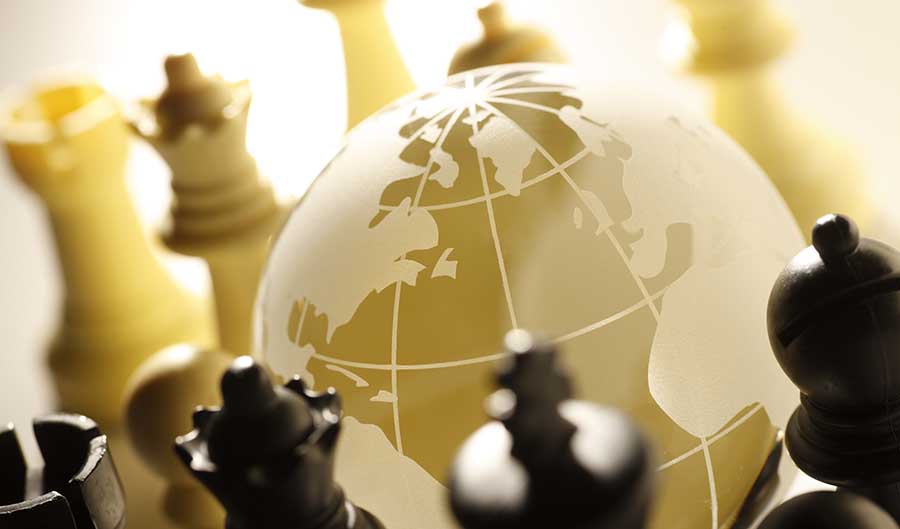
    Feature Image Credit: chinausfocus.com

  • The myth of Magna Carta: The struggle still goes on

    The myth of Magna Carta: The struggle still goes on

    The rise of democratic, elected Parliaments in England and Scotland just 50 years after the Magna Carta is not a coincidence but a consequence of that demand to share power. It is from the Magna Carta that the English writ of habeas corpus evolved, safeguarding individuals and their freedoms against unjust and unlawful imprisonment with the right to appeal.

    We now take our liberties and rights for granted, and the way of life it guarantees us is inherent. But what we now have has come after a long evolution process, and often they flowed out of something else quite unintended. The Magna Carta is a case in point. The English-speaking world recently celebrated over 800 years of the Magna Carta or Great Charter, which is synonymous with fundamental rights and the rule of law that are the cornerstones of modern democracy. Much of the world believes the Magna Carta came out of an eruption of a long-suppressed yearning among ordinary people for protection against the monarch and nobility. But it is not so.

    The Magna Carta was thus not a grand demand for equality, basic freedoms or the rule of law, but just a narrow demand for restricting the ruler’s powers, to ring-fence the interests of the elite.


    It came out of an intra-elite struggle between 40 barons and their ruler. England’s King John had emptied the royal treasuries in a fruitless war with France, and the barons were unwilling to meet his demands for higher taxes. The consequence was the Magna Carta — to protect the barons from the King’s demands. The demand to be judged by their peers was another protection. It was not meant for ordinary people, but only for barons. The Magna Carta was thus not a grand demand for equality, basic freedoms or the rule of law, but just a narrow demand for restricting the ruler’s powers, to ring-fence the interests of the elite.

    But the Magna Carta’s myth endured and was invoked whenever and wherever people struggled against injustice and freedom. Mahatma Gandhi invoked it in South Africa when he fought for racial equality, and emancipators and freedom fighters like Nelson Mandela, Jawaharlal Nehru, Ho Chi Minh, Fidel Castro and Martin Luther King Jr invoked it when they were being tried for sedition by oppressive regimes. Like the English barons, they too were arguing for limiting the oppressive and unjust powers of rulers, but not just for themselves and their peers, but for all their peoples. The story of modern democracy is about the long journey from the rights of a few to the rights of all.

    Another myth that endures is that the twin notions of democracy and the rule of law somehow originated with the Magna Carta. The fact is that the King rejected the Magna Carta soon after it was presented to him. But John avoided the consequences of the barons’ indignation by dying and thereby perpetuating the myth.

    The first democracies long preceded the 1215 Magna Carta. As early as the sixth century BC several “independent republics” existed in India as sanghas and ganas. Their main characteristics were a raja, elected or hereditary, and a deliberative assembly. These assemblies met regularly and passed laws pertaining to finances, administration and justice. The raja and other officials obeyed the decisions of these assemblies. While these assemblies mostly comprised the nobility and landowners, in some cases they included all free men. But the Brahminical system prevailed, in that the monarch always had to be a Kshatriya. While Licchavis, who held sway over the Kathmandu Valley in today’s Nepal and a major part of northern Bihar, were governed by an assembly of about 7,000 rajas, who in turn were the heads of all major families, others like the Shakyas, the clan to which Gautama Buddha belonged, had assemblies open to all people, rich or poor, and noble or common.

    Socrates and his pupil, Plato, deliberated and expounded on the role of a citizen within a community and laid down the foundations of the political philosophy that flourished in Athens and spread to most of the world in the next two and a half millennia.

    The greatest contribution to the evolution of democracy as a philosophy was in Athens, where great philosophers like Socrates, Plato, and Aristotle lit up public discourse with their brilliance and original thinking. Socrates and his pupil, Plato, deliberated and expounded on the role of a citizen within a community and laid down the foundations of the political philosophy that flourished in Athens and spread to most of the world in the next two and a half millennia. Aristotle, who counted among his students Alexander the Great, dwelt more on systems of government and who first qualified liberty as the fundamental principle of democracy.

    Aristotle wrote in Politics: “Now a fundamental principle of the democratic form of constitution is liberty — that is what is usually asserted, implying that only under this constitution do men participate in liberty, for they assert this as the aim of every democracy. But one factor of liberty is to govern and be governed in turn; for the popular principle of justice is to have equality according to number, not worth, and if this is the principle of justice prevailing, the multitude must of necessity be sovereign and the decision of the majority must be final and must constitute justice, for they say that each citizen must have an equal share; so it results that in democracies the poor are more powerful than the rich, because there are more of them, and whatever is decided by the majority is sovereign.”

    This principle that “whatever is decided by the majority is sovereign” has always had to contend with the rights of individuals. In the US, created after a great debate among the founding fathers as a democracy, it was by majority will that slavery flourished till the Civil War. It took another century before equal rights for black people became the majority will. This constant struggle for individual rights against the will of the collective has been the central story of the evolution of the modern democratic state.  Free India, by contrast, provided for all these rights and liberties from the beginning in its Constitution. The Magna Carta, because it sought to limit the powers of the ruler, perhaps still has a place in our hearts and minds. To most citizens in democratic states, our life is also a constant struggle against the assertion of collective will to trample individual liberties or the rights of smaller groups.

    This principle that “whatever is decided by the majority is sovereign” has always had to contend with the rights of individuals.

    The rise of democratic, elected Parliaments in England and Scotland just 50 years after the Magna Carta is not a coincidence but a consequence of that demand to share power. It is from the Magna Carta that the English writ of habeas corpus evolved, safeguarding individuals and their freedoms against unjust and unlawful imprisonment with the right to appeal. It is from this emergence of petitioning for the production of the body that Parliaments in due course became to be increasingly used as a forum to address all the concerns and grievances of ordinary people.

    Thus, whatever be Magna Carta’s first intent, its consequences greatly expanded over centuries into a charter, which guarantees individual liberties, equality and justice to all, irrespective of race, religion and class. But that struggle is far from over. It goes on, and only its forms change as human values and means change.

    This article was published earlier in the Asian Age.

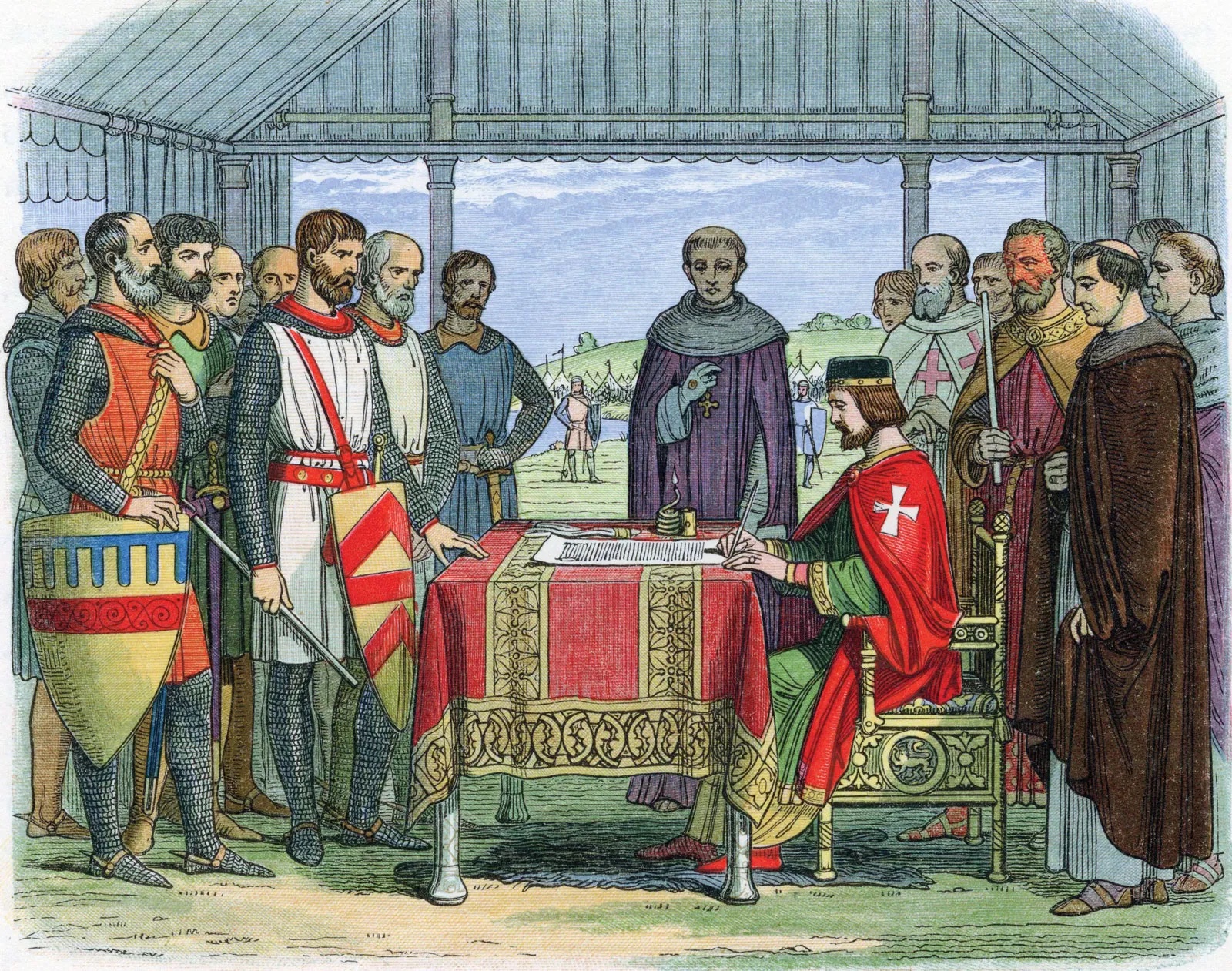
    Feature Image Credit: Britannica


  • On China and Economy, Dialogue Is the Need of the Hour

    On China and Economy, Dialogue Is the Need of the Hour

    The strength of democracy is that debate and dialogue provide society with a self-corrective mechanism.

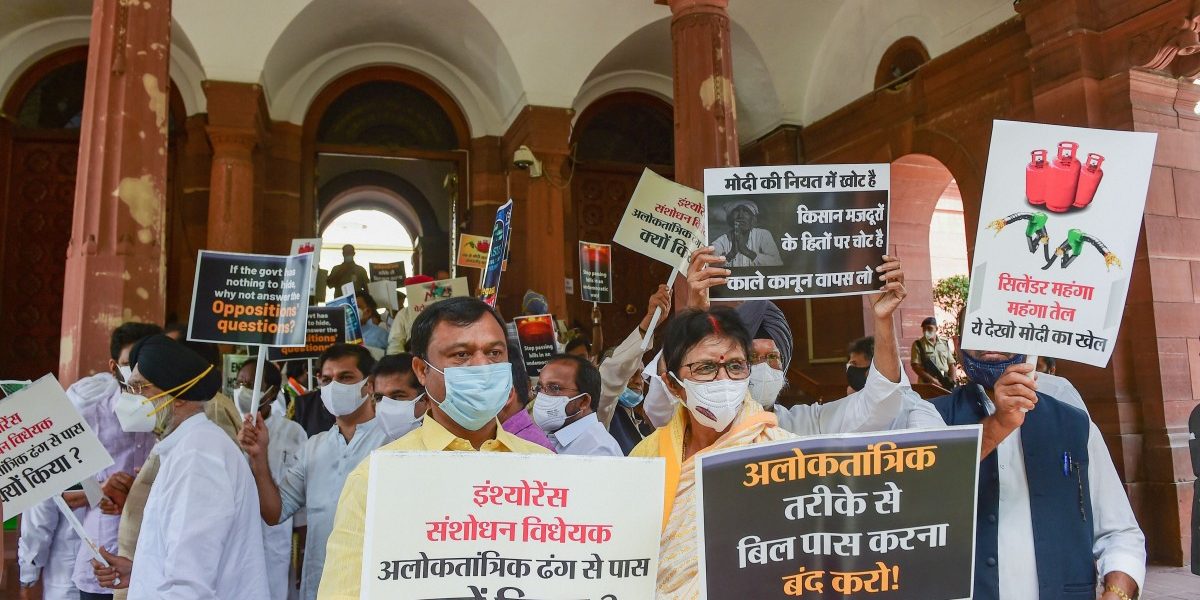
    The news of Chinese transgression in Tawang on December 9 is disturbing. The opposition has repeatedly demanded a discussion in the parliament but the government has not agreed. The government’s stock reply is that the matter should not be politicised and that we should have full faith in our army and our brave soldiers.

    This is diversionary since no one is saying that our soldiers are at fault or are not fighting valiantly. The issue is about policy and India’s political stance vis-à-vis China because of which the brave soldiers are suffering. A full discussion in parliament will help clear the air in this regard.

    [powerkit_button size=”lg” style=”info” block=”true” url=”https://thewire.in/rights/china-economy-dialogue-debate-democracy” target=”_blank” nofollow=”false”]
    Read More
    [/powerkit_button]

  • RBI Affidavit on Demonetisation Obfuscates Rather than Clarifying

    RBI Affidavit on Demonetisation Obfuscates Rather than Clarifying

    Demonetisation is an example of a needless policy which failed because of lack of consultation and inadequate understanding of the issues. It led to a policy-induced crisis that deeply impacted the nation: all because democracy was not allowed its full play.

    In a vibrant democracy, critique of policy a) makes for a) better policies, and b) helps correct mistakes as they occur. Official spokespersons will always argue that the government is doing the best under given circumstances. But today, the world is changing so fast that mistakes will occur because the past may not be a guide for the future. Further, full information is not available even about the present. So, policies are made in an uncertain environment, leading to heightened risk of policy failure. Democracy provides the self-correcting mechanism when mistakes occur.

    While genuine mistakes will occur, there is a class of decisions based on misperceptions and inadequate consultation that go horribly wrong. Demonetisation is an example of a needless policy which failed because of lack of consultation and inadequate understanding of the issues. It led to a policy-induced crisis that deeply impacted the nation: all because democracy was not allowed its full play.

    Demonetisation case in court

    Soon after demonetisation was launched many challenged the decision in the courts because it was patently unfair to the marginalised who suffered hugely from it. The Supreme Court has now taken up this case, when six years have elapsed and the policy cannot now be reversed. It will be no relief to those who died or lost out. Compensation cannot be given because it would be hard to estimate who lost how much. Even if compensation is ordered by the court, citizens will only pay themselves through the government. The permanent damage to the economy cannot be restored.

    [powerkit_button size=”md” style=”info” block=”true” url=”https://theleaflet.in/rbi-affidavit-on-demonetisation-obfuscates-rather-than-clarifying/” target=”_blank” nofollow=”false”]
    Read More
    [/powerkit_button]

  • For Democracy to be real and vibrant it needs  people with impeccable Integrity at the Helm

    For Democracy to be real and vibrant it needs people with impeccable Integrity at the Helm

    Democracy at its core is the power of the people. But all over the world, it is becoming anything but that. Truly the fear is that democracy is dying, as most nations that call themselves democracies are in effect controlled by capitalist oligarchs and majoritarian fascists. The power of money and vested interests have vitiated democratic processes worldwide. Michael Hudson calls the USA, once the beacon of democracy, a deep state controlled by three main oligarchic groups: Military Industrial Complex (MIC); Oil, Gas, and Mining (OGAM); and Finance, Insurance, and Real Estate (FIRE).  Add the new emerging giant group – Big Tech – as the fourth. The UK, the world’s oldest parliamentary system, is in shambles as a democracy. India, seen as the world’s largest democracy, is heading the majoritarian way. Majoritarianism is not democracy but tyranny. This is what the Father of the Nation had to say about democracy at the height of the freedom struggle:

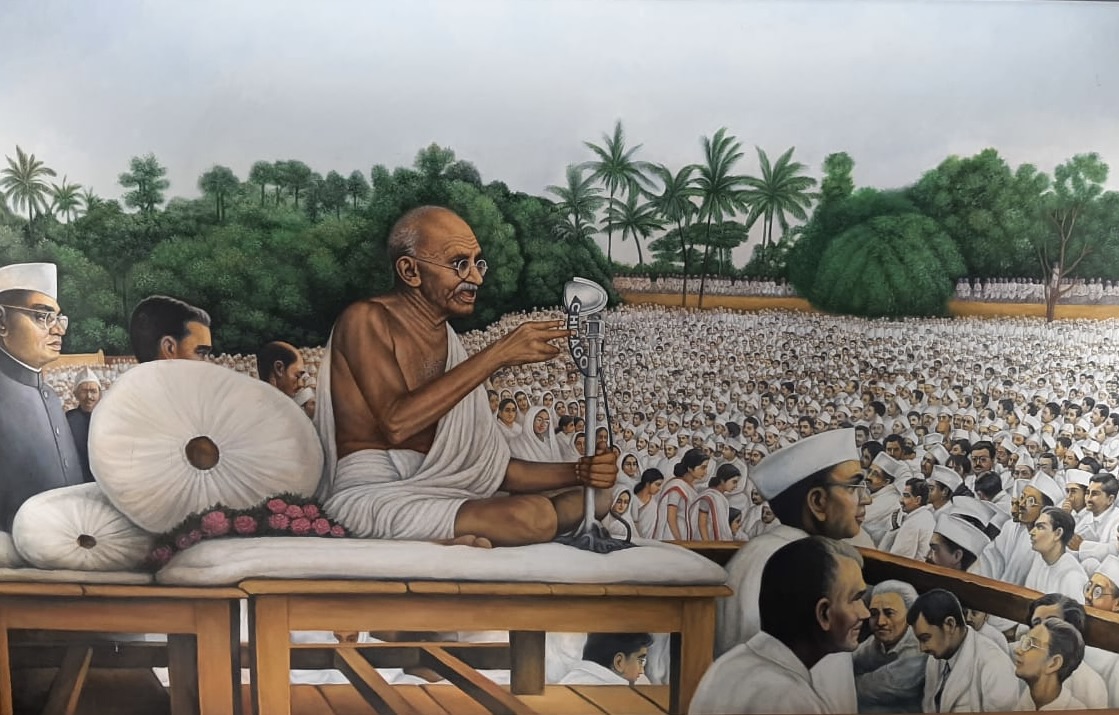
    My notion of democracy is that under it the weakest should have the same opportunity as the strongest….No country in the world today shows any but patronising regard for the weak….Western democracy, as it functions today, is diluted fascism….True democracy cannot be worked by twenty men sitting at the centre. It has to be worked from below by the people of every village.”    – Mahatma Gandhi

    His words could not have been more apt for the times we live in. This quote is placed in the Sabarmati Ashram. One wonders how many take a moment to stop by to read it carefully and take in the import of his words. The Mahatma is the shining example of personal integrity, character, and moral courage. Since democracy is primarily driven by people and politics, it is vital that those at the helm of governance display impeccable integrity to ensure real democracy.

    Professor Arun Kumar PhD, an eminent economist and our adjunct Distinguished Fellow, writes eloquently on the subject and says ‘absence of persons with impeccable integrity is the bane of India’s democracy’. TPF is happy to republish this article.

    A version of this article was published earlier in theleaflet.in

    TPF Editorial Team


    Gandhiji said that institutions reflect what the people are, and that they cannot function as they are intended to unless those manning them are people of integrity.


    A Supreme Court Constitution bench recently said that the Chief Election Commissioner should be one “with character” and who would not get “bulldozed” – a self-evident truth. Further, it suggested that the selection committee for the post should consist of an independent person like the Chief Justice of India (‘CJI’). It added that people and bureaucrats like the former Chief Election Commissioner late T.N. Seshan, who could act independently, “happen once in a while”.

    Perhaps without meaning to, these comments indict the election commissioners appointed since Seshan’s time. Therefore, they have given voice to recent public concerns about the independence of the institution.

    Integrity of Constitutional authorities

    Will the CJI’s presence in the committee to appoint the Election Commissioners make a difference? The CJI is a member of the committee to appoint the Director of the Central Bureau of Investigation (‘CBI’). But the Supreme Court itself has called the CBI a “caged parrot”. The problem arises since the party in power would prefer a sympathetic person as an Election Commissioner, not an independent person.

    The appointment of Supreme Court judges has become contentious, with the judges and the Union Law Minister currently at loggerheads. Judges themselves have talked of pressures and counter pressures from within and from the government. Appointments of some who are seen to be inconvenient have been withheld. Earlier this week, a division bench of the Supreme Court mentioned that by delaying appointments, good people are dissuaded from becoming judges. It is suspected that the appointment of certain judges is delayed so that they do not become CJI in due course of time. It appears that pliability is a desirable attribute to becoming a judge.

    The Supreme Court, by raising the issue of the appointment of the Election Commissioner, has also brought into question the integrity of the Prime Minister (‘PM’), who is key to the appointment. Thus, doubt has been raised about the country’s constitutional authorities, including the judiciary. The executive, in any case, does the bidding of the political masters. So, where are the people of integrity in the corridors of power in India?

    Defining integrity

    Institutions can run as they ought to only if they are manned by people with integrity. Its absence from the top down is a societal challenge. Mahatma Gandhi in ‘Hind Swaraj’ (Indian Home Rule), more than a century back, said, “As are the people, so is their Parliament.” Since the Parliament is key to the functioning of a democracy, this flaw afflicts institutions down the line.

    PMs heading the government are political persons. Since politics is about power, they try everything to keep themselves and their party in power. Their election depends on the support of vested interests who fund both them and their party and therefore, dominate the working of the party. So, staying in power is a high stake business which requires manipulation of the systems in their favour.

    The Supreme Court, by raising the issue of appointment of the Election Commissioner, has brought into question the integrity of the Prime Minister, who is key to the appointment. Thus, doubt has been raised about the country’s constitutional authorities, including the judiciary. 

    There is then a separation of the interest of the nation, and of the party and its head, the PM. Consequently, for the party, integrity means that which serves its interest, which is not necessarily what the nation needs. This separation is what Gandhi implies in Hind Swaraj. No wonder, it is only a rare PM who has the moral integrity to select independent people for important Constitutional positions like the Election Commission and the judiciary.

    Politicians go through years of such conditioning before becoming PMs and it becomes their second nature. It cannot be expected to change upon becoming the PM. The opposition in a democracy is supposed to check the misuse of power. But the leaders of the opposition also go through the same conditioning as leaders of the ruling party and therefore, act no differently. Politicians often pride themselves on managing conflicts by making compromises and accepting the manipulation of power. So, politicians take a pliable stand, based on the chair they occupy – in power or out of it.

    Gandhi on parliamentary democracy

    Gandhi, commenting on the British Parliamentary democracy in Hind Swaraj, wrote, “The Prime Minister is more concerned about his power than about the welfare of Parliament … [and] upon securing the success of his party.” He added that they may be considered to be honest “because they do not take what is generally known as bribes… [but] …they certainly bribe the people with honours.” Therefore, “… they neither have real honesty nor a living conscience”.

    Regarding the Members of Parliament who could keep the PM in check, he wrote, “… Members are hypocritical and selfish. Each thinks of his own little interest. … Members vote for their party without a thought.” Regarding the media, another institution that could help check misuse of public authority by creating public awareness, he wrote that they “are often dishonest. The same fact is differently interpreted … according to the party in whose interest they are edited.” Gandhi was also scathing about the legal profession when he wrote, “… the profession teaches immorality …”.

    Gandhi was pointing to the fundamental flaws in the functioning of democracies. It also applies in the current Indian context. He was pointing to weak public accountability of those in power since public awareness was low. The public has little choice but to accept the existing imperfect political system. The British Parliamentary democracy may be the best available system, but it is highly flawed and its defects appear more starkly in weak democracies like that in India.

    We may be called the largest democracy in the world and we have succeeded in preserving it in the last 75 years, but it is frayed, as made clear by the current political problems facing us.

    Feudal attitudes and democracy

    Indian democracy’s weakness is a result of the persistence of feudal consciousness among a majority who easily accept authority. This is true even in institutions of higher education, where people are expected to be the most conscious. Most of these institutions are headed by academics with a bureaucratised mindset, who expect compliance and treat dissent as a malaise to be eradicated. In turn, they yield to politicians and bureaucrats.

    A feudal system has its own concept of integrity. The ruler’s interest is broadly the nation’s interest. This congruity breaks in a parliamentary democracy where the consciousness is feudal. In such a case, integrity as defined by national interest is likely to be subverted, as is visible in India.

    In 1947, India with its feudal consciousness ingrained and copied parliamentary democracy, not because people were ready for it, but because the leadership desired it since they wanted to copy Western modernity. People blindly accepted it since it came from their leaders, not because they understood it. Liberality at the top frayed post mid-1960s, as retaining power became more difficult and leaders turned increasingly authoritarian. So, while retaining the façade of democracy, it increasingly got hollowed out.

    In 1947, India with its feudal consciousness ingrained and copied parliamentary democracy, not because people were ready for it, but because the leadership desired it since they wanted to copy Western modernity. People blindly accepted it since it came from their leaders, not because they understood it.

    The political economy also pushed policies that marginalised the majority in the interest of the few. The black economy grew rapidly, making elections formalistic and draining them of their representational character. Most importantly, the rulers realized that neither the people ask for liberality nor do they demand accountability from leadership.

    Need for accountability at the top

    Accountability has to come from the top, whether in politics or in the government or the courts. It is not going to automatically come about without public pressure. A few freebies are enough to divert public attention. So, is accountability a luxury when basic issues are many?

    The lack of integrity in public life is costly. The nation’s energy is diverted. Reforms favouring the marginalised are circumvented. Laws are framed ostensibly to improve matters, but when the spirit is not willing they fail to deliver. Perfect laws are not possible, since human ingenuity can circumvent any law. The result is more complex laws and growing cynicism.

    What Gandhi pointed out is playing itself out in India. He said institutions reflect what the people are, and that they cannot function as they are intended to unless those manning them are people of integrity. But, can people with integrity emerge when it is missing all around, feudal consciousness pervades and people bend to authority?

    Reform requires us to resolve the contradiction between parliamentary democracy and the prevailing feudal consciousness. This cannot happen from above. It requires the transformation of the people’s consciousness – Gandhi’s unfinished agenda.


    Opinions expressed are those of the author.

    Feature Image Credit: Gandhi in a public address – Painting at Sabarmati Ashram.
  • Absence of Persons with Impeccable Integrity at the Helm is the Bane of India’s Democracy

    Absence of Persons with Impeccable Integrity at the Helm is the Bane of India’s Democracy

    Gandhiji said that institutions reflect what the people are, and that they cannot function as they are intended to unless those manning them are people of integrity. 

    A Supreme Court Constitution bench recently said that the Chief Election Commissioner should be one “with character” and who would not get “bulldozed” – a self-evident truth. Further, it suggested that the selection committee for the post should consist of an independent person like the Chief Justice of India (‘CJI’). It added that people like bureaucrat and former Chief Election Commissioner late T.N. Seshan, who could act independently, “happen once in a while”.

    Perhaps without meaning to, these comments indict the election commissioners appointed since Seshan’s time. Therefore, they have given voice to recent public concerns about the independence of the institution.

    Integrity of Constitutional Authorities

    Will the CJI’s presence in the committee to appoint the Election Commissioners make a difference? The CJI is a member of the committee to appoint the Director of the Central Bureau of Investigation (CBI). But the Supreme Court itself has called the CBI a “caged parrot”. The problem arises since the party in power would prefer a sympathetic person as an Election Commissioner, not an independent person.

    [powerkit_button size=”lg” style=”info” block=”true” url=”https://theleaflet.in/absence-of-people-with-impeccable-integrity-at-the-helm-is-the-bane-of-indias-democracy/” target=”_blank” nofollow=”false”]
    Read More
    [/powerkit_button]

  • Right to Work: Feasible and Indispensable for India to be a Truly Civilized and Democratic Nation

    Right to Work: Feasible and Indispensable for India to be a Truly Civilized and Democratic Nation

    Executive Summary of
    Report of People’s Commission on Employment and Unemployment
    Set up by Desh Bachao Abhiyan

    Introduction

    When society faces a problem and is unable to resolve it, it implies that something basic is wrong. One needs to look for its basic causes to solve the problem. The causes may lie in the system that has evolved over time and which conditions the dominant social and political thinking in society. The onus of finding the solution and rectifying the problem is on the rulers. Their failure to do so over time implies a lack of motivation/commitment to solve the problem.

    All this applies to the issue of employment generation and unemployment in India which has been growing over time and affects the vast majority of the citizens.

    The Basic Issue

    Gandhi said that India is the only country capable of giving a civilizational alternative. The time has come to take this seriously since unemployment has become a critical issue that needs to be urgently tackled. The issue is multi-dimensional since it is a result of multiple causes and has widespread implications. It impacts the growth of the economy, inequality, poverty, etc. It has a gender dimension and impacts the marginalized sections adversely reflecting a lack of social justice. It is entrenched among the youth. The more educated they are greater the unemployment they face. Consequently, it has political and social implications, like, social relations.

    The rapidly growing incomes of the top 1% in the income ladder indicate that the economy has the resources but they are mal-distributed. The rich at the top has created a system that enables them to capture most of the gains from development with little trickling down to the rest.

    This Report presents a framework that spells out the causes, consequences, and possible remedies. Further, it looks at the historical process underlying the evolution of policies so as to understand how they can be changed.

    If any form of distortion persists over a long period, as unemployment in India, its origins lie in society’s perceptions and priorities. In India, these can be traced to the adoption of state capitalism and persisting feudal tendencies of the elite policy makers who in their own self-interest adopted a trickle-down model of development.

    Further, Capitalism has globally taken the form of marketization which promotes `profit maximisation’. But is it then legitimate to keep workers unemployed? It implies loss of output and therefore reduces the size of the economy which leads to a lower level of profits. So, by the logic of individual rationality, the system should create productive employment for all.

    The market’s notion of `efficiency’ is status quoist since it seeks to perpetuate the historical injustice in society. `Consumer sovereignty’ implies that individuals should be left free to do whatever they wish. The collectivity should not intervene in their choices no matter how socially detrimental they may be. It promotes the notion that if I have the money I can do what I like. The ratio of incomes is 10,000 times and more between the big businessmen and the poor workers. The market sees nothing wrong in this; in fact, society has come to celebrate it.

    Marketization is determining society’s choices through its principles penetrating all aspects of society. One of these principles is the `dollar vote’. The policy makers accept it and prioritize the choices of the well-off over those of the marginalized. The well-off dictate the social judgments of policy makers. Consequently, not only equality is not on the agenda even equity is not.

    With marketization stripping off the social aspect of life, individuals become automatons. Their individual distress and situation in life are no one’s or society’s concern. Unemployment becomes just a switching off of a machine. No social concern need to be attached to it. In fact, capitalists welcome unemployment as an efficient’ device to discipline labour and neo-classical economics considers it as natural. Inflation further weakens large numbers of workers as they lose purchasing power.

    In essence, whether or not society should aim to give productive employment to all reflects its view of individuals. Society needs to choose what is more important – profits or the welfare of the marginalized majority. The Gandhian view, largely rejected by the Indian elite, was `last person first’ which defined what the priority should be.

    [powerkit_button size=”lg” style=”info” block=”true” url=”https://admin.thepeninsula.org.in/wp-content/uploads/2022/10/PCAU-Executive-Summary-of-Report-1.pdf” target=”_blank” nofollow=”false”]
    Read the Full Executive Summary
    [/powerkit_button]

    Disclaimer:

    The views represented herein are those of the author and do not necessarily reflect the views of The Peninsula Foundation, its staff, or its trustees.

    The report’s executive summary is republished with the permission of the author.

    Feature Image:

    Economic and Political Weekly

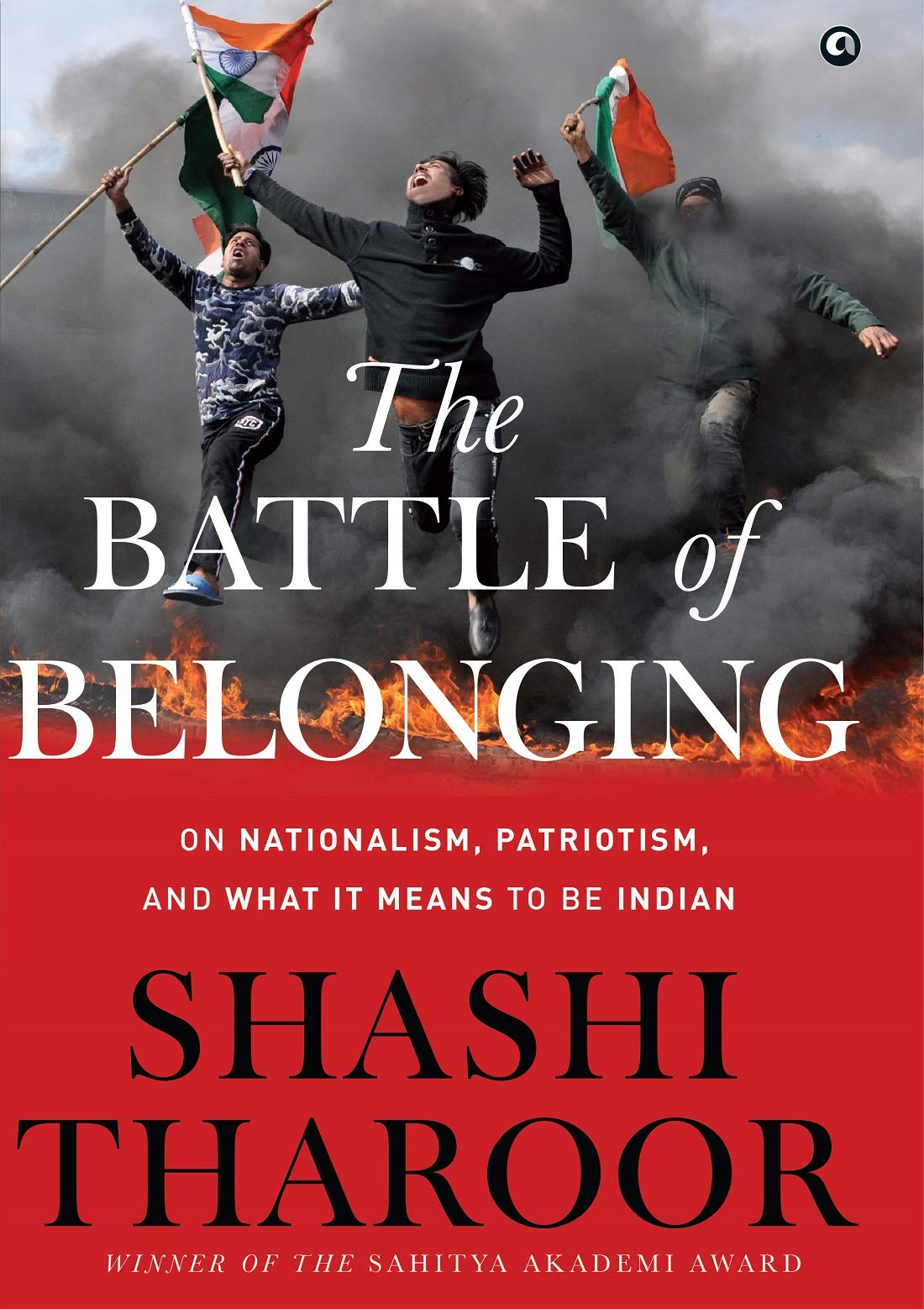
  • An Identity Crisis: Book Review of “The Battle of Belonging”

    An Identity Crisis: Book Review of “The Battle of Belonging”

    Book Name: The Battle Of Belonging: On Nationalism, Patriotism, And What It Means To Be Indian

    Author: Shashi Tharoor

    Publisher: Aleph Book Company

    Year of Publication: October 2020

    Pages: 462


    The cataclysm of Right-wing extremism has seized global politics. From the United States to Britain and New Zealand, the agenda appears dominant. Among them, in the present context, India is no exception. From cow vigilantism to scathing attacks on minority groups, the question of what it means to be an Indian is contested and debated as never before. Dr Shashi Tharoor, Member of Parliament for the Tiruvananthapuram constituency, in his latest book, ‘The Battle of Belonging’ attempts to redefine what exactly it meant to be an Indian and addresses the present identity crisis in India. Dr Tharoor writes about the subtle mechanism which provides more space for civic nationalism in India in the present times.

    From multiple angles, The Battle of Belonging comes out as a sequel to his previous books, ‘Why I am a Hindu’ and ‘The Paradoxical Prime Minister’. In this book, Tharoor addresses the concept of nationalism and patriotism. According to him, the concept of nationalism in India is flawed unlike the concept of nationalism enshrined in the Indian constitution. Through this book, the author asks the readers to dive into the Indian constitution and understand its rationale. He raises key questions such as, ‘has India’s nationalism really been reshaped?’ and stresses the pitfalls that India would face in the future as the plague of extremism spreads. He also envisions a space for civic nationalism, as envisioned by Mahatma Gandhi, Jawaharlal Nehru, B R Ambedkar, and Rabindranath Tagore. The book is divided into six volumes and each section narrates the evolution of nationalism till the current phase.

    According to Tharoor, civic nationalism is cemented on the principles of liberal democracy and equality for all. However, ethnic nationalism or ethnocentric nations erode these principles and peddles a path for Majoritarianism.

    In the first phase, Tharoor unravels the evolution of the concept of ‘Nationalism’ and distinguishes it from the concept of ‘Patriotism’. To furnish a literary overview of the concept, the author espouses the visions of Kautilya, Thomas Hobbes, Ernest Hemmingway, Jawaharlal Nehru, Mahatma Gandhi, and Rabindranath Tagore. He also takes insights from his former diplomatic career. In this very section, Tharoor offers different typologies of nationalism. Among them ‘ethnic nationalism’ and ‘civic nationalism’ dominates the discourse. According to him, civic nationalism is cemented on the principles of liberal democracy and equality for all. However, ethnic nationalism or ethnocentric nations erode these principles and peddles a path for Majoritarianism. Throughout the book, he lashes out at the ruling Bhartiya Janata Party (BJP) for breaking the fabric of civic nationalism.

    The second section of the book is vast and extensively researched. In this section, the author gleans several facts on the concepts of unity in diversity. The book also extensively discusses the difference between Hinduism and Hindutva, where the Rashtriya Swayamsevak Sangh (RSS) is fabricating a new ethos of Hindu Dominance. The book also advances in a way all Indians are a minority in one way or other from a vantage point of view. The author raises the question of an individual’s right to choose his identity regardless of his caste, gender, or whatsoever criteria. 

    The third section explores the Hindutva version of India, investigating how right-wing fringe groups attempt to fabricate a dawn of Hindutva society, where minorities are pushed aside. Here in part, the author delves into the philosophies of Savarkar, Golwankar, and Deen Dayal Upadhaya and how they opposed the Indian constitution. B R Ambedkar envisioned a society that opened space for all. On the other hand, the aforesaid champions envisioned a ‘Hindu Rashtra’, that was contrary to the ideas of Gandhi, Nehru, Ambedkar, and Tagore. In this section, Tharoor speaks on one of his controversial comments, ‘Hindu Pakistan’. He expresses his prolonged anxiety about the possibility of India turning into an autocratic nation like Pakistan. Even though the concept is far-fetched, the ruling party’s majority in the lower house provides no guarantee in this matter.

    India has a prolonged history of accommodating persecuted minorities, whether it be Jews, Parsis and Bangladeshis, and offering them a platform to instil their roots in India and be a part of the nation.

    The fourth section of the book talks about recent events such as the abrogation of Article 370 in Jammu and Kashmir, the Citizenship Amendment Act (CAA), the issue of the National Register of Citizens (NRC), the act of imposing Hindi on the non-Hindi speaking states and the case of the Ayodhya Ram temple. Tharoor condemns the act of imposing Hindi onto the shoulders of non-Hindi speaking states. He also questions the flag bearers of Hindi on whether they will dare to take up the challenge of learning another language other than Hindi.

    The CAA and the NRC shook the nation, creating a wave of panic among citizens. The author claims that the freedom struggle of India was to secure a nation that accommodated all, regardless of their identity. India has a prolonged history of accommodating persecuted minorities, whether it be Jews, Parsis and Bangladeshis, and offering them a platform to instil their roots in India and be a part of the nation. It is also an evident reality that the documentation system is a flawed mechanism and that the poor and uneducated who are not aware of this mechanism are the ones who will suffer in the process of NRC. Tharoor claims that these acts of the ruling party are against the concept of liberal constitutionalism.

    He later discusses the much-debated Kashmir issue. This piece clearly indicates just how well-versed Tharoor is in the Constitution of India. Tharoor strongly condemns the act of abrogating Article 370 without consulting the cabinet members and the manner it was passed in the parliament. The author sees it as a clear violation of democracy. Subsequently, the author discusses the Ayodhya dispute. He sees the verdict as dubious, where the demolition of the mosque is condemned as ‘criminal vandalism’ and on the other side, the land is awarded to the ones who perpetuated the act. He also sees this act as remoulding India against the backdrop of Hindutva ideology.

    India is a nation that accommodates all sorts of diversity, and it is a sheer act of intolerance, where a majoritarian idea is imposed over a minority group.

    In the sixth section, the author addresses the ‘Anxiety of Nationhood’, where Indian nationalism is undergoing fundamental changes. Shashi Tharoor, in the first part of this section, narrates the stark contrast between the idea of Hinduism by Mahatma Gandhi and the current Hindutva ideology. Gandhi was a champion of inclusive nationalism.  He even went to the extent of declaring himself as an amalgamation of all religions. His views are very relevant in today’s climate of intolerance. Tharoor, then takes up the contest between the concepts of Bharat and India. The author strongly condemns fringe groups asserting their ideology. India is a nation that accommodates all sorts of diversity, and it is a sheer act of intolerance, where a majoritarian idea is imposed over a minority group. He also claims that the crux of Indian thought is liberal and tolerant in nature which accepts all faiths as its own.

    The author raises a key question on whether the constitution will be able to tame the Hindutva monologue in the present circumstances. Going further, Tharoor narrates how the right-wing groups condemned the constitution for being anglophone in context and their belief that the constitution does not resonate with the Hindu culture of India. Tharoor also raises his apprehension regarding a Hindutva infused constitution on the pile of a majoritarian ideologue. In the Conclusion, the author also explores how the internet has wrapped India into its network. It is indeed true that social media aids Indians to socialise and raise various issues with the public. However, on the flip side, the author also points out and condemns the social media groups that play an active role in spreading fake news and in inciting violence.

    In the final part, Tharoor speaks on how the soul of India can be reclaimed. Here, the author dwells on the ethos of Indian Nationalism that is built on the foundation of diversity and pluralism, and how it is now being tampered with, and how it can be retrieved. Tharoor raises the clarion call against ethno-religious nationalism, which would distort the future of India’s democracy. He also asserts that it is the responsibility of Indians to reclaim India’s diversity and plurality. He foresees an India that respects all regions with patriotism stemming from unity.

    Shashi Tharoor’s ‘Battle of Belonging’ would definitely interest those who love to analyse facts and information thoroughly. It is indeed a thoroughly researched book, and his arguments are supported by a vast amount of facts. The most interesting aspect of this book is the way Tharoor has sewed his thoughts with impeccable and strong language. To summarise, the book takes the reader through the soul and heart of India.