Tag: Culture

  • Why Nations succeed or fail: a Nobel cause

    Why Nations succeed or fail: a Nobel cause

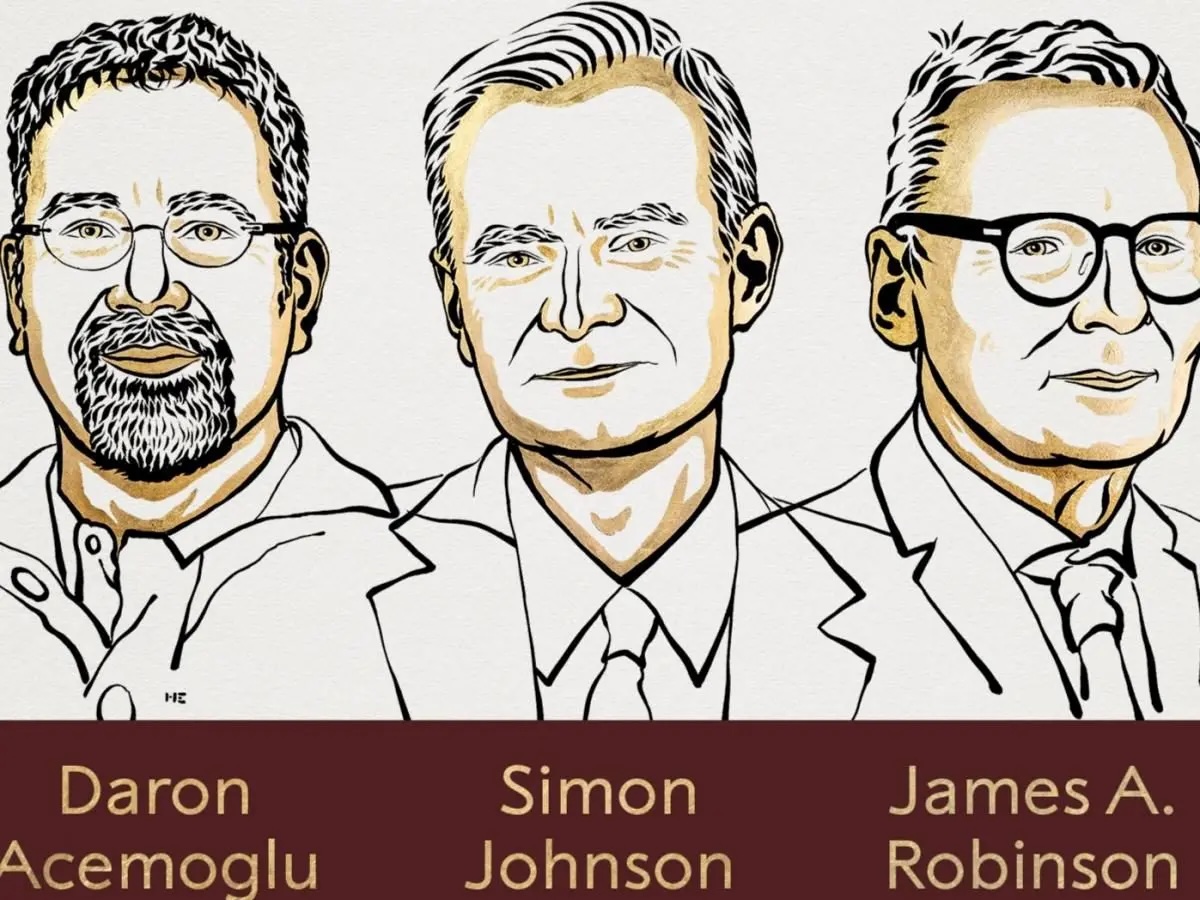
    Daron Acemoglu, Simon Johnson and James A Robinson have been awarded the Nobel (really the Riksbank prize) in economics “for studies of how institutions are formed and affect prosperity.” Daron Acemoglu is a professor at the Massachusetts Institute of Technology. Simon Johnson is a professor at the same university. And James Robinson is a professor at the University of Chicago.

    Here is what the Nobel judges say was the reason for winning:

    Today, the richest 20 percent of countries are around 30 times wealthier than the poorest 20 percent of countries. The income gaps across countries have been highly persistent over the past 75 years.39 The available data also show that between-country disparities in income have grown over the past 200 years. Why are the income differences across countries so large and so persistent?

    This year’s Laureates have pioneered a new approach to providing credible, quantitative answers to this crucial question for humanity. By empirically examining the impact and persistence of colonial strategies on subsequent economic development, they have identified historical roots for the extractive institutional environments that characterize many low-income countries. Their emphasis on using natural experiments and historical data has initiated a new research tradition that continues to help uncover the historical drivers of prosperity, or lack thereof.

    Their research centers on the idea that political institutions fundamentally shape the wealth of nations. But what shapes these institutions? By integrating existing political science theories on democratic reform into a game-theoretic framework, Acemoglu and Robinson developed a dynamic model in which the ruling elite make strategic decisions about political institutions—particularly whether to extend the electoral franchise—in response to periodic threats. This framework is now standard for analyzing political institutional reform and has significantly impacted the research literature. And evidence is mounting in support of one of the model’s core implications: more inclusive governments promote economic development.

    Over the years (or is it decades?) I have posted on the work of various Nobel winners in economics.

    What I have found is that, whatever the quality of the winner’s work, he or she (occasionally) usually got the prize for their worst piece of research, namely work that confirmed the mainstream view of the economic world, while not actually taking us further into understanding its contradictions.

    This conclusion I think applies to the latest winners. The work for which they received the $1m prize is for research that purports to show that those countries that achieve prosperity and end poverty are those that adopt ‘democracy’ (and by that is meant Western-style liberal democracy where people can speak out (mostly), can vote for officials every so often and expect the law to protect their lives and property (hopefully). Societies that are controlled by elites without any democratic accountability are ‘extractive’ of resources, do not respect property and value and so over time do not prosper. In a series of papers applying some empirical analysis (ie correlating democracy (as defined) with levels of prosperity), the Nobel winners claim to show this.

    Indeed, the Nobel winners argue that colonisation of the Global South in the 18th and 19thcenturies could be ‘inclusive’ and so turn the likes of North America into prosperous nations (forgetting the indigenous population) or ‘extractive’ and so keep countries in dire poverty (Africa). It all depends. Such is the theory.

    This sort of economics is what is called institutional, namely that it is not so much the blind forces of the market and capital accumulation that drives growth (and inequalities), but the decisions and structures set up by humans. Supporting this model, the winners assert that revolutions precede economic changes and not that economic changes (or the lack thereof before a new economic environment) precede revolutions.

    Two points follow from this. First, if growth and prosperity go hand in hand with ‘democracy’ and the likes of the Soviet Union, China, and Vietnam are considered to have elites that are ‘extractive’ or undemocratic, how do our Nobellists explain their undoubted economic performance? Apparently, it is explained by the fact they started out poor and had a lot of ‘catching up’ to do, but soon their extractive character will catch up with them and China’s hyper-growth will run out of steam. Perhaps now?

    Second, is it correct to say that revolutions or political reforms are necessary to set things on the path to prosperity? Well, there may be some truth in that: would Russia in the early 20thcentury be where it is today without the 1917 revolution or China be where it is in 2024 without the revolution of 1949? But our Nobellists do not present us with those examples: theirs are getting the vote in Britain in the 19th century or independence for the American colonies in the 1770s.

    But surely, the state of the economy, the way it functions, the investment and productivity of the workforce also have an effect? The emergence of capitalism and the industrial revolution in Britain preceded the move to universal suffrage. The English Civil War of the 1640s laid the political basis for the hegemony of the capitalist class in Britain, but it was the expansion of trade (including in slaves) and colonisation in the following century that took the economy forward.

    The irony of this award is that the best work of Acemoglu and Johnson has come much more recently than in the past works that the Nobel judges have focused on. Only last year, the authors published Power and Progress , where they pose the contradiction in modern economies between technology driving up the productivity of labour but also with the likelihood of increased inequality and poverty. Of course, their policy solutions do not touch on the question of a change in property relations, except to call for a greater balance between capital and labour.

    What you can say in favour of this year’s winners is that at least their research is about trying to understand the world and its development, instead of some arcane theorem of equilibrium in markets that many past winners have been honoured for. It’s just that their theory of ‘catching up’ is vague (or ‘contingent’ as they put it) and unconvincing.

    I think we have a much better and more convincing explanation of the processes of catching up (or not) from the recent book by Brazilian Marxist economists Adalmir Antonio Marquetti, Alessandro Miebach and Henrique Morrone who have produced an important and insightful book on global capitalist development, with an innovative new way of measuring the progress for the majority of humanity in the so-called Global South in ‘catching up’ on living standards with the ‘Global North’. This book deals with all the things that the Nobel winners ignore: productivity, capital accumulation, unequal exchange, exploitation—as well as the key institutional factor of who controls the surplus.


  • Cinema as a tool of National narratives and Geopolitics

    Cinema as a tool of National narratives and Geopolitics

    ABSTRACT

    This paper aims to understand how world politics, the geopolitical environment in the international arena, and economic relationships between countries are portrayed in films and entertainment media. This paper attempts to understand the portrayal of the themes through varied parameters, namely, the geopolitical timeline of when the film was released, the theme or the event that the film is trying to address, the region the movie was produced in and the audience it would cater to. As films are pretty nuanced and very interpretative, these themes might overlap. Nevertheless, it will attempt to identify and understand the themes as best possible. This paper also aims to understand the active relationship between films and the various global interactions among nation-states. It will also examine the impact of these films on the foreign policy decisions made by the State and how the narratives change with changing leadership. This paper will understand films through the lens of international politics and not just as a medium of entertainment.


    INTRODUCTION

    Beyond the fiction of reality, there is the reality of the fiction.

    – Slavoj Žižek

    Let’s ask a simple question. How much of the reality that we live in do we see in fiction? This question seems to have a complex answer. The main reason for the existence of films is their ability to transport viewers to a world of imagination or fiction where anything can happen, unlike the rigid realities we live in. However, upon closer examination, one might find that fiction interacts with present, everyday realities and fosters an ideology within itself. Films and ideology have a deep-rooted connection, and it is impossible to analyse films without encountering the ideology they inevitably promote. This is particularly evident in films that fall under the genre of politics or political commentary. Politics is often described as a struggle for power, where ideology plays a crucial role. Films have the power to influence the masses, making them a potent tool for those in power to wield. This is why ideology is embedded in films. According to Slavoj Žižek’s documentary ‘The Pervert’s Guide to Ideology’, ideology is a socio-economic and political apparatus that is created and propagated by humans. He argues that ideology is a social reality, and attempting to escape it is also an ideology.

    Ideology has a significant impact on the superstructure, shaping our perception of political reality. Unfortunately, this often results in a distorted or biased portrayal of events that goes unchallenged due to the disclaimer that it is a work of fiction. This allows ideologies to spread without being acknowledged. Films with political themes are particularly susceptible to this, as they are shaped by the prevailing ideology of the time and place in which they are created and discussed. These films serve as a means of propagating state-sponsored ideologies, which can then be used to legitimise state propaganda. They are essentially used as a trial run to measure the public’s reaction to certain ideas before implementing them. These films function as a symbolic order, swaying public opinion in line with the desired political narrative. The depictions in these movies, being fictional, are often exaggerated and used to evoke feelings of patriotism and nationalism, making it easier for political leaders to shape the status quo in their favour.

    Films are generally regarded as a source of entertainment, but they also have a profound impact on the realities of our lives. Even movies with superhero themes, which are purely fictional, have the power to shape political realities. For instance, the Marvel Cinematic Universe, a franchise that features individuals with exceptional abilities, highlights the inability of governments to address significant issues or credible threats. These governments tend to view those who can effect change as a greater threat than the aliens themselves. This commentary reflects on the governments’ and leadership’s propensity to prioritize personal insecurities and power politics over the greater good. This, in turn, questions the relevance of democratic institutions and government, which is ironic given that the films originate from a country that has historically promoted democracy. This paper aims to explore how these films portray global politics and economic relations, and the rationale behind these depictions.

    RELATIONSHIP BETWEEN POLITICS AND THE FILM INDUSTRY

    Before examining the portrayal of political institutions in films, it is important to consider the extent to which these institutions influence the film industry, as this relationship will greatly determine the narrative or nature of the films. It is crucial to understand the independence of the film industry when it comes to politics. During the Cold War era, also known as the era of ideological conflict, films played a significant role in fostering a sense of nationalism among the population. They served as an effective means of disseminating an ideology that would advantage the host country. Films became a tool of soft power, and both sides utilized them to the fullest.

    Independence Day, a motion picture released in 1996 and starring Will Smith, exemplifies the interconnection between politics and cinema. The film centres around an alien assault on Earth and the United States of America’s leadership and military’s endeavour to exact retribution and obliterate the extraterrestrial ships, thereby preventing further attacks. This reflects the ‘saviour of the world’ narrative that the United States of America champions and takes pride in. The movie’s portrayal of the United States as the epicentre of the world is strikingly evident. The Cold War period in Hollywood was greatly influenced by the United States’ aspiration for global dominance. It sought to establish US supremacy across the globe. The Cold War was a critical juncture in US political history, and it was essential to emerge victorious in ideological warfare. Consequently, the United States utilised film as a medium to rally the masses and legitimise its actions through an exalted portrayal of patriotism and nationalism. Depicting the US as the only state capable of addressing global threats was a recurring theme in these films. Although the movie is more than a decade old, it accurately portrays the nature of the international arena. It depicts the US at the centre, emphasising that the US is a superpower today and an economically advanced nation with immense financial resources and the ability to carry out military operations. However, compared to the present reality, this portrayal might not be entirely accurate, as the US is currently grappling with enormous debt and bearing significant costs for its interventions around the world.

    Nonetheless, it maintains a significant influence and directs economic ties in some manner or form. Hence, one can argue that the depiction is a fictionalized exaggeration of reality, despite the presence of some factual elements. How autonomous is the film industry -from any location or time frame- in creating or presenting narratives that challenge the established order? This study will delve into specific films as case studies and scrutinize them meticulously to glean a clearer understanding of the portrayal and to what extent it reflects the true picture of the global arena.

    Analysis

    Part 1 of the paper examined films as tools of ideological expression and explored the relationship between the film industry and the State. Moving forward, the paper will delve into regional cinema to investigate its narratives and discourses. Entertainment media has emerged as a powerful socio-political institution that wields influence over the state and individuals through the stories and ideologies it presents. Media has the capacity to depict social realities in accordance with the norms, values, and laws of society at a particular time (Zelizer and Allan, 2011). By comparing and contrasting films from different eras with the social realities of their respective times, it becomes possible to uncover the interconnections between reality and representation. During the Cold War era, films were utilized to foster domestic patriotism, thereby granting the State the legitimacy to pursue its ambitions and achieve greatness. Independence Day is an illustration of this phenomenon.

    The way in which the domestic audience receives information about foreign policy through portrayals of interstate relations is complex, and these portrayals are often influenced by state-centred bias and ideology, which can result in the transmission of biased information (Baum, 2007; Cohen, 1963; Entman, 2004; Chomsky, 1989; McChesney, 2008; McQuail, 2005). The role of the media as a discourse-producing entity and as an entity that defines the complex but symbiotic relationship between the government and the media is central. However, while the media should work independently, it is often commercially motivated and, therefore, promotes the ideas and beliefs of the status quo due to the intertwining of vested interests with the corridors of power (Bagdikian, 2004; Bettig and Hall, 2003; Norris, 1990; Vivian, 2006). This results in the media and government submitting to the interests of a small section of the community being propagated, rather than serving the socio-cultural aspect of the institution.

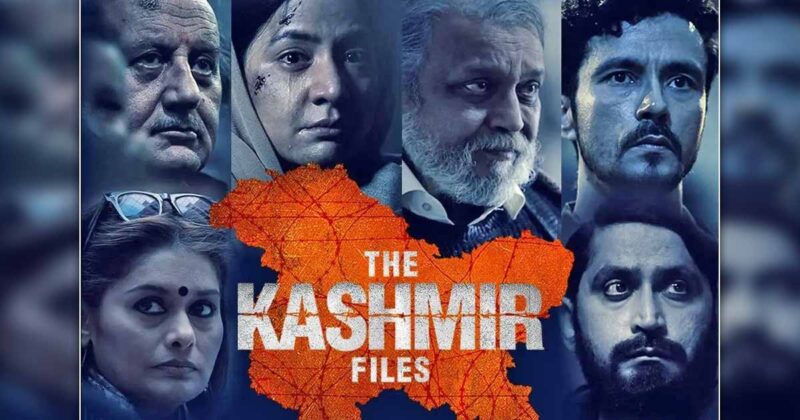
    In the 21st century, propaganda and ideology have become increasingly pervasive. This is due to the rise in content production that aligns with state agendas and the status quo. In India, the movie “The Kashmir Files” has sparked debates regarding whether it is a right-wing propaganda. The movie recounts the exodus of Kashmiri Pandits in Kashmir and the bloodshed that occurred during the 1990s. In today’s context, where right-wing ideologies are gaining momentum, it is evident that ideology and statecraft are interconnected. The portrayal of world and domestic politics is not devoid of an underlying ideological intent. For instance, Bollywood movies like “Raazi” and “LOC Kargil” play a crucial role in propagating India’s foreign policy stance within the domestic political arena. These movies depict India as a progressive global entity, while also propagating the Indian “Big Brother Syndrome” towards its neighbours.

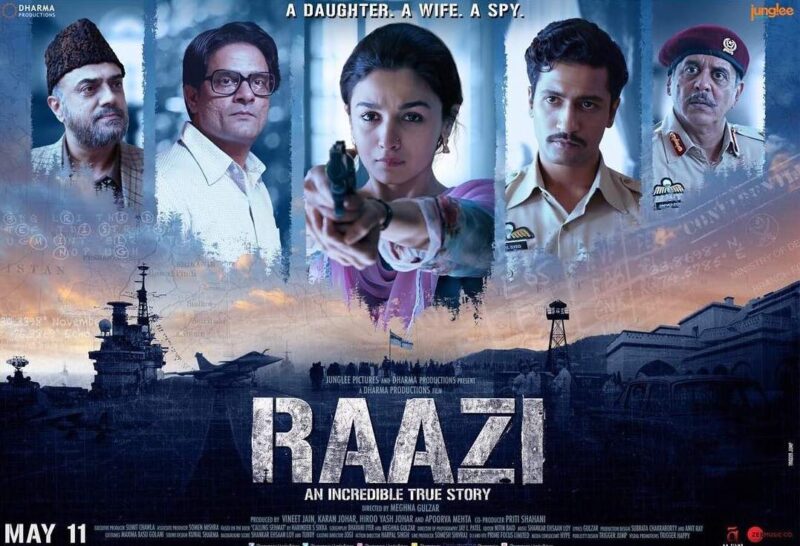
    In the movie “Raazi,” released in 2018 and starring Alia Bhatt and Vicky Kaushal, an undercover RAW agent is married to a Pakistani army official to retrieve crucial information regarding Pakistani moves in Bangladesh and India in 1971. The movie portrays India as a superior state trying to liberate Bangladesh (then East Pakistan) from the “Enemy.” This theme of Indian superiority among its neighbours is prevalent in most films that deal with world and domestic politics. Similarly, the developed West promotes capitalism through films and other visual media.

    Hollywood emerged as a centre for state-sponsored and ideology-driven content during the Cold War. Movies like Wall Street, released in 1987 during an ideological conflict between the United States and the USSR, reflected capitalist ideologies and demonized the USSR and its communist system. The film depicted the ruthless and often exploitative nature of capitalism that prevailed during the 1980s. One of the lead characters, Gordon Gekko, portrayed by Michael Douglas, advocated for the greed and highly capitalistic nature of businessmen. In the context of the Cold War, this promoted a specific type of capitalist ideology to counter the Soviet or communist threat. The glorification of the businessman and the discontentment of the businessman played a significant role in the domestic economic output. The 1980s glorified greed, and this movie accurately represented it. Wall Street explicitly conveyed the notion that morality should not be prioritized over money. The film also featured a speech by Gordon Gekko, in which he declared, “Greed is good.” Movies like this projected a sense of American exceptionalism in the political and economic sense.

    “Don’t Look Up” is a satirical film released in 2022 that critiques the global response to the impending climate crisis. Although the movie aimed to address the issue on a worldwide scale, it primarily focused on Western perspectives. A film that seeks to tackle an international issue should address it on a more comprehensive level. The film, produced in the United States and released on an Over-The-Top (OTT) platform, failed to address the problem it intended to address due to the country’s state-centred ideology and propaganda, which portrays the United States as the saviour of the world. Even though countries like Russia and India were mentioned, the film’s Western bias was evident in the portrayal of these countries as technologically inadequate in stopping the comet from colliding with Earth. This bias is also reflected in movies produced globally, where the notion that national interest takes precedence over all else is a recurring theme.

    Therefore, it can be asserted with confidence that when motion pictures address world politics and economic relationships either currently or historically, the narrative is not unconnected to the state’s agenda. It is permeated with ideology that continually resurfaces. The only solution is the establishment of an autonomous media institution. It is crucial to distinguish between art and the state, as art has proven to be revolutionary in the past. The art produced in India during its quest for independence embodies that essence of truth and authenticity which appears to be lacking in today’s profit-driven, capitalistic world. It is vital to view things objectively, removing the tint of ideology, and acknowledge reality for what it is. This is where the political economy comes into play, exposing the exploitative, biased, and dismissive workings of the industry and institution. Numerous academic studies have examined and concluded that films have significantly influenced the public’s perspective on the State and its actions, making a thorough analysis of contemporary films even more necessary. In a world where false information spreads rapidly, independent media is indispensable.


    Feature Image Credit:  Wikimedia Commons
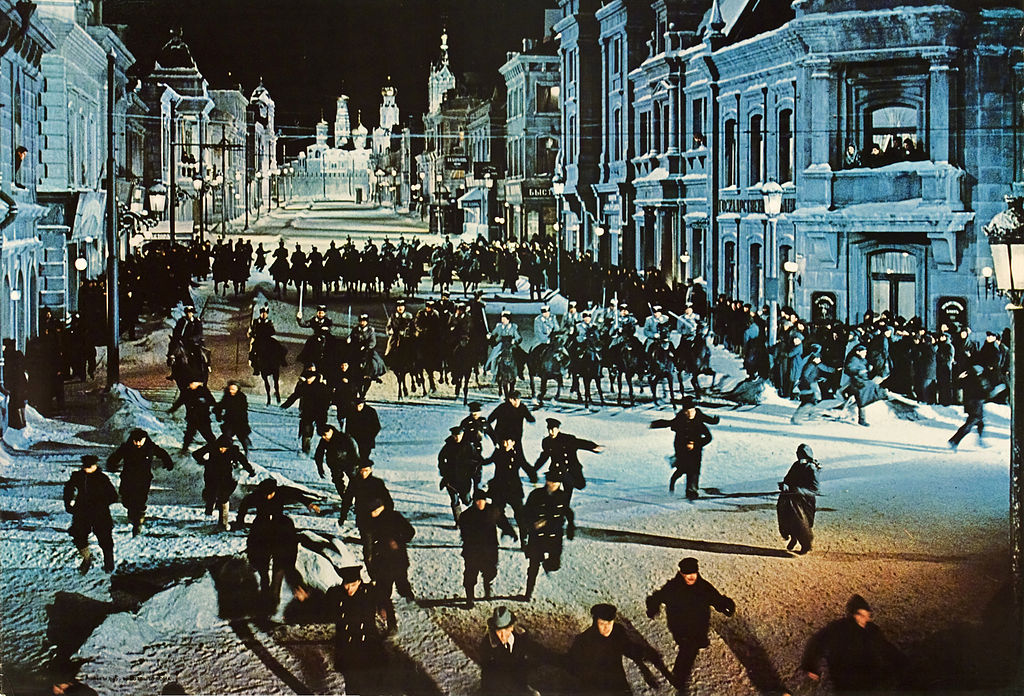
    Scene from Dr Zhivago depicting the Cossacks attacking peaceful demonstrators, a prelude to the Russian Revolution.  Dr Zhivago was a book written by Boris Pasternack, with the plot set in the last days of the Second World War and the break out of the Russian revolution. The book was banned in the USSR, was smuggle out into Europe and translated into English and other European languages. It was made into a classic movie by David Lean during the peak of the Cold War. The movie became a weapon in the cultural component of the Cold War, for its depiction of a totalitarian tendency inherent in the Russian revolution from the start. Boris Pasternack was awarded the Nobel prize (for his book ‘And Quite flows the Don’) but refused to receive it due to the pressure of the ideological  contest between the communist USSR and the capitalist West.    

    Kashmir Files poster Image: koimoi.com

    Raazi poster Image: Mumbai Mirror  

    Bibliography

    Bagdikian, Ben H. 2004. The New Media Monopoly. Boston: Beacon. https://library.uniteddiversity.coop/Media_and_Free_Culture/The_New_Media_Monopoly-Ben_H_Bagdikian.pdf.

    BAUM, MATTHEW A. 2007. “Soft News and Foreign Policy: How Expanding the Audience Changes the Policies.” Japanese Journal of Political Science 8 (1): 115–45. https://doi.org/10.1017/s1468109907002502.

    Bettig, Ronald V., and Jeanne Lynn Hall. (2003) . Big Media, Big Money : Cultural Texts and Political Economics. Lanham, Md.: Rowman & Littlefield Publishers, Inc.

    Chomsky, Noah. 1991. “Necessary Illusions: Thought Control in Democratic Societies, Noam Chomsky. 1989. Sough End Press, Boston, MA. 432 Pages. ISBN: 0-89608-366-7. $16.00.” Bulletin of Science, Technology & Society 11 (3): 183–83. https://doi.org/10.1177/027046769101100328.

    Cohen, Bernard C. 1963. The Press and Foreign Policy. The American Historical Review. https://doi.org/10.1086/ahr/69.3.805.

    Entman, Robert. 2005. “Robert M. Entman. Projections of Power: Framing News, Public Opinion, and U.S. Foreign Policy. Chicago: University of Chicago Press. 2003. .Public Opinion Quarterly 69 (2): 324–26. https://doi.org/10.1093/poq/nfi017.

    Mcchesney, Robert Waterman . 2008. The Political Economy of Media : Enduring Issues, Emerging Dilemmas. New York: Monthly Review Press.

    McQuail, Denis . 2005. McQuail’s Mass Communication Theory. Sage Publications Ltd., London. https://www.scirp.org/reference/referencespapers?referenceid=1839060.

    Norris, Pippa. 2002. “Studying the Media and Politics in Britain: A Tale of Two Literatures?” The British Journal of Politics and International Relations 4 (2): 359–73. https://doi.org/10.1111/1467-856x.t01-1-00009.

    Vivian, John. 2006. The Media of Mass Communication. Allyn & Bacon.

    Zelizer, Barbie, and Stuart Allan. 2011. Journalism after September 11. Taylor & Francis.


  • The power of poetry in politics and indigenous people of India

    The power of poetry in politics and indigenous people of India

    O ancestral spirits!
    How now do we escape,
    From the conspiracies of time,
    Concocted on the flames
    That from the sweltering earth rise?
    Where all is slowly being roasted alive,
    The air, the forests, and the soil,
    And man – in body and in mind?

    – Lament in Songs (Geeton Ke Bilaap) through Jacinta Kerketta

    A profound political philosopher of ancient Athens whose administrational academics left people in admiration and aghast protested against poets and critiqued poetries. He feared the passion or public emotion evoked by poets, and he reckoned that rational thought could be ravaged by public passion.

    “For a poet is an airy thing, winged and holy, and he is not able to make poetry until he becomes inspired and goes out of his mind and his intellect is no longer in him.”

    ― Plato

    Poetry is one of the ancient art forms, the earliest kinds of poems were recited and passed on orally before the evolution of scripts. Administrative and ancestral accounts were more merely to remember due to the poem’s rhythmic and repetitious nature.

    Influence of poetry in politics

    Through triumph and terror or from pain to power, poetry allows people to paint different shades of human emotions. Poetry has served as a significant tool to convey meanings and messages since the beginning. It is also used as a channel to cast awareness on sound socio-economic concerns and personify political questions. Poems play a pivotal role in collective resonation to specific themes and it embraces the efficiency of words which could be serene as a sea or sharp as a sword.

    In the year 1821 Percy Bysshe Shelley wrote eloquently in his essay A Defence of Poetry that the poet creates humane values and imagines the forms that shape the social order and“Poets are the unacknowledged legislators of the world.” Political poetries pave a path to discuss injustice in the societies and build a bridge between the emotive expression of the state administrators and its citizens. Political poetries are not definitive they are not bureaucratic blueprints or literary balms either, they imprint the cyclic endurance of the past, present, and future. They massively represent the public’s fear and anguish or equip the endangered with empowerment.

    Adrienne Rich compellingly stated in a commentary that –

    “I’m both a poet and one of the “everybodies” of my country. I live with manipulated fear, ignorance, cultural confusion and social antagonism huddling together on the faultline of an empire”.


    Profile and position of indigenous people of India

    Histories have created many poets and many poets have influenced histories, traditionally archiving their histories through songs, folklore, and myths. Adivasis have aced their way through their ancestral accounts accumulation. Adivasis are folks who function their lives through flourishing flora and fauna encapsulated with enriching cultures and practices and lives among the areas of the Indian sub-continent. Adivasi is a common term that was coined in the 1930s to address the indigenous groups of India, while the legal term ”scheduled tribes” is used in the constitution. They are the most prehistoric inhabitants of the sub-continent who are a heterogeneous group with diverse ethnicity and linguistics. Post the Aryan intervention the Adivasis began to trade with people of the plains, it was during the mid-eighteenth century that the indigenous people of the east revolted against the political British and its intrusive regulation upon the mainlands of the indigenous folks.

    This renounced the defenceless position of the land and its people. Even, today the Adivasis encounter various forms of social discrimination, political power lash, and remain economically stagnant.

    Balance between battles and banquets- Political poetries of the past and the present

    Songs, myths, and folklore revolving around landscapes, political relations among the Adivasis or with the non-Adivasis, human emotions were all oral histories being passed on to the next generation. The stories of Adivasis were massively written by people who did not belong to the Adivasi community, the literary endeavours of the tribes were not adequately acknowledged due to the lack of recognition of languages amongst the state. The poems written by the poets or writers of the community have an extensive influence over the political lives of Adivasis in terms of the political periphery.  In most poems by the Adivasis, the muscles of metaphors were majorly merged with nature or the environment. The largest of them are written in their indigenous languages like Kotas, Santali, and Ho & others where some are translated to other vernacular languages and some are not. Many political poetries raise questions against the havoc harboured by a biased notion of “progress”. The following are a few poetical works of indigenous people of India which brought out Adivasi’s political proximity.

    The editor of Chandini Magazine, Susheela Samad was one of the earliest Adivasi writers in the 1920s, where two of her poetry were published in the 1940s. In the year 1960 several stories of Alice Ekka were published in the Adivasi Patrika who was also the first female Adivasi writer.

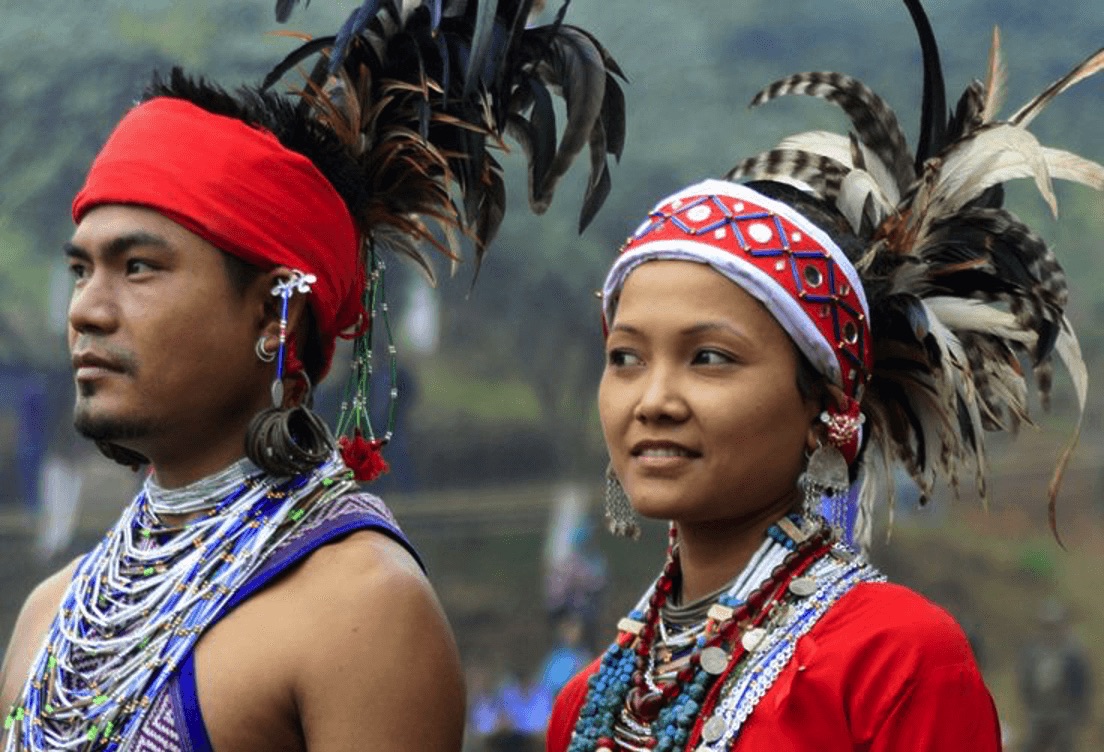
    The very famous Temsüla Ao an Ao Naga tribal poet and an ethnographer who worked on Oral histories published plenty of poetry from 1988 to 2007 shedding light on the word “song” in all her titles emphasizing the essence of poems in tribal song culture and expressing the voices of her community against land & cultural alienation.

    Referring to the violence in the valley, the poet says

      ” But to-day

       I no longer know my hills,

       The birdsong is gone,

       Replaced by the staccato

       Of sophisticated weaponry. ” (“My Hills” 19-23)

    The poet laments the loss of peace and verdure in her region.

    The director of Adivasi Bhasha Shodh Sansthan (Tribal Language Research Institute) Ushakiran Atram is a Koitur poet and a writer who held compelling narratives on patriarchal injustice and political vocalization from a woman’s scope of the lens.

    “Bata maan, main kiski hun? Baba-Bhaiya ki? Mere Shauhar ki? Sawkaar-Ranger-Patil ki? Jameendaar-Darzi-Sonaarki? Kiski hun main?”—Tell me, mother, whose am I? Father’s or brother’s? My husband’s? Moneylenders-Rangers-Patils? Landlords-Tailors-Goldsmiths? Whose am I?

    the mentioned poem is from one of her books named ‘Motiyarin’ A Gonti term which means a position given to a woman leader who supervises the overall activities in Gotul.

    “Unless you speak their dialect, you’re an outsider,” says Lakshmanan who accompanied Tamil Nadu Pazhankudi Makkal Sangam, a movement that worked for indigenous welfare. In 2010, he also wrote an anthology of poems titled ‘Odiyan’ which means the evil spirit through which he paints the colours of pain and anguish of the Irular community which was partly in their language.


    Jacinda Kerketta a young poet and a journalist of the Oraon tribe raises questions about the standpoint on “development” on tribal lands, In the poem “Oh Shahar” (Oh City) she writes

    Leaving behind their homes,

    Their soil, their bales of straw,

    Fleeing the roof over their heads, they often ask,

    O, City!

    Are you ever wrenched by the very roots?

    In the name of so-called progress?

    The author brings out the intensity of anthropocentrism imposed upon the Adivasi arena and all her poems do not victimize their position instead evokes thought-provoking questions.


    Recently, Arivu a resounding rapper and a political poet brought out many problematic political practices of history and the present against his community through his album called ‘Therukural’ (voices of the streets), and in 2021 the song “Enjoy Enjaami” which is a blend of Rap and ‘oppari'(lament song sung during mourning )took over the stage of multi-media, the artist poetically and politically protested in all his works intending to enlighten the traces of civilization before caste and issues of inequality.


    Waharu Sonavane, a Bhilli poet and an activist whose “Stage” was an icebreaker that questioned the leadership of a major movement – Narmada Bachao Andolan and indigenous representation in bearing the torch.


    Will the mainstream history intersect Adivasi’s ancestral accounts? or will they contradict? Poetical poems fade along with time, they lose their essence of eventual happenings but strikingly hold the public psychology of the period. Political poems of indigenous tribes of India pose their position into viewing history from a different lens – meaning to revisit the history not just from conventional collectives but also to learn from our oral archives, songs and stories.

    The following poem was written by Waharu Sonavane; translated by Bharat Patankar, Gail Omvedt, and Suhas Paranjape –

    Stage

     We didn’t go to the stage,

    nor were we called.

    With a wave of the hand

    we were shown our place.

    There we sat

    and were congratulated,

    and “they”, standing on the stage,

    kept on telling us of our sorrows.

    Our sorrows remained ours,

    they never became theirs.

    When we whispered out doubts

    they perked their ears to listen,

    and sighing,

    tweaking our ears,

    told us to shut up,

    apologize; or else…


    Feature Image Credit: www.climatescorecard.org

  • Harmony – the soft power of the East-Asian civilizations

    Harmony – the soft power of the East-Asian civilizations

    To date, the Western understanding of freedom as liberation still seems to be the hegemonic discourse. But as we know from Thomas Hobbes excessive freedom is leading to civil wars – and the ideology of unlimited freedom in the market economy and over excessive consumption is burning the world in climate change.

    East Asia and South-East Asia are emerging as the world’s largest economic powerhouse and perhaps even as a technological superpower.  Nevertheless, a deeper understanding of the consequences of this process will remain elusive, unless we squarely look at the puzzles surrounding the norms and preferences of major East Asian states. In contrast to the Western neo-liberal model, which puts excessive emphasis on individual freedom leading in the Western countries to the dissolution of the social fabric of the societies, there is an authoritarian temptation to maintain social cohesion in light of the dramatic social transformation worldwide. But mere authoritarianism is not compatible with the progress of societies because it does lack the incentive to rise above your current situation. We all know we started to live in a new world different from what we used to. But it is still early to name or define this Chameleon-like world of incessant transformation. Western triumphalism, perhaps understandable after the end of the Cold War, was long gone. Perhaps, we are destined to live in limbo for the near future. In order to cope with this process, East Asia needs not only economic and technological progress but also the soft power of ideas. To date, the Western understanding of freedom as liberation still seems to be the hegemonic discourse. But as we know from Thomas Hobbes excessive freedom is leading to civil wars – and the ideology of unlimited freedom in the market economy and over excessive consumption is burning the world in climate change.

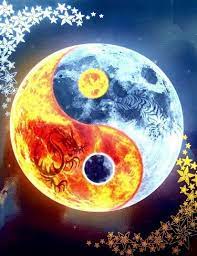
    Harmony in the Confucian tradition is also not a fixed status, but the task is to harmonize the contrasts and opposites.

    An alternative value system might be the Confucian and East Asian concepts of harmony.  Harmony is not sameness but implies tensions like those in a symphony. In music, we find a lot of contrasts for example in a symphony of Beethoven but at the same time, we enjoy the harmony of the whole composition. Already in the first very old appearances of the concept of harmony, it is related to the singing of birds and music in general. Harmony is therefore related to the balancing of contrasts. Harmony in the Confucian tradition is also not a fixed status, but the task is to harmonize the contrasts and opposites. And of course, a part of harmony is related to freedom, but unrestricted freedom is not the ultimate goal. The question, therefore, is how to limit unrestricted freedom without suppressing the people? The answer might be to harmonize and balance freedom with equality.

    The question, therefore, is how to limit unrestricted freedom without suppressing the people? The answer might be to harmonize and balance freedom with equality.

    As in a symphony, real harmony is achieved when we are able to balance the contrasts of life: between the whole and the part, being born and dying, the individual and the community, between freedom and equality. We could compare such a balance with a water wave. If there are no movements and waves at all, the sea is dying – if it is a Tsunami the waves are destructive for the individual and the community. Harmony is superseding the Western discourse of absolute freedom because in a harmonious society freedom is not abandoned but a part of the greater whole.  Neither the authoritarian rule nor excessive freedom should be the alternative for world order in the twenty-first century – what we desperately need in a burning world is a harmony or floating balance between and within our societies as well as us as individuals.


    Feature Image: The Idea of Harmony wsimag.com

  • India-China Trade In Ancient Times: Southern Silk Route

    India-China Trade In Ancient Times: Southern Silk Route

    To follow the Silk Road is to follow a ghost. It flows through the heart of Asia, but it has officially vanished leaving behind the pattern of its restlessness: counterfeit borders, unmapped peoples. The road forks and wanders wherever you are. It is not a single way, but many: a web of choices.

    Colin Thubron, Shadow of the Silk Road.

    Introduction

    India and China, two Asian giants, share a lot of similarities in terms of history and culture. Both countries represent age old civilizations and unique history. Cultural and economic ties between the two countries date back to about 2000 years ago. The Silk Route, which is an ancient network of trade routes, formally established by the Han Dynasty, served as a connection between the two countries. It was also through this route that Buddhism spread to China and East Asia from India. The routes were more than just trade routes; it was the carrier of ideas, innovations, inventions, discoveries, myths and many more.
    The earliest mention of China can be found in the Indian text “Arthashastra” which was written by Kautilya in the fourth century BC. Kautilya made a remark about Cinapattasca Cinabhumjia (Cinapatta is a product of China)[1]. Whereas, the earliest mention of India in Chinese records dates between 130 and 125 BC. Zhang Qian, a Chinese envoy to Central Asia, referred to India as Shendu, in his report about India to Emperor Wu of the Han dynasty.
    This article will look into the ancient trade route that existed between South Western China and India’s North East region via Myanmar and the future of the trade route.

    Ancient trade links between India and China

    Shiji, which is the first Chinese dynastic history, compiled between 104 and 87 BCE talks about the existence of a trading route between India and South West China. According to Chinese records, Emperor Wu of the Han dynasty, tried to establish a trade route from Changan, the Chinese capital to North East India through Yunnan and adjoining areas. However, the rulers of Yunnan were against the idea of establishing a direct trade between India and China and Emperor Wu failed to establish the trade route. Even though the trade route failed to take off, the trade in Cinapatta and Chinese square bamboo continued without any hindrance.

    Political Geography of the Southern Silk Route

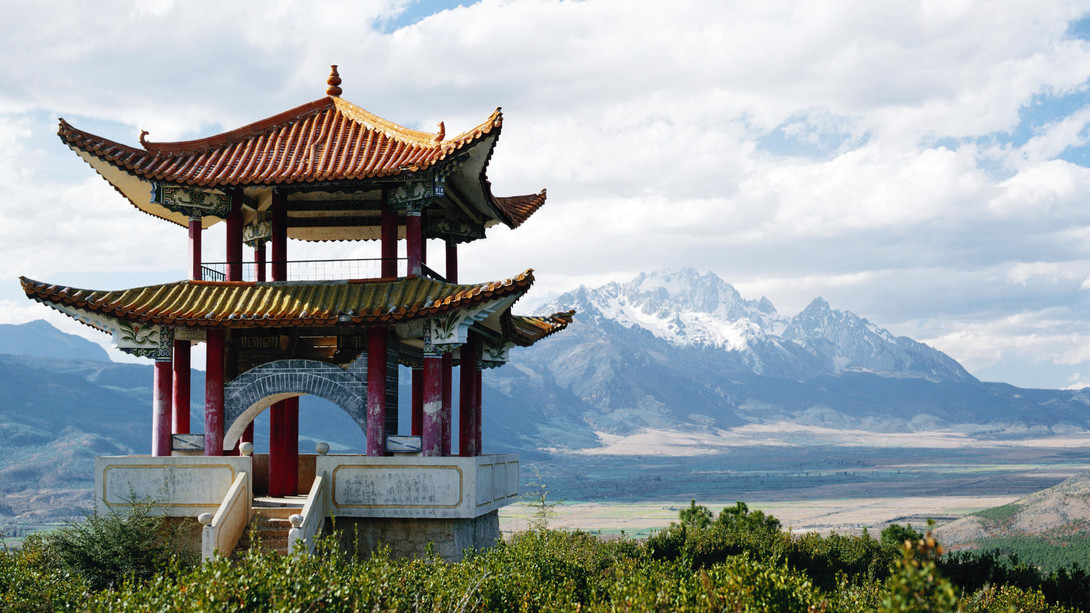
    The Southern Silk route (SSR), one of the least studied overland route, is a trade route which is about 2000 km long and linked East and North East India with Yunnan Province of China via Myanmar. This is a relatively unknown, ancient trade route that is considered a part of the larger web of Silk Roads. This route existed before the Central Asian Silk route became popular. This trade route between Eastern India and China came to be known during the early 3rd century BCE, and it became popular by the 2nd century BCE. By 7th century AD various other branches of the SSR emerged to create web of trading routes.
    Traders carried silk from Yunnan through Myanmar, across India and joined the main silk route in Afghanistan. In addition, silk was also transported from South West China through the Shan states and North Myanmar into East India and then down to the Coromandel Coast.
    The Qing dynasty which ruled China from 1644-1912, recorded the cross cultural exchanges that took place across SSR. This route contributed to cultural exchanges between China and the West. It also promoted interactions among different nationalities.
    Indian sources have failed to provide abundant evidence about the SSR and the interaction that took place across this route but there is enough evidence that indicates that trade and migration did take place in the Eastern India-Upper Myanmar-Yunnan region. For example, modern scholars believed that the Tai Ahoms were originally from Yunnan but they migrated to North East India and founded a small kingdom around 13th century, which grew to become the powerful Ahom Kingdom of Assam.
    The areas through which the SSR passed were inhabited by various ethnic groups whose political, social and economic organizations were primitive and backward. As a result, the safety of the route was often questioned. Archeological evidences have been found along the Southern banks of Brahmaputra up to Myanmar border, which shows that trade did exist along this route.
    The main items that were exported from China via this route included Silk, Sichuan cloth, Bamboo walking sticks, ironware and other handicrafts items. Sichuan, a South Western province was the main source of silk. Glass beads, jewels, emeralds etc were some of the items that were imported to China.
    Another important trade route is the South West Silk route or the Sikkim Silk route, which connected Yunnan, and India through Tibet. A section of the route from Lhasa crossing Chumbi Valley, Nathu La Pass connected to the Tamralipta Port (present day Tamluk in West Bengal). From the Tamralipta port, this trade route took to the sea to traverse to Sri Lanka, Bali, Java and other parts of the Far East. Another section of the route crossed Myanmar and entered India through Kamrup (Assam) and connected the ports of Bengal and present day Bangladesh.
    Over time, the Southern Silk Route lost its prominence and it was in 1885 that it re- emerged as a strategic link as the British tried to control some parts of the route in order to access and gain control over Southern China.
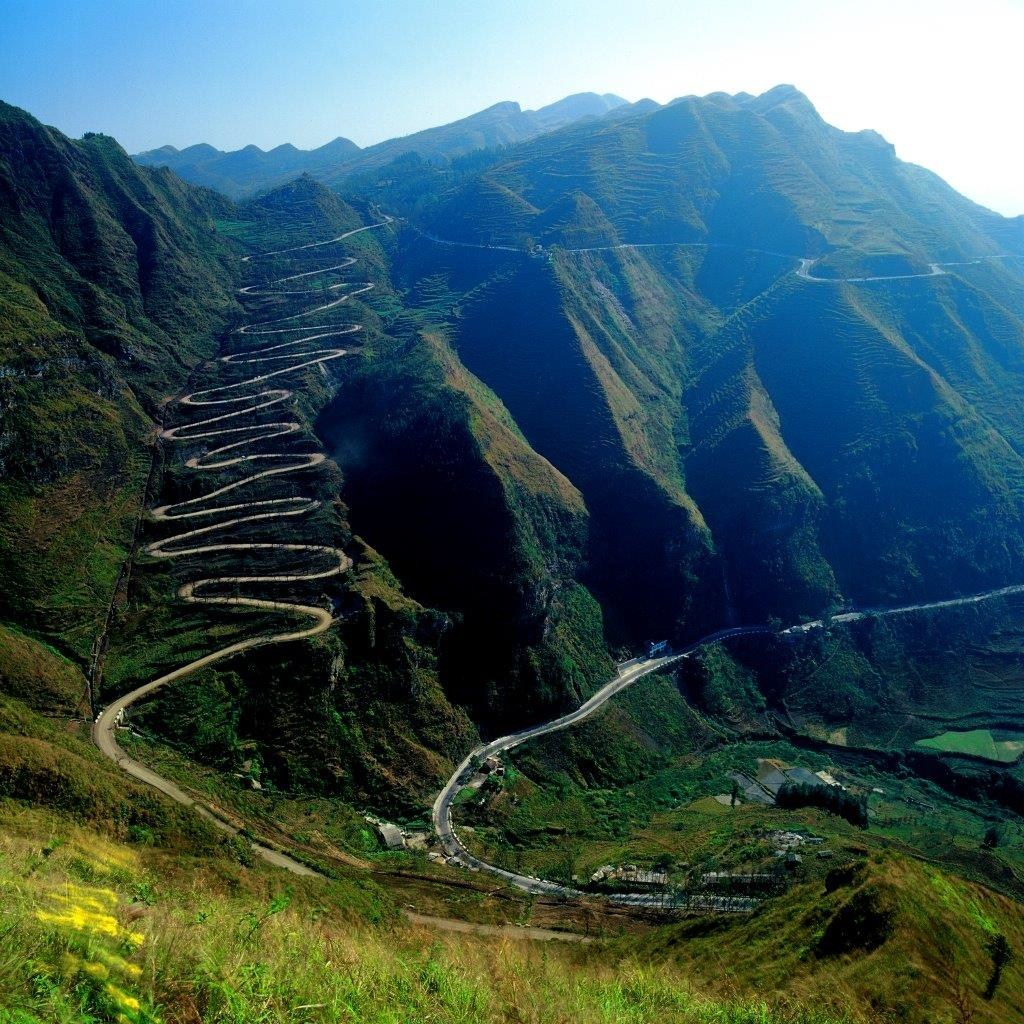
    The strategic importance of the route increased during World War II. In 1945, Ledo Road or Stilwell Road was constructed from Ledo, Assam to Kunming, Yunnan to supply aid and troops to China for the war with Japan. Ledo Road is the shortest land route between North East India and South West China. However, after the war the road was left unused and in 2010, BBC reported that much of the Ledo road has been swallowed up by jungle.
    The Assam-Myanmar-Yunnan road is very difficult to traverse not only in the present times but also during the ancient times. However, despite the hard conditions, it is through this route that a golden triangle of drug trafficking, movement of terrorist and smuggling functions today.

    Future Potential: Reviving the Southern Silk Route Economy

    North-East India and the Yunnan province share many similarities. Both are landlocked as well as under developed regions. Both are home to a large number of ethnic groups and have witnessed secessionist movement from time to time. Apart from this, Yunnan and North East India are geographically isolated from their political capitals.
    Yunnan and North East India, home to rich varieties of subtropical fruits with high nutritional values and medicinal plants, can cooperate and transform the hills of North East India and South West China into plantations, factories, laboratories to produce processed food products and lifesaving drugs that can find a huge market in developing and developed countries.
    In a bid to revive the Southern Silk route, Bangladesh, China, India and Myanmar, signed the Kunming Initiative, a sub-regional organization, in 1999. This initiative was replaced by the Bangladesh-China-India-Myanmar Economic Corridor (BCIM-EC) in 2015. The BCIM-EC was announced by China as a part of its Belt-Road Initiative, which has been boycotted by India since the beginning. In 2019, the BCIM-EC was dropped from the list of 35 projects that are to be undertaken under BRI, indicating that China has disreagrded the project. However, in the same year India has sought to keep the BCIM-EC project alive.
    If the BCIM-EC project does take place, it will reduce the travel time, cut transportation cost, open up markets, provide way for joint exploration and development of natural resources and create production bases along the way. Before the BCIM-EC takes off, it is important to develop the roadways infrastructure of India’s North East region.
    Even though the BCIM-EC promises to elevate the economic conditions of the backward North-East region of India, it has not gained sufficient steam as both China and India have different apprehensions. China sees India’s reluctance to support BRI as the barrier for any progress in the project. Given the current stand-off in Ladakh, India’s apprehensions about China seeking to exploit the insurgent groups operating in the region gains significance. Either way realizing the Southern Silk Road as a viable project in the form of BCIM-Economic Corridor looks distant now.
    [1]Haraprasad Ray, “Southern Silk Route: A Perspective,” in The Southern Silk Route : Historical Links and Contemporary Convergences (Routledge, 2019).

    References

    Ray, Haraprasad. “Southern Silk Route: A Perspective.” Essay. In The Southern Silk Route: Historical Links and Contemporary Convergences. Routledge, 2019.
    “Continental and Maritime Silk Routes: Prospects of India- China Co-operations.” In Proceedings of the 1st ORF-ROII Symposium. Kunming, 2015.
    Mukherjee, Rila. “Routes into the Present.” Essay. In Narratives, Routes and Intersections in Pre-Modern Asia, 37–40. Routledge, 2017.
    UNESCO. Accessed June 20, 2020. https://en.unesco.org/silkroad/content/did-you-know-great-silk-roads.
    “The Silk Route.” Accessed June 21, 2020. http://www.sikkimsilkroute.com/about-silk-route/.
    Ray, Haraprasad. Introduction. In North East India’s Place in India-China Relations and Its Future Role in India’s Economy, n.d.
    Chowdhury, Debasish Roy. “’Southern Silk Road’ Linking China and India Seen as Key to Boosting Ties.” South China Morning Post, October 23, 2013.
    “China Wants to Revive ‘Southern Silk Road’ with India.” The Times of India, June 9, 2013.

    Image: Stilwel Road from Ledo in Northeast India to Kunming in Yunnan province, China

  • India-China Trade in ancient times: Southern Silk Route

    India-China Trade in ancient times: Southern Silk Route

    To follow the Silk Road is to follow a ghost. It flows through the heart of Asia, but it has officially vanished leaving behind the pattern of its restlessness: counterfeit borders, unmapped peoples. The road forks and wanders wherever you are. It is not a single way, but many: a web of choices.

     Colin Thubron, Shadow of the Silk Road.


    Introduction

    India and China, two Asian giants, share a lot of similarities in terms of history and culture. Both countries represent age old civilizations and unique history. Cultural and economic ties between the two countries date back to about 2000 years ago. The Silk Route, which is an ancient network of trade routes, formally established by the Han Dynasty, served as a connection between the two countries. It was also through this route that Buddhism spread to China and East Asia from India. The routes were more than just trade routes; it was the carrier of ideas, innovations, inventions, discoveries, myths and many more.

    The earliest mention of China can be found in the Indian text “Arthashastra” which was written by Kautilya in the fourth century BC. Kautilya made a remark about Cinapattasca Cinabhumjia (Cinapatta is a product of China)[1]. Whereas, the earliest mention of India in Chinese records dates between 130 and 125 BC.  Zhang Qian, a Chinese envoy to Central Asia, referred to India as Shendu, in his report about India to Emperor Wu of the Han dynasty.

    This article will look into the ancient trade route that existed between South Western China and India’s North East region via Myanmar and the future of the trade route.

    Ancient trade links between India and China

    Shiji, which is the first Chinese dynastic history, compiled between 104 and 87 BCE talks about the existence of a trading route between India and South West China. According to Chinese records, Emperor Wu of the Han dynasty, tried to establish a trade route from Changan, the Chinese capital to North East India through Yunnan and adjoining areas. However, the rulers of Yunnan were against the idea of establishing a direct trade between India and China and Emperor Wu failed to establish the trade route. Even though the trade route failed to take off, the trade in Cinapatta and Chinese square bamboo continued without any hindrance.

    Political Geography of the Southern Silk Route

    The Southern Silk route (SSR), one of the least studied overland route, is a trade route which is about 2000 km long and linked East and North East India with Yunnan Province of China via Myanmar. This is a relatively unknown, ancient trade route that is considered a part of the larger web of Silk Roads. This route existed before the Central Asian Silk route became popular. This trade route between Eastern India and China came to be known during the early 3rd century BCE, and it became popular by the 2nd century BCE. By 7th century AD various other branches of the SSR emerged to create web of trading routes.

    Traders carried silk from Yunnan through Myanmar, across India and joined the main silk route in Afghanistan. In addition, silk was also transported from South West China through the Shan states and North Myanmar into East India and then down to the Coromandel Coast.

    The Qing dynasty which ruled China from 1644-1912, recorded the cross cultural exchanges that took place across SSR. This route contributed to cultural exchanges between China and the West. It also promoted interactions among different nationalities.

    Indian sources have failed to provide abundant evidence about the SSR and the interaction that took place across this route but there is enough evidence that indicates that trade and migration did take place in the Eastern India-Upper Myanmar-Yunnan region. For example, modern scholars believed that the Tai Ahoms were originally from Yunnan but they migrated to North East India and founded a small kingdom around 13th century, which grew to become the powerful Ahom Kingdom of Assam.

    The areas through which the SSR passed were inhabited by various ethnic groups whose political, social and economic organizations were primitive and backward. As a result, the safety of the route was often questioned. Archeological evidences have been found along the Southern banks of Brahmaputra up to Myanmar border, which shows that trade did exist along this route.

    The main items that were exported from China via this route included Silk, Sichuan cloth, Bamboo walking sticks, ironware and other handicrafts items.  Sichuan, a South Western province was the main source of silk. Glass beads, jewels, emeralds etc were some of the items that were imported to China.

    Another important trade route is the South West Silk route or the Sikkim Silk route, which connected Yunnan, and India through Tibet. A section of the route from Lhasa crossing Chumbi Valley, Nathu La Pass connected to the Tamralipta Port (present day Tamluk in West Bengal). From the Tamralipta port, this trade route took to the sea to traverse to Sri Lanka, Bali, Java and other parts of the Far East.  Another section of the route crossed Myanmar and entered India through Kamrup (Assam) and connected the ports of Bengal and present day Bangladesh.

    Over time, the Southern Silk Route lost its prominence and it was in 1885 that it re- emerged as a strategic link as the British tried to control some parts of the route in order to access and gain control over Southern China.

    The strategic importance of the route increased during World War II. In 1945, Ledo Road or Stilwell Road was constructed from Ledo, Assam to Kunming, Yunnan to supply aid and troops to China for the war with Japan. Ledo Road is the shortest land route between North East India and South West China. However, after the war the road was left unused and in 2010, BBC reported that much of the Ledo road has been swallowed up by jungle.

    The Assam-Myanmar-Yunnan road is very difficult to traverse not only in the present times but also during the ancient times. However, despite the hard conditions, it is through this route that a golden triangle of drug trafficking, movement of terrorist and smuggling functions today.

    Future Potential: Reviving the Southern Silk Route Economy

    North-East India and the Yunnan province share many similarities. Both are landlocked as well as under developed regions. Both are home to a large number of ethnic groups and have witnessed secessionist movement from time to time. Apart from this, Yunnan and North East India are geographically isolated from their political capitals.

    Yunnan and North East India, home to rich varieties of subtropical fruits with high nutritional values and medicinal plants, can cooperate and transform the hills of North East India and South West China into plantations, factories, laboratories to produce processed food products and lifesaving drugs that can find a huge market in developing and developed countries.

    In a bid to revive the Southern Silk route, Bangladesh, China, India and Myanmar, signed the Kunming Initiative, a sub-regional organization, in 1999. This initiative was replaced by the Bangladesh-China-India-Myanmar Economic Corridor (BCIM-EC) in 2015. The BCIM-EC was announced by China as a part of its Belt-Road Initiative, which has been boycotted by India since the beginning. In 2019, the BCIM-EC was dropped from the list of 35 projects that are to be undertaken under BRI, indicating that China has disreagrded the project. However, in the same year India has sought to keep the BCIM-EC project alive.

    If the BCIM-EC project does take place, it will reduce the travel time, cut transportation cost, open up markets, provide way for joint exploration and development of natural resources and create production bases along the way. Before the BCIM-EC takes off, it is important to develop the roadways infrastructure of India’s North East region.

    Even though the BCIM-EC promises to elevate the economic conditions of the backward North-East region of India, it has not gained sufficient steam as both China and India have different apprehensions. China sees India’s reluctance to support BRI as the barrier for any progress in the project. Given the current stand-off in Ladakh, India’s apprehensions about China seeking to exploit the insurgent groups operating in the region gains significance. Either way realizing the Southern Silk Road as a viable project in the form of BCIM-Economic Corridor looks distant now.


    [1]Haraprasad Ray, “Southern Silk Route: A Perspective,” in The Southern Silk Route : Historical Links and Contemporary Convergences (Routledge, 2019).

    References

    Ray, Haraprasad. “Southern Silk Route: A Perspective.” Essay. In The Southern Silk Route: Historical Links and Contemporary Convergences. Routledge, 2019.

    “Continental and Maritime Silk Routes: Prospects of India- China Co-operations.” In Proceedings of the 1st ORF-ROII Symposium. Kunming, 2015.

    Mukherjee, Rila. “Routes into the Present.” Essay. In Narratives, Routes and Intersections in Pre-Modern Asia, 37–40. Routledge, 2017.

    UNESCO. Accessed June 20, 2020. https://en.unesco.org/silkroad/content/did-you-know-great-silk-roads.

    “The Silk Route.” Accessed June 21, 2020. http://www.sikkimsilkroute.com/about-silk-route/.

    Ray, Haraprasad. Introduction. In North East India’s Place in India-China Relations and Its Future Role in India’s Economy, n.d.

    Chowdhury, Debasish Roy. “’Southern Silk Road’ Linking China and India Seen as Key to Boosting Ties.” South China Morning Post, October 23, 2013.

    “China Wants to Revive ‘Southern Silk Road’ with India.” The Times of India, June 9, 2013.


    Image: Stilwel Road from Ledo in Northeast India to Kunming in Yunnan province, China


  • Lessons from countering the corona-virus for war and violence:  Containment, Common Security and Cooperation

    Lessons from countering the corona-virus for war and violence: Containment, Common Security and Cooperation

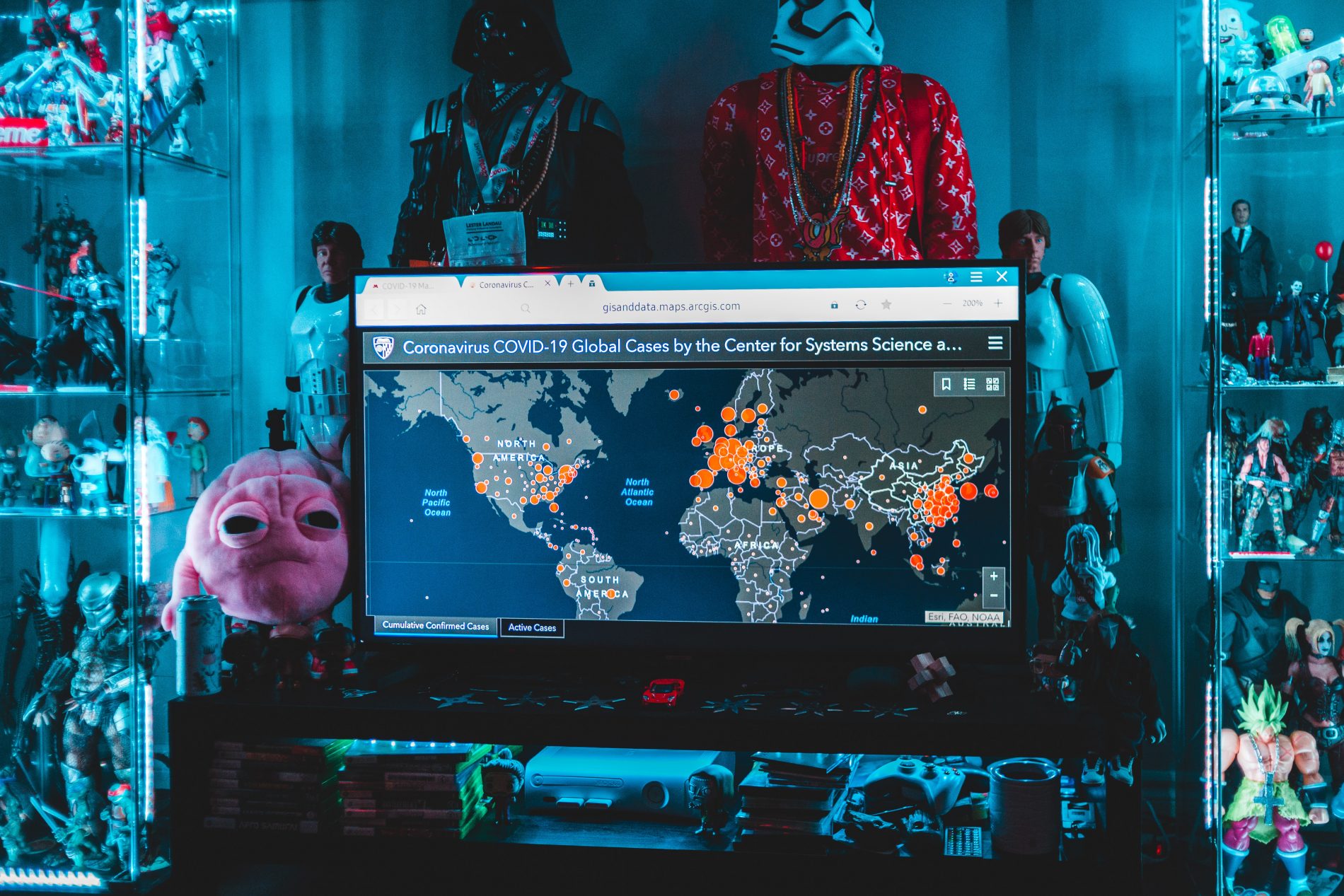
    The world is engulfed in the ‘Corona Virus’ pandemic. As national health systems are being stretched to their limits, countries are closing their borders, banning travel, and isolating themselves…all in an international co-operative strategy to contain its spread and eliminate this pandemic. Andreas Herberg-Rothe sees valuable lessons in this international co-operation to be used to contain war and violence. Taking a leaf out of the broad ‘containment theory’ articulated by the late George Kennan in an anonymous article published in 1947 in the FP magazine, Andreas proposes a containment strategy for the world from the scourge of terrorism, religious fanaticism, and wars for world dominance (both proxy as well as interventions). This strategy for ‘common security’ can succeed only if it respects pluralism of cultures, religions, and social orders…M Matheswaran.


    The initial measures against the spread of the new corona-virus could be summarized by one word – containment of the virus and hindering its spreading. This current prominence of the concept of containment could be used for other world problems. By having a closer look at the concept of containment it becomes obvious that it also included the concept of common security and cooperation – the same is true with the corona-virus. We are witnessing a worldwide expansion of war and violence, which should be countered by a new containment, just as George Kennan emphasized as early as 1987: “And for these reasons we are going to have to develop a wider concept of what containment means (…) – a concept, in other words, more responsive to the problems of our own time – than the one I so light-heartedly brought to expression, hacking away at my typewriter there in the northwest corner of the War College building in December of 1946.” Nearly seventy-five years have already passed, since George Kennan formulated his original vision of containment. Although his original concept would be altered, in application by various administrations of the US-Government, in practice it has been incorporated within the concept and politics of common security, which has been the essential complement to pure militarily containment. These ideas are still valid – and as Kennan himself pointed out, they are in more need of explication and implementation than ever.

    The disinhibition of war and a new containment

    The triumphant advance of democracy and free markets in the wake of the Soviet collapse seemed to be unstoppable, to the point where it appeared for a time as if the twenty-first century would be an age defined by economics and thus, to a great extent, peace.  However, these expectations were quickly disappointed, not only because of the ongoing massacres and genocide in Africa, but also by the return of war to Europe (primarily in the former Yugoslavia), together with the attacks of September 11, 2001 in the USA, the Iraq war, the war in Syria with its on-going, violent consequences. A struggle against a new totalitarianism of an Islamic type appears to have started, in which war and violence are commonly perceived as having an unavoidable role. One can also speak of a new dimension to violence with respect to its extent and brutality – as exemplified by the extreme violence of the ongoing civil wars in Africa and the Middle East.  Additionally we are facing completely new types of threats, for example the possession of weapons of mass destruction by terrorist organizations or the development of atomic bombs by “problematic” states like North Korea. The potential emergence of a new Superpower, China, and perhaps of new “great” powers like India may lead to a new arms race, which presumably have a nuclear dimension as well. In the consciousness of many, violence appears to be slipping the leash of rational control, an image the media has not hesitated for foster, especially with respect to Africa. Will there be “another bloody century,” as Colin Gray has proposed?

    Although the current situation and the foreseeable future is not as immediately ominous as in the Cold War, it may be even worse in the long run. On one side, the prospect of planetary self-destruction via nuclear overkill, which loomed over the Cold War– and what could be worse than that, has been successfully averted. On the other hand, after having been granted a brief respite in the 1990s, mankind now feels itself to be confronting a “coming anarchy” of unknown dimensions and a new conflict between the US and China seems to be inevitable. If the horrific destructive potential threat of the Cold War has been reduced in scale, less cataclysmic possibilities have also become more imminent.

    As compared to the Cold War, there is no longer an exclusive actor to be contained, as the Soviet Union was. Even if one were to anticipate China’s emergence as a new superpower in the next twenty years, it would not be reasonable, in advance of this actually happening, to  develop a strategy of military containment against China similar to that against the Soviet Union in the 50s and 60s of  last century, since doing so might well provoke the kind of crises and conflicts that such a strategy would be intended to avoid. The attempt to build up India as counter-weight to China and facilitating its nuclear ambitions, for instance, might risk undermining the international campaign to limit the proliferation of nuclear weapons in the world. Therefore we need quite another concept of containment, which could not be perceived as a threat to China.

    The second difference is, that current developments in the strategic environment display fundamentally conflicting tendencies: between globalization and struggles over identities, locational advantages, and interests; between high-tech wars and combat with “knives and machetes” or suicide bombers; between symmetrical and asymmetrical warfare; between the privatization of war and violence and their re-politicization and re-ideologization as well as wars over “world order”; between the formation of new regional power centres and the imperial-hegemonic dominance of the only Superpower; between international organized crime and the institutionalization of regional and global institutions and communities; between increasing violations of international law and human rights on one side  and their expansion on the other. A strategy designed to counter only one of these conflicting tendencies may be problematic with respect to the others.  I therefore stress the necessity of striking a balance between competing possibilities.

    The third difference is that the traditional containment was perceived mainly as military deterrence of the Soviet Union, although in its original formulation by George Kennan it was quite different from such a reductionism. Our main and decisive assumption is that a new containment must combine traditional, military containment on one side, and a range of opportunities for cooperation on the other. That’s not only necessary with respect to China, but even to the political Islam, in order to reduce the appeal of militant Islamic movements to millions of Muslim youth.

    Such an overarching perspective has to be self-evident, little more than common sense, because it has to be accepted by quite different political leaders and peoples. The self-evidence of this concept could go so far that one could ask why we are discussing it. On the other hand, such a concept must be able to be distinguished by competing concepts. Last but not least, it should be regarded as an appropriate concept to counter contemporary developments. Finally, taking into account, that Kennan’s concept would not have succeeded, if it had been directed against the actions of the international community or the United States, it should be to some extend only brings to expression, what the international community is already doing anyway.

    A concept that realized these demands of a political concept for contemporary needs was that of “common security”, developed in the 1970s. In the special situation of the cold war and of mutual deterrence this concept didn’t imply a common security shared among states with similar values and policies. On the contrary, this concept, perhaps developed for the first time by Klaus von Schubert, emphasized a quite different meaning. Traditionally, opponents have understood security as security from each other. The new approach laid down by Klaus von Schubert derived from the assumption, that in a world of multiple capacities of annihilating the planet, security could only be defined as common security. This small difference between security from each other and common security — shared security against a universal threat — was nothing less than a paradigm change in the Cold war.

    The question of course remains, how to deter the true-believers, members of terrorist networks or people like the previous President of Iran, for whom even self-destruction may be a means of hastening millenarian goals. Of course, the “true-believers” or the “hard-core terrorist” could hardly be deterred. But this is just the reason, why containment should not be reduced to a strategy of deterrence. The real task even in these cases therefore is to act politically and militarily in a manner, that would enable to separate the “true believers” from the “believers” and those from the followers. This strategy can include military actions and credible threats, but at the same time it should be based on a double strategy of offering a choice between alternatives, whereas the reduction to military means would only intensify violent resistance. Additionally, even the true believers could be confronted with the choice, either further to be an accepted part of their social and religious environment (or to be excluded from them) or to reduce their millenarian aspirations. Of course, by following this strategy, there is no guarantee, that each terrorist attack could be averted. But this is not the real question. Assuming, that the goal of the terrorists and millenarian Islamists is to provoke an over-reaction of the West in order to ignite an all-out war between the West and the Islamic world, there is no choice than trying to separate them from their political, social and religious environment.

    The concept of containment and contemporary warfare

    The goal of the war on terror should not try to gain victory, because no one could explain, what victory would mean with regard to this special war. Moreover, trying to gain a decisive victory about the terrorists would even produce much more of them.  The additional problem is not only, how we ourselves conceive the concept of victory, but even more important, in which ways for example the low-tech enemies define victory and defeat. That is an exercise, that requires cultural and historical knowledge much more than it does gee-whiz technology.

    Instead one could argue, that the goal is “to contain terror”, which is of course something quite different from appeasement.  An essential limitation of the dangers, posed by terrorist organizations could be based on three aspects: first, a struggle of political ideas for the hearts and minds of the millions of young people; second the attempt to curb the exchanges of knowledge, financial support, communication between the various networks with the aim of isolating them on a local level; and finally, but only as one of these three tasks, to destroy what one could label the terrorist infrastructure. In my understanding, trying to achieve victory in a traditional military manner would not only fail, but additionally would perhaps lead to much more terrorism in the foreseeable future.

    The concept of the “centre of gravity” in warfare can provide another illustration of the way in which my conception makes a difference. Clausewitz defines war as an act of violence to compel our enemy to do our will. This definition suits our understanding of war between equal opponents, between opponents in which one side doesn’t want to annihilate the other or his political, ethnic or tribal body. But in conflicts between opponents with a different culture or ethnic background, the imposition of ones will on the other is often perceived as an attempt to annihilate the other’s community and identity. Hence, for democratic societies, the alternative is only to perceive war as an act of violence where, rather than compelling our own will to the opponent, your opponent is rendered unable any more to pursue his own will violently, unable to use his full power to impose his will on us or others. Consequently the abilities of his power must be limited, that he is no more able to threaten or fight us in order to compel us to do his will.

    The purpose of containing war and violence, therefore, is, to remove from the belligerent adversary his physical and moral freedom of action, but without attacking the sources of his power and the order of his society. The key to “mastering violence” is to control certain operational domains, territory, mass movement, and armaments, but also information and humanitarian operations. But this task of  “mastering violence” should no longer be perceived as being directed against the centre of gravity, but to the “lines” of the field of gravitation. Instead of an expansion of imposing one’s own will on the adversary up to the point of controlling his mind, as the protagonists of Strategic Information Warfare put it, the only way of ending conflict in the globalized  21st century is to set limits for action, but at the same time to give room for action (in the sense, Hannah Arendt used this term) and even  resistance, which of course has the effect of legitimising action within those limits.

    The overall political perspective on which the concept of the containing of war and violence in world society rests therefore consists of the following elements, the “pentagon of containing war and violence”:

    ▪ the ability to deter and discourage any opponent to fight a large scale war and to conduct pin-point military action as last resort,

    ▪ the possibility of using military force in order to limit and contain particularly excessive, large-scale violence which has the potential to destroy societies;

    ▪ the willingness to counter phenomena which help to cause violence such as poverty and oppression, especially in the economic sphere, and also the recognition of a pluralism of cultures and styles of life in world society;

    ▪ the motivation to develop a culture of civil conflict management (concepts which can be summed up with the “civilizational hexagon”, global governance, and democratic peace), based on the observation, that the reduction of our action to military means have proved counterproductive and would finally overstretch the military capabilities

    and

    ▪ restricting the possession and proliferation of weapons of mass destruction, their delivery systems, as well as of small arms, because the unhindered proliferation of both of them is inherently destructive to social order.

    The position I have put forward is oriented towards a basically peaceful global policy, and treats the progressive limitation of war and violence as both an indefinite, on-going process and as an end in itself. The lasting and progressive containment of war and violence in world society is therefore necessary for the self-preservation of states, even their survival and of the civility of individual societies and world society.    

    Image Credit:Photo by Erik Mclean on Unsplash