Tag: COVID-19

  • Covid 19: India uses Crisis to bring-in Economic Reforms as Package

    Covid 19: India uses Crisis to bring-in Economic Reforms as Package

    India’s four-phase lockdown of 68 days to deal with the Covid-19 threat has, while slowing the spread of the virus, come at huge economic costs. The lockdown for a vast majority of the people is, undoubtedly, the harshest in the world.

    The coronavirus triggered lockdown and its ensuing series of extensions have disrupted more than 60 percent of economic activities in the country, posing a huge threat to the  economy. The crisis was underway when the global economy was slowing down and India, in particular, had to deal with a poor health care system and an economy already under distress. Unemployment rate is estimated to be around 27 percent post lockdown and has resulted in nearly 12.2 crore people losing their jobs. In addition, a  severe slump in consumer demand is expected to persist for the next few quarters. Almost 85 percent of India’s workforce is engaged in the informal sector – quite naturally the government is under stress to implement effective policy reforms to counter the downturn. 

    In response to the contraction in the economy, the Prime Minister has announced a second round of economic package that stands at roughly around 10 percent of the Gross Domestic Product. The USA and Japan have announced relief packages of 13 and 21 percent of their GDP respectively. In comparison, India has seemingly provided a substantial Rs 20 lakh crore stimulus- highlighting the concept of ‘self-reliance’ as a way forward to deal with the economy post the pandemic. The stimulus package includes previous steps taken by RBI such as moratorium on loan repayments, interest rate cut, etc. In the five tranches of the stimulus package, the Finance Minister has announced a slew of measures to address the structural issues of Indian economy. However, it is estimated that the immediate fiscal boost will be only around 1 percent of GDP and most of the fiscal and monetary policies will attract long term capital with medium run  stabilization of the economy.


    Micro Medium and Small Scale Enterprises 

    Focusing on reviving the small businesses and micro enterprises, under this tranche Rs 3 lakh crore is allocated for collateral free loans for business enterprises. This package is estimated to be around Rs 5.94 lakh crore including RBI measures to improve liquidity in the economy. However, the direct fiscal cost for the government is around Rs 16,500 crore. For the stressed MSME units, the central government is planning to facilitate Rs 20,000 crore as subordinate debt and Rs 50,000 crore through equity infusion. Non Banking Finance Companies (NBFC) that serve the MSMEs will receive Rs 30,000 crore under investment guarantee scheme. While the six broad measures look attractive, the MSME sector in India is dominated by micro enterprises that are largely unregistered. However, these measures will not immediately benefit the micro business units with necessary working capital. Most of the enterprises and small business units are cash strapped and are on the verge of disappearing. Ninety-nine percent of the sector comprises micro enterprises – businesses with less than 10 working employees.

    Most of the enterprises and small business units are cash strapped and are on the verge of disappearing. Ninety-nine percent of the sector comprises micro enterprises – businesses with less than 10 working employees. 

    While the government has taken supply side measures to incentivize businesses, two important challenges remain intact. One, the large number of unregistered micro businesses might not benefit from the credit line offered by the government. Two, if the demand recovers slowly, it is likely the business sector especially small enterprises will suffer despite credit being infused. It is important to note that the supply and demand side has to be revived at the same rate to ensure sustainability of the MSME business. 


    Migrant labourers and Farmers: 

    Second stimulus of the Finance minister’s announcement was focused on migrant labourers and farmers. Close to 150 million internal migrants are present in India according to the latest census report.  Rs 3500 crores is to be spent on migrant labourers not covered under the Public Distribution System (PDS). Rs 5000 crore is set aside to facilitate easy access to street vendors. Funds worth Rs 6000 crore is planned for enhancing employment among adivasis and tribal groups. For the next two months, around 8 crore migrant labourers not covered under PDS will be provided 5kgs of grains per person and 1 kg chana per family in a month. ‘One Nation One Ration Card’ is a welcome move given the leakages present in the PDS, but the national coverage of this scheme is expected only by March 2021.  Additionally, in the National Food Security Act, 2013 , based on the 2011 census data, it is estimated that around 100 million people do not fall under this safety net accounting for growth in population over the past decade. The initiative to record and track the data on unregistered labourers is important for fiscal stimulus response to a COVID hit economy. National portability of ration cards is important but the execution is time consuming and does not address the problem of people being excluded from the ration card system. Universalizing PDS and decentralizing decisions to achieve food security with an efficient supply chain should be an immediate intervention. States with higher migrant labourers and people with less access to PDS should be targeted to universalise food distribution.  Acknowledging the shortcomings of the PDS and food supply channel, an emergency plan to ensure food supply to people below poverty line for the next six months needs to be prioritised.


    ‘One Nation One Ration Card’ is a welcome move given the leakages present in the PDS, but the national coverage of this scheme is expected only by March 2021. 


    Agriculture and Allied activities:

    Under the third tranche of the economic stimulus package, the government has taken bold measures to invest in agriculture and allied activities. Total package announced was worth Rs 1.63 lakh crores – relatively less compared to earlier stimulus packages. The main focus was on enhancing agriculture infrastructure, financing farm gate produce and improving post harvest supply.  A series of other funds were allocated for disease control for animal husbandry, promotion of herbal products and fisheries. Rs 10,000 crore was unveiled to support 2 lakh Micro Food Enterprises on a cluster based approach. 

    Lack of cold storage and supply chain was identified by the government to create an Agriculture Infrastructure Fund of Rs 1 lakh crore. A big push for agriculture reforms was spelled out by the decision to deregulate six commodities including cereals, pulses, oil and vegetables by amending  the Essential Commodity Act, 1955.

    Many experts believe the reforms undertaken were long due for India to enhance productivity of the agriculture  sector. But deregulation of essential products during the time of lockdown with poor food supply chains might not be beneficial especially for marginal farmers.  Almost 92 percent of the Food Supply Chain is controlled by the private sector and most of the farmers are not informed about Minimum Support Price and adopt unscientific farming practices. With liquidity constraint in the economy, demand for essential food is substantial. Factoring the drawbacks of PDS in supplying food items to the bottom section – a high probability of market failure is underway potentially hurting both farmers and consumers. Except for concessional credit for farmers and agriculture loans, the package has  limited scope to reduce the distress faced by the agrarian sector in near future. As far as the reforms are concerned, there was a clear bias towards post harvest investment. However, the productivity and scale of production has been the biggest problem in India that requires effective land reforms. India’s agriculture sector also suffers without adequate investment in Technology and Research & Development. During an unprecedented crisis, Indian government is pushing for big reforms but the structural issues of marginal-land farming are largely ignored. Even as a reform package─it is evident that it is likely to benefit primarily large farmers in the medium term.

    Except for concessional credit for farmers and agriculture loans, the package has  limited scope to reduce the distress faced by the agrarian sector in near future.

     Infrastructure, Defence  & Aerospace 

    Under this package, eight key sectors: coal, minerals, defence production, aerospace management, airports, power distribution, space and atomic energy were in the spotlight. In an effort to boost employment, a proclamation of structural reforms was stated in the fourth  tranche. The coal and mining industry is expected to receive an infrastructure development fund – making the sector self-reliant in production. The Foreign Direct Investment limit in defence has been increased from 49 percent to 74 percent to encourage foreign investment in production. In the aviation industry, India decided to open up 6 airports for auction. Additionally, three airports are to be operated under the Public Private Partnership model. Optimization of air space, building a hub for aircraft maintenance and overhaul are some of the important measures covered under this package. 

    Privatization and Globalization (New Economic Policy, 1991)- COVID-19 crisis has offered a space for the government to initiate certain radical measures to privatise a few industries.

    Private partnerships in the areas of space exploration and atomic energy offers an immense potential for private companies to get incubated for research and development. Sharing an economic pressure similar to the 1991 Balance of Payment crisis that resulted in Liberalization, Privatization and Globalization (New Economic Policy, 1991)- COVID-19 crisis has offered a space for the government to initiate certain radical measures to privatise a few industries. The measures will undoubtedly help the business ecosystem in India to develop in the medium term.  Though there seems to be a claim about substantial job creation this is not likely to happen immediately. 

    Rural Employment & Public Health

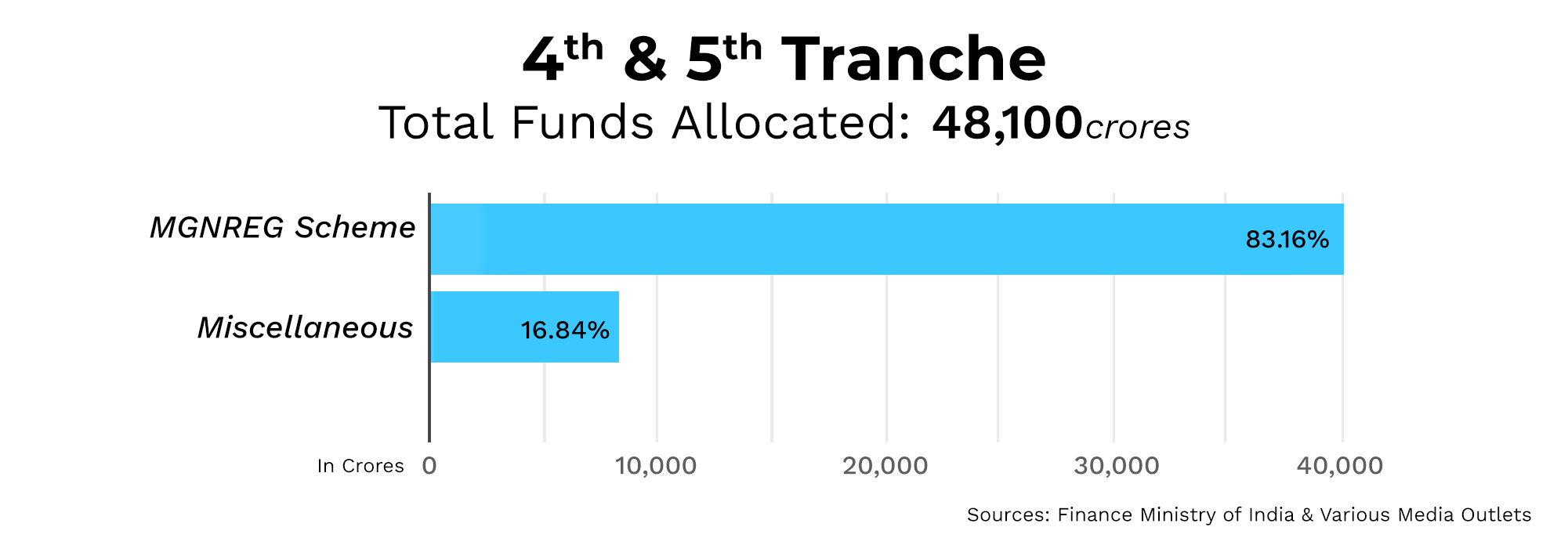
    In the final announcement, Rs 40,000 crore was allotted to Mahatma Gandhi National Rural Employment Guarantee Scheme (MGNREGS) to replace direct transfer from central government to migrant workers. Inadequate data about inter state informal labourers has placed limitations on policy formulation during the time of crisis. Under the Pradhan Mantri Garib Kalyan Yojna, Rs 50 lakh per person insurance cover will be applicable for health professionals. To ensure ease of doing business, non adherence to the Companies’ Act will be decriminalised. The government also committed to increasing health expenditure to face pandemics in the future. The finance minister also encouraged companies to entertain the idea of digital India to conduct meetings and businesses online. 

    The last two announcements together accounted for Rs 48,500 crore and experts criticize that most of them do not provide immediate relief for the people in distress. 
    Conclusion

    India has evidently seized the opportunity during the crisis to introduce reforms to boost the economy in the long run. The reform package undoubtedly is impressive on paper but in terms of immediate support to various sectors in distress it offers little. For example, a large part of the package – Rs 8.04 lakh crore- is additional liquidity injected by monetary policy in the last three months.  An investment bank has predicted that India will face a deeper recession in the short term but the economic stimulus would help the economy after a few quarters. As a consequence the real growth rate is to drop down by 5 percent year-on-year in 2020. Even after a massive package, the situation of poor and middle-class people remains bleak. The reforms might bear fruits in future but deferring the policy response to address current challenges will manifest into huge burden on vulnerable sections of the people. Current economic crisis has undoubtedly offered the central government to take advantage of the weak bargaining power of the stakeholders to push reforms but low attention is paid to immediate distress.

    The author was supported by Ms S P Bharani, on summer internship at TPF.

    Image Credit: Adobe Stock
  • COVID-19 Challenges for India: Tackling MSME Sector and Unemployment

    COVID-19 Challenges for India: Tackling MSME Sector and Unemployment

    The COVID-19 pandemic has shaken global markets as countries struggle to battle national and global health crisis. Indian government has announced an economic stimulus of  Rupees 20 lakh crore (Rs 20 trillion corresponding to $ 267 billion), roughly 10% of GDP for FY 21, in which six measures were framed for the Micro Small Medium Scale Enterprises (MSME). Government has allocated 3 lakh crore for collateral-free loans, additional debt and equity infusion with slew of other measures to protect the bruised MSME sector. The rise in the number of casualties and infected cases  all over the world present a grim picture. This is expected to result in a global recession that could lead to a loss of over $ 3 trillion to the global GDP. India, in an effort to contain the spread, has extended the lockdown at the cost of freezing almost 60 percent of its economy. Third extension of lockdown on May 3rd in order to flatten the curve will further contract the demand for next few quarters. IMF has revised India’s growth downwards to 1.9 percent for the year 2020 and 7.4 percent for the year 2021. Although the growth projection is not negative as in the cases of Eurozone and the US, India will need to overcome significant structural challenges to bring the economy back into a high growth trajectory. The cost of battling COVID-19 is not limited to the dip in growth but also includes the bleak prospects of a sizable percentage of the population being pushed below the poverty line.

    Apart from the virus, India faces two key challenges. Firstly, almost 80 percent of its labour force is part of the informal sector, which is expected to take major hit as a result of  the lock-down. Secondly, as India’s working age population will continue to expand  till 2055─ the cost of missing this demographic dividend will directly impact the future growth trajectory. Japan, China, South Korea and Singapore have capitalized on their demographic dividends and experienced double digit growths. The current disruption in the global economy will have a significant impact on India’s growth for the next few years. Therefore, diagnosing the systemic problems in the economy is crucial to developing a viable strategic economic policy. The Periodic Labour Force Survey (PLFS) notes that only nine percent of Indian workers are employed with organizations having more than 20 workers. Rest of the labour force are employed with small enterprises which have been forced to lay-off most of their employees due to the extended lockdown.

     Business Supply versus People Demand

    Contributing 30-35 percent of the GDP— Micro, Medium and Small scale industries face a higher risk of shutting down their production due to cash flow constraints. All India Manufacturers association reported that 43 percent of the MSMES will cease to operate with the lockdown extension. Around 99 percent of the MSMEs are dominated by Micro enterprises in which labour intensive production units are already under stress with restricted labour movements. Finance minister’s attempt at redefining MSME by including businesses with higher investment and turnover does not address the main problem of majority of unregistered micro enterprises shutting down due to less or nil operating capital.

    A total of 114 million people are employed in MSMEs and the shortage in working capital as a consequence of the lockdown would drive most businesses out of the market. Furthermore, an extended demand shock would curb the production and supply, as a result of which small industries with limited capital will most likely shut down. Additionally, 86 percent of the enterprises are unregistered and 71 percent of labourers have no written job contracts. Since most of the enterprises function in highly unorganised sectors, they would have been forced to lay off employees.  Thus relevant policies will need to be recalibrated in order to address the problem of unemployment– currently estimated to be 27.11 percent. The share of MSME exports is valued at $147.7 billion– showing an impressive jump from the previous value at $75 billion. The small number of exporting businesseswill be clamped down due to insufficient liquidity especially with weak global demand.  Hence, the policy must focus on balancing to keep the interest rates low in the long run and enhance discretionary spending to boost investors’ confidence. One of the six measures announced by the government is to protect the local MSMEs from unfair foreign competition. Pursuing a protectionist policy in the business sector before the recovery of domestic demand would imply higher risk of the economy being caught in a low demand cycle. Additionally, the recent exemption of labour laws threatens the workers’ income─ reducing the revival rate of consumer demand. According to a latest reading of the consumer demand risk map, casual labourers in both rural and urban areas are at highest risk of salvaging potential expenditure.

    Need to Reorganize MSME and Boost Employment

    Although strong relief packages are demanded, India has limited fiscal space. The slew of measures announced by the central bank to ease the liquidity will cushion the MSME sector during the lockdown period. However, incentivizing small scale businesses to operate amidst weak demand would need recapitalizing finance based on the firm’s productivity. A structural makeover of the business sector will call for measures beyond just monetary policy. While current economic stimulus aims at protecting the business sector, challenges remain in adopting a medium term policy given the unorganized structure. The OECD countries have broadly undertaken measures to reduce the impact on their Small and Medium Enterprises (SMEs) by providing wage subsidies, loan guarantees, direct lending and modified structural policies. The Reserve Bank of India (RBI) has similarly offered a much-needed loan moratorium, cuts in the Cash Reserve Ratio (banks minimum reserve requirement to be held with RBI) and working capital financing. Although the second round of relief package has focused on small industries, the expectation of a burgeoning fiscal deficit to 5.07 percent from revised estimate of 3.8 percent means that financial  stimulus is somewhat of a double edged sword.

    Even prior to the pandemic, unemployment was at a 45 year’s high at 8.5 percent and consumption was on downtrend. The economic response for India must factor in the welfare loss while assessing the economic consequence. In five out of the first ten years of entering its demographic dividend phase, Japan was experiencing double digit growth.  If India is not to lose out on growth momentum during the current stage of its youth bulge, it would require effective and radical policy measures to counter the problem. Economic relief packages during the crisis must be followed with strategies to provide economic security to the working age population across the country.

    To keep up with the growth of the working age population, estimates suggest that India must create 10 million jobs annually. Ease of doing business becomes a crucial factor in creating employment opportunities. Indian policymakers are tasked to identify the methods to sustain the operations of MSME sector post lockdown. The large workforce resulting from India’s youth bulge cannot be undermined by this crisis. Policy prescription to create rapid employment and facilitate business operations is the priority. For India, it is important to endeavour to balance the immediate financial response with continuous public and human capital investment. Biting the fiscal bullet is inevitable in a crisis situation but assessing the cost of growth foregone is crucial to strategize policies for future. The real challenge lies in the transition of role from being protective to promotional through structural operations by factoring in the consumption demand. Temporary infusion of money in businesses and renovation of MSME sector is much needed to realize the ‘Make in India’ dream.

    Image Credit: Adobe Stock

  • Responding to COVID-19: A Framework for Analysis

    Responding to COVID-19: A Framework for Analysis

    Beginning December 2019 in Wuhan in China’s Hubei province, Coronavirus (Covid -19) has overwhelmed the healthcare systems and affecting education, travels, events and the economies worldwide. Governments all over have taken or bracing themselves to take extraordinary measures to contain the threat. In some countries, the measures taken to contain the epidemic appear as putting the nation under a state of siege. Some governments are adapting rather extreme measures – complete lock-down of the cities, the provinces and even the country itself, school closures, travel ban, cancellation of flights. Questions are being asked about how much freedom we are prepared to give up, for how long and onto whose hands?

    The paper argues that with threats and vulnerabilities transcending national boundaries and challenging most advanced knowledge and information systems in this era of intense globalization, the need for harsh and often draconian measures can hardly be over emphasized. At the same time there could be problems and unwelcome consequences in putting too much power in the hands of the governments dealing with the threat for an indefinite period of time. In view of this, the securitization framework as put forth by the Copenhagen School could be a better tool to deal with situations of unexpected crises such as what SARS epidemic proved it to be or what Covid-19 would inevitably entail.

    This paper is originally published in Vol 7 No 5 (2020): Advances in Social Sciences Research Journal and is republished by TPF under the Creative Commons Attribution 4.0 International Licence.

    Download Full Research Paper

  • Some Crucial Lessons as we Prepare for ‘Lock Down 3.0’

    Some Crucial Lessons as we Prepare for ‘Lock Down 3.0’

    Category : Democracy & Governance/Public Health
    Title : Some Crucial Lessons as we Prepare for ‘Lockdown 3.0’
    Author : M A Kalam  02-05-2020Covid-19 is a jolt to the way we work and live. India has been under, what IMF has called, “The Great lockdown”. As India moves into ‘Lockdown 3.0’, M A Kalam explores, in his opinion piece, the challenges faced by different segments of the Indian population. The economic impact is seen to be huge, and as we return to work and business gradually, we will witness huge behavioural changes that will necessitate how we address the new economic challenges.

    Read More

  • POST COVID 19: RE-IMAGINING THE NEW WORLD ORDER

    POST COVID 19: RE-IMAGINING THE NEW WORLD ORDER

    As the world grapples, rather unsuccessfully so far, with its worst pandemic in a century, COVID 19, it would be an understatement that the world, as mankind has known for decades, will ever be the same again! The Coronavirus is not just a medical emergency which has afflicted the entire world, already caused over 125,000  fatalities and  with its rampage  continuing alarmingly,   the socio-economic-political consequences for the world, in the near future, are likely to be as horrendous as the employment of a weapon of mass destruction(WMD).

    Post COVID 19, whenever that period dawns, what the new world order or disorder would be is agitating the minds of governments and analysts the world over. Though it is rather premature today to crystal-gaze as to when the world can rejoice that COVID 19 is now part of history, it is equally imperative for governments and global institutions, the world over, to frankly analyse the ramifications of  the aftermath of such an apocalyptic event. It will be better to be prepared for the after-results now than be found ill-prepared as the world was when this pandemic struck in full surprise and ferocity.

    The onslaught of this coronavirus was indeed a Black Swan event and hence it found the world, including the most powerful nation on the earth, US and most of the technologically advanced nations, like in Europe, grossly under-prepared – a fact that will puzzle future historians. For the uninitiated, a Black Swan event is a metaphor for an unpredictable event that is beyond what is normally expected of a grave situation and is characterized by both extreme rarity and equally severity in occurrence. Events like the Black Death plague which had engulfed the world 600 years back and took a toll of 25 million lives, the Spanish Flu a hundred years back which took millions of lives, the atom bomb attacks on Hiroshima and Nagasaki in Japan by the US Air Force at the near- end of World War II  or the 9/11 terrorist attack on the Twin Towers in the US could be categorized  as Black Swan events.

    Prior to ascertaining through the prism of uncertainty the contours of the “new normal” or the “next normal”, it will be in order to study what all went grievously wrong in the globe’s response to the pandemic. Firstly and, unquestionably, was the emerging superpower China’s total disdain for the fallout of the coronavirus. Reliable reports in the western media point out that as early as 17 Nov 2019, the virus was detected in the Wuhan laboratory in China’s Hubei province. It was attributed to the major animal market of Wuhan which sells dead bats, dogs, cats, fish, seafoods and many other forms of animal produce for the Chinese palate. Once the virus started spreading uncontrollably, it was only on 31 Dec 2019 that China cared to inform the WHO regards the spread of an “abnormal pneumonia”.

    From the beginning of Jan 2020, the pandemic rapidly spread its tentacles to the US and most nations of Europe with devastating effect. Amazingly and regrettably, the US and most nations were rather sluggish in their response mechanisms to combat this dreadful virus. No stringent lockdowns or social/physical distancing or curbs on travel or congregations was enforced—- the tragic results were for all to see with medical systems collapsing and no drugs/vaccines available, no hospital beds or ambulances, as  required, available. It was only that by end Feb/ mid-March some emergency measures were enforced—much too late though. The world expects all fellow nations to share critical information with each other in the event of such emergencies as such viruses do not recognize any international borders.

    In India too, there is a view that we may have been a bit late in enforcing lockdowns and other stringent measures. Nevertheless, PM Narendra Modi’s much awaited 21 days lockdown announced on 24 March (and its subsequent extension till 03 May 2020), though necessary, could have been better implemented with some advance planning. Though the centre and state bureaucracy did step up subsequently to resolve the teething problems, especially of migrant labour, many helpful interventions from well-meaning NGOs, gurdwaras, temples, the public and others, the humanitarian problems have been overcome to a large extent. Overall, the nation’s response, cutting across religious lines, to this medical emergency has been encouraging and embellished with humanitarianism.

    The other major fall-out of the COVID 19 pandemic will, in all certainty, be the catastrophic economic costs the world will have to bear. The IMF has stated that the current crisis is the most horrible in a century and will be likely worse than the “Great Depression” (1929-1939). It visualizes the global GDP to shrink by a whopping 3 percent though it forecasts that next year could witness an improvement. As observed all over the world, stock markets have tumbled to abysmally low levels, production facilities come to virtual shutdowns, staff laid off, air and rail travel shut, supply chains both international and intra-nation disrupted etc. In addition, oil prices have had a dangerously steep decline throwing the world trade and economy out of gear. The US with its financial muscle ultimately, despite being financially badly mauled, is expected to slowly bounce back. President Donald Trump, now in his crucial re-election year, may take some out-of-the box fiscal initiatives to bring the US economy back on track. The ongoing trade war between China and the US may witness contours of a rivalry not witnessed so far. Anyway, China needs to be globally chastised for its unethical practices.

    It will be a natural fall-out for most nations now to take a fresh look at their trade relations with China. Japan has already announced a US $ 2.2 billion package for their industrialists to pull out of China. Others like Taiwan may do so too. Some of the industries moving out of China may prefer to re-locate to India and here is a good chance for India to welcome them here and give a fillip to India’s currently near-stagnant “Make in India” programmes. However, the Indian establishment will have to shed its hollow big talk, traditional lethargic attitudes and genuinely encourage foreign investments into India. India’s private industry is modern, robust, and skilful enough to work together with foreign collaborators.

    The world now must rise and strengthen global institutions like the UN and its various agencies to combat global challenges. No country, however powerful, can exist as an island as witnessed now. Nations like China, notwithstanding its deep pockets, must be cautioned not to disturb the economic equilibrium of the world, most of which is reeking with poverty and under-development. China’s intransigent attitude not even allowing a discussion on the pandemic at the United Nations Security Council last fortnight is unacceptable to the world.

    In the coming years, it is certain that owing to the gruesome after-effects of COVID 19, nations, both the powerful and the poor, are going to take far more seriously their public health preparedness and emergency standard operating procedures. Medical infrastructures, rightly so, demand far greater thought, planning and investments than hithertofore.

    It is well on the cards that even the militarily powerful nations will look into the various nuances of biological warfare. It is now clear to the entire world that a virus can prove to be far more lethal than many megatons of explosives and modern weaponry. According to many western journalists, China may deny its botched-up bio warfare experiment, but it is a matter of time when the bitter truth will unravel. India as a signatory of the Geneva Convention of 1972 (effective since mid-1975) to eschew production and experimentation of  WMDs including bio weapons should not only  use its moral authority to make nations be sincere adherents of existing UN protocols  but, importantly, for its own safety put into place  adequate defensive mechanisms to thwart such challenges. The lessons to be drawn from COVID 19 must be taken seriously. In addition, the UN must draw up contingency plans to prevent, contain and manage and ultimately defeat such likely challenges in the future. It will have to be a synthesis of health, economic, political, and even military measures.

    The new world order, in all likelihood, will be drastically differing, more sobering, additionally fiscally prudent, and conservative and with nations becoming isolationist and inward looking. China’s image and its economy will certainly take a sound beating. Though the pandemic is world-wide and global problems, unquestionably, require global solutions, yet in the coming years we may witness the rise of hyper-nationalism and authoritarianism in most nations including democracies. Nevertheless, as India strives to do its bit to get its economy back on track and takes various prophylactic measures for the future, it must do its bit to strengthen global institutions.

    This article was published earlier in ‘USI – Strategic Perspectives‘. Views expressed are the author’s own.

    Image credit: Tehran Times


  • A Novel Behavioural Economics Nudge to Fight the Novel Coronavirus

    A Novel Behavioural Economics Nudge to Fight the Novel Coronavirus

    The last time that the Olympics and the Wimbledon were cancelled, were during the world war. Nuclear bomb was the weapon that ended the war. But what is the weapon that can end the war against this Covid-19?

    Research in behavioural economics finds that often one panics, or fears more than necessary, due to a bias in thinking that goes by the name of ‘Probability Neglect’; not considering the true probability of the event occurring, but being influenced by the gravity of the adversity.

    Cass Sunstein (Feb 28, 2020), who co-authored the book ‘Nudge’ with the Nobel laureate Richard Thaler for his contribution to Behavioural Economics observes in a column in Bloomsberg:

    ‘But one thing is clear: A lot of people are more scared than they have any reason to be. They have an exaggerated sense of their own personal risk.’

    A similar view has been expressed by Mark Travers (March 6, 2020) in the Forbes.

    The reasoning for several such publications advocating that panic on the grounds of a person contracting the virus, is unjustified goes something like this: The probability of a person contracting the virus is extremely low (of the order of .0001, which could vary depending on the place one lives and such other factors). Further, 80% of those who contract the virus need no hospitalisation and would recover as they would recover from a common flu, and the fatality percentage is very low – Although the overall fatality rate is about 2%, if the one who has contracted the disease is in his forties, the fatality risk is only about 0.4%.

    Though inordinate fear and panic may be unjustified from an analysis of the personal risk involved, such fear is functional, particularly in the context of the present scenario. Why? The measures to contain the pandemic are primarily social distancing and washing hands. These are to be practised by individuals, and so fear in the minds of individuals, would promote the effective practise of the measures needed to control the virus.

    It is here that I wish to segregate fear, in the context of this pandemic, into two categories: fear that stems from Concern for the Self and fear that stems from Concern for Others.

    Fear stemming from a Concern for the Self is the fear that grips one from the likelihood of being infected and the consequences one would suffer thereby. It is fear caused by one’s love for the self. Risk of one contracting the disease, being hospitalised and dying, was shown to be so low and consequently fear that stems from Concern for the Self, despite Probability Neglect bias, has been low. If this fear had gripped the public, the spread of the virus would have been arrested by people effectively practising social distancing.

    Fear stemming from a Concern for Others is the fear that grips one due to the consequences others would suffer due to one being infected. It is fear caused by one’s love for others, one’s fellow human beings.

    A brief analysis of consequences others would suffer, with a minimum of technicalities, is presented here. The primary purpose of these computations is to project in quantitative terms a realistic picture (erring on the conservative side without exaggerating) for one to appreciate. The next four paragraphs demand the reader to engage System-2 thinking. System-2 thinking is lazy, and behavioural economics predicts a disposition in the reader to skim through – discarding the matter as an elaboration of what is already known – without following the computations that demand System-2 effort. The author gently nudges, that the reader pursues through this difficulty for the next four paragraphs to truly place the consequences in the forefront of one’s consciousness. (For a detailed understanding of System-1 thinking and System-2 thinking, I recommend that the prudent reader consults ‘Thinking, Fast and Slow’, a classic authored by Daniel Kahneman (2011), another Nobel laureate, for his contribution to Behavioural Economics.)

    A parameter R0, Basic Reproduction Number, refers to the mean number of individuals an infected person directly infects. It would be appropriate to consider R0 = 2, a conservative value for the current corona virus crisis. Another variable is the Generation Time, the mean time that an infected person takes to infect another person, since being infected. It would be appropriate to consider a value of 7 days (1 week) as the Generation Time for this virus, since this virus starts infecting others even before one is diagnosed with the disease.

    Considering the above mentioned values, an infected person, whom we will call Mr. Prime, would have infected two others after one week (Generation Time). After two weeks the two others infected, would have infected four others. Thus the total number infected by Mr. Prime at the end of two weeks is 6 (2 directly infected by Mr. Prime at the end of one week + another 4 indirectly infected by Mr. Prime at the end of two weeks). Continuing this way, at the end of four Generation Times (4 weeks), the numbers infected by Mr. Prime would be 30. The reader is encouraged to check this out by simple mind arithmetic. To aid one’s memory, if we approximate 4 weeks as a month, it is easy to see that in 30 days Mr. Prime would have effectively infected 30 others.

    Extending this further, one can see that in two months (8 weeks), Mr. Prime has been the sole cause for effectively infecting 510 people. (Research in behavioural economics foresees that a few prudent readers may observe that the number infected ought to be 900 and less prudent readers may suggest the number 60, and only few would agree with the number 510 as proposed by this author. This is the influence of the gullible System-1 thinking. Effortful System-2 thinking can however, lead a prudent reader to see that the number infected is indeed 510, under the given considerations.)

    We further examine the consequences of people getting infected. If Mr. Prime has infected about 500 people in two months, 20% of them would get (or shortly would be) hospitalised and 2% of the 500 would die. Thus Mr. Prime would have been responsible for hospitalisation of 100 people (contributing to the mayhem for the demand of ventilators) and for the death of 10 people (2% of 500). It can be said that Mr. Prime, by having not taken steps to prevent himself from being infected, has effectively killed ten people; a case of serial homicides by negligent behaviour.

    A corona infected person turns out to be a serial killer even before he or she has been diagnosed with the virus, and has no control over the serial killing sequence that has got triggered. Generally when a person is sick, people’s sympathies are with him or her and the sick person is seen as a victim. But the foregoing analysis shows, a corona infected person as a perpetrator. Not a very comforting perspective, as no one wishes to be a serial killer. Another way of describing the corona virus could be as a virus that when it infects, a normal human being turns into a serial killer, like a psychopath (-that you fall sick is a small matter).

    But this perspective has potential to induce a very functional fear, panic, of having blood on one’s hands. This fear can lead to people being paranoid about being infected by the corona virus. Well, this fear bordering on panic and paranoia could be an effective weapon to stop the pandemic from spreading.

    Are all those who have been diagnosed with Covid-19 guilty of being serial killers? The answer is no. Though they have indeed turned out to be killers, they are not guilty of being killers; they had not seen the virus from this perspective at the time of their being infected. But, despite being sensitised to this perspective, if one had not turned every stone to take the precautions, and had ended with an infection, yes, he indeed is guilty of being a serial killer.

    The war against Novel Corona virus can indeed be fought with the functional fear that stems from Concern for Others, love for your fellow human being; and not from fear that stems from Concern for the Self.

    A gentle nudge: Love your neighbour as yourself to end this war.


    References:

    Sunstein, Cass R; Feb 28, 2020; ‘The Cognitive Bias that Makes Us Panic About Coronavirus’, ‘Technology and Ideas’, Bloomberg

    Travers, Mark; Mar 06, 2020; ‘Psychology Research Explains Panic Over Coronavirus – and How You Can Calm Down’, Editor’s Pick, Forbes

    Kahneman, Daniel; 2011, ‘Thinking, Fast and Slow’, Allen Lane, Penguin Books


    Image Credit: Evgeni Tcherkasski on Unsplash

  • COVID-19: Coronavirus highlights the class divide in India

    COVID-19: Coronavirus highlights the class divide in India

    It would indeed be revealing, as well as quite embarrassing, particularly for the privileged middle and upper classes, if a survey is undertaken to locate and spot the residential blocks in the different cities of India where the instances of COVID-19 cases have occurred. That will also show how and from where the infection is spreading to other people and other localities. It is not at all difficult to do that; mapping through GIS is an easy exercise

    Needless to say, almost all of these cases surely are in the neighborhoods inhabited by the richer and privileged sections of the society, and most of them are those who have a travel history of having been abroad. After their return they have infected those who have come in contact with them.

    Fine, many of them have been isolated or quarantined, if not actually hospitalised, and as a consequence of the lockdown have the extravagance of ‘work from home’ (it is another matter that post-lockdown the TV viewership has increased sharply). Many of them also have the advantage of drawing their regular, guaranteed salary at the end of the month.

    At the other polar opposite of the class edifice, at the bottom of the pyramid, are the multitude of hapless groups of people, sections of our own society, the ‘others’, who for absolutely no fault of theirs, not to talk of any crime committed, have overnight been thrown out of everything — jobs, wages, shelters, source of income, and the like. This was because a nation-wide lockdown was imposed as a result of the overseas excursions of those at the other end (the upper end) of the class hierarchy.

    Besides the urban homeless and the needy, those who have been made to bear the brunt of this lockdown are the migrant labour who have become, during the last few years, a given in most of our cities and town. These migrant workers (aka ‘guest’ workers) are reluctantly accepted in many places; mainly because they come cheap and the ‘locals’ mostly refrain from doing certain kinds of jobs in the vicinity of their own habitations and locales (they may, however, do more demeaning jobs away from their own dwellings, say in West Asia/Gulf or other overseas contexts). These ‘guests’ are now being thrown to the wolves and the weather.

    As the State had no contingent plan for these migrant labour, an institution-created famine-like situation has arisen due to the starvation that they have been facing. After five days of lockdown the central government woke up to the misery of these souls and directed the state governments and the union territories to provide shelter and food to them. In the interim these people had a choice; either starve to death or risk breaking the physical distance barrier and get susceptible to the virus. Hopefully, now that their plight has been highlighted, things will get better for these ‘guests’.

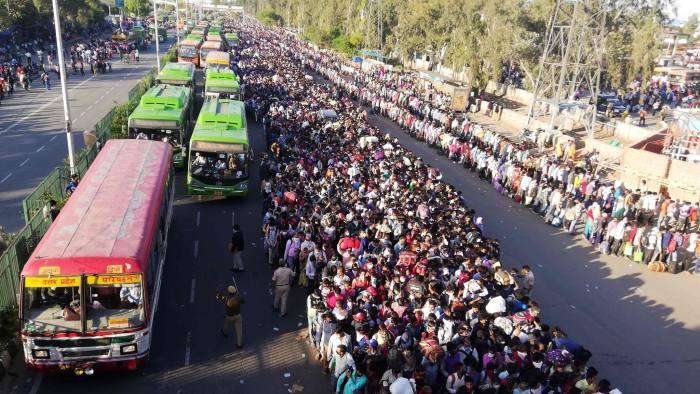
    The luxury of the so-called social distance does not operate in their ambit as lower class habitations as also other allied spaces that pertain to them are extremely dense by definition. Almost all seem to have chosen the option of reaching their respective homes going by the thronging witnessed at bus stops and highway halting points for buses and trucks. However, to no avail as the states in their wisdom have shut all borders for them by suspending all forms of transport.

    During Partition in 1947, people moved due to issues between the two countries. Now the mass movement of people is also because of a partition — a partition between the rich and the poor, within the national borders, across state borders wherein each state is guarding its territory with vehemence. The State has failed utterly on two counts; one, in not anticipating such an event, and second, in not being able to either prevent or combat the movement.

    It is really poignant that the choice is between death by hunger and death by the virus. Given such a choice, the poor feel it is better to die in their native place than in a strange locale. Also, if they do beat starvation death and live, the chances of recovery and survival from the virus appear to be higher even if they are infected. It is death by starvation that is most galling for them as evidenced by empirical responses that are obtained by sources that are interacting with them.

    It is such an unfortunate thing that all crises always seem to impact the poor in the worst negative way possible. Floods, droughts, hurricanes or what have you invariably target the less privileged. It is utterly ironical that the present crisis that has emerged among the upper echelons in India due to Covid-19 too does so.

    It is also pertinent to point out as to how the ilk of the original carriers of the virus, the upper classes, are planning their strategies in combating the absence of their domestics, cooks, drivers as can be ‘seen’ from the debates and dialogue of the resident welfare associations and similar bodies on social media. The dominant narrative is ‘no work, no pay’. Those who say they will pay, are making it sound as if they are achieving martyrdom by their act.

    This article was published earlier by “Moneycontrol

    Views expressed are the author’s own.

    Image Credit: www.ft.com

  • COVID-19: Fighting CoronaVirus

    COVID-19: Fighting CoronaVirus

    At the end of December, public health officials from China informed the World Health Organization that they had a problem: an unknown, new virus was causing pneumonia-like illness in the city of Wuhan in Hubei province. They quickly determined that it was a coronavirus and that it was rapidly spreading through and outside of Wuhan.

    Today, the entire world is seized with the menace of CoronaVirus (COVID-19) believed to have originated in China. The first reported case was on 31 December 2019 and now 188 countries are affected. The World Health Organisation (WHO) declared it a pandemic on 11 March 2020. Although China has now reported that it controlled and contained the epidemic, the virus has spread rapidly to cover almost the entire globe. The new hotspots are USA, Italy, and Spain, with Italy and Spain reporting  10779 and 7340 deaths respectively while the USA accounts for 2489 deaths; compared to China’s 3304 deaths . India as on 30 Mar 2020 had reported 1100 cases with a death toll of 29.   Till date 735,015 cases are reported and the numbers are rising. 34,804 people have died and 156,122 have recovered. A total of 544,089 cases are still active and about 5% of these are critical. Of the closed cases, 18% have been reported to have died. Worst affected is Italy. India has  reported 1100 cases as on 30th March 2020 and in the last two days more than 200 cases have been added to the affected number. In this connection, the alarming aspect is that while it took 40 days for the first fifty cases to come up, the next 50 were reported within a day , despite the Janata Curfew on 22 March. This makes the situation critical and though India may not be  in Stage III (community spread) as yet, it looks like that we are close to it. According to media reports on 23 March 2020, Kerala and Bhilwara in Rajasthan have probably descended to Stage-III. Dr Ramanan Laxminarayanan, Director of Center for Disease, Economics and Policy has warned that India could be dealing with a tsunami of COVID-19. As per his estimate, India could be dealing with as many as 300 million cases of which 4-5 million could be serious. India needs to take a note of this rate criticality. As the Prime Minister in his address to the nation stated, the situation is grave,  serious and every Indian needs to act responsibly to fight the menace with determination and show utmost discipline in personal conduct.

    Image Credit : Wikipedia Commons

  • COVID-19: India’s Friendly diplomacy and SAARC Initiative

    COVID-19: India’s Friendly diplomacy and SAARC Initiative

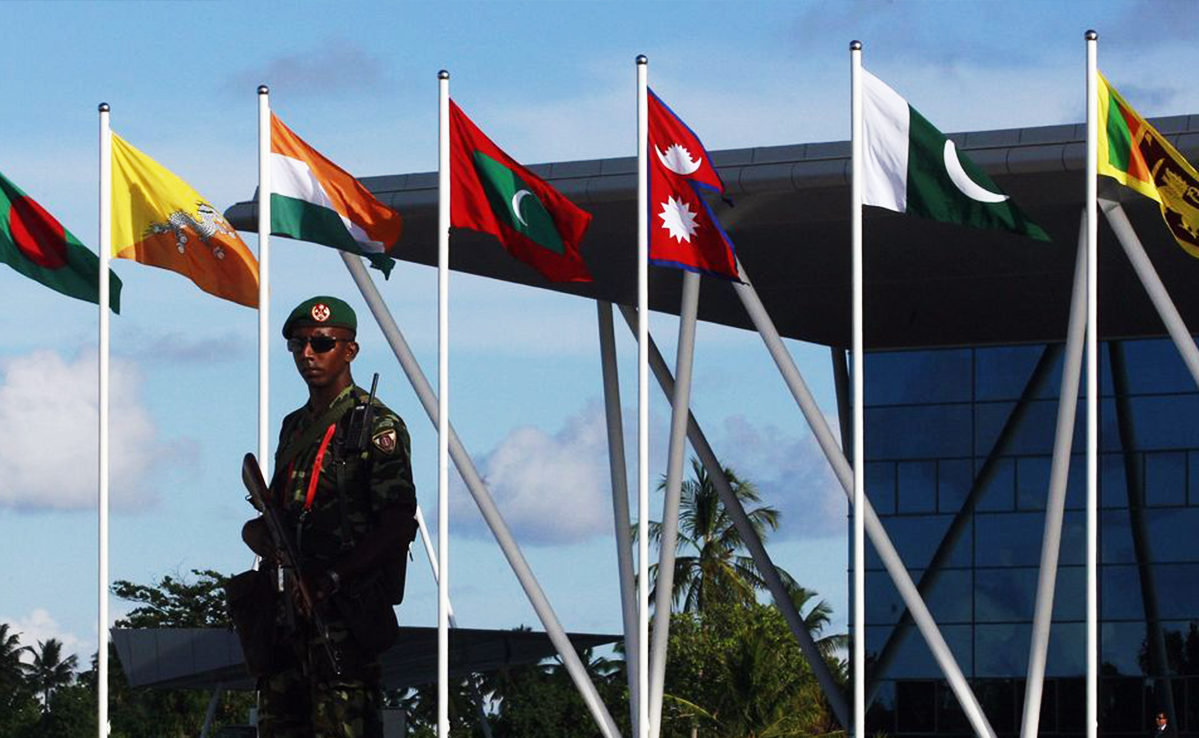
    The corona virus is now a worldwide pandemic that is threatening or impacting populations across over 160 countries. India has initiated robust measures to tackle this most disruptive threat. Keeping in mind the safety of its citizens abroad, India has acted swiftly in evacuating Indians in Wuhan  and other affected provinces in China. India, in tune with its neighbourhood first policy, has pitched in to provide support to other SAARC nations in evacuating their nationals as well. In the early stages of the pandemic, on 3 February 2020, India evacuated 323 Indians from Wuhan including 7 Maldivians. “My thanks and gratitude to PM @narendramodi, EM @DrSJaishankar and the Government of India for expeditiously evacuating the 7 Maldivians residing in Wuhan, China. This gesture is a fine example of the outstanding friendship and camaraderie between our two countries”, tweeted Maldivian President Mr.Solih expressing his sense of gratitude for this help. The Indian Embassy in Maldives tweeted regarding the synergy between both the countries, “Pandemics do not know national boundaries, which makes it even more essential to reach out to neighbours and stand by them in this global fight against the #CoronaPandemic #NeighbourhoodFirst.”

    Focus on Safety and Evacuation through Friendly diplomacy

    A week later, as evacuation efforts were still underway, Embassy of India in Beijing tweeted on 17th February – “GOI will send a consignment of medical supplies on a relief flight to Wuhan later this week to support China to fight the COVID 19 pandemic. On its return, the flight will have limited capacity to take on board Indian citizens wishing to return to India from Wuhan/Hubei”. Upon China’s request for medical masks, gloves and suits India sent a consignment of 15 tonnes of medical supplies aboard C-17 Globemaster—the largest military aircraft in the Indian Air Force’s inventory. This was not only an act of humanitarian assistance but also a move regarded as friendly diplomacy by India. According to MEA’s spokesperson, “India had also received requests from Bhutan, Maldives, Iran and Italy, for assistance and essential supplies such as surgical masks and protective gear which are being processed.”

    By February 6, India began to restrict entry of foreign nationals as a precautionary measure. Notification by an immigration official stated, “Foreigners who have been to China on or after 15th January 2020 are not allowed to enter India from any air, land or seaport, including Indo-Nepal, Indo-Bhutan, Indo-Bangladesh or Indo-Myanmar land borders.” The official also added, “All visas issued to Chinese passport holders coming from anywhere in the world, including regular(sticker)& e-visa issued before 5 Feb, have been suspended with immediate effect.” India had also offered to step in to help Pakistanis. The Ministry of External Affairs spokesperson stated that India was willing to evacuate Pakistani nationalsif such a situation arises.”

    Leading  the SAARC Initiative against COVID-19

    In an act of pragmatic diplomacy that promotes regionalism and addressing the need of the hour for combating COVID-19 in South Asia, PM Modi hosted a SAARC Meeting with his counterparts on video on March 15th. In this meeting, he emphasised the importance of the region coming together for battling the COVID-19. This brings SAARC back into the picture after several years of stagnation, and at a time when the regional organisation seemed to be losing its importance. With India sharing borders with certain SAARC countries, it became imperative for India to pool in its neighbours. PM Modi chalked out a common strategy for the countries to combat the virus and set an example for the rest of the world. He added that the guiding mantra should be “prepare, not panic.” He had several initiatives to offer to fellow South Asian countries — from online training capsules for emergency response teams, to common research platforms to conduct research on controlling epidemic diseases and keeping a rapid response team of doctors and specialists onstand-by at the disposal for our neighbouring nations. PM Modi also asked experts to come together to assess the economic impact, “long-term economic consequences of COVID-19, and how best to insulate internal trade and local value chains from its impact.” India proposed to create an COVID-19 Emergency Fund based on voluntary contributions from all the countries with India pooling in the first US$10 million for the fund. This fund has been active for the past one week with funds flowing in from  South Asian countries—Nepal has contributed 10 crores, Bhutan US$100,000, Bangladesh US$15,00,000, Maldives US$ 2,00,000, Sri Lanka U$15,00,000 and the Afghan government offering US$1 million. This has revitalised the functioning of the SAARC and has brought collective responsibility to the table. How the region continues to battle and win the pandemic might be a pilot test for collaborative efforts in the future. All heads of states of SAARC attended the virtual conference with the exception of Pakistan. Considering that the Special Assistant to Pakistan Prime Minister (on Health) was assigned for a Head of States meeting, India might well consider exercising the option of providing Pakistan with participating and observing the meeting stopping short of addressing the head of states. Afterall, as usual the habit of raking up the Kashmir issue at multilateral forums, was witnessed again.

    In follow-up to the live video conference, India has received requests from neighbouring countries for aid from the Emergency Fund which was set up. According to an MEA spokesperson, “The quantum of assistance, which has been requested so far, has crossed $1 million USD. Supplies to Bhutan and Maldives have been dispatched.”

    Apart from evacuating Indians, GOI has sent a 14-member medical team and supply of consignments to Maldives wherein the medical team did a successful knowledge transfer. As on 23 March, India has continued its efforts to bring back Indian nationals from abroad, 121 stranded nationals in Uzbekistan have been flown back to India. A total of 590 people from Iran who have been evacuated are currently being quarantined in Jaisalmer.  Embassy and consulate in Iran have begun supplying essentials to approximately 1000 Indian fishermen from Tamil Nadu, Gujarat and Kerala in Iran’s southern provinces of Bushehr & Hormozgan. Similarly, 218 Indian students were evacuated from Italy, while transit passengers (Indian nationals) were brought back to Delhi via special flights. A 24×7 MEA COVID-19 control room has been set up with hotlines for Indians in distress abroad and the ministry has also reached out to Indians abroad by sharing hotline numbers using social media handles for easy access.

    As India announced a 21-day lockdown on 24 March to control the contagion, WHO praised PM Modi for his efforts.  “India stands at an important turning point in its fight against COVID-19. Extraordinary situations demand extraordinary measures. The Prime Minister has taken bold and decisive steps to break the chain of transmission. It is equally vital that this window is used for further ramping up measures to find, isolate, test, treat and trace. WHO stands together in solidarity with India and its people and is committed to providing all the support that is needed,” said Dr Henk Bekedam, WHO Representative to India.

     Views expressed are author’s own.

  • COVID-19: Need for technology intervention in India

    COVID-19: Need for technology intervention in India

    Much of the globalized world is experiencing a standstill due to the COVID-19 Pandemic Crisis. While world leaders are establishing measures to cope with the large scale outbreak, technology has been in the forefront as a crucial aspect of recovery. From sanitizer drones to virtual workspaces — the adoption of computing technology in healthcare, businesses and governance has seen an unprecedented rise.

    However, due to India’s unique factors of dense population and per capita poverty — the country’s response to this crisis will be an important case study. The World Health Organization’s guidelines insist that people should wash their hands regularly but over 163 million people residing in India do not have access to clean water. When access to fundamental resources are limited, one can only assume that access to robust healthcare facilities are also limited. The stark contrast in the capacity to handle this crisis will be tested when the local communication of COVID-19 reaches the second and third tier cities. As a primary effort in flattening the curve, the government has announced a 21 day country-wide lockdown. In spite of the measure being welcomed, if the country fails to control the spread, the lack of modern infrastructure and medical professionals will result in catastrophic consequences.

    This is reflected in the adoption of technology in primary healthcare centres. Medical professionals say there is a shortage of around 70,000 ventilators and the existing resources are being utilized by critical at-risk patients. The surging requirement of intensive care medical devices, including ventilators and high-end diagnostic and robotic surgery instruments is a growing concern. While domestic manufacturing and innovation have been scarce, Indian companies like Skanray Technologies are struggling to meet the immediate demand due to the international airline ban. Companies find it difficult to import crucial equipment such as chips, controllers and sensors from China — hindering their ability to produce these equipment on time.

    Globally, innovative technologies that seemed gimmicky in the past are being brought into mainstream practice. Drones have been deployed to carry medical samples and to spray disinfectants across the country. Robots are put in hospitals which aid in remote diagnosing and thermal sensing of the patients. The same is also used as service bots that bring food and toiletries to people.

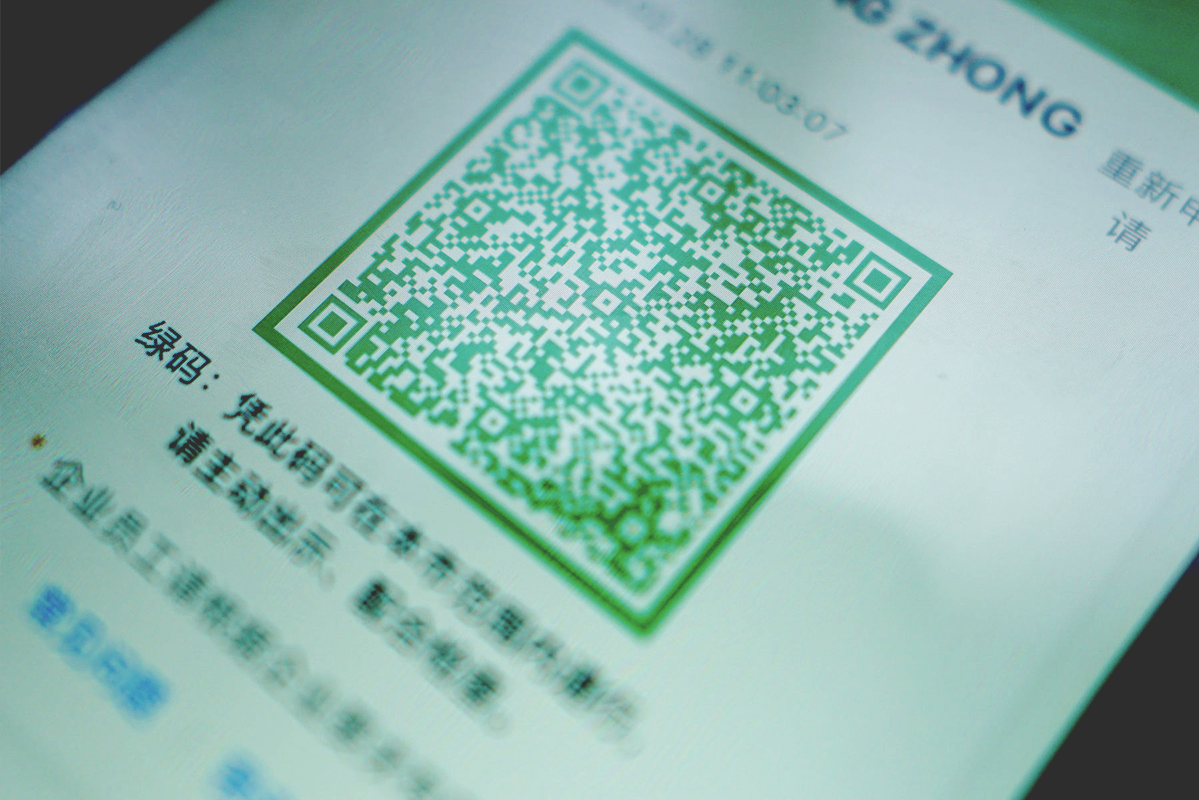
    Facial recognition cameras are commonplace in China and a growing trend in other countries. Technology companies like SenseTime have built contactless temperature detection software that have been integrated into the cameras for wider coverage of people with fever. Big data analytics being done on these massive feeds has resulted in prediction algorithms which can determine whether a person has come in contact with another infected person. This data is then relayed via telecom companies to inform the individuals to self-quarantine.

    Complex surveillance systems come with their share of privacy concerns. While the lines between responsible surveillance and invasion of privacy become blurred, one cannot overlook the fact that some of these drastic measures are working. In China, the official reports indicate that the domestic cases are under control and newer cases of the virus are classified as imported. In a time of crisis, an open-minded analysis of these “draconian” measures would seem justified. However, this pandemic has not provided any justification of collecting these sensitive data in secrecy.

    Flawless implementation of such systems in India would have to hurdle through multiple policy hoops and comprehensive definitions of data privacy. However, inexpensive technologies such as drones and robotics should spark interest in the country. Medical professionals at the forefront of this battle could benefit from such technology that can reduce their risk of contracting the virus. Alongside technology, modern day practices of preliminary diagnoses such as telemedicine should be encouraged.

    Information and communication technologies across the country have made this battle a lighter burden than what it could have been. While the rate of awareness is significantly higher in the age of social media, it is important to note its duality. Online medical information and guidelines are accessible by at least 34% of the total population compared to the 7.5% in 2010. However, this information influx has also resulted in rumour mongering and exaggeration of outlier incidents — causing trivial worry and needless panic. In the past five years, rapid penetration of the internet has occurred in all sections of society but it has not ensured awareness in responsible use of the technology.

    On the other hand, the quarantined lifestyle has increased the need for virtual workspace. Facebook’s CEO, Mark Zuckerberg reported that traffic for their video streaming and messaging platform had grown multifold. Microsoft also reported a 40% increase in their active user base of collaboration software. High speed fiber internet’s extension throughout India will help in fragmenting this dense working population to multiple locations. With virology experts anticipating an effective vaccine at the earliest of 18 months — some of these altered lifestyles could become the new norm.

    Years following the second world war, measures were actively put in place to prevent another global conflict. The COVID-19 Crisis could leave a similar impact on the world where pandemic response and technology experience drastic reforms. However, the lens of India should vision this wake up call towards something more fundamental — uniformity in primary healthcare, civic infrastructure and technology intervention.

    Views expressed are author’s own.