Tag: COVID-19

  • Forecasting Unemployment Rate during the Pandemic

    Forecasting Unemployment Rate during the Pandemic

    Forecasting
    Forecasting, in simpler terms, is a process of predicting future values of a variable based on past data and other variables that are related to the variable being forecasted. For example, values of future demand for tickets for a particular airline company depend on past sales and the price of its tickets.
    Time-series data is used for forecasting purposes. According to Wikipedia ‘A time series is a series of data points indexed in time order. Most commonly, a time series is a sequence taken at successive equally spaced points in time. Thus, it is a sequence of discrete-time data.’ An example of time series data for monthly airline passengers is given below:

    Figure 1


    More technically, it is modelled through a stochastic process, Y(t). In a time series data, we are interested in estimating values for Y(t+h) using the information available at time t.  
    Unemployment rate
    Unemployment is the proportion of people in the labour force who are willing and able to work but are unable to find work. It is an indicator of the health of the economy because it provides a timely measure of the state of labour market and hence, overall economic activities. In wake of the impact of Covid-19 on economic activities throughout the world, unemployment rate analysis and forecasts have become paramount in assessing economic conditions.
    In India, unemployment rates have been on the higher end in recent times. According to data released by Statistics Ministry, unemployment rate for FY18 was 6.1%, the highest in 45 years. It is no co-incidence that GDP rates have also been declining successively for the past few years. The shock that Covid-19 has given to the economy has only worsened our situation. The unemployment rate rose to 27.1% as a whopping 121.5 million were forced out of work.
     

    Figure 2


    Source: CMIE
    Methodology
    The data used to forecast unemployment rates was sourced from CMIE website, which surveys over 43,000 households to generate monthly estimates since January 2016. The data has 56 monthly observations ranging from January 2016 to August 2020, data before 2016 was not available.
    Four popular econometric forecasting models (ARIMA, Naïve, Exponential Smoothing, Holt’s winter method) were used and the best performing model was chosen to forecast unemployment till December 2020.
    The forecasting models were programmed in R. The relevant codes are available upon request with the author. The Dicky-Fuller test and the Chow test for structural breaks were conducted using STATA, results of which are presented further in the article.
    Before beginning the analysis, I believe that the limitations of the analysis should be mentioned:

    • The sample size of 56 observations is not sufficient for a thorough analysis, ideally the sample size should have been 2-3 times larger than the available data. Smaller sample sizes lead to skewed forecasting results which are prone to errors.
    • The unemployment data from CMIE is an estimate and is a secondary source. In India, primary data is only collected once in 3-4 years, thus the forecasting results are only as good as the source of the data.
    • This is a univariate analysis, an Okun’s law based analysis of Unemployment rate as a function of GDP (output) and past trends would have been more suitable. However, since GDP data is only available quarterly and there are only 56 monthly observations available, it would have rendered the analysis insignificant with only 19 quarterly observations.
    • Forecasting being based on past trends, is prone to errors. The negative shock provided by Covid-19 to the economies worldwide has made it all the more difficult to forecast. A Bloomberg study analysed over 3,200 forecasts by IMF since 1999 and found that over 93% of the forecasts underestimated or overestimated the results with a mean error of 2 percentage points.

     
    Checking the stationarity of data
    In order to model build a model, we need to make sure that the series is stationary. For intuitively checking the stationarity, I plotted the data over time as indicated in Figure 2 above. I also plotted the correlograms (autocorrelations versus time lags) as shown in Figure 8 and 9 in appendix. The plot of data over time indicate varying mean, variance and covariance. The ACF and PACF plot show that autocorrelations function are persistent indefinitely.
    We perform the Augmented Dickey Fuller test at 2 lags. Result of the ADF test is shown in Table 1 below. The test statistic is insignificant at 5 per cent and the p-value is 0.1709, which is more than the accepted benchmark of 0.05. We fail to reject the null hypothesis of non-stationarity. We conclude that our series is non-stationary.

    Dicky-Fuller test on raw data

    Table 1

    —– Interpolated Dickey-Fuller —–
    Test statistic 1% critical value 5% critical value 10%critical value
    Z(t) -2.303 -3.576 -2.928 -2.599


    MacKinnon approximate p-value for Z(t) = 0.1709

    Converting the non-stationary series into stationary

    In order to transform the non-stationary series into stationary, we use differencing method (computing difference between consecutive observations).
    We plot the data over time, ACF and PACF again as shown in Figure 5 below and figure 10 and 11 in appendix, respectively. From the figures, we can intuitively say that the transformed series is stationary. Further, we used Augmented Dickey-Fuller tests to ascertain the stationary of our series. Table 2 shows the result of the ADF test. The test statistic is significant at 1,5 and 10 per cent levels and the p-value is less than 0.05. We reject the null hypothesis of non-stationarity of our series. The tests confirm that the series is stationary.
     

    Dicky-Fuller test on first difference data

    Table 2

    —– Interpolated Dickey-Fuller —–
    Test statistic 1% critical value 5% critical value 10%critical value
    Z(t) -5.035 -3.576 -2.928 -2.599

    MacKinnon approximate p-value for Z(t) = 0.0000


    Figure 3


    Naïve model
    Naïve models are the simplest of forecasting models and provide a benchmark against which other more sophisticated models can be compared. Thus, a Naïve model serves as an ideal model to start any comparative analysis with. In a naive model, the forecasted values are simply the values of the last observation. It is given by
    y^t+h|t=yt.
    Forecast results from Naïve method are presented below in figure 4 and table1.
     

    Figure 4


    Table 1


    Point forecast Lo 80 High 80 Low 95 High 95
    Sept 8.35 4.861900 11.83810 3.0154109 13.68459
    Oct 8.35 3.417081 13.28292 0.8057517 15.89425
    Nov 8.35 2.308433 14.39157 -0.8897794 17.58978
    Dec 8.35 1.373799 15.32620 -2.3191783 19.01918

     
    Box-Jenkins Approach
     

    1. Identification of ARIMA (p, d, q) model

     
    The data was split into training and testing dataset in 80:20 ratio. The training data was used for estimating the model, while the model was tested on the remaining 20 percent data. This is done in order to forecast the future values of the time series data.
    p, d and q in (p, d, q) stand for number of lags, difference and moving average respectively.
    The model best fitting the data was (0,1,3) as its Akaike Information Criterion (AIC) was the lowest amongst all the possible combinations of the order of the ARIMA model.
    The residuals from Arima model were found to be normally distributed, with a mean of 0.09 and zero correlation. This causes a bias in the estimates. To solve the problem of bias, we will add 0.09 to all forecasts. The ACF and line graph of residuals is attached in the appendix.
    After identification and estimation, several diagnostic tests were conducted to check if there were any uncaptured information in the model. Results of the diagnostics tests have been omitted from the article in interest of length.
     

    1. Forecasting

     
    The model that has been constructed was used to forecast unemployment rates for the next four months. The results are presented below in figure 5 and table 2.
     

    Figure 5


    Table 2


    Point forecast Lo 80 High 80 Low 95 High 95
    Sept 9.04 5.978858 11.93987 4.401073 13.51765
    Oct 9.77 5.183039 14.1951 2.797671 16.58054
    Nov 10.3 5.364191 15.06267 2.797157 17.62971
    Dec 10.3 5.280182 15.14668   2.668678   17.75819

     
    Exponential Smoothing method
    It is one of the most popular classic forecasting models. It gives more weight to recent values and works best for short term forecasts when there is no trend or seasonality in dataset. The model is given by:
    Ŷ(t+h|t) = ⍺y(t) + ⍺(1-⍺)y(t-1) + ⍺(1-⍺)²y(t-2) + …
    with 0<<1
    As observed in the model, recent time periods have more weightage in the model and the weightage keeps decreasing exponentially as we go further back in time.
    The ⍺  is the smoothing factor here whose value was chosen to be 0.9 since it had the lowest RMSE among all other values.
    The forecast results are presented below:
     

    Figure 6


    Table 3


    Point forecast Lo 80 High 80 Low 95 High 95
    Sept 8.30 4.739288 11.87260 2.8512134 13.76068
    Oct 8.30 3.507498 13.10439 0.9673541 15.64454
    Nov 8.30 2.532806 14.07908 -0.5233096 17.13520
    Dec 8.30 1.700403 14.91149 -1.7963595   18.40825

     
    Holt Winters’ method
    The simple exponential function cannot be used effectively for data with trends. Holt-Winters’ exponential smoothing method is a better suited model for data with trends. This model contains a forecast equation and two smoothing equations. The linear model is given by:
    yt+h = lt + hbt
    l= αyt + (1-α)lt-1
    bt = β(lt-lt-1)+ (1-β)bt-1
    where, lt is the level (smoothed value).
    h is the number of steps ahead.
    bt is the weighted average of the trend.
    Just like the simple exponential smoothing method, lt shows that it is a weighted average of yt
    The α  is the smoothing factor here whose value was chosen to be 0.99 and  the β  value 0.0025 since they had the lowest RMSE among all other values.
    The forecast results are presented below:
     

    Figure 7


    Table 4


    Point forecast Lo 80 High 80 Low 95 High 95
    Sept 8.34 4.749288 11.9326 2.84121 13.84
    Oct 8.33 3.24 13.4243 0.54541 16.11977
    Nov 8.32 2.0800 14.5678 -1.2253 17.87316
    Dec 8.31 1.0963 15.53419 -2.725103   19.35565

     
    Evaluation
    To compare the models the two parameters chosen are:

    • Root mean square error (RMSE)
    • Mean absolute error (MAE)

    MAE is a measure of mean error in a set of observations/predictions. RMSE is the square root of the mean of squared differences between prediction and actual observation. RMSE is more useful when large errors are not desirable and MAE is useful otherwise.
    RMSE and MAE statistics for all the models are presented below:

    Naive ARIMA Exp Smoothing Holt Winters’
    RMSE 2.72 2.24 2.73 2.7
    MAE 1.05 1.034 1.06 1.05

     
    From the table it is clear that ARIMA/Box Jenkins method has both the lowest RMSE and MAE among the models under consideration while Exponential smoothing method has the highest MAE and RMSE among all.
    Therefore, the unemployment rate forecasts as per the Box Jenkins method for the next four months are:
     

    Sept 9.04
    Oct 9.77
    Nov 10.3
    Dec 10.3

     
    The way ahead?

    • The unemployment rate is expected to rise in the coming months. This is a bad sign for an economy that is already suffering.
    • With GDP forecasts getting lower and lower for the current financial year, the govt needs to act quick to mitigate the potential damage.
    • It is impossible to correctly ascertain the total impact of covid-19 on the economy and the range of the impact, but it is safe to say that we will be seeing the effects for a long time to come in some form or other.
    • We might see more and more people slip into poverty, depression, increased domestic violence and with potentially long term impact on human development parameters like child mal-nutrition, enrolment rates etc among other things.

    Some possible solutions

    1. Expansionary monetary policy: It is a common tool of dealing with high unemployment rate in the short term. Under expansionary monetary policy, the central bank reduces the rate of interest on which it lends money to the banks, subsequently the banks lower their rates which leads to a higher amount of loans being taken by business owners. This extra capital helps businesses to hire more workers and expand production, which in turn reduces unemployment rate.
    2. Expansionary fiscal policy: Under expansionary fiscal policy the government increases its spending, particularly in the infra-structure sector. It spends more money to build dams, roads, bridges, highways etc. This increased spending leads to an increase in employment as these projects require labour.
    3. Expand the scope of NREGS to urban areas permanently and a higher minimum wage for all : NREGS has proved to be really effective in alleviating poverty, improving quality of life and decreasing unemployment rate in rural areas. Given the unprecedented circumstances, the govt can consider expanding its scope to urban areas, so that it could provide employment to the millions of unemployed workers there. This increase in expenditure could also help the govt revive consumer demand, which is essential if we want to help the GDP get back on track.
    4. A stimulus package aimed at putting money into the hands of the poor :

    The govt should also consider providing at least a one-time transfer of funds to people just like the US govt did. Such a transfer of putting money directly into the hands of the poor is the most effective way of reviving consumer demand in the economy and many economists around the world have been calling for such a plan to be implemented. There is no better way of increasing consumer expenditure other than putting money into the hands of cash-starved people.
     
    Appendix:
     

    Figure 8


    Figure 9


    Figure 10


    Figure 11


    Figure 12


    Figure 13


  • Consolidating India-ASEAN Strategic Partnership under Chairmanship of Vietnam

    Consolidating India-ASEAN Strategic Partnership under Chairmanship of Vietnam

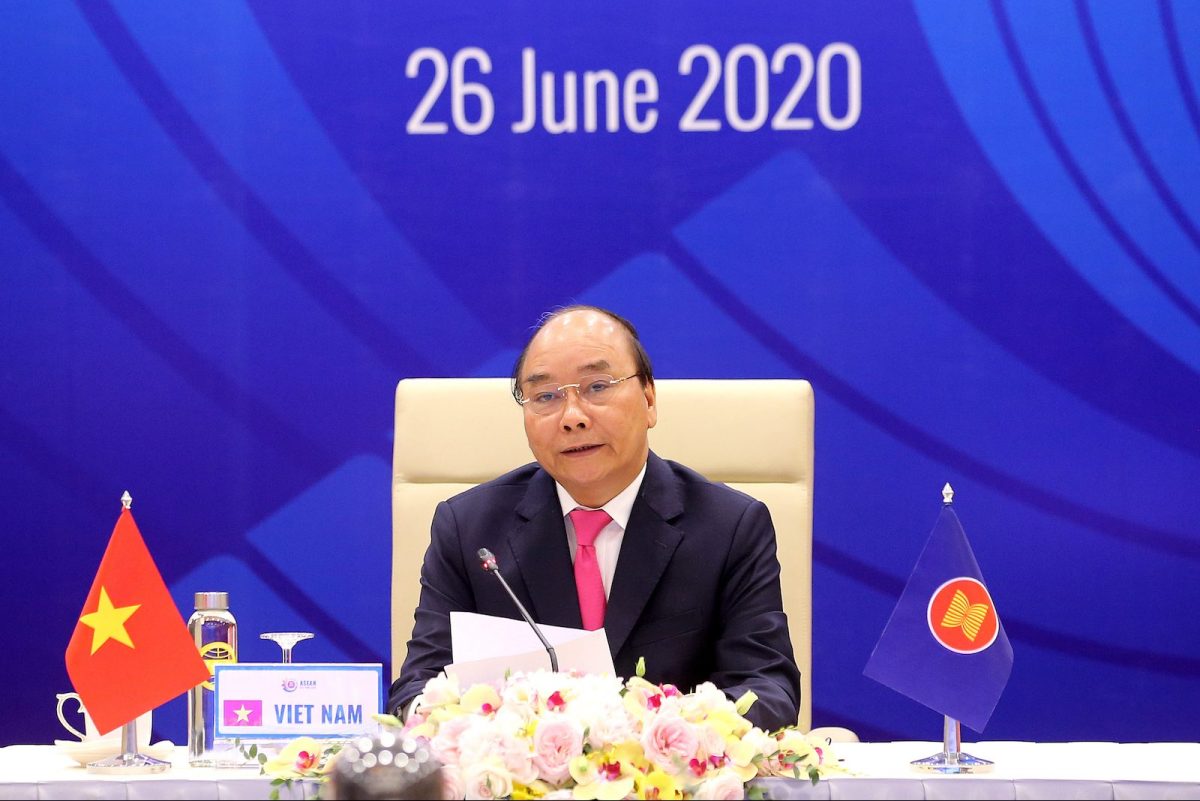
    During the first six months of the year, there were 26 meetings and most of these were through video-conferencing, exhibiting a high degree of commitment by the ASEAN under the Chairmanship of Vietnam.    

    Vietnam’s Chairmanship of the ASEAN comes at a time of immense turbulence marked by COVID-19 pandemic, disruption in the global supply chains resulting in economic recession among major economies, and strategic instability in the Indo-Pacific region marked by high tensions between the United States and China in the South China Sea. However, the ASEAN calendar of engagements with its Partner countries has remained busy, and Vietnam has spearheaded the Organisation with adeptness and alacrity and sustained the momentum of the ASEAN’s mandate through meetings and conversations.  During the first six months of the year, there were 26 meetings and most of these were through video-conferencing, exhibiting a high degree of commitment by the ASEAN under the Chairmanship of Vietnam.

     On 16 June 2020, at the 20th ASEAN-India Joint Cooperation Committee Meeting, through a video conference, India and the ASEAN “reaffirmed their commitment to further strengthen and deepen their cooperation.” Both sides noted the progress made for the implementation of the ASEAN-India Plan of Action (2016-2020), and “shared their commitment to complete the development of the new Plan of Action for 2021-2025 to further strengthen their strategic partnership over the next five years”.[i]

    A month later Secretary (East), Ministry of External Affairs (MEA), India, participated in the 22nd annual meeting of the Senior officials of ASEAN countries and India, and commended Viet Nam’s ASEAN chairmanship. Both sides “agreed to continue assisting each other’s citizens affected by the coronavirus outbreak”; provide “ASEAN countries with detailed information about the Indo-Pacific Ocean Initiative proposed by Indian Prime Minister Narendra Modi at the 16th ASEAN-India Summit in 2019”; welcomed “ASEAN bringing into play its role in fostering cooperation, dialogue and trust building in the region”; and conveyed India’s support for “efforts to seriously and fully implement the Declaration on the Conduct of Parties in the East Sea and build an efficient and effective Code of Conduct in the waters in line with international law and the 1982 UN Convention on the Law of the Sea”.[ii]

    COVID-19 Pandemic

    India and ASEAN are confronted with COVID-19 pandemic and there is ample evidence that both sides have conveyed their intention to fight the pandemic together. Prime Minister Modi engaged the leaders of Indonesia, Myanmar, Thailand, Singapore and Vietnam through telephonic conversations and assured support to ASEAN Member States. Likewise, Indian Foreign Secretary Harsh Vardhan Shringla has had weekly tele-conversations with counterparts from US, Australia, Japan, South Korea, New Zealand, and Vietnam to share ideas and best practices in the Indo-Pacific region for responding to COVID-19 pandemic.[iii]

    It is an opportune moment for the officials of the health departments in India and ASEAN to set up a dedicated virtual platform/dashboard designated as ‘India-ASEAN Meeting for Health Development (AI-MHD) that can be pluggedinto the ‘ASEAN Emergency Operations Centre (EOC) Network, the ASEAN Risk Assessment and Risk Communication Centre, the ASEAN Bio Diaspora Virtual Center (ABVC) and the ASEAN Centre for Humanitarian Assistance on disaster management (AHA Centre) for future public health emergencies’.

     India’s External Affairs Minister Dr. S. Jayashankar, in his remarks at the 6th Roundtable Meeting of ASEAN-India Network of Think Tanks (AINTT), noted that “the impact of the Coronavirus has been beyond our collective imagination. Current estimates put the cumulative loss in the range of USD 5.8-8.8 trillion or approximately 6.5-9.7% of the global GDP.[iv]

    ASEAN Outlook on the Indo Pacific (AOIP)

    India has acknowledged the importance of the ASEAN Outlook on the Indo Pacific (AOIP) and New Delhi is committed to “explore cooperation in the key areas outlined in the AOIP, covering maritime cooperation, connectivity, sustainable development and economic cooperation, in order to contribute to the maintenance of peace, freedom and prosperity in the region”.[v] Similarly, ASEAN has endorsed synergies in various sectors and promoted regional frameworks under India’s Act East Policy, and SAGAR (Security and Growth for All in the Region) vision. Although health and pandemic issues are conspicuously absent in the AIOP and SAGAR, but these are surely part of the broader thematic issues contained therein.

    India is committed to positive contribution to ASEAN-led mechanisms such as the East Asia Summit (EAS), the ASEAN Regional Forum (ARF), the ASEAN Defence Ministers’ Meeting-Plus (ADMM-Plus). It is a staunch believer of ‘rule of law’ and India believes that a Code of Conduct is a useful solution to reduce tensions in the South China Sea.

    On November 04, 2019, Prime Minister Narendra Modi launched the Indo Pacific Oceans’ Initiative (IPOI) at the East Asia Summit held in Bangkok, Thailand.[vi] It is an “ an open global initiative” and “ draws on existing regional cooperation architecture and mechanisms to focus on seven central pillars conceived around Maritime Security; Maritime Ecology; Maritime Resources; Capacity Building and Resource Sharing; Disaster Risk Reduction and Management; Science, Technology and Academic Cooperation; and Trade Connectivity and Maritime Transport.”

    Cooperation, Dialogue and Trust Building

    India is committed to positive contribution to ASEAN-led mechanisms such as the East Asia Summit (EAS), the ASEAN Regional Forum (ARF), the ASEAN Defence Ministers’ Meeting-Plus (ADMM-Plus). It is a staunch believer of ‘rule of law’ and India believes that a Code of Conduct is a useful solution to reduce tensions in the South China Sea. India’s Foreign Minister has stated that India is working in conjunction with Vietnam and “responses to that (CoC) are being handled by the Vietnamese and that is the way it should be,” [vii]

                Finally, it has been noted that “as we come out of this pandemic, let us be clear on one fact. The world will never be the same again. That means new thinking, fresh ideas, more imagination and greater openness. We need to go beyond orthodoxies, whether of trade, politics or security. These are domains that all of you debate regularly and I am sure today you will have a very productive discussion.”[viii]  It is useful for ASEAN and India to explore commonalities and convergences in the ASEAN Outlook on the Indo Pacific (AOIP) and the Indo Pacific Oceans’ Initiative (IPOI). In this context, Vietnam has the unique opportunity to further expand, deepen and strengthen the ASEAN India Strategic Partnership.


    Notes

    [i] “ASEAN, India strengthen cooperation”, https://asean.org/asean-india-strengthen-cooperation/ (accessed 20 August 2020).

    [ii] “ASEAN, Indian senior officials gather at online 22nd meeting”, https://www.asean2020.vn/xem-chi-tiet1/-/asset_publisher/ynfWm23dDfpd/content/asean-indian-senior-officials-gather-at-online-22nd-meeting (accessed 20 August 2020).


    [iii] “Cooperation among select countries of the Indo-Pacific in fighting COVID-19 pandemic”, https://mea.gov.in/press-releases.htm?dtl/32691/Cooperation+among+select+countries+of+the+IndoPacific+in+fighting+COVID19+pandemic (accessed 20 August 2020).

    [iv] “Remarks by EAM during the 6th Roundtable Meeting of ASEAN-India Network of Think Tanks (AINTT)”,https://www.mea.gov.in/Speeches-Statements.htm?dtl/32904/Remarks_by_EAM_during_the_6th_Roundtable_Meeting_of_ASEANIndia_Network_of_Think_Tanks_AINTT(accessed 20 August 2020).

    [v] “ASEAN Outlook On The Indo-Pacific” https://asean.org/storage/2019/06/ASEAN-Outlook-on-the-Indo-Pacific_FINAL_22062019.pdf (accessed 20 August 2020).

    [vi] “Ministry of External Affairs Indo-Pacific Division Briefs”, https://mea.gov.in/Portal/ForeignRelation/Indo_Feb_07_2020.pdf (accessed 20 August 20200.

    [vii] “Incident between Indian, Chinese militaries was ‘not skirmish but face-off’: Jaishankar”,https://economictimes.indiatimes.com/news/defence/incident-between-indian-chinese-militaries-was-not-skirmish-but-face-off-  (accessed 20 August 2020).

    [viii] “Remarks by EAM during the 6th Roundtable Meeting of ASEAN-India Network of Think Tanks (AINTT)”, https://www.mea.gov.in/Speeches-Statements.htm?dtl/32904/Remarks_by_EAM_during_the_6th_Roundtable_Meeting_of_ASEANIndia_Network_of_Think_Tanks_AINTT (accessed 20 August 2020).


    Image Credit: Asia Times

  • Living Next to China: India’s Economic Challenge

    Living Next to China: India’s Economic Challenge

    Abstract

    Hampered by declining economic growth, India needs to take bold and practical economic measures to overcome the adverse impact of the coronavirus pandemic, compounded by past economic blunders such as the demonetisation and the haphazard implementation of the GST regime. Mohan Guruswamy analyses that the seeds of the current economic slide were sown by the UPA II regime by its populist measures that were wasteful, unproductive, and reduced capital expenditure. Non action by the NDA governments on these issues has made it worse. He argues that India must not shy away from recourse to deficit financing to overcome the current unprecedented challenges faced by the economy on account of the Covid-19 disruption. India needs to increase its stimulus package from a mere 0.3% of the GDP to at least 10% to boost economic revival and growth. India’s reserves of $490 billion ($530 billion as of recent figures) is available to be tapped for economic revival. The measures must focus on addressing the severe impact on weaker sections of the society such as the poor, lower middle-class, and the farmers.

    The Covid2019 shock hit all world economies and has caused a serious contraction in all of them. Ironically, in the advanced economies like the USA, UK, Japan, and others, it exposed their intrinsic strengths with highly evolved social security systems by and large being able to absorb the labor displacement and the ability to quickly put together a fiscal fight back plan. Even China has been able to quickly recover its pole position as the worlds leading exporter and industrial production center. In India, Covid2019 exposed our co-morbidities, and has further opened the traditional faultlines, with the large unorganized labor cohort bearing the brunt of the costs. At last count the CMIE estimates over 130 million daily wagers in the urban centers being rendered jobless and homeless.[i] India’s economy which has been in distress for most of the last decade in now seriously stricken.

    When India’s economic history is written in some future date, and when a serious examination is done of when India lost its way to its ‘tryst with destiny’, the decade of 2010-20 will be highlighted.

    When India’s economic history is written in some future date, and when a serious examination is done of when India lost its way to its ‘tryst with destiny’, the decade of 2010-20 will be highlighted. The facts speak for themselves. India’s real GDP growth was at its peak in March 2010 when it scaled 13.3%.  The nominal GDP at that point was over 16.1%. The nominal GDP in September 2019 was at 6.3%, it’s lowest in the decade. Since then the downward trend is evident and we are now scraping the bottom at about a real GDP growth rate of 4.5%, this too with the push of an arguably inflationary methodology. Our previous CEA, Arvind Subramaniam, estimated that India’s GDP growth is overestimated by at least 2.5%. BJP MP and economist Subramaniam Swamy was even more pessimistic. He estimated it to be 1.5%.

    The decline in the promise is amply evident by the change in the make up of the economy during this decade.  In 2010 Agriculture contributed 17.5% of GDP, while Industry contributed 30.2% and Services 45.4%.  In 2019 that has become 15.6%, 26.5% and 48.5% respectively.  The share of industry has been sliding.  This is the typical profile of a post-industrial economy.  The irony of India becoming post-industrial without having industrialized must not be missed.

    Decline in Capital Investment

    The most significant cause for the decline of growth is the decline in capital investment.  It was 39.8% of GDP in 2010 and is now a good 10% lower.  Clearly without an increase of capital investment, one cannot hope for more industrialization and hence higher growth.  What we have seen in this decade is the huge increase in Services, which now mostly means increase in Public Administration and informal services like pakora sellers.

    In 2010 it seemed we were well on track.  But now we are struggling to get past $3 trillion, and the $5 trillion rendezvous that Modi promised by 2024 will have to wait longer.

    At the turn of the century, as China’s GDP began its great leap forward (from about $1.2 trillion in 2010 to $14.2 trillion in 2019), was also a heady moment for India whose GDP of $470 billion began a break from the sub 5% level of most of the 1990’s to the rates we became familiar with in the recent past (to hit a peak stride of 10.7% in 2010). At that point in time, if growth rates kept creeping up, we could have conceivably gone past $30 trillion by 2050. But for that the growth rate should consistently be above 7%. It seemed so feasible then.  In 2010 it seemed we were well on track.  But now we are struggling to get past $3 trillion, and the $5 trillion rendezvous that Modi promised by 2024 will have to wait longer.

    To be fair to Modi and the NDA, the decline began early in the second term of the UPA when capital expenditure growth had begun tapering off.  Dr. Manmohan Singh is too canny an economist to have missed that.  But UPA II also coincided with the increasing assertion of populist tendencies encouraged by the Congress President and her extra-Constitutional National Advisory Council. The decline in the share of capital expenditure was accompanied by a huge expansion in subsidies, most of them unmerited.  Instead of an increase in expenditure on education and healthcare, we saw a huge expansion in subsidies to the middle and upper classes like on LPG and motor fuels. Even fertilizer subsidies, which mainly flow to middle and large farmers with irrigated farmlands, saw a great upward leap.  Clearly the money for this came from the reduction in capital expenditure.  Modi’s fault in the years since 2014 is that he did nothing to reverse the trend, and only inflicted more hardship by his foolish demonetization and ill-conceived GST rollout.

    The realities are indeed stark.  The savings/GDP ratio has been in a declining trend since 2011 and Modi has been unable to reverse it.  Consequently, the tax/GDP ratio and the investment/GDP ratio have also been declining.  The rate of economic growth has been suspect and all objective indicators point to it being padded up. The drivers of economic growth such as capital expenditure is dismal.  Projects funded by banks have declined by over half since 2014 to less than Rs.600 billion in 2018-19.  Projects funded by the market have dropped to rock bottom.  Subsequently the manufacturing/GDP ratio is now at 15%.  Corporate profits/GDP ratio is now at a 15-year-old low at about 2.7%.  You cannot have adequate job creation if these are dipping.  Declining rural labor wage indices testify to this.

    Between October 2007 and October 2013 rural wages in the agricultural and non-agricultural sectors grew at 17% and 15%, respectively.  Since November 2014, however, agricultural and non-agricultural sector wages grew at only 5.6% and 6.5%, respectively. In 2019 average rural wage growth has further fallen to 3.1%.[ii]

    Bharat and India Divide

    It is very clear now that the urban lane has been moving well in India.  Indeed, so well that an Oxfam study revealed that that as much as 73% of the growth during the last five years accrued to just 1% of the population.[iii] This does not mean it is just the tycoons of Bombay and Delhi who are cornering the gains.  Government now employs close to 25 million persons, and these have now become a high-income enclave.  The number of persons in the private and organized sector is about another ten million. In all this high-income enclave numbers not more than 175-200 million (using the thumb rule of five per family).  Much of the consumption we tend to laud is restricted to just these.

    The simple fact that the share of Agriculture is now about 15.6% of GDP and falling, while still being the source of sustenance for almost 60% of the population reveals the stark reality.  A vast section of India is being left behind even as India races to become a major global economy.

    Agriculture is still the mainstay of employment.  Way back in 1880 the Indian Famine Commission “had observed that India had too many people cultivating too little land”.  This about encapsulates the current situation also.  While as a percentage the farmers and farmworkers have reduced as a part of the work force, in absolute terms they have almost tripled since 1947.  This has led to a permanent depression in comparative wages but has also led to a decline in per farmer production due to fragmentation of holdings.  The average farm size is now less than an acre and it keeps further fragmenting every generation.[iv] The beggaring of the farming community is inevitable.  The only solution to this is the massive re-direction of the workforce into less skilled vocations such as construction.

    The simple fact that the share of Agriculture is now about 15.6% of GDP and falling, while still being the source of sustenance for almost 60% of the population reveals the stark reality.  A vast section of India is being left behind even as India races to become a major global economy.

    As the decade ends, the Bharat and India divide have never been more vivid.  Our social scientists are still unable to fix a handle to this because the class, cultural and ethnic divides still eludes a neat theoretical construct.  Yet there can be little disagreement that there are two broad parts to this gigantic country and one part is being left behind.  The distance between the two only increased from 2010 to 2020.  This is indeed the lost decade.  Recovering from this will take long and will be painful.  If we take too long, we might have used up a good bit of the ‘demographic dividend’ and the demographic window of opportunity.  The ageing of India will be upon us by 2050[v].

    Covid-19 Impact – Increasing Economic Disparities 

    In the recent months the onslaught of the Covid2019 induced lockdown has been quite relentless.  From 2004-2014 India’s GDP grew at an average of 7.8%.  At its peak it went past 10% in 2010-11 Then it started slowing down.  The new government was unable to return to the old growth rates because it did not care to learn from the experiences of the previous regime, which began to spend more on giveaways, misguidedly thinking it was welfare economics, and took the accelerator off capital expenditure.  Even though capital expenditure is driven in India by government spending, this government spending is very different from subsidies and giveaways.  Subsidies generally tend to be misdirected with the already well-off garnering most of it.  Minimum Support Prices (MSP) are a huge annual subsidy[vi]and 90% of it accrues to the states of Punjab, Haryana, and the coastal region of Andhra Pradesh.  Fertilizer subsidies tend to accumulate to the advantage of large and medium farmers or to about a quarter of all land holdings.  Ditto for free power.  The only welfare expenditure to benefit farmers is investment in irrigation, rural infrastructure, and social welfare like education and health.  Unfortunately, this has been on the decline.  This has exacerbated disparities, both local and regional.  With capital expenditures declining, job creation suffered and the inevitable slowdown of GDP growth happened.  As we started diving, the government inflicted the so-called Demonetization adding to our woes.  Just as things began to look up, the Covid2019 pandemic overtook us.

    Now the only dispute on national income is how much will be the contraction.  The Finance Ministry hopes there won’t be any. The IMF has officially said it will be 4.5%.  The rating agencies predict a contraction of 6.8%, while many more are suggesting something closer to 10%.  How do we deal with is now?  The government of India has tended to be “conservative” in its outlook and has made no serious suggestion on economic stimulus.  What it calls a stimulus is actually not a stimulus. The problem is more philosophical.

    The divide between the Keynesians and the Chicago school is as intense and often antagonistic as the Sunni-Shia, Catholic-Protestant or Thenkalai-Vadakalai Iyengar divides.

    Keynesian economics is a theory that says the government should increase demand to boost growth. Keynesians believe consumer demand is the primary driving force in an economy.  As a result, the theory supports expansionary fiscal policy.  The Chicago School is a neoclassical economic school of thought that originated at the University of Chicago in the 1930s.  The main tenets of the Chicago School are that free markets best allocate resources in an economy and that minimal or zero government intervention is best for economic prosperity.  They abhor fiscal deficits.

    Inadequate Stimulus Package 

    The instruments used to beat countries like India into submission are ratings agencies such as Moody’s, which just downgraded India.  We shouldn’t lose too much sleep over it.  India is a hardly a borrower abroad and is more of a lender holding $490 billion as reserves.

    The only reason why the actual stimulus package is only Rs.63K crs is the obsession with fiscal deficits by Chicago economists such as Raghuram Rajan and his former student the hapless Krishnamurthy Subramaniam, the present CEA. They are true disciples of the Washington Consensus to judge countries like India by the fiscal deficit size.  The instruments used to beat countries like India into submission are ratings agencies such as Moody’s, which just downgraded India.  We shouldn’t lose too much sleep over it.  India is a hardly a borrower abroad and is more of a lender holding $490 billion as reserves.

    That is why the CEA when asked about a big stimulus said: “There are no free lunches!” That’s exactly what Milton Friedman said. But they quite happily ignore the biggest deficit financed economy in the world is the USA.  Raghuram Rajan told Rahul Gandhi on his videoconference that a stimulus of Rs.65K crores would suffice in the present situation[vii]. The Nobel Laureate Abhijit Bhattacharya and former CEA Arvind Subramaniam suggest a stimulus package like the USA or Japan[viii].  The USA has just announced a stimulus of over $3.5 trillion or over 15% of GDP.  Modi’s stimulus is a mere 0.3% of GDP.

    What is ‘Fiscal Deficit?’ A fiscal deficit occurs when a government’s total expenditures exceed the revenue that it generates, excluding money from borrowings.  Deficit differs from debt, which is an accumulation of yearly deficits.

    Many serious economists regard fiscal deficits as a positive economic event.  For instance, the great John Maynard Keynes believed that deficits help countries climb out of economic recession.  On the other hand, fiscal conservatives feel that governments should avoid deficits in favor of balanced budgets.

    India’s debt/GDP ratio is by contrast a modest 62% and yet it intends to pump in a mere 0.3% of GDP as stimulus.

    The fastest growing economies in the world, and now its biggest – USA, China, Japan and most of Western Europe – have the highest debt/GDP ratios.  Japan’s debt/GDP is over 253% before the latest stimulus of 20% of GDP.  China’s debt is now over 180% of its GDP.  The USAs debt/GDP is close to 105% yet it is raising $3 trillion as debt to get it out of the Covid2019 quagmire.  India’s debt/GDP ratio is by contrast a modest 62% and yet it intends to pump in a mere 0.3% of GDP as stimulus.

    Pump priming the economy by borrowing per se is not bad.  It is not putting the debt to good use that is bad.  Nations prosper when they use debt for worthwhile capital expenditure with assured returns and social cost benefits.  But we in India have borrowed to give it away as subsidies and to hide the high cost of government.  To give an analogy, if a family has to make a choice of borrowing money to fund the children’s education or to support the man’s drinking habit, the rational choice is obvious. The children’s education will have a long-term payback, while the booze gives instant gratification. But unfortunately, our governments have always been making the wrong choices.

    If borrowed money is used productively and creates growth and prosperity, it must be welcomed.  What we want to hear from the government is not about fiscal deficit targets, but economic growth, value addition, employment, and investment targets.  Our governments have hopelessly been missing all these targets.

    Modi’s Options – Need for Bold Decisions

    So, what can Modi do now to get us out of this quagmire?  If the regime abhors a stimulus financed by deficit financing there are other options that can be exercised.  But he is hamstrung with a weak economic management team with novices as the two key players, the Finance Minister and RBI governor.

    India has over $490 billion nesting abroad earning ridiculously low interest.  Even if a tenth of this is monetized for injection into the national economy, it will mean more than Rs.3.5 lakh crores.  At last count the RBI had about Rs.9.6 lakh crores as reserves.  This is money to be used in a financial emergency.  We are now in an emergency like we have never encountered or foresaw before. Even a third of this or about Rs.3.2 lakh crores is about five times the present plan.

    There is money in the trees, and all it needs is a good shake up to pick the fruits. The pain of the lockdown must not be borne by the poor alone.  The government can easily target 5% of GDP or about Rs.10L crores for the recovery fund as an immediately achievable goal.

    There are other sources of funds also, but tapping these will entail political courage and sacrifices. Our cumulative government wages and pension bill amounts to about 11.4% of GDP.  After exempting the military and paramilitary, which is mostly under active deployment, we can target 1% of GDP by just by cancelling annual leave and LTC, and rolling back a few DA increases.

    The government can also sequester a fixed percentage from bank deposits, say 5% of deposits between Rs.10-100 lakhs and 15-20% from bigger deposits for tax-free interest-bearing bonds in exchange.  The ten big private companies alone have cash reserves of over Rs.10 lakh crores[ix].

    There is money in the trees, and all it needs is a good shake up to pick the fruits. The pain of the lockdown must not be borne by the poor alone.  The government can easily target 5% of GDP or about Rs.10L crores for the recovery fund as an immediately achievable goal.

    This money can be used to immediately begin a Universal Basic Income scheme, by transferring a sum of Rs.5000 pm into the Jan Dhan accounts for the duration of the financial emergency; fund GST concessions to move the auto and engineering sectors in particular; begin emergency rural reconstruction projects to generate millions of new jobs and get our core infrastructure sectors like steel, cement and transportation moving again.

    Getting money to move India again is not a huge problem.  What comes in between are the philosophical blinkers.  Call it Chicago economics or the Gujarati mindset.

    Notes

    [i] https://www.businesstoday.in/sectors/jobs/india-unemployment-rate-hits-26-amid-lockdown-14-crore-lose-employment-cmie/story/401707.html

    [ii] https://www.financialexpress.com/economy/farm-wages-growth-fell-to-a-four-quarter-low-in-q3-fy-20/1789235/

    [iii] https://economictimes.indiatimes.com/news/economy/indicators/wealth-of-indias-richest-1-more-than-4-times-of-total-for-70-poorest-oxfam/articleshow/73416122.cms?from=mdr#:~:text=Wealth%20of%20India’s%20richest%201%25%20more%20than%204%2Dtimes%20of,total%20for%2070%25%20poorest%3A%20Oxfam&text=The%20Oxfam%20report%20further%20said,particularly%20poor%20women%20and%20girls.

    [iv] https://www.prsindia.org/policy/discussion-papers/state-agriculture-india

    140 million hectares of land is used as agricultural area, as of 2012-13.  Over the years, this area has been fragmented into smaller pieces of land.  As seen in Table 3, the number of marginal land holdings (less than one hectare) increased from 36 million in 1971 to 93 million in 2011.  Marginal and small land holdings face several issues, such as problems with using mechanization and irrigation techniques.

    [v] https://economictimes.indiatimes.com/news/politics-and-nation/demographic-time-bomb-young-india-ageing-much-faster-than-expected/articleshow/65382889.cms

    [vi] https://www.thehindubusinessline.com/opinion/all-you-wanted-to-know-about-minimum-support-price/article7342789.ece

    [vii] https://www.hindustantimes.com/india-news/in-video-conversation-with-rahul-rajan-suggests-65k-crore-aid-for-poor/story-CtrtvW6HErR16L9m1t9wHP.html

    [viii] https://economictimes.indiatimes.com/news/economy/policy/rahul-gandhi-in-conversation-with-abhijit-banerjee-india-needs-a-bigger-stimulus-package-like-us-japan-to-revive-economy/videoshow/75549770.cms

    [ix] https://www.screener.in/screens/2551/Cash-Rich-Companies/


    Image credit: Adobe Stock

  • Vietnam: Bright Economic Outlook post-COVID

    Vietnam: Bright Economic Outlook post-COVID

    COVID-19 is truly a ‘Black Swan’ event and its impact is being felt across the globe. There is widespread worry about the future of economic growth in the post-pandemic period and the World Bank has observed that the pandemic caused the deepest global recession since Second World War. [i] There are at least three reasons which triggered and added to the current crisis. First, it has involved the US and China in a trade war since July 2018, when US President Donald Trump imposed wide-ranging tariffs on China for its alleged unfair trade practices. In August 2019, Trump ordered U.S. companies to “immediately start looking for an alternative to China, including bringing your companies home and making your products in the USA.”[ii] China responded in a similar manner with counter tariffs on US goods. Since then numerous negotiations between them have been held, the last in June 2020 at Hawaii, did not yield any breakthrough. This revengeful tariff war has now blown into a full-fledged trade war and President Trump aggravated with the renewed threat of a “complete decoupling from China.”

    There is widespread worry about the future of economic growth in the post-pandemic period and the World Bank has observed that the pandemic caused the deepest global recession since Second World War.

    Second, amid the trade war, the Corona-19 pandemic made matters worse for the two protagonists. The US accused China of withholding information about the Wuhan virus which was detected in December 2019 and Beijing did not make public the information till January 2020 after which it spread across the globe from Europe to the US. The pandemic has caused massive disruptions in supply chains and some countries have decided to shift businesses out of China. For instance, Prime Minister Shinzo Abe government announced US $2.2 billion stimulus package to help companies shift production out of China back to Japan or elsewhere.[iii]

    Third, the new security law in Hong Kong has triggered an exodus by several companies to move out of China. The Law “targets acts of secession, subversion, terrorism and collusion with foreign forces, with life in prison for those committing the most serious offences”[iv] has scared common people. Many technology companies, startups, entrepreneurs are now confronted with uncertainty and are exploring alternative destinations.[v]

    many companies are being forced to shut down their operation in China and rethink-reevaluate-reinvest in new destinations to remain buoyant for the time being and slowly make their networks more resilient across sectors for the future.

    Furthermore, the pandemic exposed the weaknesses and susceptibilities of many organizations, business houses and industries particularly those that are intimately connected and dependent on China to fulfil their need for raw materials or finished products. Consequently, many companies are being forced to shut down their operation in China and rethink-reevaluate-reinvest in new destinations to remain buoyant for the time being, and slowly make their networks more resilient across sectors for the future. According to a leading business research and advisory company, “tariffs imposed by the U.S. and Chinese governments during the past years have increased supply chain costs by up to 10% for over 40% of organizations” and “popular alternative locations are Vietnam, India, and Mexico.” [vi]

    Vietnam and Thailand have a very good scorecard in their fight against COVID-19 and are rearing to attract investments and kick start the economy.

    Even before COVID-19 pandemic crisis, in 2019, five Asian countries i.e. Malaysia, India, Thailand, Indonesia and Vietnam (MITI-V) or “Mighty Five” had been identified as “up-and-coming players” with high potential for being world’s next manufacturing hubs.[vii] Among these, Vietnam and Thailand have a very good scorecard in their fight against COVID-19 and are rearing to attract investments and kick start the economy.

    According to the World Economic Forum, Vietnam’s economic rise is marked by trade liberalization, domestic reforms through deregulation, lowering the cost of doing business and investments made in human resource development.[viii] During the first six months of the current year, FDI commitments was at over US$15 billion which is a positive outlook for the country. In fact, Vietnam has attracted FDI from 136 countries and territories with nearly 32,000 projects with a combined value of US$378 billion. Among these Japan is the second largest investor with over US$60 billion. Last month, Vietnam’s Ministry of Planning and Investment, Embassy of Japanese at Hanoi, Japan External Trade Organization (JETRO), and Japan Bank for International Cooperation (JBIC) held a virtual conference to explore FDI investments “especially in the context of Japanese government providing a US$2.3 billion aid package for Japanese firms to diversify their supply chains”.[ix]

    Vietnam has many common export products from China such as broadcasting equipment, and could emerge as the “top exporter of broadcasting equipment to developed countries” but is constrained by “smaller GDP and workforce”; but its   progresses in infrastructure could potentially make it a more appealing option.[x]

    Vietnam has attracted FDI from 136 countries and territories with nearly 32,000 projects with a combined value of US$378 billion. Among these Japan is the second largest investor with over US$60 billion.

    Besides, there are other contenders such as Thailand and India to attract FDI and these two countries offer attractive FDI policies and manufacturing infrastructure. In mid-2019, as many as 200 American companies were planning to move their manufacturing base from China and were looking at India.[xi] Similar trends have been reported from South Korea [xii] and Japan [xiii] who could migrate to “production-conducive economies like India, Vietnam and Thailand”.[xiv]

    According to one estimate, FDI “across the globe may decline by 40% this year due to the Covid-19 crisis”[xv], but by all counts and accounts, Vietnam is a resounding success story.  It is a stable economy, possesses necessary infrastructure and facilities, and above all it enjoys “multilateral and bilateral agreements with foreign countries”[xvi], which makes it a popular destination in the post-COVID economic revival outlook.

    Notes

    [i] “Global Economic Prospects”, https://www.worldbank.org/en/publication/global-economic-prospects (accessed 16 July 2020).
    [ii] “Trump says he’s ordering American companies to immediately start looking for an alternative to China”, https://www.cnbc.com/2019/08/23/trump-says-hes-ordering-american-companies-to-immediately-start-looking-for-an-alternative-to-china.html (accessed 30 July 2020).
    [iii] “Coronavirus Impact: Japan to offer $2.2 billion to firms shifting production out of China”, https://www.businesstoday.in/current/world/coronavirus-impact-japan-to-offer-22-billion-to-firms-shifting-production-out-of-china/story/400721.html (accessed 30 July 2020).
    [iv] “Hongkongers contemplate a second exodus”, https://www.scmp.com/week-asia/politics/article/3093517/home-and-away-after-national-security-law-hongkongers (accessed 30 July 2020).
    [v] “Tech Firms Begin to Abandon Hong Kong over Security Law”, https://webcache.googleusercontent.com/search?q=cache:tmQW3Yjx5vcJ:https://www.bloomberg.com/news/articles/2020-07-20/tech-firms-begin-to-abandon-hong-kong-because-of-security-law+&cd=13&hl=en&ct=clnk&gl=in (accessed 30 July 2020).
    [vi] “Gartner Survey Reveals 33% of Supply Chain Leaders Moved Business Out of China or Plan to by 2023”, https://www.gartner.com/en/newsroom/press-releases/2020-06-24-gartner-survey-reveals-33-percent-of-supply-chain-leaders-moved-business-out-of-china-or-plan-to-by-2023 (accessed 30 July 2020).
    [vii] “5 China Sourcing Alternatives In Asia”, https://www.intouch-quality.com/blog/5-alternatives-to-sourcing-from-china (accessed 30 July 2020).
    [viii] “Vietnam races ahead of China in economic growth: opportunities and challenges for Vietnam in the post-COVID- 19 period”, https://timesofindia.indiatimes.com/blogs/ChanakyaCode/vietnam-races-ahead-of-china-in-economic-growth-opportunities-and-challenges-for-vietnam-in-the-post-covid-19-period/ (accessed 30 July 2020).
    [ix] Ibid.
    [x] “COVID-19: Developing countries and shrouded opportunities”, https://www.orfonline.org/expert-speak/covid-19-developing-countries-and-shrouded-opportunities/ (accessed 30 July 2020).
    [xi] “About 200 US firms aim to move manufacturing base from China to India post-general election: USISPF”, https://www.businesstoday.in/current/economy-politics/about-200-us-firms-aim-to-move-manufacturing-base-from-china-to-india-post-general-election-usispf/story/341011.html ( 30 July 2020).
    [xii] “Korean companies keen to move out of China to India”, http://timesofindia.indiatimes.com/articleshow/75130387.cms?utm_source=contentofinterest&utm_medium=text&utm_campaign=cppst (30 July 2020).
    [xiii] “Global firms look to shift from China to India”, https://www.livemint.com/industry/manufacturing/global-firms-look-to-shift-from-china-to-india-11587494725838.html  (30 July 2020).
    [xiv] “India isn’t ready yet for foreign companies that want to quit China”, https://theprint.in/opinion/india-isnt-ready-yet-for-foreign-companies-that-want-to-quit-china/415040/ (accessed 30 July 2020).
    [xv] “1,000 Japanese firms looking for investment opportunities in Vietnam”, http://hanoitimes.vn/1000-japaneses-firms-looking-for-investment-opportunities-in-vietnam-313133.html (accessed 30 July 2020).
    [xvi] “Vietnam races ahead of China in economic growth: opportunities and challenges for Vietnam in the post-COVID- 19 period”, https://timesofindia.indiatimes.com/blogs/ChanakyaCode/vietnam-races-ahead-of-china-in-economic-growth-opportunities-and-challenges-for-vietnam-in-the-post-covid-19-period/ (accessed 30 July 2020).


    Image: Ho Chi Minh city and Saigon River – Credit: Adobe Stock

  • The Catalysing Effect of Covid-19 on the Changing World Order

    The Catalysing Effect of Covid-19 on the Changing World Order

    Contrary to the realist belief, international states co-exist in a world order of hierarchy rather than anarchy. Ikenberry presents this hierarchical world order and the cyclical rise and fall of hegemonic powers. Early 20th century witnessed the shift from Pax-Britannica to Pax-Americana that was complete by 1945, from which point the US defended its position during the Cold War with the erstwhile USSR. It exercised its hegemonic influence even more aggressively after the Cold War. However, US dominance of the world order has been diminishing owing to the Trump administration’s isolationist approach to foreign policy, and the increasing influence of China in world politics. This article examines the catalysing effect of Covid-19 and the rise of China on the current World Order.

    Trump’s policy of disregarding multilateralism and imposing its unilateralism on the world has catalysed into an involuntary retreat, protectionism, and isolationism for the USA with dire consequences for its foreign policy effectiveness.

    Trump’s policy of disregarding multilateralism and imposing its unilateralism on the world has catalysed into an involuntary retreat, protectionism, and isolationism for the USA with dire consequences for its foreign policy effectiveness. The net result is that the world is witnessing an abdication of leadership by America in a world disrupted by the Covid-19 pandemic. A clear pattern of isolationism can be seen in various actions of the Trump Administration since it’s assumption of the Office. In 2017, the US withdrew from the Paris Agreement, in 2018 it unilaterally reneged from the JCPOA, re-imposed sanctions on Iran and threatened sanctions on allies who supported Iran. In 2019, it withdrew troops from Syria, which led to subsequent Turkish incursion on Rojava Kurds, and in early 2020 it negotiated with the Taliban to enable withdrawal of US troops from Afghanistan. With the onset of Covid19 global pandemic, the Trump administration has accused the WHO of protecting China. In a unilateral action not endorsed by its allies, USA first stopped its funding for WHO and then terminated its relationship with the UN institution. This comes as a blow to multilateralism since the US was WHO’s largest donor, contributing about $440 million yearly. In addition to this, the US has failed to provide the lead in the global response to tackle the virus despite its initiatives in the past pandemics such as H1N1, Ebola and the Zika virus. The US was absent from the WHO initiative – Global Coronavirus Response Summit (before its withdrawal from the association). In addition, the US has been unable to provide external aid to combat the virus due to domestic shortages, which explains its restraint to guide an international response in the absence of a coherent domestic plan of action. Thus, the coronavirus pandemic has acted as a catalyst in increasing the pace of US isolationism from world politics.

    China has turned the tide on its previous missteps in containing the virus by publicising its governance model as the most effective way to combat the pandemic.

    Meanwhile, the pandemic has established firmly China’s rise in the international stage. Though China is facing backlash for suppressing details about the virus, it is battling to overcome this criticism by providing international aid and stepping up to lead a global response using Beijing’s success as a template to overcome the novel virus. China has contributed significantly to the global response by providing materials such as ventilators, respirators, masks, protective suits and test kits to Italy, Iran, Serbia, and the whole of Africa. Grabbing its opportunities to lead international responses, China hosted Euro-Asia conference, participated in the Global Coronavirus Summit where it pledged an emergency funding of $20 million to WHO, and pledged $ 2 billion to the WHO (equalling its annual budget) to be disbursed over the next two years, thus contrasting sharply with the US behaviour of withdrawing from the WHO. China has turned the tide on its previous missteps in containing the virus by publicising its governance model as the most effective way to combat the pandemic. It continues to highlight the inadequacies and shortfalls in healthcare systems of the western world as against the success of its governance model, Beijing Consensus, and variations of it in East Asia. It is clear that China has seized the Covid-19 pandemic as a huge opportunity to establish its global leadership.

    Taking advantage of the global disarray due to the pandemic, China has taken strong actions to deflect global criticism of its initial handling of the virus. Two prominent examples of this being, European Union watering down the report on Covid19 disinformation owing to pressure from Beijing, and the passing of the controversial Hong Kong security law. While the US has taken initiative in cracking down on China by repealing the special privileges to Hong Kong, other countries were cautious in retaliating against China significantly and limited their actions to sympathetic support for pro-democracy protestors. The exception to this was Britain, which offered UK citizenship to British National Overseas Passport holders in Hong Kong, despite seriously offending China. Despite the global backlash against Chinese diplomacy in the form of generous aids, international actors have expressed limited concerns through action against Chinese domination. This is due to the circumstantial mismatch in global balancing against China’s rise. The US uses unilateral actions and ‘expects’ its allies to follow, while its allies despite their serious concern over China’s rise, remain vary of following in the American footsteps. This is because US allies treat coronavirus as an immediate threat as opposed to China’s rise. The US being a status quo power is more threatened by China’s rise since it posits as a revisionist state. However, in view of China’s proactive efforts in leading global contributions to battle the coronavirus, US allies remain tolerant of China’s dominance.

    The passive and fractured response to China’s aggressive exploitation of the pandemic to establish its global leadership is a concern for India. The recent setting up of Chinese military camps in Indian controlled territory of Ladakh is a manifestation of China’s complex strategy. India has, true to its traditional policy, opted out of involving the United Statesin the ‘bilateral issue. However, it would be beneficial to be united in balancing against China’s rise. While it is necessary to work together to utilise Global Supply Chains (GSC) during the pandemic to battle the coronavirus pandemic, it is equally important to look at global balancing against China to ensure its compliance to rules-based world order. Since China’s power is derived from its economic strength, balancing strategy against China should focus on trade and economy. Chinese foreign policy depicts a pattern of economic coercion to reward or punish its counterparts. This can be tackled through concerted global action. India is, as one of the largest producer of pharmaceuticals, playing a crucial role in global efforts to fight the pandemic by providing Hydroxychloroquine globally. However, given that most raw materials are sourced from China, balancing against China requires a favourable movement of GSC diversification. US-China trade war has, encouraged companies to move production out of China and into Asian countries such as Vietnam and Taiwan. As a result of the coronavirus crisis and the global backlash, companies look to further diversify their resources and supply chains. India and other Asian countries could benefit from this if they adapt their policies suitably.

    Global backlash against China’s handling of the virus in Wuhan is still a challenge for China’s geopolitical strategy. Its foreign policy is seen more as displaying aggressive and coercive approach than persuasive diplomacy.

    It is difficult to estimate whether China would aspire for hegemonic leadership. Global backlash against China’s handling of the virus in Wuhan is still a challenge for China’s geopolitical strategy. Its foreign policy is seen more as displaying aggressive and coercive approach than persuasive diplomacy. Given the current volatile scenario most countries have, in the absence of US leadership, increased their dependence on China as it is now the largest provider of aid. While all this tips the scale in China’s favour, it’s hegemonic ambitions can be countered through trade strategies as its weakness stems from the fact that it is a hugely export driven economy. Global diversification of supply chains would reduce the world’s increasing dependency on Chinese manufacture and products. The world will need to be cautious as the pandemic has provided China an opportunity to tighten its grip on the global economy as the world’s workshop and technology provider. Here on, international efforts to bandwagon or balance will become a decisive factor in determining China’s rise to apex position in the world order.


  • Freedom of Speech and Right to Information amidst the Covid-19 Pandemic

    Freedom of Speech and Right to Information amidst the Covid-19 Pandemic

    The global pandemic hit India in March 2020 and Prime Minister Modi announced a 21 day lockdown beginning on 25th March 2020. Since then the lockdown has been extended multiple times as the country grapples with a major public health crisis. Media houses have been on their feet, both literally and metaphorically, as they cover new stories, cases and most importantly, the state response towards the pandemic. The citizenry relies on news reportage to learn more about their government’s approach towards handling this unconventional situation. Media is often regarded as the fourth pillar of democracy meaning it is a supporting figure for democracy to persist and flourish. The pandemic has exposed some paramount inadequacies in the government’s handling of the situation such as lack of a robust public health infrastructure and other issues. The reportage on such instances has often faced backlash from the government resulting in legal notices against the journalists and media houses. India also dropped two places in the World Press Freedom Index making it 142nd in position citing the curfew in Jammu and Kashmir. The watchdog has also issued a warning about the implications of the pandemic, “the looming health crisis could serve as an excuse for governments to take advantage of the fact that politics are on hold, the public is stunned and protests are out of the question, in order to impose measures that would be impossible in normal times” (Scroll Staff, 2020).

    Media is often regarded as the fourth pillar of democracy meaning it is a supporting figure for democracy to persist and flourish.

     Two patterns can be observed with regards to media freedom in India during a time like this; furthering a certain narrative through misinformation and misrepresentation and carrying out state-sponsored propaganda. In this lockdown, the state wants a narrative which eulogizes their efforts during the lockdown and overall handling the situation. However, there are major loopholes in the measures taken by the government which has led to the system failing its most vulnerable class of individuals; the marginalized and the poor. The state has also taken this time to strike upon certain civil liberties and advance their propaganda by curbing dissent.

     Misinformation and misrepresentation of certain communities has been rampant during this time. Nabeela Khan, in an article called Trends in Covid19 misinformation in India for Health Analytics Asia categorizes the spread of misinformation in four waves. First, misinformation about the origin of the virus, this has been debated not just in India but worldwide where they have accused China of producing this virus in a lab and spreading it to use to its advantage. There have also been multiple other theories available online related to consumption of certain meats in China. Second circulation of old images and videos to create fear, in this case the Tablighi Jamaat incident was highlighted immensely and videos from before the pandemic were used to show that ‘Muslims’ in India spread the virus. Third, on ‘cures’ and prevention techniques which is particularly famous on several WhatsApp groups where home-made remedies of lemon, honey, turmeric or any other ‘Ayurvedic’ cures are posted every day. And fourth, on lockdowns in India, where the news of lockdown being extended were spread even before the official announcements were made. Increasingly, there has been excess confusion over the surging numbers in India and whether or not governments give out the exact figures. Additionally, there is no clarity about government aid and funding towards the poor such as the internal migrants in the country.

    Kaye makes an important point as he says that the governments are using the pandemic as a smokescreen to carry forward their agenda and take actions that they have wanted to take for a long time.

    The UN Special Rapporteur David Kaye, talks to The Lawfare Podcast about his latest UN report Disease, pandemics and the freedom of opinion and expression. Kaye makes an important point as he says that the governments are using the pandemic as a smokescreen to carry forward their agenda and take actions that they have wanted to take for a long time. He gives an example from Hungary where the Press is under strict scrutiny of the government. Since the coronavirus is a recent occurrence, there is not a very large body of information available on it. The information keeps changing as cases increase or decrease, as there are multiple waves of it so the orders issued by the government are subject to change. He also particularly criticizes India for its treatment of Jammu and Kashmir since August 2019 and calls it “a real misuse of the situation”.

     Journalists and activists across the world have been arrested during this lockdown and India is no exception to this trend of suppressing free speech. Siddharth Varadarajan, Gautam Navlakha, Anand Teltumbde, Safoora Zargar, Umar Khalid, Dhaval Patel, Supriya Sharma among many others have either been arrested or served notice by the government during the lockdown. These journalists have either been arrested on the grounds of their reportage of the pandemic, during the pandemic or incidents that took place before the pandemic.

     An FIR was lodged against Siddharth Varadarajan, one of the founding editors of The Wire, an acclaimed media house, on the grounds of making unverifiable claims. Varadarajan tweeted on March 31st saying that UP Chief Minister Yogi Adityanath had given a go-ahead for the Ram Navami festival to be held from March 25th to April 2nd, in the middle of the lockdown and Yogi also said that “Lord Rama would protect the devotees from coronavirus”. As a matter of fact, it was Acharya Paramhans who gave out this statement and not CM Adityanath and Varadarajan tweeted a clarification the following day. On April 10, police from Ayodhya showed up at his doorstep in Delhi to serve him notice and his wife Nandini Sundar explained this instance elaborately in her tweets. However, this act only suggests the government’s misuse of power and tactics to pursue a culture of intimidation. It could be argued that the journalist was peddling unverified claims but CM Adityanath in fact supported the decision to have a Ram Navami mela. The Wire has published an elaborate FAQs list on this matter explaining every detail of it. It has also been condemned by the Editors’ Guild of India who have called this episode “an overreaction and an act of intimidation”.

     Journalists and activists such as Gautam Navlakha, Anand Teltumbde, Safoora Zargar, Umar Khalid, Sharjeel Imam etc. have been booked under the UAPA, Unlawful Activities Prevention Act. This Act was formulated as a law in 1967 to prevent any ‘unlawful’ activities or any measures which threatened the integrity and sovereignty of India. In 2004, the UPA government expanded on it further to target terrorist outfits or any organizations harming the state but not individuals. The 2019 Amendment of the Act has entrusted the government with identifying individuals who might be harming the integrity of the state, the definition of which the government decides. The contemporary term used for such people on social media and other platforms is ‘urban naxals’. Student activists and journalists have been booked under this act for protesting against oppressive government laws which promotes a narrative that dissent is by its very nature, ‘anti national’. There have also been cases where activists have been arrested, then granted bail and arrested again based on some other complaint. Safoora Zargar’s case is a particularly complex one in this regard where she was arrested after she was granted bail and was granted bail again recently on humanitarian grounds. Zargar is five months pregnant which was the basis of her bail but the discourse around this has been to release her not because of her pregnancy because dissent is a fundamental right.

    The moment we no longer have a free press, anything can happen. What makes it possible for a totalitarian or any other dictatorship to rule is that people are not informed; how can you have an opinion if you are not informed? If everybody always lies to you, the consequence is not that you believe the lies, but rather that nobody believes anything any longer. This is because lies, by their very nature, have to be changed, and a lying government has constantly to rewrite its own history – Hannah Arendt

     Praveen Swami makes a compelling argument in a FirstPost article about hate speech and freedom of speech. He opines that the response to hate speech is not censorship but plurality where opinions are allowed to coexist. In India, a large part of the Press is controlled and supported by the government leading them to produce streamlined biased news. According to him, alternatives need to come up for hate speech where the dominant narrative does not remain unchallenged.

     To conclude, Hannah Arendt’s cautioning words on freedom of press and misinformation are very relevant today and sounds the alarm bells:

    “The moment we no longer have a free press, anything can happen. What makes it possible for a totalitarian or any other dictatorship to rule is that people are not informed; how can you have an opinion if you are not informed? If everybody always lies to you, the consequence is not that you believe the lies, but rather that nobody believes anything any longer. This is because lies, by their very nature, have to be changed, and a lying government has constantly to rewrite its own history”


    Reference

    Bakshi, Asmita (2020, May 31) From Pinjra Tod to Kashmiri Journalists: What’s the Deal with UAPA?. Livemint. Retrieved from https://www.livemint.com/mint-lounge/features/from-pinjra-tod-to-kashmiri-journalists-what-s-the-deal-with-uapa-11590915249625.html


    Chakma, Suhas (2020, June 22) FIR Against Supriya Sharma is Emblematic of how the Law is Abused to Throttle Press Freedom. The Wire. Retrieved from https://thewire.in/media/supriya-sharma-fir-abuse-law-press-freedom


    Goldsmith, J (Host) (2016, May 16). The Lawfare Podcast: David Kaye on Free Speech During a Pandemic. (Audio podcast episode). In Lawfare. Retrieved from https://www.lawfareblog.com/lawfare-podcast-david-kaye-free-speech-during-pandemic

     Khan, Nabeela (2020, June 12) Trends in Covid19 misinformation in India. Health Asia Analytics. Retrieved from https://www.ha-asia.com/trends-in-covid-19-misinformation-in-india/

     Scroll Staff (2020, April 21) Covid-19: India drops 2 places on World Press Freedom Index, as watchdog warns of pandemic impact. Scroll.in. Retrieved from https://scroll.in/latest/959816/covid-19-india-drops-2-places-on-world-press-freedom-index-as-watchdog-warns-of-pandemics-impact

     Scroll Staff (2017, December 4) Top ten things that Hannah Arendt said that are eerily relevant in today’s times. Scroll.in. Retrieved from https://scroll.in/article/856549/ten-things-hannah-arendt-said-that-are-eerily-relevant-in-todays-political-times

     Swami, Praveen (2020, April 27) Hate speech in the time of a pandemic: Answer to malevolent incendiary language is plurality, not censorship. Firstpost. Retrieved from https://www.firstpost.com/india/hate-speech-in-the-time-of-a-pandemic-answer-to-malevolent-incendiary-language-is-plurality-not-censorship-8295271.html

     The Wire Analysis (2020, April 19) FAQ: What are the UP Police FIRs Against The Wire Actually about? The Wire. Retrieved from https://thewire.in/media/faq-up-police-fir-siddharth-varadarajan


    The views expressed are the author’s own.

    Image Credit: Rhy Design and medium.com


  • Genetic Engineering Key To Developing COVID-19 Vaccine

    Genetic Engineering Key To Developing COVID-19 Vaccine

    Scientists throughout the world are engaged in a herculean effort to develop a vaccine for the COVID-19 virus that has killed hundreds of thousands of people and decimated global economic activity. Without such a vaccine, normal life as we knew it before the pandemic began is unlikely to return any time soon.

    The key to such a vaccine is genetic engineering, which has already resulted in the development of several successful vaccines.

    The key to such a vaccine is genetic engineering, which has already resulted in the development of several successful vaccines. The active ingredients for the HPV (Human Papillomavirus Virus) vaccine, for example, are proteins produced from genetically modified bacteria. The hepatitis B vaccine, Erevebo, a vaccine for Ebola, manufactured by Merck, and the rotavirus vaccine are other examples of GE vaccines. A genetically modified rabies vaccine has been created for dogs and cattle.With these successes in mind, experts anticipate that recent advancements in genetic engineering could substantially shorten the development timeline for a COVID-19 vaccine. It takes on average ten to fifteen years to develop a vaccine, and the most rapidly developed vaccine was a mumps immunization, which still required four years to develop from collecting viral samples to licensing a drug in 1967.

    Time is clearly of the essence as there is the potential for a second wave of COVID-19 infections in the fall and winter, which would have further negative implications for public health and the global economy. The sooner we have a vaccine, the better off we’ll be, though serious logistical challenges remain.

    The Vaccine Race Begins

    On January 10, 2020, Chinese scientists greatly aided the vaccine development effort by publishing the genome of the novel coronavirus, SARS-COV-2. The virus is widely believed to have originated in bats near the city of Wuhan, China. It then jumped to another species, which was consumed by humans at the wet markets of Wuhan or came into direct contact with humans in some other way.

    After examining the genome, Dan Barouch, the Director of Virology and Vaccine research at Beth Israel Deaconess Medical Center in Boston, said, “I realized immediately that no one would be immune to it,” underscoring the importance of quickly developing an effective immunization.

    More than 120 possible vaccines are in various stages of development throughout the world, most of which are gene based with the hope that an effective and safe vaccine can be produced by the end of 2020 or early in 2021. This would be an astonishing accomplishment. By comparison, the Ebola vaccine, which is also genetically engineered, took five years to develop.Ken Frazier, the Chief Executive of Merck, which is working on a vaccine for COVID-19, has tried to dampen down expectations for a quick breakthrough, saying the goal to develop a vaccine within the next 12-18 months is “very aggressive. It is not something I would put out there that I would want to hold Merck to …vaccines should be tested in very large clinical trials that take several months if not years to compete. You want to make sure that when you put a vaccine into millions if not billions of people, it is safe.”
    Peter Bach, the Director of the Center for Health Policy and Outcomes at Memorial Sloan Kettering, added, “To get a vaccine by 2021 would be like drawing multiple inside straights in a row.”

    Genetic Engineering Is Our Best Bet

    To create a genetically engineered vaccine, scientists are utilizing information from the genome of the COVID-19 virus to create blueprint antigens (a toxin or other foreign substance which provokes an immune response that produces antibodies), which consists of DNA or RNA molecules that contain genetic instructions. The DNA or RNA would be injected into human cells where upon it is hoped the cell will use those instructions to create an immune response. If this type of vaccine is developed, it could offer protection for many years as the COVID-19 virus does not appear to mutate as quickly as influenza, though this critical variable could change in the future.
    RNA vaccines are considered to be better at stimulating the immune system to create antibodies. They also create a more potent immune response and therefore require a lower dosage. However, they are less stable than DNA vaccines, which can withstand higher temperatures; RNA vaccines, though, can be degraded by heat and thus need to be kept frozen or refrigerated.

    The DNA or RNA would be injected into human cells where upon it is hoped the cell will use those instructions to create an immune response. If this type of vaccine is developed, it could offer protection for many years as the COVID-19 virus does not appear to mutate as quickly as influenza, though this critical variable could change in the future.

    The Risks Of Moving Quickly

    Vaccine development is traditionally a lengthy process because researchers have to confirm that the drug is reasonably safe and effective. After the basic functionality of a vaccine is confirmed in a lab culture, it is tested on animals to assess its safety and determine if it provokes an immune response. If the vaccine passes that test, it is then tested on a small group of people in a phase one trial to see if it is safe, then in a phase two trial on a larger group of people. And if it passes those hurdles, a larger scale phase three trial is designed, which would involve at least 10,000 people.

    These trials are necessary because trying to develop a vaccine quickly can compromise its safety and efficacy. For example, the US government rushed a mass immunization program to prevent a swine These trials are necessary because trying to develop a vaccine quickly can compromise its safety and efficacy. For example, the US government rushed a mass immunization program to prevent a swine flu epidemic in 1976 that may have caused an increase in the number of reported cases of Guillain-Barre Syndrome, which can cause paralysis, respiratory arrest and death. The pandemic never materialized, though widespread public concern about flu immunization did.

    Many Challenges Remain

    Historically, the odds of producing a safe and effective vaccine are small, with just six percent of vaccines under development ever making it to the market. There are many diseases and viruses for which there are no vaccines (for example HIV/AIDS, Zika, Epstein-Barr and the common cold, among many others), even though great efforts have been made to develop them. Therefore, despite the gigantic efforts of drug companies and governments to produce a COVID-19 vaccine in the shortest possible period, there is no guarantee they will be successful.
    epidemic in 1976 that may have caused an increase in the number of reported cases of Guillain-Barre Syndrome, which can cause paralysis, respiratory arrest and death. The pandemic never materialized, though widespread public concern about flu immunization did.Soumya Swaminathan, the chief scientist for the World Health Organization said that an “optimistic scenario” is one in which tens of millions of doses could be produced and initially distributed to health care workers. Mass immunizations could begin in 2022, but to inoculate the world and “defeat” COVID-19 could take four to five years. She added, however, that this outcome “depended upon whether the virus mutates, whether it becomes more or less virulent, more or less transmittable.”
    epidemic in 1976 that may have caused an increase in the number of reported cases of Guillain-Barre Syndrome, which can cause paralysis, respiratory arrest and death. The pandemic never materialized, though widespread public concern about flu immunization did.

    The COVID-19 virus highlights just how vulnerable humankind is to the natural world, which periodically produces pandemics such as the Spanish flu, the Bubonic plague, Polio and Asian flu that have the ability to kill many millions of people.

    Assuming the virus doesn’t mutate, there are many logistical challenges that could slow mass immunization once a vaccine is developed. There is no precedent for scaling up a vaccine to potentially several billion doses. To do so would require a great deal of investment in vaccine production facilities throughout the world. Manufacturers would also have to scale up the production of vials, syringes, band aids and refrigeration units for temperature-sensitive vaccines.
    epidemic in 1976 that may have caused an increase in the number of reported cases of Guillain-Barre Syndrome, which can cause paralysis, respiratory arrest and death. The pandemic never materialized, though widespread public concern about flu immunization did.Additionally, it is not known if the vaccine would require one or two doses to confer immunity, or if it would have to be re-administered every few years. We would also have to determine how a vaccine would be shared internationally. There would clearly be tremendous pressure for any country that developed a vaccine to use it domestically before sharing it with other nations. It’s also possible that the race to develop a COVID-19 vaccine could siphon off dollars and manpower dedicated to developing treatments and vaccines for other deadly diseases.
    epidemic in 1976 that may have caused an increase in the number of reported cases of Guillain-Barre Syndrome, which can cause paralysis, respiratory arrest and death. The pandemic never materialized, though widespread public concern about flu immunization did.Among the most difficult public policy questions we’ll have to face, would the vaccine be made mandatory? The possibility has already triggered push back from vaccine skeptics who view such a policy as a threat to their “inalienable sovereignty” as free individuals.
    epidemic in 1976 that may have caused an increase in the number of reported cases of Guillain-Barre Syndrome, which can cause paralysis, respiratory arrest and death. The pandemic never materialized, though widespread public concern about flu immunization did.The COVID-19 virus highlights just how vulnerable humankind is to the natural world, which periodically produces pandemics such as the Spanish flu, the Bubonic plague, Polio and Asian flu that have the ability to kill many millions of people. Despite the inevitable challenges and trade-offs we face, the new tools of genetic engineering offer us the best chance of controlling, and possibly eliminating, the outbreak of future pandemics.
    This article is published earlier on 23 June 2020 in Genetic Literacy Project.
    This article, with images, is reproduced under ‘Fair Use of Articles & Images’ policy of GLP – https://geneticliteracyproject.org

  • Coronavirus: Fighting The Invisible Enemy

    Coronavirus: Fighting The Invisible Enemy

    The coronavirus pandemic is the biggest disruptive global health threat in more than a century. The economic, political, and social life of people in all countries has been adversely affected as never before. This new strain of the coronavirus has posed significant challenges to people, researchers, medical fraternity, and governments across the world. It poses serious health risk to the elderly and has stressed national health systems significantly. The development of a vaccine, despite global efforts, is not likely to be available any time before mid 2021. The Peninsula Foundation, through two doctors Ms Keerthika Gnanasegaran and Ms Vishnupriya Rajasegaran have put together complete information on the Coronavirus in simple and easy to understand details. Ms Avanti A Srinivasan, a high school student describes her experience and opinion of the crisis.

    Download Full Paper

  • Vocal about Local: Empowering local Governance Structures to deal with the Pandemic

    Vocal about Local: Empowering local Governance Structures to deal with the Pandemic

    Urban centres in times of the Pandemic 

    India is a rapidly urbanizing state. The 2011 census estimates that 31% of Indians live in urban areas. It counts 4041 statutory towns, 3892 census towns and 474 urban agglomerations as urban areas. These numbers however are quite outdated in 2020 and also there is considerable consensus among experts that there is an underestimation of urban spaces owing to the outdated definition of ‘urban’ in India. For example, the Joint Research Centre (JRC) of the European Commission, based on satellite data, reports that at least 54% of India’s population lived in cities or large urban areas in 2015 and the World bank using the Agglomeration Index finds out that 55.3% of India’s population lived in urban-like spaces in 2010. Regardless, the fact remains that these urban spaces should be governed democratically with the spirit of the 74th amendment. The COVID-19 situation further reasserts the importance of such governments and their role in Indian society.

    Cities and urban spaces have emerged as hotspots of the Coronavirus. It is from the cities that the coronavirus subsequently spread to other rural areas.

    Cities and urban spaces have emerged as hotspots of the Coronavirus. It is from the cities that the coronavirus subsequently spread to other rural areas. Throughout history, pandemics have originated and perpetuated from cities, therefore it is not irrational to predict another pandemic perpetuated from cities in today’s close-knit global village. This warrants a greater need to safeguard the cities which are the essential links that connect nation states to the globalized world. The first step in this direction would be to empower urban governments for efficient crisis management and prevention of communicable diseases by assuring basic public goods.

    Subsidiarity

    The principle of subsidiarity advises that the Central authority should have a subsidiary function, performing only those tasks which cannot be performed at a more local level. The principle therefore asserts the sovereignty of the citizen in a democracy and places her at the center of decision making.

    In line with the principle, everything that can be done better locally, including providing basic services like safe drinking water and ensuring public goods like clean air, should be done by the local governments. The rationale being that, one, it increases efficiency and promotes self-reliance; two, it provides legitimacy to democracy and three, it creates awareness among people and develops responsible citizens. And another obvious reason is that it is most effective in understanding the local problems and in ensuring a pragmatic feedback loop.

    All these reasons become much more clearer in times of crisis such as the Covid-19 pandemic when local assessment and rapid service delivery become difficult. Urban Local Bodies (ULBs) neither have properly delineated functions to perform nor do they have the finances to do so. The 12th schedule of the Indian Constitution lists a group of 18 subjects on which the local governments can act upon, but only if the States ‘may’ wish to assign those functions by virtue of another State legislation. Even when legislated, States usually encroach into the domain of the purview of the local governments.

    The Veerappa Moily commission’s sixth report dealing with local governance sums it up perfectly.
    “Confusion, unnecessary duplication, inefficiency, wastage of funds, poor outputs and outcomes are the result of this organisational jungle. The local organisations which should be the ones most directly and fully concerned are at best treated as a small part of the implementation, occasionally consulted but, in most cases, by-passed and ignored”.

    Furthermore, the establishment of parastatals has reduced the functions of the local governments. The Parastatals perform specific functions which are supposed to be performed by ULBs and are accountable only to the State government thereby circumventing the ULBs. In addition, the Union government also takes a share of the implementation space with centrally sponsored schemes thereby making proper delineation of powers impossible for ULBs.

    The Veerappa Moily commission’s sixth report dealing with local governance sums it up perfectly.
    “Confusion, unnecessary duplication, inefficiency, wastage of funds, poor outputs and outcomes are the result of this organisational jungle. The local organisations which should be the ones most directly and fully concerned are at best treated as a small part of the implementation, occasionally consulted but, in most cases, by-passed and ignored”.

    Now, when experts ask for decentralized governance to efficiently deal with the pandemic and to decentralize decision-making regarding lockdown measures, all they get is a dysfunctional organisation jungle where local governments do not have the wherewithal to function as self-governing institutions.

    Disaster Risk Reduction

    Strong local governments are of great importance, especially during disasters and pandemics. Experts suggest that a sound bottom-up governance approach has been more successful in the wake of disaster response. For instance, in a UNDP study on disaster risk reduction in Bangladesh, they point out the importance of local governance.

    The report suggests that local governments are crucial because they ‘play the greatest role in sustaining ongoing, participatory disaster risk reduction at local community level’. The report goes on to summarize that the key lesson learnt from the study is that decentralization of authority and decision making is essential to effectively deal with the disaster.
    “Decentralization of authority to local governments is vital to ensure local ownership of disaster risk reduction and the local implementation of the Hyogo Framework for Action. Local authorities should have the responsibility of implementing disaster risk reduction, and be accountable to the community they represent in doing so”.

    Much has been written about why governments closer to the people are more effective but what is equally important is that when decision making is decentralized, citizen satisfaction and responsibility is increased (for example, see this study done in Indonesia). This becomes important in times of the Covid-19 pandemic where individual responsibility is necessary to stop the spread of the virus. Also with lives and livelihoods pitted against each other, citizen satisfaction is important to make hard decisions which might deter personal freedom in the short term.

    Considering all this, the National Disaster Management Act, 2005, which was used by the Union government to impose lockdown measures, seems to lack the involvement of local governments in disaster risk reduction. V N Alok in his article for the Financial Express, deals with this complaint. He argues that there is only a passing reference to local government in the Act and even when referenced, functions are mostly subsidiary to the District authority headed by the Collector/Magistrate which is controlled by the State government. On the other hand, there is no ambiguity in assigning functions to the State and Union governments.

    India is often referred to as the ‘flailing state’, which is strong and sound in the centre, with no reliability at the grass-roots. Local governments can provide the missing link that could hinge the State to the people.

    This again echoes Veerappa Moily Commission’s concern that there is no proper delineation of powers for the local governments. Article 243 N and 243 ZF mandated that all laws inconsistent with parts IX and X of the Indian constitution shall be changed accordingly within a year of passing the 73rd and 74th Amendments. But most States have still not identified and changed all statutes conforming to the idea that local governments are self-governing institutions. This shows India’s hesitation to look at local governments as self-governing institutions capable of dealing with problems.

    India is often referred to as the ‘flailing state’, which is strong and sound in the centre, with no reliability at the grass-roots. Local governments can provide the missing link that could hinge the State to the people.

    Its importance is felt during the pandemic more so than ever, especially in cities where the institution is weak compared to rural India. An integrated approach, with involvement from the local government, would prove to be more effective than centralized decision making. But before relying on ULBs and locally elected leaders, they have to be empowered-politically, functionally and financially. The first step towards such empowerment could be by including local governments in conversations regarding governance and decision making; to be more vocal about local governments.

  • China’s support to Syria: In Conflict and Redevelopment

    China’s support to Syria: In Conflict and Redevelopment

    China is looking to ramp up relations with Syria both as part of its strategic Belt and Road Initiative (BRI) but also to take advantage of the multi-billion dollar reconstruction effort that is expected to materialise following the gradual winding down of the war.


    Syria is an ancient civilisation and also an important part of the ancient silk route, with cities such as Palmyra, Aleppo and Damascus playing an important role in trade and travel between the East and the West. While the discovery of a maritime route between Europe and Asia has to some extent diminished its importance in this regard, Syria is still strategically important. China is looking to ramp up relations with Syria both as part of its strategic Belt and Road Initiative (BRI) but also to take advantage of the multi-billion dollar reconstruction effort that is expected to materialise following the gradual winding down of the war.

    China’s non-interference policy is an integral aspect of its involvement and role in the Middle East. During the course of the Syrian war, China has consistently supported the Bashar Al Assad government on the diplomatic front – through the exercise of the veto power against the resolutions introduced in the United Nations Security Council either condemning the Syrian government, calling for ceasefire or for imposing sanctions on suspected war criminals. While negotiating the renewal of border crossings for aid, China agreed on the need for humanitarian assistance but emphasised on state sovereignty. China’s policy of non-interference has served it well in strengthening bilateral relations and advancing its interests.

    One of the reasons for the diplomatic support extended by China to the Syrian government is also the involvement of the Uighur fighters in the Syrian conflict which has greatly bothered China. While it has never got directly involved militarily in the Syrian conflict there are unconfirmed media reports which suggested that China was sharing military intelligence with the Syrian government and also sent its military advisors to Syria to help it in its fight against the rebels. In this sense, it saw Syria as a key player in its fight against religious extremism thereby preventing its export to its own volatile Xinjiang province.

    With the Syrian conflict slowly winding down and Bashar Al Assad’s hold on Syria greatly strengthened more than at any other time since the beginning of the civil war, China is ramping up its diplomatic efforts in Syria  using trade as an important policy tool to ramp up the relations between the two great civilisations.

    Based on Chinese government’s invitation Syria has participated in the second BRI summit held in Beijing in April 2019. Previously in 2018, China held a Trade Fair on Syrian reconstruction projects which was attended by nearly one thousand Chinese companies and which saw investment proposals of nearly USD two billion. The collapse of most of the industry in Syria due to the war has also resulted in a significant increase of cost-effective Chinese imports into Syria ranging from toys to car parts and industrial machinery and equipment.

    China is also leveraging its economic strength fully by using aid as a foreign policy tool. In 2019,  Xinhua reported on the  that an economic cooperation agreement was signed between Syria’s Planning and International Cooperation Commission (PICC) and the Chinese embassy in Damascus. As part of this agreement, a donation will be set aside to fund a series of humanitarian projects as agreed upon by both sides.

    The collapse of most of the industry in Syria due to the war has also resulted in a significant increase of cost-effective Chinese imports into Syria ranging from toys to car parts and industrial machinery and equipment.

    China is expected to be a key player in the international reconstruction and development effort that is expected to take place in Syria due to its strong bilateral ties with not only Syria but also its alignment with Russian and Iranian position on Syria , these two players being the major supporters of Bashar Al Assad’s government in the civil war. While Russia and Iran are surely expected to carve out a large part of the reconstruction contracts between themselves, their capacity to make the huge investments in these projects, estimated to be worth anywhere between USD 200 million to USD 1  trillion is doubtful. This creates the ripe opportunity for China to enter the reconstruction business effort either by themselves or, as is more likely, in partnership with Russian and Iranian governments or businesses.

    Beyond the business opportunities provided by the potential reconstruction of Syria, China is also strategically interested in Syria. China was always interested in securing access to the Ports of Tartus and Latakia on Syria’s Mediterranean coast. Such an access is expected to complement Beijing’s interests in the Greek port Piraeus (COSCO shipping, the Chinese state-owned shipping and logistics services supplier company in the Port authority) and the Israeli port of Haifa, in securing a trade route to Europe. In alignment with these strategic interests, Chinese companies’ area also exploring the possibility of upgrading the deep seaport of Tripoli, Lebanon to allow it to accommodate larger vessels and also the possibility of building a railroad that would connect Beirut and Tripoli in Lebanon to Homs and Aleppo in Syria.

    Beyond the business opportunities provided by the potential reconstruction of Syria, China is also strategically interested in Syria. China was always interested in securing access to the Ports of Tartus and Latakia on Syria’s Mediterranean coast.

    Chinese investments into and trade ties with Syria however, risk the attraction of US sanctions on Syria. The arrest of Meng Wanzhou, Chief Financial Officer of Huawei, , in Canada, based on a request by the United States highlights the extent of these risks. “The Caesar Syria Civilian Protection Act”, also known as “The Caesar Act”, a United States legislation that sanctions the Syrian government, including Syrian president Bashar al-Assad, for war crimes against the Syrian population, parts of which  are now incorporated  in the “National Defense Authorization Act for Fiscal Year 2020” greatly tightened the sanctions environment against the Syrian government and a number of its industries potentially impacting the Chinese investments and trade ties. While China has called for an end to sanctions stating they were “inhuman,” they have been wary of being targeted by sanctions and further straining their relations with the US. However, it is unlikely that the sanctions would have a significant effect on China given the size of China’s economy and its ability to circumvent sanctions while dealing with Iran and North Korea. China, as part of its ‘mask diplomacy,’ is increasingly providing aid to the Syrian government in their efforts against Covid-19. This serves the dual purpose of strengthening China-Syria relations and strengthening China’s narrative of Covid-19.

    To conclude, China has been a staunch supporter of the incumbent Syrian government of Bashar Al Assad during the almost decade long Syrian civil war and is set to reap the benefits from the post-war Syrian reconstruction effort in conjunction with the Russians and the Iranians to advance its interests.

    Image: Middle East Institute