Tag: COVID-19

  • Marginalised among the invisible: The case of female migrant domestic workers

    Marginalised among the invisible: The case of female migrant domestic workers

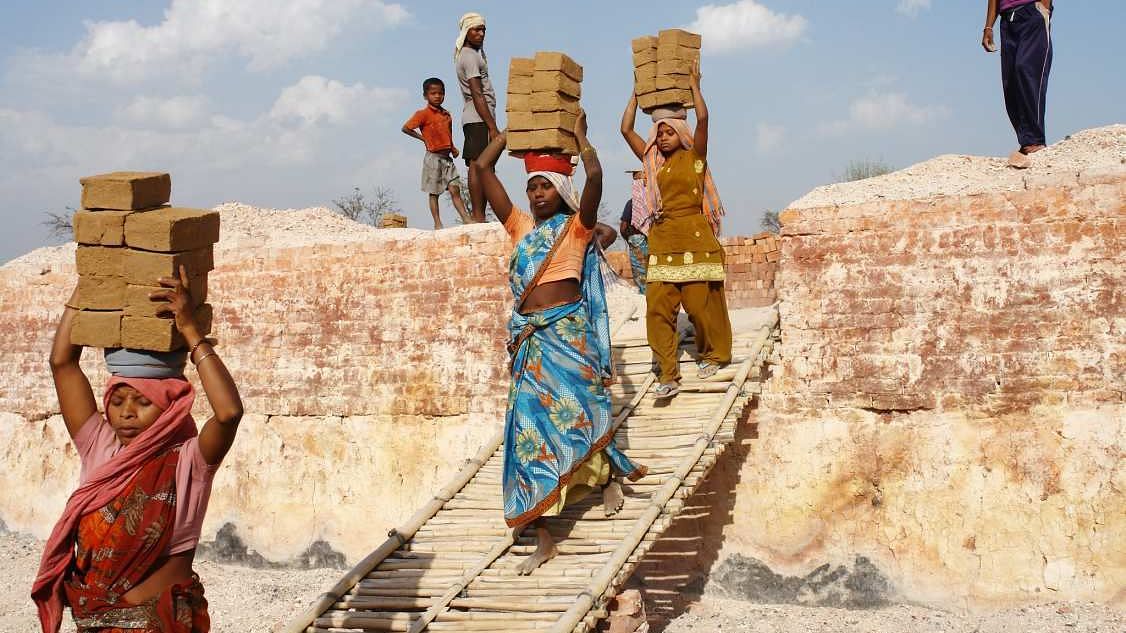
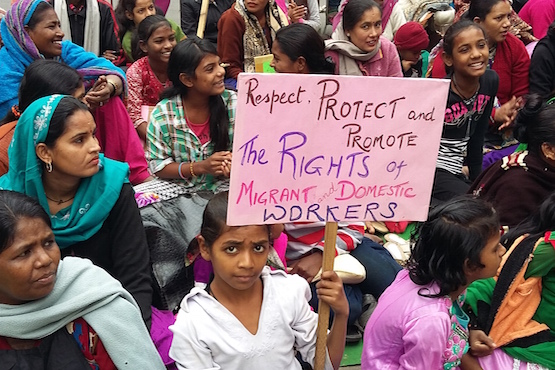
    The Pandemic, lockdown, and the chain of events that followed made the country wake up to the state of the most unfortunate group of the labour force; the migrant workers. They have always remained invisible to the development agenda of the government and only the catastrophe of a pandemic could shed light on their woes. Among this invisible workforce, there remains yet another marginalised group of female migrants.

    In India, female migration was initially considered insignificant by equating their movement merely as associational or followers of men.  However, this has certainly changed in the last decade. Marriage was seen as the central motive behind female migration, though lately more women are seen to enter the labour market post-migration as their labour demand rose in sectors of so-called “female occupations” of domestic work, care-work and certain informal labour requirements in sectors such as in construction, garment work, food services and as coolies and vendors.  As family migration from rural to urban abodes saw a rise in the country, both male and female migrants were required to join the labour force to meet their mere subsistence needs. Lack of employment, low income and other economic reasons pushed females, especially from rural areas, to migrate to urban zones of the country (Singh et al., 2015). While in urban areas, the migrants especially females and children are exposed to extreme vulnerabilities with regard to their dismal conditions of work in the informal sector, urban policies are deeply flawed in omitting migrant welfare and the sheer denial of their civil rights and entitlements.

    Precarious domestic work and female migrants

    Domestic work is often regarded as an invisible and insignificant addition to the social and economic values of a country. The work is increasingly feminised with over 80% of the world’s domestic work occupied by women (International Labour Organisation [ILO], 2013a). And this mirrors the traditional notions of domestic work being a woman’s task. These tasks include traditional housework such as cleaning, cooking, washing clothes or utensils etc. or care-work such as a child or elderly care. Female migrants with low skills, low levels of education and migrating from rural abodes in search of employment form a predominant part of the labour pool. With no recognition and regulation of work, the female domestic workers are subject to unequal power dynamics at the workplace, making their lives precarious in terms of wages, security and wellbeing.
    In India, domestic work employment among females saw an upsurge, especially in urban areas. This surge is mainly accounted for by the increasing need for care work given the changing demography, lack of work opportunities in other sectors and the gender constructions moulded by the society (Chandrashekar & Ghosh, 2012). According to the National Sample Survey (NSSO-2011-2012, 68th round), 39 lakh (3.9 million) people are occupied in domestic work, among which 26 lakh (2.6 million) are females. Micro-level surveys suggest a predominant concentration of female migrants in domestic work, especially in urban areas (Mazumdar et al., 2013).  There are two forms of workers: live-in workers, who are accommodated in the household and live-out workers, who return to their respective houses after work and may be involved in work with multiple households. As there is no relevant national data on migrant workers involved in the sector, micro-level surveys or sector-based studies are the only sources in understanding the conditions of these migrants in domestic work. Studies have stated that migrants with low vocational qualifications and often seen as unregulated and undocumented cheap labour, work under low wages for long hours and in dismal working conditions affecting their health and safety. Live-in domestic workers are more prone to the dangers of sexual and physical abuse. Live-out domestic workers migrating to a new city, struggle with the inaccessibility of social security schemes and entitlements. Exploitation by private placement agencies in terms of wages and work conditions is another area among their hassles.

    The domestic work arena, already an unregulated and unorganised sector, puts female migrants with low bargaining power on a higher vulnerability scale. The task of identifying domestic work hinders the formulation of a sound regulatory mechanism to confront such vulnerabilities.

    Barriers to effective Regulation

    Regulating domestic work is impeded by cultural and structural barriers. The traditional notion and disregard of domestic work by women in households is extended to the understanding of paid domestic work as unproductive and hence, making it undervalued. The structural barriers relate to the unusual workplace in private spheres, which makes it difficult in enforcing labour laws and any form of scrutiny against the privacy norms of a household. The informality of work and its complexities aggravates the barriers in regulation. The employment relationship is uncertain as it is without any legal titles of employee and employer, making the relation very personalised and often not under any form of contract or agreement. Even if labour laws are made inclusive of domestic work, implementation and assurance of compliance of these laws in households are challenged until the household is recognised as a ‘workplace’ and the person hiring as an ‘employer’ in the legal framework (Chen, 2011).

    Even though these barriers existed, the International Labour Organisation (ILO) convention 2011 attempted in ensuring decent work to domestic workers and this is recognised as the most important landmark in identifying domestic work under a legal framework. ILO defines domestic work as “work performed in or for a household or households” and domestic worker as “any person engaged in a domestic work within an employment relationship”. The convention specified a comprehensive labour standard for domestic workers in areas of their wages, hours of work, occupational safety and health and social security. The convention addressed and standardized the various concerns in the sector regarding child labour, migrant workers, trafficking, live-in domestic labourers and private recruitment agencies (C189 – Domestic Workers Convention, 2011). Even after the completion of 10 years of the convention and 32 ILO member countries enforcing the landmark treaty, India is yet to ratify the convention.

    As domestic work remains undefined in the country, no significant statistical standard in estimating domestic workers exist. In the ILO policy brief on “Global and regional estimates of domestic workers” (ILO, 2013b), ambiguous nature of data on domestic workers were noticeable from the widely distributed figures, ranging from 2.5 million estimates from a household survey, 4.5 million workers estimated from official statistics (NSSO 2004-05) to an exaggerated figure of 90 million in news media. This difference in estimation is related to the difference in the identification of domestic work among different establishments (Mahanta & Gupta, 2015). With no clarity in identifying domestic workers inclusive of its peculiarities, these figures could be heavily underestimated too. Being a female migrant in the sector aggravates the problem of estimation as National statistics narrows down female migration patterns merely as associational. And thus failing to understand the true motives behind female migration and the subsequent scale of occupations they reside in (Indu et al, 2012).  Macro data narrows down domestic female labour into regular workers based on their duration in employment and disregarding the conditions of low wages and other insecurities, while the temporary and casual nature of work goes unrecognised (Neetha & Indrani, 2020). The informality of work is another area that India has failed to regulate. Labour laws for industrial labour often disregard informal workers. This is evident in the isolation of migrant workers, especially female migrants in domestic work (Poddar & Koshy, 2019).

     Lacunae in the legal framework

    Domestic work and most feminised occupations, in general, in unorganised sectors, are isolated from the legal framework given their unique characterisation of workplace and employment relationships and not to mention the challenges in recognising their work given the cultural and structural barriers. For female migrants in domestic work or any other informal activity, the situation is similar.

    There were certain positive steps in attempting to recognise the domestic workforce in the country. First of such attempts were their inclusion in the Unorganised Workers Social Security Act 2008 which gave hope, but failed to be implemented across different states (Agrawal & Agarwal,2018). Subsequently, the government also set up a task force to recommend a framework for policymaking and after 10 years, in 2019, we see a draft on National policy on domestic work formulated by the government covering their recognition, access to civil rights and social security schemes, skill development, regulating private placement agencies and a grievance redressal system (“National Policy for Domestic Workers”, 2019). Upon the recommendations of the task force, the domestic workers were to be included under the National Health insurance scheme – Rashtriya Bhima Yojana (RSBY). But the limited awareness of the scheme, its functioning and benefits, coupled with corruption reduced the domestic worker’s accessibility of the same (Mahanta & Gupta, 2015). The suggestion of the task force to include domestic worker rights in existing legislations, pertaining to industrial or organised labourers, was widely criticised because it does not adapt to the peculiarities of the feminised domestic work (Poddar & Koshy, 2019). Ensuring minimum wages to the domestic worker through the Minimum Wages Act 1948 with a task-based approach, while ignoring the aspect of personalised nature of employment completely, puts the live-in workers whose tasks are not quantifiable, out of the ambit of the act’s provisions. Similarly, the inclusion of domestic workers in the Sexual Harassment of Women at Workplace Act (2013), Employees’ State Insurance Act (1948) and Unorganized Workers’ Social Security Act 2008 is considered inadequate. Even though such inclusion is appreciated, these legislations fail to cater to the rights of a domestic worker if they are based on organised sector labour standards and without understanding the complexities of the domestic work (Poddar & Koshy, 2019).

    Private placement agencies, one of the main recruitment channels of domestic work, remain unregulated. This has led to the rise in exploitation in terms of payment and working conditions. The Delhi government drafted a Delhi Private Placement Agencies (Regulation) Bill in 2012 which was widely rejected by the domestic workers’ unions and groups. The proposed bill was criticised to be ineffective as it does not include the registration of the employers and lacks clarity in the process of inspection of these agencies (Chigateri et al., 2016). A study on one of the frequently travelled migrant routes, which is from Jharkhand to Delhi, reveals that migrants were subjected to conditions of exploitation and forced labour under such placement agencies. Conditions of forced labour are witnessed mainly among live-in domestic workers, who have to work under the agent for the stipulated period. The Inter-State Migrant Workmen’s (Regulation of Employment and Conditions of Service) Act 1978 fails to address this issue as placement agencies relating to domestic work do not come under the ambit of the act. The act considers only those labour contractors who are registered at the origin state. Placement agencies involved in domestic work function through several sub-agents and mostly are unregistered (ILO, 2015)

    There were some positive responses from state governments. The state of Tamil Nadu set up the Tamil Nadu domestic workers welfare board.  Similarly, Maharashtra set up a domestic worker welfare board under Maharashtra Act (Agrawal & Agarwal, 2018) in 2008 while Kerala adopted a domestic worker bill in 2009. States like Kerala, Karnataka, Andhra Pradesh, Maharashtra, Tamil Nadu, Bihar and Rajasthan have set the minimum wage rate (Madhav, 2010). Neetha and Palriwala (2011) analysed the state legal framework on domestic workers and pointed out the same inadequacies noted over and over again, that is of not recognising the intricacies of domestic work, workplace, its several sub-categories, unregulated placement agencies and its unique employment relation. With no data on domestic workers and at the same time their numbers continuing to increase, these loose legislations and provisions go unnoticed by the workers.

    In 2019, with the view to improving compliance and bringing about uniformity of laws, 29 labour laws were consolidated into 4 labour codes: a) code on wages, b) code on industrial relation c) code on social security and d) code on occupational health and working conditions (“Overview of Labour Law Reforms”, n.d.). While the notion was to make the labour laws more transparent and such consolidation was expected to increase the coverage of different workers under the law, these codes remain ambiguous when it comes to certain sectors of informal work. Neetha and Indrani (2020) analyse these codes through a gender lens focusing on domestic and migrant workers. Code on wages does not incorporate private households as an entity hiring employees and thus domestic workers who struggled to attain minimum wages under the previous Minimum wages act (1948) have no mention, leaving them ambiguous. Code on industrial relations dealing with collective bargaining and industrial disputes, do not mention freedom of association in unorganised sectors and curbs the right to strike which has serious implications of registration of domestic workers under trade unions and their right to collective bargaining. Code on social security (CSS) has consolidated the unorganised workers’ social security act 2008, which was the first attempt towards the recognition of domestic workers and the new code puts the functioning of such acts and provisions for the unorganised sector under the discretion of the government, leaving out legislative scrutiny. Hence, there is uncertainty of the efficient functioning of these acts under CSS. Under the code, maternity benefits were applied only to the registered establishment of work. And domestic workers with no recognition of the workplace become ineligible for the same. Code on occupational health and working conditions is also seen to have not recognised the need for laws based on different sectors of work. It has again failed to include private households as a workplace, leaving the conditions of domestic work unregulated. Another failure relates to ignoring the Sexual Harassment of Women at Workplace Act (Prevention, Prohibition and Redressal) 2013, which further leaves out the scrutiny of abuse or exploitation of domestic workers. The fact of being migrants among domestic workers isolates them even further from these labour codes.

    The lacunae in existing legislation in recognising domestic work and migrant labour continues to be beset in ambiguities with the new labour reforms.

    Present scenario: Covid-19 adding to the vulnerabilities

    The onset of the Covid-19 and the resultant lockdowns have led to massive disruptions of normal life resulting in the shocks of sudden unemployment, financial strain and increased burden for workers in the unorganised sector. The migrant workers bore the highest brunt. In such a scenario, female migrants in an unregulated and isolated sphere of work such as domestic workers have been subject to severe distress. The lockdown and reduced mobility left the workers unemployed and without income. Live-in migrants faced increased workload but no change in wages. Even with the slow revival of the economy, they are under threat of being infected or being carriers, given their precarious work and living conditions. Sudden dismissals and financial strain have forced many to the situation of borrowing money for subsistence and eventually ending up in debt. Workers struggle to meet the basic needs of health, food, education of the family with lower income and savings (Sumalatha et al., 2021). With dismal employment relations and working conditions, coupled with the exclusion from the legal framework and social protection, Covid-19 has expanded the existing inequalities.

    Government intervention:  The need of the hour

    Government intervention both in ensuring basic rights and providing for the welfare of the domestic workers have been negligible. The cultural and structural barriers are not the only challenges in regulating domestic work. There is a lack of political will in acknowledging domestic workers and their woes. As they remain scattered and invisible, the domestic workers are not seen as potential vote banks and hence remain without any political influence. The sector which is comprised largely of female migrants is devoid of any political voice and agency in their origin or host states since there are barriers in pursuing their voting rights given the nature of their migration. Their interactions with civic authorities and politicians in the host state are marginal and hence, their issues do not come to the fore (Bureau, 2018). There is a lack of awareness among the migrant workers on their voting rights. They are largely unaware as to who should be approached in the host state to resolve their problems. Even a migrant worker, well aware of his/her political rights and agencies, refrain from pursuing any form of interaction as they have either lost faith in the system or are disillusioned by the long time and effort spent pursuing the cases with no results to show. This highlights the need for effective political inclusion of migrant workers and the generation of political and electoral awareness among them (Bureau, 2018).

    Further, identification and protection are the two essentials in creating an inclusive environment for female migrants in domestic work. The feminized nature of domestic work in the country, concentrated predominantly among poor and marginalised migrant workers, need to be recognised as dignified “work” and households they work in as “workplace”. Only separate comprehensive legislation on domestic work can incorporate the varied complexities of the sector, rather than a mere extension of organised sector legislations. Such separate legislation would provide the domestic worker with an identity that can ensure them their rights and entitlements (Sharma & Kunduri, 2015). The legislation should address the working conditions, violations and exploitations, provisions for mobilisation, illegal channels of private placement agencies and establishing basic civil rights from a gender perspective to incorporate the differential experience of females in the sector. Efficient implementation and scrutiny of the same require statistically significant data, the absence of which is another flaw in the system.

    Domestic worker’s inaccessibility of social protection is the result of the lack of recognition. Migrant workers in the sector without any identity proof or formal registration are excluded from social protection schemes. Agrawal and Agarwal (2018) suggest setting up an independent welfare board in every district responsible for registering, ensuring availability of social security benefits, conducting dispute resolution, dissemination of information and providing skill development and training for domestic workers. The provision of financial incentives can help in coping with sudden unemployment situations during any form of crisis such as the pandemic. Allowing for the organisation of domestic workers into unions and cooperatives can also be beneficial in attaining social and legal protection. Domestic worker groups such as SEWA and National Domestic Workers Movement (NDWM) in the country have been attending to the woes of the domestic workers by providing a platform for collective bargaining and assertion of rights.

    The introduction of the draft on National Policy on Domestic workers can be seen as a positive development, however, the policy still remains in consideration. Vulnerabilities of the domestic workers, exacerbated by the pandemic, highlight the urgent necessity for the ratification of the ILO convention on domestic workers. There is an urgent requirement in increasing the government’s sensitivity towards domestic workers and their precarious existence.

    References

    1. Agrawal, U., & Agarwal, S. (2018). Social Security for Domestic Workers in India. Socio-Legal Rev.14, 30
    2. Bureau, A. (2018). Political Inclusion of Seasonal Migrant Workers in India: Perceptions, Realities and Challenges.
    3. C189 – Domestic Workers Convention, 2011 (No. 189). (n.d.). Retrieved July 15, 2021, from https://www.ilo.org/dyn/normlex/en/f?p=NORMLEXPUB:12100:0::NO::P12100_ILO_CODE:C189
    4. Chandrasekhar, C. P., & Ghosh, J. (2012, November 12). Changing patterns of domestic work. @businessline. https://www.thehindubusinessline.com/opinion/columns/c-p chandrasekhar/changing-patterns-of-domestic-work/article22985402.ece
    5. Chen, M. A. (2011). Recognizing domestic workers, regulating domestic work: Conceptual, measurement, and regulatory challenges. Canadian Journal of Women and the Law23(1), 167-184.
    6. Chigateri, S., Zaidi, M., & Ghosh, A. (2016). Work Like Any Other, Work Like No Other103. Retrieved July 18, 2021, from http://www.unrisd.org/indiareport-chapter4
    7. Chigateri, S. (2021). Labour Law Reforms and Women’s Work in India: Assessing the New Labour Codes From a Gender Lens. Institute of Social Studies Trust.
    8. Indu, A., Indrani, M., & Neetha, N. (2012). Gender and migration: Negotiating rights, a women’s movement perspective. Delhi: Centre for Women’s Development Studies.
    9. International Labour Organisation (ILO). (2013a). Who are domestic workers? Ilo.Org. https://www.ilo.org/global/docs/WCMS_209773/lang–en/index.htm
    10. International Labour Organisation (ILO). (2013b). Global and Regional Estimates on Domestic Workers.
    11. International Labour Organisation (ILO), (2015). Indispensable yet unprotected: Working conditions of Indian domestic workers at home and abroad. Retrieved July 19, 2021, from https://www.ilo.org/wcmsp5/groups/public/—ed_norm/—declaration/documents/publication/wcms_378058.pdf
    12. Klemm, B., Däubler, W., Beimin, W., Lai, A., Min, H., & Sinha, S. (2011). Protection for Domestic Workers: Challenges and Prospects. Briefing Paper Special Issue, May, Friedrich Ebert Stiftung.
    13. Madhav, R. (2010). Legal Recognition of Domestic Work. Labour File, 8, 41.
    14. Mahanta, U., & Gupta, I. (2015). Road ahead for domestic workers in India: legal and policy challenges.
    15. Mazumdar, I., Neetha, N., & Agnihotri, I. (2013). Migration and gender in India. Economic and Political Weekly, 54-64.
    16. National policy for domestic workers. (2019, February 13). Retrieved July 18, 2021, from https://pib.gov.in/Pressreleaseshare.aspx?PRID=1564261
    17. Neetha, N. (2004). Making of female breadwinners: Migration and social networking of women domestics in Delhi. Economic and Political Weekly, 1681-1688.
    18. Neetha, N., & Palriwala, R. (2011). The absence of state law: Domestic workers in India. Canadian Journal of Women and the Law23(1), 97-120.
    19. Neetha N., & Indrani, M. (2020, June 01). Crossroads and Boundaries : Labour Migration, Trafficking and Gender. Retrieved July 19, 2021, from https://www.epw.in/journal/2020/20/review-womens-studies/crossroads-and-boundaries.html
    20. Overview of Labour Law Reforms (n.d.) Retrieved from https://prsindia.org/billtrack/overview-of-labour-law-reforms#_edn2
    21. Poddar, M., & Koshy, A. (2019). Legislating for Domestic’Care’Workers in India-An Alternative Understanding. NUJS L. Rev.12, 67
    22. Shanthi, K. (2006). Female labour migration in India: Insights from NSSO data(Vol. 4, p. 2006). Chennai: Madras School of Economics.
    23. Sharma, S., & Kunduri, E. (2015). Of Law, Language, and Labour: Situating the Need for Legislation in Domestic Work. Economic and Political Weekly50(28).
    24. Singh, N., Keshri, K., & Bhagat, R. B. (2015). Gender dimensions of migration in urban India. In India Migration Report 2015(pp. 200-214). Routledge India.
    25. Srivastava, P., & Shukla, P. (2021). Crisis behind closed doors domestic workers’ struggles during the pandemic and beyond. Economic and Political Weekly, 17-21.
    26. Sumalatha, B. S., Bhat, L. D., & Chitra, K. P. (2021). Impact of Covid-19 on Informal Sector: A Study of Women Domestic Workers in India. The Indian Economic Journal, 00194662211023845.


    Image Credit: ucanews.com 

  • Deeply religious we may be but honest we are not! Why are Indians dishonest?

    Deeply religious we may be but honest we are not! Why are Indians dishonest?

    We Indians wear religion on our sleeves. Why are we then so dishonest?

    One of the more disconcerting trends during the current pandemic has been the hoarding of medicines and oxygen cylinders, black-marketing of drugs and sale of spurious “life-saving” drugs, not to speak of overcharging by hospitals.

    In Tamil Nadu, the government temporarily delicensed a number of private hospitals for excessively overcharging patients. Maharashtra had to cap charges for the treatment of Covid in private medical facilities following reports of patients being charged exorbitantly while the Delhi Chief Minister had to warn private hospitals against “black marketing” in hospital beds.

    Are such displays of senselessness and insensitivity unique to India?


    Read More

  • Wage theft plagues India’s  migrant workers

    Wage theft plagues India’s migrant workers

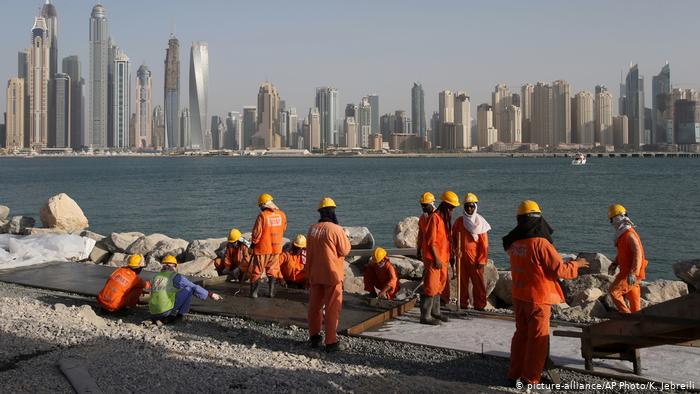
    Though the South Asian country has relied heavily on remittances from its international migrant workers, the government has been remiss in ensuring their protection and welfare. As labor violations spike amid the COVID-19 pandemic, these workers are left to fend for themselves.

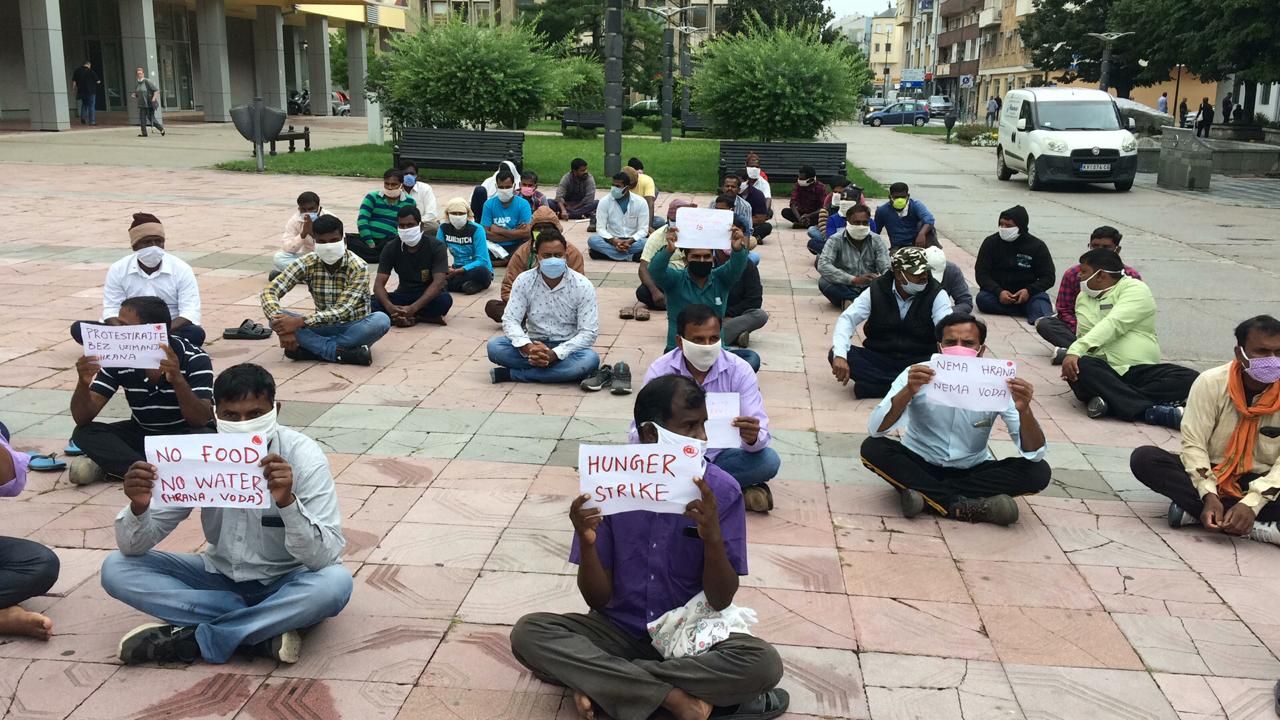
    In August 2020, a group of around forty Indian construction workers staged a hunger strike in Kraljevo, Serbia, demanding to be paid. In addition to not receiving months’ worth of wages from their employer, they had been working 10-12 hours a day without proper food or access to healthcare and were living in cramped, unhygienic quarters during the COVID-19 pandemic.

    The migrant workers from across India first arrived in Serbia in mid-2019. According to the Building and Wood Workers’ International (BWI), a global union federation, around 150 Indians were employed across the Balkan country for the construction of the Corridor 11 project. In a Zoom interview, two of the workers recounted how their troubles with getting paid had begun soon after arrival. When their situation didn’t improve, the first group was repatriated to India in January and February 2020. The rest, including those protesting in Kraljevo, were repatriated by September 2020.

    Much of the Indian government’s efforts have been focused on Gulf countries, where, based on data from the International Labour Organization (ILO), around 9 million Indians live and work. However, the BWI warns that Europe is fast becoming a hub for the exploitation and trafficking of third-country nationals. In Serbia, other reports of exploitation of migrant groups from China and Turkey have recently come to light.

    When he heard about the stranded Indian workers, Ramachandra Khuntia, chair of the BWI Indian Affiliates Council and a former Member of Parliament (MP) contacted the Indian Ministry of External Affairs (MEA) and the Indian embassy in Belgrade multiple times.

    the BWI warns that Europe is fast becoming a hub for the exploitation and trafficking of third-country nationals.

    What followed was a cross-border initiative involving labor unions, the Indian government, and Serbian anti-trafficking organization ASTRA. “We were finally able to bring the workers back home. But ‘til today, they have yet to receive their wages from the employer,” says Khuntia.

    “The payment of arrear wages is usually dealt with by the labor department in the host country, but the matter can be pursued through the Indian embassy,” explains Khuntia, adding that despite assurances from the Indian government and the Indian embassy in Serbia, the payments seem nowhere in sight.

    Indian construction workers stage a hunger strike in Kraljevo, Serbia, in August 2020. Amid the COVID-19 pandemic, wage theft has soared across the world, and often, the victims are migrant workers from India, who receive patchy support from their own government and have to rely on unions or non-profits for help. (Photo credit: BWI/Boobalan D) 

    Job loss and other ordeals

    Wage theft — the illegal practice of denying workers the money that they are rightfully owed — has dramatically increased during the COVID-19 pandemic. In addition to the non- or incomplete payment of wages, employees have to deal with job loss, non-payment of termination benefits, poor working conditions, and hurried repatriation without the chance to register their grievances.

    Migrant workers’ troubles begin in their country of origin, not abroad. “It is a new form of slavery that begins before they even leave the country in the form of recruiting fees. Recruiting agents and others involved are selling dreams to migrant workers.”

    Ponkumar Ponnuswamy, president of TKTMS, a construction workers’ union in Tamil Nadu that was directly involved in the process of repatriating the stranded workers, says that each of the workers is owed anywhere between the equivalent of US$1,300 and US$2,600 by the aforementioned company, depending on how long they were in Serbia. For the workers who were put through this trying ordeal, their unpaid wages represent a substantial amount of money that would have otherwise gone towards debt repayments, medical treatments, and basic subsistence.

    “I think it is a huge loss not only at the individual level but also at the country level,” says S. Irudaya Rajan, an expert on Indian migration and member of the Kerala government’s COVID-19 expert committee. Migrant workers constitute an integral part of the global economy, with their remittances adding up to over three times the amount of international aid and foreign direct investment combined. India, the world’s largest source of international migrants, received US$82 billion in remittances in 2019 according to World Bank data, a sum that has helped keep millions out of poverty.

    “COVID-19 has become a great opportunity for exploitation,” says Rajan, who is currently heading a study on counter-migration from the Gulf to assess wage theft.

    But according to him, migrant workers’ troubles begin in their country of origin, not abroad. “It is a new form of slavery that begins before they even leave the country in the form of recruiting fees,” he says. “Recruiting agents and others involved are selling dreams to migrant workers.”

    The Indian government requires recruiting agents to register themselves with the Protector General of Emigrants. Despite this, many illegal agents continue operating across the country. (Photo credit: Yamuna Matheswaran)

    Is the Indian government doing enough?

    In theory, the Indian government offers various resources for those who emigrate for work: registration portals, insurance schemes, awareness programs, and helplines. They also provide a list of registered recruiting agents (RAs) across the country.

    But the reality of emigration is far more complex, even confusing. For instance, it would be safe to assume that only a fraction of the RAs operating in India is registered with the MEA. A 2018 investigation by the Migrant Forum in Asia (MFA), with the support of ILO, found that in the state of Punjab alone the number of unregistered agents ran into several thousands, despite the 2014 Punjab Travel Professionals Regulation Act requiring mandatory registration of all consultants, agents, and advisors involved in sending people abroad.

    These unscrupulous agents make emigrants more vulnerable to exploitation by charging illegal fees and pushing unfair contracts. Some workers arrive in a foreign country only to learn that the job they were recruited for doesn’t exist, says Rajan. Others end up without appropriate visas or permits and are never registered in the system.

    The MEA limits the service fees RAs can charge their clients, which caps at INR 20,000 (around US$270). But Rajeev Sharma, Regional Policy Officer at BWI’s South Asia office, says that many of the workers have paid far more depending on the state they hailed from.

    “Workers from Punjab, for instance, paid up to INR 100,000 (US$1,365) to 150,000 (US$2,048) to the agent,” he says. “We don’t know how they managed to fund their journey, they may have run into debt – so it’s not just the salary, so many other issues are involved.” When asked about this practice, one of the agencies involved – an unregistered ‘Shakti Tread Test Centre’ run by Muktinath Yadav in Deoria, Uttar Pradesh – gave no response.

    “Covid-19 has become a great opportunity for exploitation” – Dr. S Irudaya Rajan, an expert on Indian Migration

    Indian missions abroad are tasked with ensuring the welfare of overseas Indian nationals. The migrant workers and union members state, however, that the Indian embassy in Serbia failed to even register their grievances properly. The Embassy of India in Belgrade did not respond to requests for comment. In response to an inquiry about grievance redressal mechanisms for repatriated migrant workers, the MEA’s Protector General of Emigrants instead pointed to the Pravasi Bharatiya Sahayata Kendra, a general helpline.

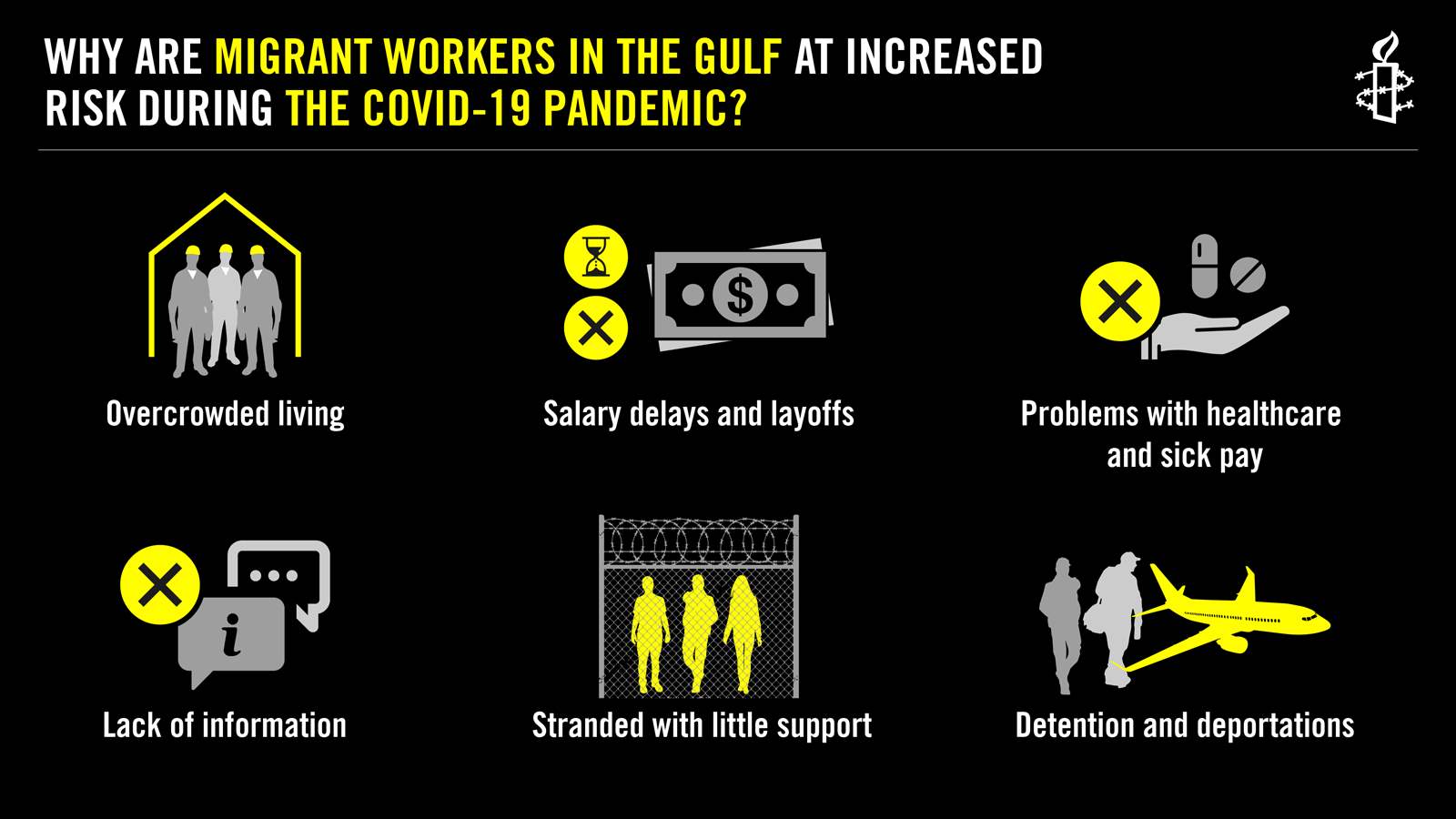
    Amnesty International raised concerns about the state of migrant workers under Covid-19 in the Gulf.
    Image Credit: amnesty.org

    “Grievance portals address a lot of topics, including pre-departure issues. However, there needs to be a specific focus on wage theft, particularly during COVID-19,” says Rajan. He stresses the importance of collective bargaining by various governments at the South Asia level, as well as proper grievance registration by Indian embassies in order to pursue the necessary legal steps.

    Recognizing the lack of global mechanisms to address wage theft, Congress MP Shashi Tharoor stated during a panel discussion last year that an escrow fund could be set up, with employers depositing six months’ worth of wages in order to protect workers against non-payment.

    Need for awareness building

    In the case of the Indian migrant workers in Serbia, it was labor unions that initially came to their rescue, following through until they had arrived safely back to their respective homes. When asked if there is enough awareness among migrants themselves about their rights and the resources available to them, Rajan says: “Absolutely not, and I think that is where we are failing.”

    “Migration has three cycles,” he explains. “The first — pre-migration cycle — happens in our country,” and steps to protect migrant workers need to start here. Rajan believes that the government should make pre-departure orientation programs, including skills training, mandatory. “Most workers don’t even know the currency of the host country. They know, in rupees, how much they expect to make and in how much time.”

    Khuntia, of the BWI Indian Affiliates Council, highlights the utter importance of signing bilateral agreements with host countries regarding wages, healthcare, and social security so that those emigrating can feel secure. “And if anything were to happen, by virtue of this bilateral agreement, the Indian government can negotiate with the host country and provide relief to the workers,” he concludes.

    “If everybody were cheated, there would be no migration,” says Rajan. But it’s important to share not only success stories but also those of struggles, he continues, to raise awareness among prospective migrants. It’s not about “how many people we send” but about how well-informed our migrant workers are when they are deployed abroad, he says.

    This article was first published on Asia Democracy Chronicles.

    Feature Image: dw.com

  • Vietnam’s Future Strategy to fight COVID-19

    Vietnam’s Future Strategy to fight COVID-19

    Vietnam’s experiences with fighting the COVID-19 pandemic has been highlighted not only as a success story but a good model. It pursued an aggressive containment policy, rigorous contact tracing procedures and effective quarantine regimes. It successfully contained the three waves of the Pandemic that infected 9,635 Vietnamese people including 55 deaths and 3636 have recovered since February 2020.  The majority of these have occurred from April to June 2021. Besides, effective public communications and awareness campaign, and availability of testing kits were instrumental in limiting the spread of the virus.

    However, Vietnam is now witnessing the Fourth Wave which has impacted at least three major cities and some provinces. Perhaps the most worrying part of this wave is that new variants of the Coronavirus are being detected among people. This variant is known to spread more quickly especially in areas where there is a high concentration of people such as industrial parks.

    Given the severity of the Fourth Wave of Covid-19, there is visible concern among the political leadership, and Prime Minister Pham Minh Chinh has called upon the entire political machinery and Vietnamese people to take extreme steps to “fighting the pandemic” similar to situations where they would be fighting an enemy.  Prime Minister Chinh did not shy away from warning the people that any deliberate attempts to disregard “national regulations on pandemic prevention and therefore, spread the virus to the communities, against the joint efforts of the whole nation and people, should be strictly punished.”

    It is now widely accepted that vaccine production is both technology-intensive and cannot be developed overnight. While the developing countries led by India and South Africa have been pushing for waving off Trade Related Intellectual Property Rights (TRIPS) protection for COVID-19 vaccines, and have been supported by the U.S. and EU at the World Trade Organization, yet countries must build national capacities to produce vaccines. In this context, the Vietnamese government hopes to not only buy COVID-19 vaccines but set up a production plant and supply to other needy countries.

    There are four vaccines under development in Vietnam at (a) Nanogen Pharmaceutical Biotechnology JSC; (b) Institute of Vaccines and Medical Biologicals; (c)  Vaccine and Biological Production Company No 1’ and (d) Polyvac. The Vietnam Military Medical University is actively participating in COVID-19 vaccine development at home.

    Vietnam is also has a forward-looking vaccine import strategy pivoting on “patent-based production and local research and production”. This, it is believed would help the country achieve “herd immunity in late 2021 or mid-2022”. This strategy is significant given that Vietnam has nearly 100 million people including children who would require COVID-19 vaccination.  Nearly 30 million doses were acquired from the British-Swedish AstraZeneca vaccine and the vaccination programme started in March 2021. There are plans to acquire 20 million Russian Sputnik V vaccines; may buy 5 million doses from Moderna and 31 million from Pfizer. Meanwhile, Vietnam has also approved China’s Sinopharm for emergency use. Also, homegrown vaccines are expected to fill in the gap of 30 million doses.

    Similarly, vaccine production infrastructure is a financially demanding activity. The Vietnamese government plans to apportion VND 16 trillion for the vaccination program. It plans to procure 150 million doses of vaccines in 2021 to cover 70 per cent of its population and this is estimated to cost VND25.2 trillion ($1 billion). In June 2021, the government launched the Fund for Vaccination and Prevention of Coronavirus Disease 2019.

    As per the Finance Ministry’s state budget department,  in “addition to the [public] budget, it is necessary to mobilize more resources from the voluntary contributions of domestic and foreign organizations and individuals, to join with the state,”  During a live broadcast to launch the campaign for public participation in raising funds to acquire/locally produce Covid-19 vaccine, Prime Minister Pham Minh Chinh called on the Vietnamese people to financially support a mass vaccination roll-out. This call has attracted a positive response and several companies, organizations and individuals have come forward. According to the Ministry of Finance, as of 05 June 2021, i.e., ten days since the announcement of the fund, as many as 950 organizations and more than 124,600 individuals had contributed VND 928 billion ($40.2 million). Besides domestic contributors, several foreign companies such as Hanwha Life Insurance and Daewoo of South Korea, Japan’s Tokio Marine and Taiwanese insurer Cathay Life have announced contributions. Minister of Finance Ho Duc Phoc has underscored transparency in the management of the fund and stated that his ministry is “committed to using this fund publicly and transparently,”

    Vietnam’s preference to import as also set up domestic infrastructure to set up production are indeed noteworthy; however, the challenge would be to run an accelerated mass vaccination program and achieve a high degree of herd immunity.

    Image Credit: www.dw.com

  • Fighting the Invisible Enemy with Vaccines:  Beginning of the End of the COVID-19 Pandemic

    Fighting the Invisible Enemy with Vaccines: Beginning of the End of the COVID-19 Pandemic

    Fighting the Invisible Enemy with Vaccines Beginning of the End of the COVID-19 Pandemic [powerkit_button size=”lg” style=”info” block=”false” url=”https://admin.thepeninsula.org.in/wp-content/uploads/2021/06/Fighting-the-Invisible-Enemy-with-Vaccines-Beginning-of-the-End-of-the-COVID-19-Pandemic-8-1.pdf” target=”_blank” nofollow=”false”]
    Download
    [/powerkit_button]

    Authors:  Avanti A Srinivasan (1st-year Biology Honors College Student, New Jersey, USA); Keerthika Gnanasegaran (MBBS, Puducherry, India); Vishu Priya (MBBS, Puducherry, India).

    Keywords:

    COVID, Coronavirus disease; COVID-19, SARS-CoV-2, Severe Acute Respiratory Syndrome Corona Virus 2 identified in 2019 that causes COVID; Flattening the curve, The longer it takes for the coronavirus to spread through the population, the more time the health care systems (hospitals) have to prepare and treat patients, but not be overwhelmed by the pandemic; Herd immunity, when most of a population (70-80%) becomes immune to COVID-19, they provide indirect protection to those who are not immune to the disease; Immunity, protection from an infectious disease. If a person is immune to COVID that person can be exposed to the virus without becoming infected; Immunization, the process by which a person becomes protected against an infectious disease by vaccination; Vaccine, a biological preparation or substance (also known as antigen) that is used to stimulate the production of antibodies and provide immunity against COVID-19, without inducing the disease. Vaccines are usually administered by needle injections; Vaccination, the process of introducing a vaccine (prepared from the COVID, its products such as protein or DNA, or a synthetic substitute such as mRNA) to act as an antigen, into the body to induce immunity against COVID-19 disease.

    COVID-19 Pandemic

    Corona Virus disease (COVID-19) was first identified in Wuhan, China, in December 2019. It is caused by Severe Acute Respiratory Syndrome Corona Virus 2 (SARS-CoV-2). The highly contagious coronavirus has spread rapidly around the world exponentially, causing a pandemic.

    As of June 04, 2021, there were over 172,231,339 confirmed cases and 3,703,522 deaths globally according to Johns Hopkins University (JHU) COVID-19 Dashboard. The USA alone has accounted for over 33,327,112 confirmed cases with over 596,444 fatalities reflecting the heavy toll inflicted by the pandemic. India has reported over 28,574,350 confirmed cases and 340,702 deaths, which is likely a low estimate.

    The US Government at the beginning of the pandemic embarked on the “Operation Warp Speed” program to accelerate testing, supply, development, and distribution of safe and effective vaccines, therapeutics, and diagnostics for COVID-19 by January 2021. The program has led to the development of several effective vaccines against COVID-19 by commercial enterprises. The new US administration has focused all its efforts to vaccinate the US population starting January 2021 with the goal of reaching herd immunity by July 4, 2021; it is on its way to successful completion by the target date.

    Initially, the number of confirmed COVID-19 cases reported by India was less, which was probably due to the quick action taken by the Indian Government to implement a total lockdown of the country to control the community spread of the virus. This was a very successful strategy for the short term and helped to flatten the curve and slowed the infection rate (Fig. 1). However, without an effective vaccine, with the Indian economy stagnating, with a population of 1.3 billion most of whom are poor, and a highly mutating virus, mitigation efforts alone proved to be grossly inadequate over the long term.


    Fig 1: USA Center for Disease Control (CDC) graphic on flattening the curve

    Over the past two months, India’s coronavirus daily infections have averaged over 400,000 and 4,000 deaths. They have come down recently, averaging daily infections of less than 200,000 and 2,800 deaths. Vaccinating the Indian population and reaching herd immunity, may be the only option left to fight the invisible enemy and to successfully put an end to the pandemic. India so far has inoculated only about 3% of its 1.3 billion people. India has a long way to go to get 70-80% of its population vaccinated and reach herd immunity.

    What is immunity?

    Humans are constantly exposed to disease-causing pathogens such as viruses, bacteria, fungi, and parasitic worms. Our body has two lines of defence against these threats: innate immunity and adaptive immunity, which together constitute the immune system. Their collective defence against pathogens makes up the immune response. The two components of the immune system interconnect and communicate at chemical and cellular levels to provide powerful protection against pathogens.

    Innate immunity provides an immediate, nonspecific response against any invading pathogen and has no memory of prior exposure to the pathogen. Innate immunity relies on the recognition of certain foreign molecules to stimulate inflammatory responses and phagocytosis. Innate immunity is the first line of defence against pathogens, representing a critical systemic response to prevent infection and maintain homeostasis. It also contributes to the activation of an adaptive immune response. It does not adapt to a specific external stimulus or a prior infection but relies on genetically encoded recognition of molecular patterns.

    The innate immune system recognizes pathogen-associated molecular patterns that are associated with pathogenic organisms but are absent in the host. The patterns are recognized by pattern recognition receptors of phagocytic cells such as toll-like receptor that are found on the cell surface and within the cell on various membrane-bound compartments. Cell surface receptors on macrophages (white blood cells) recognize and bind to surface molecules on the pathogen, activating the macrophage to phagocytize (engulf) the pathogens. Activated macrophages secrete cytokines, which bind to receptors on other host cells to trigger a successful immune response.

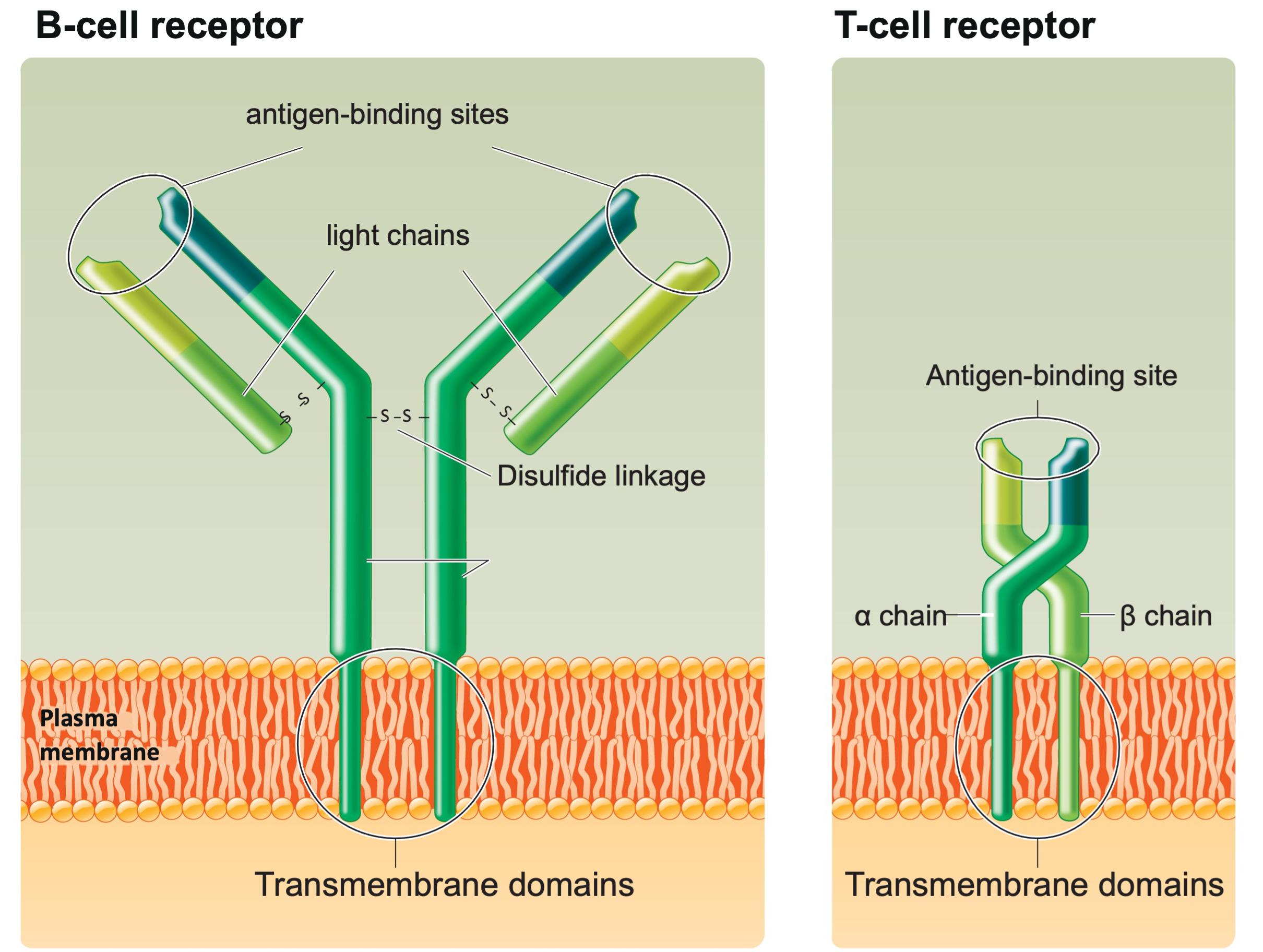
    Adaptive (or acquired) immunity is specific; it recognizes individual pathogens and mounts an attack that directly neutralizes or eliminates them and retains a cellular memory of a pathogen; it reacts quickly upon second exposure to the same pathogen. The innate immune system provides some immediate protection against invading pathogens while the more powerful, specific, adaptive response system is mobilized that can take several days. Adaptive immunity, also known as acquired immunity, is a host immune response that is mediated by antigen-specific lymphocytes. Unlike innate immunity, the acquired immunity is highly specific to a particular pathogen, including the development of immunological memory. Like the innate system, the acquired system includes both humoral immunity components and cell-mediated immunity components. T cells differentiate from stem cells in the bone marrow and are carried in the blood to the thymus to generate two types of T cells (helper T cells and cytotoxic T cells) that are involved in adaptive immunity. Humoral immunity arises from B cells that differentiate from stem cells in the bone marrow and are carried in the blood to capillary beds serving the tissues and organs of the lymphatic system. In antibody (humoral)-mediated immunity, B-cell derivatives called plasma cells to secrete antibodies – highly specific protein molecules – that circulate in the blood and lymph recognizing and binding to antigens and clearing them from the body. In cell-mediated immunity, a particular type of T cell becomes activated and, in conjunction with other cells of the immune system, attacks foreign cells directly and kills them. Specific receptors on the plasma membrane of one B cell or T cell (B-cell receptors or T-cell receptors) bind to one specific antigen structure, also known as epitopes (Fig. 2).

    Fig. 2: Structure of B-cell and T-cell receptors

    The adaptive immune response includes four key steps: 1) Antigen encounter and recognition: lymphocytes encounter and recognize an antigen; 2) Lymphocyte activation: lymphocytes are activated by binding to the antigen and divide to produce clones; 3) Antigen clearance: large clones of activated lymphocytes clear the antigen from the body; and 4) Development of immunological memory: memory cells circulate in blood and lymph, prepared for a rapid response in a future encounter of the same pathogen. The entire population of B cells and T cells in the body includes about 100 million different kinds of receptors – enough of a repertoire to recognize and destroy any type of antigen. Importantly, these cells are present even before the body has encountered the antigens.

    Adaptive immunity can be acquired either naturally by infection or by vaccination. Adaptive immunity can be active or passive. Active immunity is acquired through exposure to a pathogen, which triggers the production of antibodies by the immune system. Passive immunity is acquired through the transfer of antibodies or activated T cells derived from an immune host either artificially or through the placenta from the mother.

    What is a vaccine?                                                    

     In 1796, Edward Jenner infected healthy individuals with cowpox, which prompted their immune systems to protect them against smallpox, a more deadly viral disease. Jenner’s technique became the basis for worldwide vaccination against smallpox, which now has been eradicated from the human population. This forms the basis for vaccination against other deadly pathogens.

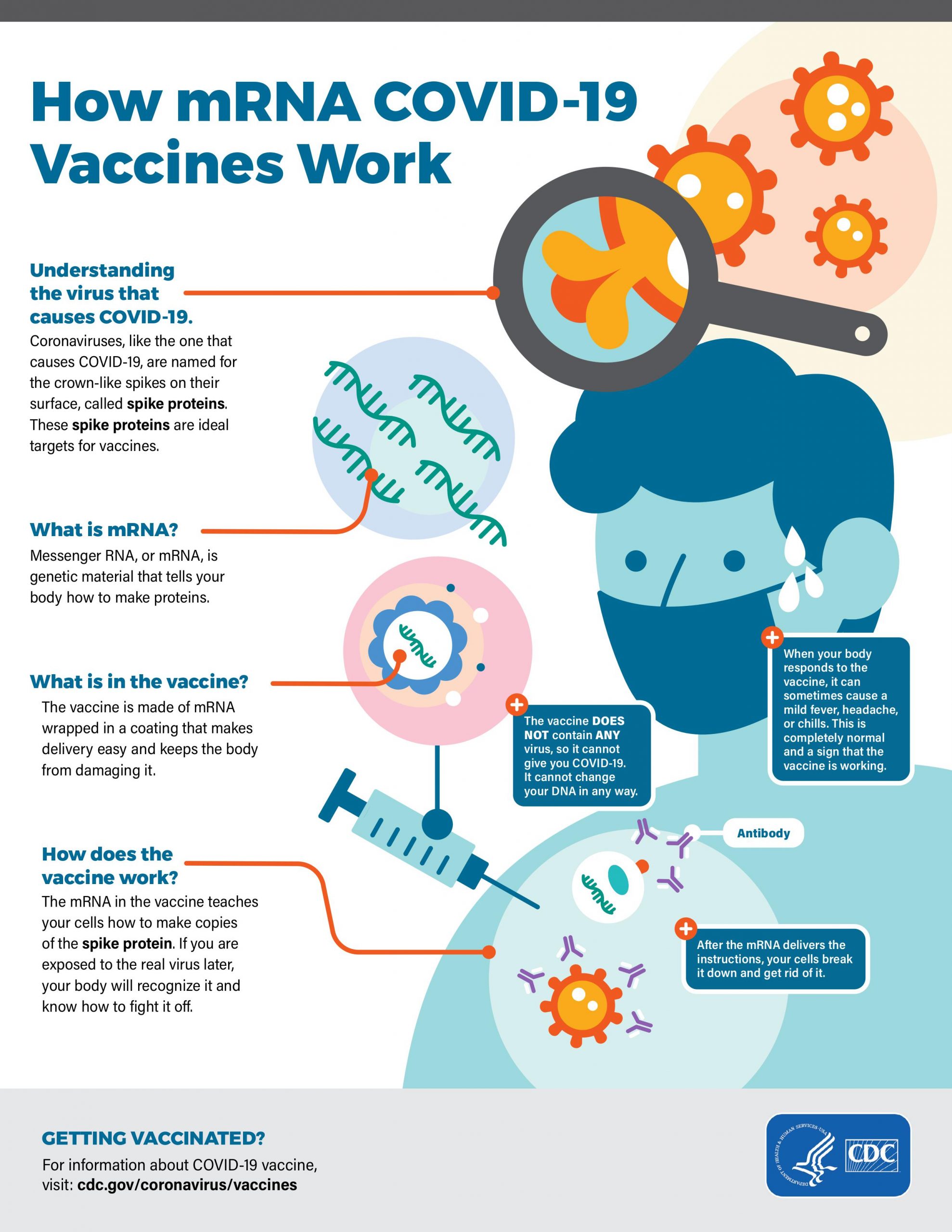
    An antigen is a foreign molecule that triggers an adaptive immune response. A vaccine is usually made from weakened or killed forms of the microbe, or typically contains an antigen from the disease-causing microorganism such as its toxins, or one of its surface proteins. The antigen stimulates the body’s immune system to recognize it as a threat and destroy it and to further recognize and destroy those microorganisms in a future encounter. Vaccines can be prophylactic (to prevent or ameliorate the effects of a future infection by a pathogen), or therapeutic to fight a disease that has already occurred. The administration of vaccines is called vaccination or inoculation. Vaccination is the most effective way to prevent infectious diseases. Widespread immunity due to vaccination is largely responsible for the worldwide eradication of smallpox and the restriction of diseases such as polio, measles, and tetanus.

    Molecular structure of SARS-CoV-2

    SARS-CoV-2 is a large, enveloped, spherical virus that contains a positive-sense, single-stranded RNA genome (30 kb in size), which is packed inside the nucleocapsid protein (N) and surrounded by an envelope. The RNA genome has a 5′ capped structure and a 3′ poly-A tail. The 5′ terminal two-thirds of the genome encodes a polyprotein, pp1ab, which is further cleaved into 16 non-structural proteins that are involved in genome transcription and replication. The 3′ terminus encodes 3 different structural proteins.

    Membrane proteins (M) and envelope proteins (E) are involved in virus assembly. The M protein (~30 KDa) is the most abundant structural protein in the virion. The E protein (~12 KDa) is found in small quantities within the virion.

    Spike protein (S1) that mediates virus entry into host cells, is the target of all COVID-19 vaccines. The spike protein forms large protrusions from the virus surface, giving it the appearance of having crowns (Fig. 3). Spike protein contains an S1 subunit that is a Receptor Binding Domain (RBD) and a membrane-fusing spike S2 subunit; The entry receptor utilized by SARS-CoV-2 is Angiotensin Converting Enzyme II (ACE II). Upon binding S1 is processed into S2, which induces fusion of the host and viral membranes.

    Fig. 3: Structure of the coronavirus, SARS-CoV-2 that causes COVID-19 [adapted from Centers for Disease Control (CDC) and Prevention, USA].

    COVID-19 viral vector vaccines

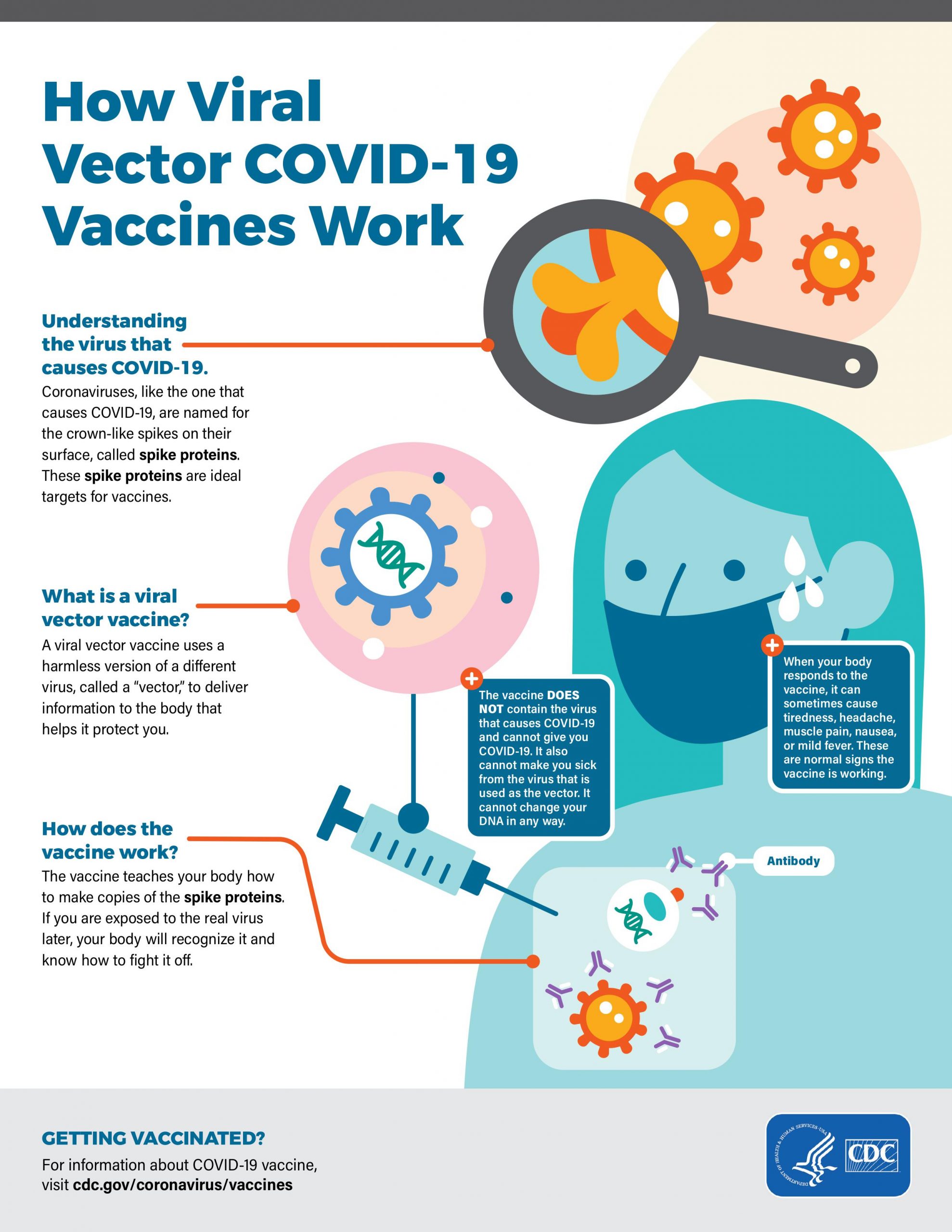
    Viral vector vaccines are a modified version of a different virus to deliver instructions to the cell to make the antigen against coronavirus spike protein. People vaccinated with viral vector vaccines gain protection without ever having to risk the serious consequences of getting sick with COVID-19. Several important characteristics of the viral vector need to be pointed out that include: 1) The vector is not the virus that causes COVID-19; it is a different harmless virus that is engineered to carry the gene coding for the spike protein, a harmless piece of the coronavirus. The modified version of the virus will be injected into the body and the cells will produce the spike protein that is found only on the surface of coronavirus. The cells display spike protein on their surface, triggering an immune response against the spike protein antigen. The immune cells produce antibodies and activate T cells to fight off the infection. The net result is the body has learned to recognize spike protein and to protect us against any future infection by the virus that causes COVID-19. The vaccine protects us, without ever having to risk the serious consequences of getting sick with COVID-19. Any temporary discomfort (side effects) experienced by us immediately after getting the vaccine is a natural part of the process and indicates that the vaccine is working to stimulate our immune system. Viral vector vaccines have been around for a while; they are safe and effective. COVID-19 viral vector vaccines were developed using adenoviral vector by two commercial entities, namely AstraZeneca and Johnson & Johnson (Appendix I).

    COVID-19 messenger RNA (mRNA) vaccines

    mRNA vaccines are a new type of vaccine to protect against infectious diseases. To trigger an immune response, most vaccines inject a weakened or inactivated pathogen into our bodies. mRNA vaccines, on the other hand, teach our cells how to make a protein antigen (or even a piece of a protein) within cells to induce an immune response in our bodies. The focus of the mRNA COVID-19 vaccine is to teach cells how to make spike protein, and thereby, trigger an immune response in our bodies. Like the viral vector vaccines, people vaccinated with mRNA COVID-19 vaccines gain protection without ever having to risk the serious consequences of getting sick with COVID-19. The mRNA vaccines are some of the first COVID-19 vaccines that were authorized for emergency use by the US Government. mRNA vaccines can be developed easily in a laboratory using readily available materials. Furthermore, the process of making mRNA vaccines can be readily standardized and scaled up, making vaccine development much faster than the traditional methods of making vaccines. As soon as the genome sequence of the virus that causes COVID-19 became available, scientists began designing the mRNA instructions for cells to build the unique spike protein into an mRNA vaccine. Effective COVID vaccines became available in less than a year to vaccinate the US population from two commercial enterprises, namely Moderna and Pfizer-BioNTech (Appendix II). The US Government has been very successful in administering the COVID-19 vaccines to its population. The USA is on the verge of reaching herd immunity by July 4, 2021. The success of the vaccination effort can be seen from the fact that several states in the USA have started lifting all mandatory mitigation efforts including the mask mandate.

    CDC (USA) Guidelines for Side Effects of COVID-19 Vaccines

    COVID-19 vaccines are highly effective, but they are also “reactogenic”, meaning that they are likely to cause a noticeable immune response or side effects. Side effects may vary with the type of COVID-19 vaccine. The most common side effects include soreness at the site of injection, fatigue, headache, muscle aches, chills, joint pain, and fever (Table 1). The side effects usually last 24 to 48 hours, and no more than a few days. Side effects were more frequent after the second dose in the vaccine trials. These side effects are typical of the inflammation induced by vaccines and are a sign of the body’s immune response to the vaccine. Some people have more severe reactions than others. Side effects have been less frequent and less severe in adults older than 55 years in the vaccine trials.

    The first dose by itself will not provide complete protection, and it will take about seven days after the second dose before one achieves a full protective level of immunity that develops in about 95% of vaccine recipients. If one is exposed to SARS-CoV-2 before this time, it is possible that the person could develop COVID-19. Even once a person has received both doses of the COVID-19 vaccine, it will still be important to continue practising public health mitigation strategies like masks and social distancing until the pandemic is under control and till we know more about how the vaccines prevent transmission. The side effects of the vaccine typically start within 12 to 24 hours of vaccination. If you experience side effects that last beyond 48 hours, you should contact your doctor or medical provider for advice.

    COVID-19 vaccination will help to protect you from getting COVID-19. You may have some side effects, which are normal signs that your body is building protection. Side effects may affect your ability to do daily activities, but they should go away in a few days.

    Common side effects:

    On the arm where you got the shot:

    • Pain
    • Swelling

    Throughout the rest of your body:

    • Fever
    • Chills
    • Fatigue & tiredness
    • Headache

    Helpful tips:

    If you have pain or discomfort, talk to your doctor about taking over-the-counter medications, such as ibuprofen or acetaminophen.

    To reduce pain and discomfort where you got the shot:

    • Apply a clean, cool, wet washcloth over the area.
    • Use or exercise your arm.

    To reduce discomfort from fever:

    • Drink plenty of fluids.
    • Dress lightly.

    When to contact a doctor:

    In most cases, discomfort from fever or pain is normal. Contact your doctor or healthcare provider:

    • If the redness or tenderness where you got the shot increases after 24 hours
    • If your side effects are worrying you or do not seem to be going away after a few days.

    Some things to remember:

    • Side effects may feel like flu and even affect your ability to do daily activities, but they should go away in a few days.
    • With most COVID-19 vaccines, you will need 2 shots for them to work effectively. Get the second shot even if you have side effects after the first shot unless a vaccination provider or your doctor tells you not to get a second shot.
    • It takes time for your body to build protection after any vaccination. COVID-19 vaccines that require 2 shots may not protect you until a week or two after your second shot.

    It is important for everyone to continue using all the tools available to help stop this pandemic as we learn more about how COVID-19 vaccines work in real-world conditions. Cover your mouth and nose with a mask when around others, stay at least 6 feet away from others, avoid crowds, and wash your hands often.​

    SARS-CoV-2 variants

    Viruses are constantly mutating and changing, that includes SARS-CoV-2, the virus that causes COVID-19. These genetic variations occur over time and can lead to the emergence of new variants that may have different properties. The SARS-CoV-2 genome encodes instructions organized as genes, to build the virus. Genomic sequencing allows scientists to identify SARS-CoV-2 and monitor how it changes over time into new variants, understand how these changes affect the characteristics of the virus, and use this information to better understand how it might impact health.

    It is important to monitor circulating viruses for key mutations that happen in important regions of the genome like the gene coding for spike protein. For instance, variants of the spike protein gene sequence can alter the amino acid sequence of the spike protein, which could alter the effectiveness of the antibody treatment and the immunity developed through vaccination. Many mutations do not affect the virus’s ability to spread or cause disease because they do not alter the major proteins involved in infection; eventually, these are outcompeted by variants with mutations that are more beneficial for the virus.

    As per CDC (USA), surveillance of emerging variants can help detect coronavirus variants with:

    • Ability to spread more quickly in people.
    • Ability to cause either milder or more severe disease in people.
    • Ability to evade detection by specific diagnostic tests. 
    • Decreased susceptibility to medical therapies that employ monoclonal antibodies. (Such therapy involves specifically designed antibodies that target regions of the virus to block infection. Because these treatments are more specific than natural immune response-generated antibodies, they may be less effective against variants that emerge).
    • Ability to evade natural or vaccine-induced immunity (Both natural infection with and vaccination against SARS-CoV-2 produces a polyclonal antibody response that targets several parts of the spike protein. The virus would need to accumulate significant mutations in the spike protein to evade immunity induced by vaccines or by natural infection).

    Among these, the ability to evade vaccine-induced immunity would be the most concerning. Several coronavirus variants have evolved mutations to spread more easily, make people sicker, escape immune responses, evade tests, or render treatments ineffective. These are called “variants of concern” by WHO. There are four coronavirus variants that experts around the world are particularly worried about. These variants were first identified in South Africa, the UK, Brazil, and India respectively (Table 2).

    COVID-19 variants of concern

    1) B.1.1.7, first found in the UK (WHO name: Alpha)

    B.1.1.7 was first detected in two people in South-East England. It has been identified in 123 countries worldwide, including the US. It became the most common variant in the US. Tennessee has the highest proportion of B.1.1.7 cases of any state, accounting for 73% of sequenced cases. B.1.1.7 is between 30% to 50% better at spreading from person to person than other coronavirus variants, according to UK scientists. B.1.1.7 could be more deadly. However, two studies published in the Lancet Infectious Diseases and the Lancet Public Health indicated that B.1.1.7 was more infectious, but didn’t cause worse illness in hospitalized patients. COVID-19 vaccines from Pfizer-BioNTech, Moderna, Jonson & Johnson and AstraZeneca all provide protection against B.1.1.7. all provide protection against B.1.1.7.

    2) B.1.351, first identified in South Africa (WHO name: Beta)

    B.1.351 was first detected in South Africa, in samples dating back to the beginning of October 2020. It has been found in 84 countries, including the US. B.1.351 is thought to be 50% more contagious than the original strain. Data suggests that the variant may evade the body’s immune response. Antibodies work best when they bind well to the virus and stop it from entering our cells. The B.1.351 variant has mutations called E484K and K417N at the site where antibodies bind. In lab tests, antibodies produced by Pfizer and Moderna’s COVID-19 vaccines could not bind well to B.1.351, compared to the original coronavirus. In a real-world study, Pfizer’s vaccine was 75% effective at preventing infection of varying severity caused by the variant first found in South Africa, called B.1.351, after two doses. Johnson & Johnson COVID-19 vaccine was 64% effective at preventing COVID-19 in trials in South Africa, where 95% infections are caused by B.1.351, and 72% effective in the US, where B.1.351 accounted for less than 1% of sequenced coronavirus tests. This suggests that vaccines will not become completely useless against variants. Existing vaccines could be updated and tailored to a new variant within weeks or months, or you may require a booster shot.

    3) P.1, first identified in Brazil (WHO name: Gamma)

    The variant found in Brazil was first detected in four people in Japan, who had travelled from Brazil on January 2,. It has been found in 45 countries worldwide, including the US. P.1 is twice as contagious as the original coronavirus. P.1 has similar E484K and K417T mutations as B.1.351, which means it can evade antibody responses. This could be the reason P.1 reinfects people who have already caught coronavirus. A recent study published on April 14 showed that previous coronavirus infection only offered between 54% and 79% of the protection for P.1 than for other virus strains. P.1’s mutations could also mean that vaccines work less well. COVID-19 vaccines from Pfizer and AstraZeneca work against P.1. Johnson & Johnson’s COVID-19 vaccine was 68% effective in trials in Brazil, where the variant is the most common strain, compared with its 72% efficacy in the US, where P.1 at the time accounted for 0.1% of sequenced coronavirus tests.

    4) B.1.617, first identified in India (WHO name: Delta)

    The variant first found in India, B.1.617, is in fact three distinct viruses. Collectively, they have spread to more than 17 countries. All three have been detected in the US. The WHO and UK have designated it a “variant of concern” because it is more infectious than the original virus. The mutations include: L452R, may make the virus more infectious or it may avoid the antibody response; P6814, may make it more infectious; and E848Q, may help the virus avoid the antibody response. Health officials in England recently reported that two doses of the COVID-19 vaccines made by Pfizer-BioNTech or AstraZeneca are highly protective against variants first detected in India and the United Kingdom. The data also underscored the need for two doses, as both vaccines were significantly less effective after only one shot. The vaccines were similarly effective at protecting against the UK variant. Moderna vaccine also appears to protect against COVID variants, B.1.617 and B.1.618 that were first identified in India.

    Moderna reported that its COVID-19 vaccine was 100% effective in a trial involving 3732 adolescents aged 12-17, with no major safety concerns. Among adolescents who received two doses, there were no cases of COVID-19 compared with four cases among those who received a placebo. After only one dose, the vaccine was 93% effective in the age group. Side effects were similar to first reported in earlier studies, including headache, fatigue, body ache, fever and chills. Rare cases of a few adolescents and older teenagers developing myocarditis (mild heart problems) after receiving the COVID-19 vaccines was reported. CDC is investigating whether this is a possible side effect of vaccination or if they are merely a coincidence. The relatively few cases seem to have occurred approximately four days after the second dose of mRNA vaccines made by either Pfizer-BioNTech or Moderna. Symptoms have been more common in males than females. Some rare cases of females developing blood clots after receiving the AstraZeneca vaccine has also been reported. Moreover, it appears that COVID-19 survivors with lingering symptoms can safely be vaccinated against the coronavirus.

    More recently, WHO has named the four variants of concern, known as the UK (B.1.1.7), South Africa (B.1.351), Brazil (P.1) and India (B.1.617.2) with Greek alphabets Alpha, Beta, Gamma, and Delta, respectively.

    “Breakthrough” infections after vaccinations

    Based on roughly 101 million Americans fully vaccinated against COVID-19, CDC reported that breakthrough infections occurred in 0.01% of them. Approximately, 27% of breakthrough infections were asymptomatic, while in 2% of the cases, patients died. The CDC sequence data for virus samples from 555 breakthrough infections indicated that mutated variants of the coronavirus, those were first seen in the UK and South Africa, accounted for 64% of the breakthroughs. Moderna and Pfizer are developing booster shots to combat COVID-19 variants.

    COVID-19 disease & black fungal infection

    A rare and potentially deadly infection by mucormycosis (also known as black fungus), has been observed in several coronavirus patients, or those who have recently recovered from COVID-19, whose immune systems have been weakened by the virus or who have underlying conditions, most notably diabetes. Over 6000 black fungus cases have been reported across India, with hundreds hospitalized and at least 100 dead.

    Black fungus is caused by mould found in damp environments (like soil or compost) and can attack the respiratory tract. It is not contagious and does not spread from person to person. Black fungus commonly affects the sinuses or lungs after a person inhales fungal spores in the air and can also affect the skin following a surface injury like a cut or burn. Symptoms depend on where in the body the fungus is growing but can include facial swelling, fever, skin ulcers and black lesions in the mouth. Black fungus disease begins to manifest as skin infection in the air pockets located behind our forehead, nose, cheekbones, and in between the eyes and teeth. It can then spread to the eyes, lungs and can even spread to the brain. It leads to blackening or discolouration over the nose, blurred or double vision, chest pain, breathing difficulties and coughing of blood. If it is not controlled or treated, the mortality rate could be from 20% to 50%. The mortality rate also depends on which part of the body is affected; it is less deadly for people with sinus infections but more deadly for those with lung infections.

    Immunocompromised people are more susceptible to infection who include COVID-19 patients, diabetic patients, people who take steroids, and those with other comorbidities like cancer or organ transplants. COVID-19 patients are particularly susceptible because not only does the virus affect their immune system, drugs used to treat the disease can also suppress their immune response. Due to these factors, COVID-19 patients face a renewed risk of failing the battle against attacks mounted by the black fungus. This does not mean that every COVID-19 patient will get infected by the black fungus as it is uncommon among those without diabetes. The prevalence of diabetes in India is as high as 12% to 18% of the adult population, especially in urban areas.

    Black fungus is treated with antifungal medicines such as Amphotericin B that is given intravenously. Patients may need up to six weeks of anti-fungal medicine to recover. Their recovery depends on how early the disease was diagnosed and treated. Often, surgery is required to cut away dead or infected tissue. For some patients, this may mean loss of the upper jaw or sometimes even the eye. Black fungus is 70 times more prevalent in India, possibly due to several factors that include: 1) higher rate of “undiagnosed” and “uncontrolled” diabetes; 2) tropical humid climate that promotes fungal growth; and 3) delays in seeking medical attention and diagnosing the disease, and challenges in managing the advanced stage of infection. COVID-19 pandemic has worsened the situation in India, by promoting opportunistic infection by the black fungus.

    Authors personal experience with COVID-19 vaccine side effects

    Avanti Srinivasan (1st-year Biology Honors College Student and working a part-time summer job at Penn Medicine Princeton Health): It is evident that COVID-19 has turned the world upside down. After almost a year of quarantine, death and chaos, the pandemic has also now opened a new era in vaccine development with new technologies. As a college student, when I heard about the vaccine I was delighted as I was ready to return to normalcy and resume my life where I left off one year ago after finishing my senior year of high school. I received the Pfizer-BioNTech COVID-19 vaccine on April 18th, 2021. I was quite nervous before receiving the shot as my friends had warned me about various side effects they felt from the vaccine after getting their first dose. Luckily, unlike many others, I did not feel any side effects from the vaccine. One day after vaccination, I felt a slight pain at the injection site, but this is a common immune response to receiving any vaccine as it shows that our immune system is working properly. Three weeks later, I received my second dose of Pfizer-BioNTech COVID-19 vaccine on May 9th, 2021. Just like the first dose, I did not feel any harsh side effects. The usual pain near the injection site and tiredness were there, but it got better after 2-3 days. Overall, I would encourage everyone to get vaccinated as soon as possible. After receiving both doses of the vaccine, I feel more confident and protected and have resumed normal activities without fear of the coronavirus. I know that even if I do get infected with coronavirus, I will not become seriously ill, as the vaccine will provide me with a layer of protection from the deadly virus. After getting vaccinated I also feel that I am playing my role as a good citizen and community member in my state by helping to prevent the spread of COVID-19. I am also encouraging those around me to get vaccinated and by doing so, we will reach herd immunity at which point we can finally put the pandemic behind us and move forward with our lives.

    Dr Keerthika Gnanasegaran (currently working in a multi-speciality hospital in Pondicherry and an INICET aspirant): I got vaccinated with COVISHIELD at my hospital on March 10, 2021. At first, I was very scared about getting the COVID-19 vaccine. I surfed many websites and got advice from many health care professionals, which convinced me to change my mind about getting vaccinated. One day after vaccination of the first dose, I got injection site pain, severe headache, fever >102⁰ F, and fatigue. I consulted my Chief at the Hospital and he said not to worry and advised me to take a Paracetamol tablet once every 6 hours. The following day, I felt alright except for some mild injection site tenderness. Unfortunately, just before I was about to take my second dose of inoculation, I tested positive for COVID-19. I did not have any symptoms except mild body ache. My father, who is obese, diabetic, and suffers from hypertension, also tested positive for COVID-19 after the first dose of vaccination. He also had only mild body ache and we both were under home isolation. Finally, I realized, getting COVID-19 vaccination very likely prevented us from a serious illness. I plan to get my second dose of COVID-19 vaccination after six weeks. Based on my personal experience, I request and encourage everyone to go ahead, shed their inhibition about getting COVID-19 vaccination.

    Dr Vishnu Priyaa Radjassegarane (a medical student doing her postgraduate studies in Pediatrics in Pondicherry): As a medical student, I came to know about the seriousness of the COVID-19 disease at the hospital. During the early phase of the COVID-19 pandemic, I became infected with the virus, and thankfully I recovered from the infection after treatment. Initially, like many others, I had many doubts regarding the COVID-19 vaccine and was afraid of its side effects. But upon reflecting some more, I decided to get the COVID-19 vaccination done. I reasoned that even if I get reinfected again with the coronavirus, I could avoid a severe illness like getting admitted to ICU or being on a ventilator. I got my first dose of COVISHIELD inoculation on March 15, 2021. With the information that I gathered from my fellow postgraduates regarding the side effects of the vaccine, I took my pain killers prophylactically even before the symptoms could appear. After vaccination, I had some side effects: low-grade fever, injection site pain, myalgia and difficulty in lifting my arm. But these lasted for only 2 days and then subsided. After 6 weeks, I got my second dose of the COVISHIELD vaccine on April 24, 2021. But luckily, I did not experience any side effects after the second dose like the first. After getting the two doses of the COVID-19 vaccine, I feel very confident and safe to go back to work at my hospital, even looking after patients with COVID-19. I will never say that I will not be reinfected with the coronavirus again, but with the COVID-19 vaccination, I feel that I will not get a severe form of the COVID-19 disease that requires oxygen supply or ventilator support. In my opinion, I believe that most of the Pondicherry and Tamil Nadu citizens and the Indian population should be vaccinated as soon as possible to reach herd immunity when we can together put an end to this deadly pandemic and return to our normal life and walk outside confidently without masks.

    Summary

    COVID-19 vaccines offer the best way to fight the invisible enemy and overcome the COVID-19 pandemic. US President Biden has focused all his efforts to get at least 65-70% of the US population vaccinated in the first 180 days of his administration with at least one dose to reach herd immunity. The US is well on its way to successfully achieve this goal by July 4, 2021. Vaccinating the Indian population and reaching herd immunity, may be the only option left for the Indian Government to fight the invisible enemy and to successfully end the deadly COVID-19 pandemic. India so far has inoculated only about 3% of its 1.3 billion people, has a long way to vaccinate 70-80% of its population to reach herd immunity. COVID-19 variants could pose a problem by reducing the effectiveness of the vaccines. This could be addressed by giving booster shots against new COVID-19 variants.

    Acknowledgement

    This article was put together using the information from the Center for Disease Control and Prevention (CDC, USA), World Health Organization (WHO), CNN and from various news articles (too numerous to list them all here). As a disclaimer, we must emphasize that this article is meant to serve solely as an informational resource for the readership. People affected by the coronavirus should consult with their physician for advice and treatment as well as for information about COVID-19 vaccination.

    Table 1: COVID-19 vaccines and their side effects

    Vaccine Status Dosing Efficacy Potential Side Effects
    Pfizer Vaccine has been authorized for emergency use Two doses, delivered three weeks apart 95% effective at preventing serious illness Injection site pain, fatigue, 

    headaches, chills

    Moderna Vaccine has been authorized for emergency use Two doses, delivered four weeks apart 94% effective at preventing serious illness Injection site pain, fatigue, 

    muscle aches, joint pain, 

    headaches, chills

    Johnson & Johnson Awaiting emergency use authorization by the FDA One Dose 72% effective at preventing severe illness Injection site pain, fatigue, 

    headache, muscle pain, joint pain

    Novavax Vaccine trials are ongoing Two doses, delivered three weeks apart Injection site pain, rash, 

    headaches, muscle pain, fever

    Covishield (AstraZeneca/Serum Institute of India) Central Drug Standard Control Organization (CDSCO) India granted Emergency Use Authorization (EUA)  Two doses, delivered 12 to 16 weeks apart 63% effectiveLonger dose intervals with 12 weeks range associated with greater vaccine efficacy Injection site pain, headache, 

    fatigue, myalgia, fever rarely 

    one-sided facial nerve palsies, 

    demyelinating disorders

    Covaxin (Bharat Biotech) Central Drug Standard Control Organization (CDSCO) India granted Emergency Use Authorization (EUA) Two doses, delivered four to six weeks apart 78% effective in preventing serious illness Injection site pain, headache, 

    fatigue, myalgia, fever, body ache, 

    tremors, giddiness, cold, cough


     Table 2: SARS-CoV-2 variants


    Name


    Spike Protein Substitutions First Detected
    B.1.525  

    Spike: A67V, 69del, 70del, 144del, E484K, D614G, Q677H, F888L


    United Kingdom/Nigeria – December 2020

    B.1.526  

    Spike: (L5F*), T95I, D253G, (S477N*), (E484K*), D614G, (A701V*)


    United States (New York) – November 2020

    B.1.526.1  

    Spike: D80G, 144del, F157S, L452R, D614G, (T791I*), (T859N*), D950H


    United States (New York) – October 2020


    B.1.617


    Spike: L452R, E484Q, D614G


    India – February 2021

    B.1.617.1  

    Spike: (T95I), G142D, E154K, L452R, E484Q, D614G, P681R, Q1071H


    India – December 2020

    B.1.617.2  


    Spike: T19R, (G142D), 156del, 157del, R158G, L452R, T478K, D614G, P681R, D950N


    India – December 2020

    B.1.617.3  

    Spike: T19R, G142D, L452R, E484Q, D614G, P681R, D950N


    India – October 2020


    P.2


    Spike: E484K, (F565L*), D614G, V1176F


    Brazil – April 2020


    (*) = detected in some sequences but not all

     Appendix I


    Appendix II


    Editors’ comments

    While it is difficult for any government to be fully prepared for a pandemic that occurs once every hundred years, it is important for a task force to review and put policies in place for future preparedness to deal with such a deadly pandemic. While India had successfully contained the coronavirus infection rate in the short term by mitigation efforts and complete lockdown, it failed to prepare for all possible contingencies, such as the emergence of a deadlier and more contagious COVID-19 variant. Furthermore, failure to curtail large gatherings for religious festivals and election-related activities may also have contributed to the rapid spread of the virus all over the Indian subcontinent. Consequently, the rate of infection soared; the Indian health care system was overwhelmed, leading to increased Indian mortality and morbidity. In hindsight, the Indian Government should have mobilized to vaccinate its population as soon as effective vaccines became available in early January 2021, to reach herd immunity and to make the Indian population immune to COVID-19. Overseas export of vaccines should have been curtailed immediately as the US Government did unilaterally with the export of raw materials (supply chains) needed to make the vaccines.  India, though late and after catastrophic deaths, has ramped up its vaccination program. Vaccine shortages are gradually being addressed. Currently, 20 crores (200 million) people have been vaccinated at least with one shot, which is second only to the US. In terms of percentages, it is low because of the huge Indian population. The Indian government is increasing its efforts to ramp up vaccination to 30 crores (300 million) people a month by August 2021.

    One bright spot that has emerged out of the misery of the pandemic is that it has helped us to recognize and laud the “real” heroes. They are many among us worldwide: doctors, nurses, first responders who risk their own lives to take care of the COVID-19 patients. The young authors of this article are representative of such real heroes worldwide.


    Edited by S Chandrasegaran PhD and M Matheswaran PhD.

    Dr S Chandrasegaran is Professor Emeritus at the Bloomberg School of Public Health, Johns Hopkins University, Baltimore, USA.

    Air Marshal M Matheswaran (Retd) is the President of The Peninsula Foundation. 

  • The Economics of Clean Energy: Transitioning to Renewables in a Post-COVID Era

    The Economics of Clean Energy: Transitioning to Renewables in a Post-COVID Era

    “the climate emergency is a race we are losing, but it is a race we can win” – Antonio Guterres, UN Secretary General

    Even without a global health pandemic, our world is still facing a crisis of staggering proportions.  In the 21st century the threat of climate change has outweighed almost all the other threats put together. Such is the pressing nature of the issue that it has even prompted re-branding of nomenclature from ‘climate change’ to ‘climate crisis’ – because that is what it is, a crisis. But as the UN secretary general António Guterres points out, “the climate emergency is a race we are losing, but it is a race we can win”.

    In this light, it is high time a discourse on transition to clean energy systems takes centre stage. With climate change progressing at an alarming rate, the need for clean energy has only been compounded.  At a time of great disruption for the world owing to an unprecedented health crisis with severe economic and social ramifications, a transition to renewables could be the way forward. As governments around the world lead COVID-19 recovery efforts, the verdict is clear that we cannot go back to our old systems – a transition to clean energy must be on the forefront of national agendas.  While the road to recovery is long and might take years, it is also the perfect opportunity for governments to accelerate clean energy adoption by putting this transition at the heart of post-COVID-19 social and economic recovery plans.

    While COVID-19 has certainly slowed down this transition by disrupting and delaying several renewable energy expansion and installation projects, the outlook on clean energy still looks very promising. In Q1 2020, global use of renewable energy in all sectors increased by about 1.5% relative to Q1 2019, while the overall share of renewables in global electricity generation jumped to nearly 28% from 26% in Q1 2019. While this does not reflect the impact of COVID-19 on capacity expansion, as the increase in use is largely due to expansion efforts in the preceding years, it is still a positive sign.

    Solar PV has had the most remarkable fall during this period, with the levelized cost of electricity (LCOE) falling almost 82% over the last decade. Closely following are CSP and On-shore Wind, both of which have fallen 47% and 38% respectively

    Even without factoring in the current global scenario, the rationale for transition has never been more compelling. Over the past decade, the cost of renewables has fallen to record lows (as shown in Figure 1), making it more attractive than ever before to invest in clean energy. Solar PV has had the most remarkable fall during this period, with the levelized cost of electricity (LCOE) falling almost 82% over the last decade. Closely following are CSP and On-shore Wind, both of which have fallen 47% and 38% respectively. Batteries, which have been appraised as one of the key enabling technologies in accelerating the shift to clean energy, have also recorded significantly lower costs in the past couple of years. Battery technologies such as Lithium-ion and Vanadium-flow have long been considered the missing link in ensuring continuity of supply for Wind and Solar generated power, which often depend on the vagaries of the weather. The LCOE for Lithium-Ion batteries has fallen by 35% since 2018, owing to advancements in technology. The only increases in cost have been recorded by Geothermal and Hydropower.

    With the cost of renewables falling, fossil fuel options are looking more and more expensive. According to IRENA (International Renewable Energy Agency), by 2020 Solar PV and onshore wind will be less expensive than the cheapest fossil fuel alternative. In the past, one of the key reasons why fossil fuels such as oil and gas were considered attractive options was because they were highly subsidized and incentivized. The true cost of these non-renewable sources minus the subsidies may well be much higher. The conventional cost of fossil fuels also does not factor in the environmental costs associated with carbon emissions. The extraction and use of these resources are often accompanied by several negative externalities associated with environmental degradation, pollution and global warming. This failure to account for the emissions and their impact has been termed by many as one of the greatest market failures the world has seen.

    Thus, falling costs of renewables coupled with the growing pressure on fossil fuels has presented the world with a unique opportunity to accelerate the adoption of clean energy. As governments pump more money into economies as part of COVID recovery efforts, the same level of investments can now yield greater returns owing to falling costs. Globally, investments in renewable capacity and technology have been on the rise and have shown remarkable growth, especially for Solar and Wind. Investments in Solar PV (Utility) in particular have shown astounding growth, increasing over 200% since 2010 to reach $69.4 billion in 2019. Total investments across renewables stands at $253.6 billion, having grown 21% in the last decade.

    While renewable capacity and investments have been growing, so has the demand for electricity. This growth in demand has somewhat offset the impact of transition to renewables. While mainstream adoption of clean energy is still progressing in the right direction, policy makers are worried that the pace of transition is not fast enough to offset growing demands. Unless renewable technology can scale up quickly and bridge the demand-supply gap, this excess demand will inevitably have to be met by fossil fuels.

    The IRENA estimates that investments in clean energy could boost global GDP by close to $98 trillion by 2050

    Despite several roadblocks still existing for large-scale adoption of clean energy to be made feasible, governments and institutions are putting climate action at the forefront now more than ever before. Post COVID-19, as economic recovery consolidates, we cannot afford to put clean energy on the back burner. Across the world, clean energy technologies such as electric vehicles, solar and wind energy are becoming increasingly mainstream. According to a UN report, global investment in renewables is set to triple in the next 10 years. If governments continue to sustain this momentum, the benefits are manifold. The IRENA estimates that investments in clean energy could boost global GDP by close to $98 trillion by 2050. Thus, the rationale is clear and more compelling than ever for a shift to clean energy. The robustness and resilience of economies to future global shocks will be determined by how quickly and effectively they transition to renewables and reduce dependence on fossil fuels.


    References

    [1] The Climate Crisis – A Race We Can Win. (2020). United Nations.

    https://www.un.org/en/un75/climate-crisis-race-we-can-win

    [2] Renewables 2019 – Global Status Report. Ren 21. Retrieved from: https://www.ren21.net/wp-content/uploads/2019/05/gsr_2019_full_report_en.pdf

    [3] Global Energy Review 2020. (2020, April). IEA.

    https://www.iea.org/reports/global-energy-review-2020/renewables

    [4] Renewable Power Generation Costs Report 2019. (2020, June). IRENA. https://www.irena.org/publications/2020/Jun/Renewable-Power-Costs-in-2019

    [5] Henze, V. (2019, March 26). Battery Power’s Latest Plunge in Costs Threatens Coal, Gas. Bloomberg NEF. 

    Battery Power’s Latest Plunge in Costs Threatens Coal, Gas | BloombergNEF (bnef.com)

    [6] Sinha, S. (2020, September 23). How renewable energy can drive a post-COVID recovery. World Economic Forum.

    https://www.weforum.org/agenda/2020/09/renewable-energy-drive-post-covid-recovery/


    Image Credit: AZoCleantech.com

  • (Part-II) Proposing a Legal Framework for Distribution of the COVID-19 Vaccination

    (Part-II) Proposing a Legal Framework for Distribution of the COVID-19 Vaccination

    I.   Reassessing Vulnerabilities During a Pandemic

    A general problem across all conventional models is their failure to understand that vulnerabilities during a pandemic are created and compounded by socio-economic factors too. Therefore, there is a need to adopt approaches that holistically assess the correlation between socioeconomic factors and vulnerability during a pandemic.[1]

    The Syndemics Approach

    Under this approach, pandemics are understood as an interaction of that disease with other diseases and the socio-economic and political factors that increase the risk of vulnerability.[2] All these factors synergistically interact to impact the health of individuals and society. Through these risk factors, it identifies the overlapping health and socio-economic problems that increase vulnerability (‘syndemic vulnerabilities’). The socio-economic risk factors are influenced by social determinants of health, i.e., the conditions of housing, food, employment, healthcare, and education.[3] Therefore, the utility of this approach lies in its holistic conception of socio-economic factors that impact the formation, clustering, and progression of diseases.[4] Using this approach, I argue that the COVID-19 pandemic has synergistically interacted and exacerbated the existing diseases and socio-economic conditions of marginalized groups across countries.

    Higher Risks of Infection, Transmission, and Mortality: Typically, due to historic discrimination and denial, marginalized communities have a greater number of pre-existing diseases like diabetes and asthma,[5] which in turn elevates their risk of infection and mortality. Moreover, there is unequal access to healthcare among marginalized communities due to the high costs of medical care and the absence of health insurance.[6] Marginalized communities are also disproportionately poor,[7] which affects their ability to mitigate the impact of the pandemic.

    Typically, marginalized communities are housed in crowded neighbourhoods with smaller houses that lack outside space.[8] They also have higher population densities, especially in urban areas, and lower access to communal green space.[9]Due to historic discrimination, marginalized communities are over-represented in essential services, including low-wage healthcare sectors and sanitation jobs.[10] This reduces their ability to work from home, and thus increases their risk of infection and transmission. Marginalized communities are more likely to take public transportation,[11] which further increases their risk of infection and transmission.

    These syndemic vulnerabilities have increased the risk of mortality among these marginalized communities. For instance, in America, the mortality rate of African-Americans and Indigenous/Latino communities is 3.4 times and 3.3 times higher than a non-Hispanic White person.[12] Evidence from past epidemics/pandemics shows that the rates of infection and mortality are always disproportionately higher among marginalized communities.[13]

    Greater Socio-Economic Disruption: Due to a lack of quality education, members of marginalized communities tend to work in lower-wage jobs in the informal sector, which has been worst hit by the pandemic.[14] The percentage fall in employment for marginalized communities has been far greater, indicating that education was a protective factor in the first wave of job losses.[15] Consequently, there has also been greater housing evictions among these communities.[16]The access to quality education for children in marginalized communities has also been severely impacted because they lack access to the internet,[17] affecting their ability to access education. Moreover, low literacy among adults in marginalized communities indicates their inability to assist their children with any form of home learning.[18]

    Therefore, the increased syndemic vulnerabilities of marginalized communities and the consequent disproportionate socio-economic disruptions of the pandemic on them necessitate a greater strive for their inclusion in distributing the vaccine. Early access to such vaccines allows these groups the opportunity to proportionately mitigate these vulnerabilities and disruptions.

    Intersectionality

    Presently, vulnerabilities among individuals are dominantly viewed from a single-axis framework. This ignores the multiple layers and experiences of vulnerability, resulting from an interplay of power structures and different social identities, held by one individual. This ignorance is avoided when using intersectionality, which is an analytical framework that explains how different social, economic, and political identities overlap to create different modes of discrimination and privilege.[19] Thus, it explains how certain individuals in the population are relatively more disadvantaged than others.[20] Intersectionality not only provides a multi-layered understanding of vulnerabilities during a pandemic but also helps prioritize distribution within an identified category, given the scarcity of vaccines.


    II.   Proposing a Multi-Value Ethical Framework

    Given its rational criteria, incorporating utilitarianism’s clinical risk factors is quite valuable. However, as argued, vulnerability during a pandemic is also determined by socioeconomic risk factors. Therefore, there is a need to adopt a multi-value approach that incorporates both clinical and socio-economic risk factors. I propose to do so by simultaneously prioritizing the values of ‘collective wellbeing’ and ‘justice’.

    Borrowed from utilitarianism is the value of ‘collective wellbeing’, which aims at maximizing benefits and minimizing harms. Flowing from a syndemic conception of COVID-19 is the value of ‘justice’, which aims at reducing health inequities and treats like people alike. These values are not necessarily always distinct, but their overlap over one parameter indicates a stronger justification. They can be operationalized using an ‘intersectional multi-parameter weighted framework’.

    Operationalizing Values

    The framework is constructed through three layers: (1) for each risk parameter, there is (2) a value-based justification, along with (3) its extent of weightage. The risk parameters are viewed from an intersectional power axis, with value justifications sourced from clinical and syndemic vulnerabilities. The weightage typically connotes a three-point scale, where 3 indicates the highest priority, and 1 indicates the lowest. The priority order is based on the greatness of one’s total score. The lottery method should only be used as a tie-breaker when the score is the same, and no more doses are presently available.

    Age:    Older people are at a significantly higher risk of infection and severe morbidity or mortality due to physiological changes associated with ageing. Globally, more than 95% of COVID-19 deaths were among individuals aged 60 and above. Even among older people, more than half of all deaths occurred in people aged 80 and above.[21]

    Therefore, in descending order, weightage must be given to individuals above 80 years, individuals between 60-80 years, and individuals between 40-59 years.

    Comorbidities:          Depending on the country, between 48-75% of COVD-19 deaths are associated with existing comorbidities. Those with comorbidities are also at moderately higher risk of infection.[22]

    The prioritization has to be categorized based on the severity of the comorbidity, in contracting the infection and causing death. Therefore, in descending order, higher weightage must be given to severe comorbidities, moderate comorbidities, and mild comorbidities. The severity in infection and mortality is different for countries due to distinct socio-economic realities and evolutionary biology. Therefore, this identification and classification need to be uniquely undertaken. However, as a general rule, it is almost universal for HIV, cancer, and most cardiovascular diseases to be severe comorbidities.[23]

    Profession:     Prioritizing frontline healthcare, sanitation, and defence workers are justified because they engage in services, whose absence has the greatest negative societal impact- whether on health, safety/security, or economy. They are also in constant contact with areas and people having the greatest risk of infection. Therefore, protecting them has a multiplier effect, in that their ability to remain uninfected protects the health of others and minimizes societal and economic disruption. Since the state obligates these workers to work in risk conditions, while everyone else is working from home, it is further obligated to protect them.

    Therefore, in descending order, priority must be given to frontline workers, workers in other essential sectors, and workers in non-essential sectors.

    Income:          One’s economic status affects their ability to access healthcare, thus results in higher rates of mortality and severe morbidity.[24] The syndemic approach reveals that poverty compounds one’s syndemic vulnerability.

    Therefore, in descending order, priority must be given to individuals with low-income, middle-income, and high-income.

    Ethnic Identity:         The syndemic approach reveals that marginalized communities are at a greater risk of infection, transmission, and mortality. They are also worst affected by the pandemic, which further compounds their vulnerability. Given these vulnerabilities, prioritized vaccine access to marginalized communities also helps reduce all three risks among the general population.

    The prioritization criteria would depend on the marginalized communities within a country and the extent of their syndemic vulnerabilities. For instance, in America, the syndemic vulnerabilities are greatest for African-Americans, followed by the Indigenous/Latinos communities, and then Pacific Islanders.

    Conclusion

    The conventional models of vaccine distribution are unethical towards disadvantaged groups. While neoliberalism completely ignores the distributive function of law, utilitarianism, lottery, and FCFS at least acknowledge this. However, their criterion of distribution ignores socio-economic vulnerabilities. This ignorance can be addressed using a syndemics approach and intersectionality.

    The syndemics approach explains the socio-economic risk factors that disproportionately disadvantage marginalized communities, both medically and socio-economically. Intersectionality provides a layered understanding of how vulnerabilities affect people, even those in the same group, differently. Using these approaches, I propose a multi-value ethical framework that balances the pragmatic considerations of medical utilitarianism with greater social inclusion. It operationalizes the values of these ethical systems through the priority order generated under an ‘intersectional multi-parameter weighted framework’.


    Notes:

    [1] While each country has different marginalized groups, the patterns of vulnerability explored are similar. Thus, marginalized groups have been generally analyzed hereinafter.

    [2] Merrill Singer, Nicola Bulled, et al, ‘Syndemics and the biosocial conception of health’ (2017) 389 Lancet 941, 941-943.

    [3] Clare Bambra, Ryan Riordan, et al, ‘The COVID-19 pandemic and health inequalities’ (2020) 1 J Epidemiol Community Health 964, 965.

    [4] Singer (n 23) 948.

    [5] Harleen Kaur, ‘Indirect racial discrimination in COVID-19 ethical guidance’ (BMJ Blog, 27 August 2020) <https://blogs.bmj.com/covid-19/2020/08/27/indirect-racial-discrimination-in-covid-19-ethical-guidance/> accessed 8 January 2021.

    [6] Bambra (n 24) 965-966.

    [7] Melanie Moses, ‘A Model for a Just COVID-19 Vaccination Program’ (Nautilus, 25 November 2020) <http://nautil.us/issue/93/forerunners/a-model-for-a-just-covid_19-vaccination-program> accessed 8 January 2021.

    [8] Tonia Poteat, ‘Understanding COVID-19 Risks and Vulnerabilities among Black Communities in America: Syndemics’ (2020) 47 Annals of Epidemiology 1, 3.

    [9] Bambra (n 24) 966.

    [10] National Academies (n 16) 30-31.

    [11] ‘Beyond the data: Understanding the impact of COVID-19 on BAME groups’ (2020) Public Health England Report, 22-23 <https://assets.publishing.service.gov.uk/government/uploads/system/uploads/attachment_data/file/892376/COVID_stakeholder_engagement_synthesis_beyond_the_data.pdf> accessed 8 January 2021.

    [12] Harald Schmidt, ‘Is It Lawful and Ethical to Prioritize Racial Minorities for COVID-19 Vaccines?’ (2020) 324 JAMA <https://jamanetwork.com/journals/jama/fullarticle/2771874> accessed 8 January 2021.

    [13] Bambra (n 24) 967.

    [14] Shruti Srivastava, ‘Millions Escaped Caste Discrimination. Covid-19 Brought It Back’ (Bloomberg Quint, 21 August 2020) <https://www.bloombergquint.com/politics/millions-escaped-caste-discrimination-covid-19-brought-it-back> accessed 8 January 2021.

    [15] Ashwini Deshpande, ‘Differential impact of COVID-19 and the lockdown’ (The Hindu, 22 August 2020) <https://www.thehindu.com/opinion/lead/differential-impact-of-covid-19-and-the-lockdown/article32416854.ece> accessed 8 January 2021.

    [16] Schmidt (n 33).

    [17] Deshpande (n 36).

    [18] Ibid.

    [19] Olena Hankivsky, ‘An intersectionality-based policy analysis framework’ (2014) 13(119) Intl J Equity in Health 1, 2.

    [20] Ibid.

    [21] ‘Supporting older people during the COVID-19 pandemic’ (WHO, 3 April 2020) <https://www.euro.who.int/en/health-topics/health-emergencies/coronavirus-covid-19/news/news/2020/4/supporting-older-people-during-the-covid-19-pandemic-is-everyones-business> accessed 8 January 2021.

    [22] Awadhesh Kumar, ‘Impact of COVID-19 and comorbidities on health and economics’ (2020) 14(6) Diabetes Metab Syndr 1625, 1626-1627.

    [23] Ibid.

    [24] National Academies (n 16) 68-77.


    Image Credit: One India

  • Proposing a Legal Framework for Distribution of the COVID-19 Vaccination [Part I]

    Proposing a Legal Framework for Distribution of the COVID-19 Vaccination [Part I]

    Introduction

    Distributing the COVID-19 vaccination has been touted as the biggest policy decision in 2021. This stems from the utility and efficacy of vaccines in immediately addressing pandemics. Specifically, the COVID-19 vaccination not only protects the injected person, with a 70%-95% efficacy[1] but also provides ‘herd immunity’.[2] That is, the non-injected population is also benefited due to a reduced risk of transmission and infection, so long as 70% of individuals in society are vaccinated. Therefore, access to the vaccine determines how much and for whom the adversity of the pandemic is mitigated.

    Currently, most vaccine developers are in the final two phases of clinical trials, with some, like Pfizer/BioNTech’s and Oxford University/AstraZeneca’s, already receiving ‘emergency use authorization’ from multiple countries. Most countries have prepared a ballpark action plan for distribution, while the United Kingdom has already vaccinated more than 3.5 million people.[3]

    In this paper, I evaluate the most ethical framework for distributing COVID-19 vaccinations, amongst the population of one country, by its government. I address this question from the perspective of marginalized communities, using the approaches of realism, syndemics, and intersectionality. In Part I of this article, I will evaluate the conventional models for vaccine distribution. In Part II, I will provide an alternative framework for reassessing vulnerabilities during a pandemic, and propose a multi-value ethical framework.

    1. Evaluating the Conventional Models for Vaccine Distribution

    The decision to distribute COVID-19 vaccines is inherently ethical because it involves allocating an important resource in a resource-scarce world. Thus, determining who can pre-maturely mitigate the pandemic’s adversity. There are four models in conventional discourse that have sought to answer the distribution question. In this section, under each model, I will critically evaluate the role of law in distribution and the ethical values that guide prioritized distribution.

    Neoliberalism

    Neoliberalism is characterized by a strict separation between the state, society, and the market.[4] The objective of all economic activity in the markets is wealth and efficiency maximization.[5] To this end, greater involvement of the private sector in the economy is justified because the market allocation of resources is more efficient. Any state intervention beyond a minimum supporting role is conceived as inefficient because rent-seeking, corruption, and capture by special interests are inevitable.[6]

    The diminished role of the state in securing redistribution means that individuals are responsible for their welfare and income. Therefore, individuals would themselves be responsible for ensuring access to the vaccination, notwithstanding their socio-economic status. They must attain this access by successfully competing in the “free market”, through instruments like price point discovery.[7] The underlying rules of competition create a level playing field where fair bargaining over market transactions can occur, so long as the requisite effort is made. This is because the rules are universal in their applicability, and create a distinct economic space, free from state coercion.[8] Therefore, access to the vaccine is determined by one’s ability to pay for it.

    State intervention is only justified when there is a market failure, but even then, preference is accorded to non-state solutions like direct public action or self-regulation.[9] Neoliberalism addresses equity concerns, like non-access to the vaccine, through safety nets and income transfers rather than through market regulation.[10] Otherwise, inefficiencies are introduced into the system, which distorts market incentives, and thus undermines the goal of economic growth.[11] This means that vaccine developers would lose the incentive to undertake expedient and mass production.

    Critique:         Neoliberalism denies that any redistribution to disadvantaged groups is covered by legal reforms. There is no focus on how economic gains are distributed, and the effect of reforms on vulnerable social groups.[12]Neoliberalism’s refusal to acknowledge the distributive function of legal regulation is flawed because rules necessarily always operate to distribute resources and powers to various groups and actors in particular ways.[13] The neoliberal machinery devises a particular allocation of risks, resources, powers, costs, burdens and benefits among different market actors. The effect is that the existing propertied class receive greater entitlement, whilst others are disadvantaged.[14] This perpetuates the inequalities already in status quo, impacting accessibility to the vaccine. Therefore, the relevant question is not whether distributive concerns must be considered, but rather their manner of incorporation in the process of market reform. To this end, the state, which guarantees the regulatory underpinnings of a market economy, must inherently play a greater role in regulating the distribution of economic gains from the market.

    The idea to distribute vaccines based on personal purchasing power is flawed because it ignores the fact that vaccines possess inelastic demand. Therefore, given short supply at short-term and medium-term levels, the price will continually go up to unaffordable rates. This increased price does not encourage new suppliers because the intellectual property rights and R&D is held only by a few developers.[15]

    Utilitarianism

    Utilitarianism assesses the morality of a decision based on its consequences, whether it maximizes benefits and/or minimizes harms. Under this rationale, priority is accorded based on the greatest clinical risks and greatest utility to social functioning. The clinical factors consider the risk of severe morbidity and mortality, risk of infection, and risk of transmission.[16] The greatest utility to society is measured in terms of the risk of negative societal impact, i.e., the public utility of one’s occupation/social role to society and other individuals’ lives and livelihood.[17]

    Therefore, in this pandemic, utilitarianism would prioritize age (above 50/60 years) and associated comorbidities (identified set of diseases) based on the risk of morbidity/mortality and infection, followed by occupation (healthcare and frontline workers) based on the risk of negative societal impact and risk of infection.[18]

    Critique:         Unlike neoliberalism, there is limited value in the utilitarian model because it recognizes the distributive role of law in allocating benefits. Moreover, it pursues this based on a rational objective criterion.

    However, its main problem lies in assessing vulnerabilities through only a clinical lens. It ignores that socio-economic factors also contribute to overall vulnerability during the pandemic, as I argue in the next section. Additionally, it doesn’t acknowledge that even within the identified categories, some are more vulnerable than others. Therefore, it has the effect of compounding existing socio-economic inequalities.

    Lottery

    This approach prioritizes distribution through a random selection of names. This is premised on the assumption that such selection is egalitarian and impartial, and also overcomes the inherent moral relativity/ambiguity of human reasoning.[19]

    Critique:         Random lotteries acknowledge the role of law in distributing benefits, but they lack any rational prioritization to effectively and immediately address the pandemic. While absolute objectivity is unattainable, avoiding moral reasoning altogether is merely “an easy method to avoid hard decisions”.[20] The assumption that everyone’s life is equally important fails to acknowledge the differential disparities that differentially threaten such lives.[21]

    First Come First Serve

    Like lotteries, this approach is premised on avoiding moral decisions and the assumption that everyone has an equal opportunity to access the vaccine.[22]

    Critique:         While this approach acknowledges the role of law in distributing benefits, it is completely blind to the socio-economic realities. Given scarcity, it is inevitable that access will be confined to those with better connections, access to information, communication, and transportation. All these factors are, in turn, tied to one’s socio-economic status. Thus, there is disproportionate denial to disadvantaged communities.


    References:

    [1] James Gallagher, ‘Covid vaccine update’ (BBC, 30 December 2020) <https://www.bbc.com/news/health-51665497> accessed 8 January 2021.

    [2] Rebecca Weintraub, ‘A Covid-19 Vaccine Will Need Equitable, Global Distribution’ (HBR, 2 April 2020) <https://hbr.org/2020/04/a-covid-19-vaccine-will-need-equitable-global-distribution> accessed 8 January 2021.

    [3] Lucy Rodgers & Dominic Bailey, ‘Covid vaccine: How will the UK jab millions of people?’ (BBC, 23 January 2021) <https://www.bbc.com/news/health-55274833> accessed 24 January 2021.

    [4] Manfred Steger & Ravi Roy, Neoliberalism (OUP 2010) 3-4.

    [5] Kerry Rittich, Recharacterizing Restructuring (Kluwer Law International 2002) 50-52.

    [6] Rittich (n 4) 55-59.

    [7] Sahil Deo, Shardul Manurkar, et al, ‘COVID19 Vaccine: Development, Access and Distribution in the Indian Context’ (2020) Observer Research Foundation Issue Brief No. 378, 6 <https://www.orfonline.org/research/covid19-vaccine-development-access-and-distribution-in-the-indian-context-69538/> accessed 8 January 2021.

    [8] Rittich (n 4) 131.

    [9] Rittich (n 4) 74-76.

    [10] Ibid.

    [11] Steger (n 4).

    [12] Rittich (n 4) 130.

    [13] Steger (n 11)

    [14] Rittich (n 4) 158-160.

    [15] Deo (n 7).

    [16] National Academies of Sciences, Engineering, and Medicine, Framework for Equitable Allocation of COVID-19 Vaccine (National Academies Press 2020) 102-105.

    [17] National Academies (n 16) 8.

    [18] Ibid.

    [19] Richard Zimmerman, ‘Rationing of influenza vaccine during a pandemic’ (2017) 25 Vaccine 2019, 2023.

    [20] Ibid.

    [21] Erica Moser, ‘Many ethical questions involved in prioritizing groups for vaccine distribution’ (The Day, 13 December 2020) <https://www.theday.com/article/20201213/NWS01/201219766> accessed 8 January 2020.

    [21] Ibid.

    [22] Zimmerman (n 19).


    Image Credit: Crowd Wisdom 360

  • Is MGNREGA a Sustainable Employment Option for Migrants?

    Is MGNREGA a Sustainable Employment Option for Migrants?

    Covid-19 certainly has kindled a renewed focus on healthcare systems, sanitation, and most importantly, employment in the rural areas of the country. The pandemic has thrown light on the huge inadequacies and challenges of our healthcare structure that the government and the citizens had not foreseen. Millions of skilled and unskilled migrants moved across the country in droves to their hometowns in the absence of income and work and means to sustain their life. Around 30 Million (3 Crore) or 15-20% of the total urban workforce left for their hometowns, accounting for the largest ever reverse migration trend in the country, exclusive of intra-state migration. The World Bank in its report mentioned that a whopping number of 40 million internal migrants were harshly affected by the lockdown. Now that the country is just a few steps from opening up in full, concerns about workers moving back in search of work remain in the air. The Mahatma Gandhi National Rural Employment Guarantee Act (MGNREGA), which has a mixed track record in sustaining the livelihood of people in distress by providing guaranteed employment and considerate wages might be the only way out for the worst of the worst-affected. But, will the scheme be a viable and sustainable employment option for the days and years to come? This article aims to answer the question of efficiency, significance, and sustainability of MGNREGA in rural employment in the country.

    What is MGNREGA?

    MGNREGA, the world’s largest guarantee work programme, is the legitimised pioneer of the fundamental ‘Right to Work’. The scheme does that by providing a time-bound guarantee of work for 100 days a year, with considerate fixed wages. Workers under the scheme are assigned to agriculture and related capacity building projects thus ensuring sustainable development for all, as advocated by Gandhi. The scheme has reasonable success stories to its credit, all across the country. A study by Parida (2016) at Odisha proves that MGNREGA has played an important role in the agricultural off-season by providing work to the needy, the poor, and the socially marginalised communities. In various villages in Sikkim, families under MGNREGA were more self-reliant and less dependent on government programmes for a livelihood, according to the results of an evaluation conducted by the Tata Institute of Social Sciences (2017).

    The Ministry of Finance announced Rs. 40,000 crore fund allocation to MGNREGA on the onset of the fourth phase of lockdown in May, while under the Atmanirbhar Bharat Abhiyan, the government plans in creating jobs for 300 Crore persons, and the national average wages of workers also saw an increase from Rs. 182 per day per person to Rs. 202, with effect from April 1st, 2020. All of these might come off as a huge sigh of relief to the worst affected, but in many states, the scheme wage rates are lower than the minimum wages in the respective states. So, this increase in wages does not hold huge significance in reality.

    Unemployment and Work Allocation Concerns

    Reverse Migration Trends and Unemployment:      Unemployment has always been a perennial problem for a developing country like India, especially in times of crisis. The unemployment rate of the country reached an all-time high of close to 24% in April, while the rate of unemployment is expected to reach 8-8.5% in 2020-21, which may increase owing to the reverse migration trends. According to the Former Chief Statistician of India, rural unemployment is now a double-edged sword, given the impact of different migration trends. The reverse migration trends have altered the demand-supply dynamics in rural India significantly. Areas that previously had negative net migration rates are now expected to experience labour surplus, while the locations that may need workers might lack supply. The trends in reverse migration and its impact on local employment in states are visible, with Uttarakhand topping the charts in both the number of reverse migrants and the unemployment rate at around 22.3% as of September. The state is followed by Tripura at 17.4% and Bihar at 11.9%. Thus a strong correlation can be inferred between the amount of reverse migration and the unemployment rate in a given state.

    Putting together numbers of short-term and long-term vulnerable workers gives us a total of about 13 Crore (130 million) workers, who are deeply affected by the Covid-19 crisis.

    Another trend that is recognisable from literature is that migration is no longer a one-way street. Seasonal and circular migration continues to grow and take various forms (Conell et.al., 1976). Amongst these, vulnerable circular migrants are termed as the most distressed section of migrants, which include both Short-term seasonal and long-term occupationally vulnerable workers. Srivastava (2020) has estimated the number of 5.9 crore short-duration circular migrant workers in the year 2017-18. In the same study, vulnerable long-term circular migrants have been identified at 6.9 crores in the same period. Putting together numbers of short-term and long-term vulnerable workers gives us a total of about 13 Crore (130 million) workers, who are deeply affected by the Covid-19 crisis.

    Work Allocation Concerns:     Besides, The Taskforce for Eliminating Poverty constituted by Niti Aayog in the year 2015 (Occasional Paper,2016) has noted that most beneficiaries under the MGNREGS have been on an average get only 50 days of work. This shows that the scheme requires a better mechanism that recommends better targeting of the poorest of the poor and gets them guaranteed work for 100 days. Additionally, if 50-60% of the migrant workers in urban India (2018 above) return to their home destinations, then the scheme has to accommodate between 5.5 – 6.6 crore new workers, which will add 50 – 60% weight on people to be accommodated under the scheme. This exerts additional pressure on the already drying up state funds, which means catering to the huge number of migrants might not be economically sustainable for a long period.

    Wages and Work Efficiency under MGNREGA

    The wage rate in MGNREGA has been a huge concern for policymakers across India. While the recent increase in wages seemed quite positive at the onset, the wage hike is lesser than the minimum wage rate in certain states. Wage rates in the year 2019 seemed to be on the same trajectory, with the MGNREGA wage hike being lesser than the minimum wages in 33 states. Long payment delays also with meager wages add to the burden on workers under the scheme. Another important loophole in the scheme is the availability of work for such a huge number of workers seeking work under the scheme. In most cases, work is inadequate for such a huge number of workers. The standing committee report on rural development for the year 2012-13 also mentioned a significant decline in annual work completion rates (%). According to the report, work completion rates have taken a deep plunge consecutively in the years after 2011, with work completion rates of 20.25% for the year 2012, and 15.02% for the year ending 2013. Such dismal performances also throw light on the lack of productive allocation of work under the scheme. All of these certainly are results of the weakening of the act.

     CONCLUSION

     While MGNREGA fails in addressing a lot of important issues, COVID-19 certainly allows it to fit the dynamic changes in employment and work conditions. Making amendments to the act can be the only way out if the act needs to be sustainable in the long term. MGNREGA gives a rights-based framework to migrants seeking skilled and unskilled labour opportunities but lacks in giving enough benefits to the workers. Work under the scheme should be allocated efficiently, as per the project needs. While COVID-19 put a halt to a lot of existing projects, a lot of new projects are on the anvil. Catering to the needs arising on account of the pandemic including sanitation infrastructure building projects and infrastructure and rehabilitation projects can help the scheme diversify its project base, thus increasing employment opportunities to the migrants. Agriculture, the only positive contributor to the GDP of the country should be taken advantage of in the situation. A strong work evaluation setup should be made sure of, that would efficiently track work completion records thus giving opportunities for workers to complete the incomplete projects. This will yield benefits in both completion of a project and increased workdays and consequently increased wages for a worker.

    Cash-based transactions can be a game-changer in this scenario. Instead of reliance on Aadhar, the unbanked should be remunerated regularly by the means of cash.

    Need for Cash-Based Wage Transfer:      While cash crunch and plunging aggregate demand are looming over the country’s economy, MGNREGA can be used as a tool to put money in the hands of the needy. The propensity to consume of a rural worker is way higher than that of an urban employee. Cash-based transactions can be a game-changer in this scenario. Instead of reliance on Aadhar, the unbanked should be remunerated regularly by the means of cash. Bank and Post office ways of remunerating workers surely did have an impact on corruption, but irregular payments and lack of access to formal banking systems are a common testimony among the migrants. Reverse migration is also the beginning of people bringing themselves into the formal cycle of work, with their enrolment under MGNREGA. Tapping the untapped potential and better engagement and benefits to workers under the scheme will largely increase its base and efficiency. If states learn from their past mistakes and amend the working system of the act, then surely it may do wonders in rural employment in the country.

    Image Credit; The Quint

  • International Institutions in post-Covid Era

    International Institutions in post-Covid Era

    Pandemic exposes inadequacies in the 21st century world

    At the Munich Security Conference 2020, the Indian External Affairs Minister stated that multilateralism has weakened, and attributed it to the inadequacy of international institutions, established seventy-five years ago, to cope with the challenges of 21st century. This was just before the coronavirus became a global pandemic. Today, among other aspects of society that are challenged by the pandemic, its impact on the world has exposed the inability of international organizations to develop a globally cooperative strategy. The September edition of the UNSC meeting held regarding the coronavirus pandemic saw the United States, China, and Russia fight bitterly over responsibility and responsiveness to the pandemic. Instead of building constructive solutions to face the challenge each country focused on accusing others. Similarly, although the Covid-19 global response pledging event secured 7.4 billion euros, their origins (whether new or retargeting of approved grants), method of fund application, proposed call for global research sharing platforms are either ambiguous or not yet set up. Hence, although international organizations have promoted dialogue, the jury is still out on their efforts towards alleviating the crisis or cushioning its impact. The pandemic thus leads to questions about their effectiveness and what post-covid international institutions might look like.

    Given the manner in which various nation-states represent, contribute to, and run international organizations it is definitive that the nature of international institutions is susceptible to change.

    Institutionalism and International Organisations

    International Organisations such as the United Nations and its predecessor the League of Nations mark the variety of multilateralism brought to life based on the theory of institutionalism. Institutionalism originated from the thought that if humans are fundamentally good but act otherwise it is because of anarchy in the international system, and through institutions fostering international cooperation anarchy can be countered to promote the fundamental good in human nature. The final goal of institutionalism stood to promote supranational organizations. However, there have been drawbacks in bringing practicality to this theory. These institutions are built on belief (an individual external factor to the institution itself brought by participants) and power in international institutions is extended when states surrender part of their sovereignty. The changes and differences in individual beliefs cause significant changes in institutions in both the way they operate and the consequences of their operations. Given the manner in which various nation-states represent, contribute to, and run international organizations it is definitive that the nature of international institutions is susceptible to change. Hence, better international coordination and responses to the past crisis such as the 2008 financial crisis, controlling the Ebola breakout in West Africa were also a result of the leftist individual beliefs of participants. However, with global politics inclining towards the right, with waves of hyper-nationalism sweeping across nations, efforts towards multilateralism have taken a back seat. Stephen Walt maintained that the pandemic will reinforce nationalism as the world retreats from hyper-globalization to reduce future vulnerabilities and will create a world that is ‘less open, less prosperous, and less free’. The pandemic has put the world on a trajectory towards the right with politicians becoming more authoritative, and thus multilateralism will see significant changes in the post-covid era.

    Rise of narrow Nationalism and Right Wing Politics

    Despite the rise of right-wing politics globally, the benefits of multilateralism cannot be foregone. Multilateralism in international institutions in past crises followed a model wherein the United States took the lead across various organizations and coordinated the world towards a united response. Since such leadership has been replaced with great power politics, multilateralism has taken an operational role instead of a supervisory role. The main difference between the two roles is that the latter had better potential to progress as a supranational organization while the former traverses as a platform offering supporting services to different countries. Examples of this are efforts led by NATO to use their airlifting capabilities to move vital medical equipment and food supplies, and WHO’s initiative to share guidelines and important research to countries who then took individual decisions. In the current trajectory, these changes in institutional consequences can lead towards three possibilities in the future of multilateralism:

    At the risk of sounding highly pessimistic, the institutional belief in multilateralism is likely to see a steep decline and sovereignty surrendered to international organizations will erode. The role of the UN and its organs may change focus on global data collection, analysis, and politically motivated discussions from the current (weakening) narrative of progress, development, conflict prevention, and resolution.

    • As Robert Kaplan argues, Coronavirus has become the watershed movement segregating the upcoming era as Globalisation 2.0 with the rise of autocracies, social and class divides, and new emerging global divisions. This image of globalization 2.0 can be used to reflect on what the next era of multilateralism will be. In the continuing trajectory with no clear international leadership, international institutions would reduce to becoming a platform of dialogue in great power politics with the initiative and effectiveness of resolutions substantially watered down. At the risk of sounding highly pessimistic, the institutional belief in multilateralism is likely to see a steep decline and sovereignty surrendered to international organizations will erode. The role of the UN and its organs may change focus on global data collection, analysis, and politically motivated discussions from the current (weakening) narrative of progress, development, conflict prevention, and resolution. For instance, the pandemic-induced embargo on the movement of people would in turn catalyse the degeneration of organs such as the UNHCR as the dialogue focuses on data collection and blame allocation instead of refugee crisis management. The international political narrative will shift from globalism to regionalism for effective conflict resolution.


    • As US-China rivalry hampers effective policymaking, relatively smaller powers will lead the narrative in these institutions. The foundations for this possibility are already evident. The United Kingdom and other European countries have been increasingly calling for global summits to promote multilateralism. Their efforts can be theorized to be an enmeshment strategy similar to that used by small states in ASEAN. The objective of this strategy is to alleviate the high risks of major powers directly competing by creating interdependence (if not directly between the great powers) among the various actors in the system through increased multilateral participation to an extent that great powers are tied down in this system and their interests are intertwined such that conflict would become costly. Thus smaller powers prevent the complete breakdown of international organizations by continuing to promote dialogue and ensure the persistence of multilateralism, albeit weaker, but prevent the division into two great-power blocs as with the first scenario. This approach where smaller states remain neutral to great power influences would in turn result in the latter’s effort to win over small states characterized by the exploitation of the cold war by small states. Although the US has so far managed to step away from this, with the oncoming elections it is likely that a change in administration would enable the enmeshment strategy to prevent an extreme global division.


    • Taking an optimistic view, the pandemic may catalyse the trajectory towards Ikenberry’s Multilateralism 3.0 where power in the institutions is more reflective of present-day world powers. Given the shift in American foreign policy and lack of initiative, the pandemic could become an important shaper for other Asian powers to get higher representation to balance China’s rise. Although this demonstrates an idealistic situation far from the rightist trajectory, Ikenberry concedes to the fact that in the short-run countries will be nationalistic but in the long run, democracies will break out from the authoritarian, nationalistic regimes to promote a pragmatic and protective internationalism. Ikenberry makes this interpretation based on the enlightenment world leaders had following the destruction and suffering from the world wars. Hence, the pandemic marks the starting point for the butterfly effect which will lead to wartime-like geopolitics, followed by enlightenment to build stronger international institutions with representations reflective of the new world order and better capable of dealing with issues the current institutions struggle to resolve.

    Conclusion

    Although international cooperation would be the sensible means to navigate through the pandemic and other crisis induced by the pandemic, due to factors external to the institution, such as domestically controlled participant change – multilateralism will see considerable weakening. Among the three possibilities identified for the future of international institutions, only time can tell which path the world will take. However, a combination of the second possibility in the short run progressing to the third over the long run is the most optimistic option to work upon for a better pathway to navigate through this crisis.

    Image: Pixabay