Tag: COVID-19

  • India and the New Geopolitical Churnings

    India and the New Geopolitical Churnings

    In an interdependent world, India must manage both its internal pressures and external challenges with vision, a sense of balance and determination. The coming years project immense promise for India in diverse fields of human endeavour. Let’s capitalize on our innate strengths and an inclusive vision for all in our great nation and be a beacon for humanity.

    “Ukraine today may be East Asia tomorrow.”

    — Japanese PM Fumio Kishida at the 2022 Shangri La Dialogue

    Historically speaking, there usually remains an uneasy consistency in the geopolitical world order as the strategic interests of nations are not given easy alterability. Nevertheless, the traumatic geopolitical churning witnessed by the world in the last three years has no parallels since the end of World War II in 1945. Even by conservative standards, the overall impact on the world—political, economic, social and diplomatic— has been unmistakably tectonic.

    As all nations, including the major powers, endeavour to absorb the cataclysmic effects of the events of the last three years, the early months of 2023 also display a susceptibility for this adverse impact continuing in relations between nations and severe economic and health challenges remaining to the fore threatening the overall worsening of the established global order. It brooks no elaboration to state that the current and likely continuing geopolitical differences in the world community will drive geo-economic warfare and vastly augment the risk of multi-domain conflicts. By any standards, the future in geopolitical churns across the globe remains steeped in uncertainty!

    Recent Traumatic Events And Geopolitical Churnings

    The end of 2019 witnessed a global catastrophe with the outbreak of Covid19 pandemic also known as the coronavirus pandemic. Originating from the Chinese city of Wuhan, it could not be contained there and quickly spread to other Asian nations and in a few months from early 2020, virtually engulfed the entire globe. Reportedly, till date, this virus has affected 676 million cases causing over 6.88 million deaths. According to the WHO, this virus still exists in many parts of the globe in some form or the other. This Black Swan event affected the global economy, politics, health, ecology and environment besides adversely affecting many other aspects of life as never before. The globe is still reeling under the adverse impact of this virus.

    [powerkit_button size=”lg” style=”info” block=”true” url=”https://www.dsalert.org/DSA-Editions/2023/May/DSA_May-2023_Lt_Gen_Kamal_Davar_(Retd).pdf” target=”_blank” nofollow=”false”]
    Read More
    [/powerkit_button]

  • Education in India at 75: The Challenges Facing the System, Students and Teachers

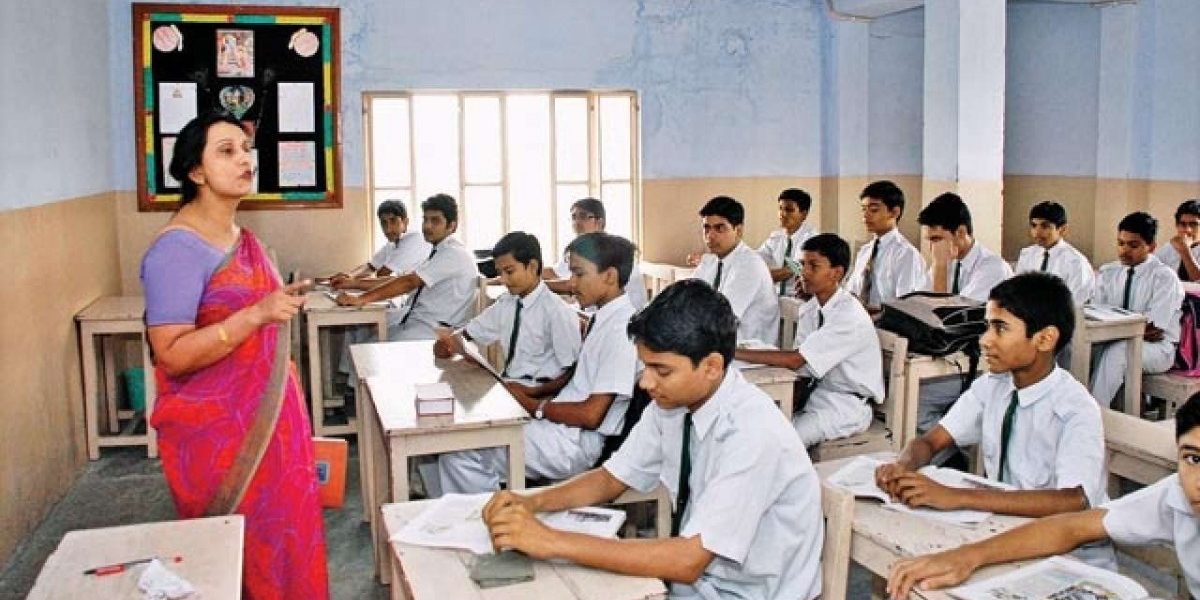
    Education in India at 75: The Challenges Facing the System, Students and Teachers

    While much has been achieved in the field of education in numerical terms since independence, the crisis is in the content.

    Teachers’ Day this year should be the time to review the state of education and the role of teachers in India since Independence. Teaching is said to be the mother of all professions. It is supposed to help build the future of society by preparing the young to take over the reins in the coming years.

    Undoubtedly, compared to 1947, literacy rates and enrolment in schools and colleges have shot up. Building nuclear plants, sending rockets to Mars, production of vaccines, etc. can be listed as the gains of the Indian education system. India becoming the fifth largest economy and home to the third largest number of billionaires in the world may also be listed by the ruling elite as gains of the education system. But, 75 years after Independence, has the nation done what was expected of it?

    The role of education

    The role of higher education is to take the young to the cutting edge of knowledge and help society generate socially relevant knowledge. It is in this respect that India has not done well with few getting to the frontiers of knowledge or generating socially relevant knowledge. Given the population size, even a small per cent is a large absolute number. So, Indians are visible all over the world in top positions. But that represents only the tip of the iceberg.

    [powerkit_button size=”lg” style=”info” block=”true” url=”https://thewire.in/education/education-in-india-at-75-challenges-system-students-teachers” target=”_blank” nofollow=”false”]
    Read More
    [/powerkit_button]

  • Rural Agriculture and the new wave of Migrant Workers to Rural Space

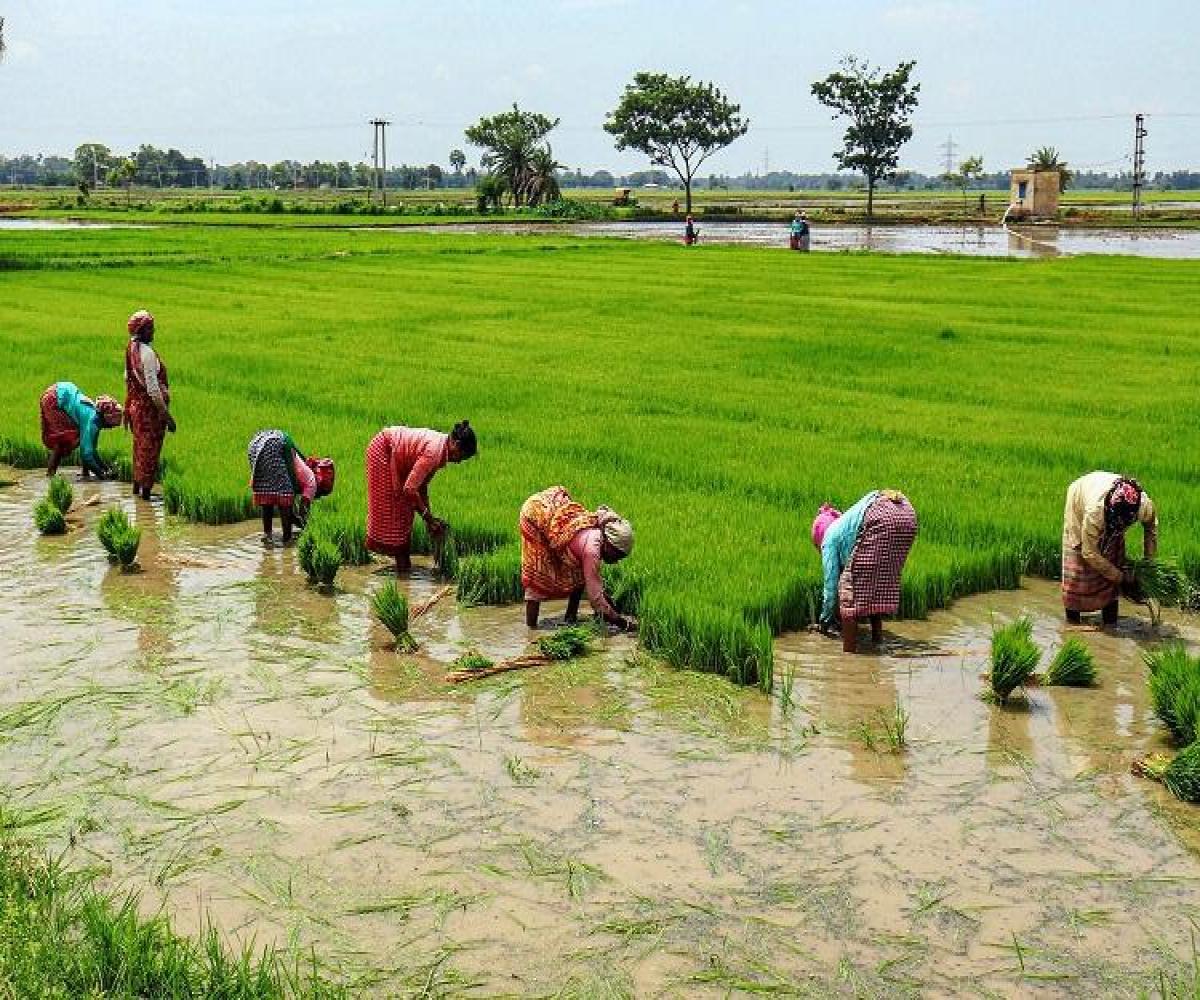
    Rural Agriculture and the new wave of Migrant Workers to Rural Space

    Abstract

    Home, belongingness, and identity bring comfort to human existence, but local communities are challenged and become highly volatile by the sudden influx of people from different regions in search of livelihood and survival. Some migrate in their quest to find new opportunities in education, employment, and better living conditions from their home state, but some are displaced due to loss of livelihood, low employment, and lack of safety. This article analyses internal migration toward Tamil Nadu. The migrant population in Tamil Nadu accounts for 18.85 lakh according to the 2011 census, whereas other state migrants account for only 6.2% (Radhakrishnan & Vasanth, 2019). Most migration in the past has been towards the cities for chances of better livelihood and stable jobs. However, migrant workers travelling towards rural areas have been increasingly found working as agricultural labourers. S. Irudaya Rajan, a professor at the Centre for Developmental studies in his work, points out the importance of migrants to this economy as there is a constant outflow of the young population, with reservation wages in this region being high (Radhakrishnan & Vasanth, 2019). A report by the Federation of Tamil Nadu Agricultural Association suggests that over 8,67,582 farmers have stopped agricultural practices, and the market has been taken over by private players who require agricultural labourers (Sreemathi, 2019). This demand can attract migrant workers to rural areas. This article examines the migration pattern in Tamil Nadu to understand the inflow and outflow population, the reasons behind the outflow of farmers from the system and the new wave of migrant workers to rural Tamil Nadu.    

    Introduction

    Millions of people move every year hoping for a better livelihood and future, but the reality may be bitter for some. Nine million people have been migrating annually between states as per the Railway’s data from 2011 to 2016. Around 30% of the Indian population represents the varied level of the migrant population (Migration, 2022). Various factors have contributed to migration. The pull factors which attract people towards the destination include better living conditions, better employment, quality education, absence of violence and high wage rates. The push factors, on the other hand, include the lack of welfare activity, discrimination towards a community, lack of employment and lower wage rates. In both instances, economic ambition occupies the centre space. Thus, it is crucial to form a developmental economy for the residing population and the migrating one. The pull factors usually replace the push factors when the socio-economic condition in the country facilitates good life. People have been moving towards cities, hoping to find better employment and livelihood in the globalised world, making cities the hub for development. In Tamil Nadu, the movement toward the city area was triggered by early industrialisation in the 1980s, when manufacturing capacity accounted for around 26% of its GDP, higher than the national average of 15% (Mahambare & Dhanaraj, 2021). The 1990s liberalisation policy created mobility and development by expanding the economic horizons to telecom, software and banking (Migration to Chennai, 2010). This socio-economic mobility has greatly impacted the state’s rural economy and continues to be one of the few contributors to migration from agriculture. In recent times, farmers are selling out their lands and changing their occupations or working as agricultural labourers. The agricultural sector requires a considerable labour population. This demand for labour forces along with the lockdown during the Covid pandemic has fuelled a new wave of migrant workers in rural areas in south India. However, it is essential to study the causes of the movement of the traditional population from the industry, which helps understand the patterns that need to be avoided.

    Migration out of Agriculture

    Agriculture has long been a community practice in Tamil societies, but the migration of farmers continues to challenge the status quo. A report by the Federation of Tamil Nadu Agricultural Association mentions that over 8,67,582 farmers have stopped agricultural practices (Sreemathi, 2019). Lower wage rates, discrimination, heavy workload, lack of welfare and crop failure are the main reasons for displacement. Since the agricultural sector is seasonal, the wages are decided by workdays, seasons, and piece/ quantity rate, which leads to an unsteady wage rate based on the season, with fewer or no jobs in some seasons. People, thus, prefer to work non-farm jobs for a steady income throughout the year. Some have been living as labourers for generations on the farm since only a handful of the population possess larger farmlands. A study by Sato Keiko (2011) traces this class difference, farmland size, and the employment status of migrants from a rural village in Madurai. He points out that the village’s upper-class children with larger farms migrated to the city and acquired white-collar jobs. The middle class and the marginal groups, on the other hand, usually landed in blue-collar jobs.  Interestingly, he notes that the aspiration to educate and climb the socio-economic ladder has recently been high among the latter (Keiko, 2011). This aspiration leads them to migrate to cities and take up factory jobs, which are comparatively better than being engaged as farm labourers. Educational aspiration attempts to shake the traditional class structure and disparity that exists with it. 

    Additionally, only 27.1% adolescent population and 24.18% of the youth population were involved as agricultural labourers in 2014 (Sivakumar, 2014). Another reason for the migration is crop failure induced by unpredictable heavy rainfall and drought. Farmers who cannot profit or make ends meet when the crop collapses, end up falling into debt.  

    More than 85% of people working in the state under MGNREGA are women, higher than the national average of 56% and 28% of the Dalit population (Ramakrishnan, 2017)

    The Mahatma Gandhi Rural Employment Guarantee Act (MGNREGA) Scheme has been argued to be one of the major reasons behind the declining numbers of farm labourers When the scheme started, it provided the rural population with a higher income of Rs. 100 compared to farm jobs which offered Rs. 40 a day (In Tamil Nadu labourers, 2010). MGNREGA acts as a precursor for the high wage rate in agriculture as it competes with the scheme to attract more people for work. In 2020, the wage rate for agriculture labourers had increased to Rs. 392, and the notified MGNREGA stood at Rs. 273, which was lower than the farm wage (Aditi, 2021). However, along with steady wages and less workload, MGNREGA has continued to be a source of economic empowerment for women. It enables pathways to formal financial institutions and personal saving habits – “I would be working like a bonded labourer again under any big landowning agriculturist, if there was no Mahatma Gandhi National Rural Employment Guarantee Scheme (MGNREGS)” (Ramakrishnan, 2017). These interviews collected by Ramakrishnan, senior journalist for The Hindu, shed light on the women’s attitude and discontent toward farm jobs. More than 85% of people working in the state under MGNREGA are women, higher than the national average of 56% and 28% of the Dalit population (Ramakrishnan, 2017). These marginal groups are frequently abused and sexually harassed by employers and landowners. In this regard, MGNREGA has provided them with a space to work with dignity. However, some experts like Vijayanand, former Secretary of the Union Minister of Panchayat Raj, opposed the arguments favouring MGNREGA arguing that the scheme did not provide jobs throughout the year and phased out the jobs in accordance with the lean season (Radhakrishnan, 2017). 

    Involvement of Migrants in Agriculture

    Tamil Nadu is a growing economy which renders a stay to 18.85 lakhs migrants, of which 6.2 % are from other states. The origin states of these migrant workers are Bihar, West Bengal, Odisha, Jharkhand, Chattishgarh and states of Northeast India. Some tribal communities migrated from areas with rich mineral resources like the Santal areas of West Bengal, MP and a few other areas in Jharkhand and Chattisgarh because of the prevalent mining practice and dam building. Also, tribal people were displaced because of the settlement of non-tribals in the region and deforestation. In some areas, low human development indicators have led to their displacement. Apart from these push factors, Tamil Nadu has a lot to offer in terms of its higher wage rates, better living conditions and political, religious and social freedom (Sami, Crossin, Jayapathy, Martin, et al., 2016). Once they migrate to Tamil Nadu through contractors, migrants are channelled to Chennai, Coimbatore, Tiruvallur, Tiruppur, Kancheepuram and Chengalpattu to work in manufacturing factories and construction sites. These migrants fill the state’s requirement for 3D jobs, as Dr Irudaya Rajan from the Tiruvananthapuram Centre for Developmental Studies mentioned (Radhakrishnan & Vasanth, 2019). These jobs are mostly dirty, demeaning and dangerous. Since the wage expectation of the state youth is high, the desperation to take up these jobs is low and job positions are thus occupied by migrant workers (Vasanth & Radhakrishnan, 2019).

    The Periodic Labour Force Survey (PLFS) data from 2018 to 2020 shows a sharp increase in employment in agriculture from 42.5 % in 2018 -19 to 45.6% in 2019-20 (CMIE, 2021)

    In the pre-Covid job market, population movement was constantly moving from rural villages to urban spaces in search of white and blue-collar jobs. However, Covid has shifted the employment market. The Periodic Labour Force Survey (PLFS) data from 2018 to 2020 shows a sharp increase in employment in agriculture from 42.5 % in 2018 -19 to 45.6% in 2019-20 (CMIE, 2021). Most people who changed jobs were formerly employed in construction and manufacturing. While the existing population migrates to cities in search of skilled labour, migrant workers find the farm jobs more appealing. Tamil Nadu provides an average salary of Rs. 392 per day for farm workers, which is higher than the national average of Rs. 348. Most states from which the migrants are displaced have far fewer wage rates; for instance, Jharkhand offered Rs. 258 in 2020 while the wage rate was Rs. 234 in Chhattisgarh (Directorate of Economics and Statistics, 2021). While their movement is unexpected, these migrant populations can contribute to the agricultural sector and rural development, but that cannot be done without good government policies. The GDP contribution of agriculture reduced from 55.3% in the 1950s to 21.8% in the 2000s (Gothoskar, 2021). Most government budgets have little concern for the agricultural economy. Thus, it is essential to implement policies for the existing agrarian population and the migrants. Also, there has been increasing distress caused by the growing movement of the migrants to farmland which continues to be heavily unorganised. Dr Irudaya Rajan, in his interviews, warns that this unexpected surplus labour availability in rural areas cannot accommodate everyone in the existing jobs, which may result in increased poverty and starvation (Nirupama, 2020).

    Furthermore, it backfires on the urban economy once industries open up completely and face a shortage of labour (Viswanathan, 2020). To know the current situation of migrant workers, state-level data collection is needed. Tamil Nadu collected the migrant database only once in 2015, following the fall of the Moulivakkam multistorey building. While Thangam Thennarasu, the Tamil Nadu Minister of Industries, mentioned collecting data on migrant workers in a press release, the agriculture sector was not mentioned (Kumar, 2021). Data collection is vital in formulating policies to accommodate the migrant workers in rural economies and avoid unexpected problems. 

    Measures to be taken

    Since the Agricultural sector offers seasonal employment, other sources of organised employment or schemes to assure livelihood during times of distress should be in place. While farming requires work like ploughing and harvesting, which is to be done all year-round, the revenue can be earned only in a particular season. If affected by climate calamities and crop failure, people are most likely to end up in debt. Hence, it is essential to employ migrants during the off-season and distress times in sustainable jobs. Most agricultural products are exported as raw materials or semi-processed to other countries, and therefore, the MSMEs in the rural areas can be focused on enhancing the exporting sector of agriculture.

    MOUS between states: The Tamil Nadu government has fewer memorandums of understanding (MOUs) on migrants, with focus mainly placed on Sri Lankan refugees. Thus, signing MOUs with the source state can improve the conditions of migrants and help governments to maintain a database of migrants (Sreelakshmi,2021). The databases can help in formulating policies.

    Welfare policies – Rashtriya Swasthya Bima Yojana (RSBY), a central-run health insurance scheme for people working in the unorganised sector and for those below the poverty line, has to be implemented appropriately, and the records should be maintained. Quality schooling for children of migrants working in rural spaces should be provided. Some states have offered regional language subject notebooks and learning kits through MOUs. Tamil Nadu should recruit staff in the favoured language. Further, skill enhancement training for the migrants should be provided.

    Conclusion

    Agriculture and rural development go hand in hand since 70% of rural households depend upon agriculture for their livelihood. Still, there is an increased pattern of traditional farmers moving out of the business and choosing other industries or being employed as agricultural labourers. This shift, accompanied by the Covid lockdown, has triggered an increased flow of migrant population back to farms as agricultural labourers. Unlike industries, the agricultural sector is unorganised and seasonal, making it highly vulnerable. Thus, it becomes essential to build a safety net for the traditional population and the migrants. These migrants, without proper policies and data entries, can be stranded; lacking identity, rights and political representation. Further, this sudden labour surplus cannot be accommodated immediately, creating a labour shortage in urban areas.  It is, thus, important to record migrant workers who return, the sector they are involved in, their security nets and most importantly, their availability in rural agriculture.

    Reference

    Aditi R. (2021, May 16). MGNREGA workers in Tamil Nadu allege underpayment and wage disparity. The times of India. Retrieved from https://timesofindia.indiatimes.com/city/chennai/mgnrega-workers-in-tamil-nadu-allege-underpayment-and-wage-disparity/articleshow/82673961.cms

    Dhanaraj Sowmya & Mahambare Vidya (2021, March 31). Tamil Nadu left Punjab, Bengal far behind. Here’s what it needs to do now. The Print. Retrieved from https://theprint.in/opinion/tamil-nadu-left-punjab-bengal-far-behind-heres-what-it-needs-to-do-now/631213/

    Directorate of Economics and Statistics. (2021). Agricultural wages India: 2019 – 20. Ministry of Agriculture & Farmers welfare. 

    Gothaskar Sujata. (2021, May 12). To Fully Understand the Migrant Worker Crisis, We Need a Larger Perspective. The Wire. Retrieved from https://thewire.in/rights/migrant-worker-crisis-larger-perspective-farm-land-industry

    In Tamil Nadu labourers choosing NREGA over farms. (2010, Nov 29). NDTV. Retrieved from https://www.ndtv.com/india-news/in-tamil-nadu-labourers-choosing-nrega-over-farms-440546

    Keiko Sato. (2011). Employment structure and Rural-Urban Migration in a Tamil Nadu Village: Focusing on difference by economic class. Southeast Asia Studies. Vol.49. Pg.22-51.

    Kumar Vijay. (2021, July 26). Tamil Nadu to create a databank of migrant workers. The Hindu. Retrieved from https://www.thehindu.com/news/national/tamil-nadu/databank-of-migrant-workers-soon-says-tamil-nadu-industries-minister/article35530808.ece

    Migration to Chennai follows industrial growth, but quality. (2010, April 13). The Times of India. Retrieved from https://timesofindia.indiatimes.com/city/chennai/migration-to-chennai-follows-industrial-growth-but-quality-of-life/articleshow/5798687.cms

    Radhakrishnan V & Vasanth B. A. (2019, September 08). Migrants in Tamil Nadu: case of much ado about nothing? The Hindu. Retrieved from https://www.thehindu.com/news/national/tamil-nadu/migrants-in-tamil-nadu-case-of-much-ado-about-nothing/article29364682.ece

    Ramakrishnan T. (2017, February 05). Job scheme, a mixed bag for rural labourers. The Hindu. Retrieved from https://www.thehindu.com/news/national/tamil-nadu/Job-scheme-a-mixed-bag-for-rural-labourers/article17197043.ece

    Sami Bernard. Crossin Sebastian, Jayapathy, Martin. P. O. (2016). A survey on Interstate migrants in Tamil Nadu. LISSTAR & Indian Social Institute. 

    Sivakumar B. (2014, November 02). Most of Tamil Nadu’s adolescents, youth live in rural areas, shows census. The times of India. Retrieved from https://timesofindia.indiatimes.com/city/chennai/most-of-tamil-nadus-adolescents-youth-live-in-rural-areas-shows-census/articleshow/45008956.cms

    Sreelakshmi Anjana. (2021, November 07). Distress Migration: A case study KBK districts in Odisha. The Peninsula Foundation. Retrieved from https://admin.thepeninsula.org.in/2021/11/07/distress-migration-a-case-study-of-kbk-districts-in-odisha/

    Sreemathi M. (2021, November 23). Migrants now enter agri fields in Nellai. The New Indian Express. Retrieved from https://www.newindianexpress.com/states/tamil-nadu/2021/nov/23/migrants-now-enter-agri-fields-in-nellai-2386930.html

    Viswanathan Nirupama. (2020, May 20). We have not factored in Tamil Nadu’s migrant workers in our realm of things: Expert. The new Indian Express. Retrieved from https://www.newindianexpress.com/states/tamil-nadu/2020/may/20/we-have-not-factored-in-tamil-nadus-migrant-workers-in-our-realm-of-things-expert-2145578.html

    Vyas Mahesh. (2021, August 09). Migration from factories to farms. Centre for Monitoring Indian Economy. Retrieved from https://www.cmie.com/kommon/bin/sr.php?kall=warticle&dt=20210809122441&msec=850

    Feature Image Credits: The News Minute
  • India is not the Fastest Growing Big Economy

    India is not the Fastest Growing Big Economy

    A closer look at recent data on GDP shows that the numbers are flawed and recovery is incomplete

    The Provisional Estimates of Annual National Income in 2021-22 just released show that GDP grew 8.7% in real terms and 19.5% in nominal terms (including inflation). It makes India the fastest-growing major economy in the world. Further, the real economy is 1.51% larger than it was in 2019-20, just before the…

    [powerkit_button size=”lg” style=”info” block=”true” url=”https://www.thehindu.com/opinion/lead/india-is-not-the-fastest-growing-big-economy/article65515195.ece” target=”_self” nofollow=”false”]
    Read More
    [/powerkit_button]

  • “Aapada mein Avasar”: Examining India’s Engagement with the International Community Amidst the Pandemic

    “Aapada mein Avasar”: Examining India’s Engagement with the International Community Amidst the Pandemic

    [powerkit_button size=”lg” style=”info” block=”true” url=”https://admin.thepeninsula.org.in/wp-content/uploads/2022/05/TPF-Issue-Brief-Aapada-mein-Avasar-1_compressed-2.pdf” target=”_blank” nofollow=”false”]
    Download PDF
    [/powerkit_button]

    Abstract

    Health security has often been considered an issue of “low politics”. However, in the past two years, the global economy has suffered the most since the Great Depression and global supply chains have been hampered. The developed countries were caught off-guard at par with the rest of the world with global resource inequities at display. As the developed world resorted to “medicine nationalism” and “vaccine nationalism,” their credibility as “global leaders” was sharply questioned. Amidst this, the allegations of the pandemic’s origins generated reactions from an emergent China which stopped concealing its geopolitical ambitions and adopted an unapologetically aggressive posture. Moreover, the credibility of a prominent international organization, the World Health Organization, in terms of its inability in notifying and managing the pandemic was heavily criticised. Each of these occurrences having emerged from a global health crisis has unexpectedly altered the prioritization of matters in the international order, and thereby international diplomacy.

    With the developing and least developed countries deprived of critical medical supplies due to hoarding by developed countries – India’s active engagement in medical diplomacy in the initial phase garnered international appreciation. While it cannot be looked at in a transactional sense, it visibly helped India push for its geopolitical interests in the middle of a global crisis – finding the adequate avasar (possibilities) in the ongoing aapada (crisis). Although flaws on the domestic front existed during the first wave, their impact on India’s medical diplomacy was limited. However, a domestic crisis during the second wave turned out to be an eye-opener and prominently impacted foreign policy initiatives. Considering the lessons so learnt and applied in managing the third wave, this paper examines the tremendous domestic potential of India, while also looking at its historical legacy. In doing so, it emphasises the relevance of domestic affairs as a determinant of successful medical diplomacy outreach – thereby impacting the larger foreign policy objectives.

    Introduction

    While health security has often been relegated as a low-priority issue in the geopolitical landscape, the last two years have unprecedentedly changed everything. A majority of developed nations have appeared helpless in managing the human catastrophe thereby resorting to vaccine and medicine protectionism. To put this on record, over six million people worldwide have lost their lives (COVID Live – Coronavirus Statistics, 2022) during these two years – with the maximum number of lives lost in the United States of America. The global economy has suffered the most since the Great Depression as a fallout of extended total lockdowns that hampered global supply chains. Moreover, an unexpected, unrealised over-dependency of global supply chains on a single country’s economy – China – caught the international community unprepared. Gradually, newer possibilities and threats have emerged through a changing character of the global economy, society, as well as politics and warfare – each of these shifting to the virtual domain.

    [powerkit_button size=”lg” style=”info” block=”true” url=”https://admin.thepeninsula.org.in/wp-content/uploads/2022/05/TPF-Issue-Brief-Aapada-mein-Avasar-1_compressed-2.pdf” target=”_blank” nofollow=”false”]
    Read More
    [/powerkit_button]

    Feature Image Credits: ABC

  • Physical Literacy | It’s Time We Stopped Seeing Sports and Education as Strange Bedfellows

    Physical Literacy | It’s Time We Stopped Seeing Sports and Education as Strange Bedfellows

    No concerted effort has been made at any level to treat sports and education as essentially concurrent activities that have to be given equal importance in a significant way

    The Supreme Court bench comprising Justices L Nageswara Rao and BR Gavai gave directions to the Union and state governments on April 25 seeking their views (but refrained from passing a judgment) as regards a suggestion that sports be recognised as a fundamental right, and the various educational entities/institutions (including CBSE, ICSE, and the various state boards) in India be directed that at least 90 minutes daily be devoted to “free play and games” (physical literacy) during school hours.

    This direction came about as a result of a report submitted by senior advocate Gopal Sankarnarayanan in a Public Interest Litigation (PIL). The PIL was filed by Kanishka Pandey, a sports researcher, in the wake of which the court had appointed Sankarnarayanan as an amicus curiae in August 2018.

    [powerkit_button size=”lg” style=”info” block=”true” url=”https://www.moneycontrol.com/news/opinion/physical-literacy-its-time-we-stopped-seeing-sports-and-education-as-strange-bedfellows-8446421.html” target=”_self” nofollow=”false”]
    Read More
    [/powerkit_button]

  • Responsible Decision-making in the Face of Corona – A Need for a Metric

    Responsible Decision-making in the Face of Corona – A Need for a Metric

    [powerkit_button size=”lg” style=”info” block=”false” url=”https://admin.thepeninsula.org.in/wp-content/uploads/2022/02/Issue-Brief-TPF_Corona-Metric-2_compressed-1-12-1.pdf” target=”_blank” nofollow=”false”]
    DOWNLOAD PDF
    [/powerkit_button]


    Abstract

    The asymmetry of the human mind in treating the information that is currently available and the information we do not have is remarkable. During the Covid-19 pandemic, many people have been conscious to take precautions to prevent contracting the virus oneself or their family members. However, the consequences of a person infecting another are not consciously considered by everyone while going on about their ‘new normal’ life making daily transactions that involve the labour of a multitude of people. Nobody pauses to wonder whether anyone in the supply chain of the product or service consumed by an individual has contracted the virus or died due to the virus in the process of its production. This is because that information is unavailable to us in a tangible form for our minds to perceive and hence it chooses to ignore it. Although the number of cases increases with every wave, people have started accepting it or rather have become desensitised to the number of lives lost to Covid-19, mainly because these deaths are unseen. This article explores whether such a pondering – number of people infected and consequently lives compromised – would be a consideration in the decision-making in the production and consumption of products and services. If so, is there a need to develop a metric to inform us of this number? Would it be feasible to have such a metric? This article attempts to quantify these unseen deaths, so as to sensitise people to the consequences of a person getting infected.

    Introduction:

    Now, two years after the onset of the Covid-19 pandemic, most people reading this would have lost one or more relatives, friends, colleagues or an acquaintance due to the infection. I am no exception. But the trigger for this article is the death of a couple, Razia and Nasir (names changed) that happened in the summer of 2021. Their small fruits and vegetable outlet, by a synergic arrangement, was situated within the spacious premises of another outlet – a cold storage that dispenses meat, poultry and fish for the upwardly mobile residents living in a posh locality of Bangalore. 

    [powerkit_button size=”lg” style=”info” block=”true” url=”https://admin.thepeninsula.org.in/wp-content/uploads/2022/02/Issue-Brief-TPF_Corona-Metric-2_compressed-1-12-1.pdf” target=”_blank” nofollow=”false”]
    READ MORE
    [/powerkit_button]

    Featured Image Credit: OSORIOartist

  • Changing Socio-Economic Situation of UP over the past Decade

    Changing Socio-Economic Situation of UP over the past Decade

    Elections have been announced and UP will be crucial. Parties have been campaigning for them for at least the last 6. The media has been awash with advertisements portraying a rosy picture of UP. They needed this unprecedented blitzkrieg to overcome the negativity due to the poor of the COVID second wave. Anyway, the and the government try to present a positive image of their work. Other state governments followed the UP, to the delight of media which is garnering much revenue.

    What is the reality on the ground in UP? Farmers, workers and have been protesting. Why this protest if the situation is as rosy as is projecting? Where does lie? Citizens need to know, to make up their minds about who to vote for. Since there has been growth. Even when it is small but positive, will be visible in socio-economic parameters, like, education, longevity, etc. There will be more roads, bridges, agricultural production, and so on.

    So, it is no brainer that the last 5 years would show progress compared to the immediately preceding 5 years and the ones before that, etc.. The meaningful comparison has to be based on changes in the ratios and growth rates between the earlier period and the present one. That tells us whether matters will improve faster or stagnate. Also, comparisons with all India figures would yield a picture of where UP stands compared to other states.

    If the present regimes 5 years are compared to the 5 years earlier this would be unfair since the last two years have been unusual – hit by the pandemic and the lockdown. The economy as a whole experienced a downturn and so did UP. A meaningful comparison would be between the pre-pandemic three years and the 5 years before them.

    Growth has Decreased

    A difficulty arises regarding measuring the growth of the economy since the Indian economy’s data is suspect, especially after demonetization. A disjuncture has been created between the organized and unorganized sectors while the data is largely from the former. So, the latter goes largely unrepresented and this causes a large error in the growth rates.

    Ignoring this aspect for the moment, let us analyse the official data, assuming it to be correct. It shows that out of the 20 major states, UP’s position remains at 19 in the last 10 years. In effect, there is no relative improvement in UP’s situation at the all India level.

    This is because the official growth rate was 11.8% in 2016-17 and has fallen to 6.3% in 2018-19 before the pandemic. The decline is also visible in the real income per person. Between 2012-13 and 2016-17, it increased by 27.63%. If we take the average over three years it increased by 16.6%. Leaving out the pandemic year of 2020-21, it rose by 9.23% (including the pandemic year it was 0.43%, that is it hardly grew). Including inflation also the per-person income growth slowed down. It was 25% during 2017–21 as compared to an increase of 65% during 2012–17.

    Slower Structural Transformation

    UP’s income (GSDP) was Rs.19 lakh crore out of GDP of Rs.190 lakh crore in 2019-20 – 10% of the country’s income. But its population share is estimated at 17%. The situation has not changed in the last 5 years and that is why the per-person income capita income rank or UP remains at 19th out of the 20 major states.

    One of the factors underlying the slow growth of UP is that it has structurally not transformed as much as has happened for the country as a whole. In UP, the share of agriculture is 24% while that of services is 50%. The all-India figures are 19.7% and 54.3% respectively. So, UP’s structural transformation is lagging behind that of all of India. Since agriculture cannot grow as fast as the services sector, the state’s growth rate is bound to be less than that for the nation. This feature is also the reason for weak employment generation in UP because agriculture cannot absorb more workers, in fact, it is characterized by mechanization and disguised unemployment.

    UP employed 57.13 lakh under MGNREGS, in May 2020 which was the highest in India. This points to high rural unemployment in UP. The large scale migration of workers from other states to UP in 2020 is an indication of the weak employment generation in UP which forced many to look for work elsewhere. No wonder the state faced the biggest impact of Coronavirus in India both in terms of employment and health aspects.

    Unfortunately, data invisibilizes the unorganized sector and hence the poor. The country has suffered policy induced crisis due to demonetisation, implementation of GST, NBFC crisis and the pandemic induced lockdown. This has deeply impacted the unorganized sectors of the economy and they have suffered massive losses during 2016-17 to 2020-21. The total loss for the unorganized sector in UP is estimated at 10% of the national loss during this period and amounts to Rs. 7.1 lakh crore. That is an average loss per annum of Rs. 1.78 lakh crore. This loss is far more than what the social welfare schemes of the government give. In any case, the schemes are mired in corruption and inefficiency and do not reach everyone uniformly. So, the poor are the net losers in spite of the government schemes.

    Government’s Efforts Slowing

    Are the government schemes expanding? How much are they able to help UP develop and catch up with the other states of India?

    No doubt, the absolute budgetary expenditures rise with inflation and growth. So, on most items more is spent than in earlier years. But to know whether these expenditures will help improve the situation or not, one has to compare the expenditures as a ratio of the state’s income (GSDP). On this score, the Budget data shows:

    a) Development expenditure peaked in 2015-16 at 16.66% and declined to 13.28% in 2019-20. This signifies that development is decelerating.

    b) Non-Development expenditure rose from 6.81% in 2015-16 to 8.49% in 2018-19 and was at 7.12% in 2019-20. This reflects the expenditure on grandiose show schemes of the state government which resulted in a decline in developmental expenditures mentioned above.

    c) No wonder expenditure on Education, etc. peaked in 2016-17 at 4.21% and fell to 3.07% in 2018-19 and was at 3.3% in 2019-20. The target should have been 6% of GSDP on public education. Instead of moving towards that goal, there is retrogression.

    d) Similarly, health expenditure peaked in 2016-17 at 0.84% and fell to 0.79% in 2019-20. It should have been raised to at least 3% of GSDP and instead, it fell. The impact of this was visible during the pandemic with poor health facilities in large parts of the hinterland and unnecessary deaths.

    e) Budgetary Capital outlay peaked in 2015-16 at 5.66% and fell to 3.55% in 2019-20. This slows down infrastructure development and adversely impacts private investment.

    In brief, as the economy expands, there will be development in a state – more hospitals, schools, colleges and so on. Further, development may be skewed and leave the poor behind as is the case in recent times. The real picture becomes clear when one looks at the ratios and compares them with other states. In these respects, UP has lagged behind both its past performance and other states. The virtual campaigning required due to the spread of Omicron would marginalize the less tech-savvy parties and give BJP an advantage in painting a glorious image of itself, in spite of its recent indifferent performance.

    This article was published earlier in hwnews.in

    Feature Image Credit: www.dnaindia.com

  • India and Vietnam Need to set up an Industry 4.0 Technology Task Force

    India and Vietnam Need to set up an Industry 4.0 Technology Task Force

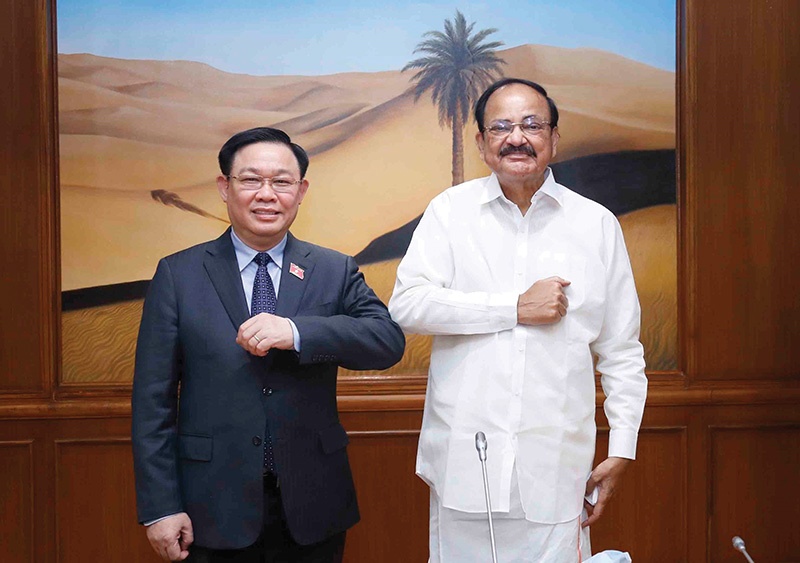
    Amid the ongoing difficult times marked by the COVID-19 pandemic and the fear of its highly virulent Omicron variant spreading across the globe, India and Vietnam pledged to further deepen the Comprehensive Strategic Partnership.  In this context, the recent visit to India by National Assembly Chairman Vuong Dinh Hue to New Delhi this month has strengthened the relationship between the two countries.  Also, next year, India and Vietnam would be celebrating the 50thanniversary of the establishment of their diplomatic relations and their legislative bodies plan to organise commemorative joint events both in New Delhi and Hanoi.

    Chairman Vuong Dinh Hue held wide-ranging discussions in New Delhi with India’s Vice President of India and Chairman of Rajya Sabha, Shri M Venkaiah Naidu and these focused on international matters of common concern and other global challenges. Both sides aim to contribute to global peace, security, stability and development in the region. At the bilateral level, issues concerning COVID-9, socio-economic development in respective countries, economy, trade & investment, energy, security-defence, science-technology, air connectivity, culture, education and training were also the agenda. As many as 12 MoUs were exchanged between Vietnamese and Indian enterprises in the fields of public health, provision of pharmaceutical materials, drug and vaccine production, oil and gas, information technology and technology transfer, education, and tourism.

    India acknowledged and extended gratitude for the timely supply by Vietnam of oxygen and related equipment and the gifting of 40,000 facemasks to the Indian Red Cross Society. As a reciprocal and goodwill gesture, India has announced a donation of 2,00,000 doses of indigenously developed Bharat Biotech COVAXIN to Vietnam through Duc Minh, Bharat Biotech’s local partner in Vietnam. It is useful to mention that Bharat Biotech has been working with Duc Minh Medical JSC, towards the commercialisation of INDIRAB (Inactivated Rabies Vaccine).

    The bilateral cooperation and mutually beneficial partnership between India and Vietnam in the field of energy are noteworthy. For the last three decades, India’s ONGC Videsh Limited (OVL) has been engaged in Vietnam’s offshore energy projects in the South China Sea. New Delhi is now seeking a 15-year extension of the existing arrangement beyond May 2023 when the current MOU between OVL and PetroVietnam (PVN) expires. India hopes that Vietnam and other claimants including China can establish a binding ‘Conduct of Conduct’ and develop concrete mechanisms to institutionalize a regional dialogue among the claimants and other stakeholders to serve for de-escalation of tensions.

    During his interactions, Chairman Vuong Dinh Hue was also assured of India’s support for the ASEAN Outlook for Indo Pacific (AOIP). External Affairs Minister S Jaishankar has noted that “From the Indian perspective, Vietnam is a key partner both in the ASEAN and the Indo-Pacific context,” It was also reiterated that there is strong convergence between India’s Indo-Pacific Oceans Initiative (IPOI) and the AOIP and India is looking forward to continuing working closely with Vietnam.

    In an interview with a major Indian media house, Chairman Vuong Dinh Hue emphasised investments in the digital sphere to usher in Fourth Industrial Revolution in Vietnam. This fits into Vietnam’s call for greater investment from Indian corporations in fields such as information technology, innovation and renewable energy. Industry 4.0 technologies are high on Vietnam’s agenda and the Party and the State have introduced several policies, guidelines and programs to harness these technologies.  In particular, the country hopes that the digital component of the economy could account for about 20% of the GDP. According to a consulting company, Vietnam’s “GDP may rise by US$28.5-62.1 billion by 2030 depending on the level of technology put into use by businesses, or equivalent to an increase of between 7-16% of the GDP”.

    Earlier this year, Vietnam issued the National Strategy on the Fourth Industrial Revolution by 2030 under which Vietnam hopes to be named among the 40 top performers in the Global Innovation Index (GII), the top 30 in the International Telecommunication Union (ITU)’s Global Cybersecurity Index (GCI) and the top 50 in the United Nations (UN)’s e-Government Development Index (EGDI) by 2030.

    Vietnam is committed to expanding international cooperation and integration in science and technology, particularly the Fourth Industrial Revolution technologies. India too has similar ambitions and PM Modi highlighted the issue at the WEF’s Davos Digital Agenda, how India is harnessing AI and other technologies of the fourth industrial revolution for achieving its developmental objectives and for promoting social good. Given the political will of both sides, India and Vietnam could explore setting up a task force to ascertain areas of convergences.


    Image Credit: vir.com.vn

  • Viability of Universal Healthcare in India: Case Study of Sonipat

    Viability of Universal Healthcare in India: Case Study of Sonipat

    The Covid-19 pandemic is a global catastrophe that has disrupted the economies and national health of countries and the livelihood millions across the world. In India, the impact in 2020 was presumably well controlled, and the beginning of 2021 saw the Indian government projecting prematurely the return of normalcy. This sense of normalcy led to a lowering of the precautions, and the month of April saw the rise of the second wave. The second wave was vicious, crippling the healthcare system and resulting in a huge number of deaths, primarily attributed to the shortage of oxygen supply in most states. This crisis exposed the shortcomings of the Indian healthcare system and the wide disparities that exist in access to healthcare between different sections of the society, a result of the shockingly low investment in healthcare and human resources. The catastrophe has led many to question the efficacy of the healthcare system and the level of expenditure incurred on it, and whether universal healthcare would have allowed the country to tackle these events. Analysis of the impact of universal healthcare requires insight into the structure and efficacy of healthcare in India, given our history and experiences.

    The principle behind universal healthcare states that every individual who is a citizen of the country must have access to essential health services, without the obstruction of financial hardship. Among the most efficient methods of ensuring that this principle is adhered to is bringing it under the constitutional mandate. Although the Supreme court has, in its various judgements, recognized health as a fundamental right, it is not yet recognized in the constitution. Article 21 of the constitution reiterates the right to life, with the landmark judgment of Maneka Gandhi v The Union of India specifying that the article also includes the right to live a dignified life and access to all basic amenities to ensure the same. This statement has been given a new context in light of the recent crisis, in which most of the fatalities caused were due to respiratory problems caused by the virus where providing oxygen availability became an essential requirement for the cure. In such a scenario, the oxygen availability constitutes part of basic amenities, which the government failed to supply in adequate quantity. The government fulfils its obligation towards healthcare in the form of government hospitals and healthcare centres, but their situation was synonymous with the private sector. The government claims that the hospitals under their control are sufficient, but the recent predicament has proven that the aforementioned claim is not true. The healthcare services provided by the government will be meaningful only if access to such hospitals is convenient for the common people and the hospitals are well-endowed with investment and human resources. An analysis of our constitution, especially Article 21, which guarantees protection of life and personal liberty, makes it evident that the principles on which our democracy is founded dictate that healthcare is one of the most important obligations of the government, and the most efficient method for fulfilling said obligation is the introduction of Universal healthcare in India.

    An attempt at examining the applicability of universal healthcare was made by the Planning Commission through the 12th Five-Year plan. The first-ever framework for universal health coverage was developed by a High-Level Expert Group, which planned to develop a system that was in accordance with the nation’s financial capabilities. The primary objective of these reforms was to reduce the out-of-pocket expenditures incurred by lower-income groups on healthcare services and increase the number of people covered under the Rashtriya Swasthya Bima Yojana. Around this time the Rashtriya Swasthya Bima Yojana was scrutinized by many due to its low enrolment rates, high transaction costs due to insurance intermediaries, and allegations that the government was using it as a pathway to hand over public funds to the private sector. The objective of reducing out-of-pocket expenditure even though expressly mentioned did not come to fruition because of the lack of extensively funded facilities, especially in rural areas which were covered by RSBY. These facilities were lacking not only in medical infrastructure but also the medicines required for treatment, which compelled the patient to bear the expenses of medicines on their own. The 12th Five-year Plan also proposed an increase in Budget allocation for health from 1.58% to 2.1% of the GDP, which was again criticized because it was very low in relation to the global median of 5%, despite the population size of the country. The healthcare reforms also failed to take note of the important role played by nutrition and the Public Distribution System in aiding the advancement of healthcare. The 12th five-year plan is not considered successful due to the poor implementation of the reforms introduced and provides valuable lessons for the implementation of universal healthcare coverage in the future.

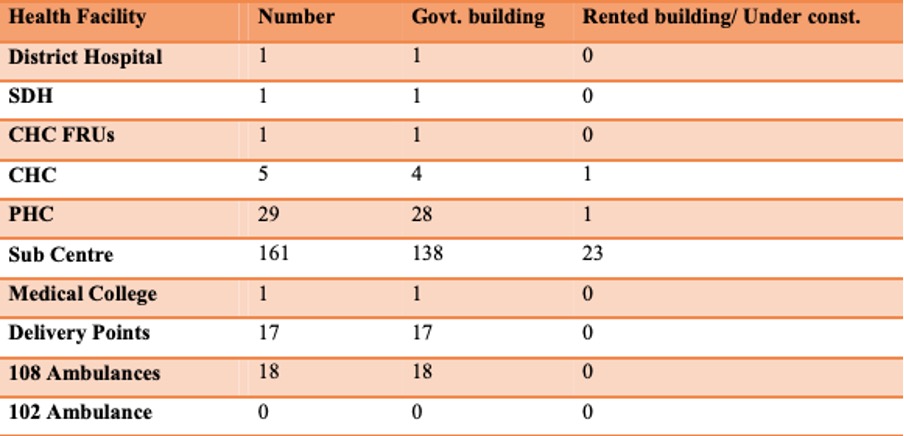
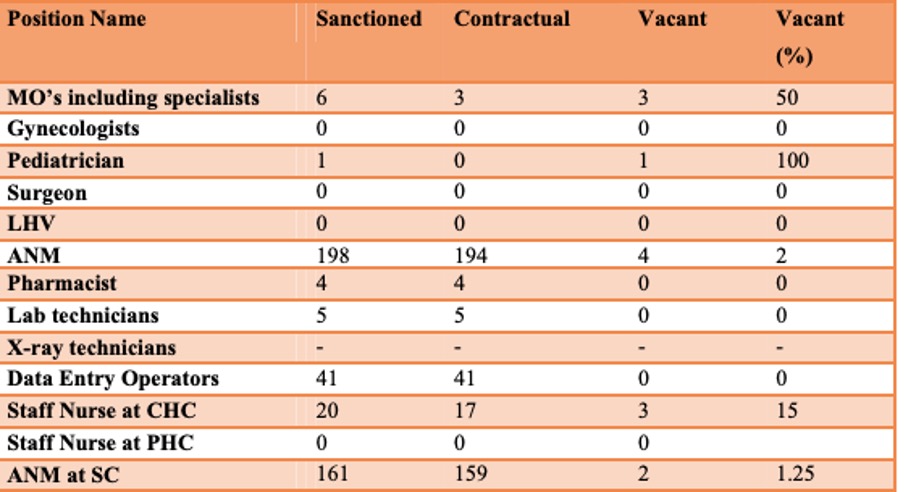
    The need for implementation of universal healthcare coverage can be made evident through a case study of the town of Sonipat, which is near Delhi and is a rural area. The case study is done through the observation of a survey conducted by the Institute of Economic Growth in 2017. The table below shows the data that became available as a result of the last survey conducted.

    CDMO Office, Sonipat District (2017)

    CDMO Office, Sonipat District (2017)

    An analysis of the data portrays that even though the resources and infrastructure are adequate to the population of Sonipat, the facilities are lacking in human resources. The data shows that 6 posts for the Medical Officers (MO) were sanctioned, but only 3 were filled. Despite the high number of deliveries, there was no sanctioned post of a gynaecologist, which can probably be a reason behind the high number of maternal deaths in the area. It was also found that the Non-Communicable Disease (NCD) program was not functioning in the district for the past 2 years. O.P. Jindal University, which is in the heart of Sonipat, houses a total of 7482 individuals, and has an adequate number of facilities, with 5 in-house doctors and 10 nurses. It has an isolation facility ward for cases of communicable diseases. It has an ambulance and referral service to hospitals in the NCR. These facts show that there is an acute shortage of human resources for healthcare in the area. Even though an adequate number of posts were sanctioned, there was no qualified personnel to fill them, and there were no sanctions for important positions. The case of O.P. Jindal university shows that good healthcare requires good investment and incentive for the staff, which the Sonipat administration has failed to provide to the staff of healthcare centres owned by the state.

    The arguments mentioned above portray the acute necessity of universal healthcare in India. The ideals of our constitution implore for the right to health to be established, which gives universal healthcare constitutional support. The failure of the 12th Five-year Plan showcases the failures that can happen if the framework for such a plan is not well-thought-out or well-invested. The example of Sonipat further portrays the need for increased investment in healthcare, which can be achieved by the utilization of universal healthcare. Although there is no concrete data available for the crisis which the nation recently endured, it can be concluded that the approach of universal healthcare could have allowed us to endure this crisis better, as there would have been lesser chances of shortage of supplies like oxygen because of the increased investment. The first step towards the policy of universal healthcare should be to strengthen existing institutions of insurance and learn from the mistakes in the implementation of the RSBY.


    References

    1.http://iegindia.org/upload/uploadfiles/Sonipat%20Haryana%202017.pdf

    2.http://ijariie.com/AdminUploadPdf/RIGHT_TO_HEALTH__A_CONSTITUTIONAL_MANDATE_IN_INDIA_ijariie5596.pdf

    3.http://jsslawcollege.in/wp-content/uploads/2013/12/RIGHT-TO-HEALTH-AS-A-CONSTITUTIONAL-MANDATE-IN-INDIA.pdf

    4.http://nhsrcindia.org/sites/default/files/Twelfth%20Five%20Year%20Plan%20Health%202012-17.pdf

    5.https://www.hindustantimes.com/health/why-india-s-national-health-insurance-scheme-has-failed-its-poor/story-6TIXYO0A8CyxTfGYPRdkYK.html


    Image Credit: www.financialexpress.com