Tag: Constitution

  • Periyar: A social justice champion and beyond

    Periyar: A social justice champion and beyond

    Periyar remains hugely influential and relevant to the politics in Tamil Nadu because of his stance on caste, social justice and rationalist worldview of religion. One need not be an atheist to understand and appreciate Periyar. He continues to be the chief patriarch of Dravidian movement and parties committed to social justice.

    Periyar was one of the most underrated social revolutionaries and political philosophers of twentieth century. Indian political system and its north centric obsession placed him at the periphery more as a dissent than as an untiring crusader for social justice. This prejudice is due to the nature of political discourse revolving around the great divide based on Aryan-Dravidian identity, language, socio-religious and cultural ethos. Periyar challenged the foundations of Indian philosophy with its roots in the Brahmanical Hindu worldview of caste and karma.


    Read More

  • Viability of Universal Healthcare in India: Case Study of Sonipat

    Viability of Universal Healthcare in India: Case Study of Sonipat

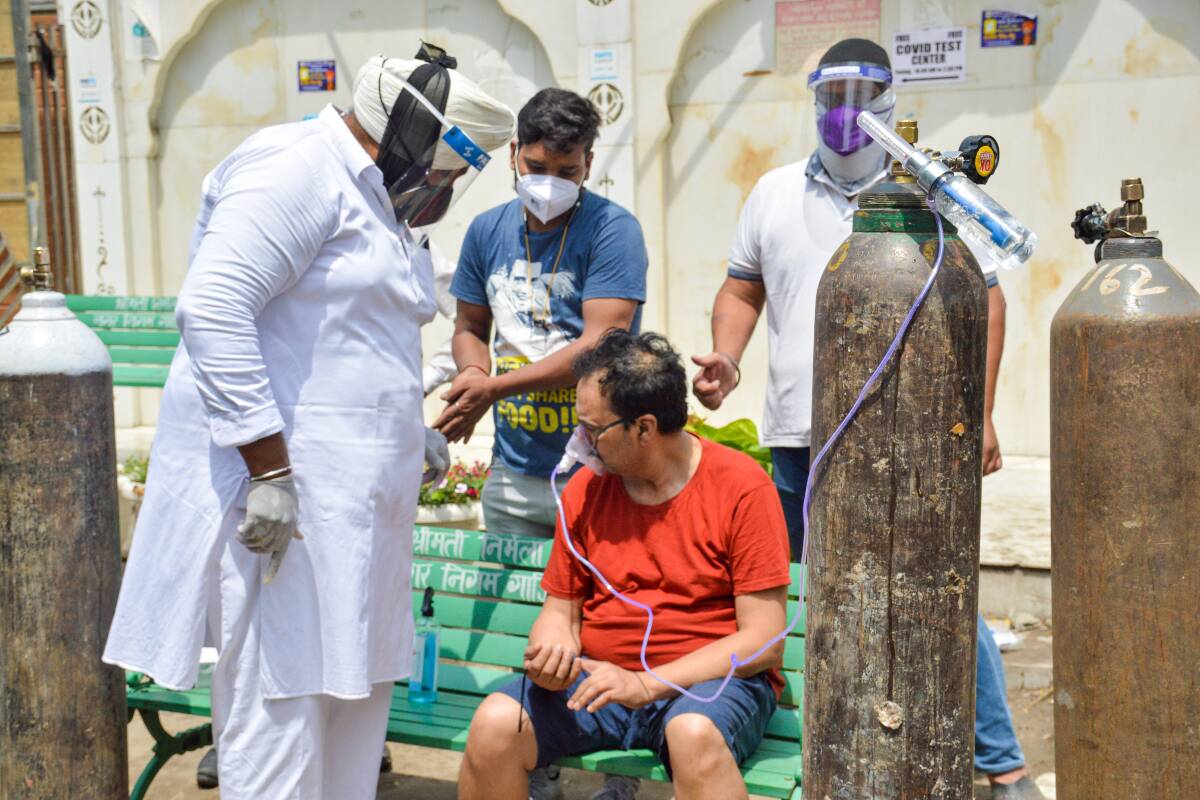
    The Covid-19 pandemic is a global catastrophe that has disrupted the economies and national health of countries and the livelihood millions across the world. In India, the impact in 2020 was presumably well controlled, and the beginning of 2021 saw the Indian government projecting prematurely the return of normalcy. This sense of normalcy led to a lowering of the precautions, and the month of April saw the rise of the second wave. The second wave was vicious, crippling the healthcare system and resulting in a huge number of deaths, primarily attributed to the shortage of oxygen supply in most states. This crisis exposed the shortcomings of the Indian healthcare system and the wide disparities that exist in access to healthcare between different sections of the society, a result of the shockingly low investment in healthcare and human resources. The catastrophe has led many to question the efficacy of the healthcare system and the level of expenditure incurred on it, and whether universal healthcare would have allowed the country to tackle these events. Analysis of the impact of universal healthcare requires insight into the structure and efficacy of healthcare in India, given our history and experiences.

    The principle behind universal healthcare states that every individual who is a citizen of the country must have access to essential health services, without the obstruction of financial hardship. Among the most efficient methods of ensuring that this principle is adhered to is bringing it under the constitutional mandate. Although the Supreme court has, in its various judgements, recognized health as a fundamental right, it is not yet recognized in the constitution. Article 21 of the constitution reiterates the right to life, with the landmark judgment of Maneka Gandhi v The Union of India specifying that the article also includes the right to live a dignified life and access to all basic amenities to ensure the same. This statement has been given a new context in light of the recent crisis, in which most of the fatalities caused were due to respiratory problems caused by the virus where providing oxygen availability became an essential requirement for the cure. In such a scenario, the oxygen availability constitutes part of basic amenities, which the government failed to supply in adequate quantity. The government fulfils its obligation towards healthcare in the form of government hospitals and healthcare centres, but their situation was synonymous with the private sector. The government claims that the hospitals under their control are sufficient, but the recent predicament has proven that the aforementioned claim is not true. The healthcare services provided by the government will be meaningful only if access to such hospitals is convenient for the common people and the hospitals are well-endowed with investment and human resources. An analysis of our constitution, especially Article 21, which guarantees protection of life and personal liberty, makes it evident that the principles on which our democracy is founded dictate that healthcare is one of the most important obligations of the government, and the most efficient method for fulfilling said obligation is the introduction of Universal healthcare in India.

    An attempt at examining the applicability of universal healthcare was made by the Planning Commission through the 12th Five-Year plan. The first-ever framework for universal health coverage was developed by a High-Level Expert Group, which planned to develop a system that was in accordance with the nation’s financial capabilities. The primary objective of these reforms was to reduce the out-of-pocket expenditures incurred by lower-income groups on healthcare services and increase the number of people covered under the Rashtriya Swasthya Bima Yojana. Around this time the Rashtriya Swasthya Bima Yojana was scrutinized by many due to its low enrolment rates, high transaction costs due to insurance intermediaries, and allegations that the government was using it as a pathway to hand over public funds to the private sector. The objective of reducing out-of-pocket expenditure even though expressly mentioned did not come to fruition because of the lack of extensively funded facilities, especially in rural areas which were covered by RSBY. These facilities were lacking not only in medical infrastructure but also the medicines required for treatment, which compelled the patient to bear the expenses of medicines on their own. The 12th Five-year Plan also proposed an increase in Budget allocation for health from 1.58% to 2.1% of the GDP, which was again criticized because it was very low in relation to the global median of 5%, despite the population size of the country. The healthcare reforms also failed to take note of the important role played by nutrition and the Public Distribution System in aiding the advancement of healthcare. The 12th five-year plan is not considered successful due to the poor implementation of the reforms introduced and provides valuable lessons for the implementation of universal healthcare coverage in the future.

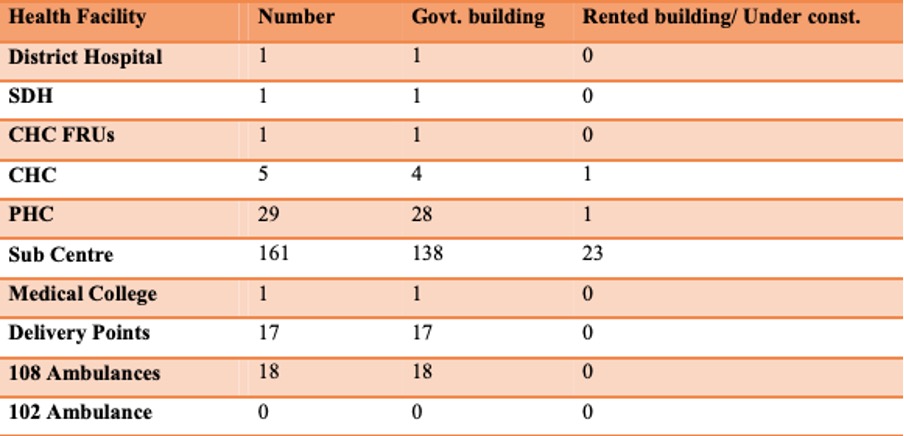
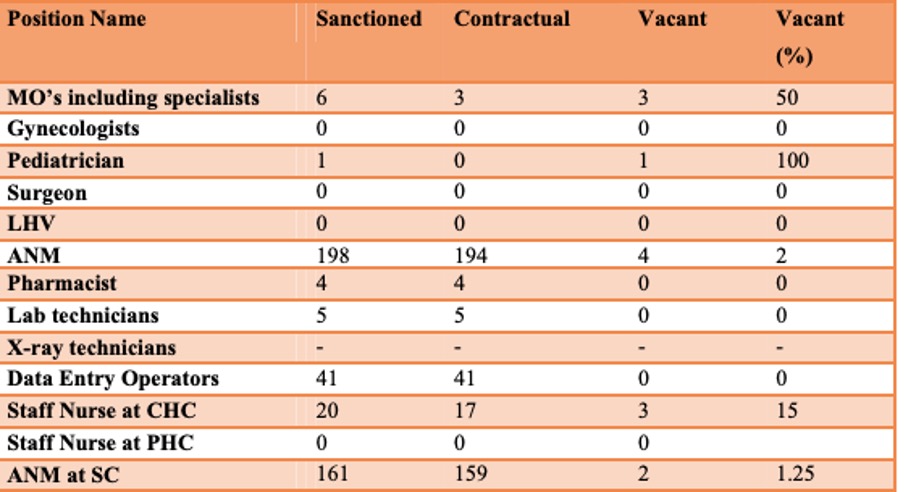
    The need for implementation of universal healthcare coverage can be made evident through a case study of the town of Sonipat, which is near Delhi and is a rural area. The case study is done through the observation of a survey conducted by the Institute of Economic Growth in 2017. The table below shows the data that became available as a result of the last survey conducted.

    CDMO Office, Sonipat District (2017)

    CDMO Office, Sonipat District (2017)

    An analysis of the data portrays that even though the resources and infrastructure are adequate to the population of Sonipat, the facilities are lacking in human resources. The data shows that 6 posts for the Medical Officers (MO) were sanctioned, but only 3 were filled. Despite the high number of deliveries, there was no sanctioned post of a gynaecologist, which can probably be a reason behind the high number of maternal deaths in the area. It was also found that the Non-Communicable Disease (NCD) program was not functioning in the district for the past 2 years. O.P. Jindal University, which is in the heart of Sonipat, houses a total of 7482 individuals, and has an adequate number of facilities, with 5 in-house doctors and 10 nurses. It has an isolation facility ward for cases of communicable diseases. It has an ambulance and referral service to hospitals in the NCR. These facts show that there is an acute shortage of human resources for healthcare in the area. Even though an adequate number of posts were sanctioned, there was no qualified personnel to fill them, and there were no sanctions for important positions. The case of O.P. Jindal university shows that good healthcare requires good investment and incentive for the staff, which the Sonipat administration has failed to provide to the staff of healthcare centres owned by the state.

    The arguments mentioned above portray the acute necessity of universal healthcare in India. The ideals of our constitution implore for the right to health to be established, which gives universal healthcare constitutional support. The failure of the 12th Five-year Plan showcases the failures that can happen if the framework for such a plan is not well-thought-out or well-invested. The example of Sonipat further portrays the need for increased investment in healthcare, which can be achieved by the utilization of universal healthcare. Although there is no concrete data available for the crisis which the nation recently endured, it can be concluded that the approach of universal healthcare could have allowed us to endure this crisis better, as there would have been lesser chances of shortage of supplies like oxygen because of the increased investment. The first step towards the policy of universal healthcare should be to strengthen existing institutions of insurance and learn from the mistakes in the implementation of the RSBY.


    References

    1.http://iegindia.org/upload/uploadfiles/Sonipat%20Haryana%202017.pdf

    2.http://ijariie.com/AdminUploadPdf/RIGHT_TO_HEALTH__A_CONSTITUTIONAL_MANDATE_IN_INDIA_ijariie5596.pdf

    3.http://jsslawcollege.in/wp-content/uploads/2013/12/RIGHT-TO-HEALTH-AS-A-CONSTITUTIONAL-MANDATE-IN-INDIA.pdf

    4.http://nhsrcindia.org/sites/default/files/Twelfth%20Five%20Year%20Plan%20Health%202012-17.pdf

    5.https://www.hindustantimes.com/health/why-india-s-national-health-insurance-scheme-has-failed-its-poor/story-6TIXYO0A8CyxTfGYPRdkYK.html


    Image Credit: www.financialexpress.com

  • How Representative is the Representative Democracy in India?

    How Representative is the Representative Democracy in India?

    India’s transition from an erstwhile British colony to an independent, sovereign state meant, for her people, a change in their status from being mere subjects to citizens bestowed with adult suffrage. The ultimate authority, therefore, now rests with the citizens. India’s large and complex population made it impossible for this authority to be discharged directly and therefore, the citizens elect their ‘representatives.’ This act of electing their representatives is called ‘elections’ and the set of rules that determine how the elections are conducted and the results ascertained is called the ‘electoral system.’ The electoral system adopted by the Constituent Assembly, through the debates on the constitution for the adoption of the parliamentary democracy, is a variant of the majoritarian system known as the ‘First Past The Post System.’ The fundamental principle underlying the system is that for the candidate, to cement his/her electoral victory, does not need a majority of the votes polled, but only a plurality of votes would suffice. The basis for the decision of the Constituent Assembly members to opt for the FPTP system lies in its simplicity and its promise of producing a stable government. Dr. B.R. Ambedkar when speaking in the assembly said, “Now, I have not the least doubt in my mind that whatever else the future government provides for, whether it relieves the people from the wants from which they are suffering now or not, our future government must do one thing, namely, it must maintain a stable government and maintain law and order. I am therefore very hesitant in accepting any system of election which would damage the stability of the government.”

    Legislative bodies aren’t merely law-making authorities, they are mini societies in themselves that reflect and react to the issues plaguing the citizenry at large. Labelling legislative bodies as mini societies emphasizes the fact that the composition of the representatives reflects the diversity of social groups and shades of opinion present within the country. The divisions and prejudices that exist in the Indian subcontinent based on caste, class, and religion were a primary point of reference for the members of the constituent assembly when debating over whether the various provisions of the constitution would be functional in the country. In this sense, the decision to choose the FPTP system over other electoral formulas signifies an attempt to alleviate the fears of the members of a further divided subcontinent. Yet, as we enter the 75th year of our freedom with entrenched unresolved issues, it brings us back to the question that the constituent members struggled with: how efficient and representative is the present electoral formula?

    Loksabha Elections – 2019

    Regional representation

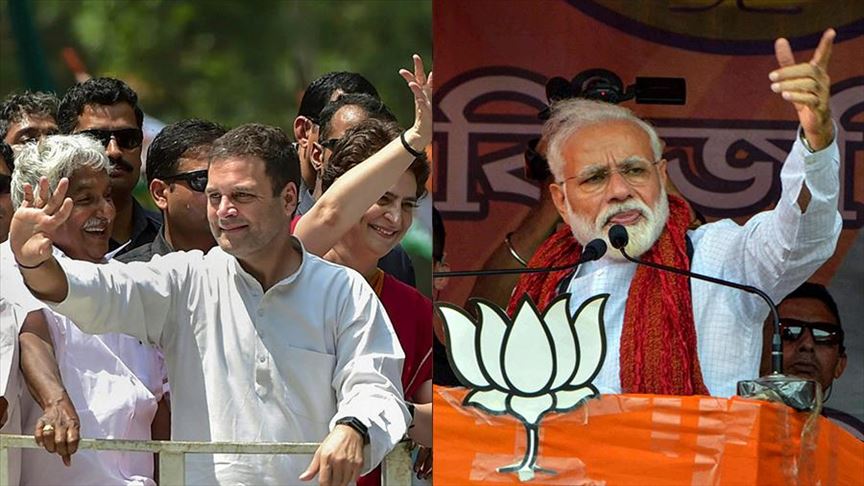
     A post-election analysis by IndiaVotes showed that the two major alliances – National Democratic Alliance and United Progressive Alliance won 45.2% and 27.5% of votes respectively and the rest was shared among parties including All India Trinamool Congress, Yuvajana Sramika Rythu Congress Party, Biju Janata Dal, Bahujan Samaj Party, Telangana Rashtra Samithi and so on. With 45.2% votes, the NDA led by the BJP satisfied the requirements laid down by the FPTP allowing it to take charge of the government formation. However, what the vote percentage implies is that the current regime isn’t exactly a popular choice given more than fifty percent of the voters chose to vote against them. In their paper ‘Minoritarian Rule: How India’s Electoral System Created The Illusion of a BJP Landslide’, Macdonald and Moussavi call India a “minoritarian” democracy wherein ‘ a plurality of voters selects the majority of representatives in Parliament.’

    Furthermore, the success was concentrated within the states of central and western India which includes- Gujarat, Uttar Pradesh, Rajasthan, Madhya Pradesh, Bihar, Chhattisgarh, Maharashtra, and Jharkhand. These are also few of the states with the highest number of Lok Sabha seats- Gujarat (26), Uttar Pradesh (80), Rajasthan (25), Madhya Pradesh (29), Bihar (40), Chhattisgarh (11), Maharashtra (48) and Jharkhand (14). Given how diverse the country is culturally and linguistically, how do we compensate for the lack of the same in the union government?

    Minority representation

     The total minority representation in the 2019 Lok Sabha stands at 9.2%, including Muslims, Christians, Sikhs, and other religious minorities. This means over 90% of the MP’s are Hindus in a country where the minorities make up 19.3% of the total population (Census 2011).

    Kazi Syed Karimuddin when speaking against the efficacy of the FPTP system in the constituent assembly had feared the dilution of minority representation and had said, “Therefore my submission is that the present system as it stands does not guarantee a majority rule as people commonly suppose and does not guarantee a representation to minorities, not necessarily religious, even the political minorities.”  To this Dr. B.R.Ambedkar felt that while the country may not be ready for a complex electoral formula but to ensure minority representation he suggested reserved constituencies for the minorities as an alternative and in this regard, he said, “If any particular minority represented in this House said that it did not want any reservation, then it would be open to the House to remove the name of that particular minority from the provisions of article 292. If any particular minority preferred that although it did not get a cent percent deal, namely, did not get a separate electorate, but that what it has got in the form of reservation of seats is better than having nothing, then I think it would be just and proper that the minority should be permitted to retain what the Constituent Assembly has already given to it.”

    The Constituent Assembly finally decided on reserved constituencies for the communities of Scheduled Castes and Scheduled Tribes only.

    Reserved constituency

     The constitution has reserved 131 out of 543 seats for Scheduled Castes and Scheduled Tribes (84 for SC’s and 47 for ST’s). In the present Lok Sabha out of the 543 MP’s, 138 come from SC/ST communities implying that only 7 MP’s from SC/ST communities have been elected in unreserved constituencies. The situation would have been grimmer had their representation not been secured through reserved constituencies.

    The major loophole in the practice of securing representation through reserved constituencies with the use of FPTP is that it is the Non-SC/ST communities that majorly get to decide who the representative for the SC/ST communities would be. Given SC/ST populations are spread across regions rather than being concentrated in a few, it is then the dominant communities with their muscle and money power that decide on where the votes go. This keeps outspoken and assertive leaders from marginalized communities outside legislative bodies and in a way excludes these communities and their issues from mainstream political discourse. Hence, Macdonald and Moussavi observe, “District boundaries are therefore fundamentally important. Their shape determines the population size and ideological composition of the electorate facing each party.”

    Mainstream political discourse

     With FPTP’s ‘winners take all’ formula, it so happens that political parties restrict their discourse and activities to the interests of the dominant communities as they become the deciding factor in the contestants getting the plurality of votes. Douglas Amy in her paper ‘Proportional Representation: Empowering Minorities or Promoting Balkanization’ says, “The claim that winner-take-all elections are inherently more capable of bridging political divides does not bear up under scrutiny. For example, the requirement that winning candidates appeal to the majority of voters has done little to discourage factionalism. Indeed, it has merely encouraged candidates to attack minority groups to win over the majority.”

    This has not only further marginalized the already marginalized but also hinders the Socio-Economic and Political progress of the country as spaces for discussing “actual” issues shrink and real development can’t be equated to the progress and well-being of a minute population.

    Effect on voters

    Wastage of votes, a definite consequence of the FPTP system as it often discourages voters from turning up to vote. Furthermore, voters indulge in ‘tactical voting’ wherein instead of voting for a candidate/party who aligns with their values and ideals, they end up voting for one of the major parties or the lesser of the two evils whom they think have more chances of winning. In a way, the voter is making no real impact in the making of the government (Singh & Sharma, 2019).

    Conclusion

    The Law Commission, in their reports in the year 1999 and then again in the year 2015, had recommended that the government look into alternative electoral methods and examine how well they’d work out for the country. However, this has remained a recommendation only on paper with governments taking no active interest in the same. Carles Boix in his paper ‘Setting the Rules of the Game: The Choice of Electoral Systems in Advanced Democracies’ (1999) states that “as long as the electoral arena remains the same, and favours the ruling parties, the electoral system is not changed. If there is a change in electoral dynamics due to the coming of new voters or alterations in voter’s preference, then the ruling party reshapes the electoral setup to suit their choices.” Hence, we still do not see electoral reforms being a part of the mainstream political discourse. However, to make our political system more inclusive, diverse, and efficient, it is about time we give electoral reforms a serious thought.


    References

    Amy, D. J. (1995). Proportional Representation: Empowering Minorities or Promoting Balkanization? The Good Society, 5(2).

    Boix, C. (2000). Setting the Rules of the Game: The Choice of Electoral Systems in Advanced Democracies. SSRN Electronic Journal. Published. https://doi.org/10.2139/ssrn.159213

    Macdonald, G., & Moussavi, B. (2015). Minoritarian Rule: How India’s Electoral System Created The Illusion of a BJP Landslide. Economic and Political Weekly. Published.

    https://www.constitutionofindia.net/constitution_assembly_debates/volume/7/1949-01-04?paragraph_number=186%2C185%2C12%2C176%2C33%2C189%2C170%2C11%2C7%2C5%2C215%2C196%2C195%2C180%2C179%2C177%2C172%2C122%2C102%2C99%2C98%2C97%2C58%2C57%2C54%2C34%2C6%2C4

    https://www.indiavotes.com/alliance/partyWise/17

    https://scroll.in/latest/924583/elections-2019-bjp-alone-got-more-than-half-the-votes-in-13-states-and-union-territories

    https://en.wikipedia.org/wiki/List_of_constituencies_of_the_Lok_Sabha

    https://www.hindustantimes.com/lok-sabha-elections/from-faith-to-gender-and-profession-to-caste-a-profile-of-the-17th-lok-sabha/story-Mnp5M4pRX3aUji1UFFVy2N.html

    https://www.minorityaffairs.gov.in/sites/default/files/MsDP%20%28FAQs%29.pdf

    https://www.indiaspend.com/governance/reservation-scheduled-castes-tribes-representation-social-justice-755256

    https://theprint.in/opinion/17th-lok-sabha-looks-set-to-confirm-ambedkars-fears-no-vocal-dalits-in-parliament/232383/


    Image Credit: www.aa.com.tr 


  • e-SLA and the Delhi Act 2011 (Right of Citizen to Time-bound delivery of Services)- Policy Analysis

    e-SLA and the Delhi Act 2011 (Right of Citizen to Time-bound delivery of Services)- Policy Analysis

    Introduction

    As the functions of the modern welfare state expand and the dependency of citizens on it increases, its services must be delivered in timely manner. To this end, the Delhi government developed a robust policy. Through the Delhi Act of 2011 (Right of Citizen to Time Bound Delivery of Services), referred to as “the Act”, and the Delhi (Right of Citizen to Time Bound Delivery of Services) Rules, 2011 [“the Rules”], it has guaranteed timely delivery of 361 services.[1] Delhi is not the only state to confer such a right. However, in these other states, the enforcement of this right requires physical presence. Delhi has used an e-Service Level Agreement [“e-SLA”] to digitise the entire enforcement process. Digitisation has enabled greater accountability, performance review, and convenience, whilst also reducing the invested time and cost of every stakeholder. Thus, through this e-governance tool, Delhi has developed a ‘new ecology’ for the citizen-state relationship.

    In this paper, I will first provide a primer on both the Act and the e-SLA. In the second section, I will examine the constitutionality of the Act. Last, I will test the Act against the principles of good governance and citizen-centric administration.

    Understanding the Act and e-SLA

    The Act and e-SLA are deeply interrelated. While the Act defines the legal rights, procedures, and obligations, e-SLA is the mechanism for their execution. The Act comprises four major components: defined rights and corresponding liabilities, procedural prescriptions, the delegation of rulemaking, and the monitoring platform.

    Every citizen is conferred with the right to time-bound delivery of services,[2] and a liability of compliance imposed on government servants.[3] In cases of default, the government servant is liable to pay the compensatory cost of ₹10 per day for the period of delay, subject to a maximum of ₹200 per application.[4] Correspondingly, citizens are entitled to recover the compensatory costs.[5]

    The Act makes three different but interrelated procedural prescriptions. First, it provides the appointment process, eligibility criteria, and powers of the “competent officer”.[6] He/she must not be below the rank of Deputy Secretary or its equivalent rank and is empowered to impose a compensatory cost on the defaulting government servant. Second, it establishes the procedure governing fixation of liability.[7] If there is a delay, the aggrieved citizen can approach the competent officer, who immediately pays the cost that has been automatically calculated by e-SLA.[8] At a second stage, the officer issues show-cause notice to the concerned servant. If justifiable grounds exist, then the payment is debited from the government exchequer. Otherwise, it is reimbursed from the concerned servant. Third, it prescribes the appointment process, eligibility criteria, and powers of appellate authority as well as a 30-day time limit for filing an appeal. He/she must not be below the rank of Joint Secretary or its equivalent rank and has final authority on the matter.[9]

    The Act provides for delegation of legislative authority in two senses. There is a power to make rules,[10] and the power to remove difficulties.[11] However, the exercise of these powers is subject to Parliamentary scrutiny.

    It is the duty of departments and local bodies to process the application of every citizen and provide an application number. Furthermore, these authorities are obligated to maintain and update the status of applications online.[12] The e-SLA monitoring system has been designated as an online database.[13] To the government, it provides detailed information on the number of disposed or pending cases, which helps in performance evaluation and corrective measures. To the citizens, it provides online facility to track their applications.[14] The information flow is explained below:
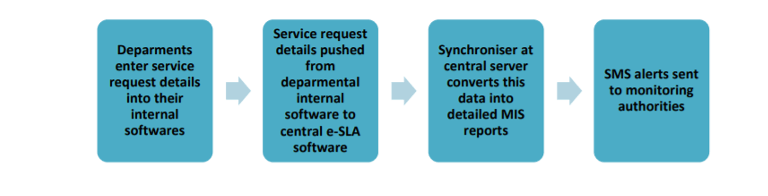
     

    Figure 1: Information flow between government officials under e-SLA
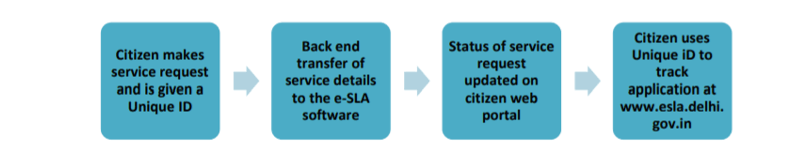
     

    Figure 2: Information flow between government officials and citizens under e-SLA


    Constitutionality of the Act

    The Constitution provides certain safeguards to “civil servants”.[15] At the outset, it must be noted that these employees are only a sub-set of the “government servants” defined in the Act.[16] Thus, the applicable scope of protection, if any, is not to the entire class of employees enumerated in the Act, but only to civil servants.

    The legal issue herein is the constitutionality of imposing a compensation cost on the civil servant. This is a two-fold question:

    1. Whether there is the power to impose such a cost?

    Appropriate legislatures are empowered to regulate the service conditions of civil servants.[17] As the cost relates to a service condition (i.e., timely delivery), the Delhi Legislative Assembly was empowered in imposing it.

    1. If so, has this exercise violated any constitutional safeguard?

    However, this power is subject to constitutional safeguards guaranteed under Article 311.[18] The protection offered under Article 311(2) is exhaustive and with specific reference to the imposition of three penalties: dismissal, removal, and demotion.[19] Accordingly, the imposition of compensatory cost on the civil servant is beyond the scope of three-fold protection offered by Article 311. Thus, no constitutional safeguard has been violated herein.

    As the imposition of compensatory cost on the civil servants is both within the power and compliant with safeguards, it is constitutional.

    Testing the Act against principles of Good Governance and Citizen-Centric Administration

    Governance refers to the process of decision-making, and the process of implementing those decisions.[20] Good governance is when these processes are tested against a normative standard. Citizen-centric administration refers to governance that places citizens at the centre of all administrative functions.[21] In this section, I will use the characteristics of good governance and the principles of citizen-centric administration as a collective standard[22] to analyze the process of formation and implementation of the Act, its Rules, and e-SLA.

    Assessing Compliance in Formation and Implementation

    a) Participatory. In the absence of statutory provisions, the administrative authorities are not bound to comply with any procedural norms, including notice and prior consultation with the interested parties. The Delhi Act, 2011 does not provide for any such consultation or ante-natal publicity. In the process of policy-making, there was participation only from the relevant government ministries and departments. The government did not take any active steps to broaden consultation to stakeholders such as the civic society organizations, labour unions, or even the general public.

    The lack of participatory policy-making has directly impacted its awareness and enthusiasm among citizens. It was found that only 50% of the people know that their unique ID can be used to track their applications online. Further, only 15% of the people used their ID to track their application.[23]

    b) Transparency. The e-SLA allows for complete transparency to the citizen as to the status of all his applications. The information is not only easily comprehensible but also accessible. However, the transparency does not extend to releasing statistics of operations to the public domain. Currently, these statistics, such as the figures on the number of applications, pendency, disposal rate, performing/underperforming departments, are accessible only to government officials.[24]

    c) Responsiveness. The e-SLA system does not provide for any feedback mechanism. Thus, there is no avenue for the citizens availing these services to share their experiences. As feedback is the basis on which the system continually improves, this deficiency hinders the potential effectiveness of e-SLA.[25]

    1. Accountability

    The right to time-bound service delivery through the mechanism of compensatory cost has, in theory, ensured that the government and its officials are accountable to citizens. This is buttressed by the fact that the Act seeks to develop a culture of timely delivery among the government servants by additionally punishing habitual offenders and providing cash incentives for those without a single default in a year.[26] However, the liability of government servant has been capped at ₹200, compared to other state legislation that penalizes in thousands. Further, the cash incentives are only up to ₹5000. Thus, the quantum is inadequate to cause attitudinal changes in the servants.

    Moreover, there is no culture among public servants to hold their non-performing colleagues in disrepute.[27] There is no indication that this non-performance is factored into promotions. Anyhow, such public servants are typically complacent and not seeking promotions. The security of their present job and status is adequate incentive to persist with present behaviour. Thus, promotions and reputational loss among peers are not adequate incentives for performance either.

    Furthermore, by releasing all relevant statistics of operations to the public domain, the government can broaden its accountability. These statistics can be used by stakeholders, such as news and media agencies and policy think-tanks, to supplement the government in identifying issues and corrective measures. This would also pressurize the government to be more proactive.

         2.  Consensus orientation

    Through reasonable and extensively deliberated timelines, the Act sufficiently balances the interests of citizens in securing timely delivery with the government’s limited capacity.

         3.  Effectiveness and Efficiency

    The usage of e-governance to guarantee the right to public service is a revolutionary process reform. This must be gauged at two levels:

    • For the citizen, this system has reduced the number of physical visits required, thus saving time and cost. In a survey, 66.6% reported that they are not required to visit government offices more than once after submitting their applications.[28]
    • For the government, it eliminates systemic errors and inefficiencies.[29] The statistics help in assessing performance and preparing corrective action.[30] However, if the system can track internal departmental processes too, it would allow determining the exact level at which service delivery is being delayed. Furthermore, the Act ignores the quality of timely delivered services.[31] To provide a comprehensive right to public service, the legislature must develop standards to assess the quality of services rendered on time.


        4.  Equitable and Inclusive

    Under the Act, while the citizen is immediately compensated, the government servant is not immediately penalized for default. The procedure allows him/her to provide justified grounds that could excuse liability. For greater inclusivity, the government can prescribe a pro-rata calculation of the penalty. As the amount is automatically calculated by e-SLA, even complex formulas are acceptable.

       5.  Rule of Law

    The Act provides for a fair legal framework and impartial enforcement.

    Conclusion

    Executing the right to time-bound service delivery through an online portal is truly revolutionary. It has emerged as model legislation for other governments. The Act is constitutionally valid. However, when tested against standards of good governance, this policy suffers from problems of non-participation, transparency, responsiveness, accountability, and effectiveness at the government-level. But it scores par excellence on the principles of consensus orientation, effectiveness at the citizen-level, inclusiveness, and rule of law. To embrace the truly revolutionary potential of this policy, the government must make the suggestions recommended in the last section of the paper, vis-à-vis each principle.


    References:

    [1] IANS, ‘245 services brought under Delhi time-bound delivery act’ (Business Standard, 24 August 2014) <https://www.business-standard.com/article/news-ians/245-services-brought-under-delhi-time-bound-delivery-act-114082400707_1.html> accessed 17 January 2021.

    [2] The Act, s. 3.

    [3] The Act, s. 4.

    [4] The Act, s. 7.

    [5] The Act, s. 8.

    [6] The Act, s. 9.

    [7] The Act, s. 10.

    [8] The Rules, r. 4(1).

    [9] The Act, s. 11(1).

    [10] The Act, s. 15.

    [11] The Act, s. 16.

    [12] The Act, s. 5.

    [13] The Rules, r. 2(c).

    [14] Arjun Kapoor & Niranjan Sahoo, India’s Shifting Governance Structure: From Charter of Promises to Services Guarantee (ORF Occasional Paper No 35, 2012).

    [15] Constitution of India 1950, Art. 309, 310, 311.

    [16] The Act, s. 2(g).

    [17] Constitution of India 1950, Art. 309.

    [18] Union of India v. S.P. Sharma (2014) 6 SCC 351.

    [19] Yashomati Ghosh, Textbook on Administrative Law (1st edn, Lexis Nexis 2015) 416.

    [20] UN Economic and Social Commission for Asia and the Pacific, ‘What is Good Governance?’ <http://www. unescap.org/sites/default/files/good-governance.pdf>.

    [21] Ghosh (n 19) 14.

    [22] Second Administrative Reforms Commission, Citizen-Centric Administration (Report No 12, 2009) p. 8.

    [23] Audit of Functioning of Government of Delhi’s e-SLA Scheme, by Management Development Institute, Gurgaon (2012).

    [24] Ibid.

    [25] Rohit Sinha, ‘Delivering on service guarantee: A case of Delhi’s e-SLA’ (ORF, 29 December 2012) <https://www.orfonline.org/research/delivering-on-service-guarantee-a-case-of-delhis-e-sla/> accessed 17 January 2021.

    [26] The Act, s. 12.

    [27] Kapoor & Sahoo (n 14); Amit Chandea & Surbhi Bhatia, The Right of Citizens for Time Bound Delivery of Goods and Services and Redressal of their Grievances Bill, 2011 (CCS, 2015) p. 25-26.

    [28] Sinha (n 25).

    [29] Chandea & Bhatia (n 27).

    [30] Ibid.

    [31] Kapoor & Sahoo (n 14).


    Image Credit: Forbes India
  • The South: Where the Chariots stopped in the Past

    The South: Where the Chariots stopped in the Past

    There is no apparent reason why Dr. John Jackson (1835-1911), a 19th-century Yorkshire-born British Psychologist should be of any interest to us in the 21st India. Yet, he is important in order to understand what is happening to the BJP’s misplaced ambitions in India south of the Vindhyas.

    First about Dr. Jackson. He was the first scientist to come up with the answer as to why mariners experience directional disorientation when they sail on vast seas. This navigational impairment, described by Jackson as ‘topological agnosia’ (literally, loss of knowledge about directions) was caused in his analysis by a distortion in an individual’s memory. An individual afflicted by this agnosia is found unable to remember to a destination known to him to be able to recall important landmarks seen a long time ago. Among the patients that Jackson studied were some women who knew where the London Bridge was, but they did not know how to go there from their homes. In their memory, the ‘little maps’ were forgotten, though the larger maps were inscribed in their brain. European colonial expansion was distinctly marked by this disorientation. When it was spreading south of Europe, the colonial powers thought of the south as ‘east’ and built a strong binary between the west and the east.
    Topological Agnosia is the term that can most accurately describe the BJP’s ‘Mission South.’ In order to understand why the party that feels so much at home in the Hindi heartland in the north should feel so unsure of its direction in the south, we need to look at the context within which its foundations were laid. Obviously, one has to refer to the shaping of the core ideas of the Hindutva ideology. It is not necessary to state that at its heart is the dubious and non-scientific theory of ‘Aryans as a Master Race’. This idea was in circulation among some of the 19th century European linguists. They imagined that what was initially proposed as the name of a language (‘Indo-Aryan’) was in fact the name of a community (or a race). Some of them went to the length of proving that the Aryans resided in remote ancient times in North Europe. Karl Plenka actually gave a homeland for this imagined master race, unquestioningly assuming that the master race was the master race of the pure Aryans.

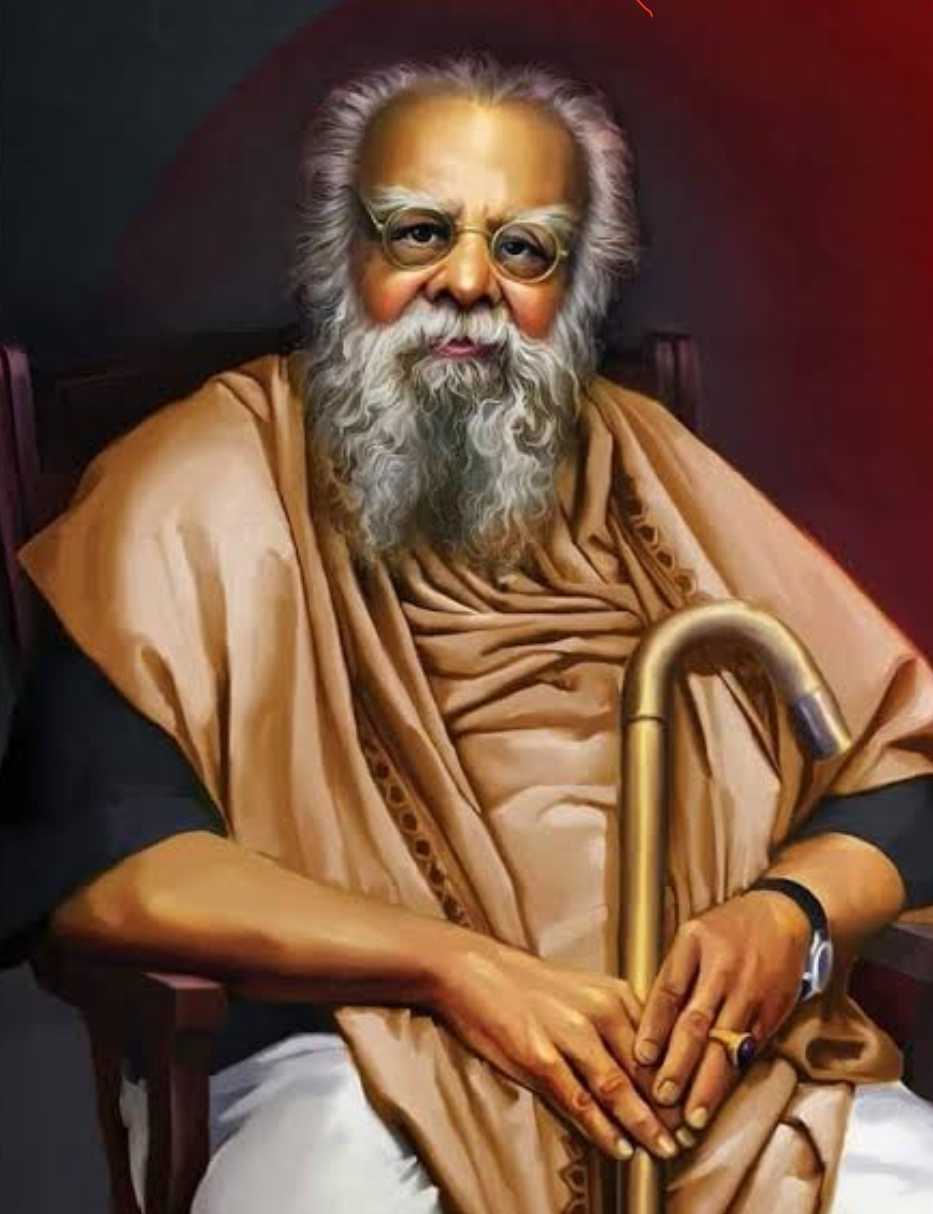
    Besides, the traditions of spirituality and worship developed in the south for the last three millennia have their own distinct and syncretic trajectories which do not easily gel with the RSS-VHP idea of Hinduism. Besides, as Basavanna, Akkamma, Periyar, Phule, Shahu, and Ambedkar so ably demonstrate, a larger majority of the people south of the Vindhyas have reason to find the exclusionary and myopic social and cultural interpretations of history entirely repugnant.

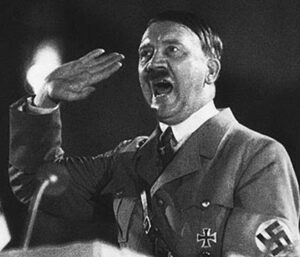
    Adolf Hitler

    In the third decade of the 20th century, Adolf Hitler made these theories the foundation of his ‘National Socialism’ and the associated drive for ‘racial purification.’ The founders of the RSS in India were his contemporaries and shared his enthusiasm for the theory of Aryan supremacy. Though completely unscientific in terms of the history of the people of India, the RSS, and the BJP like to believe that someday in the future they will be able to establish the supremacy of the (imaginary) Aryans over the diverse peoples in the Indian subcontinent, the south included. To aid this wishful aspiration, the RSS has brought in a misconstrued idea of what constitutes being Hindu. However, the Indian sub-continent South of the Vindhyas has a long history of resistance to the domination from the north. Besides, the traditions of spirituality and worship developed in the south for the last three millennia have their own distinct and syncretic trajectories which do not easily gel with the RSS-VHP idea of Hinduism. Besides, as Basavanna, Akkamma, Periyar, Phule, Shahu, and Ambedkar so ably demonstrate, a larger majority of the people south of the Vindhyas have reason to find the exclusionary and myopic social and cultural interpretations of history entirely repugnant. It is not a surprise, therefore, that despite desperate efforts by the VHP and RSS throughout the twentieth century, their general support base in the southern states had remained nominal.

    This has changed since 2014. The current regime has displayed an unmatched zeal in intimidating political leaders by using the ED, the CBI, and troll gangs. It has displayed a skill in the use of post-truth and propaganda for generating popular opinion as never before. The erosion of media and the collapse of institutions that are expected to uphold constitutional values and constitutional arrangements to safeguard democracy has apparently increased the chance of success for BJP’s south mission. Besides, the use of funds for party-swapping is a trick that the BJP has mastered well. All these factors—the use of muscle, official machinery, money, intimidation, and propaganda—have made the south more vulnerable to the divisive, exclusionary, and myopic nationalism of the BJP.

    Yet, it would be naïve to believe that countering the Hindutva and Pseudo-Nationalism onslaught would be possible by mouthing our worn-out phrases and analysis related to class-based or caste-based understanding of India in the third decade of the 21st century.

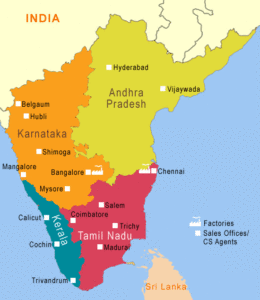
    Countering the flawed ideas of nationalism and the exclusionary notion of dharma is an urgent need for the people, language-communities and the political parties south of the Vindhyas. Probably, it is them alone who are now left with the capacity to do so, since the ‘Hindi, Hindu, Hindustan’ tune has overpowered the people and the northern ‘heartland-states’. Yet, it would be naïve to believe that countering the Hindutva and Pseudo-Nationalism onslaught would be possible by mouthing our worn-out phrases and analysis related to class-based or caste-based understanding of India in the third decade of the 21st century. Also, being fiercely against any geographical, linguistic or social factionalism, we have to reinvent our politics and political terminology. Remaining entirely within the framework of the Constitution, one very powerful message that the Southern States and people can give to the rest of India is that of federalism.

    The Constitution describes the country as a union of states’ and its provisions are oriented towards keeping this union intact and integrated by respecting the difference and diversity.

    The Constitution describes the country as a union of states’ and its provisions are oriented towards keeping this union intact and integrated by respecting the difference and diversity. Hence, our insistence on the principle of federalism would also mean our insistence on constitutional values. It would reiterate the need for recognizing and respecting diversities and, therefore, rejecting the Hindutva agenda of the RSS-BJP. This understanding, if shared by the communities, movements, language groups, political parties, theological sects, and cultural-industries in the states south of the Vindhyas, can—together—stop the BJP where it should be stopped and reverse the fortunes of fascism in India. We all owe it to India, our sacred nation. We also owe it to the great tradition of civilization that the south has built over the past millennia.

    The opinions expressed are personal views of the author.

    This article was published earlier in gaurilankeshnews.com