Tag: Cold War

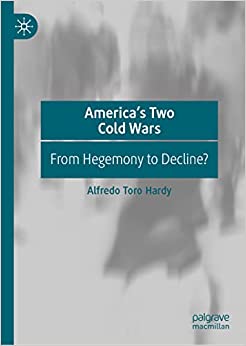
  • America’s Two Cold Wars: Hegemony to Decline?

    America’s Two Cold Wars: Hegemony to Decline?

    Book Name: America’s Two Cold Wars: Hegemony to Decline?

    Author: Alfredo Toro Hardy

    Publisher: Palgrave Macmillan

    Year of Publication: March, 2022

    Pages: 305 


    The war in Ukraine has necessitated a recalibration of US foreign policy as tensions intensify between America, its allies and Russia. The US’s ‘pivot to Asia’ policy has taken a hit in the face of Russia’s aggression in Ukraine. As global attention, once again, shifts to the former Cold War superpower, China appears to be reaping all the benefits in the ensuing power vacuum.

    Alfredo Toro Hardy’s America’s Two Cold Wars: From Hegemony to Decline? is a timely addition, both in terms of what is unfolding presently and the literature that is emerging on the shortfalls of American foreign policy in its dealings with Russia and China. The former Venezuelan diplomat joins the intensifying debate on the emerging reality of a Cold War between the US and China and the broader debate surrounding America’s decline from being a global hegemonic power and its implications for the country’s international engagement with the rest of the world.

    The book offers a comprehensive diagnosis of American foreign policy by way of a comparative analysis of the US’s Cold War with the Soviet Union with the emerging one with China from the American perspective and seeks to answer two questions: one, how different a strategic competitor is China to the erstwhile Soviet Union and two, how different is the US of today compared to its former self when it confronted and won the Cold War with the Soviets.

    Hardy identifies five fundamental issues afflicting US foreign policy in its engagement with China – ideology (or lack thereof), squandered alliances, foreign policy-related inconsistencies, the country’s economic downturn and the containment strategy trap. The author’s key argument recurs throughout the book – that the US is confronting China in the emerging Cold War on a “wrong configuration of factors” (p. 168) and needs to “responsibly explore and analyse the options on the table” (p. 171).

    In acknowledgement of the deficiencies facing America’s foreign policy regarding China, the author sets the context and provides readers with a succinct account of the collapse of the Soviet Union, the emergence of the period of US hegemony and the rise of China in the first two chapters. Hardy rightly emphasises that America is threatened by China’s ascendence – citing research done by the Pew Research Center that showed that 73 per cent of Americans viewed China negatively. In the author’s words, “Washington is aggrievedly and forcefully reacting against what it perceives as an existential contention” (p. 7).

    Hardy also outlines the Chinese perspective and correctly concludes that Beijing is driven by its experience under imperialist powers during the ‘century of humiliation’ and economic mismanagement under Mao Zedong. Indeed, this coupled with the Tiananmen Massacre in 1989, controversy over Chinese dissident Fang Lizhi between 1989-1990, the Taiwan strait crisis in 1996, the bombing of the Chinese embassy in Belgrade (p. 23) by American forces and more recently, the independence movements in Hong Kong are insightful examples in understanding why the Party and now, Xi Jinping, are in pursuit of relentless centralisation of power and authority. Despite China’s adroitness in foreign affairs under Xi Jinping, the country’s great power ambitions are driven by domestic considerations and how the international community perceives these ambitions. The US’s belief in China’s disregard for a rules-based order is what the latter takes offence with – believing the former to be constraining it from taking its “rightful place in the world” (p.7). China eschews the American mindset of reverting to the Cold War mentality and instead argues for a more inclusive world where both states are mindful of their responsibilities.

    The author offers a penetrating account of US-China relations – moving from cautious partners with mutual strategic interests to strategic competitors. A pragmatic agreement was drawn up that was mindful of the other’s national interests – the US would recognize the Communist government in China and give it legitimacy and in exchange, China would not seek to limit or challenge the “US’s power projection in Asia” (p.22). China’s gains from this arrangement were enormous and translated into divestment from Mao’s model of productivity and economic self-sufficiency, a foothold in Western markets and a WTO membership. However, 2008 marked the inflexion point in their relations. The diplomat’s insightful analysis of the changing currents in China’s foreign policy and engagement with the US – the global financial crisis and China’s ability in tiding over it, the success of the Beijing Olympics, the US’s failures in the Middle East and disregard for its allies, China’s military build-up, the South China Sea and Xi Jinping’s leadership – is unparalleled and serves as an excellent prelude to why he thinks the two countries are in an “unavoidable collision course” (p. 35). China’s desire to forge a new status quo and challenge the US’s rules and the US’s and China’s “perceived sense of mission and superiority” based on their history and national myths as they look into the future, makes the prospect of a major conflict with spill over effects plausible. Here Hardy goes a step further and claims, based on the plausibility of a war between the two, that they are already in the midst of a Cold War (p. 36). In announcing its ambitions to the world, China may have lost the advantage of its hitherto low profile strategy and believes that American hegemony is on the decline.

    To be sure, the author’s analysis of the five deficiencies in American foreign policy forms the most important section of the book. His commentary on America’s notion of its exceptionalism and “crusader foreign policy” (p. 42) is particularly relevant when we look at its response to the war in Ukraine – the US’s network of financial institutions and media conglomerates have been “able to impose international patterns of credibility or ostracism depending on the acceptance or not of the prevailing liberal ideology” (p. 18).

    Alexis de Tocqueville’s Democracy in America described American democracy as a form of Christianity and there is more than a grain of truth to this when they believe they were ordained by God to undertake the responsibility of exporting democracy to the rest of the world, not unlike the colonial powers; as Hardy keenly points out – “the United States never stopped being what its puritan colonists wanted it to become” (p. 42). The ideological calculus worked in America’s favour during the Cold War with the Soviet Union. In confronting China, a country uninterested in exporting communism, in relentless pursuit of efficiency and economic development, the US falls considerably short. This section is a succinct account of the erosion of democracy domestically, the political establishment, poor performance in development indicators (specifically, education and infrastructure) and the labour market. As Hardy puts it – “efficiency is the catchword” (p. 53) and the name of the game in the Cold War between America and China.

    In building alliances to counter China, US foreign policy has a long road ahead as it recovers from the wars in the Middle East, the Trump presidency, its recent misstep in leaving Afghanistan to the Taliban and now, its conflict escalations with Russia. America’s inconsistencies in maintaining its alliances have put them on the back foot in confronting China and only served to better the latter’s position in the international community through cooperative multilateralism (p. 82). The author concludes that the worst-case scenario for the US would be a Russia-China alignment. Indeed, in the fourth iteration of the India-US 2+2 dialogue, the Russia-Ukraine war was the elephant in the room as joint statements from the US and India reflected a sentiment of ‘agree to disagree’. These joint remarks were widely acknowledged to be ‘tame’ in comparison to the statements several White House officials made of India’s position on the matter, most notably that of President Biden’s comment of India being “somewhat shaky” on the Quad and that of Deputy NSA Daleep Singh who warned of “consequences” should India continue to increase its imports from Russia.

    The author is critical of the growing divide between the Democrats and Republicans in the foreign policy establishment – referring to them as “inhabiting different foreign policy planets” (p. 105). Even the consensus on the containment strategy for China is shaky as Progressive Democrats call for restraint. China, on the other hand, is a different story. According to Hardy, China has its eggs in order – a sound national objective, well-rounded foreign policy, cooperative multilateral mechanisms and localised geopolitical ambitions for the moment. China exhibits unwavering focus as it marches towards what it believes is its destiny – to become a world power by 2049. The only downside that the author warns of in China’s strategy is Xi’s presence at the helm. The longer Xi stays at the top, the more the country’s policies will mould around his personality. In the event of his absence “China may find itself in big trouble” (p. 109).

    In comparing the Soviet Union and China’s economies, here too the US falls short. During the first Cold War, America had both economic and military advantages and possessed a technological edge that was unmatched. Today, the US might go toe to toe with China and still not emerge victorious. According to Hardy, China will surpass the US’s GDP in absolute terms and has already achieved the same in Purchasing Power Parity (PPP). It is very likely that China’s military expenditure will far exceed the US’s down the line. It has militarily caught up to the US through asymmetric “armament development” (p. 121) and other strategies. Its advantage also lies in the fact that its military deployment is closer to home compared to the US’s strategy of maintaining a standing presence around the world. However, the analysis in this section falls short of elaborating upon America’s weaponization of its financial power. A major factor in the US being a superpower has been the dollar hegemony it has enjoyed since the 1970s. This aspect is intrinsic to understanding US foreign policy, especially when global FOREX reserves in dollars have declined to 59 per cent from 72 per cent in the last two decades. Analysts argue that this reflects the decline of the dollar’s dominance in the face of other currencies. Indeed, China, Russia, India and Brazil are working to reduce their dependency on the dollar and shield themselves from Washington’s vagaries.

    Washington is playing catch-up with Beijing; inheriting the Cold War mentality and deploying used strategies against a competitor that almost evenly matches the US in all aspects. From Hardy’s commentary on the containment strategy that the US pursued against the Soviets, it is immediately evident that the same cannot be replicated in its confrontation with China. While appreciative of the consistency that the Obama, Trump and Biden administrations have shown in dealing with China, the author claims the lack of an overarching strategy and general cohesiveness will not deter China’s ambitions. Considerations of “economic preponderance and geopolitical feasibility” (p. 146) appear to be missing in devising a strategy to counter China. But the author astutely points to the viability of containing China in a region that is of significant geostrategic importance and has historically been its sphere of influence and rightly questions the US’s capability to respond when China has “firm control of the operational theatre” (p. 148) in the region.

    Hardy’s sections that delve into the US’s economy, while useful in the context of its military expenditure, do not adequately explain the sheer influence and entitlement that the country enjoys in international organizations like the IMF, World Bank, OECD, WHO etc. and its impacts in its engagement with China. Similarly, the US has historically turned to sanctions as punitive measures against their enemies – indicative of confidence borne out of the dollar hegemony. Insights into how effective sanctions are and why and how the US weaponizes this power would more forcefully drive home the well-rounded strategy that America has pursued as a hegemon. The Ukraine war is just one example in a long line wherein the US has exercised its power and unilaterally imposed severe sanctions on Russia – encouraging even its allies and partners to take the same measures against Russia. Increasingly, it is becoming evident that the US’s unilateral sanctions are having a negative impact on its credibility as a responsible superpower. Nevertheless, the book offers the general reader a comprehensive assessment of the US in the world order presently and more specifically, a comparison of its foreign policy strategies with the erstwhile Soviet Union and China.

    Overall, America’s Two Cold Wars: From Hegemony to Decline? is a thorough exposition of US foreign policy and draws from experts like Kishore Mahbubani, Mathew Kroenig, Francis Fukuyama, Henry Kissinger and John Mearsheimer and, unlike most literature on the topic, Hardy does not assume a fatalistic narrative that supports the US’s decline of power. Simply put, with the first Cold War, America had all the right configuration of factors in place. This seems to have changed in the second; if the US is facing China on the wrong configuration of factors (p. 168), then the results are only a product of successive administrations lacking coherency in putting together a sound strategy. The author, in a reflection of his experience and expertise, incisively concludes that the US must pursue alternatives to a Cold War with China for three important reasons: first, sharing global governance responsibilities would aid in building US credibility as a responsible superpower as well provide cooperative solutions to global problems like climate change; second, US strategy towards China needs to be a choice between adopting a China-centred policy or alliance centred policy geared towards building multilateral cooperation (p. 169) and third, the interconnectedness of the global economic system will ensure that everyone pays the price for an expensive war between the US and China. The US’s only recourse is to focus on building back its credibility, alliances and partnerships. At the same time, it must be realistic and reflect a deeper understanding of China’s national interests and strategic objectives. These two intentions must work in tandem if the US hopes to successfully counter China.

    About the Author:

    ALFREDO TORO HARDY is a Venezuelan retired diplomat, scholar and author. He has a PhD in International Relations from the Geneva School of Diplomacy and International Affairs, two master’s degrees in international law and international economics from the University of Pennsylvania and the Central University of Venezuela, a post-graduate diploma in diplomatic studies by the Ecole Nationale D’Administration (ENA) and a Bachelor of Law degree by the Central University of Venezuela. Before resigning from the Venezuelan Foreign Service in protest of events taking place in his country, he was one of its most senior career diplomats. As such, he served as Ambassador to the United States, the United Kingdom, Spain, Brazil, Singapore, Chile and Ireland.

    Hardy directed the Diplomatic Academy of the Venezuelan Ministry of Foreign Affairs, as well as other Venezuelan academic institutions in the field of international affairs. He is an Honorary Research Fellow of the Geneva School of Diplomacy and International Relations and has been a Visiting Professor at the universities of Princeton and Brasilia and an online Professor at the University of Barcelona. He has also been a Fulbright Scholar, a two-time Rockefeller Foundation Bellagio Center Resident Scholar and an academic advisor on diplomatic studies at the University of Westminster. He has authored twenty-one books and co-authored fifteen more on international affairs and history while publishing thirty peer-reviewed papers on the same subjects.
  • From Cold War to Hot Peace

    From Cold War to Hot Peace

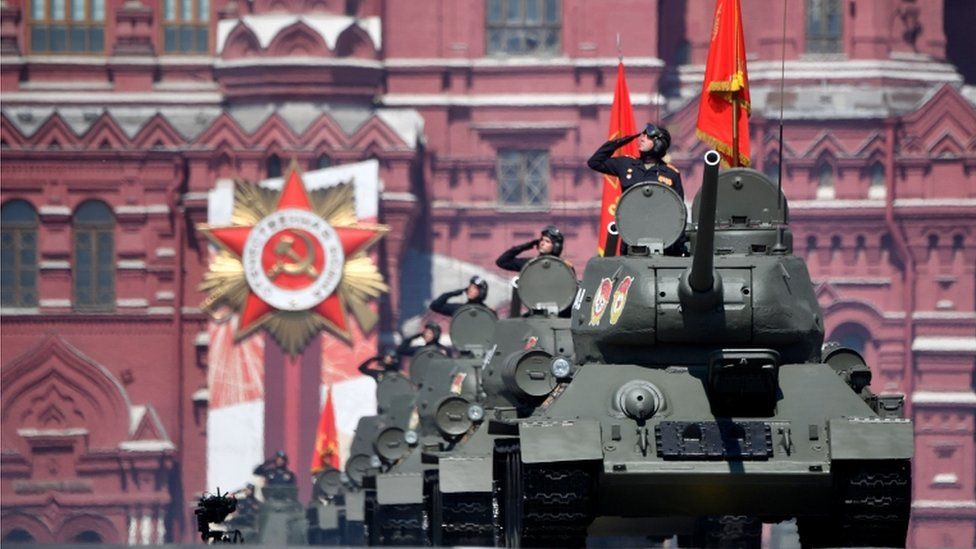
    In a world shaped by the iron logic of markets and national interests, Vladimir Putin’s atavistic war of conquest has mystified the “deep” strategists of realpolitik. Their mistake was to forget that under global capitalism, cultural, ethnic, and religious conflicts are the only forms of political struggle left.

    With the Russian invasion of Ukraine, we are entering a new phase of warfare and global politics. Aside from a heightened risk of nuclear catastrophe, we are already in a perfect storm of mutually reinforcing global crises – the pandemic, climate change, biodiversity loss, and food and water shortages. The situation exhibits a basic madness: at a time when humanity’s very survival is jeopardized by ecological (and other) factors, and when addressing those threats should be prioritized over everything else, our primary concern has suddenly shifted – again – to a new political crisis. Just when global cooperation is needed more than ever, the “clash of civilizations” returns with a vengeance.

    Why does this happen? As is often the case, a little Hegel can go a long way toward answering such questions. In the Phenomenology of Spirit, Hegel famously describes the dialectic of master and servant, two “self-consciousnesses” locked in a life-or-death struggle. If each is ready to risk his own life to win, and if both persist in this, there is no winner: one dies, and the survivor no longer has anyone to recognize his own existence. The implication is that all of history and culture rest on a foundational compromise: in the eye-to-eye confrontation, one side (the future servant) “averts its eyes,” unwilling to go to the end.

    But Hegel would hasten to note that there can be no final or lasting compromise between states. Relationships between sovereign nation-states are permanently under the shadow of potential war, with each epoch of peace being nothing more than a temporary armistice. Each state disciplines and educates its own members and guarantees civic peace among them, and this process produces an ethic that ultimately demands acts of heroism – a readiness to sacrifice one’s life for one’s country. The wild, barbarian relations between states thus serve as the foundation of the ethical life within states.

    North Korea represents the clearest example of this logic, but there are also signs that China is moving in the same direction. According to friends in China (who must remain unnamed), many authors in Chinese military journals now complain that the Chinese army hasn’t had a real war to test its fighting ability. While the United States is permanently testing its army in places like Iraq, China hasn’t done so since its failed intervention in Vietnam in 1979.

    At the same time, Chinese official media have begun to hint more openly that since the prospect of Taiwan’s peaceful integration into China is dwindling, a military “liberation” of the island will be needed. As ideological preparation for this, the Chinese propaganda machine has increasingly urged nationalist patriotism and suspicion toward everything foreign, with frequent accusations that the US is eager to go to war for Taiwan. Last fall, Chinese authorities advised the public to stock up on enough supplies to survive for two months “just in case.” It was a strange warning that many perceived as an announcement of imminent war.

    This tendency runs directly against the urgent need to civilize our civilizations and establish a new mode of relating to our environs. We need universal solidarity and cooperation among all human communities, but this objective is made far more difficult by the rise of sectarian religious and ethnic “heroic” violence and a readiness to sacrifice oneself (and the world) for one’s specific cause. In 2017, the French philosopher Alain Badiou noted that the contours of a future war are already discernible. He foresaw:

    “…the United States and their Western-Japanese group on the one side, China and Russia on the other side, atomic arms everywhere. We cannot but recall Lenin’s statement: ‘Either revolution will prevent the war or the war will trigger revolution.’ This is how we can define the maximal ambition of the political work to come: for the first time in history, the first hypothesis – revolution will prevent the war – should realize itself, and not the second one – a war will trigger revolution. It is effectively the second hypothesis which materialized itself in Russia in the context of the First World War, and in China in the context of the second. But at what price! And with what long-term consequences!”

    The Limits of Realpolitik

    Civilizing our civilizations will require radical social change – a revolution, in fact. But we cannot afford to hope that a new war will trigger it. The far more likely outcome is the end of civilization as we know it, with the survivors (if there are any) organized in small authoritarian groups. We should harbor no illusions: in some basic sense, World War III has already begun, though for now it is still being fought mostly through proxies.

    Abstract calls for peace are not enough. “Peace” is not a term that allows us to draw the key political distinction that we need. Occupiers always sincerely want peace in the territory they hold. Nazi Germany wanted peace in occupied France, Israel wants peace in the occupied West Bank, and Russian President Vladimir Putin wants peace in Ukraine. That is why, as the philosopher Étienne Balibar once put it, “pacifism is not an option.” The only way to prevent another Great War is by avoiding the kind of “peace” that requires constant local wars for its maintenance.

    Whom can we rely on under these conditions? Should we place our confidence in artists and thinkers, or in pragmatic practitioners of realpolitik? The problem with artists and thinkers is that they, too, can lay the foundation for war. Recall William Butler Yeats’s apt verse: “I have spread my dreams under your feet, / Tread softly because you tread on my dreams.” We should apply these lines to poets themselves. When they spread their dreams under our feet, they should spread them carefully because actual people will read them and act upon them. Recall that the same Yeats continuously flirted with Fascism, going so far as to voice his approval of Germany’s anti-Semitic Nuremberg Laws in August 1938.

    Plato’s reputation suffers because of his claim that poets should be thrown out of the city. Yet this is rather sensible advice, judging from the experience of recent decades, when the pretext for ethnic cleansing has been prepared by poets and “thinkers” like Putin’s house ideologue, Aleksandr Dugin. There is no longer ethnic cleansing without poetry, because we live in an era that is supposedly post-ideological. Since great secular causes no longer have the force to mobilize people for mass violence, a larger sacred motive is needed. Religion or ethnic belonging serve this role perfectly (pathological atheists who commit mass murder for pleasure are rare exceptions).

    Realpolitik is no better guide. It has become a mere alibi for ideology, which often evokes some hidden dimension behind the veil of appearances in order to obscure the crime that is being committed openly. This double mystification is often announced by describing a situation as “complex.” An obvious fact – say, an instance of brutal military aggression – is relativized by evoking a “much more complex background.” The act of aggression is really an act of defense.

    This is exactly what is happening today. Russia obviously attacked Ukraine, and is obviously targeting civilians and displacing millions. And yet commentators and pundits are eagerly searching for “complexity” behind it.

    There is complexity, of course. But that does not change the basic fact that Russia did it. Our mistake was that we did not interpret Putin’s threats literally enough; we thought he was just playing a game of strategic manipulation and brinkmanship. One is reminded of the famous joke that Sigmund Freud quotes:

    “Two Jews met in a railway carriage at a station in Galicia. ‘Where are you going?’ asked one. ‘To Cracow,’ was the answer. ‘What a liar you are!’ broke out the other. ‘If you say you’re going to Cracow, you want me to believe you’re going to Lemberg. But I know that in fact you’re going to Cracow. So why are you lying to me?’”

    When Putin announced a military intervention, we didn’t take him literally when he said he wanted to pacify and “denazify” Ukraine. Instead, the reproach from disappointed “deep” strategists amounts to: “Why did you tell me you are going to occupy Lviv when you really want to occupy Lviv?”

    This double mystification exposes the end of realpolitik. As a rule, realpolitik is opposed to the naivety of binding diplomacy and foreign policy to (one’s version of) moral or political principles. Yet in the current situation, it is realpolitik that is naive. It is naive to suppose that the other side, the enemy, is also aiming at a limited pragmatic deal.

    Force and Freedom

    During the Cold War, the rules of superpower behavior were clearly delineated by the doctrine of mutual assured destruction (MAD). Each superpower could be sure that if it decided to launch a nuclear attack, the other side would respond with full destructive force. As a result, neither side started a war with the other.

    By contrast, when North Korea’s Kim Jong-un talks about dealing a devastating blow to the US, one cannot but wonder where he sees his own position. He talks as if he is unaware that his country, himself included, would be destroyed. It is as if he is playing an altogether different game called NUTS (Nuclear Utilization Target Selection), whereby the enemy’s nuclear capabilities can be surgically destroyed before it can counterstrike.

    Over the past few decades, even the US has oscillated between MAD and NUTS. Though it acts as if it continues to trust the MAD logic in its relations with Russia and China, it has occasionally been tempted to pursue a NUTS strategy vis-à-vis Iran and North Korea. With his hints about possibly launching a tactical nuclear strike, Putin follows the same reasoning. The very fact that two directly contradictory strategies are mobilized simultaneously by the same superpower attests to the fantasy character of it all.

    Unfortunately for the rest of us, MADness is passé. Superpowers are increasingly testing each other, experimenting with the use of proxies as they try to impose their own version of global rules. On March 5, Putin called the sanctions imposed on Russia the “equivalent of a declaration of war.” But he has repeatedly stated since then that economic exchange with the West should continue, emphasizing that Russia is keeping its financial commitments and continuing to deliver hydrocarbons to Western Europe.

    In other words, Putin is trying to impose a new model of international relations. Rather than cold war, there should be hot peace: a state of permanent hybrid war in which military interventions are declared under the guise of peacekeeping and humanitarian missions.

    Hence, on February 15, the Russian Duma (parliament) issued a declaration expressing “its unequivocal and consolidated support for the adequate humanitarian measures aimed at providing support to residents of certain areas of the Donetsk and Lugansk regions of Ukraine who have expressed a desire to speak and write in Russian language, who want freedom of religion to be respected, and who do not support the actions of the Ukrainian authorities violating their rights and freedoms.”

    How often in the past have we heard similar arguments for US-led interventions in Latin America or the Middle East and North Africa? While Russia shells cities and bombs maternity wards in Ukraine, international commerce should continue. Outside of Ukraine, normal life should go on. That is what it means to have a permanent global peace sustained by never-ending peacekeeping interventions in isolated parts of the world.

    Can anyone be free in such a predicament? Following Hegel, we should make a distinction between abstract and concrete freedom, which correspond to our notions of freedom and liberty. Abstract freedom is the ability to do what one wants independently of social rules and customs; concrete freedom is the freedom that is conferred and sustained by rules and customs. I can walk freely along a busy street only when I can be reasonably sure that others on the street will behave in a civilized way toward me – that drivers will obey traffic rules, and that other pedestrians will not rob me.

    But there are moments of crisis when abstract freedom must intervene. In December 1944, Jean-Paul Sartre wrote: “Never were we freer than under the German occupation. We had lost all our rights, and first of all our right to speak. They insulted us to our faces. … And that is why the Resistance was a true democracy; for the soldier, as for his superior, the same danger, the same loneliness, the same responsibility, the same absolute freedom within the discipline.”

    Sartre was describing freedom, not liberty. Liberty is what was established when post-war normality returned. In Ukraine today, those who are battling the Russian invasion are free and they are fighting for liberty. But this raises the question of how long the distinction can last. What happens if millions more people decide that they must freely violate the rules in order to protect their liberty? Is this not what drove a Trumpian mob to invade the US Capitol on January 6, 2021?

    The Not-so-Great Game

    We still lack a proper word for today’s world. For her part, the philosopher Catherine Malabou believes we are witnessing the beginning of capitalism’s “anarchist turn”: “How else are we to describe such phenomena as decentralized currencies, the end of the state’s monopoly, the obsolescence of the mediating role played by banks, and the decentralization of exchanges and transactions?”

    Those phenomena may sound appealing, but with the gradual disappearance of the state’s monopoly, state-imposed limits to ruthless exploitation and domination will also disappear. While anarcho-capitalism aims at transparency, it also “simultaneously authorizes the large-scale but opaque use of data, the dark web, and the fabrication of information.”

    To prevent this descent into chaos, Malabou observes, policies increasingly follow a path of “Fascist evolution…with the excessive security and military build-up that goes along with it. Such phenomena do not contradict a drive towards anarchism. Rather, they indicate precisely the disappearance of the state, which, once its social function has been removed, expresses the obsolescence of its force through the use of violence. Ultra-nationalism thus signals the death agony of national authority.”

    Viewed in these terms, the situation in Ukraine is not one nation-state attacking another nation-state. Rather, Ukraine is being attacked as an entity whose very ethnic identity is denied by the aggressor. The invasion is justified in the terms of geopolitical spheres of influence (which often extend well beyond ethnic spheres, as in the case of Syria). Russia refuses to use the word “war” for its “special military operation” not just to downplay the brutality of its intervention but above all to make clear that war in the old sense of an armed conflict between nation-states does not apply.

    The Kremlin wants us to believe that it is merely securing “peace” in what it considers its geopolitical sphere of influence. Indeed, it is also already intervening through its proxies in Bosnia and Kosovo. On March 17, the Russian ambassador to Bosnia, Igor Kalabukhov, explained that, “If [Bosnia] decides to be a member of any alliance [such as NATO], that is an internal matter. Our response is a different matter. Ukraine’s example shows what we expect. Should there be any threat, we will respond.”

    Moreover, Russian Foreign Minister Sergei Lavrov has gone so far as to suggest that the only comprehensive solution would be to demilitarize all of Europe, with Russia with its army maintaining peace through occasional humanitarian interventions. Similar ideas abound in the Russian press. As the political commentator Dmitry Evstafiev explains in a recent interview with a Croatian publication: “A new Russia is born which lets you know clearly that it doesn’t perceive you, Europe, as a partner. Russia has three partners: USA, China, and India. You are for us a trophy which shall be divided between us and Americans. You didn’t yet get this, although we are coming close to this.”

    Dugin, Putin’s court philosopher, grounds the Kremlin’s stance in a weird version of historicist relativism. In 2016, he said:

    “Post-modernity shows that every so-called truth is a matter of believing. So we believe in what we do, we believe in what we say. And that is the only way to define the truth. So we have our special Russian truth that you need to accept…. If the United States does not want to start a war, you should recognize that United States is not any more a unique master. And [with] the situation in Syria and Ukraine, Russia says, ‘No you are not any more the boss.’ That is the question of who rules the world. Only war could decide really.”

    This raises an obvious question: What about the people of Syria and Ukraine? Can they not also choose their truth and belief, or are they just a playground – or battlefield – of the big “bosses”? The Kremlin would say they don’t count in the big division of power. Within the four spheres of influence, there are only peacekeeping interventions. War proper happens only when the four big bosses cannot agree on the borders of their spheres – as in the case of China’s claims to Taiwan and the South China Sea.

    A New Non-Alignment

    But if we can be mobilized only by the threat of war, not by the threat to our environment, the liberty we will get if our side wins may not be worth having. We are faced with an impossible choice: if we make compromises to maintain peace, we are feeding Russian expansionism, which only a “demilitarization” of all of Europe will satisfy. But if we endorse full confrontation, we run the high risk of precipitating a new world war. The only real solution is to change the lens through which we perceive the situation.

    While the global liberal-capitalist order is obviously approaching a crisis at many levels, the war in Ukraine is being falsely and dangerously simplified. Global problems like climate change play no role in the hackneyed narrative of a clash between barbaric-totalitarian countries and the civilized, free West. And yet the new wars and great-power conflicts are also reactions to such problems. If the issue is survival on a planet in trouble, one should secure a stronger position than others. Far from being the moment of clarifying truth, and when the basic antagonism is laid bare, the current crisis is a moment of deep deception.

    While we should stand firmly behind Ukraine, we must avoid the fascination with war that has clearly seized the imaginations of those who are pushing for an open confrontation with Russia. Something like a new non-aligned movement is needed, not in the sense that countries should be neutral in the ongoing war, but in the sense that we should question the entire notion of the “clash of civilizations.”

    According to Samuel Huntington, who coined the term, the stage for a clash of civilizations was set at the Cold War’s end, when the “iron curtain of ideology” was replaced by the “velvet curtain of culture.” At first blush, this dark vision may appear to be the very opposite of the end-of-history thesis advanced by Francis Fukuyama in response to the collapse of communism in Europe. What could be more different from Fukuyama’s pseudo-Hegelian idea that the best possible social order humanity could devise had at last been revealed to be capitalist liberal democracy?

    We can now see that the two visions are fully compatible: the “clash of civilizations” is the politics that comes at the “end of history.” Ethnic and religious conflicts are the form of struggle that fits with global capitalism. In an age of “post-politics” – when politics proper is gradually replaced by expert social administration – the only remaining legitimate sources of conflict are cultural (ethnic, religious). The rise of “irrational” violence follows from the depoliticization of our societies.

    Within this limited horizon, it is true that the only alternative to war is a peaceful coexistence of civilizations (of different “truths,” as Dugin put it, or, to use a more popular term today, of different “ways of life”). The implication is that forced marriages, homophobia, or the rape of women who dare to go out in public alone are tolerable if they happen in another country, so long as that country is fully integrated into the global market.

    The new non-alignment must broaden the horizon by recognizing that our struggle should be global – and by counseling against Russophobia at all costs. We should offer our support to those within Russia who are protesting the invasion. They are not some abstract coterie of internationalists; they are the true Russian patriots – the people who truly love their country and have become deeply ashamed of it since February 24. There is no more morally repulsive and politically dangerous saying than, “My country, right or wrong.” Unfortunately, the first casualty of the Ukraine war has been universality.

    This essay was published earlier in Project Syndicate.

  • Truths and lies about pledges made to Russia

    Truths and lies about pledges made to Russia

    The ongoing Russia-Ukraine war is a senseless one. However, we must realise that much of the blame for this war lies at the door steps of the USA, NATO, and the EU. In this article, author Guy Mettan demolishes the myths put out by the Western press, and highlights the real causes of the war. TPF is delighted in republishing this excellent article by the eminent author, journalist, and parliamentarian. He responded to our request with a refreshing candour –

    “I would be very pleased and honoured if you republish my article. I know that Indian people have a very balanced, non-aligned vision of the world that doesn’t exist any more in the West. But I think – and hope – that this hegemonic way of thinking and doing will soon end for a more equitable world.”

    – TPF Editorial Team

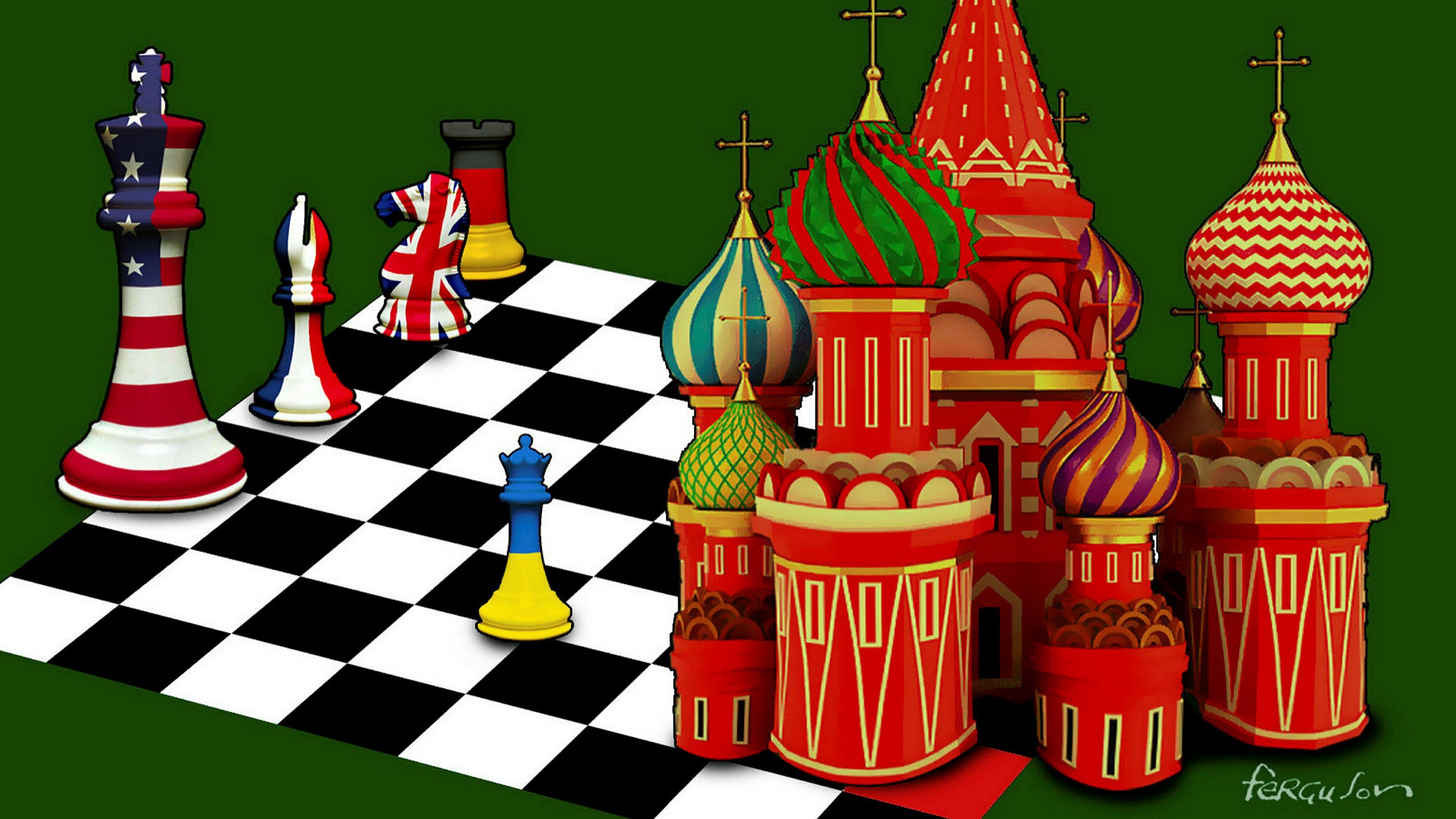
    Zbigniew Brzezinski, author of the famous book “The Grand Chessboard: American Primacy and its Geostrategic Imperatives”, in which he explains why the United States should definitely grab Ukraine

    In particular, it is necessary to correct numerous articles that claimed that the pledge made by the United States to Gorbachev in 1991, according to which NATO “would not move an inch in the East” in exchange for German reunification and the withdrawal of Red Army troops from Eastern Europe, was a “myth” forged by the Kremlin in order to neutralise or even invade Ukraine.

    This thesis is based on an article published in Foreign Affairs magazine in 2014, at the time of the Ukrainian crisis, and reaffirmed in a book published last November. Its author, Mary E. Sarote, is a member of the most influential think tank in U.S. imperial politics, the Council on Foreign Relations, whose opinions are more propaganda than impartial study.

    For this so-called “myth” could not be truer. It is essential to be aware of it if we want to both understand what is happening and find a negotiated solution to the conflict.


    “we consider that the consultations and discussions in the framework of the 2+4 mechanism should provide a guarantee that German reunification will not lead to an expansion of the NATO military organisation to the east”

      – James Baker, US Secretary of State, February 9, 1990. 


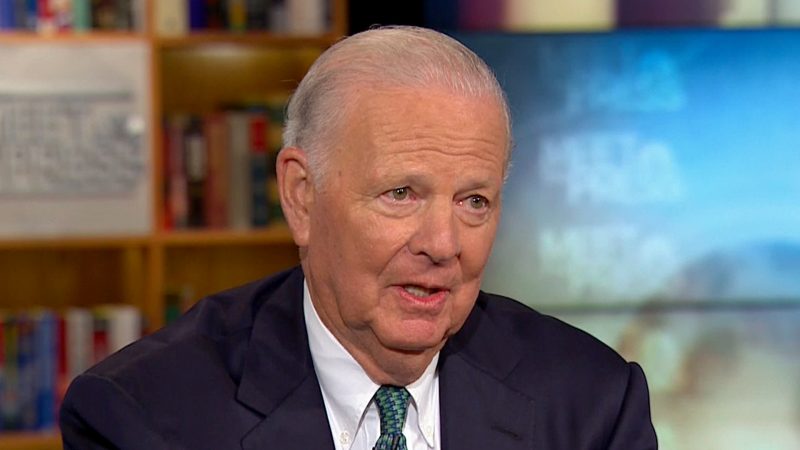
    On February 9, 1990, James Baker, then U.S. Secretary of State, said exactly this: “we consider that the consultations and discussions in the framework of the 2+4 mechanism should provide a guarantee that German reunification will not lead to an expansion of the NATO military organisation to the east.” The next day, Chancellor Helmut Kohl echoed, “We consider that NATO should not expand its sphere of activity.”

    Declassified documents show security assurances against NATO expansion to Soviet leaders from Baker, Bush, Genscher, Kohl, Gates, Mitterrand, Thatcher, Hurd, Major and Woerner.

    In December 2017, the National Security Archive at George Washington University published memos, minutes and telegrams from that time, from which it emerges that Western assurances appear in numerous documents recorded or written during chancellery exchanges in 1990 and 1991. All the details can be found on the university’s dedicated website, under the heading “NATO Expansion: what Gorbachev Heard. Declassified documents show security assurances against NATO expansion to Soviet leaders from Baker, Bush, Genscher, Kohl, Gates, Mitterrand, Thatcher, Hurd, Major and Woerner. Slavic Studies Panel Addresses ‘Who Promised What to Whom on NATO Expansion?’”

    Former American ambassador to Moscow, Jack Matlock, also confirmed these facts in his various publications. Guarantees have therefore been given, even if they are not contained in a treaty signed in due form.

    But you have to be willing to take note and recognise that a word is a word.

    President Bill Clinton decided to ignore them and succeeded, in 1997, in expanding NATO eastwards by admitting new members in exchange for a $4 billion “bribe” to his friend Boris Yeltsin, as Yeltsin later called this gift.

    It was only later, with the rise of the neoconservatives, that President Bill Clinton decided to ignore them and succeeded, in 1997, in expanding NATO eastwards by admitting new members in exchange for a $4 billion “bribe” to his friend Boris Yeltsin, as Yeltsin later called this gift.

    At that time, the most resolute anti-Russian in the American administration, Zbigniew Brzezinski, author of the famous book “The Grand Chessboard. American Primacy and its Geostrategic Imperatives”, in which he explains why the United States should definitely grab Ukraine, foresaw what would happen today: “If Russia is dismissed or rejected, it will be filled with resentment and its vision of itself will become more anti-European and anti-Western.” And he urged Clinton to hurry: “The longer we wait, the louder Moscow’s objections will be,” he predicted in the mid-1990s, while warning against an overly abrupt expansion.


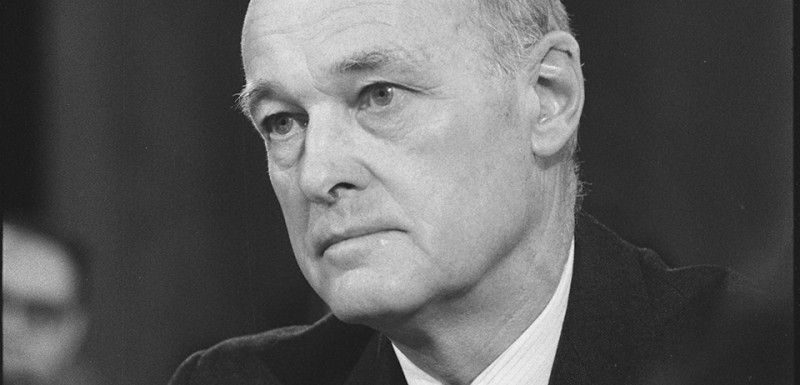
    George Kennan, in a February 5, 1997 New York Times article, prophesized the current situation by writing that, following the breach of the given word to Gorbachev, the expansion of NATO is a ‘Fateful Error’.


    This danger was not overlooked by the father of the Soviet Union’s containment, George Kennan. In a 1997 New York Times article, he prophesized the current situation by writing that, following the breach of the given word to Gorbachev, the admission of Poland, Hungary and the Czech Republic into NATO would be “the biggest mistake of post-Cold War American politics and would only serve to inflame nationalistic, anti-Western and militaristic tendencies in the Russian public.”

    Since then, NATO has only made things worse, admitting seven new states in 2004 and promising membership to Ukraine and Georgia in April 2008, before encouraging the latter to attack South Ossetia in August of the same year. This was barely ten months after Putin’s speech at the Munich conference, in which he had expressed the wish that NATO should stop expanding! In 25 years, NATO has doubled the number of its members, all in the East.

    At the same time, it accumulated aggressions by brazenly lying and twisting international law: the Gulf War in 1991 (with the fabricated affair of the babies thrown out of Kuwaiti incubators); the dismemberment of Yugoslavia in 1992, the illegal bombing of Serbia in 1999 and secession of Kosovo (justified by the pseudo-massacre of Raçak and the so-called Operation Horseshoe imputed to Serbia); the invasion of Afghanistan in 2001; the Iraq war in 2003 (started thanks to Colin Powell’s lies to the UN); the destruction of Libya and the assassination of Gaddafi (falsely accused of slaughtering his own population) in 2011; the attempted destruction of Syria and the overthrow of its president between 2011 and 2019; the war in Yemen since 2015, carried out under Saudi flag and considered by the UN to be the most important humanitarian catastrophe of our time.

    It is therefore very difficult to regard the American-led NATO as an innocent and harmless bridge club.

    It should therefore come as no surprise that, after the U.S.-organised coup in February 2014 to overthrow democratically elected Ukrainian President Viktor Yanukovych, whose mistake was to wish for Ukraine to seek a balance between Russia and Europe, Russia regained control of Crimea while the Donbass provinces rebelled against this forfeiture.

    The United States and NATO are of course free to renege on their word and continue their aggressive course at the risk of starting a war. But at least the public has the right to know why and how it has come to this without being misled about who is really responsible for what would be a real mess for Europe.


    This article was published earlier in MRonline. It is republished under Creative Commons License,

    Feature Image: www.ft.com

    James Baker Image: www.bakerinstitute.org

    George Kennan Image: Foreign Policy and his article ‘A Fatefull Error’ in NYT.


  • The Cold War that Wasn’t

    The Cold War that Wasn’t

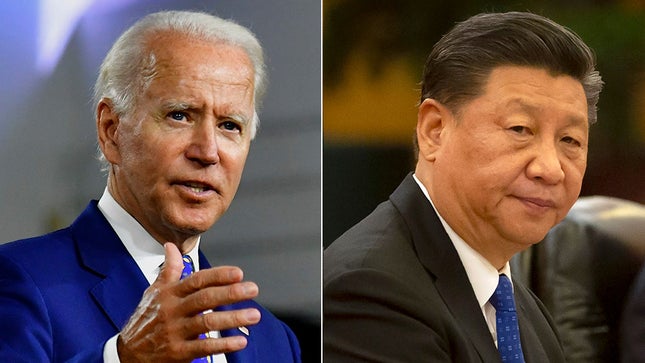
    US President Joe Biden has repeatedly cast his country’s rivalry with China as a battle between democracy and autocracy, an ideological clash reminiscent of the Cold War. This narrative is inaccurate – the United States and China are locked in a competition for strategic dominance – and all but precludes resolution. Whereas demands related to tangible assets and security concerns can be accommodated, ideological struggles typically end one way: with the unconditional defeat of one of the parties

    The US should not be attempting to “defeat” China, as it did the Soviet Union, because, first and foremost, China is not on a quest to spread “socialism with Chinese characteristics” around the world. When Chinese President Xi Jinping declared in 2017 that “war without the smoke of gunpowder in the ideological domain is ubiquitous, and the struggle without armament in the political sphere has never stopped,” he was mainly demanding that outsiders respect China’s institutions and cultural traditions.

    The US is an exhausted power, and it is now being challenged by a rising one. To ensure that this well-known geopolitical dynamic does not end in war, the US must abandon jingoistic rhetoric and replace megaphone diplomacy with wise and creative statesmanship.

    This partly reflects Chinese nationalism, fed by historical narratives, especially the memory of the “century of humiliation” (1839-1949), during which China faced interventions and subjugation by Western powers and Japan. But it is also pragmatic: The Communist Party of China recognizes that some domestic trends could destabilize the country and eventually even undermine the CPC’s rule.

    For example, China’s economic rise has produced an educated, well-connected, and fast-growing middle class. If these increasingly powerful consumers rejected restrictions on private-sector activity or limits to free expression, the CPC would have trouble on its hands. Given this, the CPC views US advocacy of political freedom and human rights in China as an effort to subvert its rule.

    Even America’s drive to export liberal democracy to Asia and Africa has been less an ideological problem for China than a strategic one. Functioning democracies are likely to be harder bargaining partners for China and might even be brought into US-led anti-Chinese alliances.

    On this front, China’s fears have probably been assuaged by recent developments. With the from Afghanistan and the Taliban’s quick reconquest of the country, America’s democratic “crusade” – to borrow the language of former US President George W. Bush – seems to have reached an ignominious conclusion.

    But even if the US is not bringing new countries into the democratic fold, its existing alliance system is formidable, and Biden is committed to strengthening it further. For example, he has worked to resuscitate NATO; created , a new defense and technology alliance with the United Kingdom and Australia; and deepened security cooperation among key democracies in the Indo-Pacific (Australia, India, Japan, and the US, known as the “Quad”).

    This focus on alliances is probably the biggest difference between Biden’s China policy and that of his predecessor, Donald Trump, who spearheaded the shift toward confrontation. (Prior to Trump, recent US presidents largely attempted to maintain good working relations with China, not least because they clung to the assumption that the country’s economic rise would gradually bring about political change.)

    For China, this difference is worrying. Though the US cannot contain China alone, it can apply strong diplomatic pressure if it has other powers on its side, and China is in no position to create an alliance system that can match that of the US. Far from stabilizing the situation, however, this imbalance could fuel China’s insecurity, making constructive engagement all the more difficult

    America’s position is hardly unassailable, either. Biden’s touted exposed the limits of ideology as a mobilizing tool for a global anti-China coalition. It does not help that America’s own democracy is plagued by polarization, paralysis, and discontent. Add to that the world’s highest numberof COVID-19 deaths, and the “shining city on a hill” has lost its luster, to say the least.

    While the US is no ancient Rome – not least because it retains extraordinary advantages in crucial areas, from defense and diplomacy to technology and finance – it is suffering from what the historian Edward Gibbon described as “the natural and inevitable effect of immoderate greatness.” It has failed to adapt its democratic institutions to meet the needs of its population and its responsibilities as a world power.

    Ultimately, the US is an exhausted power, and it is now being challenged by a rising one. This dynamic is as longstanding as it is dangerous. As the ancient historian Thucydides explained, the rise of Athens, and the fear that this instilled in Sparta, made the catastrophic Peloponnesian War inevitable. Harvard’s Graham Allison notes that there have been 16 similar cases in the last 500 years. War broke out in 12 of them.

    To avoid what Allison calls the Thucydides Trap, the US must abandon jingoistic rhetoric and Manichean thinking, replacing megaphone diplomacy with wise and creative statesmanship. The choice is not between capitulating to China and crushing it. The US must recognize China’s legitimate concerns and aspirations, and it must be prepared to negotiate accordingly. (Sooner or later, it will have to do the same with regard to the West’s current showdown vis-à-vis Russia over Ukraine and NATO’s expansion.)

    The US must accept that the days of American hegemony are over. In today’s multipolar world, different political cultures and systems will have to learn to coexist. The ideological defeat of the Soviet Union did not exactly usher in a liberal democracy. Perhaps more important, even if China somehow suddenly became a liberal democracy, its historical grievances and territorial aspirations would remain, as is the case with Russia today. In this sense, ideological competition is beside the point.

    This article was originally published by Project Syndicate.

    Feature Image Credit: The Hill

  • Lessons from countering the corona-virus for war and violence:  Containment, Common Security and Cooperation

    Lessons from countering the corona-virus for war and violence: Containment, Common Security and Cooperation

    The world is engulfed in the ‘Corona Virus’ pandemic. As national health systems are being stretched to their limits, countries are closing their borders, banning travel, and isolating themselves…all in an international co-operative strategy to contain its spread and eliminate this pandemic. Andreas Herberg-Rothe sees valuable lessons in this international co-operation to be used to contain war and violence. Taking a leaf out of the broad ‘containment theory’ articulated by the late George Kennan in an anonymous article published in 1947 in the FP magazine, Andreas proposes a containment strategy for the world from the scourge of terrorism, religious fanaticism, and wars for world dominance (both proxy as well as interventions). This strategy for ‘common security’ can succeed only if it respects pluralism of cultures, religions, and social orders…M Matheswaran.


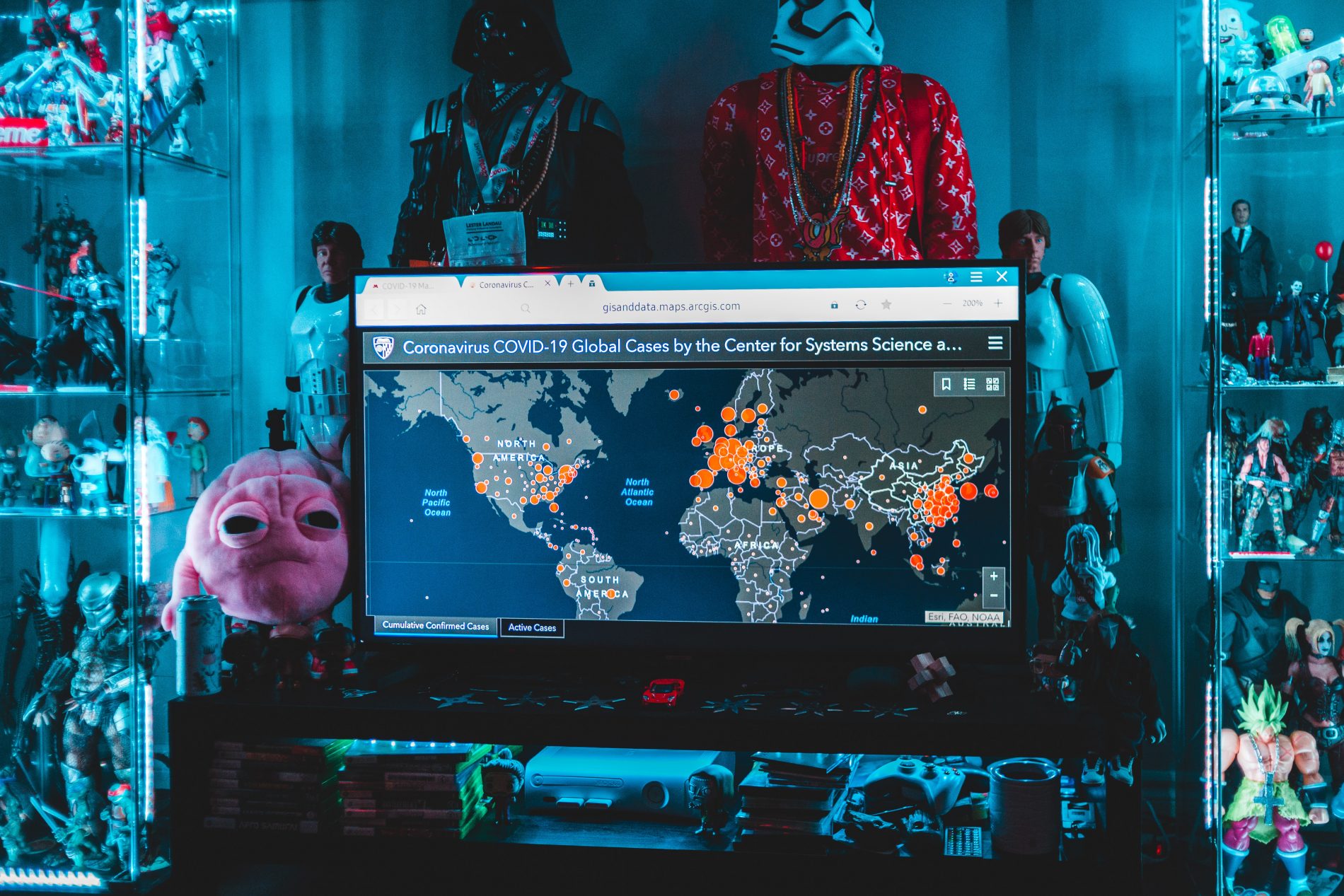
    The initial measures against the spread of the new corona-virus could be summarized by one word – containment of the virus and hindering its spreading. This current prominence of the concept of containment could be used for other world problems. By having a closer look at the concept of containment it becomes obvious that it also included the concept of common security and cooperation – the same is true with the corona-virus. We are witnessing a worldwide expansion of war and violence, which should be countered by a new containment, just as George Kennan emphasized as early as 1987: “And for these reasons we are going to have to develop a wider concept of what containment means (…) – a concept, in other words, more responsive to the problems of our own time – than the one I so light-heartedly brought to expression, hacking away at my typewriter there in the northwest corner of the War College building in December of 1946.” Nearly seventy-five years have already passed, since George Kennan formulated his original vision of containment. Although his original concept would be altered, in application by various administrations of the US-Government, in practice it has been incorporated within the concept and politics of common security, which has been the essential complement to pure militarily containment. These ideas are still valid – and as Kennan himself pointed out, they are in more need of explication and implementation than ever.

    The disinhibition of war and a new containment

    The triumphant advance of democracy and free markets in the wake of the Soviet collapse seemed to be unstoppable, to the point where it appeared for a time as if the twenty-first century would be an age defined by economics and thus, to a great extent, peace.  However, these expectations were quickly disappointed, not only because of the ongoing massacres and genocide in Africa, but also by the return of war to Europe (primarily in the former Yugoslavia), together with the attacks of September 11, 2001 in the USA, the Iraq war, the war in Syria with its on-going, violent consequences. A struggle against a new totalitarianism of an Islamic type appears to have started, in which war and violence are commonly perceived as having an unavoidable role. One can also speak of a new dimension to violence with respect to its extent and brutality – as exemplified by the extreme violence of the ongoing civil wars in Africa and the Middle East.  Additionally we are facing completely new types of threats, for example the possession of weapons of mass destruction by terrorist organizations or the development of atomic bombs by “problematic” states like North Korea. The potential emergence of a new Superpower, China, and perhaps of new “great” powers like India may lead to a new arms race, which presumably have a nuclear dimension as well. In the consciousness of many, violence appears to be slipping the leash of rational control, an image the media has not hesitated for foster, especially with respect to Africa. Will there be “another bloody century,” as Colin Gray has proposed?

    Although the current situation and the foreseeable future is not as immediately ominous as in the Cold War, it may be even worse in the long run. On one side, the prospect of planetary self-destruction via nuclear overkill, which loomed over the Cold War– and what could be worse than that, has been successfully averted. On the other hand, after having been granted a brief respite in the 1990s, mankind now feels itself to be confronting a “coming anarchy” of unknown dimensions and a new conflict between the US and China seems to be inevitable. If the horrific destructive potential threat of the Cold War has been reduced in scale, less cataclysmic possibilities have also become more imminent.

    As compared to the Cold War, there is no longer an exclusive actor to be contained, as the Soviet Union was. Even if one were to anticipate China’s emergence as a new superpower in the next twenty years, it would not be reasonable, in advance of this actually happening, to  develop a strategy of military containment against China similar to that against the Soviet Union in the 50s and 60s of  last century, since doing so might well provoke the kind of crises and conflicts that such a strategy would be intended to avoid. The attempt to build up India as counter-weight to China and facilitating its nuclear ambitions, for instance, might risk undermining the international campaign to limit the proliferation of nuclear weapons in the world. Therefore we need quite another concept of containment, which could not be perceived as a threat to China.

    The second difference is, that current developments in the strategic environment display fundamentally conflicting tendencies: between globalization and struggles over identities, locational advantages, and interests; between high-tech wars and combat with “knives and machetes” or suicide bombers; between symmetrical and asymmetrical warfare; between the privatization of war and violence and their re-politicization and re-ideologization as well as wars over “world order”; between the formation of new regional power centres and the imperial-hegemonic dominance of the only Superpower; between international organized crime and the institutionalization of regional and global institutions and communities; between increasing violations of international law and human rights on one side  and their expansion on the other. A strategy designed to counter only one of these conflicting tendencies may be problematic with respect to the others.  I therefore stress the necessity of striking a balance between competing possibilities.

    The third difference is that the traditional containment was perceived mainly as military deterrence of the Soviet Union, although in its original formulation by George Kennan it was quite different from such a reductionism. Our main and decisive assumption is that a new containment must combine traditional, military containment on one side, and a range of opportunities for cooperation on the other. That’s not only necessary with respect to China, but even to the political Islam, in order to reduce the appeal of militant Islamic movements to millions of Muslim youth.

    Such an overarching perspective has to be self-evident, little more than common sense, because it has to be accepted by quite different political leaders and peoples. The self-evidence of this concept could go so far that one could ask why we are discussing it. On the other hand, such a concept must be able to be distinguished by competing concepts. Last but not least, it should be regarded as an appropriate concept to counter contemporary developments. Finally, taking into account, that Kennan’s concept would not have succeeded, if it had been directed against the actions of the international community or the United States, it should be to some extend only brings to expression, what the international community is already doing anyway.

    A concept that realized these demands of a political concept for contemporary needs was that of “common security”, developed in the 1970s. In the special situation of the cold war and of mutual deterrence this concept didn’t imply a common security shared among states with similar values and policies. On the contrary, this concept, perhaps developed for the first time by Klaus von Schubert, emphasized a quite different meaning. Traditionally, opponents have understood security as security from each other. The new approach laid down by Klaus von Schubert derived from the assumption, that in a world of multiple capacities of annihilating the planet, security could only be defined as common security. This small difference between security from each other and common security — shared security against a universal threat — was nothing less than a paradigm change in the Cold war.

    The question of course remains, how to deter the true-believers, members of terrorist networks or people like the previous President of Iran, for whom even self-destruction may be a means of hastening millenarian goals. Of course, the “true-believers” or the “hard-core terrorist” could hardly be deterred. But this is just the reason, why containment should not be reduced to a strategy of deterrence. The real task even in these cases therefore is to act politically and militarily in a manner, that would enable to separate the “true believers” from the “believers” and those from the followers. This strategy can include military actions and credible threats, but at the same time it should be based on a double strategy of offering a choice between alternatives, whereas the reduction to military means would only intensify violent resistance. Additionally, even the true believers could be confronted with the choice, either further to be an accepted part of their social and religious environment (or to be excluded from them) or to reduce their millenarian aspirations. Of course, by following this strategy, there is no guarantee, that each terrorist attack could be averted. But this is not the real question. Assuming, that the goal of the terrorists and millenarian Islamists is to provoke an over-reaction of the West in order to ignite an all-out war between the West and the Islamic world, there is no choice than trying to separate them from their political, social and religious environment.

    The concept of containment and contemporary warfare

    The goal of the war on terror should not try to gain victory, because no one could explain, what victory would mean with regard to this special war. Moreover, trying to gain a decisive victory about the terrorists would even produce much more of them.  The additional problem is not only, how we ourselves conceive the concept of victory, but even more important, in which ways for example the low-tech enemies define victory and defeat. That is an exercise, that requires cultural and historical knowledge much more than it does gee-whiz technology.

    Instead one could argue, that the goal is “to contain terror”, which is of course something quite different from appeasement.  An essential limitation of the dangers, posed by terrorist organizations could be based on three aspects: first, a struggle of political ideas for the hearts and minds of the millions of young people; second the attempt to curb the exchanges of knowledge, financial support, communication between the various networks with the aim of isolating them on a local level; and finally, but only as one of these three tasks, to destroy what one could label the terrorist infrastructure. In my understanding, trying to achieve victory in a traditional military manner would not only fail, but additionally would perhaps lead to much more terrorism in the foreseeable future.

    The concept of the “centre of gravity” in warfare can provide another illustration of the way in which my conception makes a difference. Clausewitz defines war as an act of violence to compel our enemy to do our will. This definition suits our understanding of war between equal opponents, between opponents in which one side doesn’t want to annihilate the other or his political, ethnic or tribal body. But in conflicts between opponents with a different culture or ethnic background, the imposition of ones will on the other is often perceived as an attempt to annihilate the other’s community and identity. Hence, for democratic societies, the alternative is only to perceive war as an act of violence where, rather than compelling our own will to the opponent, your opponent is rendered unable any more to pursue his own will violently, unable to use his full power to impose his will on us or others. Consequently the abilities of his power must be limited, that he is no more able to threaten or fight us in order to compel us to do his will.

    The purpose of containing war and violence, therefore, is, to remove from the belligerent adversary his physical and moral freedom of action, but without attacking the sources of his power and the order of his society. The key to “mastering violence” is to control certain operational domains, territory, mass movement, and armaments, but also information and humanitarian operations. But this task of  “mastering violence” should no longer be perceived as being directed against the centre of gravity, but to the “lines” of the field of gravitation. Instead of an expansion of imposing one’s own will on the adversary up to the point of controlling his mind, as the protagonists of Strategic Information Warfare put it, the only way of ending conflict in the globalized  21st century is to set limits for action, but at the same time to give room for action (in the sense, Hannah Arendt used this term) and even  resistance, which of course has the effect of legitimising action within those limits.

    The overall political perspective on which the concept of the containing of war and violence in world society rests therefore consists of the following elements, the “pentagon of containing war and violence”:

    ▪ the ability to deter and discourage any opponent to fight a large scale war and to conduct pin-point military action as last resort,

    ▪ the possibility of using military force in order to limit and contain particularly excessive, large-scale violence which has the potential to destroy societies;

    ▪ the willingness to counter phenomena which help to cause violence such as poverty and oppression, especially in the economic sphere, and also the recognition of a pluralism of cultures and styles of life in world society;

    ▪ the motivation to develop a culture of civil conflict management (concepts which can be summed up with the “civilizational hexagon”, global governance, and democratic peace), based on the observation, that the reduction of our action to military means have proved counterproductive and would finally overstretch the military capabilities

    and

    ▪ restricting the possession and proliferation of weapons of mass destruction, their delivery systems, as well as of small arms, because the unhindered proliferation of both of them is inherently destructive to social order.

    The position I have put forward is oriented towards a basically peaceful global policy, and treats the progressive limitation of war and violence as both an indefinite, on-going process and as an end in itself. The lasting and progressive containment of war and violence in world society is therefore necessary for the self-preservation of states, even their survival and of the civility of individual societies and world society.    

    Image Credit:Photo by Erik Mclean on Unsplash