Tag: CoC

  • Does ASEAN Need a New Approach to Code of Conduct for the South China Sea?

    Does ASEAN Need a New Approach to Code of Conduct for the South China Sea?

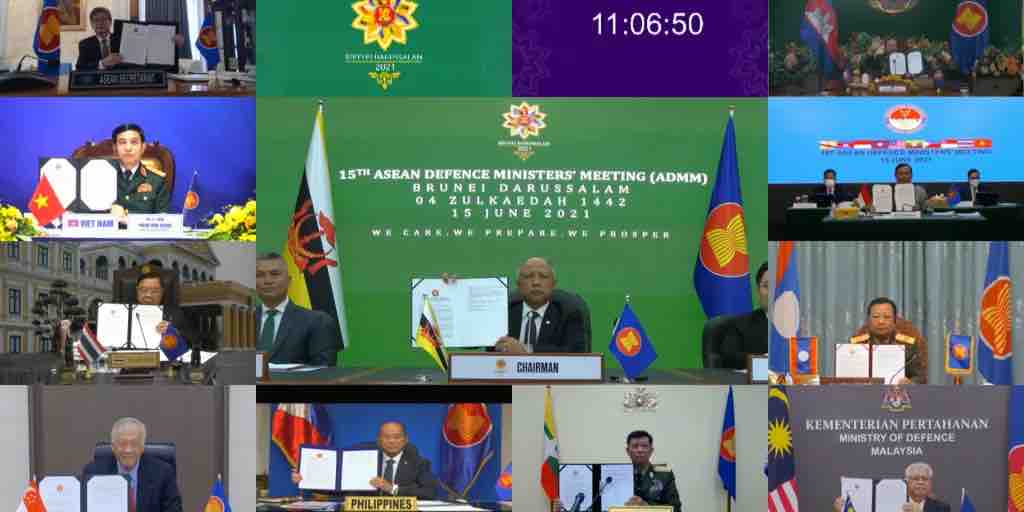
    Reference to Declaration on the Conduct of Parties in the South China Sea (DOC), Guidelines for the Implementation of the DOC, and formulations such as early adoption of a Code of Conduct in the South China Sea (COC) have featured in the ASEAN Chairman’s Statement of East Asia Summit Foreign Ministers’ Meeting since 2013 when Brunei Darussalam had held the Chairmanship of the ASEAN. These references were reiterated, and the section relating to the South China Sea in the ASEAN Chairman’s Statement for the 11th East Asia Summit Foreign Ministers’ Meeting in August 2021 under the leadership of Brunei Darussalam, is no different.

    While the Chinese intent is a welcome development, its new “Maritime Traffic Safety Law of the People’s Republic of China” (MTSL) that came into effect on 01 September 2021, has caused turbulence among the claimant States.

    Meanwhile, China’s Ministry of Foreign Affairs Statement of 5 August 2021 notes that a new goal has been set by China under which Beijing and ASEAN would “refrain from unilateral actions that aggravate tensions and widen differences, or using force or threat of force in particular”. While the Chinese intent is a welcome development, its new “Maritime Traffic Safety Law of the People’s Republic of China” (MTSL) that came into effect on 01 September 2021, has caused turbulence among the claimant States. As per the MTSL guidelines and procedures, vessels must “report the name, call sign, current position, next port of call and even estimated time of arrival to Chinese authorities”.

    The Philippines has decided to “ignore” the new Chinese Regulations and Philippine Defence Secretary Delfin Lorenzana has clarified his country’s stand on the issue that “we do not honour those laws by the Chinese within the West Philippine Sea because we consider that we have the sovereign right within this waters. So we will not recognise this law of the Chinese,” The Vietnamese Foreign Ministry too has reiterated strict compliance with the 1982 UNCLOS “when promulgating documents of domestic law related to the sea”.

    The Pentagon has accused China of “Unlawful and sweeping maritime claims, including in the South China Sea, pose a serious threat to the freedom of the seas, including the freedoms of navigation and overflight, free trade and unimpeded lawful commerce, and the rights and interests of the South China Sea and other littoral nations,” and the Defense Department spokesman has stated that the country will “ continue to fly, sail and operate wherever international law allows,”

    By all counts, an early conclusion of CoC in the South China Sea is only wishful given that the idea has been on the table for over two and a half decades since 1996. At that time there was euphoria among ASEAN foreign ministers that a CoC in the South China Sea could be the “foundation for long term stability in the area and foster understanding among claimant countries.”

    There is now a view that it is time to change the “objective from coming up with a comprehensive CoC”; instead, ASEAN and China must work towards “incremental development of a series of agreements” that could “eventually become the CoC in the future”

    The ASEAN has made earnest efforts and continues to negotiate a legally binding CoC but its finalization has eluded it. There is now a view that it is time to change the “objective from coming up with a comprehensive CoC”; instead, ASEAN and China must work towards “incremental development of a series of agreements” that could “eventually become the CoC in the future”. This can be achieved by developing “more realistic” and “smaller accords” that can help “de-escalate potential contentious situations”.
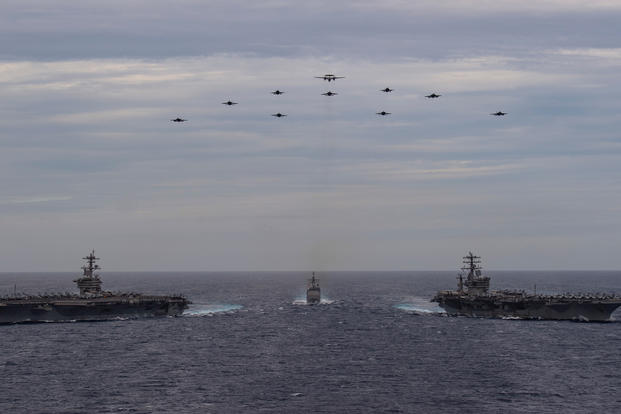
    The above argument merits attention for at least two important reasons. First, the South China Sea is simmering due to US-China military contestations. The US Navy continues to engage in exercises and the current deployment in the South China Sea by USS Carl Vinson Carrier Strike Group and Air Wing of the Future is a reflection of the US’ commitment to field “combat-ready force to protect and defend the collective maritime interests of the U.S. and its regional allies and partners”. Also, the US Navy has conducted FONOPs relentlessly and is now joined by the US Coast Guard. The Quad Member States have also dispatched their warships to the South China Sea for Malabar Naval exercises and the European navies led by France and Britain are operating in the region. These multi-nation naval manoeuvers have prompted China to respond through similar actions and the PLA Navy and the Air Force are persistently deployed in the region. This ‘state of affairs’ will continue.

    Second, there is a view that while the CoC should necessarily be consistent with the 1982 UNCLOS and should not “prejudice legitimate rights and interests of nations not a party to discussions,” this assessment can potentially trigger clamour among other stakeholders who have politico-diplomatic, economic and strategic interests in the region and have vehemently argued for a rules-based system and have challenged China’s expansive claims in the South China Sea as also its non-adherence to the 2016 PCA ruling.

    Under such circumstances, there are no incentives for China and it is deliberately delaying the finalization of the COC; it prefers to pursue a “business as usual” approach causing immense insecurity in the minds of the claimant States. Meanwhile, there is now a sense of urgency among the ASEAN Member States to finalize the CoC and their “patience” is wearing thin.


    Feature Image Credit: Nikkei Asia
  • High expectations during Vietnam’s Chairmanship of the ASEAN

    High expectations during Vietnam’s Chairmanship of the ASEAN

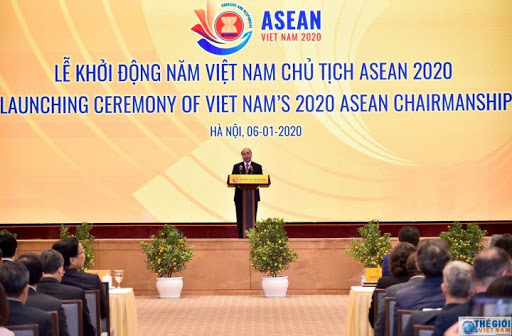
    Vietnam assumed ‘2020 Chairmanship of the ASEAN’ in November 2019 from Thailand in accordance with Article 31 of the ASEAN Charter under which the Chairmanship rotates annually. Hanoi announced the theme for its Chairmanship as ‘Cohesive and Responsive’, in which ‘Cohesive reflects the need to enhance ASEAN unity and solidarity, economic integration, ASEAN awareness and identity, and work toward a “people-centered” community’ and                                 ‘Responsive underlines the importance of promoting ASEAN pro-activeness, creativity and capacity in response to opportunities and challenges brought about by rapid changes in regional and global landscape’.

    Soon after taking over the 2020 Chairmanship, Vietnam was confronted with a ‘black swan’ event i.e. COVID-19. It  delivered admirably by taking bold measures to control the spread of the virus in the country and announced that the ASEAN Coordinating Council (ACC) will compile a report on the COVID-19 to be submitted to ASEAN leaders at the 36th ASEAN Summit scheduled in Vietnam in April.

    Vietnam’s Deputy Foreign Minister Nguyen Quoc Dung, who is the Secretary-General of the 2020 ASEAN National Committee, has identified five key priorities for his country’s Chairmanship Year and it is not surprising to see reference to Hanoi’s commitment to ‘regional peace and stability amid strategic complexities’. Boundary and associated disputes including illegal occupation, reclamation and weaponization of islands and features in South China Sea are central to ASEAN, and as a corollary a major issue for Vietnam’s 2020 Chairmanship. There is now evidence of a push back against Beijing’s intimidation. This is evident from the forceful statements and credible operational initiatives in South China Sea by the claimant states against China which has deployed law enforcement and paramilitary vessels.

    In this context there are expectations from Vietnam to vigorously pursue and make substantive contributions towards keeping the South China Sea less turbulent and more peaceful, and address issues that threaten regional peace and security. It would also be Hanoi’s endeavor to prevent any confrontation and further escalation in disputes in the South China Sea. However, this may not be the case as a number of incidents in the South China Sea over resources i.e. fishing and offshore energy exploration have begun rather very early in Vietnam’s ‘2020 Chairmanship of the ASEAN’.

    First is about Indonesia and China. The former does not claim any island or features in the Spratly Islands and therefore does not have any dispute in South China Sea; but presence of Chinese coast guard vessel escorting Chinese fishermen to fish in Natuna, part of  Indonesian waters, which China claims to be the traditional fishing ground, prompted political and military response from Jakarta. There was also a standoff between China and Vietnam in the Vanguard Bank involving 50 Vietnamese and 40 Chinese vessels over the operations of the drilling rig Hakuryu 5 operated by Russia’s Rosneft in Vietnam’s oil and gas Block 06-01.

    Another three-way standoff over oil and gas operations is playing out between China and Malaysia in which the state-owned Petronas is exploring on the extended continental shelf of a ‘Malaysian oil and gas block in the area for which Hanoi and Kuala Lumpur had submitted a joint claim’. China has resorted to intimidation similar to the Vanguard Bank between China and Vietnam.

    At another level, United States military response in support of Taiwan after Chinese military airplanes flew across the Taiwan Straits and the Bashi Channel is noteworthy. Likewise, US’ support has been forthcoming for Vietnam against China and could trigger enhanced defence and security cooperation between the two sides as also create new opportunities for Hanoi to inform Beijing about its confidence to deal with China on the South China Sea issue at its own terms.

    However, the Philippines would be a different challenge for Vietnam after President Rodrigo Duterte announced annulment of the Visiting Forces Agreement (VFA) notwithstanding the fact that the US has been the most important ally of the Philippines in countering China’s expansive claims in the disputed Philippines Sea. It is useful to mention that Philippines is critical  for US’ Indo-Pacific  strategy of a free and open oceans.

    Second is the about the Code of Conduct (CoC), an upgraded document of the earlier Declaration on the Conduct of Parties in the SCS (DOC), which is under negotiation between China and ASEAN member states and is expected to be adopted in 2021.Vietnam must concentrate on the CoC. The onus will be on Vietnam to not only build consensus among the  ASEAN , Hanoi will have to work hard  to put in place a workable COC which can then be taken forward by Brunei Darussalam who would assume the ‘2021 Chairmanship of the ASEAN’.

    Third is about the contestation between the US and China over freedom of navigation operation (FONOP). During the last three years, the US forces have routinely conducted FONOP which Washington claims to be in accordance with international law and that its military will fly, sail, and operate wherever international law permits. Chinese reaction and response to the FONOP has been at the political, diplomatic and strategic levels. It has exercised coercion at sea through dangerous maneuvers and more recently a PLA Navy destroyer fired a military grade laser at a US P-8 surveillance aircraft.

    ASEAN Chairmanship is a challenging position and attracts high expectations from the member countries. The position entails building upon the work done by the previous Chair as also pursue new regional issues that are always as challenging as the earlier ones. Besides, there are anticipations by regional and other global players to not only follow up the ongoing challenges but address new questions that confront the ASEAN. More often than not, the ASEAN countries have delivered and received appreciation from the international community.

    By all counts Vietnam’s chairmanship of the ASEAN can be expected to be both challenging and rewarding. Hanoi is expected to live up to the expectations on the responsibilities enshrined in the ASEAN charter and deliver to the peoples of the ASEAN as also build upon the themes and priorities set by previous Chairmanship. Vietnam will also be under pressure to adopt a tougher line against China on the South China Sea issue in view of the recent spats between China and other claimant states. But Vietnamese leaders are known for their maturity and diplomatic skills and would play a pragmatic role to manage tensions in the region.

    Image Credit: Vietnam Economic Times